





Management Implications
It is essential for hemp producers to adequately control the distribution and storage of seed (an oil-rich achene), especially for seed crop–type, but also for fiber-type hemp varieties. Seeds labeled fiber type will often grow as seed type in southern latitudes. Escape from cultivation and invasion risk in natural areas should be considered by all Florida hemp producers, especially those intending to operate at commercial scales with high potential for seed dispersal outside cultivation during transport and harvest. Hemp is predicted to have a high invasion risk in natural areas according to the UF/IFAS Assessment of Non-Native Plants in Florida’s Natural Areas. This study demonstrates problematic volunteer hemp establishment and persistence. Florida Department of Agriculture and Consumer Services (FDACS) Rule 5B-57.014 declares hemp is “a potentially invasive plant species and is a threat to the plant life of this state if not properly controlled.” The rule requires an environmental containment plan that defines site boundaries, equipment cleaning, and transportation precautions for each cultivation location. Based on our observations and experiments, hemp can persist outside cultivation, although some form of soil disturbance and elevated nutrients appears to be required for establishment. Monitoring of fields and nearby areas should occur for at least 2 to 3 yr after planting. Accidental seed dispersal by equipment and wildlife should be managed using on-site cleaning of equipment, secure storage in transit, and bird deterrence around harvest.
Introduction
The introduction of hemp, varieties of Cannabis sativa L. that contain low levels of THC (less than 0.3% delta-9-tetrahydrocannabinol), into agricultural systems is increasing globally. The goal is to develop food, fuel, and fiber production and provide farms with additional crop and market opportunities (CPC 2023). Yet hemp cultivation remains relatively limited across the United States. There is a risk that new hemp cultivation could lead to the plant becoming invasive, displacing native vegetation, and threatening native ecosystems (Canavan et al. Reference Canavan, Brym, Brundu, Dehnen-Schmutz, Lieurance, Petri, Wadlington, Wilson and Flory2022). Sometimes, agricultural weeds originate as crops, which then become feral when they regenerate voluntarily after harvest and persist (FISC 2023; Friedman et al. Reference Friedman, Andreu, Quintana and McKenzie2022). Eventually, they are considered weeds when they reduce the production and quality of other crops by competing for space, light, moisture, and nutrients (Warwick and Stewart Reference Warwick and Stewart2005). To minimize the potential for new crops to escape cultivation, spread, and become environmental and agricultural weeds, invasion risk assessment is a critical step before introduction into a new region (Barney Reference Barney2014; Dobbs et al. Reference Dobbs, Reberg-Horton, Unruh Snyder and Leon2022; Smith et al. Reference Smith, Tekiela and Barney2015). Hemp introduced into southern Florida poses a unique opportunity to investigate potential escape from cultivation because of the subtropical climate and lack of historical commercial production.
Hemp is a herbaceous annual native to parts of central and southern Asia (Clarke and Merlin Reference Clarke and Merlin2013). In natural and cultivated settings with adequate soil structure, moisture, and nutrition, it can reach heights of 0.3 to 6 m (Fike Reference Fike2016; Kaur et al. Reference Kaur, Brym, Moserrate Oyola and Sharma2023). Hemp has strong fibers that are durable and rot resistant, making them ideal for textiles and material products (Small and Marcus Reference Small and Marcus2002). Additionally, the plant is used to make foods from the seeds and cannabinoid-rich oils from flowers (Liu et al. Reference Liu, Hu, Du, Deng and Yang2017). Hemp seeds are achenes formed on inflorescences that provide abundant protein, healthy fats, and other nutrients and are often used in various foods and supplements (Vonapartis et al. Reference Vonapartis, Aubin, Seguin, Mustafa and Charron2015). Hemp flowers produce a resin with abundant secondary compounds known as cannabinoids, especially cannabidiol (CBD). Due to its many uses, it is one of the most widely introduced plants in the world and has adapted to a broad range of environmental conditions (Canavan et al. Reference Canavan, Brym, Brundu, Dehnen-Schmutz, Lieurance, Petri, Wadlington, Wilson and Flory2022). However, commercial cultivation in contemporary agriculture has been broadly limited because of its illegal status in many countries, owing to the psychoactive compounds of related varieties of cannabis used as recreational drugs. Since changes in U.S. federal laws in early 2014, there has been renewed interest in hemp as an alternative crop, leading to increased commercial cultivation. Nevertheless, because of its often-complex legal status and potential for invasiveness, it has been heavily regulated in many states.
In the United States, industrial hemp was reintroduced in 2014 and declared a commercial crop in 2018 following decades of control under drug enforcement laws (Addlesperger Reference Addlesperger2015; Mark et al. Reference Mark, Shepherd, Olson, Snell, Proper and Thornsbury2020; Rehman et al. Reference Rehman, Fahad, Du, Cheng, Yang, Tang, Liu, Liu and Deng2021). As of 2021, there were 20,234 ha (50,000 acres) of hemp cultivated in the United States under permits split across fiber, seed, and flower production (Mark et al. Reference Mark, Shepherd, Olson, Snell, Proper and Thornsbury2020; USDA-NASS 2022). In 2021, the U.S. hemp industry was valued at $824 million, which included production in open fields, shade houses, and greenhouses (USDA-NASS 2022). Commercial planting in Florida began in 2020 with at most 100 ha approved for harvest by the FDACS (FDACS Division of Plant Industry, personal communication).
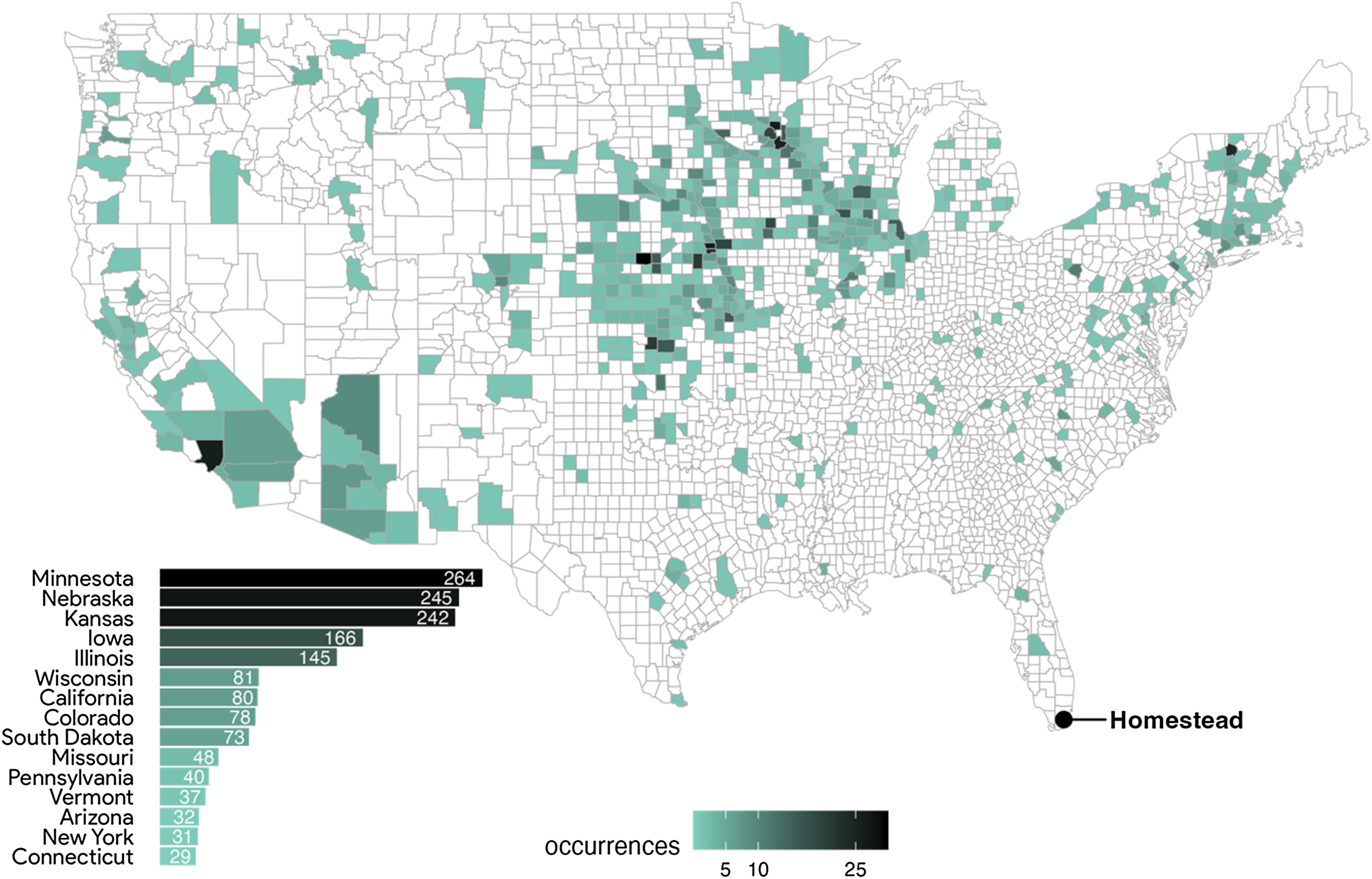
In addition to economic and cultural considerations for hemp production, there have been concerns about escape from cultivation (Canavan et al. Reference Canavan, Brym, Brundu, Dehnen-Schmutz, Lieurance, Petri, Wadlington, Wilson and Flory2022). Many feral populations have originated from previous hemp cultivation in the United States (Figure 1), and seven midwestern states have declared it a noxious weed (Filer Reference Filer2020; USDOJ 1992; West Reference West1998). During 1998 to 2006, the U.S. Drug Enforcement Agency Domestic Cannabis Eradication and Suppression Program claimed to have destroyed more than 1.9 billion feral or wild “ditch weed” plants in the Midwest (USDEA 2018). Despite major eradication attempts, hemp populations have persisted in disturbed areas, such as along roads and waterways (Filer Reference Filer2020).
Observations of feral hemp (Cannabis sativa) per state and county in the continental United States (Data from GBIF 2024). Numbers within plot bars show sums of observations per state for the 15 states with the most observations. The bar for occurrences is a scale for the number of observations per county in the map.
It remains somewhat unclear the extent to which hemp could escape cultivation in Florida. Although Florida has no historical record of commercial hemp cultivation, eradication records and a predictive risk assessment have suggested that hemp poses an invasion risk to Florida’s natural areas (Canavan and Flory Reference Canavan and Flory2019; Williams and Lieurance Reference Williams and Lieurance2018). Feral cannabis plants have been documented in Florida, often resulting from seizures by law enforcement (FLMNH 2020; MBG 2023; Wunderlin et al. Reference Wunderlin, Hansen, Franck and Essig2022). Decades of legal restrictions on cannabis possession seemingly minimized the distribution in Florida, where records of feral populations otherwise remain sparse. Nevertheless, with intent to ensure proper control, commercial growers are required by state regulations to submit an environmental containment plan with their permit application (Florida Department of Agriculture and Consumer Services Rule 5B-57.014; FDACS 2020).
Research was needed to better understand the risk of hemp escape from cultivation and conditions that elevate invasion risk, especially in regions of recent commercial cultivation. We hypothesized that feral hemp populations can survive in low-nutrient environments, but they grow best in highly disturbed, nutrient-rich areas, such as abandoned agricultural fields (Small et al. Reference Small, Pocock and Cavers2003). We established outdoor plantings of hemp in southern Florida in 2019, followed by the studies presented herein to evaluate invasion risk, including a systematic observation and a field experiment. Specifically, the studies were (1) a systematic observation related to volunteer population monitoring that quantified the plant emergence and seed production of volunteer hemp regenerating after cultivation and (2) a field experiment that planted hemp seeds in an adjacent field under various nutrient and disturbance conditions. The experiments were designed to simulate a field that was abandoned after planting and a field edge where seeds were spilled or discarded, respectively. Our overall goal was to better understand the potential for hemp to escape cultivation in agricultural areas by monitoring hemp germination, establishment, and persistence for succeeding generations.
Materials and Methods
Two independent research studies are described here as “volunteer population monitoring” and “seed establishment.” We began this work in 2020 following a 2019 research planting (i.e., “variety trial”) that resulted in volunteer seed establishment (Brym et al. Reference Brym, Wadlington and Monserrate2020). We then developed an experiment to investigate the conditions under which hemp seed may establish outside cultivation.
Site Description
This research was conducted at the UF/IFAS Tropical Research and Education Center (TREC), Homestead, FL (25.4687°N, 80.5007°W). The site was located in USDA hardiness zone 10b with a marine subtropical climate, an average annual temperature of 24 C (min 19 C, max 29 C), and 1,473 mm yr−1 of annual precipitation (FAWN 2020). Soil was described as Krome gravelly loam (i.e., Loamy-skeletal, carbonatic, isohyperthermic Lithic Udorthents), which originates from limestone bedrock and is well-drained, shallow (10 to 25 cm), calcareous (pH 7.4 to 8.0), and moderate in organic matter (3% to 10%; NCSS 1947; Nobel et al. Reference Nobel, Drew and Slabaugh1996). Our research occurred in agricultural fields with historical soil disturbance and fertilizer applications.
Volunteer Population Monitoring
The site was first prepared and planted across several dates for a hemp variety trial in spring and summer 2019 without prior consideration for the postharvest monitoring reported herein (Figure 2). Monitoring volunteer populations began in 2020 after the termination of the variety trial in response to initial observations of volunteer establishment. To describe the formation of the variety trials: in early 2019, the site was mowed, disked, and plowed before planting. All plots received irrigation from overhead sprinklers for establishment and fertility from broadcast slow-release granular fertilizer (Super Fruiter 6-13-16, Diamond R, Fort Pierce, FL) resulting in 125 kg N, 62 kg P2O5, and 336 kg K2O ha−1. The variety trial involved 21 hemp varieties planted on up to four dates (May to July 2019) in a split-plot design. Hemp seeds were sown 6 mm deep in raised furrows within 18.3 by 30.5 m planting areas using an EarthWay seeder (#1001-B, EarthWay Products, Bristol, IN). Resulting plant densities were 60, 900, and 1,500 seeds per plot for floral, grain, and fiber production types, respectively. Harvest was conducted 90 to 120 d after planting based on variety maturity in 1-m2 sampling plots (20% experimental plot size) on varieties yielding an acceptable amount of seed or stem tissue for grain or fiber, respectively. The third and fourth planting dates (∼600 m2) were terminated after minimal harvest by disk harrow per USDA hemp termination procedures (U.S. Domestic Hemp Production Program 2021).
Layout and relationships between the four preceding 2019 trials and the 2020 field studies at the UF/IFAS Tropical Research and Education Center (TREC), Homestead, FL. (A) The abandonment test conducted in 2020 and monitored through 2022. All the plots had propagule pressure resulting from seeds left in the field from the previous harvest in 2019. Tan highlighting (low propagule pressure) indicates propagule pressure from only this source, while blue indicates additional propagule pressure was added as a second source (high propagule pressure). A pilot project occurred in 2019 in Blocks 1–4 with a variety trial in Blocks 5–9. (B) Plots in A collectively correspond to Blocks 1 and 2 in B (upper), with the accompanying Blocks 3 and 4 used only in 2019. Our 2020 abandonment test occurred in the first two (1 and 2) of the four trial sites, which are numbered based on chronological order of planting date in 2019. In the lower right are the eight blocks of the 2020 seed establishment experiment.
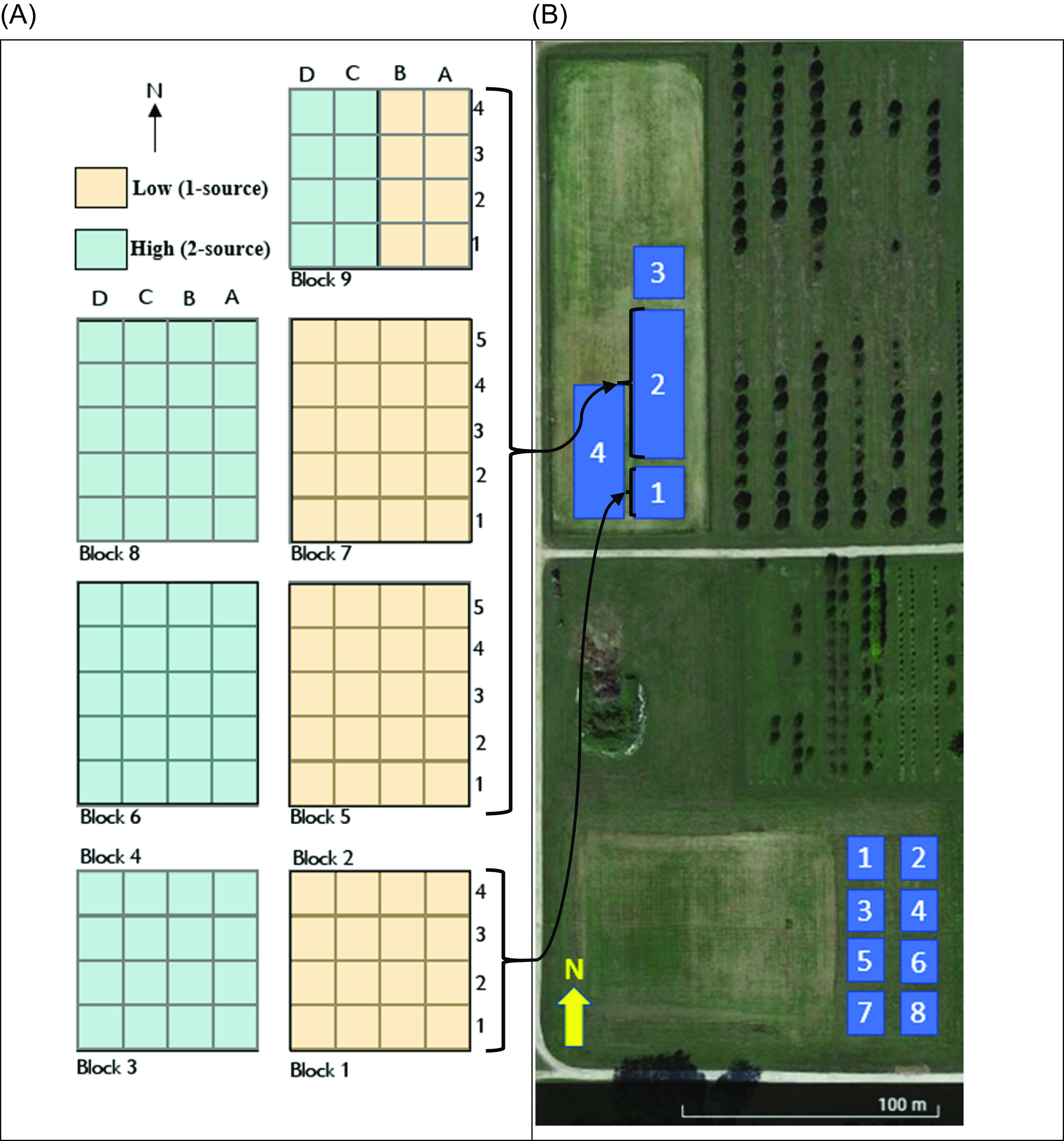
In January 2020, at 3 mo after completion of the 2019 trials, we began monitoring volunteer populations in the area of the prior plantings (∼0.16 ha). All the plots, including those in the 2020 volunteer monitoring area, had propagule pressure resulting from seeds left in the field following the harvest. Here, plants outside the sample plots (80% of planted area) were left to drop seeds unassisted, akin to a field abandonment scenario in which a producer plants hemp but does not harvest the crop and does not properly terminate. This may occur because the crop tests out of compliance for harvest (>0.3% total THC) or there is a lack of access to a market for the crop. Monitoring for volunteer hemp plants targeted plots of the first (∼200 m2) and second (∼500 m2) planting dates, which were among the best seed yielders of the 2019 trials (Figure 2B). This combined area (∼700 m2) was evenly divided into two treatments, one of high and one of low propagule pressure (Figure 2A). The low propagule pressure treatment had only the seeds in place deposited by the 2019 crops, while the high propagule pressure treatment also had a second addition of seeds. This enhanced seeding was intentionally created by translocating and dispersing seeds (∼2 g m−2, ‘Han-NE’) from mature plants of the fourth (July) planting date to create a high propagule pressure treatment. Few plants survived (n < 10) from the July planting date in a plot of Han-NE, but they were uniquely productive for that planting date. Seeds were collected from all plants remaining in that plot, mixed, and distributed evenly across the high propagule pressure treatment. Because of differences in the sources and seeding events in each treatment, the proportion of seeds contributed by each variety, and possibly the varieties themselves, are believed to have differed between treatments. Potentially, all 21 varieties from 2019 may have seeded in the combined 700-m2 observation area of 2020, although several primary candidates that originated from China and southern Italy are likely due to proximity and reproduction (Brym et al. Reference Brym, Wadlington and Monserrate2020). However, because of expected seed mobility at shatter and specific plots were not tracked for volunteers, we could not report directly on the varieties represented in the 2020 volunteer observations. Therefore, the abilities of specific varieties to become volunteer plants were also not observed.
The monitored area was not mowed or otherwise disturbed during observation. The rest of the field and surrounding area served as as an observational control. It had either no hemp planted or hemp planted that was terminated by mowing and disking according to USDA-recommended best practices to prevent or reduce the emergence of hemp volunteer plants. Also, this “control” area was sporadically mowed to reduce weed dispersal. Hemp debris from other studies was routinely discarded as piles into the mowed and disked area as recommended for termination.
Volunteer hemp plants were left in the field but counted and their sexes determined every 1 to 3 wk in a 200-m2 area. Biweekly data collection continued from January to March 2020, with a pause until September 2020, then continued until the end of the year, followed by intermittent monitoring through 2021 and 2022. When the plants had mature seeds, heights were measured and whole plants were harvested. Seeds were extracted, counted, weighed, and then redistributed back into their respective plots to avoid interrupting the volunteer population by sample removal.
Seed Establishment Experiment
In July 2020, we began a trial to better understand the conditions that permit discarded hemp seeds to establish and persist as volunteers. A fallow field (∼800 m2) was mowed but not tilled for 6 mo before the trial. The experimental design was a randomized complete block design with treatment factors assigned to each of the twelve 2 by 2 m subplots. There were eight blocks (replications), each containing two rows of six plots (96 total subplots). Plots were separated by 2 m-wide buffers, which were mowed regularly. There were two nutrient treatment levels (fertilized and not fertilized), two disturbance levels (till and no-till), and three varieties (‘Helena’, ‘Han-NE’, and ‘CFX-1’; Table 1). The hemp varieties were selected to represent different primary uses of commercial hemp (dual, grain, grain), cultivation origin (Italy, South China, Canada), sex type (dioecious or monoecious), and variation in germination rate and seed size. Each of the resulting 12 possible combinations were represented once per block. For the nutrient treatment, 56 kg ha−1 of granular fertilizer (Super Fruiter 6-13-16, Diamond R) was added to represent an agricultural field under standard cultivation, while the control treatment had no added nutrients. The disturbance treatment was rototilled 7 cm deep, while the control was left untilled and undisturbed.
Select varieties and characteristics used for hemp grown at the University of Florida Tropical Research and Education Center (TREC), Homestead, FL, in 2019 and 2020 (Brym et al. Reference Brym, Wadlington and Monserrate2020).

a These same varieties were used in planting trials of 2019 (previous studies) and the invasion risk test of 2020 (present study).
All seeds planted in the seed establishment experiment originated from the same batch of seeds planted in the 2019 variety trial. One thousand live seeds (estimated by weight and germination rate) were planted in each plot. Seeds were broadcast in plots and lightly raked. Overhead irrigation was supplied for 1 wk (until emergence).
Emergent seedlings were counted in each plot 3 d after planting, then daily for 1 wk or until no more seedlings emerged. Plant height was measured 1 mo after planting, then at monthly intervals. When the plants had mature seeds, they were measured for height and harvested. In addition to redistributing some seeds back into plots, we retained seeds for germination tests.
Laboratory germination was conducted on harvested seeds. We tested a maximum of 60 seeds for each plot and harvest date. Petri dishes were prepared to hold up to 20 seeds placed on two sheets of paper towel in a modified “rag-doll” test (Dubeux Reference Dubeux1999). A plastic pipette was used to add 2 ml of deionized water to each dish, and dishes were sealed using parafilm to prevent contamination and moisture loss. Dishes were placed in three stacks per harvest date in a growth chamber (I-35LL, Percival, Perry, IA) set at a constant 26 C with no light. Germination was recorded on day 5, based on the appearance of robust, healthy radicles. Desiccating or diseased radicles were excluded from the count.
Statistical Analysis
Volunteer Population Monitoring
Mean numbers of seeds and plants for each collection date and treatment were evaluated. Statistical methods compared plant height and seed counts by ANOVA and linear regression. Wilcoxon rank tests, by the wilcox.test() function in R, were used to evaluate height and seed grouped by date and propagule pressure treatment.
Seed Establishment Experiment
Mean numbers of seeds and plants for each collection date and treatment were evaluated. Statistical methods compared plant height and seed counts by ANOVA and linear regression. Wilcoxon rank tests, by the wilcox.test() function in R, were generated to evaluate height and seed grouped by date, and block, nutrient, and variety. Because all resulting plants and seeds produced were from disturbed plots, disturbance level was not considered in the analyses. An ANOVA was performed to confirm normality of data for seed and plant counts using the aov() function in R with factors for block, nutrients, and varieties. Mean separation using a Tukey post hoc test by the HSD.test() function in R followed.
Germination data were analyzed between treatments as the proportion of seeds germinating. An ANOVA was used with mean separation by two-sample t-tests, including a continuity correction (Luthria et al. Reference Luthria, Mukhopadhyay, Robbins, Finley, Banuelos and Harnly2008). All analyses and visualizations were conducted in R (R Core Team 2021).
Results and Discussion
Volunteer Population Monitoring
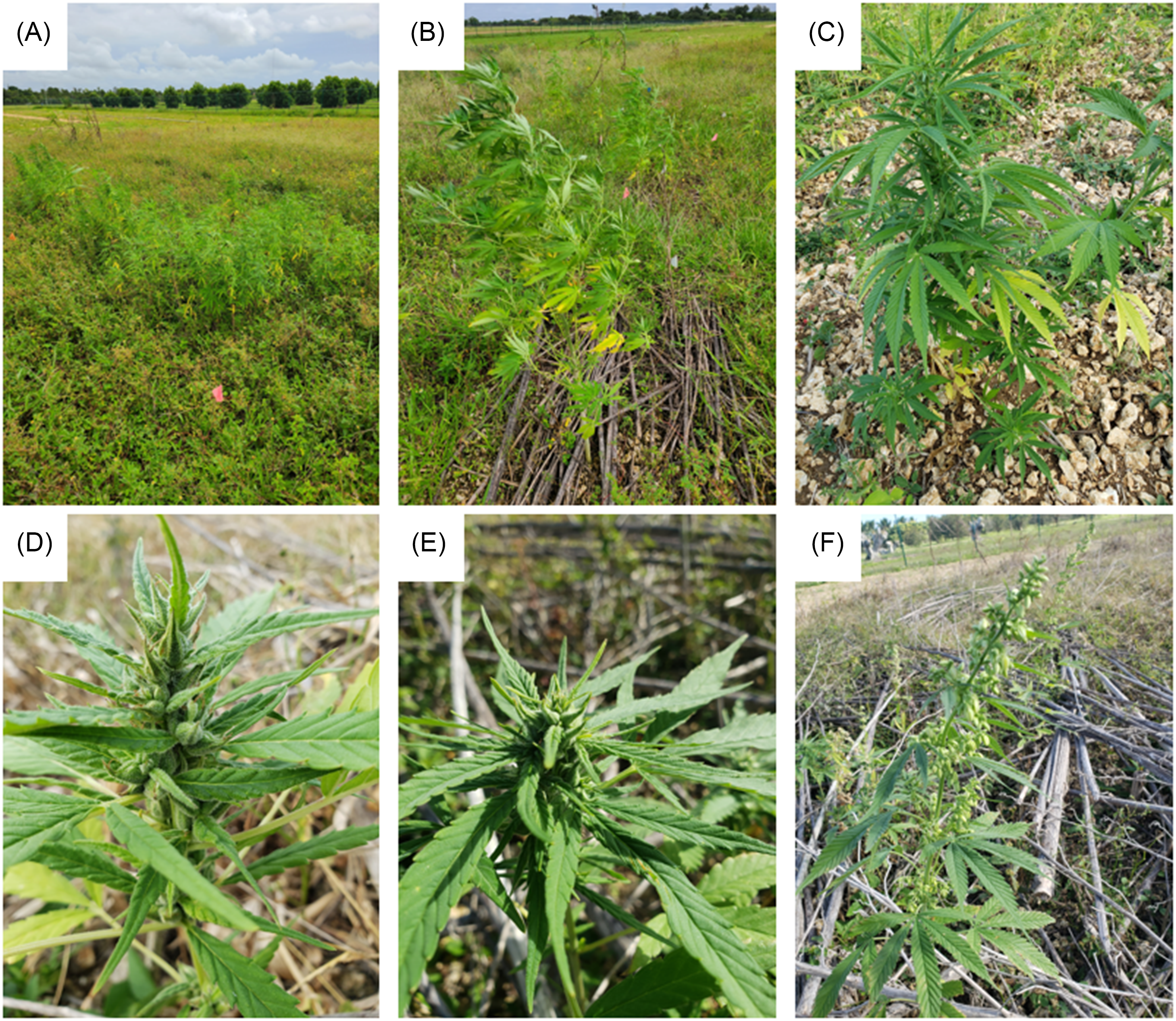
Volunteer hemp plants were observed within several months postharvest, as 80% of the 2019 planted area was left to shatter and disperse as if abandoned (Figure 3). More than 500 volunteer plants were observed within a 0.16-ha area, producing approximately 1,500 seeds. The research trials included several varieties with vigorous biomass and seed productivity (from China and southern Italy), although it was not possible to determine specifically which varieties resulted in volunteer plants. Most varieties planted showed poor performance previously due to early flowering, low growth, and minimal seed set (Brym et al. Reference Brym, Wadlington and Monserrate2020). We determined the 500+ volunteer plants encountered to represent a relatively low number compared with what may result in a commercial setting with high plant density and vigorous seed production. The additional pulses of volunteers in following seasons may have originated from seedbank or volunteer reproduction. Seed quality decreased over time, and volunteers did not persist in the abandoned field after 2 yr. Seedbank and storage conditions with high temperatures and humidity have been expected to reduce seed germination over time (Clark et al. Reference Clark, Bass and Sayers1963), perhaps even more rapidly when directly exposed to open environments. Seed-eating herbivores such as rodents, birds, and beetles may have helped to reduce the numbers of viable hemp seeds in the soil. Hemp seeds appear larger than those of many locally common weeds (Acalypha, Amaranthus, Euphorbia, Parthenium, Phyllanthus, etc.), thus potentially rendering them more obvious and attractive to the herbivores. The coordinated timing of male and female flowering is also essential for hemp reproduction. Only a few individual volunteers produced the majority of seeds in seasonal pulses over a year, suggesting the environment was challenging for growth and reproduction. Once the seeds germinated, density-dependent competition may have acted in patches with high seed shatter, but competition from plant residue and common weeds was likely more of a factor. Relatively few seeds with very poor germination quality points to the diminishing persistence of volunteer hemp.
Volunteer hemp plants emerging (A and B), then flowering and setting seed (C–F) from postharvest debris of the previous (2019) pilot project and variety trials at the University of Florida Tropical Research and Education Center (TREC), Homestead, FL. Photos by Daniel Calzadilla, 2020.
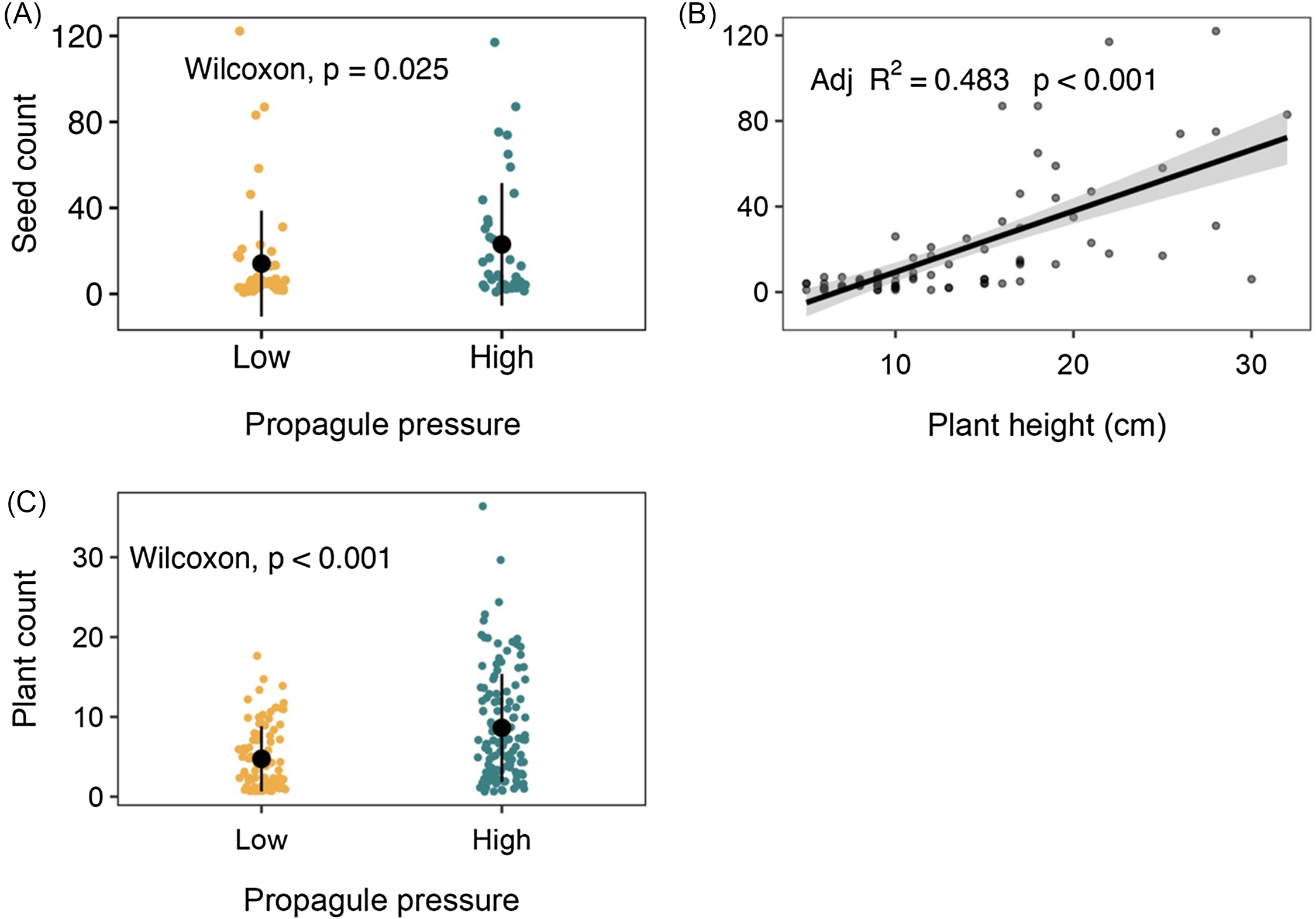
A few volunteer plants observed outside the targeted monitoring area in the mowed and tilled area were surprising, because the USDA termination methods applied did not eliminate volunteers. All observed populations likely could have been terminated effectively with additional mowing and disking. The targeted monitoring areas without mowing and disking represented 50% of the total land acreage monitored yet produced nearly all the seed. The plants found in the mowed and disked area did not produce seed in abundance. Of seed in the targeted monitoring area, the high propagule treatment produced 58% of the seeds, while the low propagule treatment produced 42% (Figures 4 and 5). We observed significantly more seeds from areas of high than low propagule pressure for the initial sampling period (January to March 2020; P = 0.025) and across all of 2020 (P = 0.014; Figures 4A and 5A and B). Volunteer plant counts also differed significantly between high (6.17 ± 0.38 SE) and low (4.46 ± 0.24 SE) propagule pressure areas (P < 0.001; Figures 4C and 5C). Mean female plant height was 24.12 ± 3.47 SE cm for high propagule pressure and 13.96 ± 1.11 SE cm for low. The difference in female plant height was likely influenced by different varietal compositions in the high and low propagule pressure treatments.
Volunteer population monitoring results from the initial monitoring period of January–March 2020. Analyses included the effects of (A) propagule pressure and (B) plant height on the number of volunteer hemp seeds collected and (C) plants counted in each propagule pressure treatment. Blue indicates high propagule pressure (seed drop plus seed application), with gold denoting low pressure (seed drop only).
Volunteer population monitoring results for monitoring during January–December 2020. The initial phase of monitoring (January–March 2020) is left of the vertical dashed line, which shows the break in monitoring intensity. Data included mean numbers of (A) volunteer hemp seeds collected and (C) plants counted per observation date, with dots and bars showing mean ± SE for each observation date. Further analyses found the effects of (B) propagule pressure and (D) plant height on the number of volunteer hemp seeds collected. Blue indicates high propagule pressure (seed drop plus seed application), with gold showing low pressure (seed drop only).
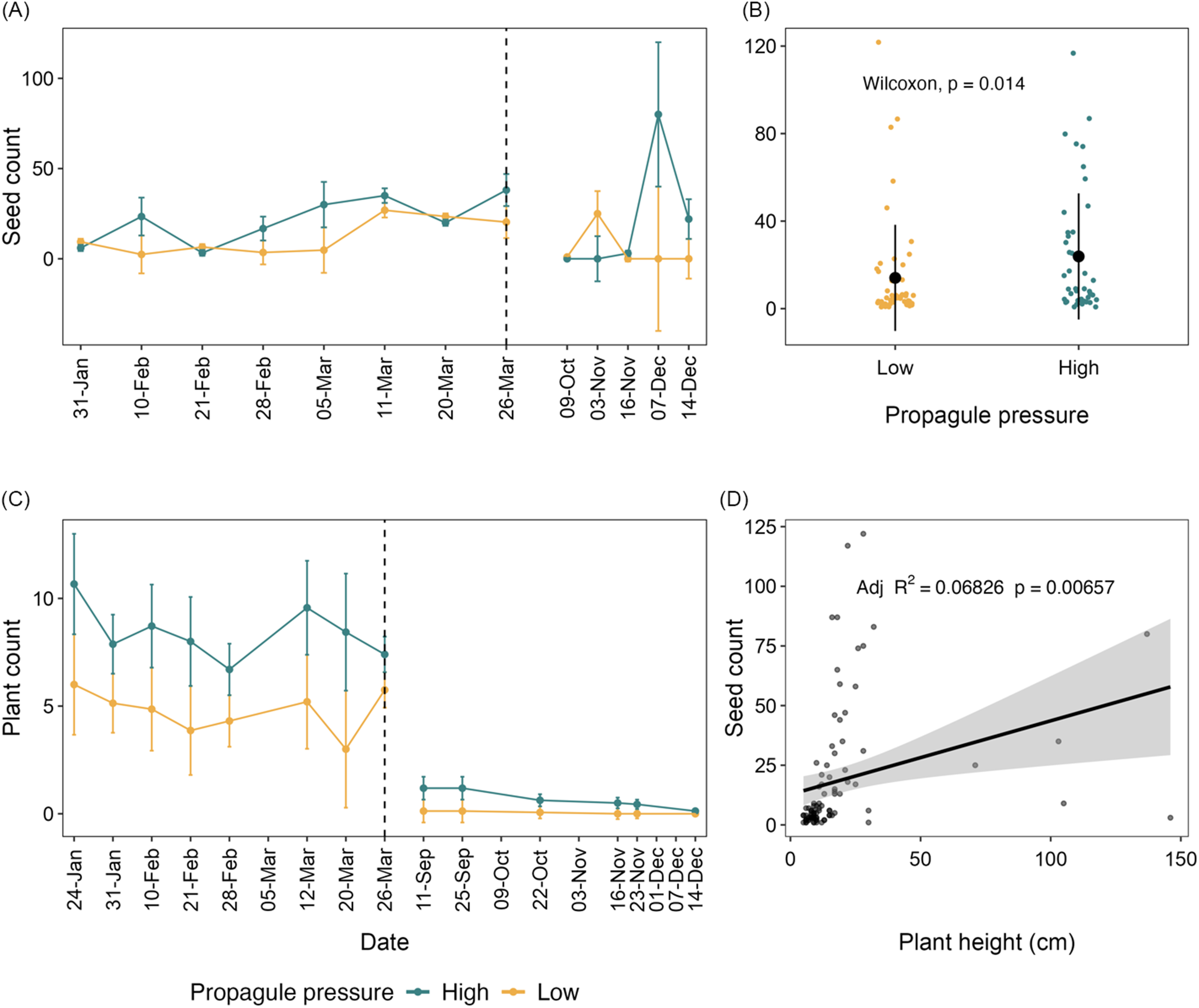
The high propagule pressure area was more likely to include individuals from vigorous varieties or varieties that showed faster growth and higher seed production (i.e., Chinese origin). An increasing abundance of mature seeds was observed in the spring with a maximum on March 11, 2020, with 26.91 ± 0.82 SE seeds ∼5 m−2 in the high propagule pressure area; this was surprising in the spring season as seed maturity was primarily expected in the fall (Figure 5A). Across dates, mean seed production per plant was 23.86 ± 2.99 SE for high propagule pressure and 14.06 ± 2.52 SE seeds for low propagule pressure (Figure 5B). This is much lower than expected for plants in commercial production that can put out hundreds of seeds per individual (Kaur et al. Reference Kaur, Brym, Moserrate Oyola and Sharma2023). The highest mean number of volunteer plants was 10.67 ± 0.42 SE from the high propagule pressure plots on January 24, 2020 (∼120 d after abandonment; Figure 5C), also much less than commercial planting rates (50 plants m−2). When plant counts were compared across propagule pressure with dates combined, we observed about twice as many plants in high as in low propagule pressure (Figure 5B), accounting for the effect of additional high-quality seed loads to the area. Plant height appeared as a useful indicator of reproductive potential; taller plants generally had greater seed production for the spring season January to March (r2 = 0.483; Figure 4B), although the trend was not consistent across the year for January to December (r2 = 0.07, P = 0.007; Figure 5D).
The highest count, height, and seed production values for volunteer hemp plants were encountered at the earliest stages of our study (January to March 2020), except for a spike in seed count in Dec. Following that period, no new plants were found until July and then again in September 2020. However, all the plants found in July 2020 were outside the targeted monitoring area in the area that was mowed and disked. From September to December 2020, there were very few plants that produced seeds (10.92 ± 6.79 SE seeds 5 m−2), and the majority came from high propagule pressure plots (80%). The two largest seed samples from fall 2020 were taken in December (Figure 5A and 5C). Although viable seeds presumably remained in the field seedbank, the plant population declined by the end of 2020. During March 2021, fewer than eight female flowering plants with mature seeds were observed in the field. Only a single male plant was found August 2021 with no additional observations by September 2021. Although we acknowledge the chance of a seedbank, the field no longer contained volunteers and was returned to mowing and disking in a cover crop–fallow rotation. The combination of biomass buildup, weed competition, and lack of soil disturbance during the field abandonment simulation may have limited new plant establishment and reproduction. Yet, following activities associated with this study, with poor-quality seeds after long term storage, first dried (55 C for at least 72 h), seeds that were discarded in the monitoring area in January 2022 rapidly resulted in volunteer plants. This final observation of volunteer plants in 2022 was likely from that source of seeds discarded later than our monitoring study that we expected to be nonviable because of long-term storage in ambient conditions (Clark et al. Reference Clark, Bass and Sayers1963). Since then, the field has been plowed and disked and no volunteer hemp plants have been observed.
Seed Establishment
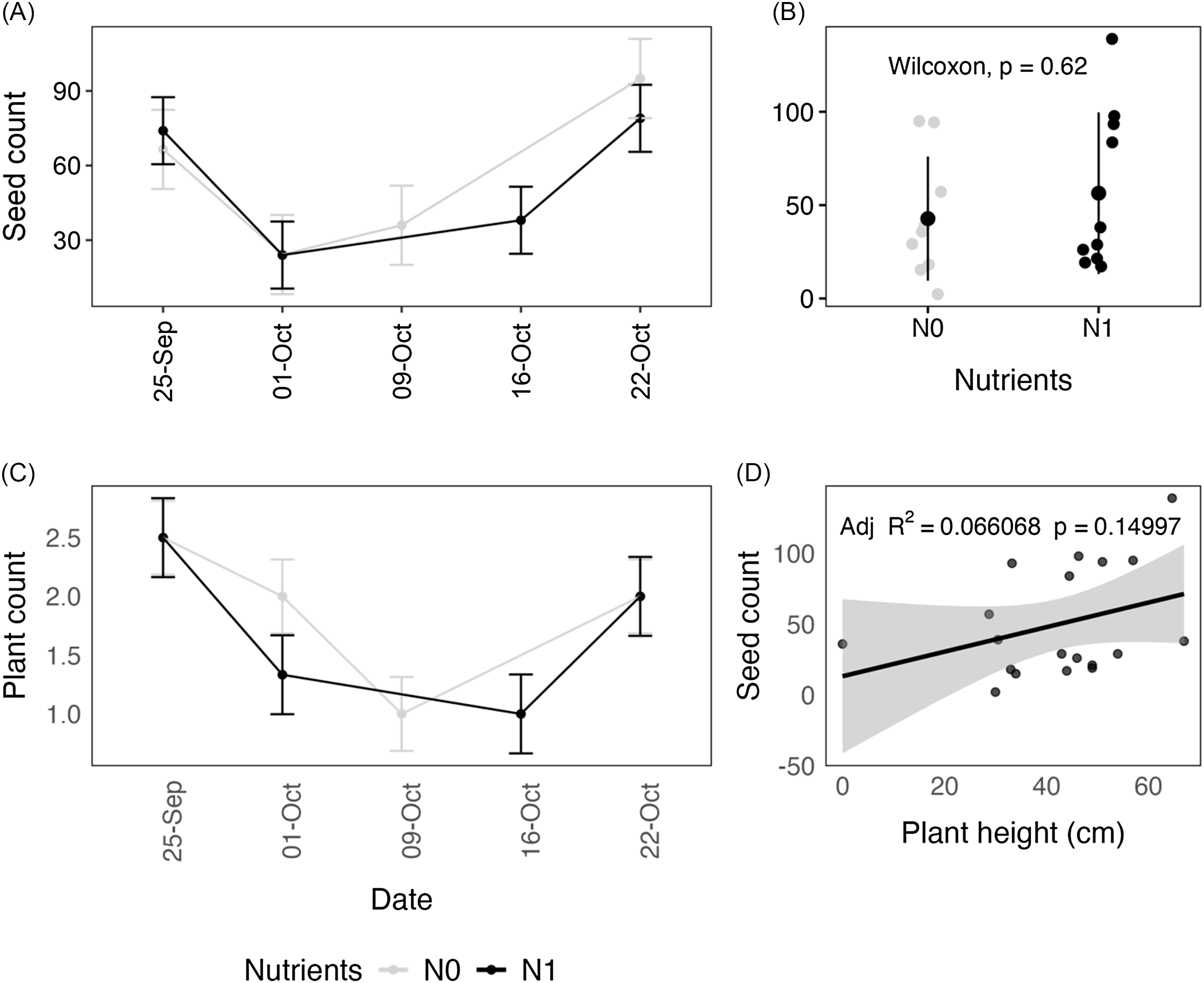
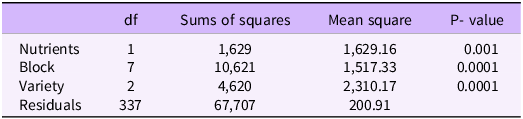
When hemp seeds were planted in an experiment on the edge of an agricultural field with disturbance and nutrient treatments, hemp grew in plots with nutrient addition and a control treatment without nutrients added, but only in plots with soil disturbance (Table 2; Figure 6). In the disturbed plots, plant height was significantly affected by nutrient, variety, and experimental block (Table 3). Plants that established and reproduced were still generally small with low seed count. Mean female plant height at harvest was 37.9 ± 1.97 SE cm for unfertilized plants and 48.3 ± 1.99 SE cm for fertilized plants (Table 2).
Cumulative seed produced and plant heights (cm) for each variety and nutrient application at harvest for plants in the seed establishment experiment of 2020.

a N1, nutrients added; N0, no nutrients added.
b Values are shown as average ± SE. A dash (—) indicates no plants produced. Letters denote Tukey post hoc grouping.
c Combined varieties.
Seed establishment experimental results, 2020. Data include mean numbers of (A) volunteer hemp seeds collected and (C) plants counted with dots and bars showing mean ± SE for each harvest date. Further analyses showed the effects of (B) nutrient treatment and (D) plant height on the numbers of volunteer hemp seeds collected. Dots represent the average value per treatment (A, C) and plot (B, D). Black indicates high nutrients, and gray indicates low nutrients. N1, nutrients added; N0, no nutrients added.
ANOVA results for height as the response variable at harvest in the invasion risk test of 2020.
The total seed count across all five harvests was 706 seeds from 37 plants (Figure 6A). Seed counts were observed only to be affected by total numbers of plants harvested (P = 0.003). Mean seed count was 42.78 ± 5.47 SE seeds plant−1 for unfertilized plants and 56.4 ± 7.12 SE seeds plant−1 for fertilized plants (Table 2; Figure 6B). The proportion of seeds produced per nutrient treatment was not significantly different at 53% and 47% for high and low nutrients, respectively (P = 0.82). The proportion of plants produced per nutrient treatment was 32% and 42% for high and low nutrients, respectively, but not significantly different (P = 0.69; Figure 6C). The proportion of total seeds produced by variety was significantly different at 58%, 32%, and 11% for Han-NE, Helena, and CFX-1, respectively (chi-square test, P = 0.04). The relatively good performance of Han-NE in seed production was expected by observations of its subtropical latitude origin and its better performance in southern Florida across variety trials and complementary experiments (Table 1). Hence, differences in varietal factors such as cultivation type, origin, sex type, and possibly seed size appeared to have affected proportions of seeds germinating in the seed establishment trial and germination test. The specific contribution of each of these factors and their interactions were beyond the scope of this study but are recommended for further investigation.
Seed germination tests reflected poor-quality seed. Overall, seeds averaged 7.2% germination with no significant difference between varieties and nutrient levels (P = 0.72). As noted, this poor germination quality combined with relatively few seeds subjected to consumption by herbivores and seedling competition with weeds and each other may have further lowered their numbers, leading to a reduced persistence of volunteer hemp. Continued monitoring should be conducted on and around hemp fields for the years following harvest to observe population decline or, otherwise, to apply approved termination methods responsively for assurance that hemp has been properly terminated.
Summary of Research Findings
Hemp has been observed and recorded growing in Florida (GBIF 2024), although origins of these plants and their persistence is unknown. Many hemp plants were eradicated by law enforcement, and there is no evidence of sustained populations in Florida. Because hemp has a predicted high invasion risk from the literature (Williams and Lieurance Reference Williams and Lieurance2018), it is essential to monitor and evaluate invasion risk before widespread introduction. FDACS Rule 5B-57.014 declares hemp “a potentially invasive plant species and is a threat to the plant life of this state if not properly controlled” (FDACS 2021). The rule requires an environmental containment plan that defines site boundaries, equipment cleaning, and transportation precautions for each cultivation site (e.g., Barney Reference Barney2014). Furthermore, the USDA has released best practices to prevent or reduce volunteer hemp that should be used following crop termination (U.S. Domestic Hemp Production Program 2021). Yet accidental distribution of seed and volunteer plants remain a significant concern for hemp at commercial scales.
Our research addressed on-farm volunteer monitoring and seed establishment at a closely monitored research site in southern Florida. Mature volunteer hemp plants were observed following plantings with populations that persisted across a calendar year. We observed that seeding rate positively affected volunteer plant counts and that seed establishment was positively affected by disturbance and fertilizer. Surprisingly, USDA-recommended best practices were insufficient in entirely preventing hemp volunteers in managed areas. Ineffective containment and further escape from cultivation remain an ecological concern for agricultural and surrounding natural areas (Canavan et al. Reference Canavan, Brym, Brundu, Dehnen-Schmutz, Lieurance, Petri, Wadlington, Wilson and Flory2022; McKay et al. Reference McKay, Christian, Harrison and Rice2005).
Our observations suggest monitoring and containment practices are a critical aspect of hemp crop management, with emphasis on active hemp fields and nearby fertilized areas. Factors most likely to aid the escape of this crop involve the distribution of viable plant material; for hemp, this includes seeds distributed both accidentally (e.g., equipment) or naturally (e.g., wildlife). These factors may be the most intensive in commercial-scale production of hemp seed and fiber (Barney Reference Barney2012). Commercial harvest goals for seed production are 1,000 to 2,000 kg ha−1 of dry seed from a field planted at 40 to 50 kg ha−1 live seed (Johnson Reference Johnson2019). It is possible for hemp to volunteer and disrupt subsequent crops from seed transported to a field or remaining after harvest. Translocation and establishment beyond planted areas was not observed in our study.
We found that hemp, like many weedy species, was likely to volunteer from seeds in agricultural soil conditions. We found that when seed fell on disturbed and abandoned fields in south Florida, hemp produced volunteer plants, although in pulses with variable and declining quality. Volunteer plants established and reproduced in multiple seasons during a calendar year and were observed for up to 2 yr. Characteristics of agricultural soil (disturbance and fertility) contributed to volunteer plant establishment and reproduction, although fertility was only a moderate factor in our analysis. Volunteers were tracked for multiple years in fields experiencing approved termination and simulated abandonment and in other nearby areas. No volunteer was observed outside the planted areas. Maximum seed production appeared to be from clusters of relatively tall plants, likely representing a more vigorous variety matching the latitude and tropical climate of south Florida.
By rule, the industry is expected to avoid hemp becoming feral, which has occurred with other crops. In Florida, the castorbean (Ricinus communis L.) was introduced as a landscape plant. Over multiple generations, uncultivated offspring became adapted to local environments, while desirable traits diminished. Ricinus communis was listed as a Category II invasive species in 2001 by the Florida Invasive Species Plant Council (FISC) and became a prohibited agricultural crop (FISC 2023; Friedman et al. Reference Friedman, Andreu, Quintana and McKenzie2022). Early detection and eradication under FDACS non-native planting oversight involved the mile-a-minute vine (Mikania micrantha Kunth) and golden false beardgrass [Chrysopogon aciculatus (Retz.) Trin.] (FDACS Division of Plant Industry, personal communication). It is also important to maintain best practices and monitoring to minimize the escape of hemp from cultivation and reduce its effects on agricultural and natural areas. This can ensure that when grown as a crop, hemp can provide benefits without compromising its economics or the environment.
As in many field studies, we investigated only a single site with its associated soil type and climate using an opportunity to gather important observations on hemp invasion risk. Also, this study only notably evaluated disturbed and fallow agricultural conditions, and not directly more natural habitats, which may be of greater concern for invasiveness potential. There are nearby natural areas (<500 m) that are repeatedly visited with no observation of hemp volunteers outside the agricultural site. Preliminary studies in central Florida looked at hemp volunteers in a grassy and forested natural area with low germination (<20%) and no recurring regeneration as well (Brym and Fankhauser Reference Brym and Fankhauser2021, p. 59). Volunteer plants in our study resulted from up to 21 varieties of mixed suitability to our area, which implies variable seed production, whereas commercial hemp plantings would plant only varieties of proven suitability and likely at greater risk to volunteer. Follow-up trials with use of commercially viable varieties across sites and years could further determine the spatial extent and time durations for volunteer hemp plants that may threaten crops and nearby areas. An improved understanding of the invasive potential of hemp and other new crops can help with management decisions and prevent ecological and economic harm.
Acknowledgments
We thank the TREC field crew for field assistance and the agroecology lab members for field and lab assistance.
Funding statement
The authors received funding to support the UF/IFAS Hemp Pilot Project as sponsored research from Green Roads West and from gifts to the UF/IFAS Hemp Endowment.
Competing interests
The authors declare no conflicts of interest.


 Open access

