

Introduction
The Journal of Management & Organization (JMO) is the official scholarly outlet of the Australian and New Zealand Academy of Management (ANZAM), published by Cambridge University Press as a Gold Open Access journal. It provides global perspectives on management and organizational scholarship across allied social‐science disciplines and maintains wide abstracting and indexing coverage, including the Social Sciences Citation Index (Web of Science [WoS]), Scopus, PsycINFO, EconLit, ERIH PLUS, ProQuest and RePEc.
JMO’s lineage began in 1995 as the Journal of the Australian and New Zealand Academy of Management (JANZAM). In 2006, the title was relaunched as Journal of Management & Organization, continuing the earlier volumes’ scholarly record. Ken Parry served as the inaugural Editor-in-Chief of JANZAM in 1995, establishing the editorial foundations upon which JMO would evolve. Subsequent editorial leadership has included Tui McKeown (outgoing editor prior to 2020), Tim Bentley (appointed EiC in late 2014), and Remi Ayoko (EiC, March 2020–May 2024; then Past EiC through December 2024), reflecting the journal’s growing international visibility and scope. Since May 2024, Vanessa Ratten has served as Editor-in-Chief (ANZAM, 2014; Billsberry, Kempster & Jackson, Reference Billsberry, Kempster and Jackson2018).
As of the most recent metrics reported on the Cambridge platform and allied bibliometric sources, JMO’s journal-level indicators underscore its citation footprint in the management and organisation domains. Reported values include a 2-year Journal Impact Factor (2024) of 2.8, a 5-year Impact Factor of 3.8, a CiteScore of 7.3, and a Scimago Journal Rank (SJR, 2024) of 0.945 with a Q1 classification in the Business and International Management and an h-index of 54. In 2024, the journal published 67 articles (37 open-access). These indicators are third-party measures and should be interpreted with appropriate caution, but they provide useful context for understanding the journal’s performance over time.
Considering these developments and the journal’s three-decade trajectory, this study undertakes a comprehensive bibliometric retrospective of JMO. The analysis maps publication, and citation pattern identifies leading contributors (articles, authors, institutions, and countries) and uncovers the journal’s evolving intellectual and thematic networks. Drawing on Scopus and the Web of Science Core Collection (1995–2024), we employ established science-mapping tools such as VOSviewer, bibliometrix, and biblioshiny alongside widely recognised indicators (e.g., citations per paper, h-index) to examine co-citation, bibliographic coupling, and keyword co-occurrence structures. The study design follows established bibliometric protocols (Broadus, Reference Broadus1987; Pritchard, Reference Pritchard1969; Rousseau, Reference Rousseau2014) such as the scientific procedures and rationales for systematic literature reviews (SPAR-4-SLR), adapted to the specific context of a single-journal retrospective (Hussain, Merigó, Rahimi & Lev, Reference Hussain, Merigó, Rahimi and Lev2025; Khorshidi, Merigó & Beydoun, Reference Khorshidi, Merigó and Beydoun2025; Merigó, Mas-Tur, Roig-Tierno & Ribeiro-Soriano, Reference Merigó, Mas-Tur, Roig-Tierno and Ribeiro-Soriano2015). The findings will offer valuable insights into the historical development of JMO, the current state of research in management, and potential future directions.
Note that the preparation of a bibliometric overview of a journal is a very popular issue in the academic community that has been developed for a long time with seminal contributions in the Journal of Finance (Heck, Cooley & Hubbard, Reference Heck, Cooley and Hubbard1986), The Accounting Review (Heck & Bremser, Reference Heck and Bremser1986), Journal of Financial Economics (Schwert, Reference Schwert1993), Journal of Consumer Research (Hoffman & Holbrook, Reference Hoffman and Holbrook1993) and in the Journal of International Business Studies (Inkpen & Beamish, Reference Inkpen and Beamish1994). The Strategic Management Journal published a retrospective of the first 20 years of the journal (Phelan, Ferreira & Salvador, Reference Phelan, Ferreira and Salvador2002; Ramos-Rodríguez & Ruíz-Navarro, Reference Ramos-Rodríguez and Ruíz-Navarro2004) and Technovation for the 25th anniversary (Garcia-Merino, Do Carmo & Álvarez, Reference Garcia-Merino, Do Carmo and Álvarez2006). Total Quality Management & Business Excellence (Dereli, Durmuşoğlu, Delibaş & Avlanmaz, Reference Dereli, Durmuşoğlu, Delibaş and Avlanmaz2011) and the Journal of Business Ethics also published a retrospective evaluation of their publications by using bibliometric techniques (Calabretta, Durisin & Ogliengo, Reference Calabretta, Durisin and Ogliengo2011). The Journal of Management Studies published a general overview motivated by the 50th anniversary (Clark, Wright, Iskoujina & Garnett, Reference Clark, Wright, Iskoujina and Garnett2014). The Journal of Business Research (Merigó et al., Reference Merigó, Mas-Tur, Roig-Tierno and Ribeiro-Soriano2015) and the Journal of Organizational Change Management (Giraud & Autissier, Reference Giraud and Autissier2013) have also published bibliometric overviews of their publications.
More recently, Rialp, Merigó, Cancino and Urbano (Reference Rialp, Merigó, Cancino and Urbano2019) studied the first 25 years of the International Business Review, Rose, Hölzle and Björk (Reference Rose, Hölzle and Björk2020) focused on Creativity and Innovation Management, Sarin et al., (Reference Sarin, Haon, Belkhouja, Mas-Tur, Roig-Tierno, Sego and Carley2020) on Technological Forecasting and Social Change, Gardner et al., (Reference Gardner, Lowe, Meuser, Noghani, Gullifor and Cogliser2020) on The Leadership Quarterly, Baker, Kumar and Pandey (Reference Baker, Kumar and Pandey2021) on Small Business Economics, and Dana, Kumar, Pandey and Sureka (Reference Dana, Kumar, Pandey and Sureka2021) on the Journal of Small Business Management. During the last three years, many other studies have appeared including the work of Donthu, Kumar, Pandey, Lim and Pilling (Reference Donthu, Kumar, Pandey, Lim and Pilling2022) in the Canadian Journal of Administrative Sciences, Froese, Malik, Kumar and Sahoo (Reference Froese, Malik, Kumar and Sahoo2022) on Asian Business and Management, Kumar, Chavan and Pandey (Reference Kumar, Chavan and Pandey2023) on the Journal of International Management, Slavinski, Todorović and Obradović (Reference Slavinski, Todorović and Obradović2023) on the International Journal of Project Management, Tabash, Kumar, Sharma, Vashistha and El Refae (Reference Tabash, Kumar, Sharma, Vashistha and El Refae2023) on the International Journal of Organizational Analysis, and Varma, Kumar, Lim and Pandey (Reference Varma, Kumar, Lim and Pandey2023) on Personnel Review. Finally, also note that motivated by a special anniversary (Monastersky & Van Noorden, Reference Monastersky and Van Noorden2019), many other journals have implemented different activities including the publication of special anniversary issues (Arrow et al., Reference Arrow, Bernheim, Feldstein, McFadden, Poterba and Solow2011), editorials (List & Uhlig, Reference List and Uhlig2017), essays (Barley, Reference Barley2015) and reviews (Van Fleet et al., Reference Van Fleet, Ray, Bedeian, Downey, Hunt, Griffin and Feldman2006).
JMO has published some bibliometric studies on strategic management and the mission statement (Alegre, Berbegal-Mirabent, Guerrero & Mas-Machuca, Reference Alegre, Berbegal-Mirabent, Guerrero and Mas-Machuca2018), climate change and interdisciplinary research (Wohlgezogen, McCabe, Osegowitsch & Mol, Reference Wohlgezogen, McCabe, Osegowitsch and Mol2020), management research on the COVID-19 (Ayoko, Caputo & Mendy, Reference Ayoko, Caputo and Mendy2021), internet of things and supply chain management (Li, Zhu & Darbandi, Reference Li, Zhu and Darbandi2023), optimization algorithms in management (Zhou, Xia & Dai, Reference Zhou, Xia and Dai2023), employee relations (Mori, Cavaliere, Sassetti & Caputo, Reference Mori, Cavaliere, Sassetti and Caputo2024) and inclusive workplaces (Palumbo, Hinna & Manesh, Reference Palumbo, Hinna and Manesh2025). However, still there is no general bibliometric overview of JMO and this is the main motivation of this work.
In positioning this study, we interpret the evolution of JMO through the theoretical lens of institutional theory, field dynamics, and scientific capital. Drawing on the institutional perspective (DiMaggio & Powell, Reference DiMaggio and Powell1983), journals are understood as organizational actors embedded in competitive fields where legitimacy, reputation, and conformity to disciplinary norms are vital for survival. Over time, journals accumulate scientific capital (Bourdieu, Reference Bourdieu1988) through peer recognition, international collaboration, and thematic resonance, each of which enhances visibility and symbolic authority. This framing situates JMO’s 30-year trajectory as a case of field-level positioning (Whitley, Reference Whitley2000), wherein its evolution from a regionally anchored outlet to an internationally recognized journal reflects broader processes of knowledge diffusion, legitimacy-building, and capital accumulation. This conceptual integration allows the bibliometric analysis to speak to broader theoretical debates about how academic journals evolve within structured systems of prestige and influence.
The rest of the paper is structured as follows. Section 2 outlines the methodology, including data sources and bibliometric tools. Section 3 presents the performance results, covering publication trends, citation structures, highly cited works, and leading authors, institutions, and countries. Section 4 reports the science mapping results using VOSviewer and Bibliometrix, with analyses of co-citation, bibliographic coupling, keyword co-occurrence, trend topics, and thematic maps. Section 5 discusses the findings, highlights implications, and concludes with limitations and future research directions.
Methods
This study adopts a structured bibliometric methodology to ensure rigor, transparency, and reproducibility (Hussain, Mabrok, Gao, Rabhi & Rashed, Reference Hussain, Mabrok, Gao, Rabhi and Rashed2024). We apply the SPAR-4-SLR protocol (Donthu, Kumar, Mukherjee, Pandey & Lim, Reference Donthu, Kumar, Mukherjee, Pandey and Lim2021; Paul, Lim, O’Cass, Hao & Bresciani, Reference Paul, Lim, O’Cass, Hao and Bresciani2021), which provides a systematic framework for journal-focused bibliometric reviews. The approach is well established and frequently applied in several bibliometric analyses (Guillén-Pujadas, Alaminos, Vizuete-Luciano & Merigó, Reference Guillén-Pujadas, Alaminos, Vizuete-Luciano and Merigó2025; Hussain et al., Reference Hussain, Merigó, Rahimi and Lev2025; Khorshidi et al., Reference Khorshidi, Merigó and Beydoun2025). The protocol encompasses five sequential stages: Identification, Acquisition, Purification, Evaluation, and Reporting, each of which is explicitly linked to the procedures undertaken in this study. The overall process is summarized in Table 1, and the following subsections describe in detail how each stage was operationalised.
Procedure of the study based on the SPAR-4-SLR protocol

Data sources and scope
Two curated bibliographic databases were queried in May 2025:
• Scopus (primary corpus for performance statistics and rankings).
▪ Source Title: Journal of Management & Organization → 3,836 records (unfiltered).
▪ Filter Source Title variant: Journal of Management and Organisation → 1,250 records.
▪ Limit years to 1995–2024 → 1,224 records.
▪ Publication stage = Final → 1,155 records.
▪ Document types = Articles + Reviews → 1,083 records (working dataset used in all Scopus-based tables/figures).
• Web of Science Core Collection (supporting corpus for selected VOSviewer figures).
▪ Publication Titles: Journal of Management & Organization, 2007–2024 → 1,173 records.
▪ Filter Source Title variant: Journal of Management and Organisation → 1,250 records.
▪ Final publications (exclude 2025) → 1,150 records.
▪ Articles + Reviews → 1,017 records.
▪ Exclude Early Access → 901 records (WoS mapping set).
These scopes reflect database coverage differences and ensure like-for-like comparisons within each source (Bar-llan, Reference Bar-llan2008; Ding, Rousseau & Wolfram, Reference Ding, Rousseau and Wolfram2014; Glanzel, Moed, Schmoch & Thelwall, Reference Glanzel, Moed, Schmoch and Thelwall2019).
Search strategy, inclusion criteria, and data handling
Inclusion criteria require records must (i) be published under JMO’s lineage, (ii) fall within the stated years (1995–2024 in Scopus; 2007–2024 in WoS), (iii) have Final publication status, and (iv) be classified as Article or Review. Early-access and 2025 items are excluded to avoid instability in bibliographic metadata and citation accrual. After export, we checked and harmonised metadata fields (titles, authors, affiliations, references, and author keywords). No imputation was performed. Scopus serves as the reference corpus for all descriptive statistics, while WoS is used for complementary visualisations where specified.
Indicators and analytical techniques
Performance indicators are computed across multiple dimensions, including total publications and citations, citations per paper, h-index (Alonso, Cabrerizo, Herrera-Viedma & Herrera, Reference Alonso, Cabrerizo, Herrera-Viedma and Herrera2009; Hirsch, Reference Hirsch2005), citations per year, and selected per-capita measures (authors, institutions, countries), together with temporal classification to track developmental phases. Where appropriate, we draw on contemporary guidance on indicator interpretation (Figuerola-Wischke, Merigó, Gil-Lafuente, Kydland & Amiguet, Reference Figuerola-Wischke, Merigó, Gil-Lafuente, Kydland and Amiguet2024; Hussain et al., Reference Hussain, Merigó, Rahimi and Lev2025) and report journal-level context via JCR/SciVal descriptors when used (Clarivate, 2025, Scopus, 2025).
Science mapping (Cobo, Lopez-Herrera, Herrera-Viedma & Herrera, Reference Cobo, Lopez-Herrera, Herrera-Viedma and Herrera2011) examines relational structure by: co-citation to reveal intellectual foundations (Small, Reference Small1973), bibliographic coupling to capture current research fronts (Kessler, Reference Kessler1963), and author-keyword co-occurrence to surface thematic concentrations and trends (Callon, Courtial, Turner & Bauin, Reference Callon, Courtial, Turner and Bauin1983). This trio provides complementary views of JMO’s knowledge base, active clusters, and topical evolution.
Software and parameters
Network construction and visualization are conducted in VOSviewer (Van Eck & Waltman, Reference Van Eck and Waltman2010). Descriptive statistics and additional maps are generated in bibliometrix/biblioshiny (Aria & Cuccurullo, Reference Aria and Cuccurullo2017) and Microsoft Excel. Unless otherwise specified, default normalisation and clustering settings are used in VOSviewer. Threshold choices (e.g., minimum citations or keyword occurrences) are stated alongside each figure to ensure reproducibility.
Reproducibility and limitations
All queries were run in May 2025; counts may change as databases update. Coverage and indexing policies differ between Scopus and WoS (Bar-llan, Reference Bar-llan2008; Ding et al., Reference Ding, Rousseau and Wolfram2014), and early-access handling can affect near-term citation accrual (Glanzel et al., Reference Glanzel, Moed, Schmoch and Thelwall2019). Cross-database comparisons are therefore interpreted cautiously, and like-with-like analyses are reported within each source.
Procedural summary (SPAR-4-SLR protocol)
The methodological steps outlined above are consolidated in Table 1, which serves as the procedural roadmap for the study. Following the SPAR-4-SLR framework (Donthu et al., Reference Donthu, Kumar, Mukherjee, Pandey and Lim2021; Paul et al., Reference Paul, Lim, O’Cass, Hao and Bresciani2021), the activities applied in this study are as follows:
• Assembling (Identification). The scope is defined as the Journal of Management & Organization (JMO), with the primary objective of producing a 30-year bibliometric retrospective. The research questions, listed in Table 1, capture the journal’s position in the scholarly community, the most-cited JMO articles and external references, the leading authors, institutions, and countries, and the structural patterns revealed through co-citation, bibliographic coupling, and keyword co-occurrence analyses.
• Acquisition. The search strategy is specified with precision. Scopus was selected as the primary database, covering the years 1995–2024, and WoS Core Collection was used as a complementary source for 2007–2024. The table documents the raw retrieval counts, subsequent filtering, and the software tools employed (VOSviewer, bibliometrix/biblioshiny, and Excel).
• Arranging (Purification). Filters were applied sequentially to ensure data consistency: exclusion of 2025 records, retention of final-stage publications, and restriction to articles and reviews. These steps yielded the final analytical corpora of 1,083 Scopus documents and 901 WoS documents. The table also notes the integration of JCR (WoS) and SciVal (Scopus) for additional journal-level metrics.
• Assessing (Evaluation). This stage details the analytical dimensions: performance indicators (documents, citations, citations per paper, h-index, annualised and per-capita metrics) and graphical analyses (co-citation, bibliographic coupling, keyword co-occurrence). The use of network analysis, thematic mapping, and word clouds is documented as complementary techniques for visualising the journal’s intellectual and thematic structure.
• Reporting. The final section highlights the conventions applied in presenting results through tables and figures, as well as the explicit limitations, dynamic database updates, platform coverage differences, and cross-disciplinary comparability issues.
By explicitly linking each activity to the SPAR-4-SLR stages, Table 1 not only summarises the methodological pipeline but also provides readers with a transparent and reproducible account of how the study was designed and executed.
Results
The bibliometric assessment of the JMO over 30 years highlights distinct phases in its scholarly development, marked by shifts in publication volume, citation impact, and thematic resonance. The evidence suggests a trajectory from limited regional output to broader international visibility, punctuated by periods of unpredictability and breakthrough contributions that reshaped its citation profile. Rather than linear growth, JMO’s evolution reflects cycles of consolidation and expansion, underscoring the tension between quantity, selectivity, and long-term impact.
Publication and citation structure of JMO
This dynamic is most evident in the journal’s publication and citation structures, where fluctuations in annual output and highly uneven citation distributions reveal both the opportunities and vulnerabilities of JMO’s growth. The data point to moments when increased productivity coincided with influential breakthroughs, but also to periods where higher volumes did not translate into proportional impact, highlighting the journal’s ongoing challenge of balancing expansion with scholarly significance. Figure 1 shows that JMO’s publication output has progressed through three distinct phases.
Annual number of papers published in JMO.

The first decade (1995–2005) was characterised by very modest productivity, averaging fewer than 15 papers per year, reflecting the journal’s early-stage positioning and limited visibility. This period is consistent with the consolidation phase of new journals, where growth is constrained by author awareness, indexing coverage, and editorial capacity. The second phase, beginning in 2006, marks a clear expansion, with output rising steadily and stabilising between 40 and 65 papers annually through much of the 2010s. This growth coincided with the journal’s deeper integration into international databases and its widening author base, yet instability remains visible, especially the sharp dip in 2016, when publication volume fell below 35. Such a contraction suggests a shift towards editorial tightening or policy reorientation, demonstrating that expansion was not pursued at any cost. The third phase begins in 2017, with relatively stable production around 50–65 papers, before the increase in 2024 to more than 100 papers, the highest in JMO’s history. While this unprecedented peak reflects the journal’s 30th anniversary and associated thematic calls, its sustainability remains uncertain. A sharp increase in publication volume of this kind poses both an opportunity to expand influence and a risk of diluting citation performance if quality and thematic coherence are not carefully maintained.
The annual citation structure in Table 2 provides a sharper lens on JMO’s impact trajectory than publication counts alone (Fig. 1). In the formative years (1995–2003), output was modest and citations low, with most articles attracting only minimal attention. Although almost every paper received at least one citation, very few surpassed even the 20-citation threshold, reflecting the journal’s limited international visibility and regional concentration during its early stage.
Annual citation structure of JMO

Abbreviations: TP and TC = Total papers and citations; ≥200, ≥100, ≥50, ≥20, ≥10, ≥5, ≥1 = Number of papers with equal or more than 200, 100, 50, 20, 10, 5, and 1 citations; T50 = Number of documents in the Top 50 of Table 4.
From 2004 onward, a more pronounced shift becomes evident. Despite relatively small volumes, years such as 2004 and 2006 stand out, producing highly cited contributions that significantly boosted the journal’s profile. For example, in 2006, four papers crossed the 50-citation mark, with two exceeding 100 citations. The breakthrough period arrived between 2008 and 2012, when JMO consistently produced articles that today have accumulated over 1,000 citations and multiple papers each year surpass the 100-citation threshold. Importantly, 2008 produced JMO’s first ≥200-citation article, a milestone that marked its entry into the wider global discourse.
The mid-2010s (2013–2017) reflect a pattern of fluctuating citation performance. While total publications grew steadily, the number of highly cited papers fluctuated. Some years, such as 2013 and 2014, have generated few papers above the 50-citation threshold, while others, like 2015 and 2017, have produced multiple influential works, several of which entered the top 50 most cited list (T50). This underlines a key characteristic of JMO’s citation profile: impact has been driven by selective outliers rather than by a uniform rise across all papers.
Accelerated growth found during 2018–2021, which together represent the journal’s most influential period. In 2018 alone, two papers exceeded 200 citations and seven entered the T50, while in subsequent years JMO consistently produced papers crossing the 100-citation mark. This reflects the publication of articles that resonate strongly with global debates on technology, inclusivity, resilience, and crisis management. Yet, as expected, the most recent years (2022–2024) show a sharp drop in cumulative citations, not because of declining relevance but due to citation lag. Despite record output in 2024 (107 papers), only a handful have so far crossed even the 20-citation mark, underscoring the temporal gap between publication volume and measurable impact.
In total, out of 1,083 papers published, 817 (75.2%) received at least five citations, 81 (7.5%) surpassed 50 citations, 25 (2.3%) exceeded 100, and just 7 (0.6%) crossed the 200-citation threshold. This highly skewed distribution illustrates a ‘long-tail’ pattern, where a small minority of articles account for a disproportionate share of the journal’s overall visibility. It highlights both JMO’s capacity to occasionally produce landmark contributions and its ongoing vulnerability to uneven impact when such articles are absent. This structural pattern mirrors the trajectories of other mid-tier journals, such as the Asia Pacific Journal of Management that relied on irregular breakthrough articles before achieving broader and more consistent recognition (Wang, Cheah, Lim & Chang, Reference Wang, Cheah, Lim and Chang2024).
Citation dynamics in Fig. 2 add further nuance (Hussain et al., Reference Hussain, Merigó, Rahimi and Lev2025; Tukey, Reference Tukey1977). In the journal’s early years (1995–2004), median citations were minimal, and distribution was narrow, underscoring limited international reach. A sharp inflection occurred between 2005 and 2010, when several papers emerged as highly influential outliers, surpassing 200 citations and in some cases exceeding 300. These landmark contributions demonstrate that even in years with moderate publication volumes, JMO was capable of producing agenda-setting research that amplified its profile within the field. The period from 2011 to 2016 shows more even distributions with stable medians but fewer extreme peaks, suggesting consolidation rather than breakthrough. This stabilisation reflects a journal that had established credibility and was consistently producing work of solid impact, even if fewer articles dominated the citation landscape. The most recent period (2018–2020) is striking in that several papers already demonstrate exceptional early citation performance, with some surpassing 300 citations within just a few years. This acceleration reflects JMO’s alignment with high-demand topics such as artificial intelligence, inclusive leadership, and crisis management, where global scholarly interest translated into rapid uptake. In contrast, the most recent cohorts from 2023 and 2024 naturally exhibit compressed citation ranges, a temporal artefact of limited time for accumulation, but nonetheless highlight the lag between publication growth and measurable scholarly impact. Another contextual factor shaping recent citation dynamics is JMO’s increasing engagement with open-access publishing. Since transitioning to a Gold Open Access model, the journal has benefited from enhanced global discoverability, particularly through institutional repositories and digital indexing systems. This visibility aligns with broader evidence that open-access availability often correlates with faster early-stage citation accumulation (Piwowar et al., Reference Piwowar, Priem, Larivière, Alperin, Matthias, Norlander and Haustein2018). While such effects may partly explain the strong citation performance of papers published after 2020, especially those addressing COVID-19 and sustainability, future research should examine whether this accessibility advantage translates into long-term impact stability.
Annual box-whisker plot citation structure of all papers published in JMO.

Taken together, the evidence from Figs. 1 and 2 underscores that JMO’s trajectory has not been one of linear growth but rather one punctuated by pivotal moments where influential publications amplified the journal’s standing. The capacity to generate highly cited outliers has been crucial in elevating JMO beyond its regional base, yet the instability in both output and citation structures reveals the inherent challenges of balancing productivity, selectivity, and long-term scholarly influence.
Impact indicators and ranking evolution of JMO
Table 3 traces JMO’s trajectory from peripheral status to mid-tier consolidation. In 2009–2013, the journal’s position was weak: impact factor (IF) (Bensman, Reference Bensman2007; Garfield, Reference Garfield1955) consistently below 0.6, 5YIF under 1.0, AIS (Bergstrom, West & Wiseman, Reference Bergstrom, West and Wiseman2008) negligible, and category rankings in the lowest quartiles (e.g., RM 163/173 in 2013). These metrics reflected limited visibility and weak international uptake. Between 2014 and 2018, gradual improvement emerged, citations increased, IF fluctuated between 0.4 and 1.0, and CiteScore rose modestly to 2.1, yet instability suggested reliance on a narrow base of cited articles rather than systemic growth.

Abbreviations: TCJ = Total citations in the JCR; IF = Impact factor; 5YIF = 5-year impact factor; AIS = Article Influence Score (Bergstrom, West et al., 2008); RM = Ranking in the WoS category of Management; PM = Journal impact factor percentile in Management; CS = CiteScore (Scopus); PBIM = Scopus Percentile in Business and International Management; POB = Scopus Percentile in Organizational Behaviour and Human Resource Management.
The turning point occurred in 2019–2020, when citations nearly doubled and IF grow from 1.93 to 4.13, accompanied by a parallel rise in CiteScore (3.6) and percentile improvements across Scopus categories (Percentile in Business and International Management (PBIM) = 73; Percentile in Organizational Behaviour and Human Resource Management (POB) = 74). This leap coincided with thematically resonant publications on leadership, resilience, and digital transformation, topics accelerated by the COVID-19 crisis, and an editorial strategy emphasising special issues and international diversification.
Since 2020, indicators have stabilised at a higher level: IF between 3.1 and 3.6, 5YIF above 3.8, AIS rising to 0.81, and CiteScore reaching 6.6 (2022–2023), with Scopus percentiles consistently above 75. This confirms JMO’s consolidation as a top journal. However, the plateau after 2021 signals the structural challenge of sustaining period of elevated citation performance in a crowded field. Output grows, such as the 2024 anniversary spike, may not translate into proportional impact without continued production of citation outliers.
Influential papers in JMO
Following the analysis of JMO’s journal-level indicators, it is equally important to examine the intellectual contributions that have defined the journal’s citation profile. Table 4 presents the 50 most cited documents in JMO, offering a window into the themes, theories, and contexts that have propelled the journal’s visibility within management and organisational scholarship.
The 50 most cited documents in JMO

Abbreviations: R = Rank; TC = Total citations; C/Y = Cites per year.
The dominance of recent contributions at the top of Table 4 is notable. Brougham and Haar’s (Reference Brougham and Haar2018) paper on Smart Technology, Artificial Intelligence, Robotics, and Algorithms (STARA) leads with 476 citations (68 per year), followed closely by Teece’s (Reference Teece2018) Dynamic capabilities as (workable) management systems theory with 352 citations (50 per year). These figures demonstrate how JMO has successfully aligned itself with high-demand topics such as artificial intelligence and dynamic capabilities, areas that cut across disciplines and have attracted global scholarly attention. Their rapid citation accumulation illustrates JMO’s capacity to publish pieces that resonate far beyond its traditional readership.
Other highly cited works highlight the journal’s ability to intersect organisational research with socially relevant issues. Kalliath and Brough’s (Reference Kalliath and Brough2008) review of work–life balance (331 citations) and Galbreath’s (Reference Galbreath2011) study of women on boards (299 citations) show that JMO has been influential in debates around employee well-being, sustainability, and gender in corporate governance. More recent examples include Javed et al.’s (2019) article on inclusive leadership (249 citations) and Hamouche’s (Reference Hamouche2023) work on human resource management (HRM) during COVID-19 (195 citations), both of which demonstrate how JMO has become a responsive outlet for emergent global challenges. The COVID-19 paper is especially striking, achieving nearly 49 citations per year in just three years, reflecting both the timeliness and intensity of scholarly engagement with crisis-related management research.
The mid-ranked articles in Table 4 broaden the thematic scope, covering family business (Nordqvist, Hall & Melin, Reference Nordqvist, Hall and Melin2009; 156 citations), organizational resilience (Kantur & İşeri-Say, Reference Kantur and İşeri-Say2012; 237 citations), workplace spirituality (Fernando & Jackson, Reference Fernando and Jackson2006; 154 citations), and neurodiversity employment (Krzeminska, Austin, Bruyère & Hedley, Reference Krzeminska, Austin, Bruyère and Hedley2019; 103 citations). While their citation rates per year are lower than the top-ranked outliers, they demonstrate JMO’s openness to interdisciplinary and underexplored themes that are often overlooked in mainstream management journals. This eclecticism reinforces the journal’s distinctive positioning as a venue willing to publish novel, socially embedded, and sometimes unconventional research.
Geographic and authorship patterns further underline JMO’s dual identity. Several of the most cited contributions come from Australasian scholars (e.g., Brougham, Haar, Galbreath, Ratten), consistent with the journal’s ANZAM heritage, yet the increasing presence of international co-authorship (e.g., Javed, Zhou, Krzeminska) illustrates the journal’s progressive internationalisation. This balance between regional grounding and global reach has been crucial in expanding JMO’s citation footprint.
Critically, the table also exposes structural vulnerabilities. JMO’s citation profile is disproportionately dependent on a handful of recent high-performing articles, raising the risk that future metrics may plateau if subsequent issues fail to attract similarly resonant contributions. Furthermore, the strong performance of trend-driven topics such as COVID-19 demonstrates the journal’s responsiveness, but these works may have shorter citation half-lives compared to theoretical classics in dynamic capabilities or work–life balance. The challenge lies in sustaining both timeliness and long-term theoretical depth.
Intellectual foundations of JMO through external citations
Table 5 identifies the works most frequently cited within JMO’s publications, effectively mapping the intellectual scaffolding upon which the journal’s research rests. The dominance of classic methodological and theoretical contributions is striking. Podsakoff, MacKenzie, Lee and Podsakoff (Reference Podsakoff, MacKenzie, Lee and Podsakoff2003) paper on common method bias leads with 159 citations, followed by Fornell and Larcker’s (Reference Fornell and Larcker1981) Journal of Marketing Research article on validity (86 citations), Aiken and West’s (Reference Aiken and West1991) work on multiple regression (80), and Baron and Kenny’s (Reference Baron and Kenny1986) mediation framework (69). These papers reflect the heavy reliance on psychometric, regression, and structural equation modelling foundations, confirming that JMO authors, like those in other management journals, anchor their research in well-established methodological standards.
Top 40 most cited documents in JMO publications (Web of Science 2007–2024)

Abbreviations: TC = Total citations; A = Article; B = Book.
Beyond methods, canonical theories are also highly cited. Barney’s (Reference Barney1991) resource-based view (64), Teece, Pisano and Shuen’s (Reference Teece, Pisano and Shuen1997) dynamic capabilities framework (52, 26), and Eisenhardt and Martin’s (Reference Eisenhardt and Martin2000) strategy and organizational theory contributions (35, 30) show that JMO papers align with mainstream strategy and organizational research. At the same time, references to broader social science classics, DiMaggio & Powell (Reference DiMaggio and Powell1983) (institutional theory, 33), Hofstede (Reference Hofstede1980) (culture, 23), and Penrose (Reference Penrose1959) (firm growth, 23), reveal how JMO integrates macro-level perspectives into management debates.
A critical observation is the balance between methodological and theoretical sources. Nearly half of the top references are statistical or methodological texts (Podsakoff, Aiken, Preacher, Hayes, Nunnally), while the remainder cluster around organisational theory, strategic management, and social psychology. This demonstrates JMO’s methodological conservatism, research is expected to be empirically rigorous, borrowing heavily from mainstream psychology and strategy traditions. However, the relatively low citation counts (none exceeding 200) suggest that while JMO relies on the same foundational works as higher-ranked journals, its referencing intensity is more dispersed. This reinforces the view of JMO as a journal embedded in global standards but without a distinctive methodological canon of its own.
Knowledge diffusion and citing communities of JMO
Table 6 provides a picture of JMO’s influence by examining who cites the journal, where, and in what outlets. The dataset indicates that JMO’s reach is increasingly international but concentrated in certain author networks and publication venues. De Clercq (76 citing papers), Kantabutra (28), and Azeem (25) emerge as the most frequent citers, pointing to a strong cluster of scholars repeatedly drawing on JMO’s content. Institutions like Griffith University (131 citing papers), Queensland University of Technology (117), and Brock University (114) reinforce the Australasian and Commonwealth roots of JMO’s influence.
Citing articles of the 10,000 most cited articles of AE: Years, authors, universities, countries, and journals

Abbreviations: R = Rank; TP = Total papers.
Geographically, the United States dominates with 2,043 citing papers, followed by China (1,981) and Australia (1,529). This indicates that while JMO’s historical base in Australasia remains strong, its intellectual reach now extends deeply into both Western and Asian contexts. This dual orientation is valuable: it reflects both Western theoretical grounding and Asian engagement with applied management research.
The citing journals further clarify JMO’s diffusion pathways. Sustainability leads with 437 citing articles, followed by Journal of Management & Organization itself (431, largely author self-citation or reciprocal citing within the community), Frontiers in Psychology (334), and Journal of Business Research (134). The prominence of interdisciplinary journals such as Sustainability and Frontiers in Psychology suggests that JMO articles are not confined to core management outlets but diffuse across adjacent disciplines, psychology, environmental studies, and ethics. This breadth enhances JMO’s visibility but also raises the question of whether its influence is deeper within management or more peripheral, feeding into interdisciplinary debates rather than shaping core management theory.
The analysis of citing patterns in Table 6 reveals both opportunities and vulnerabilities for JMO. Its influence is undeniably global, with citations extending across regions and disciplines, yet much of this visibility is concentrated in a relatively small group of authors, institutions, and journals. The strong presence of outlets such as Sustainability and Frontiers in Psychology indicates that JMO’s reach is often driven by topical interest in areas like social responsibility, leadership, and well-being, rather than systematic integration into the core of management theory. When we viewed together with the intellectual foundations outlined in Table 5, this profile underscores JMO’s dual identity: internally, the journal relies heavily on mainstream methodological and theoretical anchors from psychology, organisational behaviour, and strategy, while externally it is cited most often in interdisciplinary and socially oriented outlets. This positioning reflects JMO’s strength as both a consumer of established frameworks and a producer of applied, cross-disciplinary insights, though its long-term challenge remains to deepen its influence within core management debates while maintaining the interdisciplinary reach that currently fuels much of its visibility.
Leading authors, institutions and countries
The distribution of productivity and influence across authors, institutions, and countries reveals the structural foundations of JMO’s scholarly community. Examining these layers shows how impact is generated not only by a few highly cited individuals but also by the institutional networks and national research systems that sustain them. Table 7 provides the starting point, highlighting the most productive authors whose contributions illustrate both the concentration of influence within a small group and the emergence of globally relevant scholarship beyond JMO’s Australasian core.
Most productive authors in JMO

Abbreviations: R = Rank; TP = Total papers; TC = Total citations; H = h-index; C/P = Cites per paper; D1 = Total Publication during first decade i.e. between 1995 and 2004; D2 = Total Publication during second decade i.e. between 2005 and 2014; D3 = Total Publication during third decade i.e. between 2015 and 2024.
The profile of JMO’s most productive authors demonstrates a highly concentrated but thematically diverse community. At the productivity end, Härtel (Monash University) leads with 11 papers and 241 citations, showing steady contributions over three decades, particularly in organisational behaviour and leadership. Ayoko (University of Queensland, 9 papers, 161 citations) similarly exemplifies the continuity of the Australian research base in leadership and conflict management. De Clercq (Brock University, 10 papers, 210 citations), however, represents the most visible international contributor, with his entire output concentrated in the last decade (D3). His productivity underscores JMO’s growing integration into North American research networks. Yet, the most striking influence comes from authors with fewer but more impactful contributions. Brougham (Massey University) has only four papers but 626 citations (156.5 per paper), largely driven by her 2018 STARA article, JMO’s single most cited paper. Galbreath (Curtin University, 350 citations from 4 papers) and Khan (Central Queensland University, 297 citations from 4 papers) also exemplify this selective impact, where a handful of strategically positioned articles drive visibility. Ratten (La Trobe University, 259 citations from 5 papers) further illustrates niche influence, with entrepreneurship and sports management research carving out distinct recognition. These cases reinforce the ‘long-tail’ citation structure identified in Table 2, where JMO’s impact depends heavily on a small number of outliers rather than broad uptake across all publication.
Geographically, the author base is dominated by Australasia, two-thirds of the top 40 are affiliated with Australian or New Zealand universities, yet international diversification is evident. De Clercq (Canada), Belausteguigoitia (Mexico), Qian (China), Haq (Pakistan), Caputo and Tang (UK), and Naumann (US) show that JMO has succeeded in attracting authors from multiple regions. This internationalisation reflects the bibliographic coupling results (Figs. 8–9), where Australia remained the hub but strong linkages with Asia, North America, and Europe emerged. Thematically, leading authors cluster around three core domains: leadership and HRM (Härtel, Ayoko, Brunetto, Haar), sustainability and governance (Galbreath, Khan), and newer workplace dynamics and organisational behaviour streams (De Clercq, Haq). These align closely with the dominant keyword clusters identified in Fig. 10.
While Table 8 highlights the role of individuals, institutional ecosystems provide the structural support for such contributions. To assess whether JMO’s growth reflects the efforts of a few star authors or broader academic communities, it is necessary to examine institutional productivity.
The 40 most productive and influential institutions in JMO

Abbreviations are available in Table 7.
Institutional patterns confirm JMO’s Australasian foundation, with Griffith University (40 papers, 1,340 citations, H = 18) leading, followed by the University of Queensland (33 papers, 804 citations) and Queensland University of Technology (29 papers, 469 citations). These institutions have played a central role in sustaining JMO’s identity as the official ANZAM journal, providing a steady pipeline of research across leadership, HRM, and organisational studies. Auckland University of Technology (27 papers, 1,112 citations, C/P = 41.2) stands out for its higher citation efficiency, reflecting influential contributions in digital work and applied psychology. Massey University (17 papers, 893 citations, C/P = 52.5) also demonstrates exceptional impact per paper, primarily due to Brougham and Haar’s contributions. The Australian National University (C/P = 58.5, 10 papers) exemplifies another model: lower volume but disproportionately high influence, reflecting targeted contributions in governance and sustainability. In contrast, larger institutions such as RMIT (27 papers, C/P = 10.1) or Western Sydney (17 papers, C/P = 8.6) reveal high productivity but limited citation reach, suggesting breadth rather than influence.
Beyond Australasia, Brock University (Canada, 18 papers, 361 citations) has risen to prominence, largely reflecting De Clercq’s productivity, while Xiamen University (China, 9 papers, 166 citations) and Harbin Institute of Technology (9 papers, 134 citations) illustrate the growing role of Chinese institutions. European universities such as University of Trento (9 papers) and University Jaume I (7 papers, C/P = 29.4) also signal diversification, though their contributions remain peripheral compared to the Australasian core. Overall, the institutional data confirm that JMO’s visibility is still disproportionately anchored in a small cluster of Australian and New Zealand universities, but international nodes are beginning to reshape its global footprint.
To place these patterns in a broader perspective, it is necessary to examine country-level contributions, which reveal how national research systems and scholarly traditions shape JMO’s influence. Table 9 presents the most productive countries in JMO. Country-level analysis reinforces JMO’s Australasian anchoring but also highlights a striking divergence between volume and impact. Australia leads in total publications (370, 34% of JMO’s output), reflecting its role as host country, yet the United States surpasses Australia in citations (3,529 vs. 3,454) despite producing less than half the volume (173 papers). This disparity shows that US-based contributions achieve far higher citation efficiency (20.4 per paper vs. Australia’s 9.3). New Zealand demonstrates even greater efficiency, with 115 papers generating 2,328 citations (20.2 per paper) and the highest per capita impact (443 citations per million inhabitants), underscoring the global resonance of contributions from scholars such as Brougham, Haar, and Pavlovich.
The most productive and influential countries in JMO

Abbreviations are available in Table 7 except for: P/Po and C/Po = Papers and cites per million inhabitants.
China (112 papers, 2,045 citations) emerges as the fastest-growing contributor in the last decade (101 of its papers in D3). Its per-paper impact (18.3) is competitive with Western benchmarks, reflecting its growing strength in HRM, leadership, and organisational behaviour. The UK (80 papers, 1,647 citations, 20.6 per paper) and Taiwan (71 papers, 1,345 citations, 18.9 per paper) illustrate consistent mid-tier contributors, while Spain (C/P = 24.1) and Finland (C/P = 21.7) highlight smaller but influential research communities.
Notably, several emerging economies demonstrate outsized influence relative to scale. Pakistan (28 papers, 935 citations, 33.4 per paper), UAE (12 papers, 694 citations, 57.8 per paper), and Sweden (8 papers, 413 citations, 51.6 per paper) achieve world-class citation efficiencies, largely through focused contributions in leadership, ethics, and sustainability. By contrast, countries such as India (20 papers, 519 citations) and Japan (7 papers, 31 citations) remain under-integrated into JMO’s thematic niches, with low per-paper impact.
When we look at Tables 7–9 collectively, it reveals that JMO’s scholarly community is anchored in a strong but regionally concentrated author and institutional base, complemented by an increasingly diverse set of international contributors. At the author level, a handful of highly cited individuals (e.g., Brougham, Galbreath, De Clercq) account for disproportionate impact. At the institutional level, Australian and New Zealand universities dominate, but high-impact nodes in Canada, China, and selected European institutions are expanding JMO’s reach. At the country level, while Australia provides the volume, the United States and New Zealand provide the greatest influence per paper, and emerging economies such as Pakistan and UAE show the potential of targeted, high-impact research. These findings connect with the earlier analyses in Table 2 and with the later analyses presented in Figs. 6–9, confirming that JMO’s global influence has been shaped less by uniform productivity and more by concentrated networks and breakthrough contributions. The challenge ahead lies in reducing dependence on a narrow set of authors and institutions, broadening its international author base, and consolidating thematic niches in leadership, HRM, and sustainability into a more cohesive and durable identity.
Synthesizing these layers of authorship, institutional, and country-level analysis reveals a distinctive duality in JMO’s structure. Its intellectual production remains concentrated within established Australasian institutions that sustain methodological and disciplinary continuity, yet its citation base and author collaborations increasingly link with diverse international communities. This configuration positions JMO as an intermediary platform that balances institutional continuity with boundary-spanning openness, an orientation typical of journals occupying semi-core positions within global knowledge networks (Whitley, Reference Whitley2000). Such a pattern underscores JMO’s function as a translational conduit between regional and global knowledge systems.
Viewed through the lens of Bourdieu’s notion of ‘scientific capital’ (Bourdieu, Reference Bourdieu1988) and Abbott’s perspective on ‘professional systems’ (Abbott, Reference Abbott2010), this semi-core configuration reflects JMO’s evolving strategy of relational visibility within the global management research field. Rather than competing directly with elite, highly central outlets, JMO consolidates influence by accumulating symbolic capital, through citation linkages, regional legitimacy, and cross-national collaborations, that enables it to act as a mediating arena between established and emerging research communities. This position carries strategic advantages that allows JMO to translate regionally grounded scholarship into globally relevant debates, while cultivating an inclusive author network that strengthens its institutional legitimacy. Sustaining this balance of local credibility and global recognition will be central to JMO’s future growth within the stratified ecology of management journals
Annual distribution of papers by countries and institutions
Table 10 provides a longitudinal view of JMO’s output across countries and institutions, highlighting both its Australasian foundation and its gradual internationalization. At the country level, Australia dominates with 370 papers, maintaining consistent output since the early 2000s. Yet while volume remains high, its relative share has declined as other countries have expanded. The United States, initially marginal, became a regular contributor after 2007, now averaging 10–20 papers annually. Despite fewer publications, its higher per-paper citation rate (Table 9) confirms that US contributions are selective and strategically aligned with high-impact themes such as leadership and HRM.
Annual number of papers classified by top countries and institutions

Abbreviations: R = Rank; TP = Total publications; Q1 = Number of documents (TP) between 1995 and 1999; Q2 = TP between 2000 and 2004; 05–24 = Annual number of documents published between 2005 and 2024.
New Zealand illustrates another distinctive pattern: modest output (115 papers) but steady contributions across all decades, with disproportionate global influence through landmark works such as Brougham’s STARA paper. China represents the most dramatic change: virtually absent before 2010, it has become one of the largest contributors in the last decade, culminating in 23 papers in 2024. This increase reflects both China’s expanding management research capacity and JMO’s growing role as a bridge between Western and Asia-Pacific scholarship. Other countries such as the UK, Taiwan, and Spain show steady mid-level contributions, while emerging economies like Pakistan and Turkey have increased participation since 2015, mirroring their rising citation influence. By contrast, India and Japan remain underrepresented, with limited integration into JMO’s thematic clusters.
Institutional patterns reinforce this picture. Griffith University (40 papers), University of Queensland (33), and QUT (29) remain the backbone of JMO, with sustained contributions across decades. Auckland University of Technology (27 papers) demonstrates consistent participation with relatively high citation efficiency, while Monash (23) and RMIT (27) illustrate the continuity of Australia’s institutional ecosystem. Brock University (18 papers), in contrast, reflects JMO’s international diversification, its visibility is almost entirely driven by De Clercq’s authorship in the last decade, showing how internationalisation often relies on individual rather than institutional presence.
Taken together, the evidence indicates that JMO’s trajectory has shifted from regional concentration (1995–2004) to international diversification (2005–2015), and in the past decade, to broader global participation with strong growth from Asia, particularly China and Pakistan. However, the journal’s influence still depends on a limited set of institutions and high-performing authors, echoing earlier findings from Tables 7–9 and Table 2. The challenge going forward is not just sustaining international participation but ensuring that newer contributors match the global impact historically driven by Australasian and US-based networks.
International collaboration patterns in JMO
Building on the country – and institution-level distribution in Tables 8–10, Fig. 3 highlights the collaborative networks that underpin JMO’s global visibility.
Country collaboration map in JMO.

The map makes clear that while JMO has broadened its reach in terms of authorship, its collaborative backbone remains anchored in Australia. The most frequent partnerships are with the UK (24 co-authored papers) and New Zealand (19), reflecting both historical ties within the Commonwealth and the close integration of Australasian scholarship. The Australia–USA and Australia–China collaborations (17 each) further underscore the journal’s dual strategy of engaging with established Western management research hubs and rapidly growing Asian research communities. Interestingly, China–USA collaboration (18) also emerges as a key axis independent of Australia, suggesting that JMO is beginning to attract scholarship at the intersection of two of the world’s largest research systems. However, the map also reveals unevenness: collaboration lines are concentrated among a handful of countries, with limited cross-linkages across Europe, South America, Africa, or the Middle East. This reflects JMO’s partial globalization, expanding geographically, but still reliant on a narrow set of bilateral partnerships.
Placed alongside Table 10, the map illustrates a critical tension: while publication counts show a widening international base, collaboration patterns remain clustered around Australia and a few strategic partners. This concentration helps explain both the journal’s citation strength (via high-impact co-authorship with the USA, UK, and China) and its vulnerabilities, as dependence on a limited network risks constraining broader integration into global management research. Going forward, JMO’s international standing will likely hinge on its ability to expand these collaborative ties beyond its traditional Australasian core into more diverse and less represented regions.
Co-citation of journals cited in JMO: minimum citation threshold of 40 and 100 links (Web of Science 2007–2024).

Mapping JMO with VOSviewer and bibliometrix software
Building on the previous citation and citing analysis, we now turn to mapping exercises that reveal the intellectual structure underpinning JMO publications. Co-citation analysis, conducted through VOSviewer (Van Eck & Waltman, Reference Van Eck and Waltman2010, Reference Van Eck and Waltman2023), helps to uncover the networks of journals and authors that form the core reference base of JMO’s scholarship. These maps highlight both the journal’s embeddedness within mainstream management and psychology traditions and its distinctive intersections with interdisciplinary domains.
Co-citation analysis of JMO
The co-citation map of journals (Fig. 4) clearly demonstrates that JMO draws on two dominant intellectual poles: mainstream management and applied psychology. On the management side, journals such as Academy of Management Review, Academy of Management Journal, Strategic Management Journal, Journal of Management Studies, and Organization Science occupy central positions. These links show that JMO research is rooted in the core of strategic and organizational scholarship, borrowing theories of dynamic capabilities, institutional logics, and organizational design. The strong density around Strategic Management Journal reflects JMO’s orientation towards strategy and performance-based research, while Journal of Business Ethics and Journal of Business Research highlight a complementary concern with sustainability and applied organizational issues.
On the psychology side, journals like Journal of Applied Psychology, Leadership Quarterly, Journal of Organizational Behavior, and Personnel Psychology form another dense cluster. This confirms that much of JMO’s research draws on psychological traditions of leadership, motivation, well-being, and employee behaviour. The close ties between the Journal of Applied Psychology and Organizational Behavior and Human Decision Processes with JMO suggest that human resource management and leadership remain critical entry points for the journal’s visibility.
The overall network reflects a dual anchoring: JMO is situated at the interface of strategy/management and applied psychology. This positioning explains the journal’s interdisciplinary appeal, but also highlights a challenge, while it connects to top-tier management and psychology journals, it does not yet form an independent cluster of influence. Instead, it acts as a bridge, pulling together management theories and psychological approaches into applied, context-driven organizational research.
The author’s co-citation map (Fig. 5) reinforces this dual orientation. The densest cluster features leading psychology and organisational behaviour scholars such as Podsakoff, Judge, Rousseau, Luthans, and Avolio. These names represent foundational work on leadership, organisational citizenship, stress, and positive organizational behaviour, confirming that JMO publications regularly rely on psychological theories of individual and group behaviour in organisations.
Co-citation of authors cited in JMO: minimum citation threshold of 50 and 100 links.

Another cluster highlights strategic management and organisation theorists such as Teece, Eisenhardt, Barney, Zahra and Mintzberg. These authors provide the strategic and institutional perspectives that balance JMO’s psychological grounding. The presence of both Teece and Barney signals the heavy reliance on resource-based and dynamic capabilities frameworks, while Eisenhardt and Zahra anchor work on entrepreneurship and innovation.
A third, smaller cluster represents methodological authorities such as Hair, Fornell, Anderson and Gerbing, reflecting the journal’s reliance on structural equation modelling and advanced statistical tools. This signals methodological convergence with mainstream management research and explains why methodological classics repeatedly appear among the most cited references.
What stands out is JMO’s intellectual pluralism: rather than clustering tightly within either psychology or strategy, it bridges both, with methodological authorities acting as connective tissue across traditions. This bridge position is valuable, giving JMO space to define itself as a journal for interdisciplinary, applied, and socially engaged management research. Yet it also underscores a strategic vulnerability: JMO risks being perceived as a secondary consumer of theories developed elsewhere rather than a primary producer of new conceptual frameworks.
Bibliographic coupling of JMO
Having examined JMO’s intellectual foundations through co-citation analysis, we now shift to bibliographic coupling, which identifies relationships among documents, authors, institutions, and countries based on shared references. This perspective highlights the thematic clustering of JMO’s publications and the collaborative patterns that shape its research output.
The document-level map (Fig. 6) reveals several distinct clusters around highly cited articles. Brougham and Haar (Reference Brougham and Haar2018), Teece (Reference Teece2018), Kalliath and Brough (Reference Kalliath and Brough2008), and Galbreath (Reference Galbreath2011) emerge as central nodes, each anchoring thematic communities. For example, the Brougham and Haar (Reference Brougham and Haar2018) cluster links to digital transformation, AI, and workplace futures; Teece (Reference Teece2018) connects to strategy and dynamic capabilities; and Galbreath (Reference Galbreath2011) anchors sustainability and gender in governance debates.
Bibliographic coupling of documents published in JMO: minimum threshold of 40 citations and 100 links.

The tight clustering of Javed, Abdullah, Zaffar, Haque and Rubab (Reference Javed, Abdullah, Zaffar, Haque and Rubab2019a), (Reference Javed, Naqvi, Khan, Arjoon and Tayyeb2019b) inclusive leadership papers shows the journal’s growing specialisation in leadership and psychological safety research. Importantly, the dispersion of clusters indicates that JMO’s impact is driven by multiple themes rather than a single dominant line, reflecting intellectual diversity but also a fragmented identity that makes it harder to define a unique theoretical niche.
The author-level map (Fig. 7) highlights core contributors shaping JMO’s recent trajectory. De Clercq, Bentley, and Haq form a dense network connected to international co-authors such as Azeem, Zhang, and Khan, reflecting an emerging research stream on leadership, organisational politics, and employee well-being. Parallel clusters can be seen around Australasian scholars such as Galbreath, Ratten, and Haar, whose work on sustainability, entrepreneurship, and HRM continue to anchor JMO’s regional identity. What is striking is the bifurcation: on one side, long-standing ANZAM-affiliated authors sustain traditional areas (family business, entrepreneurship), while on the other, globally networked authors expand into new leadership and HRM themes. This duality strengthens JMO’s reach but risks over-reliance on a few prolific authors to sustain momentum.
Bibliographic coupling of authors publishing in JMO: minimum publication threshold of 3 documents and 100 links.

At the institutional level (Fig. 8), Australasian universities dominate, led by Griffith, Queensland University of Technology (QUT), Monash, Deakin, and the University of Queensland. Their strong interconnections reveal a cohesive regional research ecosystem feeding JMO. However, international expansion is increasingly visible: Brock University (Canada), Harbin Institute of Technology (China), and Xiamen University (China) have emerged as important nodes. The entry of Asian institutions reflects JMO’s broader internationalisation and aligns with the growing demand for management and organisational research contextualised in emerging economies. Yet the central dominance of Griffith and QUT suggests that while JMOdisproportionately concentrated in a few institutions, creating both stability and vulnerability if these networks weaken.
Bibliographic coupling of institutions publishing in JMO: minimum publication threshold of 3 documents and 100 links (Web of Science 2007–2024).

The country-level network (Fig. 9) confirms Australia’s central role, unsurprising given JMO’s origins as ANZAM’s official journal. Australia forms dense linkages with the United States, the United Kingdom, New Zealand, and China, creating a bridge between Western and Asia-Pacific scholarship. China’s growing presence, along with Pakistan, Malaysia, and South Korea, reflects JMO’s expanding influence in Asian research networks. Meanwhile, European contributions (UK, Spain, Netherlands, Germany) remain strong but peripheral relative to the Australia–US–China nexus. This distribution underscores JMO’s hybrid identity: while its roots remain firmly Australasian, it is increasingly integrated into a multipolar global research community. The risk is that excessive reliance on Australia as the dominant hub could slow diversification, but the opportunity lies in leveraging these cross-regional connections to cement JMO’s role as a bridge between Western and Asia-Pacific management scholarship.
Bibliographic coupling of countries in JMO: minimum publication threshold of 3 documents and 50 links.

Together, these maps show that JMO’s bibliographic coupling is characterised by thematic plurality, regional concentration, and growing international integration. Document clusters demonstrate multiple influential themes (AI, leadership, sustainability), author networks highlight a mix of regional continuity and global expansion, institutions reveal both concentration and diversification, and country-level links showcase JMO’s bridging role between Western and Asia-Pacific research. The critical challenge for JMO is to consolidate this fragmented but promising structure into a more cohesive identity that not only attracts citations across disciplines but also contributes distinctively to the core of management and organisational theory.
Keyword and topic analysis of JMO
Having mapped JMO’s intellectual foundations and its bibliographic networks, we now examine the thematic evolution of its research output through keyword co-occurrence (Callon et al., Reference Callon, Courtial, Turner and Bauin1983; Hussain et al., Reference Hussain, Merigó, Rahimi and Lev2025; Khorshidi et al., Reference Khorshidi, Merigó and Beydoun2025). This approach highlights not only the most frequently studied topics but also how themes cluster together to form intellectual communities.
The co-occurrence network of keywords (Fig. 10) reveals a dense thematic structure, with leadership, sustainability, corporate governance, and human resource management emerging as central anchors. The largest node, leadership, is strongly linked to related constructs such as authentic leadership, ethical leadership, leader, member exchange, employee creativity, and work engagement, indicating that JMO has established itself as an outlet for leadership scholarship with both psychological and organisational orientations. This focus also reflects broader disciplinary trends, where leadership studies dominate applied organisational research.
Co-occurrence of index keywords in JMO: minimum occurrence threshold of 5 and 100 links.

The prominence of sustainability and corporate social responsibility highlights JMO’s distinctive engagement with societal challenges. These clusters connect to corporate governance, entrepreneurship, and ethics, underscoring the journal’s role in integrating organizational and societal perspectives. Notably, the connection of Australia and New Zealand as recurring keywords points to the journal’s regional anchoring, though their linkage to global themes like sustainability and innovation suggests that JMO positions local contexts within broader international debates.
Another cluster centres on HRM-related constructs, including job satisfaction, organizational commitment, turnover intention, and work engagement. These terms are closely tied to psychological theories such as the conservation of resources theory and psychological capital. The overlap with COVID-19 indicates JMO’s responsiveness to crisis-driven organizational research, which boosted its short-term visibility but may face longevity challenges compared to enduring HRM constructs like job satisfaction.
Smaller but meaningful clusters highlight emergent themes such as dynamic capabilities, innovation, entrepreneurship, and organizational change. These indicate JMO’s engagement with strategic management topics, particularly when linked to performance outcomes. The presence of methodological keywords like qualitative methods, mixed methods, and scale development also suggests a methodological diversity that aligns with the journal’s openness to non-traditional approaches compared to highly quantitative mainstream outlets.
Critically, the map shows both strengths and vulnerabilities. On the positive side, JMO’s thematic breadth, spanning leadership, sustainability, HRM, and strategy, positions it as an interdisciplinary hub. However, this diversity can also fragment identity, making it harder for JMO to be recognised for a single defining niche. While top-tier journals often dominate with one thematic core (e.g., leadership for Leadership Quarterly, strategy for Strategic Management Journal), JMO’s identity is spread across multiple clusters. This helps attract a broad readership but dilutes brand clarity.
Thematic evolution and research frontiers in JMO
The trend topic analysis (Fig. 11), prepared with the bibliometrix software (Aria & Cuccurullo, Reference Aria and Cuccurullo2017), reveals how JMO’s thematic priorities have shifted over time, reflecting both its regional heritage and responsiveness to global debates. Early years (pre-2010) were dominated by traditional areas such as management education, family business, and Australia/New Zealand, highlighting the journal’s original anchoring in ANZAM networks and context-driven research. From 2010 onwards, however, new themes gained prominence: corporate social responsibility, organizational culture, entrepreneurship, and job satisfaction reflect JMO’s expansion into more mainstream organizational concerns.
Trend Topics in JMO. This figure with bibliometrix.

The most striking change occurs after 2015, when topics such as innovation, performance, leadership, and organizational behaviour emerge strongly. This period aligns with the journal’s internationalization efforts and integration into major citation indexes, enabling JMO to attract work that resonates with broader scholarly debates. More recently, post-2019 topics such as COVID-19, structural equation modelling, conservation of resources theory, and authentic leadership indicate the journal’s responsiveness to global crises and methodological trends. While these topics boosted short-term visibility, they may carry risks of being event-driven, with uncertain long-term citation trajectories compared to enduring themes like leadership or corporate governance.
The thematic map (Fig. 12) provides a structural view of JMO’s intellectual positioning, classifying clusters into niche, motor, emerging, and basic themes. This figure is generated with bibliometrix and using the Spinglass algorithm (Reichardt & Bornholdt, Reference Reichardt and Bornholdt2006). The motor themes quadrant (upper right) features leadership, organizational culture, organizational change, job satisfaction, and HRM. These are highly central and well-developed topics, confirming earlier findings (Fig. 10) that JMO’s citation strength lies in leadership and HRM scholarship. This thematic centrality ensures consistent visibility, as these constructs anchor much of the organisational behaviour and management literature. The basic themes quadrant (lower right) includes sustainability, corporate governance, CSR, conservation of resources theory, and firm performance. These topics are central but less internally developed, suggesting they form the backbone of JMO’s discourse without yet reaching the depth or specialisation of motor themes. This reflects JMO’s positioning as an outlet integrating societal and governance concerns into mainstream management research.The niche themes quadrant (upper left) highlights knowledge sharing, psychological empowerment, transformational leadership, and absorptive capacity. These are specialized areas that receive attention within narrower communities but lack broader centrality. While they enrich JMO’s intellectual diversity, their marginal positioning means they are less likely to anchor the journal’s core identity. Finally, the emerging/declining quadrant (lower left) contains psychological contract, scale development, uncertainty, and power. Some of these may represent declining traditional constructs, while others signal underdeveloped opportunities that could be revitalised if connected to current debates.
Thematic map with the 250 most frequent author keywords and a minimum cluster frequency of 5 (clustering algorithm: Spinglass).

When we analyse critically Figs. 11 and 12, both highlight JMO’s dual challenge: to consolidate its established presence in leadership and HRM while strategically investing in adjacent themes like sustainability and innovation that have global resonance but remain underdeveloped. Without deeper theoretical contributions in these areas, JMO risks being seen as reactive to topical trends rather than shaping enduring scholarly frontiers.
The word cloud in Fig. 13, also generated with bibliometrix, visually reinforces the thematic dominance identified in the earlier analyses. Leadership emerges as the single largest and most consistent theme across JMO’s history, echoing the centrality of leadership-related constructs in both the co-occurrence map (Fig. 10) and the motor themes quadrant of the thematic map (Fig. 12). This suggests that leadership scholarship has become the journal’s intellectual anchor, ensuring a steady flow of citations and global relevance. Other prominent keywords include job satisfaction, corporate governance, corporate social responsibility, sustainability, and innovation, indicating that JMO balances a strong orientation towards organizational behaviour and HRM with broader societal and governance concerns. The repeated visibility of Australia and New Zealand confirms the journal’s regional anchoring, but their proximity to global themes shows how JMO successfully frames regional contexts within wider debates. Smaller but still significant terms such as dynamic capabilities, entrepreneurship, organizational change, and work engagement highlight the journal’s breadth, spanning strategy, entrepreneurship, and employee well-being. The presence of methodological markers (structural equation modelling, qualitative methods) indicates a methodological pluralism that differentiates JMO from outlets that are more narrowly quantitative.
Word cloud of the most frequent author keywords.

When we critically analyse the figure, it underscores a dual narrative: JMO has established strong recognition in enduring areas like leadership and HRM, but its broader identity remains dispersed across governance, sustainability, and innovation. This thematic spread allows the journal to attract interdisciplinary submissions, but also makes it more difficult to define a unique intellectual niche. For JMO to move towards higher rankings, its challenge is to consolidate these diverse themes into a clearer identity that both capitalizes on leadership dominance and leverages its credibility in sustainability and governance.
Table 11 quantifies the thematic patterns highlighted in Figs. 11–13 and provides a sharper view of which topics have generated both productivity and influence within JMO. Leadership, with 48 papers and 1,196 citations, clearly anchors the journal’s intellectual profile, a finding consistent with its prominence in the word cloud and motor themes cluster. What is striking, however, is that some less frequent topics achieve higher citation-per-paper impact. Corporate governance (48 cites per paper), dynamic capabilities (58.5), creativity (59.5), and organisational change (51.6) all outperform leadership in relative influence. This suggests that while leadership sustains JMO’s visibility through volume, concentrated thematic clusters in governance and innovation-related domains provide disproportionate citation strength.
The most productive and influential index keywords in JMO (Scopus)

Abbreviations are available in Table 8.
The presence of corporate social responsibility (CSR, 35.2 cites per paper) and sustainability (17.9) further confirms the journal’s responsiveness to global debates on ethics and social impact. Yet their positioning in the basic themes quadrant of Fig. 12 is validated here: while central to the journal’s identity, these streams are less developed and carry uneven citation trajectories. Conversely, methodological and psychological constructs such as conservation of resources theory, work engagement, and psychological contract record modest citation levels, reinforcing their status as either emerging or peripheral. Geographic keywords such as ‘Australia’ and ‘New Zealand’ remain highly productive, reflecting JMO’s regional heritage, but their relatively modest citation ratios compared with frontier constructs underscore the earlier point that JMO’s global visibility is not driven by regional context alone. Instead, its most influential outputs are tied to topics with international resonance, such as governance, dynamic capabilities, and innovation.
A notable insight from the bibliographic coupling patterns is the journal’s tendency towards methodological conservatism, with a strong reliance on regression-based and structural equation modelling approaches. At the same time, this methodological stability coexists with topical responsiveness to emerging issues such as sustainability, inclusivity, and crisis management. This methodological, topical asymmetry suggests that while JMO adheres to established analytical paradigms to maintain credibility within mainstream management science, it leverages these frameworks to explore socially resonant and contextually dynamic themes. Such duality reflects a broader tension faced by mid-tier journals seeking legitimacy through methodological orthodoxy while pursuing distinctiveness through topical innovation.
Recent research topics and clusters in JMO (2014–2023)
Tables 12 and 13 extend the thematic analysis into the last decade, providing a data-driven assessment of how JMO’s research focus has evolved and how it performs in global terms. This information is available at the SciVal platform of Scopus (SciVal, 2025; Scopus, 2025) and uses the total papers (TP), the field-weighted citation index (FWCI) (Purkayastha, Palmaro, Flak-Krzesinski & Baas, Reference Purkayastha, Palmaro, Flak-Krzesinski and Baas2019), and the prominence percentile (PP) (Klavans & Boyack, Reference Klavans and Boyack2017).
Leading topics in JMO between 2014 and 2023 (SciVal – Scopus)

Abbreviations: R = Rank; TP = Total papers; FWCI = Field-weighted citation impact (data from Scopus); PP = Worldwide prominent percentile (according to Scopus and FWCI).
Leading topic clusters in JMO between 2014 and 2023 (SciVal – Scopus)

Abbreviations are available in Table 12.
At the topic level (Table 12), three patterns are particularly noteworthy. First, human resources and personnel management remain dominant, with 15 papers and an FWCI of 1.09, placing JMO’s HRM scholarship slightly above the global average. This confirms the continuity of HRM and job satisfaction as ‘motor themes’ (Fig. 12). However, the most striking contributions come from topics that combine innovation and employee-level constructs. Innovative behaviour, intrinsic motivation, and self-efficacy achieve an FWCI of 2.44 and a global percentile of 99.5, among the highest in the journal, showing that JMO has made internationally competitive contributions in behavioural approaches to innovation. Similarly, dynamic capabilities and the resource-based view (FWCI 1.81) demonstrate that JMO has engaged meaningfully with strategic management debates, often producing papers that resonate with international audiences despite fewer outputs than HRM.
Second, topics such as corporate governance and family business, though smaller in volume, achieve high impact ratios. Corporate governance averages 48 citations per paper (Table 11) and here records a strong 99.2 percentile ranking, illustrating that JMO’s outputs in this area have disproportionate global visibility. Family business research similarly punches above its weight, with an FWCI of 1.52 and top-percentile recognition, despite being represented by only seven papers. This pattern reinforces JMO’s ability to create concentrated influence in niche domains.
Third, not all topics have performed equally well. Strategic alliances, institutional change, and firm performance (as isolated categories) register below-average FWCI values (0.43–0.70), suggesting that JMO’s positioning in these areas lacks competitiveness compared with global outlets. Some of these weaknesses may be explained by methodological preferences: JMO’s frequent use of case studies, for example, often enriches context-specific debates but attracts fewer citations in mainstream management discourse.
Table 13 shifts the lens from individual topics to broader clusters, highlighting the structural contours of JMO’s research agenda. Job satisfaction, organizational citizenship behaviour (OCB), and justice form the largest cluster (110 papers), but their FWCI of 0.82 suggests that while central to JMO’s identity, they remain citation-weaker compared to the journal’s other clusters. This echoes earlier findings: high productivity in HRM-related themes sustains JMO’s visibility, but impact is diluted when compared against global benchmarks.
In contrast, clusters focused on industry and technology (53 papers; FWCI 1.17) and supply chain management (23 papers; FWCI 1.46) demonstrate stronger-than-average impact. These clusters represent JMO’s responsiveness to applied and emerging organizational challenges, particularly digital transformation and global supply chain disruption. The green innovation cluster (14 papers; FWCI 0.82; PP 98.6) also shows promise, aligning with sustainability debates that dominate global rankings. This confirms JMO’s role as a platform for cross-cutting organizational themes that blend societal concerns with managerial application.
Entrepreneurship and family business (41 papers; FWCI 0.95) reflect stable but mid-level performance, while clusters such as institutional theory in the public sector (FWCI 0.36) and sustainable development goals in education (FWCI 0.55) underperform relative to global standards, suggesting JMO’s attempts to diversify into certain peripheral areas have not yielded strong international traction. Conversely, smaller but high-impact clusters, such as creative thinking in education (FWCI 1.99) and COVID-19/gender/job satisfaction (FWCI 1.53), illustrate JMO’s ability to produce timely, globally resonant contributions when thematic and societal relevance align.
Taken together, Tables 12 and 13 confirm that JMO’s recent research frontiers are marked by duality. On the one hand, the journal sustains its historic core in HRM, job satisfaction, and organizational behaviour, ensuring continuity but yielding moderate impact compared with international benchmarks. On the other hand, its strongest global recognition stems from concentrated, often smaller clusters in innovation, dynamic capabilities, corporate governance, family business, and applied domains such as supply chain management and green innovation. These findings reinforce earlier insights: JMO’s challenge is not productivity but consolidation, transforming its breadth into sustained high-impact niches that align with global management debates while retaining its distinctive Australasian and interdisciplinary identity.
Overall, the analysis of recent topics and clusters (Tables 12–13) underscores JMO’s evolution from a regionally anchored journal into a globally engaged outlet with selective areas of high international visibility. From Section 3’s growth trajectory and citation structures to Section 4’s thematic and keyword analyses, a consistent pattern emerges: JMO’s strength lies in combining continuity in mainstream HRM and leadership research with concentrated breakthroughs in governance, innovation, and interdisciplinary applied themes. Yet, this breadth also produces uneven impact, with some clusters underperforming relative to global benchmarks. As the journal moves forward, its key challenge will be to consolidate these high-impact niches while maintaining its distinctive positioning as a bridge between Australasian scholarship and global management debates, a trajectory that the discussion and conclusion sections will critically assess.
Together, these empirical patterns highlight how JMO’s evolution has been shaped by an ongoing synthesis of methodological stability and topical diversification. The journal continues to draw upon well-established analytical traditions while expanding into socially relevant and interdisciplinary domains such as sustainability, inclusivity, and crisis management. JMO has increasingly evolved into a boundary-spanning journal that connects established analytical traditions with emerging global debates, translating conventional research approaches into contextually and socially relevant scholarly conversations (Abbott, Reference Abbott2010; Whitley, Reference Whitley2000). This perspective helps explain the journal’s selective areas of high impact and its expanding role within international management research networks.
Overall, the analysis of recent topics and clusters (Tables 12–13) underscores JMO’s evolution and carries implications for the journal’s future direction. By maintaining methodological rigor while embracing topical diversity, JMO is well-positioned to act as a bridge between established management science and emergent, interdisciplinary domains. To enhance its influence, the journal could continue fostering contributions that extend robust analytical approaches into new contexts and societal challenges. Such a strategy would enable JMO to evolve from consolidating established paradigms to shaping innovative, boundary-spanning conversations in management and organizational research.
Conclusion
The preceding analyses of publications, citation dynamics, thematic structures, and collaboration networks, together provide a comprehensive picture of JMO’s 30-year trajectory. Across the results, two patterns stand out: continuity in core themes such as leadership, HRM, and job satisfaction, and selective breakthroughs in governance, innovation, and interdisciplinary applied topics that have delivered disproportionate global visibility. These findings position JMO as both anchored in its Australasian heritage and increasingly connected to international debates. The following subsections synthesize these insights, consider their practical implications, and outline future directions for the journal and its scholarly community.
General findings
This bibliometric review of the Journal of Management & Organization (JMO) over its 30-year history (1995–2024) highlights a trajectory of transformation from a modest, regionally anchored outlet to an internationally engaged journal with selective areas of strong visibility. The evidence across publication counts, citation structures, and thematic evolution shows that JMO’s growth has been cyclical rather than linear, marked by periods of expansion, consolidation, and breakthrough years (e.g., 2006, 2018–2020). While productivity has increased substantially, impact remains uneven, with high citation rates concentrated in a limited number of landmark papers and topical clusters.
Science mapping confirms that JMO’s intellectual foundations rest heavily on established constructs in organizational behaviour, psychology, and strategy, especially leadership, HRM, and job satisfaction. Yet bibliographic coupling and keyword analyses reveal diversification into governance, sustainability, dynamic capabilities, and innovation. These developments reflect JMO’s ability to balance continuity in core themes with responsiveness to emerging global debates. However, the thematic spread also dilutes its identity, leaving the challenge of consolidating breadth into coherent, enduring niches.
Interpreting JMO’s trajectory through institutional and field-theoretic perspectives reveals that its development follows a recognizable pattern of institutional legitimation and scientific capital accumulation. The concentration of influential authors, dominance of established methodological approaches, and selective thematic shifts such as the move towards sustainability and innovation illustrate how the journal balances institutional conformity with strategic differentiation. This dual strategy is characteristic of journals seeking to transition from niche legitimacy to field centrality, as discussed in studies of how academic outlets accumulate prestige and symbolic authority through evaluative systems and citation visibility (Mingers & Leydesdorff, Reference Mingers and Leydesdorff2015).
This aligns with broader discussions in the sociology of science about how journals mediate between disciplinary traditions and global knowledge systems. Abbott (Reference Abbott2010) discussed that fields evolve through ongoing interactions among overlapping intellectual communities. In this context, JMO functions as a boundary-spanning outlet, linking Australasian management scholarship with international research networks. Its growth is therefore not only quantitative but also reflects strategic repositioning within the global management research landscape, consistent with the mechanisms of knowledge diffusion and institutional legitimation described by Whitley (Whitley, Reference Whitley2000) and DiMaggio and Powell (Reference DiMaggio and Powell1983).
The concentration of citations in a small number of highly influential articles also reflects a structural feature common to mid-tier journals, which operate within what Merton (Reference Merton1968) termed the ‘Matthew Effect’, where recognition and visibility disproportionately accumulate around a few symbolic anchors. In JMO’s case, landmark papers on leadership, work-life balance, and dynamic capabilities function as reputational scaffolds, generating cumulative advantage effects that elevate the journal’s profile while masking broader citation fluctuation. This pattern aligns with Bourdieu’s (Reference Bourdieu1988) concept of ‘scientific capital’, where prestige circulates through recognized intellectual assets, consolidating a journal’s legitimacy even as it concentrates influence. At the same time, such dependence on a small number of highly cited foundational works exposes the journal to cyclical fluctuations in impact, particularly when thematic trends or editorial shifts redefine its intellectual focus. Viewed through a field-theoretic lens, JMO exemplifies how journals navigate path dependencies, maintaining visibility through selective symbolic anchors while progressively broadening their thematic and authorial bases to ensure sustainable relevance.
Looking ahead, a key strategic challenge for JMO lies in transforming thematic diversity into sustained scholarly coherence. While the journal’s responsiveness to global issues, such as sustainability, innovation, and governance, has enhanced its visibility, many of these contributions have emerged as reactions to external events rather than as components of long-term theoretical development. To avoid thematic fragmentation, JMO could pursue a deliberate strategy of thematic deepening, aimed at building intellectual continuity across successive editorial cycles and consolidating long-term identity within key domains such as sustainability, innovation, and governance. This may include curating interconnected special issues, follow-up symposium calls, and meta-analyses that revisit key domains over successive years, enabling concepts to mature and accumulate citations as cohesive knowledge streams. Taking such initiatives in the journal’s established expertise in leadership and HRM would further reinforce its identity, ensuring that emerging themes evolve not as short-lived trends but as integral extensions of its core intellectual architecture. Through this approach, JMO could strengthen its role as a field-shaping outlet that combines topical agility with conceptual endurance.
Practical implications
For scholars, JMO provides a platform that bridges methodological rigor with applied, cross-disciplinary relevance. Its citation profile shows that the most influential contributions often integrate organizational behaviour with pressing societal themes such as digital transformation, work-life balance, corporate governance, or sustainability. For institutions, the analysis confirms JMO’s value as a training and visibility outlet for Australasian scholars while also serving as a gateway for international authors seeking engagement with Asia-Pacific perspectives. Policymakers and practitioners can draw from JMO’s emphasis on leadership, HRM, and governance, as areas where scholarship directly interfaces with practice.
For the journal itself, the findings suggest strategic imperatives. JMO must leverage its strong base in HRM while building deeper theoretical contributions in sustainability, innovation, and governance. Strengthening collaborations beyond Australasia, especially with Asia, Europe, and North America, will reduce dependence on a small set of authors and institutions and enhance resilience in citation performance.
Beyond these strategic imperatives, JMO’s trajectory also demonstrates how journals evolve through maintaining methodological coherence while expanding their thematic scope. By sustaining established methodological standards while diversifying its thematic portfolio, JMO has consolidated a distinctive role within the management research ecosystem. This positioning resonates with what (Becher & Trowler, Reference Becher and Trowler2001) describe as ‘interdisciplinary legitimation,’ where outlets gain visibility not by abandoning disciplinary conventions, but by extending them to engage new audiences and debates. In this sense, JMO serves as a conduit for knowledge diffusion across disciplinary and regional boundaries, reinforcing its identity as a globally connected yet contextually grounded journal.
Sustaining this position will, however, depend on JMO’s capacity to convert episodic peaks of visibility into consistent scholarly influence. As highlighted in studies (Bourdieu, Reference Bourdieu1988; Merton, Reference Merton1968), reputational growth often stems from citation concentration around a limited number of highly visible contributions. For JMO, the strategic challenge lies in broadening this foundation, encouraging a continuous stream of diverse, high-quality works that reinforce impact stability while maintaining thematic flexibility. Achieving this balance will strengthen the journal’s resilience and ensure sustainable relevance within an increasingly competitive and dynamic scholarly environment.
Translating these insights into actionable editorial strategies, JMO could further strengthen its global standing through deliberate initiatives that extend both inclusivity and impact. First, curating special issues around globally salient themes, such as sustainability transitions, AI, digital leadership, and organizational resilience, can attract high-quality submissions from diverse research communities. Second, promoting cross-regional collaborations through editorial partnerships or invited symposia would foster integration between Australasian scholarship and wider international networks. Third, broadening methodological pluralism, by encouraging qualitative, comparative, and mixed-method designs alongside established quantitative paradigms, would enhance the journal’s intellectual diversity and citation reach. Finally, sustained investment in editorial mentoring and reviewer development programs could cultivate emerging scholars and ensure long-term quality. Together, these actions would help JMO transition from selective bursts of visibility towards enduring, field-level influence.
Extending these strategic directions, JMO could also focus on strengthening participation from currently emerging research regions such as Latin America, Africa, and parts of Southern and Eastern Europe. These regions are generating increasingly relevant research on context-specific issues, such as institutional capacity-building, responsible innovation, and inclusive organizational practices, that align closely with JMO’s mission to integrate management scholarship with societal impact. Encouraging submissions through regionally focused special issues, targeted calls addressing global challenges, and collaborative partnerships with local academic associations could enhance the journal’s inclusivity and knowledge diversity. Likewise, broadening the editorial and reviewer pool to reflect this global scope would help consolidate JMO’s reputation as a truly international platform. To visualize and track such progress, future bibliometric updates could extend the existing collaboration map (Fig. 3) by overlaying regional clusters, offering a more dynamic representation of geographic engagement across the journal’s community.
Limitations and future research
This review, while comprehensive, is limited by database coverage (Scopus and WoS) and the unpredictability of citation metrics, particularly for recent publications. The rise in productivity in 2024 underscores the need to monitor whether expansion translates into lasting impact or dilutes quality. Future research should track longitudinal citation half-lives of JMO’s most-cited works, map co-authorship networks in greater depth, and assess thematic alignment with top-tier journals. Comparative analyses with peer journals (e.g., Journal of Business Research, Leadership Quarterly) could further clarify JMO’s positioning in the competitive management scholarship landscape. Future research could further examine JMO’s evolving role as a bridge for interdisciplinary exchange, particularly how its methodological stability supports the diffusion of new themes across organizational, behavioural, and societal domains.
Ethical Standards
The authors declare that the paper follows the ethical responsibilities of the journal. The paper does not include any research involving human participants and/or animals. It is an original and unique manuscript, and it has not been submitted elsewhere.
Data Availability Statement
Data is available on request.
Statements and declarations
The author(s) declared no potential conflicts of interest with respect to the research, authorship, and/or publication of this article.
Walayat Hussain is an Associate Professor and the Head of Discipline on Information Technology and Systems at Peter Faber Business School, Australian Catholic University. He is also an Adjunct Fellow at the School of Computer Science, University of Technology Sydney. He has published more than 100 articles in journals, books, and conference proceedings.
Webpage: https://webpublic.acu.edu.au/acustaff/?walayat-hussain=.
José M. Merigó is a Professor at the School of Computer Science, Faculty of Engineering and Information Technology, University of Technology Sydney. He has published more than 500 articles in journals, books and conference proceedings. Since 2015 he is recognized as a Highly Cited Researcher by Clarivate Analytics (Thomson & Reuters) in Computer Science (2015-2020) and Cross-Field (2021–present). Webpage: https://profiles.uts.edu.au/Jose.Merigo.
Hadeel S. Baraheem is a PhD student at the School of Computer Science, Faculty of Engineering and Information Technology, University of Technology Sydney, and a Lecturer at the Department of Information Systems, Faculty of Computing and Information Technology, King Abdulaziz University (Saudi Arabia). Webpage: https://au.linkedin.com/in/hadeel-baraheem-0678b97b.
Vanessa Ratten is an Associate Professor of Entrepreneurship in the Department of Management, La Trobe Business School, La Trobe University, Melbourne. She is the Editor-in-Chief of the Journal of Management and Organization and has published more than 500 articles in journals, books, and conference proceedings. Webpage: https://scholars.latrobe.edu.au/vratten.

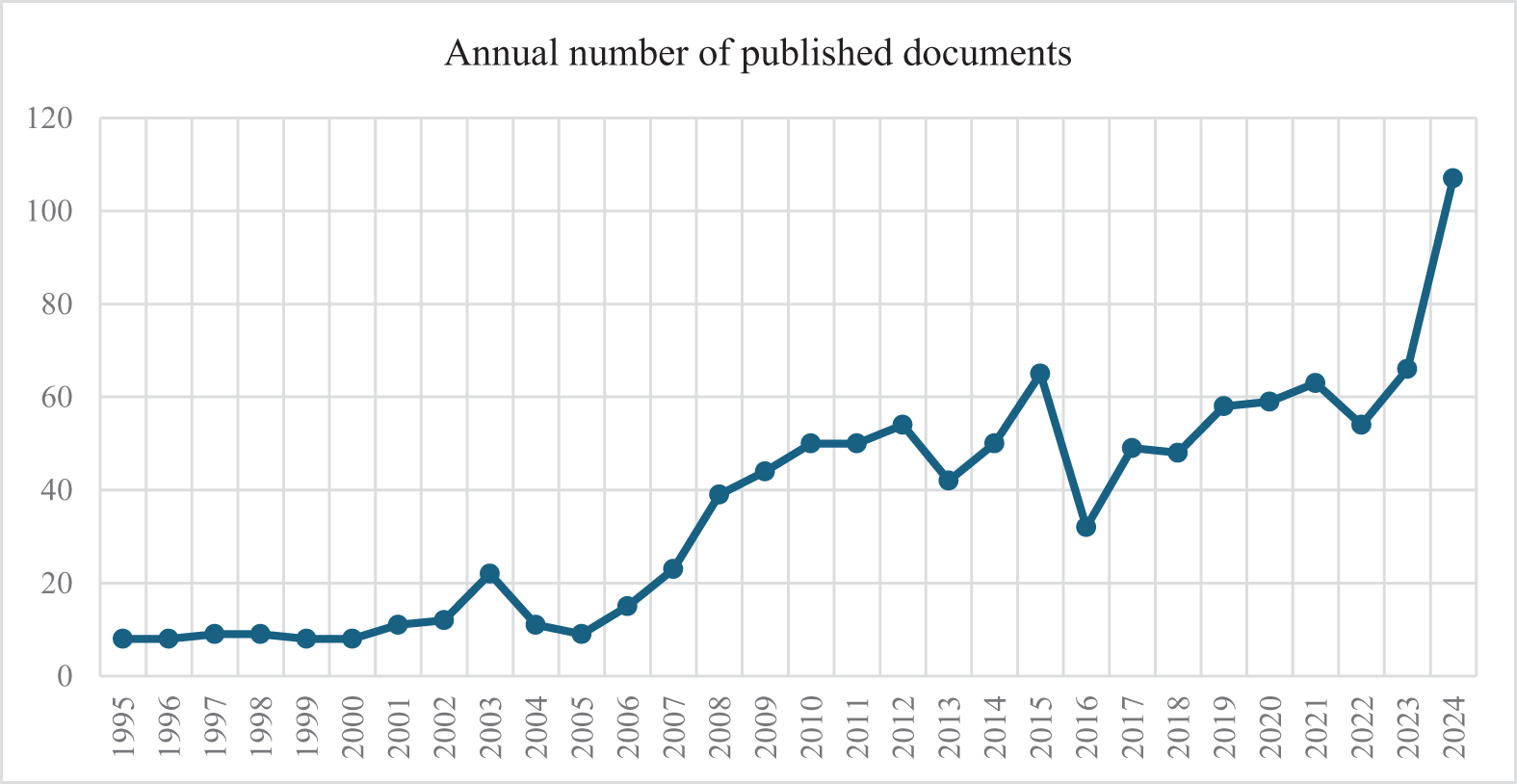

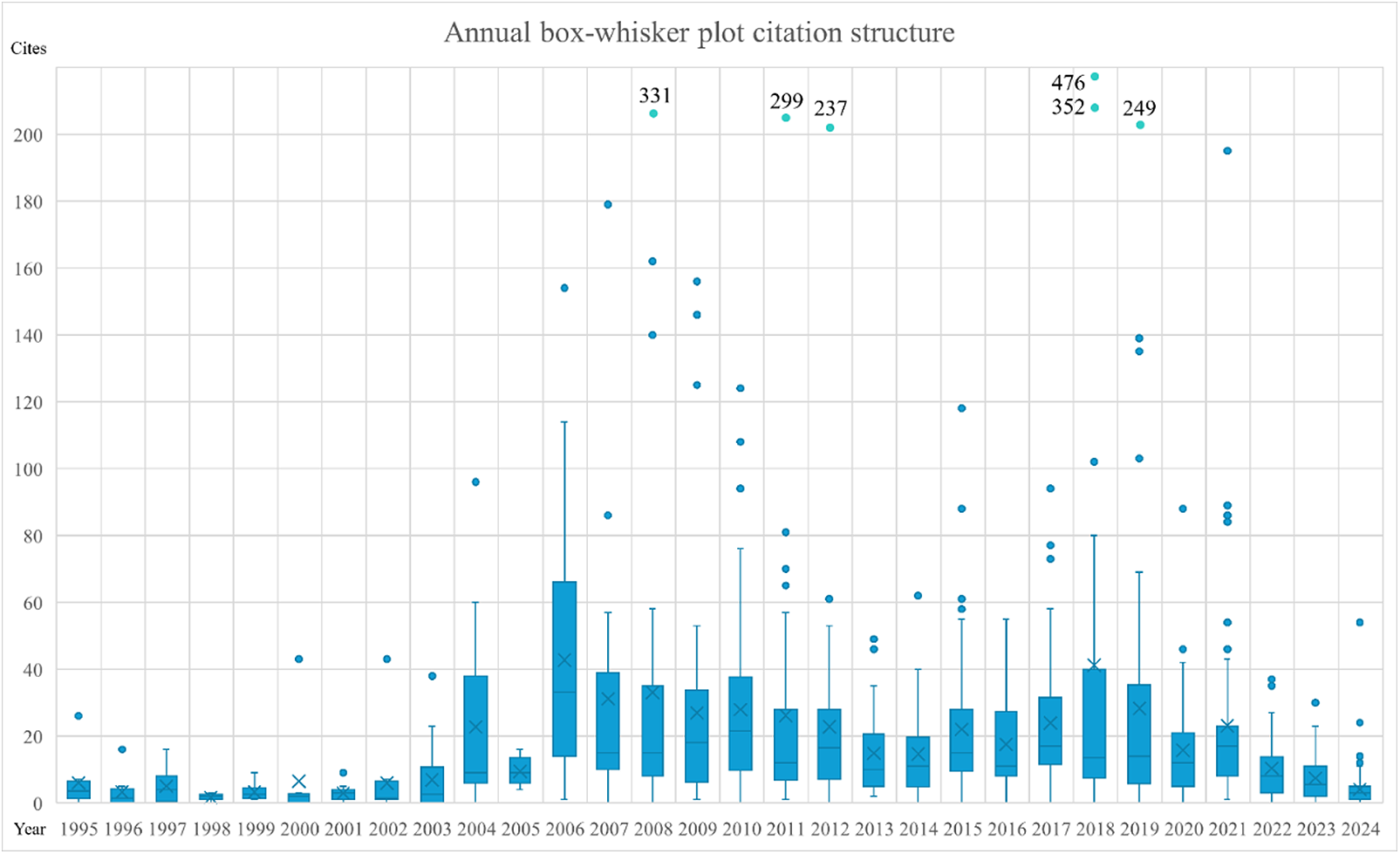


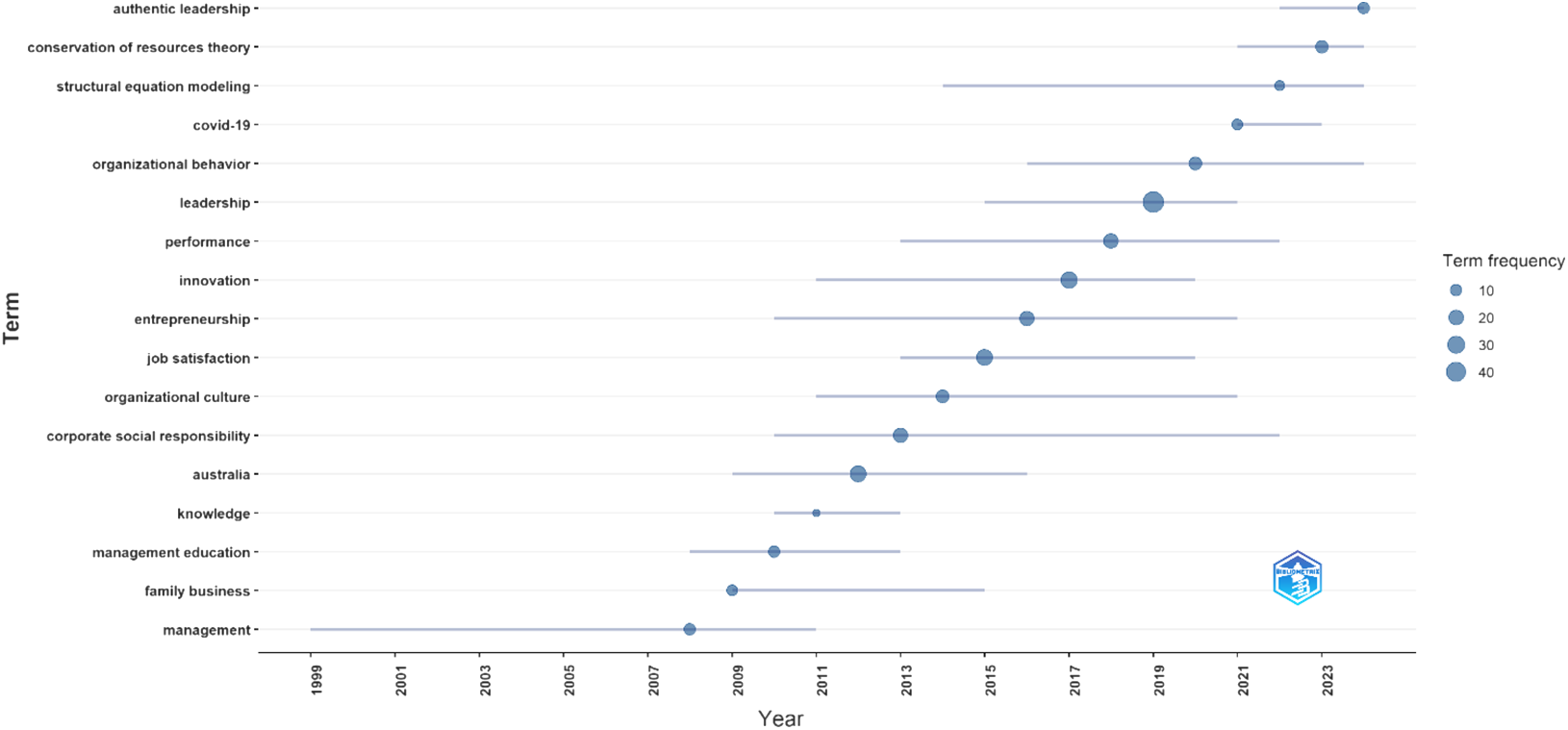


 Open access

