




Introduction
The United Nations (UN) is the most widely recognized and prominent organization when it comes to initiating ‘Day/Year/Decade of’ (hereafter ‘DYDO’) observances. Today, keeping up with the UN’s international observances can feel like a daunting task, especially when also taking into consideration initiatives implemented by non-governmental organizations (NGOs) such as World Wildlife Fund’s (WWF) International Year of the Polar Bear, as well as those promoted by social and humanitarian NGOs and governments (e.g., Black History Month).
The first initiative endorsed by the UN General Assembly (193 Member States as of 2021) was World Refugee Year in 1959 (United Nations 2021). There have since been 327 DYDOs implemented with varying themes by various UN organizations (e.g., UN Environmental Program Programme, UN Education, Scientific and Cultural Organization, UN Food and Agriculture Organization), but each is linked to at least one UN priority area and foundational purpose of promoting international peace, protecting human rights and ensuring sustainable development (United Nations 2021). Multiple DYDOs can be proposed within any given year, but the adoption of a DYDO occurs when the proposed subject is passed through the UN General Assembly and voted into inception by UN Member States. These initiatives set out to capture timely events or topics and to encourage international awareness and action including fundraising to address concerns that have global implications (United Nations n.d.a); topics have been wide ranging, from assuring the rights and well-being of persons with disabilities to conserving freshwater ecosystems. Through these international initiatives, the UN aims to mobilize political will and collaborative action among stakeholders, citizens and governments (United Nations n.d.a). Yet, as the number of DYDOs increases, it is pertinent to ask: what are the realized real-world impacts of these initiatives? And how are such accomplishments measured?
This question is especially relevant because time, funding and human resources are all required for a DYDO campaign, which risks audience fatigue. The goals and intentions of these campaigns are laudable, yet it remains unclear to what extent DYDOs achieve their goals and contribute to tractable outcomes. This is particularly relevant for environmental- and conservation-focused DYDOs given the urgency of global issues such as climate change and the biodiversity crisis as well as the limitation of resources (Wilson et al. Reference Wilson, McBride, Bode and Possingham2006, Kapos et al. Reference Kapos, Balmford, Aveling, Bubb, Carey and Entwistle2009, Ripple et al. Reference Ripple, Wolf, Newsome, Galetti, Alamgir and Crist2017, Li et al. Reference Li, Ge and Sayer2023). Moreover, environmental issues are wide-reaching, interconnected and involve human dimensions (Rechkemmer & von Falkenhayn Reference Rechkemmer and von Falkenhayn2009). As such, engaging diverse public audiences to promote awareness and action is important (Bennett et al. Reference Bennett, Roth, Klain, Chan, Christie and Clark2017).
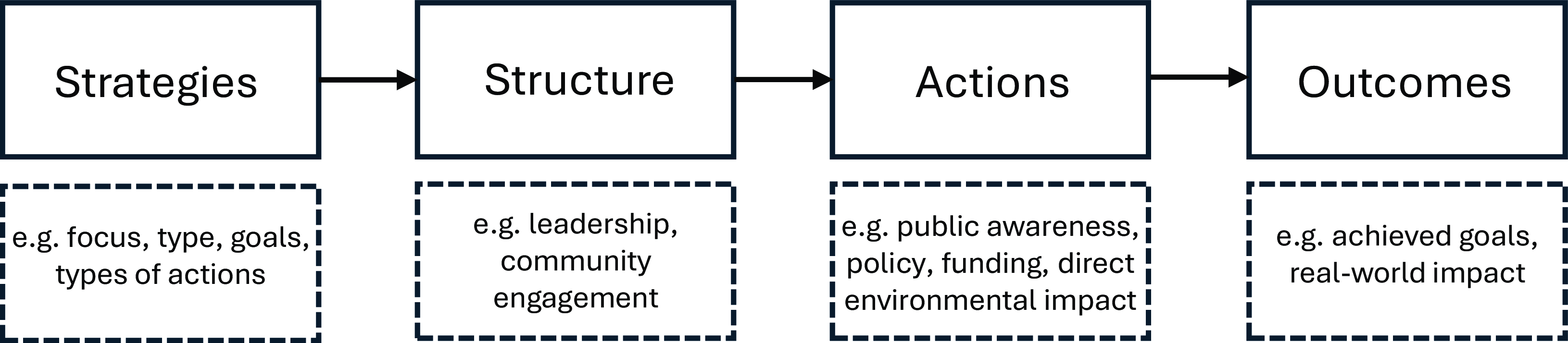
Here, we consider UN DYDOs extending back to the 1950s that relate specifically to conservation of biological diversity (hereafter ‘conservation-oriented’ DYDOs) while acknowledging that there are other DYDO initiatives that cover similar topics but are not affiliated with the UN (partial list in United Nations n.d.b). This includes initiatives focused on addressing species-level and system-level challenges related to wildlife conservation as well as biodiversity recovery and environmental protection. With increasing cumulative pressures on the biosphere and the realization that humans both cause and can mitigate such pressures, it is imperative that DYDOs are conceived, targeted and executed efficiently and effectively (Steffen et al. Reference Steffen, Broadgate, Deutsch, Gaffney and Ludwig2015). We employ a change (logic) model to examine the strategy, structure, actions and outcomes of conservation-oriented UN DYDOs (Fig. 1). The change model is a tool used to identify the connections between actions and outcomes necessary for achieving real-world change (Greggor et al. Reference Greggor, Berger-Tal, Swaisgood, Cooke, DeVault and Fernández-Juricic2021), and this approach is used increasingly in conservation works and projects (e.g., Conservation International 2013, Greggor et al. Reference Greggor, Berger-Tal, Swaisgood, Cooke, DeVault and Fernández-Juricic2021). Specifically, we ask: (1) have conservation-oriented DYDOs met their objectives as outlined by the UN? And (2) have these conservation-oriented DYDOs enacted positive outcomes related to their stated biodiversity or conservation objectives (i.e., improvements to targeted species or ecosystems)?
Logic followed to evaluate meaningful ‘Days, Years and Decades of’ (DYDO) impacts through strategies, structures, actions and outcomes (adapted from Veríssimo & Wan Reference Veríssimo and Wan2019).
We reflect on how DYDOs have or have not been successful in achieving positive and tractable conservation outcomes underpinned by efforts to raise awareness and generate public and political will. The use of a change model provides a means by which to evaluate the strategy, structure, actions and outcomes of DYDOs and could be of use to other organizations in their assessment of respective initiatives. We conclude by discussing the successes and challenges across initiatives, as well as potential paths forward to ensure DYDOs make efficient use of time, resources and public momentum to achieve conservation objectives.
Methods
DYDO selection
We initially reviewed every UN DYDO (n = 327; United Nations n.d.a) extending back to the 1950s to identify those that were specific to the environment and conservation of biological diversity. It is recognized that UN DYDOs that focus on issues such as poverty, health and human rights issues, among other important categories, are connected to resource management, ecosystem health and environmental capacity (e.g., the UN International Year of Family Farming aims to promote the development of new policies to help small-scale farmers eradicate hunger and contribute to global food security through sustainable agricultural production). However, only those DYDOs that outlined their key objective as contributing towards biodiversity conservation or the generation of positive conservation outcomes were retained for analysis here. We did not, for example, evaluate the International Day of the Tropics; although much of the world’s biodiversity exists within tropical regions, this initiative ultimately focused on socioeconomic goals such as addressing poverty in urban environments. Similarly, other environment-focused UN DYDOs exist, promoting important issues from water sanitation to waste management to environmental protection during war and armed conflicts. However, these initiatives are somewhat distinct and only tangentially related to issues of species and ecosystem conservation. They did not sufficiently meet our inclusion criteria for this study.
Non-UN organizations also observe time-bound conservation-focused campaigns (e.g., Discovery Channel’s Shark Week and WWF’s Earth Hour); however, only DYDOs sanctioned by the UN, completed by 2020 (to conduct our analysis on completed initiatives) and that outlined key objectives as contributing towards biodiversity conservation or the generation of positive conservation change were considered here. We thus refined the initial list to 24 initiatives that describe, in their associated UN webpage(s), direct links to conservation objectives and outcomes (e.g., species conservation and/or broader biodiversity objectives; Table S1). The oldest DYDO to meet our criteria was from 1974.
Change model
The change model (Greggor et al. Reference Greggor, Berger-Tal, Swaisgood, Cooke, DeVault and Fernández-Juricic2021) provided a framework for a DYDO path of action that includes defined actions, reporting of results and the implementation of capacity building and long-term monitoring. We applied this approach to systematically review 24 UN conservation-oriented DYDOs by identifying initiative goals, actions, strengths and weaknesses, as well as other pertinent information (Fig. 2).
Change model diagram. Each branch of the model corresponds to a type of action used within a ‘Days, Years and Decades of’ (DYDO) initiative. Boxes represent individual steps required for achieving an improved conservation outcome.
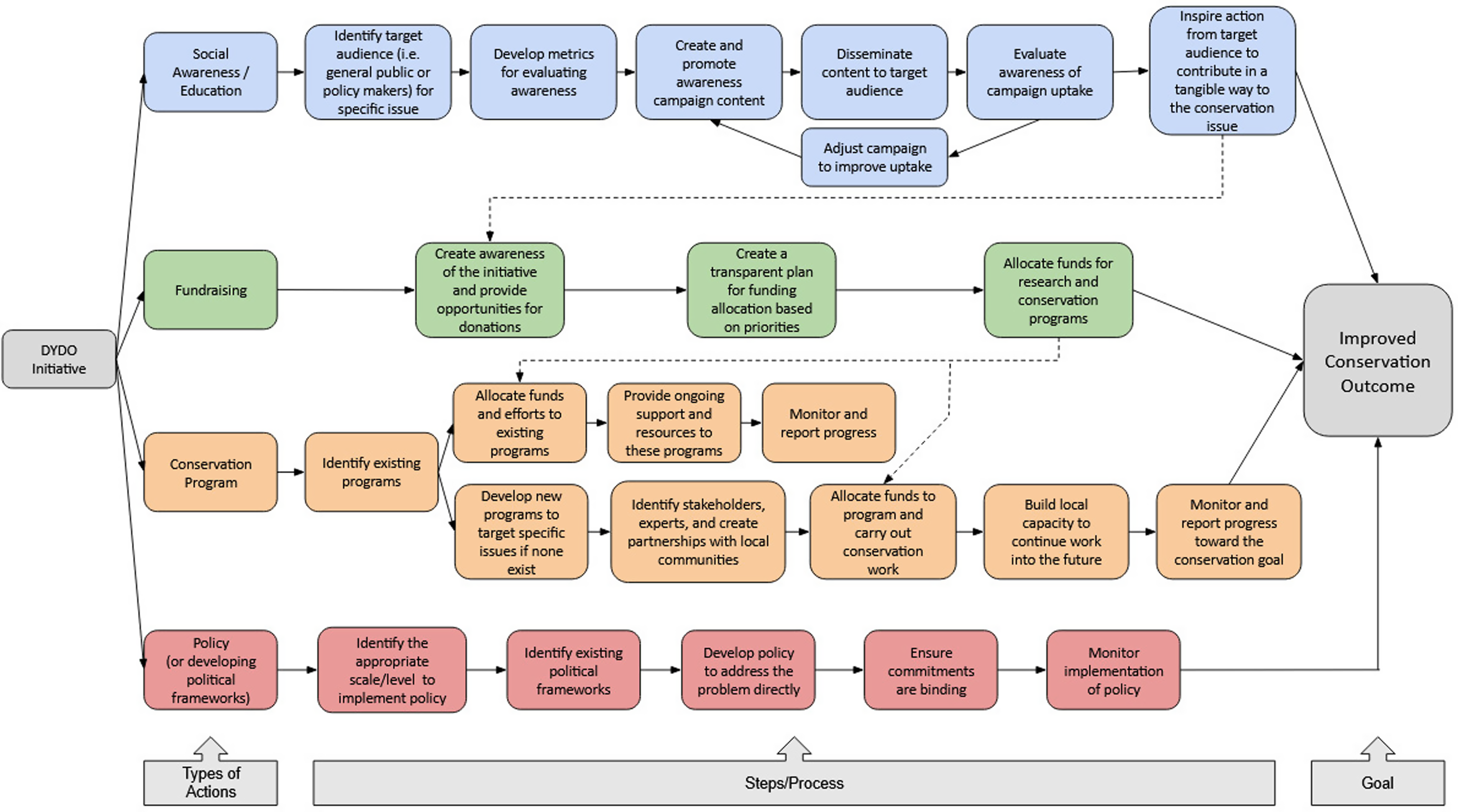
We identified four main types of actions taken by the UN as they relate to conservation-oriented DYDOs: social awareness campaigns, fundraising, conservation programme/direct conservation actions and developing political frameworks. DYDOs were found to consist of varying combinations of these main actions. We created separate pathways (sets of steps) for each type of action to evaluate the success of a given DYDO.
We developed a binary analysis table (Table 1) using an impact evaluation logic model adapted from Veríssimo and Wan (Reference Veríssimo and Wan2019) to quantify the success of each of the 24 DYDOs. Inputs to the table included the type of action (social awareness campaign, fundraising, conservation programme, policy development), the strategy employed (scope and aims) and the initiative’s structure (community engagement and leadership). DYDO outcomes were classified and included in the analysis as outputs if DYDOs achieved their stated objectives and if they contribute meaningfully to real-world change (see full list of assessment criteria in Table S2). The content of the table was co-assessed by two team members working collaboratively and discussing all points of disagreement. Information was gathered from diverse sources following bespoke searches using Google, Google Scholar and LexisNexis focused on each DYDO. Specific searches were also conducted on relevant UN websites.
Binary analysis table used to score each ‘Days, Years and Decades of’ (DYDO) initiative. The purpose of this table is to calculate a score that reflects how closely each initiative aligns with the change model employed in this study. Each box ending with a question mark was scored as either 0 (incomplete, not met), 0.5 (some progress, partial met) or 1 (completed, met). The final score is relative to the types of actions each initiative takes.
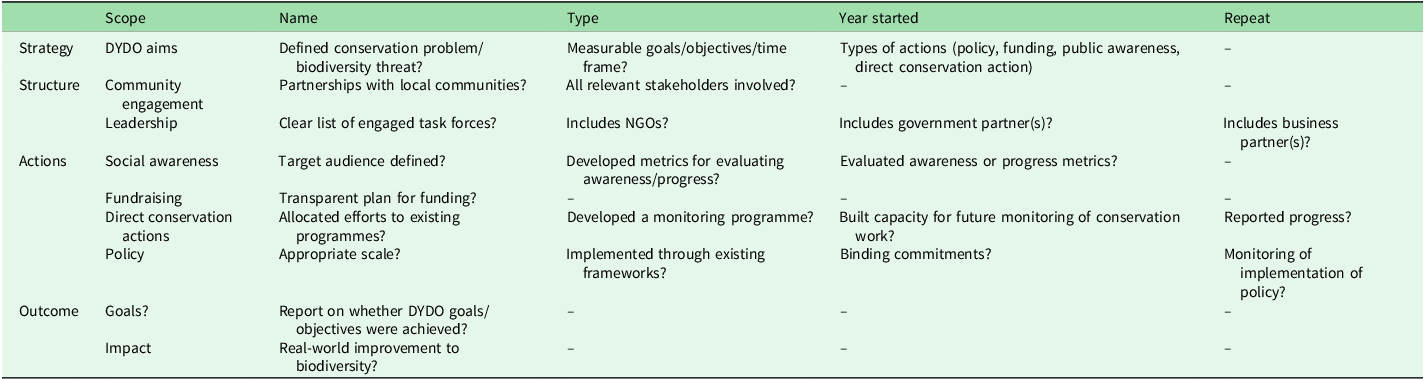
NGO = non-governmental organization.
The binary analysis table tabulated a series of questions about the outputs of initiatives, which were evaluated as either 0 (incomplete, not met), 0.5 (progress made, partially met) or 1 (complete, met). Each criterion was weighted equally. A relative score was calculated for each DYDO to ensure that only the action(s) undertaken counted towards its total. We used total DYDO scores as an indicator of how closely each initiative aligned with the change model and thus that DYDO’s potential to achieve its objective. We examined the differences among UN conservation-oriented DYDO scores to gain insight and context, which may be helpful to other organizations that are considering or engaging in conservation-oriented initiatives.
Case studies
In addition to a systemic evaluation of DYDO performance, we carried out an in-depth review of four UN conservation-oriented DYDOs – each with varying time frames (from day to year to decade) and scopes (from single species to biodiversity, from biome/realm to global) – to illustrate specific attributes/paths of action that result in a largely successful initiative. These initiatives were: World Tuna Day, International Year of the Gorilla, Year of Deserts and Desertification and the United Nations Decade on Biodiversity.
Results
DYDO characteristics
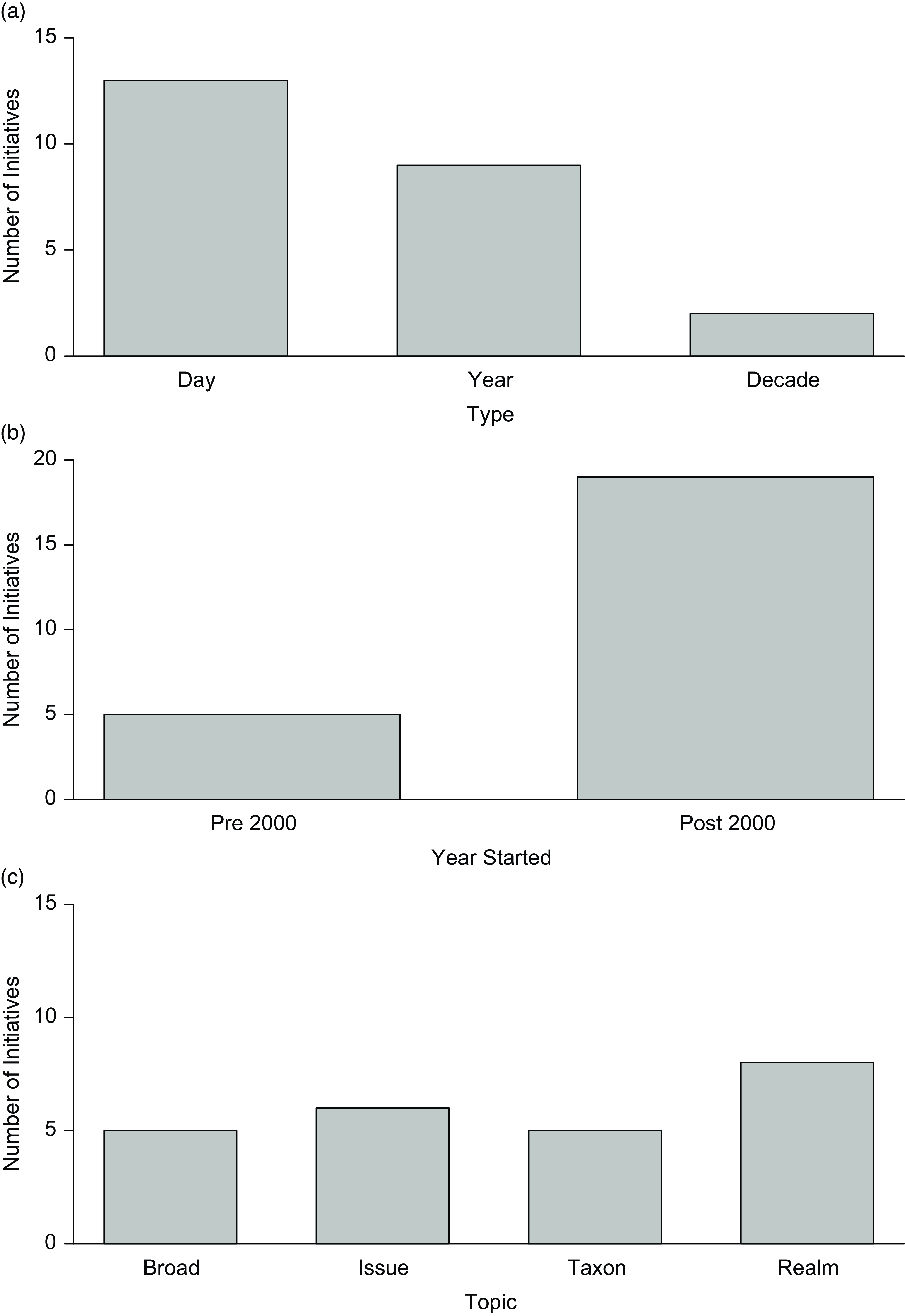
The 24 UN conservation-oriented DYDOs included 13 ‘Days of’, 9 ‘Years of’ and 2 ‘Decades of’ (Fig. 3a). Within these, five DYDOs focused on broad topics, six focused on issues (i.e., specific challenges related to conservation), five focused on specific taxa and the remaining eight focused on ecosystems (Fig. 3b). Although conservation-oriented DYDO initiatives began as far back 1972 (i.e., Earth Day), 79% of DYDOs between 1974 and 2020 have been implemented within the past 20 years (Fig. 3c).
Comparison of the (a) type of initiative, (b) year they started and (c) type of topic they chose to address. We evaluated 24 ‘Days, Years and Decades of’ (DYDO) initiatives (see full list in Table S1).
Binary analysis
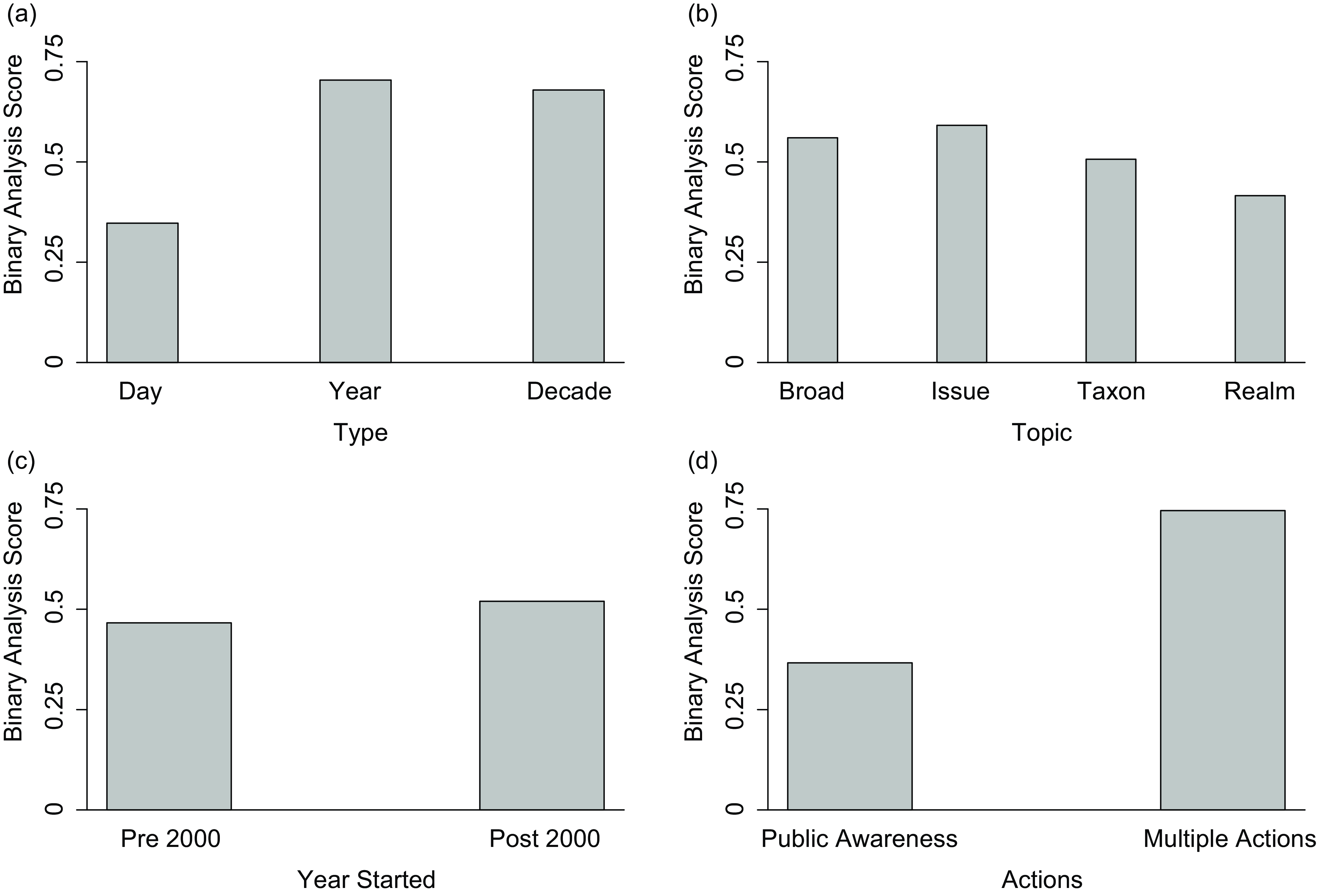
We found differences in the success of initiatives and their duration (Fig. 4a). Year-long DYDOs have the highest average success score (n = 9, average score = 0.70, SD = 0.24), followed by decades (n = 2, average score = 0.68, SD = 0.07) and days (n = 13, average score = 0.35, SD = 0.17). We found that the success scores were similar for DYDO initiatives with a broad scope (Fig. 4b; n = 5, average score = 0.56, SD = 0.25), an issue-specific focus (n = 6, average score = 0.59, SD = 0.25), a taxon-related focus (n = 5, average score = 0.51, SD = 0.25) and an ecosystem focus (n = 8, average score = 0.42, SD = 0.25). We also found that DYDOs that started after 2000 (Fig. 4c) had similar average success scores (n = 19, average score = 0.52, SD = 0.26) to those that started before 2000 (n = 5, average score = 0.47, SD = 0.27). The types of actions DYDOs took (social awareness campaigns, fundraising, conservation programme, policy development) significantly affected their success score (Fig. 4d). DYDOs using only social awareness campaigns had a lower success score (n = 15, average score = 0.37, SD = 0.20) than those that took multiple actions to achieve their objective(s) (n = 9, average score = 0.75, SD = 0.17).
Average binary analysis scores for ‘Days, Years and Decades of’ (DYDOs) initiatives based on (a) time frame, (b) topic, (c) when the DYDO occurred and (d) number of action streams utilized.
Case studies
World Tuna Day (2017–present)
Approximately 8% of all globally traded seafood is tuna (United Nations 2021), and products from the world’s tuna fisheries are valued at over USD 40 billion annually (McKinney et al. Reference McKinney, Gibbon, Wozniak and Galland2020). Tuna fisheries can be challenging to regulate, however, as the world’s 23 tuna populations span international waters as well as dozens of countries’ domestic waters (i.e., exclusive economic zones). Thus, tuna fisheries cannot be managed unilaterally by one country and are instead managed through intergovernmental organizations called Regional Fisheries Management Organizations (RFMOs). At annual RFMO meetings, government representatives from tuna-fishing countries meet to negotiate and adopt annual fishing measures for these species, and such decisions can be influenced by non-governmental stakeholders such as businesses and NGOs (Schiller et al. Reference Schiller, Auld, Hanich and Bailey2023). In general, reaching consensus on management measures can be challenging due to national differences in economic dependence on tuna and competition among fleets, which has historically resulted in the overexploitation of some species (Juan-Jordá et al. Reference Juan-Jordá, Mosqueira, Cooper, Freire and Dulvy2011, Haas et al. Reference Haas, McGee, Fleming and Haward2020).
World Tuna Day was first observed in 2017 in response to international calls to improve high seas governance and address large-scale marine conservation issues. The date coincided with momentum generated from the inaugural UN Oceans Conference (which took place that same year) as well as a broader international conversation about larger marine conservation issues such as modifying the United Nations Convention on the Law of the Sea (UNCLOS) to improve high seas governance. At the same time, the number of tuna-fishing companies seeking sustainable Marine Stewardship Council (MSC) eco-certification to publicly demonstrate that their fishing practices had a low environmental impact was rapidly increasing at a global scale (Schiller & Bailey Reference Schiller and Bailey2021). As such, it is difficult to isolate the role of this DYDO relative to other activities – a theme consistent across all the cases presented here.
The objective of World Tuna Day (which still occurs annually) is to educate and draw attention to the importance of rebuilding depleted tuna populations and to ensure that those that are currently healthy remain so into the future (United Nations 2021). This Day encourages the sustainable use and consumption of tuna and other marine resources and aligns with Sustainable Development Goal 14: Life Below Water (United Nations 2020). The Day primarily involves a social awareness objective and serves as a tool by which to promote collaboration among and inform policymakers, seafood businesses and the public of the benefits of long-term sustainable management strategies.
Four years before this DYDO started, 13 of the world’s 23 tuna stocks (contributing to 66% of the global catch) were at biologically healthy levels of abundance, and, as of 2022, 17 stocks (86% of the global catch) were considered healthy (ISSF 2022). It is unclear from our analysis the degree to which this DYDO played a role in recovering overexploited tuna populations because the initiative was launched at a time that coincided with broader international efforts as part of the sustainable seafood movement (Schiller & Bailey Reference Schiller and Bailey2021), as well as a transition to a more rights-based management approach for the world’s largest tuna fisheries (Aqorau et al. Reference Aqorau, Bell and Kittinger2018). Nonetheless, World Tuna Day does include a diversity of stakeholders and users (e.g., governments, companies and NGOs), many of which are also involved in decision-making processes for tuna through RFMOs (Schiller et al. Reference Schiller, Auld, Sinan and Bailey2021) and/or public awareness campaigns related to tuna sustainability issues (e.g., the International Pole and Line Foundation advocates highly selective one-by-one fishing practices). As such, any ‘success’ of World Tuna Day has probably been enabled by a variety of related external conditions, including stronger science-based management through RFMOs and global momentum around the governance of high seas species and resources.
International Year of the Gorilla (2009)
Earth is home to two species of gorilla: the eastern gorilla (Gorilla beringei) and western gorilla (Gorilla gorilla), both of which live in Central Africa. Since the 1990s, both species have experienced population declines of greater than 50% because of deforestation, expanding agriculture, mining activities and poaching (Mehlman Reference Mehlman, Stoinski, Steklis and Mehlman2008, IUCN 2018). As of 2005, an estimated 720 mountain gorillas (eastern gorilla subspecies) remained in the wild, along with 280 Cross River gorillas (western gorilla subspecies; UNEP 2021), and the aforementioned declines led to the western and eastern gorilla species being categorized as Critically Endangered on the IUCN Red List (IUCN 2016, 2018). Today, the mountain gorilla is still listed as one of the world’s 25 most endangered primates (IUCN 2021).
Given the growing concern regarding gorilla populations in the early 2000s, the UN named 2009 as the Year of the Gorilla, with a stated objective of raising funds for conservation programmes for gorillas and generating public awareness (United Nations 2010). As part of this DYDO, over USD 130 000 was raised for conservation projects around Virunga National Park in Rwanda, Uganda and the Democratic Republic of the Congo (United Nations 2010). Improving public awareness was accomplished through multiple media avenues and campaigns including but not limited to the Frankfurt Gorilla Symposium, a lecture tour featuring Ian Redmond and documentaries (e.g., ‘Return to Virunga: The Battle to Save the Mountain Gorillas’). Presumably there was also some benefit derived from the 2008 release of the movie Gorilla’s in the Mist. Around the same time as this DYDO, the UN also launched the Great Apes Survival Partnership (https://www.un-grasp.org/), making it difficult to disentangle the specific role of this DYDO. Nonetheless, the Year of the Gorilla apparently generated more engagement and publicity than any similar global species campaign (United Nations 2010).
The Year of the Gorilla looks to have had net positive impacts on gorilla populations, specifically the Critically Endangered mountain gorilla (Gorilla beringei beringei), which has increased from 720 individuals in 2007 to over 1000 individuals today (Robbins et al. Reference Robbins, Gray, Fawcett, Nutter, Uwingeli and Mburanumwe2011, WWF 2020). Local communities in the Congo were engaged to participate in the support and enforcement of wildlife law, to report illegal logging and to utilize alternative fuel sources to reduce deforestation. Additional funding was also allocated for the purchase and planting of tree nurseries in buffer zones around gorilla habitat (United Nations 2010).
The Year of the Gorilla may have helped populations of gorillas to recover; however, continued efforts are needed to further this. The success of this DYDO is attributed to its narrow scope, which focused only on gorilla populations, allowing for funding to be allocated to targeted conservation programmes and to engaging local communities in the initiation and continued operation of pre-established efforts to protect these species.
International Year of Deserts and Desertification (2006)
Deserts, characterized by very low precipitation, sparse vegetation and soil layers that are either sandy, gravelly or rocky, are unique in their geomorphology and animal communities (including organisms with unique adaptations) and the cultures of the human communities living in or near them. More than a third of the global human population is at risk from desertification (Safriel & Adeel Reference Safriel and Adeel2008), whereby fertile land and soils become arid and lose biological productivity (Oswald & Harris Reference Oswald and Harris2016). As land is degraded and deserts expand, the capacity for local food production is reduced, water sources disappear and people are pressured to relocate.
Famine and drought in the Sudano-Sahel region of Africa from 1968 to 1974 drew international attention to the issue of desertification (Thomas & Middleton Reference Thomas, Middleton and Pacione1994). In response, Agenda 21, which arose from the 1992 Rio Conference, called for the negotiation of the UN Convention to Combat Desertification. Subsequently, the United Nations Conference on Desertification (UNCOD) was convened in 1994 to expand upon the science of deserts and their socioeconomic ramifications and, importantly, to focus on approaches to the mitigation of desertification impacts in regions that had experienced severe degradation (Rhodes Reference Rhodes1991). The year 2006 was declared as the International Year of Deserts and Desertification (Stringer Reference Stringer2008) to help protect the biological diversity and productivity of arid regions, raise global awareness about desertification and protect the lifeways and settlements of affected people (Dooley Reference Dooley2006).
The Year advocated for a participatory and decentralized approach to implementing initiative actions, engaging local communities more prominently in mitigative actions such as installing more robust irrigation systems. The Year is considered to have met the four objectives laid out by the UN to: (1) raise awareness of the implications of desertification by creating leaflets and information on desertification and organizing various competitions and campaigns; (2) address the UN Convention to Combat Desertification long-term implementation by focusing the Year on deserts as well as desertification; (3) disseminate information that is related to the UN Convention to Combat Desertification associated with special observances; and (4) facilitate stakeholder networking such as by women and young people (Stringer Reference Stringer2008). The impetus to identify concrete strategies to monitor desert ecosystems and land degradation spurred by this DYDO (i.e., Stringer Reference Stringer2008) has continued (Zonn et al. Reference Zonn, Kust and Andreeva2017).
United Nations Decade on Biodiversity (2011–2020)
The global biodiversity crisis has been apparent for decades (Singh Reference Singh2002, Ehrlich et al. Reference Ehrlich, Ceballos and Dirzo2024), caused by anthropogenic activities such as the overexploitation of natural resources, habitat loss and climate change (Rull Reference Rull2022). Background extinctions can be considered a normative process measuring the number of extinctions per million species years (De Vos et al. Reference De Vos, Joppa, Gittleman, Stephens and Pimm2015, Rull Reference Rull2022), but extinctions are now occurring at a rate much closer to those seen during the previous mass extinctions (see Rull Reference Rull2022). This rate of loss has drawn international attention.
During the 10th Conference of the Parties (COP) to the Convention on Biological Diversity (CBD) in October 2010, Member States agreed to implement the Strategic Plan for Biodiversity 2011–2020, which included a parallel DYDO: the UN Decade on Biodiversity (CBD 2010b). This strategic plan was designed to be used as a flexible framework for protecting biodiversity at global, national and regional scales, whereas the DYDO was intended to support and promote those activities (CBD 2010a). The strategic plan included 20 Aichi Biodiversity Targets, which were developed to address direct and indirect drivers of biodiversity decline and organized under five strategic goals: ‘a) Address the underlying causes of biodiversity loss by mainstreaming biodiversity across government and society, b) Reduce the direct pressures on biodiversity and promote sustainable use, c) Improve the status of biodiversity by safeguarding ecosystems, species and genetic diversity, d) Enhance the benefits to all from biodiversity and ecosystem services, and e) Enhance implementation through participatory planning, knowledge management and capacity building’ (CBD 2010a).
Given that the Decade on Biodiversity DYDO was initiated to support the implementation of the Strategic Plan for Biodiversity across all COP Member States, each Party agreed to translate the overarching framework into national biodiversity plans over the course of the decade and to create their own biodiversity targets. Indicators were developed for many of the Aichi Targets to monitor and quantify progress throughout the decade (CBD 2010c, Tittensor et al. Reference Tittensor, Walpole, Hill, Boyce, Britten and Burgess2014). Additionally, each Member State was required to submit reports at the midpoint and the end of the decade to track progress towards achieving the Aichi Targets. The national reports were compiled to summarize progress at the global scale. In this case, there was a clear and direct link between the Aichi Targets and the DYDO, where the DYDO was a tool intended to facilitate progress towards achieving the targets.
Most targets showed ‘some progress’ throughout the decade (CBD 2020); however, at an international scale, progress did not sufficiently meet any of the Aichi Targets by 2020. Furthermore, only 23% of national targets developed aligned with the Aichi Targets (CBD 2020). Despite the strong framework developed by the CBD for monitoring and reporting progress and the emphasis on supporting and promoting those activities through the DYDO, a lack of emphasis was placed on implementation of the Strategic Plan for Biodiversity. This delayed progress at national and international levels (CBD 2020). The Aichi Targets have been criticized for being overly complicated, ambiguous, redundant and unquantifiable (Butchart et al. Reference Butchart, Di Marco and Watson2016), yet Green et al. (Reference Green, Buchanan, Butchart, Chandler, Burgess, Hill and Gregory2019) suggest that when Aichi Targets were measurable, clearly defined, realistic and scalable, more progress could be achieved. Consistent metrics for evaluating success and addressing discrepancies can be extended to all streams of action, including social awareness, fundraising and policy development. The fact that none of the Aichi Targets was achieved could be interpreted as a failure of the DYDO; however, there are many other factors at play when it comes to implementing actions across many Member States.
Discussion
We had two primary questions that we attempted to address in this paper, but answering our questions (have conservation-oriented DYDOs met their objectives as outlined by the UN? And have these conservation-oriented DYDOs enacted positive outcomes related to their stated biodiversity or conservation objectives?) has proved challenging. For example, while certain UN departments publicly display metrics for campaign evaluation (such as the Department of Economic and Social Affairs), those related to conservation-oriented initiatives were more difficult to identify. At the same time, the objectives of the Decade on Biodiversity are much more comprehensive than those related to species-focused conservation and, therefore, the successful outcomes that were achieved (even if not comprehensively) should not be overlooked. Furthermore, some outcomes are inherently difficult to measure, and choosing how to define what ‘impact’ a DYDO has had can itself be a challenging pursuit. Some of our observations are nevertheless worthy of discussion.
With respect to our first question, successful DYDOs set achievable goals within a practical and focused scope. With respect to our second question, the potential for impact was increased when the initiative was situated within the broader landscape of an international movement. For example, World Tuna Day contributed to the international momentum and conversation around the world’s oceans and commercially valuable fish stocks. However, the Day itself has limited substance and leverage in instigating change. It lists no actionable items on UN webpages or links, does not provide accessible educational resources outside of an ‘overview of the situation’ (e.g., which brands to purchase eco-certified tuna from or links to access relevant resources) and could better provide opportunities to access or depict stock trends for the non-scientific community. On its own, and separated from the collective movement, World Tuna Day holds little weight to incite meaningful conservation change. Nonetheless, it could serve to raise awareness of positive management initiatives, success stories and information-sharing among other organizations and agencies. World Tuna Day also serves as a tool and annual reminder of accountability for governments and businesses aiming to contribute to Sustainable Development Goal 14. Progressing through the Decade of the Ocean (2020–2030), international marine-focused momentum is needed to better understand and address ocean conservation challenges. Although as authors we had assumed that the audience for most DYDOs would be ‘the public’ (as individual consumers/Earth dwellers, voters, advocates, etc.), in the case of the World Tuna Day case study, the audience seems to be more focused on policy actors (e.g., those working in the NGO sector or governments). It is entirely possible for DYDOs to have different or multiple audiences, but what is important is that their actions are aligned to target their intended audience(s).
The Year of the Gorilla was considered successful because it mobilized social awareness campaigns and transformed plans into action through fundraising for local conservation programmes (United Nations 2010). This Year created economic opportunities, motivated engagement with local communities and ultimately seemed to improve the prospects of mountain gorilla populations (Robbins et al. Reference Robbins, Gray, Fawcett, Nutter, Uwingeli and Mburanumwe2011).
Social awareness related to the vast and increasing amount of desert across the globe and its effect on the billions of desert inhabitants was raised by the International Year of Deserts and Desertification (UNGA 2004). This initiative can be considered successful because of its narrow focus and engagement with local communities and relevant stakeholders (Stringer Reference Stringer2008). Despite its success, the Year lacks tractable momentum to affect real change in the lives of those living in desert regions (Fontaine-Ortiz & Tang Reference Fontaine-Ortiz and Tang2005), and it is unclear whether there were long-term benefits related to our second question.
The Decade on Biodiversity sought to play a role in supporting and promoting the implementation of actions by Member States to meet the Aichi Biodiversity Targets and slow the drastic decline in global biodiversity (CBD 2010a). On paper, this initiative was ultimately unsuccessful, as none of the Aichi Biodiversity Targets was met (despite some evidence of improvement; CBD 2020). The initiative had a broad focus and did not set realistic goals (CBD 2020). As such, there were difficulties in assigning responsibility, which made engaging with local communities and relevant governments and stakeholders, as well as tracking and reporting initiative progress, challenging (CBD 2020).
When cross-referenced with our binary analysis (Table 1), the Year of the Gorilla had the highest success score (0.97), which is consistent with the effectiveness of the initiative. The Year of the Gorilla initiative used a three-pronged approach (social awareness campaigns, fundraising and funding directed to conservation programmes) to address the growing problem of low gorilla populations. Such an approach is a valuable takeaway from this particular case study. Interestingly, policy changes/developing political frameworks tended to be less effective in conjunction with the three other main actions (mean = 0.78). This is demonstrated by the International Year of Deserts and Desertification, which had the second highest score (0.80) despite its policy component. The Decade on Biodiversity followed very closely with a slightly lower success score (0.73). Decade-long initiatives tended to have higher scores (mean = 0.74), whereas year-long initiatives averaged lower scores (mean = 0.46). This disparity may in part be related to the amount of time given to implement the initiative, as decade-long DYDOs had 10-fold greater periods of time to achieve their objectives regardless of their focus and scope.
Our analysis indicates that conservation-oriented DYDOs with identified successful elements (e.g., multiple streams of action, monitoring programmes with local communities, strategic implementation) achieved greater success compared to initiatives with a broader focus and unrealistic/ambiguous actions and responsibilities. Our review of strategies also provides insights into how engagement with relevant stakeholders and local communities can lead to sustainable actions. Yet, we acknowledge that some outcomes are inherently difficult to measure. Thus, while measuring ‘engagement’ with a social media campaign is relatively easily achieved using the analytics tools built into many social media platforms, linking to behavioural changes such as voting or pursuing a career in conservation is much more difficult. Nevertheless, such an analysis is worthy of pursuit. Key to addressing such challenging research questions will be developing multidisciplinary teams that reach across disciplinary boundaries. We encourage future work to pursue longitudinal assessments of DYDOs and other conservation campaigns to assess long-term behaviour change.
The types of communication strategies and platforms available for disseminating information have changed substantially in the decades following the inception of DYDOs, such as increased use of computers, internet availability and novel social media platforms. This suggests that UN facilitators, as well as relevant stakeholders (e.g., NGOs, governments, businesses), now have more opportunities for enabling their campaigns to reach public audiences and achieving objectives of raising awareness and/or enacting conservation change. At the same time, these initiatives face competition for attention from all other content associated with the mainstream media as well as emerging social media platforms. As such, the degree to which such advancements have enabled DYDO organizers to enact meaningful change relative to simply generating more content on social media platforms is difficult to assess. Similarly, it is impossible to know what would have transpired in the absence of a given DYDO because of other actions, initiatives, events or sociocultural change. Questions remain about when to implement a DYDO. For example, scholars have debated whether the recent UN Decade on Ecosystem Restoration was implemented ‘too soon’ (see Cooke et al. Reference Cooke, Bennett and Jones2019, Young & Schwartz Reference Young and Schwartz2019). Lastly, this paper focused exclusively on UN-led conservation-oriented initiatives. We recognize that other organizations use similar initiatives (e.g., World Fish Migration Day; Twardek et al. Reference Twardek, Wanningen, Fernandez Garrido, Brink, Royte and Berkhuysen2020). Future research could explore the effectiveness of such initiatives and contrast them with the UN DYDOs.
Conclusion
The UN conservation-oriented DYDOs present mixed results regarding enacting meaningful conservation outcomes. As such, there is an opportunity to implement feedback to improve such outcomes. From our findings, these DYDOs could benefit from identifying all possible paths of action through the lens of the change model outlined in this paper. Moreover, initiative strategies, structures, actions and outcomes could be strengthened through expert participation across relevant disciplines, and additional metrics could be used to inform future initiatives further. All DYDOs should include an explicit evidence-based assessment of the two questions we addressed here – that is, did they meet their stated objective(s)? And, more broadly, did they yield positive outcomes related to biodiversity or conservation? There were inherent limitations to our approach given that some DYDOs failed to provide clear objectives and many did not include any formal assessments. It would be useful to revisit such assessments over time (especially for annual events such as Earth Day and for those that extend across an entire decade) and to use key informant interviews to better understand the complexity of DYDO-related initiatives in order to understand what efforts can be attributed to DYDOs versus other actions/events or sociocultural change. We found no previous attempts to explore the effectiveness of DYDOs, which is remarkable given their widespread use. As with any conservation efforts, investment of precious resources should be informed by evidence (Sutherland et al. Reference Sutherland, Pullin, Dolman and Knight2024). Given growing concerns regarding misinformation (West & Bergstrom Reference West and Bergstrom2021) and mistrust (including mistrust or questions about the legitimacy of UN-based organizations; Millard Reference Millard1993), additional work is also needed to explore what can be done to ensure that DYDO initiatives are regarded as factual and embraced by audiences. There is also potential for audience fatigue. As such, there is a need for research to determine the optimal frequency and timescale of such initiatives and how to maintain interest and engagement. DYDOs will probably further evolve to exploit emerging information channels or engagement pathways. We conclude that UN DYDOs can serve as a catalyst to address biodiversity and conservation issues by implementing robust planning and by implementing strategies that enable the UN and other organizations to utilize their resources most effectively. These findings may also be of use to NGOs and other organizations that are considering or engaging in conservation-oriented DYDO initiatives.
Supplementary material
To view supplementary material for this article, please visit https://doi.org/10.1017/S0376892925000074.
Acknowledgements
The team of researchers contributing to this paper respectfully acknowledge, with gratitude, the Algonquin Anishinaabe Peoples on whose unceded and unsurrendered territory we carried out this study.
Financial support
None.
Competing interests
The authors declare that they have no known competing financial interests or personal relationships that could have appeared to influence the work reported in this paper.
Ethical standards
Not applicable.


 Open access

