




Introduction
Despite its remoteness and weather extremes, Antarctica has become an increasingly popular tourist destination. In the last 3 decades, Antarctic tourism has been growing most summers, soaring to the historical high of 122 262 tourists in the 2023–2024 season (International Association of Antarctica Tour Operators 2024). Past and recent research has raised concerns about a new stage in Antarctic tourism characterized by this growth and greater diversification of activities (Liggett et al. Reference Liggett, McIntosh, Thompson, Gilbert and Storey2011, Makanse Reference Makanse2024). Bender et al. (Reference Bender, Crosbie and Lynch2016) argued that in the 2013–2014 season, just 15 of the Antarctic Peninsula sites made up 68% of all passenger landings. Although these numbers vary from one season to another, most landings in this region still occur at relatively few locations, which usually coincide with wildlife hotspots. Among the Antarctic wildlife, penguin colonies are one of the main attractions for Antarctic tourists, as well as being a source of scientific interest (Barbosa et al. Reference Barbosa, De Mas, Benzal, Diaz, Motas, Jerez and Serrano2013, Flynn et al. Reference Flynn, Hart, Clucas and Lynch2023).
The Antarctic Treaty System provides regulatory guidance and tools for tourism. In Resolution 4 (2021) Annex 1, ‘General Guidelines for Visitors to the Antarctic’, it is recommend to maintain a minimum distance of 5 m from wildlife on land, including penguins, to move or manoeuvre slowly and carefully and to keep noise to a minimum. However, the day-to-day management of Antarctic tourism is mostly self-regulated by the industry, more specifically the International Association of Antarctica Tour Operators (IAATO). Founded in 1991 and currently made up of more than 100 member-companies, IAATO aims to advocate for the practice of safe and environmentally responsible private-sector travel to the Antarctic in an attempt to minimize human impacts on this fragile ecosystem. IAATO has a set of Visitor Guidelines aiming to minimize human disturbance in addition to those adopted by the Secretariat of the Antarctic Treaty, which are followed by all IAATO members. Currently, there are different IAATO Visitor Guidelines, which can be consulted online at https://iaato.org/visiting-antarctica/visitor-guidelines-library. The IAATO operational procedures for viewing birds specify greater distances for certain species: 25 m for nesting southern giant petrels (Macronectes giganteus Gmelin, 1789), 10 m for nesting albatrosses (Family Diomedeidae G.R. Gray, 1840), 25 m for displaying albatrosses and 15 m for commuting emperor penguins (Aptenodytes forsteri Gray, 1844). At a more specific level, there are Visitor Site Guidelines, which are instruments developed or proposed by Treaty Parties in conjunction with IAATO and adopted through resolutions at the Antarctic Treaty Consultative Meetings (Cajiao et al. Reference Cajiao, Benayas, Tejedo and Leung2021). They constitute the most important non-binding documents for which implementation by tour operators is encouraged. Visitor Site Guidelines describe key features of the visited sites, including penguin species if present, and they contain site-specific instructions for visitors, taking into account safety considerations and environmental values. For wildlife observations, these guidelines recommend maintaining a general viewing distance of 5 m for penguins (but 50 m for southern giant petrels) and increasing one’s distance if any behaviour change is observed. As of October 2024, there are a total of 44 Visitor Site Guidelines in place (Secretariat of the Antarctic Treaty 2024).
The effects of human presence on penguin species have been extensively studied, though the methodologies used have had significant differences according to the species and locations studied, such as measurements of stress through blood hormones and heart rate (e.g. Holmes et al. Reference Holmes, Giese and Kriwoken2005, Viblanc et al. Reference Viblanc, Smith, Gineste and Groscolas2012, Barbosa et al. Reference Barbosa, De Mas, Benzal, Diaz, Motas, Jerez and Serrano2013), samples of guano (Lynch et al. Reference Lynch, Youngflesh, Agha, Ottinger and Lynch2019) or changes in behaviour (e.g. Holmes et al. Reference Holmes, Giese, Achurch, Robinson and Kriwoken2006, Flynn et al. Reference Flynn, Hart, Clucas and Lynch2023) and reproductive/breeding success (e.g. Cobley & Shears Reference Cobley and Shears1999, Bricher et al. Reference Bricher, Lucieer and Woehler2008, Trathan et al. Reference Trathan, Forcada, Atkinson, Downie and Shears2008, Lynch et al. Reference Lynch, Fagan and Naveen2010). However, there is a lack of knowledge regarding the role of colony nesting size in behavioural responses to realistic visitor activities (e.g. Giese Reference Giese1996, Barbosa et al. Reference Barbosa, Moreno, Potti and Merino1997). Furthermore, even fewer studies have considered the potential influence of penguins’ positions within a nesting site on their responses (e.g. Libourel et al. Reference Libourel, Lee, Achin, Chung, Kim, Massot and Rattenborg2023). The periphery of a nesting site typically has a higher exposure to critical external factors such as predators, whether skuas or southern giant petrels (Young Reference Young1994), so different ethological responses might be expected from those individuals nesting in the interior areas of a colony compared to those that occupy perimetral nests.
This study complements our previous analysis in which we examined the effects of sound (talking/no talking), approach distance and speed on penguin behaviour (Cajiao et al. Reference Cajiao, Leung, Tejedo, Barbosa, Reck and Benayas2022). In this current analysis, we focused our analysis on the position of individuals in the colony and the size of nesting sites, simulating tourist activities with a series of passive and active human presence treatments. The aims of this study are to determine the level of stress-related responses of chinstrap penguins (Pygoscelis antarcticus Forster 1781) and gentoo penguins (Pygoscelis papua Forster 1781) to passive/active human presence (treatments) and to increase our knowledge of the effects of penguins’ positions and nesting site sizes on their behavioural responses. We hypothesized that both species would exhibit increased stress behaviours in response to active human presence compared to passive human presence, with behavioural responses further moderated by the penguins’ positions and the sizes of their nesting sites. It was predicted that penguins in larger nesting sites and those positioned farther from humans would show reduced stress behaviours.
Materials and methods
Study area and penguin species
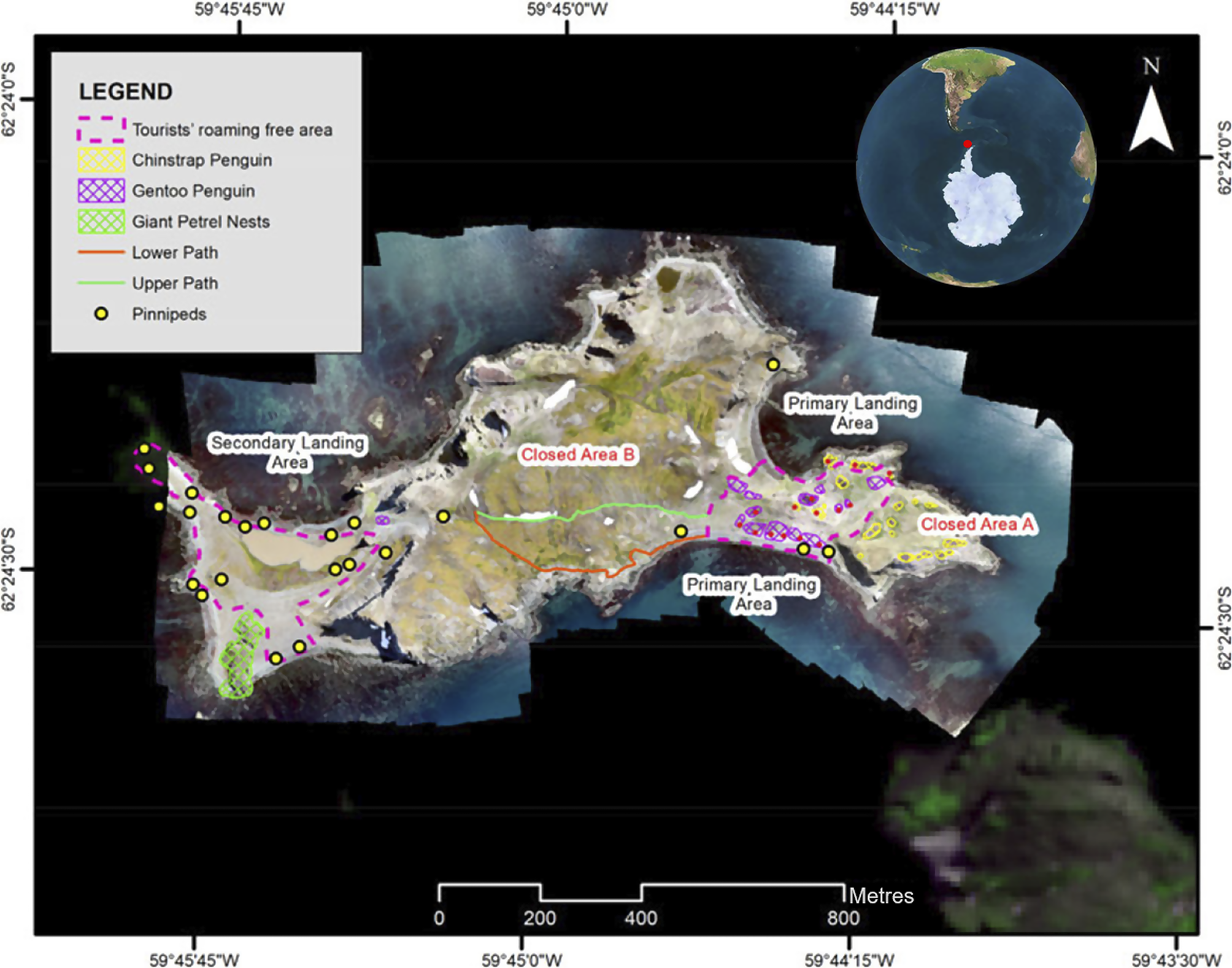
The study was conducted at Barrientos (Aitcho) Island (62°24′S, 59°45′′W). This frequently visited site is representative of the biological diversity present in the Antarctic Peninsula region. In 2019–2020, when our research was conducted, Barrientos Island received a total of 7044 tourists (International Association of Antarctica Tour Operators 2024). Located in the South Shetland Islands, this site contains breeding populations of 16 seabird species, including chinstrap (P. antarcticus) and gentoo (P. papua) penguins. According to models developed by the Mapping Application for Penguin Populations and Projected Dynamics (MAPPPD; http://www.penguinmap.com), Barrientos Island has a higher number of chinstrap (n = 3797 nests) compared to gentoo penguins (n = 1943 nests). Our research was conducted at the south-east and north-east beaches of Barrientos Island, which are the two primary landing areas for tourists (Fig. 1). A detailed review of the natural features, tourism trends and management are provided by Cajiao et al. (Reference Cajiao, Albertos, Tejedo, Muñoz-Puelles, Garilleti and Lara2020).
Map of Barrientos (Aitcho) Island, Antarctic Peninsula region, showing wildlife breeding and resting areas and tourist use areas.
Two study species were chosen for their similar characteristics in terms of size, appearance and general behaviour, such as head and flipper waving, calling, bowing, gesticulating and preening (Black Reference Black2016). However, they differ in their life history, which may influence their behaviour (i.e. boldness, activity and/or aggressiveness) and relationship with their environment. Gentoo penguins have a high degree of flexibility in almost all aspects of their reproduction, diet and phenology, as well as a preference for inshore foraging (Lynch Reference Lynch, Borboroglu and Boersma2015). Chinstrap penguins show a highly migratory wintering behaviour, with an almost exclusive dependence on krill for food, and their distribution is limited to the South American quadrant of the Southern Ocean, where they overlap extensively with the developing krill fishery and tourist activity (Trivelpiece & Trivelpiece Reference Trivelpiece, Trivelpiece, Borboroglu and Boersma2015). Both species of penguins remain in the nest after egg laying and aggregate in nesting sites. This social behaviour influences the formation of nurseries that protect chicks from risks and threats (e.g. predation by skuas, freezing or egg loss), which are greatest at the beginning of the breeding season (Black Reference Black2016). This suggests an increased sensitivity and vulnerability of penguins to external disturbances, including human presence, during this period (Holmes et al. Reference Holmes, Giese and Kriwoken2005, Holmes Reference Holmes2007, Coetzee & Chown Reference Coetzee and Chown2016).
Design and applied treatments
The experiment was conducted from 27 December 2019 to 3 January 2020, coinciding with the peak in the tourist season and the breeding cycles of both species. Treatments were applied at different hours from 09h00 to 18h00 and only on those days when no tourist vessels were scheduled to visit the island. In the field, we selected 16 nesting sites to apply our treatments: 8 belonged to chinstrap penguins and 8 belonged to gentoo penguins. A nesting site was defined as a conglomeration of nests within distinguishable site boundaries. The criteria for selecting nesting sites were (Cajiao et al. Reference Cajiao, Leung, Tejedo, Barbosa, Reck and Benayas2022): 1) to contain only one species, 2) to be regularly visited by tourists, 3) to be considered permanent based on researchers’ records, 4) individual nests should be distinguishable and 5) to have a sufficient number of chicks and adults remained within the nesting sites. All selected nesting sites were mapped using GPS, and afterwards they were randomly assigned to specific treatments. Passive human presence was defined as the presence of humans when no talking or movement was performed while maintaining 10–15 m distance from the nesting sites. Active human presence includes two different treatments: 1) the presence of humans not talking but moving at 2–5 m distance from the nesting sites and 2) human presence under the same conditions but talking. Human talking was performed at ~70 dB to simulate the sound level of an audible conversation between two tourists in field settings. We practiced achieving this sound level consistently between the two applicable researchers using the Sound Meter mobile app (Abc Apps, ver. 1.7.9). The duration of each treatment ranged from 13 to 30 s depending on the size of the nesting site in the case of the active human presence treatments.
Penguin position and size of the nesting site
To examine how position and size may affect penguins’ behavioural responses, we established two categories of the individual position (perimetral/non-perimetral) and two types of nest site size (large/small) from which we selected focal individuals for observation and analysis. For position, we differentiated 1) perimetral penguins, which are individuals located on the border (perimeter) of the nesting site not visually blocked by any other penguin or object, and (2) non-perimetral penguins, which are all other individuals beyond the border of the nesting site (at most 1.5 m inside the nesting site) and not visually blocked by any other penguin. For size, we determined large vs small nesting sites according to the number of penguins (parents alone and parents with chick) present in the nesting site at the moment of the experiment utilizing the criteria of Barbosa et al. (Reference Barbosa, Moreno, Potti and Merino1997): large nesting sites had > 400 nests and small nesting sites had < 50 nests. A total of four small and four large nesting sites were identified for each species of study (n = 16). For the behavioural analysis, 10 focal penguins were selected for each of the nesting sites, corresponding to 5 perimetral and 5 non-perimetral penguins.
Penguin behavioural responses
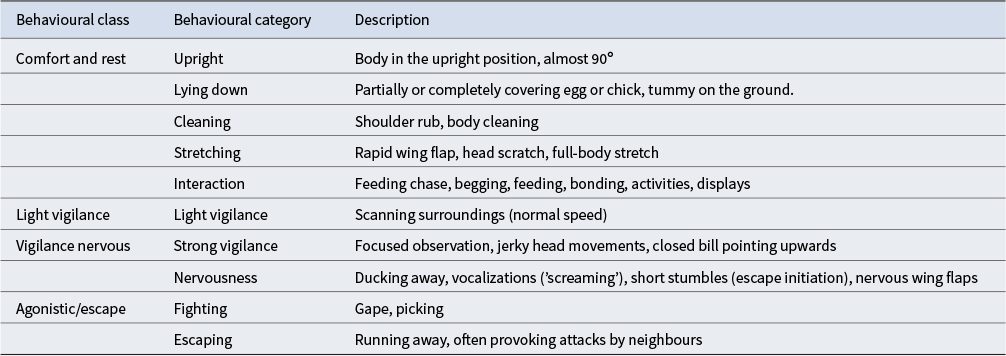
Behavioural classes and categories were taken and combined from previous research in our study (Table I). The classes, defined as ‘comfort and rest’, ‘light vigilance’, ‘vigilance nervous’ and ‘agonistic/escape’, were initially considered as excluding state events (i.e. implying that another class cannot occur simultaneously). They were measured as the proportion of time and frequency of occurrences of the behavioural classes performed by the focal individuals during the time of the experiments (Holmes et al. Reference Holmes, Giese, Achurch, Robinson and Kriwoken2006, Holmes Reference Holmes2007, Cajiao et al. Reference Cajiao, Leung, Tejedo, Barbosa, Reck and Benayas2022). Due to the limited number of occurrences of the ‘agonistic/escape’ behavioural class (n = 27 for both species), we merged it with the behavioural class ‘vigilance nervous’ and renamed it as the ‘strong vigilance’ class before performing our statistical analysis.
Ethogram of the 10 behavioural categories corresponding to four behavioural classes. The last two behavioural classes were merged when performing the analysis due to the low number of ‘agonistic/escape’ behaviours, generating a new class called ‘strong vigilance’.
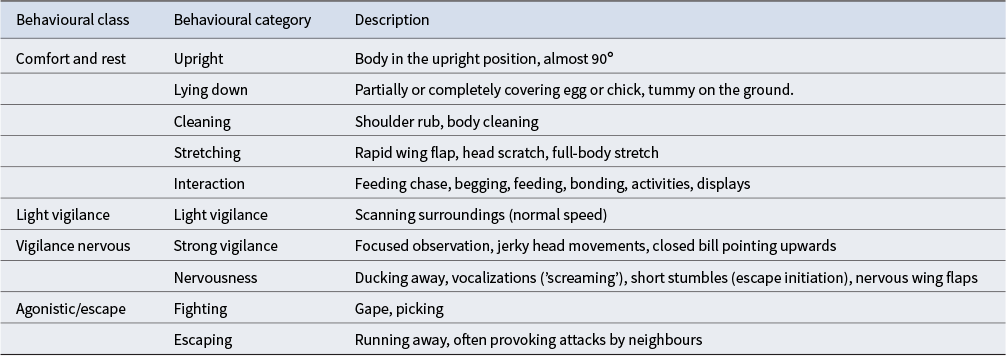
Source: Cajiao et al. (Reference Cajiao, Leung, Tejedo, Barbosa, Reck and Benayas2022) and references therein.
Data creation and statistical analysis
We recorded the penguins’ behavioural responses using videos captured by a Nikon digital camera (model D3400). Videos were saved in .MOV file format with a frame dimension of 1920 × 1080 pixels and a resolution of 59.94 frames s−1. The camera was placed at no less than 10 m from the perimeter of the nesting site. The height and angle were adjusted to achieve the widest angle possible and diminish side distortions. The videos were analysed using the Behavioural Observation Research Interactive Software - BORIS (Friard & Gamba Reference Friard and Gamba2016). Penguins’ behavioural response data were transcribed in BORIS by a single observer to ensure consistency. Prior to this, the observer underwent training with the research team from Cajiao et al. (Reference Cajiao, Leung, Tejedo, Barbosa, Reck and Benayas2022), during which inter-observer reliability was statistically assessed. Multiple observers independently coded the same video samples using the behavioural categories defined in the observation matrix (Table I). Once no significant differences were found in the coding outcomes, the observer was deemed qualified to perform the full transcription. For each passive or active human presence treatment, we calculated the corrected time of the total video footage recorded by subtracting the total duration of disturbance occurrences (i.e. skua overflying the colony, penguin or human blocking the focal subject, etc.) from the total time of the treatment recorded. For each focal penguin, we calculated the proportion of time (fractional numbers) spent on each behavioural class for each treatment and the frequency of occurrences (number min−1).
Data analysis was carried out using SPSS v.28 software (IBM Corp.). To prevent any risk of pseudo-replication, as some focal penguins were close to others and could be influenced by their individual behavioural responses, we aggregated the dataset for each nesting site, treatment and position of the focal individual. Our data were non-normally distributed, so non-parametric tests were applied. We conducted Mann-Whitney U and Kruskal-Wallis tests to compare and identify the differences in behavioural responses of chinstrap and gentoo penguins to passive and active human presence and to conduct intra- and inter-species comparisons among the treatments.
Results
Behavioural responses of penguins according to species
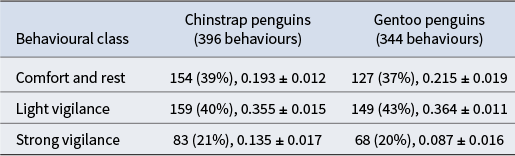
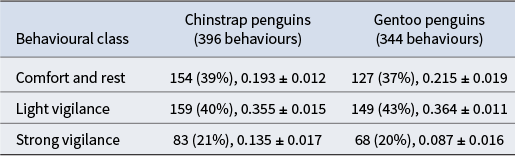
A total of 740 behaviours were recorded: 396 for chinstrap penguins and 344 for gentoo penguins (Table II). The frequencies of each behavioural class were almost equal for both species. However, the average of the corrected proportion of time in strong vigilance for chinstrap penguins was significantly higher than for gentoo penguins (U = 2146, n = 151, P = 0.011), which points to a generally more nervous behaviour for this species.
Number of behaviours, percentage, average of the corrected proportion of time spent in that behaviour and its standard error for each behavioural class and penguin species studied.
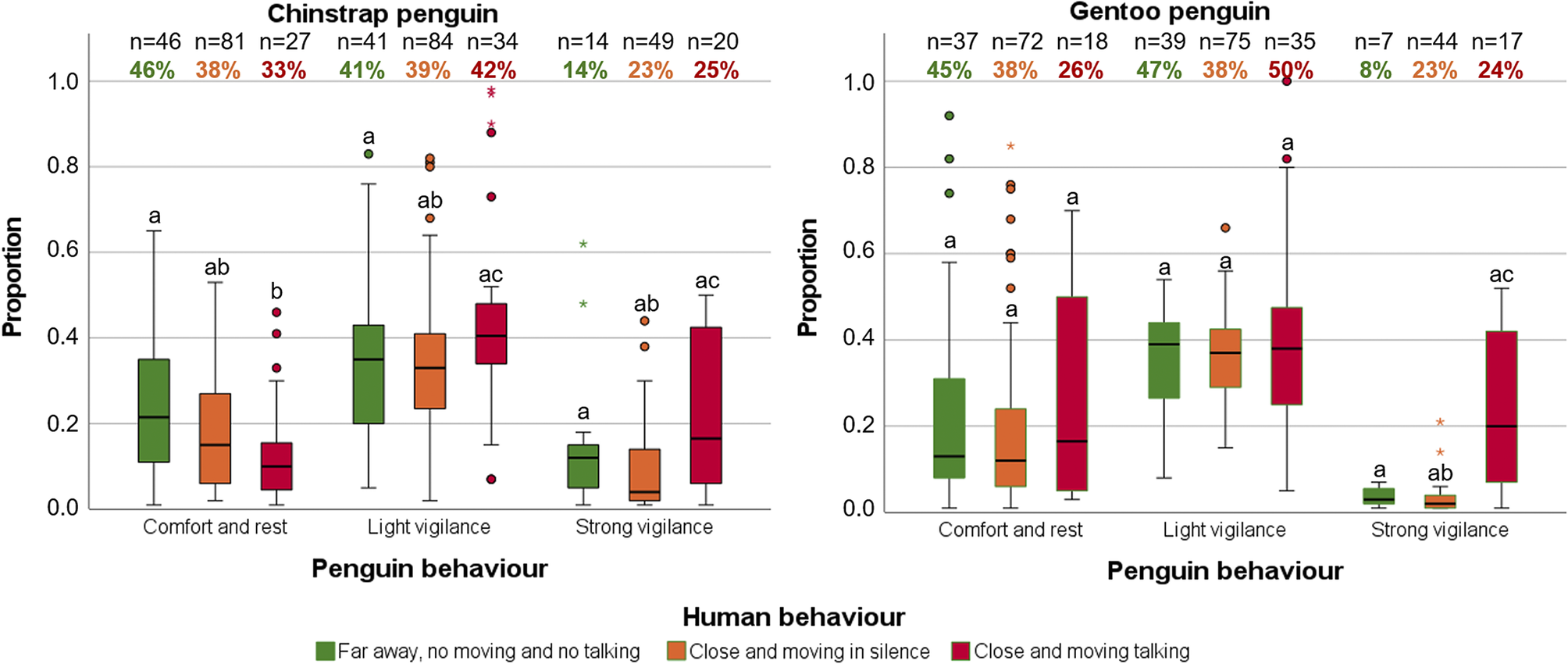
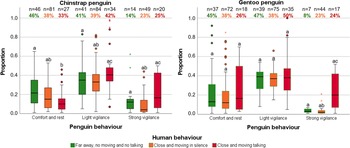
When data by species, treatment and behavioural class were analysed (Fig. 2), a very similar pattern in the distribution of frequencies for each behaviour class was observed for both species. With a passive human presence, comfort and rest and, mainly, light vigilance dominated. With silent approaches, the level of strong vigilance increased at the expense of comfort and rest and, in the case of gentoo penguins, of light vigilance. With talking approaches, light vigilance and strong vigilance increased. When comparing the different treatments through box plots, we observed that, in chinstrap penguins, approaches by silent visitors increased the proportion of time engaging in light and strong vigilance behaviours and, more notably, reduced the proportion of their time engaging in comfort responses. For gentoo penguins, the proportions of comfort and rest and light vigilance responses remained at similar levels under the three treatments, but strong vigilance increased strongly with approaches by talking humans. Among the three human behaviours considered, talking near nesting areas seemed to be the activity that caused the greatest disturbance to penguins, especially gentoo penguins.
Boxplots for chinstrap (left) and gentoo (right) penguins showing differences in the proportion of time spent engaging in different behavioural classes (comfort and rest; light vigilance; strong vigilance) and comparing the three treatments: one for passive human presence (far away, no moving and no talking) and two for active human presence (close and moving in silence; close and moving talking). Letters indicate significant differences between treatments for each behavioural class using the Kruskal-Wallis test with Bonferroni correction and P < 0.05. The figure also represents the number of cases (n) and their rounded frequencies (percentages in colour) within each behavioural class.
Behavioural responses of penguins as influenced by their position in the nesting site
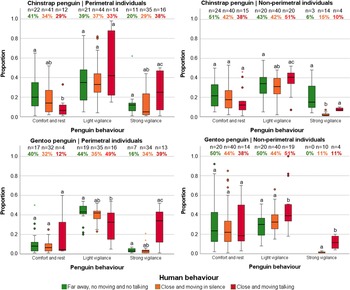
When analysing penguin position, treatment and behaviour (Fig. 3), chinstrap penguins on the perimeter showed more variation in time spent engaging in different behaviours compared to those in the interior. The frequencies of behavioural responses of light and, above all, strong vigilance were higher in perimetral penguins. However, considering the proportions of time spent engaging in each behavioural class, there were only significant differences in the case of strong vigilance with silent approaches, which affected perimetral penguins to a greater extent (U = 382, n = 49, P = 0.002; Table S1). Therefore, both passive and active human presence affected perimetral individuals more in terms of the frequency of vigilance behaviours, but not so much in terms of their duration.
Boxplots for perimetral and non-perimetral chinstrap penguins (top) and gentoo penguins (bottom) showing differences in the proportions of time spent engaging in different behavioural classes and comparing the three treatments. Letters indicate significant differences between treatments for each behavioural class using the Kruskal-Wallis test with Bonferroni correction and P < 0.05, except in the case of strong vigilance of non-perimetral individuals of the gentoo penguin, in which a Mann-Whitney U test with P < 0.05 was applied. The figure also represents the number of cases (n) and their rounded frequencies (percentages in colour) within each behavioural class.
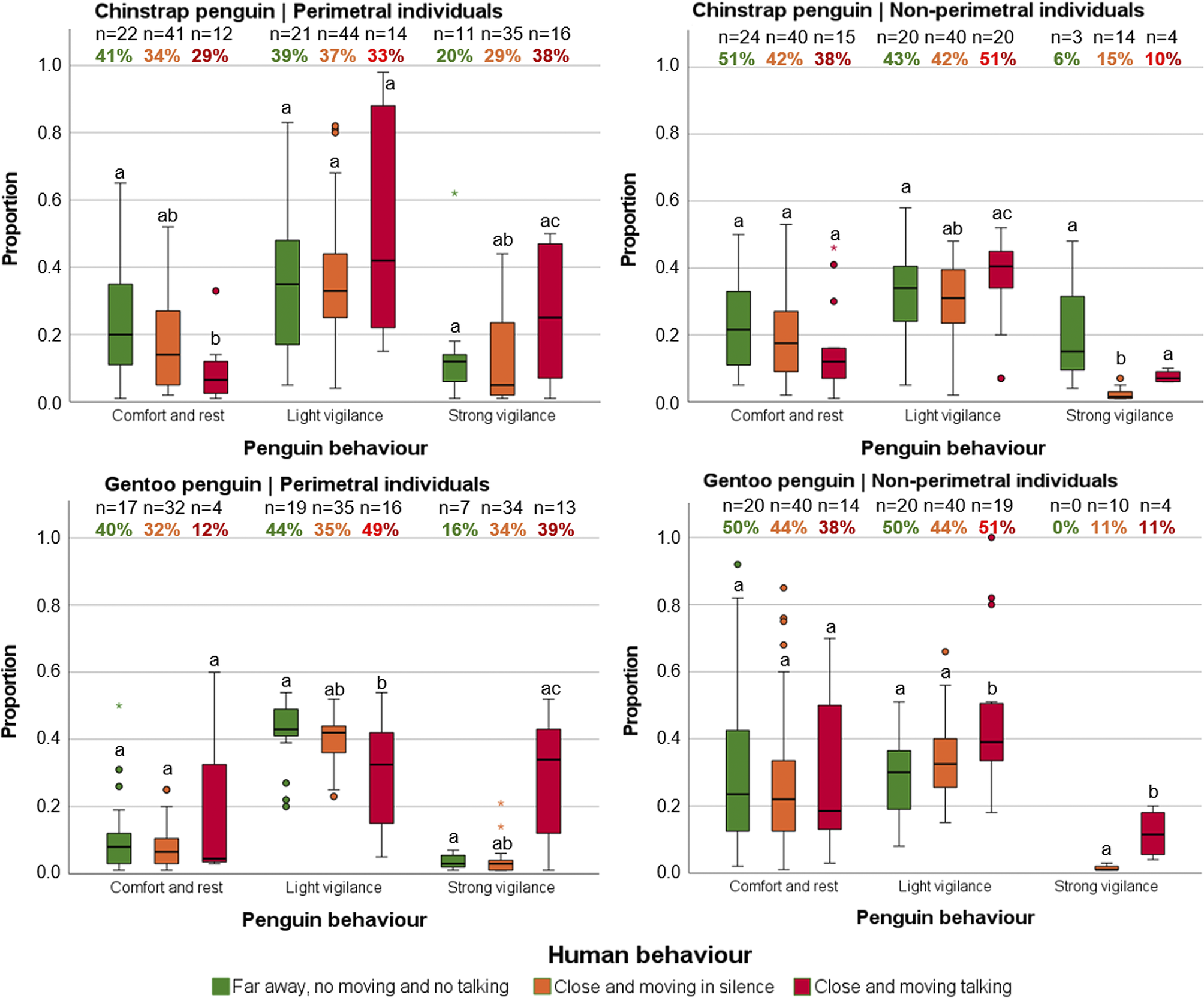
In gentoo penguins, perimetral individuals were more affected by human presence, both in terms of the frequency of light and strong vigilance behaviours and in terms of the duration of these states. Non-perimetral individuals showed higher frequencies of comfort and rest behaviours and spent more time in this state, even when faced with active human behaviours. Their strong vigilance behaviours lasted longer when visitors approached them while talking. Comparing the proportions of time spent engaging in each behaviour class and treatment between perimetral and non-perimetral individuals, multiple significant differences were observed (Table S1). Individuals from the interior of the nesting sites showed higher proportions of comfort and rest behaviours with passive human presence and silent approaches, increased light vigilance behaviours with the same treatments and more strong vigilance behaviours only with silent approaches. For this species, the position in the nesting site had greater consequences on behaviour towards human presence than for the chinstrap penguin, with perimetral individuals more strongly affected by visitors.
Behavioural responses of penguins as influenced by the size of the nesting site
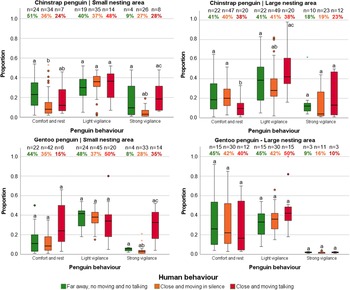
Small nesting areas belonging to chinstrap penguins were not more affected by human presence than larger ones (Fig. 4). Frequencies of strong vigilance states in small nesting areas were increased in situations of silent or talking approaches, but there were no big differences in the durations spent engaging in this behavioural class. In large nesting sites, the duration of the comfort and rest state was reduced with talking approaches, but there were no strong increases in light or strong vigilance behaviours. Significant differences were only recorded in the time spent engaging in comfort and rest behaviours in large nesting sites with silent approaches (U = 427, n = 81, P < 0.001; Table S2). For chinstrap species, the size of the nesting site seems to have had little influence on their behavioural responses towards visitors.
Boxplots for small and large nesting sites for chinstrap penguins (top) and gentoo penguins (bottom) showing differences in the proportions of time spent engaging in different behavioural classes and comparing the three treatments. Letters indicate significant differences between treatments for each behavioural class using the Kruskal-Wallis test with Bonferroni correction and P < 0.05. The figure also represents the number of cases (n) and their rounded frequencies (percentages in colour) within each behavioural class.
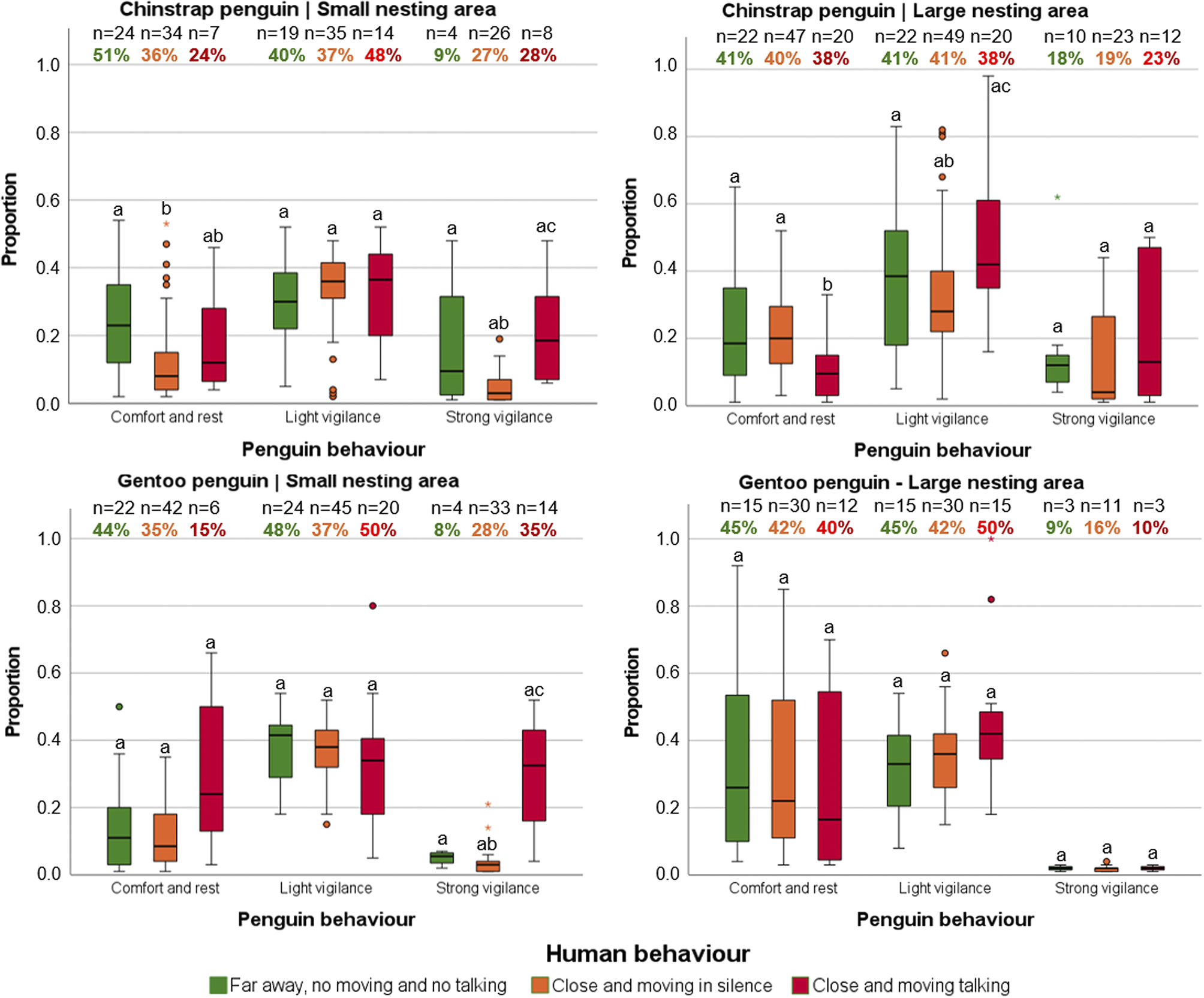
In gentoo penguins, individuals in small nesting areas were more affected by the presence of visitors, with both the frequency and median proportion of strong vigilance behaviours increasing, mainly with active human presence and especially when talking was performed. In addition, the proportions of time engaging in comfort and rest behaviours were lower. In large colonies, no significant differences were observed between the frequencies or proportions of time corresponding to each category of visitor behaviour when penguin responses were compared. When each gentoo penguin behaviour was compared to the treatments in small and large nesting sites, it was observed that in nesting sites with more than 400 nests (large), individuals spent more time engaging in comfort and rest behaviours when comparing passive human presence or silent visitor approaches. In small nesting sites (< 50 nests), the proportion of time spent engaging in strong vigilance behaviours with talking approaches was significantly increased (Table S2). Therefore, for this species, the size of the nesting site was an important factor affecting behavioural responses, with individuals in large nesting sites being less affected by human presence.
Discussion
Behavioural responses of penguins according to species
Both penguin species are clearly affected by human presence, but their reactions differ in frequency and duration. Penguins are more likely to be disturbed under active human presence conditions (i.e. closer walking approaches and especially when talking) as compared with passive human presence conditions. However, chinstrap penguins were found to be more nervous than gentoo penguins and responded with higher levels of vigilance. In Cajiao et al. (Reference Cajiao, Leung, Tejedo, Barbosa, Reck and Benayas2022), we also recorded differences between these two penguin species. Numerous previous studies have found variations in sensitivity to human disturbance across different penguin species. For example, in sub-Antarctic Macquarie Island, Holmes (Reference Holmes2007) found gentoo penguins to be particularly sensitive to human presence when compared to king penguins (Aptenodytes patagonicus, JF Miller 1778) and royal penguins (Eudyptes schlegeli, Finsch 1876). In addition, Lynch et al. (Reference Lynch, Fagan and Naveen2010) recorded on Petermann Island, one of the Antarctic Peninsula’s most frequently visited locations, a significant decrease in breeding productivity of gentoo penguins at highly visited sites, but, in contrast, Adélie penguins showed higher breeding success at those same sites.
This high heterogeneity in the effects of human disturbance was also demonstrated in other Antarctic wildlife besides penguins in the meta-analysis by Coetzee & Chown (Reference Coetzee and Chown2016), underscoring the necessity of reviewing pedestrian approach guidelines in the Antarctic region, particularly at intensively visited sites. Consistent with past research (e.g. Giese Reference Giese1996, Holmes et al. Reference Holmes, Giese and Kriwoken2005, Reference Holmes, Giese, Achurch, Robinson and Kriwoken2006, Flynn et al. Reference Flynn, Hart, Clucas and Lynch2023), we contend that management guidelines and, especially, Visitor Site Guidelines be developed on a case-by-case basis for different species. Consequently, appropriate management of the landing at and touring of visitor sites should consider the dominant species in the colonies visited and adapt any interaction protocols due to the overlap of landing peaks with critical periods such as the early breeding season.
Behavioural responses of penguins as influenced by their position in the nesting site
Human presence had a greater effect on penguins located at the periphery of nesting sites compared to those situated more centrally. These individuals positioned at the colony’s edge spend less time engaging in comfort or resting and spend more time engaging in light vigilance, possibly as a defence mechanism against increased visitor activity. This result aligns with the observations made by Cajiao et al. (Reference Cajiao, Leung, Tejedo, Barbosa, Reck and Benayas2022) suggesting a relationship between heightened human activity and increased stress responses in wildlife. This underscores the protective advantage conferred by central nest positions within a colony for certain species. This protective mechanism is consistent with earlier findings by Emslie et al. (Reference Emslie, Karnovsky and Trivelpiece1995), who noted the strategic importance of nest placement in mitigating stress and predation risks. Similarly, Crosbie (Reference Crosbie1999) studied the predatory activity of skuas (Stercorarius maccormicki, Saunders 1893) in gentoo penguin colonies on Cuverville Island, recording a higher predation rate in individuals on the periphery of the colony, which even increased when tourists were present.
The structural organization of penguin colonies serves not only as a communication conduit among individuals but also as a safeguard against external threats, including predators and the impacts of tourism activity. Penguins occupying peripheral positions are subjected to intensified interactions with the environment, such as human presence, which may exacerbate stress levels and lead to increased rates of temporary nest abandonment, as suggested by Lynch et al. (Reference Lynch, Fagan and Naveen2010). However, the importance of position in the nesting site in terms of individual behavioural responses to human presence is greater in the case of the gentoo penguins. Once again, there are differences between these two species that should be considered.
These lower differences between perimetral and non-perimetral individuals in the case of chinstrap penguins could be related to a recent finding by Libourel et al. (Reference Libourel, Lee, Achin, Chung, Kim, Massot and Rattenborg2023). These authors investigated sleep in chinstrap penguins nesting in a colony exposed to a predatory bird, the brown skua (Stercorarius antarcticus, Lesson 1831), on King George Island, Antarctica. During incubation, skuas are known to prey on penguin eggs mainly on the border of the colony (Young Reference Young1994). Therefore, during this period, one penguin parent must always remain with the eggs or young chicks, guarding them continuously, while the other parent embarks on foraging trips that can last several days. Additionally, the guarding parent must protect the nest from intruding penguins. To further investigate the potential impact that predation pressure has on sleep in chinstrap penguins, these authors also compared sleep patterns in birds nesting in the centre of the colony with those of birds nesting in locations more exposed to skuas at the colony border. They found that penguins nesting at the colony border slept better (i.e. more, deeper and less fragmented sleep) than those nesting in the centre. These findings suggest that the penguins’ sleep patterns are more affected by intraspecific interactions within the colony (i.e. more intraspecific aggression and noise in the centre of the colony) than by predatory pressure. Based on our results, the lower behavioural differences between perimetral and non-perimetral chinstrap individuals could be partially explained by the intraspecific pressure they have in the centre of the nesting site. Therefore, even if human presence is negatively affecting the individuals at the perimeter, such disturbance could be comparable to that coming from their peers. We presumed that gentoo penguins may experience less intraspecific pressure, therefore producing less anxiety among other individuals in the nearby sites. However, further research is needed to analyse this hypothesis in greater detail.
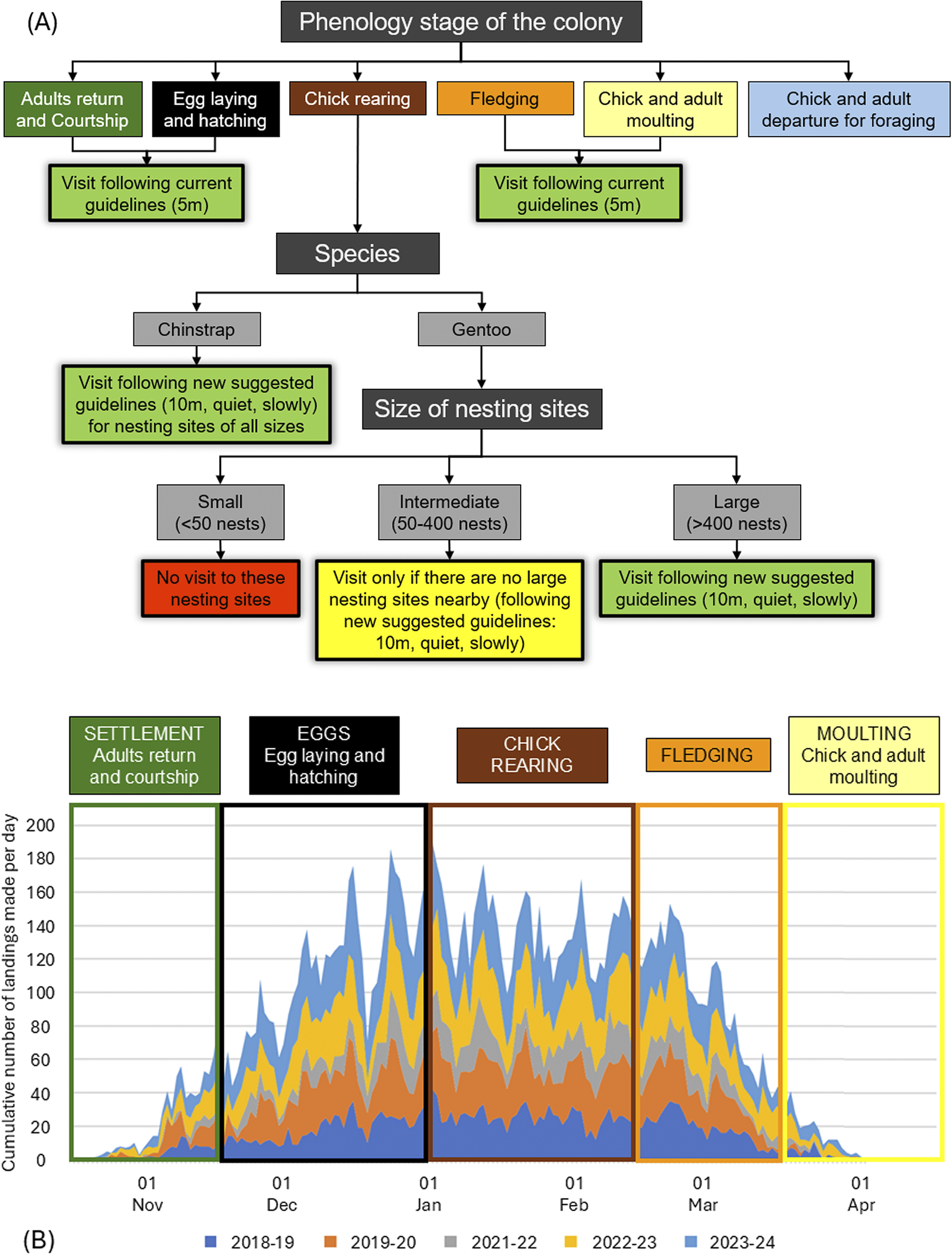
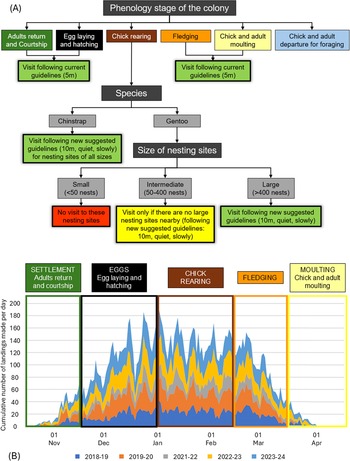
In any case, our findings underscore the necessity of reconsidering the proximity of human observers to wildlife, particularly during sensitive periods such as the breeding season. Supporting the recommendations by Abdullah et al. (Reference Abdullah and Shah2018), we advocate for the extension of the minimum observation distance from 5 to 10 m for both investigated penguin species under certain circumstances (shown in Fig. 5A) to alleviate stress and foster conservation efforts, as well as encouraging tourists not to talk. This approach aligns with the precautionary principle advocated by Cajiao et al. (Reference Cajiao, Leung, Tejedo, Barbosa, Reck and Benayas2022), who call for regulated tourist behaviour, including reduced movement speed, remaining silent and increased observation distances, to minimize the anthropogenic impacts on wildlife during vulnerable periods. By improving and updating the guidelines for wildlife observation, we can mitigate the tourism impacts on Antarctic fauna and contribute to better conservation of these species, ensuring their continued reproductive success and survival in the face of increasing Antarctic tourist numbers.
Behavioural responses of penguins as influenced by the size of the nesting site
The analysis of the effect of human presence on nesting sites of different sizes suggests that large nesting sites may partially mitigate the stress experienced due to tourist activity by species such as gentoo penguins. Cobley & Shears (Reference Cobley and Shears1999) also suggest that large colonies of gentoo penguins are more able to adapt to the stresses that can result from human presence. However, for chinstrap penguins, the size of the nesting site does not seem to be a key factor. Initially, the geometrical properties of large nesting sites lead to a lower ratio of perimetral to central nests, potentially reducing the vulnerability of the nests to human-induced stress and facilitating greater communal defence mechanisms against predation risk. Other previous studies also found differences in behavioural responses to human presence depending on the size of the colony. Giese (Reference Giese1996) reported a significant human impact on breeding success in smaller colonies of Adélie penguins, whereas there were no significant effects in larger colonies with the application of the same treatment. Similarly, Schmidt et al. (Reference Schmidt, Ballard, Lescroël, Dugger, Jongsomjit, Elrod and Ainley2021) highlighted that smaller colonies of Adélie penguins are more susceptible to predation, suggesting increased stress levels for individuals nesting in these areas. This is consistent with classical previous studies (e.g. Emslie et al. Reference Emslie, Karnovsky and Trivelpiece1995, Barbosa et al. Reference Barbosa, Moreno, Potti and Merino1997) that demonstrated the stronger correlation between the size of nesting sites and reproductive success compared with other factors such as tourist visitation density.
Given these findings, it is proposed that small nesting sites (i.e. fewer than 50 nests) be excluded from visitor routes, particularly during the early breeding season, to improve the conservation status of these areas and mitigate anthropogenic impacts on the behaviour and reproductive success of the affected species. This selection of visitable colonies and nesting sites based on their size should be applied more rigorously in species in which the importance of the size of the nesting site has been demonstrated to be a key element concerning the level of disturbance resulting from human presence, as is the case for the gentoo penguin. Following this approach, we propose a decision tree for managing visits to chinstrap or gentoo penguin colonies in the Antarctic Peninsula (Fig. 5A). These recommendations are proposed for the chick-rearing stage. They may also be appropriate for other critical life stages of these penguin species, such as egg laying and hatching or fledging. However, these phases were not considered in our study, and therefore their suitability cannot be estimated. This type of diagram can help organizers to plan visits while considering the impacts of the expected dates of such visits. The adoption of this type of evidence-based conservation strategy is crucial for the long-term preservation of these species in the face of increasing tourist activity, especially at those sites with decreasing breeding success or high touristic demand.
A. Proposed decision tree for managing the landing at and touring of visitor sites with the presence of chinstrap or gentoo penguin colonies in the Antarctic Peninsula. The boxes with thick outlines show the suggested visiting strategy for each case using a traffic light code to denote the suitability of the visit. B. Cumulative number of landings made per day at all visited sites within the Antarctic Peninsula, October–April 2018–2023, 2020–2021 excluded (International Association of Antarctica Tour Operators 2024). The annual cycle of chinstrap penguins in the South Shetland Islands, as established by Borboroglu & Boersma (Reference Borboroglu and Boersma2015), is superimposed, showing the overlap of landing peaks with certain stages of the life cycle of this species.
Limitations
This study faced limitations including the exclusion of environmental variables such as rain, temperature and wind due to their consistency during the experiment and the inability to record prior interactions of the subjects with tourists. Regarding the latter issue, specific data about the frequency of landings and the size of groups at each site are lacking, although the number of visitors during the campaign in which the study was conducted is indicated in the ‘Materials and methods’ section to give an idea of the human pressure experienced by the penguin colonies. Although we believe that these variables would significantly affect the behaviour of penguins, they were not among our research objectives, and we tried to reduce their influence by working only on days when there were no tourists on Barrientos Island. Logistical challenges also prevented the establishment of a pure control group, leading to a focus on comparing passive and active human presence with different positions within colonies and nesting site sizes, reflecting the real-world conditions of an area visited by tourists. In our opinion, despite the exploratory nature of the study, based on a small sample and subjected to the limitations mentioned above, we provide valuable insights for managing tourism in the area.
Other management and research implications
To effectively obtain reliable information that allows researchers to understand the differences in sensitivity to human presence between different species of Antarctic fauna, permanent monitoring of penguin populations at various nesting sites is recommended. In the absence of formally approved Visitor Site Guidelines from the Antarctic Treaty System for any visitor sites, expedition leaders and guides can consider the dominant species in the visited colonies and adapt their interaction protocols in light of the results published in this and other similar papers, which can be communicated effectively through scientific and industry platforms. Visits to colonies of penguin species that have been observed to be in decline in the Antarctic Peninsula region, such as those of the chinstrap penguins (Strycker et al. Reference Strycker, Wethington, Borowicz, Forrest, Witharana, Hart and Lynch2020), should be performed with greater caution, prioritizing other nesting sites only belonging to species such as gentoo penguins that seem to benefit from some of the environmental changes being experienced in this area of the world (Wethington et al. Reference Wethington, Flynn, Borowicz and Lynch2023). In addition, if chinstrap penguin colonies are visited, priority should be given to those of significant size and with stable population trends; hence, the previously mentioned monitoring is of great importance for improving the management of such tourism activity. In any case, maintaining a 10 m distance from the nesting sites of both species during the most critical phenological stages of these penguin colonies (Fig. 5B), moving slowly and conducting visits in silence or speaking only in whispers would limit the possible disturbances experienced by penguins at the visited sites. However, the proposed greater distance might still be insufficient under certain exceptional circumstances, such as during epizootics (e.g. avian flu), which make visiting potentially affected colonies inadvisable (Dewar et al. Reference Dewar, Wille, Gamble, Vanstreels, Bouliner and Smith2023).
To improve decision-making for conserving Antarctic penguins, more research is needed. Future studies should establish baseline vigilance behaviours - such as head turns, scanning postures and alert vocalizations - in the absence of human disturbance. These behaviours can be quantified under controlled conditions and compared across colonies to assess sensitivity to tourism. Simulating realistic visitor scenarios with longer visits, larger groups and broader sampling would improve confidence in behavioural assessments and clarify how colony nesting size influences behavioural responses. This knowledge is key for designing conservation measures, such as regulating group sizes or restricting access during sensitive periods. Although preliminary, our study provides a foundation for evaluating tourism’s impacts and identifying the critical period for visitation control (December–March; Fig. 5B).
Conclusions
Human activity influences the stress levels and behavioural responses of Antarctic fauna. Our results emphasize the importance of managing intensively visited sites and evaluating the efficacy of the Antarctic Treaty Consultative Meeting (ATCM) General Guidelines for Visitors to the Antarctic, IAATO Visitor Guidelines and Visitor Site Guidelines, while acknowledging that applying general guidelines for all species could be inappropriate and potentially ineffective. In this sense, the observed differences in behaviour between chinstrap and gentoo penguins support the need for species-specific conservation measures. These findings enhance our understanding of penguin behavioural responses to tourism, offering insights for refining current guidelines aimed at fostering sustainable tourism practices that protect Antarctic wildlife. In mixed colonies of gentoo and chinstrap penguins, guidelines should prioritize the more sensitive or vulnerable species in order to minimize such impacts. The importance of nesting site size to stress mitigation from human presence is also underscored in this study. Large gentoo penguin nesting sites exhibit a greater level of tolerance to human interactions, indicating that visits should be prioritized to these sites, which can effectively buffer against tourism’s negative impacts. In contrast, the susceptibility of both species to active human presence calls for an increase in the viewing distance during the most critical stages of these colonies, the minimization of noise during visits and mobility limitation involving slow movements and displacements. Nevertheless, given our experimental design and sample size (i.e. representativeness), these effects could not be extrapolated to other species. Antarctica is a challenging region for research due to its extreme climatic conditions, and this constraint adds to the complexity of conducting behavioural studies with wildlife in this region. Therefore, further experiments should be conducted with different penguin species and visited colonies in order to evaluate tourism management strategies.
In summary, our results call for the adaptation of conservation and tourism management strategies to the specific needs and vulnerabilities of different penguin species, with particular emphasis on colony and nesting site size as well as species-specific reactions to human proximity. Implementing these tailored approaches is crucial for establishing sustainable tourism practices that safeguard the distinct wildlife of Antarctica.
Supplementary material
To view supplementary material for this article, please visit http://doi.org/10.1017/S0954102025100357.
Acknowledgements
Our special gratitude goes to the Ecuadorian Navy for its logistical support during the development of this research. Special thanks also go to our team member Ana Justel Eusebio for her valuable contributions to the data analysis.
Financial support
Authorization for field procedures and funding for this research was granted by the Ecuadorian Antarctic Institute under the project ‘Assessment of Visitor Site Guidelines for penguin observation through the development of experimental and non-experimental experiments in Barrientos Island. South Shetland Islands’. The authors acknowledge support from the projects CTM2015-64720 and ANTECO CGL2017-89820-P, funded by the Spanish Research Agency.
Competing interests
The authors declare that they have no known competing financial interests or personal relationships that could have appeared to influence the work reported in this paper.
Author contributions
The specific contributions made by each of the authors of this manuscript are as follows: ACC: conceptualization, methodology, investigation, formal data analysis, writing - original draft, reviewing; PT: conceptualization, methodology, formal data analysis, writing - original draft, writing - review and editing; DC: conceptualization, methodology, investigation, writing - review and editing, funding acquisition; Y-FL: conceptualization, methodology, writing - review and editing; AB: conceptualization, methodology; JB: comments and supervision.



 Open access

