

The management of the resting environment is a key determinant of dairy cow welfare, health and productivity. Lying behaviour represents a primary biological priority, with cows preferentially allocating time to rest over feeding when both are constrained (Munksgaard et al., Reference Munksgaard, Jensen, Pedersen, Hansen and Matthews2005). Adequate lying time, typically 12–14 hours per day, is associated with improved physiological function, including increased mammary blood flow and enhanced milk synthesis (Metcalf et al., Reference Metcalf, Roberts and Sutton1992; Tucker and Weary, Reference Tucker and Weary2004). Consequently, optimising the conditions that facilitate resting behaviour is central to achieving both welfare and production goals in modern dairy systems; however, the ability to meet these behavioural requirements is strongly mediated by housing design. The transition from traditional straw-yarded systems to cubicle (freestall) housing has largely been driven by the need to improve hygiene and labour efficiency (Fregonesi and Leaver, Reference Fregonesi and Leaver2001). While cubicle systems offer advantages in manure management and cleanliness, they have also been associated with increased risks of lameness and leg injury relative to less intensive housing systems (Haskell et al., Reference Haskell, Rennie, Bowell, Bell and Lawrence2006). Within these systems, cow behaviour is highly sensitive to the physical characteristics of the lying surface; for example, lying time increases with bedding depth, whereas poor bedding conditions, such as wet sawdust, reduce stall occupancy (Tucker et al., Reference Tucker, Weary and Fraser2003; Reich et al., Reference Reich, Weary, Veira and von Keyserlingk2010). These findings emphasise that the design and management of resting areas must balance competing demands relating to comfort, hygiene and system efficiency.
At the interface between housing design and animal behaviour lies the bedding material, which performs several critical functions. Bedding provides cushioning to reduce pressure and prevent skin lesions, contributes to thermal insulation and acts as a desiccant to maintain udder hygiene (Cook, Reference Cook2003). The biological performance of bedding materials has been extensively investigated, with inorganic materials such as sand often regarded as the ‘gold standard’ due to their ability to support lower bacterial populations on teat ends compared to organic alternatives (Zdanowicz et al., Reference Zdanowicz, Shelford, Tucker, Weary and von Keyserlingk2004). Organic materials, including straw and sawdust, offer advantages in availability and handling but typically require active management to control moisture and microbial load, including the use of conditioners or disinfectants (Paduch et al., Reference Paduch, Leuenberger, Mansfeld and Krömker2013). In practice, however, bedding selection is rarely determined solely by biological performance. Instead, it is shaped by a broader socio-technical system in which animal requirements must be reconciled with the mechanical constraints of farm infrastructure. Manure-handling systems – including automated scrapers, slurry pumps and storage facilities – impose strict requirements on the physical properties of bedding materials, influencing their suitability for use within a given system (Leach et al., Reference Leach, Archer, Breen, Green, Ohnstad, Tuer and Bradley2015). Materials that are incompatible with slurry transport or handling processes may impose additional labour demands, increase machinery wear, or compromise waste management efficiency.
Despite these constraints, much of the existing research has evaluated bedding materials in isolation, with limited consideration of their interaction with infrastructure and on-farm logistics. This disconnect has contributed to a lack of empirical evidence describing how bedding materials are selected and managed under commercial conditions in the UK dairy sector. In particular, there is limited understanding of how infrastructure, housing design and manure management systems interact to constrain or enable bedding choices in practice. This represents a critical gap between experimental research and its application in commercial systems, where decisions must balance biological performance with operational feasibility. Consequently, the objective of the present investigation was to evaluate whether the selection of resting area materials under commercial conditions is ultimately subordinate to historical infrastructure configurations, thereby validating the premise that mechanical constraints outweigh clinical evidence of material performance.
Materials and methods
Ethical statement
Ethical approval for this study was obtained from the University of Liverpool Veterinary Research Ethics Committee (Ref: VREC1539). All participants were provided with a study information sheet and provided informed consent electronically before accessing the survey.
Survey design and development
The survey instrument was developed to capture a multidimensional view of on-farm bedding management. To ensure the clarity of the questions and the technical accuracy of the terminology, the survey underwent beta-testing by academic and technical farm staff at the University of Liverpool. Feedback from this pilot phase was used to refine the quantitative metrics (e.g., standardising units for bedding volume) and to ensure that the logic-branching of the digital interface functioned correctly across different housing systems.
The final survey comprised five primary thematic sections:
1. Herd demographics and production: To establish the scale of the operation and production intensity.
2. Housing and infrastructure: To categorise the physical constraints (flooring, scrapers and cubicle design) that may influence bedding choice.
3. Bedding management: Detailed subsections for sawdust, sand, straw and recycled manure solids (RMS) to evaluate application rates, frequencies and target bedding depths.
4. Economics and sourcing: To determine the financial ‘on-farm’ cost and the logistical provenance of materials.
5. Manure and waste management: To investigate the compatibility of bedding materials with slurry storage and treatment technologies.
Sampling frame and distribution
Following survey development, the instrument was hosted and distributed via the Jisc Online Surveys platform (Jisc, Bristol, UK). This web-based tool is specifically designed for academic research and provides a secure environment for data collection that is fully compliant with UK General Data Protection Regulation standards. The platform's advanced functionality facilitated the use of dynamic conditional logic (branching), ensuring that respondents were only presented with questions relevant to their specific housing and manure management systems. All raw data were securely stored on the platform prior to being exported in CSV format for secondary cleaning and statistical analysis.
To ensure the authenticity of the data and minimise the risk of automated ‘bot’ submissions, a closed sampling frame was used. The survey was distributed via email on 23 December 2024 exclusively to commercial dairy producers within the verified supply chain of Müller Milk & Ingredients (Market Drayton, Shropshire, UK), remaining open until 3 January 2025. This targeted frame ensured data authenticity by focusing on a commercial cohort operating at higher production intensities, as the producers must meet strict quality compliance, volume consistency and year-round supply commitments, which is reflected in the results. It also confirmed that all respondents were active milk producers within a verified supply chain. A target sample size of 200 responses was established to provide sufficient statistical power; this was exceeded, with 228 validated responses received. To compensate producers for the time required to provide detailed quantitative data, respondents were reimbursed with a £20 Love2Shop digital gift card upon completion. The complete questionnaire, logic branching pathways and user interface are available as Supplementary Material (File S1: Survey Instrument).
Survey architecture and respondent efficiency
The survey employed dynamic conditional logic (branching) to maximise respondent engagement within this sampling framework. This ensured that participants were only presented with questions relevant to their specific on-farm systems. For example, a respondent identifying sand as their primary bedding material would bypass all sections pertaining to organic materials (straw, sawdust, or RMS), focusing exclusively on sand bedding management and its specific infrastructural interactions. This targeted approach reduced the survey burden and ensured that the data collected were highly granular without being unnecessarily repetitive.
Recognising that dairy management systems are often complex and difficult to categorise into simple multiple-choice formats, the survey used open-ended free-text fields for a significant proportion of the technical responses. This allowed producers to elaborate on nuanced practices, such as the use of specific cereal by-products or hybrid waste-handling systems, providing a rich qualitative context that would have been lost in a more restrictive survey design.
Data acquisition and standardisation methodology
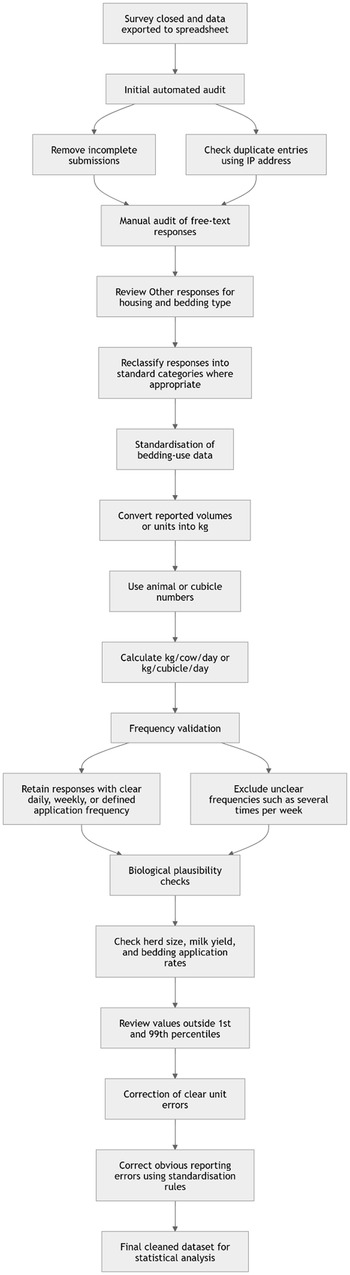
A core priority was to minimise estimation bias. The survey had open-ended free-text fields for a significant proportion of technical responses, allowing producers to provide raw recall data, such as tonnes purchased per month or bales used per week. All standardisation calculations were performed post hoc during data cleaning to ensure a uniform metric of kilograms per cow per day (kg/cow/d). The systematic pipeline for data cleaning, validation and unit conversion is detailed in Figure 1. These calculations integrated material mass, animal numbers and density coefficients.
Systematic multistage data processing pipeline for the standardisation and validation of UK dairy producer survey responses. The flowchart traces the sequential methodology employed to mitigate estimation bias and maintain data integrity, progressing from (1) initial raw survey administration and closed sampling base constraints via Jisc Online Surveys; (2) data extraction and filtering, including the explicit post-hoc exclusion of nonstandard or periodic application frequencies (e.g., ‘several times per week’) to maintain calculation accuracy; (3) the algorithmic integration of raw recall quantities with specific material density coefficients to derive uniform daily mass metrics; and (4) final descriptive and non-parametric statistical cross-tabulation.

Figure 1 Long description
The flowchart outlines a systematic, multi-stage data processing pipeline for the standardisation and validation of UK dairy producer survey responses. The process begins when the survey is closed and data are exported to a spreadsheet, which then undergoes an initial automated audit. This audit splits into two parallel filtering steps to remove incomplete submissions and check duplicate entries using IP addresses. Once these preliminary filters are applied, the paths reconverge for a manual audit of free-text responses, followed by a review of other responses for housing and bedding type. Responses are then reclassified into standard categories where appropriate. Next, the pipeline enters the data standardisation phase, where bedding-use data are standardised, reported volumes or units are converted into kilograms, and animal or cubicle numbers are integrated to calculate kilograms per cow per day or kilograms per cubicle per day. Following this standardisation, a frequency validation step is conducted, which separates the data into two branches to either retain responses with a clear daily, weekly, or defined application frequency, or exclude unclear frequencies such as several times per week. The valid data streams then reconverge for biological plausibility checks, which involve checking the herd size, milk yield, and bedding application rates. The final sequence involves rigorous outlier mitigation where values falling outside the first and ninety-ninth percentiles are reviewed, clear unit errors are corrected, and obvious reporting errors are resolved using standardisation rules. This comprehensive cleaning process culminates in the final terminal step of producing a final cleaned dataset ready for statistical analysis
These calculations integrated three variables:
1. Total volume/mass used over a specific period.
2. Number of animals or cubicles in the managed group.
3. Material density coefficients are applied to convert volumetric units (e.g., ‘Heston’ bales are approximately 500 kg per bale) into mass (kg).
By shifting the mathematical burden from the respondent to the research team, the survey captured more accurate reflections of on-farm material flow while allowing farmers to provide data in their preferred units.
To ensure the highest degree of accuracy in the daily bedding application metrics, calculations were restricted to respondents who provided unambiguous daily, weekly or other defined application frequencies. Participants who reported non-standard frequencies (e.g., ‘several times per week’) were excluded from the final quantitative analysis to avoid estimation bias associated with averaging irregular bedding cycles. Consequently, while 127 farms used sawdust as their primary material, standardised application rates were successfully derived for a high-accuracy sub-cohort of 100 farms. Similarly, for sand bedding, rates were calculated for 24 out of the 45 total users. The curated, standardised variables and computed mass-flow metrics underpinning these sub-cohort calculations are archived as Supplementary Material (File S2: Cleaned Analysis Data).
Data validation and cleaning
Following the conclusion of the survey period, data were exported to a spreadsheet and underwent a two-stage validation process to ensure the integrity of the results (Fig. 1). First, an automated audit was performed to identify and remove incomplete submissions and check for duplicate entries from the same IP address. Second, a comprehensive manual audit of all free-text fields was conducted. This was particularly critical for respondents who selected ‘Other’ for their housing or bedding types; where descriptions indicated a standard system (e.g., ‘loose straw on a clay base’ or ‘green bedding on mattresses’), these were re-categorised into the appropriate ‘Deep Bedding’ or ‘Hybrid Mattress’ cohorts to ensure consistent statistical grouping.
Biologically plausible range checks were applied to all continuous variables, including herd size, milk yield and bedding application rates. For instance, any reported bedding usage falling outside the 1st and 99th percentiles was cross-referenced with the respondent’s housing type and qualitative comments to verify authenticity. Where quantities were clearly reported in incorrect units (e.g., total weekly tonnes reported instead of daily kilograms), these were corrected according to the standardisation methodology described previously.
Statistical analysis
All statistical analyses were performed using STATA version 15.1 (StataCorp LLC, College Station, TX, USA). The normality of the distribution for continuous variables, such as milk yield, daily bedding cost and application quantity, was assessed using the Shapiro–Wilk test and visual inspection of histograms. As most of the bedding and production metrics (except for milk yield) exhibited significant right-skewness, non-parametric descriptive statistics were used. Results are primarily reported as medians and interquartile ranges (IQR), as these provide a more robust representation of the ‘typical’ farm experience than arithmetic means.
Associations between categorical variables, such as the relationship between primary liquid manure storage (tank vs lagoon), were evaluated using Fisher’s exact test. A threshold of five for expected cell counts was applied to determine the use of Fisher’s exact test over Pearson’s chi-square test. This test was preferred over the Pearson’s chi-square test due to the low expected cell counts in certain alternative bedding categories (e.g., RMS and paper). Where comparisons were made between the costs and quantities of the different bedding materials, the Kruskal–Wallis H test was employed, followed by post hoc pairwise comparisons using Dunn’s test with Bonferroni correction for multiple comparisons. For all analyses, statistical significance was established at P < 0.05. All costs are expressed in British pounds sterling (£). Figures were rounded to the nearest whole number to enhance readability, with decimal precision retained only where required for technical accuracy or to reflect statistical significance.
Results
Respondent demographics and geographical distribution
A total of 228 dairy farms across the UK participated in the survey. The anonymised, unedited respondent data profiles downloaded from the hosting platform are provided as Supplementary Material (File S3: Raw Survey Data). The geographical distribution was widespread, with a high concentration in traditional dairy-producing regions of western Great Britain and southern Scotland. The most highly represented counties were Cheshire (14%, n = 31), Staffordshire (10%, n = 23), Shropshire (9%, n = 20) and Lancashire (7%, n = 15). Welsh respondents were primarily located in Carmarthenshire (4%, n = 10), while Scottish participation was driven by farms in Ayrshire (3%, n = 7) and Dumfries and Galloway (3%, n = 6).
Herd size and milk production
These farms represented a broad range of production systems. The mean number of lactating cows per farm was 245 ± 193. The distribution was right-skewed (skewness = 2.4), with a median of 194 lactating cows. The IQR for the milking herd was 120–280 cows, with a maximum herd size of 1,200.
For dry cows, the mean was 33 ± 42, with a median of 25 (IQR: 15–38). Reported average milk yield was 9,478 ± 2,064 L per cow per lactation, showing a normal distribution (skewness = −0.3) and a median of 9,500 L.
Conventional milking parlours remained the predominant infrastructure, used by 81% (n = 184) of the cohort, followed by automated robotic systems at 19% (n = 44). While twice-daily milking was the standard for 89% of conventional parlour users, robotic herds achieved a higher average milking frequency of 3.16 visits per cow per day (Standard Deviation = 0.23), with a reported maximum of 3.9 visits per day.
Housing infrastructure and grazing management
Consistent with the herd characteristics described above, cubicle (freestall) housing was the predominant system, used by 97% (n = 221) of farms. Alternative systems, such as bedded packs (2%) and compost barns (1%), were rarely employed.
Regarding pasture access, most farms (65%, n = 148) incorporated outdoor grazing into their management, while 35% (n = 80) operated zero-grazing systems with year-round housing. For those using pasture:
• The median duration of the grazing season was 180 days (IQR: 168–200 days).
• The median proportion of the milking herd at pasture during the season was 100% (mean = 87%).
Stocking density and occupancy
For farms using cubicle housing (n = 219), the relationship between herd size and available infrastructure was evaluated via the stocking percentage (number of milking cows relative to the number of cubicles). The mean stocking percentage was 91 ± 14%, with a median of 92%.
Most farms operated below a 1:1 cow-to-cubicle ratio, with an IQR of 86–99%. However, a subset of farms exhibited overstocking, with a maximum reported occupancy of 135% (1.4 cows per cubicle), while the lowest occupancy reported was 43%, indicating significant under-utilisation on a small number of units.
Primary bedding systems and materials for the milking herd
Within this predominantly cubicle-based cohort, a clear preference for hybrid bedding systems was identified, which integrate a synthetic base with a loose-fill top layer. These hybrid configurations were used by more than three-quarters of these operations, with rubber mattresses being the most prevalent base type at 48% (n = 105). Other synthetic bases included rubber mats, employed by 20% (n = 43) of farms, and geotextile mattresses, which were used by 10% (n = 21). Deep bedding, defined as a loose-fill material without an underlying synthetic base, was used by 23% (n = 50) of the cubicle cohort, while only 1% (n = 2) relied on alternative surfaces such as waterbeds or bare concrete.
Building on these housing patterns, organic wood-based products were the most prevalent bedding materials used in the milking herd. Sawdust and wood shavings were used by 56% (n = 127) of farms, making them the dominant choice. Sand was the second most common material at 20% (n = 45), followed by straw at 15% (n = 34). In contrast, alternative materials such as paper waste (4%) and RMS (2%) were used by only a small proportion of the cohort.
The primary drivers for material selection were animal-centric; cow comfort and welfare were cited by 73% of respondents, followed by cleanliness and hygiene (64%). Interestingly, the direct economic cost of the material was a priority for only 29% of the surveyed farms.
Dry cow housing and bedding management
Infrastructure for dry cows diverged markedly from that of the lactating herd, with a clear shift towards high-volume loose housing systems. Although cubicle housing remained the most common arrangement (63%, n = 141), a substantial proportion of dry cows were managed in alternative systems, including bedded packs (30%) and compost barns (7%). Across these housing types, bedding strategy also shifted towards greater material use. Deep bedding was used by 53% (n = 118) of operations, more than double the rate observed in the milking herd. In contrast, hybrid systems (mattresses or mats with a bedding layer) were used by 42% of farms.
As shown in Table 1, straw became the most widely used material for dry cows (40%, n = 92), representing a substantial increase from the 15% usage in the lactating herd. Conversely, the reliance on sawdust dropped from 56% for milking cows to 33% for dry cows. The drivers for dry cow bedding selection mirrored those of the milking herd, with cow comfort and welfare remaining the paramount consideration for 78% of respondents.
Prevalence of primary bedding materials used for lactating versus dry cows, expressed as the percentage of total farms (n = 228)

Table 1 Long description
The table reports the share of farms using different primary bedding materials for lactating cows compared with dry cows, based on 228 farms. For lactating cows, sawdust or shavings are most common at 56 percent of farms, followed by sand at 20 percent and straw at 15 percent. For dry cows, straw is most common at 40 percent, followed by sawdust or shavings at 33 percent and sand at 18 percent. Paper waste is uncommon for both groups, used by 4 percent of farms for lactating cows and 2.2 percent for dry cows. Recycled manure solids are rare, at 2 percent for lactating cows and 1 percent for dry cows. Overall, farms tend to use sawdust or shavings more for lactating cows and straw more for dry cows, while sand use is similar between groups.
Manure management and infrastructure
The management of waste within the barn was highly dependent on flooring type. For the 81% of farms with solid concrete floors, manual scraping via farm vehicles was the most common clearance method (58%), followed by automatic scraper systems (41%). For the 14% with slatted floors, passive clearance via hoof traffic (47%) and robotic slat cleaners (44%) were the primary methods.
Manure transport to storage was achieved primarily through pump systems (33%) and scraper conveyors (24%). Slurry tanks or pits were the most common storage infrastructure (70%), while 40% of farms used lagoons. A significant inverse relationship was observed between the use of slurry tanks and lagoons (P < 0.001), suggesting that UK farms typically invest in a single primary liquid storage solution.
Beyond liquid waste, infrastructure for solid manure fractions was widespread; 15% (n = 34) of respondents used concrete pads for stockpiling, 11% (n = 25) employed dry stack storage and 7% used manure bunkers or silos. Cross-tabulation revealed that farms using manure lagoons were significantly more likely to also operate at least one solid storage system compared to those without lagoons (41% vs. 26%; P = 0.02), whereas slurry tank users were significantly less likely to use solid storage facilities (P = 0.022). Regarding transport, while pumps and scrapers were primary, 20% of farms relied on a tractor and loader. Qualitative analysis of alternative transport mechanisms identified the use of passive gravity-fed underfloor channels, grids and weir systems.
Active manure treatment to enhance consistency or mitigate environmental impact was used by 26% of the cohort. Biological additives were the most frequent intervention (20%), with thematic analysis of free-text responses revealing that 78% (n = 32) of these users specifically employed microbial inoculants – commonly referred to as ‘slurry bugs’ – to manage manure quality and reduce crusting.
Detailed material analysis
The selection of bedding materials in the British dairy sector follows a distinct hierarchy dictated by the interaction between biological requirements and fixed slurry infrastructure.
Sawdust and wood shavings (56%, n = 127)
Sawdust is the predominant bedding choice, particularly among farms using hybrid mattress-based systems. It is managed with a ‘surface-interface’ philosophy, designed to provide a dry, absorbent layer rather than structural cushioning.
Procurement and inventory: The median purchase cost was £168 per tonne. This figure accounts for a diverse range of procurement methods across the cohort, including both raw bulk deliveries and more highly processed bagged materials. Supply chains are highly commercialised, with 84% sourcing through agricultural merchants. Inventory management is dynamic, with 61% of farms restocking several times per year and 25% maintaining a monthly delivery cycle. Softwood (e.g., pine, spruce) was the primary species identified (41%), though 39% of respondents were unsure of the specific wood type.
Management intensity: Labour requirements are frequent but low-volume; 85% of users apply fresh material at least once daily, typically at a targeted depth of just 1.0 cm (IQR: 0.5–2.0 cm).
Application method: While 76% of farms have mechanised the process, sawdust remains the only material with a significant manual application rate (24%), owing to its low bulk density and ease of handling.
Sand (20%, n = 45)
Logistical requirements: In contrast to sawdust, sand represents a high-mass bedding system, with a median daily application of 10.4 kg per cubicle reported across responses. This necessitates heavy-duty machinery; the median engine power for application equipment was 82 kW (110 HP) (range: 19–134 kW; 25–180 HP).
Sourcing and storage: Sourcing is predominantly local (67% within 50 miles) to mitigate haulage costs for the heavy aggregate. Notably, 69% of sand is stored outdoors and uncovered, exposing it to environmental moisture that can complicate mechanical handling during winter. While this presents seasonal challenges, outdoor storage is an operational necessity for most UK producers. Furthermore, as bedding sand is ultimately integrated into liquid slurry systems, the extent to which initial moisture levels affect final ‘pumpability’ remains a point of significant operational debate. Sourcing relied on unrefined extraction rather than processed construction-grade materials; quarried sand was the predominant choice (53%), followed by dredged material (22%). Only 9% of respondents reported washing or sieving sand before use, a task almost invariably performed by the supplier.
Transition drivers: While 16% of sand users adopted the material within the last 5 years for clinical reasons (mastitis control), 11% now intend to transition away. These ‘exits’ are driven by mechanical attrition, specifically the accelerated wear on pumps and the labour-intensive requirement for dredging slurry lagoons.
Straw (15%, n = 34)
Unlike sand, straw management is characterised by its integration into local arable systems and a bimodal usage pattern based on housing infrastructure.
The non-commercial sourcing: Straw is the least commercialised material; 56% of users procure it through non-commercial channels, such as purchasing ‘behind the combine’ or ‘out of the swath’ from neighbours or using home-grown cereal crops. The median market rate was £87.50 per tonne. Prices are highly seasonal and harvest-dependent, a factor that directly influences the relative economic competitiveness of all other bedding materials in any given year.
Management stratification: Application is highly targeted: milking cows are bedded sparingly (median 1.6 kg/d), whereas dry cows in loose housing require nearly 10 times the material volume (12–14 kg/d).
Hygiene interventions: Because of its organic, moisture-retentive nature, straw users are the most active in using conditioners: 65% of users apply lime-based products or disinfectants (e.g., Fam 30) to the bedding surface to modify pH and suppress pathogens.
RMS (2%, n = 5)
RMS represents a circular system adopted primarily to improve cow comfort while reducing external input dependencies.
Processing and satisfaction: In the small cohort of farms using RMS (n = 5), satisfaction was descriptive rather than statistically generalisable. All respondents used a screw-press separator to process raw slurry, typically on a daily basis. Despite the complexity of the machinery, retention is 100%, with farmers reporting significant improvements in hock health compared to previous abrasive materials.
Risk management: While satisfaction is high, biosecurity monitoring is low; 80% of users do not monitor the bacterial load or moisture content of the solids, relying instead on universal conditioning with hydrated lime to mitigate microbial risks.
Bedding usage and economic comparison
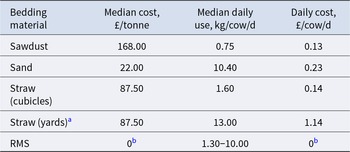
Table 2 provides a standardised comparison of the economic and physical requirements for each material. The daily cost per cow was calculated based on median purchase prices and reported daily application volumes.
Comparative analysis of median procurement costs, daily application rates and calculated daily expenditure for primary bedding materials across 228 UK dairy farms

Table 2 Long description
The table compares bedding materials by median purchase cost per tonne, median daily use per cow, and resulting daily cost per cow. Straw used in yards has the highest daily cost at £1.14 per cow per day, driven by high use of 13.00 kg per cow per day despite a median price of £87.50 per tonne. Sand is inexpensive per tonne at £22.00 but has high daily use at 10.40 kg per cow per day, giving a daily cost of £0.23. Sawdust has the highest price per tonne at £168.00 yet low use at 0.75 kg per cow per day, resulting in a daily cost of £0.13. Straw used in cubicles costs £0.14 per cow per day with 1.60 kg per cow per day at the same median price as yard straw. Recycled manure solids are listed with zero purchase cost and zero daily cost, while daily use varies from 1.30 to 10.00 kg per cow per day. Costs reflect purchase price only and do not include on-farm processing, energy, or labour.
Note: aBased on the 90th percentile of straw users in loose housing.
b Represents purchase cost only; does not account for internal processing, energy, or labour costs.
Disposal and waste management comparison
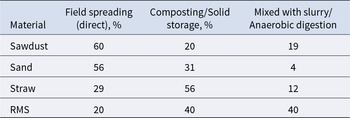
The physical properties of the bedding dictate the eventual waste-handling pathway, with distinct strategies for organic and mineral materials (Table 3).
Distribution of post-use management and disposal pathways for primary bedding materials, expressed as a percentage of respondents within each material cohort

Table 3 Long description
The table reports how respondents manage or dispose of used primary bedding materials, shown as percentages within each material group across three pathways: direct field spreading, composting or solid storage, and mixing with slurry or anaerobic digestion. Sawdust is most often field spread at 60 percent, with 20 percent composted or stored and 19 percent mixed with slurry or digestion. Sand is also mainly field spread at 56 percent, with 31 percent composted or stored and only 4 percent going to slurry or digestion. Straw differs, with composting or storage the dominant route at 56 percent, compared with 29 percent field spreading and 12 percent slurry or digestion. RMS has no single dominant pathway: 40 percent is composted or stored and another 40 percent is mixed with slurry or digestion, while 20 percent is field spread. Percentages may not add to a full total because of rounding or because small disposal routes are not included.
Note: Percentages may not total 100% due to rounding or the exclusion of minor ‘Other’ disposal categories.
Mineral settling: Sand disposal remains an outlier in waste management; 31% of farms handle it as a solid or semi-solid fraction to allow for mineral settling, avoiding the build-up of abrasive sludge in liquid storage tanks.
Fibre digestion: Sawdust and RMS show the highest integration into liquid slurry systems and anaerobic digestion, reflecting their compatibility with pumping and agitation infrastructure once the material is saturated.
Discussion
This study demonstrated that bedding selection on UK dairy farms was not an isolated management decision but the downstream outcome of infrastructure design and manure-handling systems. Across the cohort, material choice was consistently aligned with the mechanical requirements of slurry transport, storage and processing, indicating that infrastructure imposed a form of constraint that limits the adoption of alternative bedding strategies, even where these might offer clinical advantages. This aligns with broader synthesis work highlighting that bedding selection represents a balance between cow health, economic considerations and management requirements (Siachos et al., Reference Siachos, Smith and Neary2026). A central finding was that bedding selection operated within a framework of functional path dependency, whereby historical investment in housing and slurry systems restricted subsequent management flexibility.
This functional restriction was especially critical under the widespread use of solid concrete flooring and mechanised scraping systems, which necessitates the movement of manure as a pumpable slurry. Under these conditions, bedding materials must be compatible with pumping and agitation, favouring those with low bulk density and minimal fibre length. The dominance of sawdust within the milking herd reflected these constraints; its fine particle size allows it to integrate effectively into slurry systems without impairing flow or causing blockages. Consequently, sawdust was typically applied in minimal quantities as a surface-conditioning layer rather than a structural bed, illustrating how infrastructure dictated not only material choice but also its functional application.
While the physical characteristics of wood-based materials facilitate fluid flow, the mechanical properties of mineral aggregate introduce an operational trade-off. The relatively limited adoption of sand illustrated the divergence between clinical recommendations and operational feasibility. Sand has been consistently associated with improved udder hygiene and reduced bacterial loads relative to organic materials (Zdanowicz et al., Reference Zdanowicz, Shelford, Tucker, Weary and von Keyserlingk2004), as well as improved cow comfort and lying behaviour (Cook, Reference Cook2003). However, it introduces substantial challenges for manure handling, including sedimentation, abrasion of mechanical systems and the need for specialised separation infrastructure (Leach et al., Reference Leach, Archer, Breen, Green, Ohnstad, Tuer and Bradley2015). The intention of some producers to transition away from sand, despite its biological advantages, underscored the practical importance of these constraints. In the UK context, where sand-manure separation systems are uncommon, these operational limitations appeared to outweigh the welfare benefits for many farms.
Beyond mechanical handling constraints, straw use further illustrated how housing architecture influenced both biological and economic decision-making. The marked difference in application rates between cubicle systems and loose-housed yards reflected distinct functional roles: in cubicles, straw serves as a supplementary surface material, whereas in loose housing it forms a deep, structural bed. This divergence results in substantially higher material usage and cost in loose-housed systems, particularly for dry cows. The preferential allocation of such resource-intensive bedding to the dry period suggested that producers strategically prioritised cow comfort during phases of increased physiological vulnerability. Furthermore, this deployment is likely facilitated by a shifting risk–benefit calculation regarding environmental mastitis. While the organic, moisture-retentive nature of straw poses an immediate threat to lactating udders, the absence of active milking and milk leakage during the dry period reduces the immediate operational anxiety surrounding environmental pathogen exposure. To manage the well-known microbial risks of deep straw yards, producers rely heavily on a dual-intervention strategy: first, they apply a large volume of material to regularly bury soiled layers and maintain a dry, clean surface interface; second, they combine this high-volume dilution with secondary chemical interventions such as surface conditioners to suppress pathogen growth. This is consistent with evidence that straw-based systems support improved behavioural expression and welfare outcomes compared with cubicle housing (Fregonesi and Leaver, Reference Fregonesi and Leaver2001), and with findings that increased bedding depth and softness are associated with longer lying times (Tucker et al., Reference Tucker, Weary and Fraser2003; Tucker and Weary, Reference Tucker and Weary2004). However, this approach also exposed the system to economic and supply volatility, particularly given the seasonal and geographically dependent availability of straw.
Beyond individual material considerations, the findings highlighted a broader socio-technical disconnect between environmental policy objectives and on-farm decision-making. Despite increasing emphasis on sustainability within dairy supply chains, producers demonstrated limited willingness to incur additional costs for environmentally labelled bedding materials. Instead, adoption was contingent on immediate functional benefits, such as improved manure handling or cow comfort. The uptake of RMS exemplified this pattern; adoption has been linked to reduced reliance on external inputs and compatibility with slurry systems, rather than environmental motivations (Leach et al., Reference Leach, Archer, Breen, Green, Ohnstad, Tuer and Bradley2015). This suggested that future efforts to promote sustainable bedding solutions must prioritise demonstrable operational advantages alongside environmental benefits if they are to achieve meaningful uptake.
The results also emphasised that bedding management cannot be considered independently of the wider farm system. Material choice, application rate, labour input and waste disposal were tightly interconnected components of a single operational framework. Interventions that focus solely on the biological properties of bedding materials, without accounting for their compatibility with infrastructure, risk limited adoption. This might partly explain the gap between experimental research and commercial practice, where controlled studies often evaluate materials in isolation from the logistical constraints faced by producers. Furthermore, evidence indicates that bedding effectiveness is highly dependent on management practices, including maintaining appropriate moisture levels and ensuring regular replenishment (Tucker et al., Reference Tucker, Weary and Fraser2003; Reich et al., Reference Reich, Weary, Veira and von Keyserlingk2010), reinforcing the importance of considering bedding within a systems context rather than as a standalone input.
The present study was subject to several limitations. The sampling frame was restricted to a single milk processor supply chain, which may limit generalisability to the wider UK dairy sector. The reliance on self-reported survey data introduced the potential for recall bias and subjective interpretation, particularly in relation to material usage and management practices. Additionally, the cross-sectional design precluded causal inference; while strong associations between infrastructure and bedding choice were evident, the temporal dynamics of these decisions cannot be fully resolved.
Conclusions
Taken together, these findings indicate that improving dairy cow resting environments in the UK requires a systems-based approach that integrates animal welfare with engineering and farm management realities. Rather than focusing solely on identifying biologically optimal bedding materials, future research should prioritise the development of technologies and infrastructure adaptations that expand the range of feasible options available to producers. In particular, innovations in slurry handling and separation may be critical in enabling wider adoption of high-comfort materials without compromising operational efficiency. Bridging the gap between biological performance and mechanical practicality will be essential to achieving meaningful improvements in both animal welfare and system sustainability.
Supplementary material
The supplementary material for this article can be found at https://doi.org/10.1017/S0022029926102544.
Acknowledgements
The authors would like to thank Müller Milk & Ingredients for facilitating the survey distribution to their supply base and the 228 dairy producers across the UK who shared their time and operational data. Gratitude is also extended to the academic and technical farm staff at the University of Liverpool for their support and expertise during the survey development and pilot phases.
Funding statement
This research was supported by a grant funded in collaboration between the Department for Environment, Food and Rural Affairs (Defra) and Innovate UK's Transforming Food Production Challenge. The work was conducted as part of the Farming Innovation Programme: Feasibility additional funding (Application number: 10082833) under the project title: ‘Feasibility study of a unit for stall management within the dairy sector to reduce carbon impact and improve cow health’. The project represented a formal collaboration between Garnett Farms Engineering Limited and the University of Liverpool.
Competing interests
This research was conducted as part of a collaborative research grant involving Garnett Farms Engineering Limited (AG Products), a UK-based agricultural engineering and manufacturing company specialising in livestock housing, bedding, feeding and manure management systems, and the University of Liverpool. The commercial partner contributed to project scope development, technical discussions, industry advisory input and practical monitoring throughout the project. The University of Liverpool retained responsibility for the independent academic analysis, interpretation of the survey data and preparation of the final manuscript.
Declaration of generative AI in the writing process
During the preparation of this manuscript, the authors used the generative AI tool Gemini 3 Flash (Google) from 16 to 22 April 2026, to selectively evaluate and refine specific passages that were linguistically or technically complex to draft. Following this process, the authors independently reviewed, verified and edited the resulting text as necessary. The authors take full responsibility for the accuracy, integrity and originality of the content of the final publication.



 Open access

