

Industrial sludges are waste byproducts generated during the transformation of raw materials into finished products through industrial processes. According to the United States Environmental Protection Agency (EPA), sludges can be generated from several industrial activities, mainly paper production (Vashistha et al., Reference Vashistha, Kumar, Singh, Dutt, Tomar and Yadav2019), chemical manufacturing (Kologrieva et al., Reference Kologrieva, Volkov, Krasnyanskaya, Stulov and Wainstein2022; Magalhães et al., Reference Magalhães, Alves, Duber, Oleskowicz-Popiel, Stams and Cavaleiro2024), wastewater treatment (Martínez-García et al., Reference Martínez-García, Eliche-Quesada, Pérez-Villarejo, Iglesias-Godino and Corpas-Iglesias2012), energy production (Castellanos et al., Reference Castellanos, Aryanfar, Keçebaş, Assad, Islam, Naveed and Lasisi2024), metallurgy and mining (Luo et al., Reference Luo, Deng, Inubushi, Liang, Zhu and Wei2018; Fatah et al., Reference Fatah, Zhang, Huang, Zheng, Miao and Mastoi2021; El Aallaoui et al., Reference El Aallaoui, Elghali, Hakkou, Taha, Benzaazoua and El Ghorfi2025) and the ceramic industry (Avram et al., Reference Avram, Birle, Tudoran, Borodi and Petean2024a). Managing these waste materials is a significant challenge due to their large volumes and the need for extensive landfill areas.
In the Marrakech region (central Morocco), clayey sludges are considered to be another type of harmful waste. They are being disposed of in increasing tonnages, and they result from the washing of aggregates derived from the crushing of alluvial deposits in riverbeds. The rapid population growth in this area has driven urban expansion, requiring the construction of new housing, infrastructure and services. These demographic dynamics significantly increase the demand for construction materials, thereby intensifying the exploitation of natural resources, particularly in aggregate quarries. This amplification generates an accumulation of washing sludge, posing a major environmental challenge due to its complex management and impact on surrounding ecosystems (Loutou et al., Reference Loutou, Hakkou, Argane, Mansori, Grase, Svinka and Mezinskis2018). These sludges are often discharged into sedimentation basins. This is a low-cost disposal method widely adopted by the aggregate industries, but it is not a sustainable management solution. Clayey sludges can cause significant ecological disruption, including the accumulation and dispersion of fine solid particles into the air, water and soil (Maletsika et al., Reference Maletsika, Nanos and Stavroulakis2015; Zia-Khan et al., Reference Zia-Khan, Spreer, Pengnian, Zhao, Othmanli, He and Müller2015; Zajec et al., Reference Zajec, Gradinjan, Klančnik and Gaberščik2016). Therefore, developing a technologically and economically viable recycling solution could provide commercial opportunities while simultaneously reducing the environmental footprint of the aggregate industries.
The reuse of industrial sludge in ceramic manufacturing, either as a primary raw material or as a substitute for conventional materials, has been demonstrated by several studies as an effective solution for contaminant confinement, reducing sludge amounts, landfill storage needs and costs (González-Corrochano et al., Reference González-Corrochano, Alonso-Azcárate and Rodas2009; Galetakis et al., Reference Galetakis, Alevizos and Leventakis2012). For instance, in Poland, waste generated from dolomite aggregate washing has been successfully used in ceramic pastes without prior treatment (Kłosek-Wawrzyn et al., Reference Kłosek-Wawrzyn, Łój, Bugaj and Wons2019), and in Egypt, incorporating 10–40 wt.% granite sludge into ceramics improved material density and reduced porosity (Sadek et al., Reference Sadek, Hessien, Abd El-Shakour, Taha and Khattab2021). Similarly, in Spain, the addition of 5% wastewater sludge to clay raw materials improved clay brick properties (Martínez-García et al., Reference Martínez-García, Eliche-Quesada, Pérez-Villarejo, Iglesias-Godino and Corpas-Iglesias2012). In India, lime sludge can replace up to 20% of the materials used in brick manufacturing, reducing energy consumption, as the sintering lime sludge-based bricks occurs at a lower temperature (Vashistha et al., Reference Vashistha, Kumar, Singh, Dutt, Tomar and Yadav2019). In Romania, sludge from wastewater generated during ceramic tile processing can be valorized as a raw material for ecological building materials, and moderate thermal consolidation allows the production of bricks of good to high quality and a low carbon footprint (Avram et al., 2025).
Quarry mining is a crucial sector supporting the economy of Morocco and its social development, particularly in terms of infrastructure and housing (Ministère de l’Equipement du Transport et de la Logistique, 2016). A national inventory conducted in 2012 identified 1885 quarries across Morocco, with more than 238 quarries located in the Marrakech region alone (Ministère de l’Équipement et du Transport, 2012; Haut Commissariat au Plan, 2020).
The Marrakech region is renowned for its centuries-old ceramic industry, with hundreds of small artisanal workshops operating around the city. The raw clay material used by artisan potters is sourced from local deposits. However, due to their poor quality, artisans often import raw materials from other Moroccan regions, such as Fez, Safi and Sale, to improve their properties through blending (Daoudi et al., Reference Daoudi, Hicham, Latifa, Abderrahmane, Jamal and Mohamed2014; El Boudour El Idrissi et al., Reference El Boudour El Idrissi, Daoudi, El Ouahabi, Balo Madi, Collin and Fagel2016).
Although various types of industrial sludge have been extensively documented in the literature, sludge from the aggregate industry remains underexplored. This study aims to address this research gap by characterizing sludges from different quarries in the Marrakech region. It aligns with a broader strategy aiming to improve the recycling of clayey sludge generated during aggregate washing. The main objective is to assess the extent to which this sludge can be used as a raw material for the production of ceramic bodies, which could potentially reduce production costs. Additionally, this approach could also have a positive environmental impact by preventing sludge discharge into nature and mitigating the associated environmental issues.
Study area
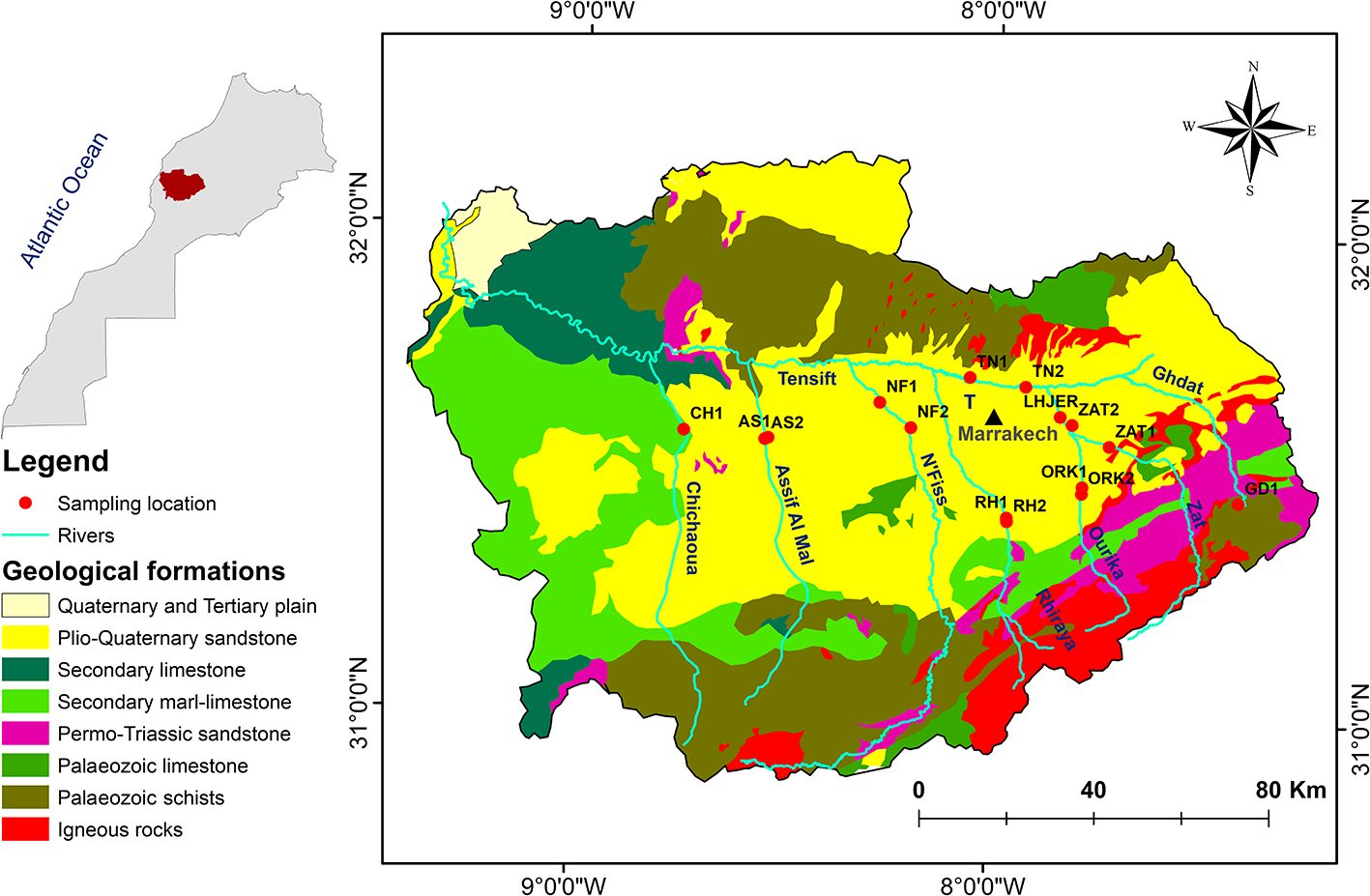
The study area is part of the Tensift watershed, located in central Morocco, covering an area of 20,450 km2. It is characterized by an arid to semi-arid climate, moderated by complex orographic features (Hajhouji, Reference Hajhouji2018). From a geomorphological perspective, the basin comprises an alluvial plain, which accounts for 70% of the total basin area, bordered to the north by the Jebilet mountain range (10%), with altitudes up to 1000 m, and to the south by the High Atlas mountain range (20%), with a maximum elevation of 4170 m (Haida et al., Reference Haida, Snoussi, Latouche and Probst1996). The plain is traversed by the Tensift River, flowing from east to west, and its main tributaries mainly located on the left bank (i.e. Chichaoua, Assif Al Mal, N’Fiss, Rhiraya, Ourika, Zat and Ghdat). The aggregate quarries studied are located along these rivers (Fig. 1).
Geological map of the Tensift watershed and locations of the samples studied.

Geologically (Fig. 1), the southern part of the basin, which belongs to the High Atlas mountain range, is primarily composed of Palaeozoic magmatic and metamorphic rocks (Michard et al., Reference Michard, Saddiqi, Chalouan and Frizon de Lamotte2008). Its northern part is characterized by Mesozoic to Quaternary sedimentary formations, including limestones, dolomites, marls, clays and sandstones (Haida et al., Reference Haida, Snoussi, Latouche and Probst1996).
Materials and methods
Materials
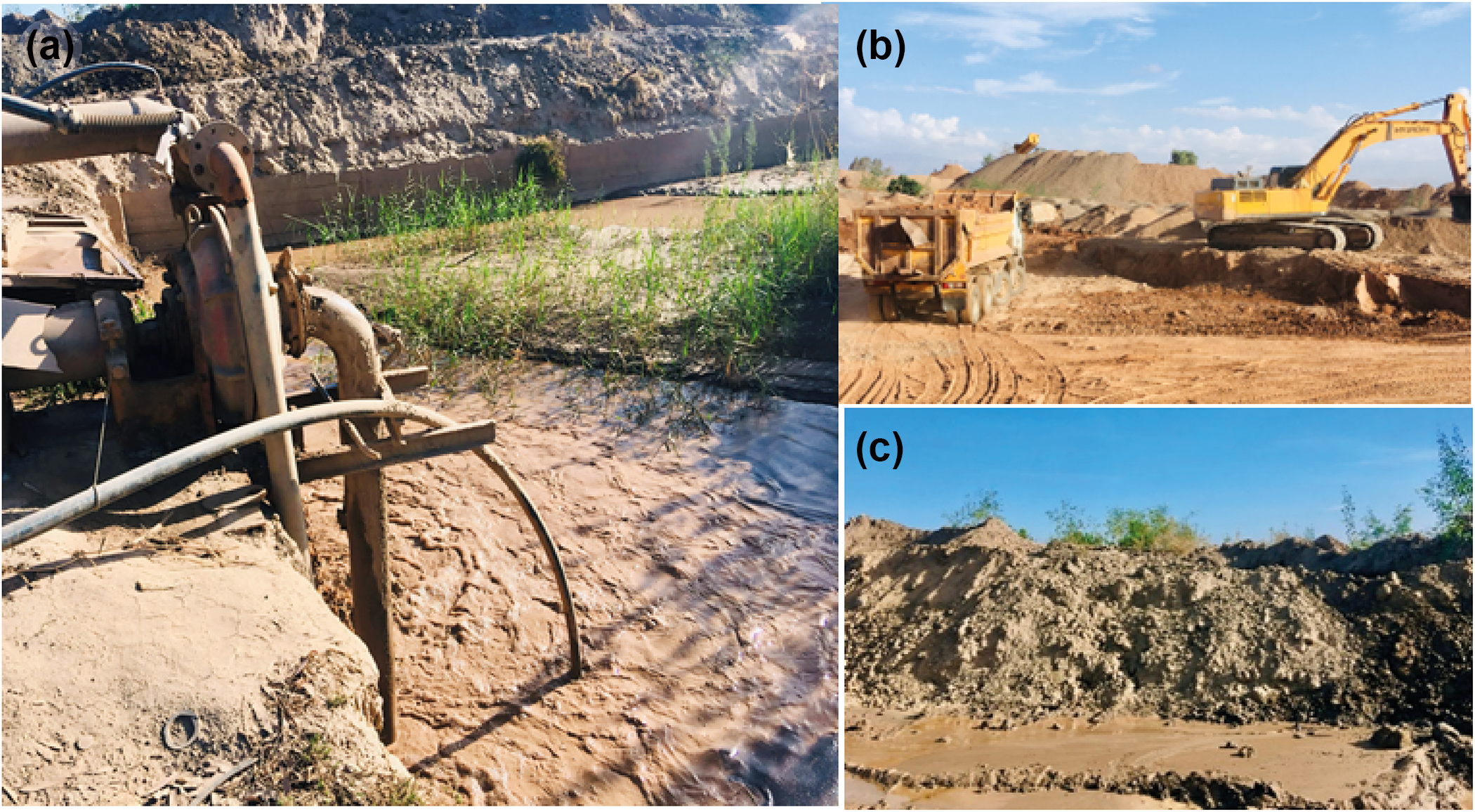
To characterize the clayey sludges discharged by aggregate quarries in the Marrakech region, 15 samples were collected from the largest quarries along the main watercourses of the Tensift Basin (Fig. 2). The sampling strategy consisted of collecting the clayey sludges derived from different watercourses and identifying potential variations in composition within the same tributary. Accordingly, one or more samples were collected from each stream.
(a) Direct discharge of clayey sludge. (b & c) Clay extracted from sedimentation basins and then stored.

The sample were labelled based on the name of the watercourse where the quarry is located: two samples were collected from Tensift (TN1, TN2), one sample from Ghdat (GD1), two samples from Zat (ZAT1, ZAT2), two samples from Ourika (ORK1, ORK2), one sample from Lhjer (LHJER1), two samples from Rhiraya (RH1, RH2), two samples from N’Fiss (NF1, NF2), two samples from Assif Al Mal (AS1, AS2) and one sample from Chichaoua (CH1). For each quarry, a single representative raw sample was collected. Sampling was conducted directly from the waste storage areas located within or near the quarries, with the assistance of local workers. All samples exhibited a homogeneous reddish-brown colouration and a predominantly silty texture. Over 20 kg of material was collected for each sample. To ensure representative sampling, the sludges from each quarry were mixed and divided using the quartering method. The sludges were used as received, without any calcination or chemical modification.
Methods
The samples were pre-dried at 45°C for 48 h before analysis. The particle-size distribution of the samples was determined using a Horiba LA-300 laser diffraction analyser (Cadi Ayyad University). The sand fraction (>63 μm) was first separated via wet sieving. For the silty-clay fraction (<63 μm), ∼1 g of the sample was placed in a container with 100 mL of demineralized water for 24 h. The sample was then stirred on a magnetic plate to break up aggregates before analysis. Three measurements were performed for each sample to ensure reproducibility.
The mineralogical composition was determined by X-ray diffraction (XRD) on both powdered bulk sediment and the <2 μm fraction, using a Bruker D8 Advance powder diffractometer. The diffractometer operates with Cu-Kα radiation in which the Kα1 and Kα2 components remain unseparated, yielding an effective composite wavelength of λ = 1.5418 Å. Scans were performed with a step size of 0.02° and a time per step of 0.6 s, corresponding to a scanning rate of ∼0.02° min–1. This diffractometer was connected to a high-voltage generator (40 kV, 30 mA, 1200 W) and coupled to EVA ® Bruker software (University of Liège, Belgium). The clay fraction (<2 μm) was obtained from 1–2 g of raw sample previously sieved at 63 μm. The carbonates were removed with 0.1 M HCl under agitation and then washed several times under centrifugation to obtain a stable suspension. The <2 μm fraction was separated by gravity sedimentation according to Stokes’ law. The first centimetre of the suspension was collected with a pipette, placed on a glass slide and air-dried overnight at room temperature (Moore & Reynolds, Reference Moore and Reynolds1997). Orientated aggregates were then analysed using XRD, and for each sample three XRD traces were recorded after successive treatments: air-dried, ethylene glycol (EG)-solvated for 24 h and heated at 500°C for 4 h. A semi-quantitative estimation of the bulk mineralogy was conducted according to Cook et al. (Reference Cook, Johnson, Matti and Zemmels1975). Peak assignment was carried out using the HighScore Plus ® Panalytical software coupled to the PDF-2 database of the International Centre for Diffraction Data (ICDD). The reflection at 19.88° was used to estimate the total abundance of clay minerals (Boski et al., Reference Boski, Pessoa, Pedro, Thorez, Dias and Hall1998). The main clay minerals were semi-quantified according to the Holtzapffel (Reference Holtzapffel1985) method, which applies corrective factors to the intensities of each peak in EG runs.
Scanning electron microscopy (SEM) was employed as a complementary technique to characterize the structure and morphology of the samples. Microstructural analyses were conducted at Université Le Havre Normandie (LOMC) using a ZEISS Gemini Sigma 360 VP (Carl Zeiss, Germany) operating in a high-vacuum mode with an accelerating voltage of 20 kV. Observations were performed using SE1 and InLens detectors. All samples were gold-coated using an EmScope sputtering device.
The Fourier-transform infrared (FTIR) spectroscopy analysis was performed using a Bruker Vertex 70 spectrophotometer in transmission mode (Cadi Ayyad University). Pellets were prepared by combining 1 mg of sample powder with 99 mg of KBr. The measurements were performed over a spectral range of 400–4000 cm–1 by averaging 32 scans at a resolution of 4 cm–1. This analysis allows for the identification of the chemical bonds present in the studied materials and confirms the crystalline phases revealed by XRD.
The chemical analysis of the major elements was carried out via X-ray fluorescence (XRF) spectroscopy using a Panalytical Axios spectrometer equipped with an Rh tube and argon/methane gas (Cadi Ayyad University). Before XRF analysis, the samples were heated at 550°C for 4 h, followed by 950°C for 2 h in a furnace to determine the loss on ignition (LOI; Heiri et al., Reference Heiri, Lotter and Lemcke2001). The carbonate content was determined using Bernard’s calcimetry technique.
The plasticity of the samples was determined using Atterberg limits: liquid limit (LL) and plastic limit (PL). The plasticity index (PI) was calculated as the difference between the LL and PL values for the analysed samples (Cadi Ayyad University). The LL tests were performed using a penetration cone, following the NF P94-051 and NF P94-052 standards (AFNOR, 1993, 1995).
Results and discussion
Mineralogical composition
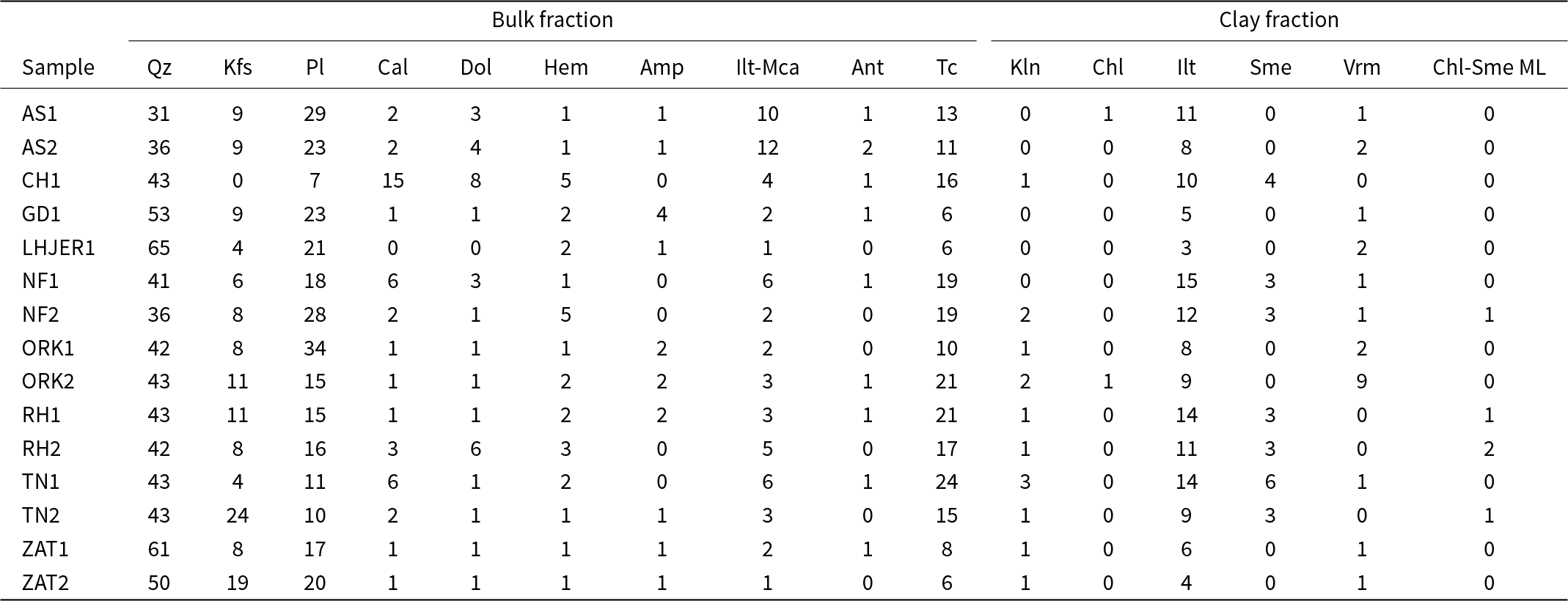
The mineralogical composition varies considerably from one site to another (Table 1). The XRD traces are shown in Fig. S1. The identified mineral phases include clay minerals, quartz (PDF-2 00-033-1161), K-feldspar (PDF-2 01-089-8572), plagioclase (PDF-2 00-002-0537), carbonates such as calcite (PDF-2 00-002-0623) and dolomite (PDF-2 00-011-0078), hematite (PDF-2 00-001-1053), mica-illite (PDF-2 00-001-1098) and traces of amphibole (PDF-2 01-089-7282) and anatase (PDF-2 01-071-1168).
Mineralogical composition of the bulk and clay fractions (wt.%).
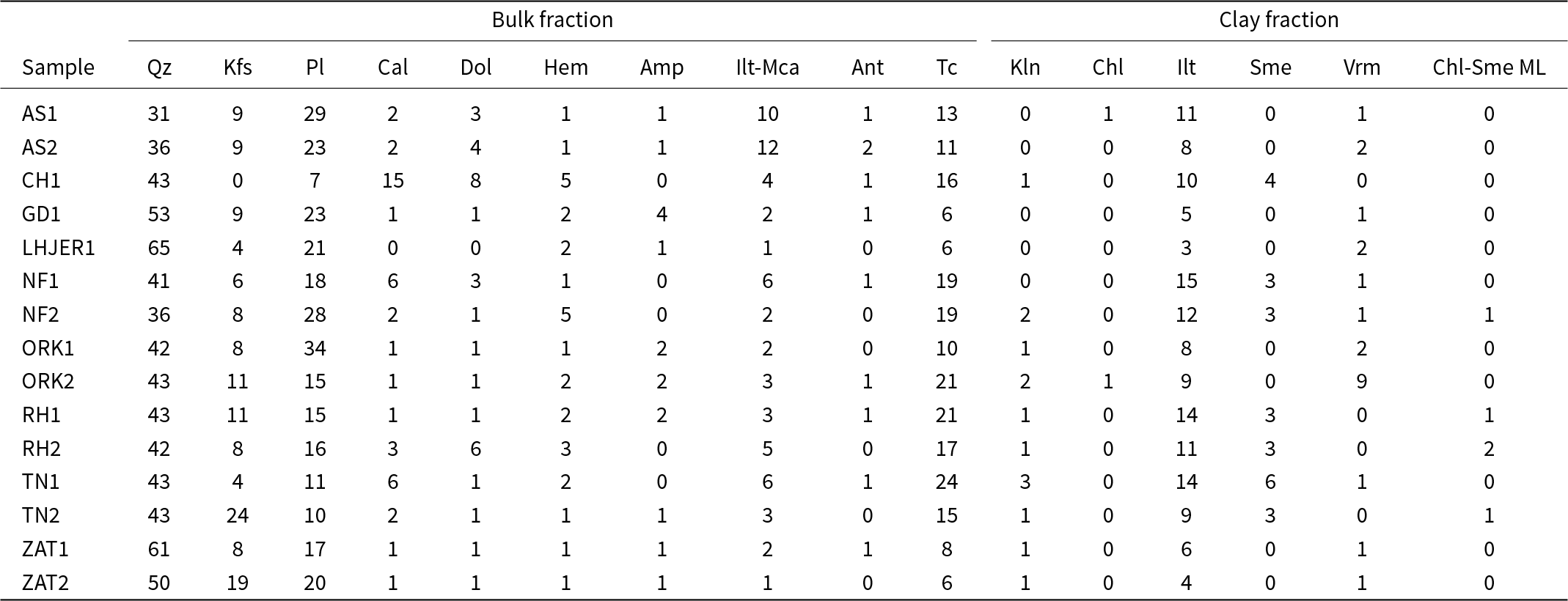
Amp = amphibole; Ant = anatase; Cal = calcite; Chl = chlorite; Dol = dolomite; Hem = hematite; Ilt = illite; Ilt-Mca = illite-mica; Kln = kaolinite; Kfs = K-feldspar; ML = mixed layers; Pl = plagioclase; Qz = quartz; Sme = smectite; Tc = total clay; Vrm = vermiculite.
Quartz is the dominant mineral in all samples, with contents ranging from 31 to 65 wt.%, and with the highest amounts observed in samples from the Lhjer, Zat and Ghdat riverbeds. The abundance of quartz is attributed to the upstream geological formations, composed of Permo-Triassic continental red silty sandstone deposits, and to the occurrence of acidic leucocratic magmatic rocks in this part of the basin (Fig. 1). The Lhjer River sample (LHJER1) stands out for having the highest quartz content due to its supply from the Zat and Ourika rivers, which intensify the siliceous input. The high quartz content of the samples underscores their resistance to mechanical weathering during transport. In contrast, samples from the Assif Al Mal (AS1, AS2) exhibit the lowest quartz content (<35%), attributed to the predominance of sedimentary formations in the south-western part of the basin. These regions include Permian and Quaternary formations, mainly composed of shales and carbonates. Furthermore, this also explains the higher mica-illite content of the Assif Al Mal samples: 10 wt.% in AS1 and 12 wt.% in AS2.
The samples are also rich in plagioclase (7–34 wt.%), and K-feldspar is present in all samples except CH1, with amounts varying between 4 and 24 wt.%. The distribution of K-feldspar is related to the nature of the upstream outcrops along the corresponding watercourses.
Overall, the calcite content does not exceed 6 wt.% in these wastes, except in the CH1 sample taken from the Oued Chichaoua, which contains 15 wt.%. Similarly, the dolomite content is generally lower than 6 wt.%, with a maximum of 8 wt.% in sample CH1. Most samples displayed a total carbonate content of less than 10 wt.%, except for sample CH1 (20 wt.%). This higher carbonate content is linked to its location in the western part of the basin, an area with abundant secondary marl-limestone outcrops. All samples contain <5 wt.% hematite, and amphibole and anatase are accessory phases, with contents below 2 wt.%.
The XRD traces of the clay fractions depict distinct mineralogical compositions. The samples contain illite, kaolinite, chlorite, smectite, vermiculite and ordered mixed-layer chlorite-smectite. Kaolinite was identified by the reflections at 12.4°2θ and 24.9°2θ, which remain after EG solvation but disappear after heating at 500°C for 4 h. Illite was recognized by reflections at 8.8°2θ, 17.7°2θ and 27°2θ, which were not affected by glycolation and heating treatments. Smectite was identified by the peak at 5.9°2θ under ambient conditions, which shifts to ∼5°2θ after EG solvation and collapses to 8.8°2θ upon heating. Chlorite was identified by basal reflections at 6.3°2θ, 12.7°2θ, 18.9°2θ and 25.5°2θ, which were not affected by glycolation and heating (Holtzapffel, Reference Holtzapffel1985). Vermiculite also shows a reflection at 6.3°2θ, which decreases and collapses to 8.8°2θ upon heating. These peaks may be attributed to chlorite that has undergone alteration into vermiculite (April et al., Reference April, Hluchy and Newton1986; Tomanec et al., Reference Tomanec, Popov, Vučinič and Lazič1997). Ordered mixed-layer chlorite-smectite was identified by a first-order superstructure peak at 3.2°2θ under ambient conditions, expanding to 2.9°2θ after EG solvation and contracting to 3.7°2θ after heating (Thorez, Reference Thorez1976).
The total clay content ranges from 6 to 24 wt.%, with the most clay-rich samples originating from quarries located along watercourses frequently affected by flooding (i.e. Ourika, Rhiraya and Tensift), which are the main sources of the clay deposits used for aggregate production (Saidi et al., Reference Saidi, Daoudi, Aresmouk and Blali2003; El Khalki et al., Reference El Khalki, Tramblay, Amengual, Homar, Romero, Saidi and Alaou2020). Illite is the most abundant clay mineral phase in all samples, accounting for 3–15 wt.% of the total composition. Illite displays narrow diffraction peaks, indicating a high crystal order. This suggests that the illite originates from Palaeozoic schists of the High Atlas mountain range (Gourfi et al., Reference Gourfi, Daoudi, Rhoujjati, Benkaddour and Fagel2020). The most illite-rich samples correspond to watercourses draining basins dominated by metamorphic shale outcrops (N’Fiss, Rhiraya and Assif Al Mal). Kaolinite and vermiculite are ubiquitous but present at low contents (<3 wt.%), except for the sample from the Ourika River (ORK2), for which the vermiculite content reaches 9 wt.%. Chlorite and ordered mixed-layer chlorite-smectite clays are detected in trace amounts (<2 wt.%). Smectite is absent in most wastes, except for those of Tensift (TN1 and TN2), Chichaoua (CH1), Rhiraya (RH1 and RH2) and N’Fiss (NF1 and NF2), where it ranges from 3 to 6 wt.%. The occurrence of smectite in these samples is linked to smectite-rich Meso-Cenozoic sedimentary formations (Daoudi et al., Reference Daoudi, Hicham, Latifa, Abderrahmane, Jamal and Mohamed2014, Reference Daoudi, Knidiri, El Boudour El Idrissi, Rhouta and Fagel2015; Knidiri et al., Reference Knidiri, Daoudi, El Ouahabi, Rhouta, Rocha and Fagel2014; Gourfi et al., Reference Gourfi, Daoudi, Rhoujjati, Benkaddour and Fagel2020).
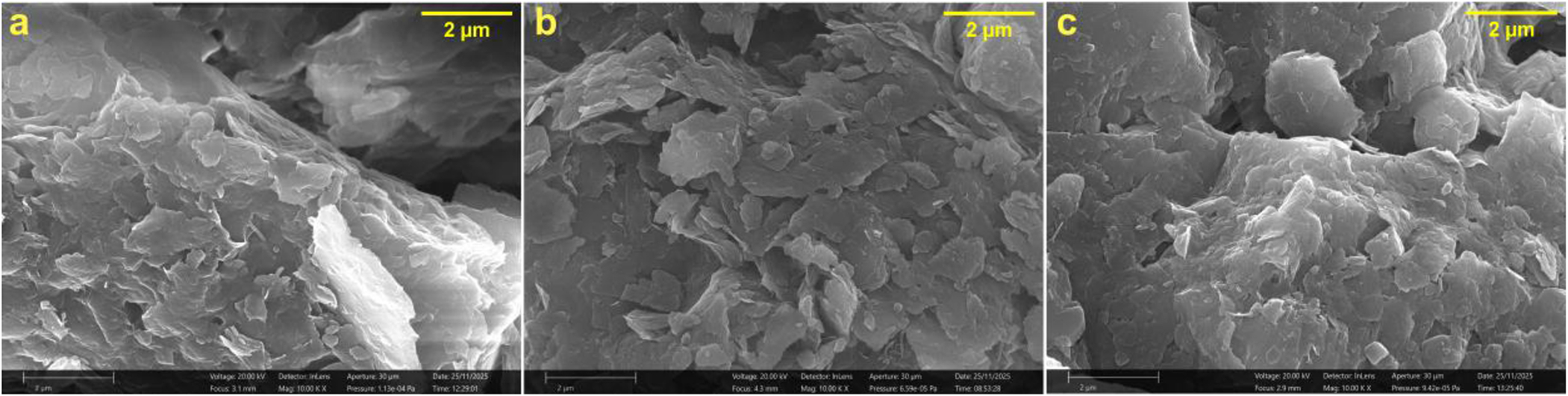
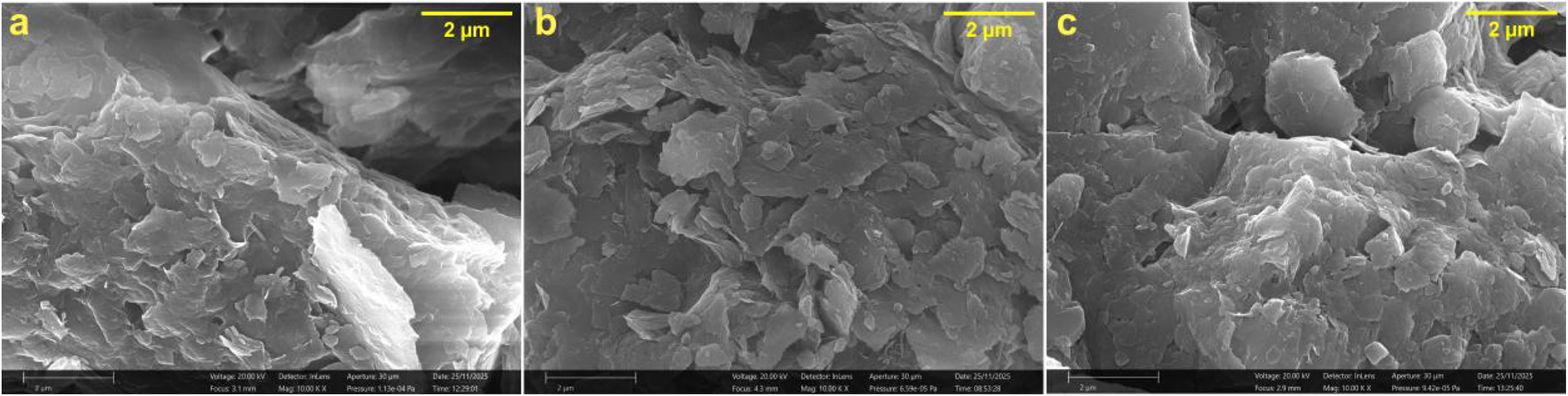
SEM images of the samples (Fig. 3) reveal that the fine fraction is dominated by stacked lamellar particles characteristic of illite. The particles exhibit irregular edges and a typical 2:1 phyllosilicate texture. No fibrous or tubular morphologies were observed. These observations confirm the mineralogical composition determined by XRD, with illite dominating the clay fraction.
SEM images of the samples: (a) NF2, (b) TN2 and (c) ZAT1.
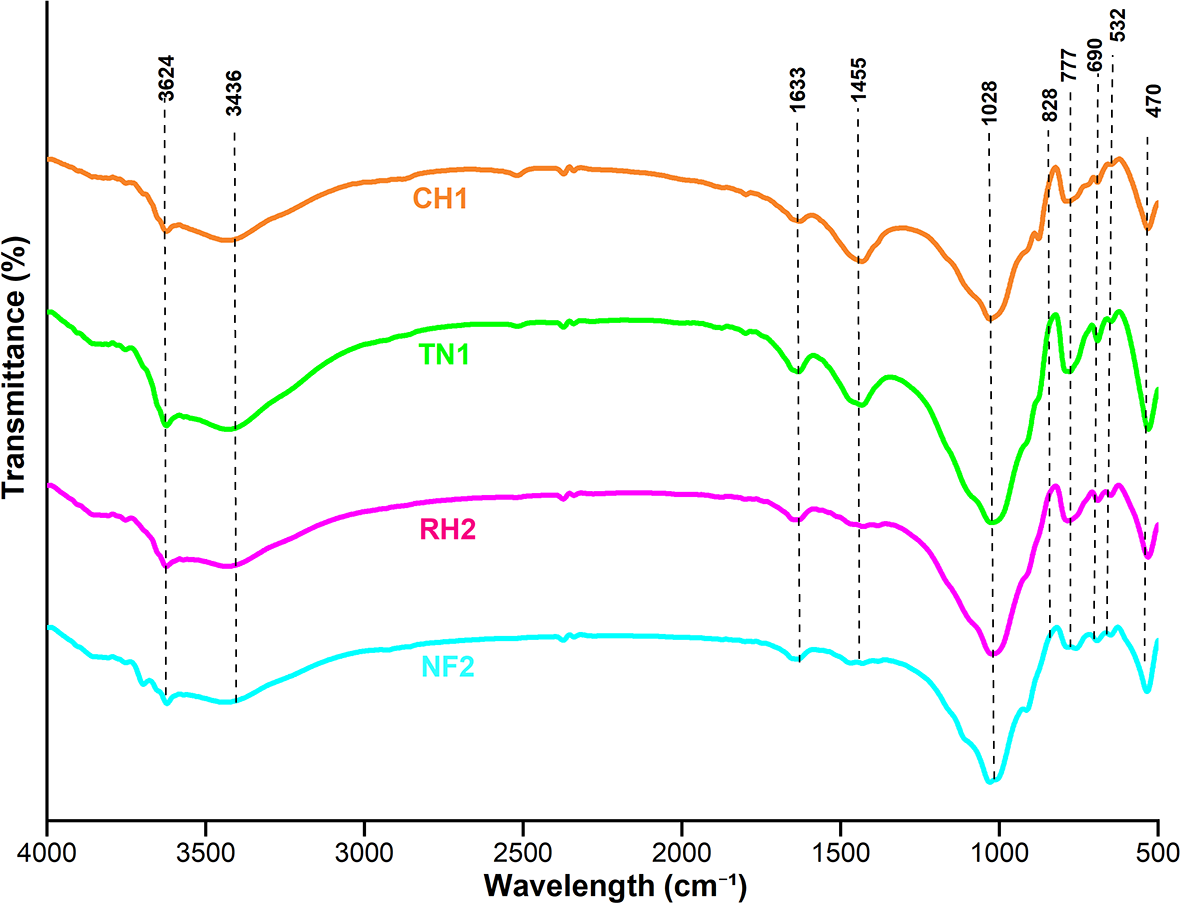
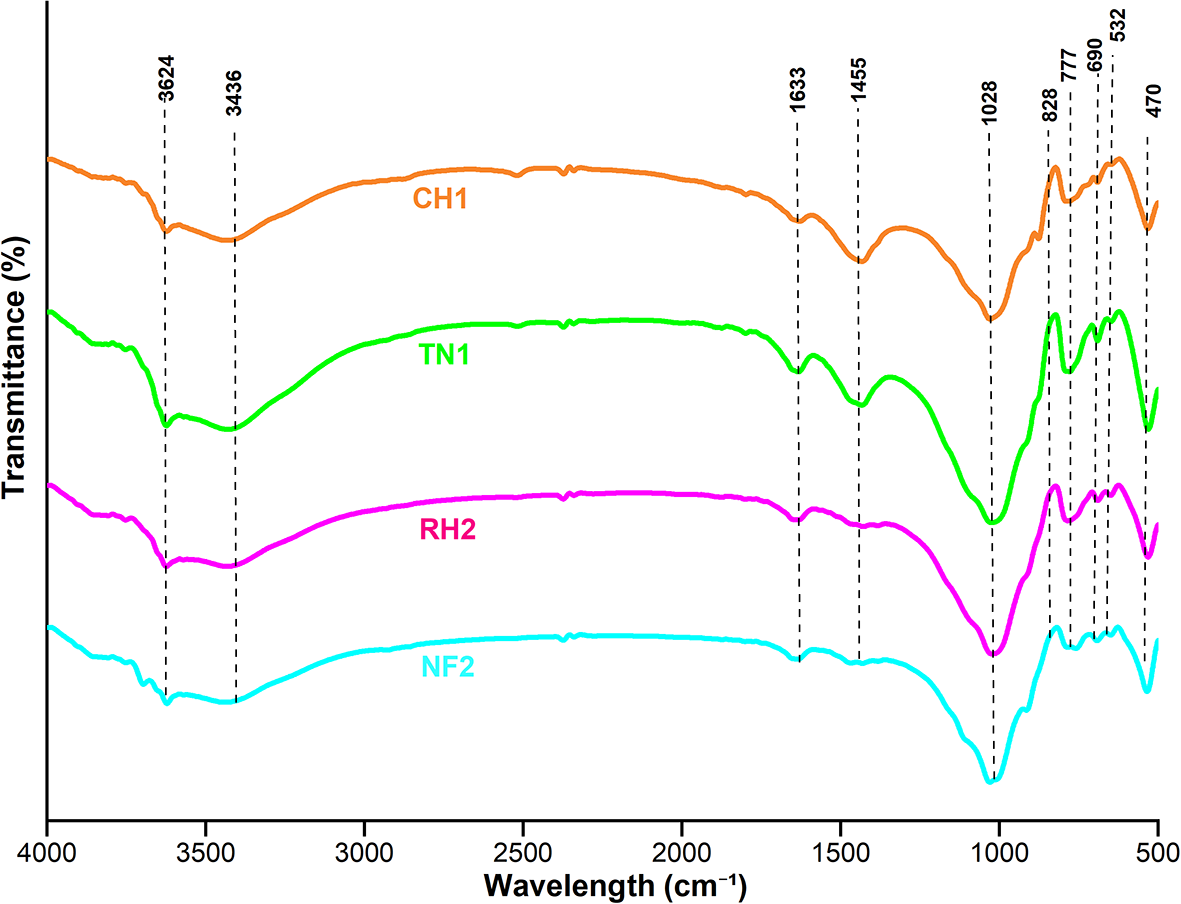
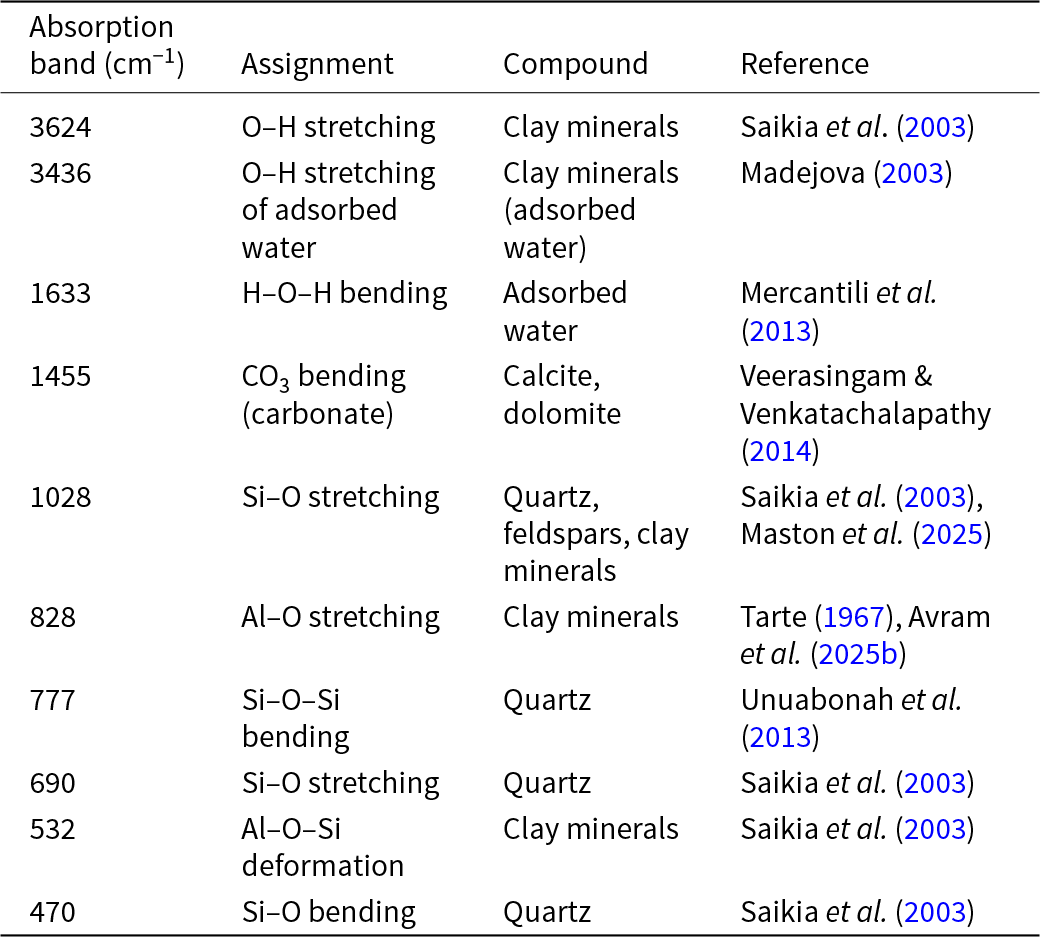
The FTIR spectra (Fig. 4) display characteristic absorption bands of clay minerals, quartz, feldspars and carbonates, consistent with the XRD results. Detailed band assignments are summarized in Table 2. The absorption bands at 3624 and 3436 cm–1 are attributed to the O–H stretching vibrations of structural hydroxyl groups in clay minerals and to adsorbed water, respectively (Madejova, Reference Madejova2003; Saikia et al., Reference Saikia, Bharali, Sengupta, Bordoloi, Goswamee, Saikia and Borthakur2003). The band at 1633 cm–1 corresponds to the H–O–H bending vibration of molecular water (Mercantili et al., Reference Mercantili, Davis and Higson2013), indicating surface and interlayer water associated with the phyllosilicates. The band at 1455 cm–1 is characteristic of the carbonate group (CO3) and is assigned to calcite and dolomite (Veerasingam & Venkatachalapathy, Reference Veerasingam and Venkatachalapathy2014). This band is more intense in the CH1 and TN1 samples, reflecting their greater carbonate contents, which is in agreement with the XRD data.
FTIR spectra of the studied samples.
FTIR absorption band assignment.
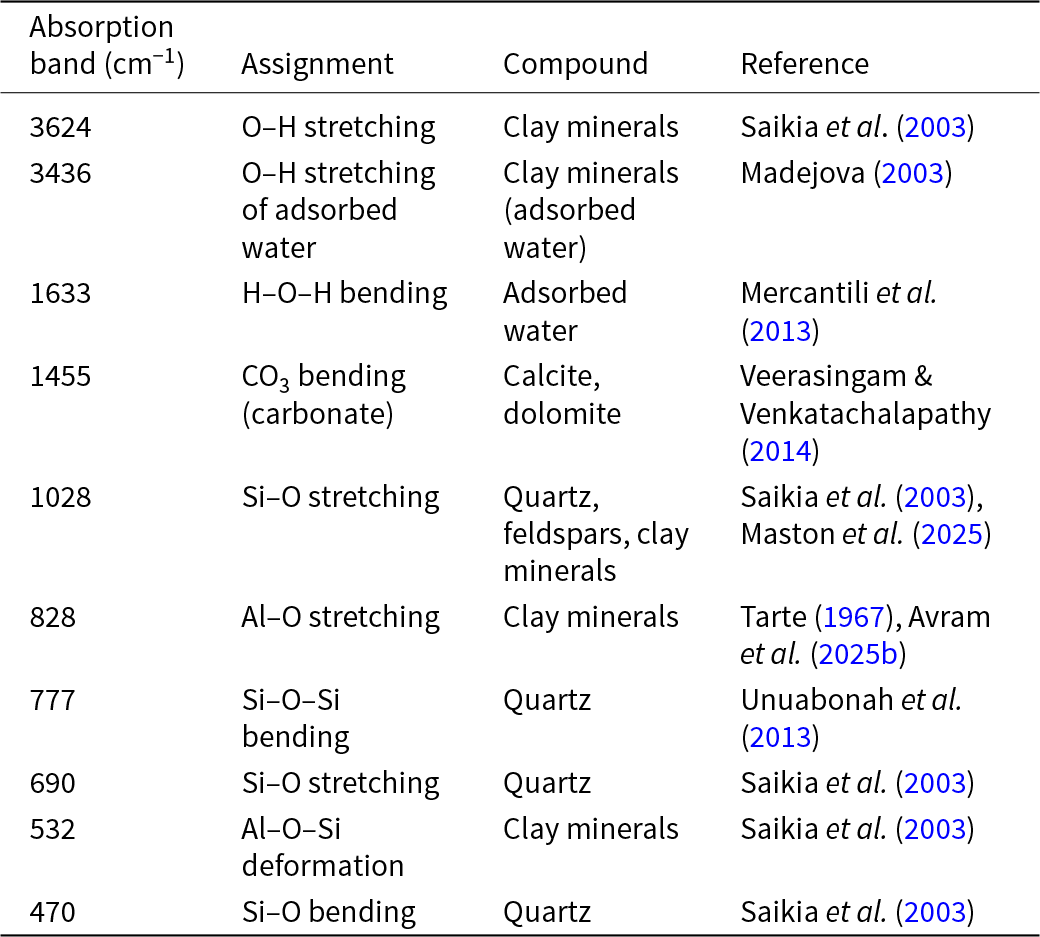
The strong absorption band at 1028 cm–1 corresponds to the Si–O stretching vibration of silicates, namely quartz, feldspars and clay minerals (Saikia et al., Reference Saikia, Bharali, Sengupta, Bordoloi, Goswamee, Saikia and Borthakur2003; Maston et al., Reference Maston, Ouahbi, Taibi, El-Hajjar, Sapin and Esnault-Filet2025). Quartz is further confirmed by the bands at 777 and 690 cm–1, assigned to Si–O–Si bending and Si–O stretching, respectively (Saikia et al., Reference Saikia, Bharali, Sengupta, Bordoloi, Goswamee, Saikia and Borthakur2003; Unuabonah et al., Reference Unuabonah, Gu, Weber, Lubahn and Taubert2013). The band at 470 cm–1 is also related to the Si–O bending vibration (Saikia et al., Reference Saikia, Bharali, Sengupta, Bordoloi, Goswamee, Saikia and Borthakur2003). The absorption at 828 cm–1, assigned to Al–O stretching, together with the band at 532 cm–1 attributed to Al–O–Si deformation, confirms the presence and structural organization of phyllosilicate clay minerals and feldspars (Tarte, Reference Tarte1967; Saikia et al., Reference Saikia, Bharali, Sengupta, Bordoloi, Goswamee, Saikia and Borthakur2003; Avram et al., Reference Avram, Tudoran, Borodi, Filip and Petean2025b).
The mineralogical composition of the samples, dominated by quartz, feldspars and illite, presents both advantages and potential limitations that should be considered for ceramics manufacturing. Quartz and feldspars contribute to the formation of a glassy phase during firing, with feldspars acting as fluxes to lower the melting temperature and promote mullite crystallization, and partially unmelted quartz ensures a rigid structure and improves the mechanical properties of ceramics (Lee & Yeh, Reference Lee and Yeh2008; Baccour et al., Reference Baccour, Medhioub, Jamoussi and Mhiri2009; Maalla et al., Reference Maalla, Boussen, Fagel and Mohamed Essghaier2021). However, a high quartz content (>50 wt.%) may cause thermal expansion and cracking, and a high carbonate content (>10 wt.%; e.g. sample CH1) may inhibit mullite formation and may induce bloating or whitening of the ceramic material (Dondi et al., Reference Dondi, Raimondo and Zanelli2014; El Ouahabi et al. Reference El Ouahabi, Daoudi, Hatert and Fagel2015). Therefore, for samples rich in quartz and carbonates, it may be necessary to consider formulations by blending them with other clays to render their mineralogy more suitable for ceramic production.
Previous work has demonstrated the favourable properties of illitic clays for ceramic applications (Bennour et al., Reference Bennour, Mahmoudi, Srasra, Hatira, Boussen, Ouaja and Zargouni2015). Illite plays an essential role in traditional ceramics as the main components used in the production of plates, pots, tiles and bricks (Ferrari & Gualtieri, Reference Ferrari and Gualtieri2006). It improves sintering by increasing the glassy phase, reducing water absorption and lowering the melting temperature (Garzón et al., Reference Garzón, Sánchez-Soto and Romero2010). However, an excessive illite content may cause linear shrinkage and inhibit mullite, cristobalite and quartz formation in the fired products (Carretero et al., Reference Carretero, Dondi, Fabbri and Raimondo2002). In this study, the moderate illite content prevents such adverse effects. Smectites are present in only a few samples, with concentrations below 5 wt.%. This low concentration is beneficial as it prevents cracking related to the swelling and shrinkage associated with higher smectite levels (Aydinalp, Reference Aydinalp2010).
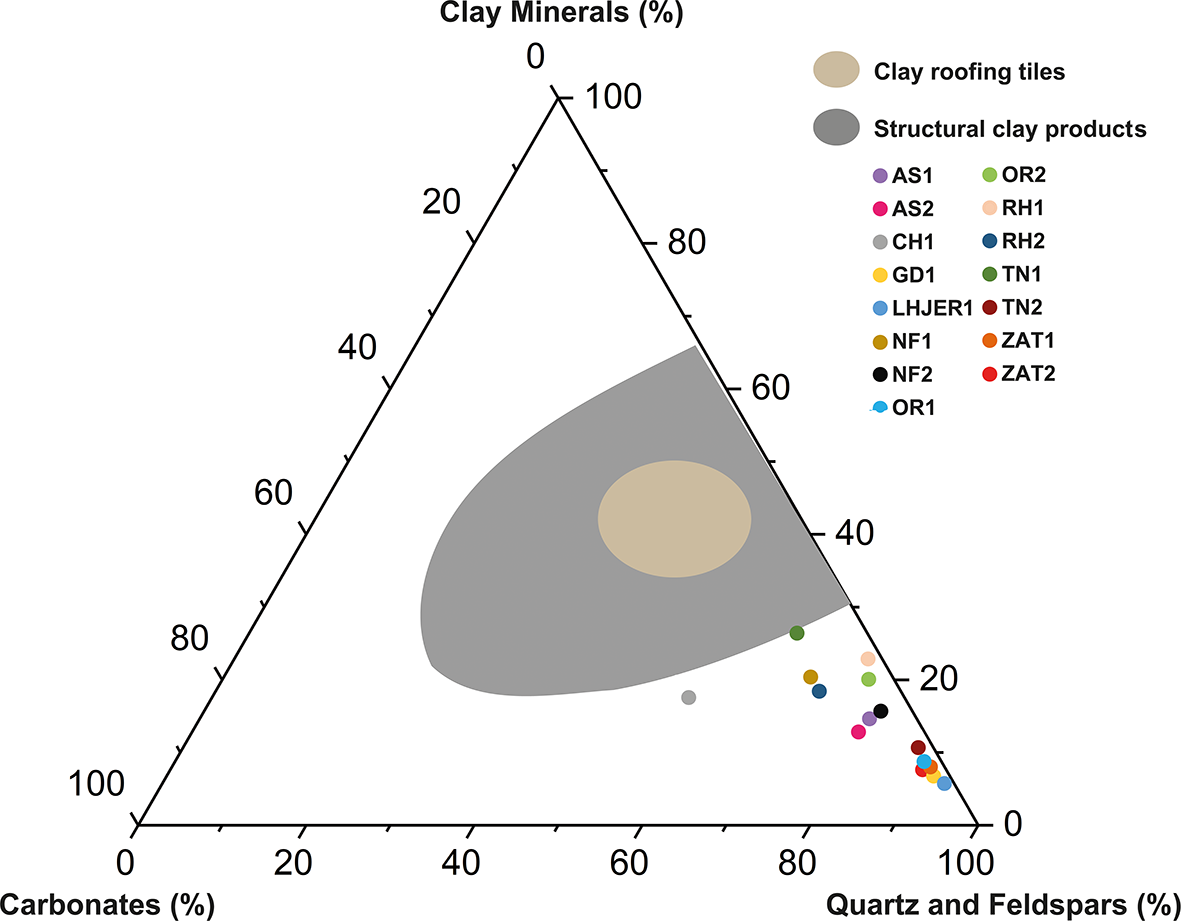
The ternary diagram by Strazzera et al. (Reference Strazzera, Dondi and Marsigli1997), based on the proportions of clay minerals, quartz, feldspars and carbonates, highlights the relationship between the mineralogical composition of the samples and their potential for ceramic applications (Fig. 5). It is evident that only one sample from Oued Tensift (TN1) is projected within the zone corresponding to structural clay ceramics, demonstrating its suitability for ceramic production without the need for any additives. In contrast, the remaining samples fall outside this applicability zone, mainly due to their low clay mineral content. To make these raw materials compatible with ceramic production, the addition of clay-rich minerals would be essential to improve their mineralogical composition.
Projection of the studied samples in the ternary diagram modified from Strazzera et al. (Reference Strazzera, Dondi and Marsigli1997).

Chemical composition
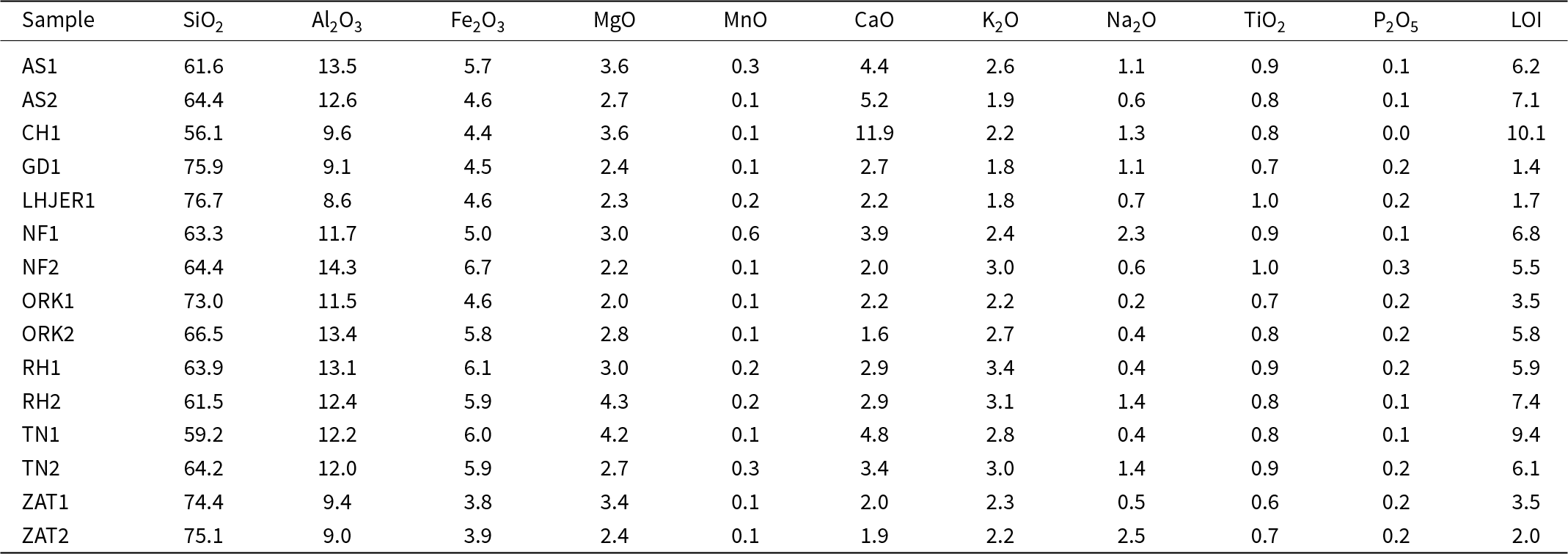
Table 3 lists the chemical composition of the studied samples, showing that SiO2 is the most abundant oxide (56–77 wt.%), followed by Al2O3 (9–14 wt.%) and Fe2O3 (4–7 wt.%). Most samples exhibit low CaO contents (<5 wt.%), except for CH1 (12 wt.%), consistent with the XRD and Bernard’s calcimetry results. K2O (2–3 wt.%) and MgO (2–4 wt.%) are also abundant, whereas Na2O (0–3 wt.%) and TiO2 (0.6–1 wt.%) are relatively low in content, and MnO and P2O5 are present only in trace amounts. The concentrations of CaO, MgO and Fe2O3 confirm the presence of calcite, dolomite and hematite, respectively, as detected by the XRD analysis. The LOI values at 950°C range from 1 to 10 wt.%. These variations are attributed to the presence of organic matter, the dehydroxylation of hydrated minerals and the decomposition of carbonates. The highest LOI values (>9 wt.%) are observed in the carbonate-rich samples (TN1 and CH1), whereas the lowest LOI values (<6 wt.%) are found in samples with a low carbonate content (<2 wt.%).
Chemical compositions (wt.%) of the raw samples.
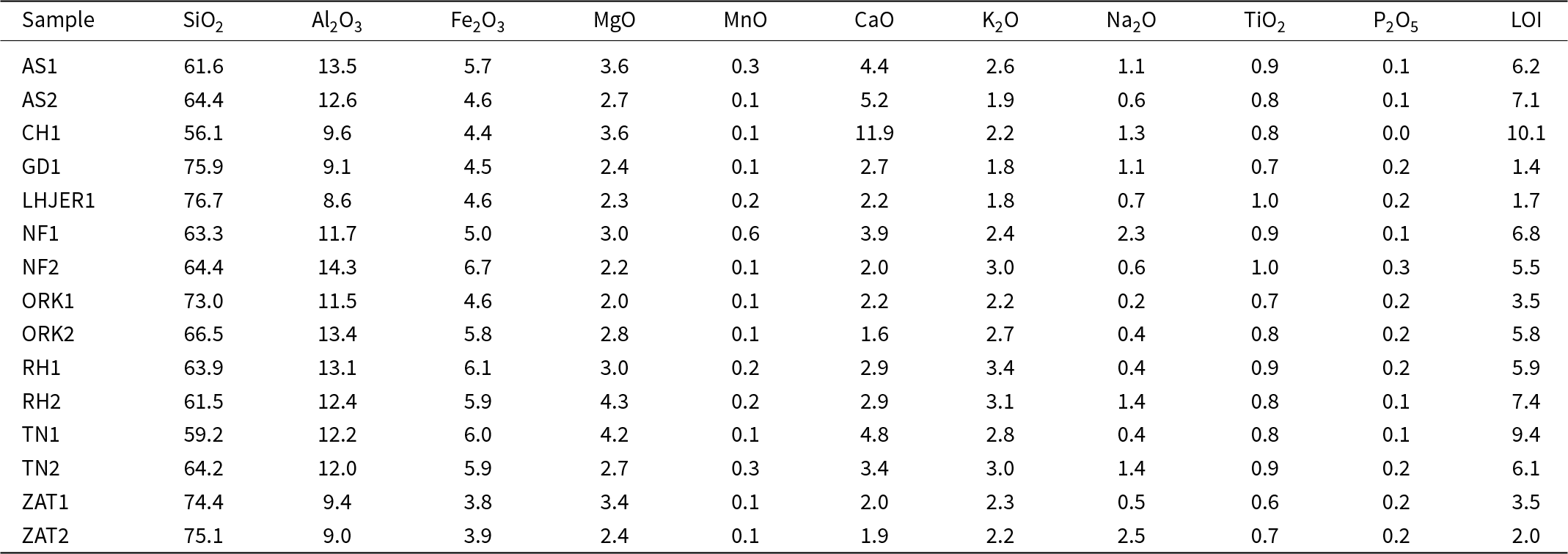
LOI = loss on ignition at 950°C.
The colour of ceramics is primarily controlled by the Fe2O3 content and the firing temperature (Kreimeyer, Reference Kreimeyer1987), as well as by the Fe2O3/CaO ratio (Fiori et al., Reference Fiori, Fabbri, Donati and Venturi1989). When Fe2O3 exceeds 5 wt.%, ceramics exhibit a red colour after firing, whereas those containing 1–5 wt.% Fe2O3 become beige, and those with an Fe2O3 content below 1 wt.% produce whitish-coloured ceramics (Fiori et al., Reference Fiori, Fabbri, Donati and Venturi1989; Murray, Reference Murray2007; Baccour et al., Reference Baccour, Medhioub, Jamoussi and Mhiri2009). A high CaO content can impart yellowish and pinkish tones to pottery (Dondi et al., Reference Dondi, Raimondo and Zanelli2014). Other oxides, such as MgO, MnO and TiO2, also impact ceramic colour (Kreimeyer, Reference Kreimeyer1987). With an average Fe2O3 content of 5.33 wt.%, the samples studied would probably have a red colour after firing. The total alkali and alkaline earth element contents (K2O, Na2O, MgO, CaO) exceed 7 wt.%, indicating sufficient fluxing minerals to enhance ceramic fusion (Miliani & Corbara, Reference Miliani and Corbara1999).
The chemical data provide insights into the phases formed during firing, although transformations remain complex due to interactions between the structural and chemical properties. The studied samples, characterized by low CaCO3 content and high Al2O3 content, would favour mullite formation, primarily driven by the Al2O3 content (Khalfaoui & Hajjaji, Reference Khalfaoui and Hajjaji2009; El Ouahabi et al., Reference El Ouahabi, Daoudi, Hatert and Fagel2015; Laita & Bauluz, Reference Laita and Bauluz2018). However, a higher CaO content inhibits mullite formation (Trindade et al., Reference Trindade, Dias, Coroado and Rocha2009, Reference Trindade, Dias, Coroado and Rocha2010; El Ouahabi et al., Reference El Ouahabi, Daoudi, Hatert and Fagel2015), yielding gehlenite, diopside and anorthite instead (Trindade et al., Reference Trindade, Dias, Coroado and Rocha2009, Reference Trindade, Dias, Coroado and Rocha2010).
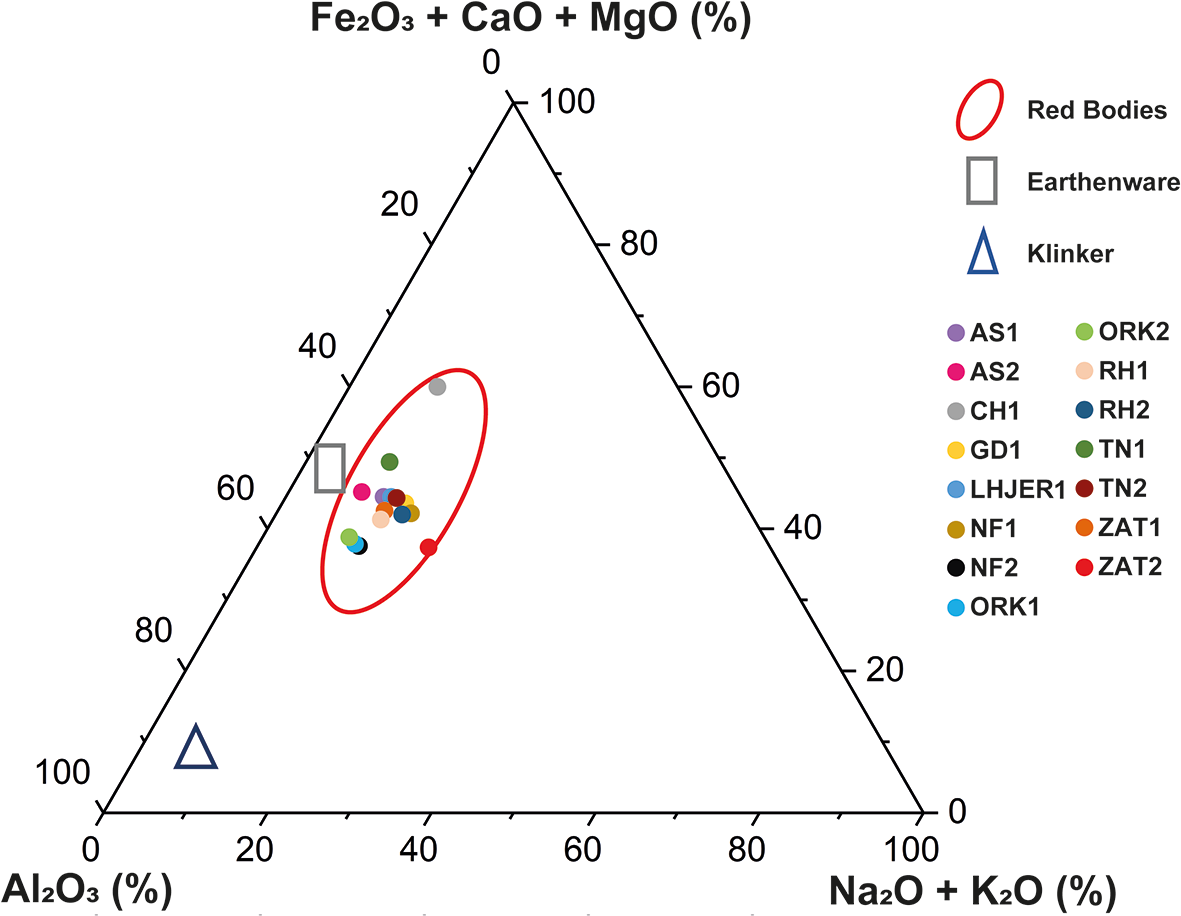
Figure 6 illustrates the projection of the chemical analysis data onto a Fiori et al. (Reference Fiori, Fabbri, Donati and Venturi1989) ternary diagram ((Fe2O3 + CaO + MgO)–Al2O3–(Na2O + K2O)), classifying clay raw materials and industrial ceramic products. All of the studied samples are projected within the red ceramics field (red circle in Fig. 6), as expected for clays with ≥5% Fe2O3 (Murray, Reference Murray2007; Baccour et al., Reference Baccour, Medhioub, Jamoussi and Mhiri2009). The chemical composition confirms their suitability for red ceramic applications in the ceramics industry. However, samples with very high SiO2 (>75 wt.%) and low Al2O3 contents (<9 wt.%) are sandy and may not be directly suitable for red ceramic production without further processing or adjustment, as their mechanical behaviour during shaping and firing could be adversely affected.
Projection of the chemical compositions of the samples onto a (Fe2O3 + CaO + MgO)–Al2O3–(Na2O + K₂O) diagram (modified from Fiori et al., Reference Fiori, Fabbri, Donati and Venturi1989).

Physical properties
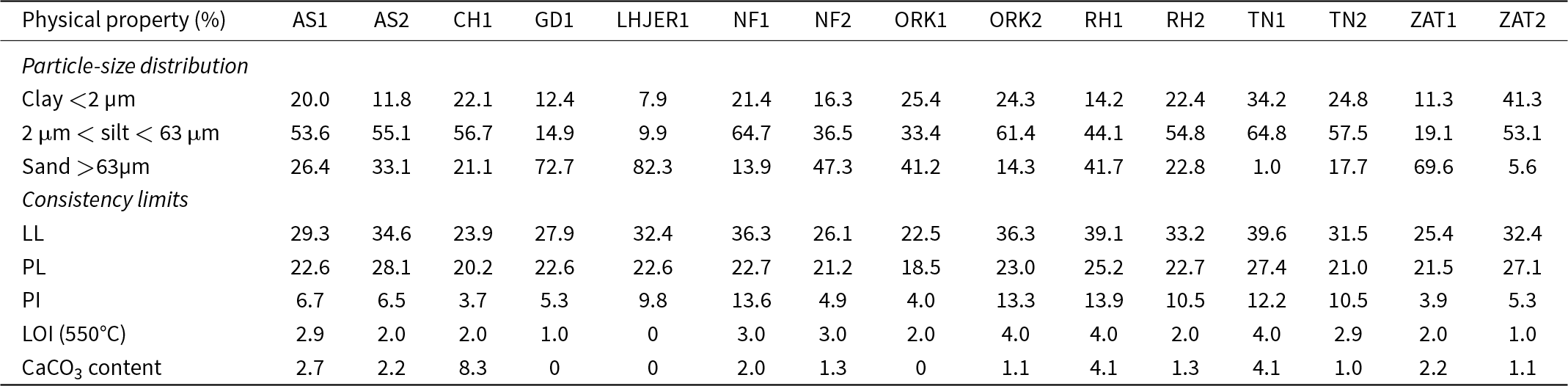
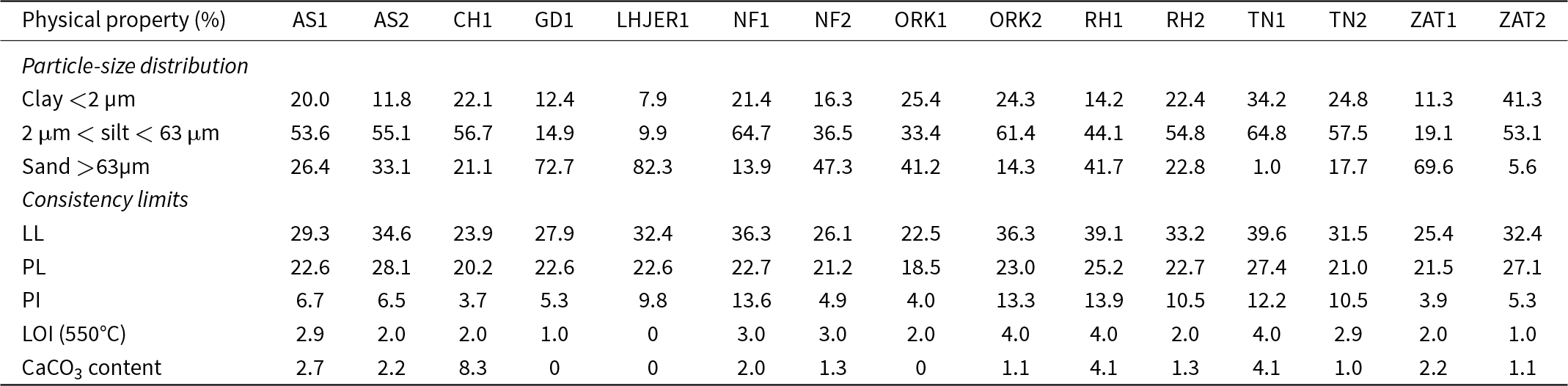
The studied clayey sludges exhibit a variable particle-size distribution across the samples (Table 4). The clay, silt and sand fractions vary from 8% to 41%, from 10% to 65% and from 0% to 82%, respectively. The silt fraction represents the dominant component, with an average of 45%. The sample from Oued Lhjer (LHJER1) is characterized by the lowest clay content (<10%) and the highest sand content (>80%).
Physicochemical properties of the analysed samples.
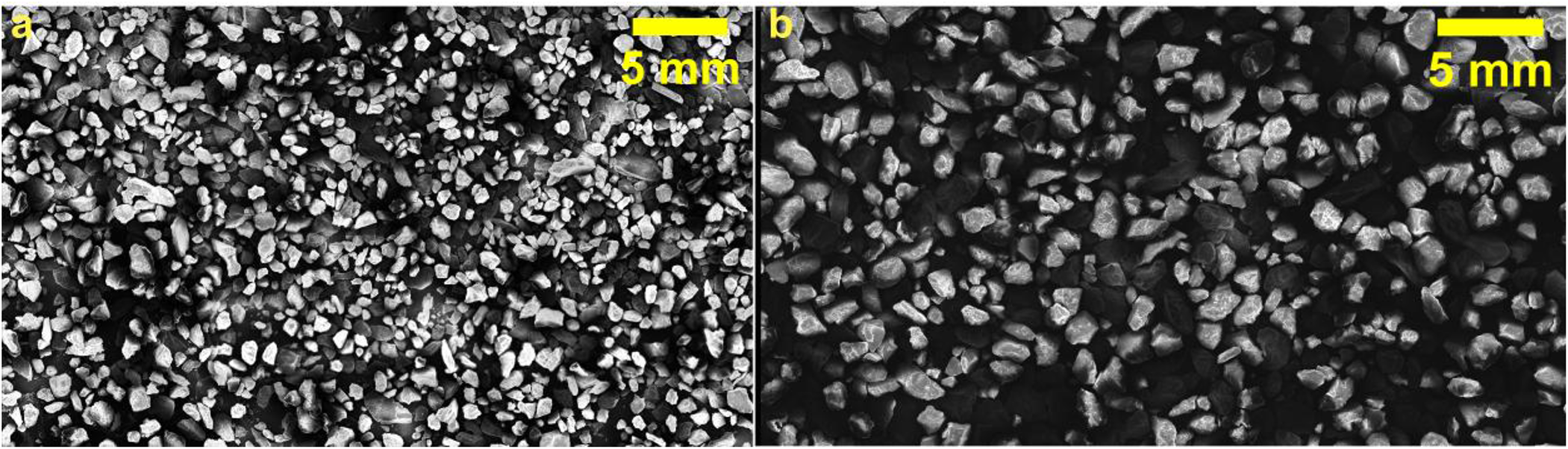
The SEM images (Fig. 7) confirm the particle-size analysis and reveal a clear morphological contrast between the two samples: ZAT1 (Fig. 7a) enriched in clay-sized fractions (45%) and LHJER1 (Fig. 7b) dominated by sandy fractions (88%). ZAT1 mainly consists of very fine particles with irregular shapes, frequently forming small aggregates, typical of clay-sized materials. In contrast, LHJER1 is composed of well-separated, sand-sized grains exhibiting angular to sub-angular morphologies and a wide size range. In both samples, the predominance of angular shapes and irregular particle surfaces reflect the mechanical origins of the sludges, resulting from crushing, screening and washing.
SEM images of the samples: (a) ZAT1 and (b) LHJER1.

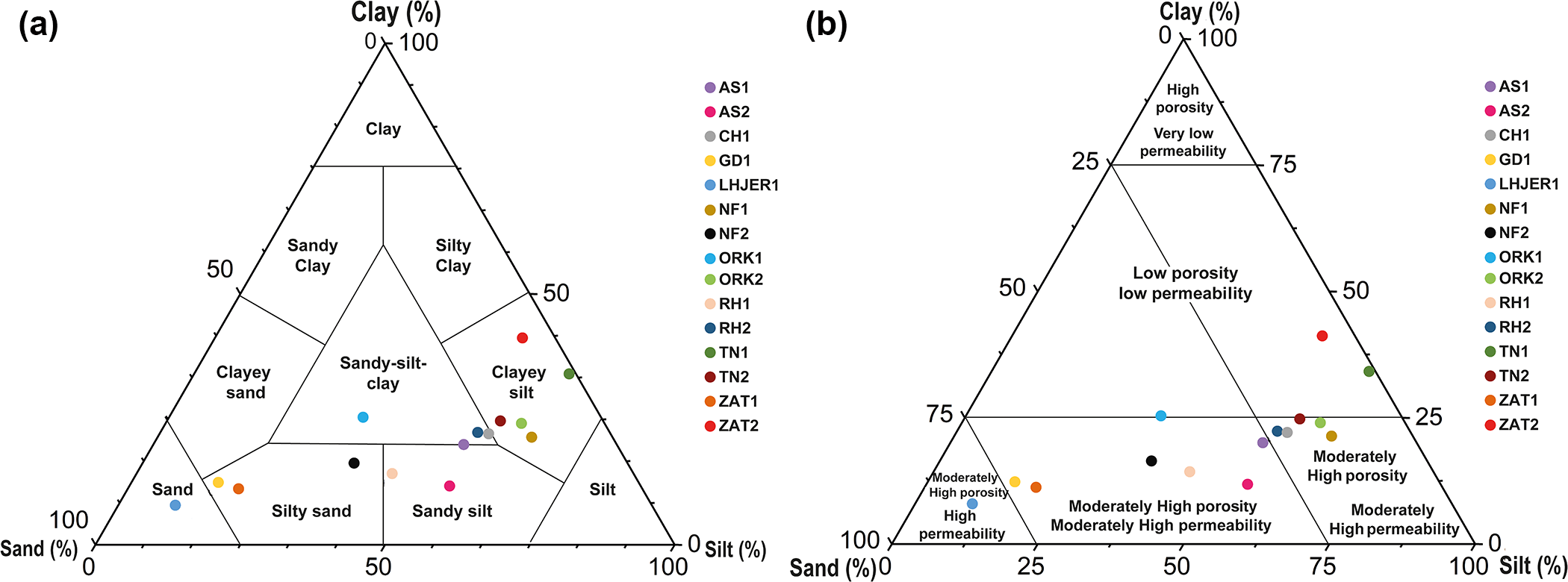
The results of the particle-size analysis fit the Shepard ternary diagram (Fig. 8a; Shepard, Reference Shepard1954), highlighting the presence of five textural classes ranging from a silty-clay to sandy texture. Clayey-silt and sandy-silt-clay textures are dominant. The observed granulometric differentiation can be attributed to the nature and the hardness of the parent rocks, which vary between streams, and to the hydrodynamic and sedimentary processes related to transport and deposition, which influence the distribution of these materials within the same watercourse (Gugliotta et al., Reference Gugliotta, Saito, Ta, Nguyen, Uehara and Tamura2020; Wang et al., Reference Wang, Pan, Xie, Xu, Yan and Li2022).
(a) Projection of the analysed samples in the ternary diagram modified from Shepard (Reference Shepard1954); (b) textural classification modified from McManus (Reference McManus and Tucker1988).

The particle-size distribution is a key factor in determining the physical properties of a material, including drying shrinkage, mechanical strength, porosity, permeability and clay plasticity (Daoudi et al., Reference Daoudi, Hicham, Latifa, Abderrahmane, Jamal and Mohamed2014; El Boudour El Idrissi et al., Reference El Boudour El Idrissi, Daoudi, El Ouahabi, Collin and Fagel2018; El Ouahabi et al., Reference El Ouahabi, El Boudour El Idrissi, Daoudi, El Halim and Fagel2019; Rahou et al., Reference Rahou, Rezqi, El Ouahabi and Fagel2022). A greater sand content increases porosity, leading to lower densification, compared to materials with a greater clay fraction (El Boudour El Idrissi et al., Reference El Boudour El Idrissi, Daoudi, El Ouahabi, Collin and Fagel2018).
Based on the granulometric composition of the samples, the porosity and permeability were estimated using the McManus ternary diagram (Fig. 8b; McManus, Reference McManus and Tucker1988). Most samples exhibit moderate to high porosity and permeability due to their high silt and moderate sand contents. Given this context, increasing the clay fraction content is fundamental to making clay raw materials suitable for certain ceramic productions.
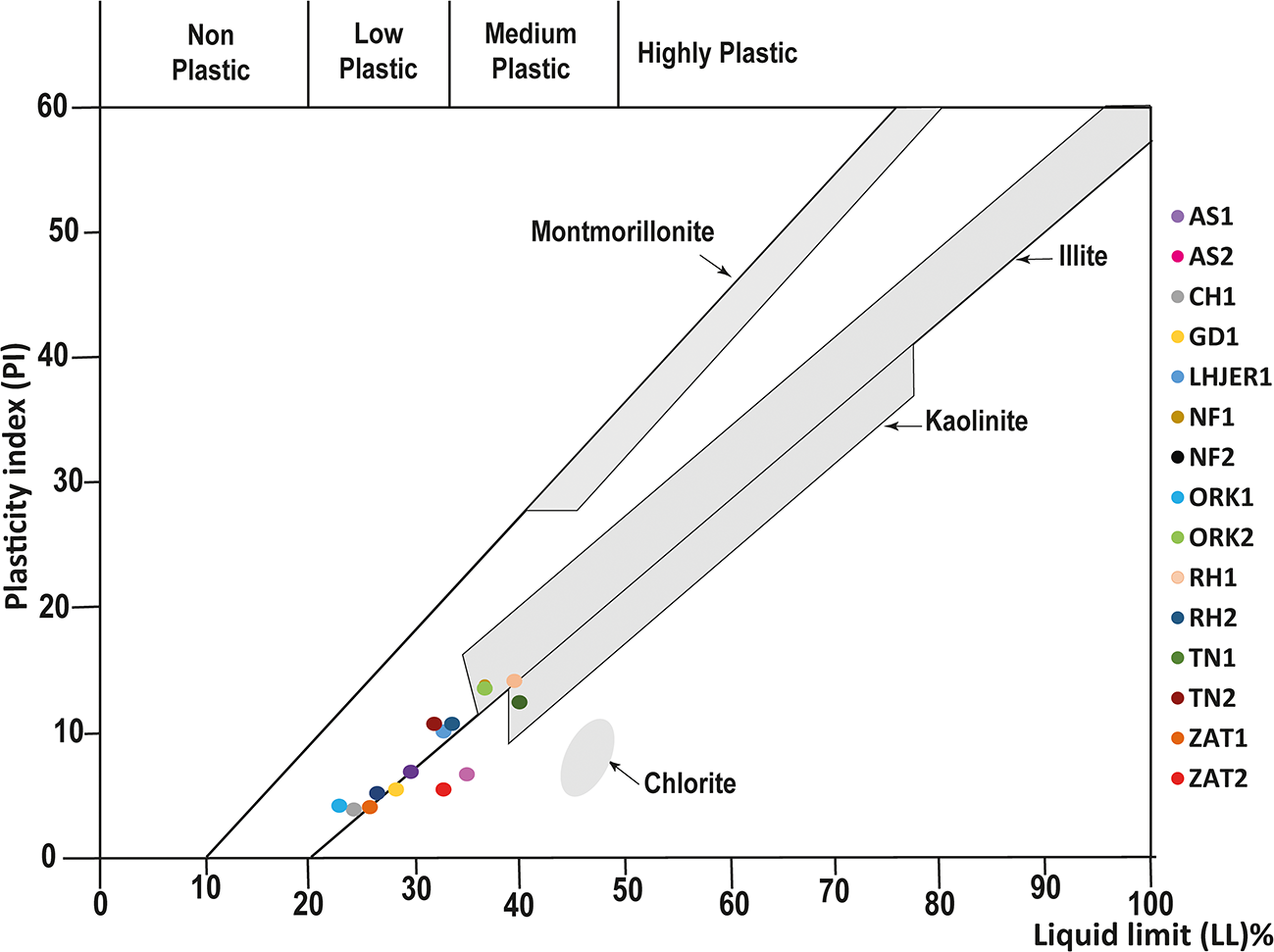
The PL values of the studied samples range from 18.5% to 28.1%, while the LL values range from 22.5% and 39.6% (Table 4). The PI of the samples varies between 3.7% and 13.9%. According to the diagram of Holtz & Kovacs (Reference Holtz and Kovacs1981), most of the analysed clayey materials are classified as low-plasticity clays, except for samples AS2, NF1, ORK2, RH1, RH2 and TN1, which exhibit medium plasticity (Fig. 9).
Projection of the studied clayey samples onto a diagram modified from Holtz & Kovacs (Reference Holtz and Kovacs1981).

The plasticity of clay materials is influenced by several factors, including their particle-size distribution, clay content and mineralogical composition (Boussen et al., Reference Boussen, Sghaier, Chaabani, Jamoussi and Bennour2016; El Boudour El Idrissi et al., Reference El Boudour El Idrissi, Daoudi, El Ouahabi, Balo Madi, Collin and Fagel2016, Reference El Boudour El Idrissi, Borja, Fagel and Daoudi2021). Regarding the mineralogy of the clay fraction, illite, kaolinite and chlorite are associated with low plasticity, whereas smectite and fibrous clays are characterized by higher plasticity (Low, Reference Low1980; Sridharan & Choudhury, Reference Sridharan and Choudhury2002; Daoudi et al., Reference Daoudi, Knidiri, El Boudour El Idrissi, Rhouta and Fagel2015). The smectite content of the analysed samples is low, and fibrous clays are absent.
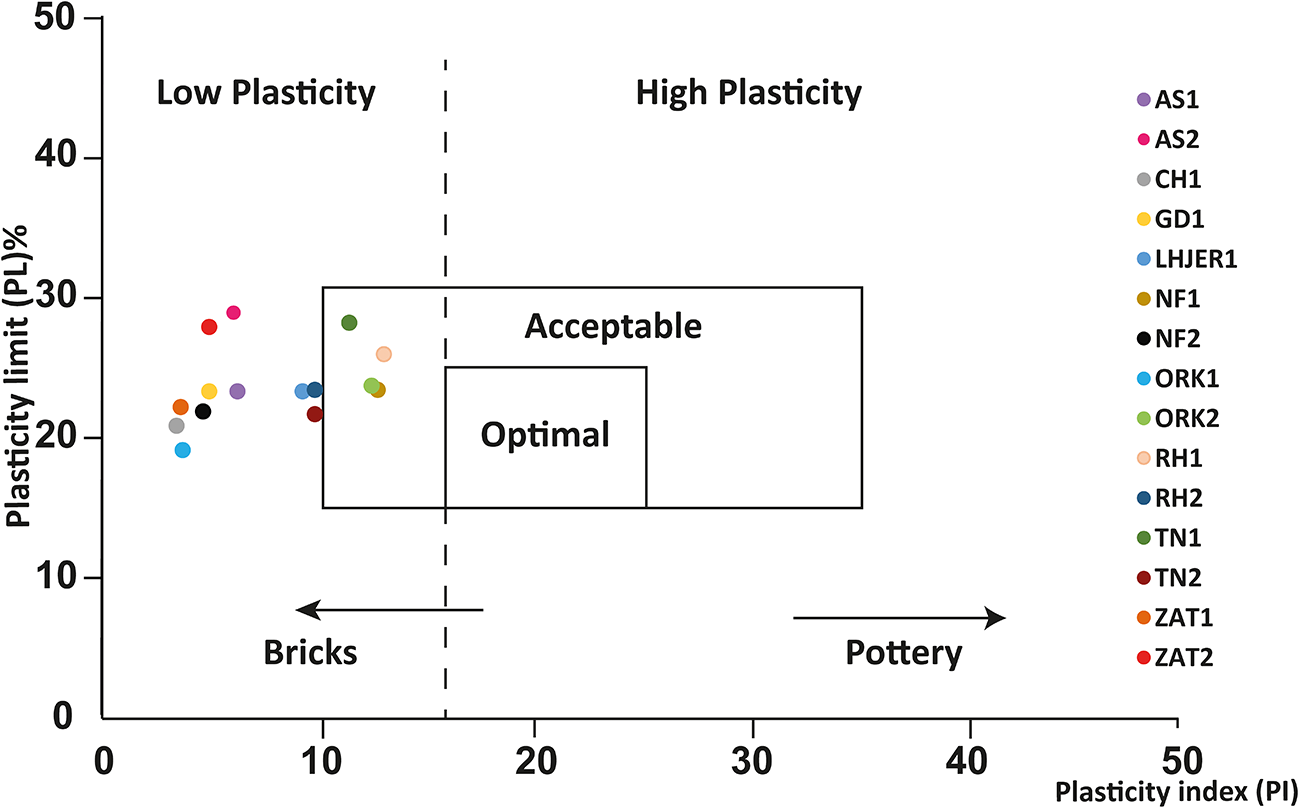
Plasticity variations are primarily attributed to the quantity and type of clay minerals. A higher proportion of clay minerals, particularly smectite and vermiculite, increases the plasticity. Accordingly, the most plastic samples (TN1, ORK2, RH1 and NF1) exhibit the greatest total clay content, along with a notable presence of these highly plastic minerals. Projection onto a PI–PL diagram (Bain & Highley, Reference Bain, Highley, Mortland and Farmer1979) shows that they are not fully suitable for the ceramics industry (Fig. 10). Samples NF2, RH1, RH2, TN1, TN2 and ORK2 have PI values ≥10%, making them suitable for industrial brick extrusion, whereas the other samples with lower PI values might crack during extrusion (de Souza Nandi et al., Reference de Souza Nandi, Zaccaron, Raupp-Pereira, Arcaro, Bernardin and Montedo2023). All of the samples have too low plasticity for use in pottery; consequently, improvements in their plasticity are required to make them compatible with the requirements of this application.
Projection of the studied clayey materials onto a diagram modified from Bain & Highley (Reference Bain, Highley, Mortland and Farmer1979).

The clayey sludges are chemically suitable for use in the ceramics industry. However, from a physical and mineralogical standpoint, certain modifications are necessary to optimize their properties, with the exception of sample TN1, which appears to be directly suitable for ceramics production. In this context, enhancing their characteristics requires the addition of clay fractions, particularly those with higher plasticity, such as smectite or fibrous clays. For instance, the mud from the reservoir of the Lalla Takerkoust Dam, which experienced high sedimentation rates, is rich in the clay fraction and is composed mostly of smectite (Gourfi et al., Reference Gourfi, Daoudi, Ben Daoud and Fagel2023). The sediments of the Rocade Canal have similar characteristics (El Boudour El Idrissi et al., Reference El Boudour El Idrissi, Daoudi, El Ouahabi, Collin and Fagel2018). These materials are suitable for blending with the studied sludges to create optimized formulations, thereby meeting the specific requirements for enhancing the overall ceramic performance. Furthermore, the heterogeneity of the investigated sludge samples provides an additional perspective regarding their valorization, including with regards to composites reinforced with natural fibres. Previous studies have shown that alfa fibres can improve the physicomechanical and thermal properties of construction materials (Garrouri et al., Reference Garrouri, Lakhal, Benazzouk and Sediki2022), and that natural fibres can reinforce ceramic slurry compacts (Avram et al., Reference Avram, Tudoran, Cuc, Borodi, Birle and Petean2024b), suggesting promising alternative applications of these materials.
Conclusion
Clayey sludges from aggregate washing in Marrakech quarries were valorized for their potential use in ceramic applications. Unlike other industrial sludges, which are often characterized by a uniform composition, the clayey sludges resulting from aggregate washing exhibited variability in terms of particle-size distribution, mineralogical composition and chemical properties. This variability was influenced by several factors, including the nature of the parent rock and the source location along the river. These sludges consist mainly of quartz, feldspars and clayey minerals. However, their low to medium plasticity, combined with their variable particle-size distribution, limited their direct valorization.
These clayey sludges could be used without additives for the production of red bricks. For other applications, such as pottery, specific formulations would be required involving blending the sludges with more plastic clays to modify their particle-size distribution and improve their plasticity to meet the requirements of these industrial processes.
The study highlights a dual benefit of using these clayey sludges, both environmental and economic. Firstly, doing so would reduce the discharge of waste materials through valorization. Secondly, doing so would provide a local alternative to clay materials being imported from other regions, thereby addressing the needs of regional ceramic producers for clay raw materials.
The clayey sludges from the Marrakech region represent an underexploited resource with significant potential for sustainable applications. However, further studies are essential to optimize these formulations and assess the performance of the finished products, ensuring their effective integration into targeted sectors. This approach could also serve as a model for other regions facing similar challenges, reinforcing efforts towards sustainable industrial waste management.
Supplementary material
The supplementary material for this article can be found at https://doi.org/10.1180/clm.2026.10027.
Acknowledgements
We thank Ayoub El Aallaoui for his significant support in the preparation of the figures. We also thank Mr Benoit Duchemin for performing the SEM imaging at the Laboratoire Ondes et Milieux Complexes, UMR 6294, CNRS – Université du Havre. Financial support was provided by the Project of National Center for Scientific and Technical Research (CNRST) ‘Domaines Prioritaires de la Recherche Scientifique et du Développement Technologique/Ref. PPR1/2015/63’.
CRediT authorship contribution statement
Safaa Zahir: Conceptualization, Methodology, Data curation, Writing – original draft, Writing – review & editing. Lahcen Daoudi: Supervision, Conceptualization, Methodology, Writing – original draft, Writing – review & editing. Meriam El Ouahabi: Methodology, Writing – review & editing. Nathalie Fagel: Methodology, Writing – review & editing.
Competing interests
The authors declare none.
Data availability
The data that have been used are confidential.


 Open access

