

Broadly speaking, the Formative period in the Andes (1500 BC–AD 400) was a time of substantial change, with shifts in subsistence patterns accompanying an intensification of social complexity and technological advances (e.g., Lumbreras Reference Lumbreras2006). In northern Chile's Atacama Desert there is ample evidence of camelid pastoralism, agriculture, sedentism, surplus production, and increasing cultural complexity (Castro et al. Reference Castro, Berenguer, Gallardo, Llagostera, Salazar, Falabella, Uribe, Sanhueza, Aldunate and Hidalgo2016; Muñoz et al. Reference Muñoz, Agüero, Valenzuela, Falabella, Uribe, Sanhueza, Aldunate and Hidalgo2016; Núñez et al. Reference Núñez, Cartajena, Carrasco, de Souza and Grosjean2006; Uribe et al. Reference Uribe, Angelo, Capriles, Castro, de Porras, García and Gayo2020). This period, however, is notable for its diversity, with local populations responding at different rates and in varied ways to change. What began as systems of complementarity between different ecological levels ultimately consolidated into a complex and extensive multidirectional meshwork of relationships. In part, this has been understood as an Andeanization process promoted from the highlands via widespread cultural phenomena with close links to highland centers like Wankarani (e.g., Rivera Reference Rivera2002). This view contrasts with a perspective that emphasizes continuity with local Archaic period traditions (e.g., Muñoz et al. Reference Muñoz, Agüero, Valenzuela, Falabella, Uribe, Sanhueza, Aldunate and Hidalgo2016; Núñez and Santoro Reference Núñez and Santoro2011). Nevertheless, there is agreement that the long-distance caravan system created a mosaic of relationships among groups (Muñoz et al. Reference Muñoz, Agüero, Valenzuela, Falabella, Uribe, Sanhueza, Aldunate and Hidalgo2016:184–186). By the Late Formative (Castro et al. Reference Castro, Berenguer, Gallardo, Llagostera, Salazar, Falabella, Uribe, Sanhueza, Aldunate and Hidalgo2016; Muñoz et al. Reference Muñoz, Agüero, Valenzuela, Falabella, Uribe, Sanhueza, Aldunate and Hidalgo2016) there was significant interaction and exchange and some level of integration of people living in varied population centers across the arid expanse of the Atacama Desert. By consolidating evidence of material culture with a human dimension in this article, we are able to provide details about individual lives and open doors into a consideration of northern Chile's Late Formative period.
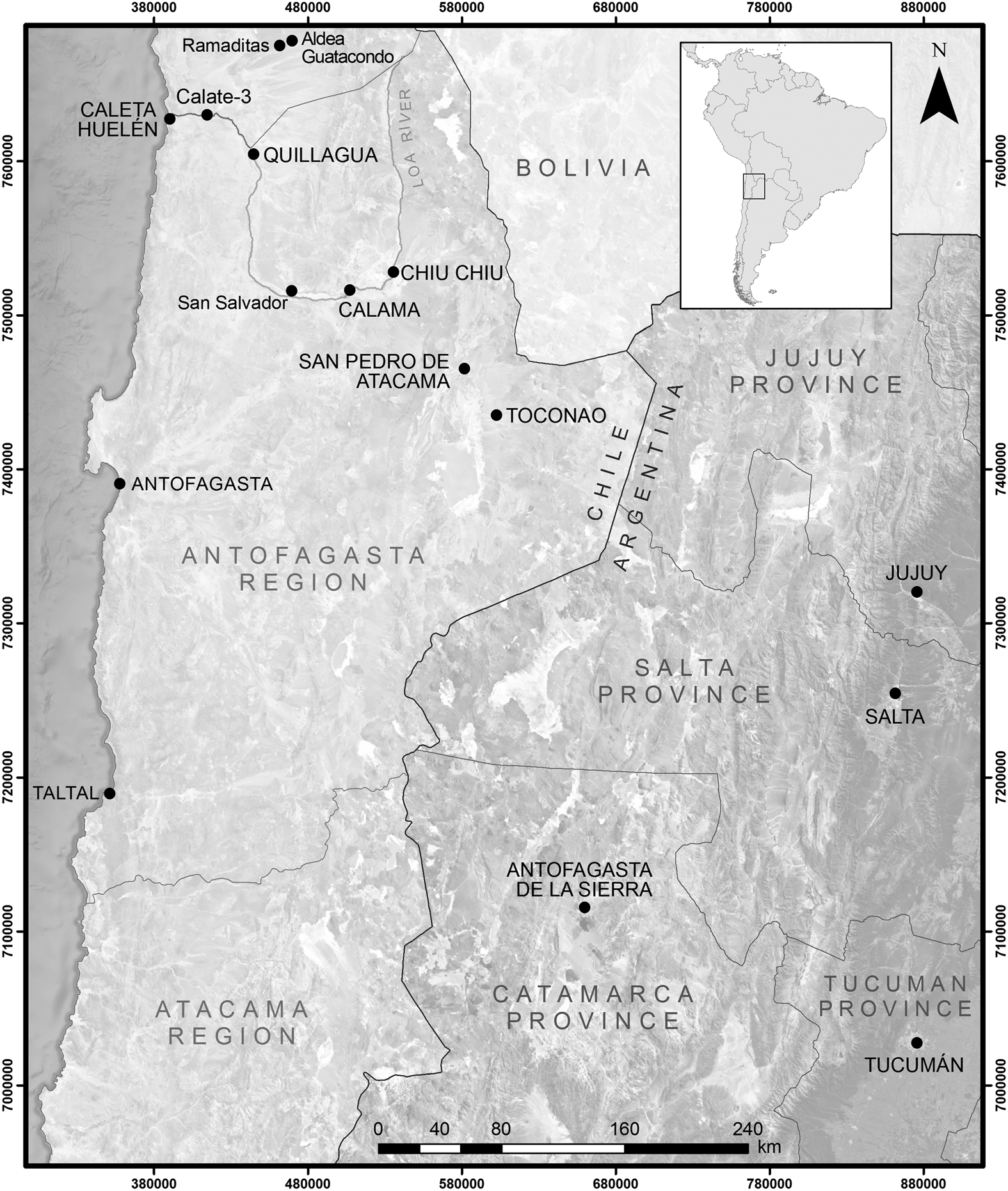
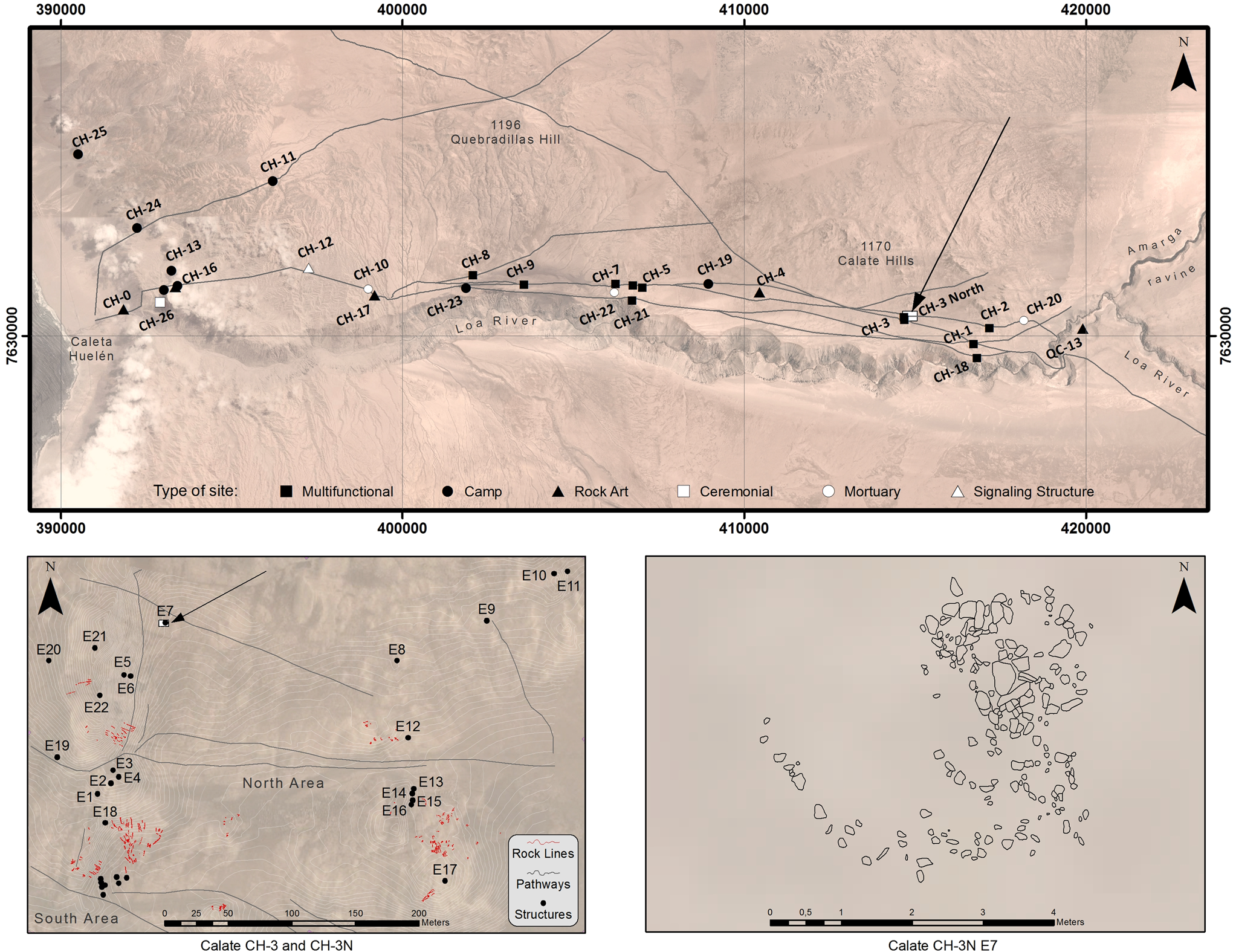
A life, and consequently a body, can reflect movement and exchanges and speak to communal trends. The details of each life are idiosyncratic but at the same time are formed in relation to society and the environment. Considering individuals through a social bioarchaeology approach (Agarwal and Glencross Reference Agarwal and Glencross2011) that incorporates life history and embodiment allows us to explore human experiences writ large through the subtleties of a particular life. In this article, we integrate a variety of skeletal, chemical, and archaeological data to explore the life and death of a small child, Calate-3N.7, who died between the ages of four and six and was buried in the open desert along a prehistoric trail during the Late Formative period in the Tarapacá region of Chile's Atacama Desert (Figure 1; Table 1). Calate served as a throughway for travelers in historic and prehistoric times, providing a rest area in this harsh landscape. Research over the past decade has revealed numerous campsites, offerings, and burials that reflect its character as a path connecting nodes on the coast to those in the interior oases (Figure 2; Gallardo Reference Gallardo, Gallardo, Ballester and Fuenzalida2017; Pimentel and Ugarte Reference Pimentel, Ugarte, Gallardo, Ballester and Fuenzalida2017; Pimentel et al. Reference Pimentel, Ugarte, Blanco, Torres-Rouff and Pestle2017). The individuals buried along these routes reflect the varied cultural groups engaged in trade and social interaction across the desert.
Map of the region.
Top, Detailed map of Calate indicating location of Calate 3; bottom left, map of the site of Calate 3 and Calate 3N indicating burial location; and bottom right, drawing of the burial of individual 3N.7 before excavation. (Color online)
Radiocarbon Dates from Calate 3N.

Notes: All dates (Pimentel et al. Reference Pimentel, Ugarte, Blanco, Torres-Rouff and Pestle2017:37, 47) were calibrated using Calib 8.2 (Stuiver et al. Reference Stuiver, Reimer and Reimer2020) and the SHCal20 calibration curve (Hogg et al. Reference Hogg, Heaton, Hua, Palmer, Turney, Southon and Bayliss2020). For lab codes, “Beta” designates dates generated by Beta Analytic, and “AA” designates dates generated by the University of Arizona Accelerator Mass Spectrometry Laboratory. Dates older than 1000 BP are rounded to the nearest decade (Stuiver and Polach Reference Stuiver and Polach1977). Calibrated radiocarbon ages at 2-sigma.
In archaeological terms, what we see when exploring the lives of travelers are the sum of their burdens—what materials they transport, where they come from, what symbols are exchanged, and how these objects reflect differential value. However, as Gallardo (Reference Gallardo, Gallardo, Ballester and Fuenzalida2017:16) notes, these material remains provide evidence of transactions and do not necessarily define the quality of interactions. Here, we focus on the life of a traveler who crossed immense deserts at a young age. We argue that this view, which aims to provide the details of a life by showing how that life embodied movements and exchanges, can help bring to a human scale the patterns of social interaction that characterize a period.
A Social Bioarchaeological Approach
We frame this research with a life-history perspective couched in the framework of embodiment. As Agarwal (Reference Agarwal2016:S130) writes, these approaches are focused on the “interrogation of human life as a result of interrelated and cumulative events over not only the timeframe of individuals, but also over generations at the community level.” They allow for a multiscalar consideration that can give insight not only into individual experiences but also into how they reflect social contexts and social change (e.g., Torres-Rouff and Knudson Reference Torres-Rouff and Knudson2017). This allows us to see the ways in which these interaction networks manifest in both the body and in death, as well as how the individual experience reflects life in this time.
Integrating this life-history approach into bioarchaeology directly with an embodiment perspective, we address the physical body as it engages with the social world. This is particularly salient in the consideration of childhood—a term plagued by the conflation of social and biological perceptions (Beauchesne and Agarwal Reference Beauchesne and Agarwal2018; Cavagnoud et al. Reference Cavagnoud, de Suremain and La Riva González2013). It is worth noting that in precolumbian northern Chile, infants and children were frequently buried, often with elaborate mortuary treatment, in the same ascribed mortuary spaces in which adults were interred (e.g., González-Ramírez et al. Reference González-Ramírez, Pacheco, Sáez and Arregui2019; Torres-Rouff and Knudson Reference Torres-Rouff and Knudson2017; Uribe et al. Reference Uribe, Agüero, Catalán, Herrera and Santana-Sagredo2015). Childhood, importantly, must be conceived not only as socially constructed but also as a stage of life with myriad expressions. This “plurality of childhoods” applies not only between cultural groups but also to the workings of each one, considering intersections with age, sex, class, and other aspects of identity (Cavagnoud et al. Reference Cavagnoud, de Suremain and La Riva González2013:325). Although we cannot speak to specific concepts of childhood among particular populations, the individual considered here was clearly in one of the earlier parts of life, coming out of a period of full dependence to engage with the world around them.
As Meskell (Reference Meskell and Rautman2000:13) notes, the embodied experience represents the “interplay of natural, social, cultural and psychical phenomena.” As such, we can glimpse more than a static snapshot of death, allowing us to explore the ways that the body developed over time, even during brief periods, and interacted with the world around it. It should be noted that individuals will have complex and likely overlapping identities reflected in their bodies that can be glimpsed archaeologically at certain moments in the life course. The integration of the osteological data of a life with contextual sociohistorical information derived from the mortuary space can shed light on the production of identity and the multiple intersections of exchange, mobility, and personhood.
In this article, we use this fine-grained perspective to explore the experiences and environments of interaction that surround the life and death of a child and thus the social character of these movements. These important relationships are reflected in mortuary spaces and the people who are buried during moments of mobility. By taking a multiscalar approach, we present a narrative that considers not only the varied materiality that accompanies this child but also what the life experience was, and how it reflects and shapes our understanding of the Late Formative period in northern Chile.
Background and Context
In Tarapacá, the Late Formative (AD 100–900) witnessed the consolidation of sedentism, continued rise of complexity and production of resource excess, and the growth of interregional trade networks involving coastal and interior peoples (Muñoz et al. Reference Muñoz, Agüero, Valenzuela, Falabella, Uribe, Sanhueza, Aldunate and Hidalgo2016). Throughout the Atacama, most habitable areas of the desert became occupied at this time, with different subsistence strategies, varied food resources, and technological innovations leading to the aggregation of population into larger settlements and shifts toward social integration that helped minimize risk in both the interior oases and along Chile's coastline (Castro et al. Reference Castro, Berenguer, Gallardo, Llagostera, Salazar, Falabella, Uribe, Sanhueza, Aldunate and Hidalgo2016:242; Gallardo Reference Gallardo, Gallardo, Ballester and Fuenzalida2017; Pestle et al. Reference Pestle, Torres-Rouff, Gallardo, Ballester and Clarot2015; Ugalde et al. Reference Ugalde, McRostie, Gayo, García, Latorre and Santoro2021). By this time, the populations of the Valles Occidentales are fully sedentary—maintaining complementarity between agricultural, pastoral, and hunting and gathering resources—interregional exchange networks have been expanded and consolidated, and the differences that define the “cultural regions” of Arica, Tarapacá, and Atacama begin to be seen (Adán et al. Reference Adán, Urbina, Pellegrino and Agüero2013; Castro et al. Reference Castro, Berenguer, Gallardo, Llagostera, Salazar, Falabella, Uribe, Sanhueza, Aldunate and Hidalgo2016; García et al. Reference García, Vidal, Mandakovic, Maldonado, Paz Peña and Belmonte2014; Muñoz et al. Reference Muñoz, Agüero, Valenzuela, Falabella, Uribe, Sanhueza, Aldunate and Hidalgo2016; Uribe et al. Reference Uribe, Angelo, Capriles, Castro, de Porras, García and Gayo2020). During this time, the growth in complex interregional interaction networks is reflected in the flow of goods and people from the coast to interior to highlands and back again over large expanses of the desert (e.g., Cases et al. Reference Cases, Rees, Pimentel, Labarca and Leiva2008; Pimentel et al. Reference Pimentel, Rees, de Souza, Arancibia, Núñez and Nielsen2011).
The social complexity that characterizes the period reflects an incredible diversity in social organization and cultural patterns, with, for example, the early development of agriculture, evidence of significant interaction and information flow, the construction of elaborate space for rituals and communal gatherings at sites, and the complexity of associated cemeteries and material culture (Adán et al. Reference Leonor, Uribe, Urbina, Nielsen, Rivolta, Mercolli, Vásquez and Seldes2007, Reference Adán, Urbina, Pellegrino and Agüero2013; Agüero and Cases Reference Agüero and Cases2004; Uribe Reference Uribe and Lechtman2006). Although certain elements, such as ceramics and textiles (Agüero Reference Agüero2012; Uribe and Vidal Reference Uribe, Vidal and Druc2015), were shared across the region, there is evidence demonstrating that different localities had local autonomy in managing connections and interactions. Interactions at this time included contacts and exchanges across different ecological zones, as well as internal movement along the coast and within the valleys and oases. Together these result in a regional scale of interaction that extended beyond solely highland influences (e.g., Núñez and Dillehay Reference Núñez and Dillehay1979).
Calate is located about 25 km from the Pacific coast and 40 km from the Quillagua valley and oasis in a transition zone between the Cordillera de la Costa and the Pampa del Tamarugal, at about 700 m asl (Figure 1). The Calate sites are found in the Valles Occidentales subarea and demonstrate interactions that extend into the neighboring Circumpuneña and Altiplano Meridional subareas (Aldunate and Castro Reference Aldunate and Castro1981). Calate functioned as a “funnel road” through which travelers going between Quillagua and Caleta Huelén—inland and costal nodes, respectively—were able to cross the Loa River. The sites reveal a long history of use, with materials suggesting that groups traversed this space as early as the Middle Archaic period (ca. 5000 BC) and that it was used regularly in the intervening centuries (Pimentel et al. Reference Pimentel, Ugarte, Blanco, Torres-Rouff and Pestle2017). The use of these routes to move foods and animals across the desert persisted into the historic period, and Calate continued to be a resting place (Odone Reference Odone2017; Pimentel et al. Reference Pimentel, Ugarte, Blanco, Torres-Rouff and Pestle2017). The oases and other habitable areas of the interior were occupied by the Early Formative, suggesting the importance of the multicultural internodal spaces of Calate for connecting different population centers (e.g., Gallardo Reference Gallardo, Gallardo, Ballester and Fuenzalida2017). As such, routes and the bodies buried along the way bear evidence of these long-distance exchanges.
A pedestrian survey allowed us to record trails on the northern plateau of the Loa River originating from Tarapacá, the interior Atacama Desert, and the Pacific coast. Twenty-eight sites were registered with a total of 192 structures; of these, 13 were funerary (Figure 1; Pimentel et al. Reference Pimentel, Ugarte, Blanco, Torres-Rouff and Pestle2017). The individuals interred at Calate do not form a cohesive burial population: instead, they encompass a broad range of cultural practices and time periods from the Archaic through the colonial, with each burial appearing to be the product of individual circumstances, leading to the dispersed interment of these individuals. The nine burials recovered and studied thus far cover millennia of human occupation and range from expedient burials to the elaborate burial context we see at 3N.7 (Torres-Rouff et al. Reference Torres-Rouff, Pimentel and Ugarte2012). These burials include one other non-adult: an infant younger than six months old was buried at CH9.1 dating to the Late period (post–AD 1400). This infant was interred in a small pit with a small array of grave goods (fragments of black monochrome ceramic, pieces of net, sticks, textile and cord fragments, fish remains, maize cobs, and algarrobo pods), and the burial was covered with large rocks.
Calate 3, which comprises two sectors (CH3 and CH3N), is multifunctional in nature (Figure 2). It is thought to have been in use during the Formative, with evidence suggesting ongoing usage through the end of the colonial period. A number of lineas de piedra (lines of stone), where multiple linear arrangements of stone were placed along the desert plains, were documented at the site. CH3 includes structures with dates showing use during the Late Formative period (ca. AD 420–600; Pimentel et al. Reference Pimentel, Ugarte, Blanco, Torres-Rouff and Pestle2017:37) and a burial (CH3.8) with dates from the late colonial period (post–AD 1500; Pimentel et al. Reference Pimentel, Ugarte, Blanco, Torres-Rouff and Pestle2017:44). CH3N, which also dates to the Late Formative, shows evidence of habitation structures, funerary components, and a series of assemblages deemed ceremonial in nature. We focus here on Calate-3N.7, which corresponds to the burial of a child accompanied by a suite of mortuary goods during the Late Formative period.
Problem and Approach
We explore this individual and the ways in which the child's life and death reflect the social context by integrating skeletal, biogeochemical, and archaeological data to investigate the patterns of social interaction seen in their body and grave. We discuss this data over the life course of individual 3N.7; these varied times provide us with different moments and aspects of the embodied lived experience. First, we consider radiogenic strontium isotope data to explore possible places of origin and consider practices of infant care through the modification of skull shape. We explore skeletal evidence of stress and health indicators that could result from this brief life. We move on to analyze stable carbon and nitrogen isotopes to document patterns of consumption during childhood. Finally, we consider the moment of burial in terms of the tomb, body, and myriad grave goods, thereby complementing our understanding of social relationships in life and death.
Methods
Calate-3N.7 was excavated and analyses conducted as part of FONDECYT 1090762, which was directed by Pimentel in 2009. The child was interred in a small pit burial in a difficult caliche and sand-laden environment at a depth of 82 cm with an 80 × 40 cm extension. The individual was placed on their side in a flexed position within a thick textile wrapping accompanied by varied goods. Human remains and the material culture were later cleaned and analyzed in a laboratory setting. Radiocarbon dates were derived from a textile in the grave, in addition to carbonized remains from other structures at Calate 3N.
Skeletal Analyses
Human remains were examined macroscopically following standard bioarchaeological protocols after conducting a complete skeletal inventory (e.g., Buikstra and Ubelaker Reference Buikstra and Ubelaker1994). Although most of the remains were skeletonized and therefore available for analysis, some were still covered with soft tissue—primarily portions of the face, sternum and anterior ribs, and hands/feet—and therefore excluded from skeletal analyses as appropriate. Dental development was used to ascertain age. Given the very young age at death, no skeletal indicators were used to determine sex. We analyzed several standard bioarchaeological indicators of stress (linear enamel hypoplasia [LEH], cranial porosities, osteoperiostitis), evidence of dietary patterns (dental caries, antemortem tooth loss), and traumatic injury.
All indicators were observed macroscopically with 10× magnification. Observations for LEH, frequently associated with acute moments of stress during development, were made on the anterior dentition. Similarly, observations for cranial porosities that could suggest nutritional deficiencies (Walker et al. Reference Walker, Bathurst, Richman, Gjerdrum and Andrushko2009) were made on the orbits and cranial vault. The specific etiology of skeletal lesions like cribra orbitalia is not completely understood, and as such they are frequently used as indicators of nonspecific stress, particularly in childhood (e.g., Lewis Reference Lewis, Hadley and Hemer2014). Finally, all long bones were observed for evidence of osteoperiostitis. Dentition was examined for evidence of dietary patterns and dental health via documentation of caries and antemortem tooth loss (AMTL), which frequently results from severe carious lesions (Hillson Reference Hillson1996). Although several factors influence the prevalence of dental caries, they are frequently used as an indicator of carbohydrate consumption (Hillson Reference Hillson1996; Marklein et al. Reference Marklein, Torres-Rouff, King and Hubbe2019).
Observations were made for evidence of acute trauma in the form of depressions on the vault, linear fractures, facial fractures, and weapon wounds (e.g., Lovell Reference Lovell1997). This evidence included both peri- and antemortem injuries considered representative of interpersonal violence or accidental injury. All paleopathological changes were documented on the skeletal remains based on their presence and absence and scored following standard protocols.
Finally, cranial vault modification, a global practice with significant regional variation, was documented. This practice has a long and varied history in the Andes, where it is frequently imbued with elements of group identity. Here, we considered its presence, type, angle of pressure, degree, and symmetry of modification following protocols developed earlier (Torres-Rouff Reference Torres-Rouff2008).
Radiogenic Strontium Isotope Analyses
Radiogenic strontium isotope data (87Sr/86Sr) are used to examine paleomobility in archaeological human remains (see discussions in Bentley Reference Bentley2006; Knudson et al. Reference Knudson, Williams, Buikstra, Tomczak, Gordon and Anbar2010; Lewis et al. Reference Lewis, Pike, Coath and Evershed2017; Slovak and Paytan Reference Slovak, Paytan and Baskaran2011). Bioavailable strontium is incorporated into human dental and skeletal elements during formation, where it substitutes for calcium in tooth enamel and bone hydroxyapatite. When “local” strontium is imbibed or consumed, the 87Sr/86Sr values reflect the geologic region or regions in which that individual lived during enamel and bone formation. In the Archaeological Chemistry Laboratory at Arizona State University (ASU), samples were photographed, cast, and then mechanically cleaned by abrasion with a Dremel 3956-02 Variable Speed MultiPro drill equipped with an engraving cutter; we used it to remove adherent organic matter or contaminants, as well as the outermost layers, which are most susceptible to diagenetic contamination. Soil samples were partially dissolved to identify bioavailable strontium. Samples were analyzed for elemental concentrations on the quadrupole inductively coupled plasma mass spectrometer (Q-ICP-MS) in ASU's Metals, Environmental, and Terrestrial Analytical Laboratory (METAL); these data were used to infer diagenetic contamination. Strontium was then separated from the sample matrix using EiChrom SrSpec resin, and samples were analyzed using the METAL Neptune multi-collector inductively coupled plasma mass spectrometer (MC-ICP-MS). Recent 87Sr/86Sr analyses of strontium carbonate standard SRM-987 yield a value of 87Sr/86Sr = 0.710261 ± 0.000020 (2σ), which is in agreement with analyses of SRM-987 using a thermal ionization mass spectrometer (TIMS), where 87Sr/86Sr = 0.710263 ± 0.000016 (2σ) (Stein et al. Reference Stein, Starinsky, Katz, Goldstein, Machlus and Schramm1997), and with analyses of SRM-987 using an identical MC-ICP-MS, where 87Sr/86Sr = 0.710251 ± 0.000006 (2σ; Balcaen et al. Reference Balcaen, de Schrijver, Moens and Vanhaecke2005).
Stable Carbon and Nitrogen Isotope Analyses
Extractions of target biomolecules (collagen and hydroxyapatite) were performed in the Stable Isotope Laboratory at the University of Illinois, Chicago. Collagen extraction followed a modified version of that established by Longin (Reference Longin1971) and detailed elsewhere (Pestle et al. Reference Pestle, Torres-Rouff and Hubbe2016, Reference Pestle, Torres-Rouff, Hubbe and Smith2017). Extraction and purification of bone hydroxyapatite followed the protocols of Lee-Thorp (Reference Lee-Thorp1989) and Krueger (Reference Krueger1991), with minor modifications (Pestle Reference Pestle2010). Collagen and hydroxyapatite isotopic analyses were performed at the Colorado Plateau Stable Isotope Laboratory following Pestle and colleagues (Reference Pestle, Torres-Rouff, Gallardo, Ballester and Clarot2015). Modeling of isotopic data was accomplished using the Bayesian FRUITS model of Fernandes and colleagues (Reference Fernandes, Millard, Brabec, Nadeau and Grootes2014), one of several such models developed with the goal of better bounding estimates of food source contribution. These approaches “offer a powerful means to interpret data because they can incorporate prior information, integrate across sources of uncertainty and explicitly compare the strength of support for competing models or parameter values” (Moore and Semmens Reference Moore and Semmens2008:471). All model parameters employed for 3N.7 follow those detailed in Pinder and colleagues (Reference Pinder, Gallardo, Cabello, Torres-Rouff and Pestle2019).
Origins and Infancy
To explore the earliest stage of life, we focus on radiogenic strontium analyses, which provide us with a means of identifying geographic origins; we follow this with documentation of the child-rearing practice of cranial modification, which must be performed in infancy and creates a permanent alteration to head shape.
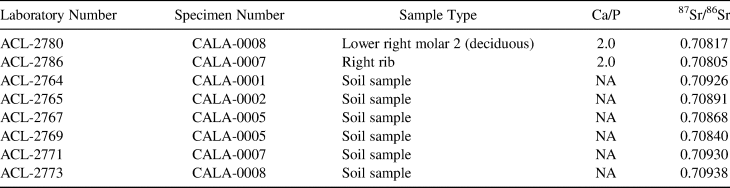
Because bone remodels throughout an individual's lifetime, bone 87Sr/86Sr values reflect dietary strontium, which can be used to infer place of residence, in the last years of life. In contrast, enamel does not remodel, so enamel 87Sr/86Sr values reflect dietary strontium sources, and place of residence, in the first years of life. We analyzed one enamel sample (from a deciduous second molar) and one bone sample (from a rib fragment).
Elemental concentrations of calcium and phosphorus in these samples are shown in Table 2; in human bone, biogenic Ca/P = 2.1, and in these samples, Ca/P = 2.0, indicating biogenic enamel and bone values. Radiogenic strontium isotope values from this individual are used to infer geographic origins during enamel and bone formation. Given the uninhabited and potentially uninhabitable nature of much of Calate, we did not generate bioavailable strontium isotope data from agricultural fields. Instead, we collected soil samples from the burials themselves. In the burial soil samples, mean 87Sr/86Sr = 0.70899 ± 0.00039 (1σ, n = 6; Table 1). Farther inland, modern and archaeological fauna from the San Pedro de Atacama oases exhibit 87Sr/86Sr = 0.70764 ± 0.000013 (1σ, n = 3) in modern and archaeological faunal samples from San Pedro de Atacama (Knudson and Price Reference Knudson and Douglas Price2007); similar values are observed in groundwater from the Salar de Atacama (Boschetti et al. Reference Boschetti, Cortecci, Barbieri and Mussi2007). On the northern and central Chilean coast, 87Sr/86Sr values in bedrock samples are lower (Kramer et al. Reference Kramer, Siebel, Romer, Haase, Zimmer and Ehrlichmann2005; Parada et al. Reference Parada, Nyström and Levi1999). However, we note that both sea spray and consumption of high-strontium marine resources could contribute a marine seawater value of approximately 87Sr/86Sr = 0.7092 (Veizer Reference Veizer1989).
Radiogenic Isotopic Data from Individual 3N.7 and Burial Soils from Calate.
Because 87Sr/86Sr values in the body reflect the strontium consumed and imbibed during enamel and bone formation, we found that the most likely high-strontium sources in this individual's diet were terrestrial sources including water or salt; other likely dietary sources such as maize kernels or animal flesh are generally low in strontium. Finally, before and during the weaning process, breast milk would have been the primary food source; although this milk is not high in strontium, it would have been the primary strontium source for the infant, reflecting the strontium sources in the milk provider's diet. Fish and marine products likely contributed little strontium to the diet, unless whole fish were consumed, either dried or fresh, which contributed large amounts of calcium and strontium through the consumption of fish bones. In this case, we would expect that the consumption of marine fish bones would contribute a marine seawater value of approximately 87Sr/86Sr = 0.7092 (Veizer Reference Veizer1989). In the rest of this section, we analyze the consumption of marine products through carbon and nitrogen isotope analyses to infer the paleodiet.
It is worth noting that the two values of radiogenic strontium obtained from 3N.7 (Table 2) do not fit completely into expectations for either a coastal or an interior origin. Although they are consistent with the burial soil samples, the archaeological context does not point to “local” origins in this well-traveled area. There is also little evidence for diagenetic contamination, although this could also explain the similarities with the soil samples. Given the early formation of deciduous dental enamel, these results reflect an experience in utero and suggest the possibility that the mother may have been involved in recurrent movements during pregnancy and during the child's infancy while breastfeeding. The similar value in the rib bone, which reflects the child's life experiences, provides the first suggestion that this individual, despite their age, could have been a regular traveler with their family group. These radiogenic strontium values might correspond to an intermediate between two possible origins, representing expansive evidence for contacts and movement in the body. The child's body, in effect, integrated both coastal and interior patterns.
The skeletal remains showed evidence of intentional cranial modification during infancy. Unlike cradleboarding practices, the forms of head shaping practiced in the Andes do not restrain children. As such, and despite the potentially high mobility of their childhood, someone took time to regularly bind this child's head, ultimately producing a significant and permanently visible alteration to its natural form. Varied patterns of modification are seen throughout Tarapacá, some reflecting great diversity in practices with others showing no evidence of modification (e.g., González-Ramírez et al. Reference González-Ramírez, Pacheco, Sáez and Arregui2019; Uribe et al. Reference Uribe, Agüero, Catalán, Herrera and Santana-Sagredo2015). Calate-3N.7 had pronounced tabular oblique cranial shaping (Figure 3), in which compressive pressures are applied to the front and back of the head while not restricting lateral growth. This practice serves to demarcate social identity within a framework of mobility and variation and suggests that this child's head shaping would have been noticeable and signaled some form of group affiliation as they traversed the desert.
Illustration of tabular oblique cranial modification in the cranium of individual 3N.7.

Taken together, we can see the radiogenic strontium values and intentionally shaped head as immutable markers of infancy that this individual carried while traveling with the family group across the desert; as such, these markers can illustrate aspects of this earliest period of life. Notably, while the shaped head is likely tied to heritage, the strontium values give hints to the varied landscapes inhabited by this child and contribute to our understanding of the potential regularized, interzonal movement that characterized Tarapacá's Late Formative period.
Childhood
To explore the childhood experience of Calate-3N.7, we turn to a series of heath indicators and to stable carbon and nitrogen isotope values indicative of dietary patterns. We focus here on the developmental period following birth and the earliest phase of infancy, exploring the health and diet of this young individual before an early death.
Examining a series of skeletal health indicators allows us to glimpse the experience of childhood through the body (Halcrow and Ward Reference Halcrow, Ward and Smith2018; Mays et al. Reference Mays, Gowland, Halcrow and Murphy2017). Although questions of frailty or the “osteological paradox” inherently complicate analyses of paleopathological indicators (DeWitte and Stojanowski Reference DeWitte and Stojanowski2015; Wood et al. Reference Wood, Milner, Harpending and Weiss1992), considerations of these data points can provide us with hints as to individual health. The teeth of Calate-3N.7 show no evidence of oral pathologies or of enamel hypoplasia, a common defect related to acute moments of dietary stress. Similarly, there are no signs of childhood diseases or other general indicators of systemic stress on the skeletal remains. Data from coastal individuals have suggested a pattern of early weaning and the gradual replacement of milk with marine products, providing a nutritionally sound transition that served to protect infants from malnutrition (King et al. Reference King, Halcrow, Millard, Gröcke, Standen, Portilla and Arriaza2018; Smith et al. Reference Smith, Pestle, Clarot and Gallardo2017). This might have contributed to Calate-3N.7's health if the child's family had engaged in these coastal practices. Finally, there was no evidence of violent or accidental traumas producing injury visible on the skeleton, despite the likelihood of a mobile life (Glencross Reference Glencross, Agarwal and Glencross2011).
Analyses of stable isotopes of carbon and nitrogen in bone collagen and hydroxyapatite and their subsequent Bayesian modeling permit probabilistic statements about the quantitative makeup of this individual's childhood diet. Stable isotope and modeled dietary intake for individual Calate-3N.7 are presented in Table 3. The largest contributor to this child's diet was C3 plants (including the common algarrobo tree—Prosopis spp.), which accounted for just under 40% of dietary calories. The other significant dietary contributor, and the principal source of dietary protein, was marine fauna, which made up roughly one-third of consumed calories and more than 60% of protein intake, although some residual isotopic (trophic) effects attributable to breastfeeding cannot be ruled out. When these values are compared to the broad sweep of paleodietary data for Formative period individuals from northern Chile, they approximate the typical values of coastal populations, particularly individuals from the mouth of the Loa River (Pestle et al. Reference Pestle, Torres-Rouff, Gallardo, Ballester and Clarot2015) and those seen in other Formative period individuals from the Atacama more broadly (Santana-Sagredo et al. Reference Santana-Sagredo, Herrera and Uribe2012, Reference Santana-Sagredo, Uribe, Herrera, Retamal and Flores2015; Uribe et al. Reference Uribe, Angelo, Capriles, Castro, de Porras, García and Gayo2020). Indeed, the minor role of C4/CAM plants (maize, in particular) and the dominance of marine fauna as a protein source appear as common themes of the diet of coastal and coastal-adjacent/linked populations in the Atacama/Loa and Tarapacá regions of the Formative. Beyond these broad similarities, we note that these values also approximate those of individuals from the oases of Ancachi and Quillagua, which we (and others) have previously argued was a node in the broader systems of interregional exchange; these individuals possessed a set of dietary habits unique in the broader Atacama (Pinder et al. Reference Pinder, Gallardo, Cabello, Torres-Rouff and Pestle2019). Although these data do not prove that this child spent time in these locales, the diet situates this individual within the continuum of diets seen along the greater extent of the Loa River.
Stable Carbon and Nitrogen Isotope Data from Individual 3N.7 from Calate.

In concert, this set of data provides evidence of a healthy and mobile childhood, albeit a brief one. The paleopathological data suggest a lack of exposure to stressors or injury that would have marked the skeleton, suggesting that even if travel was a regular feature of this individual's life, its impact was not seen in these bioarchaeologically visible indicators. Marine resources make up almost one-third of this individual's diet, serve as the largest source of dietary protein, and synchronize well with the lack of dental caries. As such, the evidence here suggests a life with regular and pronounced consumption of marine resources and traditional inland foods, again reflecting the presumed mobility of this individual with the family group. These data do not obscure the fact that this child died at a young age in the open desert, something that may have resulted from the arduous nature of travel in these extreme environments. The patterns, therefore, reflect both the individual experience of movement through Calate and the broader implications of life in an increasingly complex and interconnected Formative period.
After Death
Sometime during childhood, without leaving physical evidence as to cause, this child died and was buried alongside a trail in Calate. Typical Formative period burial practices (e.g., González-Ramírez et al. Reference González-Ramírez, Pacheco, Sáez and Arregui2019) were afforded to 3N.7 despite the circumstances. The grave was set about 10 m from the nearest trail where it remained undisturbed over the centuries. A small circular pile of stones covered this primary burial. The burial, like the body, provides evidence of interactions and complex regional networks.
Unlike other travelers who suffered a similar fate in this unforgiving space, considerable effort was made to dig a grave into rocky ground, dress the child, and bury numerous offerings next to the small body. The burial reflects the ways that this child died as a traveler and as an active participant in these moments of mobility, not as one deprived of agency because of age. Although grave goods can serve as gendered indicators, given the young age at death we have no real information about the experience of their sex in life. The body was dressed as we would expect from any member of a group of travelers. In addition to a thick blanket laid at the bottom of the tomb, the child wore a woven tunic made of camelid fiber and retained fragments of a feather garment.
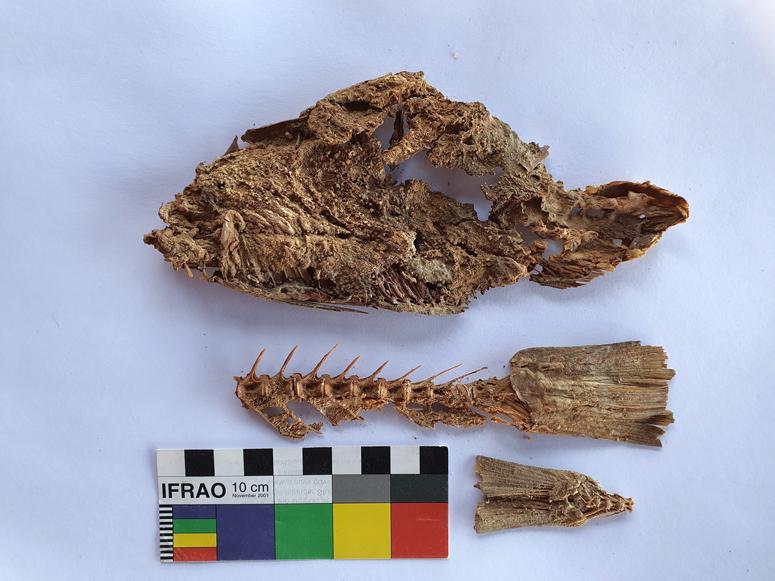
The grave included a varied suite of goods that also document exchange networks during the Late Formative (Supplemental Table 1). Of note, the depth of the grave and the evidence of closure with a series of larger rocks suggest the burial was a single event of bereavement and burial, and not a long-term use of the tomb as a sacred space for offerings as seen at other sites at Calate (Pimentel et al. Reference Pimentel, Ugarte, Blanco, Torres-Rouff and Pestle2017). Some offerings did speak to a coastal connection—for example, a feathered garment, a type that has been seen before in traveler burials (Briones et al. Reference Briones, Núñez and Standen2005), remains of dried fish, and fish vertebrae of varied species (Labarca and Calás Reference Labarca and Calás2012; Figure 4).
Dried fish (Cilus gilberti?) found in the grave of individual 3N.7. (Color online)
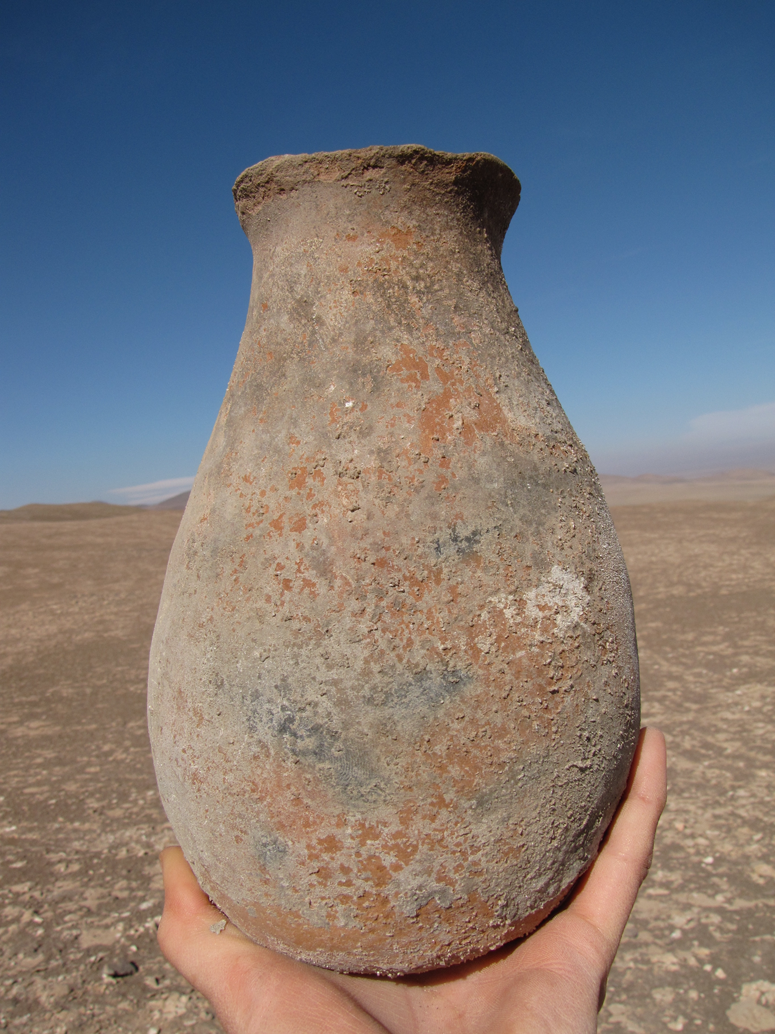
A larger number of objects, however, reflect connections to the interior; for example, the maize (Zea mays; García Reference García2010). Complete ceramic bottles (Figure 5) from the Tarapacá oases more than 100 km away were placed on the body, one with algarrobo pods and camelid feces inside. A basket containing a miniature ceramic bowl was placed next to the skull. These ceramics are of the type known as Quillagua Tarapacá Café Amarillento (QTC), a style commonly found in Late Formative centers from Arica to the Loa (Uribe Reference Uribe2009; Uribe and Ayala Reference Uribe and Ayala2004). The burial also included eight arrow shafts, some with delicate feathered fletching (Figure 6). The textiles in the grave are associated with the traditions of the Valles Occidentales or Quillagua, including textile technologies documented at Caserones and Tarapacá-40 (Agüero Reference Agüero2012; Oakland Reference Oakland, Drooker and Webster2000); Calate-3N.7 bears similarities to graves from Tarapacá-40 in the burial style, ceramics, and textiles.
“Florero” ceramic bottle (Quillagua Tarapacá Café Amarillento) buried with individual 3N.7. (Color online)
Details of fletching on arrow shafts buried with individual 3N.7. (Color online)

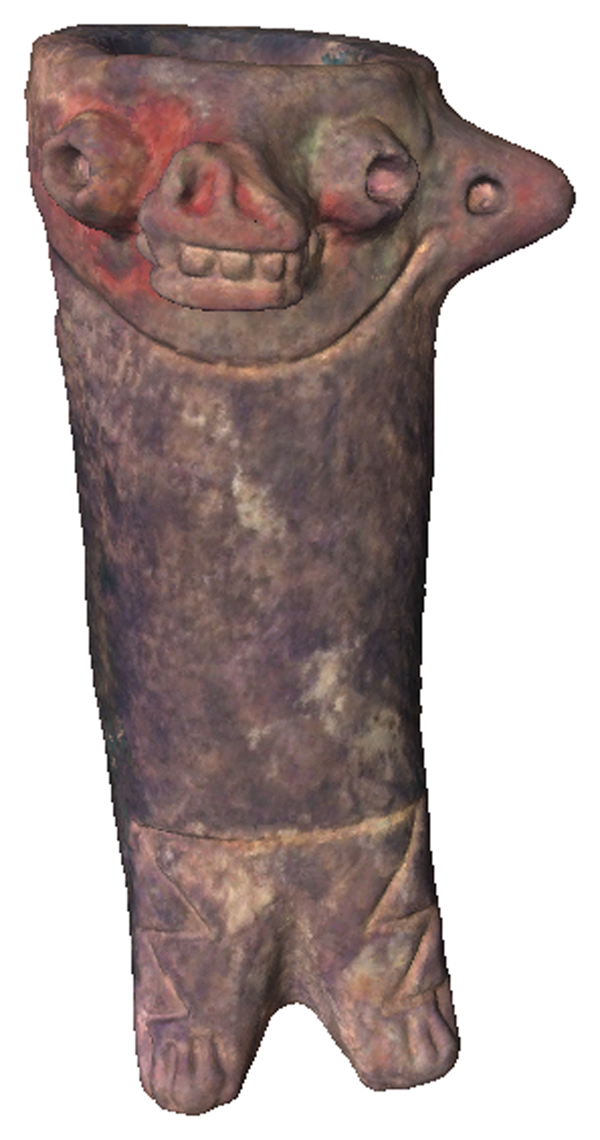
The distal fragment of a polished black ceramic pipe with a zoomorphic modeling of a feline with traces of red and green pigments was found near the cranium (Figure 7). Pipes are common during the Formative in the southern Andes, and there is evidence of them from the Pacific coast, across the Atacama, and into northwestern Argentina (e.g., Carrasco et al. Reference Carrasco, Echeverría, Ballester and Niemeyer2015; Gili et al. Reference Gili, Echeverría, Stovel, Deibel and Niemeyer2017). The iconography links this to the San Francisco Complex of northwestern Argentina. As such, this pipe was carried through arduous mountain passes over a distance of more than 700 linear km. Although it is unlikely that the group traveling with this child procured all the elements in this grave, the objects were all left together in this mortuary context, reflecting the larger interconnectedness of travelers in this era.
Rendering of San Francisco pipe fragment from a 3D scan. (Color online)
In sum, much like what was reflected in the body, the material culture showed differential relationships with the interior oases, the Pacific coast, and the eastern slope of the Andes. The grave also reflects this intercultural development. Although the context overwhelmingly speaks to the interior, numerous ties engage this child with the broader region and social environment, including the way the pipe fragment speaks to us of potential chains of relationships. In totality, the material goods demonstrate ways in which this child inhabited both coastal and interior worlds, despite likely coming from the interior. Ultimately, this child's body and grave embody both one life and the thick interaction networks between the interior and the coast during the Formative period.
Conclusions
Calate was an important and long-standing internodal site of the precolumbian road network in the Atacama, where multiple roads that flowed to and from the mouth of the Loa River or nearby sectors converged and, with them, brought people and things from diverse spaces across the desert. As Gallardo and colleagues (Reference Gallardo, Correa, Pimentel and Blanco2017:253) note, “Exchange enabled the integration of communities inhabiting northwestern Argentina, the Bolivian altiplano, the Amazon, and the forested oases of Tarapacá.” Importantly, it is not only the material goods but also the human interactions that enabled this integration. The evidence from Calate speaks to these deep triadic social relations between coastal groups, Atacameños, and Tarapaqueños and importantly suggests the specificity and variability of these relationships in the Formative. Considering the suite of data generated here, we can see a child whose life was spent not only moving through these desert routes but also traveling and interacting in the world of adults and in the nodes and internodal spaces between the coast and the interior. The interactions that were part of these itineraries across the desert are present in both the mortuary space and in the people who engaged in this travel.
This child could not complete the trip across Calate along this route, which was probably similar to others they had crossed in their life. Considering the embodied experience of living this mobile life through the remains of 3N.7, we can see how the body and the grave demonstrate the social character of movement in the Late Formative period. For this child, our data suggest regular movements between the coast and interior and the material records of the cultures with which the individual interacted in his or her short life. This opens the possibility of familial caravan movement, perhaps even focused on the movement of fish. Like this child's diet, which was marked by the consumption of resources from both coastal and interior environments, we can see the way that the elements of the grave were representative of the extensive networks of exchange that characterized the Formative period.
The burial of 3N.7 gives us a remarkable account of the wide extension and intensity of the exchange networks in which groups of this era participated. Engagement with travel and interaction functioned not just for resource exchange; the travel itself served to extract, ritualize, and territorialize the larger spaces of the desert (Pimentel and Ugarte Reference Pimentel, Ugarte, Gallardo, Ballester and Fuenzalida2017:34). This shows us an important fluidity and highlights the greater extent of these networks, which reached weblike from the eastern slopes of the Andes to the Pacific coast. Rather than a direct relationship between these extremes, what this body reflects is the ways in which travelers coming from the coast are part of a regular multidirectional chain of exchanges that intensified during northern Chile's Formative period.
The mortuary space constructed for 3N.7 emphasizes the recurrent and deep network in which these travelers across Calate were enmeshed. Importantly, these rituals created embodied networks of shared histories and relationships from which a communal identity was built. This child fully engaged in the labor of trans-desert travel and their brief life was marked by a permanent integration of the different social and environmental worlds found along these routes. Although the material record of this grave and others along desert routes speaks to the transactions that occurred as part of these movements, there are more to these processes. The child's body gives evidence of the impact of these exchanges—living in varied spaces, consuming varied foods, interacting with varied people and cultures. These travelers served as a direct link in the chains of long-distance exchange. The materials of the tomb therefore show evidence not only of interaction, reciprocity, and economy but also of the intimate social networks of individual lives.
Considering both the scale of a life and the broader multiscalar narrative of the Formative period, 3N.7 serves as more than as a vessel in which the variety and complexity of the era are reflected. Perhaps 3N.7 stands as a representation, through the child's body and the idealized nature of grave construction, of what the era was. Is it possible that this child's body, like other individual lives, can also suggest an understanding of the nature of travel in this time and of the more human aspects of this economic exchange? If so, this would allow us to consider the broader cultural impacts of these relationships and the intersections between different identities. While individual and familial ties likely manifest in the brief life of 3N.7 and in mourning their loss, examination of these linkages may also serve to define new spaces where people of the Formative thrived.
This leads to the idea that the Formative period may have witnessed the creation of hybrid or intercultural identities that functioned as an amalgamation of varied cultures. In these new identities, the period created something new that allowed for the florescence and establishment of complexity resulting not just from exchange but also from myriad prolonged and developed relationships. Calate-3N.7 then, is not a unique individual in the spectrum of the Formative, but rather likely speaks to this possibility of opening new spaces between formal interactions. Ultimately, the life and death of this child serve to illustrate the entanglement of interregional connections, individual life experience, and individual and group identity expression.
Acknowledgments
This research was conducted under FONDECYT 1181750 and 1090762 and CMN Ord No. 3344/09. It was also supported by the UC Merced Center for the Humanities and by Dumbarton Oaks. We appreciate the comments and support of José F. Blanco, Gloria Cabello, Francisco Gallardo, Mark Hubbe, Sarah Schrader, and the Museo Gustavo Le Paige. Finally, we would like to acknowledge the thoughtful reviewer commentaries that helped improve the article.
Data Availability Statement
The text includes the data used in this article. The remains of individual 3N.7 are curated at the Museo Gustavo Le Paige of the Universidad Católica del Norte, San Pedro de Atacama, Chile. Further details concerning the radiocarbon dates and stable and radiogenic isotope results can be obtained from the corresponding author.
Supplemental Material
For supplemental material accompanying this article, visit https://doi.org/10.1017/laq.2021.56.
Supplemental Table 1. Grave Inventory for Calate 3N.7.


 Open access

