

This article represents my modest attempt to shed some light on the 1990s, a groundbreaking decade in Estonia’s recent history, a decade of the so-called winners’ generation. I shall take a close look at the tensions shortly before and after the dissolution of the Soviet empire and the collapse of the socialist system, especially in the light of the transition to liberal democracy, with particular reference to the local art scene, leaving out comparisons with processes in other postsocialist countries.
In the post-Soviet context, art in Estonia was affected by rapid transformations in society, but the changes in this period are neither well understood nor carefully analyzed. New media artist and art critic Raivo Kelomees (Reference Kelomees2006) states that there are not many subjective analyses about this period. Several attempts have, however, been made in scholarly literature. For instance, two collections—Nosy Nineties: Problems, Themes and Meanings in Estonian Art (Helme and Saar Reference Helme and Saar2001) and Opening Acts: New Media and Art in Estonia (Kivimaa Reference Kivimaa2004)—could be highlighted as crucial milestones in trying to understand the complexities of the era; of these, the first collection is also an important reference point for this article. Sirje Helme and Johannes Saar, the editors of Nosy Nineties, admit in their introduction that they had the arrogance to charge the period with certain “nosiness,” leaving it for the readers to decide whether the word nosy conveys the characteristics of the time. The volume’s essays are as diverse as the years that they refer to, making it difficult to pick just one word to describe this decade. The editors conclude: “the texts of this collection became themselves part of the period under discussion. As … the writers cannot escape the constraints of their time or their topics and one of the reasons for this is that the decade was still continuing when the writing began” (Reference Helme and Saar2001, 7). Tõnis Kahu (Reference Kahu2013), a pop music critic and writer, finds that the 1990s have continued even to the present, slowly transforming and adapting to new conditions. This rapturous period clearly left an indelible mark on the following decades, affecting people’s lives, decisions, and actions even today.Footnote 1 For instance, the notion of “winners’ generation” is still largely used in Estonian media in order to refer to those favored by the sociopolitical climate changes in the 1990s. The term was formerly used in an economic sense only but is no longer associated with any one field, functioning both inside and outside of economics.Footnote 2
I will take a look at the concept of “winners’ generation” by exploring the discursive formulations of the ideologies involved in the winner/loser dichotomy, particularly in the arts. My focus is on artists who belonged to the triumphant generation and who became successful via visualization of oppositions and losses within different power-related borderlines in economic, political, and social discourse.Footnote 3 With regard to these artists, the following questions will be asked: (1) How did these specific expressions find acceptance in success-oriented directions in the society? (2) In which ways was the winner/loser dichotomy depicted? (3) What ideological apprehensions are entailed in Estonian art in the 1990s?
It is important to note that in trying to answer these questions this article does not try to explain any universal tendencies, and it cannot hope to generalize about the whole “winners’ generation” question. The artists and artworks discussed below represent only a narrow selection from the overall variety that blossomed in the Estonian art scene shortly before and after the collapse of the Soviet Union. This selection, moreover, concentrates on works that apply Western influences to local matters in a rather specific manner, by questioning and testing the conditions and notion of “victory.” With these caveats in mind, I will look at specific examples of artworks by Siim-Tanel Annus, Raoul Kurvitz, Ene-Liis Semper, Jaan Toomik, Kai Kaljo, and the Group T (Rühm T).
The theoretical framework in addressing the outlined issues will draw on the poststructuralist perspective that all forms of social organization are subject to language; I investigate the relationship between the “victorious” discourse and the visual rhetoric of failure through the function of language, textuality, and power, with reference to Juri Lotman’s insight to the process of signification, Michel Foucault’s notion of the “principles of exclusion,” and Chantal Mouffe’s conception of the hegemonic nature of any kind of social order. By this application, analyzing the symbolic systems of language and art, I explore how these specific articulations relate to each other in defining and legitimizing what is acceptable or unacceptable, successful or unsuccessful, in society.
Winners’ Generation
The concept of “winners’ generation” (1998–99) was formulated in a longitudinal research project “Paths of Generation” led by sociologist Mikk Titma.Footnote 4 This investigation was carried out in different regions in the former Soviet Union and specifies a total of five stages over the course of twenty-two years, 1983–2005.Footnote 5 “Paths of a Generation” focused specifically on the well-being of around 40,000 respondents of a specific generation who graduated from the secondary educational system in 1983. The target group, including around 3,000 respondents from across Estonia, was described by a triumph that defined young people born around 1965. They where in their midtwenties during the transition to a market economy. Literal application of the “winners’ generation” signifies a generation that succeeded in becoming well-off, especially in the field of entrepreneurship, managing successfully through post-Soviet ideological transition of the society in the 1990s and later in their lives. Social scientist Iivi Masso (Reference Masso and Helme2001) claims that these early years of freedom reflected a certain nostalgia toward the 1930s, with political rhetoric expressing a wish to return to the times before the Soviet Union, to restore the order of the country as it was in the 1930s, and to return private property to the original holders. This retrospective nostalgia did not, of course, meet the ambitions of the winners’ generation, who had been born and raised during the Soviet occupation. This group was defined on the basis of the capitalist, progress-oriented growth that pointed strongly toward the future. The cult of youth took over major discursive areas in Estonian culture. For instance, the first politically independent newspaper during the Soviet control—Eesti Ekspress (Estonian Express)—was established in 1989 by twenty-eight-year-old entrepreneur Hans H. Luik (b. 1961), who soon became a recognized media mogul. In politics, Mart Laar (b. 1960) was only thirty-two years old when elected prime minister in 1992. Furthermore, the first constitutional government in the 1990s, according to politician Mati Hint (Reference Hint2014), was ruled by such ideological slogans as “Võitja võtab kõik” (The winner takes everything).
In writings about art, the concept was rather extensive, including artists who were born in the middle of the 1950s (Juske Reference Juske and Helme2001) or in the 1960s. For instance, art historian and critic Sirje Helme refers to the “generation of artists in their thirties, who had been gathering strength since the late 1980s” (Reference Helme and Saar2001, 38) as the ones who started shaping the general art scene in the 1990s. The term winners’ generation that had been coined in academic discourse now had an even more widespread application in public discourse.
The common feature in using the term winners’ generation in academic and public discourse lies in the fact that the new conditions favored young people who were willing to take risks, to act pragmatically, and to change direction in terms of their early training or occupation. They were able to quickly adapt to the changing environment and to retrain if necessary in any field or practice. These characteristics became their springboard for achieving success on a larger scale. The “victory” that used to label the whole generation was phrased in light of the new economic system, that is, in terms of progress-oriented capitalist success, with the free market determining economic winners and losers.
Victory and Failure
The term victory had a rather negative connotation for Estonians at the grass roots level due to the Soviet occupation that lasted from 1944 to 1991. Art historian and critic Heie Treier (Reference Treier, Linnap and Linnap1995) notes that Estonians had been alienated from the concept of “victory.” As an example she emphasizes the fact that the central square of Tallinn went through the same (re)naming process as many other main squares within the Soviet empire; the main square in Tallinn had been subject to many renaming processes throughout history, functioning as a battleground for different power regimes, all of which renamed the square according to their own principles and perspectives. The central square was renamed Victory Square by the Soviets during the Soviet occupation.Footnote 6 Ironically, for Estonians, the name Victory Square stood for a foreign victory coming from outside—it signified the victory of the Soviet empire in World War II. Although Estonia was part of the Soviet Union, it could not exactly relate to being on its “victorious” side. In being forced to celebrate the triumph of the Soviet Union, Estonia lost its independence. This intrinsic duality within the term victory lead to the development of the meaning of the word as something torn apart, including both loss and repression. In short, “victory” was part of the Soviet Union’s self-image/identity, but did not align with how occupied Estonians viewed themselves. On the contrary, in Treier’s (Reference Treier, Linnap and Linnap1995) terms, the notion of “victory” became something “ridiculous” and rather “sickening.”
On a more positive note, Estonians’ own victory, unlike the one described above, lies in freedom and liberation rather than in conquering. The Soviet-era Victory Square in Tallinn was renamed Freedom Square in 1989, restoring its name from before the Soviet occupation. The name has remained since then.
The “victory” from which the winners’ generation sprang was one of universal freedom and an overall liberation from the centralized control over all aspects of life. In order to explore the concept of victory in depth, it is important to take into account its correlations and counterparts, its opposing categories in language—loss and defeat. The notion of “winners’ generation” functioned as a discrete borderline that differentiated the winners from those who did not possess what was needed to succeed—the so-called losers—distinguishing victory from failure, but also the visible from the invisible. But victory extended unequally, leaving out those who did not fit in with the introduction to early capitalism or right-wing political views. The seemingly smooth transition turned into a disadvantage as well as a challenge for people who were not as young, individualistic, risk-prone or masculine as the “winners,” not to mention minorities who were incapable of fully realizing themselves in these economic and social conditions and were thus left aside from the overall boom and blossoming. According to the fourth stage of the “Paths of a Generation” (Titma et al. 1998), the majority of the 31- to 35-year-old cohort under investigation managed to benefit from the process of marketization, whereas the cohort’s bottom tier, especially women, Russian speakers, and rural population, suffered a clear decline. In brief, the successful group included a considerable number of “losers” (Helemäe et al. Reference Helemäe, Saar and Vöörmann2000). These losers were joined together into one complete linguistic sign—“winners’ generation”—thus calling into question the seeming universality of this newly won freedom that provides equal opportunities to all members of the society.
The intrinsic complexities within the victorious discourse could be explained by the process of signification, which, according to semiotician Juri Lotman (Reference Lotman1999), enables some kinds of experience or its parts to become a “complete sign.” He states that complete signs are the result of mutual untranslatability between two languages—“discrete” and “continuous” sign systems. For each discrete sign there is a corresponding “text” in another language. For instance, this opposition could be recognized between a linguistic signifier, such as a word, and a continuous text that has blurry borders, such as a visual image. According to Lotman (Reference Lotman1990, 254–55), “semiotic space” is centered and structured into a homogeneous totality by a process in which one of the languages of the semiotic space acquires a dominant position. In this case, the dominant position of the discrete sign operated similarly to an “empty signifier,” to borrow the term from a political theorist Ernesto Laclau (Reference Laclau[1996] 2007), a signifier that by hollowing its differences into one coherent whole will be further grasped as equivalent. The process of linguistic labeling—connecting the whole generation within the name of victory—gathered a number of various events, also nonlinear and multidimensional language of the corresponding text in art, under one single and discrete linguistic sign. Switching all intrinsic differences and variations, also within visual imagery, into one homogeneous chain came to be understood as a unified group or practice in public discourse by virtue of the power of the discrete signifier. The phrase “winners’ generation” and its application in academic discourse signified progress-oriented success and achievement, whereas in art the same phrase stood also for symbols of loss and decay.Footnote 7 In the next section I will take a closer look at the principles regulating the acceptance or rejection of these expressions, especially with regard to works of art that managed to successfully dispute the new social order by gouging the aspect of achievement within the victorious discourse. The contradiction between both referents—visualizing failure under the name of victory—suggests a metaphorical dimension to the concept of “winners’ generation” in comparison with its literal application in academic discourse. The nonlinear artistic text attempts to challenge the supremacy of discreteness.
In the Arts
The arts, which were often used as propaganda by the Soviet Union or served only simple decorative purposes, were well supported by the state, and artists who filled those commissions could enjoy its benefits during the Soviet era. On the other hand, those who tried to follow their own expression and who were not in line with the Soviet ideology did not receive any financial support or public recognition. The breakup of the Soviet empire led to a sudden lack of financial resources, and for the artists this meant that there was no longer support or commissions by the state. An important turn took place when the Soros Center for Contemporary Art (SCCA) in Estonia was established in 1992 and opened in 1993.Footnote 8 This center became possible thanks to Hungarian-American philanthropist George Soros, who founded and financed the Open Society Institute (OSI) to support the work of Soros foundations in post-Soviet countries in Central and Eastern Europe. The aim of the SCCA network was to support innovative projects and trigger international relations, sponsoring experiments that used new technology and media. Helme points out that “all the activities [of these centers] were based on a firmly constructed plan, divided into three larger parts, consisting in their turn of several subdivisions: the documentation of contemporary artists, grants for supporting the artists’ projects which used new technology, annual exhibitions, initiating new ideas and helping to create new potential energies” (Reference Helme and Saar2001, 36). Artists who followed the aforementioned principles and the SCCA outlook belonged largely to the winners’ generation; these were young artists who focused on installation, video, photo, performance, and also combined more traditional disciplines, such as painting, graphics, or sculpture, with new mediums and media. Those who were strongly inspired by the Western art world and borrowed elements from mass media, pop culture, neopop, conceptualism, and performance art in their creative work had a clear advantage, whereas artists who remained faithful to more traditional mediums faced rejection. The emergence of a new value system caused existing competencies to lose their significance. This was a huge setback for artists whose technical skills were no longer appreciated—for example, the older generation or those who were active in more traditional fields of art. For instance, several painters who had identified themselves through technique started to ask, “Can’t we even paint anymore?,” thereby pointing out their marginal position within the local art scene. Freedom of expression did not necessarily grant a “voice.”
The SCCA started to shape the picture of the Estonian artistic landscape and became quickly the main mechanism in dictating what type of art would be exhibited in museums and galleries; in doing so, the center also determined what was to be left out and stay hidden.Footnote 9 The power to define and legitimize what would be included and what would be discarded from the main art scene was governed by the rules or “principles of exclusion,” to use Michel Foucault’s (Reference Foucault[1971] 2005) terms. Foucault distinguished internal and external delimitations regulating the order of any discourse. In fact, only the external principles are worth fighting for as they enable the regulating and shaping what is further considered natural. According to Foucault, these three principles are (1) prohibition, (2) the opposition between reason and madness, and (3) the will to truth or knowledge. He finds that the last category predominates over the first two systems of exclusion, which are “invaded by the will to truth” (Reference Foucault and Shapiro[1971] 1984). Truth, for Foucault, does not have “objective” quality; it lies within the structures of power. Separating truth from falsity is the main tool in shaping the social order, since it defines what will be accepted and what will be rejected from the main discursive formulations. Thus, the hegemonic struggle is never a struggle over the absolute or universal truth but rather the power struggle over the external principles of exclusion that will define what is taken for granted and natural in a society.
In the 1990s, as the socialist ideology was replaced by the capitalist way of life, the new social order was constructed in the light of severe oppositions. When the Soviet discourse was mostly regulated by closed borders, a totalitarian regime, state ownership, harsh censorship, and propaganda, then the discursive rearticulation was already formulated by opposing principles: freedom to move across borders, political pluralism, freedom of speech, freedom of thought, individualism, and values inherent in consumer societies, such as material capital, profit, free market, and the principle of success. Once liberated from the need to follow the guardianship of the Communist Party, the period of so-called artistic polyphony in art began. The position of a concealer and the act of concealment—necessary during the Soviet censorship system—lost their validity due to the opening of geographic borders and national-political boundaries. This, in turn, paved the way for artistic pluralism, and so art became more versatile even before the collapse of the Soviet Union, that is, toward the close end of the 1980s. Masso (Reference Masso and Helme2001) claims that it was exactly the euphoria of freedom after the dissolution of the Soviet empire in 1991 that started to dictate the truths and values one should follow in the society.
I would argue that freedom was simply a tool in shaping the new social organization. The centralized control of the state that got replaced by private capital, gave way for new power structures. Even though granted the same liberties, the qualities of liberal democracy did not serve the whole art community in similar terms. For instance, as noted above, the SCCA was functioning as one of the main sources of exclusion in art, defining what type of art had the freedom to express its directions in public discourse and generally highlighting the practice of only the victorious generation. Seizing most of the opportunities, the group was taking over the most prominent museum and gallery spaces, and also the discursive space in arts, in Estonia. Freedom had become the most important principle of exclusion and instrument for power, shaping the new “natural order” of the society, which was largely regulated by the capitalist outlook and aimed at innovative youth. Even though discursive formulations are presented and perceived as constants, they are merely temporary articulations, waiting to be contested. Every accepted discourse is always under constant cross fire by its counterdiscourse(s)—potentials, possibilities, or alternatives, ready to be (re)activated. Power struggle, on a discursive level, is an ongoing battlefield. This principle, formulated by political theorist Chantal Mouffe (Reference Mouffe and Seijdel2009, 36–37), deserves to be cited in full:
Every order is the temporary and precarious articulation of contingent practices. Things could have been otherwise and every order is predicated on the exclusion of other possibilities. It is always the expression of a particular structure of power relations. What is at a given moment accepted as the “natural order,” with the common sense that accompanies it, is the result of sedimented hegemonic practices; it is never the manifestation of a deeper objectivity outside of the practices that bring it into being. Every hegemonic order is susceptible to being challenged by counter-hegemonic practices which attempt to disarticulate it to install another form of hegemony.Footnote 10
The “temporal state” refers to an ongoing change in which the border between different sign systems and discourses is always negotiated as well as challenged. The “dominant discourse” is charged with the need to protect its legitimacy and borders, stimulating but also resisting the forever present pressure by the counterhegemonic practices. For instance, not all of the artists who were labeled “winners” aimed at exhibiting their work in a museum or gallery context only. They managed to stay “visible,” in contrast to the “invisibles,”Footnote 11 those who differed from simple losers by their intention to step out of focus (Sobolev Reference Sobolev and Helme2001). A number of artists were working with the accepted principles to construct their own realities; in this way they became successful by using visual symbols for the purpose of communicating different shortcomings and setbacks in wider social concerns. By not going along with another foreign victory or merely repeating what had been done in the Western art world decades earlier, these artists tried to understand their position in the ideological transition of the society with great sensitivity. Art historian and art critic Edit András (Reference András2009) highlights a basic functional difference between the conceptualism born in free democracies and the conceptualism born in a context loaded with political, cultural, and economic constraints. She emphasizes: “So, while advanced artists with a critical approach in a politically free context focused mainly on specific questions of art, those under political constraints regarded themselves as inheritors of the politically and socially engaged avant-garde tradition, and felt moral responsibility to the whole of society in which art had its own stake” (66). For this reason, I invite readers to recall possible influences from, for example, Hermann Nitsch, Joseph Beuys, Marina Abramovich, and so on. Yet due to the focus of this article, I will not take into account earlier practices of the Western art world that may be similar in form but focus on local applications (see Kosmala Reference Kosmala2010) that differ already from their Western predecessors by springing from a different sociopolitical context.Footnote 12
Linnap (Reference Linnap and Helme2001) finds that the social layer in art often begins to prevail during major historical changes, in situations where context (or cotext) plays a significant role in constituting the meanings of a work of art. New freedom, which allowed Estonian artists to repeat strategies that had been used decades earlier in the West, served other meanings in local context. Artists were appropriating the elements and tactics of Western self-examination, and also questioning disciplinary boundaries and border crossing, to address and reflect both local problematics and wider social issues. One cannot overlook the role of visualizing failure in introducing and installing a metaphorical dimension to the otherwise literal application of the winners’ generation.
By looking at the local applications in postsocialist art in Estonia it is possible to distinguish at least two phases: (1) a transitional period toward the end of the 1980s and in the beginning of the 1990s that could be characterized by philosophical and ritualistic explorations, and (2) a period in the second half of the 1990s that, according to art critic Hanno Soans (Reference Soans2000), introduced and explored “autoaggressive” expressions. The beginning of the 1990s was affected by a certain euphoria that was soon replaced by exhaustion, both directions influencing ways in which artists expressed themselves. Yet what binds this rapturous decade together, at least for the narrow selection of artworks by Siim-Tanel Annus, Raoul Kurvitz, Ene-Liis Semper, Jaan Toomik, Kai Kaljo, and Group T discussed below, is the direct or indirect reference to the winner/loser dichotomy. By testing the boundaries between the concepts of “victory” and “failure,” a mixture of self-directed violence, guilt, and shame that often resulted in self-ironization or humiliation becomes apparent. The following section takes a closer look at certain examples from both phases and focus on the use of visual symbols in reflecting the ideological apprehensions during the 1990s.
Euphoria of Freedom
The winner/loser dichotomy was already apparent by the end of 1980s. This is especially visible in the creations of Siim-Tanel Annus (b. 1961), a graphic and performance artist. His most active performance period was in the 1980s, when the social climate, on the verge of change, provided the appropriate conditions for his work.Footnote 13 Annus stepped back from performance art after 1991 when Estonia regained its independence and, though continuing to perform for occasional events, is primarily focused on graphics and painting.
In the 1980s Annus gave large-scale ritualistic performances in his home’s garden at Mooni 46a in Tallinn, using his private space for public events. The image of a winner could be detected in his work as early as in 1987. One of his backyard performances, Mooni 46a, involved a wall built especially for the action. Annus tried different techniques to penetrate this obstacle while wearing wrestling shoes and a cardboard crown, both strong symbols creating an intriguing web of interrelated meanings around his actions (fig. 1).
Performance of Mooni 46a by Siim-Tanel Annus in 1987
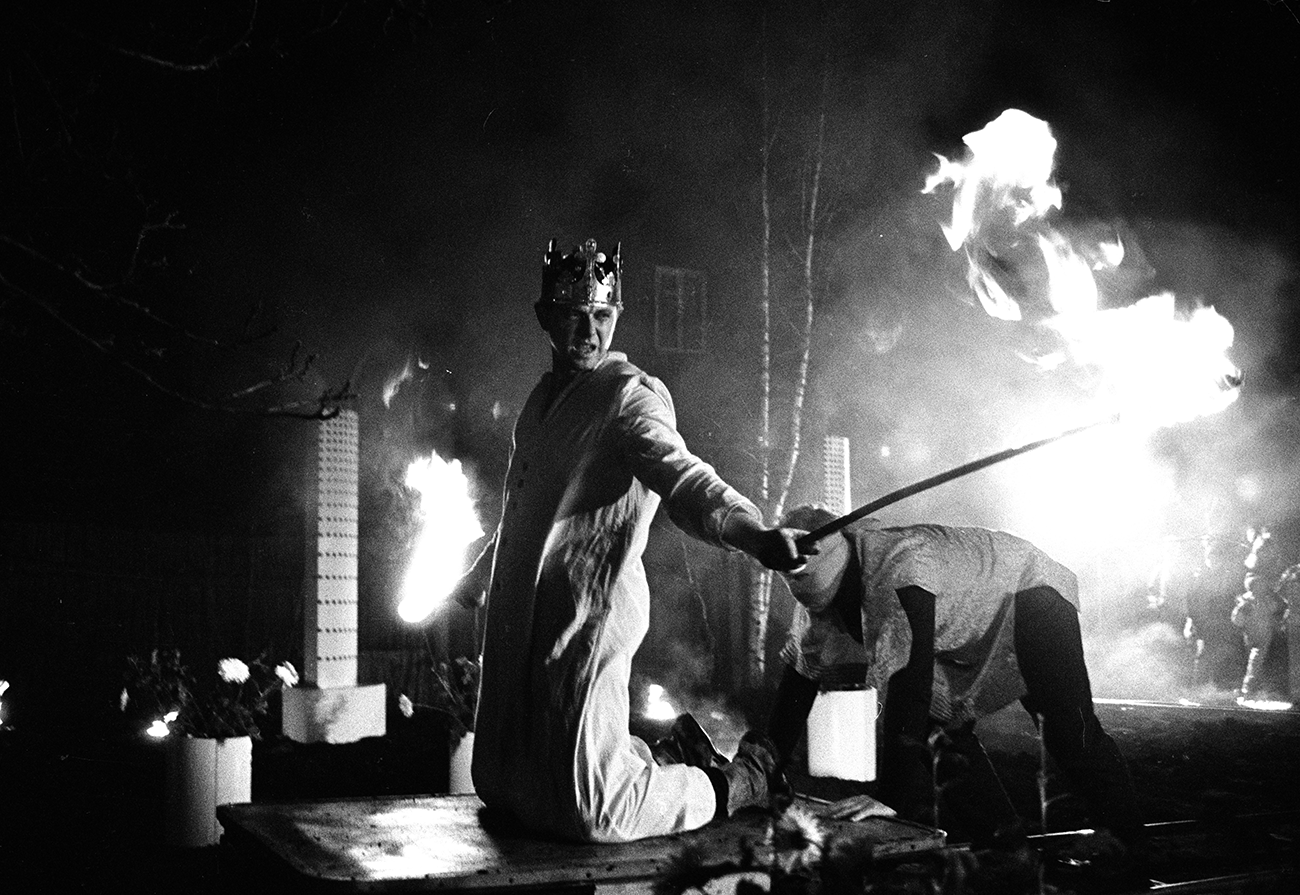
Importantly, the crown was a prop borrowed from a friend who had access to theatrical equipment at that time. This is a crucial moment, since his hopeful and determined actions were carried out under a crown made from simple cardboard, thus operating as a contour in emphasizing conditional victory rather than a solid triumph, a fictional winner rather than a real one. Later, Annus received a metal crown made especially for his artistic purposes, and even though he tried to perform under this “real” crown, he returned shortly to the “fake” one.
Annus was ahead of his time in many ways. His apocalyptic performances might even be interpreted as a prelude to the events of the “Singing Revolution,” a term that binds together the events that led to the restoration of the independence.Footnote 14 His victorious character broke through the wall in his own backyard with an actual explosion, disappearing into thick smoke, thus breaking down the wall (the Iron Curtain) in 1987, exactly two years before the fall of the Berlin Wall. The work was challenging the social climate by using the symbols of power and victory, also for crossing mental and physical borders by trying to reach to the other side of the wall or often to the heights of a tower (e.g., Towers to the Sky [1982])—depicting freedom. His symbolics, especially explosives, did not have official approval, and Annus was arrested and taken away for interrogation at the end of the performance.
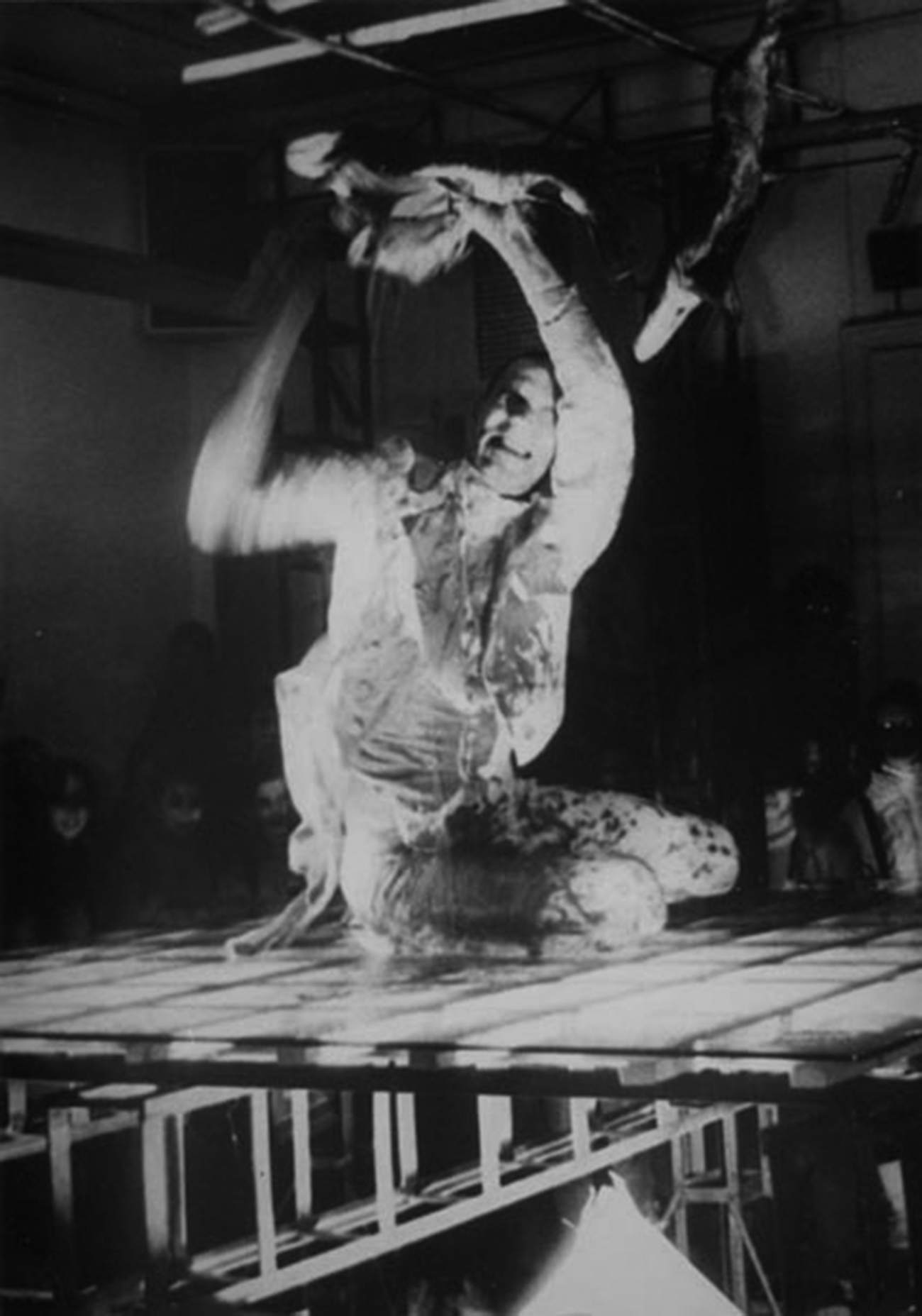
Another artist who used obstacles and boxing props as part of his artistic work is Raoul Kurvitz (b. 1961), a painter and performance artist. He questioned the synonymy between victory and freedom, especially in his performance Ma olin Timbuktus (I was in Timbuktu) part of the 1988 exhibition Ma ei ole kunagi käinud New Yorgis (I have never been to New York). The heading of the performance should be highlighted as a reference to the popular expression “from here to Timbuktu” standing to an unimaginably remote place or to the end of the world.Footnote 15 The exhibition took place on the Tallinn Song Festival grounds, already a crucial symbol in the overall independence process at the end of the 1980s; the Estonian national flag, which had been banned since the 1940s, was first displayed again in publich during the large gatherings and nightly singing demonstrations held on the festival grounds in 1988. In this performance Kurvitz crawled on the ground and tried to reach a glass filled with water. His inability to drink was caused by his own restrictions, wearing a boxing glove that prevented the artist from achieving his goal. In addition, he also wore a Yuppie suit, which is a Western-oriented symbol referring to a successful upper-middle-class or upper-class individual in his 20s or 30s in the United States. Kurvitz is depicting himself as a success-oriented western individual, yet hindered. His action does not convey joyful perspective on future or an upright posture full of strength; instead, the audience is exposed to a loser and loss in general as the figure in a suit, pushed to the ground, crawls toward an unattainable end. The promising glimpse of freedom seems as tricky as taking a sip from a glass without a spill while lying flat, face down. Kurvitz is pointing out that the victory that was about to be celebrated in Estonia was just another foreign victory, with its own specific restrictions and shortcomings. The concept of “victory” had an important role in his work, but Kurvitz never considered himself a winner. For him, “a boxing glove is a symbol like a sword to a knight that is not there to cut off heads, but just as regalia. A boxer is an absurd character who wants to win, thereby becoming as undefined as the aim he has.”Footnote 16 A similar atmosphere is captured in his 1989 performance titled Kui lord Zarathustra oli noor ja viisakas (When lord Zarathustra was young and polite; here the reference is to Nietzschean philosophy).Footnote 17 The action culminates in opening a dam and letting the released water sweep away his half-naked whipped body. The action could be compared with an explosion—a violent burst resulting from internal pressure. The image of regret, salvation, and self-punishment, but also presence of body and direct experience, makes it possible to recognize other examples of the apocalyptic perspectives of the late 1980s in Estonian art. An example from the same time period would be the practice of an interdisciplinary art group Group T.Footnote 18 The core of this group was formed by three artists: Raoul Kurvitz, Peeter Pere (b. 1957), and Urmas Muru (b. 1961); Ene-Liis Semper joined the group later.Footnote 19 “Whipping, cuts made into flesh, performances on scaffolding or on the edge of a balcony, or placing oneself in constant danger or simulating danger” (Soans Reference Soans2000, 312, my translation) were just few of the strategies to express the existential nonsense of their creative practice in the light of current confusion in the society as well as its progress- and profit-based directions (fig. 2).
Performance of Ararat by Raoul Kurvitz at the exhibition A Guide to Intronomadism by Group T at the Tallinn Art Hall in 1991.
Gross figures are nothing new in local art (cf. works by Leonhard Lapin, Jüri Arrak), but it was not until the 1990s that violence became a distinct value on its own, according to Soans (Reference Soans2000). This change became possible because of the crumbling of a familiar worldview: all that was considered common and natural broke down, resulting in generally not knowing what will happen in the future. This, in turn, created fear and discomfort which deepened at the social level into concerns over safety, social status, and the possible decrease or even complete loss of property and income. Depicting violence in art reproduced these fears of the unknown and expressed certain attitudes about the general “mess” present in the society:
While the tracks of the putsch tanks were cutting into asphalt and while people were protecting the TV tower, Kurvitz and the Group T had much more ruinous performances at the Tallinn Art Hall. In the sacred space at the Tallinn Art Hall, a flow of blue blood flung out from a tattered fish, a schizoid stream that made even the shadows of the oil paintings on the wall look pale, a monstrous revolution cocktail, that was mixed together from such ingredients as punk, techno, symbolism, decadence, emo gothic glam brutality, intronomadism, psychedelia, transavantgarde, raving in a yuppie suit, autistic transaggressiveness, quasi-religious conditions—all of which did not fit under the category of art according to the public opinion. Thinking back at the 1990s, when the main problem of the art scene was related with the opening of the SCCA in Estonia and the dramatic split it had affected between the “old” and the “new” artists, then Kurvitz’s vision was exactly on the right place, where it had the most space—in-betweenness in the perspective of Deleuzian approach, where there is the most space for the body without organs, where the “official” bipolar condition is the both sides of the same coin and the coin itself is only a trashy dime (Kiwa Reference Kiwa2013, my translation).
In the context described above, in addition to aggressive actions, what came to the surface in the 1990s in Estonian art were questions about the disciplinary borders, digital technology, (post)materiality, (non)production (Kelomees Reference Kelomees2009), and spiritual and social reality. The question of the relation between the spiritual and the physical found particular expression in tensions between reality and fiction, shamanistic or paganistic rituals, meditations, and mythopoetry. The core of the Western elements that had been self-involved with their own disciplinary borders came to be of secondary importance in their local applications that aimed at using transgression as a strategy in creating a sensory experience for the viewers and change in their perception.
Besides the demolishing practice of Raoul Kurvitz and Group T, it is impossible to overemphasize the ritualistic body of work of the filmmaker, painter, and video and performance artist Jaan Toomik (b. 1961), who often creates a certain mysticism around his inaccessible and sometimes private performances (e.g., AAAAA [1993], Tantsides koju (Dancing home) [1995], and Om mani padme hum [1997]). A crucial part of his creation was influenced by Taoism as well as Zen Buddhism, including, for example, his well-known excrement installation 15.mai–1.juuni 1992 (15 May–1 June 1992) and a performance and video installation Teekond São Paulosse (Way to São Paulo) in 1994 (see fig. 3).
Performance and video installation Way to São Paulo by Jaan Toomik in 1994
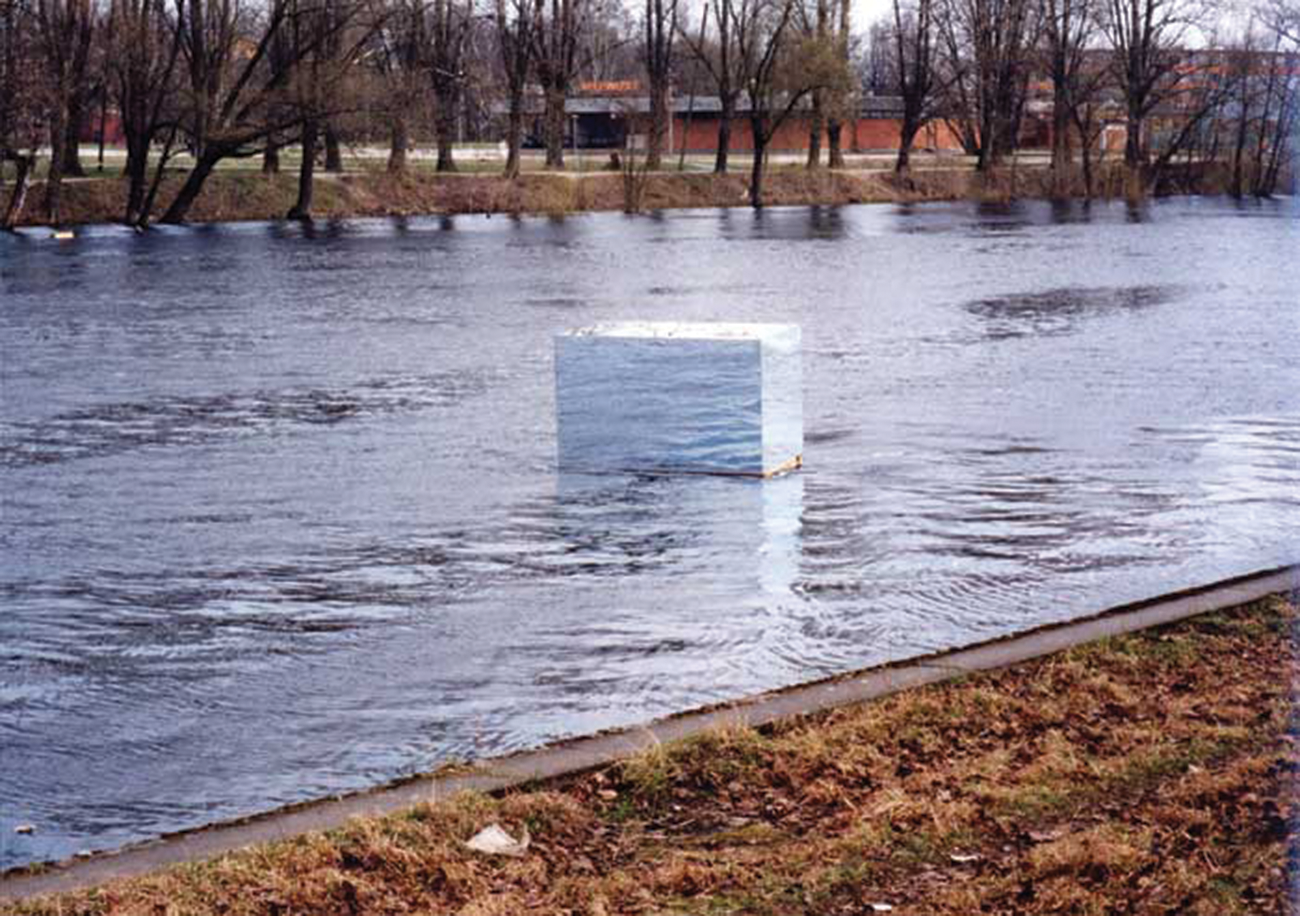
The latter consisted of a cube made completely out of mirrors that had been filmed floating on rivers in three cities (Tartu, Prague, and São Paulo) located on the same geographical line. Helme claims that “Toomik’s video installation renders a poignant sense of loneliness, timeless mythology, and, at the same time, a strong sense of the here and now” (Reference Helme, Rosenfeld and Dodge2002, 166). The work deletes the border between different geographical spaces that are bound together via video and reflections, making it possible for the viewer to be present at all three locations simultaneously, also celebrating the freedom to move across borders, but doing so in eternal solitude.Footnote 20 The video installation was first exhibited at the São Paulo Art Biennial in Brazil in 1994. This work was Toomik’s breakthrough to the international art scene. Buddhist philosophy was also important for the graphic artist Anu Juurak (b. 1957), who used mirrors to test the illusory borders and border crossing between fictional, physical, and spiritual spaces (e.g., the installation Kaleidoskoop (Kaleidoscope) [1997]).
During the first part of the decade, artists questioned the limits and reality of art through philosophical and ritualistic explorations. These strategies helped confront the transitory period and also early capitalist materiality. Artworks dealing with the emptiness and illusion of the “post-material” condition (Kelomees Reference Kelomees2009), along with coping with the collapse of the socialist system, reveal a challenge to the fundamental values inherent in consumer society.Footnote 21 Artists were not explicit or critical about challenging the art market, that is, the means by which to sell, buy, and collect art. First and foremost, the process of dematerialization was a strategy in facing the overall confusion in the society. The gradual process of dematerialization was at the center of attention of a number of annual exhibitions of the SCCA, for example, Aine-aineta (Substance-unsubstance; 1993), curated by Ando Keskküla; Olematu kunst (Unexistent art; 1994), curated by Urmas Muru; and Kunsti piirid (The boundaries of art; 1994), curated by Ants Juske at the gallery of the Estonian Institute of History in Tallinn.Footnote 22
The starting point of the Unexistent Art exhibition was composed by curator Urmas Muru’s interest in the web-like mentality developed from the metaphor of a “rhizome” as introduced by the French philosophers Gilles Deleuze and Félix Guattari (Reference Deleuze, Guattari and Massumi1980). Helme says about the exhibition: “Unlike the vertical and hierarchical way of thinking, rhizome thinking is horizontal like a spreading web of roots in earth. It is more dynamic, heterogeneous and non-hierarchical” (Reference Helme and Saar2001, 49). The rhizome way of thinking was helping to cope with the collapse and decline of the “vertical” or “hierarchical mentality” of the socialist system, for example, propaganda is singular in meaning and purpose, while more abstract expressions allow various interpretations to occur.
The main prize at the Unexistent Art exhibition went to sculptor Jüri Ojaver (b. 1955) for his Olematu kalmistu (Unexistent cemetery). Two other installations that received awards were Mare Tralla’s (b. 1967) Kaks võimalust vaadata iseendasse (Two ways to look at oneself) and Kai Kaljo’s (b. 1959) Elu tekkimine ja kadumine (Genesis and disappearance of life). The latter, a rather delicate installation, was described by art critic Mari Laaniste (2007) as “a site-specific fresco on the courtyard plaster wall of the Tallinn Art Hall, where she coloured the watermarks left by a damaged water pipe that had been runny for years.”Footnote 23 Topics such as freedom, apocalypticism, the circle of life and death, and so on were the focus, in an attempt to define and map the position of the artist and the viewer in the overall euphoria and confusion that dominated the society. The shift in ideological templates and the exhaustion of the euphoria of freedom brought along a notable change in artistic expression in the second half of the 1990s—the emergence of an autoaggressive position in art.
Autoaggressive Period
The second half of the 1990s brings a change: artists who were tired of the euphoric atmosphere closed themselves off from the changing dynamics of the external world. Art critic Hanno Soans (Reference Soans2000) coined the phrase “violent autistic subject” to refer to the introverted individual who is alienated from the pressures of the external world. In addition to Raoul Kurvitz and the creative practice of Group T, it is possible to recognize the self-directed urge for destruction in the body of work of the performance artist Ene-Liis Semper (b. 1969). Instead of direct violence, however, she experimented with the idea of indirect violence, that is, not causing actual pain or aggression, but staging some references to violence. For example, as part of her installation Mutant à la carte (1996), in a video the artist conceptually simulates being a person whose disabilities prevented her from achieving success in life. Similarly, she also created other types of obstacles that would inhibit her from achieving her initial goals so that her failure would be set out in advance. As a side note, artist Joel Fisher (Reference Fisher and de Feuvre[1987] 2010) rejects the idea of an “intentional failure,” stating that a genuine failure cannot be organized or planned; rather, intentional failure would be just a nihilistic form of success. Indeed, the examples discussed in this article, even though visualizing failures—such as not meeting certain expectations, not reaching one’s goals, or not performing well on specific tasks—are not failures as such, according to my interpretation, but ways of achieving success. These artworks have managed to stay visible, receive funding, recognition, awards and possibilities to be exhibited in the local but also international context. Defeat is also preplanned in Semper’s video Fundamental (1997), in which she is drunk and reads aloud from the world’s basic cultural texts. In another video, FF/REW (1998), Semper attempts to commit a sequence of suicides that one could forward and rewind while watching (fig. 4). Kosmala states that Semper redefines experiences, both individual and historical, in terms of a trauma, seeing her FF/REW as a powerful comment on women’s life choices, with more ambiguous existential undertones: “The video’s motif of a suicide repeated as a ritual, comments on feminine anxiety, on self-denial and its violence in the context of an imaginary life. Semper dismantles what had been perceived as the ‘traditional’ conservative feminine image, appropriated once by Communism and now reappropriated by nationalistic political movements, and uses it as a sign of play and as a tool to be applied as a strategy for deconstructing the public collective unconscious” (Reference Kosmala2010, 552–53). By rejecting ways in which a feminine image might be expected to be depicted, she offers an alternative, visualizing the unexpected.
Video FF/REW by Ene-Liis Semper (1998)
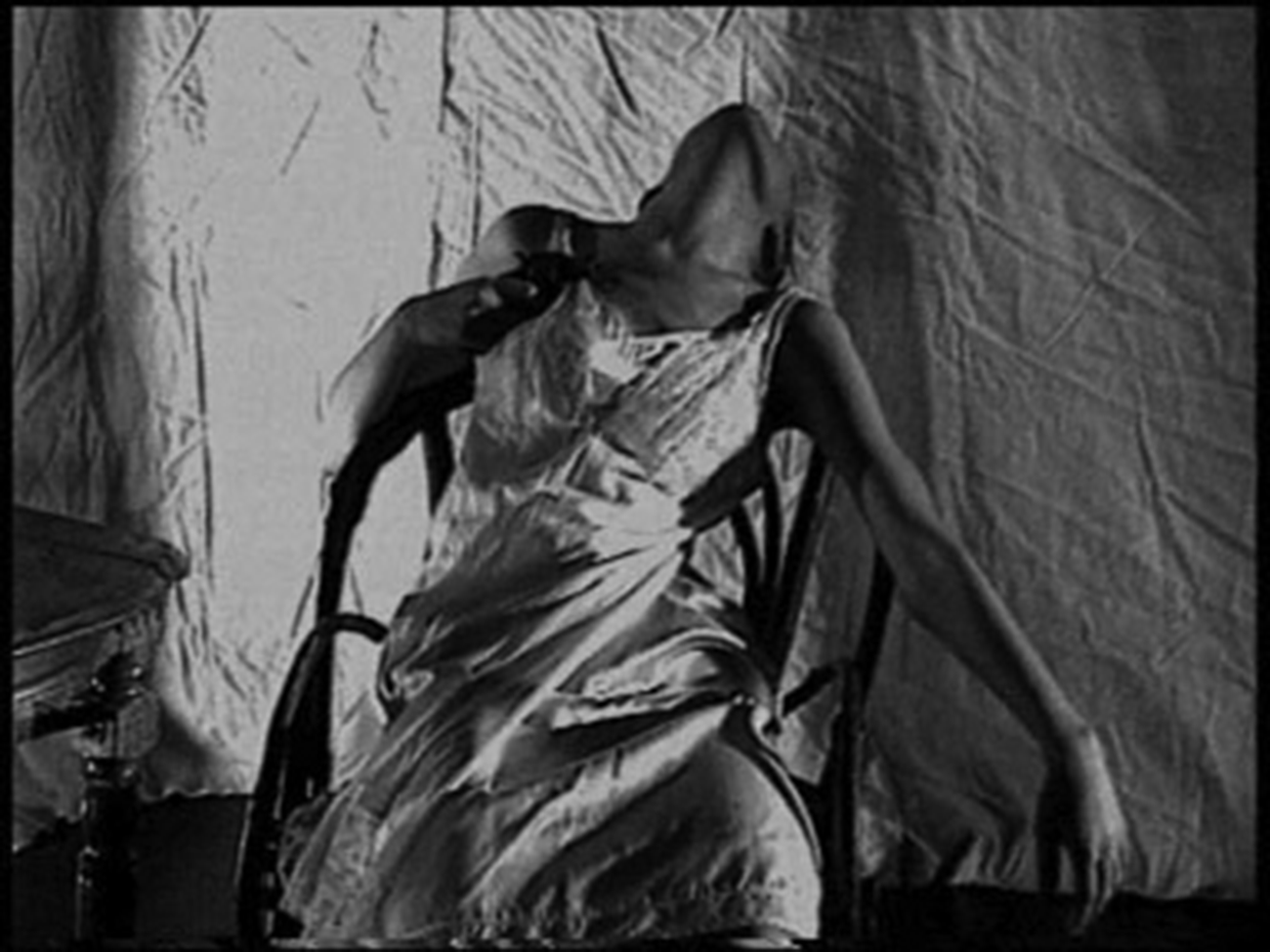
In order to describe this self-directed aggression or the use of punishment in art, Soans (Reference Soans2000) follows Freud’s psychoanalytic approach in claiming that the pleasure of violence reflects the unconscious feeling of guilt and the need for an ego to protect itself from this hidden feeling of guilt. Artists’ various attempts to hang themselves, get drunk or whipped, cut their flesh, block their speech, and depict amputation are just a few artistic strategies for creating a negative self, that is, to constitute their “personal identity” in the role of a loser.
Visualizing failure would have been impossible under socialist conditions. For instance, the Soviet discourse in art did not accept autoaggressive positions in art since it would have stood in opposition to the interests of the Soviet Union. During the time of transition, when it was suddenly possible to express the innermost and instinctive powers without the need for a disguise, the new “principles of exclusion” (to return to Foucault’s terminology) that were coming into being eliminated the limitations inherent in the previous ideology, such as the Soviet censorship system. In other words, during the transition period it was possible for the potentials to be articulated and, indeed, realized. So the autoaggression that describes the second half of the 1990s did not only revel in punishing the physical body, but could also be expressed by depicting self-irony and humility. Thus, with the elimination of the Soviet censorship system, some artists who were part of the winners’ generation established their own censorship through which they limited and prohibited their own artistic expression and, in this way, turned their “freedom” to express into a parody.
Artists’ incapacity to communicate properly, also using silence or paralyzed speech by means of inhibited verbalization, was the theme of many artworks during the whole decade in question, especially in the first half of the 1990s (Laansoo Reference Laansoo and Helme2001). To return to an earlier example, we can take a look at the beginning of Jaan Toomik’s artistic career—back into his student days, to be precise. In 1989, Toomik stood on the Charles Bridge in Prague wearing a sign on his chest declaring, in Estonian, “minu munn on puhas” (My dick is clean) (fig. 5).Footnote 24
Performance of My Dick Is Clean by Jaan Toomik in 1989

His mute protest was incomprehensible in Prague, since the local people passing him on the bridge did not read Estonian. Art critic Karin Laansoo notes: “It was a silent protest against being called Russian, a self-justification or an attempt to differentiate oneself from others” (Reference Laansoo and Helme2001, 315), a provocation that would have been impossible in Estonia in 1989 due to the local sociopolitical situation, where free speech and freedom to express were yet still fragile. Laansoo adds: “The impossibility of expressing a personal message verbally was here emphasized by a linguistically mute gesture” (315). The phrase itself is a reference to the artist’s withdrawn position in the society, meaning that he had not been involved in fertilizing—by using the word dick in his statement, the situation where one’s identity and expression were subject to such limitations.
Other works of art from the second half of the decade that have also expressed the incapacity to express oneself include, for example, Marko Laimre’s (b. 1968) Sugar Free (1996). Freedom of speech was mocked by actions on air by Raivo Kelomees (b. 1960) and Sven Kivisildnik (b. 1964) in their Kodumaa uudised (News of the homeland; 1996) and by Mari Sobolev’s (b. 1968) Sõnavabadus (Freedom of speech; 1999).
One of the most iconic works from the 1990s is Kai Kaljo’s (b. 1959) autobiographical video Luuser (Loser; 1997), which offered a counteraction against the heroic rhetoric that had been dominant in Soviet discourse in art during the Soviet era. In retrospect, this work brings forth the “multiminority” by belonging to more than one minority group simultaneously, which had been left aside from the so-called race for success and the generally exuberant euphoria of freedom.Footnote 25 Kaljo highlights the characteristics of an individual not meeting the social requirements, namely, a female artist in her late thirties, a low-wage lecturer at the Estonian Art Academy as well as a single (not committed) “loser” who still lives with her mother, thus emphasizing the outcast who did not follow the success stories of the winners’ generation. Kaljo’s verbal confession of the facts of her private life, such as her personal measurements, economic status, occupation, relationship status (or its absence), and living conditions, are followed by laughter, just as in American television sitcoms when someone’s failures are marked by laughter from the audience. She is also laughing at herself by saying, “I am very happy,” along with the laughter and irony of the invisible audience, elements familiar from the Western art world. This is almost as a reminder of the excluded speech of a child or a mad person (Foucault [1971] Reference Foucault2005) that does not find recognition on the wider social level, earning only jibes. In Foucault’s theory, this is the expelled yet feared discourse that might contain certain hidden truth(s). Kaljo’s Luuser generalizes a familiar situation for many people in the 1990s—people who could identify themselves easily with the “loser” in the video and had no one else to blame for their poor position. This was possible due to being part of the society that was favoring individualism, that is, where everyone had to take care of their own personal well-being.
At the end of the decade a groundbreaking change in the winner/loser dichotomy was also marked by Marko Mäetamm’s (b. 1965) creative work. His colorful paintings are transformed into depression by the end of the 1990s, especially when he depicts his desire to destroy his family in his art. And this has been his main field of interest up until today.
The examples discussed in this article were not fully in line with the principles that began to dictate what would be considered natural or which direction one should follow in the society. These art works were not simply automatic realizations of perceptions or expectations, but single possibilities for raising alternative discourses in the society.
Transition
Looking at the events in Estonia in the 1990s, it is possible to distinguish a clash between two regimes in which one gave way to another. Every transition is always the process of discursive disarticulation and discursive rearticulation, where a different order is introduced (Mouffe Reference Mouffe and Seijdel2009). Restructuring the organizational plane of meanings also change the meanings themselves, as their connections are ruptured and sort of rendered “out of place.” If this interrelated web of meanings becomes restructured, then the individual meanings are also unsettled—detached from their previous system and not yet switched over or reattached into another one. It is exactly the space of fissure that starts to define every transition in general, creating openings or gaps for certain ambiguities. Thus, art works discussed above that followed the accepted forms of expression were torn. It was already noted by the Prague School that two or more competing norms may coexist within the same specific cases and share the same values (Mukařovský Reference Mukařovský1966); at the same time, the same cases could be also meeting points for different set of values. With the repositioning of signs in a system of signs, a sign is no longer fixed with one specific value—a single positional meaning, but take on an unsettled identity. The shift in the position of a single sign causes the whole web of meanings to reposition itself.
During this transition, on the basis of the examples discussed in this article, it was possible to distinguish at least two types of directions in these artistic expressions: (1) philosophical and ritualistic explorations in the beginning of the 1990s, and (2) autoaggressive depictions in the second half of the 1990s. Both categories are, of course, interrelated and overlapping, for instance, as seen from self-censorship which developed throughout the whole decade. At first, failure was defined by the need to restore and establish the familiarity of the new system of values. The apocalyptic atmosphere in Kurvitz’s and Group T’s body of work was celebrating certain nonsense and meaninglessness in the society. Depicting lack of meaning was referring to the lack of stable values. Kurvitz’s vision, as already noted above by artist and critic Kiwa (Reference Kiwa2013), was exactly on its right place—in Deleuzian “in-betweenness.” The same could be applied to the happening on the Charles Bridge in Prague by Toomik that, according to Laansoo (Reference Laansoo and Helme2001), originated “in the meaning of devaluated words” (315). The impossibility of expression appeared also in autoaggressive acts such as Semper’s Fundamental. Artists’ autoaggressive positions in art aimed at breaking the positional meanings within the new system of sign relations and social order. Thus, the simultaneous directions in the need to restore, but also break the signifying relations within the network of meanings, describe the rupture within the clash (in) between the two regimes and their power structures. Disarticulated totalitarianism was followed by a new social order, rearticulated by its opposing principles. Universal freedom, which became the main tool in shaping the truth and values of liberal democracy, excluded realities which did not meet its perspectives. In art, the conditions of this transitional period made it possible to express oneself according to the outlook of the SCCA, but not only, these conditions made it possible to visualize the otherwise nonarticulated alternatives in the society, for example, fears, confusion, sense of loneliness, minorities and their lack of freedom to express. Artists, depicting freedom under a “fake” crown, their bodies smashed to the ground or whipped away, wrapped in absolute solitude, using ironic or devaluated words, applied philosophy, autoaggression and parody to show how this newly won freedom which indeed enabled them to express themselves, had its downfall. Not everyone, especially minorities, could express or establish themselves during the period of transition in the 1990s. In art works discussed above, however, it is possible to some degree, recognize the voice of these minorities. For instance, Semper’s feminine anxiety captures a theme which had been long overruled by the patriarchal system of authority.
The term winners’ generation helped to signify and collect certain tendencies under a concrete phrase in academic discourse, but its public application extended above its original reference to economically successful youth. In art, it enabled youth to become successful in relation to the Western art world, some using its elements to address the otherwise hidden problematics and wider social concerns—expressions made possible by the fissure of transition.
Conclusion
The shifting economic situation in the 1990s in Estonia influenced the articulation of a success-oriented discourse, a temporary closeness of a series of events that were gathered under the linguistic signifier “winners’ generation.” On the artistic level, the ideological transition favored young artists who were pragmatic risk takers in their experiments with new technology and media. But by doing so, they pushed aside more traditional skills and artistic practices from the post-Soviet art scene in Estonia. The triumph of the generation reveled in its relation to the Western art world that resulted in taking into account, but also using new strategies, techniques, and the elements from mass and pop culture for their own purposes. At the same time, the process of linguistic labeling, that is, the act of naming one generation after its favored position in the economic system, created, for some of its members and in some specific works of art, a gap that allowed to use the accepted language to visualize that which was left aside from the main discursive formulations, thus, introducing a more metaphorical dimension to its otherwise literal application in academic discourse. The synonymy between victory and freedom was questioned by using visual symbols of loss and defeat.
In this article I have focused on a narrow selection of artworks that flourished shortly before and after the breakup of the Soviet Union in 1991. The analysis has highlighted artworks by Siim-Tanel Annus, Raoul Kurvitz, Ene-Liis Semper, Jaan Toomik, Kai Kaljo, and the art group Group T. It is crucial to emphasize, once again, that my analysis does not explain any universal tendencies specific to the decade in question and does not attempt to generalize the concept of “winners’ generation” beyond these artists and works. Moreover, as discussed above, the process of connecting the whole generation with the name of “victory” gathers together a number of different events, thus narrowing their intrinsic variations and transforming these contrasts into one homogeneous chain under one linguistic sign. This process, in the end, enabled the plurality of the system to be reduced to a single character, which could then be understood as the total embodiment of the whole discourse. Taking a closer look at the variations referred to under the unequivocal sign of the “winners’ generation” would highlight the tension between the two ideological planes: as the socialist ideology was replaced by early capitalism, the rearticulation of contingent practices was constructed by taking into account severe oppositions. Thus, a new discursive order established itself on the basis of a binary logic, in contrast with the limitations of the dominant socialist system. It is, therefore, possible to distinguish the following updates in the society at large: (1) the freedom of speech, thought and action, (2) Westernization, and (3) free-market values inherent in materialist consumer society, and (4) the principle of victory. In the artistic context these complex conditions paved the way for the artistic plurality. Besides the possibility of going along with the western influences, the real “victory” of the winners’ generation, as we have seen, is apparent in the freedom to express—most importantly—without the pressure of previous censorship. Importantly, it also allowed the winners’ generation to express aspects of life which were not accepted by the victorious discourse. It is crucial to note that the “victory” which stands for the freedom and ability to express is also aimed at bringing forth matters not in line with this main discourse, and thus not supporting its maintenance but rather its eventual disarticulation. Since these ideological freedoms functioned as external principles of exclusion, they shut down realities that are in conflict with the principles of success. As a result, artistic meanings depicting loss, failure, and the figure of a loser became part of counterhegemonic practices, attempting to install variations to the otherwise uniform discourse. On the one hand, freedom stands for discursive pluralism, the freedom of speech and expression as a basic liberal freedom for each member of the society, and, on the other hand, freedom stands for the main principle of exclusion in the society, being the tool through which the truths and values are dictated in the society, favoring one discursive pluralism over other. Everyone had the possibility to express, but only certain people had the possibility to be heard or become visible.
The role of visualizing failure under the name of victory brings out certain variations within the victorious discourse. Thus, the issues which were challenging the main discursive order were pointing at breaking or crossing mental and physical borders (e.g., Siim-Tanel Annus), exploring the self and its conditions in the course of the ideological transition (e.g., Jaan Toomik), visualizing shortcomings and questioning the conditions and possibilities of this new victory (e.g., Raoul Kurvitz) under which name some specific artworks gained their voice as well as right to exist. Thus, some artists who belonged to the winners’ generation managed to switch their challenging artworks into the main discourse by using the same language which tried to expel these same alternatives. These artworks, on the other hand, later in the 1990s become iconic examples of Estonian art and, thus, reference points for exploring this complex, yet intriguing decade.



