




1. INTRODUCTION
This article describes an experimental use of a new tablet-based interface that allows students at Key Stages 1 and 2 with little knowledge of musical notation to engage in a group composition exercise. While its school setting may initially appear to limit the significance of the project, we argue that the affordances of the technology has a transformational effect on social interactions within the creative process. In this, it sits within a tradition of pedagogic innovation that is closely related to an implicit critique of hierarchies within society as a whole. Musician-pedagogues such as Zoltán Kodály, Pauline Oliveros, R. Murray Schafer and John Paynter all implicitly or explicitly located their music pedagogic developments within an ethical framework relating to the broader functioning of society (see, e.g., Oliveros Reference Oliveros2011). In this tradition, for example, ‘listening’ has an ethical as well as a functional aspect (Voegelin Reference Voegelin2018). Thus, while our discussion focuses on the educational setting, we believe the significance of the research applies in large part to settings beyond the educational.
In schools as elsewhere, group musical activity is valued for promoting inclusivity, creative and social interaction across community institutions, from early years education to geriatric care (Habron, Butterly, Gordon and Roebuck Reference Habron, Butterly, Gordon and Roebuck2013). Though the ideas and approaches discussed in this article can be applied to various community music contexts, our examples will focus on group musical activity within a context of educational and developmental psychology. The Piagetian idea of play as learning process is expanded upon in the constructionist theory of Papert, which states that learning ‘happens especially felicitously in a context where the learner is consciously engaged in constructing a public entity’ (Papert and Harel Reference Papert and Harel1991: 1). The emphasis placed on making within a social environment, in the context of musical activity, raises a question: how can we place the tools of making music in the hands of those who have not had the opportunity to go through formal training?
2. THE PROBLEM OF COMPOSITION
Vygotsky proposed that learning and development is an inherently social process, shaped by the ‘cultural tools’ of thought and language (see Vygotsky Reference Vygotsky1978). This embodies the problem for music-making or compositional activities in group contexts, in the Western classical tradition at least, since it conventionally involves a highly codified system of staff notation and music theory. Within this paradigm, composition is traditionally regarded as an individualistic pursuit, emerging from high levels of training in musical or technological ability. The ephemeral nature of music as an artistic medium, and the consequent linguistic framework used to define and describe it, sets the Western classical tradition of music apart from the ‘plastic arts’, and even other intangible and temporal art forms such as theatre, in which devising is a group-oriented, accessible form of socially oriented making that gives a great deal of agency to participants.
Within the electroacoustic musical tradition, a comparable linguistic framework exists for sound as abstract medium separated from its indexical meaning. Compositional thinking may be rooted in the definitions of Schafer (Reference Schafer1977), that is, the keynotes and signals of a soundscape. Though this may be less rigidly codified than the linguistic framework of the classical tradition, electroacoustic composition differs in its hierarchy of technologies. Compositions are often written for machine playback, an even more individualistic process than that which involves a conductor and ensemble. Furthermore, because composition often involves the arrangement and manipulation of recorded sound, whether on magnetic tape or computer, electroacoustic music has more in common with the ‘plastic arts’ than does the classical tradition. For this kind of composition, the making process relies on the technical ability of the composer rather than their capacity to communicate musical ideas to a performer.
The teaching of graduate music composition within the Western classical tradition imparts a framework for developing and understanding sonic artefacts while also directing students to find their own individual voice or identity. Lerdahl (Reference Lerdahl2012: 291) describes the two aspects of compositional instruction as ‘teaching craftsmanship and guiding a student toward his or her own path’, adding that ‘[the] first can be taught, but the second is a mysterious undertaking’. Ran (Reference Ran2012: 307) states that it is the acquisition of technical tools that ‘allows one to imagine more’. These pedagogies of composition are distinctly individualist in both process and goal, where the outcome of compositional voice or identity is derived from, or at least preceded by, mastery of the linguistic craft.
3. COMPOSITION AND PEDAGOGY
Compositional activities with younger children tend to adhere to a somewhat different pedagogy, more suited to the dynamics of a large mixed-ability group, some of whom may have additional musical training or knowledge. In the music classroom, learning processes and goals may be more grounded in inclusivity, where the curriculum is ‘flexible and accessible’, ‘individual adaptations are only as “specialized” as they need to be’ and social interactions are ‘frequent, positive and reciprocal’ (Jellison Reference Jellison2012: 67). This idea of music composition as inclusive developmental activity is central to the original 1992 national curriculum for Music in the UK. John Paynter led this educational shift by making the case for a pedagogy of composition, where ‘making music is more important than musical information’ (Paynter Reference Paynter1982: xiiii) and learners can ‘use the skills they have acquired as they acquire them’ (ibid.: 123). From this perspective, facilitating music-making activity is more important than maintaining a traditional linguistic framework. That is to say, we should fit the information to the musical activity, rather than viceversa.
The success of this approach depends upon the availability of resources and examples that teaching practitioners can adapt and apply. The 1992 music curriculum involved 77 pages of practical guidance on how music-making activities can function in classroom contexts. The following example demonstrates this focus on process:
Year 9 pupils are set the task of creating a piece called Hiroshima in which the musical depiction of a nuclear explosion is set between a threatening prelude and a reflective epilogue: a given structure. Pupils worked in groups for half an hour and then reassembled to perform their compositions, which were video-recorded. In one group, seven pupils play timpanum, side-drum, tom-tom, cymbal, wind chimes, trombone and electronic keyboard. The piece opened with very quiet chord clusters on the keyboard alongside barely audible wind chimes. Percussion instruments gradually imposed an ominously repetitive rhythm. The trombone added insistent long notes on a single pitch. A fierce climax was reached. There was a long silence. The epilogue echoed the prelude with the rhythm fading away into nothing. The class analysed the outcome with the teacher prior to listening to Penderecki’s Threnody. (Department for Education and Skills 1992: 47)
This group composition activity establishes the music-making task from the very start of the lesson. Students are working within a broad and relatively open framework – the musical information provided is a kind of storyboard. The central components of musical activity, composing, performing, listening and appraising (Swanwick Reference Swanwick1979) are all present, though crucially, the example begins with the practical exercises and concludes with the listening activity. Notice that the activities are a prelude to listening to Penderecki’s Threnody – a more traditional lesson structure might have the students listen to the piece and then create something similar, resulting in a preoccupation with the lower order recall and apply skills of Bloom’s taxonomy. Instead, we have an example of ‘flipped Bloom’s’ (Wright Reference Wright2012) facilitating a group composition activity with limited imposition upon the creative process, from which the students can then build ideas and understanding for themselves.
Revisions to the music curriculum have tended towards a stripping away of this practical process-oriented content, focusing instead on concise output and assessment criteria. For example, the 2013 curriculum (Department for Education 2013) is only four pages in length and requires Key Stage 2 students to learn staff notation, something that has never previously been included at this level. This apparent revision of priorities reinforces the barrier of a linguistic framework in front of music-making activity:
In my opinion, we only err when we place the cart of music theory before the horse of musical experience. (Borgo Reference Borgo2007: 78)
Within the constructivist paradigm, knowledge is not imparted but constructed by the learner through exploratory activity (Piaget Reference Piaget1962). Cunningham and Duffy summarise these perspectives as ‘the general view that (1) learning is an active process of constructing rather than acquiring knowledge, and (2) instruction is a process of supporting that construction rather than communicating knowledge’ (Cunningham and Duffy Reference Cunningham and Duffy1996: 171). Burnard (Reference Burnard2000) offers a pedagogical definition of composition as the means by which children attribute meaning to their improvisations, and highlights the importance of looking closely at ‘not only what children actually do, but also what they have to say’ (Burnard Reference Burnard1999: 61). Espeland (Reference Espeland2007) demonstrates that this dialogue shapes group compositional process, using discourse analysis to highlight transactive statements (Macdonald and Miell Reference Macdonald and Miell2000). This demonstrates how the linguistic ‘tools’ of music composition emerge from the activity itself, while also highlighting the crucial influence of the social environment in the dynamics of knowledge acquisition (see Vygotsky Reference Vygotsky1978). In pedagogical terms, this poses a challenge to the traditional idea of composition as individualistic activity:
[Musical] creativity is rarely, if ever, a matter of the lone composer, or self, composing in isolation. Rather, it is a matter of composers working and playing with and with respect to others, intentionally or unintentionally … Creativity is not the product of single individuals, but of social systems making judgements about individuals’ products. (Burnard Reference Burnard2012: 24)
From this perspective, musical creativity emerges from social contexts and interactions. Indeed, outside the classical tradition, it is typically the case that music-making is an inherently social activity, driven by an agreed communicative framework between participants – the interactions or cues a rock band may use when jamming, for example. Small defines music as ‘not a thing at all, but an activity’ (Small Reference Small1998: 2), coining the term ‘musicking’ to describe a communal, participatory process in which we may be engaged as makers, consumers, or any role in between. Odendaal, Kankkunen, Nikkanen and Vakeva (2014) argue that this perspective offers a dynamic for participation that reinforces the value of music in education. The challenge for educators is to provide an environment for learners to engage in and reflect upon this kind of interaction.
4. TECHNOLOGICAL CONTEXT
Musical learning environments may be augmented through digital technologies (see Finney and Burnard Reference Finney and Burnard2010). This can add value by allowing us to choose how a concept should be represented and interacted with, acting as a scaffold for engaging with ideas and developing linguistic tools. Papert describes these components as ‘objects-to-think-with, objects in which there is an intersection of cultural presence, embedded knowledge, and the possibility for personal identification’ (Papert Reference Papert1980: 11). In a digital environment, the cultural tools of thought and language can be objects at the hand of the learner, though a computer mouse or touchscreen interface. This idea is deployed in a musical context by Bamberger, whose concept of tune-blocks provides the interface for the music software Impromptu:
highly aggregated, structurally meaningful entities such as motives, figures, and phrases … are the ‘units of perception’ – the elements that novices have ready access to, their focus of attention. We do not listen to ‘notes’ any more than we listen to letters printed on the page. (Bamberger Reference Bamberger1996: 42)
The pedagogical impact of this idea is twofold. First, aggregated musical structures, or phrases, are more readily recognised and associated with some other meaning than individual notes, and are therefore better suited to both individual and group composing activity for novice learners. Second, the embodiment of tune-blocks in a digital interface provides an exploratory and improvisatory mode of engagement with music composition that benefits the novice learner. It facilitates the kind of ‘hands-on’ interaction that makes the visual and plastic arts actions of sketching, splashing and sculpting so suited to pedagogical creativity.
Portable touchscreen devices greatly expand these possibilities, offering a more transparent (Gadd and Fels Reference Gadd and Fels2002) mode of interaction with onscreen objects-to-think-with. The portable nature of these devices also further supports collaborative activity, allowing learners to move around a space and more easily swap and share ideas (Hart Reference Hart2018). In this project, we sought to develop a touchscreen app that could facilitate social and inclusive composition activity in a classroom through the creation and arrangement of sonic objects, which could be ‘drawn’, stored and edited in a variety of ways.
5. PAYNTER
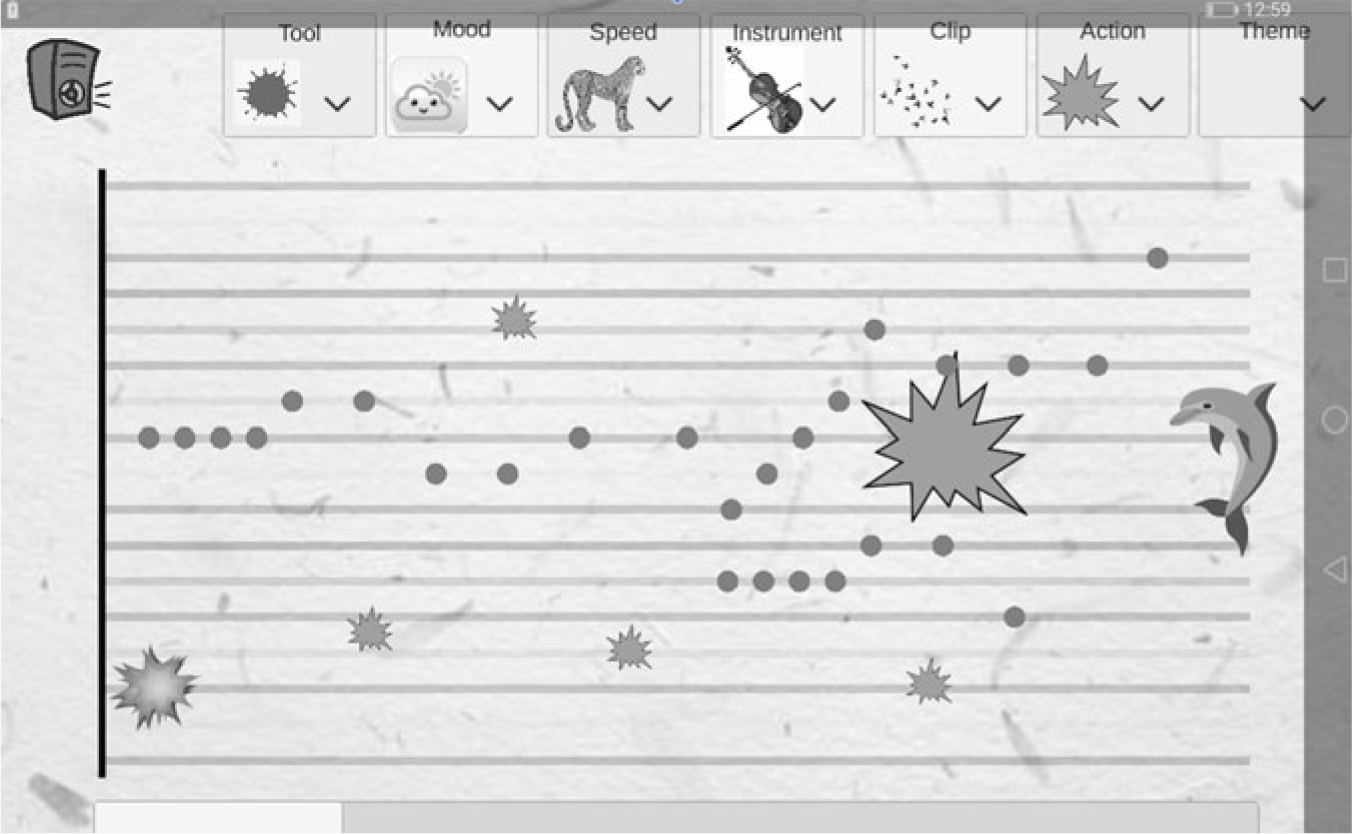
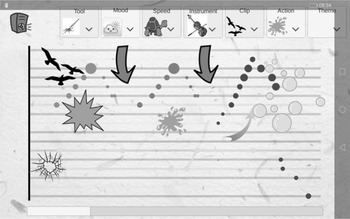
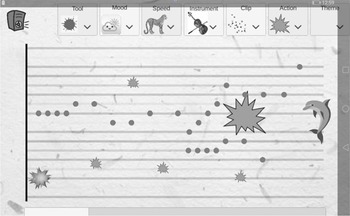
Paynter (named after the composer and educationalist) is a tablet-based app that allows the user to compose a piece by drawing shapes and arranging icons on a canvas-type background (Figure 1). It was developed by Adam Hart for the purpose of the study described in this article, as an exploration of pedagogical approaches to music composition. It was produced in Unity using royalty-free sounds and images.
The interface of the Paynter app.
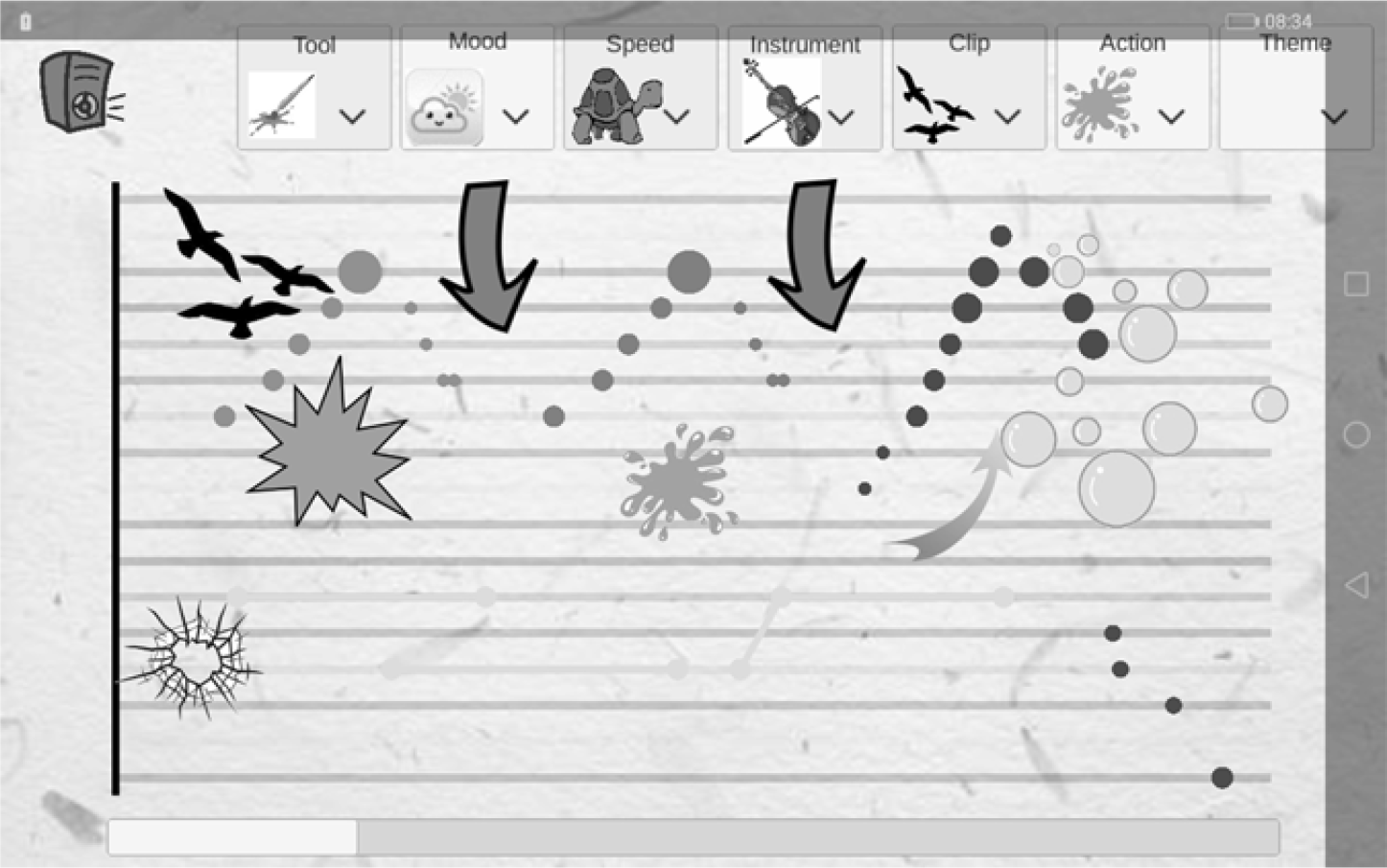
The app is used by arranging various sounding objects on the canvas, triggering a sound whenever a new object is instantiated. There are then various options for playback of the onscreen objects, where a playhead moves across the screen triggering the sounding objects. Playback can be a single read-through or looping playback of the current onscreen objects, or may continue scrolling to the right to play further objects. There are also simple menu items for changing the speed of playback, represented by various animals from tortoise to cheetah, and the mood or tonality of the music, which effectively toggles notes values between major and minor keys.
The sounding objects of Paynter consist of audio clips as well as MIDI-type notes. The user can arrange the latter by choosing a paintbrush tool to ‘draw’ phrases of notes, represented as coloured shapes and assigned to an instrument, which the user can select from a sound library of samples. This is a mode of novice-friendly interaction similar to Hyperscore (Farbood, Pasztor and Jennings Reference Farbood, Pasztor and Jennings2004). The app also contains a bank of musical fragments and phrases that can be arranged on the canvas, drawing on Bamberger’s notion of tune-blocks. In addition to this, there is a library of audio clips, each with a corresponding description and symbol, which can be arranged on the canvas. Some of these objects are longer loops that cycle whenever the symbol is onscreen. Others are one-shot sounds that trigger when reached by the playhead. As such, these objects correspond to Schaeffer’s definitions of keynote and signal sounds – some are looping background ambiences, such as weather, birdsong and traffic, while others are momentary and more indicative of an action or event. The position of these objects on the vertical axis of the canvas also determines their speed and pitch – an object will play back at a higher speed and pitch if placed further up the canvas, and a lower speed and pitch if placed further down.
There are various other touchscreen actions that aid composition. The user can drag to select a group of objects and then reposition this group on the canvas, or copy it to produce a sequence. Pinching with two fingers will alter the size of any selected objects, which relates to their amplitude. Larger objects play back at a greater volume. These functions allow certain compositional procedures such as motivic repetition, transposition and imitation to be used; it also allows sounds recorded from the environment or from an acoustic ensemble to be manipulated in ways familiar from electroacoustic composition.
Our initial expectations were that the MIDI-type note operations would form the main focus of the students’ compositional activities and that the audio clips would be there to facilitate storytelling as a form of sound effect. However, during the course of the study, we observed that the exploration and layering of these sound files were the principal source of engagement and creative interaction for the groups of students, resulting in a music-making approach more akin to electroacoustic composition than traditional note-based interaction. The reflexive nature of this study, and the development stage of the app, allowed us to respond to the activities of the students by implementing the functions that enabled the students to re-pitch and otherwise transform these sound objects.
6. THE STUDY
The research team visited a primary school in Salford on five visits from March to May 2019, with the aim of using Paynter to get the students to collaboratively create a composition for an ensemble of musicians from the BBC Philharmonic Orchestra. The school is a mixed-ability faith school drawing its students from a highly culturally diverse community with a relatively high level of social and economic deprivation. The school has ambitions to attaining ArtsMark status and saw our activity as assisting in the realisation of that ambition. Relatively few of the students had had any formal musical education, although in each of the two classes we worked with there were one or two students who played and received tuition on an instrument. The teaching staff, while clearly accomplished in general terms, lacked music-specific skills.
On the research team’s first visit we were accompanied by four professional musicians provided by the BBC Philharmonic Orchestra: Gary Farr (trumpet), Gemma Bass (violin), Kathryn Williams (flute) and Elinor Gow (cello). All the musicians were accomplished improvisers and animateurs in their own right (Gary and Gemma make up part of the free improv and contemporary scored collective the Vonnegut Collective, and Kathryn Williams is a leading member of House of Bedlam), and we were able to make use of their expertise in sourcing sounds from the ensemble that would later be used in the tablet app. All the sessions were audio-recorded using two Zoom H2n digital recorders, so in theory anything that occurred in the sessions could be used as material for the subsequent collaboratively composed composition.
We opted to work with two year groups: Year 3 and Year 5. This was because we wanted to observe differences between Key Stages 1 and 2 in how they worked collaboratively, utilised the app and composed a piece of music. The sessions were led by the researchers, drawing from Brown’s (Reference Brown2007) method of software development as music education research in recording observations and identifying opportunities to develop the app. This was done by taking notes of the sessions, making audio recordings of the activities and looking for moments of creativity, where the contributions of students formed compositional decisions agreed by the class. Retrospectively, it is a limitation of the study that we did not gather feedback or interview data from the students, as this would have provided further reflections on the compositional activity itself. However, our intention when planning the study was to observe the dynamics of how the app functioned within the wider learning process, so we did not account for interviews or other reflective feedback when obtaining approval from the university ethics panel. This is something we will amend when building upon this research.
In the first session, as well as demonstrating their instruments, the orchestral musicians co-developed an improvised piece with the students, prompted by a list of real-world objects suggested by the research team. In response to ideas elicited from the student group, the ensemble created a number of sounds using extended techniques on their instruments, and it was these sounds that would become the basis of some of the compositional material that could be manipulated using the Paynter app. For example, one member of the ensemble, cellist Elinor Gow, used a harmonic glissando technique to make a seagull sound, which was used extensively in a highly representative way in one of the pieces. This dialogic process was particularly productive, as the ensemble musicians were experienced in demonstrating their instruments to school children and approached the activity with exceptional showmanship. Furthermore, it was clear that hearing these instruments in a live setting was a new experience for many of these students, evident from the reactions audible in many of the recordings, which ranged from awe to laughter.
Following the first session, this library of sound files was sent to the class teachers for both Year 3 and Year 5, who shared them with the students and asked them to devise a story, using the audio clips to show a sequence of events. The Year 3 class opted to tell the story of the Titanic (this was a scheme of work being undertaken at the time), while the Year 5 class devised an original story about a cat trying to catch a bird.
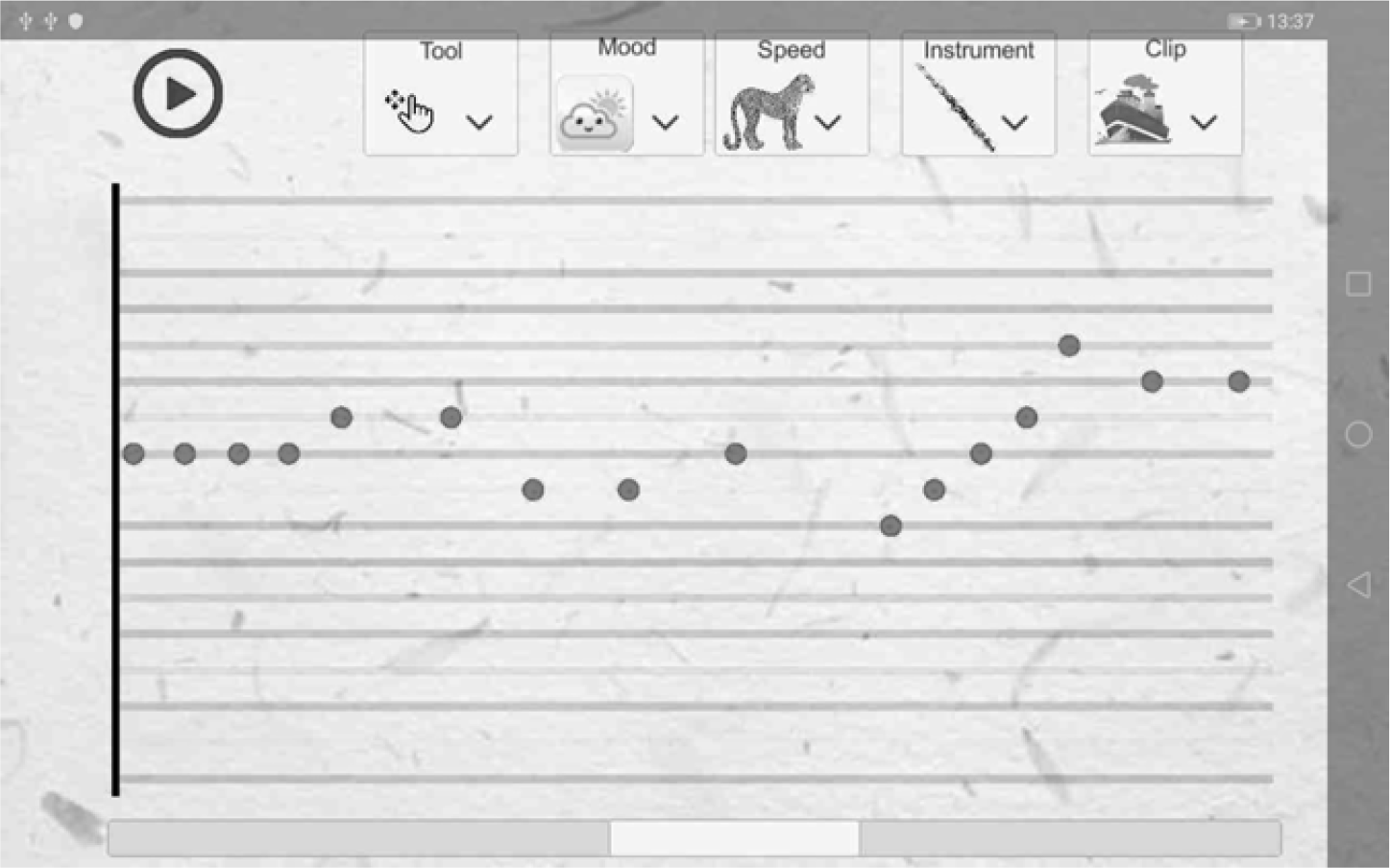
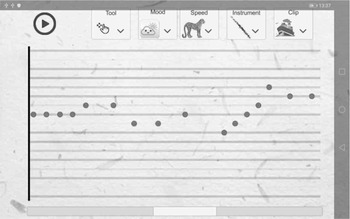
In three further visits, the research team worked on the narratives with the two classes. We asked the students to divide up the story into scenes that could be relayed using sounds and musical ideas using the Paynter app. Additional sounds were sourced by recording the class making narrative sounds such as bubble noises (collectively popping their cheeks) and basic Foley-type effects made with classroom items. One noise in particular was popular in the Titanic scene – one student was able to make very effective dolphin chattering noises with his own voice and was given a starring role in the final performance. In addition, they collectively composed through singing some melodic material that was later used in the pieces (Figures 2 and 3). This was a collaborative activity that we did with both classes, asking students to suggest the next note of a sequence by singing, discussing whether this is ‘up’ or ‘down’ in pitch, and then finding it on the app.
The collectively composed Titanic theme in Paynter (Year 3).
The Titanic theme in traditional notation (Year 3).
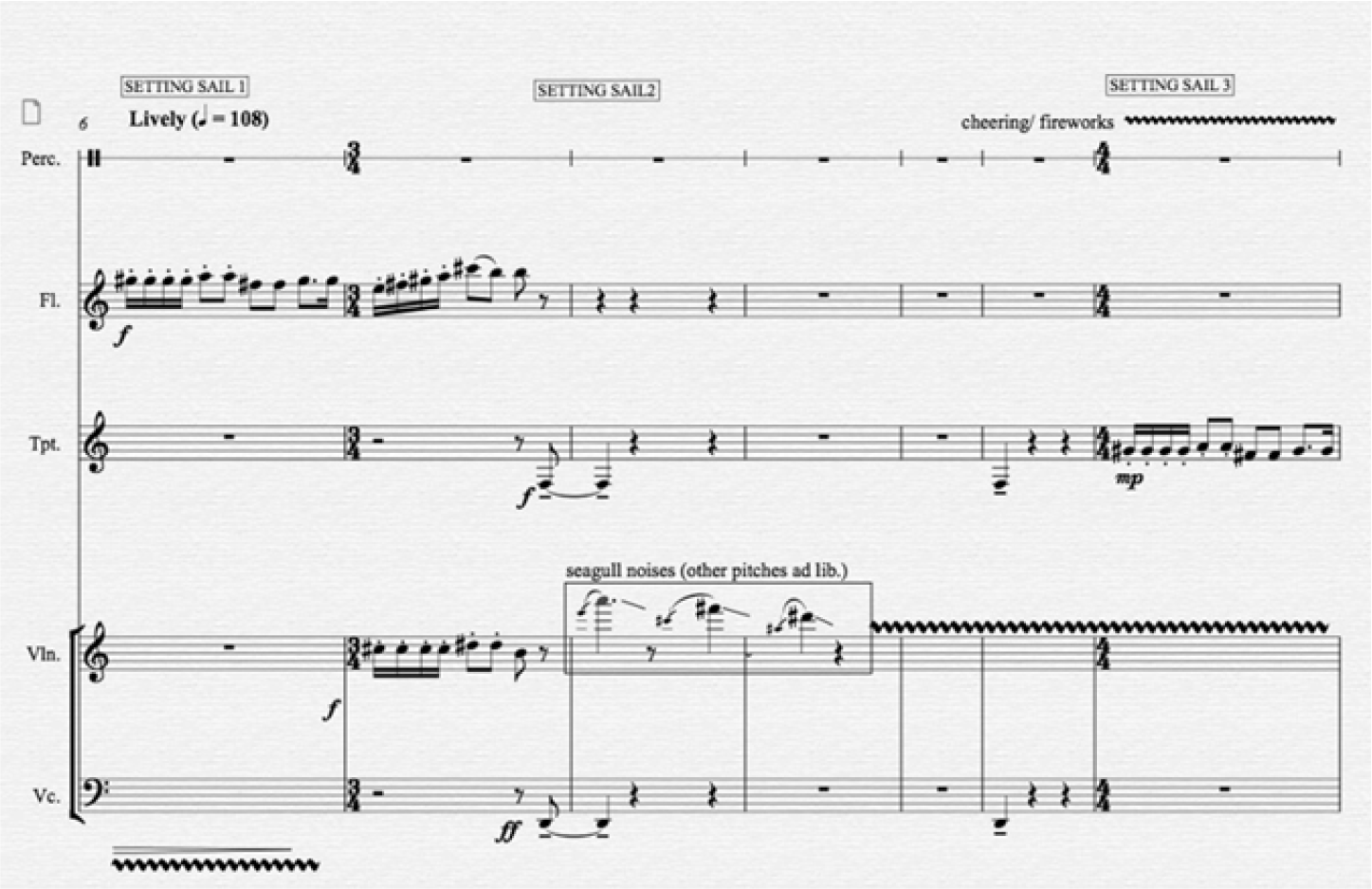
A key aspect of the collaborative process was the convening of an agreed summary of the events in the stories, what sounds would be used to represent these events, and how they would be represented. This inevitably was a form of negotiation, the results of which can be seen in Figure 4. The agreement of both a vocabulary of sounds available to the group and the means by which these sounds can be represented can be related to Vygotsky’s idea of semiotic mediation (see John-Steiner and Mahn Reference John-Steiner and Mahn1996), and more directly to the experience of one of the researchers taking part in the Watching Dance project, in which non-specialist audiences were encouraged to develop their own vocabulary to understand and appreciate contemporary dance (Reason and Reynolds Reference Reason and Reynolds2010), as well as Burnard’s observations of how children carry out the same process of meaning-making (Burnard Reference Burnard2002).
Discussing the final composition as a class.
Although a separation between the idea of the composer and the performance of the composition is embedded in the Western classical tradition, the research team felt that the project would benefit from performative participation on the part of the student group. Many of the sounds that had been sourced collaboratively to represent the sea, or other natural sounds, could be made in real time instead of being recordings triggered digitally. Although Paynter could have functioned in this way as a triggering device or sequencer for live performance, we wanted to emphasise that the app is a composition environment rather than digital sequencing environment. Sounds agreed by the students that were not to be played by the orchestral musicians would therefore be produced as part of the live final performance. In that performance, in the school hall, with an audience of fellow students and their families, the students were facing the audience, with their backs to the screen showing the graphic scores. The student group therefore needed to be rehearsed using visual, gestural cues on the part of one of the researchers, who would also conduct the ensemble. This gestural language replaced the mnemonic of the graphic score and constituted another negotiated system of symbols.
The students themselves made many of the creative decisions during the project, and the app was altered in response to these decisions. This reflexiveness can be thought of as enabling participation not just through collaboratively composing using the app but also through collaboratively creating the method of composing using the app (see Brown Reference Brown2007). Our motivation for working in this responsive manner was partly to improve the app through trying it out and partly to generate a sense in the students that they were (at least partly) in charge of the process. Certain other decisions were made in the project to demonstrate to non-participants – in particular, the audience – the relationship between graphic score produced in the project and traditional notation. As the orchestral musicians were more than capable of performing from a graphic score, the transcription undertaken by the research team of the graphic score and sounding material generated by Paynter into a fully notated score was not strictly necessary to the functioning of the project – the compositions produced by the student groups using Paynter were finished products in themselves. However, the highly codified nature of traditional scoring, as well as Alan Williams’s familiarity with the performance practice of these particular musicians as members of the BBC Philharmonic meant that the ensemble were able to turn up and play on minimal rehearsal, and the student groups were given the opportunity to experience the authoritative position traditionally enjoyed by the composer.
7. DISCUSSION
The manner in which this study unfolded, and the resultant impact upon the design of the app and the compositions by the students, was unexpectedly driven towards electroacoustic-type practices of manipulating recorded sound. Following the whole-class activities to compose a main theme for both pieces, we observed that other note-based contributions, such as drawing melodic patterns, were undertaken by the students with prior musical experience, while the sourcing and manipulation of audio clips was a much more playful and exploratory process, not dependent upon the musical training of the students or session leaders.
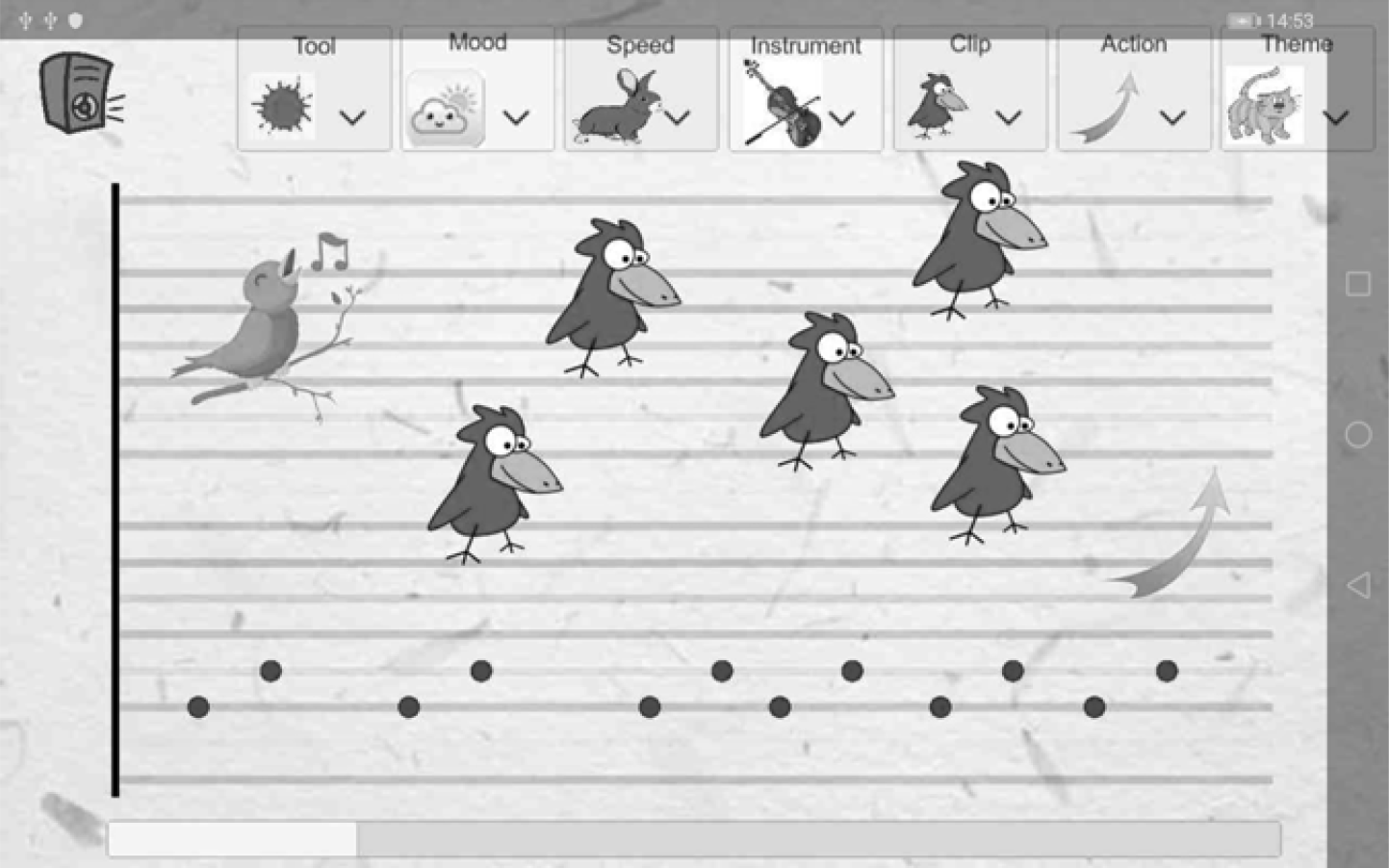
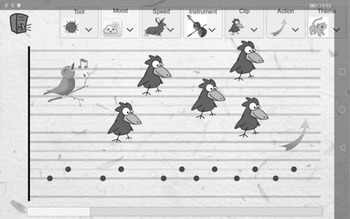
The theme of the cat stalking the bird was composed on the Paynter app by one of the Year 5 students who had more formal musical training. This was one of the few aspects of the pieces that could be ‘traditionally notated’ and is actually a replication of the familiar Jaws theme music, with two alternating semitones that gradually become faster. It is interspersed with the tweeting sound effect of the bird in one scene (Figure 5). However, this idea is then taken by a second group, who copy a similar theme at a slower tempo and lower pitch, interspersed with ‘sticky’ sound effects to represent the hapless cat becoming stuck in glue that is squirted by the evasive bird (Figure 6). This demonstrates a motivic development through a transactive process, not just in terms of the theme itself but also in the wider narrative and how this shapes the musical events. The ability to store and manipulate these tune-block-style artefacts enabled the students with less formal musical training to contribute to this transactive process and to possibly learn from the contributions made by the students who were more comfortable with the idea of representing music in a graphic form.
The cat stalking the bird (Year 5).
Bird squirts glue, cat gets stuck (Year 5).
However, it was the capacity to record and manipulate sound that ultimately gave the students without formal musical training a greater degree of agency and contribution. It was interesting to observe how skills that might not ordinarily contribute to a music class, and may even be disruptive to most learning environments, became important musical contributions. A key example of this was the ability of one student to make a very convincing dolphin noise. This was volunteered by the student during the course of a discussion and became a recorded sound object used within the app, with a corresponding symbol. This then, perhaps inevitably, led to similar outbursts of students wanting to record their own sound effects. This provided a wealth of sonic material that was used in the compositions and also gave many of the students a key role in the actual performance.
Conversely, we did note a disadvantage to this format when trying to record group sounds. For example, when trying to record the sound of bubbles with the Year 3 group (consisting of the class making intermittent ‘popping’ sounds with their mouths), we found this difficult to co-ordinate. Some students made very different noises (that may have been out of inability in some and mischievousness in others) while a substantial number followed a regular rhythm rather than making sporadic sounds. When played back, this resulted in what the class agreed to be an unrealistic sound effect. Williams took suggestions from the class for devising a set of rules for how a more realistic sound effect could be achieved – that each student had just three ‘pop’ sounds to make and that they should choose their moment by listening for a gap. This required listening to be a part of the participatory process, while also following a set of rules, effectively establishing a kind of societal model that has been promulgated implicitly, and sometimes explicitly in particular by soundscape artists and composers (see Akiyama Reference Akiyama2010 for further discussion). Because many of the recorded sounds were recreated live during the later performance, these rules became a recurring framework for musical participation.
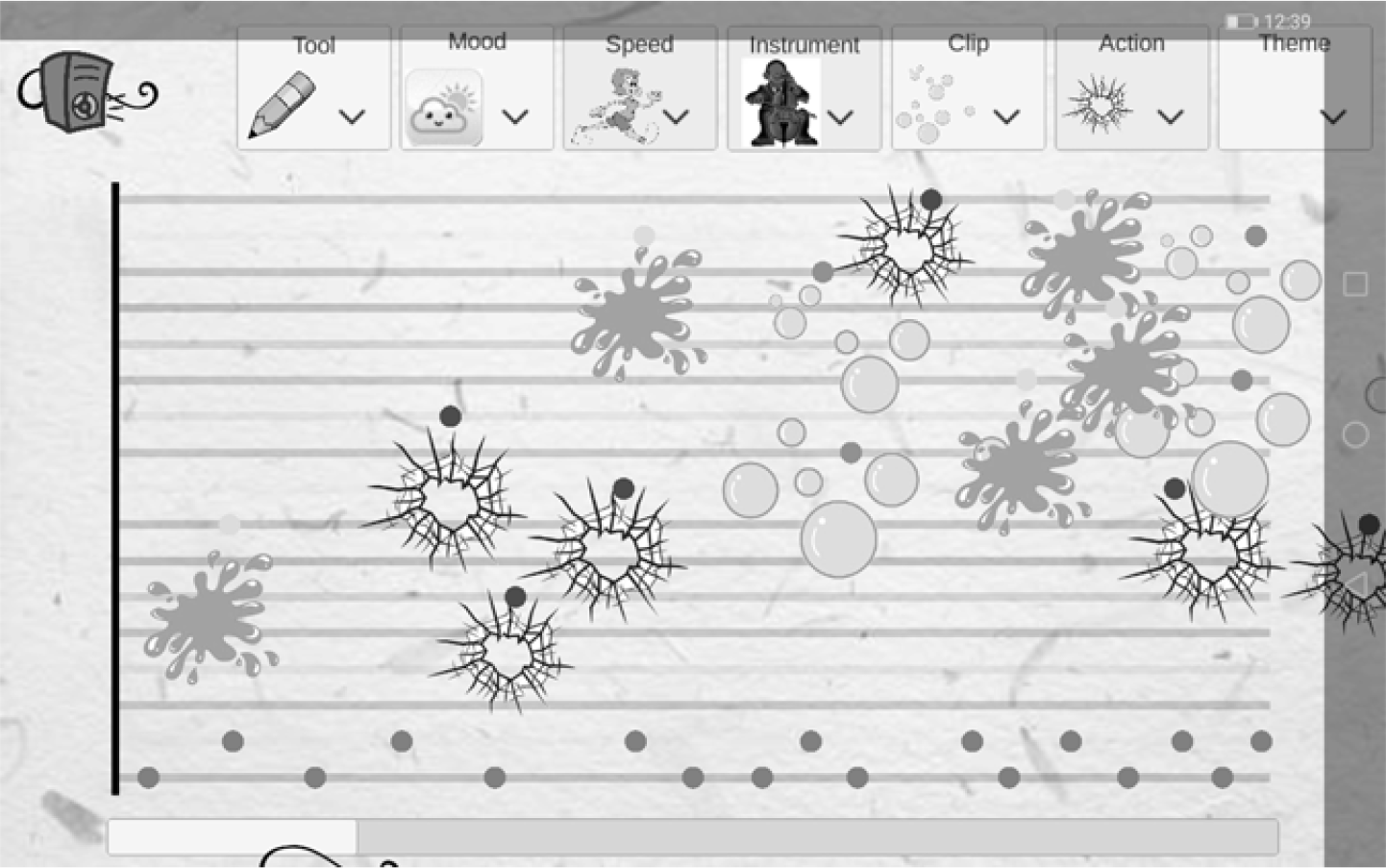
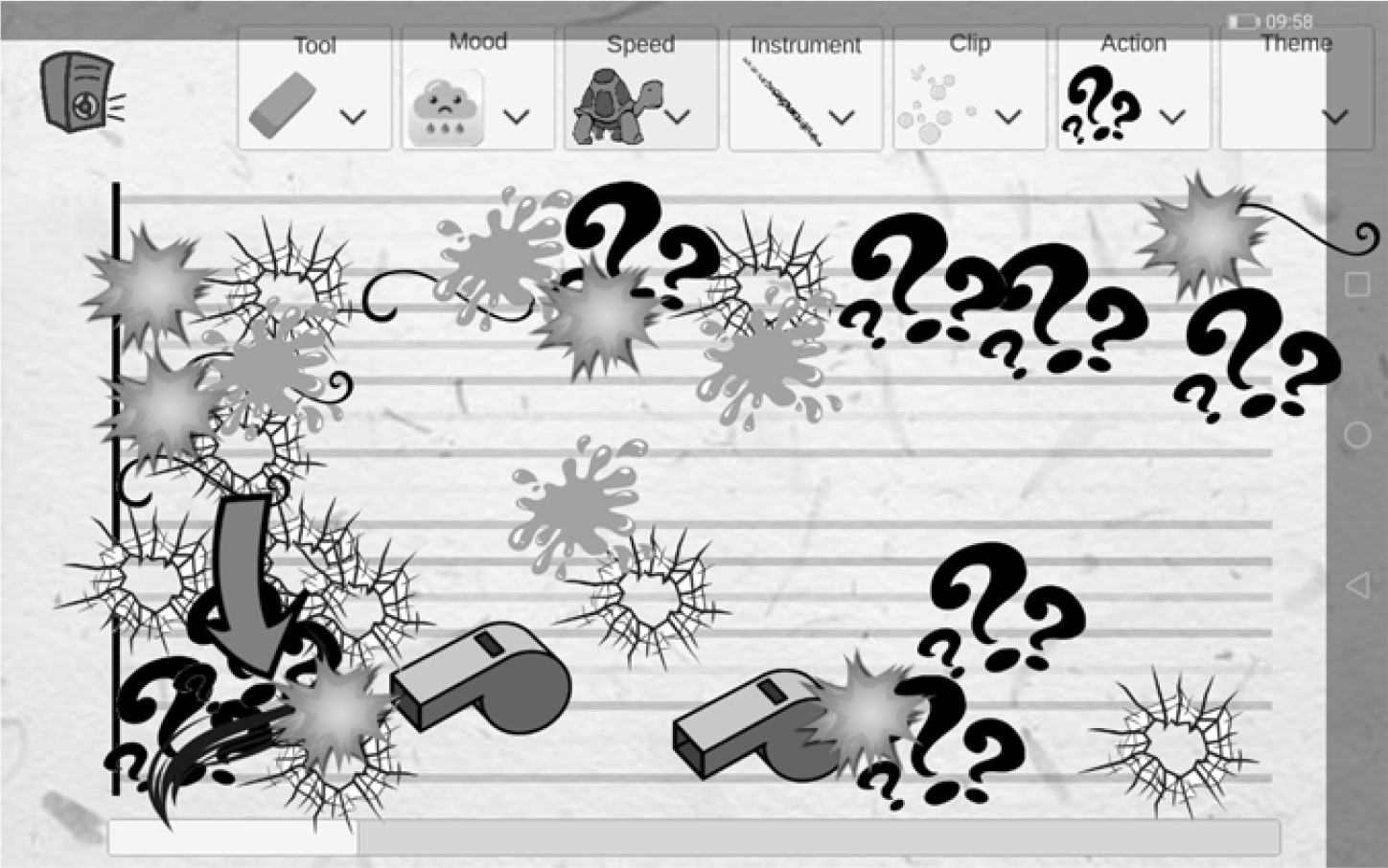
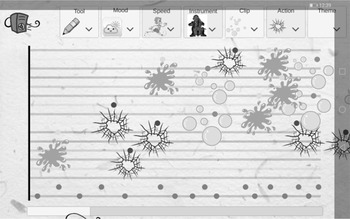
In addition to recording sound, the app also provided an expressive interface that allowed the students to improvise and explore new possibilities. This was particularly evident with the stretching of audio clips by changing their position on the canvas, something that became a source of experimentation for all students. An example of this is the Year 3 scene representing the Titanic hitting the iceberg (Figure 7). While there are some sounds chosen for their direct link to the action represented (splashing, crashing), others have been manipulated and no longer bear any audible relation to the corresponding symbol. For example, the whistle sound effect has been slowed down and stretched into a squeaking, creaking effect that expressively captures this idea of scraping ice, complete with the re-pitched cracks as the ice gives way. As a creative process, this is very similar to sound design (i.e., for film or games) that frequently involves the layering and manipulating of often unrelated sound sources to construct a more complex sonic event. Composing in a kind of storyboard format, arranging and often manipulating these familiar fragments to construct a narrative, established an accessible framework within which to experiment:
[Children’s] willingness to improvise and compose is a function of creating an environment where children can express their creativity. By starting with activities that are not too far removed from the child’s immediate experience, creativity becomes integrated with the child’s existing musical experiences and skills. Furthermore, by locating children in a range of musical settings they come to recognise the multidimensional nature of what they already know, think and can do. (Burnard Reference Burnard2000: 21)
The ship hits the iceberg (Year 3).
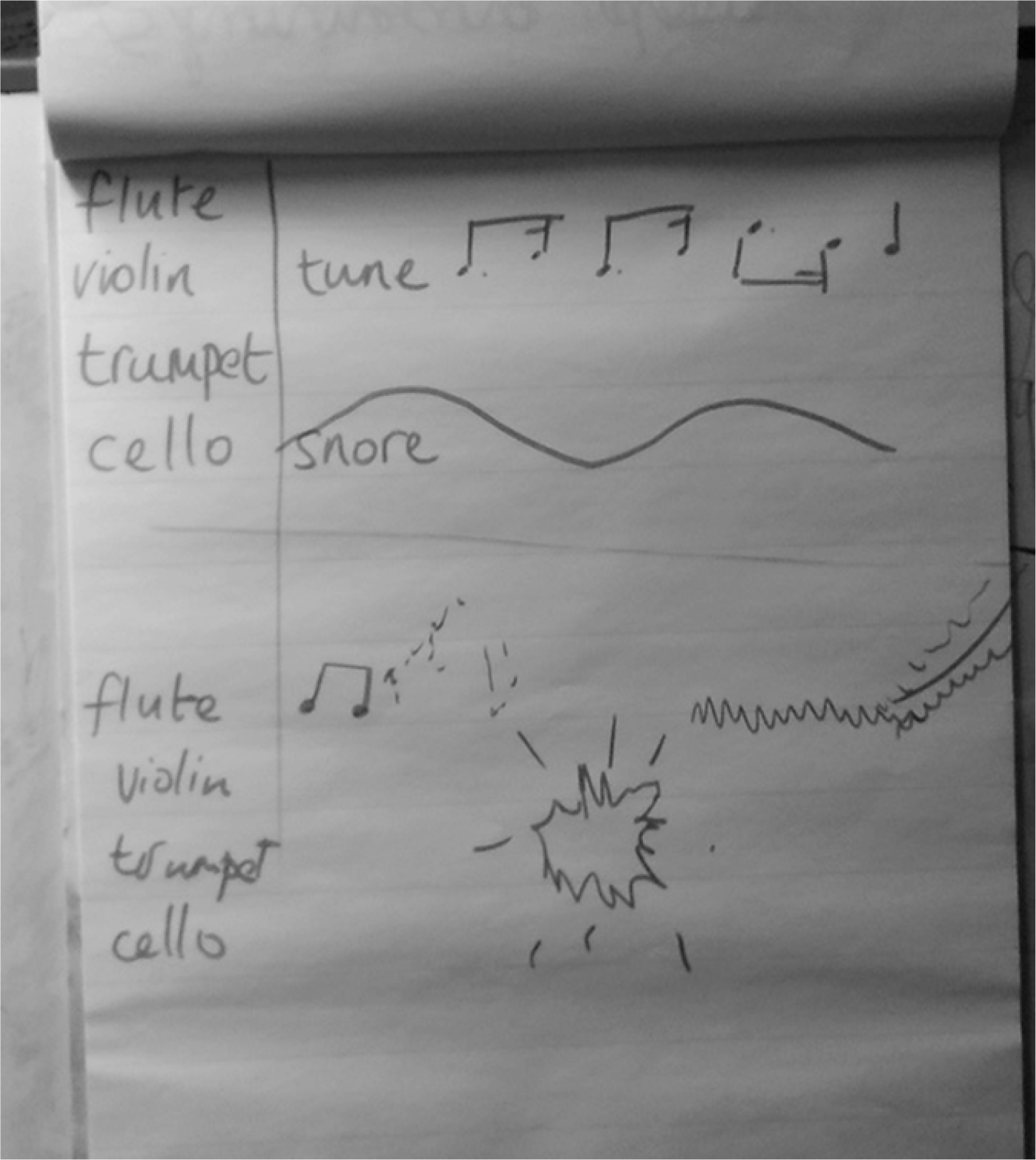
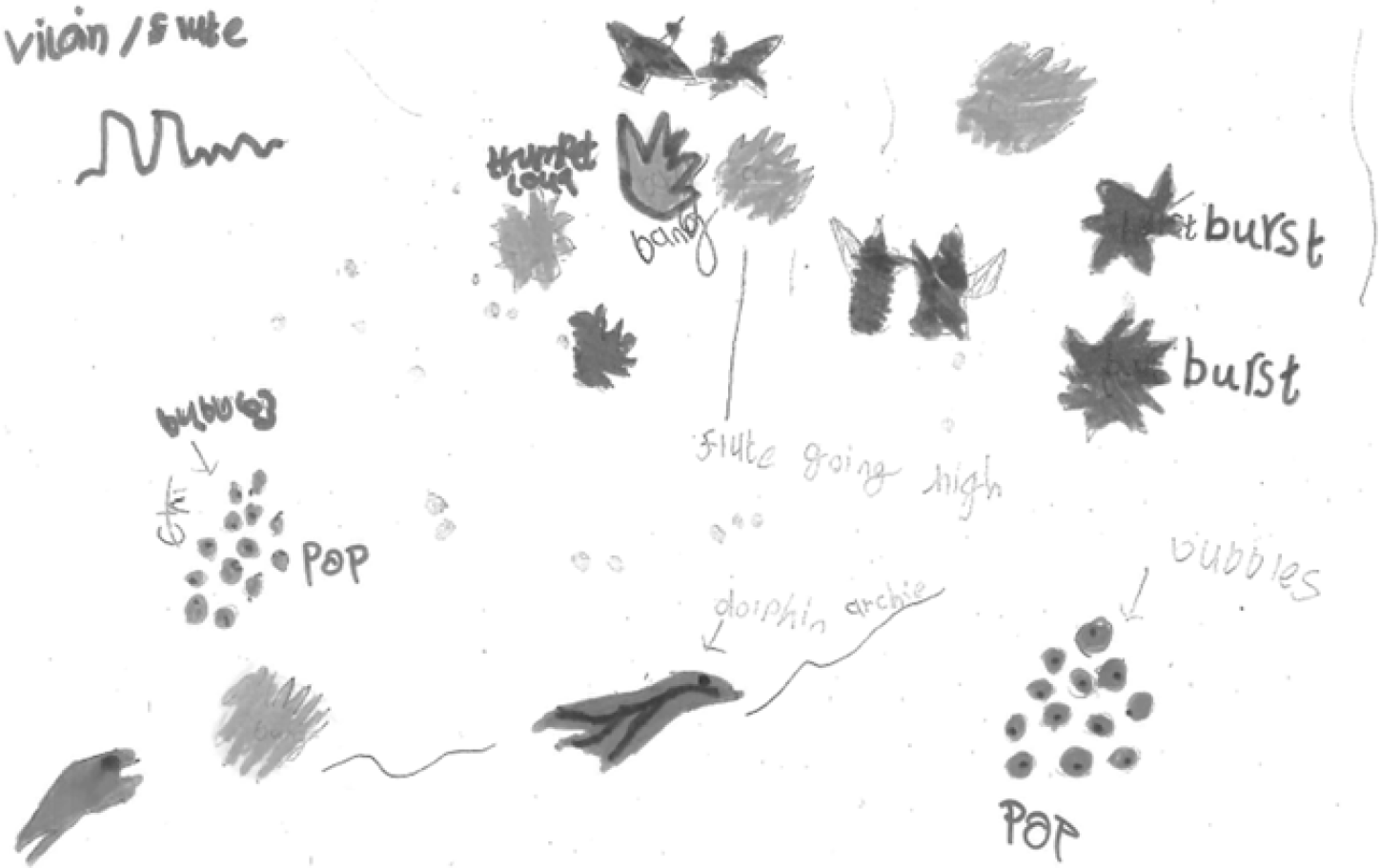
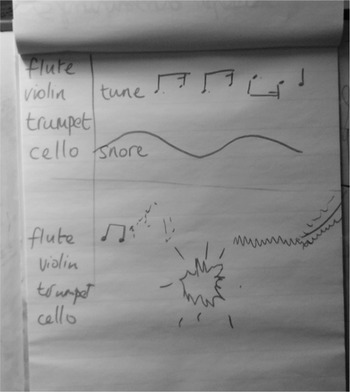
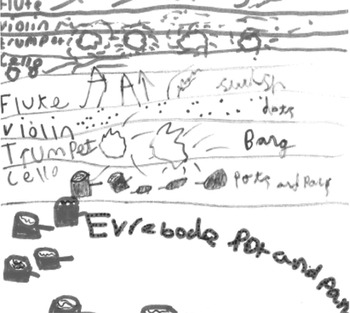
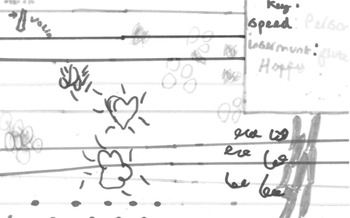
In this way, the app provided the class with musical objects-to-think-with, which established a mode of communication and expression. The various recorded fragments from the sessions produced a library of labels and symbols built from previous ideas and interactions. As composition took place across multiple tablets, the students had to communicate their ideas and made use of graphic paper sketches to show a sequence of musical events. When making these sketches, the students generally used the same, or similar, symbols and terms used in the app (Figures 8 and 9), in some cases, even recreating the layout with a key of settings (Figure 10). These also included graphical instructions for specific players, ranging from envelopes roughly indicating the shape or pitch of a phrase, to drawings of symbols used in the app. As such, the architecture of the app can be seen to provide a stable framework to articulate their ideas, building the ‘cultural tools’ required to engage with this collaborative music-making activity.
Setting sail (Year 3).
Cat chases bird through the house (Year 5).
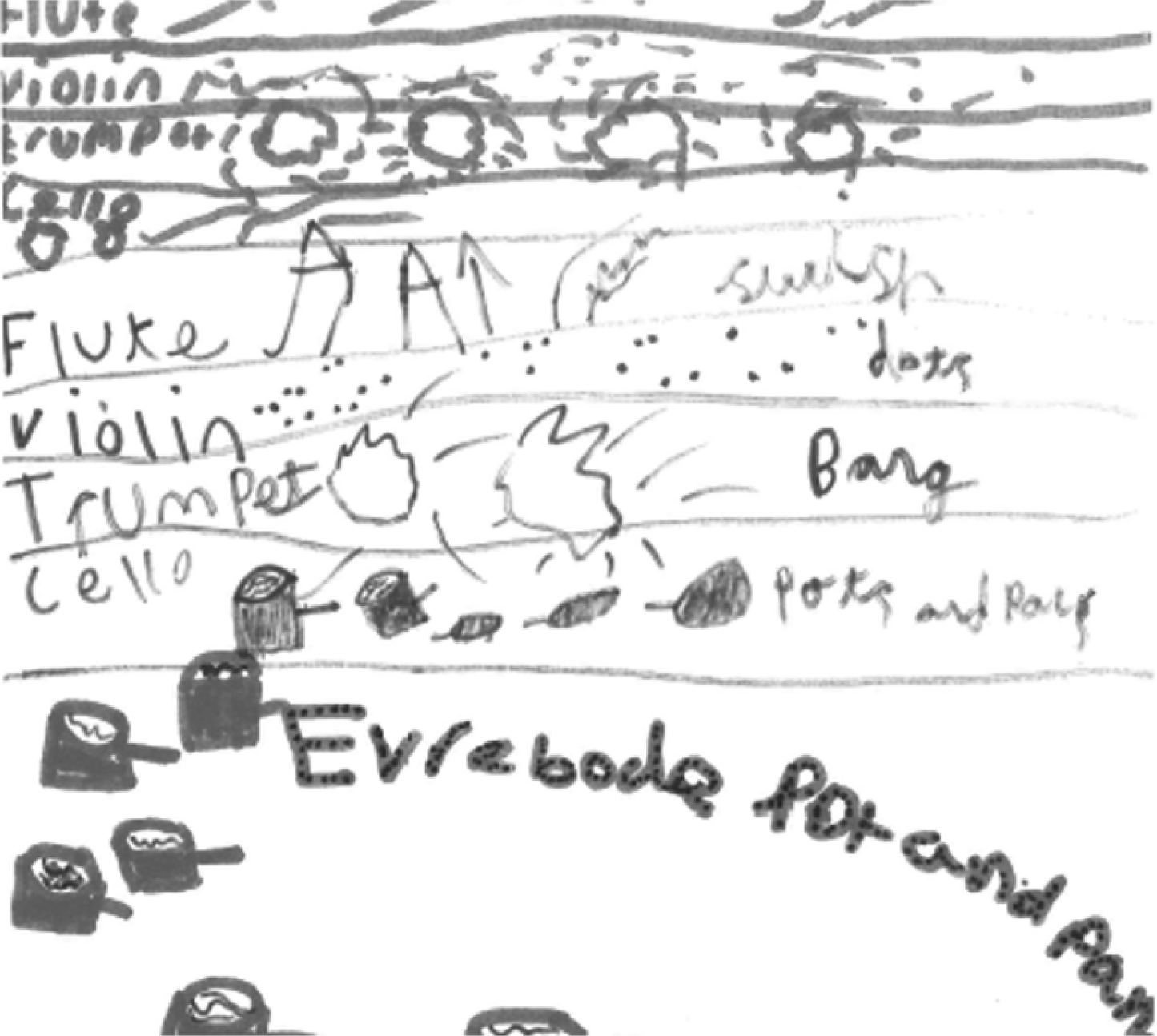
Bird squirts glue, cat gets stuck (Year 5). This also corresponds to Figure 6.
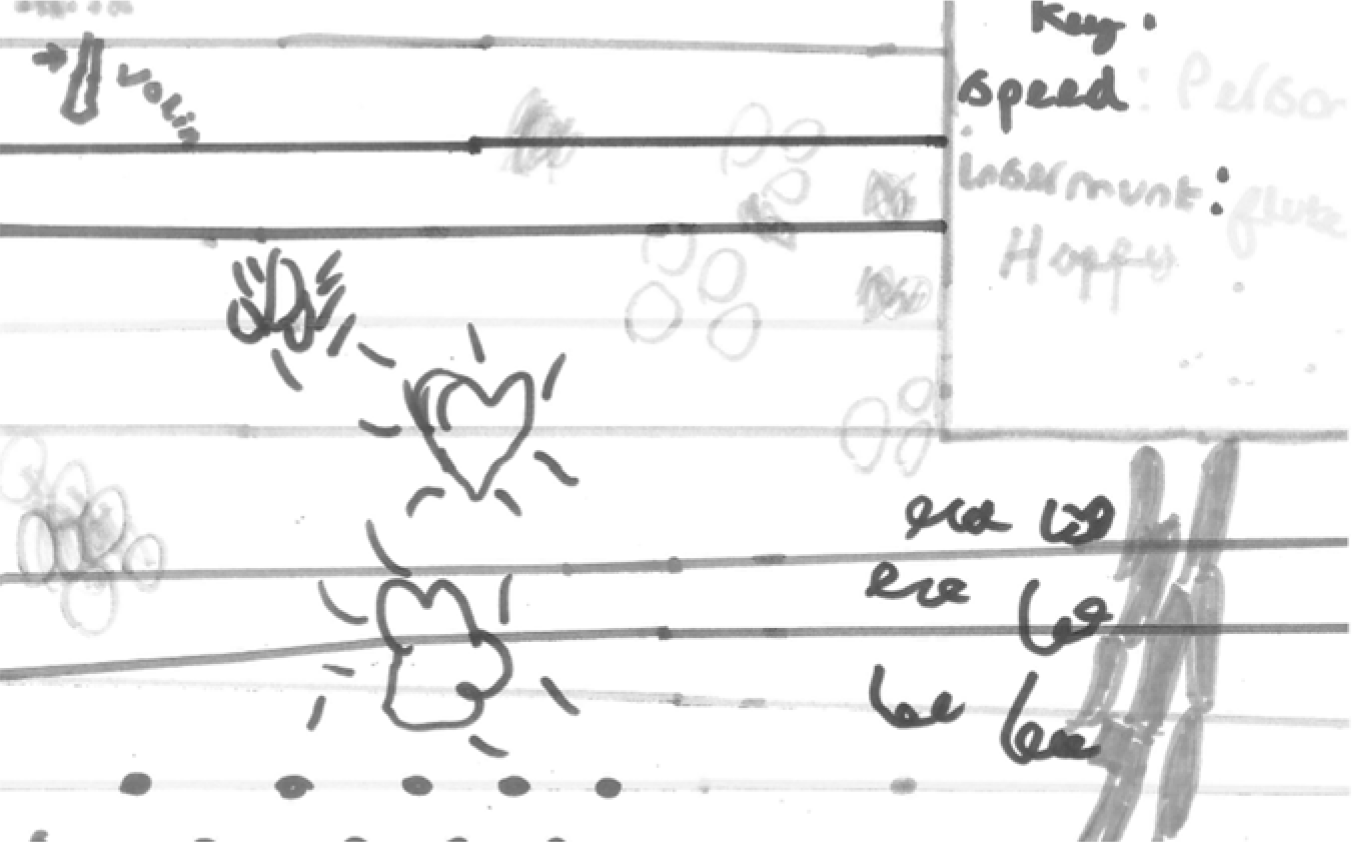
Mixed-ability music groups can often present barriers to this kind of participation. A study by Gall and Breeze found that students with less musical training were discouraged from contributing to the task when grouped with more experienced musicians, as they felt ‘less ownership of the final product’ due to the more experienced students ‘[taking] control of the compositional process’ (Gall and Breeze Reference Gall and Breeze2008: 35). In such scenarios, the more experienced students are seen to be skipping the ‘exploratory phase’ of the activity, to the detriment of its educational value for their less musically confident peers. Research by Odam (Reference Odam2000: 118) also suggests that more musically confident students tend to find shortcuts through the compositional process and should be challenged with alternative approaches.
While the groups in our study were of mixed musical ability and experience, we observed an inclusive environment of participation. This was explained by the Year 5 teacher following the final performance:
Everybody’s played a part in composing this piece of music. And one child, who plays a lot of musical instruments, said it’s been brilliant because although he’s played a lot of music, he’s never composed his own piece. (Year 5 teacher, see Hart and Williams Reference Hart and Williams2019)
This suggests that this kind of activity created an inclusive environment for composition that allowed all students to contribute, while also supporting the more musically confident students in undertaking a new musical experience. Even for this musically trained student, composition was a new and rewarding experience. The statement highlights the valued sense of both participation and ownership, which illustrates the value of composition as a curriculum activity:
The challenge of creativity provides that very special sense of overcoming, and does so more lastingly than anything else. To have made something which is yours, and yours alone, is real achievement. (Paynter Reference Paynter1992: 22)
We hoped and expected that the students would be able to contribute to these pieces collectively, but did not anticipate the extent to which the activity would be driven by contributions that may not be thought of as conventionally musical, such as the ability to make a dolphin noise, and how this would characterise individual contributions to a collective effort. In retrospect, it would further support this study to have gathered reflective feedback from the students on how they felt they had contributed and to capture their sense of both collective and individual authorship with regard to this activity. This is something that we intend to address in further research.
Another unexpected outcome was the extent to which this activity became more akin to electroacoustic composition, as the students transformed and layered recorded sounds to construct a narrative. While we had supported the students in writing and arranging melodic ideas, the ability to change the pitch and timbre of a recorded sound provided not only more accessible but also more interesting compositional material to the students. This drove the narrative of the pieces while also creating a transactive social dynamic, as the students were able to explore and share new sounds and ascribe meaning to them. Effectively, these objects-to-think-with gave the students the tools to ‘imagine more’. We intend to follow up on this study with an updated version of Paynter, offering more freedom to record, manipulate and arrange sound objects as well as choosing an icon from a library of images, and to gather qualitative feedback from students about their compositional intentions.
8. THE RIVET’S TALE, SUBSEQUENT DEVELOPMENTS
A final layer of creative development for the project came in the form of a related commission for an ensemble of 13 instrumentalists from the BBC Philharmonic Orchestra by Alan Williams, entitled The Rivet’s Tale (Williams 2019). Although the commissioning process for this piece occurred independently of the Paynter project, we saw the opportunity to tie it in to the work we were doing in schools by basing the larger piece on material generated by the Paynter project. Prior to the project, Williams had envisaged that this would be a process of expansion and refinement of traditional note-based themes and motives created collaboratively with the students. As the project continued, however, it was the sound objects and soundscapes generated by the electroacoustic aspect of Paynter that proved to be the main sources of material for The Rivet’s Tale, albeit that the piece still used the narrative framework developed by the Key Stage 1 group of the Titanic story.
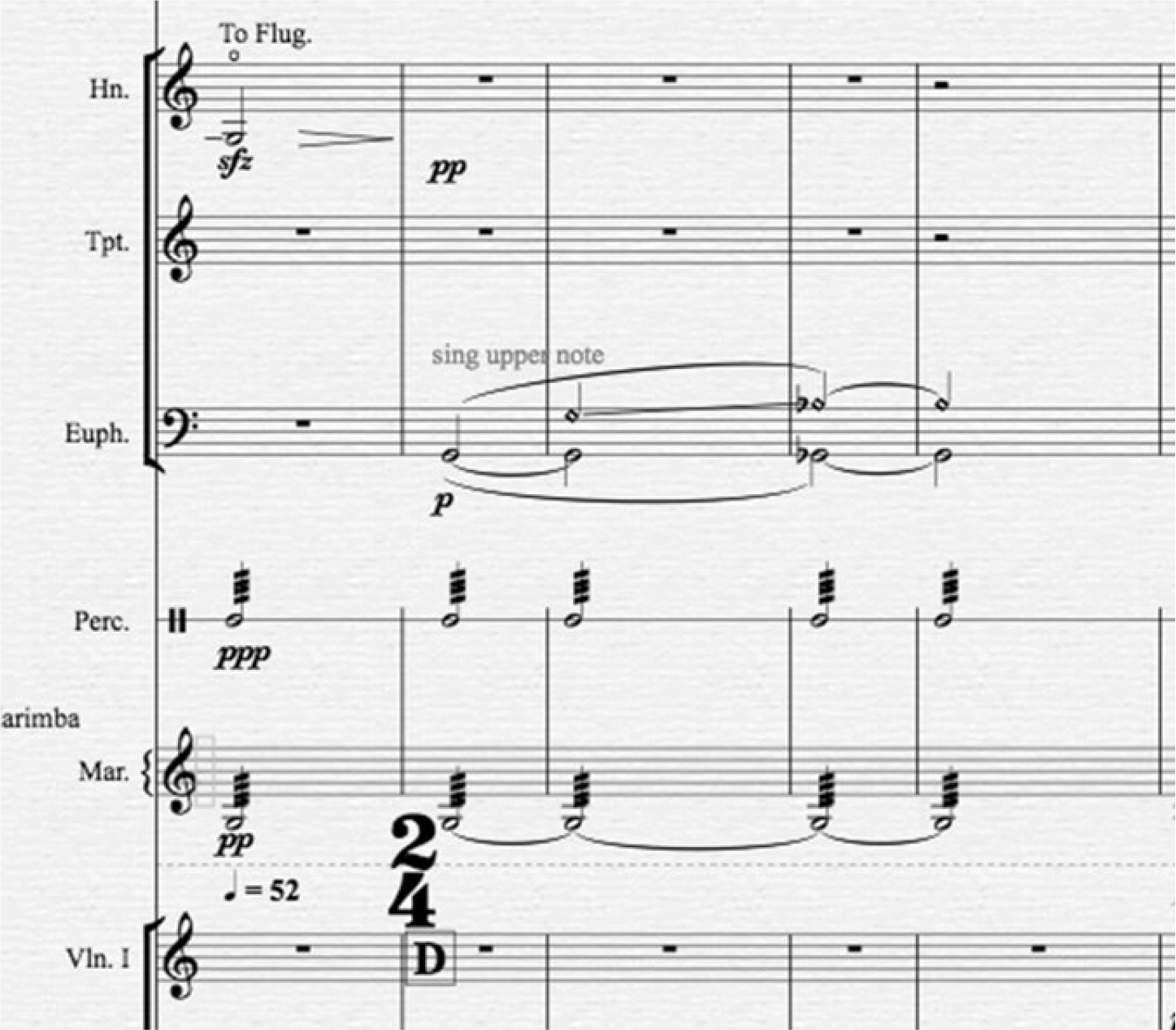
An example of the transformation of sound object to acoustic music material for the large ensemble can be seen in Figures 11–12.
Setting Sail (Year 3).
Rivet’s Tale Letter D.
At the bottom left of the screen is an icon of an explosion – this sound object was recorded as part of musical gesture improvised by the BBC Philharmonic musicians in the first session in the school and consists mainly of a low trumpet note, with other elements of flute and violin. At its original pitch, it did resemble a musical ‘bang’, but through play with Paynter, the students at Key Stage 1 quickly discovered that by dragging it to the bottom of the screen, its frequency and therefore timbre were altered so that it resembled a ship’s horn. Within the narrative framework of the piece, this sonic shorthand for the ship helped to tell the story of the Titanic, but the action of transformation of the original audio is fundamentally an operation derived from electroacoustic composition. The icon used to visually represent the sound object (the ship’s horn) has actually become inappropriate since it no longer sounds like its original referent, a ‘bang’, emphasising the willingness of the students to play and alter sounds in acousmatic ways.
In the original transcription for four musicians performing alongside the students in the school, this sound object appears on the cello, reflecting its predominantly low frequencies, and in a low note on the trumpet (see Figure 3, bar 7). The pitching of this diad, a D/F minor 10th, was a compromise as the sound generated by the students’ play with the original audio was pitched somewhere between a D and C♯. Moreover, over headphones it had an audibly complex frequency spectrum that we were not able to represent on the instruments available – the minor third component to the sound was only one of these timbral elements, and although the use of extended techniques might have created a more complex version of the sound, this would have meant diverting instrumental resources from the representation of other sound objects that needed to be present in the texture.
At the stage of development that pertained at the time of composition, it was not possible to export audio from Paynter – otherwise a spectrum analysis could have been done on this sound object, so its relatively complex spectrum could still only be translated onto the larger ensemble by ear. This was done through euphonium multiphonics, involving the use of the voice as well as the played note
The contributions of the students involved in the school made Williams reconsider the nature of the musical material used in The Rivet’s Tale, emphasizing the importance of the multilayered interactions that were facilitated by the use of Paynter. Without this experience, and without the sounds composed collaboratively by the students, the commission for the BBC Philharmonic ensemble would have been very different, and probably less effective as a piece.
9. CONCLUSIONS
Although there is clearly the need for further research, the project as described shows that the Paynter app could encourage children of Key Stage 1 and 2 ages to think compositionally – but that the form of that compositional thinking they responded to most positively is that which most closely resembles electroacoustic composition. The use of graphic scores generated by the students themselves, which are then transcribed as carefully as possible, meant that the process of collaborative composition is much more transparent. These interactive notational symbols formed powerful and flexible ‘objects-to-think-with’, capable of organising a variety of linguistic and narrative terms often created by the students themselves. The digital platform enabled socially interactive learning and collaborative creation in an aspect of music that commonly discourages such collaborative group work.
While Paynter was not originally designed as a platform for the manipulation of audio in ways that resemble electroacoustic compositional approaches, the fact that it was so readily adapted for this purpose by Key Stage 1 and 2 students suggests that electroacoustic music composition via an appropriately designed digital platform could be a powerful route in for compositional thinking for many students who otherwise lack confidence and skill in the creation of music. Paynter incorporates features designed to appeal to students at Key Stages 1 and 2, but many other designs can be imagined in which electroacoustic compositional thinking could be encouraged though ‘sand-box’-type play. Future research should enable such platforms to optimise as spaces for making digital music and transforming sounds from the environment in open, socially interactive and collaborative play. This has implications for socially driven music activities outside of educational contexts, in music therapy for example, which may be explored in further research.
Further materials from the project, including recordings of the pieces and a demonstration of Paynter, can be viewed on the Figshare collection (Hart and Williams Reference Hart and Williams2019).





 Open access

