


There is increasing evidence that established psychotic symptoms may be present in milder forms in the general population (Reference Van Os, Hanssen and Bijlvan Os et al, 2000; Reference Van Os, Verdoux, Murray, Jones and Susservan Os & Verdoux, 2002), with population prevalence estimates ranging from 1% (Reference Eaton, Romanoski and AnthonyEaton et al, 1991) to 17.5% (Reference Van Os, Hanssen and Bijlvan Os et al, 2000). Such variation can be explained by methodological differences in the instruments and thresholds used to define psychotic symptoms, the period of recall, whether estimates are based on single specific symptoms or a range of symptoms, and differences in the characteristics of the populations studied. A 1-year incidence of 4.6% was reported for hallucinations in the Epidemiologic Catchment Area programme (Reference TienTien, 1991), but there are few other data. The identification of potential aetiological risk factors has been limited by the use of cross-sectional data (Reference Verdoux, van Os and Maurice-TisonVerdoux et al, 1998; van Os et al, Reference Van Os, Hanssen and Bijl2000, Reference Van Os, Hanssen and Bijl2001; Johns et al, Reference Johns, Nazroo and Bebbington2002, Reference Johns, Cannon and Singleton2004; Reference Olfson, Lewis-Fernandez and WeissmanOlfson et al, 2002; Reference King, Nazroo and WeichKing et al, 2005), with a few notable exceptions (Reference TienTien, 1991; Reference Janssen, Hanssen and BakJanssen et al, 2003). An excess of apparent hallucinations has been reported in women (Reference TienTien, 1991), but longitudinal studies have primarily focused on the aetiological role of cannabis (Arseneault et al, 2002; Reference Van Os, Bak and Hanssenvan Os et al, 2002; Reference Fergusson, Horwood and Swain-CampbellFergusson et al, 2003).
The 18-month follow-up of participants in the British National Survey of Psychiatric Morbidity provides a rare opportunity to examine the incidence of, and risk factors for, self-reported psychotic symptoms using prospective longitudinal data.
METHOD
National Psychiatric Morbidity Survey
Full details of the 18-month follow-up of the Office for National Statistics (ONS) 2000 Psychiatric Morbidity Survey are available elsewhere (Reference Singleton, Bumpstead and O'BrienSingleton et al, 2001; Reference Singleton and LewisSingleton & Lewis, 2003). Briefly, a nationally representative sample of 8580 adults aged 16–74 years living in private households in Great Britain were interviewed by lay interviewers in 2000 (Reference Singleton, Bumpstead and O'BrienSingleton et al, 2001) and classified according to their score on the Clinical Interview Schedule – Revised (CIS–R; Reference Lewis, Pelosi and ArayaLewis et al, 1992; Reference LewisLewis, 1994). All participants identified as having a mental disorder (CIS–R score ≥12) at the time of the cross-sectional survey and those with sub-threshold neurotic symptoms (CIS–R score 6–11) were eligible for follow-up, as were a random 20% of those without a mental disorder. Using the above criteria, 3536 persons were selected for follow-up, the majority of whom (n=3045) were successfully contacted. More than three-quarters (79%, n=2413) completed the follow-up interview, 17% (n=503) refused, and contact was not made with 129 (4%). The Multicentre Research Ethics Committees in England granted ethical approval for the study.
Measurement of psychotic symptoms
Positive psychotic symptoms comprise anomalous experiences (hallucinations, thought insertion) and abnormal beliefs (delusions). Classically, these are identified by a process of cross-examination, whereby the definition of the symptoms is matched with someone's experience (Reference Brugha, Bebbington and JenkinsBrugha et al, 1999), but in-depth psychiatric interviews are impractical for large population surveys. Lay interviews are a less rigorous method of establishing psychotic symptoms, but there is evidence that people who endorse items on the Psychosis Screening Questionnaire (PSQ; Reference Bebbington and NayaniBebbington & Nayani, 1995) are similar to those who are actually diagnosed using a standardised clinical instrument (Reference Johns, Nazroo and BebbingtonJohns et al, 2002), suggesting that there are continuities.
In our study the presence of psychotic symptoms was elicited (at baseline and follow-up) using the PSQ, which includes five sections relating to hypomania, thought insertion, paranoia, strange experiences and hallucinations. Each section begins with an introductory question, which, if the participant answers positively, is followed by one or two key questions. A positive response to a key question would normally mean that subsequent sections of the questionnaire are omitted, as those individuals would be regarded as ‘screen positive’ and would undergo a clinical assessment to establish the presence (or absence) of psychosis. However, for the purposes of the ONS survey, each of the five introductory PSQ questions was asked (with key questions). In the initial survey, the reference period for reporting symptoms was the 12 months prior to interview. For the follow-up survey, this was amended to the entire period since the previous interview (approximately 18 months).
Baseline assessment of psychosis
A two-stage process (Reference Meitzer, Gill and PetticrewMeltzer et al, 1994; Reference Singleton, Meltzer and GatwardSingleton et al, 1998) was used to exclude individuals with a psychotic disorder at baseline from the data-set. Participants were regarded as screening positive for a psychotic disorder if they self-reported a diagnosis or had symptoms suggestive of a psychotic disorder (e.g. hallucinations), were in receipt of antipsychotic medication, had been previously admitted to a psychiatric hospital or had responded positively to the question about auditory hallucinations on the PSQ. These individuals, and a sample of those who were screen negative, were selected for clinical interview. Diagnoses of psychotic disorder according to ICD–10 criteria (World Health Organization, 1993) were obtained using the computerised version 2.1 of the Schedules for Clinical Assessment in Neuropsychiatry (SCAN; Reference Wing, Babor and BrughaWing et al, 1990). People who refused to take part in the second interview or could not be contacted were assigned a diagnosis of probable psychotic disorder if they met at least two of the four psychosis screening criteria (Reference Singleton, Meltzer and GatwardSingleton et al, 1998).
Statistical analysis
All analyses were conducted in Stata version 8 for Windows using the svy commands. Probability weights were used to account for the stratified sampling procedure and non-response. Full details of the weighting procedure are provided in the ONS report (Reference Singleton and LewisSingleton & Lewis, 2003).
Occurrence of self-reported psychotic symptoms
The prevalence of psychotic symptoms at baseline was estimated, together with the persistence of such symptoms.
Incident self-reported psychotic symptoms and risk factor identification
The emergence of incident psychotic symptoms (thought insertion, paranoia, strange experiences and hallucinations) between the baseline and follow-up surveys, at the level of the introductory and key questions, was ascertained for the entire cohort and stratified by gender. The term ‘incident symptoms’ was used to describe ‘new onset’ symptoms that occurred between baseline and follow-up. It is possible that such symptoms will not represent their first-ever occurrence, but a true measure of incident psychotic symptoms is difficult to obtain in adults. We assume that these errors will primarily lead to random misclassification.
Subsequent analyses examined risk factors for incident psychotic symptoms at follow-up. A positive response to the first key question for any of the four sections covering thought insertion, paranoia, strange experiences and hallucinations was defined as an incident psychotic symptom. Based on the epidemiology of schizophrenia, the following variables, recorded at baseline, were examined for their association with self-reported psychotic symptoms at follow-up: age; gender; baseline CIS–R score; marital status (married, cohabiting, single, widowed, divorced or separated); area type (interviewer rating of urban, semi-rural or rural); IQ score, measured using the National Adult Reading Test (Reference NelsonNelson, 1982); size of primary support group, a measure of the individual's social network based on the number of close friends and relatives: 0–3, 4–8 or ≥9 (Brugha et al, Reference Brugha, Sturt and MacCarthy1987, Reference Brugha, Wing and Brewin1993); number of life events, using a list of 18 items (Reference Singleton, Meltzer and GatwardSingleton et al, 1998) covering issues such as relationship difficulties, bereavement, illness, employment and financial problems (0–1, 2, 3, 4, 5 or ≥6); current smoking status; alcohol use, measured using the Alcohol Use Disorders Identification Test score 0–40 (AUDIT; Reference Saunders, Aasland and BaborSaunders et al, 1993); and cannabis use (not used in past year, used in past year but no report of dependency, dependent on cannabis). Dependency on cannabis was based on a positive response to one of five questions (daily use for 2 or more weeks, self-reported dependence, inability to cut down, need to use larger quantities to get an effect, or symptoms of withdrawal).
In addition, a number of socioeconomic indicators were examined: highest educational qualification (degree; teaching, Higher National Diploma or nursing qualification; A-level; General Certificate of Secondary Education or equivalent; or no qualifications), employment status (working full-time; working part-time; unemployed; long-term sick or disabled; other economically inactive), social class (I–V), using the 1991 Registrar General's Standard Occupational Classification (Office for Population Censuses and Surveys, 1991), accommodation tenure (owned outright; owned with mortgage; rented from local authority or housing association; or rented from other source) and weekly gross income (<£100, £100–199, £200–299, £300–399 or ≥£400).
Logistic regression was used to examine the association between baseline variables and the onset of psychotic symptoms at follow-up. Univariable associations (in terms of odds ratios) and their 95% confidence intervals are reported. Given the rarity of the outcome, these may be interpreted as rate ratios (Reference Rothman and GreenlandRothman & Greenland, 1998). All variables significant at P≤0.20 in the univariable model were entered into a multivariable model to permit identification of independent associations. Age, gender, baseline CIS–R score and use of psychotropic drugs or receipt of therapy were included in the model, which was simplified using the likelihood ratio test (Reference Hosmer and LemeshowHosmer & Lemeshow, 1989). All variables significant at P<0.10 were retained. Previously excluded variables (univariable, P>0.20) were added to the multivariable model to determine whether they contributed significantly; any that became significant at P<0.10 were retained.
Data-set
In total, 2406 participants completed the baseline and follow-up surveys. Of these, 3 individuals with missing data on psychotic symptoms and 24 individuals with psychotic disorder at baseline (SCAN or ‘probable’ diagnoses) were excluded from all analyses. People who reported psychotic symptoms at baseline (thought insertion, paranoia, strange experiences or hallucinations; n=414) were excluded from analyses examining the risk factors for incident symptoms. Of the remaining 1965 persons, 1795 (91%) had data available on the specified predictors.
RESULTS
Occurrence of self-reported psychotic symptoms
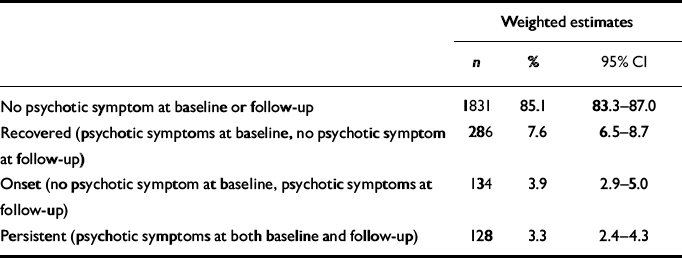
At baseline, 414 individuals (weighted estimate 10.9%, 95% CI 9.5–12.4) answered positively at least one of the four key questions (first level) on thought insertion, paranoia, strange experiences and hallucinations (Table 1). Almost 8% of the study population reported psychotic symptoms at baseline that did not persist at follow-up. Only a small proportion (3.3% of the population) reported persistent symptoms (Table 1). A more stringent definition of psychotic symptoms (positive response to at least one of the highest key questions) resulted in a lower estimate of prevalence at baseline (5.2%, 95% CI 4.3–6.2).
Occurrence and persistence of self-reported psychotic symptoms
| Weighted estimates | |||
|---|---|---|---|
| n | % | 95% CI | |
| No psychotic symptom at baseline or follow-up | 1831 | 85.1 | 83.3-87.0 |
| Recovered (psychotic symptoms at baseline, no psychotic symptom at follow-up) | 286 | 7.6 | 6.5-8.7 |
| Onset (no psychotic symptom at baseline, psychotic symptoms at follow-up) | 134 | 3.9 | 2.9-5.0 |
| Persistent (psychotic symptoms at both baseline and follow-up) | 128 | 3.3 | 2.4-4.3 |
Incident self-reported psychotic symptoms
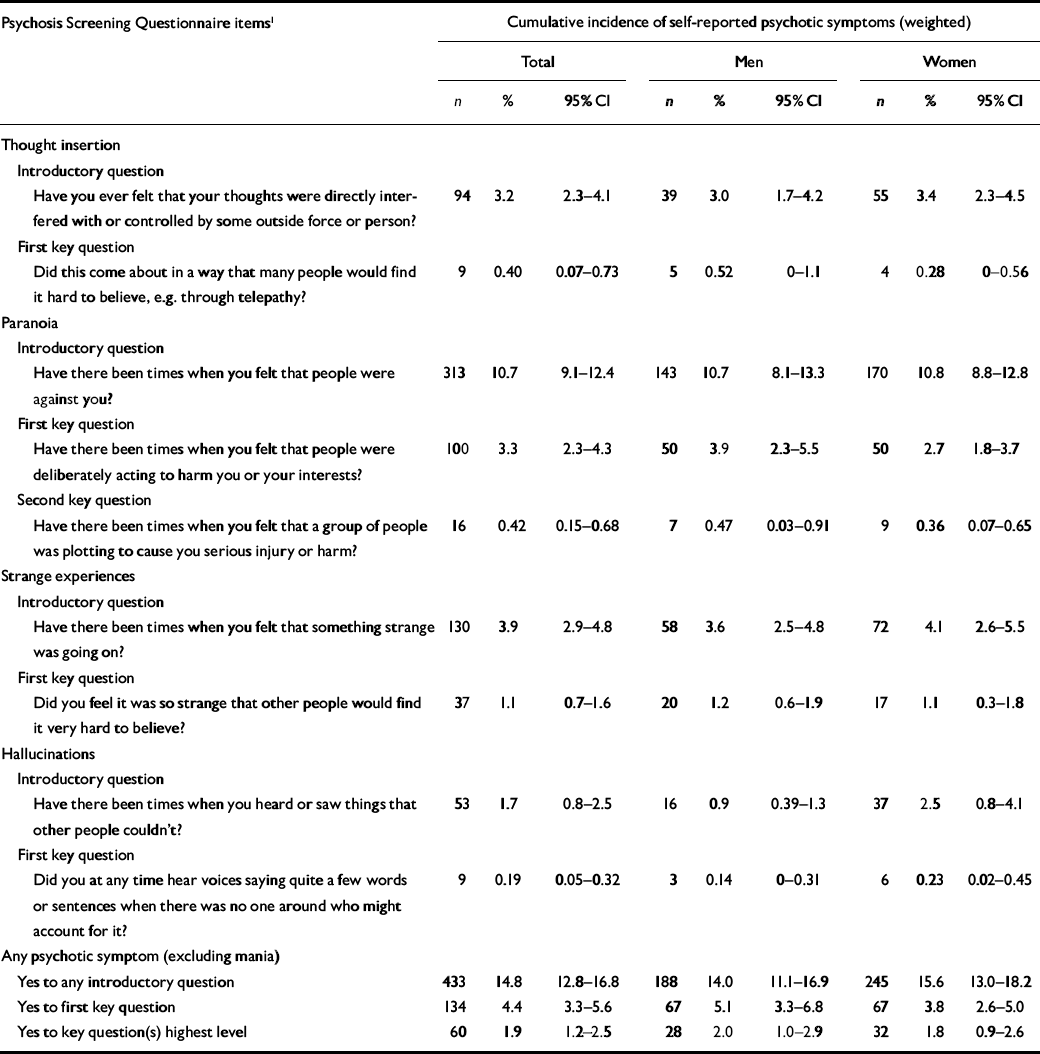
Of the 1965 participants without psychotic symptoms at baseline, 134 (weighted estimate 4.4%, 95% CI 3.3–5.6) reported incident symptoms at follow-up (Table 2). Only 17 individuals endorsed two or more psychotic symptoms at follow-up. More people endorsed the introductory questions of the PSQ (Table 2). Paranoid thoughts were the most commonly reported symptom (weighted estimate 3.3%). Incident psychotic symptoms were more frequent in men (5.1%) than in women (3.8%), although this was not true of positive responses to the introductory question (Table 2).
Cumulative incidence of self-reported psychotic symptoms between baseline and 18-month follow-up surveys
| Psychosis Screening Questionnaire items1 | Cumulative incidence of self-reported psychotic symptoms (weighted) | ||||||||
|---|---|---|---|---|---|---|---|---|---|
| Total | Men | Women | |||||||
| n | % | 95% CI | n | % | 95% CI | n | % | 95% CI | |
| Thought insertion | |||||||||
| Introductory question | |||||||||
| Have you ever felt that your thoughts were directly interfered with or controlled by some outside force or person? | 94 | 3.2 | 2.3-4.1 | 39 | 3.0 | 1.7-4.2 | 55 | 3.4 | 2.3-4.5 |
| First key question | |||||||||
| Did this come about in a way that many people would find it hard to believe, e.g. through telepathy? | 9 | 0.40 | 0.07-0.73 | 5 | 0.52 | 0-1.1 | 4 | 0.28 | 0-0.56 |
| Paranoia | |||||||||
| Introductory question | |||||||||
| Have there been times when you felt that people were against you? | 313 | 10.7 | 9.1-12.4 | 143 | 10.7 | 8.1-13.3 | 170 | 10.8 | 8.8-12.8 |
| First key question | |||||||||
| Have there been times when you felt that people were deliberately acting to harm you or your interests? | 100 | 3.3 | 2.3-4.3 | 50 | 3.9 | 2.3-5.5 | 50 | 2.7 | 1.8-3.7 |
| Second key question | |||||||||
| Have there been times when you felt that a group of people was plotting to cause you serious injury or harm? | 16 | 0.42 | 0.15-0.68 | 7 | 0.47 | 0.03-0.91 | 9 | 0.36 | 0.07-0.65 |
| Strange experiences | |||||||||
| Introductory question | |||||||||
| Have there been times when you felt that something strange was going on? | 130 | 3.9 | 2.9-4.8 | 58 | 3.6 | 2.5-4.8 | 72 | 4.1 | 2.6-5.5 |
| First key question | |||||||||
| Did you feel it was so strange that other people would find it very hard to believe? | 37 | 1.1 | 0.7-1.6 | 20 | 1.2 | 0.6-1.9 | 17 | 1.1 | 0.3-1.8 |
| Hallucinations | |||||||||
| Introductory question | |||||||||
| Have there been times when you heard or saw things that other people couldn't? | 53 | 1.7 | 0.8-2.5 | 16 | 0.9 | 0.39-1.3 | 37 | 2.5 | 0.8-4.1 |
| First key question | |||||||||
| Did you at any time hear voices saying quite a few words or sentences when there was no one around who might account for it? | 9 | 0.19 | 0.05-0.32 | 3 | 0.14 | 0-0.31 | 6 | 0.23 | 0.02-0.45 |
| Any psychotic symptom (excluding mania) | |||||||||
| Yes to any introductory question | 433 | 14.8 | 12.8-16.8 | 188 | 14.0 | 11.1-16.9 | 245 | 15.6 | 13.0-18.2 |
| Yes to first key question | 134 | 4.4 | 3.3-5.6 | 67 | 5.1 | 3.3-6.8 | 67 | 3.8 | 2.6-5.0 |
| Yes to key question(s) highest level | 60 | 1.9 | 1.2-2.5 | 28 | 2.0 | 1.0-2.9 | 32 | 1.8 | 0.9-2.6 |
Risk factors for self-reported incident psychotic symptoms
Baseline CIS–R score was strongly associated with incident self-reported psychotic symptoms (Table 3). The risk of incident psychotic symptoms was double for inhabitants of rural areas and for current tobacco smokers (Table 3). A small primary support group and a greater exposure to life events were both strongly associated with incident psychotic symptoms on univariable analysis. Individuals engaging in harmful drinking (AUDIT score ≥16) also had an increased risk of incident psychotic symptoms at follow-up, as did those dependent on cannabis. There was little evidence for an association with marital status, low IQ score, educational qualifications, employment status, gross weekly income, social class or housing tenure.
Univariable predictors of incident self-reported psychotic symptoms

| Variable | n | OR | 95% CI |
|---|---|---|---|
| Age, years | |||
| 16-24 | 131 | 1.00 | |
| 25-34 | 352 | 1.53 | 0.63-3.74 |
| 35-44 | 378 | 1.46 | 0.60-3.57 |
| 45-64 | 674 | 1.05 | 0.41-2.70 |
| ≥65 | 260 | 0.73 | 0.22-2.40 |
| Gender | |||
| Male | 754 | 1.00 | |
| Female | 1041 | 0.74 | 0.46-1.19 |
| CIS—R score (per unit increase) | 1795 | 1.07 | 1.05-1.10 |
| Marital status | |||
| Married | 958 | 1.00 | |
| Cohabiting | 168 | 2.46 | 1.19-5.10 |
| Single | 284 | 1.06 | 0.56-2.01 |
| Widowed | 133 | 1.19 | 0.37-3.80 |
| Divorced | 186 | 1.29 | 0.47-3.50 |
| Separated | 66 | 2.18 | 0.71-6.72 |
| IQ score (per 10-unit increase) | 1795 | 0.88 | 0.69-1.11 |
| Area type | |||
| Urban | 1153 | 1.00 | |
| Semi-rural | 453 | 1.38 | 0.68-2.80 |
| Rural | 189 | 2.34 | 1.08-5.04 |
| Size of primary support group | |||
| ≥9 | 1126 | 1.00 | |
| 4-8 | 569 | 1.61 | 0.94-2.78 |
| 0-3 | 100 | 4.88 | 1.71-13.9 |
| Number of life events | |||
| 0 or 1 | 216 | 1.00 | |
| 2 | 301 | 3.27 | 1.04-10.3 |
| 3 | 331 | 6.30 | 1.90-20.9 |
| 4 | 299 | 10.3 | 3.44-31.0 |
| 5 | 243 | 4.04 | 1.14-14.4 |
| ≥6 | 405 | 9.25 | 3.39-25.3 |
| Current smoker | |||
| No | 1265 | 1.00 | |
| Yes | 530 | 2.14 | 1.28-3.57 |
| AUDIT score1 | |||
| 0-7 | 1332 | 1.00 | |
| 8-15 | 387 | 1.06 | 0.60-1.88 |
| 16-40 | 76 | 3.31 | 1.52-7.22 |
| Cannabis use | |||
| Not used in year prior to baseline | 1629 | 1.00 | |
| Used in year prior to baseline but not dependent | 109 | 1.09 | 0.47-2.54 |
| Dependent on cannabis | 57 | 3.40 | 1.50-7.73 |
| Educational qualifications | |||
| Degree | 304 | 1.00 | |
| Teaching, HND, nursing | 168 | 0.98 | 0.21-4.66 |
| A level | 227 | 0.55 | 0.23-1.32 |
| GCSE or equivalent | 621 | 1.24 | 0.57-2.69 |
| No qualification | 475 | 0.95 | 0.43-2.08 |
| Employment status | |||
| Working full-time | 797 | 1.00 | |
| Working part-time | 342 | 0.53 | 0.25-1.09 |
| Unemployed | 40 | 1.66 | 0.47-5.79 |
| Long-term sick or disabled | 141 | 1.38 | 0.68-2.82 |
| Other economically inactive | 475 | 0.75 | 0.40-1.40 |
| Social class | |||
| I | 102 | 1.00 | |
| II | 605 | 2.19 | 0.82-5.86 |
| III non-manual | 440 | 1.94 | 0.80-4.71 |
| III manual | 329 | 1.69 | 0.66-4.34 |
| IV | 228 | 3.27 | 1.23-8.67 |
| V | 91 | 2.08 | 0.62-6.97 |
| Accommodation tenure | |||
| Owned outright | 447 | 1.00 | |
| Owned with mortgage | 890 | 1.49 | 0.63-3.51 |
| Rented from LA or HA | 336 | 2.38 | 0.94-6.07 |
| Rented from other source | 122 | 1.69 | 0.55-5.22 |
| Gross weekly income | |||
| ≥£400 | 379 | 1.00 | |
| £200 to £399 | 497 | 0.71 | 0.33-1.54 |
| £100 to £199 | 459 | 0.59 | 0.26-1.36 |
| <£100 | 460 | 0.92 | 0.44-1.91 |
On multivariable analyses, six factors were identified as being independently associated with incident self-reported psychotic symptoms (Table 4). Those living in rural areas had a three-fold risk of reporting de novo psychotic symptoms at follow-up, as did those with a small primary support group (size <4). The number of life events recorded at baseline remained strongly associated with an increased risk of incident psychotic symptoms. Individuals who smoked tobacco or engaged in a harmful pattern of drinking had a doubled risk of psychotic symptoms at follow-up. In addition, baseline CIS–R score was strongly associated with incident psychotic symptoms. Women and older individuals were less likely to experience incident symptoms, but this was not statistically significant (P=0.21 and P linear trend=0.16 respectively).
Multivariable predictors of incident self-reported psychotic symptoms

| Variable | n | Multivariable predictors | Adjusted for cannabis use, IQ score and marital status | ||
|---|---|---|---|---|---|
| OR1 | 95% CI | OR1 | 95% CI | ||
| Area type | |||||
| Urban | 1153 | 1.00 | 1.00 | ||
| Semi-rural | 453 | 1.67 | 0.82-3.40 | 1.75 | 0.84-3.66 |
| Rural | 189 | 3.24 | 1.43-7.35 | 3.45 | 1.52-7.80 |
| Size of primary support group | |||||
| ≥9 | 1126 | 1.00 | 1.00 | ||
| 4-8 | 569 | 1.41 | 0.83-2.38 | 1.40 | 0.83-2.36 |
| 0-3 | 100 | 3.48 | 1.08-11.3 | 3.43 | 1.10-10.7 |
| Number of life events | |||||
| 0 or 1 | 216 | 1.00 | 1.00 | ||
| 2 | 301 | 3.51 | 1.12-11.0 | 3.57 | 1.11-11.4 |
| 3 | 331 | 7.72 | 2.21-26.9 | 7.79 | 2.19-27.7 |
| 4 | 299 | 11.7 | 3.66-37.1 | 11.8 | 3.66-38.0 |
| 5 | 243 | 4.14 | 1.12-15.3 | 3.92 | 1.01-15.1 |
| ≥6 | 405 | 6.85 | 2.38-19.8 | 6.45 | 2.17-19.2 |
| Current smoker | |||||
| No | 1265 | 1.00 | 1.00 | ||
| Yes | 530 | 1.89 | 1.13-3.17 | 1.67 | 0.93-3.01 |
| AUDIT score2 | |||||
| 0-7 | 1332 | 1.00 | 1.00 | ||
| 8-15 | 387 | 0.89 | 0.47-1.71 | 0.89 | 0.48-1.68 |
| 16-40 | 76 | 2.35 | 1.04-5.31 | 2.21 | 0.92-5.34 |
| Age, years | |||||
| 16-24 | 131 | 1.00 | 1.00 | ||
| 25-34 | 352 | 1.14 | 0.47-2.74 | 1.24 | 0.52-2.99 |
| 35-44 | 378 | 0.96 | 0.36-2.54 | 1.21 | 0.41-3.52 |
| 45-64 | 674 | 0.73 | 0.27-1.98 | 0.96 | 0.28-3.25 |
| ≥65 | 260 | 0.54 | 0.13-2.14 | 0.67 | 0.16-2.76 |
| Gender | |||||
| Male | 754 | 1.00 | 1.00 | ||
| Female | 1041 | 0.69 | 0.39-1.24 | 0.69 | 0.38-1.27 |
| CIS—R score (per unit increase) | 1795 | 1.07 | 1.04-1.09 | 1.07 | 1.04-1.09 |
| Cannabis use | |||||
| Not used in year prior to baseline | 1629 | 1.00 | |||
| Used in year prior to baseline but not dependent | 109 | 0.72 | 0.30-1.75 | ||
| Dependent on cannabis | 57 | 1.47 | 0.55-3.94 | ||
| IQ score (per 10-unit increase) | 1795 | 0.88 | 0.65-1.18 | ||
| Marital status | |||||
| Married | 958 | 1.00 | |||
| Cohabiting | 168 | 1.77 | 0.79-3.94 | ||
| Single | 284 | 1.08 | 0.53-2.20 | ||
| Widowed | 133 | 1.47 | 0.42-5.19 | ||
| Divorced | 186 | 0.78 | 0.25-2.40 | ||
| Separated | 66 | 1.88 | 0.57-6.19 | ||
After further adjustment for use of cannabis, IQ score and marital status at baseline most of these associations persisted (Table 4), although the confidence intervals surrounding the effect estimates for current smoking and harmful drinking now included unity. Those dependent on cannabis had a slightly increased risk of reporting incident psychotic symptoms, although the confidence interval was wide. The associations between IQ score and marital status and incident self-reported psychotic symptoms were weak (Table 4). Using a more stringent definition to define psychotic symptoms (positive response to at least one of the highest key questions) did not alter the conclusions (data not shown).
DISCUSSION
This study presents the first data on the incidence of, and risk factors for, self-reported psychotic symptoms in the population of Great Britain. Four per cent of the population reported incident symptoms at follow-up. Individuals living in rural areas, those who had a small primary support group (few close friends or relatives) and those who smoked tobacco or drank in a harmful manner had a two to three times greater risk of incident psychotic symptoms. The number of adverse life events and CIS–R score recorded at baseline were also strongly associated with the onset of psychotic symptoms. The effect of each of these six factors was independent. In addition, there was a trend for women and those aged 65 years and over to be less likely to report incident symptoms at follow-up, although this did not reach statistical significance.
Comparison with the results of previous studies
In cross-sectional analyses, women, younger individuals, residents of urban areas, those who had never married, those with lower levels of income or lower IQ, the less educated, the unemployed, those dependent on drugs or alcohol, those who had experienced more adverse life events and those with neurotic symptoms were more likely to report psychotic symptoms (Reference Van Os, Hanssen and Bijlvan Os et al, 2000; Reference Olfson, Lewis-Fernandez and WeissmanOlfson et al, 2002; Reference Johns, Cannon and SingletonJohns et al, 2004). It is difficult to disentangle the temporal nature of such cross-sectional associations. Some findings may be due to reverse causality, whereas other factors may be associated with chronicity rather than symptom onset. Cannabis use is the only factor to have consistently been linked with psychotic symptoms in previous longitudinal studies (Arseneault et al, 2002; Reference Van Os, Bak and Hanssenvan Os et al, 2002; Reference Fergusson, Horwood and Swain-CampbellFergusson et al, 2003). Little else is known about the aetiology of psychotic symptoms.
In common with earlier cross-sectional findings from the British National Psychiatric Morbidity Survey (Reference Johns, Cannon and SingletonJohns et al, 2004), we observed an association between the number of adverse life events, psychiatric morbidity (CIS–R score), alcohol dependency and self-reported psychotic symptoms. We were unable to explore the previously reported variation by ethnic group (Reference Johns, Nazroo and BebbingtonJohns et al, 2002; Reference King, Nazroo and WeichKing et al, 2005) given the small number of participants from Black and minority ethnic groups.
Participants dependent on cannabis at baseline were at a slightly increased risk of reporting psychotic symptoms at follow-up. Although a precise effect could not be determined owing to the small numbers, our findings are in line with the results of previous population-based longitudinal studies that have linked cannabis use with the onset of psychosis (Arseneault et al, 2002; Reference Van Os, Bak and Hanssenvan Os et al, 2002; Reference Zammit, Allebeck and AndreassonZammit et al, 2002; Reference Fergusson, Horwood and Swain-CampbellFergusson et al, 2003) and provided evidence for a dose–response effect (Reference Van Os, Bak and Hanssenvan Os et al, 2002; Reference Zammit, Allebeck and AndreassonZammit et al, 2002).
A link between urbanicity and psychotic symptoms has been shown in many studies (including van Os et al, Reference Van Os, Hanssen and Bijl2000, Reference Van Os, Hanssen and Bijl2001; Reference Sundquist, Frank and SundquistSundquist et al, 2004). However, we found that individuals living in rural areas were at increased risk of incident psychotic symptoms. Our measure of urbanicity was based on the interviewer's rating of the area (urban, semi-rural or rural), avoiding the potential for misclassification that may occur when measures of population density are used in areas of substantial heterogeneity. Previous cross-sectional analyses of the British National Psychiatric Morbidity Survey found that urban residence was, in univariable analysis, weakly associated with self-reported psychotic symptoms but was not significantly associated on multivariable analysis (Reference Johns, Cannon and SingletonJohns et al, 2004). We acknowledge that the direction of this association was unexpected and requires further investigation. Indeed, there may be ‘critical periods’ during which exposure to particular factors (such as area of residence) may be most relevant. Thus differences in the timing of exposure (e.g. current place of residence rather than place of upbringing or birth) may account for the discrepancy. In order to formally test the hypothesis that different risk factors operate at different times we would need to examine the interaction between age and individual risk factors, but in the context of such a rare outcome it is not appropriate to conduct such tests as they would be severely underpowered (and hence the likelihood of a type II error is high).
The role of smoking also remains unclear. Over 80% of individuals with schizophrenia claim to have started smoking before the onset of their disease (Reference Beratis, Katrivanou and GourzisBeratis et al, 2001). A positive association between smoking and schizophrenia has been found in crude analysis (Reference Zammit, Allebeck and DalmanZammit et al, 2003; Reference Weiser, Reichenberg and GrottoWeiser et al, 2004), but after adjustment for confounders, smokers had a reduced risk of developing schizophrenia in one study (Reference Zammit, Allebeck and DalmanZammit et al, 2003), and an increased risk in the other (Reference Weiser, Reichenberg and GrottoWeiser et al, 2004). This may reflect differences in the duration of follow-up or more limited adjustment for confounders in the latter study. In our study, smokers had a 70% greater risk of incident psychotic symptoms. This may be causal or may reflect self-medication by those in the prodrome, but it was not possible to stratify on time to occurrence of psychotic symptoms (Reference Zammit, Allebeck and DalmanZammit et al, 2003) to exclude the latter possibility.
The finding that a small primary support group (few close friends or relatives) was associated with a greater likelihood of reporting incident psychotic symptoms was interesting. It is plausible that social isolation might contribute to the development of negative schemas in these individuals and thus play a part in the development of psychotic symptoms (Reference Garety, Kuipers and FowlerGarety et al, 2001).
Our analysis provided little evidence that marital status, educational qualifications, employment status or income were risk factors for incident psychotic symptoms. Although such factors are important in the aetiology of psychotic disorder, there is an absence of longitudinal data on the role of such factors in the aetiology of psychotic symptoms. The results of our study suggest that there may be some continuity in the risk factors for psychosis and self-reported psychotic symptoms, but – importantly – there may be differences.
There was a strong association between baseline CIS–R score (neurotic symptoms) and incident psychotic symptoms. This concurs with the literature on schizophrenia where, in Swedish conscripts, neurosis has been linked with later schizophrenia, with the evidence suggesting that this may be a prodromal phase of the disease (Reference Lewis, David and MalmbergLewis et al, 2000). In contrast, although longitudinal population studies have linked low IQ score with psychotic disorder (Reference David, Malmberg and BrandtDavid et al, 1997; Reference Zammit, Allebeck and DavidZammit et al, 2004), the association between IQ score and incident psychotic symptoms within this study was inconclusive. A 10-point increase in IQ score was associated with a 12% decrease (OR=0.88) in the risk of incident psychotic symptoms, but the confidence limits were wide.
Strengths and limitations of the study
This nationally representative population sample has permitted us to examine the incidence of self-reported psychotic symptoms. Furthermore, the longitudinal design permitted us to examine a number of potential aetiological risk factors and – given the exclusion of those with prevalent symptoms at baseline from the denominator – to (tentatively) suggest causality. In cross-sectional studies it has not been possible to disentangle risk factors for symptom onset from those for chronicity. However, the possibility that some factors (e.g. adverse life events and alcohol or drug use) may reflect premorbid personality cannot be ruled out. Only a longitudinal study with multiple repeated measures of psychotic symptoms and risk factors over many years from adolescence into adulthood could help exclude such a possibility. To date, no such work has been conducted.
There are a number of limitations. The PSQ was designed as a screening tool for psychotic disorder. The use of lay interviewers broadens the definition and lowers the threshold for recognition, and thus increases prevalence above that ascertained by clinical interview. However, individuals endorsing items on the PSQ are similar to those identified as having psychosis by clinical interview (Reference Bebbington and NayaniBebbington & Nayani, 1995), suggesting that people with psychosis may emerge from the pool of those with minor psychotic-like experiences and beliefs. It has been suggested that the major difference is the level of preoccupation, distress and disability in those with psychotic illness. Endorsement of key questions in the PSQ probably identified psychotic-like experiences and beliefs in some people who are relatively untroubled by them, but also in some who are on the edge of diagnosable psychosis. We cannot exclude the possibility that, in some individuals, the psychotic symptoms might have occurred during periods of intoxication (illicit drugs or alcohol) and that others might have reported hallucinations occurring during physical illness.
Finally, given the low incidence of psychotic symptoms, the study may be underpowered to detect associations, particularly with rare exposures. This is reflected in the wide confidence intervals surrounding a number of the effect estimates. For this reason we are not able to examine risk factors for persistent psychotic symptoms in this data-set.
Future research
The epidemiology of psychotic symptoms has some similarities with the epidemiology of schizophrenia, but there are also some striking differences. Further understanding of these differences might help to explain the relationship between early stages of psychosis and disabling psychotic illnesses.
Clinical Implications and Limitations
CLINICAL IMPLICATIONS
-
▪ People who smoke, those living in a rural area, individuals with little social support, those experiencing adverse life events, those with neurotic symptoms and individuals who drink alcohol excessively have an increased risk of experiencing psychotic symptoms.
-
▪ The risk factors for psychotic symptoms showed some similarities with risk factors for schizophrenia, but there were also striking differences.
-
▪ Further understanding of these differences might help to explain the relationship between early stages of psychosis and disabling psychotic illnesses.
LIMITATIONS
-
▪ Psychotic symptoms were based on self-report rather than clinical interview.
-
▪ Given the low incidence of psychotic symptoms, the study may have been underpowered to detect associations with rare exposures.
-
▪ We were unable to examine risk factors for persistent psychotic symptoms, again owing to their low incidence.
Acknowledgements
We thank the Office for National Statistics staff who were involved in the fieldwork and data preparation of the National Psychiatric Morbidity Survey. We also thank Professor Robin Murray for his comments on an earlier draft of this manuscript. Data collection was funded by the Department of Health and the Scottish Executive Health Department. However, the views expressed in this paper are those of the authors alone and not necessarily those of the Department of Health or the Scottish Executive.




eLetters
No eLetters have been published for this article.