

INTRODUCTION
Ecosystem goods and services provided by natural ecosystems are essential for sustaining livelihoods (Costanza et al. Reference Costanza, d’Arge, de Groot, Farber, Grasso, Hannon, Limburg, Naeem, O’Neill, Paruelo, Raskin, Sutton and van den Belt1997; Daily Reference Daily1997), but much of their importance is viewed through an economic lens, where services are ‘valued’. Justification for conserving parks often includes ecosystem services, both the measurable values and the intangible or assumed values (Balmford et al. Reference Balmford, Bruner, Cooper, Costanza, Farber, Green, Jenkins, Jefferiss, Jessamy, Madden, Munro, Myers, Naeem, Paavola, Rayment, Rosendo, Roughgarden, Trumper and Turner2002). The ecosystem services that parks are purported to provide are often argued to benefit local people, but rarely are the services to local people assessed (Hein et al. Reference Hein, van Koppen, de Groot and van Ierland2006; Sodhi et al. Reference Sodhi, Lee, Sekercioglu, Webb, Prawiradilaga, Lohman, Pierce, Diesmos, Rao and Ehrlich2010). Seldom are the perceptions of these services by local people taken into account in park management, despite their innate link to social systems and decisions (Fisher et al. Reference Fisher, Turner and Morling2009). Yet peoples’ perceptions about natural areas and their inherent ecosystem services is one of the critical components in the protection of natural resources (Alexander Reference Alexander2000; Chapin et al. Reference Chapin III, Carpenter, Kofinas, Folke, Abel, Clark, Olsson, Stafford Smith, Walker, Young, Berkes, Biggs, Grove, Naylor, Pinkerton, Steffen and Swanson2010). To local people living near parks, ecosystem services can only be benefits if they are indeed perceived as such (Nepal & Spiteri Reference Nepal and Spiteri2011).
Parks are the primary mechanisms used to protect tropical forest biodiversity (Terborgh et al. Reference Terborgh, Van Schaik, Davenport and Rao2002), especially in regions with high human densities (Chapman & Peres Reference Chapman and Peres2001). In tropical forest parks, a major concern is that their sustainability is largely threatened by anthropogenic pressures (Cincotta et al. Reference Cincotta, Wisnewski and Engelman2000; Laurence & Peres Reference Laurance and Peres2006) and has resulted in substantial declines in biodiversity (Laurance et al. 2012). Park establishment in East Africa has frequently been a contentious issue, often disenfranchising local people (Neumann Reference Neumann1998; Goldman Reference Goldman2011). Success of parks is strongly linked to the livelihoods of people living around them, especially those in areas of high human population density where park-neighbour interactions can happen with higher frequency and with more opportunities for unfavourable outcomes. Therefore, understanding how local people perceive a park and its benefits is critical in managing the park-people interface (Hartter & Goldman Reference Hartter and Goldman2011).
The perceived benefits of ecosystem services arising from parks can potentially influence conservation-related attitudes and behaviours and thus support for conservation (Sodhi et al. Reference Sodhi, Lee, Sekercioglu, Webb, Prawiradilaga, Lohman, Pierce, Diesmos, Rao and Ehrlich2010). It has been demonstrated that providing ecosystem services to local people can influence their support of conservation (Morgan-Brown et al. Reference Morgan-Brown, Jacobson, Wald and Child2010; Solomon et al. Reference Solomon, Jacobson and Liu2012). As perceptions of these types of benefits change with education, advocacy, culture, and life experiences, so too do the values a community holds for their ecosystem services (Costanza Reference Costanza2003). Therefore the decision context is important for perceiving ecosystem services and connecting those benefits to conservation.
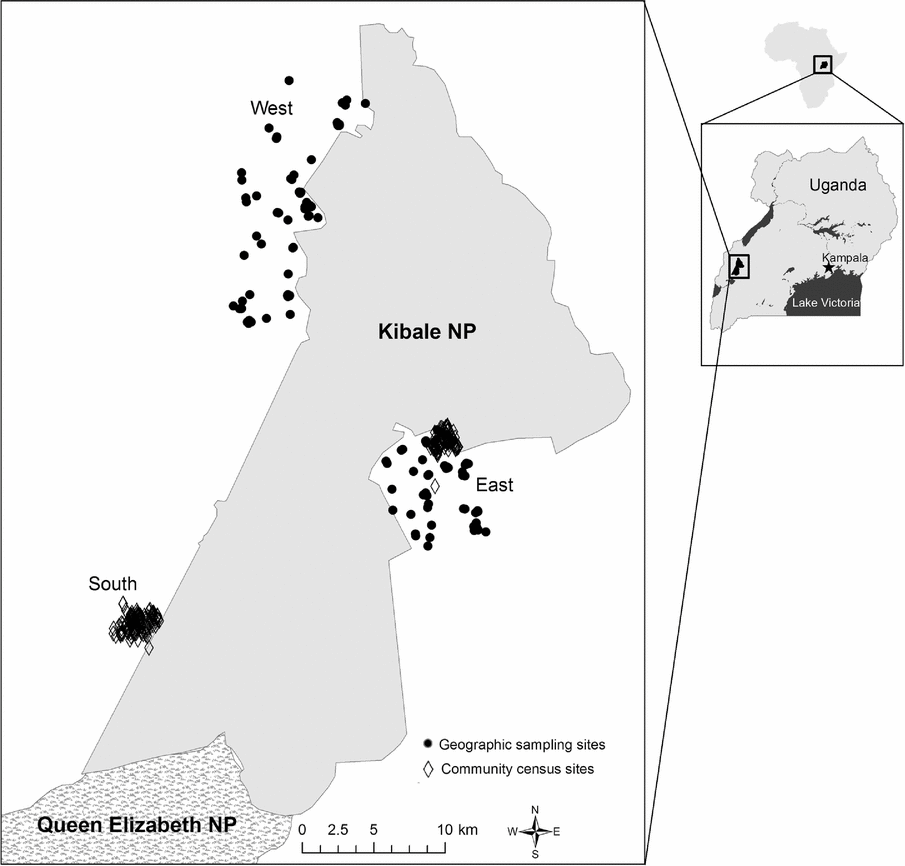
The Albertine Rift region, where Kibale National Park (795 km2; Fig. 1) is located in a biodiversity hotspot (Cordeiro et al. Reference Cordeiro, Burgess, Dovie, Kaplin, Plumptre and Marrs2007) and is severely threatened by dense intensive smallholder agriculture, land and resource pressures, and high rates of habitat loss and conversion, making it a top priority area for conservation (Brooks et al. Reference Brooks, Balmford, Burgess, Fjeldsa, Hansen, Moore, Rahbek and Williams2001). Kibale is a remnant of a transitional forest between savannah and montane forest, and is home to the last large tract of premontane forest in East Africa (Chapman et al. Reference Chapman, Struhsaker, Skorupa, Snaith and Rothman2010).
Kibale National Park, indicating the survey locations for geographic sampling and the community census.
We conducted an analysis of two different datasets from communities near Kibale National Park, a forest park in western Uganda. We asked whether local people residing around Kibale perceive benefits to their households from the national park, and whether these benefits can be attributed to ecosystem services (non-consumptive services perceived to be provided by the Park, such as rainfall, soil fertility, fresh air and climate regulation) rather than material benefits (such as firewood, tourism, employment, education and infrastructure development; Hartter & Goldman Reference Hartter and Goldman2011) derived from the Park. We hypothesized that, despite negative attributes of the Park and consistent crop raiding by wildlife, people do perceive that the Park provides benefits. Further, we hypothesized that the perceived benefits of Kibale National Park to nearby residents would vary by where and how far from the Park they live, respondent and household characteristics, and whether or not they have been negatively affected by Kibale. We developed a suite of a priori hypotheses from these variables, drawn from the literature and previous research experience in the area.
Synopsis of the variables and their context
Geography
Local geography and proximity to a park contribute to perceptions of benefits and how their valuation varies across time and space (Brody et al. Reference Brody, Highfield and Alston2004; Fisher et al. Reference Fisher, Turner and Morling2009). Distance from the park may ensure diminished impacts from crop predation by park wildlife (Hartter Reference Hartter2009) or additional benefits from park infrastructure (for example tourist camps) (MacKenzie & Hartter Reference MacKenzie and Hartter2013). Therefore, it is likely that where a person resides and proximity to park boundaries may play a role in shaping perceptions of benefits (Hartter & Goldman Reference Hartter and Goldman2011).
Household characteristics
Consumption and perceived value of benefits from a park may vary by respondent characteristics, such as wealth, gender, age, and residence time (Rocheleau & Edmunds Reference Rocheleau and Edmunds1997; Byron & Arnold Reference Byron and Arnold1999; Goebel et al. Reference Goebel, Campbell, Mukamuri and Veeman2000; Kagoro-Rugunda Reference Kagoro-Rugunda2004), which we test. Perceptions of ecosystem services may be based on cultural characteristics, moral convictions, life experiences, residence time, education, social interactions, and use and non-use of particular areas (Solomon et al. Reference Solomon, Jacobson and Liu2012), especially for local populations who directly depend on the land and resources for their livelihoods. Longer-term residents living near the park may be more likely to perceive benefits, ecosystem services, rainfall, and climate regulation from the park than newcomers. Gender as well as life circumstances play a role in support for conservation and resource-related behaviour (Hill Reference Hill2004). Income derived from forests is especially important for rural households in developing countries (Vedeld et al. Reference Vedeld, Angelsen, Bojö, Sjaastad and Berg2007). Risk perceptions near parks may affect the perception of benefits (Baird et al. Reference Baird, Leslie and McCabe2009). In the case of Kibale, ethnicity aligns very well with location since ethnic groups settled in distinct locales around Kibale. Therefore only location was tested in this study.
Perceptions of parks
It seems likely that local peoples’ perceptions of benefits from parks vary by whether or not they have been impacted (positively or negatively) by the park (Baral & Heinen Reference Baral and Heinen2007; MacKenzie Reference MacKenzie2012). For example, residents who have been evicted from the park may perceive benefits as less important than those that were not evicted. Around forest parks where crop raiding by wildlife is prevalent attitudes and thus perceptions of park impacts may be strongly affected by those experiences (Nepal & Weber Reference Nepal and Weber1995; Hill Reference Hill2004; Lee & Priston Reference Lee, Priston and Paterson2005; Anthony Reference Anthony2007). Crop raiding is prevalent near Kibale's boundaries, but also is problematic to local farmers away from the boundaries near forest fragments (Hartter Reference Hartter2009).
Other factors
Politics, land tenure, assets, income and social capital may potentially impact perceived benefits around Kibale National Park were not addressed here. Kibale in many ways exemplifies the challenges in other park landscapes that park managers, conservationists and local people face. Therefore, understanding perceived benefits at the local scale will inform conservationists and park managers to consider a broad suite of potential benefits from parks and to use local perceptions in developing a discourse with communities.
METHODS
Study area
The three study regions bordering Kibale (east, west, south) differ in altitude, ethnic composition, and settlement and land-use history. The west study area is predominately occupied by the Batoro ethnic group, who began to settle in the area near the Park in the first few decades of the 20th century (Naughton-Treves Reference Naughton-Treves1999). Only a few communities near the boundary benefit from Park-based employment or employment at Makerere University Biological Field Station by researchers, but some women's basket and craft groups have benefited from the increased presence of tourists (Panikowski Reference Panikowski2010; MacKenzie & Hartter Reference MacKenzie and Hartter2013). The east study area is occupied predominately by Bakiga households, who migrated to the area in the 1950s–1970s as part of a resettlement scheme from the heavily populated regions of south-western Uganda (Ryan & Hartter Reference Ryan and Hartter2012). The Bakiga are more intensive farmers who rely on sales of maize and other food crops to a greater extent than most Batoro. The east side has some tourist attractions (for example chimpanzee tracking and community wetlands) and accommodation, and some seasonal employment opportunities through the Park (MacKenzie Reference MacKenzie2012). The south-west of the Park, where there is hardly any tourist infrastructure, is a mixture of mainly Bakonjo (less intensive farmers like the Batoro) and Bakiga and some Batoro.
Bigando and Kihoima were selected for in-depth study because they were relatively close to the Park border (<3 km), but differed markedly in terms of local peoples’ residence time, land tenure and relationship to the Park. Established in 1986, Bigando lies on the south-western border of Kibale. Approximately 170 households, mainly Bakonjo and Batoro, derive much of their income from agriculture. The Park land adjacent to the community is primarily grassland and young secondary forest. Seventy-five per cent of the survey respondents in Bigando had resided there for less than 10 years, and 97% reported living on public land. Kihoima, established in 1960, is composed of approximately 120 households and borders Kibale's eastern side. The Park land adjacent to the community comprises primarily closed canopy forest. Seventy-three per cent of Kihoima's respondents said they had lived in the community for over 21 years. The majority of Kihoima's respondents are Bakiga who intensively cultivate small plots of land. Most have purchased the land they lived on (56%) or held customary tenure (37%), inheriting the land from family members.
Data collection
Two different sampling methods were used: (1) a community census (CC) of two communities to provide detailed information on perceived benefits, and (2) a geographic sampling (GS) of multiple locations within many communities to determine if the details from the community census held true across the Park landscape. CC data cannot be used to generalize communities across the landscape, while GS may be biased by under-sampling in heterogeneous communities and environments since we selected specific latitude/longitude coordinates on the ground. These two methods therefore complemented each other. We examined local perceptions in three different areas adjacent to Kibale, east, west and south, which have distinctive ethnic characteristics and relationships to the Park. Each of the households was unique to either the GS or CC, and none of the households were surveyed twice.
In CC, a household survey was delivered to 251 household heads between April and May 2004 in Bigando (south) and Kihoima (east) (Fig. 1) in one of three vernacular languages (Rutoro, Rukiga or Rukonjo) by three male assistants trained in the survey technique and fluent in these languages (Solomon Reference Solomon2007). For the GS, two research areas for social science research on the east and west sides of the Park were defined within 5 km of the Park boundary (Fig. 1). A set of 95 random geographic coordinates within these areas was selected, and those points became the centres of 9-ha areas (circles with radii of 170 m) termed ‘superpixels’ (Goldman et al. Reference Goldman, Hartter, Southworth, Binford, Wrangham and Ross2008). Survey respondents (both men and women) were selected from among landholders in each of the superpixels, and all surveys were conducted in person using a trained male interpreter in Rutoro, Rukiga or English (Hartter Reference Hartter2009, Reference Hartter2010).
We tested five sets of perceived benefits within these two datasets: all benefits (material benefits and ecosystem services), all ecosystem services, and three individual ecosystem services (rainfall, fresh air, and climate regulation). These were nested sets of responses, so we avoided inter-set comparisons in our analyses. First, we asked respondents about perceived Park benefits, ‘Does Kibale National Park help you/your household in any way?’ (dichotomous response, GS) and ‘The park [Kibale] provides benefits to you’ (five-point Likert scale for agreement/disagreement, CC). Respondents who answered in the affirmative in either survey were asked to free-list any and all benefits that they perceived came from the Park.
Next, we examined perceptions of ecosystem services by respondents. Since ‘ecosystem service’ is a technical English term, we defined these as the non-material benefits provided by the Park or due to living near the Park (Hartter & Goldman Reference Hartter and Goldman2011), not resources such as firewood, tourism, or infrastructure listed by respondents. Importantly, these were not the result of leading questions, rather a post-facto derivation of perceived benefits as ecosystem services from free-listed responses. Then, we subdivided ecosystem services into: rain (the Park provides adequate and/or abundant rainfall and/or rainfall at the right times; air (living close to the Park provides fresh air); and climate (GS respondents mentioned that Kibale helps maintain or enhance a more favourable local climate in terms of temperature and moisture; CC respondents mentioned that Kibale was responsible for cool weather and cool breeze relative to areas more distant from the Park).
Analyses
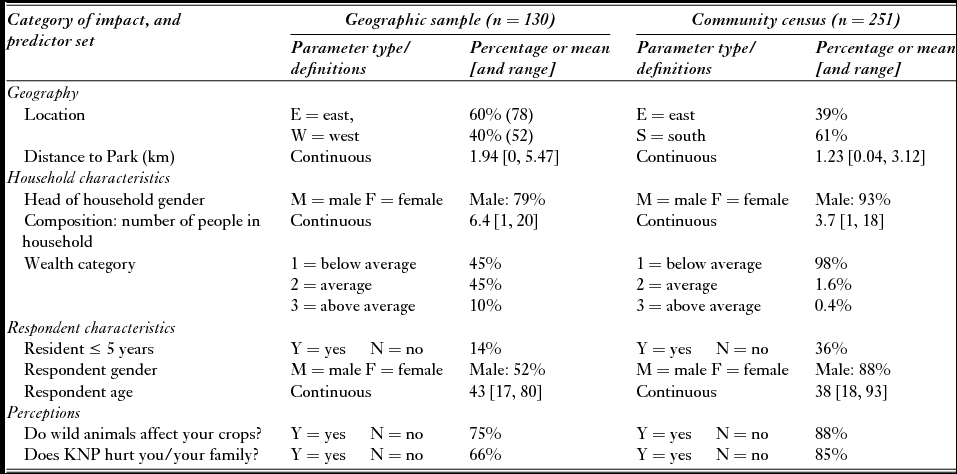
The two datasets were analysed separately, using comparable models and methods to assess similarities in findings. For each dataset, wealth was categorized through a post-facto hierarchical cluster analysis, which included landholdings (owned, rented, borrowed), house construction, livestock, and head of household gender (Hartter Reference Hartter2009, Reference Hartter2010). We then grouped our predictors into four categories of factors: geography, household characteristics, respondent characteristics and perceptions (Table 1). These comprised sets of potential variables hypothesized to affect the response regarding each of the five benefit types that we identified: perception of any benefit by Kibale, all ecosystem services, rain, air, and climate. We constructed global models of all factors, then examined all possible submodels to avoid any biases introduced using stepwise techniques. Using Akaike's information criteria corrected for small sample size (AICc), we obtained the best fit general linear model (GLM) with a binomial response and logit link function. We used the package glmulti (de Mazancourt & Calcagno Reference De Mazancourt and Calcagno2010) in R (ver 2.13.1) to test all possible submodels, with a threshold criterion for improvement of ΔAICc ≥ 2 (Burnham & Anderson Reference Burnham and Anderson2002). AICc is used to assess statistical model quality in goodness of fit, traded off against the model complexity (number of parameters), in this case maximizing likelihood of the model, while penalizing for overfitting. For ease of interpretation, we present the top selected models, and then present traditional variable significance in the models.
Factors hypothesized to influence perceptions of benefits and ecosystem services.
To further explore the relative importance placed on benefits by respondents, CC data were used to establish average benefit rankings. Respondents free-listed benefits (b1. . .bn
), which enumerators placed into four categories: ecosystem services, incoming generation, Park resources and community benefits. Respondents were then asked to rank benefits in each category in terms of importance to their household (r1. . .rn
). Average rankings of each benefit ( $\overline {br}$
) were calculated as:
$\overline {br}$
) were calculated as:
 \begin{equation*}
\overline {br} = \frac{{\Sigma r_1 + \Sigma r_2 *2 + \Sigma r_3 *3 + \ldots \Sigma r_n *n}}{{\Sigma r}}
\end{equation*}
\begin{equation*}
\overline {br} = \frac{{\Sigma r_1 + \Sigma r_2 *2 + \Sigma r_3 *3 + \ldots \Sigma r_n *n}}{{\Sigma r}}
\end{equation*}
RESULTS
Local people perceived a variety of benefits from Kibale (Fig. 2). We recorded all perceived benefits, such as income generation (any item listed that would generate individual financial gain, for example employment or tourism), community-level projects (for example income to the local economy or infrastructure development, such as school classrooms, bridges and roads), Park resources (such as firewood, medicines and reeds/grasses) and ecosystem services. From the CC, 53% of all respondents (n = 251) agreed or strongly agreed that Kibale provided benefits to their family. Of those that perceived benefits from the Park, ecosystem services were reported the most of any benefit (92%, n = 134) and were ranked higher ( $\overline {br}$
= 1.12) than ‘park resources’ (natural resources procured from Kibale) (
$\overline {br}$
= 1.12) than ‘park resources’ (natural resources procured from Kibale) ( $\overline {br}$
= 1.47) and ‘community benefits’ (any item listed that might be considered a benefit to the local community) (
$\overline {br}$
= 1.47) and ‘community benefits’ (any item listed that might be considered a benefit to the local community) ( $\overline {br}$
= 1.36) (Dunnett's Test, p < 0.05). Ecosystem services was ranked higher (but not statistically different) than ‘income generation’ (
$\overline {br}$
= 1.36) (Dunnett's Test, p < 0.05). Ecosystem services was ranked higher (but not statistically different) than ‘income generation’ ( $\overline {br}$
= 1.25). Only 6% (n = 134) of respondents mentioned income generation. When income generation was mentioned, then it was perceived to be important to households, but very few realized this benefit. Park resources was mentioned more often (23%) than community benefits (8%), but each had a mean ranking lower than ecosystem services. Benefits from tourism were infrequently reported (13%, n = 134). Rainfall (improving quantity and timing) was the ecosystem service reported most often associated with proximity to Kibale (84%, n = 134), followed by a reasonable climate (22%, n = 134) and fresh air (7%, n = 134).
$\overline {br}$
= 1.25). Only 6% (n = 134) of respondents mentioned income generation. When income generation was mentioned, then it was perceived to be important to households, but very few realized this benefit. Park resources was mentioned more often (23%) than community benefits (8%), but each had a mean ranking lower than ecosystem services. Benefits from tourism were infrequently reported (13%, n = 134). Rainfall (improving quantity and timing) was the ecosystem service reported most often associated with proximity to Kibale (84%, n = 134), followed by a reasonable climate (22%, n = 134) and fresh air (7%, n = 134).
Respondents who perceived benefits from Kibale National Park. Park benefits perceived by local people were divided into four categories: (1) ecosystem services: rain, fresh air, climate maintenance, soil fertility, soil moisture, pollination, ‘keeps animals’; (2) income generation: employment, tourism; (3) Park resources: water, fuelwood, medicines, grasses and reeds, poles, timber; and (4) community benefits: infrastructure development (bridges, school classrooms, water and sanitation), improved local economy, education. Values are given as a proportion of those who reported benefits from Kibale (geographic sampling: n = 79; community census: n = 134).
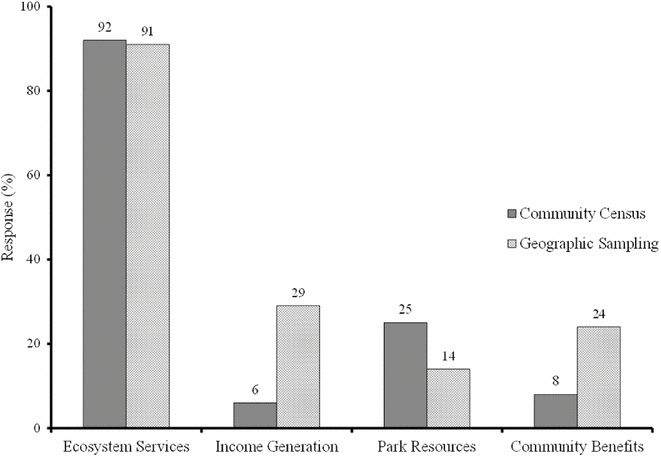
The GS yielded similar results. Sixty-one per cent of respondents (n = 130) said that the Park had benefited them in one or more ways. Of those that perceived a benefit, 29% of respondents perceived income generation as a benefit (for example from employment or tourism). Only a small proportion reported tourism benefits (4%). Fourteen per cent said they collected resources from within the Park, which are permitted through multiple use agreements between the Park and communities for such resources as firewood and medicines. Only 13% of respondents stated that they or their communities benefited in some way (for example from school classrooms, bridges, improved roads or teacher quarters). However, what can be defined as ecosystem services were cited far more often (91%, n = 79), while material benefits associated with the Park were cited less. Of those that cited benefits, rainfall was the most often mentioned ecosystem service (60%, n = 79). The second most commonly noted (34%, n = 79) ecosystem service in the geographic survey was that the Park ‘keeps animals’; two respondents reported this in the CC. This benefit expresses a widely held perception that prior to the Park's establishment, wild animals could be found roaming throughout the landscape, while, since establishment, wild animals are mostly ‘confined’ within close proximity to the Park boundaries. Respondents also reported that Kibale helps to ‘keep the environment’ (23%, n = 79). Local residents described this as the maintenance of local weather conditions that were amenable to their way of life, and that, without Kibale, the area would be drier and less suitable for farming. Fresh air was also cited (23%, n = 79), and so was that Kibale improves or maintains soil moisture, pollination and soil fertility (<3% for each survey).
Our multimodel selection analysis of potential factors influencing perceptions of benefits revealed that the top selected model (Table 2) in every case outperformed the global model, and that no single category of factors (Table 1) performed as well. The top GS model for ‘all benefits’ (ΔAICc = 12.23) included a positive impact of respondent gender (male respondents were more likely to perceive benefits, p = 0.002), and a negative relationship of the perception that the Park ‘harms’ (those who were harmed by the Park were less likely to perceive benefits, p = 0.003). In the top CC model (ΔAICc = 6.87) the perception that Kibale has harmed the household (‘harm’; p = 0.01), and head of household gender (male-headed households were more likely to perceive benefits, p = 0.02) were both significant. We also found that respondents who resided five years or less in the vicinity of the Park were less likely to perceive benefits (p = 0.01) and also that respondents on the east side of Kibale were less likely to perceive benefits (p < 0.001). This model also included respondent gender, age and crop raiding perception.
Top selected sub-models for each category of benefit or ecosystem service, with parameters listed (* p < 0.05). EST = parameter estimate, SE = standard error, HoHH = head of household; p-value and measure of sub-model improvement over the global model (ΔAICc) are given. For the geographic sampling (GS), location refers to east and west of the Park, while for the community census (CC), location refers to south and east of the Park.
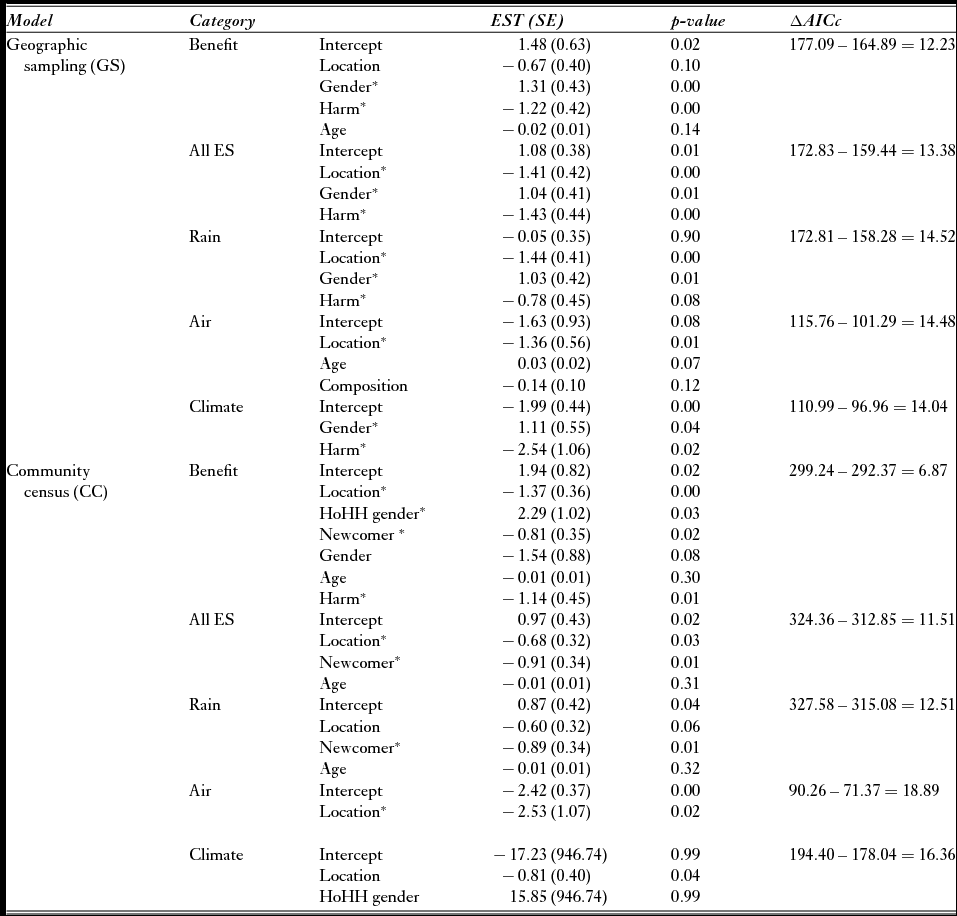
The top GS model for ‘all ecosystem services’ (ΔAICc = 13.38) indicated the significant impact of location (with stronger impact of the east side of the Park, p < 0.001), respondent gender (male bias, p = 0.012), and the perception that the Park had harmed the household (p < 0.001). In the CC top model (ΔAICc = 11.51), there was a negative relationship with newcomers (p = 0.07) and location (p = 0.03), and negative, but not significant, impact of respondent age (younger respondents were less likely to perceive benefits).
For the benefit ‘rain’, the top GS model (ΔAICc = 14.52) showed a significant effect of location, with a stronger response again on the east side of the Park (p < 0.001) and when the respondent was male (p = 0.01). The best fit model also included the perception of ‘harm’. For the CC top model (ΔAICc = 12.51), being resident for five or fewer years was negatively correlated with the perception of rain as a benefit (p = 0.008), and the model also indicated that age and location were important.
For the top GS model for ‘air’ (ΔAICc = 14.47), perception was positively associated with the east side (p = 0.01) and the model included respondent age and number of people in the household. The CC top model for ‘air’ only contained location (p = 0.018), however, the CC data in this category are very sparse, with only nine positive responses.
For the models of the benefit of ‘climate’, the GS top model (ΔAICc = 14.04) showed positive association with male respondents (p = 0.002), and a negative association with the perception of harm (p = 0.003). For the CC top model (ΔAICc = 16.36), location was important, with more positive perceptions in the east (p = 0.04), and when head of household gender was also included in the model, indicating the importance of this factor.
DISCUSSION
Perceived benefits of ecosystem services
A widespread perception existed among local people that non-material benefits or ecosystem services are important benefits from Kibale. These perceptions were not dictated solely by geography, household or respondent characteristics, or whether the Park was perceived to harm households. The top models show that a number of factors were involved in explaining perceptions of benefits.
In the GS survey, location was an important factor in describing perceptions of benefits. Material benefits and ecosystem services were more often perceived on the east side of Kibale. Within the areas sampled for this study, employment, infrastructure built through the revenue-sharing programme, and proximity to tourist operations is more concentrated on the east side (MacKenzie Reference MacKenzie2012); this thus may influence responses. With regards to climate and rainfall, the east side tends to be drier and cultivated more intensively. Locals may be more attuned to success or failure of crops, and thus east side residents may be more likely to perceive benefits of ecosystem services. Further, the east side has fewer forests and natural areas than in the west or south, and Hartter (Reference Hartter2010) reported local peoples’ perceived connection between forest and rainfall. One respondent explained his rationale by stating, ‘What are we to do if the Park is gone? How will we get those [benefits]? How will we farm? We can do something about the animals. . . we can guard, but we cannot do anything about not having rain’ (Respondent 37). Hartter et al. (Reference Hartter, Stampone, Ryan, Kirner, Chapman and Goldman2012) found that more farmers on the east side than on the west side reported less rainfall than in the past. Breytenbach (Reference Breytenbach2012) found that there is a rainfall gradient from the north-west (more) to the south-east (less) of Kibale, and so it makes sense that inadequate rainfall would be more noticeable to east side residents. Gender was also an important factor for the perception of benefits, ecosystem services, rainfall and climate, with men more likely to perceive these benefits than women. It is plausible that, in this area, men are more likely to report these benefits by the Park because they generally have more access to education and tend to remain in school longer, where they could be exposed to environmental science. Men may be more likely to perceive material benefits because those benefits are within the purview of culturally-defined gender roles, such as revenue-sharing projects (for example building school latrines, digging elephant trenches and road bridges) that tend to employ men. We found that people who reported benefits were less likely to report being harmed by the Park. While this may appear intuitive, this was assessed using two separate questions to distinguish the ways residents perceived being harmed by and benefiting from the Park. For example, a respondent could perceive benefits (for example rainfall) and also harm (for example crop raiding) from the Park.
Although the top models for each sample data type did not contain exactly the same factors, there were some commonalities. For CC, our results suggest location was related to perceptions of ecosystem services. Location was an important factor in explaining perceptions of material and non-material benefits, all ecosystem services, and rainfall; with those on the east side of Kibale more likely to perceive these benefits than those in the south. Large groups of immigrants often bring their value systems, knowledge, and land and resource-use practices with them (Nesheim et al. Reference Nesheim, Dhillion and Stølen2006). The Bakiga emigrated from densely-populated south-western Uganda and moved to the east side of Kibale, where forests are increasingly becoming scarcer because of intensive cultivation (Hartter & Southworth Reference Hartter and Southworth2009; Hartter et al. 2011). They may have brought with them a lasting sense of resource scarcity and therefore a heightened awareness of ecosystem services (Holt Reference Holt2005).
CC data showed that newcomers were less likely to perceive benefits, all ecosystem services, and rain (Table 2). Newcomers may not have been there long enough to have experienced a fuller suite of benefits (if any) and thus were less likely to report benefits. Instead, longer-term residents likely had more place-based knowledge and experience, and thus may have drawn their impressions from a much longer period. Memories of surplus and scarcity tend to be stronger than those from periods of normal conditions, and help to shape judgment and comparisons to successive events or seasons (Rebetz Reference Rebetz1996; Easterling et al. Reference Easterling, Evans, Groisman, Karl, Kunkel and Ambenje2000; Orlove et al. Reference Orlove, Roncoli, Kabugo and Majugu2010). Although newcomer status was not a significant factor in the GS, newcomer status and thus residence time may nevertheless be important in shaping perceptions. This warrants future research to understand the deeper potential complexity of respondent history and perception of benefits.
Wealth was not selected for in the top models. Most people residing around the Park are farmers, and ecosystem services such as rain are critical to their livelihoods. For example, respondents consistently explained that rain from the Park was important for their crops to grow. Regardless of wealth levels, farmers perceive such ecosystem services and rely on them, as crops provide food security as well as income.
Overall, there is a widespread consensus that local people perceive ecosystem services as a benefit from the Park. Ecosystem services were cited far more often than any other perceived benefit in both surveys. CC communities reported Park resources as a benefit more often than respondents in the GS. The two CC communities were located adjacent to the Park's border and therefore Park resources were generally more accessible for the CC individuals than GS respondents. Although it is illegal to collect resources unless part of Kibale's collaborative resource management programme, there is evidence that collection of Park resources is widespread (Solomon et al. Reference Solomon, Jacobson, Wald and Gavin2007). The GS included individuals located further from Kibale (up to 5 km) and therefore not all these individuals benefit from easy access to the Park. The difference noted between income generation and community benefits between the two methods may be because individuals residing in the two CC communities are relatively income-poor, relatively remote and therefore have access to few tourism-related benefits compared to other areas around the Park.
Perceptions matter because local people may act on their perceptions and beliefs, and develop coping strategies based on their evolving place-based knowledge (Gbetibouo Reference Gbetibouo2009; Gearhead et al. Reference Gearheard, Pocernich, Steward, Sanguya and Huntington2010; Speranza et al. Reference Speranza, Kiteme, Ambenje, Wiesmann and Makali2010; Hartter et al. Reference Hartter, Stampone, Ryan, Kirner, Chapman and Goldman2012). In this area, these perceptions may lead to land and resource use, and other actions. In Uganda, where rain-fed agriculture constitutes 42% of the gross domestic product and > 90% of the export earnings (Twinomugisha Reference Twinomugisha2005), the timing and amount of seasonal rainfall have direct impacts on household food security (Hartter et al. Reference Hartter, Stampone, Ryan, Kirner, Chapman and Goldman2012). The widespread perception of the Park's influence on timely and adequate rainfall and climate regulation may come from and be reinforced by a combination of school education programmes, community conservation and development groups, Kibale outreach programmes, radio broadcasts and extension work in partnership with National Agricultural Advisory Services (NAADS) and National Environment Management Authority (NEMA), a foreign volunteer, second-hand information, and local environmental knowledge.
Material benefits and ecosystem services
While ecosystem services were important to local people and their perception was widespread, material benefits were not necessarily unimportant, but rather they were recognized by fewer people in a more geographically restricted area. Material benefits (such as jobs, tourism, improved roads and new clinics), that provide easily quantifiable outputs and impacts on local communities and the environment, can be easier to predict because they are constrained by a more clearly defined zone of interaction (DeFries et al. Reference DeFries, Rovero, Wright, Ahumada, Andelman, Brandon, Dempewolf, Hansen, Hewson and Liu2010). Bridges, schools, clinics and infrastructure improvements may be limited in geographic range for benefits, but they are the most visible signs of development. These types of benefits provide clear and direct evidence of use of funds, and are easily tied to conservation and development projects. However, the catchment of material benefits is small for forest parks and, in aggregate, most people around parks do not benefit from these types of benefits. These are mainly limited to areas around the research hubs, tourist venues and main roads, or those with resource access agreements (Solomon Reference Solomon2007; MacKenzie Reference MacKenzie2012).
Tourism linked to parks is often touted because of its ability to contribute to both conservation and development goals (Dixon & Sherman Reference Dixon and Sherman1991). With c. 11000 tourist visits annually, the tourism industry surrounding Kibale fails to directly impact the majority of residents around the Park, despite the enactment of a tourism revenue-sharing programme, where money is targeted towards infrastructure development (Solomon Reference Solomon2007). The funds that reach the communities are small, their allocation complicated, and there is such a large proportion of the growing population that is negatively impacted by the Park, particularly from crop raiding, that overall it is unlikely to have a significant impact on those local people living around the Park. Employment opportunities linked to Kibale are also limited by location (MacKenzie Reference MacKenzie2012), whereas the perception of ecosystem services as a benefit from Kibale are widespread. The perception of these services may maintain support for conservation in communities where few, if any, other benefits are realized (Hartter Reference Hartter2010; Sodhi et al. Reference Sodhi, Lee, Sekercioglu, Webb, Prawiradilaga, Lohman, Pierce, Diesmos, Rao and Ehrlich2010).
The importance of sampling design
As in any research design, there are trade-offs to be made. The CC provided detailed knowledge of communities located along the border of the Park, while the GS provided more geographically comprehensive data. It allowed us to move beyond examining sociodemographics to examine proximity, which has traditionally played a small role in conservation research (Brody et al. Reference Brody, Highfield and Alston2004) but has been an important part of the conservation conversation (see Wittemyer et al. Reference Wittemyer, Elsen, Bean, Burton and Brashares2008; Joppa et al. Reference Joppa, Loarie and Pimm2009; Baird & Leslie Reference Baird and Leslie2013). When combined, these sampling methods provided a richer understanding of local perceptions.
There is widespread belief of benefits associated with Kibale, and ecosystem services in particular. However, these benefits may not outweigh the costs borne by people who live near the boundary, where crop raiding can be severe. Some individuals may be in favour of parks, provided they are not in their vicinity. In the case of the two communities located adjacent to the Park boundary (CC), support for the Park was not strong. For example, 63% believed that the Ugandan government should allow Kibale to be converted to agriculture (Solomon Reference Solomon2007). In contrast, the GS data indicated more support for Kibale, with 72% believing Kibale should stay, although people right next to the Park boundary were less apt to want the park (Hartter Reference Hartter2007). Researchers and practitioners need to be mindful of scale effects in designing research and interpreting results in relation to the scope of inference.
IMPLICATIONS FOR PROTECTED AREA MANAGEMENT
The widespread perceptions of the importance of ecosystem services around Kibale demonstrate that these perceptions should not be overlooked or downplayed. They may be vital for management decisions (Kollmuss & Agyeman Reference Kollmuss and Agyeman2002; Gbetibouo Reference Gbetibouo2009; Hartter et al. Reference Hartter, Stampone, Ryan, Kirner, Chapman and Goldman2012). Understanding local contexts is important because local farmers weigh ecosystem services provided by maintaining forests against the opportunity costs incurred. Local stakeholders at the household level usually do not refer to the same set of values as conservationists or park managers (Berkes Reference Berkes, Roe, Elliott, Sandbrook and Walpole2012), who seek to influence decision-making at much larger scales (Ghazoul Reference Ghazoul2007). Undoubtedly certain features or services will be more prominent in local peoples’ beliefs shaped by local contexts, and these may influence decision-making and land use. People living near Kibale valued ecosystem services. Thus a major opportunity for the application of the ecosystem service concept to park management at local and landscape scales is to capture its multiple dimensions in a way that emphasizes the importance of local social, economic, institutional and demographic contexts (Ghazoul Reference Ghazoul2007; Daily et al. Reference Daily, Polasky, Goldstein, Kareiva, Mooney, Pejchar, Ricketts, Salzman and Shallenberger2009). To properly inform and involve local stakeholders requires consideration of the spatial patterns of these beliefs and possible predictors. Without this understanding, management and implementation are likely to be poorly targeted (Cowling et al. Reference Cowling, Egoh, Knight, O’Farrell, Reyers, Rouget, Roux, Welz and Wilhelm-Rechman2008; Berkes Reference Berkes, Roe, Elliott, Sandbrook and Walpole2012).
Parks have considerable impacts on neighbouring communities, and their long-term political and economic sustainability depends on managing these relationships well (Ryan & Hartter Reference Ryan and Hartter2012). Kibale demonstrates that people appreciated the Park in ways that are seldom cited, and often for reasons that might be surprising. The challenge for future park managers is to understand these biological, social and economic linkages more clearly, and to develop the concepts and acquire the skills to manage them.
The extent to which people value ecosystem services in forest park landscapes may be differ from that in other park landscapes (Hartter & Goldman Reference Hartter and Goldman2011). Highlighting ecosystem services provides a significant incentive for policy decisions, but there are notable challenges that must be overcome, particularly their value and extent, which are perceived differently across scales and stakeholder groups and thus can be challenging to manage in practice (Costanza et al. Reference Costanza, d’Arge, de Groot, Farber, Grasso, Hannon, Limburg, Naeem, O’Neill, Paruelo, Raskin, Sutton and van den Belt1997; Silvano et al. Reference Silvano, Udvardy, Ceroni and Farley2005). Local users often have a preference for direct short-term gains delivered from goods or services that are captured equitably, but ecosystems are not exclusive and often benefit the entire community, and their benefits are ongoing and accrue over time. Most forest parks in Africa are not heavily touristed, and since local people have the most to gain or lose by conserving these areas, understanding ways that local people value them is an important step for conservationists to take.
ACKNOWLEDGEMENTS
Funding for this research is from the National Science Foundation (0352008 and 1114977) and the Fulbright Program for Africa. Valuable contributions in the field were made by Erimosi Agaba, Mwesigwe Peace, Karungi Edith, Mukwenda John, Kakooza Michael and Birungi Sixtus. We are extremely grateful for ongoing collaboration with Catrina MacKenzie. Makerere University Biological Field Station, Uganda Wildlife Authority, Uganda Council for Science and Technology and many local government officials provided support and granted permission for this research.



