


Invasive plant control and eradication measures (Hulme Reference Hulme2006) have relied on the use of a variety of methods and their combination (manual and mechanical removal, chemical control with herbicide use or biological controls; e.g., Atkins and Williamson Reference Atkins and Williamson2008; Beerling Reference Beerling1990; Boss et al. Reference Boss, Schläpfer, Fuchs, Défago and Maurhofer2007; Derr Reference Derr2008). These operations are time-consuming and expensive and usually have (1) time-limited effect on targeted invasive plant species and (2) a potential impact on non-targeted native species and other ecosystem components (Kettenring and Reinhardt Adams Reference Kettenring and Reinhardt Adams2011). This can be partly explained by the fact that the methods target only the adult stage and do not take into account capacity for plant development from a large propagule bank (Regan et al. Reference Regan, McCarthy, Baxter, Panetta and Possingham2006; Richardson and Kluge Reference Richardson and Kluge2008).
Management Implications
Alien plant species often show a strong vegetative (e.g., rhizomes) and sexual (seeds) reproductive capacity, which together represent dispersal and resistance organs contributing to species’ invasiveness and effect on native communities. Seeds are the most highly resistant organs of plants, and preventing their germination from the seedbank impedes a species’ recruitment of individuals, and thus its persistence in a community, yet this effect is often underestimated. Inhibition of invasive seedbank germination relies on the use of a variety of methods in combination, which involves a range of constraints and is often not wholly effective. New and innovative methods for rapidly inhibiting invasive seedbank germination need to be explored to treat contaminated soil in situ in different ecosystem types (croplands, natural environments, or construction sites). Heating by microwave has been considered, because it offers a means to quickly reach the temperature required for the loss of seed viability and, therefore, inhibition of germination. To determine the technical characteristics of a mobile, continuous-conveying tunnel with microwave equipment allowing the treatment of infested soil in situ, we carried out two experiments under laboratory-controlled conditions. Our results showed that treatments 2kW8min and 4kW4min, requiring about 3.05 kWh m−2 (1,097 J cm−2), allowed the relatively efficient inhibition of seed germination under different soil moisture levels (10% to 31.4%) and down to a depth of 12 cm, making this equipment potentially suitable for treating larger soil volumes compared with other equipment described in the literature. The use of microwave systems to rapidly and fully inhibit invasive seedbank germination is promising and may be one of the most effective methods currently available. Results are sufficiently encouraging to justify further experiments to determine the most effective treatments that would be applied following development of a microwave device to treat large volumes of soil infested by invasive seed efficiently and with reasonable energy requirements. Other types of soil, in terms of texture and organic matter content, should be tested in future experiments, because these factors influence soil water content and, consequently, microwave heating.
Alien plant species often show strong vegetative (e.g., rhizomes) and sexual (seeds) reproductive capacities, which together represent dispersal and resistance organs contributing to species invasiveness and affecting native community invasibility and viability (Gioria et al. Reference Gioria, Pyšek and Moravcová2012). Seeds are the most highly resistant organs of plants, and preventing their germination from the seedbank impedes a species’ recruitment of individuals, and thus its persistence in a community (Regan et al. Reference Regan, McCarthy, Baxter, Panetta and Possingham2006; Richardson and Kluge Reference Richardson and Kluge2008), yet this factor is often underestimated. A possible method for inhibition of invasive plant seed germination is the extraction of contaminated soils, which is not without risk due to possible contamination during transport, followed by soil solarization, which involves a range of constraints, such as suitable weather conditions, setting land aside, and duration of treatment, and is often not wholly effective (Cohen and Rubin Reference Cohen and Rubin2007). An alternative option for depleting the invasive seedbank is to limit seed production by implementing a control method (e.g., herbicides, fire; Richardson and Kluge Reference Richardson and Kluge2008) immediately after seedling emergence, either by promoting seedbank emergence (e.g., by soil tillage and/or irrigation; Benvenuti and Macchia Reference Benvenuti and Macchia2006) or by exploiting the difference in germination phenology, if it exists, between native and alien species (Marushia et al. Reference Marushia, Cadotte and Holt2010; Wolkovich and Cleland Reference Wolkovich and Cleland2011). However, both methods represent a control method that is not applicable in the natural environment, where the remaining seedbank is sensitive to natural disturbances and where long-term eradication requires the repetition of the operations over several years (Benvenuti and Macchia Reference Benvenuti and Macchia2006; Marushia et al. Reference Marushia, Cadotte and Holt2010; Richardson and Kluge Reference Richardson and Kluge2008). Consequently, new and innovative methods for rapidly inhibiting invasive soil seedbank germination need to be explored to treat contaminated soil in situ in different ecosystem types (croplands, natural environments, or construction sites).
Some studies have considered the potential of microwave radiation to control invasive and pest species for commercial, agricultural, or ecological purposes, in particular in the interest of developing nonchemical techniques (Ambrose et al. Reference Ambrose, Lee and Cho2015; Barker and Craker Reference Barker and Craker1991; Fleming et al. Reference Fleming, Janowiak, Halbrendt, Miller and Hoover2005; Sahin and Saglam Reference Sahin and Saglam2015). Microwave radiation causes dielectric heating of moist materials and offers a means of rapidly reaching the temperature needed for loss of seed viability and inhibition of germination (in a 60 to 90 C range, depending on the authors; Barker and Craker Reference Barker and Craker1991; Bebawi et al. Reference Bebawi, Cooper, Brodie, Madigan, Vitelli, Worsley and Davis2007; Brodie et al. Reference Brodie, Pasma, Bennett, Harris and Woodworth2007b; Mavrogianopoulos et al. Reference Mavrogianopoulos, Frangoudakis and Pandelakis2000; Sahin Reference Sahin2014) and can be considered as a thermal weed control method that has no direct environmental drawbacks, especially as there is no residue to contaminate the surroundings, unlike herbicides. The results have generally not been encouraging for the development of these microwave treatments, because they either lack effectiveness or are costly. However, the cited studies used microwave equipment that did not enable homogeneous and deep penetration of the waves (e.g., frequency of 2,450 MHz, only one generator, static batch, horn antenna). The commonly used pyramidal horn antenna led to nonhomogeneous vertical and horizontal temperature distribution in the soil, with a peak temperature (around 90 C) occurring between 2 and 5 cm below the soil surface along the center line of the horn antenna, making this equipment effective in inhibiting seeds germination only at shallow depths along the center line of the horn antenna (Bebawi et al. Reference Bebawi, Cooper, Brodie, Madigan, Vitelli, Worsley and Davis2007). Furthermore, the entire range of parameters that can limit or enhance a treatment’s effectiveness (soil moisture, power, duration) was rarely addressed satisfactorily (Barker and Craker Reference Barker and Craker1991; Bebawi et al. Reference Bebawi, Cooper, Brodie, Madigan, Vitelli, Worsley and Davis2007). Previous studies showed that seed mortality was greater in moist soil than in dry soil (Bebawi et al. Reference Bebawi, Cooper, Brodie, Madigan, Vitelli, Worsley and Davis2007; Brodie et al. Reference Brodie, Pasma, Bennett, Harris and Woodworth2007b). However, these studies used sand, which has the lowest dielectric constant and does not allow testing of the effect of high soil moisture on microwave treatment efficiency. Although moisture is needed to cause and transfer heat, higher moisture content may require higher treatment power and/or duration to inhibit seed germination (Brodie et al. Reference Brodie, Botta and Woodworth2007a; Mavrogianopoulos et al. Reference Mavrogianopoulos, Frangoudakis and Pandelakis2000).
The aim of this study was therefore to assess, under experimental conditions, the most effective combination of power and duration to inhibit the seed germination of invasive plant species when treating soil with microwave radiation, taking into account soil moisture and the depth of seeds in the soil. We tested the effect of microwave treatments on the germination capacity of seeds of three invasive species widespread in Europe [Bohemian knotweed, Polygonum×bohemicum (Chrtek & Chrtková) Zika & Jacobson (cuspidatum×sachalinense); giant goldenrod, Solidago gigantea Ait.; jimsonweed, Datura stramonium L.; Pyšek et al. Reference Pyšek, Lambdon, Arianoutsou, Kühn, Pino and Winter2009]. Effective treatments correspond to treatments inhibiting all seed germination, thus preventing any germination that could lead to a new invasion. The results of this work, carried out under laboratory-controlled conditions, will subsequently determine the technical characteristics of a continuous-conveying tunnel with microwave equipment allowing the treatment of infested soil collected in situ. The present work is included in the project P.A.R.I.S (Process Accéléré de Réduction des espèces InvasiveS) attempting to develop a process prototype to locally eradicate invasive plant species using microwave radiations. The process consists of heating large quantities of soil infested with invasive plant species (vegetative parts and seeds) in situ with a mobile microwave oven. The project is led by a consortium of companies specializing in renaturation, civil engineering, microwaves, and energy supply and research laboratories.
Material and Methods
Biological Material
The experiments were performed on seeds from three invasive plant species that have the specific feature of producing a large number of seeds and are widely available in Europe.
Datura stramonium (Solanaceae) is an annual herb that persists in cropping systems and disturbed areas (Kleyer et al. Reference Kleyer, Bekker, Knevel, Bakker, Thompson, Sonnenschein, Poschlod, van Groenendael, Klimeš, Klimešová, Klotz, Rusch, Hermy, Adriaens, Boedeltje, Bossuyt, Dannemann, Endels, Götzenberger, Hodgson, Jackel, Kühn, Kunzmann, Ozinga, Römermann, Stadler, Schlegelmilch, Steendam, Tackenberg, Wilmann, Cornelissen, Eriksson, Garnier and Peco2008; Weaver and Warwick 1984). Its region of origin is North America, and Mexico is a major center of diversity for this genus (Symon and Haegi Reference Symon and Haegi1991). The fruits are thorny capsules up to 4 cm in length and may contain up to 650 kidney-shaped seeds (Van Kleunen et al. Reference Van Kleunen, Fischer and Johnson2007) that are 3- to 4-mm long and 2- to 3-mm wide, and weigh 8.7 to 10.7 mg (Kleyer et al. Reference Kleyer, Bekker, Knevel, Bakker, Thompson, Sonnenschein, Poschlod, van Groenendael, Klimeš, Klimešová, Klotz, Rusch, Hermy, Adriaens, Boedeltje, Bossuyt, Dannemann, Endels, Götzenberger, Hodgson, Jackel, Kühn, Kunzmann, Ozinga, Römermann, Stadler, Schlegelmilch, Steendam, Tackenberg, Wilmann, Cornelissen, Eriksson, Garnier and Peco2008).
Polygonum×bohemicum (Polygonaceae) is a perennial herb resulting from the hybridization between Polygonum cuspidatum Siebold & Zucc. and Polygonum sachalinense F. Schmidt ex Maxim. and resulting backcrosses with the parent species, both native to Asia. This plant thrives in alluvial areas and the banks of rivers, where moisture and nutrient-rich substrates enable it to achieve optimal growth, leading to single-species stands, but it is also found in ruderal environments, such as roadsides and abandoned land (Beerling et al. Reference Beerling, Bailey and Conolly1994). The seeds are carried by achenes 2- to 4-mm long and 2-mm wide (Beerling et al. Reference Beerling, Bailey and Conolly1994).
Solidago gigantea (Asteraceae), native to North America, is a perennial herb and a major invader, often forming dense monospecific stands. Although S. gigantea prefers rich and rather moist soils, it occurs over a wide range of soil fertility and texture conditions. It is most vigorous in ruderal and riverside habitats, but also grows at drier sites, such as roadsides and embankments (Weber and Jakobs Reference Weber and Jakobs2005). The branches contain multiple flower heads (1,200±190; Schmid et al. Reference Schmid, Puttick, Burgess and Bazzaz1988) producing abundant pubescent achenes that are 1- to 1.8-mm long and weigh 0.06 to 0.074 mg, with long hairs that enable them to be readily dispersed by the wind (Kleyer et al. Reference Kleyer, Bekker, Knevel, Bakker, Thompson, Sonnenschein, Poschlod, van Groenendael, Klimeš, Klimešová, Klotz, Rusch, Hermy, Adriaens, Boedeltje, Bossuyt, Dannemann, Endels, Götzenberger, Hodgson, Jackel, Kühn, Kunzmann, Ozinga, Römermann, Stadler, Schlegelmilch, Steendam, Tackenberg, Wilmann, Cornelissen, Eriksson, Garnier and Peco2008; Weber and Jakobs Reference Weber and Jakobs2005).
Achenes of Polygonum×bohemicum and Solidago gigantea were collected in March 2015 along the Isère River in Savoie (France). Seeds of Datura stramonium were collected in October 2014 from D. stramonium stands growing along Rhône River in the Drôme (France). The achenes and seeds were collected randomly from 10 individuals of the same population and then pooled. The achenes and seeds were stored under dry conditions at room temperature until they were used for experiments. Previous works showed that these storage conditions for a short amount of time (as in this experiment) do not affect achene and seed viability and the germination capacity of species used (Benvenuti and Macchia Reference Benvenuti and Macchia1997; Bochenek et al. Reference Bochenek, Synowiec, Kondrat, Szymczak, Lahuta and Gołaszewski2016; Engler et al. Reference Engler, Abt and Buhk2011). Only the term “seed” will be used for “achene and seed” hereafter.
Microwave System
The AMW200 batch microwave system (SAIREM SAS, Neyron, France, http://www.sairem.com) used in this study is designed for testing purposes, not for industrial use. The results obtained with this equipment will subsequently determine the technical characteristics of a continuous-conveying tunnel with microwave equipment designed for the treatment of infested soil collected in situ.
The 304-L microwave oven is a stainless-steel chamber that can contain a 600 by 400 by 250 mm block (maximum size) and 30 kg (maximum weight). The microwave system is equipped with a polyethylene sliding table with a 840 by 620 mm usable surface and a pneumatically driven sliding door, making block loading/unloading easier. The microwave system operates at 915 MHz, which is more penetrating and allows the treatment of thicker products (up to 25 cm) compared with the frequently used 2,450-MHz microwave frequency (approximately three times higher). Heating homogeneity is achieved by the use of microwave coupling from the top and bottom of the product and the rotation of a turntable. The output power of 10 kW maximum is produced by two 5-kW generators (magnetron) and is adjustable from 1 kW to 10 kW. The system is water cooled.
Experimental Design
The study was subdivided into two experiments.
Experiment 1
The aim of this experiment, conducted on April 13, 2015, was to assess the most effective combination of power by duration to inhibit the germination of the three target species seeds, buried at two depths, when treating soil with microwave radiation.
The experiment was carried out on 8-kg samples of soil, each contained in a cardboard box (35 by 25 by 15 cm) covered on the bottom and sides with plastic bubble wrap to prevent water vapor emanating from the soil from softening the cardboard and significantly complicating handling. The topsoil used was collected on a wooded slope (Gard, France), and consisted of a sandy loam soil (55.5% sand, 31% silt, and 13.5% clay; according to USDA soil classification).
The seven treatments (power by duration combinations) used for this experiment (Supplementary Table S1) were determined through tests and soil temperature measurements at the periphery and in the middle of the soil with mercury thermometers immediately after microwave tests in a replicate for each test. The pretreatment soil temperature was 14.7 C and soil moisture (defined as mass water content and expressed as a percentage: [(wet soil mass – dry soil mass)/dry soil mass]*100) was 13.5%±4.4 (Hexp1). Homogeneous temperatures equal to or higher than 90 C, considered to be the temperature needed for the loss of seed viability and thus inhibition of seed germination (Barker and Craker Reference Barker and Craker1991), were achieved by four power by duration combinations (Supplementary Table S1), for which we assumed no posttreatment germination will be observed. To define the lower limits of effectiveness, three other combinations of these powers and durations were performed (Supplementary Table S1). For safety reasons (formation of electric arcs within the cavity with a high risk of magnetron damage), higher treatments could not be performed (4kW8min and 6kW8min).
For each species, two bags containing 20 seeds each were placed in each cardboard box containing soil. Baker’s paper bags were used to keep the seeds in place during the experiment and to easily extract the seeds from the soil after treatment. To assess the effect of seed burial in the soil, one seed bag was placed at a depth of 2 cm (top) and the other at a depth of 12 cm (bottom). There were five replicate boxes per treatment.
The control treatment consisted of bags, containing 20 seeds of each species, to which no microwave treatment was applied. To allow comparison of different microwave treatments with the control treatment, 5 bags of control treatments were randomly distributed at each depth.
The content of each bag (20 seeds) was stuck to double-sided plastic films, themselves stuck on tissues (Diatex, Saint-Genis-Laval, France), which were permeable to 0.2 mm, and placed on a petri dish (6-cm diameter) on cotton soaked in distilled water. Petri dishes were placed in a growth chamber (Hotcold GL,12 K lux, Quirumed, Valencia, Spain) with temperature controlled at 25 C day/15 C night and a photoperiod of 14-h day/10-h night. Seed germination was monitored every 2 d, with counting and uprooting of seedlings as they germinated to avoid preemption phenomena that could prevent germination of other individuals. The germinations were monitored until no germination was observed, corresponding to 44 d.
The effect of microwave treatment (seven power by duration combinations and control), depth (two) and species (three) and their interaction on germination percentage was tested using logistic regression (binary data). When a significant effect was observed, post hoc comparisons of means were conducted with a Tukey’s test. All statistical tests were done using R software (v. 3.2.0; R Core Team Reference R Core2015).
Three other parameters were assessed to study the effect of microwave treatment on germination capacity (see Supplementary Material).
Experiment 2
The aim of the second experiment, conducted on June 30, 2015, was to test the effect of three different soil moisture levels on the effectiveness of microwave treatments in inhibiting the germination of the three target species seeds buried at two depths. The soil and experimental setup were the same as in Experiment 1. The four treatments used in this experiment (Supplementary Table S2) corresponded to two of the treatments that were effective in Experiment 1: 4kW4min and 2kW8min (chosen among the effective treatments because they require less energy) and the two noneffective treatments that still reached a temperature above 50 C (2kW4min and 4kW2min; see “Results and Discussion”), assuming that they might be effective at different moisture levels (Bebawi et al. Reference Bebawi, Cooper, Brodie, Madigan, Vitelli, Worsley and Davis2007).
Three different soil moisture levels were used: H1, corresponding to the initial soil moisture, and H2 and H3, corresponding to the addition of 0.1 L and 0.2 L of water per kg of soil, respectively. Wet and dry soil (after drying 120 h at 105 C) were weighed to calculate soil moisture (defined as mass water content and expressed as a percentage: [(wet soil mass – dry soil mass)/dry soil mass]*100) before the experiment was made with 20 samples.
The pretreatment soil temperature was 25 C. Soil temperature was measured with mercury thermometers inserted at the edge of the soil (periphery) and in the center immediately after microwave treatments in the five replicates of each treatment (Supplementary Table S2).
To allow comparison of different microwave treatments with the control treatment, 5 bags of control treatments were randomly distributed at each depth for each soil moisture level, in order to have a full factorial design. Germination was monitored until no germination was observed, corresponding to 39 d.
Logistic regression was performed to test the effect of microwave treatment (four power by duration combinations and control), soil moisture (three), species (three), and depth (two) on germination percentage. Differences in mass water content between the three moistures tested and the moisture of soil used in Experiment 1 was assessed using one-way ANOVA. When a significant effect was observed, post hoc comparisons of means were conducted with a Tukey’s test. All statistical tests were done using R software (v. 3.2.0; R Core Team Reference R Core2015).
Results and Discussion
Experiment 1
Germination percentage was significantly affected by the microwave treatment by depth by species interaction (Table 1). S. gigantea showed a significantly higher germination percentage than D. stramonium and P.× bohemicum in the control treatment, whatever the depth (Figure 1). Germination percentage was between 0% and 1% for treatments 2kW8min, 4kW4min, 6kW2min, and 6kW4min for all the species, whatever the depth, and significantly lower compared with treatments 2kW2min, 2kW4min, 4kW2min, and control (Table 1; Figure 1). For D. stramonium and P.× bohemicum, the 2kW2min, 2kW4min, and 4kW2min treatments had no effect on germination percentage compared with the control treatment, whatever the depth (Table 1; Figure 1). For S. gigantea, the 2kW2min treatment had no effect on germination percentage, whatever the depth; the 2kW4min treatment significantly reduced germination percentage of seeds located at a 12-cm depth only; and the 4kW2min treatment significantly lowered germination percentage, particularly for seeds located at a 2-cm depth, compared with the control treatment (Table 1; Figure 1).
Germination percentage of Solidago gigantea, Polygonum × bohemicum, and Datura stramonium in control treatment and after different power by duration microwave treatments at two depths in the soil. Top: seed bags placed at 2-cm depth; bottom: seed bags placed at 12-cm depth. Values are expressed as means±SE of the five replicates. Letters indicate statistically significant differences (microwave treatment by depth by species interaction, post hoc Tukey’s test, P<0.05).

Results of generalized linear models testing the effect of microwave treatment, depth, and species, and their interactions on germination percentage (logistic regression).Footnote a
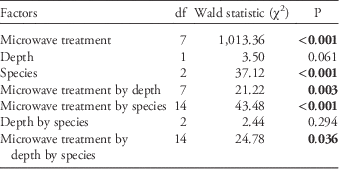
a The Wald statistic used to test the significance of the parameters, degrees of freedom (df), and P-values (P) are indicated. Values in bold indicate significance at P<0.05.
Experiment 2
Mass water content differed significantly among the three moisture levels tested in Experiment 2 and moisture of soil used in Experiment 1 (Hexp1; F 3, 80=196.2, P<0.001), with H1=10.2%±2.6<Hexp1=13.5%±4.4 <H2=20.4%±1.6<H3=31.4%±2.4 (mean±SE, post hoc Tukey’s test, P<0.005).
Germination percentage was affected by the species by depth by microwave treatment interaction, by the species by depth by moisture interaction, and by the depth by microwave treatment by moisture interaction (Table 2).
Results of generalized linear models testing the effect of microwave treatment, depth, moisture, and species, and their interactions on germination percentage (logistic regression).Footnote a

a The Wald statistic used to test the significance of the parameters, degrees of freedom (df), and P-values (P) are indicated. Values in bold indicate significance at P<0.05.
S. gigantea showed a higher germination percentage than D. stramonium and P.×bohemicum in the control treatment, whatever the depth (microwave treatment by depth by species interaction, post hoc Tukey’s test, P<0.05; Table 2; Figure 2).
Germination percentage of Solidago gigantea, Polygonum×bohemicum, and Datura stramonium in control treatment and after different power by duration microwave treatments at two depths in the soil with three different moistures (H1=10.2%±2.6; H2=20.4%±1.6; H3=31.4%±2.4). Top: seed bags placed at 2-cm depth; bottom: seed bags placed at 12-cm depth. Values are expressed as means±SE of the five replicates. Letters indicate statistically significant differences (microwave treatment by depth by moisture interaction, post hoc Tukey’s test, P<0.05).

For H1, the germination percentage was between 0% (D. stramonium and P.× bohemicum) and 2% (S. gigantea) for the four tested microwave treatments (4kW2min, 4kW4min, 2kW8min, and 2kW4min), whatever the depth, and were significantly lower compared with the control treatment (Table 2; Figure 2). For H2, the four microwave treatments significantly lowered the germination percentage (germination percentage between 0% and 56%), whatever the depth, compared with the control treatment (germination percentage between 36% and 68%; Table 2; Figure 2). For seeds located at the 12-cm depth, germination percentage did not differ between microwave treatments, but for seeds located at the 2-cm depth, the 4kW4min, 2kW8min, and 2kW4min treatments reduced germination percentage more than 4kW2min. For H3, only the 2kW8min and 4kW4min treatments significantly lowered the germination percentage (germination percentage between 2% and 19%), whatever the depth, compared with the control treatment.
Effective treatments to inhibit invasive plant seed germination were, as expected, the power by duration combinations enabling soil to reach 90 C (Bebawi et al. Reference Bebawi, Cooper, Brodie, Madigan, Vitelli, Worsley and Davis2007; Brodie et al. Reference Brodie, Pasma, Bennett, Harris and Woodworth2007b). In some cases, a temperature equal to or higher than 90 C does not completely inhibit the germination of the seeds and allows 1% or 2% germination. This may be due to uneven temperature distribution in the soil, as was sometimes observed between the center and the periphery. Even if the characteristics of the oven favor good distribution of the waves, the use of a cavity may mean that certain zones receive more energy than others (hot spots). The 2kW4min and 4kW2min treatments showed a strong depth effect at H2, which could be due to the use of a cardboard box for the experiments, leading to energy loss in the open part of the box compared with the closed bottom. Cooling near the surface prevented sufficient heating to kill seeds in the top 2 cm of soil (Barker and Craker Reference Barker and Craker1991). These results would be different with equipment that does not use a cavity (open-structure microwave applicator) or cardboard box.
The capacity of microwave treatment to enable soil to reach 90 C and to totally inhibit seed germination decreased with increasing soil moisture in the range tested. The 2kW4min, 2kW8min, 4kW2min, and 4kW4min treatments were all effective at the lower soil moisture level (H1=10.2%±2.6), but the 2kW4min and 4kW2min treatments became ineffective at higher soil moisture levels (Hexp1=13.5%±4.4, H2=20.4%±1.6 and H3=31.4%±2.4); and the 2kW8min and 4kW4min treatments remained effective, although their effectiveness tended to decrease at the highest soil moisture level (H3). The more water in the soil, the more energy is needed to achieve the same temperature for a sufficient amount of time to inhibit germination: when the moisture level is higher, a longer processing time and/or higher power are required (Fleming et al. Reference Fleming, Janowiak, Halbrendt, Miller and Hoover2005; Mavrogianopoulos 2000). However, this trend may be reversed with very dry or sandy soils that do not allow water retention, because in the absence of water in the soil, microwave treatment does not cause heating. Other types of soil, in terms of texture and organic matter content, should also be tested in future experiments, because they influence soil water content and, consequently, microwave heating (Brodie et al. Reference Brodie, Pasma, Bennett, Harris and Woodworth2007b). A temperature of 90 C may be considered necessary for the loss of seed viability, and thus inhibition of seed germination (Barker and Craker Reference Barker and Craker1991). However, the question of how long the treatments should last for the soil to reach this temperature and how long the seeds must undergo this temperature to achieve germination inhibition remains. The treatment 2kW8min at the highest moisture level reached a temperature of 90 C but did not damage all the seeds. This may be because the time required to reach 90 C is longer at high moisture levels, and the seeds have therefore undergone this temperature over a shorter duration. Barker and Craker (Reference Barker and Craker1991) showed that at least 120 s were required to heat the soil above 80 C and that a 30-s period of temperatures above 80 C is sufficient to kill seeds.
The species S. gigantea presented the highest germinating capacity but also seems to show the most sensitivity to the microwave treatments tested, possibly due to the small size of its seeds (achenes of 1- to 1.8-mm length [Weber and Jakobs Reference Weber and Jakobs2005]; seed mass of 0.06 to 0.074 mg [Kleyer et al. Reference Kleyer, Bekker, Knevel, Bakker, Thompson, Sonnenschein, Poschlod, van Groenendael, Klimeš, Klimešová, Klotz, Rusch, Hermy, Adriaens, Boedeltje, Bossuyt, Dannemann, Endels, Götzenberger, Hodgson, Jackel, Kühn, Kunzmann, Ozinga, Römermann, Stadler, Schlegelmilch, Steendam, Tackenberg, Wilmann, Cornelissen, Eriksson, Garnier and Peco2008]), which could make it more susceptible to microwave heating. Seed size seems to be a determining factor to explore further, as our results were not consistent with those of other studies suggesting that seeds with a higher mass are more susceptible to microwave treatment, perhaps because larger seeds present a larger “radar cross section,” thus propagating the microwave, and thus a higher capacity for absorption of electromagnetic energy (Bebawi et al. Reference Bebawi, Cooper, Brodie, Madigan, Vitelli, Worsley and Davis2007). Studies on seeds with more contrasting morphologies could shed light on this point.
Microwave soil treatment could potentially be the only method to rapidly and fully inhibit the soil seedbank germination in different types of environments. A major obstacle prohibiting its use is the large amount of energy required to obtain satisfactory results. Our results showed that the 2kW8min and 4kW4min treatments, which required about 3.05 kWh m−2 (1,097 J cm−2), allowed the relatively efficient inhibition of seed germination under different soil moisture levels (10% to 31.4%) and down to a depth of 12 cm, making this equipment potentially suitable for treating larger soil volumes compared with other equipment described in the literature. Mavrogianopoulos et al. (Reference Mavrogianopoulos, Frangoudakis and Pandelakis2000) used open microwave equipment with the waveguide placed vertically on the soil, which required between 7.4 and 24 kWh m−2 (depending on soil moisture: 5.5% or 15%, and initial soil temperature: 20 or 40 C) to reach only 61 C at 10-cm depth in fine sandy loam. Brodie et al. (Reference Brodie, Botta and Woodworth2007a), with a pyramidal horn antenna as a microwave applicator on the soil, reported an energy requirement of 0.63 kWh m−2 to inhibit seed germination (germination percentage of 2.5%) in air-dried soil at only a 3-cm depth, while no inhibition of seed germination (germination percentage of 100%) occurred in soil with 37% moisture. According to the results available in Brodie et al. (Reference Brodie, Botta and Woodworth2007a), 1.875 kWh m−2 would be necessary to totally inhibit seed germination (germination percentage of 0%) in moist soil at a 3-cm depth. The experiments of Brodie and Hollins (Reference Brodie and Hollins2015) with horn antenna showed that 3,528 J cm−2 was insufficient to totally inhibit germination in dry sand, whatever the depth, and 1,176 J cm−2 and 2,352 J cm−2 were required to inhibit germination at 5 and 10 cm, respectively, in sand with 20% moisture. In loamy soil (unknown moisture level), a horn antenna applying 1,020 J cm−2 did not allow total inhibition of seed germination, even at a shallow depth (germination percentage of 1.6% at 2-cm burial depth; Brodie and Hollins Reference Brodie and Hollins2015), while our equipment required only 1,097 J cm−2 and enabled treatment of larger soil volumes. In view of the results obtained and in comparison with the experimental work using open microwave equipment placed directly on the soil surface, the development of a mobile continuous-conveying tunnel with microwave equipment used in this study will be considered to treat infested soil in situ. However the use of this equipment will require the soil to be excavated and fed into the tunnel, which involves additional energy costs that must be quantified in future work with a field prototype.
The use of microwave systems to inhibit the invasive species’ seedbank germination is promising and may be one of the most effective methods currently available. Results are encouraging enough to justify further experiments to determine the most effective treatments depending on environmental conditions (e.g., types of soil) in order to develop a microwave device to treat efficiently and with reasonable energy requirements large volumes of soil infested by an invasive seedbank. However, this technique is not selective and will result in the depletion of the entire seedbank, native species included, and may alter the soil conditions through its effect on soil organisms and their activities. Few studies have considered the impact of microwave treatments on soil invertebrates, but Rahi and Rich (Reference Rahi and Rich2011) showed their lethal effect on a nematode species. Responses of key soil microorganisms and the functional consequences are rather more extensively documented, but results may be contradictory. While some authors demonstrated that fungi are more susceptible than bacteria (Speir et al. Reference Speir, Cowling, Sparling, West and Corderoy1986; Wainwright et al. Reference Wainwright, Killham and Diprose1980), Brodie et al. (Reference Brodie, Grixti, Hollins, Cooper, Li and Cole2015) observed no responses of soil fungi, ciliates, amoebas, and flagellates and a decrease in the bacterial population. Cooper and Brodie (Reference Cooper and Brodie2009) showed little to no effect of microwave treatment on key soil nutrients and pH, while others showed that soil nutrient content may be modified due to microorganism cell lysing or the modification of processes due to temperature increase (Brodie et al. Reference Brodie, Grixti, Hollins, Cooper, Li and Cole2015; Speir et al. Reference Speir, Cowling, Sparling, West and Corderoy1986; Wainwright et al. Reference Wainwright, Killham and Diprose1980). These questions therefore remain to be explored for the purposes of the management and restoration of ecosystems affected by biological invasions, as they could influence native and alien plant recruitment and development.
Acknowledgments
This work is part of an FUI (Single Interministerial Fund) research and development project, cofinanced by BPI France, Provence Alpes Côte d’Azur (PACA) and Languedoc Roussillon Regions, and the Ain local authority. In addition to the authors, the participants in this project also include scientists from Electricité de France (EDF), Génie ECOlogique Ingénierie et Travaux, Laboratoire des Symbioses Tropicales et Méditerranéennes (LST&M), NGE, and Société pour l’Application Industrielle de la Recherche en Electronique et Micro-ondes (SAIREM). No conflicts of interest have been declared.
Supplementary material
To view supplementary material for this article, please visit https://doi.org/10.1017/inp.2017.29



