INTRODUCTION
Gastrointestinal illness caused by Salmonella enterica can result in geographically widespread outbreaks because sales of implicated vehicles are often widely distributed [Reference Behravesh1]. Investigation of outbreaks of infection requires microbiological and/or epidemiological evidence to conduct appropriate control measures and inform public health action. The case-control method is often used in analytical studies in outbreak settings to examine the direction, strength and significance of association between exposure and outcome [Reference Fonseca and Armenian2–Reference Salmon4].
Recruiting controls for national outbreaks using systematic/random number dialling, has become increasingly difficult due to a wide range of societal and technological changes such as greater social mobility and use of mobile phones.
This means that certain demographic groups are under-represented when contacted by landline and this may introduce significant selection biases, and concern that controls may not have been at risk of exposure (e.g. less eating out) [Reference McCarthy and Giesecke5].The use of General Practitioner (GP)-nominated or case-nominated controls has also become more difficult due to increased work demands on GPs and increasing public scepticism.
Alternative ways to produce valid epidemiological evidence have been explored and have included case-case studies comparing severe cases with milder ones [Reference Giraudon6], or case-case studies comparing infections of different microbial subtypes [Reference McCarthy and Giesecke5, Reference McCarthy and Giesecke7–Reference Wilson9]. The potential advantages of a serotype case-case design have been discussed in the literature [Reference Rosenbaum10] and authors have trialled this method for a variety of research questions with aggregate [Reference Wilson9] or individual-level datasets [Reference Gillespie7]. The serotype case-case method is potentially quicker and less expensive because data from cases with infectious intestinal disease are readily available as they are routinely collected with standardized surveillance questionnaires in the UK. This method also has the potential to minimize important biases, such as recall or response bias, often associated with case-control designs [Reference McCarthy and Giesecke5, Reference Rosenbaum10]. However, there is a paucity of literature attempting to validate this approach and to our knowledge no published study has directly compared this type of analysis concurrently with conventional approaches in a national outbreak situation.
We report the results of our outbreak investigations into a national outbreak of Salmonella Enteritidis phage type (PT) 14b with antimicrobial resistance to nalidixic acid and reduced susceptibility to ciprofloxacin (SE14b) from 1 September to 31 December 2009 in England and Wales. The results of the case-control study had been reported previously [Reference Janmohamed11]; here we directly compared the epidemiological findings from a national case-control study to that of a serotype case-case study in order to inform further use and evaluation of this alternative epidemiological tool.
METHODOLOGY
Cases of laboratory-confirmed SE14b occurring between 1 September and 31 December 2009 in England and Wales were compared to cases of confirmed non-Enteritidis Salmonella during the same time period (case-case study). The results of this study were compared to those of a national case-control study of SE14b, which used the same cases and specifically recruited healthy controls by systematic digit dialling. We did not include cases with known epidemiological links to local outbreaks, but descriptive epidemiological evidence from these discrete outbreaks showed tentative links to the consumption of eggs and a national analytical study was performed to support this evidence on a national level in cases not linked to the outbreaks.
Definitions
A case of SE14b was defined as a person with diarrhoea and/or vomiting, whose stool sample was positive for SE14b in England and Wales, where the sample was received by the Laboratory of Gastrointestinal Pathogens, Health Protection Agency (HPA), between 1 September and 31 December 2009.
A control-case was defined as a person with diarrhoea and/or vomiting, whose stool sample was positive for any non-Enteritidis Salmonella serotype in England and Wales, where the sample was received between 1 September and 31 December 2009.
A control was defined as a person with no abdominal symptoms who agreed to be interviewed as a result of systematic phone number dialling.
Exclusions
Those who had travelled outside of the UK within 5 days prior to symptom onset or were contacts of other cases of gastrointestinal illness were excluded. Non-PT14b serotypes of S. Enteritidis were excluded from the study, because an a-priori association between this serotype with poultry and egg exposures is more common than with other serotypes [Reference Gantois12]. Only cases without known epidemiological links to local outbreaks (i.e. associated with a local caterer) were included, those associated with 16 concurrent discrete outbreaks of SE14b were excluded from the study.
Cases, controls and control-cases
Cases and control-cases were identified through the interrogation of standardized surveillance data, and questionnaires were completed for all confirmed cases prior to their microbiological subtyping results. Standardized amended routine questionnaires were used for cases, control-cases and controls and covered clinical and demographic information, food exposures, grocery shopping habits and animal contacts.
Controls were recruited systematically by altering the last 1–3 digits of the cases’ landline telephone numbers (ascending or descending by five). They were therefore chosen from the same telephone exchange and likely to live in the same geographical area as the cases. All interviews were conducted over 5 week-day evenings between 2 October and 2 December 2009. Work numbers and faxes were excluded and all interviewees gave consent by telephone prior to interview.
For the case-case study the sample size was limited by the natural occurrence of Salmonella spp. infections during the observation period (about 1:1·2 ratio). The study was powered to detect an odds ratio (OR) of 3 in common exposures (25% in control-cases) and an OR of 5·5 in rarer exposures (5% in control-cases) with 80% power to be significant at the 5% level. In the case-control study, 60 cases and 120 controls were sufficient to enable the detection of an OR of 3 (for 50% of the controls exposed) to around 4 (for 10% of the controls exposed) with 90% power and 5% significance.
The results of the case-control study are reported in detail elsewhere [Reference Janmohamed11] and are presented here in abbreviated format to facilitate comparison.
Data analysis
Descriptive and statistical analyses of the data were undertaken using MS Access 2007 (Microsoft Corp., USA) and Stata v. 11 (StataCorp., USA). For both studies (case-case and case-control), association with possible exposures were explored in single variable analysis using estimated ORs and 95% confidence intervals (CIs) and χ2 or Fisher's exact tests as appropriate. Exposures with P < 0·2 in the single variable analysis were deemed eligible for inclusion in the multivariable analysis. A logistic regression model was built in forward fashion, using likelihood ratio tests (LRTs) to determine for each exposure variable whether it was significantly associated with being a case, while adjusting for the potential confounding caused by other exposures in the model (LRT, P < 0·05). Variables, where effect modification was plausible were tested for interaction. A complete case analysis was performed.
A direct comparison between the case-control and case-case analysis was performed. To compare the estimates of significant risk factors in the two control groups, multinomial logistic regression was performed using an outcome consisting of the three categories (cases, controls, control-cases). We estimated the ratio of relative risks using a linear combination of the regression model coefficients, comparing relative exposures of control-cases and controls.
RESULTS
Descriptive analysis
A total of 489 SE14b cases were confirmed during the outbreak. Excluding cases associated with discrete outbreaks (n = 101), early non-interviewed cases and those used for the trawling exercise employed to generate hypotheses for the source of infection, a total of 81 cases were confirmed during the study period. Of these, 63 were eligible for analysis as cases. Eighteen cases were excluded due to travel history (n = 4) or were contacts of other cases (n = 14). There were 75 potential control-cases who fulfilled the control-case definition after exclusion of 17 who had travel histories and 14 who had indicated contact with other symptomatic cases with gastrointestinal illness in the 5 days prior to onset of their symptoms. Of the control-cases, 28 were infected with S. Typhimurium and 47 with other Salmonella enterica serotypes.
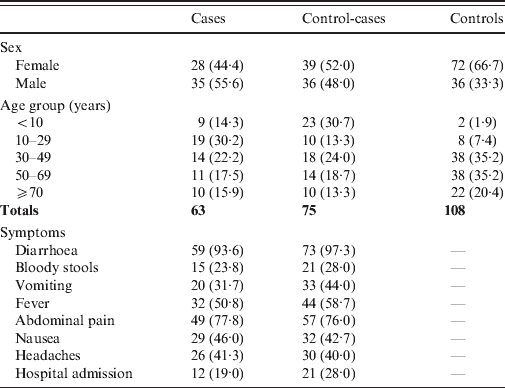
An average of 3·6 telephone calls (range 1–32) were made to recruit one control. A total of 108 controls were enrolled. Controls were more likely to be female (67% vs. 44%, P = 0·004) and older compared to cases (average age 52·5 vs. 36·8 years, respectively, P < 0·0001) and control-cases (Table 1). Control-cases were much more similar to cases than controls; age and sex were found to be significant confounders in the case-control study, but not in the case-case study.
Basic demographics for cases, control-cases and controls

Values given are n (%).
Onset dates of cases were between 1 September and 16 November 2009. The average duration of illness was 6 days and the predominant symptoms were diarrhoea, abdominal pain, fever, nausea, headaches, and to a lesser degree vomiting. About 27% of the cases reported blood in their stool and 19% were admitted to hospital (Table 1). No deaths were reported in the study cases. The clinical and epidemiological details have been reported in more detail elsewhere [Reference Janmohamed11].
The case-case study
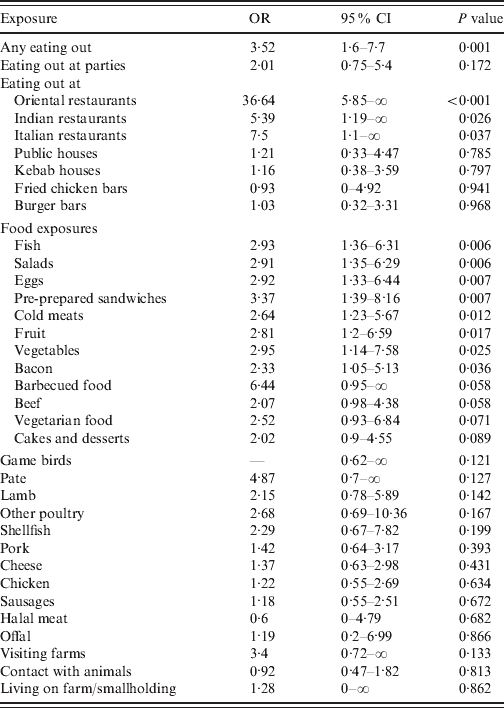
Single variable analysis of the case-case study demonstrated a strong association between eating out and symptomatic infection with SE14b (P = 0·001), particularly in oriental restaurants (P < 0·0001), Indian restaurants (P = 0·026) and Italian restaurants (P = 0·037). Exposure to fish (P = 0·006), salads (P = 0·006), eggs (P = 0·007), pre-prepared sandwiches (P = 0·007), cold meats (P = 0·012), fruits (P = 0·017), vegetables (P = 0·025) and bacon (P = 0·036) were also significantly associated with SE14b infection in the single variable analysis (Table 2). There was no strong evidence of association between SE14b infection and age (P = 0·07) or sex (P = 0·4) in the single variable analysis.
Single variable analysis of exposure variables in the case-case study
OR, Odds ratio; CI, confidence interval.
Food item categories are ordered in order of statistical significance. Calculations based on small cell values (e.g. zero) were not estimated here (e.g. indefinites). This is denoted by a symbol (∞).
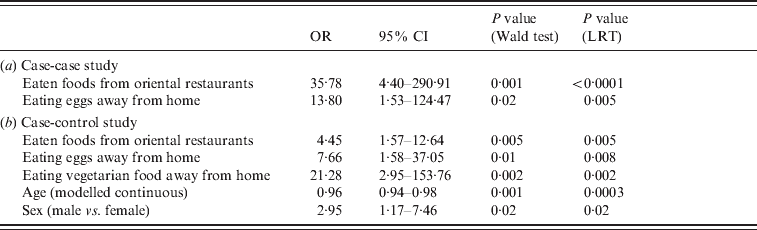
The multivariable analysis showed a significant association between eating out (OR 3·4, 95% CI 1·4–8·5, P = 0·006) and consuming eggs outside the home (OR 5·2, 95% CI 1·1–25·3, P = 0·02), and this exposure occurred in 83% of the cases. However eating out can be entirely explained by eating in oriental restaurants in a three-level model, and hence the final multivariate model of the case-case study shows significant associations between symptomatic infection with SE14b and eating in oriental restaurants (OR 35·8, 95% CI 4·4–290·9, P < 0·0001) and consuming eggs away from home (OR 13·8, 95% CI 1·5–124·5, P = 0·005, Table 3 a).
Multivariable models of (a) case-case analysis and (b) case-control studies. These are two separate models
OR, Odds ratio; CI, confidence interval; LRT, likelihood ratio test.
The results of the case-control analysis are adjusted for age and sex. Age and sex were not found to be significant confounders in the case-case study and hence not included.
Eating vegetables at home was associated with infection in the logistic regression model; however, further analysis demonstrated that this variable summarized a wide variety of different vegetables from different locations. The variable was not considered epidemiologically relevant and excluded from further analysis. Age and sex were examined for inclusion in the multivariable regression analysis, but not found to be significant (LRT P = 0·96 for age and P = 0·58 for sex) and the magnitude of the associations with exposures included in the model did not alter when these were included. Interactions were not found.
Comparison with the case-control study
Multivariable analysis of the case-control study (Table 3 b) also demonstrated a significant association between eating out and becoming a case (OR 2·7, 95% CI 1·1–6·9, P = 0·03), particularly eating in an oriental restaurant (P = 0·005), and the significant association of eating out can be entirely explained by eating in oriental restaurants. Among food exposures, eating eggs away from home (P = 0·011) and vegetarian foods eaten away from home (P = 0·002) were identified as significant risk factors for becoming a case. Associations between infection and eating cold meats away from home or barbecued foods at home were not included in the final logistic regression models, based on lack of explanatory power (non-significant LRT). Results were adjusted for age and sex.
The results of multivariable analyses of case-case and case-control studies gave different effect estimates, because persons in the control group were less likely to eat at oriental restaurants compared with the control-cases. Although age and sex are included in this model, the disparity between the cases and controls in these variables could result in residual confounding due to unmeasured confounders that impact on the controls eating habits. However, a direct comparison of key exposure variables did not show any significant differences for eating at oriental restaurants (OR 6·1, 95% CI 0·8–48·2, P = 0·09) or eating eggs away from home (OR 1·5, 95% CI 0·2–14·5, P = 0·7) between persons in control or control-case groups (Table 4). This analysis demonstrates that eating habits of control-cases were more similar to cases compared to eating habits of controls, and this is in keeping with demographic similarities.
Analysis of key exposure variables, comparing effects in the case-control and case-case study (unadjusted for age and sex)
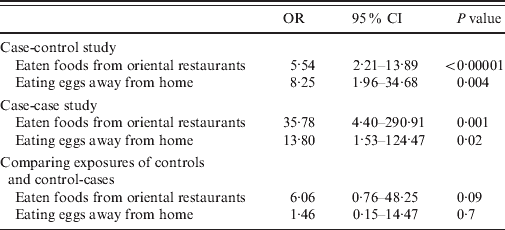
Exposures in the control group were compared to those in the control-cases using multinomial regression and estimating the ratio of relative risks using a linear combination of the regression model coefficients. The comparison study analyses relative exposures of controls and control-cases and the base group are the controls.
DISCUSSION
Findings of this study
To our knowledge this is the first study which directly compared case-case with case-control designs for a large national outbreak investigation. We showed the feasibility of the case-case method in an outbreak situation and its comparability with the conventional case-control method.
Both studies showed significant associations between symptomatic infection with SE14b and eating out in oriental restaurants as well as eating eggs away from home, albeit with non-significantly different effect sizes. These findings are entirely consistent with the microbiological and environmental investigations of this outbreak, which identified the same strain in eggs sourced from a specific chicken flock in a particular farm in Spain, and there were numerous outbreaks of infection mainly associated with oriental restaurants. Our study supports the findings of an increased gastrointestinal risk from pooling eggs for multiple uses [Reference Gormley, Rawal and Little13]. As a result of these investigations, and the resulting multi-agency public health action, eggs from this flock were taken out of circulation and the outbreak was contained.
Comparison with other studies
The case-case design has been discussed methodologically [Reference McCarthy and Giesecke5, Reference Rosenbaum10] and employed for the study of risk factors using surveillance data, covering a wide range of topics [Reference Gillespie7–Reference Wilson9, Reference de Valk14, Reference Zock15]. Comparisons between the case-case method and more established methodologies have rarely been reported. One study compared the results from a case-case with a case-control design in a small local outbreak and found compatible results in both studies, but a direct comparison was not possible as the exposure data were different in the studies and the lack of statistical power precluded multivariable analysis [Reference Krumkamp, Reintjes and Dirksen-Fischer8]. Another study investigated a regional increase of S. Enteritidis infections in a 3-year period using non-Enteritidis serotypes and healthy individuals as controls [Reference Kist and Freitag16]. They identified eggs as a generic risk factor for S. Enteritidis infection during this period. However, the length of the observation period and the lack of microbiological phage typing and molecular profiling do not allow a great level of detail on risk exposures and it is possible that their data captured more than one outbreak and more than one source. Our study used a case-case as well as the case-control design in a parallel investigation as a ‘field testing’ exercise in a national outbreak situation.
Strengths and limitations
We found that the use of readily available data in the case-case design is advantageous; because it reduces costs and increases the speed of outbreak investigations (cases are routinely interviewed). In addition this design has a number of methodological advantages, some of which have been discussed already [Reference McCarthy and Giesecke5, Reference Gillespie7, Reference Rosenbaum10, Reference Kist and Freitag16]. Recall bias is a major issue in case-control designs; we believe that the potential for recall is reduced [Reference Rosenbaum10], because cases and control-cases both had symptoms and were interviewed contemporaneously with their illness and before serotyping results became available. It is possible that response bias might be of lesser concern compared to conventional case-control studies, since the (unknown) serotype is unlikely to influence the decision to participate in interviews. In this study we showed that the age and sex profiles were more similar to the control-cases compared to controls recruited via systematic digit telephone dialling.
By using the same telephone exchange for cases, controls were chosen from the same geographical area in the case-control study; the same was not possible for the case-case design. However, in areas where cases were clustered, greater awareness may have led to a greater proportion of control-cases being interviewed and this may have lead to some geographical clustering of control-cases, even without matching. In general, geographical clustering is beneficial, because it makes geographically clustered exposures (e.g. using the same supermarket) more similar, but less important in our study as we investigated widely distributed food items.
Control-cases were chosen, because they became infected with similar, albeit different microbial subtypes contemporaneously, and the case-case design is therefore limited to pathogens where different strain types are associated with different exposures, as is the case with Salmonella spp. Although recorded exposure prevalences of control-cases can be larger than in the general population at risk [Reference Gillespie7], this is more relevant for surveillance studies and less for outbreak investigations. However there is the potential for underestimating effect sizes for common exposures (between cases and control-cases) [Reference McCarthy and Giesecke5, Reference Gillespie7]. S. Enteritidis infection is frequently associated with eggs and poultry, and inclusion of S. Enteritidis infection as control-cases would have prevented the findings of a significant association between eggs and illness in this study design as a likely common exposure [Reference Gantois12]. The similarity of the results compared to the case-control study (non-significant differences of effect estimates), and the positive outbreak microbiology add to the validity of our findings for this particular outbreak investigation. Contrary to earlier studies [Reference Kist and Freitag16] we also used microbial subtyping data (e.g. phage typing and resistance profiling) to delineate case and control-case definitions and to develop an appropriate study design. The method could be used in other pathogen outbreaks, providing the control-case group can be defined clearly and there is no known association between the control pathogen and the exposure of interest.
The number of control-cases was limited by the natural occurrence of Salmonella infections during our observation period. It is possible that the association between infection and other rarer exposures may have been missed. However, rarer exposures are unlikely to be relevant in our study and the evidence of this study is supported by the large effect sizes for the main exposures in the case-case design, even when compared to the case-control design and the other epidemiological and microbiological findings discussed above.
CONCLUSION
In conclusion we present a direct comparison of a case-case design and case-control design, with similar results observed in the two study designs. Acknowledging the limitations of a case-case approach, our study is an important step to fully validate this study design. It is often more timely and requires less additional resources, because the information on control-cases is often readily available as part of routine enhanced surveillance in many countries including the UK. The potential reduction in both selection and recall biases using contemporaneous case-controls provides an additional advantage over traditional case-control study designs. The serotype case-case design could therefore significantly augment the epidemiological outbreak investigation study designs available to the field epidemiologist.
ACKNOWLEDGEMENTS
We acknowledge the help and support of Elisabeth de Pinna, Head of the Salmonella Reference Unit at the Laboratory of Gastrointestinal Pathogens, Microbiology Services Colindale, Health Protection Agency, UK.
DECLARATION OF INTEREST
None.