





Impact statement
The present multi-study used quantitative and qualitative data to examine the prevalence, predictors and experiences of mental health disorders among female Venezuelan migrant caregivers. Venezuelan migrant caregivers, especially women of reproductive age, are a particularly vulnerable population, due to lower rates of regularization, higher rates of reliance on informal sector employment, and greater healthcare needs. However, the mental health burden and experiences of this population remain under-researched to date. Therefore, we used a convergent parallel mixed-methods approach to combine two studies of female Venezuelan migrant caregivers to describe the self-reported experiences with mental health conditions, as well as their key predictors. Triangulated results across both studies indicate a high burden of mental health disorders within this population that remains largely untreated by the Colombian healthcare system. Findings also highlight key relationships between mental health disorders and xenophobic discriminatory experiences, financial stressors and economic vulnerability, family separation and experiences with other health conditions, suggesting the need for wraparound services and interventions that can address the complex needs of migrant caregivers. Our findings are important for health and mental health practitioners, donors and policymakers who are responsible for providing healthcare and other supportive services to Venezuelan migrants in Colombia, as well as those in other countries grappling with similar displaced populations. Findings should be used to inform future research on the burden of mental health disorders in this population and how the levels of mental health for Venezuelan migrant caregivers compare with other migrant and Colombian host populations, as well as to inform effective interventions to address the high burden of mental health disorders among this group of migrants.
Introduction
Social, political and economic factors have led more than 7.7 million Venezuelan migrants and refugees to leave Venezuela, making this the largest displacement crisis in the Western hemisphere (IOM, 2022). Colombia, which neighbors Venezuela, has served as the primary destination for Venezuelan migrants, with more than 3 million Venezuelan migrants settling in Colombia (Fernández-Nino and Bojorquez-Chapela, Reference Fernández-Nino and Bojorquez-Chapela2018; UNHCR, 2024). Nearly half of Venezuelan migrants arriving in Colombia are women and/or caregivers, many arriving with children or pregnant (Timoney, Reference Timoney2019; UNHCR 2019, 2024).
Venezuelan migrants, and in particular female caregivers who have a minor under their care, are likely to face numerous challenges arising from the eroding public health system in Venezuela, the migration journey, experiences of xenophobic discrimination and the process of integrating into the Colombian population, all of which can negatively impact their health and mental health (Carroll et al., Reference Carroll, Luzes, Freier and Bird2020; Gallo Marin et al., Reference Gallo Marin, Amaya, Medina Perez, Levine, Moretti and Garbern2021; Profamilia, 2020; Schwartz et al., Reference Schwartz, Salas-Wright, Pérez-Gómez, Mejía-Trujillo, Brown, Montero-Zamora, Meca, Scaramutti, Soares, Vos, Javakhishvili and Dickson-Gomez2018; Villalba, Reference Villalba2018). Prior research has shown a high prevalence of depressive and anxiety symptoms among Venezuelan migrants in various contexts (Carroll et al., Reference Carroll, Luzes, Freier and Bird2020; Espinel et al., Reference Espinel, Chaskel, Berg, Florez, Gaviria, Bernal, Berg, Muñoz, Larkin and Shultz2020; Salas-Wright et al., Reference Salas-Wright, Maldonado-Molina, Pérez-Gómez, Trujillo and Schwartz2022). The coronavirus disease 2019 (COVID-19) pandemic further intensified mental health risks for this population, with studies documenting increased rates of depression and anxiety among migrants and women caregivers due to prolonged stress, social isolation and disruption of services (Connor et al., Reference Connor, Madhavan, Mokashi, Amanuel, Johnson, Pace and Bartz2020; Vindegaard and Benros, Reference Vindegaard and Benros2020). It has been estimated that upwards of 59% of Venezuelan migrants experience symptoms of anxiety and 38% experience symptoms of depression (Alarcon et al., Reference Alarcon, Ordoñez- Mancheno, Velásquez, Uribe, Lozano-Vargas, Gaviria and Lucio2022), with certain groups, such as unregularized women, likely experiencing even higher levels (Acosta-Reyes et al., Reference Acosta-Reyes, Fernández-Niño, Rojas-Botero, Bonilla-Tinoco, Aguirre, Anillo, Rodríguez, Cifuentes, Jiménez, León and Bojorquez-Chapela2023). Additionally, an estimated over 20% of migrants have been diagnosed with posttraumatic stress disorder (Espinel et al., Reference Espinel, Chaskel, Berg, Florez, Gaviria, Bernal, Berg, Muñoz, Larkin and Shultz2020).
Despite the Colombian government’s progressive policies on regularization and social protection for Venezuelan migrants, including providing access to public health and mental health services, barriers to services persist, especially for caregivers. Notably, the Estatuto Temporal de Protección para Migrantes Venezolanos (ETPMV), enacted in February 2021, allowed Venezuelan migrants who had been residing in Colombia before the ETPMV’s enactment, as well as those who entered the country legally through May 2023, to obtain a temporary permit for residency for up to 10 years, enabling access to formal employment, public education and healthcare services (Bowser et al., Reference Bowser, Agarwal-Harding, Sombrio, Shepard and Harker Roa2022; Welsh, Reference Welsh2021). Once enrolled in a residency permit through the ETPMV, Venezuelan migrants could register with one of Colombia’s public health insurance schemes, which offered insured individuals a standardized health benefits package, including access to mental healthcare services. However, even in this context, Venezuelan migrants still experience multiple barriers to accessing healthcare due to multiple legal and administrative challenges required to obtain regularization and health insurance enrollment, a lack of information on services and entitlements, economic precarity and fears of deportation due to unregularized status, among other factors (Abubakar et al., Reference Abubakar, Aldridge, Devakumar, Orcutt, Burns, Barreto, Dhavan, Fouad, Groce, Guo, Hargreaves, Knipper, Miranda, Madise, Kumar, Mosca, McGovern, Rubenstein, Sammonds, Sawyer, Sheikh, Tollman, Spiegel, Zimmerman, Abubakar, Aldridge, Devakumar, Orcutt, Burns, Barreto, Dhavan, Fouad, Groce, Guo, Hargreaves, Knipper, Miranda, Madise, Kumar, Mosca, McGovern, Rubenstein, Sammonds, Sawyer, Sheikh, Tollman, Spiegel, Zimmerman, Abbas, Acer, Ahmad, Abimbola, Blanchet, Bocquier, Samuels, Byrne, Haerizadeh, Issa, Collinson, Ginsburg, Kelman, McAlpine, Pocock, Olshansky, Ramos, White and Zhou2018; Bowser et al., Reference Bowser, Agarwal-Harding, Sombrio, Shepard and Harker Roa2022; Chatruc and Rozo, Reference Chatruc and Rozo2021; Danish Council for Refugees, 2021; IFRC, 2020; Mora, Reference Jesús2021; Profamilia, 2020; WHO Region of Americas, 2018; Wolfe, Reference Wolfe2021). These barriers are more salient for Venezuelan migrant caregivers due to their reliance on informal work, lower regularization rates and additional health and mental health needs (Bowser et al., Reference Bowser, Agarwal-Harding, Sombrio, Shepard and Harker Roa2022; Carroll et al., Reference Carroll, Luzes, Freier and Bird2020; Trentin et al., Reference Trentin, Rubini, Bahattab, Loddo, Della Corte, Ragazzoni and Valente2023; Weigel and Armijos, Reference Weigel and Armijos2023). Additionally, studies have documented the double burden caregivers face in needing to manage their health, work and childcare needs, and the likelihood of facing family separation in their migration journey (Pérez-Flores et al., Reference Pérez-Flores, Costas-Rodriguez and Pineros-Leano2023).
However, despite the large number of migrants arriving with minors in Colombia (UNHCR, 2019), there is currently no research to the authors’ knowledge examining how these compounding vulnerabilities may contribute to the mental health of female Venezuelan migrant caregivers. Therefore, the purpose of this study is to characterize the mental health needs of female Venezuelan migrant caregivers residing in Colombia, converging findings from two separate quantitative and qualitative studies with this population.
Methods
We used a mixed-methods convergent parallel design, where quantitative and qualitative data were collected and analyzed separately (Creswell and Clark, Reference Creswell and Clark2017). Through this approach, the results from two independent studies (Study 1 and Study 2) were merged to create a more comprehensive understanding of the psychological distress that female Venezuelan migrant caregivers of minors, henceforth caregivers, experienced (Creswell and Clark, Reference Creswell and Clark2017). Specifically, Study 1 (N = 1,124) provided information on the prevalence and predictors of psychological distress, while Study 2 (N = 28) corroborated these findings by identifying a similarly high prevalence of depression and anxiety symptoms in a similar migrant population and offering qualitative insights into the mechanisms underlying these experiences.
The decision to merge Study 1 and Study 2 was grounded in methodological and theoretical considerations. Although conducted independently, both studies examined psychological distress among similar populations using aligned conceptual frameworks and complementary methodologies. Study 1 was designed to quantify the burden of disease, including psychological distress, while Study 2 focused on exploring the lived experiences of distress in depth. The integration of these datasets enhances the richness of the findings, allowing for a more nuanced and contextually grounded understanding of caregiver mental health. Additionally, the inclusion of caregivers from distinct cities in Colombia broadens the representativeness of the sample and supports the generalizability of the results.
Study 1
Telephone surveys were conducted between September and December 2023 with 1,207 Venezuelan migrant women residing in Colombia, including 1,124 caregivers. The survey comprised 91 questions (~30 min to complete) and collected information on individual demographics, health insurance status, economic activity, healthcare access and utilization, self-reported health outcomes and out-of-pocket (OOP) payments. Participants were sampled from municipalities with the largest population of Venezuelan migrants, based on data from the National Administrative Department of Statistics and Migración Colombia. The final sample included participants from 33 municipalities and Bogota, D.C. (see Supplementary Table S1 for a list of included municipalities). Surveys were developed in English and then translated, adapted and validated in Spanish. Individual survey questions were drawn from the Demographic and Health Survey, World Health Survey and World Mental Health Survey, and the survey was tested with respondents who were not part of the final sample. Final surveys were carefully monitored for accuracy and consistency by the study team and field supervisors who were trained, with all enumerators, on the survey tool and implementation.
Purposive and snowball sampling methods were used to recruit telephone survey respondents in two stages. First, 25 female migrants within each selected municipality were surveyed. Second, individuals were purposively sampled by insurance status (insured in any public scheme or not) to reach a necessary sample with 90% statistical power at a 5% significance level to compare differences in healthcare utilization between insured and uninsured individuals eligible for the ETPMV (Bowser et al., Reference Bowser, Agarwal-Harding, Ruscitti, Shepard and Harker Roa2025). While not the focus of this power calculation, the variables used in this analysis were collected with the same sample design. A secondary power analysis confirmed that our sample was also sufficient to detect a similarly powered difference in psychological distress, measured using the K6, between caregivers for one of our main predictors – discrimination. For both stages, respondents were given mobile airtime compensation of 4 USD for their own response, plus 1 USD for a referred contact’s response until the target sample was reached in each municipality. The inclusion criteria for participants were: (1) being a Venezuelan national; (2) identifying as female; (3) falling within the lowest three strata in the socioeconomic household classifications (estrato) used to provide households with subsidies on personal utility payments (water, sanitation, electricity and gas); (4) being at least 18 years of age and (5) entering Colombia before the Colombian Government’s ETPMV announcement (February 2021), and therefore being eligible for regularization through the ETPMV. The study sample analyzed below was restricted to women caregivers with a minor (under age 18 years) under their care (N = 1,124).
Mental and behavioral health measures
The telephone surveys included two measures of mental and behavioral health. The first measure asked participants whether they had experienced one of four mental or behavioral health indicators in the 30 days before taking the survey (i.e., sleep difficulties, anxiety, aggressive behavior and sadness). The second measure was the Kessler Psychological Distress Scale (K6), a validated scale for assessing nonspecific psychological distress for individuals. The K6 has been used to measure psychological distress among Latin American migrant populations (Allinson and Berle, Reference Allinson and Berle2023; Baggaley et al., Reference Baggaley, Ganaba, Filippi, Kere, Marshall, Sombié, Storeng and Patel2007; Jurado et al., Reference Jurado, Mendieta-Marichal, Martínez-Ortega, Agrela, Ariza, Gutiérrez-Rojas, Araya, Lewis and Gurpegui2014). The K6 consisted of six questions (α = 0.79), including whether in the last 30 days, respondents ever felt (1) nervous, (2) depressed or anxious, (3) uneasy, (4) so sad that nothing could cheer them up, (5) like everything is hard for them and (6) useless (Kessler et al., Reference Kessler, Green, Gruber, Sampson, Bromet, Cuitan, Furukawa, Gureje, Hinkov, Hu, Lara, Lee, Mneimneh, Myer, Oakley-Browne, Posada-Villa, Sagar, Viana and Zaslavsky2010). Responses were measured using a 5-point Likert scale ranging from 0 (never) to 4 (always). The total score was calculated by adding the scores from all responses and ranged from 0 to 24 (Kessler et al., Reference Kessler, Green, Gruber, Sampson, Bromet, Cuitan, Furukawa, Gureje, Hinkov, Hu, Lara, Lee, Mneimneh, Myer, Oakley-Browne, Posada-Villa, Sagar, Viana and Zaslavsky2010). Suggested cutoffs were created for scores between 1 and 7 (mild distress), 8 and 12 (moderate distress) and above 13 (severe distress) (Kessler et al., Reference Kessler, Green, Gruber, Sampson, Bromet, Cuitan, Furukawa, Gureje, Hinkov, Hu, Lara, Lee, Mneimneh, Myer, Oakley-Browne, Posada-Villa, Sagar, Viana and Zaslavsky2010; Yiengprugsawan et al., Reference Yiengprugsawan, Tawatsupa, Kelly and Maggino2020). Clinical validation studies of this scale have demonstrated a sensitivity of 0.76, a specificity of 0.75 and a total classification accuracy of 0.74 when using cutoffs above 5 to identify patients with mental health conditions requiring treatment. For identifying cases of severe distress, the sensitivity and specificity are 0.36 and 0.96, respectively, with a total classification accuracy of 0.92 (Kessler et al., Reference Kessler, Barker, Colpe, Epstein, Gfroerer, Hiripi, Howes, Normand, Manderscheid, Walters and Zaslavsky2003; Prochaska et al., Reference Prochaska, Sung, Max, Shi and Ong2012).
Data analysis
Sociodemographic characteristics and indicators for mental and behavioral health distress were summarized for the sample of telephone survey respondents identifying as caregivers. As prior research had documented the negative health impacts of distress as a continuum (Colpe et al., Reference Colpe, Freeman, Strine, Dhingra, McGuire, Elam-Evans and Perry2009), a Poisson regression model was developed to estimate the likelihood of reporting higher levels of distress utilizing incidence rate ratios (IRRs) with a continuous measure of distress (total K6 score). Subanalysis further examined predictors of experiencing severe distress (using a K6 cutoff above 13) with a binary measure. The IRRs represent the ratio of the expected K6 symptom score between groups, holding other covariates constant. Predictors included age (continuous measure); estimated individual monthly income; being a recent immigrant (arriving in Colombia within 5 years); informal employment (without a contract); education level (whether or not the respondent had completed high school); household size (number); experiences of discrimination (whether or not individuals reported unfair treatment by a healthcare provider or different medical care due to their immigration status); family housing (living with other family members, including non-immediate family); insurance status (being enrolled in either the subsidized or contributory schemes); health status (1–5, from poor to excellent); having a chronic illness (having an ongoing health condition that requires regular monitoring, medical care or medication) and reported OOP expenditures (from healthcare visits in the past 30 days). Individuals who reported having insurance status but not legal residency in Colombia through the ETPMV or another legal pathway required to obtain insurance were reclassified as uninsured (N = 57). Models also included municipal fixed effects to control for all time-invariant characteristics at the municipality level, as well as robust standard errors.
Study 2
Thirty Venezuelan caregivers (females and males) residing in Colombia were interviewed between October 2021 and February 2022, after COVID-19 vaccinations were rolled out in Colombia. The final sample included 28 participants, as two interviews were excluded due to a recording malfunction and the exclusion of one male participant. Participants were recruited from six municipalities and Bogota, D.C (see Supplementary Table S1). The study contained a demographic questionnaire, two short mental health screeners on depressive and anxiety symptoms and a semistructured interview, in which participants were asked different questions about their migration process to Colombia and how they felt since migrating. Sample interview questions included: “Please tell me more about you. When did you arrive in Colombia? What was the hardest thing about the journey for your family? What has been most helpful to your family since arriving in Colombia?”
Caregivers were recruited in partnership with Heartland Alliance International (HAI), a US-based humanitarian agency, using a convenience sampling approach. Potential participants were provided a flyer with study information by HAI program supervisors, and eligible and interested participants were listed with their contact information (i.e., phone number and email) by the municipality. From this list, participants were randomly selected by the principal investigator (PI; MPL). The interviews were conducted by three bilingual (English and Spanish) and bicultural research assistants (RAs), which is particularly important when conducting qualitative research (Ragavan and Cowden, Reference Ragavan and Cowden2020). The RAs were trained and supervised by the PI. Before being interviewed, the RAs contacted potential participants to introduce the study, confirm eligibility and schedule a 2-h interview. To reduce attrition, reminders were sent by text 1 day and 1 h before the interview. The average interview length was 59 min, and participants were compensated with a 10 USD grocery store gift card. All interviews were audio recorded, and field notes were collected. To preserve meaning, all procedures were conducted in Spanish, and key quotes and themes were later translated into English.
The inclusion criteria for participants were as follows: (1) Being the primary caregiver of a minor between the ages of 5–17 years old and (2) having migrated to Colombia from Venezuela within the last 5 years. For the present study and to establish a comparable sample with Study 1, interviews were restricted to only female Venezuelan caregivers (97%, excluding one male caregiver).
Mental health measures
The Patient Health Questionnaire (PHQ-9) and the General Anxiety Disorder Scale (GAD-7) were used to measure symptoms of depression and anxiety, respectively. These scales have been validated among migrants and Latin American populations in various global settings (Allinson and Berle, Reference Allinson and Berle2023; Baggaley et al., Reference Baggaley, Ganaba, Filippi, Kere, Marshall, Sombié, Storeng and Patel2007; Jurado et al., Reference Jurado, Mendieta-Marichal, Martínez-Ortega, Agrela, Ariza, Gutiérrez-Rojas, Araya, Lewis and Gurpegui2014; Martinez et al., Reference Martinez, Teklu, Tahir and Garcia2023). The PHQ-9 consisted of nine questions that asked participants the degree to which they had experienced depressive symptoms in the prior 2 weeks. Responses were measured using a 4-point Likert scale ranging from 0 (not at all) to 3 (nearly every day). Scores for each question were added, with a total of 24 points. They were divided into cutoffs for 0–4 (minimal symptoms), 5–9 (mild symptoms), 10–14 (moderate symptoms), 15–19 (moderately severe symptoms) and 20–24 (severe symptoms) (Dhingra et al., Reference Dhingra, Kroenke, Zack, Strine and Balluz2011; Kroenke et al., Reference Kroenke, Spitzer and Williams2001). Prior research has documented an overall pooled sensitivity of 0.86 and specificity of 0.80 for the PHQ-9 when used with the Spanish-speaking population (Martinez et al., Reference Martinez, Teklu, Tahir and Garcia2023). The GAD-7 consisted of seven questions focused on symptoms of anxiety within the last 2 weeks. Total scores were derived by adding scores for each question, using the same Likert scale (0–3), described above. Total scores ranged from 0 to 21, with 0–4 indicating minimal, 5–9 mild, 10–14 moderate and above 15 severe anxiety symptoms (Spitzer et al., Reference Spitzer, Kroenke, Williams and Löwe2006). Prior research using these cutoff levels has identified a sensitivity and specificity exceeding 0.80 when examining moderate-to-severe anxiety (Spitzer et al., Reference Spitzer, Kroenke, Williams and Löwe2006).
Data analysis
Sociodemographic characteristics and information on depressive and anxiety symptoms were summarized for interview participants, using the recommended PHQ-9 and GAD-7 cutoffs described above (Kroenke et al., Reference Kroenke, Spitzer and Williams2001; Spitzer et al., Reference Spitzer, Kroenke, Williams and Löwe2006).
All interview recordings were transcribed verbatim and verified for accuracy. Interviews were analyzed using thematic analysis (Braun and Clarke, Reference Braun and Clarke2006) by two experienced RAs, who each coded all interviews. First, RAs reviewed all interview transcripts and recorded main codes that were consistently brought up by the participants (Braun and Clarke, Reference Braun and Clarke2006) to develop an initial codebook using Dedoose Version 9.0.17, which was then used to systematically code all interviews. Next, the RAs and the PI clustered the codes into broader themes to identify patterns of shared meaning across what participants mentioned and also to move beyond surface-level observations and develop more conceptually rich and robust themes (Braun and Clarke, Reference Braun and Clarke2006). Although this approach is commonly used in thematic analysis, it is interpretative and, therefore, may lead to the oversimplification of complex individual experiences. To ensure the trustworthiness of the coding process, the RAs determined the average intercoder agreement for each code, calculated as the number of times a specific code was assigned out of the total number of interviews (Miles and Huberman, Reference Miles and Huberman1994; O’Connor and Joffe, Reference O’Connor and Joffe2020). A benchmark of 80% intercoder reliability was used (Miles and Huberman, Reference Miles and Huberman1994), and in the event this threshold was not reached, the coders and the PI discussed code definitions to reach consensus (Miles and Huberman, Reference Miles and Huberman1994). The intercoder reliability agreement reached was 85.2%. Once all interviews were coded, the PI verified that all the coded information under each theme created a coherent pattern, and a thematic map of all the themes was developed. The thematic map was checked against all interview transcripts to ensure that all the most prominent participant perceptions were reflected in the map. These themes were refined, and a description of each theme was created, including a title that captured the essence of each theme. Last, quotes that exemplified the themes were selected and translated into English using a back-and-forth approach (WHO, 2017).
Results
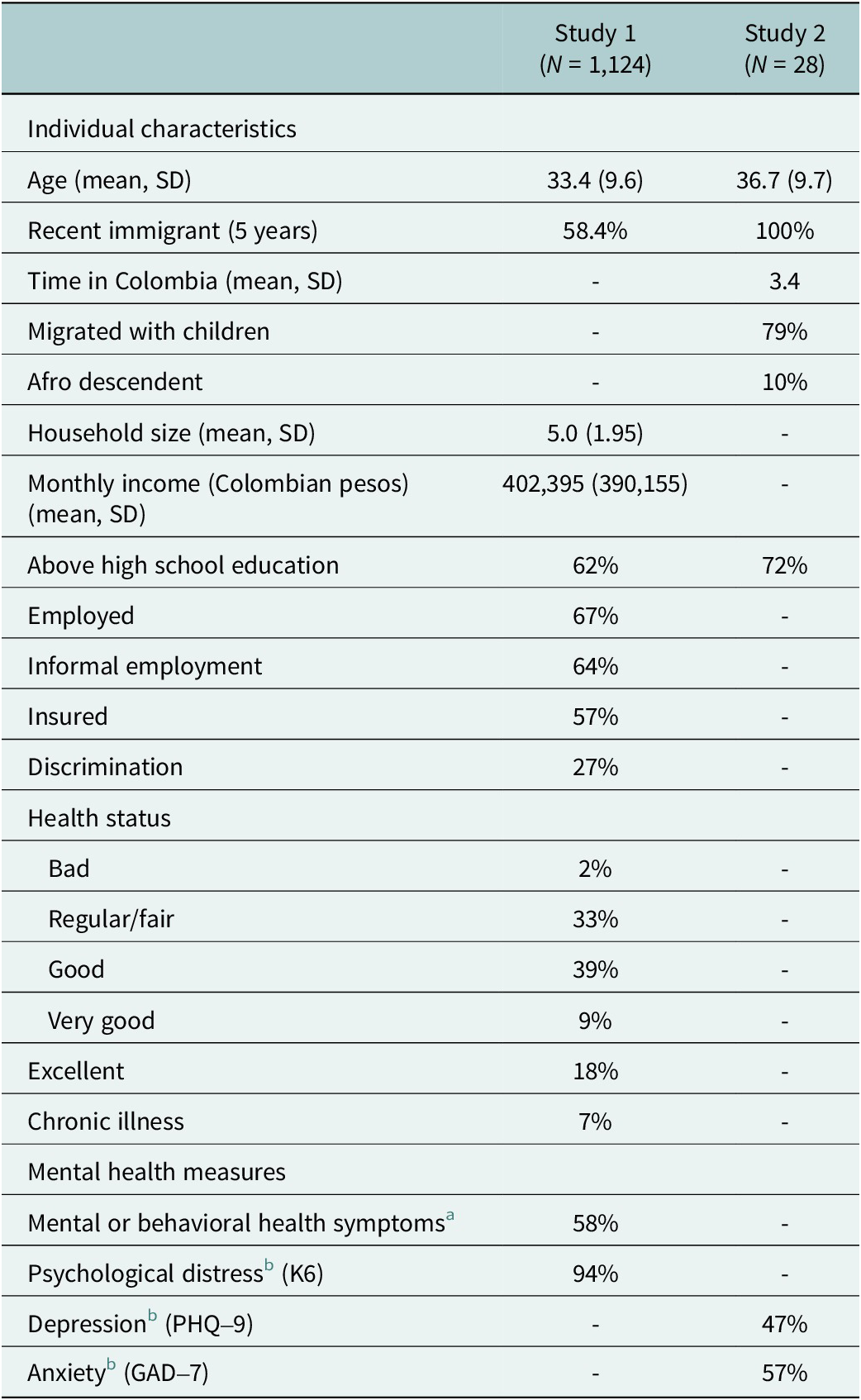
Demographic characteristics of caregivers from Study 1 and Study 2 (Table 1) showed a similar sample of respondents surveyed in both datasets. In both studies, the average respondent was in their mid-30s, and a majority had over a high school education. Additionally, in Study 1, over half of the respondents had migrated within the last 5 years, matching the Study 2 sample criteria.
Characteristics of female Venezuelan migrant caregivers residing in Colombia

a This variable indicates endorsement of at least one mental or behavioral health symptom (i.e., sleep difficulties, anxiety, aggressive behavior and sadness) in the past 30 days.
b These variables measure mild-to-severe levels of each mental health measure, respectively. SD, standard deviation of mean values.
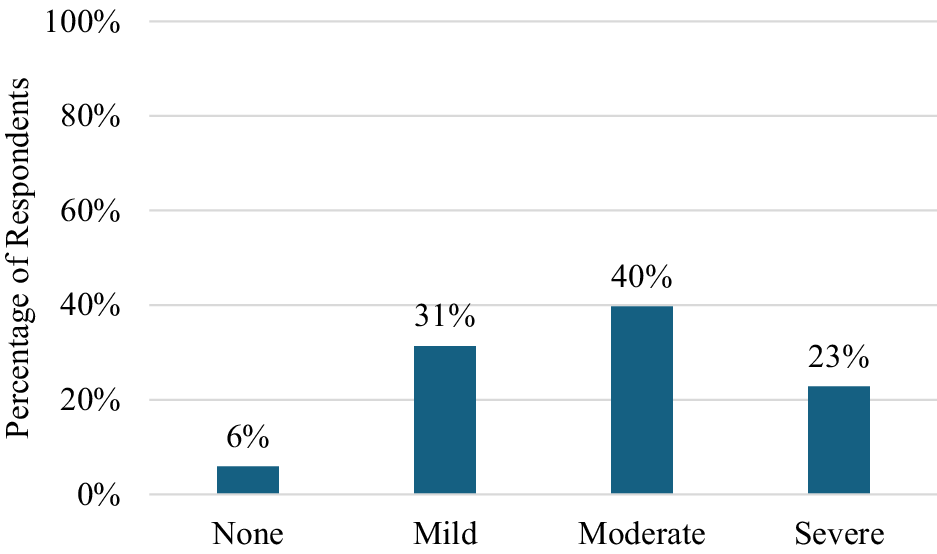
Results from Study 1 indicated that 58% of respondents reported experiencing mental or behavioral symptoms (i.e., sleep difficulties, anxiety, aggressive behavior and sadness) in the 30 days before the telephone survey (Table 1). The results showed that nearly a quarter of individuals reported severe levels of distress (23%) and an additional 40% reported moderate distress, for a total of 63% of the sample reporting moderate-to-severe distress (Figure 1). Notably, only 6% of individuals reported having no signs of psychological distress, with a total of 94% of the sample reporting some level of psychological distress (mild to severe).
Prevalence of symptoms of distress (K6) among Venezuelan migrant caregivers in Study 1 (N = 1,124).

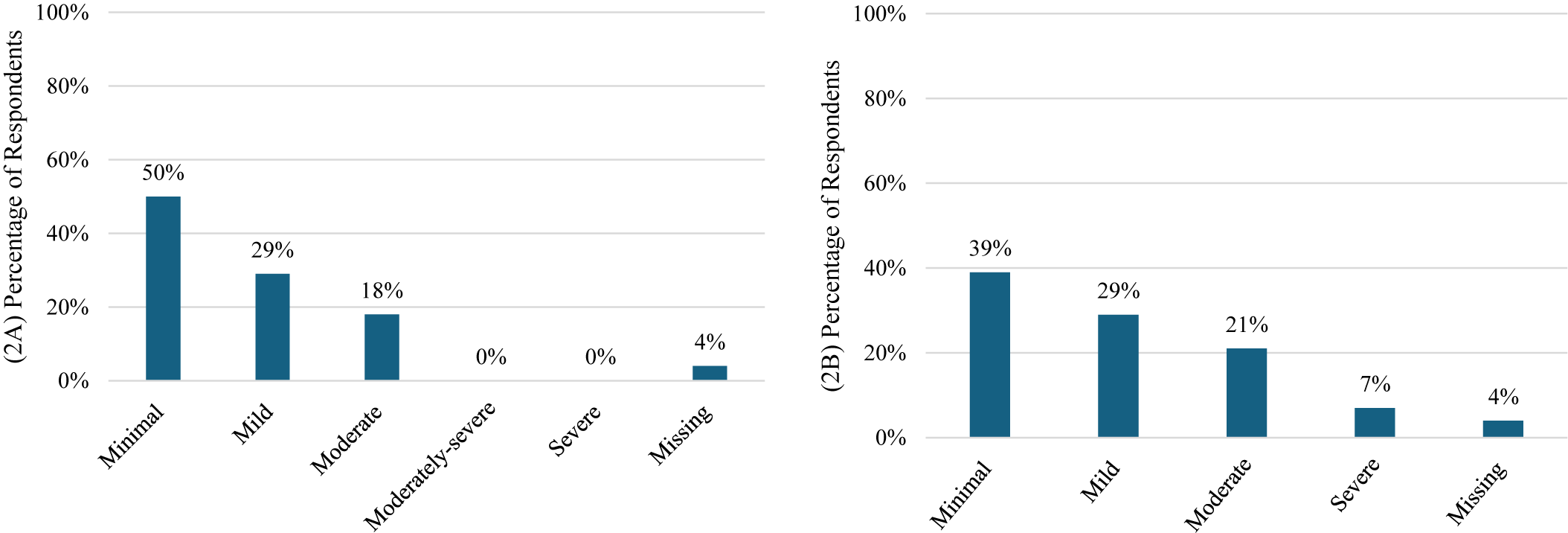
Results from Study 2 showed that 47% of participants had either mild (29%) or moderate (18%) symptoms of depression (Figure 2a). More concerning were symptoms of anxiety, which reached a prevalence of 57% (mild to severe; Figure 2b); 29% of participants had mild symptoms of anxiety, 21% had moderate symptoms and 7% had severe symptoms of anxiety.
Symptoms of depression (2a) and anxiety (2b) among female Venezuelan migrant caregivers in Study 2 (N = 28).

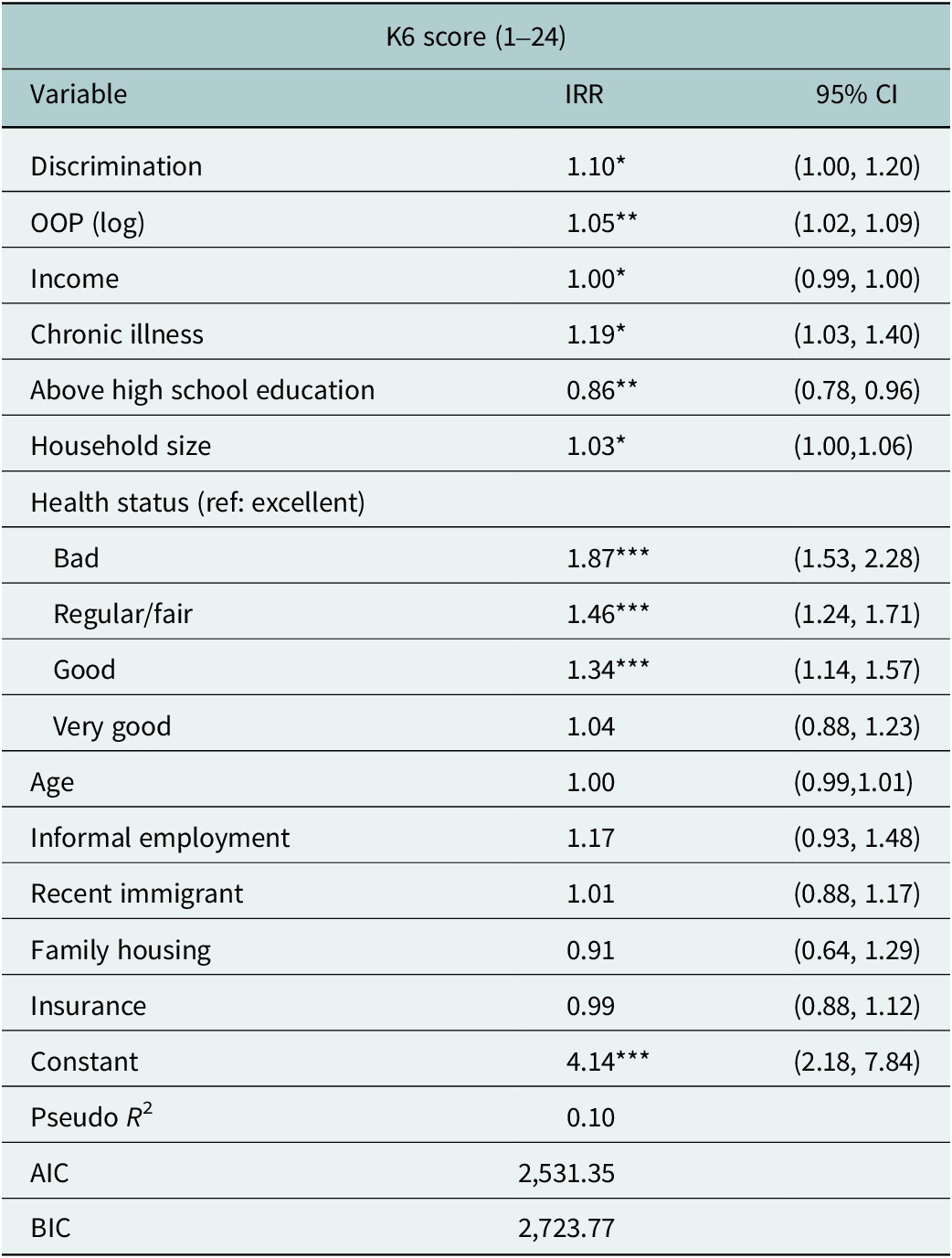
Table 2 presents the results from a Poisson regression on the likelihood of respondents to report higher levels of distress using the K6 and IRRs. Table 2 shows a significant association between experiencing discrimination at an individual’s last healthcare visit and increased distress (IRR = 1.10, p < 0.05). The model also found statistically significant impacts of higher OOP expenses, higher monthly income, lower household size, lower self-reported health status, having a chronic illness and lower education levels on rates of any distress. Having higher OOP expenditures from healthcare visits was found to be associated with 5% higher rates of any distress (IRR = 1.05, p < 0.01). Larger household sizes predicted 3% higher rates of any distress (IRR = 1.03, p < 0.05). Additionally, having good, regular/fair, or bad self-reported health status, compared to excellent health status, significantly predicted higher rates of distress, with 34, 46, and 87% higher rates of any distress compared to those with self-reported excellent health status, respectively. Individuals who reported having a disability or chronic illness that impeded their daily activities had ~19% higher rates of any distress than those without a chronic condition (IRR = 1.19, p < 0.05). Increased monthly income was associated with a significant but negligible impact on distress (IRR = 1.00; p < 0.05).
Poisson regression predictions for psychological distress among female Venezuelan migrant caregivers residing in Colombia (N = 1,124)
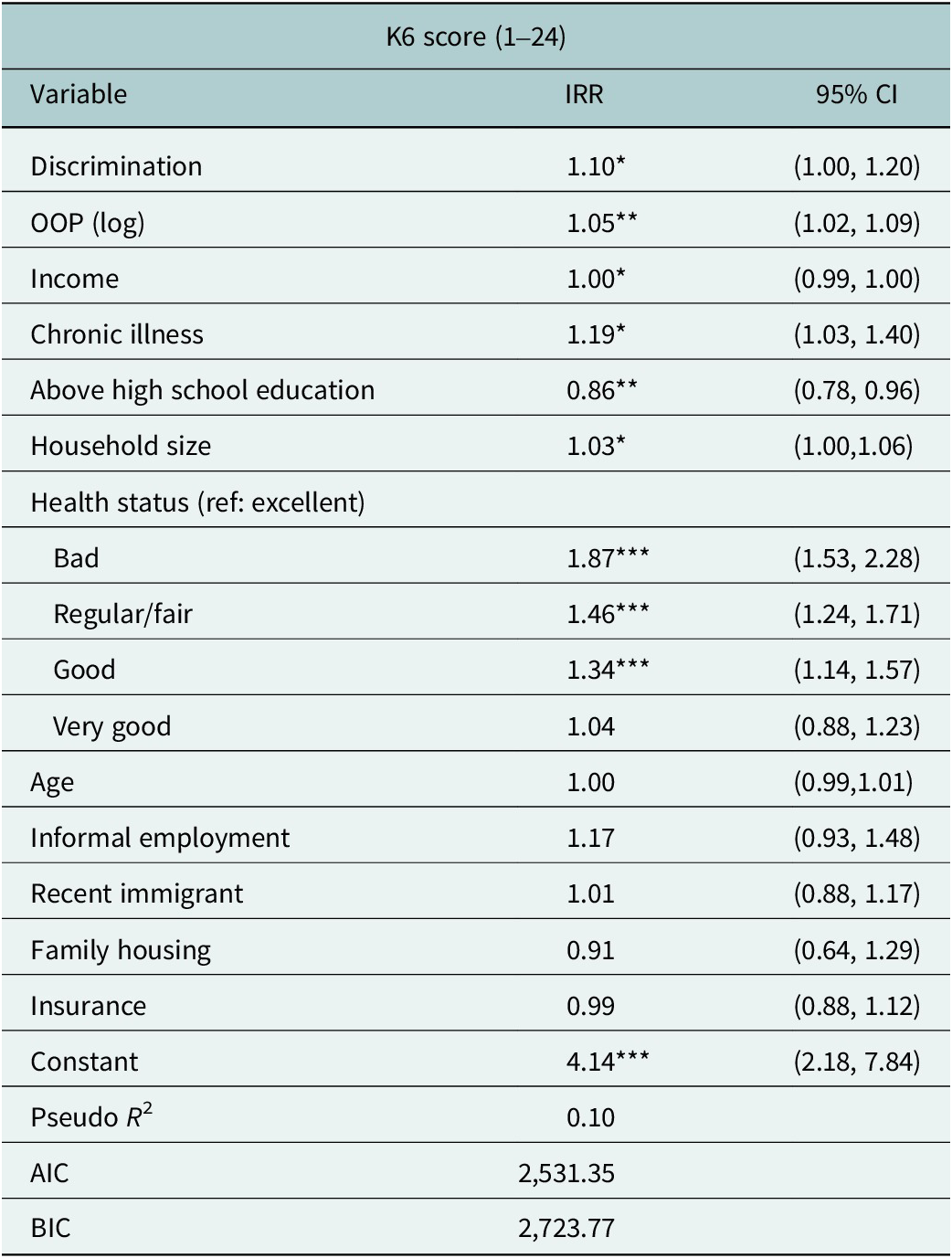
Note: Statistical significance levels are displayed next to the name of each variable with ***p < 0.001, **p < 0.01 and *p < 0.05. The model includes robust standard errors and Colombian municipality fixed effects.
In terms of protective factors, the results showed that higher education and family housing support reduced the likelihood of experiencing distress. Higher education levels predicted 14% lower rates of any distress (IRR = 0.86, p < 0.01). Living in housing with other family members was found to have a protective effect against distress, with 9% lower rates of any distress (IRR = 0.91, p = 0.59), although this was not found to be statistically significant.
An additional logistic regression model predicting the likelihood of individuals experiencing severe distress (above a cutoff of 13) is included in Supplementary Table S2. This subanalysis showed similar impacts, with higher OOP healthcare expenditures, higher household sizes and poorer health status being associated with higher odds of experiencing severe distress, and higher education levels having a protective effect.
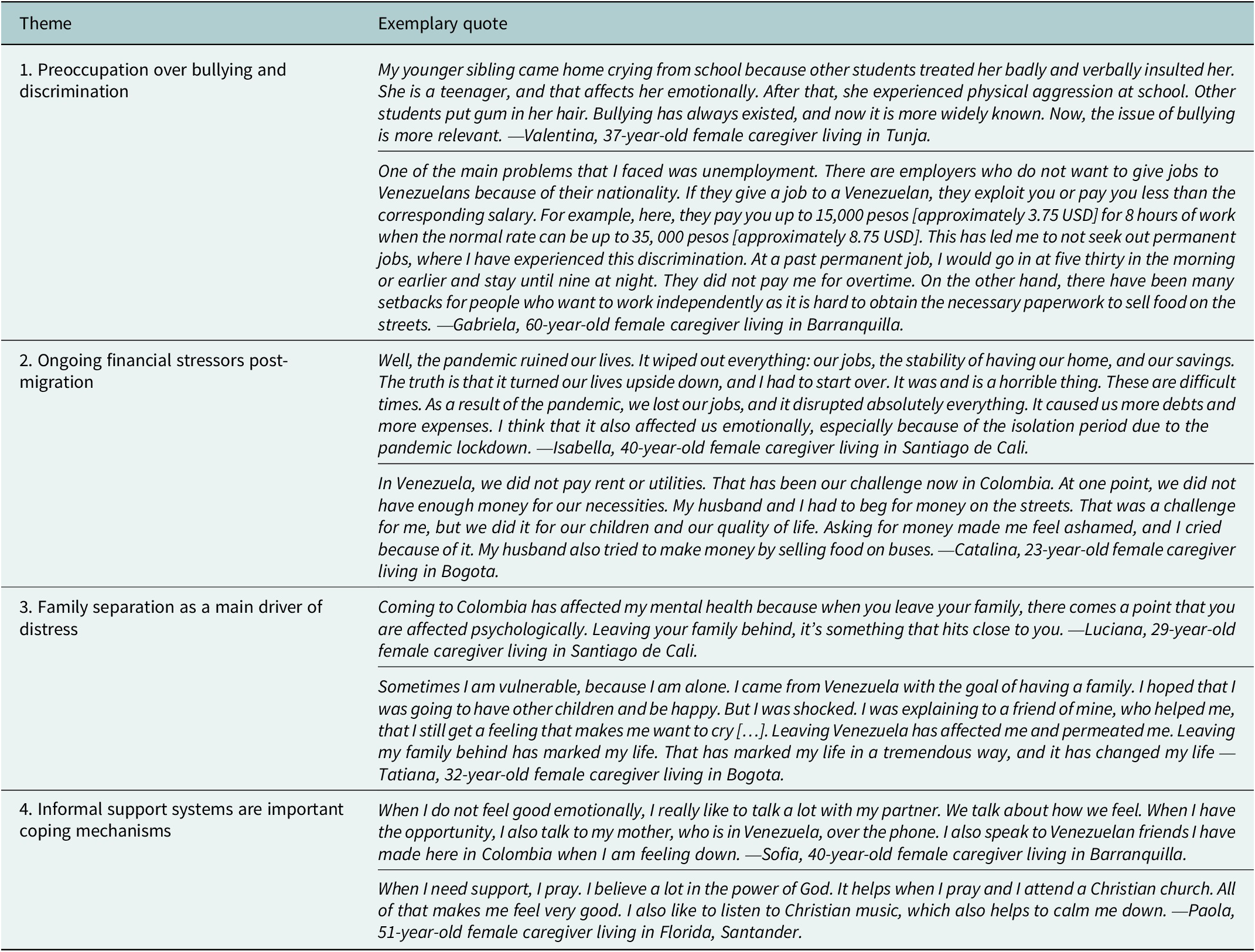
Last, Table 3 provides examples from the four main themes identified through thematic analysis in the semistructured interviews (Study 2). We found three main themes that further explained where the participants’ mental health distress emanated from: (1) Preoccupation over bullying and discrimination, (2) ongoing financial stressors post-migration and (3) family separation as a main driver of distress. Additionally, we found one theme that described protective factors for dealing with mental health issues: (4) Informal support systems are important coping mechanisms.
-
1. Preoccupation over bullying and discrimination
Most caregivers (n = 22; 79%) reported that they and/or their children faced xenophobic discrimination due to their Venezuelan nationality. Children experienced bullying in schools, including physical violence and psychological harm, which impacted their mental health. Caregivers reported that their children experienced unjust treatment inside and outside of school, negatively impacting their psychological health.
Caregivers also reported being afraid of being insulted while working informally, such as selling food on the streets. More overt discrimination experiences were also mentioned and prevalent during everyday interactions, like renting apartments or seeking employment. Participants reported enduring derogatory comments and negative stereotypes, including accusations of “ruining” Colombia. Additionally, they reported earning lower wages than their Colombian counterparts, with women experiencing even larger wage gaps. Participants expressed that this constant and overt discrimination heightened their stress levels.
-
2. Ongoing financial stressors post-migration
Several interviewees mentioned that economic stressors added to their psychological distress. Participants mentioned that the initial transition when they arrived in Colombia exacerbated economic challenges as many struggled to find stable employment, afford necessities or secure stable housing in Colombia. In some cases, the threat of homelessness and lack of resources affected their emotional well-being. This situation was heightened by the COVID-19 pandemic, in which caregivers reported job losses, increased debts and social distancing, which increased their psychological distress.
Living in Colombia also added new financial burdens, such as electricity, water and rent, which were provided at no cost in Venezuela. With a strained budget, caregivers had less ability to enjoy basic comforts, such as dining out. Economic hardships led caregivers to seek economic help from strangers, sell food on the streets to make ends meet and take informal jobs that paid less than minimum wage. The scarcity of resources and difficulty in finding employment added to the uncertainty of the caregivers’ future.
-
3. Family separation as a main driver of mental health
The participants mentioned that being separated from their families for extended periods of time significantly impacted their mental health. For example, caregivers reported a deep sense of loneliness due to being distanced from family and friends in Venezuela. This was exacerbated by the lack of support systems, especially during holidays and significant life events. Caregivers also expressed nostalgia about leaving their jobs and homes behind. The ongoing separation from family during the migration process contributed to psychological distress, as caregivers described feeling depressed and experiencing low levels of energy. Participants also reported difficulties because they no longer had a reliable support system to trust with watching their children while they worked or someone in whom they could confide. Caregivers also shared that their children had been emotionally impacted by separation from family and friends.
-
4. Informal support systems are important coping mechanisms
The fourth theme identified support systems used by caregivers to cope with the mental health distress they encountered. Participants reported turning to family, friends, and faith-based support to cope with the difficulties encountered in their new environment and with mental health distress. Participants frequently contacted their nuclear family members and friends to share and process their difficult experiences. They emphasized the importance of maintaining continuous communication with family in Venezuela through phone calls and messages. In addition, some participants found support from their co-workers or acquaintances, whom they considered “chosen family.” Although less common, some caregivers mentioned receiving essential support from strangers during their migration journey and the settling process in Colombia. These instances, while not frequent, were significant for our participants. Community involvement, such as workshops and family gatherings, provided the caregivers with a sense of community and belonging. Finally, faith-based support was another essential informal coping mechanism. Participants reported turning to prayer and their faith during periods of sadness and anxiety. They also experienced support from religious communities and leaders as they migrated and settled in Colombia.
Thematic analysis of mental health experiences among female Venezuelan migrant caregivers residing in Colombia

Note: All the participant names have been changed to protect their privacy.
Discussion
This study identified a high mental health burden among female Venezuelan caregiving migrants and underscored the urgent need for interventions to address this burden. Study 1 revealed that 63% of caregivers experienced symptoms of moderate-to-severe psychological distress. Study 2 similarly showed elevated depressive (18%) and anxiety (28%) symptoms among caregivers. This multi-study is among the few that identify the prevalence of mental health distress along with predictors for the Venezuelan migrant population, and especially for the female caregiver population. This information is critical for health practitioners, donors and policymakers responsible for providing healthcare and other supportive services to Venezuelan migrants in Colombia.
A key strength of this study is the cross-validation of self-reported responses across two sources of quantitative and qualitative data, which provide a more reliable and comprehensive understanding of the experiences of a similar population of caregivers in Colombia. The quantitative results from Study 1 and Study 2 offer measurable insights into the prevalence of mental health conditions and their predictors in this population, while the qualitative interviews provide deeper context and nuance, highlighting the lived experiences of caregivers and the complex interplay between mental health, xenophobic discrimination, economic challenges, family separation and social supports. Combining these datasets and methods for a similar population of caregivers in Colombia allows for a richer exploration of the key themes from different perspectives and strengthens the overall generalizability and contribution of the research.
The high prevalence of mental health distress in this population is not completely new, as previous literature has also found unprecedented levels of depressive and anxiety symptoms among Venezuelan migrants residing in Colombia (Acosta-Reyes et al., Reference Acosta-Reyes, Fernández-Niño, Rojas-Botero, Bonilla-Tinoco, Aguirre, Anillo, Rodríguez, Cifuentes, Jiménez, León and Bojorquez-Chapela2023; Alarcon et al., Reference Alarcon, Ordoñez- Mancheno, Velásquez, Uribe, Lozano-Vargas, Gaviria and Lucio2022; Salas-Wright et al., Reference Salas-Wright, Maldonado-Molina, Pérez-Gómez, Trujillo and Schwartz2022; Schwartz et al., Reference Schwartz, Salas-Wright, Pérez-Gómez, Mejía-Trujillo, Brown, Montero-Zamora, Meca, Scaramutti, Soares, Vos, Javakhishvili and Dickson-Gomez2018). Studies have also shown higher levels of discrimination and greater depressive symptoms among Venezuelan migrants living in Colombia, compared to those residing in the United States, despite a shared language and some cultural similarities in Colombia (Salas-Wright et al., Reference Salas-Wright, Maldonado-Molina, Pérez-Gómez, Trujillo and Schwartz2022). This study sheds some light on drivers of elevated mental health disorders by identifying several mental health predictors among caregivers. Namely, this study found that xenophobic discrimination was a common experience mentioned by our study participants, which has also been found to be an important predictor of mental health in previous studies (Schwartz et al., Reference Schwartz, Salas-Wright, Pérez-Gómez, Mejía-Trujillo, Brown, Montero-Zamora, Meca, Scaramutti, Soares, Vos, Javakhishvili and Dickson-Gomez2018). Additionally, we found that living in larger households and spending more on healthcare services out-of-pocket were associated with greater mental health distress. These predictors were corroborated by our interview participants, who explicitly mentioned that financial stress and discrimination were some of the major contributors to their mental health distress. These high levels of distress are worrisome for the well-being of both caregivers and minors in their care, and future research should examine how the mental health experiences of caregivers impact the health of Venezuelan migrant children as well. On the other hand, it is important and even positive that caregivers openly discuss how they are feeling and identify different coping mechanisms to deal with the distress they experience. While informal support may not be the primary or most effective coping mechanism for caregivers, more research is needed to understand whether caregivers are willing to access formal mental health services when they are available.
It is important to note that some of the mental health symptoms and burden of distress found in this study could have been affected by increased psychological distress and rates of depression and anxiety arising from the COVID-19 pandemic (Connor et al., Reference Connor, Madhavan, Mokashi, Amanuel, Johnson, Pace and Bartz2020; Espinel et al., Reference Espinel, Chaskel, Berg, Florez, Gaviria, Bernal, Berg, Muñoz, Larkin and Shultz2020; Vindegaard and Benros, Reference Vindegaard and Benros2020). Prior studies have documented sharp increases in anxiety, depression and trauma-related symptoms among migrants and women caregivers during the pandemic globally, due to economic hardship, social isolation and disruption of services – stressors that may have long-lasting effects beyond the acute crisis period (Connor et al., Reference Connor, Madhavan, Mokashi, Amanuel, Johnson, Pace and Bartz2020; Moreno et al., Reference Moreno, Wykes, Galderisi, Nordentoft, Crossley, Jones, Cannon, Correll, Byrne, Carr, Chen, Gorwood, Johnson, Kärkkäinen, Krystal, Lee, Lieberman, López-Jaramillo, Männikkö, Phillips, Uchida, Vieta, Vita and Arango2020). Although both Study 1 and Study 2 were conducted after the Colombian government rolled out COVID-19 vaccinations in the country, which were available to all residents, it is unlikely that the psychosocial environment had fully returned to pre-pandemic norms. Consequently, pandemic-related stressors likely continued to exacerbate preexisting vulnerabilities in this population and contributed to the high levels of psychological distress observed in our findings. Future research should focus on assessing the mental health outcomes of Venezuelan caregiving migrants in the post-pandemic period to better distinguish between transient pandemic effects and more chronic mental health challenges among this population.
Our results highlighted a significant link between self-reported health status, chronic disease and mental health distress. Having a disability or chronic condition and reporting regular/fair or bad health status significantly increased the risk of experiencing distress. While these impacts were even more pronounced for the likelihood of experiencing severe levels of distress (Supplementary Table S2), it is important to note the large confidence interval found for this model, arising from small sample sizes. However, previous studies have also found strong relationships between chronic health conditions and worse mental health outcomes, with high levels of comorbidity (Gómez-Restrepo et al., Reference Gómez-Restrepo, Bohórquez, Pinto Masis, Gil Laverde, Rondón Sepúlveda and Díaz-Granados2004). In the case of Venezuelan migrants, studies have documented that common chronic conditions include diabetes, chronic pain, asthma, hypertension and arthritis (Gallo Marin et al., Reference Gallo Marin, Amaya, Medina Perez, Levine, Moretti and Garbern2021), with females experiencing higher rates of these conditions as well as multimorbidities – such as having two or more chronic conditions (Bernabe-Ortiz and Carrillo-Larco, Reference Bernabe-Ortiz and Carrillo-Larco2022). These findings are important as rates of both chronic and noncommunicable health conditions, including mental health conditions, are increasing in Colombia (Camacho et al., Reference Camacho, Gomez-Arbelaez, Otero, González-Gómez, Molina, Sanchez, Arcos, Narvaez, García, Pérez, Hernandez-Triana, Duran, Cure, Sotomayor, Rico, Cotes, Rangarajan, Yusuf and López-Jaramillo2020; Pan American Health Organization and WHO, 2018; Webber et al., Reference Webber, Kilpi, Marsh, Rtveladze, Brown and McPherson2012). Future research should continue examining the comorbidities between physical and mental health conditions using more detailed data on health outcomes, access to healthcare services and mediating pathways to disentangle these effects.
Last, in examining health system responses to the high burden of psychological distress, it is notable that insurance status was not found to have a significant relationship with mental health distress, despite more than half of our sample reporting insurance coverage (57.3%). This may be due to shortages of mental health professionals in Colombia, resulting in limited access to mental healthcare services among both migrant and Colombian host populations, even with health insurance (Harker Roa et al., Reference Harker Roa, Córdoba, Boada, Bowser and Shepard2022). Colombia has increased the availability of mental health support in some municipalities through crisis hotlines that provide mental health support and connect individuals to services through the Colombian health system, including up to 10 sessions with a psychologist and psychiatrist-delivered treatment (Espinel et al., Reference Espinel, Chaskel, Berg, Florez, Gaviria, Bernal, Berg, Muñoz, Larkin and Shultz2020). However, Venezuelan migrants face considerable barriers to enrollment in Colombian health insurance, including the recent expiry in November 2023 of the primary pathway to regularization and access to public services for migrants – the ETPMV (Agarwal-Harding et al., Reference Agarwal-Harding, Ruscitti, Shepard, Roa and Bowser2024). With fewer regularization options currently available to most newly arriving migrants, which further restrict access to health insurance, there is an even greater need to facilitate access to healthcare services, particularly for mental health.
Limitations
Despite the importance of the study, there are a few limitations. First, this multi-study was cross-sectional; therefore, it was not possible to assess the longer-term impacts of mental health distress on other outcomes, such as individual and family quality of life, employment, education or other measures of physical or material hardship. Future research should collect longitudinal data to better understand the sustained effects of mental health outcomes on overall well-being, economic productivity and social integration. Likewise, this study was not designed to yield a representative sample of female Venezuelan migrant caregivers, and the findings should not be interpreted as generalizable to this broader population. Nonetheless, the results offer important insights into the mental health experiences of a particularly vulnerable subgroup, pointing to important patterns that warrant further exploration. Second, although this study used a convergent parallel mixed-method design, the data were not collected concurrently, which may have impacted the integration of findings due to contextual differences. Third, the use of snowball sampling to recruit caregivers for the telephone survey may introduce selection bias, potentially leading to undernumeration or overnumeration of migrants with specific characteristics and affecting our regression results (Lindstrom, Reference Lindstrom2016; McKenzie and Mistiaen, Reference McKenzie and Mistiaen2009; Sudman and Kalton, Reference Sudman and Kalton1986). However, similar methods are commonly used to recruit migrant survey respondents, given the challenges of identifying and recruiting these populations for survey participation (Beauchemin and González-Ferrer, Reference Beauchemin and González-Ferrer2011). Fourth, despite having a large overall sample of caregivers in the telephone survey, some variables analyzed, including bad health status or chronic conditions, have small sample sizes, limiting the predictive power of these results. Likewise, the low specificity of the K6 for estimating severe levels of distress may lead to conservative estimates in our subanalysis (Supplementary Table S2), as some respondents with more severe distress may have gone undetected (Prochaska et al., Reference Prochaska, Sung, Max, Shi and Ong2012). Finally, this study used self-reported measures for mental health distress and symptoms of depression and anxiety. While self-reported measures may face biases due to perceptions and willingness to disclose health status, influenced by factors like social desirability, stigma and personal insight, self-reporting is common in mental health assessment. In this study, triangulating results with both quantitative and qualitative methods enhances our confidence in these findings. Future research should consider further investigating mental health outcomes by triangulating results over other data sources, including healthcare claims or billing data to capture documented clinical encounters and treatments, which may further reduce the risks of misreporting.
Conclusion
This multi-study, mixed-methods approach used quantitative and qualitative data to identify the prevalence of psychological distress, depression and anxiety symptoms among caregivers residing in Colombia, as well as predictors of mental health distress in this population. The results indicated a high mental health burden among caregivers in Colombia. Across both studies, we found that larger household size; financial stressors, including higher out-of-pocket healthcare expenditures; experiencing discrimination; reporting a chronic condition or poorer health status; and experiences of family separation were associated with an increased likelihood of experiencing psychological distress. On the other hand, greater access to social support, such as living with other family members and relying on friends and family, were identified as a potentially effective mental health coping mechanisms. These findings highlight the need to increase mental health access for the Venezuelan migrant population – and particularly for the caregiving population – through regularization pathways like the ETPMV, and continue building a strong mental health sector that can provide wraparound services and supports.
Open peer review
To view the open peer review materials for this article, please visit http://doi.org/10.1017/gmh.2025.10056.
Supplementary material
The supplementary material for this article can be found at http://doi.org/10.1017/gmh.2025.10056.
Data availability statement
Data available from corresponding authors MPL (Study 2) and PA-H (Study 1) upon reasonable request.
Acknowledgments
The authors would like to thank the participants for their time and for being part of the studies. The authors would also like to thank Angélica Cantor Ortiz for her support with the digital abstract, as well as the teams at the partner agencies, which provided guidance and support throughout the data collection process.
Author contribution
MPL: Conceptualization, data acquisition, analysis and interpretation, writing – drafting. PA-H: Conceptualization, data analysis and interpretation, writing – drafting. BR: Conceptualization, data analysis and interpretation, writing – drafting. CVG: Data analysis and interpretation, writing – revisions. BC-R: Data analysis and interpretation. NJP-F: Data analysis and interpretation, writing – revisions. AHR: Data acquisition, writing – revisions. DMB: Data acquisition, writing – revisions.
Financial support
The study was funded by the project “Health system strengthening to reduce morbidity and mortality for women and children Venezuelan migrants in Colombia,” through a grant to Boston College School of Nursing from Elhra’s Research for Health in Humanitarian Crises (R2HC) program (elhra.org). R2HC is funded by the UK Foreign, Commonwealth and Development Office, Wellcome, and the Department of Health and Social Care through the UK Institute for Health Research. Funding was also provided by the Center for Social Innovation at Boston College School of Social Work. There was no additional external funding received for this study.
Competing interests
The authors declare none.
Ethics statement
Both studies that were used in this article received ethical approval from the respective Institutional Review Boards (IRBs). This includes ethical approval from the IRBs at Boston College (protocol number 24.008.01e) and University of Los Andes (protocol number 1786) for Study 1 entitled “Health system strengthening to reduce morbidity and mortality for women and children Venezuelan migrants in Colombia.” Ethical approval was also given by the IRBs at Boston College (protocol number 21.172.01E) and the University of Los Andes (protocol number 1274 of 2020) for Study 2 entitled “Evaluating the mental health needs of Venezuelan migrants residing in Colombia.” For both studies, all respondents were informed of the potential risks, protections, benefits and knowledge to be gained for participating in the study through a script read by the interviewer, and then provided verbal informed consent. The databases used for analysis contained no personal identifiers.


 Open access

