


Sweden has today more than 9 million inhabitants, and about 100 000 live births every year. 1 The World Health Organization (WHO) defines maternal death as the death of a woman while pregnant or within 42 days after termination of pregnancy – irrespective of the duration and site of the pregnancy – from any cause related to or aggravated by the pregnancy. Since 2012, suicides occurring during pregnancy and within 42 days after termination of pregnancy are recognised as maternal deaths. 2 Late maternal deaths are defined as occurring later than 42 days but within 1 year after termination of pregnancy. According to the WHO, the maternal mortality ratio in Sweden (suicides excluded), was 6 per 100 000 live births during the years 1988–2007. Reference Esscher, Högberg, Haglund and Essén3
Although the incidence of suicide among women who have given birth during the past 12 months is lower than that of women who have not given birth, Reference Appleby4,Reference Gissler, Berg, Bouvier-Colle and Buekens5 in high-income countries suicide remains one of the most common causes of death during the year following delivery. Reference Esscher, Högberg, Haglund and Essén3,Reference Högberg, Innala and Sandström6,Reference Austin, Kildea and Sullivan7 The UK Confidential Enquiry into Maternal Deaths (CEMD), which assesses the cause of individual maternal deaths, rates suicide as a leading cause of maternal death in the UK. Reference Cantwell, Clutton-Brock, Cooper, Dawson, Drife and Garrod8 They concluded that the suicide rate following delivery generally is similar to that of the general female population, but for a subgroup of women with a serious mental illness, such as severe affective and psychotic disorders, the risk of suicide may be elevated. Reference Cantwell, Clutton-Brock, Cooper, Dawson, Drife and Garrod8 Women who die by suicide during or after pregnancy often use violent methods. Reference Appleby4,Reference Högberg, Innala and Sandström6–Reference Cantwell, Clutton-Brock, Cooper, Dawson, Drife and Garrod8 This is in contrast to the preference of women in the non-perinatal period, who usually choose non-violent methods.
The total female suicide rate in Sweden was about 14 per 100 000 at the beginning of the 1980s and 9 per 100 000 in 2009. Reference Titelman, Oskarsson, Wahlbeck, Nordentoft, Mehlum and Jiang9 However, although female suicide incidence has decreased, the opposite pattern is found in women aged 15–24 years over the last decade. Reference Titelman, Oskarsson, Wahlbeck, Nordentoft, Mehlum and Jiang9 Suicide prevention in general is a high public health priority in Sweden. At no other time in their reproductive lifespan do women have more frequent contact with healthcare professionals than during pregnancy and postpartum. Since the objective of maternal healthcare is to identify and reduce risks and ill health, 10 every suicide during or shortly after pregnancy may represent a lost opportunity for the healthcare system to diagnose and treat psychiatric morbidity.
Sweden today is a multi-ethnic society, and more than every fifth live birth occurs among mothers born abroad. Pregnant immigrant women have been reported as having higher psychiatric morbidity than Swedish pregnant women, Reference Wangel, Schei, Ryding and Östman11 although it has yet to be determined whether or not this translates into a difference in suicide rates. The objective of this study was to describe the population of women in Sweden who died by suicide during their pregnancy or within 1 year after delivery, and to do so from the perspective of maternal care by analysing time trends, psychiatric disorders and treatment, and sociodemographic and obstetric factors.
Method
The study population consisted of women who died by suicide during pregnancy, or within 1 year after delivery, between 1980 and 2007. We identified them through linkage of the Swedish Cause of Death Register (CDR) with the Medical Birth Register (MBR). We noted all women who died within 1 year after giving birth; Reference Esscher, Högberg, Haglund and Essén3,Reference Högberg, Innala and Sandström6 we included those with an underlying cause of death due to certain suicide (intentional self-harm, ICD-9: 12 E950–E959; ICD-10: 13 X60–X84) or uncertain suicide (undetermined intent, ICD-9: E980–E989; ICD-10: Y10–Y34). From 1988 to 2007, we also cross-referenced the CDR to the National Patient Register (NPR), Reference Esscher, Högberg, Haglund and Essén3 and thus, we also identified and included women who were recorded as having received specialist care during pregnancy, but who took their own lives before delivery. We excluded 12 women who died by suicide following early miscarriage or extrauterine pregnancy.
We obtained death certificates from the Swedish National Board of Health and Welfare for a total of 103 suicides: 88 were certain suicides, 12 were uncertain and 3 women had a cause of death registered as accidental, although the information on the death certificate and the circumstances surrounding the death suggested probable suicide. We categorised methods of suicide as non-violent if they involved intoxication by drugs or gas. We classified all other methods as violent. We could not obtain 6 medical records, and in the case of 14 additional records, at least one page was missing.
Since our interest in suicide was from a maternal care perspective, we obtained copies of the medical records of the index pregnancy, including delivery and postpartum care, through the respective departments of obstetrics and gynaecology. Three obstetricians scrutinised these records, and noted significant factors with regard to somatic and psychiatric history, sociodemographic situation, complications of pregnancy and delivery, and maternal care. We obtained no medical records from primary care physicians or psychiatric departments. We obtained information on psychiatric drug use from the medical records and categorised this according to the Anatomical Therapeutic Chemical (ATC) groups N06A (antidepressants), N05A (antipsychotics), N05B (anxiolytics) or N05C (hypnotics and sedatives) (www.ephmra.org/Anatomical-Classification). We defined psychiatric care as treatment by a physician, psychologist or social worker, according to the medical record, as specific roles sometimes could not be distinguished.
We obtained data on the women's earlier psychiatric hospital admissions or out-patient contacts with a psychiatric specialist (diagnoses in ICD-9: 290–319; and ICD-10: F00–F99) or suicide attempts (events of intentional self-harm or undetermined intent in ICD-9: E950–E959, E980–E989; and ICD-10: X60–X84, Y10–Y34) from the NPR, and data on the women's pregnancies and perinatal outcomes from the MBR. The NPR has collected data on hospital discharges since 1964, but was not considered complete for all public hospitals until 1987. During the study period, no private maternity or psychiatric in-patient care was available. Beginning in 2001, the NPR has also recorded specialist out-patient care. We obtained sociodemographic data, including country of birth of the background population (consisting of mothers of all live births in Sweden during the study period), from the MBR. The Swedish National Board of Health and Welfare maintains the CDR, MBR and NPR. Countries of birth were listed according to the World Bank country classification of 2007 as low-, middle- and high-income countries, or as Sweden.
We assessed the differences in the distribution of sociodemographic variables between the study population and the background population, and differences in psychiatric morbidity between women who died within the first 6 months versus 6–12 months after delivery with the chi-squared and Fisher's exact tests, with P-values <0.05 considered statistically significant. We selected a cut-off point at 6 months (182 days) in parallel with the latest report from the UK CEMD. Reference Cantwell, Clutton-Brock, Cooper, Dawson, Drife and Garrod8
We calculated odds ratios (ORs) and 95% confidence intervals (CIs) with the aim to compare suicide ratios for foreign-born and Swedish-born women.
According to Swedish law, ethics approval for this study was not required because all women were deceased. The Regional Ethics Committee in Uppsala, Sweden confirmed that the study did not fall into the category of research requiring ethical clearance (2008/381, 14 January 2009). We asked all heads of the clinical departments where a woman had been cared for to provide consent in sharing a copy of the medical records.
Results
The maternal suicide ratio was 3.7 per 100 000 live births during the entire study period, with small magnitude variation over time (Fig. 1). In Swedish-born women the ratio was 3.5 per 100 000 births, for women born in other high-income countries 2.7 (OR = 0.8, 95% CI 0.3–2.2), middle-income countries 5.4 (OR = 5.4, 95% CI 0.9–2.9) and low-income countries 10.8 (OR = 3.1, 95% CI 1.3–7.7). The maternal mortality ratio, including suicides (within 42 days after termination of pregnancy), was 6.6 per 100 000 live births and 6.0 when suicides were excluded. Out of all maternal deaths between 1988 and 2007, 18% were suicides. In comparison to the background population, the women who died by suicide were significantly more often over 35 years, smokers, not cohabiting and born in low-income countries (Table 1).
Number of suicides per 100 000 live births (5-year sliding mean values).

Sociodemographic details of women who died by suicide during pregnancy or within 1 year postpartum (1980–2007)

| Time point of suicide | Mothers of all live births % |
|||||
|---|---|---|---|---|---|---|
| Pregnant n = 3 |
Day 0–181 postpartum n = 51 |
Day 182–364 postpartum n = 49 |
Total n = 103 |
Total % |
||
| Age, n | ||||||
| <20 years | 0 | 2 | 0 | 2 | 2 | 3 |
| 20–35 years | 1 | 43 | 35 | 79 | 77 | 83 |
| over 35 years | 2 | 6 | 14 | 22* | 21 | 14 |
| Parity, a n | ||||||
| 0 | 2 | 2 | ||||
| 1 | 1 | 24 | 15 | 40 | 39 | 42 |
| 2 | 0 | 14 | 15 | 29 | 28 | 36 |
| ⩾3 | 0 | 10 | 16 | 26 | 25 | 21 |
| Country of birth, n | ||||||
| Sweden | 2 | 41 | 39 | 82 | 80 | 84 |
| Other high-income country | 0 | 3 | 1 | 4 | 4 | 5 |
| Middle-income country | 1 | 5 | 6 | 12 | 12 | 8 |
| Low-income country | 0 | 2 | 3 | 5* | 5 | 2 |
| Cohabiting, b n | ||||||
| Yes | 1 | 41 | 34 | 76 | 74 | 88 |
| No | 2 | 6 | 9 | 17* | 17 | 5 |
| Smoker at first appointment, c n | 1 | 13 | 20 | 34* | 33 | 18 |
| Working conditions at first appointment, c n | ||||||
| Working or studying | 2 | 30 | 25 | 57 | 55 | |
| Not working or studying d | 1 | 11 | 15 | 29 | 28 | |
a. Record or information in record missing in six cases.
b. Record or information in record missing in 10 cases.
c. Record or information in record missing in 17 cases.
d. Unemployed, sick leave or parental leave.
* P<0.05 for Fisher's exact test when comparing differences between study population and background population.
Three women died in pregnancy, all of them in the third trimester. Fifty-one deaths occurred within the first 6 months and 49 deaths between 6 and 12 months after delivery (Fig. 2). Violent suicide methods were used by 87% of women who either died pregnant or within the first 6 months after delivery, whereas the corresponding number was 55% among women who died 6–12 months postpartum (P<0.05). The suicide methods are shown in Fig. 3. We found no significant differences in sociodemographic factors between the women who died within the first 6 months (day 0–181) and those who died 6–12 months (day 182–364) postpartum (Table 1).
Time point and method of suicide during pregnancy and within 1 year of delivery in Sweden, 1980–2007.

Methods of suicide during pregnancy and within 1 year after delivery in Sweden, 1980–2007.

Psychiatric history before pregnancy
Forty-eight women had a psychiatric history prior to the index pregnancy that was either identified through antenatal records (n = 8), the NPR (n = 18) or both (n = 22) (Table 2). Nearly all women identified by the NPR (39/40) had been admitted to hospital at least once (not shown in Table 2). Seventeen women had sought specialist care due to an injury caused by intentional self-harm (i.e. suicide attempt) between 2 and 17 years before the index pregnancy, but only three of these suicide attempts were documented in the antenatal records (Table 2). Thirteen women had previous or ongoing substance misuse; four identified by the medical records, five by the NPR and four by both sources (Table 2). Experience of violence was reported in three women: two of them from earlier partners, while the perpetrator was not specified for the third. Women who died by suicide within the first 6 months after delivery had less often had specialist psychiatric contact prior to the index pregnancy, and had less often had a history of suicide attempt than those who took their own lives by suicide 6–12 months after delivery.
Psychiatric history prior to pregnancy among women who died by suicide during pregnancy or within 1 year postpartum (1980–2007)

| Time point of suicide | ||||
|---|---|---|---|---|
| Pregnant | Day 0–181 postpartum | Day 182–364 postpartum | Total | |
| Total | n = 3 | n = 51 | n = 49 | n = 103 |
| Psychiatric disorder according to medical record, a n | 2 | 11 | 17 | 30 b |
| Earlier suicide attempt b | 0 | 2 | 1 | 3 |
| Earlier or ongoing substance misuse c | 0 | 2 | 6 | 8 |
| Psychiatric disorder before pregnancy, according to register, d n | 0 | 12 | 28* | 40 b |
| Suicide attempt e | 0 | 4 | 13* | 17 |
| Bipolar disorder f | 0 | 2 | 4 | 4 |
| Other mood disorder g | 0 | 2 | 2 | 5 |
| Psychotic disorder h | 0 | 3 | 5 | 8 |
| Anxiety disorder i | 0 | 4 | 11* | 15 |
| Disorder due to psychoactive substance use j | 0 | 1 | 8* | 9 |
| Other psychiatric disorder k | 0 | 2 | 9* | 11 |
a. Record or information in record missing in eight cases.
b. In total 48 women had a psychiatric history. Information on psychiatric disorder present in both medical records and register in 22 cases.
c. Record or information in record missing in 36 cases.
d. One or more hospital admissions or out-patient specialist appointments due to psychiatric disorder or intentional self-harm recorded in the Swedish National Patient Register prior to the index pregnancy.
e. Intentional self-harm: ICD-9: E950–E959, E980–E989; ICD-10: X60–X84, Y10–Y34.
f. ICD-9: 296; ICD-10: F31.
g. ICD-9: 311; ICD-10: F30, F32–F39.
h. ICD-9: 295-299; ICD-10: F20–F29.
i. ICD-9: 300; ICD-10: F40–F48.
j. ICD-9: 303-305; ICD-10: F10–F19.
k. Personality, sleep and adjustment disorders.
* P<0.05 difference between women who died by suicide on day 0–181 and day 182–364 postpartum, chi-squared test.
Mental healthcare during pregnancy
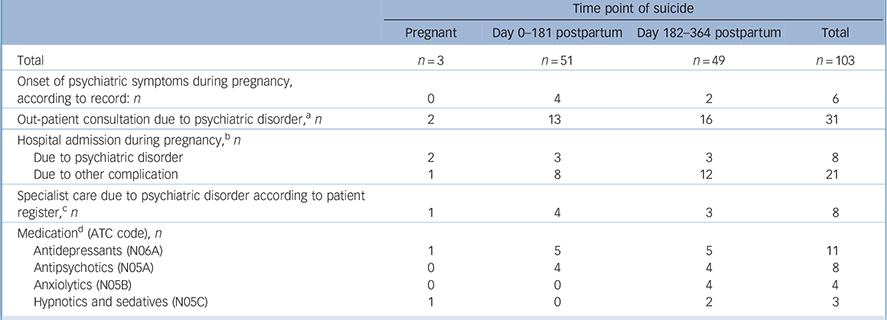
In addition to the 48 women who had a psychiatric history before the pregnancy, 6 women reported an onset of psychiatric symptoms during pregnancy. Of these 54 women, 31 were under psychiatric care and 8 were admitted to hospital due to a psychiatric disorder during the index pregnancy (Table 3). Three women attempted suicide during the pregnancy, all of whom had a history of suicide attempts.
Psychiatric disorders during the index pregnancy among women who died by suicide in pregnancy or within 1 year postpartum (1980–2007)
| Time point of suicide | ||||
|---|---|---|---|---|
| Pregnant | Day 0–181 postpartum | Day 182–364 postpartum | Total | |
| Total | n = 3 | n = 51 | n = 49 | n = 103 |
| Onset of psychiatric symptoms during
pregnancy, according to record: n |
0 | 4 | 2 | 6 |
| Out-patient consultation due to psychiatric disorder, a n | 2 | 13 | 16 | 31 |
| Hospital admission during pregnancy, b n | ||||
| Due to psychiatric disorder | 2 | 3 | 3 | 8 |
| Due to other complication | 1 | 8 | 12 | 21 |
| Specialist care due to psychiatric
disorder according to patient register, c n |
1 | 4 | 3 | 8 |
| Medication d (ATC code), n | ||||
| Antidepressants (N06A) | 1 | 5 | 5 | 11 |
| Antipsychotics (N05A) | 0 | 4 | 4 | 8 |
| Anxiolytics (N05B) | 0 | 0 | 4 | 4 |
| Hypnotics and sedatives (N05C) | 1 | 0 | 2 | 3 |
ATC, Anatomical Therapeutic Chemical.
a. One or more appointment with physician, psychologist or social worker during pregnancy. Record or information missing in nine cases.
b. According to antenatal record. Record or information in record missing in nine cases.
c. One or more out-patient specialist appointments or hospital admissions due to psychiatric disorder or suicide attempt registered in the Swedish National Patient Register during index pregnancy.
d. At first appointment or initiated during pregnancy, according to the medical record. One patient could have been treated with more than one drug. Record or information was missing in eight cases.
Nineteen women were treated with one or multiple drugs, including antidepressants, antipsychotics, anxiolytics or hypnotics and sedatives at their first antenatal care appointment or later during pregnancy (Table 3). The use of psychoactive drugs was equally common in the early (1980–1993) and latter part (1994–2007) of the study period. All eleven women taking antidepressant drugs during pregnancy received specialist psychiatric care after delivery. Eight women were treated with selective serotonin reuptake inhibitors (SSRIs), but only three of them throughout the entire pregnancy.
Mental healthcare postpartum
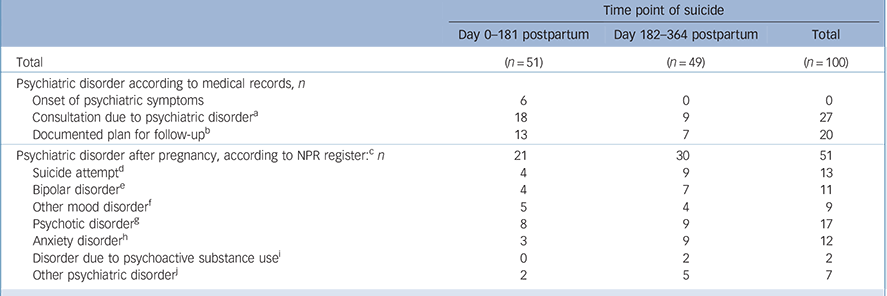
Among the 54 women who had a documented psychiatric disorder, 21 received psychiatric care soon after delivery according to the medical records. In addition, 6 women had a first onset of psychiatric symptoms in the postpartum period, for which they received psychiatric care. Hence, 27 women received psychiatric care in the immediate postpartum period (Table 4). Only 20 women had a documented plan for psychiatric follow-up at discharge from the maternity ward (Table 4). According to the NPR, 51 women received specialist psychiatric care in the interval between delivery and their death (Table 4). Thirteen of these did not have a documented psychiatric disorder prior to, during or immediately following the pregnancy.
Psychiatric disorders after delivery among women who died by suicide within 1 year postpartum during the years 1980–2007
| Time point of suicide | |||
|---|---|---|---|
| Day 0–181 postpartum | Day 182–364 postpartum | Total | |
| Total | (n = 51) | (n = 49) | (n = 100) |
| Psychiatric disorder according to medical records, n | |||
| Onset of psychiatric symptoms | 6 | 0 | 0 |
| Consultation due to psychiatric disorder a | 18 | 9 | 27 |
| Documented plan for follow-up b | 13 | 7 | 20 |
| Psychiatric disorder after pregnancy, according to NPR register: c n | 21 | 30 | 51 |
| Suicide attempt d | 4 | 9 | 13 |
| Bipolar disorder e | 4 | 7 | 11 |
| Other mood disorder f | 5 | 4 | 9 |
| Psychotic disorder g | 8 | 9 | 17 |
| Anxiety disorder h | 3 | 9 | 12 |
| Disorder due to psychoactive substance use i | 0 | 2 | 2 |
| Other psychiatric disorder j | 2 | 5 | 7 |
NPR, National Patient Register.
a. One or more appointments with physician, psychologist or social worker. Record or information missing in ten cases.
b. Documented plan for psychiatric follow-up at discharge from post-delivery care.
c. One or more out-patient specialist appointments or hospital admissions due to psychiatric disorder or intentional self-harm registered in Swedish National Patient Register after index delivery.
d. Events of intentional self-harm: ICD-9: E950–E959, E980–E989; ICD-10: X60–X84, Y10–Y34.
e. ICD-9: 296; ICD-10: F31.
f. ICD-9: 311; ICD-10: F30, F32–F39.
g. ICD-9: 295-299; ICD-10: F20–F29 + F53.1.
h. ICD-9: 300; ICD-10: F40–F48.
i. ICD-9: 303-305; ICD-10: F10–F19.
j. Personality, sleep and adjustment disorders.
All in all, 77 of the 103 women who died by suicide had been in contact with psychiatric healthcare providers before, during or after the index pregnancy (72 with psychiatric specialist care). Twenty-six women died by suicide without any trace of documentation of psychiatric history or psychiatric care. Nineteen of these took their lives during the first 6 postpartum months, and 17 of the suicides were by violent methods. These women did not differ from the other women with respect to sociodemographic characteristics or perinatal complications.
Perinatal outcome
Almost half of the women experienced some adverse event during pregnancy or delivery (Table 5). Three women were carrying twin pregnancies, two pairs delivered at full term and one pair was born at 29 gestational weeks. Another seven deliveries were preterm (>35 but <37 gestational weeks).
Gestational length, mode of delivery and complications in women who died by suicide during pregnancy or within 1 year postpartum (1980–2007)

| Time point of suicide | ||||
|---|---|---|---|---|
| Pregnant | Day 0–181 postpartum | Day 182–364 postpartum | Total | |
| Total | n = 3 | n = 51 | n = 49 | n = 103 |
| First appointment a n | ||||
| <18 gestational weeks | 2 | 44 | 39 | 85 |
| ⩾18 gestational weeks | 0 | 0 | 5 | 5 |
| Midwife visits, b n | ||||
| 3–12 | 1 | 32 | 36 | 69 |
| >12 | 1 | 10 | 8 | 19 |
| Gestational length at delivery, weeks + days | ||||
| <37 + 0 | 3 | 5 | 8 | |
| 37 + 0 to 41 + 6 | 44 | 43 | 87 | |
| ⩾42 + 0 | 4 | 1 | 5 | |
| Mode of delivery, n | ||||
| Unassisted vaginal | 43 c | 38 d | 81 c, d | |
| Vacuum extraction | 4 c | 2 | 6 c | |
| Elective caesarean | 1 | 4 | 5 | |
| Emergency caesarean | 4 | 5 e | 9 e,f | |
| Adverse events during pregnancy, g n | 2 | 22 | 22 | 46 |
| Adverse events during delivery, h n | 27 | 21 | 48 | |
a. Record or information missing in 13 cases.
b. Record or information missing in 15 cases.
c. One twin delivery with one vaginal and one vacuum extraction.
d. One premature twin delivery, gestational week 29.
e. One twin delivery.
f. One woman arrived at hospital as a multitrauma case and underwent perimortem caesarean section at admission, but infant did not survive. She is not included in the table.
g. Hypertensive disorder, pre-eclampsia, intrauterine fetal death, intrauterine growth retardation, diabetes, placenta praevia, preterm premature rupture of membranes, vaginal bleeding, duplex, premature contractions or pelvic pain requiring hospital admission or sick leave, post-term pregnancy, restless legs, polyhydramnios, myoma, genital herpes, thyroid disorder. Record or information missing in eight cases.
h. Induced labour, preterm labour, instrumental delivery, fetal distress, dystocia, retained placenta, postpartum haemorrhage.
The 100 pregnancies of mothers who died by suicide after delivery resulted in 102 live births. Nineteen infants suffered neonatal complications other than prematurity, such as asphyxia, infection, small for gestational age, neonatal respiratory distress, hypoglycaemia, fractured clavicle, cephalohematoma or congenital malformation (including one baby with a ventricular septum defect, four babies with musculoskeletal abnormalities and one with hypospadias). One woman had an intrauterine fetal death and one child died within 30 days of birth. There were two cases of suicide and infanticide.
Foreign-born women
Of the 21 women who were born abroad, 4 came from high-income Nordic countries, 12 from middle-income countries (Poland, Russia, Turkey, the former Yugoslavia, Lebanon, Iraq, China, Chile and Botswana) and 5 from low-income countries (Ethiopia, Somalia, India and Bangladesh). One woman was an international adoptee who had come to Sweden in early childhood. In the majority of cases, information on how long they had lived in Sweden was not available. Twelve women had a psychiatric history prior to pregnancy; one had a first onset during pregnancy and two during the postpartum period. The remaining six women had no documentation of psychiatric disorder in their clinical records or the NPR. Documented language barriers were present in four cases, although a professional interpreter was only used in one.
Discussion
Major findings
The ratio of maternal suicides displayed only small variations in magnitude over the study period, and the risk for women born in low-income countries was higher than for Swedish-born women. In parallel with other studies, the majority of women who died by suicide during and after pregnancy had received specialist psychiatric care, and we found psychiatric morbidity prior to pregnancy to be common. Reference Austin, Kildea and Sullivan7,Reference Cantwell, Clutton-Brock, Cooper, Dawson, Drife and Garrod8 Nevertheless, in a fourth of the women no documentation of a psychiatric disorder was found. The common use of violent methods in postpartum suicide has been noted earlier. Reference Appleby4,Reference Högberg, Innala and Sandström6–Reference Cantwell, Clutton-Brock, Cooper, Dawson, Drife and Garrod8 However, here we report on important differences in both pre-pregnancy psychiatric morbidity and method of suicide between women who died by suicide within 6 months and from 6–12 months of delivery. Women who took their own lives during the first 6 months postpartum less often had a psychiatric history and more often used violent methods of suicide, suggesting different risk profiles.
Psychiatric morbidity among the women who died by suicide
Suicides are almost always associated with mental illness. This was also the case in the present study, where more than 75% of women had psychiatric contact before, during or after the index pregnancy. Reference Hawton and van Heeringen14 The estimated prevalence of major depressive disorder is approximately 7% during pregnancy and 6% during the first 3 months postpartum, Reference Andersson, Sundström-Poromaa, Wulff, Åström and Bixo15 which is equivalent to the 6.3–10.3% 1-year prevalence found in general population surveys. Reference Baumeister and Härter16 Anxiety disorders are less studied, but their prevalence seem to be high during both pregnancy (11%) and the postpartum period (8%), Reference Andersson, Sundström-Poromaa, Wulff, Åström and Bixo15 which is equivalent to the 5.6–18.1% 1-year prevalence in the general population. Reference Baumeister and Härter16 The overall risk of developing a psychotic episode is increased during the year after childbirth, Reference Terp and Mortensen17 and 1–2/1000 women giving birth are admitted to hospital due to puerperal psychosis. Reference Valdimarsdóttir, Hultman, Harlow, Cnattingius and Sparén18 Women with bipolar disorder constitute a particular challenge, as the risk for manic/depressive or psychotic episodes is substantially elevated postpartum. Reference Marangell19 Almost 20% of women with bipolar disorder are admitted to hospital within the first months postpartum. Reference Munk-Olsen, Laursen, Mendelson, Pedersen, Mors and Mortensen20 Prior psychiatric hospital admission is a strong risk factor for postpartum psychiatric admission Reference Munk-Olsen, Laursen, Mendelson, Pedersen, Mors and Mortensen20 and suicide attempts. Reference Comtois, Schiff and Grossman21
Close contacts with the healthcare system during pregnancy and the postpartum period provide prime opportunities for detecting and treating serious psychiatric disorders. 10 Additionally, the UK CEMD have repeatedly recommended that women should be interviewed about psychiatric history and current mental health problems at their first antenatal visit. Reference Cantwell, Clutton-Brock, Cooper, Dawson, Drife and Garrod8 In Sweden, this procedure was routine during the study period; however, only 3 of 17 cases of suicide attempts, and 22 of 40 cases with previous specialist psychiatric care were documented at the first antenatal appointment. The documentation of psychiatric history in the antenatal records was often short and imprecise, and did not enable classification of a disorder. Furthermore, as a suicide attempt remains a lifelong major risk factor for suicide, Reference Hawton and van Heeringen14 women who report a psychiatric history at their first antenatal appointment should also be questioned about any previous suicide attempts. Experience of violence is also a risk factor for psychiatric disorders Reference Howard, Oram, Galley, Trevillion and Feder22 and suicide, Reference Palladino, Singh, Campbell, Flynn and Gold23 although in our population it was only documented in three antenatal records. Experiences of adverse events during pregnancy and delivery were common; almost half had complications during pregnancy, and almost half had complicated deliveries. In addition, 19 children had some type of problem in the neonatal period. Associations between perinatal complications and postpartum depression in otherwise healthy women have been demonstrated in earlier studies, Reference Verdoux, Sutter, Glatigny-Dallay and Minisini24,Reference Blom, Jansen, Verhulst, Hofman, Raat and Jaddoe25 and in this vulnerable group of women, the added adversity of pregnancy, delivery or child complications may have been detrimental.
Despite the well-known risk of postpartum deterioration of several psychiatric disorders, Reference Cantwell, Clutton-Brock, Cooper, Dawson, Drife and Garrod8,Reference Terp and Mortensen17,Reference Marangell19,Reference Comtois, Schiff and Grossman21 a documented psychiatric follow-up plan following discharge from the maternity ward was only present in 20 out of the 31 women who had received psychiatric care during pregnancy. Nevertheless, 51 women had specialist psychiatric contacts in the time interval between delivery and death. The 26 women who had no documentation of psychiatric disorders are of particular interest. We can only speculate what their circumstances might have been. It is possible that they had psychiatric symptoms that were not correctly interpreted, or that the onset was very rapid. In addition, they may have sought psychiatric out-patient care before 2001, prior to records of such care began being kept.
It has been standard practice in Sweden during the study period to separate mother and child should the mother need admission to a psychiatric ward. Unfortunately, this information was not available for our study. There is little knowledge as to how the separation from the newborn would influence the mother's psychiatric disorder. However, what is known is that active support of mentally ill mothers improves the interaction between mother and child, which in turn, is essential for the child's development. Reference Kenny, Conroy, Pariante, Seneviratne and Pawlby26 The UK CEMD therefore strongly recommend mother and baby units for all women requiring psychiatric admission in late pregnancy and the postpartum period so that the women are not separated from their infants. Reference Cantwell, Clutton-Brock, Cooper, Dawson, Drife and Garrod8 To the best of our knowledge, such units do not presently exist in Sweden.
Suicides among foreign-born women
For women born in low-income countries, the risk of suicide during pregnancy and postpartum was elevated. Non-native, Swedish-speaking pregnant women have higher psychiatric morbidity, yet they are less likely to seek psychiatric care. Reference Wangel, Schei, Ryding and Östman11 This may be specific to Sweden. A Danish study has shown that psychiatric contacts were more common among foreign-born women (irrespective of origin) than among native Danes during pregnancy and the year postpartum. Reference Munk-Olsen, Laursen, Mendelson and Pedersen27 Region of origin was also found to be a strong predictor for antenatal depressive symptoms in a Canadian study: women from South Asia and sub-Saharan Africa were among those with the greatest prevalence of depressed mood. Reference Miszkurka, Goulet and Zunzunegui28 A language barrier was documented in the case of four women in our study, and yet a professional interpreter was used in only one instance, thereby underscoring the necessity to use professional medical interpreters for all non-native-speaking women. Reference Cantwell, Clutton-Brock, Cooper, Dawson, Drife and Garrod8
Similarities and differences with the findings from the UK CEMD
The similarities between this study and the UK CEMD findings are compelling. Both show the importance of a history of psychiatric ill health, as well as the older age of the suicide victims, and the frequent use of violent methods of death. Reference Cantwell, Clutton-Brock, Cooper, Dawson, Drife and Garrod8 Similarly, both studies indicate that the relative numbers of women dying due to maternal suicide has not changed over time. However, differences between the two settings are also at hand. The maternal suicide rate in Sweden was higher than in the UK. In Sweden, there was also a higher proportion of women who had received psychiatric care before and during pregnancy, and a lower proportion of women who had postpartum-onset conditions. A difference in sociodemographic characteristics is also noted, in particular the relatively large proportion of foreign-born women in Sweden.
Strengths and limitations
Our population-based study is strengthened by the fact that all suicides were identified from records held in Swedish national health registers. We were able to access all but six records, and information was complemented by register data. One limitation was the small sample size due to the near rarity of suicide in a small population. Since we identified only three suicides during pregnancy, this study mainly contributes to knowledge on suicide in the postpartum period. Data collection of psychiatric care included only diagnoses and whether out- or in-patient care was provided. Hence, analysis of the association between pregnancy and the possible deterioration of a psychiatric disorder in an individual case was not feasible. Furthermore, we had no information about psychiatric care prior to the suicide, i.e. medication use or electroconvulsive therapy for severe depression or psychosis, and whether care was compulsory or on a voluntary basis. Access to psychiatric records could have enabled the audit of the psychiatric care, but was beyond the scope of this study.
The extended study period meant that some major changes in Swedish psychiatric care have occurred, but our sample was too small to be adjusted for calendar time. The number of psychiatric admissions have decreased dramatically and out-patient care has increased, but the provision of specialised psychiatry has not extended equally to all regions, which could be disadvantageous for some women. Reference Tiainen, Edman, Flyckt, Tomson and Rehnberg29 In addition, tricyclic antidepressants have been replaced by SSRIs, which has seen increasing use among women, although less so during pregnancy than postpartum. Reference Munk-Olsen, Gasse and Laursen30 In our study, eight women used SSRIs during pregnancy, but only three during their entire pregnancy. Finally, the last decade of the study period included the introduction of screening with the Edinburgh Postnatal Depression Scale for major depression at 6–8 weeks postpartum, Reference Wickberg and Hwang31 which has increased the overall awareness of postpartum mental ill health.
By including uncertain suicides we may have included some accidental deaths, but we assessed this risk of overestimation to be lower than the risk of underestimating the true number of suicides by excluding all uncertain suicides. Additionally, because the NPR was not complete for hospital admissions before 1987 and registration of out-patient specialist care did not begin until 2001, an underestimation of women having had contacts with psychiatric care may have occurred.
Implications for clinical practice
Overall, in Sweden suicides during pregnancy and the year following delivery have not decreased, and women born in low-income countries are at highest risk. Among the women who die by suicide, psychiatric morbidity prior to pregnancy is common, although we noted discrepancies between actual and documented psychiatric history. As repeatedly recommended by the UK CEMD, all women should be asked at their first antenatal appointment about a history of psychiatric disorder as well as their current mental health. Pregnant women with a history of severe affective disorder or psychoses should be referred for psychiatric assessment and management, even if they are well. A minimum requirement for management should be regular monitoring and support for at least 3 months following delivery. Reference Cantwell, Clutton-Brock, Cooper, Dawson, Drife and Garrod8 Of note, this study shows that obstetric healthcare providers may not understand the importance of previous serious psychiatric disorders. A management plan for the postpartum period was generally found lacking, despite known psychiatric disorders or symptoms. Collaboration between psychiatric and obstetric services is therefore crucial to optimise care and reduce the risk for suicide among women during pregnancy and the year after delivery.
Funding
This work was supported by a grant from the Swedish Council for Working Life and Social Research [FAS 2007–2026] and by the Medical Faculty of Uppsala University.
Acknowledgements
We thank Emelie Hallberg for assisting in collating medical records for the 1988–2007 period.




eLetters
No eLetters have been published for this article.