


Introduction: Biological and Textual Genealogies
All genealogies are the same, and every genealogy is unique. All genealogies reflect efforts to determine, and claim to represent, real patterns in the transmission of information over time. The hierarchical organization of prevailing features, the description of relationships through time, the close examination of inherited variations, and analyses focused on transmutation or diachronic change – these are methodological priorities that became central to evolutionary biology in the years after 1859, when Charles Darwin declared that “all true classification is genealogical.”Footnote 1 But family and tribal genealogies existed long before Darwin, and they remain important to individual and social identities. In recent decades, the combination of digitized archival data and personal genetic testing, through organizations like Ancestry.com, has made personal genealogical research possible for millions of people. But attempts to trace the details of past sexual encounters that produced past and present biological offspring can still be frustrating, both because of the haphazard survival of evidence and the resistance of some people to explore or acknowledge past relationships.Footnote 2 Likewise, although the COVID-19 virus indisputably appeared in Wuhan, China, by December 2019 at the latest, the genealogy of the viral mutations that produced that deadly variant (which should be a purely empirical matter) remains disputed, partly because of national, racial, and scientific rivalries and partly because relevant evidence has been lost or deliberately destroyed. Each genealogy differs from every other because of the intrinsic idiosyncrasy of what is being transmitted, the mechanisms for transmitting it, the number of iterations, the passage of time from origin to descendant, and the difficulties of determining and representing in the present the real pattern of past transmission.
It is no accident that the popular, long-running PBS documentary series Finding Your Roots is hosted by Henry Louis Gates Jr., whose scholarly work has focused on racial identities in the United States. Nor is it accidental that a recent breakthrough in our understanding of the origin of the most devastating Euro-Asian bubonic plague was made by a medieval philologist, Monica Green: “Her discipline of philology, the study of the development of texts over time, requires comparing manuscripts to each other, building a stemma, or genealogy of texts, from a parent or original manuscript … this is precisely the same skill one needs to read phylogenetic trees of mutating bacteria in order to trace the history of the disease.”Footnote 3 Such textual genealogies, typically visualized in terms of a branching “tree” or “stemma” that shows the relationship of each text to others, is not limited to medieval texts. “In almost any handbook or monograph of textual criticism,” Yii-Jan Lin observes, “manuscripts or texts are described as parents and offspring, comprising families, and mingling their textual makeup to create new mixtures and hybrids.”Footnote 4 Lin focuses on texts of the New Testament, but his observations about the biological metaphors and racial assumptions behind modern textual criticism apply equally to the editing of Shakespeare.Footnote 5
Each of the dramatized, to-be-spoken family genealogies in early modern English drama has a unique purpose and unique problems. But those speeches and the scenes in which they are spoken share features that illuminate textual scholarship, editorial practice, and social prejudices. They demonstrate that Shakespeare’s English history plays are as interested in bloodlines, racial identities, gendered hierarchies, and disputes about who belongs in a “nation,” as Othello or The Merchant of Venice.Footnote 6 In Shakespeare’s Henry V and 2 Henry VI, to-be-spoken genealogical chains of transmission dramatize forms of inherited identity, including identities that legitimate varieties of authority and privilege. In medieval Europe, political power and landownership were both inherited and therefore legitimated by genealogies that established vertical, hierarchical family relationships. Throughout Shakespeare’s lifetime, manuscript and printed royal genealogies were popular, powerful, and sometimes dangerous texts.Footnote 7
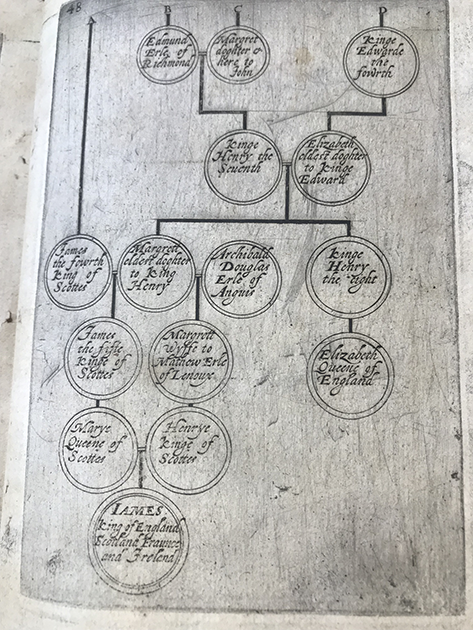
In 1603, King James I succeeded Queen Elizabeth I as England’s sovereign. But James was not a direct lineal descendant of Elizabeth, not her sibling, nor the direct descendant of her legitimated royal siblings (who, like her, had died childless). Elizabeth was Henry VIII’s daughter; James was the acknowledged great-grandson of Henry VIII’s sister Margaret. Thus, James Stuart’s ascent to the English throne was, like Elizabeth Tudor’s, legally based on biological descent from Henry VII, who was Elizabeth’s grandfather and James’s great-great-grandfather (as can be seen in the early modern stemma in Illustration 1).Footnote 8 Both the monarchs who ruled England during Shakespeare’s lifetime owed their claim to royal authority and legitimacy to the “Wars of the Roses,” which culminated in the collapse of the Plantagenet dynasty (1154–1485), the violent death of the last Plantagenet king (Richard III), and the contested succession of the Tudor dynasty, founded by the first Tudor king, Henry VII (the man responsible for Richard III’s death), who was a direct descendant of the marriage between Welshman Owain Tudor and Catherine Valois (the French widow of Henry V). Eight of the ten history plays printed in the First Folio – including all the Shakespeare history plays that survive in more than one version – dramatize the dynastic conflict that began in 1399 (with Henry Bolingbroke’s challenge to the authority of Richard II) and ended in 1485 (with the killing of Richard III and the accession of Henry VII). Shakespeare’s artistic representation of English history was thus overwhelmingly focused on a period of contested genealogies that underlay the legitimacy of the monarchs who ruled England in his lifetime.
Excerpt from unpaginated genealogical table in George Owen Harry, The Genealogy of the High and Mighty Monarch, James, by the grace of God, king of great Brittayne (STC 12872, 1604).
Texts, like persons, can have genealogies that certify their identity and legitimacy. The authority of Western European medieval Christian Bibles depended on the authority of Western European medieval Christian institutions, which retrospectively validated particular biblical texts (the Latin Vulgate) and their interpretation. Modern textual criticism originates with humanist attempts to create more reliable genealogies of textual authority.Footnote 9 Beginning in the late fourteenth century, contested textual genealogies (i.e., genealogies identifying the relationships between texts, rather than persons) led to explosive European disputes about the authority of key Christian texts. The humanist revolution sought to replace corrupt late medieval scribal copies of Greek and Latin texts by identifying earlier, more reliable manuscripts of the same works. “The Donation of Constantine,” a text that foundationally legitimated the political power of the Roman Catholic papacy, turned out to be a forgery. The sixteenth-century European Reformation and Counter-Reformation were, essentially, disputes about the genealogical authority of various biblical texts and translations. Those disputes about textual genealogies, in turn, influenced disputes about dynastic genealogies. In 1558, Elizabeth Tudor’s Protestantism – her commitment to the printed English Protestant Bible and to the printed English Book of Common Prayer – was more important politically than questions about her biological paternity. Likewise, in 1603, James I’s Protestantism, well documented by his printed proclamations and theological tracts, outweighed the rival genealogical claims of English Catholics like Arabella Stuart and royal Spanish Catholics like Isabella Clara Eugenia. As an unauthorized 1595 treatise argued, “succession to gouerment by neernes of bloode is not by Law of nature, or diuine, but only by humane & positiue Lawes of euery particuler common wealth.”Footnote 10
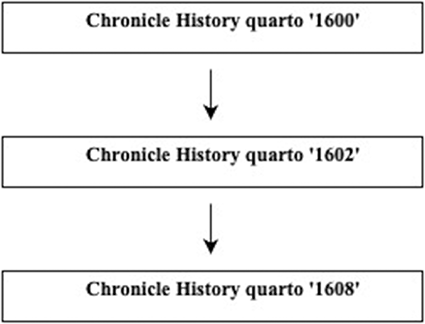
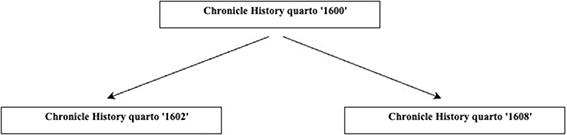
Within the English-speaking world, the works of Shakespeare have often been paired with the Bible in terms of their cultural centrality, and it should not surprise us that the authority of certain Shakespeare texts has also been disputed, almost from the beginning. But by comparison with the thousands of surviving early manuscripts of biblical texts, no undisputed early Shakespeare manuscripts survive, and most of the early printed texts of his work belong to a simple genealogical sequence that began before his death. For example, the title pages of the only extant early modern texts of Shakespeare’s Henry V establish a clear chronological sequence: Q1 1600 —> Q2 1602 —> Q3 1608 —> F1 1623 —> F2 1632 —> F3 1663 —> F4 1685. The Chronicle History of Henry the fift was first published in a quarto edition dated, on its title page, “1600” (STC 22289).Footnote 11 This date is confirmed by independent documentary evidence.Footnote 12 Other quarto editions are dated “1602” (STC 22290) and “1608” (STC 22291). Shakespeare editors in the eighteenth and early nineteenth centuries accepted that those three editions were published in that order in Shakespeare’s lifetime (Figure 1). But the Cambridge edition of 1863–6 – the first academic edition and the first containing a systematic collation of textual variants in all early documents known at that time – provided clear evidence that both the “1602” and the “1608” editions were independently typeset from the “1600” printing.Footnote 13 In genealogical terms, “1608” is not a descendant of “1602,” but its sibling: They are two separate branches from the “1600” root (Figure 2).
Chronological sequence of earliest surviving printed texts of The Chronicle History of Henry the fift.
Genealogical sequence of earliest surviving printed texts of The Chronicle History established by collation of variants (1864).
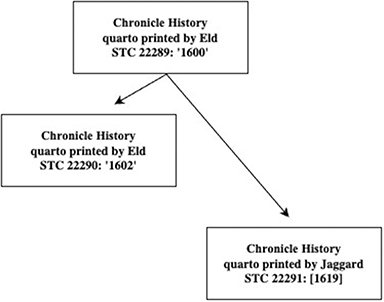
The seemingly simple textual genealogy of those three quarto editions of Henry V became more complicated in the twentieth century. In 1908, Walter Wilson Greg provided bibliographical proof that ten quartos associated with Shakespeare, including the “1608” quarto of Henry V, were all manufactured in 1619 on the same stocks of paper and in the same printing house.Footnote 14 Greg’s empirical evidence demonstrated that the title page of the “1608” edition of Henry V deliberately falsified its date of production. The chronological sequence of the three quartos remained the same, but Greg demonstrated that the third quarto edition was both posthumous and dishonest (Figure 3).
Genealogical sequence of earliest surviving printed texts of The Chronicle History established by bibliographical analysis of type and paper (1910).
Moreover, the family firm of William Jaggard and his son Isaac, which in 1619 printed a false date on Henry V, also printed the First Folio edition (“F1”) of Shakespeare’s Comedies, Histories, & Tragedies. Their text of The Life of Henry the Fift, published in 1623, differs massively and radically from the text in the three early quartos.Footnote 15 Normally, we might suppose that texts printed in a writer’s lifetime – when he could theoretically have overseen their production or been responsible for transferring copies to particular stationers – were more reliable than texts that did not begin to be set into type until years after his death. But the posthumous Folio explicitly denied the legitimacy of previous printings of his plays: a prefatory epistle (“To the great Variety of Readers”) claimed that “where (before) you were abus’d with diuerse stolne, and surreptitious copies, maim’d, and deformed by the frauds and stealthes of iniurious impostors, that expos’d them: euen those, are now offer’d to your view cur’d, and perfect of their limbes” (A3 r). If we remove the 1602 and 1619 editions as mere reprints, the chronological sequence would still be Q1 1600 —> F1 1623. But if we accept the claims of the 1623 Folio, the genealogical sequence of printed texts of Henry V (1600 —> 1623) might not represent the genealogical sequence of the manuscripts underlying those texts. The 1623 epistle divides the extant early texts of Shakespeare’s works into two populations: one “maim’d, and deformed,” the other “perfect of their limbes.” This metaphor exhibits a prejudice against nonnormative bodies: “deformed” was “by far” the most “frequently used term in Shakespeare’s day” for what we might call “disabled” or “statistically not normal,” or for any bodily feature early modern English people considered “unnatural.”Footnote 16 More generally, as is often the case, disability is a social as well as physical category, and therefore disability, class, and race are intertwined. The costly 1623 edition asserts its textual authority over the previously printed, much more affordable quarto and octavo texts of Shakespeare’s plays by invoking a racial binary that stigmatizes and segregates one lower-class degenerate criminal population of “imposters” (trying to pass as members of a superior category) in order to protect the “perfect” upper-class population bound together in the Folio’s expensive, curated space. This description of textual variants in terms of defective biological bodies can be seen in early modern textual scholars like French humanist Joseph Scaliger (1540–1609), who wrote of a “monstrous progeny” of variants in the surviving texts of Greek and Latin antiquity.Footnote 17 But the 1623 preface extends Scaliger’s biological metaphor from individual variants to whole populations of texts. We can see here a binary logic that Lin identifies in his analysis of nineteenth-century biblical stemmatics: The contrast between “perfect” and “deformed” creates genealogical claims that identify whole populations (“families, tribes, and nations”) as inferior.Footnote 18 The Folio preface anticipates the hierarchical categories of emergent racial classifications, solidified in Darwin’s subtitle, “the preservation of favoured races in the struggle for life.”Footnote 19 But the 1623 prefatory epistle was ambiguous: were all the editions printed before the Comedies, Histories, & Tragedies being classified as “maim’d” (mutilated, wounded, injured, typically after birth) and/or “deformed” (misshapen, malformed, deviating from the normal structure, typically at birth), or was that criticism aimed only at some? Does “diuerse” mean “multiform” or “perverse” or “some” or “several different” or “many”?Footnote 20
Although the Folio prefatory epistle was ambiguous in 1623, over the next three centuries the solidification of an allegedly scientific racism retrospectively obscured the ambiguity, making it difficult for later readers to interpret that epistle in anything other than white supremacist terms. “Natural philosophers and agricultural breeders” had “provided fresh evidence for both biparental heredity and the relative stability of inherited traits over generations” by the 1700s; by the end of the nineteenth century, “Hereditary Genius” had been established “by collating the pedigrees of hundreds of eminent people,” and “state enforced eugenics … had wide appeal.”Footnote 21 In the early twentieth century, supposedly scientific racial categories saturated and dominated public discourse, George Bernard Shaw had christened the pervasive quasi-religious veneration of Shakespeare “bardolatry,” and bibliography sought to erase the ambiguities of 1623. In 1909, Alfred William Pollard suggested a new interpretation of the Folio preface: “diuerse stolne, and surreptitious copies” referred only to five “bad quartos” (including the 1600 Chronicle History of Henry the fift). Pollard claimed that those quartos had been published by stationers who were “pirating” the text, which legally belonged to other stationers.Footnote 22 Within a year, Pollard’s interpretation of the 1623 epistle was combined with Greg’s detailed conjectures about the illicit activities of actors, creating a theory of “memorial reconstruction” of plays like The Merry Wives of Windsor and Henry V, producing unauthorized and corrupt texts subsequently published by unscrupulous printers and booksellers.Footnote 23 This hypothesis dominated a century of textual criticism, textual genealogies, and editing of Shakespeare. In 1929, Peter Alexander (in a book with a preface by Pollard) added three more early Shakespeare histories to the roster of memorial reconstructions: the first printings of 2 Henry VI (The First part of the Contention betwixt the two famous Houses of Yorke and Lancaster, 1594), 3 Henry VI (The true Tragedie of Richard Duke of Yorke, and the death of good King Henrie the Sixt, 1595), and Richard III (The Tragedy of King Richard the third, 1597).Footnote 24 Pollard’s five “bad quartos” eventually expanded to forty-one “suspect” printed texts that were seen to contaminate the early documentary record not only of Shakespeare but of early modern drama more generally.Footnote 25
The enduring influence of the category of “suspect” texts depends on a simple genealogical theory of textual (re)production that explains the (de)generation of a whole population of texts. That eugenic theory allowed editors to ignore, segregate, disparage, and discourage reproduction of thousands of variants in texts published during Shakespeare’s lifetime. In place of the clear chronological order of the extant printed texts (“1600 —> 1623”), it postulated an invisible chronology of lost manuscripts, a genealogy in which the 1623 Folio was printed from an authorial manuscript (“pre-F”) that was the ancestor of a badly corrupted, non-authorial manuscript (“pre-Q”) (see Figure 4).
Stemma of New Bibliography “Bad Quarto Theory” of Henry V.
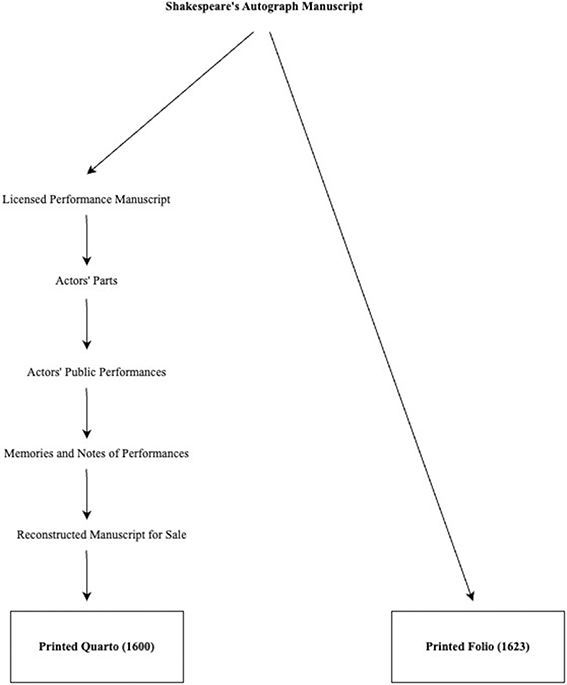
Figure 4 Long description
A chart visualizing the standard modern theory about the texts of Henry V. It shows Shakespeare’s original manuscript of the play at the top. From there, an arrow on the right goes directly down to the 1623 printed edition. An arrow on the left goes down first to a licensed performance manuscript. From there, it goes down to actors’ parts. From there, it goes down to actors’ public performances. From there, it goes down to memories and notes of performances. From there, it goes down to reconstructed manuscript for sale. From there, it goes down to the 1600 printed edition.
Though the “Pre-F —> Pre-Q” genealogical stemma may seem counterintuitive, that does not prove it is wrong. The fact that the canonical hypothesis has been articulated in the language of eugenics (with inferior texts relegated to bibliographical ghettos) does not mean that all scholarly efforts to construct a genealogy of Shakespeare’s texts are inherently flawed, inherently racist, inherently elitist, or inherently ableist. Genealogies can be and have been put to divergent uses. In May 2025, a genealogical archivist established that the maternal grandparents and great-grandparents of the newly elected Roman Catholic pontiff, Pope Leo XIV, came from a New Orleans Creole community, but the family deliberately changed their racial identity when they moved to Chicago: “They were consistently listed as Black, mulatto, colored here [in New Orleans], but once they get to Chicago it’s white, white, white, white, white.”Footnote 26 Another team, led by Henry Louis Gates Jr., discovered that some of the pope’s free black ancestors themselves owned black slaves.Footnote 27 In 2023, DNA analysis “connected 27 free and enslaved African Americans buried in a Maryland cemetery to their 42,000 living relatives.”Footnote 28 Of course, the aims and politics of textual criticism differ fundamentally from the aims and politics of African Americans searching for their origins (often lost because of the slave trade or deliberately concealed to avoid racial prejudice). But both archival activities are driven by a search for more accurate evidence of the past, which in turn can reshape the present, both politically and personally. To intelligibly or creatively discuss the historical relationships between different early texts of Shakespeare we must “search for textual origins” and “find new methods for producing a stemma,” rather than simply echoing previous editorial orthodoxies and previous textual genealogies.Footnote 29 Those new methods should be conscious of and attempt to avoid the ethnocentric, gendered, and ableist assumptions that underlay previous editorial theories. The New Bibliographical hypothesis – that the 1600 edition was a “bad quarto” based on inaccurate memories of theatrical performances, and that the “good” 1623 edition was printed directly from Shakespeare’s first complete manuscript – might be correct. From 1979 to 1987, Gary Taylor, one of the authors of this Element, defended that hypothesis about the genealogical sequenceFootnote 30; it continues to be supported by recent editors of Henry V, including editors of the quarto version.Footnote 31
We both now believe that Pollard’s, Greg’s, and Alexander’s textual genealogies, based upon theories about “bad quartos,” are fundamentally flawed. But in this short Element, we cannot examine in detail the application of those New Bibliographical theories throughout the entire Shakespeare canon. Instead, we will focus on two plays: Henry V and 2 Henry VI. In both these plays, the contested genealogies of dynastic families are textualized in extensive dramatic dialogue, and those to-be-spoken genealogies justify and precipitate violent resistance against the political status quo. Both plays exist in two versions: a text printed in the 1623 Jacobean Folio (widely reprinted, read, and performed for four centuries) and a shorter Elizabethan text, printed decades earlier in a smaller, more affordable format (seldom reprinted, read, or performed since 1623). For both plays, the dramatized genealogy in the Elizabethan printing substantially differs from the dramatized genealogy in the Jacobean printing; and for both plays, the differences in that dramatized genealogy have been repeatedly cited as proof that the Elizabethan printing is an illegitimate, bastardized text, so corrupt that it cannot have been written or authorized by Shakespeare. For each, a royal genealogy written to be spoken onstage in a single scene has been leveraged to challenge the textual genealogy and cultural authority of the entirety of the earliest surviving text. Moreover, the two plays share two crucial and indisputable stages of transmission: Both were first printed in Thomas Creede’s printing house (and published by Thomas Millington), and then both were printed in a longer version in 1623 in Jaggard’s printing house (and published by the Jaggards in partnership with Edward Blount and others).
For all these reasons, we consider the genealogies of both Henry V and 2 Henry VI together. We begin (in Sections 1 and 2) with the play written and printed later, Henry V. We do so because Henry V’s genealogy scene, and its connection to Holinshed, became fundamental to theories of the relationship of its two texts in 1877, more than half a century before very similar arguments about the genealogy scene in The First Part of the Contention (and its connection to Raphael Holinshed) became fundamental to theories of the relationship between that quarto and its Folio counterpart. The 1877 hypothesis about Henry V provided the template for the 1929 hypothesis about Contention. Moreover, Henry V is in several respects less complicated. Unlike 2 Henry VI, Shakespeare’s authorship of Henry V has never been seriously or widely contested; it belonged from the outset to an acting company co-owned by Shakespeare, and both versions of its dramatized genealogy clearly derive from the 1587 edition of Holinshed’s Chronicles.Footnote 32 By contrast, Shakespeare’s sole authorship of either version of 2 Henry VI has been disputed since the eighteenth century; the 1587 Holinshed is not the only historical source of either version; the acting company that first performed it also remains uncertain; and the dynastic genealogy it dramatizes survives in widely divergent versions in sixteenth-century printed sources. All those complications have muddied analysis of the textual variants in its genealogy scene. By comparison, the genealogy scene in Henry V is, as Shakespeare’s bishop declares in both versions, “as clear as is the summer’s sun.”Footnote 33
Although genealogical scholarship can at its best identify real relationships between material texts, and although the New Bibliographical genealogy for Henry V (Figure 4) might theoretically be correct, the evidence for the “bad quartos” hypothesis has been systematically undermined for more than three decades.Footnote 34 So have claims about the widespread use of authorial “foul papers” by early printers of Shakespeare’s plays.Footnote 35 Most recently, further investigations of the 1619 quartos have also challenged a key assumption of the New Bibliography’s genealogy. The bottom line of the title page of the third quarto edition of The Chronicle History of Henry the fift claims that it was “Printed for T. P. 1608.” Those initials stand for the publisher Thomas Pavier, who published the 1602 edition, and who had owned the copyright for The Chronicle History since August 1600. For more than a century, the ten quartos printed by the Jaggards in 1619 were generally called the “Pavier” quartos, and many of the variants introduced in them were attributed to Pavier.Footnote 36 But examinations of the more than one hundred surviving copies of those quartos have made it clear that the Jaggard firm, which printed all the quartos, also probably initiated the whole project.Footnote 37 Thus, the initials “T. P.” on the third quarto edition of The Chronicle History may be as false as the immediately following date “1608” (and as false as the “T. P.” on the 1619 quarto text of The Whole Contention). The Jaggards now appear to be even more thoroughly implicated in the dishonest 1619 project: We should probably call those deliberately misleading Shakespeare editions “the Jaggard Quartos,” because the agency of the Jaggard firm is indisputable and the agency of Pavier is speculative.Footnote 38 That must therefore also destabilize any assumption or assertion of the absolute reliability of the 1623 Folio, also printed and copublished by the Jaggards.
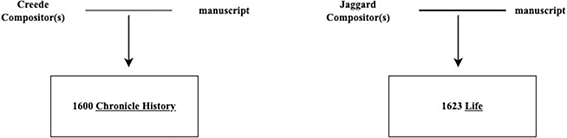
Figure 4 simplifies the complexity of the transmission of Henry V, because it does not properly distinguish between objects and agents. Human genealogies typically record the intersection of two agents (one male, one female), but textual genealogies record the intersection of material objects and a variety of human agents. In Figure 4, both the 1600 quarto and the 1623 Folio are boxed, because both are extant objects. But Figure 4 does not identify the long-deceased people who created those extant objects. The 1600 quarto derives, directly or indirectly, from a lost manuscript by Shakespeare himself; so does the 1623 Folio. But both quarto and Folio were created by the intersection of a now-lost manuscript with unfamous workers in a particular printing house (Creede’s for the quarto, Jaggard’s for the Folio), who selected for each letter, punctuation mark, line, and space in someone else’s handwriting the corresponding pieces of type that were mechanically pressed against hundreds of sheets of paper (Figure 5). The quarto and Folio were produced at different times in different printing houses for different publishers. Such transformations from hand-and-pen to metal-and-machine always introduced changes: some deliberate, some inadvertent. Before we speculate about lost manuscripts and unidentified agents, we must acknowledge the certain agency of the two known printers and their unnamed employees (and perhaps also the different publishers who paid those different printers).
The role of compositors in the transmission of printed playtexts.
In this Element, we begin with an analysis of the genealogical speech in Henry V, asking why Q1’s version of that speech has dominated arguments for memorial reconstruction (Section 1). We then examine F1’s version (Section 2), considering various explanations for its additional material and relating its variants to the larger field of “authorial philology.” Next, we turn to the genealogy of Edward III’s descendants, which was the basis for the New Bibliography’s claim that The First Part of Contention was a memorial reconstruction – a claim that depended on assumptions about the stability of “History,” despite the many genealogical errors in English chronicles printed between 1516 and 1569 (Section 3). Edward Hall’s 1548 chronicle, which undoubtedly influenced Shakespeare, is also unreliable (Section 4). Holinshed’s Chronicles survives in two different editions (1577 and 1587); their differences clearly reflect variants between the 1594 and 1623 versions of the genealogy (Section 5). Collectively, this evidence undermines the New Bibliography’s purist genealogy, which denied that Shakespeare could have collaborated with other playwrights, adapted existing plays, or revised his own work (Section 6). In conclusion (Section 7), we show why editors and critics need to distinguish between documentary archives (tools of historians) and “archival effects” (tools of playmakers).
1 The Law Salic
We should not take the New Bibliographical genealogies of Henry the fift and Henry the Sixt, Part Two as self-evident. But we should ask why it seemed so obvious to Pollard and Greg that the 1600 edition of The Chronicle History was a “bad” quarto. The answer is that they were convinced by an argument, made in 1877, that had nothing to do with bibliography as an empirical examination of material objects manufactured by particular agents working particular machines. Instead, the influential 1877 argument was based on literary interpretation of a royal genealogy.
Shakespeare’s Henry V dramatizes a conflict of genealogies. A dispute about familial inheritance leads to war. English military victory then forces a new bequest (naming the English king as heir to the French throne) and the English king’s marriage to a French princess (which produces a child who unites the genealogies of the two warring royal families). Until 1900, all patrilineal genealogies were stories rather than facts, because until the identification of blood types and then of DNA, it was impossible to determine empirically whether a particular man fathered a particular child. But in all early texts of Shakespeare’s plays, the initial dispute about familial inheritance does not contest who fathered whom, but centers instead on the rules of representation and causation that should organize a genealogy: It is a dispute about legal precedent.
In Henry V, the dramatic genealogy does not name a single English king or aristocrat. Instead, it focuses on a procedural rule: Should the vertical genealogical line of legitimate heirs be governed by the misogynistic law of male primogeniture, in which the eldest son inherits everything? Or should it also recognize female heirs and the descendants of women? Henry asks an English bishop, “Why the Law Salicke which they haue in France, / Or should or should not, stop vs in our clayme.”Footnote 39 In both versions, the bishop responds in a long speech surveying the genealogy of the French royal family, claiming two things. First, in both versions, the Salic Law did not historically apply to inheritance within the geographical territory called “France” or the ethnographic category “French.” Second, in both versions, the vertical line of royal succession in France repeatedly recognized and descended through female inheritance: The French themselves have routinely ignored the Salic Law, which therefore cannot bar Henry’s inheritance of the French crown and French territory.
The legitimacy of Henry’s war, and any interpretation of his character and his play, depends on this genealogical, misogynistic, ethnocentric legal claim. But the 1600 and 1623 printed texts of Henry V contain significantly different accounts of the English bishop’s speech about the Salic Law. The differences are so great that they cannot all be attributed to the printers Creede and Jaggard; they must represent, at least in part, differences in two lost manuscripts, one that came into Creede’s printing house, the other into Jaggard’s. In 1877, Peter Augustin Daniel cited those differences as proof of a particular textual genealogy: The version of the speech printed in the later Folio gives the royal genealogy correctly, and the earlier quarto text of that speech gives it incorrectly, meaning that the entire quarto “may be with confidence asserted” as a text printed, not from “an authentic manuscript” but instead from “an imperfect copy of [Shakespeare’s] work.”Footnote 40 Daniel’s argument was reiterated by subsequent textual scholars, who hardened Daniel’s “confidence” into certainty.Footnote 41 Thus, Daniel’s analysis of a single genealogical speech produced a textual genealogy for the entire play, which has dominated our understanding of the two texts ever since. In that long-dominant textual stemma (Figure 4), The Life of Henry the fift descends directly from Shakespeare himself and is often said to have been a manuscript in Shakespeare’s own handwriting, a “rough draft” or “foul papers.”Footnote 42 In that hypothesis, the 1623 Folio text is based on a manuscript that existed before the manuscript used by the 1600 quarto printer. By contrast, The Chronicle History of Henry the fift, published in 1600, is an illegitimate descendant of The Life, produced by unscrupulous actors “reporting” poorly remembered performances of the play, or by unscrupulous members of the audience supplementing their memories of performance by jotting down details during and after a performance, using shorthand or some other form of “fast note-taking” to “report” what they heard and saw.Footnote 43 Thus, the standard textual genealogy of Henry V derives its editorial and intellectual authority from a few textual variants in the speech outlining the French royal genealogy that authorized Henry V’s invasion of France.
Before we examine the single speech that forms the basis for Daniel’s hypothesis, we should ask whether the textual genealogy of an entire play can be credibly based on variants in a single idiosyncratic speech. The 308 words of the Salic Law speech in Chronicle History constitute only 2.5 percent of the quarto’s to-be-spoken text, and Daniel’s hypothesis that the entire quarto represents an abridged, derivative, unauthorized, and unreliable text depends on only two words in that speech. Since a comprehensive analysis of all available data is one of the fundamental principles for establishing the reliability and authority of stemmatological research or DNA analysis, we follow that method here. The number of lexical variants is especially important when we have only two variant texts (1600 quarto and 1623 Folio), as opposed to the thousands of early manuscripts of the New Testament, or even the twenty-three texts of John Fletcher’s short song “Take oh take those lips away,” or the nineteen copies of Francis Beaumont’s verse letter ‘The Sun That Doth the Greatest Comfort Bring’, or the seven texts of Thomas Middleton’s play A Game at Chess.Footnote 44
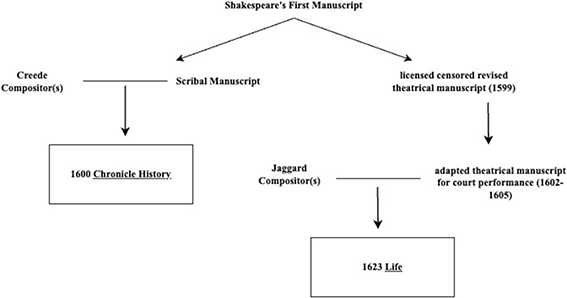
In short, recent scholarship based on systematic investigation of the entire quarto and Folio texts of Henry V does not support Daniel’s hypothesis. Idiosyncratic speech prefixes for the Frenchwomen Catherine and Alice, shared by both texts, cannot be explained by memorial reconstruction or note-taking during a performance, because speech prefixes are never spoken. Furthermore, because of massive differences in the length and dialogue of the two scenes, the variants cannot be explained by the Folio copying one of the quartos. Therefore, those shared eccentricities must come from a shared manuscript source that existed before the two versions of the play separated into the two branches that led eventually to the 1600 and 1623 editions. That shared source also lacked the many stage directions for music, characteristic of theatrical manuscripts, which are absent from the quarto but present in the Folio, suggesting that the Folio is more likely than the quarto to derive from a theatrical manuscript.Footnote 45 The quarto could instead derive from the initial draft manuscript that a playwright read aloud to the acting company, which might have been revised in response to feedback from the company.Footnote 46 Three recent studies, by three different scholars, have concluded that multiple passages unique to the 1623 text resulted from changes made for a court performance in 1602 or 1605, after publication of the 1600 quarto. If so, the quarto compositors cannot have been working from a manuscript created later than the one used by the Folio compositors.Footnote 47 Where the quarto and Folio share stage directions, scenes, and extended passages, the quarto is consistently closer than the Folio to Shakespeare’s known sources.Footnote 48 None of this evidence proves that the quarto was printed directly from Shakespeare’s draft, and its exit directions suggest at least one intervening manuscript between Shakespeare and Creede’s compositors.Footnote 49 All this new research suggests Figure 4 should be replaced by something like Figure 6.
A proposed genealogy of the two printed versions (1600 Chronicle History and 1623 Life) of Shakespeare’s Henry V.
In evaluating errors in a royal genealogy, we should begin, not with Henry V, but with a play less foundational to English political and racial identity. The first part Of the true & honorable history of the Life of Sir Iohn Old-castle was written in autumn 1599 (just a few months after Henry V) and published in a quarto the next year (like Henry V). It dramatizes events in the reign of Henry V, and a genealogy challenging his claim to the throne (7.8–43) is delivered by the Earl of Cambridge – who also appears in both versions of Shakespeare’s play, where he is executed for treason. Ironically, like Henry’s claim to France, Cambridge’s claim to England depends on a woman (his wife, descended from Edward III’s third son).
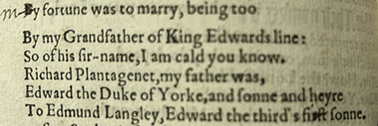
This scene of Oldcastle is usually attributed to Michael Drayton, one of the four authors Philip Henslowe paid to write the play.Footnote 50 Drayton was a serious student of English history. But his Oldcastle genealogy contains serious errors. It asserts that three of the four children of Lionel, Duke of Clarence, “dide” [=died] “without issue” (17). But the most important of those three, Edmund Mortimer, was still alive throughout Henry V’s reign, and indeed is a character in 1 Henry VI. The genealogy also claims that Cambridge’s “father was / Edward, the Duke of York” (22–3); in fact, Edward was Cambridge’s brother, and still alive at the time of this conspiracy. Likewise, Cambridge’s “wife” was not “lawful heir to Roger Mortimer” (25–6), because Edmund Mortimer was still alive. The quarto also calls “Edmund Langley, Edward the third’s first sonne” (24). In fact, he was the fifth son. This error was first corrected in print by lawyer and editor Edmond Malone in 1780.Footnote 51
That error was also corrected by hand in ink in the Newberry Library copy of the 1619 reprint: The “r” of “first” is blotted out, and a crossbar added to change the penultimate “s” into “f.” Five lines up, the first word is also corrected in ink: The initial “B” is blotted out, and an “M” is written in the margin to replace it (Illustration 2). This manuscript emendation restores the “My” present in Q1; but Q3’s error was repeated in the 1664 and 1685 Folios. This copy of Oldcastle is bound with several other 1619 quartos: Oldcastle is followed by The Whole Contention (which combines The First Part of the Contention with Richard, Duke of York).Footnote 52 There is another manuscript correction in the genealogy scene in The Whole Contention (C4 r), where printed “Yorke” is crossed out and replaced by the historically accurate “Gloster” in the line: “The seauenth and last was Sir Thomas of Woodstocke, Duke of | Yorke” (Illustration 3).Footnote 53
The first part Of the true & honorable history, of the Life of Sir Iohn Old-castle (STC 18796, 1619), sig. D4v, with two handwritten ink corrections.
The Whole Contention between the two Famous Houses, Lancaster and Yorke (STC 26101, 1619), sig. C4r, with one handwritten ink correction.

We cannot date these manuscript amendments or identify the reader(s) who made them, but they do establish that at least some mistakes in English royal genealogies were noticed and corrected by early readers of early printed playtexts. The incorrect “first” in Oldcastle may result from a compositor or scribe misreading the correct word in the author’s manuscript – though the fact that the error was not corrected in the quarto of 1619 or the Folios of 1663/4 or 1685 suggests that “first” did not disturb most of the play’s earliest readers. But the Oldcastle quartos’ other three substantial errors about Mortimer’s own lineage have not been emended away by any editor, because it is hard to explain any of them as the result of a simple misreading or routine copyist’s or compositor’s error.
How, then, should we explain these errors in the Oldcastle genealogy? Perhaps the playwright wanted to simplify for his audience the complexity of the genealogical issues created by the fact that Edward III had seven sons. This explanation could apply to almost any genealogy in any play. But here, there is another possible explanation: these lines in Oldcastle are spoken by and to traitors. The scene in which the genealogy is explained and discussed was invented by the playwright. Its primary dramatic purpose seems to be to provide a wholly fictitious proof that Oldcastle himself was not a traitor: In the play (but not in any known historical source) Oldcastle exposes the conspiracy of men planning to assassinate Henry V. Catholics justified Oldcastle’s execution for treason; Protestants saw him instead as an early Protestant martyr. In the circumstances, the dramatist might have considered it wise not to make the case for treason too persuasive. In other words, a playwright might have political as well as dramatic reasons for altering or weakening a genealogical argument.
From this perspective, we can now reconsider the genealogical speech – the so-called Salic Law speech – in the first quarto of Henry V. It begins at the top of sig. A2v, the second page of the playtext, which is the first full page of to-be-spoken text (Illustration 4). All major differences between the quarto and Folio versions of that speech occur on that page. Because it comes so early in the quarto text, the Salic Law speech has disproportionately influenced the way scholars read the rest of the quarto playtext. Daniel’s argument about the speech introduces the first-ever parallel-text edition of the 1600 and 1623 versions, which visually highlighted differences between the two printings. Parallel texts are rhetorically prejudicial, because they implicitly identify difference as disability and absence as the result of mutilation or truncation.Footnote 54 But even without parallel texts, readers can be biased by familiarity: Since the early eighteenth century, all scholars and critics have encountered the Folio’s Salic Law speech before they read (if they ever read) the quarto’s version.
The Chronicle History of Henry the fift (1600), sig. A2v (on the left) and sig. A3r (on the right).
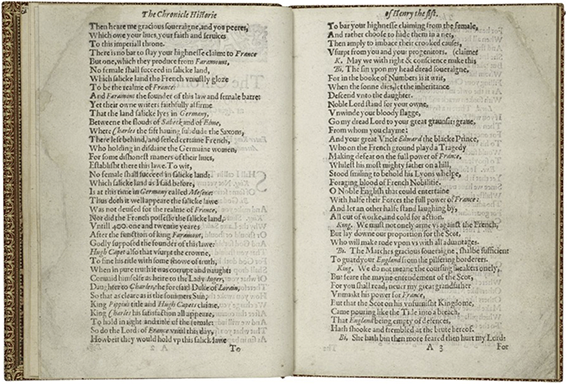
But what if we read the quarto first? It may be instructive to begin our analysis with the less familiar version, the one that was printed (twice) in Shakespeare’s lifetime. Here is a transcript of the speech printed in 1600 (with editorial line numbers in the right margin). Because these lines were, according to the quarto’s title page, performed by a troupe of professional actors, some readers may also find it useful to listen to a modern-pronunciation recording of the speech (Audio 1).Footnote 55
This speech makes sense, intellectually and dramatically. The king in Shakespeare’s play (unlike the king in his historical sources) has asked the bishop whether there is any obstacle to his legal claim to the French throne, and in doing so has already specifically referenced “the Lawe Salicke which they haue in France.”Footnote 56 The bishop answers that there is no obstacle, except one: the aforementioned foreign-sounding “Salicke” law, which the French attribute to someone with the foreign-sounding name Faramount. The law is simple, consisting of a single brief sentence, which the bishop quotes twice: “No female shall succeed in salicke land” (26, 38). The rest of his speech describes the origins, meaning, and historical application of that sentence. Because the law names “salicke land,” the first issue (30–42) is linguistic and geographical: What and where is that land the law references? It describes a particular region between two rivers in Germany. Henry is not claiming an inherited title to any part of Germany, so the Salic Law is obviously irrelevant. Moreover, the law was motivated by the bad behavior of “Germaine women” (35, emphasis added). Readers or members of the audience might endorse that gendered ethnocentric bias: At the time, bloodlines were entirely dependent on female testimony, and “dishonest” women could therefore endanger racial purity. But this speech does not criticize, and therefore does not target or delegitimize, inheritance by or through Frenchwomen or Englishwomen or women in general. The bishop next addresses the alleged author of this law (43–6). The attribution to Faramount cannot be correct, because the French did not acquire the Salic land until more than four centuries after his reign. Hence, the law is not ancient and foundational, but more recent and of unknown and suspect authority.Footnote 57 (This is exactly the argument humanists used, between Henry’s reign and Shakespeare’s play, to discredit “The Donation of Constantine,” which allegedly authorized the political power and landowning wealth of the Roman Catholic Church.) Third, the bishop notes that the Salic Law has not governed royal or aristocratic inheritance in France itself (47–56): Hugh Capet claimed the throne through his mother rather than his father; therefore, not only Capet but his successors (including Pépin and King Charles) descended from a female ancestor – as do all or many French noblemen. In summary (57–61), the French themselves know perfectly well that the Salic Law is bogus, and its sole purpose is to obstruct the legitimate claim to the French crown of Henry himself and his “progenitors,” going all the way back to his great-grandfather Edward III, named later in this scene.
A modern-pronunciation recording of the Salic Law speech printed in the 1600 edition of Henry V.
This sound recording gives an aural transmission of one voice speaking the 1600 version of the Salic Law speech in modern pronuncation. The text being spoken is transcribed in the main text.Some details of this speech may be confusing to modern readers. For instance, the bishop’s summary refers to “King Pippins title” (line 53) – though “Pippin” has not previously been mentioned in the quarto. But “Pippin” was a common sixteenth-century English spelling of the French “Pépin.”Footnote 58 Pépin was also probably the medieval French king best known to English audiences in Shakespeare’s lifetime: He is named, without any contextualization, in Love’s Labour’s Lost (4.1.112), All’s Well That Ends Well (2.1.71), and All Is True (1.3.10).Footnote 59 Similarly, in the next line and the same sentence, the quarto’s “King Charles” does not make sense as a reference to the previously mentioned “Charles” who subdued the Saxons. But Shakespeare’s primary historical source (Holinshed’s Chronicles) refers to the king of France, during Henry V’s reign, as “King Charles.”Footnote 60 Shakespeare therefore knew, and his primary dramatic source (the anonymous Famous Victories of Henry the fift) had made clear to audiences and readers, that “King Charles” was the man that Henry V’s invasion of France aimed to depose.Footnote 61 Charles might well have also been named in two other plays about Henry V performed in London in the 1590s.Footnote 62 2 Henry VI twice refers to “the French King Charles” (lines 41–4). A French king named “Charles” appears in six other early modern plays.Footnote 63 There was, of course, no English “King Charles” until 1625, but “King Charles” appears in sixteenth-century English printed books 905 times.Footnote 64 This contemporary-to-Henry “King Charles” is linked, two lines below, to the contemporary French aristocracy: “the Lords of France vntil this day” (1.56). The quarto speech extends French violation of the Salic Law from Hugh Capet to the monarch and noblemen ruling France in Henry V’s time.
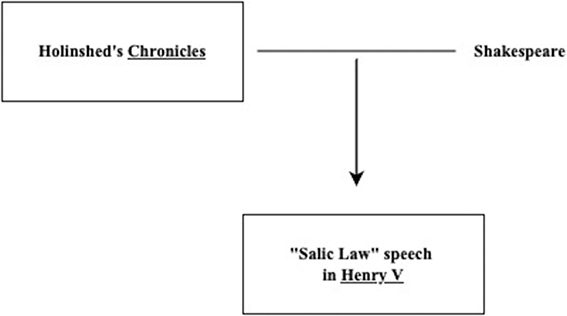
Even if the Folio version of the play did not exist, an editor could identify some problems with the quarto text. There is an indisputable error in the first line of the speech: the absence of an italic speech prefix. Because the king speaks before and after these lines, the speech must be spoken by the bishop. The catchword at the bottom of the previous page (A2r) provides the necessary speech prefix (“Bish.”), so the absence of that speech prefix on A2v represents a mistake made in Creede’s printing house: The catchword should accurately reflect the first word (or two) of the next page, and the reprints of 1602 and “1608” ([i.e., 1619) therefore supply the missing speech prefix. Moreover, all scholars agree that Shakespeare’s source for the Salic Law speech was a passage in Holinshed’s Chronicles (Figure 7). Shakespeare often creatively departs from his sources, and we cannot simply assume that the quarto (or the Folio) should slavishly reproduce every detail in Holinshed, but here, the printing-house correction made in 1602 and then again independently in 1619 is supported by the 1587 Chronicles (Illustration 5).
The intersection of a human being (Shakespeare) with a printed text (Holinshed’s Chronicles) produces a new object (the “Salic Law” speech).
Raphael Holinshed, et al., The Third Volume of Chronicles, excerpts from sig. 3G1v (lower right column) and 3G2r (upper left column), containing the portions of the archbishop’s speech concerning the Salic Law.
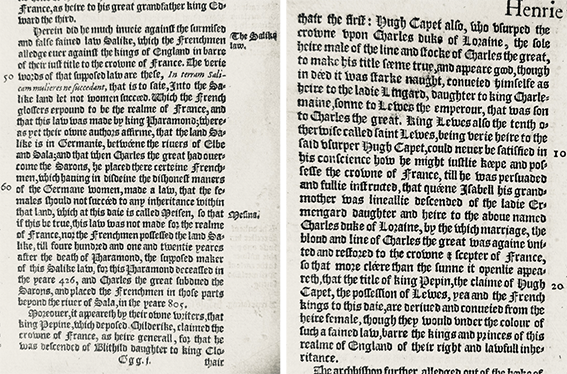
Illustration 5 Long description
The text reads as follows:
Herein did he much inueie against the surmised and false fained law Salike, which the Frenchmen alledge euer against the kings of England in barre of their iust title to the crowne of France. The verie words of that supposed law are these, In terram Salicam mulieres ne succedant, that is to saie, Into the Salike land let not women succeed. Which the French glossers expound to be the realme of France, and that this law was made by king Pharamond; whereas yet their owne authors affirme, that the land Salike is in Germanie, betwéene the riuers of Elbe and Sala; and that when Charles the great had ouercome the Saxons, he placed there certeine Frenchmen, which hauing in disdeine the dishonest maners of the Germane women, made a law, that the females should not succéed to any inheritance within that Land, which at this date is called Meisen, so that if this be true, this law was not made for the realme of France, nor the Frenchmen possessed the land Salike, till foure hundred and one and twentie years after the death of Pharamond, the supposed maker of this Salike law, for this Pharamond deceassed in the yeare 426, and Charles the great subdued the Saxons, and placed the Frenchmen in those parts beyond the river of Sala, in the year 805.
Moreouer, it appeareth by their owne writers, that king Pepine, which deposed Childerike, claimed the crowne of France, as heire generall, for that he was descended of Blithild daughter to king Clothair the first: Hugh Capet also, who vsurped the crowne vpon Charles duke of Loraine, the sole heire male of the line and stocke of Charles the great, to make his title seeme true, and appeare good, though in déed it was starke naught, conueied himselfe as heire to the ladie Lingard, daughter to king Charlemaine, sonne to Lewes the emperour, that was son to Charles the great. King Lewes also the tenth otherwise called saint Lewes, being verie heire to the said vsurper Hugh Capet, could neuer be satisfied in his conscience how he might iustlie keepe and possesse the crowne of France, till he was persuaded and fullie instructed, that quéene Isabell his grandmother was lineallie descended of the ladie Ermengard daughter and heire to the aboue named Charles duke of Loraine, by the which marriage, the bloud and line of Charles the great was againe vnited and restored to the crowne & scepter of France, so that more cléere than the sunne it openlie appeareth, that the title of king Pepin, the claime of Hugh Capet, the possession of Lewes, yea and the French kings to this daie, are deriued and conueied from the heire female, though they would vnder the colour of such a fained law, barre the kings and princes of this realme of England of their right and lawfull inheritance.
Shakespeare’s iambic pentameter norm suggests that the verse has been mislineated at 28–9, and probably also at 23–4. In early English printed books, French names like “Pharamound” could be spelled phonetically with an initial “F.” But we have found no other early examples of that name with a terminal -t; hence, the quarto’s “Faramount” probably results from a (fairly common) misreading of “d” as “t.” One could deduce that the quarto’s final letter is mistaken, even without the evidence of the spelling “Pharamond” in both Holinshed and the Folio. Likewise, there is no river “Elme” (32) in Germany; but at least two late Elizabethan texts refer to the German river best known as “Elbe” by the alternative spelling/pronunciation “Elue” (= “Elve”).Footnote 65 So does Edward Hall’s 1548 Union, the source for Holinshed’s account of the Salic Law speech.Footnote 66 In early modern handwriting “Elue” (which appears here in the Folio Life) could easily have been mistaken for the much more common English word “Elme” (minim misreading).Footnote 67 So “Elme” is almost certainly a mistake made by Creede’s compositor, but if the manuscript the compositor read was a scribal copy it might have contained the error. The quarto contains another geographical error in the same line: No river “Sabeck” flows through Germany, or apparently anywhere else, and we have not found “Sabeck” in any other searchable early printed texts. Because the word is unique, “Sabeck” is unlikely to be the result of an actor’s or spectator’s failed memory; memory typically substitutes common words for rare ones (not vice versa).Footnote 68 But “Sabeck” could easily be a misreading of “Salick” (32). Shakespeare, or someone else, might have substituted “Salick” for Holinshed’s “Sala” deliberately (to make sense of the German territory?) or accidentally (repeating the word above); then someone else – perhaps Creede’s compositor? a scribe? – might have misread “Salick” as “Sabeck.” Finally, “the Lady Inger” might not confuse Elizabethan readers or spectators, because “Inger” is a female Norwegian and Viking name occasionally found in medieval England. But Hall has “the Lady Lyngard,” and Holinshed has “the lady Lingard” – itself, editors say, probably a mistake for “Luitgard,” the final wife of Charles the Great. But the historical “Luitgard” apparently died childless. The whole complex history of Hugh Capet and the genealogy of the Capetian dynasty are compressed and confused here. Dramatically, what matters more than the proper name is the word “Lady,” which appears in Hall, Holinshed, the quarto, and the Folio. That word, and not the proper name, establishes descent through the female line and therefore defiance of the Salic Law. Both the quarto (“Inger”) and the Folio (“Lingare”) are uniquely mistaken, but the quarto seems more mistaken in omitting the initial “L” present in all the other texts. Because in Elizabethan handwriting initial “I” and initial “L” could be easily confused, and because the minims “in” could be misread as “n,” the simplest explanation might be that the quarto “Inger” represents a misreading of “Linger” or “Lingar.” The number of these errors (Faramount, Elme, Sabeck, Inger) in a single speech may seem suspicious. But rare proper names in a foreign language are especially susceptible to misreading. Other books printed by Creede contain many examples.Footnote 69 The mathematics of information theory explains why such words are most likely to be misread: Our ability to decipher a written text depends, in large part, on our ability to predict which word, or which letter, should come next, and foreign proper names are much less predictable than common English words like “law” or “lady.”Footnote 70
None of these mistakes damages the logic or legitimacy of the genealogical argument. However, the reference to “Charles the fift” (33) is genealogically important. It is obviously wrong historically. Charles V ruled France from 1364 to 1380, and he never conquered and settled parts of Germany. Paleographically “fift” could be a misreading of “first”; we have already seen the opposite error (“fift” misread as “first”) in Oldcastle. Shakespeare might have used “first” here to indicate, for listeners unfamiliar with the foreign dynastic sequence, that the king in question belonged to early French history. But we have found no other early English examples of Charlemagne being called “Charles the first.” Holinshed here has, instead, “Charles the great,” a phrase that EarlyPrint identifies 669 times in English books between 1585 and 1600 (including five examples with the obsolete spelling “gret”). The quarto’s “fift” might be a misreading of “gret.” That misreading would have been especially easy for Creede’s compositor here: The monarchical modifier “the fift” was set repeatedly in the quarto’s title, head-title, and running titles.
We want to emphasize these errors because some defenders of the quarto version of the speech have claimed that it contains no errors at all. This leads to such absurdities as retaining the quarto’s “Charles the fift” and then appending a commentary note explaining that “Charles the fift” means “Charlemagne.”Footnote 71 That is not what it means, or what any Elizabethan reader or auditor would have understood it to mean. Furthermore, such claims are not likely to persuade experienced editors and textual scholars to take seriously the challenges to “bad quarto” theory.
Though the quarto speech does contain some mistakes, they result from recognizable kinds of error common to early modern manuscript copying and handpress printing. But two words present in both texts – “also” and “foresaid” – convinced Daniel that the quarto version had suffered major, abnormal damage, which must have originated outside the printing house.Footnote 72 “Why also?” Daniel asks. “There is nothing in the [quarto] to account for this adverb.” Likewise, the quarto “makes no mention of this ‘foresaid Duke of Loraine.’ Again here is proof of omission.” Daniel has already asserted that only one possible mechanism can account for such omissions: “[W]e know from the earliest times down to the present day the constant practice of the stage has been, and is, the shortening of the author’s work.”Footnote 73 Certainly from 1660 to 1877 the British stage had constantly shortened Shakespeare’s plays. But in Shakespeare’s lifetime plays were often advertised as containing “New Additions,” so the practice of theatres after 1660 does not necessarily explain a text printed in 1600.Footnote 74 Moreover, theatrical “shortening” does not normally produce the incomprehensible nonsense that Daniel sees in these two passages of the quarto.
Daniel assumes that “also” must mean “likewise” or “in the same way.”Footnote 75 If so, then “Hugh Capet also” must gesture to an antecedent proper name, illustrating the same point that “Hugh Capet” does (claiming hereditary right through the female line). The Folio Life – conspicuously available in the parallel-text edition that Daniel was introducing – provides such an antecedent name (“King Pepin”). But Shakespeare and his contemporaries also used the word “also” to mean “besides,” or “as a further point.”Footnote 76 Those meanings do not require an antecedent proper name; indeed, they indicate a break from the preceding phrase or paragraph. Both texts and Shakespeare’s source mark a change in the bishop’s argument at the point when he moves from (a) evidence about the origin of the Salic Law to (b) evidence that later French kings ignored it. In all three texts, that argumentative change is marked by a transitional adverb: “Moreover” (Holinshed), “Besides” (Folio 1.2.64), and “also” (quarto 1.47). All three words serve the same function, and therefore the quarto’s “Hugh Capet also” would not have been nonsensical for readers or auditors (or Shakespeare) in 1600.
But Daniel is right about “foresaid”: It requires an earlier reference to Charles, the Duke of Loraine, which the Folio supplies but the quarto does not. Some recent defenders of the quarto have cited Brinsley Nicholson, who in 1879 rejected Daniel’s overall hypothesis that the Folio is Shakespeare’s original version; but Nicholson endorsed Daniel’s specific argument that this word “foresaid” indicates that the quarto text has here been “curtailed,” probably by the actors, “to suit a poorer and a clod-poll audience.”Footnote 77 There are three possible explanations for this particular deficiency in the quarto text.
1. The quarto is a “bad quarto,” incompetently abridged in performance and/or misremembered by rogue actors creating a “memorial reconstruction” or by auditors “fast note-taking” during public performances. But this theory has been refuted by much new evidence in the rest of the quarto, and a claim so large and so unlikely cannot be credibly founded on a single word.
2. Shakespeare deliberately left “foresaid” without an antecedent to undermine the speech’s credibility, and thereby undermine the legitimacy of Henry’s invasion of France. That argument would support Steven Urkowitz’s claim that Daniel’s hypothesis “depended solely upon personal literary taste.”Footnote 78 It is bolstered by antiwar critical interpretations, increasingly popular since the pointless, colossal carnage of World War I.Footnote 79 Certainly, the Hundred Years’ War between France and England looks from a twenty-first-century perspective like an unconscionable turf battle between rival criminal gangs. But any reader or listener, on stage or off, who dismisses the bishop’s critique of the Salic Law is, in effect, supporting atrocious misogyny. Christine de Pisan’s The Book of the City of Ladies (1405) was in part a rebuttal of the Salic Law, loudly trumpeted by French nationalists in the years between 1350 and 1430 despite its bogus legal and historical credentials.Footnote 80 More immediately, the claim that women were not fit to rule was deeply insulting to Elizabeth I, whose potential marriage to a member of the French royal family had provoked English polemics about the Salic Law.Footnote 81 Like much legal reasoning, the bishop’s speech is dense and difficult, but complexity is not the same as incompetence.
3. The quarto text accidentally omits an earlier reference to the Duke of Loraine. Such a mistake could have been made by a compositor in Creede’s printing house, or by whoever prepared the manuscript that the compositor read and tried to reproduce. Single lines of verse are accidentally omitted in early modern manuscripts for no obvious reason.Footnote 82 Single lines of verse are also omitted often enough by early modern printers. For instance, the 1602 edition of The Chronicle History (also printed by Creede) omits “Sir Richard Ketley, Dauy Gam Esquier” for no discernible reason.Footnote 83 Most editors believe that the Folio Life omits “And say, these wounds I had on Crispines day,” a line present in the quarto.Footnote 84 Holinshed’s Chronicles (Shakespeare’s undisputed source for both versions of this speech) immediately follows “Hugh Capet also who vsurped the crowne” with “vpon Charles duke of Loraine, the sole heire male of the line and stocke of Charles the great.” Shakespeare might have incorporated all this information into his manuscript of the Chronicle History (as the Folio Life does), but the accidental omission of one verse line is more likely than the accidental omission of two, and we cannot simply assume, here or elsewhere, that the quarto text should perfectly mirror the Folio. The quarto’s “foresaid” requires only a reference to the name of the person from whom Capet stole the crown, and that information would easily fit into a single iambic pentameter. We therefore propose to emend the quarto by adding one verse line:
No doubt some scholars will object to such an emendation, but in fact almost all Shakespeare editors since Alexander Pope have done the same thing elsewhere: conjecturally inserted a verse line, apparently accidentally omitted from the Folio text, supplying necessary information contained in Shakespeare’s prose source (North’s translation of Plutarch’s Lives).Footnote 85 Nobody supposes that Coriolanus is a “memorial reconstruction” because it lacks one piece of information that could easily fit into a single verse line. Here, the proposed omission would be easily explained by eye-skip from the end of one line (“ne,”) to the end of the next (also “ne,”). Conjecturing that a scribe or compositor omitted one verse line is a much more conservative hypothesis than (a) damning the whole quarto, or (b) imagining that Shakespeare wanted to portray as incompetent someone criticizing the misogynistic Salic Law in a play performed during the reign of Elizabeth I.
If we possessed only the 1600 quarto of Shakespeare’s play and its primary source (Holinshed’s Chronicles), most editors would emend a few letters in the Salic Law speech and recognize that a single verse line has been omitted, either by leaving a blank space to signal the omission or by conjecturally restoring the lost line using material in Holinshed. But there would be no reason, in that speech or the play as a whole, to invoke fundamentally corrupt transmission via memorial reconstruction or spectators taking notes during a performance. None of Shakespeare’s plays printed in his lifetime was as well printed or proofread as his narrative poems Venus and Adonis (1593) and Lucrece (1594), for which he provided signed prefaces. None of his printed plays includes an authorial preface. The 1600 printing of Henry the fift does not even mention Shakespeare’s name, but like other editions of individual Shakespeare plays between 1594 and 1609 it is recognizably what Terri Bourus – invoking the feminist concept of the “good enough mother” – calls a “good enough quarto.”Footnote 86
2 In Terram Salicam
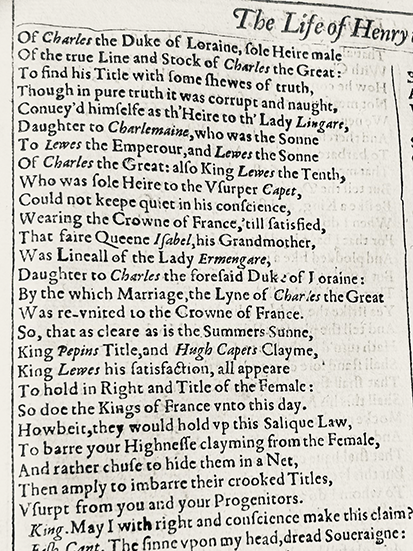
We can now turn to the Salic Law speech printed in 1623 (Illustrations 6 and 7). Our transcript adds marginal editorial act-scene-line numbers (right) and Through Line Numbers (left), and prints in bold type the lines and half-lines present in the Folio but not in the quarto. Because some prefatory matter in that Folio was written by two of Shakespeare’s fellow actors, and because they emphasize that the plays collected in that volume have already been tested in performance, some readers may also find it useful to listen to a modern-pronunciation recording of the speech (Audio 2).
Mr. William Shakespeares Comedies, Histories, & Tragedies (1623), excerpt from sig. h1v (lower right column).
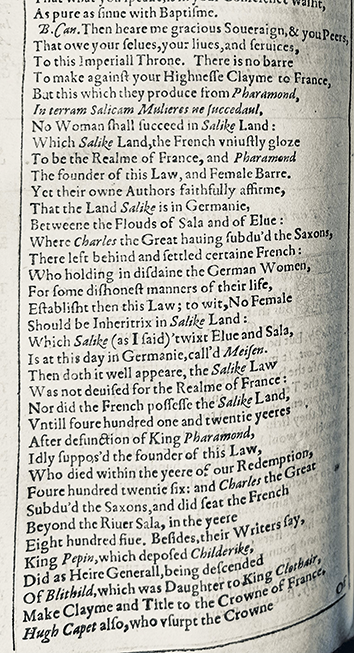
Comedies, Histories, & Tragedies, sig. h2r (upper left column).
A modern-pronunciation recording of the Salic Law speech printed in the 1623 edition of Henry V.
This sound recording gives an aural transmission of one voice speaking the 1623 version of the Salic Law speech in modern pronuncation. The text being spoken is transcribed in the main text.This 1623 Folio version differs from the 1600 quarto version in three ways. It is better printed/proofread, it is much longer (sixty-two lines instead of forty), and it more closely resembles Holinshed’s account of the speech (Illustration 5).
The proofreading is not perfect (or the manuscript the printers used was not perfect). The Latin “succedaul” (1.2.38) is an error for Holinshed’s “succedant” (corrected in F2 and all subsequent editions). Like the quarto (“Inger”), the Folio (“Lingare”) fails to reproduce exactly Holinshed’s “Lingard” (1.2.74); the Folio’s “Ermengare” (1.2.82) similarly misrepresents Holinshed’s “Ermengard.” The Folio’s full stop after “this day” (1.2.90) and comma after “Howbeit” (91) differ from the punctuation and syntax of Holinshed and of the quarto (1.56–7), which some modern editors prefer. Likewise, many editors since Alexander Pope, three centuries ago, reject the Folio’s “th’Heire” (1.2.74) in favor of the quarto/Holinshed “heire” without the article (1.50). But with the exception of “succedaul,” nothing in the Folio speech is jarringly or obviously incorrect.
The improved proofreading in the 1623 Life of Henry the fift is what we should expect of a big, expensive Folio financed and marketed by major publishers like Edward Blount and the Jaggards. Small play quartos like the 1600 Chronicle History and the 1594 Contention required a small investment by the publisher/bookseller (in both cases Thomas Millington, who also published Titus Andronicus in 1594): They “could occupy underutilized presses but could not form the basis of a successful publishing business.”Footnote 87 But bigger books like the 1623 Folio could potentially reap much larger profits and therefore justified a larger investment, which included investing in better copyediting and proofreading. By the early 1620s, the Jaggard firm was well established as “a judicious and authoritative merchant of information,” including in particular big books of history and heraldry (the latter constituting one-fifth of William Jaggard’s published edition sheets).Footnote 88 Jaggard printed the Shakespeare Folio in tandem with Augustine Vincent’s A discoverie of errours in the first edition of the Catalogue of nobility (1622), which excoriated a rival’s genealogical mistakes. It is possible too that Jaggard was the one responsible for creating “Histories” as a separate category within the Shakespeare Folio.Footnote 89 Edward Blount, the other stationer highlighted on the Folio title-page, was a cosmopolitan publisher famous for ambitious literary, philosophical, and historical Folios, including the first and most celebrated translation of Montaigne’s Essays.Footnote 90 Blount’s and Jaggard’s big expensive books were marketed to elite, educated readers, who would expect accuracy and notice its absence.
Although the interests of the publishers may account for the more accurate proofreading of the Folio’s Salic Law speech, they will not account for its inclusion of more material versified from Holinshed’s prose. That obvious length difference might result from expansion (Q —> F) or from diminution (F —> Q). Since 1877, most scholars have assumed that Shakespeare wrote the longer Folio version first, and that the actors wanted to shorten it. But those who make that assumption seldom ask: What would actors be most likely to cut? The overwhelming bulk of the quantitative difference between the two versions of the Salic Law speech results from the fact that the quarto does not contain twenty-two and a half verse lines present in the Folio; those Folio-only chunks are all based on Holinshed, but so is the material that the quarto and Folio share.Footnote 91 Would actors wishing to eliminate twenty-two and a half lines that are present in the Folio have chosen those particular bits to cut?
Almost certainly not. At least, none of the eighteenth-, nineteenth-, and twentieth-century acting editions and promptbooks collated by William P. Halsted omit all those lines and no others.Footnote 92 All the surviving theatrical texts of Henry V from Bell’s Edition (1773) to the Oregon Shakespeare Festival 1973 production promptbook, two centuries later, postdate the republication of The Chronicle History in George Steevens’s 1766 edition of Twenty of the Plays of Shakespeare; from that and subsequent reprints and facsimiles, all those theatrical abridgers had access to the quarto, but none of them exactly reproduce the quarto cuts. Instead, between sixteen and thirty-six of those later theatrical texts cut lines included in both the quarto and the Folio; such cuts affect twenty-seven of the forty-one lines (or 66 percent) shared by both early versions.Footnote 93 Moreover, when the later theatrical texts cut material that is not in the quarto, they also always cut material in the quarto. The shared line “Hugh Capet also, who usurped the crown” (1.46/1.2.69) is preceded in the Folio by nine lines absent from the quarto, and followed by two more; later theatrical texts that cut the preceding and/or following lines also cut “Hugh … crown.” The same is true of the shared line “Daughter to Charles, the foresaid Duke of Lorrain” (1.51/1.2.83), preceded by eight Folio-only lines and followed by two. This pattern challenges the claims of scholars like Andrew Gurr and Lukas Erne, who believe that the quarto represents a deliberate theatrical abridgement by Shakespeare’s own company.Footnote 94 Those claims have also been rebutted by other scholars, who demonstrate that there is no documentary or empirical evidence for abridgement as a routine practice in the Elizabethan or Jacobean theatre.Footnote 95 Besides, compelling evidence of links to Shakespeare’s known sources, outside this speech, also shows that the quarto Chronicle History cannot be an abridgement of the Folio Life.Footnote 96
Daniel’s argument for inept abridgement depends on how we interpret the material present in the Folio but absent from the quarto. Bibliographically, the absence of twenty-two complete verse lines from the quarto version of this speech cannot plausibly be attributed to the printer. Those lines come in four separate chunks, which would require four separate acts of macro omission in setting one page, ranging in length from two type lines to eight. Moreover, typographical evidence suggests that Creede’s compositors set the quarto by formes from cast-off copy, that sheet A was set first, and that its outer forme (including A2v, A3r, and A4v) was printed before the inner forme (including A3v and A4r).Footnote 97 The accidental omission of twenty-two lines on A2v (more than half the number of type lines of text on a typical page of this quarto) could not have gone unnoticed in the setting of subsequent pages in sheet A, not to mention the rest of the play. Moreover, there is no evidence of “space wasting” techniques in the quarto to compensate for accidentally omitted lines. Since the omission of those lines cannot have originated in the printing house, the Salic Law speech in the manuscript behind the 1600 printing must have been much shorter than it was in the manuscript behind the 1623 printing.
But in both those manuscripts the episcopal defense of Henry’s claim to France must have been much longer than the legal basis for that claim in the comparable scene in the anonymous The Famous Victories of Henry the fift, published two years before the Shakespeare quarto:
Short and sweet, this single sentence of twenty-seven words presents an immediately intelligible and straightforward genealogical justification for Henry’s claim to France. It happens to be inaccurate: Henry’s claim comes from the Isabel who was wife to Edward II, the mother (not wife) of Edward III. But Shakespeare’s Henry V omits any reference to Isabel, even though Isabel is indeed the reason that the Salic Law affects Henry’s claim to France. We might therefore reasonably claim either that Shakespeare’s treatment of the genealogical issue, in both the quarto and Folio, is incompetent, or that both texts incompetently represent Shakespeare’s intentions (or that the archbishop’s speech in Holinshed is incompetent).Footnote 99
Although the quarto devotes fewer words to the Salic Law speech than do Holinshed or the Shakespeare Folio, it is still the quarto’s longest speech. In the Folio, it is exceeded only by Henry’s outraged condemnation of the conspirators at Southampton, which is emotionally powerful but intellectually and politically simple.Footnote 100 Formally and structurally, both versions make the justification of Henry’s claim uniquely long and complicated. Indeed, the quarto speech is a larger proportion of the spoken play (2.51 percent) than the Folio’s (1.87 percent) – and would be an even bigger proportion (2.59 percent) if we are right about the accidentally omitted line (“Of the sole heir male, Charles the duke of Loraine”). The quarto’s 308 words are more than eleven times the number in Famous Victories. The quarto speech would therefore require eleven times the duration to pronounce. The disparity between Famous Victories and the Folio version of the speech is even greater: its 478 words are nearly eighteen times as many as the earlier play. In both versions, Shakespeare chose to confront his audience with something radically different from the earlier play: a vastly longer speech, full of unfamiliar proper names and relationships, and one more difficult to digest, especially for auditors, who could not slow down or double back as readers could.
The questions we should be asking about the Salic Law speech, then, are these: Why did both versions reproduce so much of Holinshed? And why did the Folio reproduce even more of it than the quarto?
Critics and scholars who accept the contraction hypothesis (i.e., that the original authorial Folio version was deliberately shortened to produce the quarto’s theatrical version) have argued that the acting company abridged Shakespeare’s play “in the interests of simplifying it into patriotism.”Footnote 101 But Henry’s response to the long episcopal Salic Law speech is almost identical in both: the skeptical, abrupt “May [we/I] with right and conscience make this claim?”Footnote 102 In both texts, Henry endorses the execution of Bardolph: “We would have all such offenders so cut off.”Footnote 103 In both, in almost identical words, he orders “every soldier kill” the French prisoners of war.Footnote 104 In both, common soldiers challenge Henry’s self-serving self-defense. In both, Henry concludes “[t]hat God fought for us.”Footnote 105 In both, war is complicated, and so is Henry.
But what if the quarto represents Shakespeare’s first version instead of a shortened version of the text that appears in the Folio? If, as other evidence suggests, Shakespeare had begun by abridging Holinshed’s Salic Law speech, why would he risk, in his revision, reinstating the entire substance of the historical document? Doing so did not make the speech any less “unsatisfactory.” The Folio, by lengthening the speech, makes it more complicated. It increases the amount of information auditors are expected to hold suspended simultaneously in mind. It may help to compare the speech to a math problem, which is easier to solve on paper than in your head. For anyone capable of doing math in their head, one of the Folio-only passages, taken from Holinshed, produces numerical nonsense: the incorrect equation “805 − 426 = 421” (rather than the correct “805 − 426 = 379”).Footnote 106 Those confusing numbers are then followed, in the Folio, by four new names in three lines, including three (Childerike, Blithild, Clothair) that are not mentioned again and never appear as characters anywhere in Tudor or Jacobean plays.Footnote 107 Overall, the Folio-only additions, combined, produce a sequence of fourteen new and unfamiliar names in a mere twenty lines.Footnote 108 The corresponding mid-speech material in the quarto includes only two new names. In other words, the Folio version increases the cognitive burden imposed upon actors and auditors (and readers). Elizabethan actors may have relished the oratorical challenge, as modern actors do, and Elizabethan audiences certainly appreciated and responded to oratorical action.Footnote 109 The Folio also provides more reason to be skeptical about the speech. It does not mock the whole genre of royal genealogy as Rabelais did in his parodic account of Pantagruel’s giant ancestors.Footnote 110 Nor does it make the complications of the Salic Law ridiculous, as does John Fletcher’s The Noble Gentleman.Footnote 111 But it does precede the Salic Law episode with a scene (not present in the quarto) where the two bishops discuss their anxiety about a proposed tax on the church and explicitly position the archbishop’s defense of the king’s claim to France as part of an effort to persuade the king to reject the anticlerical tax. That additional scene is always cited by critics who challenge patriotic, prowar interpretations of The Life of Henry the Fift and its royal protagonist.
The Folio version of the speech and its context is closer to Holinshed than the quarto version, but that does not make the speech any easier for listeners to understand. However, it does relocate the difficulty. The quarto Chronicle History, in this as in other respects, follows Famous Victories: The bishop’s speech starts less than twenty lines after the quarto begins (probably less than a minute of stage time). The Folio Life instead begins with the exhilarating actor’s prologue, followed by the early modern religious language and political scheming of two bishops. The Folio’s longer Salic Law speech begins 163 lines into the play. That’s enough time to hook an audience, situating the pedantic legalistic unpoetic verse speech as a deliberate, temporary outlier: a rocky island of difficulty defined as difficulty by the surrounding ocean of stylistic vitality.
Moreover, Shakespeare might have believed that the longer Salic Law speech would be intelligible to a better-educated audience, more accustomed to such complicated debates, with more personal interest in genealogies and complex inheritance law. If Q1 represents the play as originally written for a mixed public audience, F1 might, as Richard Dutton argues, represent an expanded version written for subsequent performance at court.Footnote 112 Elizabeth I personally could be expected to approve of an extended defense of the legitimacy of female inheritance and female rule. But James Stuart and his supporter the Earl of Essex might have been equally interested: As had been noted for decades, the Stuart claim to the English throne depended, like Henry V’s claim to France, on rejection of the Salic Law.Footnote 113 The claim to the English throne of King James VI of Scotland was based directly on his paternal grandmother Mary Douglas and maternal great-grandmother Margaret Tudor, the older sister of Henry VIII (Illustration 1). James was also much more closely aligned to the French royal family (through the ancestry and alliances of his mother, Mary, Queen of Scots). King James and his supporters would have been interested in the play’s critique of the Salic Law in 1599, when he was maneuvering to succeed Elizabeth, but also after his succession, when Henry V was performed for him at court in 1605. Two scholars have recently argued that the Folio text of Henry V shows other evidence of Jacobean additions.Footnote 114 The Folio’s erudite Salic Law speech would have suited an Elizabethan or a Jacobean royal and aristocratic audience.
What matters most in interpreting the small and large variants between the quarto and Folio texts of this speech is whether we adopt the assumptions of traditional philology, which focuses on surviving texts (classical literature and the Bible) that were produced centuries later than the authorial original. In such circumstances, it is plausible to construct a textual genealogy by equating variation with error. The editor’s job is therefore to identity which variants were later errors, and which represent the author’s original intention. That said, the 1600 edition of Henry the fift was published in Shakespeare’s lifetime, and the 1623 edition shortly after his death with assistance from his friends and theatrical collaborators. We must therefore at least consider the possibility that some or all of the differences between those texts belong instead to the territory of authorial philology – “the branch of philology that deals with variants due to the author’s intentional desire to change the text” with documented examples as early as Petrarch, Tasso, and Lope de Vega.Footnote 115 With this approach, it seems most likely that the Folio represents Shakespeare’s deliberate expansion of the speech, which in turn required him to return to his primary source (Holinshed’s Chronicles), incorporating material that he had ignored or compressed in his first act of composition. This process applies not only to the Salic Law speech but also to the Folio’s first scene. As scholars long ago established, the dialogue of the two bishops, not present in the quarto, is based on two passages in Holinshed;Footnote 116 so are another four lines, after the Salic Law speech, present in the Folio but not the quarto.Footnote 117 Many other Folio-only passages draw upon Holinshed, but for our immediate purposes what matters is that the pattern we see in the Salic Law speech can also be seen shortly before it and shortly after it. That pattern requires Shakespeare to have returned to Holinshed’s Chronicles, at some point after his original use of the book, to expand the quarto’s original version of the speech into the Folio’s revised version (Figure 8).Footnote 118 This should not surprise us. Darwin’s tree of evolution presupposes a simple linear transmission of information, and so does traditional stemmatics. But we now know that evolution is best visualized not as a tree but as a reticulated network, which permits multiple intersections. Authorial philology also recognizes such reticulated networks. We know Shakespeare doubled back to Holinshed when writing different plays, over two decades, from Henry VI to Cymbeline. By extension, he could also have doubled back to that book when writing different versions of one play.
The repeated intersections of a human being (Shakespeare) with a printed text (Holinshed’s Chronicles) produces two new objects (the 1600 and 1623 versions of the “Salic Law” speech). Figure 8 long description.
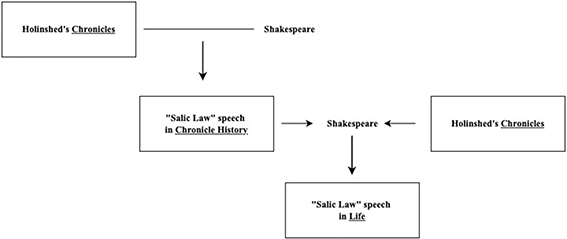
Figure 8 Long description
Chart with 3 levels. The top horizontal line links Holinshed’s book on the left to Shakespeare on the right. From that line’s middle a vertical arrow descends to the 1600 Salic Law speech on the second level. A horizontal line from that 1600 speech connects Shakespeare in the middle to Holinshed’s book on the right. From Shakespeare in the middle of the second level a vertical arrow descends to the 1623 Salic Law speech on the bottom level.
Will authorial philology also account for differences in the dramatized genealogy found, in different forms, in The First Part of the Contention (1594) and in Henry the Sixth, Part Two (1623)? Or will that problem require a different solution?
3 Contentious Origins
Enter the conspirators (you can read their speeches in the original 1594 edition of The First Part of the Contention in Illustrations 8 and 9 or hear their speeches spoken in modern pronunciation online in Audio 3, or read them in modern spelling and modern typography in what follows).
The First part of the Contention betwixt the two famous Houses of Yorke and Lancaster (1594), sig. C3r.
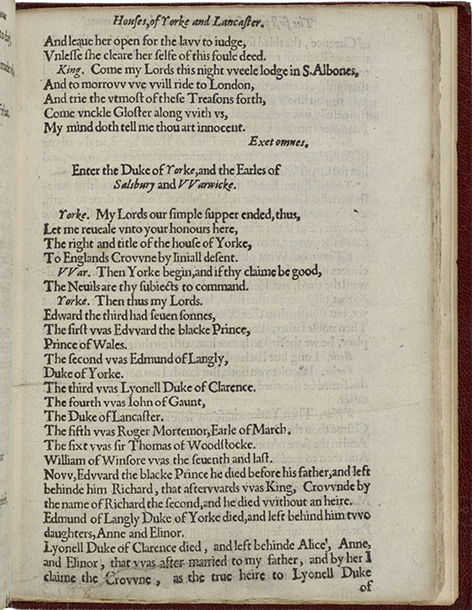
The First part of the Contention (1594), sig. C3v.
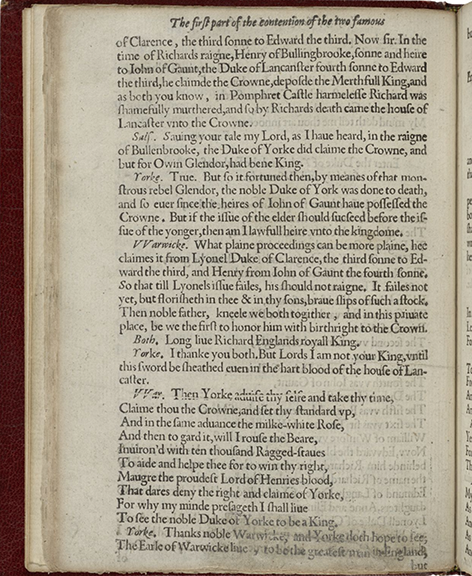
A modern-pronunciation recording of the discussion of the descendants of Edward III printed in the 1600 edition of The First Part of the Contention.
This sound recording gives an aural transmission of three voices speaking in modern pronunciation the 1594 version of the conversation about the descendants of Edward III. The text being spoken is transcribed in the main text.Now enter the conspiracists (in an academic monograph published in 1929, written by Peter Alexander, introduced by Alfred Pollard, and dedicated to John Semple Smart).
Following his mentor Smart, Alexander assumed and asserted that all the plays in the 1623 Folio – including the three Henry VI plays – were written entirely and only by Shakespeare.Footnote 120 Most scholars and editors since the eighteenth century believed otherwise, and so do we. We’ll return to this larger issue later in our analysis (Section 7). Following Pollard, Alexander also assumed the existence of “bad quartos,” but he wanted to add The First Part of the Contention to Pollard’s category. As we have already pointed out (Section 1), Pollard’s theory has been systematically challenged by recent scholarship. More immediately pertinent to our investigation of dramatized genealogies, Alexander pointed out “five obvious errors” in York’s genealogical argument as it is presented in The First Part of the Contention.Footnote 121
Before we examine those alleged errors, we encourage you to read again – or better yet, listen again to – the quarto passage we quoted, without consulting the Folio version of this scene or the reproduction of that Folio version in all modern editions, and without consulting any historical sources. Imagine yourself as an auditor of an early performance. What is the basis of York’s claim, according to the Contention? King Edward III had seven sons (4). His first son (Edward the Black Prince) died before his father, but that prince’s son Richard succeeded to the throne; that genealogical line then terminated when the childless Richard II died (15–17). So far, so well known, and not disputed. The fifth, sixth, and seventh sons (12–14) are irrelevant, because the third and fourth sons had living descendants. Edward’s second son died (17), murdered by the Welsh rebel Owen Glendower (28–32). York’s mother was the daughter of Edward’s third son; “by her,” York says, “I claim the crown” (20). In contrast, Bolingbroke’s father was Edward’s fourth son (22–6). As Warwick asks, “What plain proceedings can be more plain?” (35). As a descendant of the third son, York should take precedence over a descendant of the fourth son. Does this argument, read or heard, seem full of “obvious errors”?
When compared to more modern archival authorities, the quarto text does bungle some details of York’s lineage. For Alexander, York’s mistaken identification of Edmund of Langley as the second son of Edward III (as opposed to the fifth) is the most damning mistake of all because it “renders further argument superfluous.” Alexander is correct that, if York was descended from Edward III’s second son (Langley), there would be no question about his place in the sequence of succession. However, Contention NEVER makes York’s claim dependent on Edmund of Langley, and NEVER says that York is Langley’s grandson; in fact, Contention emphasizes at great length that Langley’s direct line was terminated by Glendower. Alexander’s patriarchal emphasis on fathers and sons (rather than mothers and daughters) is misleading. The general premise of York’s claim in Contention is simple and accurate: York’s right to rule comes through his mother’s line. The quarto text indicates that Elinor – daughter of Lionel, Duke of Clarence – married York’s father. The more familiar Folio text (Illustrations 10 and 11, Audio 4) provides a much more complicated, multigenerational lineage: Lionel’s daughter “Philip” (modern “Philippe”) married Edmund Mortimer, whose son Roger (Lionel’s grandson) fathered Anne (Lionel’s great-granddaughter and York’s mother), who married the heir of Langley (the fifth son of Edward III). But in both texts, York’s claim to the throne depends on a line that can be traced back to Lionel, Duke of Clarence through York’s mother. This would supersede both his direct descent from the fifth son (Langley) and King Henry VI’s descent from the fourth son (John of Gaunt, Duke of Lancaster). Contention may confuse some of the complex specifics of the genealogy – genealogies are often complex, after all – but the most important detail surrounding York’s claim is still preserved and emphasized. Like the all-male genealogical scene in Henry V, the all-male genealogical scene here ironically locates male inheritance and authority in a matrilineal line.
Comedies, Histories, & Tragedies, excerpt from sig. m6r.
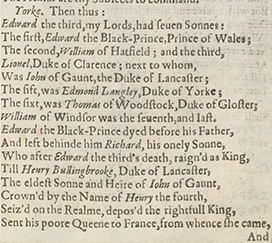
Illustration 10 Long description
The text reads as follows:
Comedies, Histories, & Tragedies, excerpt from sig. m6v. Newberry Library, VAULT Case oversize YS.01.
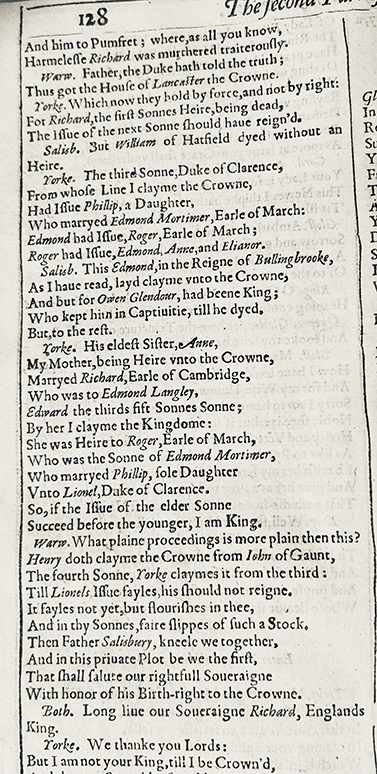
Illustration 11 Long description
The text reads as follows:
A modern-pronunciation recording of the discussion of the descendants of Edward III printed in the 1623 edition of The Second Part of the Contention.
This sound recording gives an aural transmission of three voices speaking in modern pronunciation the 1623 version of the conversation about the descendants of Edward III. The text being spoken is transcribed in the main text.Nevertheless, from the perspective of the all-male, all-white New Bibliographical line that led from Shakespeare to Heminges and Condell to Jaggard to McKerrow-Greg-Pollard to Smart to Alexander, the “hopeless confusion in the details of the pedigree and the mechanical repetition of phrases found in the Folio” is proof “that we have in the quarto nothing more than someone’s attempt to reconstruct from memory one of Shakespeare’s scenes.”Footnote 122 The first and most important part of Alexander’s argument about the degraded status of the quarto play assumes that the presence of any genealogical error proves the text is a memorial reconstruction. He denies Contention’s claim to Shakespeare’s textual line of descent by turning it into an illegitimate offspring.
Using a “genealogical table” of unremarked and thus unknown authority (Illustration 12), Alexander confidently checks the inaccuracies of York’s speech in Contention against the codified accuracy of English ancestral assertions available to him in his own present.Footnote 123 Alexander’s genealogical table – the anonymous source of his capital-H “History” – assumes a form of universal historical knowledge free of errors and inconsistencies that must interpret gestures of nonconformity with that knowledge into acts of sinful deviancy. Here, what is confidently known about the past (in a more perfect and correctable distance from it) inflects arguments about what is presently unknown or undeterminable. However, the perceived infallibility of historical consciousness through time neglects the variable conditions of historical knowledge that separate the past from the present. It just so happens that the information relayed by Alexander’s anonymous table (Illustration 12) matches the information transmitted by York’s claim in The Second Part of Henry VI in the Folio (Illustrations 10 and 11).Footnote 124 Because the Folio text carries genealogical knowledge consistent with twentieth-century awareness of its facticity, Alexander was led to assume that the details of the Folio text—like the facts of History itself – were compliant, tractable, and the product of undisrupted lines of transmission. Good texts represent good History.
Peter Alexander’s “genealogical table” from Shakespeare’s Henry VI, p. 60.
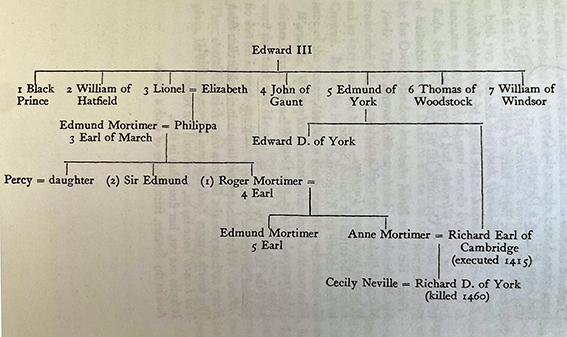
Alexander’s historical discourse is not only ahistorical; it also seems to confuse history with perpetual exactitude. This interpretive process marks Contention with a unique status: Its inaccuracies interrupt an accepted understanding of history as a reliable transmission of the past. If we can authorize the record of the past (i.e., this-has-been) as retrievable only by recognizing violations of institutional memory (i.e., this-has-not-been), Contention reinforces the very contours of historical thinking that reject its claims to authority. The principle of coherence inherent in this formulation – where history and continuity become syntheses realized through forms and signs of disturbance – naturalizes the past as a stable and determinable category. By challenging what we currently perceive as historical truths, the errors in York’s speech in Contention acclimatize readers to the perpetual facticity of the information provided by Alexander’s anonymized “genealogical table.” The breaking through of the instance of (so-called) error is a disruption of tradition that in turn reinforces the (illusive) unity of historical permanence.
The 1594 text is considered a “bad quarto,” in part, because it presents a bad version of history; its errors stand in contrast to the uncontested truths of a universal history. The assumption that Contention is a bad quarto because it includes genealogical errors seems to prioritize the authority of historical sources – and texts made from those sources – that do not contain errors. The insistent “badness” of Contention reflects the perpetuation of “universal” historical facts in the realm of textual studies. The Second Part of Henry VI is the authorized version of this history play because it accepts and reinscribes a line of influence that verifies the tradition from which it is drawn. This tradition also includes perceptions of Shakespeare as a historical subject. The Folio’s status as an authorized historical object is therefore inseparable from concerns about its ability to represent a “corrected” and authorized history. This creates conditions of dual registration where notions of textual and historical authority confirm and validate one another. The stability of this relationship in turn influences our impressions of Shakespeare’s role as an author/originator and thus the validity of his textual “offspring.” Bad history makes bad texts and bad texts must have a bad lineage.
However, if we accept Alexander’s implicit belief that history is indeed universal and therefore a conspicuously durable form of knowledge capable of corroborating or substantiating instances of its dispersal, there should be incontrovertible evidence of this type of perpetuity in historical texts themselves. To claim that the errors in Contention are indeed anomalies explainable only through recourse to activities not sanctioned by the regularity of the tradition we impose upon authorized agents of transmission, we need to prove that they are indeed intrusions in the procession of permanence. In other words, we need to prove that works of History are indeed universal and immutable. Alexander’s assumptions about the genealogical errors in Contention invite a consideration of the limits and conditions of historical knowledge. In this way, his argument is as much of a historical problem as it is a textual one. It is therefore necessary to formulate an epistemological understanding of the status of accuracy in Edward III’s genealogical historiography before tending to its literary-theatrical manifestations in Contention and 2 Henry VI. Have the documentary details about York’s genealogy always remained the same in historical sources? Does Alexander’s historical discourse err in assuming that they do?
In the context of the current argument, we must first distinguish between the types of English history written and disseminated before 1590, the year of the putative first performance of the play known variously as Contention / 2 Henry VI. As we will discuss in more detail, the historical data informing the dramatic visions of the reign of Henry VI must rely on extant works of history (that in turn are indebted to a wider tradition), but there is more than one genre of English historiography.
In any taxonomy of early modern historiographical types we should also include dramatic history, or, historical events dramatized for London audiences in the sixteenth and seventeenth centuries. These texts substantially refract and theatricalize history as it is derived from their sources to tell dramatic stories with a historical basis, not to reiterate historical facts. Different genres of history produce different relationships to historical knowledge and this becomes important to an analysis of error in Edward III’s genealogical historiography. When Alexander’s book was published in 1929, archivists and historians occupied the same “methodological and conceptual space.”Footnote 125 Historians attributed degrees of authority to certain documents, which in turn influenced the archival status of these documents and their subsequent relationship to the formation of historical knowledge. The discipline of the New Bibliography itself relied on these basic principles as it sought to describe, categorize, and authorize select versions of certain plays. In our contemporary “documentary episteme,” historical information is available in the form of searchable data that can be accessed indexically across the “sociotechnical infrastructures” of digital databases.Footnote 126
The taxonomic affordances of electronic text can provide a relatively easy documentary check on Alexander’s epistemological assumptions about History, and they can help us orient a sense of accuracy in the early modern historical documents. As in all historiographical gestures, accessibility and availability of related materials necessarily imposes certain limits: We cannot seek the incidence of error across the entire documentary tradition of English history written and compiled since the twelfth century. The following analysis will focus on mass-produced texts of English history published as commodities within the regime of print capitalism between 1450 and 1594 – that is, from the beginning of print in Europe to the publication of The First Part of the Contention. The means of production of a brand of history made widely accessible and thus contrastable within its relative variety matches the technological conditions in which the authors of Contention and/or 2 Henry VI were working and in which their works were published. Further, all author-compilers of English history working for the press admit many antecedent manuscripts into their printed texts. This allows us to experience the incorporation of distinct yet interdependent textual cultures (manuscript and print) in one form of media. “History in print” therefore establishes a boundary for conceptualizing the event of genealogical error, where it occurs, and how it proliferates.
Proceeding chronologically through dates of publication, the first account of Edward III’s line of succession printed in English appears in Robert Fabyan’s New Cronycles of Englande and of Fraunce (1516).Footnote 127 Edward III’s line of succession appears first in a passage that derives from the manuscript London Chronicle of 1446.Footnote 128 The compiler indicates that Edward III has died, “leaving after him four sons; that is to say, Lionel duke of Clarence, John of Gaunt duke of Lancaster, Edmund of Langley duke of York, and Thomas of Woodstock earl of Cambridge.”Footnote 129 According to the details of history known to us in our indexical present, the sequence of Edward III’s surviving children at the time of his death in 1377 is here presented factually. Fabyan’s second instance of the same genealogy appears in the section detailing Richard II’s parliamentary declaration of 1397 that established an entail of succession through Mortimer: “sir Roger Mortimer earl of March, and son and heir unto sir Edmond Mortimer and of dame Philippe eldest daughter and heir unto sir Lionel the second son of Edward the Third, was soon after proclaimed heir apparent unto the crown of England.”Footnote 130 This is a genealogical error: Lionel was Edward III’s third son, not his second. As mentioned elsewhere in Fabyan, Lionel was not even the “second” of the children who outlived Edward: He was the first. Significantly, among the texts that share a determinable relationship to the London Chronicle, only Fabyan’s carries these genealogical details into the medium of print. Fabyan here either includes (incorrect) details drawn from additional sources or he made the error himself.
Fabyan was the last major chronicler of the fifteenth century – the first to work directly for the press – and many printed histories that followed the publication of his New Chronicle borrowed extensively from it. The first to include Edward III’s genealogical information was William Rastell’s Pastime of People (1530). Although forfeiting an orderly arrangement for brevity’s sake, it copies from Fabyan what was known about Edward III’s surviving children at the time of his death.Footnote 131 Rastell repeats Fabyan’s error about Lionel’s position in the line of succession in his account of the reign of Richard II.Footnote 132 Rastell also adds additional genealogical errors not found in Fabyan. He records elsewhere that “John of Gaunt” (the father of Henry IV) was “the third son of Edward III,” and he notes “Richard earl of Cambridge son to Edward of Langley the fourth son to king Edward the iii. which Richard married Anne daughter to Roger Mortimer son to Philippe only daughter of Leonell ii. son to King Edward the third.”Footnote 133 John of Gaunt was the fourth son of Edward III (and the second to survive longer than Edward); Edmund of Langley was the fifth (and third to survive). Rastell’s text replicates the genealogical errors from Fabyan while introducing new ones that were repeated in subsequent works of English history. Fabyan was the likely source for the mistaken conception that “Lionel” was Edward III’s second son, and it seems that Rastell was the first extant printed text to suggest John of Gaunt was Edward III’s third son.
John Hardyng’s Chronicle in Metre (1543) indicates that Edward had “five sons,” with “Edward the prince and eldest son of age” followed by “Leonell next born after in Antwerp.”Footnote 134 Here, Edward III is said to have had only five sons in total (he had seven), and – in the tradition of Fabyan – Lionel is presented as Edward’s second son, rather than the third. The inclusion of Edward the Black Prince indicates Hardyng’s list is not limited to only those sons that survived Edward III, and the text clearly specifies that Lionel (rather than William of Hatfield) was “next born” after the Prince of Wales. If we consider the circumstances of Hardyng’s patronage and relationship to the court of Henry VI, these errors may seem surprising: He was hired to provide evidence (genealogical or otherwise) of the king’s overlordship of Scotland, and it is not unreasonable to presume that he had an adequate understanding of royal heritage both within England and its potential dominions. Further, as a man of the court during the reign of Henry VI, Hardyng would have directly experienced the instability and shifting loyalties stemming from York’s rebellion. A revised version of his Chronicles includes a dedication to Richard, Duke of York. However, despite these very personal links to the court, Hardyng did not seem to deviate from the historical data provided by his primary source: a version of the manuscript Brut that concludes in 1437.Footnote 135
William Baldwin’s Mirror for Magistrates (1559), in a section describing the Duke of York’s oration before Parliament in 1460, reports: “For Richard earl of Cambridge, eldest son / Of Edmund Langley, third son of king Edward, / Engendered me of Anne.”Footnote 136 Edmund was Edward’s fifth son not his third, and if we interpret Baldwin’s genealogy through the line surviving Edward, Edmund the “third” son would become the first (after the deaths of the Prince of Wales and William of Hatfield). This error would seem to make York the obvious and uncontested candidate for the throne, rendering the remainder of his oration “meaningless” as Alexander considered York’s speech in Contention. However, the fact that Edmund was Edward’s fifth son was not lost on Baldwin, who records this elsewhere: “This earl of Cambridge Richard clept by name / Was son to Edmund Langley, Duke of York: / Which Edmund was fifth brother to the same / Duke Lionel.”Footnote 137 However, this passage is unclear: The “fifth brother” to “Lyonel” would be the sixth son, as Edmund’s position in the line of succession is here based on his proximity to Lionel as opposed to Edward III.
A related error concerning Edmund of Langley also intrudes into John Stowe’s A Summarie of Englyshe chronicles (1565; rep. 1566, 1567, 1570, 1573, 1574), which records: “This year the queen was delivered of a man child at Langley, and was named Edmund of Langley, and was King Edward’s third son.”Footnote 138 Edward Prince of Wales was still living at the time of Edmund’s birth, so even if William of Hatfield (who did not survive infancy) was not considered by the chroniclers, Edmund would be Edward III’s fourth son (after Edward, Lionel, and John of Gaunt). The compilers also record that Edward III “left behind him four sons, Lewes Duke of Clarence, John of Gaunt Duke of Lancaster, Edmond of Langley Duke of Yorke, and Thomas of Woodstock Earl of Cambridge” (mistakenly naming the Duke of Clarence “Lewes” instead of “Lionel”).Footnote 139
Grafton’s Chronicle at Large (1569) similarly reproduces accounts of Edward III’s surviving sons at the time of his death, but he also includes a full account of Edward’s children. Grafton’s is also the first printed English chronicle to include a complete recreation of York’s oration before Parliament in 1460. As in many other chronicles that follow its example, these passages do not provide a full genealogical account of York’s heritage, but they do provide an accurate sense of Lionel’s and John of Gaunt’s place in the line of succession (third and fourth, respectively). However, the text also states elsewhere that Lionel was Edward III’s “second son.”Footnote 140 An identical error is found in Holinshed’s Chronicles (1587) concerning Edward III and “his second son the lord Lionel duke of Clarence.”Footnote 141
Indisputably, the incidence of error in historical writing is an essential feature of English chronicles in the fifteenth and sixteenth centuries. As the preceding analysis demonstrates, the element of inaccuracy is in fact a common aspect of English genealogical historiography, particularly in instances involving Edward III’s line of succession. Of the eighteen historical texts printed in English that record genealogical data on Edward III, eleven contain errors involving the order and priority of Edward III’s sons. From this evidence, what we would readily identify as genealogical error is more widespread than exceptional, and such errors are certainly more common than Alexander’s analysis suggests. What is perhaps most remarkable about these details is the fact that the authors and compilers of these texts were recorders of history, whose approach to the materiality of the past was different than a poet’s or a dramatist’s. We should expect an English chronicler (or any author of history qua history) to be more concerned with a style of accuracy different from the dramatic fictions drawn from the same material. If we accept Alexander’s line of reasoning about the genealogical errors in the quarto Contention, then we would have to say that Grafton, Stowe, Holinshed, and Baldwin merely “trusted their memory” at the time of composition too.Footnote 142
While the majority of English histories just cited incorporate and perpetuate errors surrounding Edward III’s line of descent, it is worth noting that none of them repeat the same genealogical blunder in Contention cited by Alexander as the basis for his argument that it is a text reconstructed from memory. No known source identifies Edmund of Langley as Edward III’s second son, so at present we must conclude this specific error is unique to a single text (the 1594 Contention quarto). This is also true about other related errors concerning Edward III’s lineage in works of early modern historiography. As we have seen, it is common for authors not only to err when recounting a royal line of descent but also to err uniquely when not copying wholesale from another extant chronicle. Genealogical error is thus not a valid criterion on its own to prove the memorial reconstruction hypothesis.
4 Starting Points: Hall’s Union and York’s Genealogies
Most scholars agree that the documentary details of The Second Part of Henry VI – the long-accepted and authorized version of the play that must bear some relationship to Contention – are primarily based on Edward Hall’s The Union of the Two Noble and Illustrious Families of Lancaster and York (1548) and Raphael Holinshed’s The Chronicles of England, Scotland and Ireland (1577 and 1587). In terms of the occasional use of other sources in the play, there is a consensus that the Simpcox scene was likely taken from John Foxe’s Acts and Monuments, but the amount of influence owed to Stowe, Grafton, Fabyan, or Hardyng remains a matter of debate. This uncertainty is likely related to the complex networks of appropriation in the context of Tudor historiography, where the act of borrowing and copying a received historical narrative (at times verbatim) was, as shown, a common practice. All these texts were available in some way to the author(s) of The Second Part of Henry VI at the time of its initial composition, and this fact can sometimes frustrate analytical gestures seeking to isolate one particular source for a specific line, speech, or scene. However effective or ineffective we may find assertions about the Folio text’s relationship to these extant histories, the same conclusions do not necessarily apply to its consistently maligned quarto counterpart, especially in instances where the two texts diverge in substance, idiom, or historical focus. After all, dominant critical trends in the twentieth century considered 2 Henry VI to be the source of the memorially reconstructed Contention. Source studies have therefore not properly accommodated the possibility that Contention is in fact a good quarto with potentially divergent trajectories of influence. How closely does it follow the sources so often linked to the Folio version of the play?
We will turn first to what many scholars consider to be the primary source for 2 Henry VI. Here is York’s genealogy as provided by Hall’s Union:
That the high and mighty Prince King Henry III of that name had issue Edward, his first begotten son born at Westminster the eleventh calends of July in the vigil of Saint Mark and Marcilian in the year of our Lord a thousand two hundred twenty nine. And Edmond his second begotten son born on the day of Saint Marcell in the year of our lord a thousand two hundred forty. Which Edward after the death of King Henry his father, was entitled and called king Edward I, and had issue his first begotten son entitled and called after the death of King Edward his father, king Edward II, which had issue the right noble and honorable prince king Edward III, which king Edward had issue Edward his first begotten son, Prince of Wales, William of Hatfield the second begotten son, Lionel Duke of Clarence the third begotten son, John of Gaunt, Duke of Lancaster, the fourth begotten son, Edmond of Langley, Duke of York, the fifth begotten son, Thomas of Woodstock, Duke of Gloucester the sixth begotten son, and William of Windsor, the seventh begotten son.Footnote 143
Hall’s sense of Edward III’s line provides an impression of succession that agrees with the Folio text but contrasts with the details of York’s speech in Contention on several points (Figure 9): Hall correctly lists Edmund of Langley as the fifth son (as opposed to the second), does not list Roger Mortimer as Edward III’s son, and includes both William of Hatfield and William of Windsor – progeny of Edward III who did not survive infancy and did not factor into patrilineal debates about kingship. In terms of the genealogical table provided by Alexander, the lineage provided by Hall approximates historical fact. However, this passage from Hall is not found in his sections on Henry VI or even Edward III. Hall’s only mention of York’s dynastic line is provided in the “Introduction to the History of Henry IV” to situate the origins of the conflict between York and Lancaster. The line of succession leading to Edward I (and thus Edward III) begins with Henry III and his two sons, Edward, “his first begotten son,” and Edmond, “his second begotten son.”Footnote 144 The location of Edward III’s genealogical information in Hall’s Union should be emphasized further in the context of sources for 2 Henry VI and that play’s relationship to Contention. If the author responsible for this passage in either text consulted the reign of Henry IV for this information, it would be the only instance in each version where historical details do not derive directly from Hall’s section on Henry VI.
A comparison of York’s genealogy in Contention and Hall.
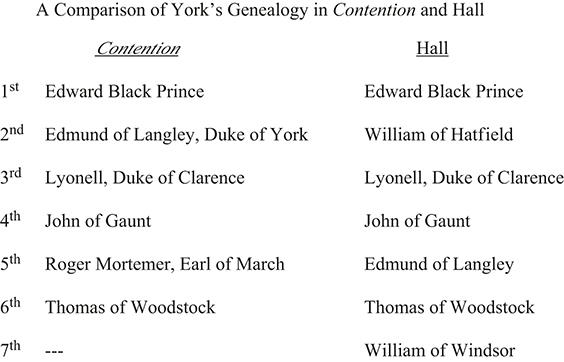
Figure 9 Long description
2 parallel vertical columns. The left column is headed Contention and the right column is headed Hall. Each column contains 7 numbered horizontal lines, representing Edward III’s 7 sons. 4 lines have the same names in each column. First line Edward Black Prince. Third line Lyonell Duke of Clarence. Fourth line John of Gaunt. Sixth line Thomas of Woodstock. But the 2 columns differ in lines 2, 5, and 7. Left column has Edmund Langley Duke of York in line 2, Roger Mortimer Earl of March in line 5, and line 7 is empty. Right column has William of Hatfield in line 2, Edmund of Langley in line 5, and William of Windsor in line 7.
While this passage remains the only complete rendering of Edward III’s line of descent in Union, Hall does include a version of York’s notorious 1460 oration to Parliament under his history of the reign of Henry VI:
For all you know (or should know) that the high and mighty prince king Richard II was the true and indubitable heir, to the valiant conqueror, and renowned prince king Edward III as son and heir to the hardy knight, and courageous captain, Edward prince of Wales, duke of Aquitaine and Cornwall, eldest son to the said King Edward III which king was not only in deed, but also of all men, reputed and taken, as the very true and infallible heir, to the wise and politic prince, King Henry III as son and heir to king Edward II, son and heir to king Edward I, the very heir and first begotten son of the said noble and virtuous prince king Henry the III. Which king Richard, of that name the second, was lawfully and justly possessed of the crown and diadem of this Realm and region, till Henry of Derby, duke of Lancaster and Herdford, son to John Duke of Lancaster, the fourth begotten son, to the said king Edward III and younger brother, to my noble ancestor Lionel duke of Clarence, the third begotten son of the said king Edward, by force and violence, contrary both to the duty of his allegiance and also to his homage, to him both done and sworn, raised war and battle, at the castle of Flynt, in North Wales, against the said king Richard, and him apprehended and imprisoned within the Tower of London. After whose piteous death, and execrable murder (alas my heart panteth to remember this abominable fact) the right and title of the crown, and superiority of the Realm, was lawfully reverted and returned to Roger Mortimer, earl of March, son and heir to lady Philippe, the only child of the above rehearsed Lionel, duke of Clarence, to which Roger’s daughter called Anne, my most dearest and well beloved mother, I am the very true and lineal heir, which descent, all you cannot justly gainsay, nor yet truly deny. Then remember this, if the title be mine, why am I put from it: if I be true heir to the crown (as I am indeed) why is my right withholden: if my claim be good, why have I not justice?Footnote 145
York makes his claim through Mortimer by way of Lionel, Edward III’s third son. Contention, 2 Henry VI, and Union all attempt to explain the line of descent following the death of Edward the Black Prince, describe the murder of Richard II, and clarify the priority due to the lineage of Lionel. However, Hall’s version of this speech is not as complete as York’s claim in Contention or 2 Henry VI. Hall’s history fails to account for Lionel’s other descendants through Mortimer, does not mention Mortimer’s captivity under Glendower, and (more relevant to the Folio) it completely neglects the line of rival claimants of Edward III. Both versions of the play list Roger’s other children besides Anne, note the interruption in the Mortimer line after Edmund was taken hostage, and mention Anne’s marriage to York’s father. Genealogical history, much like dramatic representations of history, organizes and visualizes human relationships through time, and royal genealogies focus on biological relationships between elite members of a dominant population. Richard’s murder is “abominable” because it disrupts the lineage and therefore the legitimacy of hereditary monarchy. In monarchy, there is only a single source of authority, just as in Alexander’s New Bibliography there can be only a single source of textual authority.
The list of names present in the three different versions of York’s claim (Figure 10) indicates that the Folio text further clarifies and expands the catalogue of succession with additional details not found in Contention or this passage from Union. Only 2 Henry VI mentions William of Hatfield (Edward III’s second son) and Edmund Mortimer (son of Roger). In this way, the text of 2 Henry VI is more unlike Hall’s account than Contention is. However, Contention and 2 Henry VI correspond with their references to Edmund of Langley, Elinor, York’s father (Richard Earl of Cambridge), and Glendower. They are also in agreement with one another in the designations Henry Bolingbrook and John of Gaunt (Henry of Derby, Duke of Lancaster, and John, Duke of Lancaster, respectively in Hall). In turn, York’s oration in Hall is not as comprehensive as the speeches found in both versions of the play and it is therefore unlikely to be the solitary source for the information they both provide.
Edward III’s line of succession in Hall, Contention, and 2 Henry VI.
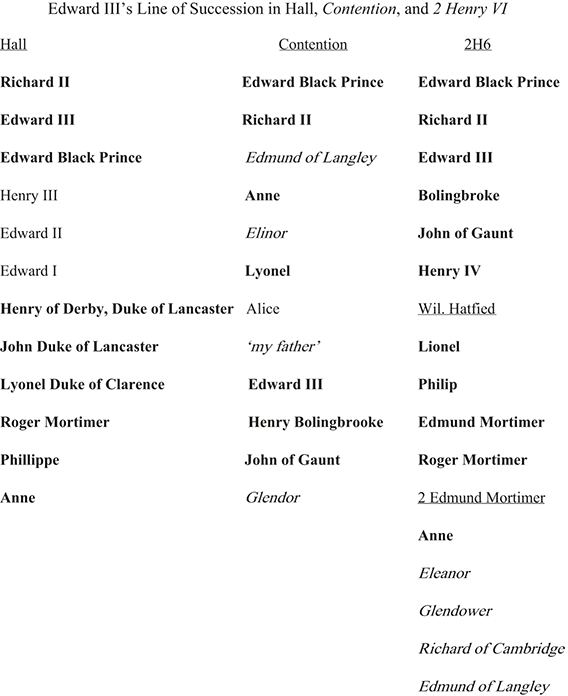
Figure 10 Long description
3 parallel columns of names, headed Hall, Contention, and 2H6. From left to right, they go from the oldest to the most recent text. The right column has the most names. The middle and right column resemble each other more than the first column. Bold type identifies names that appear in all three columns, which include Edward III, Edward Black Prince, Richard II, Edward, Lyonel, John of Gaunt, Bolingbroke, and Anne. Italic type identifies names that appear in two columns, which include Edmund of Langley, Elinor, Glendower, and Richard of Cambridge (also called ‘my father’). Roman type identifies names that appear only once, which include Henry III, Edward II, Edward II in the left column, and Alice in the middle column. The two names underlined in the third column are Wil Hatfield and 2 Edmund Mortimer.
An analysis of the relationship between the genealogical information presented in Hall and the two versions of the play indicates that: (a) the first part of York’s speech related to Edward III’s line of descent must derive from Hall’s history of Henry IV, a section that Shakespeare consulted for the composition of his second tetralogy beginning in 1595; and (b) the second part of York’s speech detailing his claim through his mother’s line by way of Lionel could not have been based solely on the information provided in Hall’s text. It follows, then, that some other source was likely used. Let’s now turn to the texts of Holinshed, the other chronicle history that has been suggested as a source for 2 Henry VI and, by extension, The First Part of the Contention.
5 Holinshed’s Chronicles and York’s Genealogies
The complex textual history of Holinshed’s Chronicles clearly impacts interpretations of Edward III’s line of descent and its relationship to Contention and 2 Henry VI. The editions of 1577 and 1587 provide identical renderings of the genealogy, but they appear in different sections of the text, each with a different emphasis applied to the consequence of this information on the reign of Henry VI. In the 1577 edition, the line of descent for the sons of Edward III is provided only in the section describing the events and characteristics of Edward III’s reign (as opposed to the reign of Henry VI):
He [Edward III] had issue by his wife queen Philip seven sons, Edward prince of Wales, William of Hatfield that died young, Lionel of Clarence, John of Gaunt duke of Lancaster, Edmund of Langley, earl of Cambridge and after created duke of York, Thomas of Woodstock earl of Buckingham after made duke of Gloucester, and another William which died likewise young. He had also three daughters, Marie that was married to John of Mountford duke of Britaine, Isabell wedded to the lord Coucie earl of Bedford, and Margaret coupled in marriage with the earl of Pembroke.Footnote 146
This genealogical information matches Hall’s (and the line of descent provided by Alexander’s genealogical table), but this could be related to the well-documented fact that Hall was one of the primary historical and thematic sources for Holinshed’s Chronicles. Lucas notes that Hall was a major foundation for Holinshed’s account of English affairs for 1399–1509 in particular, so the correspondences between their descriptions of Edward III’s lineage is more likely to be the result of appropriation by Holinshed as opposed to a baseline of independently derived and inarguable facts.Footnote 147 In addition to this précis of hereditary right from the life of Edward III, the 1577 edition of Holinshed also incorporates York’s oration at Parliament from Hall’s text.Footnote 148 Holinshed prefaces this oration in the 1577 Chronicles with a direct citation of Hall, and the two versions of York’s speech are nearly identical. Aside from the expected deviations in spelling preferences, there is only a single variant – the presence of a parenthetical outburst on the murder of Richard II in Hall but not in Holinshed (1577): “alas my heart panteth to remember the abominable fact.”Footnote 149 The essential agreement between the two chronicles dictates that our conclusions must remain the same: The author(s) of Contention and 2 Henry VI must have consulted a different source – or a different section of the same source – for their respective genealogy speeches.
There is no further mention of York’s lineage in the sections on Edward III or Henry VI in the 1577 Chronicles, but Holinshed does include a record of the king’s court of Parliament of 1461, where Roger Mortimer, Earl of March was declared heir to the throne:
Also by authority of this parliament, Roger lord Mortimer earl of March, son and heir of Edmund Mortimer Earl of March and of the lady Phillippe eldest daughter and heir unto Lionel Duke of Clarence, third son to king Edward the third, was established heir apparent to the crown of this realm and shortly after so proclaimed. The which earl of March anon after the end of the same parliament, sailed to Ireland to his lordship Ulster, whereof he was owner by right of his said mother: but while he remained there to pacify the rebellions of the wild Irish, a great number of them together assembled, came upon him and slew him, together with most of his company.
This Roger earle of March had issue Edmund and Roger, Anne, Ales and Elanor, which Elanor was made a nun. The two sons died without issue, and Anne, the eldest of the daughters, was married to Richard earl of Cambridge, son unto Edmund of Langley before remembered. The which Richard had issue by the said Anne, a son called Richard, that was after the duke of York, and father to king Edward IV.Footnote 150
This extension of Edward’s line is provided in the section on Richard II to contextualize the extent and validity of the Yorkist dynasty as it was perceived in 1461. This record of parliamentary proceedings establishes the very line of succession – interrupted by the Lancastrian rebellion and subsequent abdication of the king in 1399 – that Richard Plantagenet uses to authorize his claim in the reign of Henry VI. Ronald Brunlees McKerrow believed that this passage included unique links to the genealogical information presented in Contention but absent from 2 Henry VI. Specifically, he cites the unique parallels between Contention’s “Alice, Anne, and Elinor” and Holinshed’s “Anne, Ales, and Eleanore.”Footnote 151 Both of these statements reflect competing degrees of inaccuracy. Contention mistakenly presents these women (and Anne most importantly) as the daughters of Lionel, when in fact they were the daughters of Roger Mortimer, Lionel’s son-in-law (as reported in Holinshed). However, both texts err in including “Ales”/“Alice” in their respective accounts of Lionel’s line of descent: Alice was not a daughter of Lionel nor was she a daughter of Roger Mortimer. The “Ales” of the 1577 Holinshed is not included in the genealogical accounts in the 1587 edition or in the Folio text of 2 Henry VI, so the shared inclusion of the erroneous Alice led McKerrow to believe that this speech from Contention shared a particular relationship with the 1577 Chronicles. This observation was related to McKerrow’s larger notion that the original text of Contention may have been revised at some point between its original composition and the publication of 2 Henry VI in the first Folio. McKerrow agrees that Contention is a memorially reconstructed text, but he questions Alexander’s argument that the quarto cannot represent a separate artistic vision and that any differences between the two plays cannot be attributed to revision.Footnote 152 He calls attention to York’s genealogical speech in particular to suggest that the 1577 edition of Holinshed was the primary source for the initial version of the play reflected by the text of Contention while 2 Henry VI was possibly revised in agreement with the 1587 edition. To this point, McKerrow provides additional details that link both plays more confidently to the 1577 edition to the exclusion of the 1587 text. The name “Sir John Standly” is used in Contention, 2 Henry VI, and the 1577 Chronicles to refer (wrongly) to Eleanor’s escort to the Isle of Man. In the 1587 Chronicles, the name is presented accurately as Sir Thomas Standley. The 1594 quarto, 1623 Folio, and 1577 Chronicles also agree on the spelling (phonetic or otherwise) of Iden as opposed to “Eden” (as recorded in the 1587 Chronicles).Footnote 153 For McKerrow, these correspondences suggest the existence of an authorized version of the play based on the 1577 Chronicles, a version that predates 2 Henry VI. Contention is, for him, a report of that lost version. He believes that the Folio text carries echoes of this lost prior version in the form of unique links to the first edition of Holinshed.
The two passages from the 1577 Chronicles just cited seem to provide the basis of York’s genealogical speech as it is presented in Contention. Following McKerrow, the inclusion of “Ales” in this speech is evidence of a direct consultation of this passage from Holinshed. However, as similarly observed in the conditions surrounding the relationship between Hall’s Union and the two versions of the play, the genealogical information from Holinshed’s 1577 lives of Edward III and of Richard II is the only source material outside of the Henry VI section of this first edition of Holinshed to influence the composition of the play. The playwright(s) must have consulted both Holinshed’s 1577 material on Edward III and Hall’s material on Henry IV after the initial composition of the play we know as The First Part of the Contention/2 Henry VI. In turn, there is no direct evidence that the genealogical material provided in Hall and the first volume of the Chronicles was accessed prior to 1590 (the date of composition and first performances assigned to the play by the New Oxford Shakespeare).Footnote 154 This suggests that the Folio text of 2 Henry VI could have resulted from a later revision that corrected Contention’s genealogical anomalies by consulting information about Edward III’s line of descent in chronicle material not included in the 1577 Holinshed’s life of Henry VI.
However, the revised and expanded Holinshed edition of 1587 contains a revised and expanded section of the life of Henry VI that brings together all relevant data concerning York’s lineage in a section entitled: “The articles betwixt king Henry and the duke of Yorke.” The 1587 Chronicles therefore contains additional material in the life of Henry VI directly related to York’s claim that is not found in the life of Henry VI in Hall or the 1577 Chronicles. The inclusion of this prolonged discourse on hereditary right in the 1587 text bears upon assessment of the source material used for 2 Henry VI and Contention:
That right noble and worthy prince, Henry king of England the third had issue, and lawfully got Edward the first begotten son, born at Westminster, the fiftteenth calends of July, in the year of our Lord 1239, and Edmund his second son, which was born on St. Marcel’s day, the year 1200, the which Edward, after the death of king Henry his father, intitled and called king Edward I, had issue, Edward his first begotten son, called (after the decease of his father) king Edward II, the which had issue, Edward III, which Edward III had issue, Edward prince of Wales, William of Hatfield his second son, Lionel the third, duke of Clarence; John of Gaunt fourth, duke of Lancaster; Edmund of Langley fifth, duke of York; Thomas of Woodstock sixth, duke of Gloucester; and William of Windsor seventh.
The said Edward prince of Wales, which died in the lifetime of his father, had issue Richard, which succeeded Edward III his grandsire; Richard died without issue; William of Hatfield the second son of Edward III, died without issue; Lionel the third son of Edward III, duke of Clarence, had issue Philip his daughter and heir, which was coupled in matrimony unto Edmund Mortimer earl of March, and had issue Roger Mortimer earl of March her son and heir; which Roger had issue of Edmund earl of March, Roger Mortimer, Anne, Elanor; which Edmund, Roger, and Elanor died without issue.
And the said Anne coupled in matrimony to Richard earl of Cambridge, the son of Edmund of Langley, the fifth son of Henry III, and had issue Richard Plantagenet, commonly called duke of York; John of Gaunt, the fourth son of Edward and the younger brother of the said Lionel, had issue Henry earl of Derby, who uncontinently after that king Richard resigned the crowns of the 658 realms and lordship of Ireland, unrighteously entered upon the same, then being alive Edmund Mortimer earl of March, son to Roger Mortimer earl of March, son and heir to the said Philip, daughter and heir of the said Lionel, the third son of the said king Edward III, to the which Edmund the right and title of the said crowns and lordship by law and customs belonged. To the which Richard duke of York, as son to Anne daughter to Roger Mortimer earl of March, son and heir of the said Philip, daughter and heir of the said Lionel, the third son of Edward III, the right, title, dignity royal, and estate of the crowns and realms of England and France, and the lordship of Ireland pertain and belong before any issue of the said John of Gaunt, fourth son of the same king Edward.Footnote 155
This fragment is a direct importation of material from Stowe’s Chronicles of England from Brute unto this present year of Christ (1580), from a section of that work that includes the parliamentary record of York’s speech and the resultant oaths approving York’s newly recognized status.Footnote 156 These passages in Holinshed from Stowe are derived from the Brut chronicle, and they expand the documentary reach and institutional response to York’s genealogical claims. These details of English history are not found in the records of York’s oration in Hall or in the 1577 Holinshed. The 1587 Chronicles therefore incorporates additional historical materials to make its history more efficient and comprehensive. Stowe’s tallying of the events appears in the “Life of Henry VI” so it is clear that the editors of the revised Chronicles of 1587 not only copied portions of Stowe’s Chronicles but also revised the structure of the text to incorporate thematically related material in the sections from Stowe detailing the reign of Henry VI. Even the title of this section in the 1587 Chronicles – “The Articles betwixt King Henrie and the Duke of York” – reproduces a marginal header from Stowe’s text. It seems that these “Articles” as reproduced in Stowe represent a consultation of textual artifacts drawn from parliamentary archives, a line of historiographical transmission that was apparently not available to Hall or to the compilers of Holinshed’s 1577 Chronicles. The publication of Stowe’s text of the Brut Chronicles in 1580 produced a more complete version of these events that would have been accessible to the authors of the revised edition while it was being prepared. So even though we are reading “Holinshed” in this instance, we are also reading Stowe and the authors of the Brut.
Instead of having to consult the lives of Edward III and Richard II for a reference to York’s genealogy and its relationship to the War of the Roses more generally in the 1577 text, the author(s) of Folio 2 Henry VI would have found all this information neatly collected in a single passage from a section of the 1587 Chronicles directly related to the titular monarch. The information provided in this fragment – unique to Holinshed’s 1587 Chronicles and directly drawn from Stowe’s edition of the Brut Chronicle – seems to match the arrangement of York’s speech in the Folio text of 2 Henry VI.Footnote 157 Structurally, the genealogy portion of the “Articles” clearly lists Edward III’s progeny in an accurate line of succession before explaining their individual destinies and establishing an unobstructed lineage that prioritizes York’s claim through Clarence. Within these general similarities, the rendition of Clarence’s line of descent in 2 Henry VI clearly matches the account in “Articles” (Figure 11).
Comparison of Holinshed (1587) to 2 Henry VI (1623).
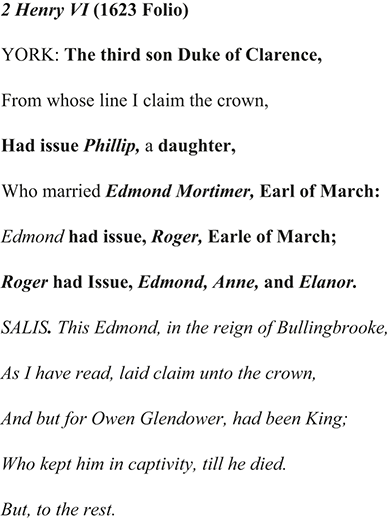
Figure 11 Long description
2 parallel columns. The heading above the left column reads Holinshed followed by 1587 in parentheses. The heading above the right column reads 2 Henry VI followed by 1623 Folio in parenthesis. The shorter prose text on the left and longer verse text on the right both describe the descendants of Lionel, third son of Edward III. Words common to both columns are printed in bold type. They include the phrases the third son, duke of Clarence, had issue Phillip, Edmund Mortimer earl of March, had issue Roger, earl of March, Edmund Mortimer earl of March, had issue Roger, Roger had issue, Richard earl of Cambridge, fifth son. Individual words in bold include daughter, Anne, Elanor, Edmund, Langley.
(cont.)
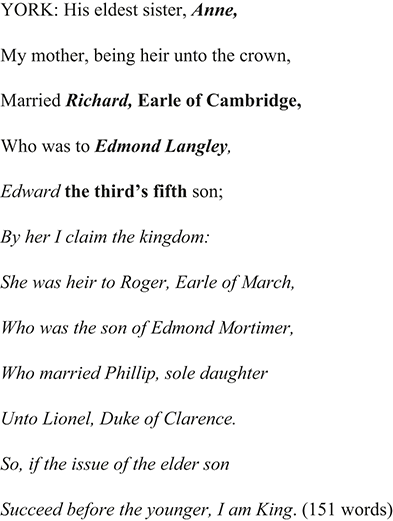
(cont.)
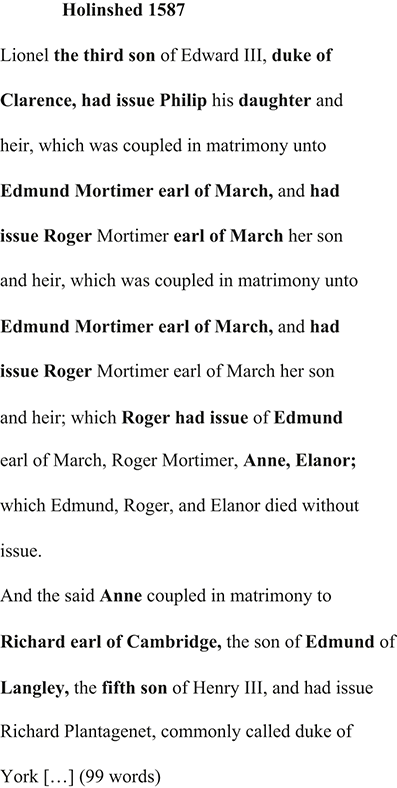
Rather fittingly, there is a genealogical error in Holinshed (1587): Edmund of Langley was the fifth son of Edward III, not Henry III, a detail that the Folio text fixes and therefore gets right. Beyond this, though, a lexical comparison between these two passages indicates that the Folio text repeats: seven trigram expressions (“The third son,” “Duke of Clarence,” “had issue Philip,” “had issue Roger,” “earl of March,” “Roger had issue,” “Edmund of Langley”; one quadgram (independent of the trigrams): “Richard, Earle of Cambridge”; and one pentagram (independent of the trigrams): “Edmund Mortimer, earl of March.” In total, the Folio speech replicates 41 percent (forty-one of ninety-nine words) from this section of the “Articles” from the 1587 Chronicles. This number is even more impactful if we limit the comparison to consider only material found in both texts. On these terms, we can eliminate Salisbury’s thirty-seven-word introjection as well as York’s forty-six-word summary of the genealogical evidence. Importantly, there is no parallel to Edmond Mortimer’s imprisonment at the hands of Glendower in the “Articles,” and York’s concluding précis seems like a necessary accumulatio for an audience that has been asked to follow a confusing thought progression. With these eighty-three words excised from the one-to-one contrast, the Folio can be seen to repeat 73 percent (seventy-two of ninety-nine words) of descriptions of Clarence’s line from the 1587 text. The major deviations in this reduced sample occur in the synonymous double-substitution of 2 Henry VI’s “marriage” for “coupled in matrimony” in “Articles” and ten words found only in the Folio that likely derive from attention-directing strategies (“His eldest Sister,” “My Mother, being heir unto the Crowne”). In addition to the exact repetitions, the “Articles” from the 1587 Chronicles share a unique string of collocates with this portion of the Folio speech: “The third son” followed by “Duke of Clarence” followed by “had issue Philip” followed by “Daughter” [married to] followed by “Edmund Mortimer, Earl of March” followed by “had issue Roger” followed by “Earl of March” followed by “Roger had issue” followed by “Edmund” followed by “Anne” followed by “Elinor.”
A comparison between this section of York’s speech in the quarto Contention and the same passage from the 1587 Holinshed (Figure 12) does not yield the same similarities. The description of Clarence’s line is much shorter in Contention (58 words in the quarto as opposed to 151 in the Folio text), but it repeats only 13 percent (13 of 99 words) of the language from the “Articles” as they are presented in the 1587 Chronicles. This general agreement affords only three trigram repetitions (“the third son,” “Edward the third,” and “Duke of Clarence”). They appear in a cluster of text that resembles the same movement of thought in both the “Articles” and the Folio reading but they are placed in a variant order that in fact replicates the phrasing from the 1577 Chronicles: “Lionell Duke of Clarence, thirde sonne to king Edwarde the third” (Figure 10).
Comparison of Holinshed (1587) to Contention (1594).
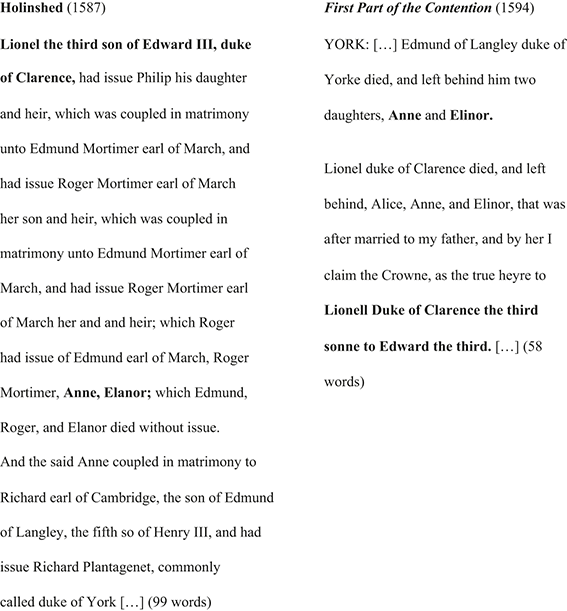
Figure 12 Long description
2 parallel columns. The heading above the left column reads Holinshed followed by 1587 in parentheses. The heading above the right column reads First Part of the Contention followed by 1594 in parenthesis. The longer text on the left and shorter text on the right both describe the descendants of Lionel, third son of Edward III. Words common to both texts are printed in bold type. They include the phrase Lionel the third son of Edward II, duke of Clarence in the left column, echoed in the right column by Lionell Duke of Clarence the third sonne to Edward the third. The right column has ‘Anne, Elanor’ echoed in the left column by the phrase ‘Anne and Elinor’.
The preceding analysis demonstrates that York’s genealogy speech in the Folio 2 Henry VI has more in common with the 1587 Chronicles than the quarto Contention has. In short, a brief comparison of the lexical overlaps between the “Articles” and both dramatic texts shows a 73 percent match with the Folio and only a 13 percent match with the smaller sample of the quarto. These facts seem to provide additional support for McKerrow’s claim that the Folio text represents a separate version of the play revised in line with the 1587 Chronicles, the only version of Holinshed to include every component of York’s genealogy speech in the section detailing the reign of Henry VI. Despite the obvious similarities between the Folio and the “Articles” to the exclusion of Contention, there are important differences to consider that may again influence interpretations of 2 Henry VI’s place in Shakespearean chronology.
As previously mentioned, Salisbury’s intrusive speech in the Folio text includes additional marginal details about “Edmund Mortimer” not found in Holinshed’s revised 1587 account of Henry VI’s reign. 2 Henry VI – a Folio text that has never been considered a memorial reconstruction – has a genealogical error of its own. As scholars have noted, the many “Edmund Mortimers” populating the historical archives of the fourteenth and fifteenth centuries led to considerable confusion in the various chronicles as well as elsewhere in 1 Henry IV and 1 Henry VI. The speech from 2 Henry VI does not properly distinguish Edmund, the fifth Earl of March, from his uncle Sir Edmund, brother of Roger Mortimer (the fourth Earl of March). It was Sir Edmund – not Anne’s brother, Edmund – who was captured by Glendower and later became his son-in-law. This error in 2 Henry VI is consistent with the genealogical errors in 1 Henry IV, where the imprisoned Edmund Mortimer is described as “the Earl of March.”Footnote 158 Together, these inaccuracies are consistent with identical confusions in Hall’s “Henry the Fourth” (where it is also “earle of Marche”) and Holinshed’s 1587 “Henry the Fourth” and “Henry the Sixth.”
Further, there is no mention of Glendower in Holinshed’s 1577 account of Henry VI’s reign, but Holinshed’s 1587 section on “Henry the Sixth” mentions Edmund Mortimer’s imprisonment once; he is introduced incorrectly as “the last earl of March of that name” (he was not an earl), and we only know that he has “been restrained from his liberty.” Glendower is, however, mentioned in York’s speech from Hall’s Union:
Edmond earl of March, my most well-beloved uncle, in the time of the first usurper, in deed, but not by right, called king Henry the IV by his cousins, the earl of Northumberland and the lord Percy, he being then in captivity, with Owen Glendower, the rebel in Wales, made his title, and righteous claim, to the destruction of both the noble persons.Footnote 159
Following the critical and editorial tradition since the eighteenth century, there is a consensus that Shakespeare used accounts of “Henry the Fourth” from both Hall and Holinshed when writing portions featuring Glendower as well as the vast bulk of the second tetralogy more generally. There is, of course, no such consensus about Shakespeare as the sole author of Contention or of the Henry VI plays more generally. The absence of any mention of Glendower in the quarto Contention suggests a return to arguments surrounding the origin of the Folio 2 Henry VI as a revision of the original play represented by Contention. Outside of 2 Henry VI, there is no mention of Glendower in any play associated with Shakespeare’s canon before 1595: “Come Lords, away / To fight with Glendower and his complices.”Footnote 160 The 1595 date of Richard II matches the timeline of Shakespeare’s intimate familiarity with the reign of Henry IV and the beginning of the Wars of the Roses. The variant genealogy speeches in the Folio text – and Salisbury’s in particular – therefore reflect historical details (incorrect or otherwise) drawn from chronicle accounts of the reign of Henry IV. Hall and Holinshed do not link Edmund Mortimer, earl of March, to Glendower in sections outside of “Henry the Fourth.”
Recent theories surrounding the date and composition of the Folio 2 Henry VI indicate a layer of revision was added by Shakespeare at some point after 1595. The reference to “wild Onele” in the quarto Contention is absent from the Folio, and it has been suggested that this name was removed “for a revival in the mid-1590’s, especially from mid-1595 onwards,” when the reference would have been too controversial in light of the intensification of Hugh O’Neill’s rebellion in Ireland.Footnote 161 The terminus a quo of 1595 “onwards” for a revised layer to 2 Henry VI could also be seen to influence the relative accuracy of the genealogy speech found in the Folio text. In 1595, Shakespeare was almost certainly reading the sections about Henry IV in both Hall and Holinshed for his Richard II (1595), which was followed soon afterward by 1 Henry IV (1597) and 2 Henry IV (1598). Shakespeare may have corrected the details of York’s genealogy in 2 Henry VI after consulting different sections of Hall and Holinshed (1587) directly related to a different sequence of history plays written in the mid-to-late 1590s. York’s claim in Hall’s account of the reign of Henry IV does not contain errors, and it has more in common with York’s speech in the Folio 2 Henry VI than the quarto Contention. We have also illustrated that York’s genealogy speech in 2 Henry VI has more in common with the revised 1587 edition of Holinshed’s Chronicles than the quarto Contention text does. Most importantly, there is no direct evidence that specifically links Hall’s section on Henry IV to Contention.
6 If My Claim Be Good, Why Have I Not Justice?
The main thrust of Alexander’s book seeks to displace the possibility of collaboration and revision in Shakespeare’s early history plays. He believes all evidence in favor of these theories to be too “conjectural” and ultimately “unconvincing.”Footnote 162 Alexander then moves to examples of Sheridan’s Duenna and School for Scandal to introduce the notion of known provincial piracy and uses these “surreptitious” eighteenth-century texts to control his deductions about texts from the late sixteenth century. He acknowledges Sheridan “was working almost two hundred years later than Shakespeare” but nevertheless assumes textual cultures are identical through time.Footnote 163 The unsupported claim that “the legal means which [Sheridan] had at his disposal for preventing unauthorized provincial performances had not improved” since the time of Shakespeare is apparently enough for him to write off the considerable differences between Elizabethan and Georgian authorship and Elizabethan and Georgian culture more generally. Alexander begins his reassessment of Shakespeare’s early histories by assuming plays like Contention were piracies that Shakespeare was powerless to prevent, just as Sheridan was two hundred years later. After comparing short passages from authentic and pirated copies of The Duenna, he plainly states: “No one doubts this paraphrase which was passed off on the public is later than Sheridan’s own version; the additions and interpolations therefore offer no serious problem to those who regard Sheridan as the author of The Duenna.”Footnote 164 The convenient flattening of time and cultural space enables Alexander to impressionistically declare the relative badness of the pirated text of The Duenna equal to that of the quarto Contention: “The variations from the Folio in The Contention and Richard Duke of York, which so occupied Malone, need raise no greater difficulty about the question of authorship and revision than those in the texts of The Duenna – once it is clearly established that the Quartos are piracies.”Footnote 165
Enter the conspiracists. For Alexander, Contention is a bad quarto because York’s speech does not accurately present Edward III’s line of descent. This is the foundation of his argument that Contention must be a piracy and it enables him to justify the prior relatedness drawn between the quarto play and the pirated text of Sheridan’s The Duenna. But as the preceding analysis has shown, genealogical errors are common enough in early modern English historiography. If Alexander were right and the presence of genealogical error in a text were an unequivocal indication that it has been pirated, then the majority of all English chronicle histories would (absurdly) have to be designated memorial reconstructions. In turn, we can no longer accept the traditional assumptions about genealogical error in textual studies nor should we accept the historical discourses that justify and validate those assumptions in the first place. The dominion of the memorial reconstruction hypothesis is based on an archival misinterpretation – a form of epistemological error – and one that presumes a version of history (or History) that doesn’t align with the documentary facts.
What must follow, as we have shown, is a reassessment of The First Part of the Contention on these terms. Alexander can easily dispossess Contention because of “how limpingly the Quarto writer halts after Shakespeare,” who he believes treats the genealogical information from York’s speech (in 2 Henry VI, to him the only legitimate version of the play) “with the precision of the chroniclers.” For Alexander, the real Shakespeare can only ever be a carrier of History as opposed to histories. Adherents to the “bad quarto” theory can no longer ignore the ubiquity of genealogical errors in the English chronicle tradition. Nor can they overlook our reconsideration of the source material for Contention and 2 Henry VI that emphasizes the placement of the relevant genealogical information within those sources. Yet still they might focus on the perceived magnitude of the error and protest too much that “no author” could be responsible for it.Footnote 166 But this is an erroneous emphasis on facticity in a theatrical history. Shakespeare was not a genealogist nor was he a Historian.
Once we cast reasonable doubt on the badness of the quarto Contention simply because it contains genealogical errors, we must also be prepared to take seriously other explanations for the differences between the quarto and Folio versions of the play. The long-standing assumption that Contention is a bad quarto has forestalled alternative theories about its origins for too long. In this way, memorial reconstruction has become its own type of History insensible to other potential histories.
In his quest to dislodge theories of collaboration in 2 Henry VI, Alexander assumes Shakespeare’s authorship of (the only legitimate version of) the whole play. This in part allows for the comparisons to Sheridan, who was writing alone, and the pirated text of The Duenna. However, known authorship has never been a feature of 2 and 3 Henry VI even though Alexander’s argument requires it. Contention cannot be a bad quarto simply because it contains a genealogical error. This fact disturbs Alexander’s thesis, and it casts doubt on the concomitant certainty that 2 Henry VI must have a single author. What remains, then, is the question of attribution, not just of 2 Henry VI, but also of Contention. This analysis has suggested that York’s genealogy speech in 2 Henry VI was most likely revised by Shakespeare at some point after 1595, but that doesn’t mean he was the only author of the play, nor does it imply there is only one layer of revision in the Folio text. Recent studies on the authorship of the Folio Henry VI plays suggest the presence of multiple authors, especially Christopher Marlowe, and these contributions to the play, including Shakespeare’s, could have been made at any point between 1587 and 1597.Footnote 167 In the writing of the original Contention, Shakespeare may have been a traditional “apprentice,” responsible for only a small part of a work planned and primarily executed by a more accomplished master; for 2 Henry VI, he may have been a traditional “journeyman” (modern script doctor), reworking or tailoring an earlier product.Footnote 168 More work is needed, but it is clear that a more focused commitment to exploring the origin and authorship of Contention outside of the trappings of memorial reconstruction could help clarify the authorial and performative trajectories of the Henry VI plays and their quarto counterparts.
7 Editorial Investments and Documentary Effects in Performance
Contemporary interest in family genealogies, evolutionary genealogies, viral genealogies, and forensic DNA analysis is all predicated on the expectation, indeed the requirement, of accurate evidence. But none of the biological genealogies presented in the Shakespeare canon, or in other English history plays, is “correct.” Consequently, inaccuracy in theatrical genealogies cannot be plausibly used to categorize some early texts (but not others) as a consequence of memorial reconstruction, shorthand, or fast note-taking. Why, then, have textual scholars, editors, and bibliographers found those nineteenth- and early twentieth-century theories of textual transmission so self-evidently satisfying?
Editors, like other people, have investments in what we might call Big Politics. Alexander was a veteran of World War I, and the later twentieth-century editors Dover Wilson and Thomas Wallace Craik made no secret of their patriotic enthusiasm for Henry V. But the bias in evaluating the alternative genealogy scenes in The First Part of the Contention and The Chronicle History of Henry the Fift springs, at least in part, from what we might call little politics: the political investments of any small group in the shared practices that establish membership in their community. Bibliographers, editors, textual scholars, genealogists, lawyers, theologians, and historians of all kinds have a professional and ethical commitment to the accurate reproduction of their textual sources. But Shakespeare did not. He routinely departs from his documentary sources in all his plays based on historical materials, English or Scots or Roman. His work contains nothing comparable to Ben Jonson’s 1605 edition of Sejanus His Fall, which fills the margins of the text with references to his many classical sources for the details of his play. Indeed, the purpose of Jonson’s marginalia was to differentiate the kind of history he wrote from the so-called history plays written by his contemporaries, including most conspicuously Shakespeare. Not surprisingly, Jonson has always been more admired by academics than playgoers.
Unlike Jonson, and unlike the modern academic scholars who now edit Shakespeare’s plays, Shakespeare and most other early modern playwrights were not professionally or artistically committed to historical accuracy. For those playwrights, as for the compilers of New Testament accounts of the ancestors of Jesus of Nazareth, “The genealogy was a work of art.”Footnote 169 These compilers were not producing what we would now call “verbatim theatre” (like the televised proceedings of the United States congressional committee investigating the attempted insurrection on January 6, 2021).
The questions we should ask about the Elizabethan editions of The First Part of the Contention and The Chronicle History of Henry the Fifth are not “Why are there errors in this genealogical passage?” but “What is the dramatic function of this genealogical passage?” For example, in the two versions of Henry V, why include an exceptionally long speech, based on Holinshed, rather than something like the simple justification in Famous Victories? In both The First Part of the Contention and 2 Henry VI, the genealogical information provided by a single “voice” in various sixteenth-century printed chronicles was broken down into a conversation in which Salisbury and Warwick supplement, summarize, and endorse York’s argument. A historical monologue was restructured as a dramatic dialogue. But in both early texts of Henry V, Shakespeare retained the genealogical monologue – despite having brought onto the stage two bishops instead of one. Why?
One reason could be because Shakespeare wanted to differentiate his Henry V play from the profoundly ahistorical but apparently popular Famous Victories. One way to make that contrast, from the outset, would have been to create an initial conspicuous “this-is-history” effect. He did the same thing at play’s end, where both versions quote “this,” presumably a document, the French and Latin text of an article of the peace treaty recognizing Henry as the heir of France.Footnote 170 He did something similar, after the battle of Agincourt, with the lists of French prisoners and of the French and English dead.Footnote 171 At Agincourt, both texts call for at least one actual document on stage: “This note.”Footnote 172 The three traitors at Southampton are each handed separate papers and told to “read them”; expecting commissions, they are instead handed criminal indictments.Footnote 173 Likewise, productions of the Folio Life often supply the archbishop with genealogical paperwork, which he is consulting or circulating to Henry and the onstage lords. Such paper or parchment properties, which Tiffany Stern calls “scrolls,” were a regular feature of early modern performances.Footnote 174 But whether or not the bishop is holding documents on stage, the speech demonstrably references documents: It quotes, twice, the text of the Salic Law, but also “their own writers” (or “authors”) and their commentary notes (“gloss”), and ends with the claim that the French literally “hold up” this law in defense of their illegitimate titles.
Nevertheless, a documentary effect (or what film theorists call an “archive effect”) in a literary or dramatic or cinematic work remains a rhetorical and aesthetic effect.Footnote 175 In particular, Shakespeare regularly omits material found in his sources. Even when he wants a strong documentary effect, Shakespeare changes the documents: He turns the prose of Holinshed’s “document” into verse in both the Salic Law speech and the Agincourt lists, and he incorporates only one of the three articles of the peace treaty included by Holinshed.
At the very end of Henry V, in both early versions, an English aristocrat reads a significant prose paragraph of the newly negotiated Anglo-French treaty establishing Henry V as successor to the French king; that prose paragraph is taken verbatim from Holinshed’s transcription of the treaty. But Holinshed’s text contains an error (“Praeclarissimus” for “Praecharissimus”) not present in the first edition of Hall’s transcription of the treaty. The mistake, made by a compositor in the 1550 reprint of Hall, was repeated in the 1577 and 1587 editions of Holinshed, and from there transmitted to the 1600 and 1623 versions of Henry V. Earlier in the same play, Essex delivers to the French king and court a document showing the “line” of Henry’s V’s “pedigree” (presumably a genealogical tree), justifying his claim to the French crown; whether or not that document was displayed to the audience offstage and/or the audience on stage, Essex’s “pedigree,” like the concluding treaty, claims to show an actual historical document. But, of course, in both cases what is carried on stage is not the original archival document.
In performance, the Duke of York (in Contention and 2 Henry VI) and the bishop (in Henry V) sometimes are consulting, or sharing with their interlocutors, what we might call evidentiary paperwork. But the onstage paperwork, handled by actors pretending to be historical figures, is as fake as any other theatrical prop. Our own bibliographical and genealogical values cannot be properly applied to the bishop’s Salic Law speech or the Yorkist family tree illustrating the descendants of Edward III. And because these archival effects are not rare and reliable evidence of the past, but simply props, they can be replaced, in subsequent performances, by new props, more appropriate to a new author or a new occasion. In the 1944 film of Henry V, directed by and starring Laurence Olivier, the Bishop of Ely (Robert Helpmann), assigned the task of handing relevant papers to the Archbishop of Canterbury (Felix Aylmer), dropped them on the stage floor and then could not properly reorganize them. In the 2022 Donmar Warehouse production, the Salic Law speech was illustrated by PowerPoint charts and family trees projected onto the back wall of the set.
The genealogical chronologies contained in early modern dramatic reenactments of medieval English history are not archival documents; they are just fleeting archival effects. To understand them, we do not need bibliographers. We need, instead, theatre historians, who ask different questions. Would any company of actors deliberately change a script to begin a play with the Salic Law speech? No. Why, then, does the Chronicle History begin the play that way? It begins like 1 Henry IV (the Shakespeare play most often cited and most often reprinted in early modern England): A serious, complicated political and religious verse scene is followed by a comic prose scene. Likewise, 2 Henry IV begins with a verse prologue, followed by a serious political verse scene, followed by a comic prose scene. By contrast, in Folio Henry V the first comic prose scene is the fifth scene in the play. Structurally, the 1600 quarto of Henry V follows the pattern of the two history plays that preceded it (in both historical and theatrical chronology). The quarto’s Salic Law speech more comfortably fits into the quarto’s well-established Shakespearian structure. What’s more, unlike the Folio, the quarto begins the play with the Salic Law of inheritance, then ends it with a treaty that establishes Henry V’s inheritance and marriage, which leads to the birth of his son Henry VI, whose claim to the throne of France depends upon rejection of the Salic Law. Of the two versions, the quarto has a clearer structure, framed by inheritance through the female line.
The leap from the justified observation (unsatisfactory genealogical speeches in The First Part of the Contention and The Chronicle History of Henry the fift) to the unjustified conclusion (unsatisfactory edition) depends upon failure to recognize an undeniable fact: Shakespeare’s intentions were not the same as Holinshed’s. (Or, if you prefer to avoid the emphasis on singular authorship, the intentions of the acting company differed from the intentions of historians.) Shakespeare’s intentions, textual and political, might have been literary or theatrical or both, but they certainly differed from Holinshed’s or Hall’s. Hall and Holinshed were compilers; Shakespeare was a playwright.
This creative disregard for the details in a book can be seen in Shakespeare’s treatment of a book much more important than any sixteenth-century chronicle of English history. An English bishop, on an official occasion and therefore presumably dressed in authoritative ecclesiastical vestments, in Hall and Holinshed and in both versions of Henry V, follows his account of the Salic Law with a citation of the Bible:
The Life passage has “it is” (not “is it”) and “man” (not “son”).Footnote 177 But neither quarto nor Folio correctly reproduces Holinshed’s “The archbishop further alledged out of the booke of Numbers this saieng: When a man dieth without a sonne, let the inheritance descend to his daughter.” Whichever text of Henry V we prefer, we must admit that the unambiguous biblical prose has been revised and muddled by Shakespeare for no other discernible purpose than to fit the meter. If Shakespeare was willing to misquote Scripture for the sake of metrical regularity, then he could hardly have had compunctions about misquoting Holinshed for dramatic or political reasons. For instance, he also changed, in both texts, what Holinshed calls a biblical “saying” (suggesting something proverbial) into holy “writ” (suggesting a written divine law). And what in Hall and Holinshed is simply a continuation of the bishop’s long speech is in Shakespeare separated into a second speech: first Salic Law, then biblical law. In between, Shakespeare invented Henry’s succinct (skeptical? impatient? ethical?) “May I/we with right and conscience make this claim?” Henry’s/Shakespeare’s interpolated question forces Shakespeare’s bishop to take personal moral responsibility for the war (“The sin upon my head”), and to cite the Bible to justify his following exhortation to bloodshed and conquest.
That difference between the intentions of an historian and those of a playwright is evident even in the word “foresaid,” the linchpin of the logical chain that leads to the conclusion that the 1600 quarto of Henry V is defective. As both versions testify, Shakespeare changed Holinshed’s “above named” (where “above” refers to its position in a printed document) to “foresaid” (which refers to a temporal sequence of spoken sounds). Holinshed was allegedly recording “a pithie Oration” spoken by “Henrie Chichelie archbishop of Canterburie” in 1414 “in the parlement house.”Footnote 178 But Holinshed was writing a text meant to be read, and for his readers “above named” made sense. Shakespeare was instead writing a speech to be delivered by an actor in a playhouse, a speech aimed at auditors rather than readers. The quarto title-page advertises that it presents a text that “hath bene sundry times playd by the Right honorable the Lord Chamberaine his seruants,” and in the Folio two members of that acting company, John Heminges and Henry Condell, assure readers that “these Playes haue had their triall alreadie” in performances before audiences.Footnote 179 But all the members of Parliament could not have been crowded onto an Elizabethan or Jacobean stage; in both versions of Shakespeare’s play the Salic Law speech is spoken to the king and a few nobles, resembling the Privy Council, which is also more appropriate for receiving the ambassador.
Both versions frame the speech differently than Holinshed. Beforehand, both refer to the “ambassador(s),” whose appearance will follow the speech. Holinshed separates those two events – Salic Law and French embassy – temporally and geographically, and the French ambassador delivers the tennis balls before the English bishop delivers his big speech. In changing the sequence, Shakespeare followed his other major source, a play performed by the Queen’s Men for listeners rather than a chronicle printed for readers: The Famous Victories of Henry the fift. Shakespeare could have predicted that at least some members of an audience, having seen or read the earlier play, would be able to predict what the French ambassador would be bringing later in the scene. The added unnecessary preliminary reference to the ambassadors promises spectators the pleasure of an episode – Henry’s majestically damning response to the French insult – that English audiences have always enjoyed.
Both versions of Henry V also significantly depart from Holinshed and Famous Victories in the words that immediately precede and follow the “documentary” justification of Henry’s claim. In neither of Shakespeare’s sources does Henry explicitly solicit the speech. More importantly, neither contains Henry’s warning to the bishop.
Henry’s prefatory speech is longer in the Folio, but in both texts he warns the bishop not to “wrest” his reading of the law, referring to the “many now in health” who shall “drop their blood” if the bishop convinces him to go to war, and Henry’s “conjuration” ends with his declaration that he will “believe” that the bishop’s words are “washt as pure / As sin in baptism.”Footnote 181 In both, Henry expresses ethical and political concerns that will encourage audiences to listen to the bishop’s speech carefully and with some suspicion. And that skepticism is confirmed, in both, by Henry’s immediate reaction to the Salic Law speech: “May we with right & conscience make this claime?”Footnote 182 The brevity and grammatical clarity of Henry’s response contrasts unmistakably with the bishop’s long, complicated speech. It also indicates that, despite or because of the length of the preceding speech, it does not satisfy Henry. The sources contain nothing comparable to Henry’s question – and nothing comparable to the bishop’s reply in both versions, “The sin vpon my head.”
Shakespeare, in both texts, frames the speech skeptically, and Henry’s question afterward makes it clear that he finds the bishop’s long refutation of the Salic Law in some way unsatisfactory. Scholars and critics therefore should not expect the speech to be satisfactory in either version. Actors and audiences almost never find it satisfactory in performance. The first edition of Shakespeare’s works with an explicitly theatrical commentary called the Folio version of the speech “monstrously tedious.”Footnote 183 The Folio version has almost always been shortened, more or less drastically, in performance.Footnote 184 Editors usually take this evidence from the play’s stage history as an argument for interpreting the quarto text of the speech as a theatrical abridgement of Shakespeare’s original intention, preserved in the Folio. But the speech is long, tedious, and complicated in both versions, and Shakespeare as an experienced actor and playwright was surely aware that it would be. It would therefore not be surprising if he experimented with different ways of achieving its documentary effect without losing his audience.
One way of solving the problem is to acknowledge it. The line, identical in both versions, “So that as cleare as is the sommers Sun,” almost always provokes a reaction from the onstage and/or offstage audience.Footnote 185 The Arden, Third Series, editor of Henry V, Thomas Wallace Craik, objects that actors “wrongly” often “invite” laughter “by pausing” at the end of the line.Footnote 186 But the pause seems indicated by both texts: The end of the verse line coincides with the end of a clause and a punctuation mark. Moreover, Shakespeare surely knew that performances in an open-air theatre like the Curtain or the Globe would make this line subject to uncontrollable meteorological ironies. Even in the summer, the skies in London are not always clear. Even less so in the winter, of course, but in the winter the adjectival “summer’s” can seem, in performance, like a last-minute comic addition by the bishop, suddenly aware that the sun is not visible. If Shakespeare had followed Holinshed more closely (“more cleere than the sunne”) the line would not have been vulnerable in performance, and the comparative could just as easily have been versified (“more clear than is the summer sun”). But Shakespeare, knowing that his text would usually be performed outdoors, possibly changed Holinshed, in both texts, in a way that invites laughter, or at the very least a sly acknowledgment of the unclarity of the archbishop’s argument.
The Salic Law speech did not change significantly between the 1577 and 1587 editions of Holinshed’s Chronicles, but the text of Henry V did significantly change between the 1600 and 1623 editions. Therefore, the 1600 and 1623 editions represent two different sets of intentions. Those different intentions may have belonged to different people. But we must at least acknowledge the logical possibility that Shakespeare’s own intentions may have changed over time.
Genealogies combine vectors of agency and vectors of time. It should be obvious that textual genealogies cannot simply assume that all dramatic texts originate with a single agent at a single moment. In the case of Henry V, there is a strong scholarly consensus that the play was originally written by a single known playwright. But there is no such consensus about either The First Part of the Contention or Henry the Sixth, Part Two. Therefore, no genealogist can presuppose that Shakespeare wrote both versions (or either version) of the genealogy scene in that play. As we have shown, the evidence that most clearly links the Yorkist genealogy to Shakespeare links the Folio version to Shakespeare’s reading in the mid 1590s. By contrast, no strong attribution evidence links Shakespeare to the corresponding scene in the quarto First Part of the Contention. Obviously, Shakespeare’s intentions in 1595 may not have been the same as the intentions of a different author in 1590, and the intentions of one acting company in 1595 may not have been the same as the intentions of a different acting company in 1590.
*
The genealogies in these two versions of these two plays do nothing to support the theory of memorial reconstruction by actors or the theory of spectators rapidly taking notes during a performance. Those dramatic genealogies are most easily explained by the normal activities of early modern professional playwrights and early modern printers. We need to liberate these texts – and other so-called bad quartos – from the bibliographical ghetto to which they have been confined since 1623. We need to edit them in all the variegated, often incompatible ways that the canonical Folio texts have been edited, thereby making them accessible to an increasingly diverse modern readership. Show skeptical students that Shakespeare is not always “too long.” Teach them that even great writers revise their first drafts. Introduce them to the earlier, shorter First Part of the Contention as the first great English history play (and the first collaboration between Shakespeare and Marlowe). Let them discover that the shorter Chronicle History of Henry V “is an extremely good play”; that it gives a larger proportion of the story to the play’s ordinary men while containing less of the polemical “resounding rhetoric” of the “vessel of clay” that William Butler Yeats criticized in the Folio version; and that its Katherine speaks a more equal share of the dialogue with Henry in the final scene.Footnote 187 Let readers and audiences, actors and translators, teachers and directors, decide for themselves which Shakespeare they want to read – or whether they want to read any version of Shakespeare at all.
Acknowledgments
The support of Florida State University made this project possible. We are grateful to Dean Sam Huckaba of the College of Arts and Sciences, who for many years provided funding for research essential to this project. He also joined the FSU Libraries to pay for Open Access publication of this Element, making the digital version freely available for anyone to read and reuse under a Creative Commons license. All these activities (and many others) were managed by fluctuating teams of talented and always underpaid staff members who keep complex institutions running; we want to single out the support of Johanna Pettie (Department of English), Aaron Rodriguez (Digital Humanities Librarian), and Sheryl Grossman (Dean’s Office). For twenty years, Gary Taylor’s research has been supported by Florida State’s Krafft Professorship, supplemented during work on this Element by the Robert O. Lawton Distinguished Professorship.
Thanks also to Associate Professor Michael Wagoner, who directed the team that provided audio of the two versions of the “seven sons” genealogy.
We are both indebted to excellent suggestions from the two anonymous readers of an earlier draft of our work, and even more fundamentally to the two general editors of this series, Claire M. L. Bourne and Rory Loughnane, for corrections, questions, advice, and encouragement at multiple stages in the evolution of this Element. Terri Bourus, Gabriel Egan, MacDonald P. Jackson, and Emma Smith read and commented on even earlier versions. All these readers improved, in details and fundamentals, our thinking and our writing. Of course, none of them can be blamed for our remaining fallibilities.
To our ancestors, from whom we came to be.
To our children, who bring us hope for the future.
To our mentors, Glenen Vars Nance (1950–2025) and Stanley Wells.
To our partners, Terri and Lydia, who inspire and illuminate our present.
Claire M. L. Bourne
The Pennsylvania State University
Claire M. L. Bourne is Associate Professor of English at The Pennsylvania State University. She is author of Typographies of Performance in Early Modern England (Oxford University Press 2020) and editor of the collection Shakespeare / Text (Bloomsbury 2021). She has published extensively on early modern book design and reading practices in venues such as PBSA, ELR, Shakespeare, and numerous edited collections. She is also co-author (with Jason Scott-Warren) of an article attributing the annotations in the Free Library of Philadelphia’s copy of the Shakespeare First Folio to John Milton. She has edited Fletcher and Massinger’s The Sea Voyage for the Routledge Anthology of Early Modern Drama (2020) and is working on an edition of Henry the Sixth, Part 1 for the Arden Shakespeare, Fourth Series.
Rory Loughnane
University of Kent
Rory Loughnane is Reader in Early Modern Studies and Co-director of the Centre for Medieval and Early Modern Studies at the University of Kent. He is the author or editor of nine books and has published widely on Shakespeare and textual studies. In his role as Associate Editor of the New Oxford Shakespeare, he has edited more than ten of Shakespeare’s plays, and co-authored with Gary Taylor a book-length study about the ‘Canon and Chronology’ of Shakespeare’s works. He is a General Editor of the forthcoming Oxford Marlowe edition, a Series Editor of Studies in Early Modern Authorship (Routledge), a General Editor of the CADRE database (cadredb.net), and a General Editor of The Revels Plays series (Manchester University Press).
Advisory board
Patricia Akhimie
The Folger Institute
Terri Bourus
Florida State University
Dennis Britton
University of British Columbia
Miles P. Grier
Queen’s College, City University of New York
Chiaki Hanabusa
Keio University
Sujata Iyengar
University of Georgia
Jason Scott-Warren
University of Cambridge
M. J. Kidnie
University of Western Ontario
Zachary Lesser
University of Pennsylvania
Tara L. Lyons
Illinois State University
Joyce MacDonald
University of Kentucky
Laurie Maguire
Magdalen College, University of Oxford
David McInnis
University of Melbourne
Iolanda Plescia
Sapienza – University of Rome
Alan Stewart
Columbia University
About the Series
Cambridge Elements in Shakespeare and Text offers a platform for original scholarship about the creation, circulation, reception, remaking, use, performance, teaching, and translation of the Shakespearean text across time and place. The series seeks to publish research that challenges–and pushes beyond–the conventional parameters of Shakespeare and textual studies.
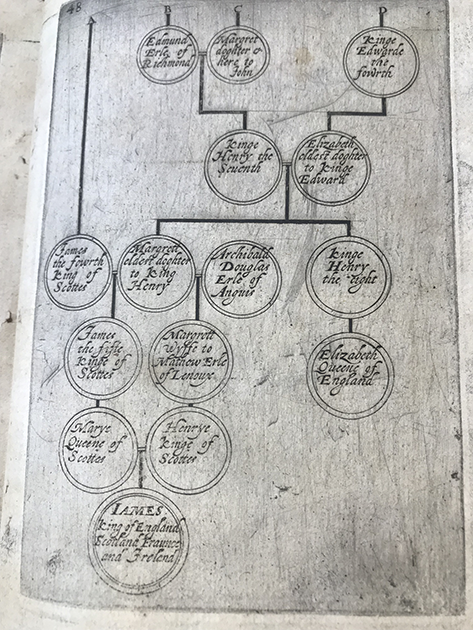
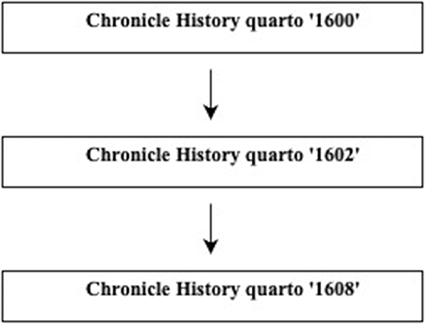
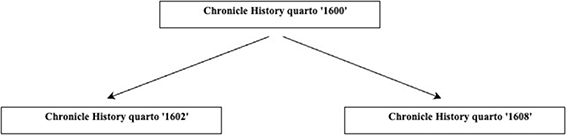
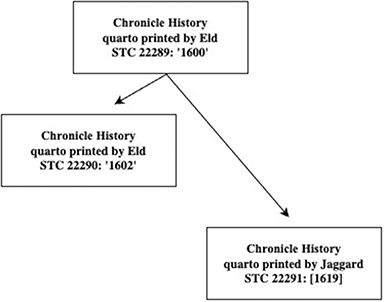
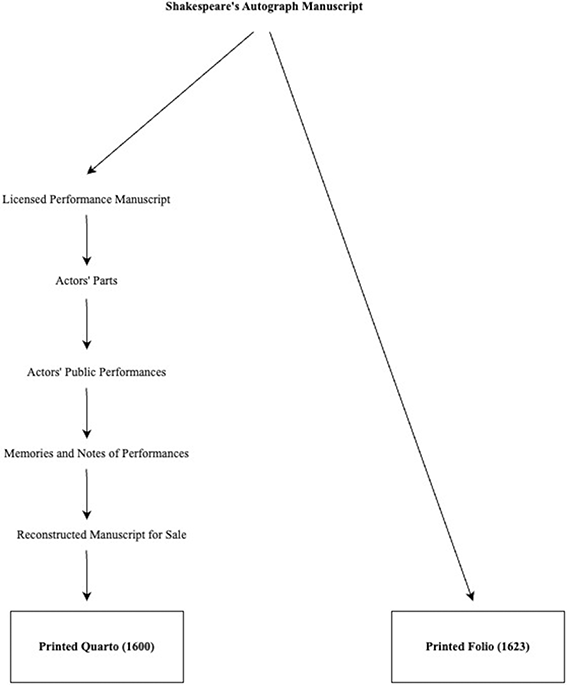
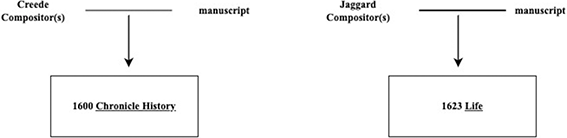
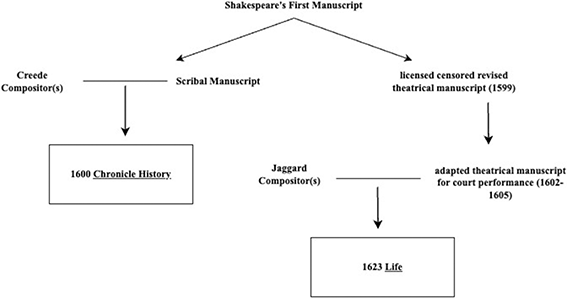
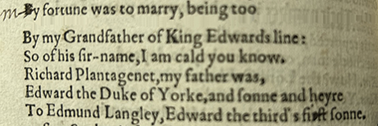

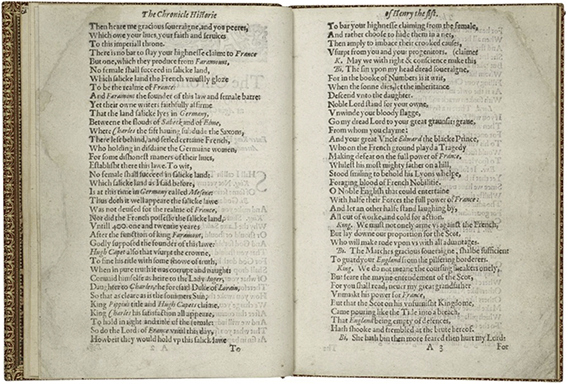

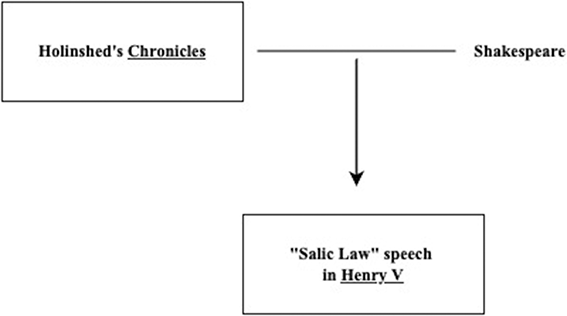
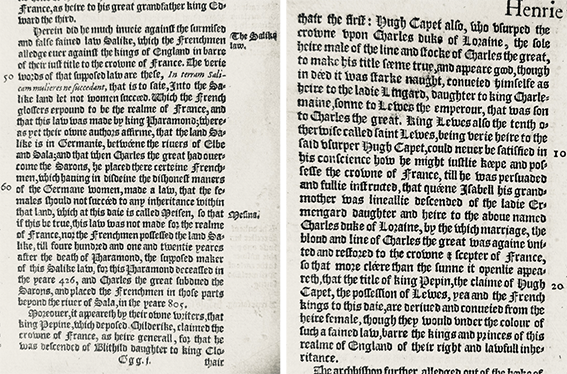
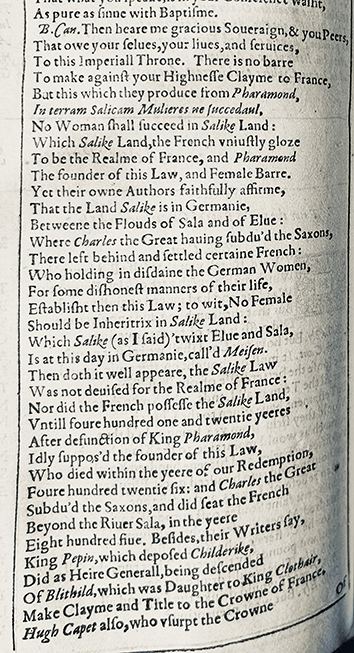
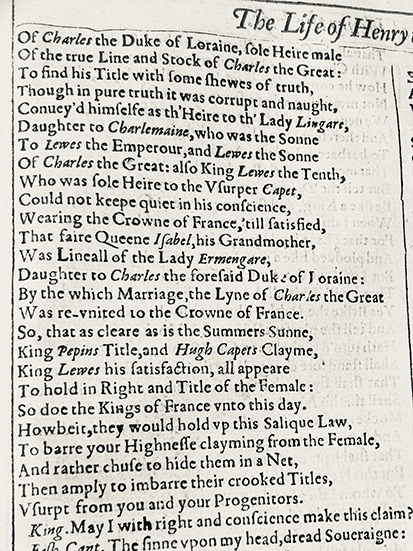
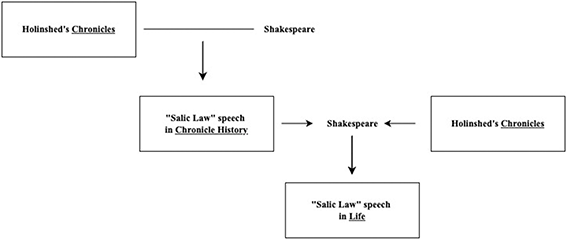
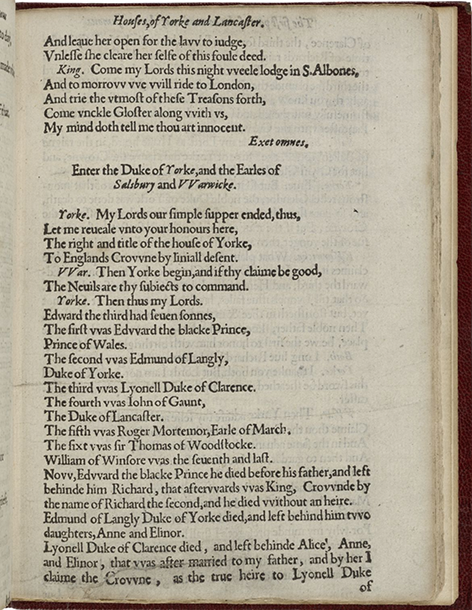
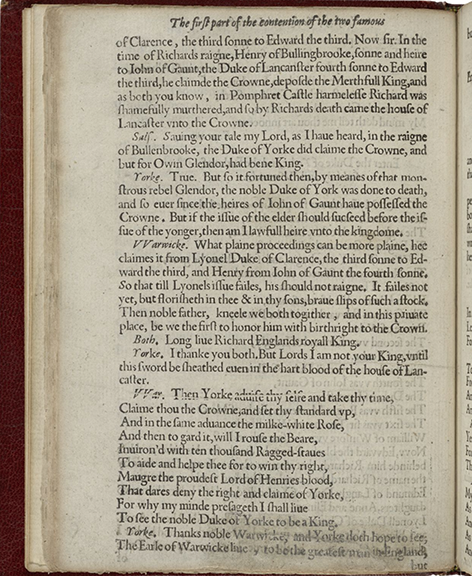
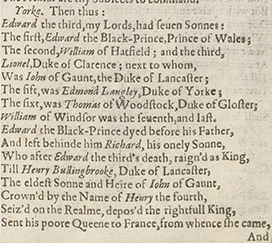
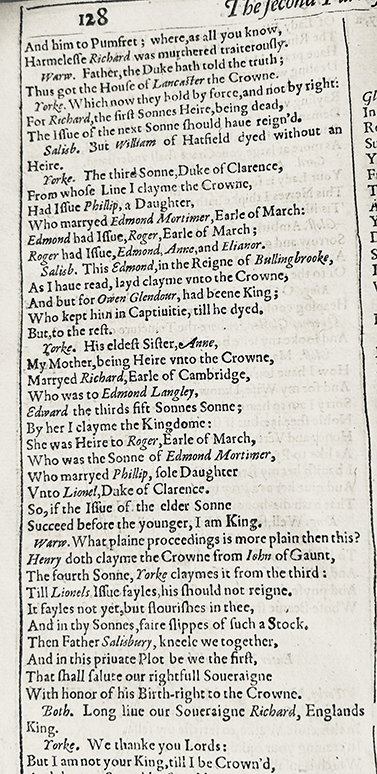
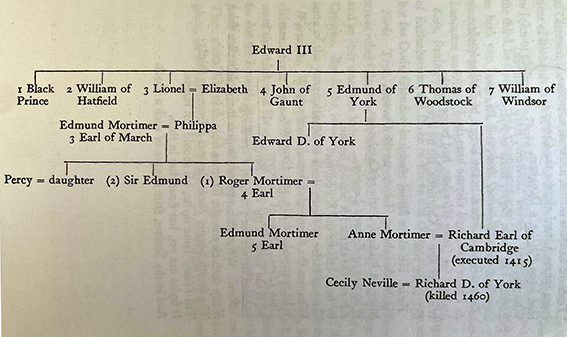
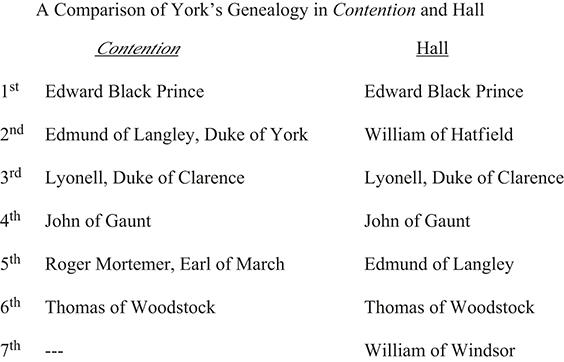
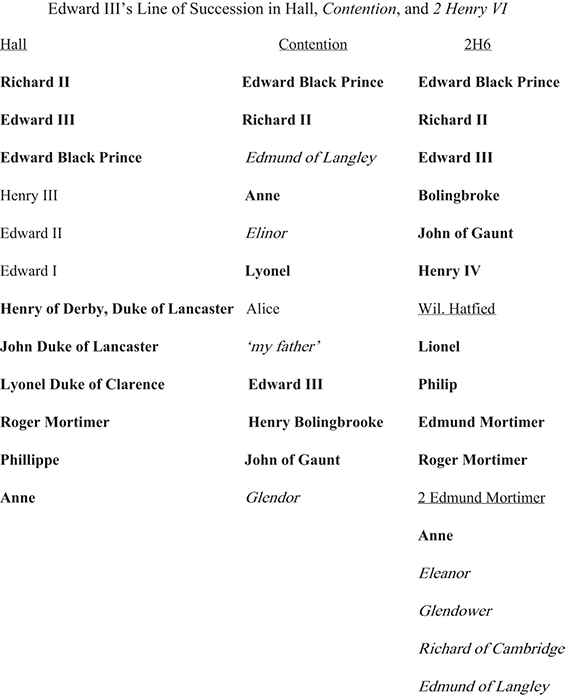
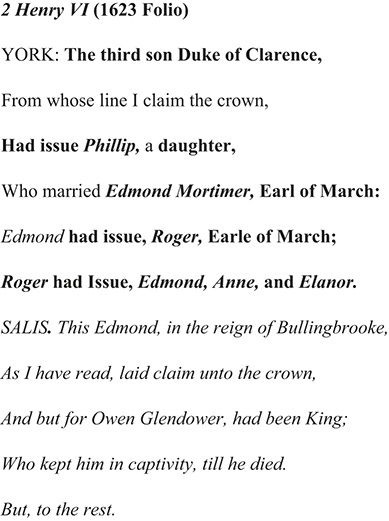
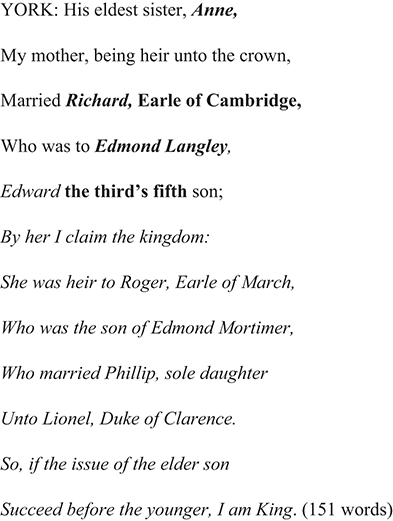
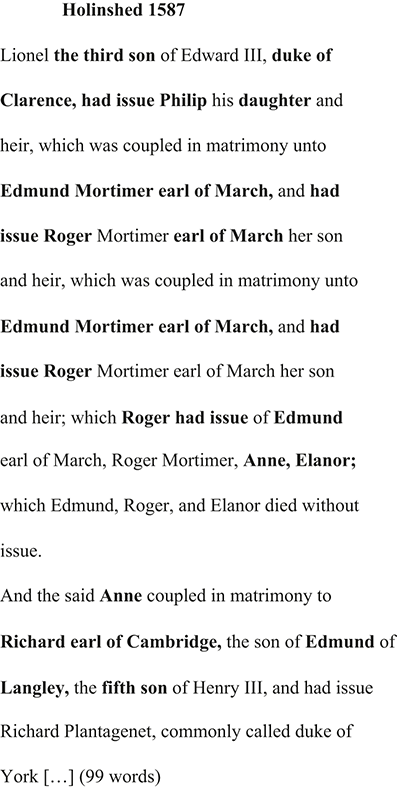
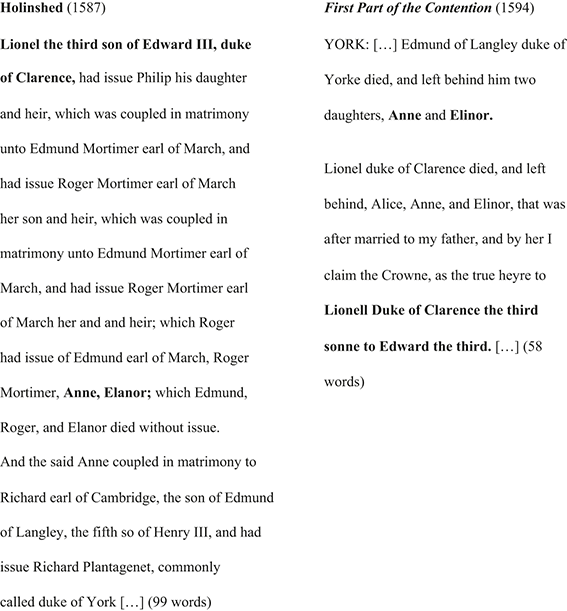

 Open access