


Clinical research coordinators (CRCs) support the translational research enterprise by performing a variety of tasks related to the design, implementation, and evaluation of clinical research trials [1]. CRCs support many critical functions in the course of conducting clinical trials including participant recruitment, oversight and conducting of experiments, serving as liaison between principal investigators and patients, collecting and managing data, and providing direct patient care and follow-up [2–Reference Speicher6]. CRCs have significant job demands and are challenged to acquire, maintain, and upgrade their knowledge and skills in fluid and increasingly complex environments [Reference Micklos7].
Despite the important role that CRCs play in clinical research, knowledge of their professional needs has only recently begun to emerge and coalesce (e.g., Gwede et al.’s [Reference Gwede, Johnson and Trotti8–Reference Gwede10] research on CRC workload and burnout; Clinical and Translational Science Award Research Coordinator Taskforce surveys [Reference Speicher6]). Information is limited about the varying nature of CRC jobs, pathways into a CRC career, optimal preparation for this career, perceptions of CRCs about their roles, and attributes associated with job satisfaction and advancement. To attain a better understanding of the CRC workforce and their characteristics, we employed a typology approach to identify characteristics and factors that defined CRCs’ perceptions of professional competence, personality attributes, and career-related orientation.
The use of typologies to identify shared commonalities or patterns among individuals or phenomena has a long history in social sciences and medical-related research [Reference Macduff11,Reference Patton12]. While the literature does not provide examples of typologies for CRCs, a number of studies have examined nurses and individuals in other health professions. Findings of studies from related, although distinct, health professions offer some insights into the usefulness and outcomes of a typological approach. For example, Scholes et al. [Reference Scholes, Furlong and Vaughan13] classified innovative nursing roles, while Morrell [Reference Morrell14] identified and grouped the experiences of nurses related to job turnover. Numerous examples of applying cluster analysis in medical and health-related fields exist [Reference Clatworthy15], ranging from defining subtypes of Hong Kong nurses using a clinical management system [Reference Chan16] through identifying the propensity of medical staff to experience job burnout [Reference Lee17] to grouping medical students’ perceptions of personal and professional development [Reference Lown18].
Given the common but understudied role of CRCs and the need to increase our understanding of how individuals enter and remain in this profession [Reference Speicher6], we employed a cluster analysis using career development and orientation. While various definitions of career orientation exist, most refer to some assortment of perceptions, behaviors, and approaches that individuals adopt to understand, manage, and pursue their individual career paths (e.g., career planning (CP), career exploration, networking, skills development [Reference Hirschi, Freund and Herrmann19]). Factors forming the concept of career orientation in our study support the process of career decision-making and proactive career management [Reference Gerber20], which are increasingly important as responsibility for worker welfare, development, and security shifts from employers to individuals [Reference Diamandis and Kotler21,Reference Lanier22]. These concepts are especially relevant for CRCs as much of their work is characterized by relatively short-term work projects, frequently changing job-related knowledge and skills, and job instability. Three career constructs were selected to represent career orientation; career engagement (CE), CP, and career satisfaction (CS).
Professional Competence
Specific CRC job duties often vary depending on the clinical trial or investigator, but typically include coordinating, managing, and conducting clinical research trials [Reference Speicher6,Reference Spilsbury23]. The Joint Task Force (JTF) for Clinical Trial Competency [24,Reference Sonstein25] identified eight core domains for clinical research professionals. These domains represent consensus on a set of broad categories of knowledge, skills, and attitudes considered essential for clinical research. While much effort has been directed toward defining these competences, a need exists to understand how CRCs view their own competence and how these perceptions are related to their career orientation and, ultimately, their CS. Given the key role that CRCs play in clinical trials, a better understanding of this group will not only enhance their professional development but also inform other professionals that work closely with CRCs.
Career Orientation
CE is one of several factors selected to represent career orientation. Increasingly, workers are required to demonstrate career-related behaviors that reflect being active, self-directed, and involved in proactive career management strategies [Reference Hirschi, Freund and Herrmann19]. Thus, CE – the degree of proactively exhibiting different career behaviors to enhance career development – is of theoretical, organizational, and personal importance [Reference Hirschi and Freund26].
CP represents a facet of career self-management that includes setting clear career-related goals and developing specific actions/strategies needed to achieve those goals. This process can include both short- and long-term goals and actions [Reference Gould27]. Ng et al. [Reference Ng28] reported that CP is related to both objective and self-referent subjective indicators of career success.
CS refers to an internally defined indicator of career outcomes [Reference Greenhaus, Parasuraman and Wormley29]. While job satisfaction is concerned with an individual’s current work role, CS refers to the accumulation of career-related experience [Reference Rothwell and Arnold30]. Shaver and Lacey [Reference Shaver and Lacey31] defined the CS of nurses in terms of how individuals felt about their career choice and the course of their career path, not just their current job. CS reflects a broader, long-term perspective and may be a critical element in retaining nurses in the profession. CRCs reflect a highly complex career with a wide scope of competencies and varying work environments. Examining the CS of CRCs will inform our understanding of [a] the extent of satisfaction these professional possess toward their career choice and [b] factors that contribute to turnover within this workforce.
Method
Participants
The target population for this study was CRCs employed in four research institutions affiliated with a National Institutes of Health (NIH)-funded Clinical and Translational Research Award (CTSA) in the southeastern USA. A web-based survey was distributed via email or listserv to all 411 CRCs employed in one of the four affiliated institutions at the time of the survey. This group constituted our sampling frame. All study protocols were reviewed and approved by the institutional IRB. The total recruitment pool included personnel with job titles including clinical research practitioner, clinical research nurse, and clinical research assistant. Despite differences in titles, all participants held jobs with a primary focus on supporting, facilitating, and coordinating clinical research trial activities such as patient recruitment and screening, collecting and managing study samples, working on database management, compliance, and supervisory works. The survey was available for 45 days from the time of first contact. Each CRC received up to three reminder emails.
Data Collection
Each CRC was asked to complete a questionnaire that asked about personal background (e.g., gender identity, race/ethnicity, education level), individual attributes, perceived professional competence, and career orientation.
Perceptions of competence
Perceptions of competence were measured by asking CRCs to indicate their perceived level of competence on each of the eight core domains developed by the JTF for Clinical Trial Competency [24,Reference Sonstein25,Reference Calvin-Naylor32]. The list of eight domains represents researchers’ efforts to acknowledge and incorporate a number of previous efforts to identify a comprehensive set of broad categories of knowledge, skills, and attitudes considered essential to function within the field of clinical research. The domains included science concepts and research design, ethics and participant safety, medicine development and regulations, clinical trials operations, study and site management, data management and informatics, leadership and professionalism, and communication and teamwork.
Respondents indicated their current level of competence on each domain using a 5-point Likert-type scale developed by the NIH [33]. Responses included: 1 = Fundamental awareness. Some knowledge of basic techniques and concepts; 2 = Novice. Limited experience (classroom or on the job) but requires help when performing domain tasks; 3 = Intermediate (Practical application). Able to successfully complete tasks in domain. Help from expert may be required occasionally, but skills usually performed independently; 4 = Advanced (Applied theory). Able to perform tasks associated with domain without assistance. Recognized within immediate organization as “person to ask” when difficult questions arise; and 5 = Expert. Recognized authority on tasks in domain. Respondent routinely provides guidance, troubleshoots, and answer questions related to area. A not applicable response was also available for respondents who were not required to apply or demonstrate a particular competency. A Cronbach alpha reliability coefficient of α = 0.895 was calculated for responses to the JTF Competency Domains scale. Cumulative scores on the eight domains ranged from 8 to 40 with higher total scores indicating greater levels of competence. This personal assessment of perceived competence was one factor used to group similar respondents. Individual domain scores were also used to describe groups once latent clusters were identified.
Career Orientations
Career engagement
The CE scale [Reference Hirschi, Freund and Herrmann19] was used to measure the degree of individuals’ active, self-directed, and proactive career management behavior, rather than attitudes. The 9-item scale uses a 5-point Likert-type response set to indicate the frequency of specified career behaviors respondents engaged in over the past 6-month period (1 = Never, 5 = Extensively). CE scores possess a possible range of scores from 9 to 45 with higher scores reflecting greater levels of CE. Behaviors represented different facets of being proactively engaged in personal career management (e.g., planning, exploration, networking, voluntary skill development).
Items reflect specific career behaviors that are well established in the literature and were deemed to adequately represent different facets of proactive CE and management, including CP, career self-exploration, environmental career exploration, networking, and skill development. Hirschi et al. [Reference Hirschi, Freund and Herrmann19] provided extensive data on the development of the CE scale and established validity and reliability of the instrument in a variety of circumstances. In our study, a Cronbach alpha coefficient of α= 0.827 indicated acceptable instrument reliability.
Career planning
Involvement in CP was assessed using a 6-item scale first developed by Gould [Reference Gould27] and later refined by Abele and Wiese [Reference Abele and Wiese34]. The CP scale is a 7-point Likert-type scale (1 = Strongly disagree, 7 = Strongly agree) with scores range from 6 to 42 with higher scores reflecting greater levels of CP. Items included setting clear career goals and developing career-related strategies. Abele and Wiese [Reference Abele and Wiese34] reported a reliability of α = 0.86 and established construct validity for the scale with a group of university educated German professionals. A Cronbach alpha reliability coefficient of 0.892 was calculated for our sample.
Career satisfaction
CS was measured with a 5-item scale developed by Greenhaus et al. [Reference Greenhaus, Parasuraman and Wormley29]. The CS scale items ask respondents the extent they agree (or disagree) with career statements using a 7-point Likert-type scale (1 = Strongly disagree, 7 = Strongly agree). Item content included satisfaction with meeting career goals, earned income, meeting expectations for career advancement, and developing new work skills. An example of these items is “I am satisfied by the success I have achieved in my career.” A Cronbach alpha reliability coefficient of 0.922 was calculated for the CS scale.
Individual Attributes
Five personality scores were measured using the Big Five Inventory (BFI) [Reference John, Donahue and Kentle35], which measures openness, conscientiousness, agreeableness, extroversion, and neuroticism. The BFI is a 44-item self-report inventory consisting of short phrases that ask respondents to indicate agreement using a 5-point Likert-type scale (1 = Disagree strongly, 5 = Agree strongly). Scores for each trait are computed by summing subscale items. Higher scores represent more of a particular trait, while lower scores represent a greater presence of the opposite trait. Adequate reliability on the five subscales was achieved in our study as evidenced by Cronbach alpha scores: Openness, α = 0.716; conscientiousness, α = 0.798; extraversion, α = 0.792; agreeableness, α = 0.796; and neuroticism, α = 0.827.
Data Analysis
Ward’s hierarchical cluster analysis, using SPSS 23 software, was conducted to classify CRCs based on their perceptions of professional competence and three career-related factors. Cluster analysis classifies individuals into groups according to similarities of demographic or attitudinal variables. This method employs a standard agglomerative clustering algorithm to classify or group respondents, produces a range of solutions, and then reduces clusters until the most appropriate number is identified using Schwarz’s Bayesian inference criterion (BIC) [Reference Okazaki36,Reference MacQueen, Le Cam and Neyman37].
Once career orientation types were identified, descriptive statistics provided profiles of each type, and were used to investigate the composition of group membership. Effect size coefficients were used to examine demographic differences. Effect size refers to the magnitude or strength, and subsequently, the practical importance of an observed difference or relationship. Magnitude or strength is important because observed differences that are significant statistically, meaning that it is unlikely to have occurred by chance, “may nevertheless have a very small effect size, i.e., have virtually no practical effect on the outcomes of interest” [Reference Haller and Virkler38].
An effect size like Cohen’s d indicates the percentage of one group that is at or above the mean of another group, and offers several advantages over inferential analysis and post hoc statistical testing. First, statistical significance is a function of sample size, that is, as sample size increases, the threshold to obtain statistical significance decreases. Our relatively small sample size presented a possibility of not detecting existing differences. Second, the need to conduct multiple inferential tests posed the likelihood of probability pyramiding, that is, expansion of Type I error based on increasing numbers of analyses. Our examination would require an extremely conservative alpha level to guard against this error, again resulting in the possibility of overlooking differences. Cohen’s d is not influenced by sample size and does not test statistical parameters. Coefficients were interpreted in terms of the magnitude or importance of differences among identified groups.
Results
Descriptive Data
A total of 145 CRCs provided useable survey responses for a response rate of 32.9% (n = 145 of 411). This response, while lower than rates obtained with paper–pencil forms, is acceptable and in line with findings and recommendations of survey researchers [Reference Kim39]. Table 1 shows that most respondents were women and held either a bachelors or graduate degree. Approximately half of respondents reported their race/ethnicity as White, with almost one-third being African American. Respondents represented a mean age of 36 years with an average of 6.05 years of experience as a CRC and 10.59 years of total work experience in the medical field. For the eight domains of perceived competence, CRCs presented the highest scores in communications and teamwork and the lowest scores in product development and regulation. Overall, the mean score of perceived competence was 3.55 on a 5-point scale (SD = 0.79). CRCs presented mean scores for CS, CE, and CP of M = 4.78 (SD = 1.40), M = 3.93 (SD = 0.72), and M = 4.08 (SD = 0.56), respectively (see Tables 1 and 2).
Descriptive data for clinical research coordinators overall and by career orientation type

Type A, knowledge-seeking orientation; Type B, confident orientation; Type C, inconsistent orientation; Type D, disengaged orientation.
a Includes Asian, White.
b Includes Latino/a, White.
c Includes global health, health communications, and healthcare administration.
d Numbers and percentages for each professional development entry range from 0 to 100%.
Descriptive data for clinical research coordinators overall and by career orientation type

Cluster Analysis
Cluster analysis was used to classify and differentiate CRCs on career orientation because it was designed to identify homogeneous groups using scores from complex sets of variables. Ward’s minimum variance method formed the clusters to minimize within-group variation and maximize between-groups variation [Reference Nulty40,Reference Wanberg and Muchinsky41]. Increases to the within-cluster sum of squares index were used to determine the optimum number of clusters. Solutions containing between 1 and 6 clusters were examined, with a 4-cluster solution (see Table 3 and Fig. 1) identified as providing the best representation of the data. Once the 4-cluster model was selected, additional descriptive data was calculated to further describe group membership.
Descriptive data for clinical research coordinators that determined career orientation type

Type A, knowledge-seeking orientation; Type B, confident orientation; Type C, inconsistent orientation; Type D, disengaged orientation; CS, career satisfaction; CE, career engagement; CP, career planning.
a 5 BFI subscales (John et al., 1991) using 5-point Likert-type response scale (1, Disagree strongly; 5, Agree strongly).
b Summed scores of perceived competence on the 8 domains established for clinical research practitioners (Sonstein et al., 2014) using NIH (2009) 5-point Likert-type scale (range = 8−40).
c Two measures of career orientation using 7-point Likert-type response scales and one measure of career orientation (CE) using 5 point Likert-type response scale.
Plots for mean scores on career orientation constructs used to identify CRC types.
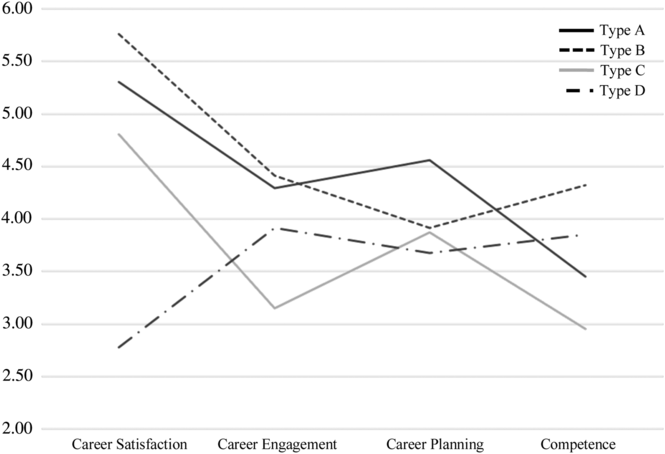
The four career orientation clusters were labeled and described primarily by interpreting the profiles of each type on the four grouping variables; CS, CP, CE, and perceived professional competence. The four types included:
1. Type A – Knowledge-seeking: Individuals with a positive orientation but tentative in assessing professional competence,
2. Type B – Confident: Individuals who were consistently positive in all areas of career orientation,
3. Type C – Inconsistent: Individuals with an unsettled career orientation profile with fluctuating characteristics, and
4. Type D – Disengaged: Individuals with the least positive career orientation in all four career and competence areas.
Figure 1 displays the profiles of each CRC career orientation type.
The first group of CRCs comprised 35.2% of the sample and represented individuals with a knowledge-seeking career orientation. These CRCs appeared tentative in assessing their professional competence. They reported the highest positive levels of CP but lowered levels of perceived competence, which seemed counter to their otherwise high levels of CS and engagement. Knowledge-seeking CRCs were a relatively young group with less years of work experience than other CRC types.
The second career orientation type constituted 18.6% of the sample and reflected professionals possessing a confident orientation supported by high scores on all career factors. Graphically, scores for this group were positive and stable. These CRCs were positive, highly satisfied with, and engaged in their careers. CP, while slightly lower than another group, were still quite positive. This group perceived themselves to be highly competent in their job performance. They were the oldest group and held the highest levels of experience as a CRC and in other health-related fields. All CRC groups presented similar patterns of personality attributes; however, confident CRCs were the most extroverted, agreeable, conscientious, and open-minded. Low neuroticism scores indicated that their levels of anxiety, frustration, or depression were less than other groups.
CRCs in the third group represented 27.6% of the sample and were characterized by an inconsistent profile. While reporting satisfaction in their work, these CRCs were also the least engaged and reported the lowest levels of professional competence. This group was similar to others in their years of experience but had fewer overall years of health-related professional experience. Inconsistent CRCs had the lowest scores on extroversion, agreeableness, conscientiousness, and openness, while having the highest score on neuroticism.
The fourth career orientation type contained 18.6% of the sample and was characterized low levels of CS, CE, and CP. This group reported relatively high perceived professional competence, reflecting considerable CRC and other health-related experience. These CRCs reflect a disengaged orientation given their depressed career scores but contrasting high assessment of professional competence.
Additional Profiles
Three additional sets of data were examined to further describe and understand similarities and differences between the groups. These data included perceived professional competence, demographic characteristics, and personality attributes.
Perceived competence
The first set of data consisted of individuals’ assessment of professional competence on the eight professional domains established by the JTF for Clinical Trial Competency [24,Reference Sonstein25,Reference Calvin-Naylor32]. While a cumulative score was used in determining career orientation type, we felt it was important to also examine the eight specific domain responses for trends or patterns. Each orientation type presented a similar profile of perceived competence for each domain, being distinguished by degree of competence rather than differences in specific areas (see Fig. 2). Confident CRCs reflected high levels of career orientation and held the highest levels of perceived competence. Inconsistent CRCs presented fluctuating career orientation measures and reported the lowest levels of perceived competence.
Plots for mean scores on perceived professional competence for four career orientation types.
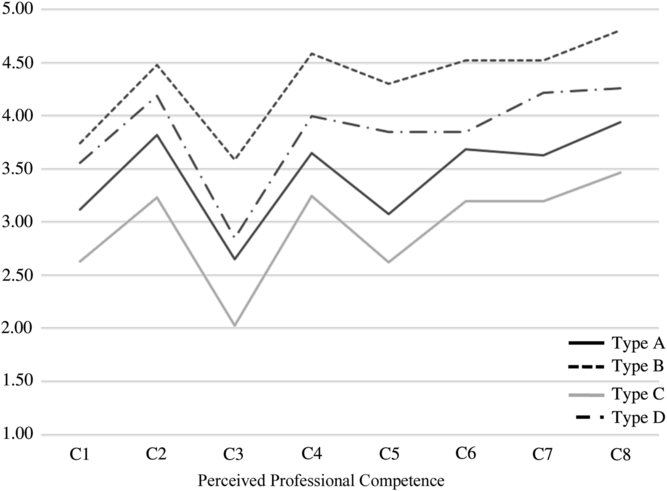
While the degree of perceived professional competence was different between the four types, all groups reported their strongest domain as Communication and Teamwork. Other areas of high perceived competence for all types included clinical study operations, leadership and professionalism, and ethics/participant safety. The lowest area of perceived competence for all types was in product development and regulation.
Demographic composition of types
Six demographic variables were selected to develop the profiles of each orientation type and determine if differences existed among them. Effect size coefficients were calculated for three continuous variables; age, years of CRC experience, and total years of experience in health fields. Three dichotomous variables – certification, licensure, and current-preferred field match – were examined using odds ratios (ORs).
Knowledge-seeking CRCs represented the youngest group, being 4.59–5.61 years younger than their counterparts. Cohen’s d coefficients of 0.45–0.59 indicated that two-thirds to three-fourths of other CRCs were as old or older than the average age of knowledge-seekers. Confident and disengaged CRCs both reported having more years of CRC experience (and in other health-related fields) than knowledge-seekers and inconsistent type peers. Confident and disengaged CRCs held the highest years of experience, while individuals in knowledge-seeking and inconsistent types reported the least experience. Effect size coefficients showed that confident CRCs reported, on average, experience at or above 76% and 69% of the average experience reported for knowledge-seeking and inconsistent types, respectively.
Odds-ratios (ORs) were calculated (see Table 4) to determine the likelihood that CRCs were certified by the Association of Clinical Research Professionals (ACRP), the Society of Clinical Research Associates (SOCRA), or other bodies. An OR measures the association between two groups and indicates the likelihood of one outcome compared to another, that is, the OR compares the odds of a desired outcome in one group relative to the odds of a similar outcome in a second group. The odds of “success” are based on the chance of success (p) divided by the chance of failure (1 − p) for each group [Reference Durlak42]. Like effect size, the OR indicates the magnitude of observed differences [Reference Szumilas43].
Effect size coefficients and ORs reflecting magnitude of differences in selected descriptive characteristics between career orientation types

Type A, knowledge-seeking orientation; Type B, confident orientation; Type C, inconsistent orientation; Type D, disengaged orientation; OR, odds ratio.
Confident CRCs were 2.5–3.5 times more likely to be certified than other CRCs. Differences in certification among the other three types were detected but relatively small. While no inconsistent CRCs reported being licensed, confident CRCs were almost five times more likely to be licensed than knowledge-seeking CRCs and over three times more likely than disengaged CRCs. The match between current work focus and preferred focus was examined to see if congruence between these indicators might be associated with career orientation. Disengaged CRCs were almost two times more likely to report a mismatch between current and preferred work focus compared to the other three types.
Personal attributes
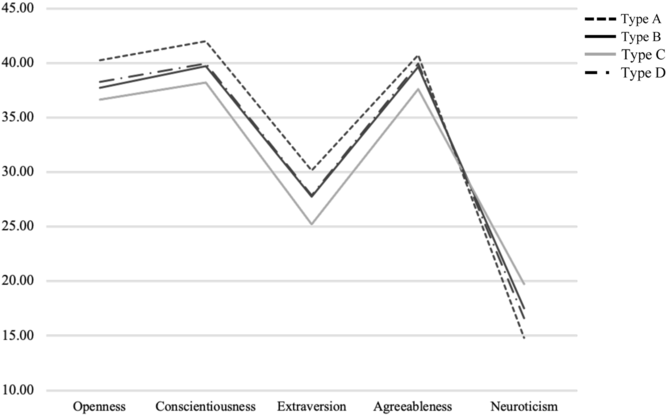
Figure 3 graphs the five personality mean scores for each of the four CRC career orientation types. The plotlines of each type were remarkably similar. Profiles across all four orientation types had their highest scores on the conscientiousness, openness, and agreeableness constructs. In contrast, the lowest score reported by each type was on the neuroticism construct. This result illustrates the homogeneity of CRCs in terms of their personality attributes, regardless of differing types of career orientation and perceived professional competence.
Plots for mean scores on BFI (personal attributes) subscales for four career orientation types.
Discussion
This study increases our understanding of characteristics of CRCs, specifically the degree of CS, CP, CE, and perceived professional competence. Our efforts were undertaken to address limited literature that describes and examines this critically important group of translational research professionals.
Career Orientation Types
A cluster analysis detected four distinct career orientation types among CRCs, which may serve as a basis for designing professional development, training, and support for these professionals. The orientation types reflected two primary patterns of responses; those with relatively positive and stable career orientations and those with more negative and inconsistent orientations toward their career.
Those with positive orientations included knowledge-seeking and confident CRC types. These two types represented 53.8% of our sample and possessed similar, although not identical, positions on career constructs. Confident CRCs expressed higher CS but lower CP than knowledge-seeking CRCs. But, the characteristic that distinguished these two groups was their degree of perceived professional competence. Confident CRCs reported substantially higher overall competence, which may have reflected a greater likelihood of holding certification or licensure. Professional organizations can play a powerful role in supporting and reinforcing career choices. We found confident CRCs were much more likely to be certified and/or licensed, reinforcing cluster analysis results. This association also suggests that certified/licensed CRCs might serve as the best mentors for persons entering the field.
Almost half of our respondents held inconsistent or disengaged career orientation profiles, which were characterized by depressed, fluctuating profiles and, in general, more negative orientations. The patterns of CRCs that expressed less positive orientations are interesting. Inconsistent CRCs expressed relatively high CS, but assessed their professional competence lower than any other group. On the other hand, disengaged CRCs were the least satisfied group and possessed the most restricted career orientation. Even so, they reported the second highest level of perceived competence. Disengaged CRCs may need targeted professional development to enhance their CS such as opportunities to extend their competence beyond those of a CRC, perhaps by a career shift, a change in job characteristics, or advancing education in another area of translational science.
In general, CRCs expressed high levels of CE, reflecting their care and concern for, and involvement with, patients in their clinical trials. However, not all were similarly engaged. Disengaged CRCs reported the lowest levels of engagement, while maintaining a high sense of perceived competence. This group was least likely to hold a strong commitment to the profession expressed by their peers. CS reflected respondents’ feelings about their position and considered issues such as income, possibilities for advancement, and general happiness with their professional role. Most CRCs reported moderately positive levels of satisfaction. However, disengaged CRCs reported very low CS.
CP was represented in the orientation construct because work and workplaces increasingly require individuals who are adaptable can anticipate changes in work demands and are able to assume personal responsibility for navigating their career [Reference Rojewski and Hill44,Reference Savickas45]. An ability to self-manage, that is, prepare and execute one’s career plan, is an important aspect of these requirements. The idea of career navigation is especially relevant to CRCs who work on time-limited clinical trials and must be aware of, prepare for, and apply for future job opportunities in advance of completing their current employment. Most CRCs in our study reported moderate to moderately high levels of CP except for knowledge-seeking CRCs who reported very high levels of planning.
Much of the attention placed on the role of CRCs within the translational research workforce has been on the eight domains developed for clinical research practitioners by the JTF for Clinical Trial Competency [24,Reference Sonstein25,Reference Calvin-Naylor32]. We found that the general patterns or profiles of perceived competence across the eight domains were quite similar for all types, although they varied in degree of perceived competence. All groups reported the highest levels of competence on domains connected to communication/teamwork, and ethics/participant safety, while expressing their lowest perceived competence on product development and regulations. Confident CRCs expressed the highest levels of perceived competence on all domains, while inconsistent CRCs reported the lowest levels of perceived competence across all domains. CRCs with knowledge-seeking and disengaged profiles reported moderate levels of professional competence.
We examined CRCs’ disposition on five personality attributes using the BFI [Reference John, Donahue and Kentle35]. These attributes offer a framework for understanding relationships between personality and work interests. Profiles were very similar for all orientation types, varying only in degree. While the close similarity in personality characteristics was somewhat unexpected, it can be explained by work personality theory [Reference Holland46]. Work personality theory posits that individuals with particular personality types or preferences seek out work environments that satisfy those needs [Reference Nauta47]. The comparable profiles we detected suggest that CRCs, regardless of how they view their career, share a high degree of congruence or fit between personality and work environment.
CRCs in all orientation types had their highest scores on three personality variables: conscientiousness, openness, and agreeableness. Conversely, all four types reported low scores on neuroticism, reflecting emotional stability and limited stress. These findings are supported by Hill et al.’s qualitative study of research assistants who reported higher conscientiousness and agreeableness and lower neuroticism [Reference Hill48]. CRCs share common characteristics that are observed as being organized, responsible, a team player, and emotionally stable. Meta-analyses [Reference Barrick, Mount and Gupta49, Reference Larson, Rottinghaus and Borgen50] have demonstrated that the three highest scoring personality traits for CRCs can be expressed by Holland’s work environments that satisfy social, enterprising, and investigative interests.
The literature often portrays the personality–environment fit as dichotomous, that is, match or mismatch. While our findings support existing literature, differences in the degree of match reported by the four CRC profiles, particularly between confident and inconsistent types, indicates a need to consider the complexity inherent in personality (personality–environment fit) and career orientation interactions. Additional research is warranted to examine the tentative connections identified in the present analysis.
Implications
Our research offers several implications. First, our identification of CRC career orientation types advances our understanding of this segment of the health research workforce. While professions in other health-related fields adhere to clearly defined and structured pathways for career preparation, professional development, and advancement, required preparation and the general career paths for CRCs are less well developed. In a survey by the Clinical and Translational Science Award Research Coordinator Taskforce, 41% of 1597 coordinator participants reported having no opportunity for career advancement or development [Reference Speicher6]. In fact, the career path for a CRC often varies by location or investigator and is not guided by standardized expectations for career preparation and advancement. An understanding of CRCs, along with other efforts (e.g., national competencies, professional licensure), can enhance this profession and help to provide uniform expectations and career path options.
Assessments that identify career orientation can help CRCs. The time-limited nature of clinical trials and institutional hiring practices that connect employment to a particular project or investigator require that CRCs be actively involved in maintaining and navigating their career paths. Knowledge of career orientation provides additional context to CRCs while assessing current levels of functioning, career-related strengths or weaknesses, and training needs.
The CTSA Research Coordinator Taskforce emphasized the need for institutional support of the CRC workforce by addressing training gaps, examining CRC workloads, hiring at institutional levels, and financially supporting professional development [Reference Speicher6]. Institutional administrators and clinical investigators can embrace this need by understanding the career orientation of CRCs and using this information to provide support to individuals who would benefit from training or work-related supports. For example, CRCs that report low CE or satisfaction might benefit from training on stress management and the effects of burnout, or be offered support in negotiating adjustments to job duties. These proactive approaches would benefit individual CRCs, and ultimately investigators and institutions, by addressing low morale and potentially impacting high turnover [Reference Gwede10].
Limitations
Several limitations are noted. First, our sample was not random or taken from a regional or national population. While generalizability is limited, findings provide a baseline for understanding and can serve as a starting point for additional inquiry. Second, career orientation was represented by a combination of four variables, which provided a meaningful focus for understanding CRCs’ career orientation. Additional research that includes other factors (e.g., career adaptability) would further contribute to our understanding. Finally, our work focused on the career orientation of CRCs. We recommend additional studies to examine the connections of career orientation with other aspects of CRC work behavior (e.g., Do specific career orientation types relate to greater job performance, faster professional advancement, higher access to available training opportunities, or other work behaviors?).
Author ORCIDs
Jay Rojewski, https://orcid.org/0000-0002-2943-0739; Ikseon Choi, https://orcid.org/0000-0001-8005-1649; Janette Hill, https://orcid.org/0000-0002-9724-2895; Yeonjoo Ko, https://orcid.org/0000-0002-2486-6875; Katherine L. Walters, https://orcid.org/0000-0003-0626-2274; Sejung Kwon, https://orcid.org/0000-0001-9307-0603; Linda McCauley, https://orcid.org/0000-0002-3779-3791
Acknowledgments
The authors acknowledge the contributions of Tess Hamilton, Dr. Elaine Fisher, and Dr. Bradley Phillips.
Disclosures
The authors have no conflicts of interest to declare.
Funding Information
Supported by the National Center for Advancing Translational Sciences of the National Institutes of Health under Award Number UL1TR002378. The content is solely the responsibility of the authors and does not necessarily represent the official views of the National Institutes of Health.


 Open access

