





1. Introduction
The climate crisis is a tremendous threat for human health and life on planet earth. While the scientific community has been warning about the devastating consequences of climate change since the 1970s, global greenhouse gas emissions continue to rise (IPCC, 2023). One explanation for this discrepancy between knowledge and action is how the public conversation about the climate crisis is held and how it is influenced by actors that are trying to delay climate action (Kinol et al., Reference Kinol, Si, Kinol and Stephens2025; Lamb et al., Reference Lamb, Mattioli, Levi, Roberts, Capstick, Creutzig, Minx, Müller-Hansen, Culhane and Steinberger2020; Solomun et al., Reference Solomun, Monroy, Bugiel, Chan, Gowd, Hayes, Jayme, Kim, Tollefson and Ross2025). In contrast to climate change denial, the discourses of climate delay (DOCD; Lamb et al., Reference Lamb, Mattioli, Levi, Roberts, Capstick, Creutzig, Minx, Müller-Hansen, Culhane and Steinberger2020) do not question the existence of the climate crisis or that it is caused by humanity. Rather, DOCD refer to rhetoric or actions that acknowledge the climate crisis but aim to postpone meaningful mitigation efforts. They are commonly found in advertisements (Holder et al., Reference Holder, Mirza, Namson-Ngo-Lee, Carbone and McKie2023; Kinol et al., Reference Kinol, Si, Kinol and Stephens2025; Supran & Oreskes, Reference Supran and Oreskes2021; Vandenberg, Reference Vandenberg2024), media coverage (Hayes et al., Reference Hayes, Gabbatiss and Butler2025; Painter et al., Reference Painter, Ettinger, Holmes, Loy, Pinto, Richardson, Thomas-Walters, Vowles and Wetts2023; Simmonds et al., Reference Simmonds, Maye and Ingram2024), or arguments by policymakers (Almqvist-Ingersoll, Reference Almqvist-Ingersoll2025; Kuhl et al., Reference Kuhl, Stephens, Arriaga Serrano, Perez-Lugo, Ortiz-Garcia and Ellis2024; Pringle & Robbins, Reference Pringle and Robbins2022) across multiple countries like the US (Holder et al., Reference Holder, Mirza, Namson-Ngo-Lee, Carbone and McKie2023; Kinol et al., Reference Kinol, Si, Kinol and Stephens2025; Supran & Oreskes, Reference Supran and Oreskes2021; Vandenberg, Reference Vandenberg2024), the UK (Hayes et al., Reference Hayes, Gabbatiss and Butler2025; Simmonds et al., Reference Simmonds, Maye and Ingram2024), Ireland (Pringle & Robbins, Reference Pringle and Robbins2022), Sweden (Almqvist-Ingersoll, Reference Almqvist-Ingersoll2025), Puerto Rico (Kuhl et al., Reference Kuhl, Stephens, Arriaga Serrano, Perez-Lugo, Ortiz-Garcia and Ellis2024), and Germany (Markard et al., Reference Markard, Rinscheid and Widdel2021).
In their 2020 study, Lamb et al. identified and categorized common DOCD (see Figure 1). They identified four overarching themes: (1) redirect responsibility, (2) push for non-transformative solutions, (3) emphasize the downsides, and (4) surrender. First, proponents purposefully evade responsibility for climate action by redirecting it elsewhere. One discourse conceptualized to belong to this strategy was labeled individualism (climate action is redirected toward the consumer so systematic change can be avoided). Further discourses in this domain are whataboutism (one urges other actors to act first, e.g., countries with higher carbon emissions) and the free rider excuse (one believes that too much climate action weakens one's country's economy while other actors take advantage). Second, pushing for non-transformative solutions argues that transformative change is not necessary to combat climate change, thereby delaying said transformative change. Within this domain, technological optimism argues to focus all efforts on developing technological solutions instead of applying the solutions already available. In all talk, little action, the actors argue that a lot of climate action is already happening and promise to commit to even more. However, any ambitious climate action is lacking. Fossil fuel solutionism argues against a rapid fossil fuel phase-out, stating that fossil fuels are part of the solution. No stick, just carrots finally claims that restrictive policies can or should not be enforced and that incentives are the only way to go. Third, when emphasizing the downsides, an actor focuses on alleged downsides of climate action. Within this domain, the discourse appeal to wellbeing argues that climate action will weaken the economy and lead to hardship for the population. Similarly, appeal to social justice claims that all climate action will hit vulnerable members of society the hardest and, therefore, should not be implemented. Policy perfectionism delays climate action by demanding that all affected parties are required to support specific climate protection measures. Lastly, surrendering to the climate crisis summarizes the beliefs that it is too late for mitigation. Within this domain, the discourse change is impossible argues that necessary climate action is not realizable in a democratic manner due to lacking support within society. Supporters of doomism believe that all mitigation measures are too late and too little and that we can only adapt to the climate crisis.
Discourses of Climate Delay from Lamb et al. (Reference Lamb, Mattioli, Levi, Roberts, Capstick, Creutzig, Minx, Müller-Hansen, Culhane and Steinberger2020, Figure 1). Reproduced under the terms of the Creative Commons Attribution license (CC BY 4.0): https://creativecommons.org/licenses/by/4.0/.

Since its publication in 2020, the proposed DOCD taxonomy by Lamb et al. (Reference Lamb, Mattioli, Levi, Roberts, Capstick, Creutzig, Minx, Müller-Hansen, Culhane and Steinberger2020) has attracted much attention in the scientific community and beyond (e.g., 649 citations according to Google Scholar; Altmetric attention score of 4074 as of 03/11/2025).
The DOCD are strategically used by the fossil fuel industry and adjacent actors to delay urgently needed climate action for the interest of existing economic power structures. In a recent study, Kinol et al. (Reference Kinol, Si, Kinol and Stephens2025) investigated how large US corporations from the fossil fuel, plastic, and agrichemicals industries have been using the DOCD on Twitter/’X’. Those three industries all rely on the continued petroleum and fossil gas extraction and thereby have an interest to delay all climate protection measures aiming toward the phase-out of fossil fuels. The authors identified a dense network between the three industries, which often interact with each other and with policymakers. Concerning the content, all sectors pushed fossil fuel solutionism – especially regarding fracking, which has highly concerning impacts on the environment (Tyree, Reference Tyree2021). Furthermore, the sectors frequently emphasized the upsides of climate inaction – instead of emphasizing the downsides of climate action (Kinol et al., Reference Kinol, Si, Kinol and Stephens2025). ExxonMobil – one of the corporations investigated – has also been found to push individualism, technological optimism, and fossil fuel solutionism via its advertisement (Supran & Oreskes, Reference Supran and Oreskes2021). Fossil fuel solutionism has also been identified as a leading discourse in Facebook advertisements in a wider array of entities from the oil and gas sector (Holder et al., Reference Holder, Mirza, Namson-Ngo-Lee, Carbone and McKie2023) and Coca-Colas’s World Without Waste Initiative (Vandenberg, Reference Vandenberg2024).
However, the DOCD are also found in media outside of the direct control of the fossil fuel industry. Painter et al. (Reference Painter, Ettinger, Holmes, Loy, Pinto, Richardson, Thomas-Walters, Vowles and Wetts2023) investigated Australian mainstream and right-wing media channels and how they reported on the most recent IPCC report. All investigated DOCD (using a different terminology in the paper but resembling appeal to wellbeing, whataboutism, all talk, little action, technological optimism, appeal to social justice, and doomism) except technological optimism were more common in right-wing media than in mainstream media. This pattern was recently replicated in UK newspaper editorials concerning the energy sector (Hayes et al., Reference Hayes, Gabbatiss and Butler2025). Additionally, investigating UK news media coverage concerning livestock's impact on climate change, whataboutism, individualism, and technological optimism were found to be the most common DOCD (Simmonds et al., Reference Simmonds, Maye and Ingram2024). Similarly, analyses of German newspapers ‘Süddeutsche Zeitung’ and ‘Die Welt’ have identified a shift in the arguments of pro-coal coalitions, mainly consisting of the mining industry, energy companies, federal state governments, and the political parties CDU/CSU (conservatives) and SPD (social democrats) (Markard et al., Reference Markard, Rinscheid and Widdel2021). Here, the pro-coal coalition shifted from outright opposition against fossil fuel phase-out toward the discourse of fossil fuel solutionism. This publication emphasizes how DOCD can be used by multiple actors – from industry, media, or policymaking – to delay climate action.
Pringle and Robbins (Reference Pringle and Robbins2022) analyzed parliamentary debates and media coverage on the 2021 Climate Action Bill in Ireland and categorized them according to the DOCD. They found that during the debates, all parties referenced DOCD, even if they were arguing for the Climate Action Bill. Moreover, 44% of debates and media coverage emphasized the downsides, 41% pushed for non-transformative solutions, 13% redirected responsibility, and 2% surrendered. The most frequently coded discourses were appeal to social justice and all talk, little action. Similarly, Swedish parliamentarian debates concerning technologies like carbon capture storage were marked by technological optimism to avoid transformational climate action (Almqvist-Ingersoll, Reference Almqvist-Ingersoll2025). An analysis of parliamentary debates in the UK between 2017 and 2022 revealed an increase in delay narratives as well as pro-climate action narratives over time (Nisbett et al., Reference Nisbett, Spaiser, Leston-Bandeira and Valdenegro2024). Another study analyzed 56 semi-structured interviews with Puerto Rican actors from the energy sector – including government officials, private sector professionals, representatives from NGOs, and community leaders (Kuhl et al., Reference Kuhl, Stephens, Arriaga Serrano, Perez-Lugo, Ortiz-Garcia and Ellis2024). They found that pushing non-transformative solutions was widespread, especially fossil fuel solutionism. Furthermore, appeal to social justice regarding energy costs and reliability of a potential renewable energy system were common. Redirecting responsibility and surrendering were less frequent.
Taken together, the fossil fuel dependent industries heavily utilize discourses like fossil fuel solutionism, individualism, and technological optimism in their communication and advertisement (Kinol et al., Reference Kinol, Si, Kinol and Stephens2025; Markard et al., Reference Markard, Rinscheid and Widdel2021; Simmonds et al., Reference Simmonds, Maye and Ingram2024; Supran & Oreskes, Reference Supran and Oreskes2021). Political parties and government officials additionally utilize appeal to social justice and all talk, little action (Kuhl et al., Reference Kuhl, Stephens, Arriaga Serrano, Perez-Lugo, Ortiz-Garcia and Ellis2024; Pringle & Robbins, Reference Pringle and Robbins2022).
There is relatively little research on how the DOCD are received or reproduced in the general populations. A report published by the Centre for Media, Technology and Democracy investigated the approval to four different DOCD in a large Canadian sample (Solomun et al., Reference Solomun, Monroy, Bugiel, Chan, Gowd, Hayes, Jayme, Kim, Tollefson and Ross2025). While they used a different taxonomy than Lamb et al. (Reference Lamb, Mattioli, Levi, Roberts, Capstick, Creutzig, Minx, Müller-Hansen, Culhane and Steinberger2020), the authors found that agreement with these discourses was widespread. For example, 53% of Canadians agreed with a discourse adjacent to whataboutism.
Sylla et al. (Reference Sylla, Glawe, Braun, Padev, Schäfer, Ahmetaj, Kojan, Calero Valdez, Spezzano, Amaral, Ceolin, Fazio and Serra2022) presented results on how the DOCD are used by Republicans and Democrats in the US. For this, they used data scraped from the corresponding party subreddits and conducted a qualitative content analysis. When talking about the climate crisis, Republicans tended to redirect responsibility and emphasize the downsides. Reversely, Democrats tended to surrender and push for non-transformative solutions. The authors concluded that future campaigns to counter the DOCD should be based on the respective target group.
Cherry et al. (Reference Cherry, Verfuerth and Demski2024) organized six 2-day workshops in the UK, with the aim of providing an open space for participants to discuss what a feasible and desirable low-carbon future might look like. Participants provided many ideas on such a future and described a low-carbon future as desirable. However, the authors also identified four overarching DOCD, which justified individual and institutional inaction or painted those low-carbon futures as impossible: Resisting personal responsibility, rejecting the need for urgency, believing change is impossible, and defending the social contract. Even though the discourses were derived from citizens, they closely mirror the overarching narratives of redirecting responsibility, pushing for non-transformative solutions, surrendering, and emphasizing the downsides, respectively. These results suggest that DOCD found in advertisements, media, and political debates impact how individuals think about the climate crisis and possible futures. This, in turn, may reduce those individuals’ intention for pro-environmental behavior.
There are different forms of pro-environmental behavior (Hamann & Masson, Reference Hamann, Masson and Genkova2022; Stern, Reference Stern2000; Stern et al., Reference Stern, Dietz, Abel, Guagnano and Kalof1999). Private-sphere behavior aims to reduce one's own environmental impact, e.g., by reducing meat consumption or changing mobility behavior. Collective climate action on the other hand includes actions taken together with other people that aim to change structures toward climate protection, e.g., going to a protest or being an active member of an organization like Fridays for Future. Pro-environmental social influence describes the efforts of an individual to motivate people in their life, e.g., friends and family, to take climate action. Lastly, support for pro-environmental policies is an important lever for structural changes. In the escalating climate emergency, broad societal engagement is needed to enforce rapid decarbonization of all sectors (IPCC, 2023). In addition to structural changes, reducing carbon-intensive private-sphere behaviors (e.g., flying, eating animal products) has substantial potential to accelerate decarbonization – especially in high-emission countries in the Global North (IPCC, 2023). Therefore, investigating the link between DOCD and different forms of pro-environmental behavior is crucial.
At first glance, examining private-sphere pro-environmental behavior may appear to reproduce one of the very DOCD identified by Lamb et al. (Reference Lamb, Mattioli, Levi, Roberts, Capstick, Creutzig, Minx, Müller-Hansen, Culhane and Steinberger2020), namely individualism. We acknowledge this tension. However, private-sphere pro-environmental behavior is not examined here as a substitute for structural or political change, but as one of several interrelated forms of engagement through which people respond to the climate crisis. Results reported by Cherry et al. (Reference Cherry, Verfuerth and Demski2024) suggest that DOCD can function as justifications for inaction for individuals and therefore reduce engagement across behavioral domains, including readiness to reduce one's own environmental impact. Thus, we theorized that DOCD shape not only support for systemic change but also how individuals understand the relevance, efficacy, and urgency of their own actions.
To the best of our knowledge, there is currently no measure to test individuals’ agreement with the 12 DOCD as postulated by Lamb et al. (Reference Lamb, Mattioli, Levi, Roberts, Capstick, Creutzig, Minx, Müller-Hansen, Culhane and Steinberger2020). However, such a measure would allow to investigate crucial research questions concerning the DOCD: How are the DOCD received by the general public and do they influence public opinion on climate change? Are the discourses most frequently found in media also those the general public agrees to most strongly? Is agreement to the DOCD associated with pro-environmental behavior and attitudes and could they be a pathway over which pro-environmental behavior and attitudes can be targeted?
This paper aims to develop such an instrument. First, we developed a German questionnaire to measure agreement with the DOCD. Second, we investigated how the DOCD relate to different forms of pro-environmental behavior and pro-environmental attitudes – pro-environmental private-sphere behavior, collective climate action, pro-environmental social influence, and pro-environmental policy support. Our hypotheses (H) are the following:
H1: A four-factor structure of the discourses of climate delay can be validated with the following postulated factors: surrender, redirect responsibility, push for non-transformative solutions, emphasize the downsides.
H2a–d: Agreement to the four domains of discourses of climate delay are negatively related to (a) pro-environmental private-sphere behavior, (b) collective climate action and (c) social influence behaviors as well as (d) pro-environmental policy support.
2. Study 1
2.1. Methods – study 1
The study was preregistered on the Open Science Framework (OSF; https://osf.io/kxj38). This manuscript investigates H1 and H2.
2.1.1. Participants
The sample was a German convenience sample acquired via an online survey using the software Unipark (QuestBack GmbH, Oslo, Norway). A total of 419 participants completed the questionnaire, of which 14 participants failed the attention check and were removed from the dataset. Furthermore, two participants were removed because they provided no age. Thus, the final sample size was 403 (289 women, 3 diverse, M age = 27.33 years, SD age = 12.63 years, age range = 18–87 years). All participants gave informed consent and were treated in accordance with the Declaration of Helsinki. The study was approved by the local ethics committee of the Freie Universität Berlin (vote 023.2023 from 02.07.2023).
2.1.2. Questionnaire development
The German items of the first version of the questionnaire were developed by the authors FP, AF, and SH based on the description of the DOCD in Lamb et al. (Reference Lamb, Mattioli, Levi, Roberts, Capstick, Creutzig, Minx, Müller-Hansen, Culhane and Steinberger2020) and Levi et al. (Reference Levi, Müller-Hansen, Lamb, Mattioli, Roberts, Capstick, Creutzig, Minx, Culhane and Steinberger2021). For each item, at least two different versions were developed. The wording of the different versions was discussed within the team of authors until agreement on a final version was reached. The goal was to develop well understandable items with moderate complexity that grasp the content of each DOCD.
2.1.3. Measures
The full questionnaire with all items is available on the OSF (https://osf.io/xtw2p/, in the folder “SUPPL_MATERIAL_DOCD”). Here, we will only describe the measures investigated in this manuscript.
DOCD. The DOCD were measured using a 12-item questionnaire developed by the authors (see Section 2.1.2). Participants stated how much they agreed with the discourses on a 6-point Likert scale ranging from 1 (completely disagree) to 6 (completely agree). To test our preregistered hypotheses, we calculated the means for every subscale: surrender (change is impossible; doomism), emphasize the downsides (appeal to wellbeing; appeal to social justice; policy perfectionism), push for non-transformative solutions (technological optimism; all talk, little action; fossil fuel solutionism; no sticks, just carrots), and redirect responsibility (whataboutism; individualism; the freerider excuse). Cronbach's α of the subscales were 0.3, 0.53, 0.56, and 0.7, respectively.
Pro-environmental private-sphere behavior. Pro-environmental private-sphere behavior describes behaviors aimed toward reducing individual CO2 emissions. To measure it, we used an adapted version of the pro-environmental behavior scale by Ojala (Reference Ojala2012) with four items. Participants were asked how behaviors from different domains (e.g., using climate-friendly transport) applied to them over the course of the last 3 months on a 6-point Likert scale ranging from 1 (not at all) to 6 (completely). We then calculated the mean. Cronbach’s α of this scale was 0.59.
Collective climate action. Collective climate action includes behaviors that aim to change structures or policies and thereby makes an environmentally friendly life more accessible or easy for all people. Here, we used an early version of the socio-ecological handprint scale (Spliesgart et al., Reference Spliesgart, Heinzel, Gutberlet, Heitfeld, Blumenschein, Frick and Keller2025), consisting of four items. Participants were asked if they engaged in different types of pro-environmental behavior (e.g., joining a climate protest) in the last 3 months. The scale used a 6-point Likert scale ranging from 1 (not at all) to 6 (completely). We then calculated the mean. Cronbach's α of this scale was 0.70.
Pro-environmental social influence behavior. Pro-environmental social influence describes efforts to motivate people in one’s life to adapt an environmentally friendly lifestyle. We adapted the items published by Eichinger et al. (Reference Eichinger, Bechtoldt, Bui, Grund, Keller, Lau, Liu, Neuber, Peter, Pohle, Reese, Schäfer and Heinzel2022), based on Ojala (Reference Ojala2012). The scale consisted of three items, and participants were asked how much they agreed with statements concerning their behavior in the last 3 months (e.g., ‘I tried to convince family members, friends, or acquaintances to do more for climate protection’) on a 6-point Likert scale ranging from 1 (not at all) to 6 (completely). We then calculated the mean. Cronbach’s α of this scale was 0.66.
Pro-environmental policy support. Here, participants were asked how much they supported 24 different political climate protection measures in Germany (e.g., ‘At least 2% of the total area of each federal state is to be made available for the expansion of solar and wind energy systems’). The items were developed by the Planetary Health Action Survey (Lehrer et al., Reference Lehrer, Geiger, Sprengholz, Jenny, Temme, Shamsrizi, Eitze and Betsch2024). Participants answered on an 8-point Likert scale ranging from 0 (do not agree at all) to 7 (completely agree). Cronbach’s α of this scale was 0.94.
2.1.4. Statistical analysis
All code and the RMarkdown output of the analysis are available on the OSF (https://osf.io/xtw2p/, in the folder ‘SUPPL_MATERIAL_DOCD’).
For the confirmatory factor analysis, we used the cfa function from the lavaan package (Rosseel, Reference Rosseel2012). After specifying the model and running the code, we received two warnings: that some estimated variances of the observed variables are negative and that the covariance matrix of latent variables was not positive definite. The first warning was caused by the doomism variable showing a negative variance in the model. This so-called ‘Heywood case’ can have several reasons, like small sample size, too few indicators, model specification, or outliers (Farooq, Reference Farooq2022). As a Heywood case leads to improper solutions, we decided to drop the item from the model. Running the model again, the covariance matrix of latent variable remained not positive definite, which is an indicator of latent factors correlating very highly (Farooq, Reference Farooq2022). Inspecting the data, covariance of emphasize the downsides and redirect responsibility was highest (cov: 1.176). In conclusion, this means that our data did not fit the model and the assumed four-factor structure could not be confirmed.
Since it was preregistered, we still performed analyses to answer research question 2. Here, we employed multiple linear regression using the lm function from the lavaan package (Rosseel, Reference Rosseel2012). We calculated four models, with the subscales redirect responsibility, emphasize the downsides, surrender, and push for non-transformative solutions being the independent variable in all models. The dependent variables were pro-environmental private-sphere behavior, collective climate action, social influence, and policy support.
2.2. Results – study 1
Descriptives of the DOCD items, their subscales, and the dependent variables can be found in Table 1. Histograms as well as correlations between single items and subscales can be found in the supplementary RMarkdown output (‘1.4. Distributions Discourses’). While the level of agreement with the four subscales was similar (ranging from M = 2.14 to M = 3.04 with a possible range from 1 to 6), we found rather large differences in the level of agreement with the single DOCD. The least supported DOCD were doomism (M = 1.86) and whataboutism (M = 1.62). The low agreement to whataboutism comes as a surprise when considering previous studies (Kuhl et al., Reference Kuhl, Stephens, Arriaga Serrano, Perez-Lugo, Ortiz-Garcia and Ellis2024; Solomun et al., Reference Solomun, Monroy, Bugiel, Chan, Gowd, Hayes, Jayme, Kim, Tollefson and Ross2025). The most commonly supported DOCD were change is impossible (M = 4.06) and no sticks, just carrots (M = 3.85).
Descriptives of the discourses of climate delay items and dependent variables in study 1

Note: M = mean; SD = standard deviation.
The results from the multiple linear regression can be found in the RMarkdown html report (1.6. ‘pro-environmental behavior’). Redirect responsibility was negatively associated with private-sphere behavior (β = −0.21, p < 0.001), collective climate action (β = −0.14, p = 0.27), social influence behavior (β = −0.20, p = 0.001), and policy support (β = −0.53, p < 0.001). Push for non-transformative solutions, emphasize the downsides, and surrender were not associated with any of the dependent variables. H2 was therefore only partly confirmed.
2.3. Intermediate discussion
Study 1 investigated if the four-factor structure of the DOCD could be found empirically and how the DOCD relate to different forms of pro-environmental behavior. H1 could not be confirmed, as the data did not fit the original model and led to multiple statistical issues. Furthermore, internal consistency of all subscales except redirect responsibility was not acceptable (Cronbach's α < 0.7; Kline, Reference Kline2023). H2 could partly be confirmed; however, in light of the failed confirmatory factor analysis and lack of internal consistency of the discourse subscales and pro-environmental private-sphere behavior, these results should be interpreted with caution.
There are multiple explanations for these results. First, some of the items (e.g., doomism, whataboutism, individualism) had skewed distributions and showed little variance (see Table 1 or supplementary RMarkdown output 1.4. for histograms). Our sample was a convenience sample mostly made up of university students. It is possible that the DOCD are not as common among university students compared to the general population, thereby limiting the variance in our dataset as well as statistical power. Another reason for the skewed distribution could be that the items were too easy and failed to measure the DOCD. For example, the change is impossible item read ‘The climate crisis will never be stopped, because people will not change enough.’ This phrasing might not fully capture the notion that climate protection measures cannot be implemented well democratically. Rather, it could measure a general negative stance toward the future and the climate crisis.
For study 2, we revised the questionnaire to capture the DOCD more comprehensively (see Section 3.1.2). Furthermore, we recruited a representative sample, thereby ruling out possible confounding effects due to a convenience sample (see Section 3.1.1).
3. Study 2
3.1. Methods – study 2
The study was preregistered on the OSF (https://osf.io/rgfe9). A publication on the inventory of climate emotions (Metzen et al., Reference Metzen, Blumenschein, Peter, Bechtholdt, Frisch, Tschorn and Heinzel2025) was also based on the current sample. The full questionnaire, data, analysis script, analysis html report, and supplementary tables are available in the OSF (https://osf.io/xtw2p/, in the folder ‘SUPPL_MATERIAL_DOCD’). Description of all deviations from the preregistration – including type, reason, timing, original wording, deviation description, and reader impact – can be found in Supplementary Table S1.
3.1.1. Participants
We recruited a quota sample of 1,156 participants through the service provider Bilendi (Bilendi GmbH – Uhlandstr. 47, 10,719 Berlin, Germany) and conducted an online survey using Unipark (QuestBack GmbH, Oslo, Norway). Participants who did not meet our quota criteria or failed either of two attention checks were excluded from completing the questionnaire. Additionally, those who completed the survey in less than 11 min were classified as speeders and removed. This cutoff was determined by Bilendi based on the median response time (median = 21.5 min, cutoff = 11 min). As a result, 134 participants were excluded for speeding.
Upon reviewing the data, we identified unusual response patterns. Some participants consistently selected the same response option (e.g., always choosing the first response). This appeared implausible for, e.g., the inventory of climate emotions – given the expected negative correlations between its subscales climate anxiety and climate contempt (Marczak et al., Reference Marczak, Wierzba, Zaremba, Kulesza, Szczypiński, Kossowski, Budziszewska, Michałowski, Klöckner and Marchewka2023). To address this, we applied an additional data-filtering criterion for detecting atypical response styles. Using the longstring function from the R careless package (version 1.2.2), we identified the longest sequence of identical responses per participant and excluded those whose longest string exceeded two standard deviations from the mean (>22.21). This led to the removal of 56 participants, resulting in a final sample of 966 individuals (51% women, 0% diverse, M age = 49.88 years, SD age = 16.15 years, age range = 18–80 years). Detailed participant demographics are shown in Supplementary Table S2. All participants provided informed consent and were treated in accordance with the Declaration of Helsinki. The study was approved by the local ethics committee of the TU Dortmund University (GEKTUDO-2024-15).
3.1.2. Questionnaire development
We revised the DOCD questionnaire based on the results of study 1. To accomplish this, DM, PB, SH, AF, and FP discussed the items and possible changes in multiple online meetings. A thorough reasoning for all changes made can be found in Supplementary Table S3. In general, we aimed to rephrase the items to capture the DOCD more precisely. For example, the change is impossible items was changed from ‘The climate crisis will never be stopped, because people will not change enough’ to ‘Effective climate protection contradicts our lifestyle and is therefore not democratically enforceable’. All items, except fossil fuel solutionism, were revised.
3.1.3. Measures
Pro-environmental policy support was measured in the same manner as in study 1 (see Section 2.1.3). Cronbach's α was 0.95.
Discourses of climate delay. The DOCD were measured using the revised 12-item questionnaire developed by the authors (see Section 3.1.2). Participants stated how much they agreed with the discourses on a 6-point Likert scale ranging from 1 (completely disagree) to 6 (completely agree). To test our preregistered hypotheses, we calculated the means for every subscale: surrender (change is impossible; doomism), emphasize the downsides (appeal to wellbeing; appeal to social justice; policy perfectionism), push for non-transformative solutions (technological optimism; all talk, little action; fossil fuel solutionism; no sticks, just carrots), and redirect responsibility (whataboutism; individualism; the freerider excuse). Cronbach's α were 0.59, 0.73, 0.63, and 0.45, respectively.
Pro-environmental private-sphere behavior – dietary CO2 emissions. We measured dietary CO2 emissions with the diet-related items of the WWF ecological footprint calculator (https://www.wwf.de/themen-projekte/klimaschutz/wwf-klimarechner). Here, the participants answer six items concerning their dietary habits over the last 6 months (e.g., ‘How often do you drink or eat milk and dairy products such as yoghurt, cheese, butter or cream?’). Using the information from the WWF website, we then calculated the equivalent CO2 emissions.
We hypothesized to find a negative association between the DOCD and pro-environmental private-sphere behavior (see Section 1). Since dietary CO2 emissions are a reverse measure of private-sphere behavior, we expected the association between DOCD and CO2 emissions to be positive.
Collective climate action. To measure collective climate action, we used the socio-ecological handprint scale (Spliesgart et al., Reference Spliesgart, Heinzel, Gutberlet, Heitfeld, Blumenschein, Frick and Keller2025), consisting of eight items. The instruction was adapted slightly, so that it would fit an adult sample. Participants were asked about different pro-environmental behaviors (e.g., joining a climate protest) in the last 6 months. The scale used a 6-point Likert scale ranging from 1 (not at all) to 6 (completely). We then calculated the mean. Cronbach's α of this scale was 0.93.
Pro-environmental social influence behavior. We adapted the items published by Eichinger et al. (Reference Eichinger, Bechtoldt, Bui, Grund, Keller, Lau, Liu, Neuber, Peter, Pohle, Reese, Schäfer and Heinzel2022), based on Ojala (Reference Ojala2012). The scale consisted of four items, and participants were asked how much they agreed with statements concerning their behavior in the last 6 months (e.g., ‘I tried to convince family members, friends or acquaintances to do more for climate protection’) on a 6-point Likert scale ranging from 1 (not at all) to 6 (completely). We then calculated the mean. Cronbach’s α of this scale was 0.88.
3.1.4. Statistical analysis
For the confirmatory factor analysis, we used the cfa function from the lavaan package. Similar to study 1, after specifying the model and running the code, we received the warning that the covariance matrix of latent variables was not positive definite. This indicates that two or more of the latent factors correlate very highly. Just as in study 1, covariance of emphasize the downsides and redirect responsibility was highest (cov: 0.93).
Since the issues in model fitting in two independent samples indicate that the proposed four-factor structure cannot be explained by the data, we performed an exploratory factor analysis (EFA). First, we ran Bartlett’s and Kaiser–Meyer–Olkin (KMO) test with the R functions cortest.barlett and KMO test to determine if the data were suitable for EFA. Second, we computed a scree plot to determine the number of factors. EFA was conducted using the fa function with a promax rotation.
To test H2a–d, we employed multiple linear regressions using the lm function from the lavaan package. We calculated four models with the subscales redirect responsibility, emphasize the downsides, surrender, and push for non-transformative solutions being the independent variables in all models. The dependent variables were dietary CO2 emissions, collective climate action, social influence, and policy support. Additionally, we calculated regression models using the solution proposed by the EFA. Here, we calculated one mean score including the nine items included in the final model, which we from here on call ‘DOCD_total’. To investigate the associations between the DOCD and pro-environmental behavior on a deeper level, we additionally performed correlation analysis of the single DOCD items and pro-environmental behavior (see RMarkdown html report, 1.6. Pro-environmental behavior).
3.2. Results – study 2
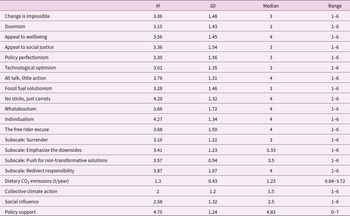
Table 2 shows the properties of the DOCD in study 2. Study 2 revealed that the DOCD show high public support (all means >3 using a 6-point Likert scale). The two most supported discourses were individualism (M = 4.27) and no sticks, just carrots (M = 4.2).
Descriptives of the discourses of climate delay items and dependent variables in Reference Marczak, Wierzba, Zaremba, Kulesza, Szczypiński, Kossowski, Budziszewska, Michałowski, Klöckner and Marchewka2023 study 2

Note: M = mean; SD = standard deviation.
3.2.1. Exploratory factor analysis
Bartlett's test indicated that our data were suitable for EFA (χ 2(66) = 3667.913, p < 0.001). Furthermore, KMO test revealed an acceptable measure of sampling adequacy (MSA) (overall MSA = 0.91). Two items showed MSA under 0.8, namely all talk, little action (MSA = 0.77) and individualism (MSA = 0.59). Both items do not correlate highly with the other items, making a common underlying factor seem unlikely. Thus, they were removed from the analysis.
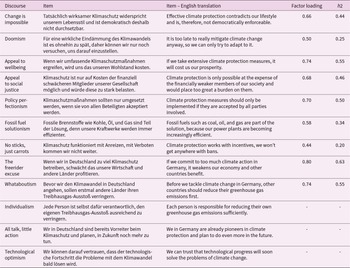
The scree plot (see RMarkdown report 2.6. Exploratory Factor Analysis) indicated a one-factor solution. Full results of this analysis are available in the RMarkdown html report (‘2.6. Exploratory Factor Analysis/Analysis’). While the fit indices (Root Mean Square Residual (RMSR) = 0.05, TLI = 0.935, Root Mean Square Error of Approximation (RMSEA) = 0.07, Bayesian Information Criterion (BIC) = −34.81) indicated good to acceptable fit, technological optimism had a factor loading >0.4 and communality h2 > 0.2. These results indicate that only a small part of the variance in technological optimism is explained by the underlying factor. Following recommendations by Child (Reference Child2006), we recalculated the EFA excluding technological optimism.
Factor loadings and communalities of the final model are shown in Table 3. The final model included nine items: appeal to wellbeing, the freerider excuse, change is impossible, appeal to social justice, whataboutism, doomism, policy perfectionism, fossil fuel solutionism, and no sticks, just carrots. The single underlying factor explained 43% of the total variance. All factor loadings were >0.4. Cronbach’s α was 0.87. Fit indices indicate an excellent model fit (RMSR = 0.03, TLI = 0.959, RMSEA = 0.06, BIC = −60.45).
Results of the exploratory factor analysis from study 2

Note: In the study, we presented the German items, the English translation is provided for better understanding and has not been applied in any sample yet. The items individualism, all talk, little action and technological optimism were discarded during the process of the EFA and are not part of the final scale (see 3.2.2. Exploratory factor analysis). Hence, they have no effect sizes and are not part of the final scale. h2 = communalities.
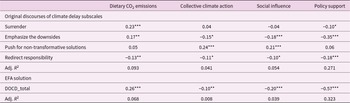
Pro-environmental behavior. Associations between the DOCD and pro-environmental behavior measures and attitudes are depicted in Table 4. In line with H2, emphasize the downsides and surrender were positively associated with dietary CO2 emissions. Contrary to our expectations, redirect responsibility was negatively associated with CO2 emissions and push for non-transformative solutions showed no association. Correlation analysis between the single items and the dietary CO2 footprint showed a negative correlation between the dietary CO2 footprint and individualism (r = −0.14, see RMarkdown html report, ‘2.7. Pro-environmental behavior’). Concerning collective climate action, emphasize the downsides and redirect responsibility showed the expected negative association, while push for non-transformative solutions showed a positive association and surrender no association instead. The same pattern was revealed for pro-environmental social influence. For pro-environmental policy support, all discourse subscales except push for non-transformative solutions showed the predicted negative association. Explained variance was low for dietary CO2 emission (9.3%), collective climate action (4.1%), and social influence (5.4%) but substantial for pro-environmental policy support (27.1%).
Associations between the discourses of climate delay and pro-environmental behavior in study 2

Note: Estimates are standardized regression weights; *** p < 0.001, ** p < 0.01, * p < 0.05
DOCD_total was positively associated with dietary CO2 emissions and negatively associated with collective climate action, social influence, and policy support. Again, explained variance was low for dietary CO2 emission (6.8%), collective climate action (0.8%), and social influence (3.9%). However, explained variance was substantial for pro-environmental policy support (32.3%).
4. Discussion
In this manuscript, we aimed to develop a questionnaire capturing the agreement with the 12 DOCD as postulated by Lamb et al. (Reference Lamb, Mattioli, Levi, Roberts, Capstick, Creutzig, Minx, Müller-Hansen, Culhane and Steinberger2020). Furthermore, we investigated the association between agreement with the DOCD and different forms of pro-environmental behavior.
Neither study 1 nor study 2 supported the expected four-factor structure (surrender, emphasize the downsides, redirect responsibility, push for non-transformative solutions), thereby H1 could not be confirmed. EFA analysis indicated a unidimensional underlying factor for nine of the DOCD (appeal to wellbeing, the freerider excuse, change is impossible, appeal to social justice, whataboutism, doomism, policy perfectionism, fossil fuel solutionism, and no sticks, just carrots) and a model with excellent model fit. At first glance, these discourses appear to reflect different beliefs. For example, doomism recognizes the urgency of climate action but argues that all action is too late or too little. On the other hand, appeal to social justice reflects more concern about the consequences of climate protection measures than the climate crisis. So, what does this underlying factor represent?
We interpret this underlying factor as reflecting a skeptical or defensive attitude toward ambitious climate action. Rather than denying climate change outright, the discourses loading onto this factor share a tendency to delay climate mitigation efforts by emphasizing political, economic, or moral obstructions. What all of these discourses have in common is that they legitimize the status quo. The status quo is the current state of, e.g., legal, political, economic, or social circumstances. Recently, the Global Assessment for a New Economics research project characterized the current economic status quo with six pillars: (1) capitalism, (2) neoliberalism, (3) GDP-based growth, (4) debt-based money, (5) globalization, and (6) the Sustainable Development Goals (Buckton et al., Reference Buckton, Kenter, Mukherjee, Waddock, Anger-Kraavi, Martino, Fazey, Hejnowicz, Kabubo-Mariara, Lafayette, Locy and Scarr2024). These pillars resulted in consequences like unsustainable exploitation of natural resources, pollution, greenhouse gas emissions, and wealth inequalities and are increasingly questioned by scholars across disciplines (Adams et al., Reference Adams, Estrada‐Villalta, Sullivan and Markus2019; Buckton et al., Reference Buckton, Kenter, Mukherjee, Waddock, Anger-Kraavi, Martino, Fazey, Hejnowicz, Kabubo-Mariara, Lafayette, Locy and Scarr2024; Göpel, Reference Göpel2016). Concerning the climate crisis, the IPCC current status section explains that ‘[g]lobal greenhouse gas emissions have continued to increase’ (IPCC, 2023). This status quo best aligns with IPCC's SSP3-7.0 scenario, which predicts a steady rise of emissions resulting in an expected temperature increase of 3.6°C by 2100 (IPCC, 2021). In Germany specifically, the climate mitigation policies have been a highly debated topic, especially fossil fuel phase-out. During the last 20 years, the German political parties have shifted from a pro-coal discourse to a phase-out discourse; however, industry and lobby representatives still hold onto a pro-coal discourse (Markard et al., Reference Markard, Rinscheid and Widdel2021). While emissions have declined, Germany is currently not on track to reach its climate goals, especially in the sectors of mobility and construction (Wehnemann et al., Reference Wehnemann, Koßmann, Purr, Pagel, Steinbrenner, Balzer, Dreisbach, Hölting, Bolz, Hendzlik, Brand and Steinbach2026). Concerning the German population, a representative study showed that while a majority of participants are in favor of climate mitigation, the majority also thinks that important actors (e.g., government, industry, population) are not doing enough for it (Frick et al., Reference Frick, Fülling, Harms, Grothmann and Marken2025).
By questioning the feasibility, fairness, or efficacy of transformative climate policies – transformative meaning challenging the status quo – the DOCD are a tool to legitimize the status quo (Mikolajczak et al., Reference Mikolajczak, Eckerle, Heinzel, Landmann and Metzen2025). Discourses are more than narratives or rhetorics – they establish social norms, collective meaning-making, social identities, and legitimize underlying power structures (Göpel, Reference Göpel2016; Mikolajczak et al., Reference Mikolajczak, Eckerle, Heinzel, Landmann and Metzen2025). Thereby, discourses that support the status quo reproduce traditional belief systems. By making transformative change seem impossible, they constrain the ability to imagine futures outside of the status quo and make the continuation of the status quo seem both desirable and inevitable (Mikolajczak et al., Reference Mikolajczak, Eckerle, Heinzel, Landmann and Metzen2025).
Just as the general tendency to defend the status quo (Bäck, Reference Bäck2013; Morisi et al., Reference Morisi, Colombo and De Angelis2021), the DOCD are more prevalent among right-wing and conservative actors but are not confined to any single ideological group (Almqvist-Ingersoll, Reference Almqvist-Ingersoll2025; Hayes et al., Reference Hayes, Gabbatiss and Butler2025; Kuhl et al., Reference Kuhl, Stephens, Arriaga Serrano, Perez-Lugo, Ortiz-Garcia and Ellis2024; Nisbett et al., Reference Nisbett, Spaiser, Leston-Bandeira and Valdenegro2024; Painter et al., Reference Painter, Ettinger, Holmes, Loy, Pinto, Richardson, Thomas-Walters, Vowles and Wetts2023; Pringle & Robbins, Reference Pringle and Robbins2022). Rather, they may function as flexible justificatory frames that can be adapted to diverse political worldviews. These dynamics suggest that the persistence of DOCD narratives may be driven not only by political ideology but also by more fundamental human concerns such as fear of change, perceived threats to social stability, or the desire to preserve familiar ways of life.
In this sense, the unidimensional factor may reflect a common rhetorical or discursive strategy for justifying the status quo. This interpretation aligns with Lamb et al.’s (Reference Lamb, Mattioli, Levi, Roberts, Capstick, Creutzig, Minx, Müller-Hansen, Culhane and Steinberger2020) conceptualization of DOCD as socially acceptable ways to avoid ambitious climate action without outright denial. The factor might best be understood not as representing a specific strategy but as a meta-discourse of climate delay, uniting various argumentative strategies that ultimately serve to reduce pressure for immediate and transformative climate action. Thus, the items can be interpreted as having a similar motivational focus.
In line with this interpretation, DOCD_total revealed a positive association with dietary CO2 emissions as well as a negative association with social influence, collective climate action, and policy support. Concerning these dependent variables, our scale is in line with our predictions about the association between DOCD and pro-environmental behaviors and attitudes (H2). The DOCD explained variance especially for pro-environmental policy support. Here, DOCD_total explained more variance (32.3%) than the four original subscales (27.1%).
Three items were excluded during the EFA: individualism, all talk, little action, and technological optimism. All of these discourses are frequently put forward to delay climate action by the fossil fuel industry and policymakers (Nisbett et al., Reference Nisbett, Spaiser, Leston-Bandeira and Valdenegro2024; Pringle & Robbins, Reference Pringle and Robbins2022; Supran & Oreskes, Reference Supran and Oreskes2021). However, our investigation of the associations between pro-environmental behavior and attitudes and the original DOCD subscales brings some clarity into why these three discourses might not be related to the same underlying factor as the nine discourses comprised in DOCD_total.
Against our predictions, redirect responsibility was negatively associated with dietary CO2 emissions. Looking at the correlation of the single DOCD and dietary CO2 emissions (see RMarkdown html report, ‘1.6. Pro-environmental behavior’), we see that this negative association is driven by individualism. Individualism enforces the responsibility of the consumer to mitigate the climate crisis; thus, it appears plausible that it is positively associated with pro-environmental private-sphere behavior of individuals.
Similarly, push for non-transformative solutions showed a positive association with collective climate action and social influence. This positive association was driven by technological optimism and all talk, little action. It is conceivable that these discourses are supported by people who are generally optimistic or hopeful concerning mitigating the climate crisis and who might also be inclined to join a protest or show other kinds of collective climate action. However, climate hope is a multifaceted variable. Ojala (Reference Ojala2015) identified two facets of hope – hope based on denial and constructive hope. Denial-based hope refers to the belief that climate change is not a big problem, or that it is just a natural fluctuation of temperatures. In her study, hope based on denial was negatively associated with collective climate action. Constructive hope, on the other hand, includes focusing on possible ways to mitigate climate change, the feeling that awareness around climate change has increased and trusting in technology. Both all talk, little action and technological optimism could be interpreted in a way that fits well into this construct. In Ojala's (Reference Ojala2015) study, constructive hope was positively associated with collective climate action. However, other authors argue that technological optimism should act as ways to escape responsibility and worries concerning the climate crisis and inhibits action (Gifford, Reference Gifford2011; Lorenzoni et al., Reference Lorenzoni, Nicholson-Cole and Whitmarsh2007).
Interestingly, there was no association between policy support and push for non-transformative solutions. One explanation could be that the climate policies in our questionnaire vary in how intrusive they are (ranging from ‘The rail network is to be expanded’ to ‘The installation of oil heating systems should be banned by 2026 and the installation of gas heating systems by 2028’). Thus, people who push for non-transformative solutions may have agreed with some of the policies but disagreed with others.
Taken together, while the discourses captured in our final scale are negatively related to pro-environmental behavior and attitudes and thereby reinforce the status quo, individualism, all talk, little action, and technological optimism were positively related to certain types of pro-environmental behavior. Does this mean that individualism, all talk, little action, and technological optimism aren't actually DOCD? We would argue that they are, in fact, very serious and effective DOCD – when used by people or organizations in a way that delays climate action and redirects responsibility. We propose two explanations for these findings. First, it's possible that those three items were not phrased in a way that accurately captured their delaying nature. For example, the individualism item (‘Each person is responsible for reducing their own greenhouse gas emissions sufficiently’) focuses solely on the responsibility of the consumer and does not include the direct shift of responsibility from the industry toward the consumer. Thus, it may need different or multiple items to fully capture those discourses.
Another explanation is that the motivation behind agreeing to or spreading a DOCD is decisive. We investigated the agreement to the DOCD on the individual level. The DOCD were originally identified in a media analysis (Lamb et al., Reference Lamb, Mattioli, Levi, Roberts, Capstick, Creutzig, Minx, Müller-Hansen, Culhane and Steinberger2020). The fossil fuel dependent actors are motivated to delay any transformative changes in the energy sector. It is well documented that they use discourses like all talk, little action, individualism, and technological optimism to achieve this (Nisbett et al., Reference Nisbett, Spaiser, Leston-Bandeira and Valdenegro2024; Pringle & Robbins, Reference Pringle and Robbins2022; Supran & Oreskes, Reference Supran and Oreskes2021). However, agreeing with certain statements – which would be DOCD if spread by the fossil fuel industry – as an individual may stem from a different source of motivation. The fossil fuel industry reinforces the responsibility of single consumers to redirect the responsibility from their own company. However, when an individual person reinforces the responsibility of other individuals to reduce their carbon emission, it is more likely that this stems from a genuine concern about the environment. For instance, it has been shown that anger toward the carbon-intensive lifestyle of other individuals is more common than anger toward policymakers and that this anger was associated with collective climate action (Gregersen et al., Reference Gregersen, Andersen and Tvinnereim2023). Technological optimism and all talk, little action may be more related to hope and enthusiasm and could be seen as a coping strategy for dealing with the threat of the climate crisis (Ojala, Reference Ojala2012, Reference Ojala2015).
The IPCC concludes that keeping the planet in a livable state requires rapid and sustained decarbonization across all sectors, combined with accelerated adaptation and coordinated action at all levels of society (IPCC, 2023). As presented in Section 1, the DOCD are present in a wide range of news outlets and thereby potentially influence the opinion of millions of people. Even though some of the DOCD are positively related to pro-environmental behavior on the individual level, their use in advertisement and policymaking is not any less problematic. For example, the choice of an individual to reduce their private-sphere carbon emission does not directly delay transformative climate action. However, if this reinforces larger groups (e.g., families, organizations, institutions) made up of individuals to solely focus on individual mitigation efforts, transformative climate action might be collectively delayed. Similarly, if we collectively rely on our hope for technological solutions, this may delay the implementation of existing technological and political solutions.
One line of future research could be to directly challenge DOCD, e.g., in informational interventions. However, this may be insufficient if the DOCD function as deeper justifications for maintaining the status quo. Undermining such discourses without offering compelling alternatives may leave individuals irritated or defensive, particularly when the stability of the current system is called into question. Therefore, we argue that studying discourses of transformation (Mikolajczak et al., Reference Mikolajczak, Eckerle, Heinzel, Landmann and Metzen2025) is a promising complementary pathway. These discourses offer visions of desirable and achievable socio-ecologically just futures, expanding the perceived space of possibility beyond the status quo. Rather than only dismantling DOCD, cultivating discourses of transformation may help build new social norms, values, and identities that legitimize deep structural change. In doing so, they could provide the cultural shift needed to make ambitious climate action thinkable.
4.1. Limitations
Our study comes with some limitations. First, a large part of our results is based on an EFA and therefore needs confirmation in future studies. Second, when developing the questionnaire, we only generated one item per discourse. While this kept the scale short and easy to use, it might be better to generate a large number of possible items to determine the factor structure.
Third, the discourses provided by Lamb et al. (Reference Lamb, Mattioli, Levi, Roberts, Capstick, Creutzig, Minx, Müller-Hansen, Culhane and Steinberger2020) might not be the only relevant DOCD. Over the last 5 years, the discourse and topics of German as well as global politics have changed drastically – e.g., due to COVID-19, the war against Ukraine, rising living costs, increasing power of right-wing political parties, and authoritarianism. On the one hand, concern about the climate crisis remains high worldwide (Flynn et al., Reference Flynn, Fisher, Blayney, Ward, Smith, Struthoff and Fillingham2024), and a substantial part of citizens see tackling social well-being and committing to climate action as interlinked problems that need to be treated together (Irwin, Reference Irwin2025). On the other hand, the importance of the climate crisis as a political topic decreased drastically in specific contexts. For example, representative studies in Germany showed that the percentage of citizens rating climate change as an important political topic decreased from 65% in 2020 to 54% in 2024 (Frick et al., Reference Frick, Fülling, Harms, Grothmann and Marken2025). Thereby, it dropped from being the fourth most important political topic in 2020 to being the seventh most important topic in 2024, being surpassed by economic development, war and terrorism, and crime and public security. This shift in the political landscape may have led to new DOCD emerging or original DOCD decreasing in relevance. For example, the argument that there are more important issues (e.g., war, COVID-19) than the climate crisis might be more commonly spread by politicians now than during the creation of the original taxonomy – which was written during the height of movements like Fridays for Future. Similarly, the original DOCD may have lost relevance. For example, redirecting responsibility may have become increasingly difficult for German politicians due to the rulings of the Federal Constitutional Court of 2021, which judged Germany’s climate policy as unconstitutional as it discriminates against future generations, the ruling of the International Court of Justice of 2025, which ruled that a sustainable environment is a human right and that all countries are obliged to protect the environment, or the ruling of the Federal Administrative Court of 2026, which judged Germany’s climate protection program as insufficient to meet targets.
Lastly, it is likely that the relevant DOCD vary between countries. The DOCD revealed by Lamb et al. (Reference Lamb, Mattioli, Levi, Roberts, Capstick, Creutzig, Minx, Müller-Hansen, Culhane and Steinberger2020) were based on media articles from Germany, the UK, Norway, and the USA and thereby only reflect the discourse of the Global North. Furthermore, our study only tested German participants. Thus, we cannot make any assumptions about the distribution or association with pro-environmental behavior of DOCD outside of Germany. In their interview study, Kuhl et al. (Reference Kuhl, Stephens, Arriaga Serrano, Perez-Lugo, Ortiz-Garcia and Ellis2024) argued that the typology of the DOCD is not directly applicable in the Puerto Rican context. Similarly, other countries in the Global North may also deal with country-specific DOCD – like Indigenous involvement in Canada (Solomun et al., Reference Solomun, Monroy, Bugiel, Chan, Gowd, Hayes, Jayme, Kim, Tollefson and Ross2025).
5. Future directions
Future research should focus on reviewing the timeliness of the DOCD and update the typology by including new DOCD and discarding irrelevant ones. Based on this, an optimized version of our questionnaire can be developed and validated. Additionally, our participants were all based in Germany, and the generalizability of our results to other countries and cultures is an open question. Future studies should be conducted in other countries, both in the Global North and Global South. Our results indicate that the DOCD explain substantial variance in pro-environmental policy support. Thus, interventions that are aimed to disprove or counter the DOCD may present a promising tool to increase pro-environmental policy support. Intervention studies should investigate this possibility. Additionally, the role of discourses of transformation should be investigated. Another open research question is the role of technological optimism and its relation to pro-environmental behavior. Here, future studies should investigate under which circumstances technological optimism can be a hindering or supporting factor. Furthermore, future studies should investigate, if the psychological function of DOCD differs across political ideologies.
6. Conclusion
In conclusion, we present a nine-item single-factor questionnaire to capture the agreement toward the DOCD. The DOCD explained a substantial amount of variance in pro-environmental policy support und present a promising tool to investigate the role of discourses further.
Supplementary material
The supplementary material for this article can be found at https://doi.org/10.1017/sus.2026.10056.
Acknowledgements
Not applicable.
Author contributions
DM: Conceptualization, methodology, formal analysis, data curation, writing – original draft, visualization, project administration; PB: Conceptualization, methodology, writing – review and editing; FP: Conceptualization, methodology, writing – review and editing; AF: Conceptualization, methodology, writing – review and editing; SH: Conceptualization, methodology, writing – review and editing, supervision, project administration.
Funding statement
This research received no specific grant from any funding agency, commercial or not-for-profit sectors.
Competing interests
The authors declare no conflicts of interest.
Data availability
Complete questionnaires, analysis script, analysis reports of both studies and data of study 2 are available in the OSF (https://osf.io/xtw2p/). Data of study 1 will be made available upon reasonable request.




 Open access

