


Introduction
Gestational diabetes mellitus (GDM) refers to varying degrees of glucose intolerance first detected during pregnancy (American Diabetes Association, 2009; Ministry of Health Malaysia, 2015). In Malaysia, GDM affects 22.5% of pregnancies (Kunasegaran et al., Reference Kunasegaran, Balasubramaniam, Arasoo, Palanisamy and Ramadas2021). This prevalence often corresponds to the increase in the prevalence of type 2 diabetes mellitus (T2DM) within the population (Ferrara, Reference Ferrara2007; Hussain et al., Reference Hussain, Das, Parveen, Samanta, Bal, Yadav and Pati2020). Since Malaysia has been consistently reporting an upward trend of T2DM cases, from 11.2% in 2011 to 13.4% in 2015, and further to 18.3% in 2019 (Institute for Public Health Malaysia, 2020), it is anticipated that the prevalence of GDM in the country to increase in the coming years. Although GDM is considered mild and temporary, its impact on the future landscape of non-communicable disease patterns could be significant. Women with GDM face a tenfold higher risk of developing T2DM (Dennison et al., Reference Dennison, Chen, Green, Legard, Kotecha, Farmer, Sharp, Ward, Usher-Smith and Griffin2021; Yang et al., Reference Yang, Qian, Chavarro, Ley, Tobias, Yeung, Hinkle, Bao, Li, Liu, Mills, Sun, Willett, Hu and Zhang2022), while their adult offspring face a sevenfold higher risk of developing T2DM or prediabetes (Burlina et al., Reference Burlina, Dalfrà and Lapolla2019).
Engaging in self-care behaviours, such as dietary modification and regular physical activity, is crucial for managing glycaemic control (Wang et al., Reference Wang, Yang, Sun, Qiang, Li, Li, Tang, Yang, Sun and Li2021), which subsequently reduces the risk of developing T2DM. However, even with sufficient and accurate knowledge, individuals may not put these behaviours into practice if they have low self-efficacy (Bandura, Reference Bandura and Bandura1995). Bandura (Reference Bandura and Bandura1995) defined self-efficacy as an individual’s belief in their capability to perform actions necessary to achieve desired outcomes. He suggested that individuals with high self-efficacy are more inclined to undertake tasks, whereas those with low self-efficacy tend to avoid them (Bandura, Reference Bandura1977).
Despite receiving continuous health education during antenatal visits regarding dietary modifications and physical activity, not all women can achieve optimum glycaemic control. Therefore, it is crucial to identify the contributing factors to poor glycaemic control among women with GDM. This study aimed to determine the predictors of poor glycaemic control among women with GDM and explore the perceptions and experiences of women with GDM in self-managing their glycaemic control.
Methods
Overall study design
This study was a sequential explanatory mixed methods design, which involved the quantitative component (cross-sectional study), followed by the qualitative component (phenomenological study). It was conducted in 11 primary health clinics in two districts in Northern Terengganu (Besut and Setiu districts). Data collection for the quantitative research was carried out between July and October 2023, while data collection for the qualitative inquiry was carried out between December 2023 and March 2024. The study protocol was reviewed and approved by the Medical Research and Ethics Committee, Ministry of Health Malaysia (reference number: NMRR ID-23-00601-JYM) and the Human Research Ethics Committee, Universiti Sains Malaysia (reference number: USM/JEPeM/KK/23010144).
Quantitative research
Study participants
Malaysian women with GDM aged 18–49 years who attended primary health clinics for antenatal care in Northern Terengganu. This study excluded those who were unable to understand the Malay language and had pre-existing diabetes.
Sample size and sampling technique
The sample size was determined using the formula for comparisons of two independent proportions for each independent variable, employing the PS Power and Sample Size software version 3.1.6. P 0 was set as the proportion of women with GDM and poor glycaemic control in the reference group based on previous studies, while P1 was set as the estimated proportion of women with GDM and poor glycaemic control in the interest group. The power of the study was set at 80%, with α = 0.05, and the sample size was calculated for each variable, including an allowance of an additional 10% for potential data entry error. The largest sample size required for the quantitative component was 238 when P 0 for maternal age was set at 0.36 (Meena et al., Reference Meena, Venkatachalam, Chinnakali, Olickal, Kumar, Subramanian and Dasari2021) and P 1 was set at 0.55.
This study utilised the stratified sampling proportional-to-size method. The number of registered GDM cases during the initiation of this study in these 11 health clinics was obtained from the nurses who were in charge of the Maternal and Child Health unit in each district to calculate the sample size required from each health clinic based on numerous strata. Then, a simple random sampling was applied proportionately according to the size of each stratum in order to obtain a total of 238 participants.
Research tools
The questionnaire used in this study was divided into four sections. Section A consists of participants’ sociodemographic and obstetric background, including age, ethnicity, educational level, employment status, household income, parity, height, prepregnancy weight, GDM treatment, dietetic counselling, and three latest readings of fasting blood glucose levels (BGL). The mean of the latest three pre-breakfast readings was calculated, and the value above 5.3 mmol/L is considered poorly controlled (Ministry of Health Malaysia, 2017).
Section B measured self-efficacy using the validated Malay version of the Diabetes Management of Self-Efficacy Scale (DMSES-M), which consists of 20 items with an 11-point Likert scale with 0 indicating ‘cannot do at all’ and 10 indicating ‘certainly can do’. Higher scores indicate high self-efficacy to perform the tasks listed. The Cronbach’s alpha for the DMSES-M was 0.951 (Ahmad Sharoni and Wu, Reference Ahmad Sharoni and Wu2012).
Section C measured self-care activity using the validated Malay version of Summary of Diabetes Self-Care Activity (SDSCA-M). Its Cronbach’s alpha was 0.740 (Ahmad Sharoni and Wu, Reference Ahmad Sharoni and Wu2012). It consists of 10 items where participants were asked to report how many days in the past 7 days they performed the self-care activities.
Section D measured physical activity levels using the validated Malay version of the Pregnancy Physical Activity Questionnaire (PPAQ-M). The intraclass correlation coefficients of PPAQ-M were 0.679 for total activity, 0.542–0.679 for activities based on intensity, and 0.236–0.776 for activities based on types of activity (Mohamad et al., Reference Mohamad, Abdul Jalil, Kah Leng, Tengku Ismail and Hamid2016). It consists of 33 activities encompassing household/caregiving, transportation, occupational, and exercise/sports. Participants were asked to estimate the duration they spent on each activity. Then, the total energy expenditure for each activity was calculated and summed up based on the type or intensity of the activity.
Subject recruitment
Women who had GDM in their current pregnancy were identified by nurses in each health clinic and were explained about the study. If they agreed to participate, an appointment was made, usually during their next clinic visit, such as during a BGL review, routine antenatal checkup, or dietitian appointment. Written consent from each participant was obtained prior to her participation in the study. Once consented, participants were given the set of questionnaires which required about 20–30 minutes to be completed. The participants who were currently having GDM completed the questionnaire themselves during a face-to-face interview session. Maternal and clinical characteristics data were collected from their antenatal books.
Statistical analysis
The data were analysed using the Statistical Package for the Social Sciences (SPSS) version 26. Categorical data were presented as frequency and percentage (%), while continuous data were presented in mean/SD (standard deviation) or median/IQR (interquartile range) based on the normality of distribution. A logistic regression was used to determine the factors associated with poor glycaemic control. Variables with a p-value of < 2.50 in univariable analysis or clinically important were selected for multivariable analysis. A p-value of < 0.05 was considered statistically significant.
Qualitative inquiry
Study participants and sample size
For in-depth interviews, a purposive sampling method was applied to select 12 women with GDM who were previously recruited in the quantitative study and had poor glycaemic control. These interview sessions were carried out for about 30–60 minutes in primary healthcare facilities except the final participant who preferred to be interviewed at her house. Each session was audio-recorded and then transcribed using a non-verbatim transcription technique. After each interview session, the interviewer analysed the data collected with two research team members (RAJ and SS) who have experience in qualitative inquiries, including in phenomenological research. Any additional questions or new topics that emerged during an interview were further explored in the following interview sessions. This process was repeated until all participants had been interviewed.
Interview guide
In-depth interviews were conducted using a semi‑structured, pre‑tested interview guide. The guides were developed based on previous literature and expert opinion. However, these questions were intended to be a flexible guidance throughout the interviews. These questions explored their lived experiences, including women’s perception of GDM, self-care behaviours, GDM-related information, and interaction with healthcare providers, as follows:
-
1. How did you feel when you learned that you have GDM?
-
2. How do you control your blood glucose during pregnancy?
-
3. What challenges do you face in following a healthy diet or exercise plan while managing your GDM?
-
4. How does the information about GDM affect your daily life?
-
5. How do you view the roles of healthcare providers such as doctors, nurses, and dieticians in helping you control your blood glucose?
Thematic analysis
The transcriptions were imported into NVivo version 14 for data management and analysis. The non-verbatim transcribed data were analysed using the thematic analysis technique as proposed by Braun and Clarke (Reference Braun and Clarke2006). The six phases in the thematic analysis are familiarising with the data (reading and re-reading the transcriptions), generating initial codes, searching for themes, reviewing themes (retaining these themes as an individual theme, merging several themes to form one theme, separating them into different themes, or discard them), defining and naming themes, and producing the report.
Results
Quantitative research
Characteristics of participants of the study
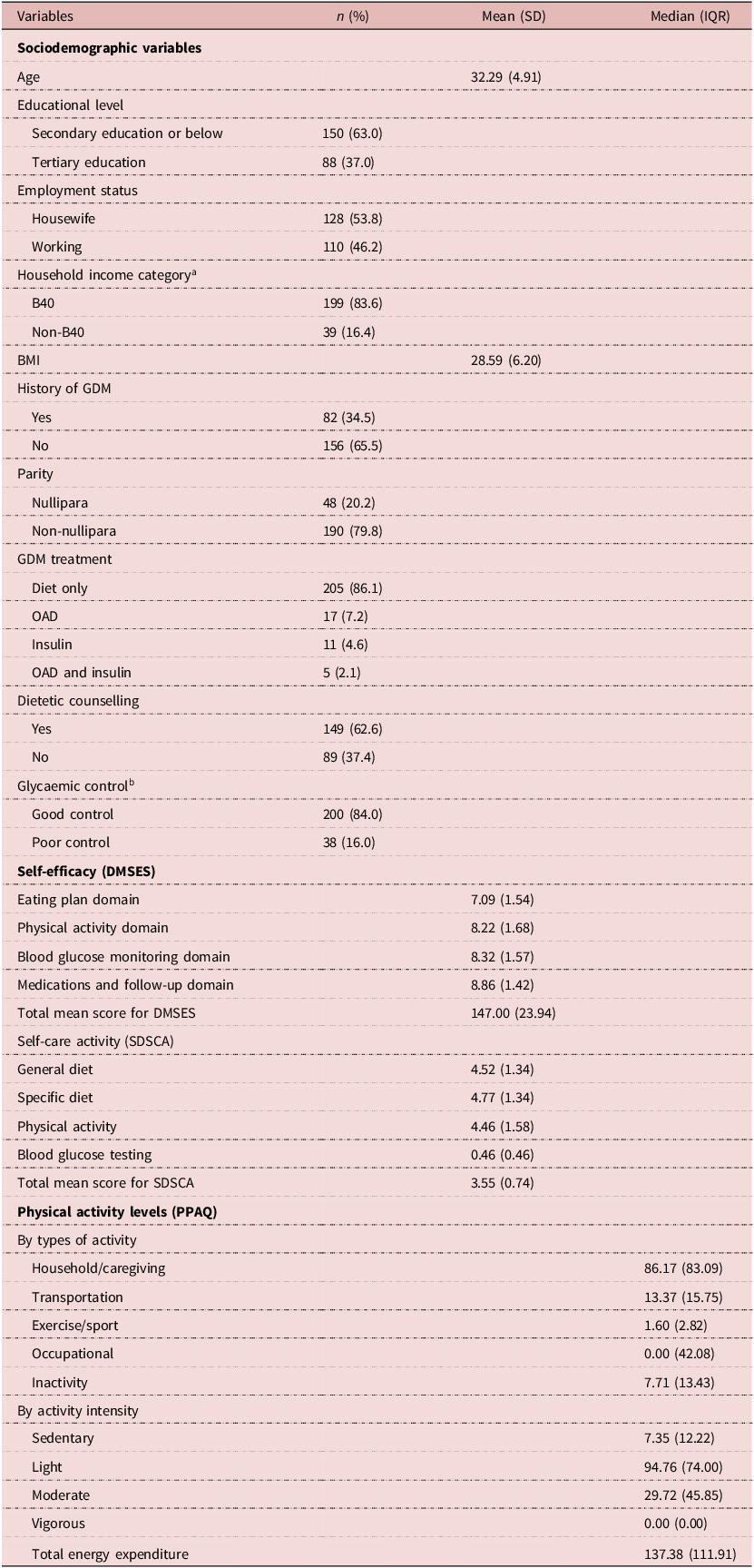
A total of 238 participants were included in the quantitative study. Table 1 below presents the sociodemographic characteristics, self-efficacy, self-care, and physical activity levels of the participants. The women had a mean (SD) age of 32.29 (4.91) years. The majority were Malay (99.6%) and married (99.6%). Approximately one-third had attained tertiary education (37.0%), had a history of GDM (34.5%), and received dietetic counselling (37.4%). More than half were housewives (53.8%). The majority belonged to the bottom 40% (B40) of the household income group (83.6%). The mean (SD) BMI was 28.59 (6.20) kg/m2. The mean (SD) score for overall self-efficacy and self-care activity was 147.00 (23.94) and 3.55 (0.74), respectively. The median (IQR) total energy expenditure was 137.38 (111.91) MET-h/week.
Background characteristics of participants (n = 238)

a Household income category based on Household Income Survey Report 2022 for Terengganu (Department of Statistics Malaysia, 2023); B40 = The bottom 40% of income earners (less than RM5,150).
b Good control = the mean for three latest pre-breakfast BGL readings ≤ 5.3 mmol/L; poor control = the mean for three latest pre-breakfast BGL readings > 5.3 mmol/L (Ministry of Health Malaysia, 2017).
The predictors of poor glycaemic control among women with GDM
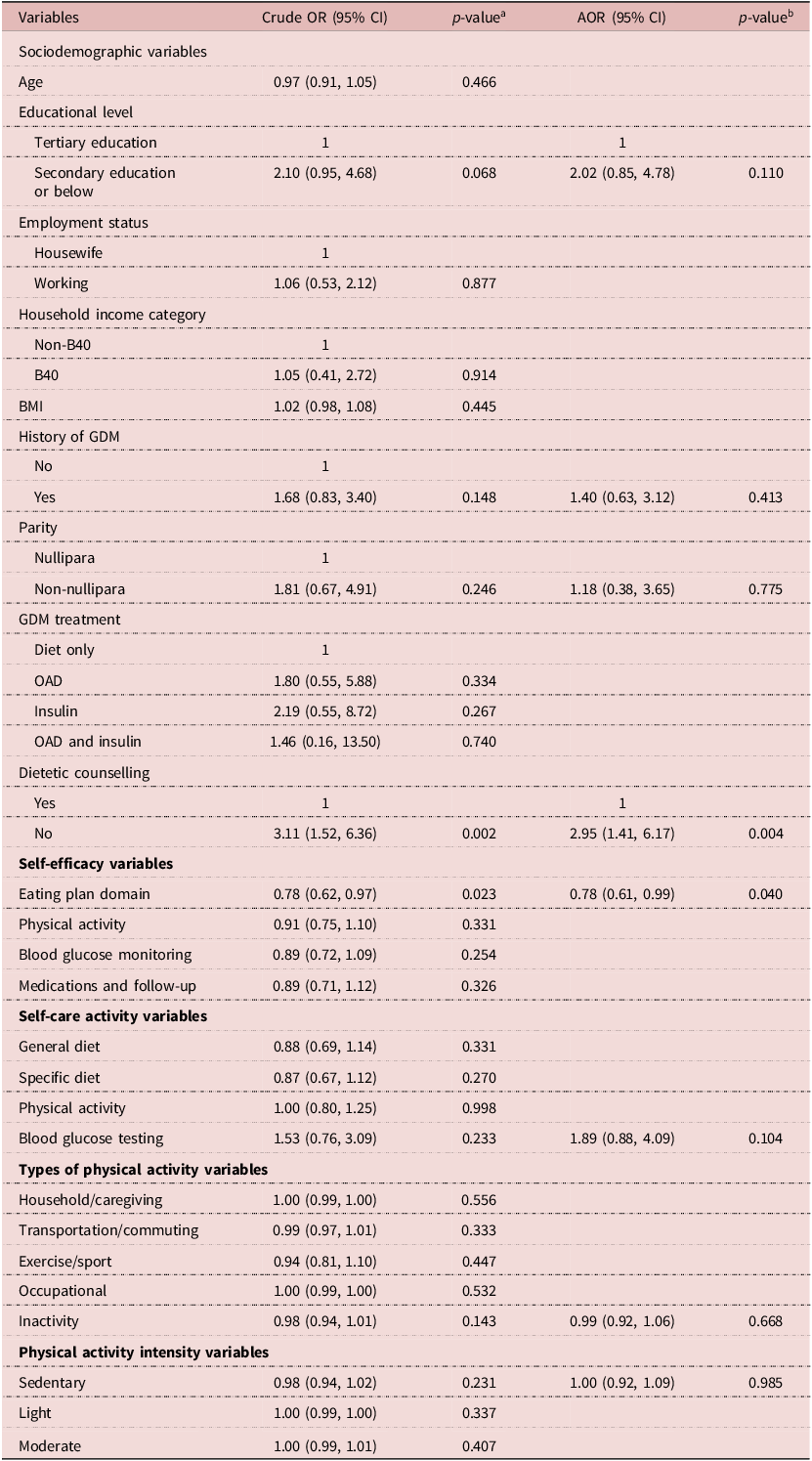
Using a simple logistic regression for univariable analysis, it was found that eight variables had p-values < 0.25, and thus were included in the multivariable analysis. In multivariable analysis, variables that were significantly associated with poor glycaemic control were dietetic counselling (AOR = 2.95; 95% CI: 1.41, 6.17; p-value=0.004) and diet self-efficacy (AOR = 0.78; 95% CI: 0.61, 0.99; p-value=0.040), as shown in Table 2 below.
Logistic regression analysis of factors associated with poor glycaemic control among women with gestational diabetes mellitus (GDM)
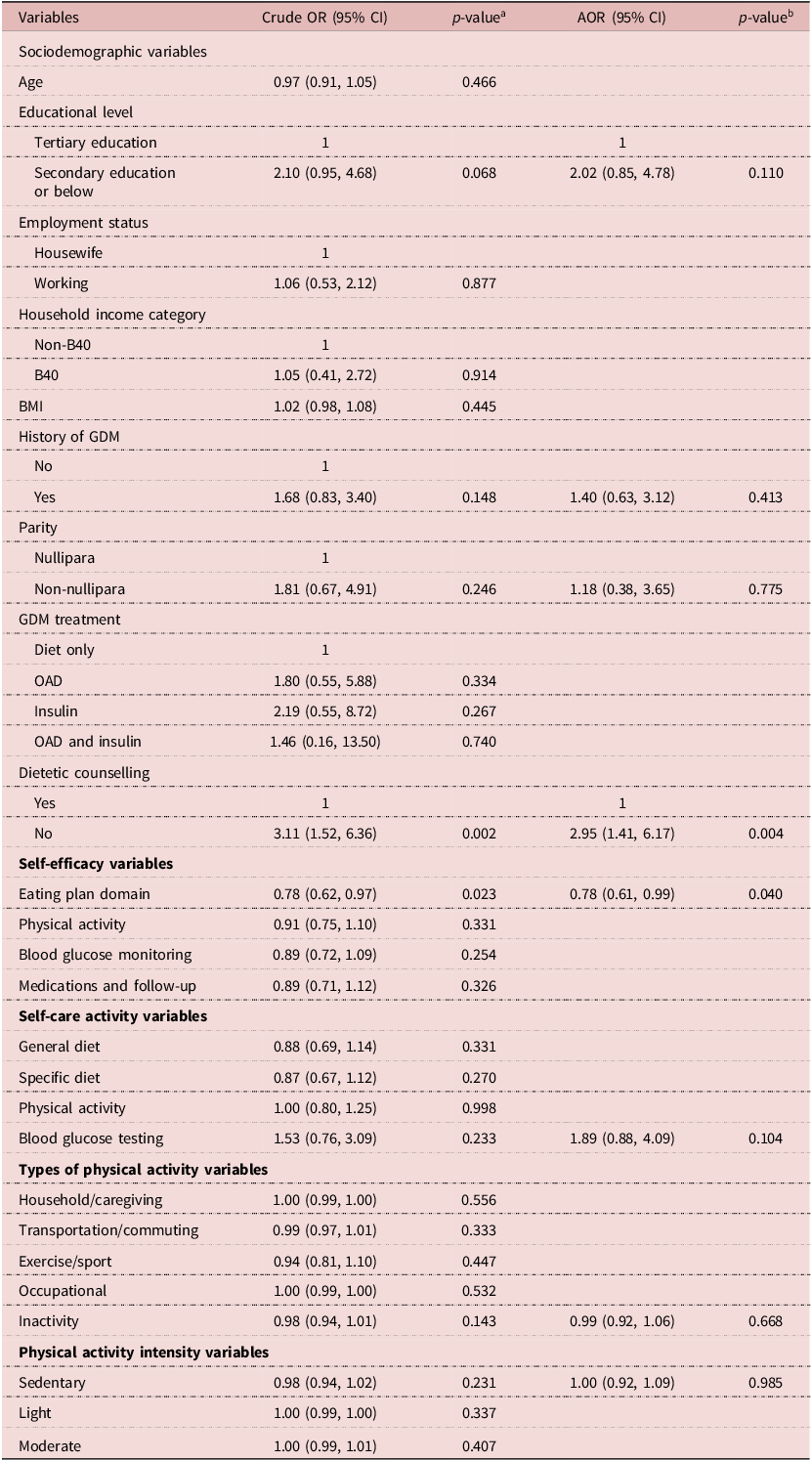
a Simple logistic regression;
b Multiple logistic regression.
Qualitative inquiry
Characteristics of participants of the study
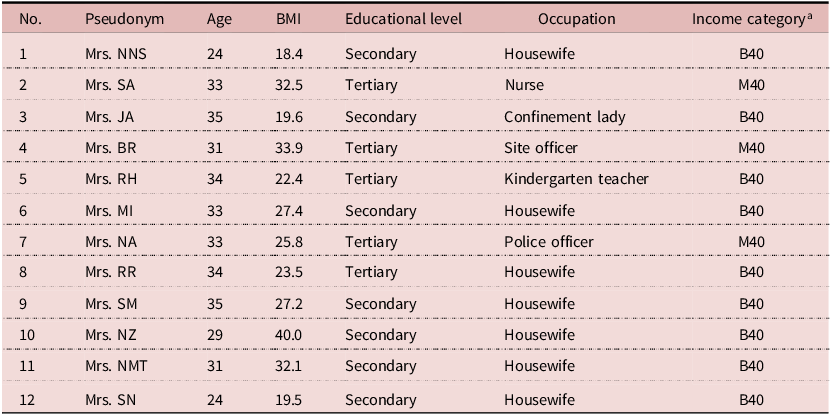
A total of 12 participants agreed to be interviewed. Table 3 below shows the sociodemographic characteristics of the study participants. The mean (SD) age was 31.33 (3.85) years. All participants were Malay and married. Less than half of the participants attained tertiary education (5 participants). More than half of them were housewives (7 participants). The majority of them fell into the bottom-income groups (9 participants). The mean (SD) BMI was 26.88 (6.69) kg/m2.
Summary of sociodemographic characteristics of participants (n = 12)

a household income category based on Household Income Survey Report 2022 for Terengganu (Department of Statistics Malaysia, 2023); B40 = The bottom 40% of income earners (less than RM5,150).
Perception and experiences of women with GDM in managing glycaemic control
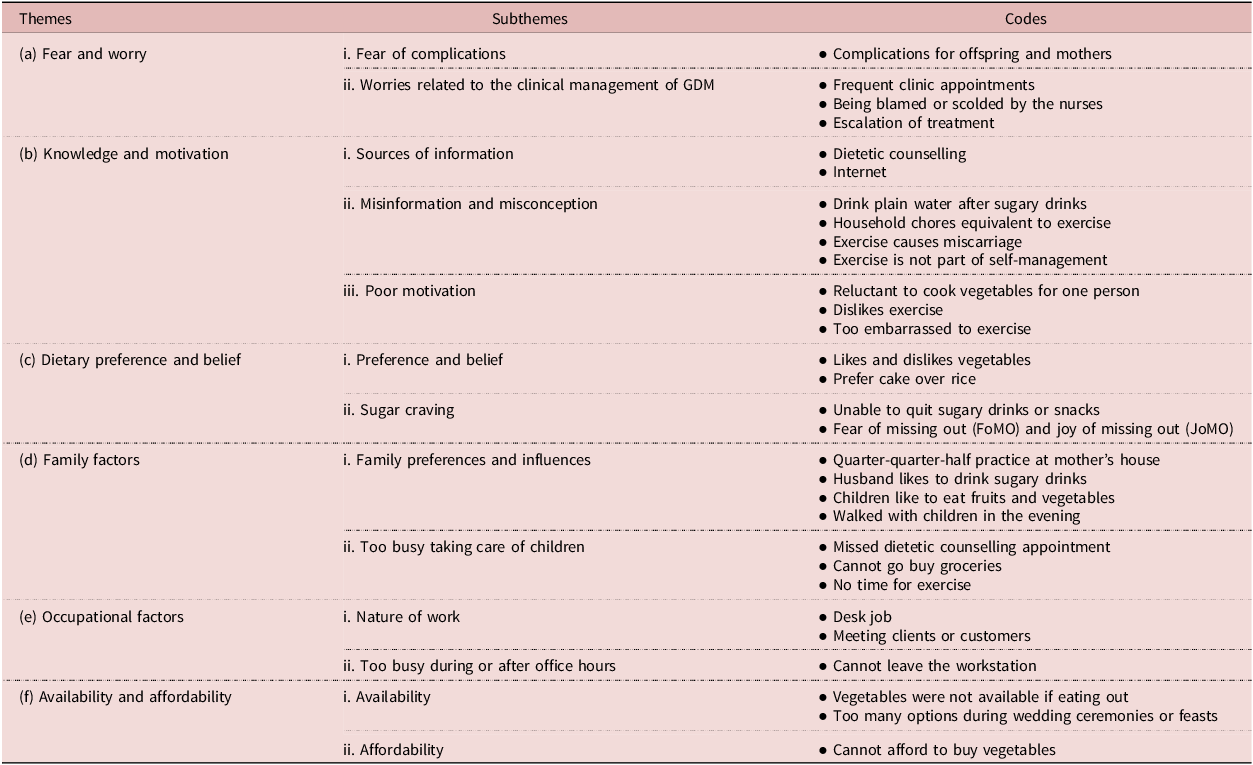
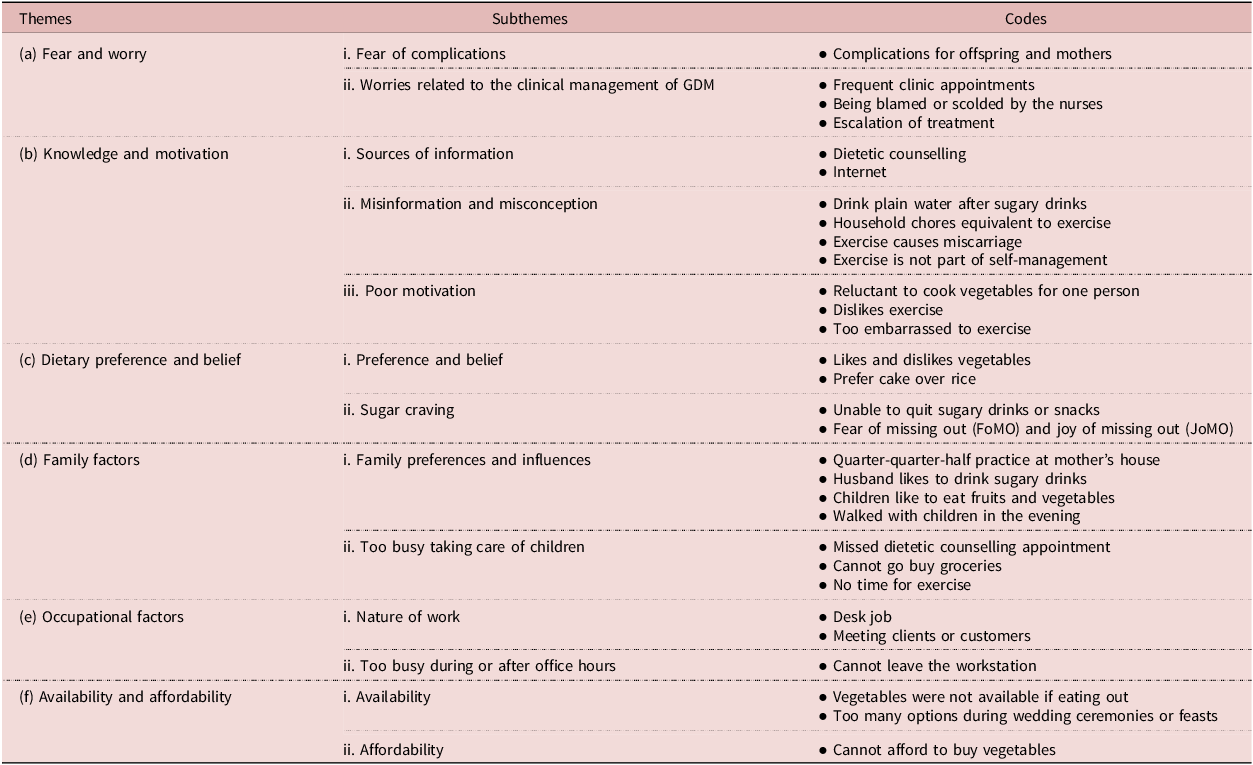
Based on thematic analysis, the six themes identified from the in-depth interview sessions were: (a) fear and worry; (b) knowledge and motivation; (c) dietary preference and belief; (d) family factors; (e) occupational factors; and (f) availability and affordability. The summary of themes and subthemes is shown in Table 4 below.
Summary of themes and subthemes that emerged from interviews
Theme 1: fear and worry
Most participants were motivated to modify their dietary habits due to concerns about potential complications associated with GDM. Macrosomia was the most common complication mentioned and linked to an increased likelihood of needing a caesarean section and ‘challenging’ postnatal care. One participant quoted:
‘For me, a caesarean section is a bit tough due to my weight. It’ll be difficult to move after the procedure. Besides, I have no one to help or take care of me. I have no one here’. [P10]
In addition to macrosomia, participants expressed worries about congenital disorders, intrauterine death, and the possibility of developing T2DM among both mother and offspring. However, some women perceived GDM as low severity, influenced by discussions with other women about their GDM experiences and the finding that GDM is not always considered a serious condition. This was reflected in how little effort they put into controlling their glycaemic status.
‘Then, I asked my friend who had GDM, she said it was nothing. That’s why I’m not worried… Sometimes, I control [my diet], sometimes I don’t … If I’m hungry, I eat. If I see someone eating, I will eat too, even though I just had a meal before’. [P6]
Another motivating factor for maintaining glycaemic control was concerns about the clinical management of GDM. Some participants worried about more frequent clinic visits for blood glucose testing if they had poor glycaemic control, especially those with young children or relying on husbands for transport. Others expressed their dissatisfaction with criticism from nurses if they had uncontrolled blood glucose readings, feeling that it was judgmental rather than supportive. One participant quoted:
‘When my pre-breakfast reading was high, the nurse would nag me. She said, “You didn’t follow the instructions correctly”, “You didn’t understand what the doctor explained to you”, “You’re not dieting.” She then scolded me’. [P12]
This sentiment was confirmed by nurses themselves, who felt the need to repeatedly stress the importance of maintaining good glycaemic control for the well-being of women with GDM and their offspring. Participants also worried about the possibility of the escalation in GDM management, such as starting insulin therapy, with one describing it as ‘a little bit scary’ based on past experiences, as she quoted:
‘I’m a little bit scared to inject insulin myself, the needle is longer… I just want to share my first insulin experience. When I found out that I needed to start insulin therapy, I felt sad and scared, I felt like crying… If possible, I don’t want it to happen again’. [P7]
For some women with GDM, these situations led to positive changes in their behaviours, such as avoiding coconut milk-based dishes and increasing vegetable consumption. On the other hand, others would implement several ‘hack’ strategies to ensure that their BGL readings were within the desired levels, such as stopping eating early on the day before BGL, reducing rice portions, eating more vegetables, drinking more plain water, walking longer distances, and abstaining from sugary drinks and snacks for several days beforehand.
‘For BGL, I really controlled my diet… I don’t eat sweet snacks around 3 days [before BGL]… After that, I start eating [snacks] as usual’. [P8]
‘Before that, I walked 2 complete rounds in the alley around my house. After being diagnosed with GDM, [I walked] 3 complete rounds, but not every day… [I did it] to control BGL readings [the next day]’. [P5]
Theme 2: knowledge and motivation
The study highlighted that adequate nutrition knowledge was pivotal in motivating women with GDM to actively improve their glycaemic control. Some participants attributed their dietary changes to the guidance received from dietitians during counselling sessions, including the quarter-quarter-half approach, which is based on the Malaysian Healthy Plate concept. This approach suggests that a plate should consist of a quarter of rice as rice is a staple food for Malaysian or other grain products (e.g., noodles, pasta, bread, and oats), a quarter of animal or plant protein (e.g., chicken, meat, fish, eggs, soya bean, and baked beans), and half of vegetables and fruits (e.g., leafy greens, coloured vegetables, raw vegetables or ulam, edible vegetable stems, and fruits) (National Coordinating Committee on Food and Nutrition, 2021). Additionally, participants also used strategies for reducing sugar intake. They reported that these sessions increased levels of self-efficacy in making positive dietary adjustments to better manage their GDM. This finding aligns with Phase 1 results, showing that women who did not attend dietetic counselling were three times more likely to experience poor glycaemic control.
Besides, participants also obtained information from online sources like Google and TikTok, particularly regarding dietary modifications, although they found that not all knowledge gained from these platforms translated into practical strategies for glycaemic control. For example, some expressed challenges in implementing suggestions, such as consuming kiwifruit, which is expensive and hard to find in their local neighbourhoods.
Some misinformation and misconceptions related to diet and exercise were identified to influence efforts in glycaemic control among women with GDM in this study. There was a misconception that drinking plain water after consuming sugary drinks helps to ‘rinse’ the sugar in the body to prevent high blood glucose levels. One participant quoted:
‘Usually, in a meeting, if [sugary beverage] is served, I would drink it. But I also drink plain water afterwards… People say if we drink a sugary drink, then we should drink plain water to rinse it back’. [P4]
Some participants, especially housewives, believed that their routine household chores were equivalent to exercise. Others refrained from exercising during their pregnancies because they believed it could lead to miscarriage. Surprisingly, some participants revealed they were unaware that exercise was essential for managing GDM since they noted healthcare providers only prioritise dietary aspects and overlook the importance of physical activity. One participant recounted searching online for information to improve glycemic control and finding an abundance of resources solely focused on dietary recommendations. Consequently, incorporating exercise into their daily routine was never considered part of their efforts to manage GDM.
Some women acknowledged a lack of motivation to adopt healthy lifestyle changes. One participant expressed reluctance to cook vegetables during the day, noting that she would be the only one eating them while her husband was at work.
‘Sometimes, I don’t feel like cooking vegetables… After all, my children don’t like to eat vegetables. So, I don’t feel like preparing vegetables just for myself… My husband is working, so he doesn’t eat at home’. [P6]
Despite understanding the benefits of exercise, some participants admitted feeling somewhat ‘lazy’ during this current pregnancy, even when it came to performing household chores. Another participant, a police officer, admitted to disliking exercise even before pregnancy, describing it as a ‘tiring’ activity. She expressed relief when exempted from training exercises at work during pregnancy, showing a sense of joy. She quoted:
‘I don’t like those types of activities (exercise)… Even before pregnant, I rarely exercise… If the district police headquarters organised physical training and I needed to join, then I would join the session. On normal days, I don’t exercise… It’s tiring even when I’m not pregnant’. [P7]
Theme 3: dietary preference and belief
Personal preferences and beliefs significantly influenced the adoption of healthy eating habits and exercise routines for managing glycaemic control. The study highlighted that consuming vegetables was not widely favoured among women, with some expressing a dislike for vegetables, while others noted occasional days when they lacked the motivation to eat them, despite generally enjoying them.
A caloric compensation was also noted among women in the study. This involves consciously reducing calorie intake at one meal or snack to reserve calories for a later, more desirable food item. A participant admitted a preference for cake over rice; if she craved cake later in the evening, she would skip rice at lunchtime. Alternatively, she would decrease her dinner rice portion, as having rice in the evening was a non-negotiable habit for her.
‘[I] watch the portion of rice. Otherwise, I can’t eat those unhealthy foods… Sometimes, I feel like eating cake. So, at night, I cut the portion of rice and eat a slice of cake… Or I don’t eat rice for lunch, so I buy cake’. [P4]
A major challenge in making dietary changes for glycaemic control was reducing sugar intake. More than half of the participants acknowledged that, despite concerns about the complications of GDM, they found it difficult to completely eliminate sugary beverages or snacks unless they faced a critical situation threatening the health of the baby or mother.
‘To stop drinking it completely, maybe I can’t. But, to cut back on it, I think I can do that… Unless it does have negative impacts on the foetus or the mother, like the glucose level is too high, then I might be able to quit it completely’. [P8]
Both fear of missing out (FoMO) and the joy of missing out (JoMO) also influenced glycaemic control among women with GDM. Some participants mentioned enjoying trying trending foods and beverages from social media. A participant even travelled to a neighbouring district to indulge in these trends. However, others were indifferent and did not feel compelled to follow the latest trends.
Theme 4: family factors
Family support can be a crucial factor in adhering to healthy lifestyle modifications in glycaemic control for GDM management. A participant shared her gratitude for her mother, a retired nurse, who consistently encouraged her to follow the quarter-quarter-half eating concept. She quoted:
‘If I’m having a meal at my mother’s house, I feel safer… She always asks me to dine at her house. Good for me because I know that the meal would be complete… She would be angry if I didn’t practise that [the quarter-quarter-half concept]’. [P4]
One participant mentioned that her child experienced constipation without fruit consumption, prompting her to regularly buy papaya or grapes to prevent this issue. Another participant highlighted that her children’s preference for vegetables encouraged her to frequently prepare vegetable dishes. Furthermore, some participants mentioned taking evening walks with their children, either in the park or around their neighbourhood.
Conversely, family dynamics can sometimes hinder the adoption of healthy eating habits towards good glycaemic control. One participant described her daily routine of preparing sugary drinks for her husband in the morning before his work, which they enjoyed together. Additionally, if her husband requested another drink in the evening, she would prepare and consume it with him. Some participants shared the challenges they faced in managing their glycaemic control while caring for their children. For example, one participant missed her dietetic counselling appointment because no one was available to look after her youngest child. She quoted:
‘I missed the dietetic appointment because no one could take care of my child. My third child is hard to control. During my third pregnancy, I stayed with my parents. I just moved to this house recently. When staying with my parents, I could ask my father to take me to the clinic and my mother take care of my children. But, in my new home, I’m alone. It’s difficult’. [P6]
Another participant said that she could only prepare food that was available in her house and could not go grocery shopping since her husband worked far away, and no one could take care of her children. Another participant described that her youngest child was ‘always attached to her’, making it challenging to find time for exercise.
Theme 5: occupational factors
The nature of employment significantly influenced the glycaemic control practices of working mothers. Desk jobs, where women spent most of their workday sitting and completing paperwork, did not facilitate physical activity. They typically walked only during their lunch break, restroom visits, or when visiting the prayer room.
Work requirements that involve frequent client meetings can also hinder healthy dietary practices, thereby compromising glycaemic control. A participant, who works as a confinement lady, encountered a dilemma in practising dietary control when her customers served sugary drinks and desserts like banana fritters. Another participant, who works as a site officer, quoted:
‘Usually at the site, I need to meet with the village chief. They don’t like to have meetings at sites. Instead, they prefer to meet at eateries… If they already ordered a sweetened drink for me [before I arrived at the eateries], it’s impossible not to drink it… It’s hard to refuse it…’ [P4]
Another participant, a police officer, shared that her demanding work schedule often led to delayed lunch at the canteen, where she would frequently find that the vegetable options had already been depleted, making it challenging for her to maintain a balanced diet.
Theme 6: availability and affordability
The availability of food significantly influences food choice among women with GDM. Participants commonly cited the unavailability of vegetables and fruits as a major issue when eating out. They noted that most eateries did not serve cooked vegetables, and the availability of raw vegetables was limited to a few slices of cucumber per dish. Another dilemma participants faced was the abundance of sugary drinks and snacks served at feasts or wedding ceremonies. Some admitted that they had low self-efficacy to control themselves in these social settings, occasionally succumbing to temptation and justifying ‘This only occurred once in a while’.
‘I’ll eat cakes during feasts … It’s only once in a while… It’s hard to control myself [during feasts], but I only ate a small portion… Maybe because there were so many food options [during feasts].’ [P5]
Income levels strongly affect the accessibility of healthy foods for women with GDM, impacting their ability to effectively manage their condition and follow dietary guidelines. The affordability of nutritious foods is a pivotal factor influencing glycaemic control among these women. Some participants voiced frustration about their financial limitations hindering their ability to include vegetables regularly in their diet.
‘We can’t afford to buy vegetables every day. My husband has been out of a job since two weeks ago… We only can afford to buy baby cucumber. If we bought it for 2–3 ringgit, then we can eat it 2–3 times’. [P9]
Discussion
This study used a mixed methods approach to identify predictors of poor glycaemic control among women with GDM and their perceptions and experiences in self-managing their medical condition. The findings of binary logistic regression analysis revealed that dietetic counselling and diet self-efficacy were significantly associated with poor glycaemic control. Women with GDM who did not attend dietetic counselling had 3 times higher odds of having poor glycaemic control. This finding is consistent with a study in Saudi by Alshareef et al. (Reference Alshareef, Alkhathlan, Alwabel, Al-Bawardi, Alqarni, Almuryidi, Altuwaim, Alhabib, Almuzaini and Alqahtani2018) where patients who had a dietitian follow-up had lower HbA1c levels compared to their counterparts. Although dietary behaviour is influenced by various factors (such as cultural background, sociodemographic conditions, and food environment), nutritional knowledge remains the main factor in shaping one’s dietary patterns (Ali et al., Reference Ali, Jarrar, El Sadig and Yeatts2013).
Dietitians can provide individualised nutrition education that is tailored based on women’s characteristics (cultural and sociodemographic conditions) and needs, which is found to be more effective in modifying dietary practices (González-Rodríguez et al., Reference González-Rodríguez, Perea-Sánchez, Veiga-Herreros and Peral Suárez2019). The findings in the qualitative inquiry further support the important role of dietitians in dietary changes among women with GDM. This individualised nutrition education received by participants not only enhances the relevance and effectiveness of dietary recommendations but also fosters a sense of empowerment and increases self-efficacy in adhering to healthier eating habits. This underscores the importance of personalised dietetic counselling in empowering women with GDM to make sustainable and healthy choices during pregnancy and beyond. Unfortunately, in Malaysia, due to the shortage of numbers of nutritionists and dietitians in our healthcare setting, women with GDM typically have small opportunity to visit dietitian, probably once during the pregnancy, with some having access to the dietetic counselling just a few weeks prior to their estimated due date. While counselling from doctors or nurses is valuable, however, it may not be sufficient since they are not the experts in dietary management for GDM. This limited access to the dietary counselling would significantly influenced the glycemic control, as doctors and nurses in Malaysia were not well-trained in nutrition and exercise. Women in this study were struggling with understanding of dietary and exercise management for glycemic control.
Diet self-efficacy was found to be a protective factor against poor glycaemic control in this study, which is consistent with a study by Al-Khawaldeh et al. (Reference Al-Khawaldeh, Al-Hassan and Froelicher2012). The relationship between self-efficacy and glycaemic control has been consistently documented in earlier studies, highlighting that higher levels of self-efficacy are associated with good adherence to self-care behaviours and, subsequently, positively influence glycaemic outcomes (Ahmad Sharoni and Wu, Reference Ahmad Sharoni and Wu2012; Alaboudi et al., Reference Alaboudi, Hassali, Shafie and Saleem2016; Al-Nadhiri et al., Reference Al-Nadhiri, Al-Hashmi, Alaloul and Al-Omari2023).
The qualitative inquiry demonstrated that glycaemic control was not only influenced by internal factors (such as fear and worry, knowledge and motivation, and dietary preference and belief) but also external factors such as family factors, occupational factors, and availability and affordability of food.
Fear and worry appear to be the primary motivator for making lifestyle changes. Participants who voiced concerns about the complications of GDM or its clinical management were more likely to make efforts to adhere to dietary modifications and physical activity, despite not meeting the recommended levels. This observation supports the findings of Khan and Ali (Reference Khan and Ali2017), highlighting that individuals who perceive themselves at risk of serious consequences are more motivated to take action, particularly when they have high self-efficacy and believe in the benefits of those actions.
Overall, the complications of GDM are well-known to the participants, even though they were more concerned about the short-term complications. This indicates a low level of awareness and health education on the possibility of developing T2DM among mothers and offspring in the future. In addition, commonly, GDM is considered a mild and temporary condition, similar to the findings by He et al. (Reference He, Chen, Wang, Liu and Bai2021). To address this issue, healthcare providers should emphasise the importance of understanding and preventing long-term complications for both mothers and their offspring. Increased awareness and education should be provided through GDM/diabetes clinics or the appropriate diabetes department, promoting sustained healthy lifestyles among women with GDM.
Surprisingly, this study revealed that participants sometimes resorted to various strategies related to dietary control and physical activity to manipulate blood glucose readings into normal ranges. Persistent high BGL readings indicate intensified treatment for GDM, including the initiation of oral antidiabetic drugs and/or insulin therapy, which requires more frequent BGL and clinic visits, and may involve elective induction of labour between 37 and 38 weeks (Ministry of Health Malaysia, 2017). However, these strategies may expose both the women and their offspring to risks of short- and long-term complications. Even if documented glucose levels appear normal, persistent hyperglycaemic conditions in the uterus can significantly increase the risk of several complications, including macrosomia, shoulder dystocia, perineal tear, instrumental delivery, emergency caesarean section, neonatal hypoglycaemia, childhood obesity, and metabolic syndrome (KC et al., Reference Kc, Shakya and Zhang2015). These findings underscore the importance for healthcare providers not only to rely on documented BGL readings but also to ensure that women with GDM understand the importance of maintaining optimal glycaemic control and practising proper lifestyle modifications throughout their pregnancies.
Several misconceptions emerged from the qualitative inquiry. Women consider household chores to be sufficient to replace exercise, which is consistent with the findings by Bandyopadhyay et al. (Reference Bandyopadhyay, Small, Davey, Oats, Forster and Aylward2011) and Smith et al. (Reference Smith, Whitehead, Sheats, Chubb, Alema-Mensah and Ansa2017). However, these household chores fall short of meeting the recommendation set forth by the World Health Organization (2020), which advises pregnant women to engage in at least 150 minutes of moderate-intensity activity per week. Another common misconception is the belief that exercise can harm the baby or lead to miscarriage (Bandyopadhyay et al., Reference Bandyopadhyay, Small, Davey, Oats, Forster and Aylward2011; Harrison et al., Reference Harrison, Taylor, Shields and Frawley2018; Plachetka et al., Reference Plachetka, Głowacka, Grajek and Krupa-Kotara2023), although extensive research has consistently shown that pregnant women can safely engage in various types of exercises, including aerobic, strength, and resistance training (Di Biase et al., Reference Di Biase, Balducci, Lencioni, Bertolotto, Tumminia, Dodesini, Pintaudi, Marcone, Vitacolonna and Napoli2019).
Another issue that emerged in the qualitative inquiry was high sugar intake. Participants admitted that despite concerns about complications of GDM and awareness of high sugar intake, they were still unable to stop consuming sugary drinks completely. This finding is consistent with previous studies (Lewallen, Reference Lewallen2004; He et al., Reference He, Chen, Wang, Liu and Bai2021; Su et al., Reference Su, Chang and Sun2021). Similarly, the practice of caloric compensation, driven by compensatory beliefs, raises significant concerns. Compensatory beliefs are a perception that any unhealthy behaviours can be balanced by other healthy behaviours (Kronick et al., Reference Kronick, Auerbach, Stich and Knäuper2011). Individuals who adhere to these beliefs may consume high-calorie snacks or beverages under the assumption that they can balance their intake by reducing food portions (known as caloric compensation), skipping meals, or planning to exercise later. However, ineffective compensatory behaviours, such as failing to compensate after a heavy meal or overcompensating after a light meal, can result in overall high energy intake (Pai and Sabharwal, Reference Pai and Sabharwal2023). Furthermore, over time, adherence to compensatory beliefs may negatively impact intentions for behavioural change. People who consistently rely on these beliefs may become desensitised to feelings of guilt, making it easier for them to repeatedly engage in unhealthy behaviours (Radtke et al., Reference Radtke, Kaklamanou, Scholz, Hornung and Armitage2014).
Support from spouses and children can act as powerful motivators, encouraging women with GDM to adhere to healthy lifestyles such as preparing healthy foods and engaging in regular exercise. Conversely, a lack of support from family members may hinder their ability to adhere to these healthy lifestyles and achieve optimal glycaemic control, similar to findings by Martis et al. (Reference Martis, Brown, McAra-Couper and Crowther2018). In addition, a lack of childcare support emerged as a significant barrier to achieving optimal glycaemic control, as highlighted in various previous studies (Carolan et al., Reference Carolan, Gill and Steele2012; Todorovic et al., Reference Todorovic, Terzic-Supic, Bjegovic-Mikanovic, Piperac, Dugalic and Gojnic-Dugalic2020; Al-Nadhiri et al., Reference Al-Nadhiri, Al-Hashmi, Alaloul and Al-Omari2023). Healthcare providers should be aware of these challenges and work with patients to find solutions, such as providing flexible clinic appointment times that accommodate patients’ schedules, suggesting practical physical activity options that fit into their daily routines, exploring other supportive measures tailored to individual needs, and so on.
Certain natures of work pose challenges to maintaining a healthy lifestyle. Prolonged desk work promotes sedentary behaviour, which should be avoided, especially by women with GDM, due to its negative impact on blood glucose levels and overall health. Those who are overly occupied with their workstations may opt for convenient yet unhealthy choices (like consuming sugary drinks multiple times daily) or have limited access to healthier food options, particularly vegetables, after lunch breaks. Jobs involving frequent meetings with clients or customers add further complexity. In Malay culture, serving food as a gesture of hospitality is customary, reflecting values of generosity and respect. However, for those adhering strictly to dietary recommendations, refusing food may be seen as impolite, posing a dilemma. A similar finding was discovered by Carolan et al. (Reference Carolan, Gill and Steele2012), where one participant disclosed feeling compelled to eat a small bowl of pasta during a family gathering, despite anticipating elevated blood sugar levels, driven by a desire to avoid offending her mother.
Food availability and affordability significantly shape the dietary decisions of women with GDM. Participants in this study highlighted the lack of vegetable options when eating out as a primary concern, consistent with findings from previous studies (McGuffin et al., Reference McGuffin, Price, McCaffrey, Hall, Lobo, Wallace and Livingstone2015; Al-Hashmi, Reference Al-Hashmi2017; Al-Nadhiri et al., Reference Al-Nadhiri, Al-Hashmi, Alaloul and Al-Omari2023). Conversely, the abundance of food choices at social gatherings or during festive occasions presents a dilemma for some women with GDM, echoing observations made by Al-Hashmi (Reference Al-Hashmi2017) and Ahmad Sharoni and Wu (Reference Ahmad Sharoni and Wu2012). Affordability emerged as another significant issue from the qualitative inquiry, posing a barrier for individuals striving to adopt healthy eating practices. This finding is consistent with Martis et al. (Reference Martis, Brown, McAra-Couper and Crowther2018) and He et al. (Reference He, Chen, Wang, Liu and Bai2021). This highlights the importance of individualised dietetic education by healthcare providers, which should be tailored to clients’ socioeconomic backgrounds.
Limitations of the study
This study has several limitations. Firstly, it was conducted in only two districts within Terengganu state, where the Malay population dominates (98%–99%), limiting the generalisability of findings to other ethnic groups due to the sample’s homogeneity. Secondly, due to time constraints, the qualitative inquiry was delayed several months after the quantitative phase, with more than half of the participants having already given birth, potentially introducing recall bias. Thirdly, the interviewer’s role as a medical doctor may have influenced social-desirability bias among participants. Lastly, the inability to conduct member checking due to some participants being unreachable also posed a limitation. Therefore, the interpretation and extrapolation of the findings from this study should consider these limitations.
Conclusion
Our mixed-methods study aligns with previous research, which highlights that glycaemic control is influenced by both internal and external factors (Martis et al., Reference Martis, Brown, McAra-Couper and Crowther2018; Meena et al., Reference Meena, Venkatachalam, Chinnakali, Olickal, Kumar, Subramanian and Dasari2021). Healthcare providers must take into account not only the medical aspects but also the sociocultural context when delivering personalised care for women with GDM. This approach ensures more holistic and effective management of the condition.
Acknowledgements
The authors acknowledged Siti Khuzaimah Ahmad Sharoni for the permission to use the validated Malay version of the Diabetes Management Self-Efficacy Scale (DMSES-M) and the Summary of Diabetes Self-Care Activity (SDSCA-M) and Lisa Chasan-Taber for the permission to use the PPAQ. The authors would like to extend their gratitude for the postgraduate financial aid (Tabung Insentif Pembangunan Pengajian Siswazah) received from the School of Medical Sciences, Universiti Sains Malaysia. The authors would like to thank the Director, General of Health Malaysia for his permission to publish this article.
Funding statement
School of Medical Sciences, Universiti Sains Malaysia (USM/PPSP/PG/2.0/026(24))
Competing interests
The authors have no conflicts of interest to declare.
Ethical standard
The study was approved by the Medical Research and Ethics Committee, Ministry of Health Malaysia (reference number: NMRR ID-23-00601-JYM) and the Human Research Ethics Committee, Universiti Sains Malaysia (reference number: USM/JEPeM/KK/23010144).

 Open access

