


Childhood and adolescence are important formative developmental stages that lay the groundwork for well-being and mental health in adulthood. Reference Luthar1,Reference Ford, Goodman and Meltzer2 The evidence base for school-based programmes that aim to promote well-being, support emotional and social learning and prevent mental heath problems in adulthood is growing. Reference Durlak and Wells3,Reference Cuijpers, van Straten, Smit, Mihalopoulos and Beekman4 Interventions that target important and clearly articulated mechanisms have larger effects. Reference Weare and Nind5 Moreover, interventions that are designed with implementation in mind are likely to prove more acceptable. Reference Durlak and DuPre6
There is substantial and growing evidence for mindfulness-based approaches for adults with chronic physical and mental health problems. Reference Williams and Kuyken7 The evidence for using mindfulness-based approaches with young people is preliminary, but growing. Reference Harnett and Dawe8 The Mindfulness in Schools Programme (MiSP) has been developed as a universal intervention for young people in secondary schools. It is a complex intervention that includes elements that are applicable to young people who are stressed and experiencing mental health difficulties, are in the normal range of mental health or who are flourishing. By teaching mindfulness as a way of working with everyday stressors and experiences, participants across the full range of the normal distribution of well-being can potentially benefit. Reference Huppert9 As a universal intervention it also minimises inequalities in accessing the intervention and the acceptability, stigma and social comparison that often arise when targeting interventions at subgroups of young people within schools. Finally, the MiSP curriculum is designed to fit into the school curriculum and, following appropriate training, be taught by school teachers embedded in the schools, which reviews suggest is necessary for long-term sustainability. Reference Weare and Nind5 This non-randomised controlled feasibility study investigated the acceptability of the programme for teachers and students in schools with young people aged 12-16, taught as a 9-week programme by the original course developers and by those trained by them. We reasoned that the 12-16 age range represents a key developmental window for self-regulation and is a period when young people need to negotiate many academic and social stressors for the first time. The study further aimed to establish the first test of the MiSP's efficacy in terms of well-being and mental health immediately following the programme and 3 months later, when students were faced with the challenge of end of year exams.
Method
Design and procedures
This feasibility study was a non-randomised controlled parallel group (MiSP programme v. matched control group) study, with assessment of outcomes at baseline (pre-intervention), post-intervention and follow-up (3 months after baseline). Students' views of the acceptability of the MiSP programme were assessed at post-intervention and follow-up. The MiSP curriculum was offered in schools as part of the normal curriculum, typically replacing classes in religious studies or personal, social and health education.
Schools were invited to participate via the head teacher. Participating schools then informed parents, with an option for parents to opt their children out of the study. Students who opted out were provided with alternative activities during the mindfulness classes and were not asked to complete the study measures. Control schools delivered their curriculum as they would normally, including any social or emotional components of the curriculum.
The participating intervention and control schools were selected from the pool of schools that either had teachers trained in the MISP curriculum or who had expressed an interest in being trained. Schools were chosen for the intervention arm on the basis that they had a teacher who was either one of the MISP developers or had been trained by the team who had developed the curriculum. Control schools were selected to match intervention schools on several key matching criteria: fee-paying private schools v. publicly funded schools, year group and published school-level academic results. To balance any teacher allegiance/motivation effects, we chose control schools where teachers were interested in the mindfulness programme, but had not yet been trained or delivered the MiSP curriculum.
Baseline data were collected at the beginning of school term 2 (January 2012). The intervention was delivered in the first term of the 2012 calendar year (January to March 2012). Post-treatment data were collected at the end of term 2 (March 2012) and follow-up data in term 3 (May 2012). The third follow-up was designed to test the MiSP curriculum's stress reduction potential at a time of high stress, the summer exam period. To maximise data completeness, data were collected either through an online portal or through paper and pencil measures, whichever was preferred by the school, teacher and/or students. The study was ethically approved by the University of Exeter Psychology Department Ethics Committee (Ref. 2011/527, December 2011).
Participants
As a universal intervention, all consenting young people in participating classes were included.
The MiSP curriculum and teachers
The MiSP curriculum is a set of nine scripted lessons tailored to secondary schools, supported by tailored teacher training. Mindfulness involves learning to direct attention to immediate experience, moment by moment, with open-minded curiosity and acceptance. Reference Bishop, Lau, Shapiro, Carlson, Anderson and Carmody10 New skills are learned in a highly practical way, through experience of mindfulness practices and application in everyday life. Reference Kabat-Zinn11 The intention is that when young people use mindfulness to work with mental states, everyday life and stressors this will cultivate well-being and promote mental health (see Meiklejohn et al Reference Meiklejohn, Phillips, Freedman, Griffin, Biegel and Roach12 ).
The MiSP curriculum is drawn from a lineage of contemplative mindfulness traditions, Reference Goldstein and Kornfield13 from mindfulness-based stress reduction Reference Kabat-Zinn14 and from mindfulness-based cognitive therapy. Reference Segal, Williams and Teasdale15 The MiSP curriculum was developed iteratively over 4 years, with the input of more that 200 teachers who have been trained to teach the MiSP curriculum and more than 2000 young people who have participated in the programme. It was designed in line with principles identified as important for effectiveness in several reviews of schools-based programmes that promote mental health and well-being and teach social and emotional competence. These principles include: explicitly teaching skills and attitudes; shortening and adapting components to suit young people; using a range of age-appropriate, interactive, experiential and lively teaching methods; providing age-appropriate resources to bring mindfulness to life (including a course booklet and a set of mindfulness exercises on CD or MP3 audio files); intensive, focused teacher education to build teachers' self-efficacy and well-being; and programme implementation that pays close attention to clarity and fidelity, in this case supported by a manual and indicative script. Reference Weare and Nind5,Reference Durlak and DuPre6
The teachers were either the MiSP curriculum programme developers, or had been trained and approved as ready to teach the MiSP curriculum by its developers. This means that teachers could deliver the curriculum with a high degree of understanding and fidelity.
Study measures
Standard participant demographic information (age, gender and ethnicity) was collected at baseline. The outcome measures were collected at the three time points (baseline, post-intervention and follow-up) and the programme acceptability measures were collected from participants at post-intervention and follow-up.
Acceptability measures
To assess the acceptability of the programme students completed a feedback evaluation questionnaire immediately after the end of the MiSP curriculum. This included questions about the number of lessons attended, the number of times participants had practised mindfulness outside of class, how much they felt they had learnt during the course, how much they enjoyed the course, how helpful they found the classes and whether they thought they would continue to use what they had learnt in their lives.
At the final follow-up, 2-3 months after the end of the MiSP course, students were asked to complete a further evaluation questionnaire to establish the extent to which they continued to make use of the main mindfulness practices taught within the programme. This included a general question abount mindfulness practice and four questions about specific mindfulness practices taught in the MiSP curriculum. The frequency with which these practices had been used since completing the course was assessed on a six-point scale (never to almost every day).
Two months after the course the MiSP teachers were asked to rate their perceptions of the level of pupil engagement and interest, how much they felt the pupils ‘got it’ (i.e. understood what mindfulness is about) and their confidence and enjoyment in teaching the course on a ten-point Likert scale.
Outcome measures
Well-being. To assess well-being we used the Warwick-Edinburgh Mental Well-being Scale (WEMWBS). Reference Stewart-Brown, Tennant, Tennant, Platt, Parkinson and Weich16-Reference Tennant, Hiller, Fishwick, Platt, Joseph and Weich18 The scale is designed to capture a broad conception of well-being including affective-emotional aspects, cognitive-evaluative dimensions and psychological functioning. The scale consists of 14 items each answered on a five-point scale, ranging from none of the time (1) to all of the time (4), and is scored by summing all the items into a total well-being score (range 14-70). A sample item is ‘I've been feeling optimistic about the future’. The WEMWBS has been shown to have good validity, internal consistency and test-retest reliability with a large sample of students (n = 354) and a general population sample (n = 2075). Reference Tennant, Hiller, Fishwick, Platt, Joseph and Weich18
Mental health. To assess mental health we used two measures, each assessing specific dimensions that we hypothesised should be amenable to change in mindfulness-based interventions. The ten-item version of the Perceived Stress Scale (PSS) Reference Cohen19-Reference Pbert, Doerfler and Decosimo21 was used to assess the degree to which life in the past month was perceived as stressful, unpredictable and uncontrollable on a five-point scale (never to very often) that is summed into a total score (range 0-40). A sample item is ‘In the last month, how often have you felt nervous and stressed?’ This scale has demonstrated good reliability, validity and sensitivity to change. Reference Hewitt, Flett and Mosher20-Reference Jacobs and Thornton22
To assess the presence and severity of depressive symptoms in the past week we used the eight-item Center for Epidemiologic Studies Depression Scale (CES-D) Reference Coyle and Roberge23 rated on a five-point scale (never (1) to often (5)) and summed into a total score (range 8-40). A sample item is ‘How much of the time during the past week have you felt depressed?’ The CES-D is extensively used, including with young people, and the 20-item version for adolescents has shown evidence of good reliability, validity and sensitivity to change. Reference Radloff24,Reference Fendrich, Weissman and Warner25 This short version was used in a large-scale European study and demonstrates adequate reliability and validity, although cut-offs for ‘caseness’ with the short version are as yet not established. Reference Bracke, Levecque and Van de Velde26
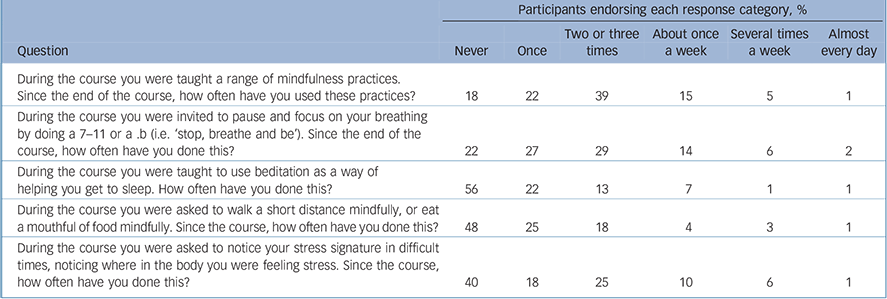
Mindfulness practice. For the participants in the MiSP group only we assessed mindfulness practice using five questions about sustained use of mindfulness practices in the 3 months following completion of the MiSP curriculum.
Statistical analyses
Participants that provided data at follow-up were included in the analysis (i.e. analysis of completers) with participants analysed according to the study arm to which they were allocated. Quantitative characteristics are reported using means and standard deviations (or medians and interquartile ranges) and categorical characteristics using percentages. We report summaries for the acceptability measures, the baseline characteristics of each trial arm and the results of outcome comparisons at post-intervention and 3-month follow-up between the intervention and control arms. Unadjusted between-arm comparisons and comparisons that are adjusted for the potential confounders gender, age and the baseline score of the outcome are estimated using random-effects linear regression models to allow for the correlation between the outcomes of children from the same school (cluster). Confidence intervals and P-values were constructed using degrees of freedom based on the number of school clusters rather than the number of children. Random-effects linear regression models were fitted within the intervention arm to examine whether children that showed the greatest use of the MiSP's core mindfulness practices had better outcomes. All analyses were carried out using Stata software version 2.1 for Windows.
Results
Six schools received the MiSP curriculum with a total of 256 children participating in the trial from those schools. Each of these schools was matched to a control school with a total of 266 children recruited into the control group. Six fee-paying private schools and 6 publicly funded schools participated and there was one selective grammar school in each arm. We included schools with varying academic results, including small cohorts in special needs schools in each arm.
The nine-lesson (weekly) manualised MiSP curriculum was taught by seven different teachers, six of whom were male. They had taught the curriculum for an average of 1.8 years, with the two authors of the course having taught it for 3 years each (i.e. since its inception) and all the rest for between 1 and 2 years. They had been teaching for a mean of 12 years.
Five schools in the intervention arm offered the MiSP curriculum programme as a universal intervention with the whole class participating in the course as part of the regular school curriculum, but in one school a single class of 26 children participated voluntarily during the lunch break. The rate of student participation varied across the schools from a single class within a single year group to all classes in a year group. The rate of attrition from the MiSP classes was less than 1%.
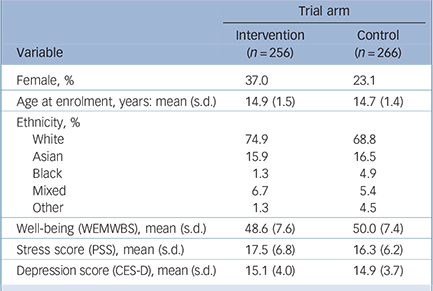
Of the children recruited in the schools receiving the MiSP curriculum, 99.6% (255/256) provided data for at least one outcome at post-intervention compared with 87.2% (232/266) in the control arm. At the 3-month follow-up 95.3% (244/256) of children in the intervention arm and 85.0% (226/266) in the control arm provided data for at least one outcome. The characteristics of the children at recruitment are summarised for each of the trial arms in Table 1. Overall, the characteristics were similar between the two arms except a slightly greater proportion of females in the MiSP group. Two-thirds of the children were male.
Acceptability of the MiSP curriculum
On completing the course, 248 young people (97%) in the intervention arm schools completed programme evaluations. They attended a mean of 7.5 (out of 9) lessons (median 8, range 0-9). On ten-point Likert scales, mean enjoyment and interest was 7.0 (median 8; range 0-10) and mean amount learnt was 6.6 (median 7, range 0-10). When asked to respond to the question ‘In the future, how likely are you to use the techniques you have learned?’ on a ten-point Likert scale, the mean response was 5.9 (median 6, range 0-10).
A total of 242 participants in the intervention arm (95%) completed a second evaluation 2-3 months after the end of the programme to establish how much they were still using the mindfulness practices taught in the programme. Table 2 summarises the responses children in the intervention group gave on the extent to which they practiced the principles of the programme after completing the course. Around 80% of the children had used the practices to varying levels. A similar percentage of the children had focused on their breathing. Far fewer children, however, had used beditation (44%), walked a short distance or eaten a mouthful of food mindfully (52%) or noticed where in the body they were feeling stress (60%).
Two months after the course all the MiSP curriculum teachers were asked to rate their experience of teaching the curriculum on a ten-point Likert scale. Mean perceived pupil engagement and interest was 7.6 (median 8, range 5.5-9). The mean ratings for how much the pupils ‘got it’ (i.e. understood what mindfulness is about) was 6.8 (median 7, range 6-8). Teachers rated their confidence in teaching the course as 8.7 (median 9, range 7-10); and their own enjoyment of teaching the course as 8.6 (median 9, range 6.5-10).
The impact of the MiSP curriculum on well-being and mental health
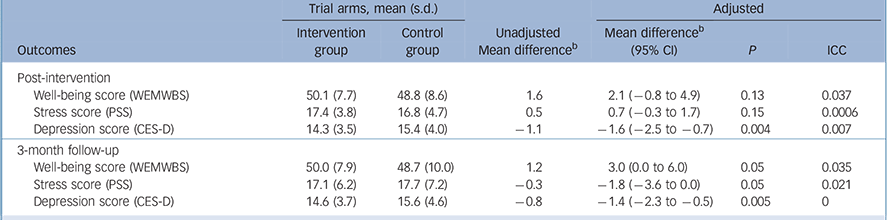
Table 3 summarises the results from the comparison of outcomes between the two trial arms at post-intervention and 3-month follow-up, showing mean differences both unadjusted and adjusted for baseline imbalances. In the unadjusted analyses, there was little evidence of a difference between the trial arms at post-intervention with respect to mental health and well-being. However, after adjusting for gender, age and ethnicity there was strong evidence of lower depression scores in the intervention arm (P = 0.004).
Table 1 Participant characteristics at baselineFootnote a
| Trial arm | ||
|---|---|---|
| Variable | Intervention (n = 256) |
Control (n = 266) |
| Female, % | 37.0 | 23.1 |
| Age at enrolment, years: mean (s.d.) | 14.9 (1.5) | 14.7 (1.4) |
| Ethnicity, % | ||
| White | 74.9 | 68.8 |
| Asian | 15.9 | 16.5 |
| Black | 1.3 | 4.9 |
| Mixed | 6.7 | 5.4 |
| Other | 1.3 | 4.5 |
| Well-being (WEMWBS), mean (s.d.) | 48.6 (7.6) | 50.0 (7.4) |
| Stress score (PSS), mean (s.d.) | 17.5 (6.8) | 16.3 (6.2) |
| Depression score (CES-D), mean (s.d.) | 15.1 (4.0) | 14.9 (3.7) |
WEMWBS, Warwick-Edinburgh Mental Well-being Scale; PSS, Perceived Stress Scale; CES-D, Center for Epidemiologic Studies Depression Scale.
a. Sample size ranges from 224 to 256 in the intervention arm and 175 to 259 in the control arm.
Table 2 Summary of ongoing mindfulness practice 2-3 months after completing the Mindfulness in Schools Programme (MiSP) curriculum (n = 242)
| Participants endorsing each response category, % | ||||||
|---|---|---|---|---|---|---|
| Question | Never | Once | Two or three times |
About once a week |
Several times a week |
Almost every day |
| During the course you were taught a range of mindfulness practices. Since the end of the course, how often have you used these practices? | 18 | 22 | 39 | 15 | 5 | 1 |
| During the course you were invited to pause and focus on your breathing by doing a 7-11 or a.b (i.e. ‘stop, breathe and be’). Since the end of the course, how often have you done this? | 22 | 27 | 29 | 14 | 6 | 2 |
| During the course you were taught to use beditation as a way of helping you get to sleep. How often have you done this? | 56 | 22 | 13 | 7 | 1 | 1 |
| During the course you were asked to walk a short distance mindfully, or eat a mouthful of food mindfully. Since the course, how often have you done this? | 48 | 25 | 18 | 4 | 3 | 1 |
| During the course you were asked to notice your stress signature in difficult times, noticing where in the body you were feeling stress. Since the course, how often have you done this? | 40 | 18 | 25 | 10 | 6 | 1 |
Table 3 Outcome comparisons at post-intervention and 3-month follow-upFootnote a
| Trial arms, mean (s.d.) | Adjusted | |||||
|---|---|---|---|---|---|---|
| Outcomes | Intervention group |
Control group |
Unadjusted Mean differenceFootnote b |
Mean differenceFootnote
b
(95% CI) |
P | ICC |
| Post-intervention | ||||||
| Well-being score (WEMWBS) | 50.1 (7.7) | 48.8 (8.6) | 1.6 | 2.1 (–0.8 to 4.9) | 0.13 | 0.037 |
| Stress score (PSS) | 17.4 (3.8) | 16.8 (4.7) | 0.5 | 0.7 (–0.3 to 1.7) | 0.15 | 0.0006 |
| Depression score (CES-D) | 14.3 (3.5) | 15.4 (4.0) | –1.1 | –1.6 (–2.5 to −0.7) | 0.004 | 0.007 |
| 3-month follow-up | ||||||
| Well-being score (WEMWBS) | 50.0 (7.9) | 48.7 (10.0) | 1.2 | 3.0 (0.0 to 6.0) | 0.05 | 0.035 |
| Stress score (PSS) | 17.1 (6.2) | 17.7 (7.2) | –0.3 | –1.8 (–3.6 to 0.0) | 0.05 | 0.021 |
| Depression score (CES-D) | 14.6 (3.7) | 15.6 (4.6) | –0.8 | –1.4 (–2.3 to −0.5) | 0.005 | 0 |
ICC, intraclass correlation coefficient; WEMWBS, Warwick-Edinburgh Mental Well-being Scale; PSS, Perceived Stress Scale; CES-D, Center for Epidemiologic Studies Depression Scale.
a. At post-intervention, the sample sizes for unadjusted analyses range from 240 to 242 in the intervention arm and 221 to 223 in the control arm; and for adjusted analyses range from 210 to 231 in the intervention arm and 152 to 153 in the control arm. At 3-month follow-up, the sample sizes for unadjusted analyses range from 240 to 242 in the intervention arm and 206 to 223 in the control arm; and for adjusted analyses range from 201 to 231 in the intervention arm and 134 to 153 in the control arm.
b. Mean difference: intervention - control.
At 3-month follow-up, the adjusted analyses showed evidence of increased well-being (P = 0.05), lower stress (P = 0.05) and lower depression scores (P = 0.005) in the intervention compared with the control arm.
The relationship between mindfulness practice and outcomes
In the within-group analyses of the relationship between the trial outcomes and practice of the MiSP curriculum principles (adjusted for gender, age and baseline outcome score) there was evidence that children who reported more frequent use of the mindfulness practices had higher well-being scores at post-intervention (P = 0.003) and follow-up (P<0.001), lower depression scores at post-intervention (P = 0.04) and lower stress scores at follow-up (P = 0.03).
Discussion
Main findings
Although there is growing interest in mindfulness-based approaches for young people in schools Reference Harnett and Dawe8,Reference Burke27 there are as yet few controlled trials, very few trials using a universal intervention and no trials of the MiSP curriculum. Results from this non-randomised controlled feasibility trial of the MiSP curriculum provide clear evidence of its acceptability, evidence of its impact on depressive symptoms and promising evidence of its efficacy in reducing stress and enhancing well-being.
The MiSP curriculum's primary aim is to teach young people skills to work with mental states, everyday life and stressors so as to cultivate well-being and promote mental health. One of the strengths of the study was the choice of a follow-up period in the most stressful part of the school year to test whether the MiSP curriculum conferred protection as evidenced through less self-reported stress and greater well-being. Moderate evidence for effects in the adjusted analyses suggests that the programme may confer resilience at times of greatest stress. Moreover, in line with other studies our findings suggest that young people who engaged more with the mindfulness practices also reported better outcomes (e.g. Biegel et al, Reference Biegel, Brown, Shapiro and Schubert28 Huppert & Johnson Reference Huppert and Johnson29 ).
This study provides preliminary evidence that the programme ameliorates low-grade depressive symptoms both immediately following the programme and at 3-month follow-up. This is a potentially very important finding given that low-grade depressive symptoms not only impair functioning but are also a powerful risk factor for depression in adolescents and adults. Reference Cuijpers, van Straten, Smit, Mihalopoulos and Beekman4,Reference Rao, Ryan, Birmaher, Dahl, Williamson and Kaufman30 Our findings are comparable with other mindfulness-based approaches with young people that also shown reductions in depressive symptoms (e.g. Biegel et al Reference Biegel, Brown, Shapiro and Schubert28 ); however, this is the first study of a universal mindfulness-based intervention that appears to address a risk factor for depression and is consistent with a meta-analysis suggesting that preventing the onset of depression in adolescence is possible. Reference Cuijpers, van Straten, Smit, Mihalopoulos and Beekman4
Although the effects of the MiSP curriculum on depressive symptoms in the intervention arm are significantly greater than those found in the control group, the change scores suggest these would prove to be small effects in a larger-scale randomised study (See Table 3 for the confidence intervals around the change scores). However, moving the population mean even a small amount on key variables that confer resilience, through a universal intervention, at a key developmental stage could potentially have more impact on mental health than interventions targeting young people either at risk for mental health problems or young people who have already developed mental health problems. Reference Huppert9 Indeed, a recent pragmatic cluster randomised controlled trial (n = 5030) targeting young people at risk for depression compared a cognitive-behavioural intervention with an attention control intervention and usual school provision. Reference Stallard, Sayal, Phillips, Taylor, Spears and Anderson31 They found no benefit of the cognitive-behavioural arm over the other two arms; indeed, there was some suggestion of an exacerbation of depressive symptoms in the intervention arm that the authors attribute to increased awareness of problems.
Strengths, limitations and future directions
This feasibility study had several strengths. We chose a design that enabled the intervention schools to be compared with schools matched on several key variables. We selected measurement time points that enabled the intervention's effects to be assessed both immediately following the intervention but also during a stressful period for many students. We selected measures that have been shown to be sensitive to change and acceptable to students and teachers. Reference Weare and Nind5
The study had several limitations. First, as a feasibility study we were not able to randomly assign schools or students and therefore some inevitable baseline imbalances were observed. Although we adjusted for these statistically, there may have been imbalance on other key prognostic factors. Our study used a small set of self-report measures. Future studies should broaden beyond self-report outcome measures to look at schools- and/or classroom-based measures, observer measures, biobehavioural measures of stress reactivity and/or resilience Reference Meiklejohn, Phillips, Freedman, Griffin, Biegel and Roach12 and mental health outcomes such as new onsets of depression that can establish numbers needed to treat and cost-effectiveness. Reference Cuijpers, van Straten, Smit, Mihalopoulos and Beekman4
As an initial test of the MiSP curriculum we intentionally selected schools interested in the programme, which were also ready to participate in our study. However, to test the generalisability of the intervention larger scale studies should extend to a greater diversity of schools. Similarly, future research should extend to a broader set of teachers, assessing intervention fidelity. Reference Crane, Kuyken, Williams, Hastings, Cooper and Fennell32 The next phase of work requires an appropriately designed, pragmatic randomised controlled trial, with longer follow-ups, powered to examine key processes and outcomes that pays close attention to generalisability.
In summary, although schools-based interventions can sometimes be implemented as a result of short-term policy drivers or charismatic innovators, interventions that demonstrate acceptability, efficacy, cost-effectiveness and potential for implementation are most likely to be sustainable. This feasibility study is the first step towards evaluating the MiSP curriculum and provides preliminary evidence of acceptability and efficacy.
Funding
This research was supported in part by the University of Exeter and the National Institutes of Health Research (NIHR) Peninsula Collaboration for Leadership in Applied Health Research and Care. The views and opinions expressed in this paper are those of the authors and not necessarily those of the National Health Service, the NHR or the Department of Health.
Acknowledgements
We are grateful to the participating schools (Altrincham Grammar School, Broadlands School, The Cherwell School, Colyton Grammar School, Charterhouse School, Cheney School, Hampton School, The Link School, Oxford Spires Academy, The Perse School, Tonbridge School), teachers (Amanda Bailey, Richard Burnett, Chris Cullen, Suzannah Easton, James Gibbs, Mike Grundmann, Fiona Harvey, Kieran McCarthy, Mark Nicholson, Chris O'Neil and Nicola Turner) and students. In addition, the following teachers provided support for the project: Jo Bentley, Caroline Freeman and Marion Pahlen.




eLetters
No eLetters have been published for this article.