


Approximately 60% of children with reading disability (RD) meet criteria for at least one co-occurring disorder (Trzesniewski et al., Reference Trzesniewski, Moffitt, Caspi, Taylor and Maughan2006). The most common of these is ADHD, which occurs in 20–40% of individuals with RD (e.g., Willcutt et al., Reference Willcutt, Betjemann, McGrath, Chhabildas, Olson, DeFries and Pennington2010). Although the causes of comorbidity remain uncertain, a number of recent studies of children ranging in age from middle childhood through late adolescence have suggested that shared genetic influences are responsible (Gayán et al., Reference Gayán, Willcutt, Fisher, Francks, Cardon, Olson and DeFries2005; Rosenberg et al., Reference Rosenberg, Pennington, Willcutt and Olson2012; Stevenson et al., Reference Stevenson, Langley, Pay, Payton, Worthington, Ollier and Thapar2005; Willcutt et al., Reference Willcutt, Pennington, Smith, Cardon, Gayán, Knopik and DeFries2002, Reference Willcutt, Betjemann, McGrath, Chhabildas, Olson, DeFries and Pennington2010; Willcutt, Pennington et al., Reference Willcutt, Pennington, Olson and DeFries2007). However, influences specific to either RD or ADHD have been noted (e.g., Loo et al., Reference Loo, Fisher, Francks, Ogdie, MacPhie, Yang and Smalley2004), and environmental explanations have also been posited (Trzesniewski et al., Reference Trzesniewski, Moffitt, Caspi, Taylor and Maughan2006).
Although RD and ADHD have been shown to co-occur throughout childhood and adolescence, to our knowledge, only two studies have assessed the genetic etiology of the developmental association between reading performance and ADHD symptoms. Ebejer et al. (Reference Ebejer, Coventry, Byrne, Willcutt, Olson, Corley and Samuelsson2010) analyzed data from 989 twin pairs (493 MZ and 496 DZ pairs) from Australia, Scandinavia, and the United States (Colorado) participating in the International Longitudinal Twin Study of Early Reading Development (ILTSERD; Byrne et al., Reference Byrne, Delaland, Fielding-Barnsley, Quain, Samuelsson, Hoien and Olson2002) from kindergarten through Grade 2. Assessments included the Test of Word Reading Efficiency (TOWRE; Torgesen et al., Reference Torgesen, Wagner and Rashotte1999) and the Disruptive Behavior Rating Scale (DBRS; Barkley & Murphy, Reference Barkley and Murphy1998). Phenotypic analyses indicated a stronger association between reading and IN than between reading and H/I at all three assessment occasions in this population sample. Behavior genetic analyses at each occasion indicated a strong general genetic factor and a second set of genetic influences emerging at Grade 1 for each trait. Analyses of the genetic and environmental influences on the longitudinal association between IN and reading suggested shared genetic influences across the 3-year span.
Subsequently, Greven et al. (Reference Greven, Rijsdijk, Asherson and Plomin2012) obtained parent ratings of ADHD and teacher ratings of reading performance during middle childhood (at ages 7–8 years) and early adolescence (ages 11–12 years) for approximately 7,000 twin pairs participating in the Twins Early Development Study (TEDS), a population sample of twins in the United Kingdom. Continuous dimensions of both ADHD and reading performance data at the two ages were subjected to cross-lagged quantitative genetic analyses. Results indicated that ADHD symptoms and reading performance significantly predicted each other over time; however, ADHD predicted reading performance to a significantly greater degree than reading performance predicted ADHD. Moreover, although both IN and H/I symptoms predicted later reading performance, symptoms of IN predicted later reading performance significantly better than did symptoms of H/I. Both reading performance and ADHD symptoms were highly heritable (a 2 = 0.68 and 0.71, respectively, in middle childhood, and 0.54 and 0.67, respectively, in early adolescence), and their association at each age was primarily due to genetic influences. Although each trait showed substantial genetic innovation at each age, genetic influences on their covariation over time were highly stable, with 68% attributable to genetic influences.
Although studies of population samples are inherently important, RD and ADHD are defined by extreme scores that occur in less than 10% of the population (e.g., American Psychiatric Association, 1994, 2013; Willcutt et al., Reference Willcutt, Pennington, Olson, Chhabildas and Hulslander2005; Willcut, Reference Willcut2012). Further, the co-occurrence of RD and ADHD is associated with significantly greater impairment than when either disorder occurs in isolation. For example, a number of studies have found that children with both RD and ADHD exhibit more severe neurocognitive deficits, may be more likely to have negative academic and social outcomes (e.g., Willcutt et al., Reference Willcutt, Pennington, Olson, Chhabildas and Hulslander2005; Willcutt, Betjemann, Pennington et al., Reference Willcutt, Betjemann, Pennington, Olson, DeFries and Wadsworth2007; Willcutt, Betjemann, Wadsworth et al., Reference Willcutt, Pennington, Olson and DeFries2007), and may be less responsive to intervention (e.g., Rabiner et al., Reference Rabiner and Malone2004). These findings suggest that analyses of groups selected for RD or ADHD are critical to fully understand the etiology of each disorder and the concurrent and developmental associations between the disorders. Therefore, the current study used a multiple regression approach that was developed specifically to assess the univariate and bivariate etiology of extreme scores to conduct the first longitudinal twin study of RD and ADHD.
Materials and Methods
Participants and Measures
The Colorado Learning Disabilities Research Center (CLDRC)
The subjects of the current study first participated in the CLDRC (e.g., DeFries et al., Reference DeFries, Filipek, Fulker, Olson, Pennington, Smith and Wise1997; DeFries & Wadsworth, Reference DeFries and Wadsworth2004) between September, 1996 and January, 2010, approximately 5 years prior to a follow-up assessment. The CLDRC is an ongoing study of genetic and environmental influences on reading performance and RD, ADHD and their comorbidity and covariation with other behavioral disorders, reading, writing, and language processes. In order to minimize the possibility of referral/ascertainment bias (Vogel, Reference Vogel1990), twin pairs in this ongoing study (e.g., DeFries et al., Reference DeFries, Filipek, Fulker, Olson, Pennington, Smith and Wise1997), have been ascertained systematically through 27 cooperating school districts in the state of Colorado, as well as through birth records. Without regard to reading or ADHD status, twin pairs within each district are identified and permission is sought from parents to review the school records of both members of each pair for evidence of reading problems (e.g., low reading achievement test scores, referral to a reading therapist, reports by classroom teachers, school psychologists, parents) or ADHD symptoms (meeting DSM-IV symptom criteria for ADHD based on the combination of parent and teacher ratings). If either member of a twin pair has a positive history of reading problems or ADHD symptoms, both members of the pair are invited to complete two days of testing in our laboratories at the Institute for Behavioral Genetics and the Department of Psychology, University of Colorado, Boulder, and the Department of Psychology, University of Denver.
Participants are administered an extensive psychometric test battery that includes cognitive and achievement tests as well as measures of reading and language processes, ADHD symptoms, other psychopathology, and executive functions. A composite discriminant function score (DISCR) is computed for each subject employing discriminant weights estimated from an analysis of data from the Reading Recognition, Reading Comprehension, and Spelling subtests of the Peabody Individual Achievement Test (PIAT; Dunn & Markwardt, Reference Dunn and Markwardt1970), obtained from an independent sample of 140 reading-disabled and 140 control non-twin children (DeFries, Reference DeFries and Kavanagh1985; DeFries et al., Reference DeFries, Filipek, Fulker, Olson, Pennington, Smith and Wise1997). In order for an individual to be classified as reading disabled, he or she must have a positive history for reading problems and be classified as affected by the discriminant score. Additional diagnostic criteria include an IQ score of at least 80 (sometimes 85 or 90, depending on the analyses being conducted) on either the Verbal or Performance Scale of the Wechsler Intelligence Scale for Children –– Revised (WISC-R; Wechsler, Reference Wechsler1974) or Wechsler Adult Intelligence Scale –– Revised (WAIS-R; Wechsler, Reference Wechsler1981); no evidence of neurological problems; and no uncorrected visual or auditory acuity deficits. A comparison group of control twins is also tested. Control twin pairs are matched to probands on the basis of age, gender, and school district. In order for a twin pair to be included in the control sample, both members of the pair must have a negative history for reading problems and ADHD. Selected items from the Nichols and Bilbro (Reference Nichols and Bilbro1966) questionnaire are used to determine zygosity of same-sex twin pairs. In ambiguous cases, zygosity of the pair is confirmed by analysis of blood or buccal samples. Participating twin pairs range in age from 7.7 to 20.5 years.
The Colorado Longitudinal Twin Study of Reading Difficulties and ADHD
Twin pairs who were tested in the CLDRC between September 1996 and January 2010 were contacted by mail approximately 5 years after their initial assessment, and invited to participate in a full day of follow-up testing (including tests of cognition, achievement, reading and language processes, executive function and behavioral questionnaires) in our laboratory at the Institute for Behavioral Genetics, University of Colorado, Boulder. Those returning contact information update forms were contacted by phone to provide families with more detailed information about the project and schedule participants for testing. Approximately 60% of those recontacted have participated in follow-up testing. For the current analyses, reading performance was measured using the discriminant function composite (DISCR), and ADHD symptoms were measured using nine items relating to IN and nine relating to H/I from the parent and teacher versions of the DBRS (Barkley & Murphy, Reference Barkley and Murphy1998), which has been shown to be a valid and reliable measure of ADHD symptoms in children (Lahey et al., Reference Lahey, Pelham, Loney, Kipp, Ehrhardt, Lee and Massetti2004; Willcutt, Betjemann, Wadsworth et al., Reference Willcutt, Betjemann, Wadsworth, Samuelsson, Corley, DeFries and Olson2007). For these analyses, in order to be classified as a proband, a subject must have at his/her initial assessment, a history of reading problems, VIQ or PIQ of at least 85, and an absence of seizure, head injury, uncorrected auditory or visual deficit, and serious behavioral or emotional problems. Although some twin pairs were ascertained for a history of ADHD symptoms, for the current analyses, twin pairs in which one or both members had a history of ADHD symptoms but no RD were excluded from the analyses. Thus, the sample for the current analyses of data from the initial assessment includes 767 twin pairs in which at least one twin met criteria for RD proband status and from whom reading data were available for both twins; for longitudinal analyses, the sample includes 94 twin pairs with reading data and 88 pairs with ADHD data at both initial and follow-up measurement occasions. The scores of all subjects were age- and sex- adjusted and standardized against the means of their contemporaneous control groups. The subjects ranged in age from 7.7–20.5 years (average age of 11.6 years) at initial assessment, and from 12.6–26.6 years (average age of 16.2 years) at follow-up.
Analyses
Multiple regression analysis of twin data
Although a comparison of concordance rates provides a test for genetic etiology of a dichotomous variable, such as diagnosis of an illness or behavioral disorder, RD and ADHD symptoms occur on a continuum, with somewhat arbitrary cut-off points designating an individual as ‘affected’ or ‘unaffected’. Therefore, DeFries and Fulker (Reference DeFries and Fulker1985) proposed a multiple regression analysis of twin data to assess the etiology of extreme scores on a continuous measure. A basic model was formulated in which a co-twin's score is predicted from the proband's score on the selected trait and the coefficient of relationship (1.0 and 0.5 for identical and fraternal twin pairs, respectively) such that
 $$\begin{equation}
{\rm C} = {\rm B}_{\rm 1} {\rm P} + {\rm B}_{\rm 2} {\rm R} + {\rm A,}\end{equation}$$
$$\begin{equation}
{\rm C} = {\rm B}_{\rm 1} {\rm P} + {\rm B}_{\rm 2} {\rm R} + {\rm A,}\end{equation}$$
where C symbolizes the co-twin's score, P is the proband's score, R is the coefficient of relationship, and A is the regression constant. B1 is the partial regression of the co-twin's score on the proband's score, a measure of average MZ and DZ twin resemblance, B 2 is the partial regression of the co-twin's score on the coefficient of relationship and equals twice the difference between the MZ and DZ co-twin means after covariance adjustment for any difference between MZ and DZ proband means. As a result, B2 provides a direct test for genetic etiology. Moreover, when the data are appropriately transformed prior to multiple-regression analysis (i.e., each score is expressed as a deviation from the mean of the unselected population and then divided by the difference between the proband and population means), B2 = h2 g, an index of the extent to which the average deficit of the probands is due to genetic influences (DeFries & Fulker, Reference DeFries and Fulker1988). For the current analyses, the unselected population is represented by the contemporaneous control twin pairs at each assessment.
Etiologies of stability and comorbidity
The DF multiple regression model may be extended to assess the relationship between two different phenotypes or the same phenotype at two different time points. To assess the etiology of stability between deficits in reading performance at the two time points, the following bivariate extension of the basic regression model is fitted to proband reading scores at initial assessment and co-twins’ scores at follow-up:
 $$\begin{equation}
{\rm C}_{\rm Y} = {\rm B}_{\rm 1} {\rm P}_{\rm x} + {\rm B}_{\rm 2} {\rm R + A,}\end{equation}$$
$$\begin{equation}
{\rm C}_{\rm Y} = {\rm B}_{\rm 1} {\rm P}_{\rm x} + {\rm B}_{\rm 2} {\rm R + A,}\end{equation}$$
where Cy is the co-twin's score at follow-up (Y) and Px is the proband's score at initial assessment. In the bivariate case, B1 is the partial regression of the co-twin's reading score at follow-up (Y) on the proband's initial reading score, X, a measure of the average MZ–DZ cross-variable twin resemblance, or the extent to which co-twin scores on Y are related to proband scores on X (in this case, reading) across zygosity. B2 is the partial regression of the co-twin's Y score on the coefficient of relationship. When the data are appropriately transformed, B2 = hx hy r G(xy), an index of the extent to which the proband deficit on X is due to genetic factors that also influence scores on Y, that is, ‘bivariate heritability’ (Light & DeFries, Reference Light and DeFries1995); r G(xy) is the genetic correlation, an index of the degree to which individual differences in two variables are due to the same genetic influences. Thus, equation 2 can also be applied to assess the genetic etiologies of both contemporaneous and longitudinal comorbidities between RD and ADHD symptom dimensions.
Results
Etiology of Reading Difficulties
Table 1 presents the proband and co-twin means for each trait at each measurement occasion, standardized against their corresponding control means. The proband means for reading are more than two standard deviations below the control mean at initial assessment. Moreover, the differential regression of the MZ and DZ co-twin means to the control means (about two-thirds of a standard deviation) suggests that RD at the initial assessment are due substantially to genetic influences. Table 2 presents results of the DF analyses of these data. Results of fitting equation 1 to transformed data from 767 twin pairs (300 MZ, 467 DZ), in which at least one member of each pair met criteria for RD at their initial assessment, confirmed this evidence for strong genetic influences (h2 g = 0.63 ± .06; p < 1.1 × 10⁻¹⁶). Because probands were selected for RD only at initial assessment, equation 1 was not fitted to follow-up reading data.
Standardizeda Means (± SD) at Initial and Follow-up Assessmentsb
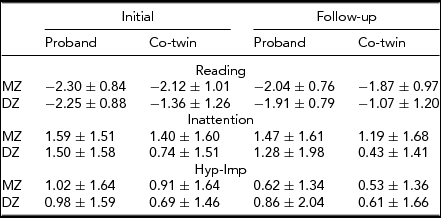
aagainst Contemporaneous Control Means. bthe sample sizes for the measures include 767 pairs in which both members have DISCR scores at initial assessment, 345 pairs in which both members have DISCR and ADHD scores at initial assessment, 94 pairs in which probands have DISCR scores at initial assessment and co-twins have DISCR scores at follow-up, and 88 pairs in which both members have DISCR scores at initial assessment and ADHD scores at follow-up.
Results of Univariate and Bivariate DF Analysesa
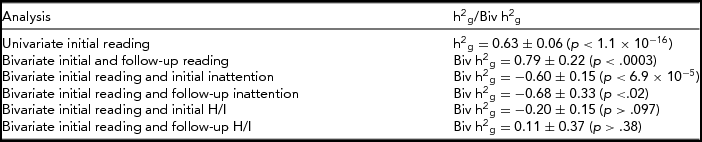
aall p-values are one-tailed.
At follow-up assessment the proband reading means (n = 94 pairs) were still approximately two standard deviations below the control means, and the differential regression of their MZ and DZ co-twin means to the control means was over two-thirds of a standard deviation (Table 1). When equation 2 was fitted to composite reading scores from twin pairs at both assessments, the bivariate heritability was estimated at 0.79 ± 0.22 (p < .0003, one-tailed), suggesting that reading deficits at follow-up are due substantially to genetic influences that were also manifested at the initial assessment (Table 2).
Etiology of Comorbidity Between Reading Difficulties and ADHD
The MZ and DZ co-twin means for IN presented in Table 1 also indicate a substantial differential regression to their corresponding control means at the two measurement occasions (all more than 0.4 standard deviation). In contrast, the differential regression of the MZ and DZ co-twin means for H/I at the initial and follow-up assessments are substantially less (Table 1). Thus, these results suggest that genetic influences account for more of the comorbidity between RD and IN than between RD and H/I. To test this hypothesis more explicitly, equation 2 was fitted to reading performance data at the initial assessment and ADHD data at both the initial and follow-up assessments. Table 2 presents the resulting estimate of bivariate h2 g for initial reading performance and initial IN of −0.60 ± 0.15 (p < 6.9 × l0−5, one-tailed), whereas that for initial reading performance and initial H/I was only −.20 ± .15 (p > .097, one-tailed), a significant difference (t = −1.90, p < .03, one-tailed). Corresponding estimates of bivariate h2 g for initial reading performance and follow-up IN and H/I, also presented in Table 2, were −0.68 ± 0.33 (p < .02, one-tailed) and 0.11 ± 0.37 (p > .38 one-tailed), a result which approaches significance (t = 1.61, p ≤ .065, one-tailed). Thus, genetic influences contribute substantially more to the comorbidity of RD and IN than to that of RD and H/I. It should be noted that measures of IN and H/I were negatively correlated with reading performance, resulting in negative estimates of h2 g, with the exception of that for the comorbidity between reading performance at initial assessment and H/I at follow-up, which was not significantly different from zero.
Discussion
Although studies regarding the etiologies of RD, ADHD and their comorbidity have been previously reported (Gayán et al., Reference Gayán, Willcutt, Fisher, Francks, Cardon, Olson and DeFries2005; Rosenberg et al., Reference Rosenberg, Pennington, Willcutt and Olson2012; Stevenson et al., Reference Stevenson, Langley, Pay, Payton, Worthington, Ollier and Thapar2005; Willcutt et al., Reference Willcutt, Pennington, Smith, Cardon, Gayán, Knopik and DeFries2002, Reference Willcutt, Betjemann, McGrath, Chhabildas, Olson, DeFries and Pennington2010; Willcutt, Pennington, Olson, et al., Reference Willcutt, Pennington, Olson and DeFries2007), only two previous studies assessed the genetic etiologies of this developmental association: one in a population sample tested yearly from kindergarten through Grade 2 (Ebejer et al. Reference Ebejer, Coventry, Byrne, Willcutt, Olson, Corley and Samuelsson2010), and the other in a population sample assessed in middle childhood and approximately four years later (Greven et al., Reference Greven, Rijsdijk, Asherson and Plomin2012). Thus, the purpose of this first longitudinal twin study of RD and ADHD symptom dimensions was to assess the etiology of comorbidity between ADHD and RD, both contemporaneously and longitudinally in a sample of twin pairs selected for RD.
First, the etiology of the group deficit in reading performance was assessed by fitting the basic DF model to data from selected twin pairs (DeFries & Fulker, Reference DeFries and Fulker1985, Reference DeFries and Fulker1988). As in previous assessments using subsets of data from the CLDRC (e.g., DeFries & Alarcón, Reference DeFries and Alarcón1996; Olson et al., Reference Olson, Rack, Conners, DeFries, Fulker, Feagens, Short and Meltzer1991; Wadsworth & DeFries, Reference Wadsworth and DeFries2005; Wadsworth et al., Reference Wadsworth, Davis, Knopik, Willcutt, DeFries, Arcolini and Zardini2002), as well as results from other studies (see Fisher & DeFries, Reference Fisher and DeFries2002; Francks et al., Reference Francks, MacPhie and Monaco2002; Harlaar et al., Reference Harlaar, Spinath, Dale and Plomin2005), the heritability of the group deficit in reading was found to be substantial and significant. It should be noted that the etiology of ADHD symptom dimensions was not directly assessed because the sample was ascertained initially for RD; therefore, equation 1 was not fitted to the ADHD data. Also, because the heritability of ADHD was not assessed, the genetic correlation could not be calculated. Only the bivariate heritability could be assessed, providing a measure of the extent to which the phenotypic relationship was due to shared genetic influences.
Next, the etiology of stability of the reading deficit was assessed, and found to be largely due to shared genetic influences. When equation 2 was applied to both reading performance data and data pertaining to ADHD symptom dimensions collected at the initial assessment, bivariate heritability between reading deficits and IN (−.60) was significantly higher than that between reading deficits and H/I (−0.20, t = −1.90, p < .03, one-tailed), a result consistent with those of previous studies (e.g., Willcutt, Pennington, Olson, Reference Willcutt, Pennington, Olson and DeFries2007). When equation 2 was applied to reading performance data at initial assessment and data pertaining to ADHD symptom dimensions at follow-up, a similar pattern emerged (−0.68 for the bivariate heritability between initial reading and follow-up IN, and 0.11 for that between initial reading and follow-up H/I), a result which approached significance, and is also consistent with results of previous studies (Ebejer et al., Reference Ebejer, Coventry, Byrne, Willcutt, Olson, Corley and Samuelsson2010; Greven et al., Reference Greven, Rijsdijk, Asherson and Plomin2012).
In addition to providing important new information regarding the etiology of RD and ADHD, the current results also support the Research Domain Criteria (RDoC) strategy that has recently been adopted by the National Institute of Mental Health (e.g., Casey et al., Reference Casey, Oliveri and Insel2014; Insel et al., Reference Insel, Cuthbert, Garvey, Heinssen, Pine, Quinn and Wang2010). Rather than focusing on diagnostic categories, the RDoC approach uses neurophysiological and etiologically informative methods to identify dimensions such as attentional functioning that may cut across multiple diagnostic categories. The similarity of the results obtained in the current selected sample and in previous studies of unselected twin samples provides support for dimensional models of RD and ADHD, and the finding that genetic influences on IN symptoms are an important part of the etiology of both RD and ADHD is consistent with the trans-diagnostic RDoC approach.
Limitations of the Current Study
The sample size in this ongoing longitudinal twin study of RD and ADHD symptoms is still relatively small. To date, there are only 94 twin pairs in which at least one member of each pair met criteria for RD and for whom reading data were available at both measurement occasions; further, only 88 of these also had IN and H/I data at follow-up. However, results of our analyses were, in most cases, highly significant, and results of the genetic etiology of RD and of the comorbidity between RD and ADHD at initial assessment were based on data from 767 and 345 twin pairs, respectively.
Because our sample was selected for reading deficits at initial assessment, univariate DF models were not fitted to reading data from the follow-up assessment or to ADHD data from either the initial or follow-up assessment. As a result, estimates of h2 g were not obtained for these measures and genetic correlations could not be estimated between reading performance at initial and follow-up assessments or between reading performance and ADHD symptoms at either initial assessment or between initial and follow-up assessments.
Conclusions
Results of this first longitudinal study of RD and ADHD symptom dimensions in twin pairs selected for RD support previous findings of substantial and significant genetic influences on the stability of reading deficits. Moreover, genetic influences play a significant role in both the contemporaneous and longitudinal comorbidity between reading deficits and IN. In contrast, the contemporaneous and longitudinal comorbidity between RD and H/I is not due substantially to genetic influence.
Ethical Standards
The authors assert that all procedures contributing to this work comply with the ethical standards of the relevant national and institutional committees on human experimentation and with the Helsinki Declaration of 1975, as revised in 2008.
Acknowledgments
The continued co-operation of the many families and school districts participating in the CLCRC and LTSRD, as well as the work of the staff members of these projects is gratefully acknowledged. The Colorado Learning Disabilities Research Center is supported by grant HD-27802 from the Eunice Kennedy Shriver Center of the National Institute of Child Health and Human Development (NICHD). The Longitudinal Twin Study of RD was initially supported by grant DC-05190 from the National Institute on Deafness and other Communication Disorders (NIDCD).



