




Introduction
In an era of accelerating ecological degradation, how might the methodologies of experimental art practice help audiences foster deeper, more empathetic engagement with the intelligence of living systems? This paper explores the potential of contemporary art to reframe the regeneration of a forest as a site of aesthetic and ethical inquiry — by regarding the forest as a primary composer within both artistic and ecological frameworks. It also asks: how might this approach underpin a novel form of “Critical Forest Pedagogy” capable of deepening our understanding of the collective natural intelligence of the living world and encouraging long-term conservation practices?
To test these ideas, a new art-science project called Forest Art Intelligence was initiated, framing a regenerating forest as an evolving, living artwork. Forests are intelligent entities that evolve through numerous stages over their lifetimes, mediated by cycles of life, death, regeneration and human influence. By framing that evolution as “process art,” the project parallels how contemporary process art values each stage of an artwork’s creation and transformation as much as any intended future outcome. The Forest Art Intelligence project therefore prototypes a unique synthesis of experimental art, environmental education and ecological science — designed to encourage relational listening, learning and creating with, and for, the forest.
This novel approach also proposes a new form of “Critical Forest Pedagogy” suited to engaging and activating communities traditionally unaligned with conservation, whilst also ensuring viability and relevance for ecologically cognate audiences. Furthermore, Forest Art Intelligence also asks a longer-term question: whether increasing public understanding of the collective intelligence of the ecological world through this framing might also promote a rethinking of the often-restrictive definitions of human-focused intelligence that underpin generative artificial intelligence technologies — potentially shifting them towards more life-affirming applications.
Context
Despite humanity’s unprecedented technological advances, epitomised by recent developments in Artificial Intelligence, many citizens remain fundamentally estranged from the ecological systems that sustain all life. This pervasive sense of separation arises, in part, from how much of humankind understands the living world as a resource rather than as a support system (Benavides, Reference Reyes Benavides2024; Richardson, Reference Richardson2025). Most world economies promote extractivist narratives of continual growth, which has resulted in an incremental degradation of the living world. The problem is further confounded by Pyle’s (Reference Pyle1978) assertion that much of humanity now faces an “extinction of human experience” based upon a profound lack of opportunities to experience the living world. He notes that our increasing emotional disconnection from that world is decreasing our motivation to protect it, fuelled by what Soga and Gaston (Reference Soga and Gaston2016)Footnote 1 call a “cycle of disaffection toward nature.” Poole (Reference Poole, Rozzi, Tauro, Avriel-Avni, Wright and May2023) further identified the deleterious effect of this extinction of experience within contemporary schooling, calling for us to “identify key mechanisms within formal education that can serve as drivers to protect, promote and engage biocultural heritage.”
Combatting a widely pervasive sense of disconnection from the living world (Beery et al., Reference Beery, Stahl Olafsson, Gentin, Maurer, Stålhammar, Albert, Bieling, Buijs, Fagerholm, Garcia‐Martin, Plieninger and M. Raymond2023) is at the heart of much environmental activist practice — a task Gablik (Reference Gablik1991) memorably calls the “re-enchantment of nature.” Similarly, contemporary environmental art, that is, environmental art produced since Rachel Carson’s influential, seminal whistle-blowing book Silent Spring (1962) and the emergence of the environmentalist movement (ca. 1960’s), has long sought to challenge the perceptual chasm between humanity and the living world, employing a range of strategies to both highlight ecological concerns and attempt to foster stronger appreciation for it. Contemporary artists concerned with fostering care for the environment, such as Helen Mayer Harrison and Newton Harrison (the Harrisons), have claimed that life itself is and has an aesthetic. In their artworks, they are no longer “looking at” nature, instead they are “being in” nature. Accordingly, they have noted, “There is no way that art isn’t life. There is no way that life doesn’t have an aesthetic embedded into it” (N. Harrison, personal communication, 30 March 2020).
Historically however, many forms of contemporary art practice have restricted themselves to representing biological life as a passive scenic backdrop, by routinely focusing upon depicting places or lifeforms deemed to be of “exceptional beauty.” This choice inherently acknowledges that aesthetic perceptions make “a huge difference when we come to decide which places to save, which to restore or enhance, and which to allocate to other uses” (Callicot Reference Callicott, Carlson and Lintott2008, p. 106). Conron (Reference Conron2000) suggests that such categories of the living world deemed to be “picturesque” typically lie between the “sublime and the beautiful,” characterising them as “complex and eccentric, varied and irregular, rich and forceful, vibrant with energy.” Whilst depicting such places can be impactful (for example see Smaill (Reference Smaill2023) and Thompson (Reference Thomson2017)), Carlson (Reference Carlson2010) argues that such anthropocentrically-loaded aesthetic choices risk reducing the living world to nothing more than a location for human consumptionFootnote 2 . Such framings, he claims, may render landscapes and nonhumans as inert elements within “settings” — rather than as active agents capable of shaping their world and interacting with each other (and humans) on deeper, more reciprocal levels. By implication, this also renders the non-picturesque, or the vast array of unrepresentable ecologies, of lesser worth. Furthermore, maintaining such hierarchy and distance from the world may limit our understanding of the complex, distributed agencies at play in ecological systems and obscure the vital, unpredictable intelligent processes that constitute life.
To counter these tendencies in picturesque and/or formalist art, Carlson (ibid.) proposes harnessing the dual power of “engagement aesthetics” and “scientific cognitivism” — which he claims would better inspire an aesthetic appreciation of nature that is “acentric, environment-focused, serious, objective and morally engaged.” “Engagement aesthetics,” he notes, emphasises ecologies as active agents and facilitates novel forms of sensory immersion and embodied appreciation for audiences, complementing “scientific cognitivism” which emphasises rigorous evidence-based knowledge. For Carlson, and others such as Claessens (Reference Claessens2024), this combination of approaches creates a more comprehensive aesthetic appreciation of any ecological entity and increases audience appeal. This potent combination of “engagement aesthetics” and “scientific cognitivism” is evidenced in the work of art practitioners such as Tomàs SaracenoFootnote 3 and Natalie JeremijenkoFootnote 4 .
It is for these reasons that engagement aesthetics and scientific cognitivism inform the design of the Forest Art Intelligence (FAI) project detailed later in this paper — with its aim of focusing upon and interpreting the inherent intelligence and agency of a forest in recovery. By also re-conceiving the regeneration of that forest as a process artwork, and by foregrounding and celebrating it as a communicative, intelligent, networked organism with intrinsic worth, FAI offers a powerful proposition to audiences: that natural environments can and should be understood as principal creators within their own artistic and ecological frameworks. Furthermore, the facilitation of audience engagements with the forest offers unique opportunities to experience genuine intra-actionFootnote 5 with ecologies, brokered through the languages of a contemporary art practice that is also scientifically rigorous.
The collective intelligence of the forest in an era of artificial intelligence
In today’s generative artificial intelligence era, discussions about what sorts of intelligence might best allow humanity to thrive are both common and contested. However, the forms of intelligence that sustain living worlds still remain widely unrecognised in those debates (Bateson, Reference Bateson1972; Haraway, Reference Haraway2016). Whilst contemporary artificial intelligences are typically optimised for speed and synthesis, they often overlook slow, place-based intelligences based upon repair, reciprocity and moderation. In Ways of Being (2022) theorist and artist James Bridle concurs that today’s AI algorithms are predominantly trained to mimic humancentric conceptions of intelligence (e.g. behaviours and perspectives “like us”), which he claims risk further amplifying our unsustainability as a species, a warning affirmed by other writers (e.g. Beták & Szűts, Reference Beták and Szűts2025; Arslan, Reference Arslan2024; Moruzzi & Campagner, Reference Moruzzi and Campagner2024).
Bridle (ibid.) asks,
what if, instead of being the thing that separates us from the world and ultimately supplants us, artificial intelligence is another flowering, wholly its own invention, but one which, shepherded by us, leads us to a greater accommodation with the world?
Bridle reminds us that just as science is beginning to reveal the profound complexity and depth of the intelligent living systems that we live dependently within; our new technologies are increasingly threatening their very existenceFootnote 6 . He therefore challenges us to recognise our common anthropocentrism, “driven by a bias towards thinking that we humans, individually, are the only really intelligent creatures on the planet, and thus the only true form of collective intelligenceFootnote 7 is among us already-intelligent humans (Bridle, Reference Bridle2022, p. 275).” Echoing Bateson‘s (Reference Bateson1972) seminal thinking, he counsels that most of our current definitions of intelligence are still defined in anthropocentric, individualistic problem-solving termsFootnote 8 . He contests that human intelligence should instead be recognised as only a smaller part of a much larger story. Such a realisation he argues would challenge us to radically open our imaginations to engage with, and learn from, the collective living intelligence of ecological systems. His thinking also builds upon the longstanding investigations of scientists like Simard (Reference Simard2021) — known for coining the “wood wide web” and who has unequivocally proven that forests thrive as cooperative networks — and that their collective intelligence (Benjamin et al., Reference Benjamin, Kaaronen, Moser, Rorot, Tan, Varma, William and Youngblood2023) emerges from how they sustain life together, rather than any solving of individual disconnected problems.
Bridle goes on to claim that contemporary AI design “may have much to gain by adopting the perspective that all intelligence is collective intelligence” (ibid.). He therefore calls us to consider incorporating the myriad more-than-human collective intelligences embedded within ecosystems, species and natural processes into our thinking — as part of a project of inventing fairer, more sustainable and just worlds. He also suggests that developing such understandings may ultimately guide the future development of AI architectures to be more ecologically attuned, regenerative and inclusive of multiple species’ ways of knowing. This aspiration dovetails with the thinking of the Indigenous Protocol and Artificial Intelligence Working Group (2020) who identify that future artificial intelligences should be understood as relational and emerging from connections between people, communities, nonhuman beings and the land — reflecting interconnectedness instead of privileging isolated, individual cognition. Future AI, they state, should be designed to sustain living worlds, prioritise ecological balance and foster long-term well-being over shortterm efficiency or profit.
Bridle goes on to suggest that creative practice can be used to help us observe ecologies more closely, so that we might then better understand how to incorporate elements of their currently unfamiliar intelligences within our thinking. He demonstrates this proposition by describing how early computational models based upon cybernetics and systems theory subsequently played an unexpectedly crucial role in revealing the dynamic, interdependent nature of ecological systems.
He argues that building artworks that draw from complex, collectively intelligent ecological systems can help us to begin to better comprehend those systems’ many layers of unimaginable complexity (without necessarily thinking we can entirely ever “know” them). This concurs with Han et al. Reference Han, Varshney, LaDeau, Subramaniam, Weathers and Zwart(2023) who similarly frame ecological intelligence as a model for building more robust, adaptive AI, suggesting that ecological systems — with their resilience, feedback loops and emergent behaviours — can inspire new AI architectures. Bridle and Han therefore argue for synergistic futures between AI and ecology as part of a project of reimagining our technologies, societies and artworks in alignment with ecological principles. They argue that ecology (broadly aligned with Indigenous cosmology) can help us re-imagine what kind of intelligences might better drive future technologies in an AI era — to render them an integral part of a future planetary web of intelligence.
Framing the intelligence of the forest
Forest Art Intelligence (FAI) was initiated in 2023 as an ongoing engagement with a cleared 2-hectare block of land in South East Queensland subsequently reserved through institutional agreement, for regeneration back to native forest. Building upon prior thinking, the project set out to create a new model of practice capable of challenging audiences to appreciate and learn from the nonhuman world’s myriad intelligences. From the outset it was agreed that the project would be foregrounded by Carlson’s (ibid.) “engagement aesthetics” and “scientific cognitivism,” and framed through the methodologies of experimental contemporary process art. It was therefore conceived as a long-term, deep collaboration between artists, ecological scientists, land managers and educators, informed by Traditional Owners.
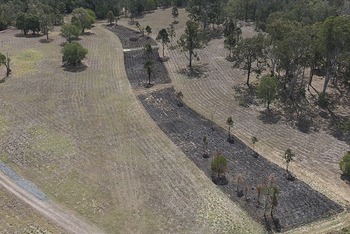
From the outset Forest Art Intelligence asserted that the protection and regeneration of its site should be both scientifically conceived and monitored, whilst also being framed as a contemporary process artwork capable of drawing attention to the site’s rich natural and innately powerful intelligences. The project was initiated by burning approximately one half of the site to aid its recovery from weed infestation (see Figure 1). It was then delineated into zones of recovery based upon botanical observations and mapped using LiDAR aerial and ground-based technologies (see the further creative use of this data in artworks (Figures 2, 3, 4 and 5)). A range of monitoring and documentation processes were also established. A small number of on-site installations were then planned and introduced; each of which aimed to directly benefit the forest. An intention was also established to later run participatory workshops, site-based encounters, with the ultimate aim of challenging anthropocentric educational frameworks and cultivating ecological empathy among diverse community members.
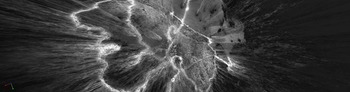
Translucent Kinship, 2025 (video still from LiDAR data animation) Installation video still, from HD ultra-wide screen loop for Cave immersion space, 5min. For more details see https://embodiedmedia.com/homeartworks/translucent-kinship/ Note: Image and edit by Keith Armstrong. Licence: https://creativecommons.org/licenses/by-nd/4.0/.

Art Intelligence site at SERF, 2024.
Note: Image by Keith Armstrong. Licence: https://creativecommons.org/licenses/by-nd/4.0/

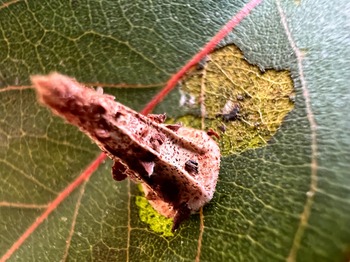
Insect gall on developing eucalypt leaf at the FAI site, Sept 2024.
Note: Image by Keith Armstrong. Licence: https://creativecommons.org/licenses/by-nd/4.0/

Translucent Kinship, 2025 (video still).
Note: Image and edit by Keith Armstrong. Licence: https://creativecommons.org/licenses/by-nd/4.0/

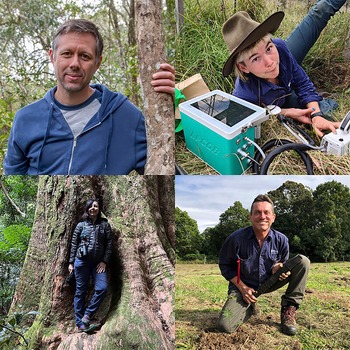
Project science and management team.
Note: L-R David Tucker, Gabrielle Lebbink, Eleanor Velasquez and Marcus Yates. Images Keith Armstrong and the science team. Licence: https://creativecommons.org/licenses/by-nd/4.0/

These steps all sought to draw attention to the often-overlooked ecological intelligences that animate such recovering landscapes, with the intention of situating the recovering forest as an intrinsically valuable assemblage of intelligent entities. In bringing these natural, collective intelligences to attention, the project therefore framed the forest as a complex system of interconnected intelligences — that acknowledged the site’s myriad plant cognition (Calvo et al., Reference Calvo, Gagliano, Souza and Trewavas2020), capacity for network development and interconnection (e.g. via mycorrhiza) and diverse communication amongst species (Westerlaken et al., Reference Westerlaken2024); all of which operate independently of human knowledge and/or intervention.
Such understandings are also informed by the gradual emergence into mainstream culture of longstanding Indigenous land management knowledges, with their sophisticated understanding of forest intelligence and agency, and active role in managing those ecosystems (Westerlaken et al., Reference Westerlaken, Gabrys, de Urzedo and Ritts2023). In all these ways Forest Art Intelligence proposed an innovative model for deep engagement with forest ecologies that may serve as a blueprint for others pursuing similar objectives at the intersections of art, science and environmental stewardship.
Forest growth as process art
Framing the forest’s complex systems as durational, multisensory art; its regenerative growth as a living medium; and its role as a network of active, creative participants, draws from the conceptual and material legacies of process-based contemporary art — with its roots in transformation, temporality and site-specificity. Process art emerged in the mid 1960s, most notably originating in the United States and Europe. Its best-known proponents included Robert Morris, Lynda Benglis, Joseph Beuys and Eva Hesse, all of whom pushed back against restrictions of formalism. As a movement, Formalist Art required that art objects be judged by their composition of line, shape, colour and texture. Furthermore, it held that artworks should be self-referential, and “freed” from non-art, social or political issues. Rebelling against such strictures, process artists looked to creative experiences that could be durational, transient and evolving, with decisions and actions allowed to unfold as the works evolved. They were more interested in the journey, rather than the final destination or product becoming the artwork’s focus. For many studio-based artists of the 1960s–80s, this offered a rich new way to marry conceptual practice with real-world materialities. These artists went on to devise systems leaving traditional materials behind, wholeheartedly “collaborating” with their media, letting non-traditional, everyday substances like cut industrial felt hang from the wall according to the particular effects of gravity (Robert Morris). In May 2024, a critic wrote of Eva Hesse’s works that Hesse, “exerted and relinquished control [of]… industrial materials as her artworks took shape — anticipating, perhaps, work by artists who explore the animacy of matter, including toxic matter (like plastic) that alters bodies and ecosystems, in new materialist frameworks todayFootnote 9 .
Richardson & Walker, (Reference Richardson and Walker2011) clarifies that the inherent relationality of process art allows it to “be understood neither as a singular moment of forces” (e.g., artist, artwork, viewer and/or site) coming together, nor as the end of a productive process that is then superseded by another event.” This conception draws upon Gilles Deleuze’s notion of “becoming,” which, when applied to artworks such as FAI, characterises them as ongoing process-events dependent upon, and engaged with, the endemic complexity of the site’s ecological actors, artists, scientists, audiences and the plethora of changing environmental contexts (e.g. seasonality and animal movements) over time.
This focus upon flexible process and loosening of artistic orthodoxy led some of the process artists such as Beuys (e.g. 7000 Oaks (1982)), Agnes Denes (e.g. Wheatfield — A Confrontation: Battery Park Landfill, Downtown Manhattan (1982)) and more recently Pierre Huyghe (e.g. Untilled (2011–2012) to regard the living world as an active collaborator rather than a static subject, thereby dissolving perceived boundaries between studio practice and ecological systems. These artists incorporate a range of non-traditional materials in their work such as fat, grass, leaves, tree growth, bees, tears and soil, and allow chance operations on these media such as exposure to gravity, weather and time to promote growth, condensation or decay as integral elements of the artwork, thereby shaping form and meaning both visually and temporally. Viewers are either invited to witness and maybe participate in an artwork defined by continual transformation, or view a residue, replica or representation later in the gallery.
Whilst in the early years of process art, much of this work still operated in the solo authorial model germane to visual arts, and ultimately resulted in gallery exhibitions, the emergence of socially and ecologically engaged practices more clearly inscribed ecological changes themselves as the artworks. This approach appears in the Harrison’s Art Park — Spoils Pile: Reclamation (1976–1978) which regenerated an industrial waste dumping site using native materials and minimal transformational methods; Mel Chin’s Revival Field (1991-ongoing) which involved the remediation of polluted soil through introduction of hyperaccumulating plants; and Maria Thereza Alves’ Seeds of Change (1999-ongoing) that researched the effects on far-ranging ecologies of seeds transported in the ballast of ships’ holds, offloaded in foreign ports and growing wild, and also in planned community “ballast gardens”Footnote 10 .
Such approaches of delineating ecological changes as the artworks themselves are consistent with FAI lead artist Keith Armstrong’s decades-long process led practices across media art, art-science collaboration, environmental art, critical plant studies, more-than-human futures and regenerative arts and designFootnote 11 . His practice has consistently aimed to catalyse cultural transformation, foregrounding change-oriented approaches to ecological re-understanding and restoration; most recently described in the paper Plant-human futurisms in the tropics: Building relationships with native grasses through the Carbon_Dating art project (Leimbach et al., Reference Leimbach, Armstrong, Palmer, Walker Ngadijina and Turpin2025). This paper charts how Armstrong has initiated projects that either establish or are symbiotically embedded within evolving ecological processes (e.g. Carbon Dating 2019-25). FAI extends this commitment to process and changemaking by framing the forest’s intelligent, regenerative processes as a contemporary artwork, evolving over time in interaction with additional co-creative elements carefully chosen to subtly encourage and highlight the ecological processes currently underway within the site’s dynamic ecology. This shift cements a transition in Armstrong’s work from representational art to direct ecological engagement — a methodology that resonates with traditions of socially engaged art, which Helguera (Reference Helguera2011) notes,
functions by attaching itself to subjects and problems that normally belong to other disciplines, moving them temporarily into a space of ambiguity. In this temporary snatching away of subjects into the realm of art-making, new insights emerge that illuminate a particular problem or condition and, in turn, make it visible to other disciplines.
Process art and its related engaged practices therefore offer projects like FAI both a conceptual underpinning and a practical range of methodologies capable of focusing upon the problem of sustainability and making it visible to other disciplines. For example, by tracking stages of seed germination, photosynthesis, sapling growth, changes in fauna and microorganisms, changing soil dynamics (using soil ecoacoustics) and decomposition, FAI invents new systems to foreground ecological succession, seasonal cycles and the unpredictability of living ecologies, aligning with the process art movement’s core tenet — that the journey of becoming is the primary aesthetic and experiential locus.
Traditional owner engagement
Natasha Myer reminds us of the critical need to interact with CountryFootnote 12 in engaged ways, in order to counteract what Mark Rifkin cautions as ingrained “settler common sense.” She backs this assertion up by citing anthropologists Laura Ann Stoller’s characterisation that such common sense,
…sediments and habituates the difference between good and bad and right and wrong in settler worlds. It is … highly attuned to colonial values and norms, attentions, sensibilities, aesthetics, desire…Its… economies and forms of nostalgia dictate what is seeable, sayable, thinkable and knowable and what cannot be seen, said, imagined or felt. It limits, for example, what we think, what we can experience, what we value and how we intervene in the world, especially how we engage land, forests and plants… If settlers would make space, there are many other stories to be heard about these lands and their relations. (Myers, Reference Myers2020)
Myers’ words caution that working solely within a traditional scientific community context risks the project’s aspirations being limited by the kinds of “settler common sense” that have contributed to today’s environmental malaise. In FAI’s case this is exacerbated by the project being hosted on the private property of a university, configured as a scientific ecological research station engaging in both agricultural productivity science as well as sustainable practicesFootnote 13 . Such a context places significant restrictions upon access and modes of engagement and has arguably limited the engagement of First Nations custodians with the siteFootnote 14 . The team has, from the outset, declared and demonstrated its intention to engage the land’s Indigenous Traditional Owners to advise us on our current restoration and creative approaches over the subsequent decades. However, the site’s straddling of multiple traditional custodial boundaries — combined with the university’s internal protocols for recognition and consultation have so far limited that engagement. We have been assured that these processes are underway but may require substantial additional time to be meaningfully resolved.
Given this scenario in late 2024 we engaged, via an on-site visit, Palawa woman Professor Angie Abdilla whose organisation Old Ways New Footnote 15 works to remember “the past to create a future, where Indigenous knowledge systems shape Artificial Intelligence.” Professor Abdilla offered salient advice and confirmation that local knowledge would over the longer time be critical, whilst also offering support for processes and practices to date. Future collaborations with Indigenous knowledge keepers, when process and protocol allow, will therefore significantly deepen the project’s environmental and cultural resonances.
The work now underway
As discussed above the Forest Art Intelligence project was conceived as a hybrid of contemporary process art and restoration ecology framed by understandings of collective natural intelligence. The project’s “meta-artwork” is regarded as the regenerating forest, supported by embedded Art Intelligences (AIs), consistent with process art’s foci upon time-based processes and transformation and the rich legacy of process-based ecological artwork. This “forest as artwork” project is co-supervised by landscape ecologist David Tucker, Gabrielle Lebbink and land manager Marcus Yates. (See Figure 6). The Terrestrial Ecology Research Network’s (TERN)’s education and training manager Eleanor Velasquez also brings key scientific pedagogical expertise to assist in framing the work within the proposed realm of Forest Pedagogies.
The forest art intelligence artwork site, SERF at last light, 7/10/24.
Note: Image by Keith Armstrong. Licence: https://creativecommons.org/licenses/by-nd/4.0/

Forest Art Intelligence (FAI) was initiated by Keith Armstrong in 2023 when a 2-hectare block of land at Samford Ecological Research Station (SERF) (Queensland University of Technology. n.d.). SERF is an ecological research station belonging to Queensland University of Technology (QUT) in South East Queensland was reserved for this long-term experiment. Lead supervising scientist David Tucker advised that the Queensland Government Department of the Environment, Tourism, Science and Innovation Regional Ecosystem mapping (Queensland Government, n.d.)Footnote 16 for the site indicated that it had once supported two “at risk” forest vegetation types. Tucker noted to me at that time,
from a scientific perspective, …there was kind of a fairly clear research question, on top of what you were doing as well, … basically trying to understand how … a historically modified pasture — how that responds to passive regeneration processes…
Marcus (Yates) had been actively revegetating parts of SERF… but there hadn’t been any attempt to just, you know, leave something alone and see how it responds, except accidentally at some places. But typically, that would get cleared again. But this was the first time .. that had happened on the property. So, .. it was to see how the vegetation and the ecosystem more broadly responded to those passive regeneration effects (Armstrong, Reference Armstrong2024b).
The initial intention was to restore the site, where feasible, back to something resembling its “pre-settlement” plant community composition. This process would be supported by a suite of scientifically rigorous survey, monitoring and data recording processes, ensuring that the forest’s development was scientifically recorded and assessed by the supervising scientists.
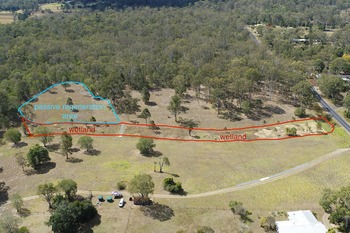
One half of the site is a dry slope, which the ecologist team identified had retained significant native plant cover. Despite its clearing during the mid–late 1800s for grazing and later routine slashing from the 1980s onwards it had shown indications of vigorous tree re-growth in prior years. It was therefore named the “passive regeneration area” because of its likely capacity to re-vegetate through its own intelligent processes without significant input from humans. (See Figure 7).
Forest art intelligence artwork site –nomenclature: passive regeneration area (blue) and wetland (red).
Note: Image by Keith Armstrong. Licence: https://creativecommons.org/licenses/by-nd/4.0/

This area in turn connected to an ephemeral stream/watercourse/grassland which we understood had remained relatively sparse in trees since the 1960s. This was initially named the “active regeneration area” given it seemed fruitful to try and repopulate it with lost tree species best suited for such an area. Given its low tree count and high weed prevalence at that time, we first resolved to burn that area in September 2023 to understand if we could retard some of the more noxious introduced plants, and to observe if fire could be used as a tool to control and restrict the re-emergence of environmental woody and grassland weeds.
Before the burning a baseline transect-based plant survey was conducted across both connected sites, a fungal soil study was initiated (led by microbiologist A/Prof. Caroline Hauxwell), the site was aerially and terrestrially laser scanned (see creative applications of this data in Figures 2, 3, 4 and 5), and a series of acoustic and video survey instruments installed. Initial plans to plant pre-settlement era trees into the watercourse shifted in the summer of 2024 when a tiny secretive button-quail that typically inhabits dense wet-grassland habitats (Red backed Buttonquail/Turnix maculosus) was spotted, along with breeding evidence — leading Samford Ecological Research Facility’s (SERF) ornithological expert team to argue for retention of the current predominantly grass covered watercourse. Hence this area was renamed the wetland — and was left to evolve without further interventionFootnote 17 .
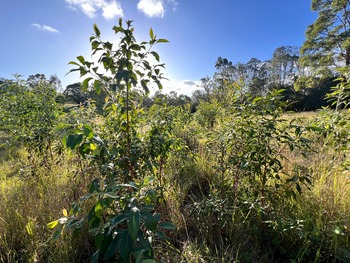
During 2024-5, as the forest on the sloping dry bank slowly came back to life (see Figures 8 and 9), protocols were established to track changes in the forest’s growth on both macro and micro levels both visually, sonically and with environmental remote sensing technologies. These temporal snapshots of the site’s complex processes of regeneration established an ongoing record of process — and will also inform the future tourable interactive installation (2026-8) suited to sharing findings about the site’s collective natural intelligence.
Forest art intelligence project, 2023 -, The watercourse site area, post burn, 2023.
Note: Image by Keith Armstrong. Licence: https://creativecommons.org/licenses/by-nd/4.0/

New growth at the artwork site, 2025.
Note: Image by Keith Armstrong. licence: https://creativecommons.org/licenses/by-nd/4.0/

Art intelligences
(Please note that these are playfully called AIs from here on as a deliberate counterpoint to Artificial Intelligence)
It became clear early in the process that the entire site would be too complex a proposition to directly engage with. Hence just as ecological surveys use transect surveys as representative zones that are deemed to stand in for the whole site — so we resolved to establish up to five discrete locations to focus our activities. This approach, we reasoned, would also protect the broader site by reducing foot traffic and other forms of intervention. These sites were named Art Intelligences.
Art Intelligences (AIs) were defined as organic forms intended to both directly benefit each site in some way, and by extension foreground evidence of subtle/slow/localised ecological intelligence manifesting at those representative sites. These often-subtle aesthetic interventions were also considered to be part of the larger process-based artwork. Each was also considered as inhabiting its own “niche” in the forest’s ecological systems, and capable of stepping through their own states of evolution, whilst also uncovering/speaking to the “resonances” of that country.
The first sites chosen at SERF were: adjacent to a 200+ year old Queensland Blue Gum (Eucalyptus tereticornis) “Mother Tree” that overlooks the site; the northern edge of the adjacent forest; on the dry sloping bank; inside the wet watercourse; and at the edge of the site’s ephemeral wetland pond. Each of these sites would operate on the principle of ecology, observation and interpretation.
The following notes were taken from a blog written during a 2024, yearlong art-science residency at SERF, funded by a competitive Australian Network for Arts and Technology (ANAT) grant.
Introducing first 3 on-site AIs
1: AI (1) – tereticornis: This 2-tonne, enormous fallen limb from ancient Forest Blue Gum (E. tereticornis), in a far corner of the site, is scheduled removal for health and safety reasons. Hence, we have decided to move it to the sloped bank site to form one of the initial site’s Art Intelligences (AIs). This carefully placed fallen tree limb will be set amongst the young, emergent trees already on site, to slowly become a home for insects, other creatures and seed spreading perching birds — supporting biodiversity in its own unique way — becoming a prime location for a myriad of future species. This addition of supplemental current and future carbon and nutrients to the emerging forest — a site currently missing the richness of a forest floor or any real form of shading — will also feed the regenerating ground and encourage development of mycorrhizal networks — whilst also providing shelter, food and habitat for a variety of creatures. In other words, it will be a transformational medium for the ecosystem. Consistent with the idea of an AI — it will thus become embedded within the forest site, compatible with, and allied with, the profound, natural intelligences of the forest (meta-artwork) as it repairs and re-grows. As a hybrid, dramatic installation it will “evolve with” and “learn from” the forest whilst directly benefitting its growth. Furthermore, such a dramatic structure has the capacity to evoke awe, encouraging public engagement with the forest’s processes of intelligent natural regrowth through its physical presence.
2: AIs (2 + 3) – Acacias (see Figure 10)
Fungi on the fallen wattle (Acacia spp.) logs in the corner of the site, Sept 2024.
Note: Image by Keith Armstrong. Licence: https://creativecommons.org/licenses/by-nd/4.0/

These fallen older acacias trees already lie within the site and are both actively degrading and forming a protective site for emerging young trees. They will form the second and third AIs — being in essence on-site readymadesFootnote 18 (Armstrong, Reference Armstrong2024a).
These elements, added to the regenerating “forest-as-artwork,” were conceived not as static installations, but rather as constantly evolving, transforming entities. It was resolved that they would be further encouraged in their transformations by so called Art Intelligence Accelerators (AIAs); processes and forms designed to enhance and accelerate localised ecological processes to ultimately better support the forest’s more-than-human inhabitants. In the future these sites will be further activated by a series of Art Intelligence Interpreters (AIIs) designed to broker additional layers of interaction between the public and each of the focal sites, inviting further reflection by evoking sensory, emotional and intellectual connections. These interpreters will in turn feed into an offsite media art installation and a series of on and off site creative educative experiences.
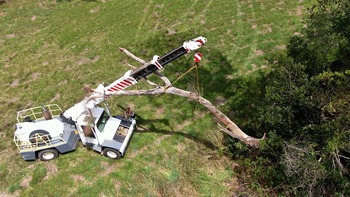
The first of the AIs (Art Intelligences) — a fallen, two-tonne limb from a Queensland Blue Gum — was successfully introduced to the site in 2024 (See Figures 11, 12, 13 and 4), relocated using a mobile crane from a nearby paddock. This dramatic intervention was envisaged as a host for new life as decomposition processes slowly turn it to soil for the nascent trees around it, offering increasingly valuable shelter, nourishment and suitable microclimates for multiple on-site animal and plant species. By late 2025 a mammal burrow had appeared under one end of the log, and a variety of fungi, mosses and a myriad of insects had begun to explore the log, which was also becoming a perch for local birds and grazing area for local mammals. (See Figure 13).
Relocation of the art intelligence at the artwork site, 2024.
Note: Image by Keith Armstrong. Licence: https://creativecommons.org/licenses/by-nd/4.0/

Art intelligence site, Samford Ecological Research Facility, 2024.
Note: Image by Keith Armstrong. licence: https://creativecommons.org/licenses/by-nd/4.0/

More-than-human visitor, art intelligence site, Samford Ecological Research Facility, Jan 2025.
Note: Image by Keith Armstrong. Licence: https://creativecommons.org/licenses/by-nd/4.0/

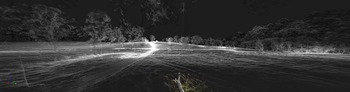
The log was then modified (an AIA (AI Accelerator) process) — by drilling a formal pattern of cavities capable of retaining water and organic matter within the log body. Small amounts of soil sourced from adjacent open woodland dry Sclerophyll Forest ecosystems were also introduced around its base (something ecologists term a soil inoculation process). Ecological monitoring tools such as laser scanners, bird identifying “acoustic observatories,” and camera traps were also deployed at the log and across the site to gather data on its slow transformation — providing an ongoing record of the change and a range of potential media for future interactive artwork and other forest-based engagement activities. In 2024 the artwork site was also formally incorporated as a key feature on a new science education trail at the site (See Figure 14).
Keith Armstrong presenting, engaging science trail launch and SERF showcase event, 04/06/2024.

Project collaborator Eleanor Velasquez notes in her recorded video taken at the site, which is accessible via an on site QR coded sign,
The Forest Art Intelligence project provides this really unique opportunity to bring together two very different disciplines: of art on one hand and science on the other, and use the lenses of these different disciplines to translate the innate intelligence of an ecosystem and the regrowth of that ecosystem into a different form.Footnote 19 ’
This melding between engaged art and science within the project (according to Carlson’s (Reference Carlson2010) “engagement aesthetics” and “scientific cognitivism”) allows regenerative progress across the site to be assessed both through traditional scientific ecological metrics and aesthetic interpretation of the changes slowly shifting Art Intelligence sites. This methodology combines the ongoing recording of scientifically rigorous data such as average vegetation cover, weather, camera trap sightings, bird population data and the changing concentration and intensity of laser cloud readings; with more speculative, less quantifiable forms of progress. These include the fine details of wood and fungal interactions around the punctured wood surfaces, the habitual patterns of creatures including the AI as part of their home run, as well as the sounds of sap molecules popping within new growth and the uncanny dynamics of soil acoustic survey recordings.
With these protocols and practices in place, moving forward the project has the capacity to create a series of sensory windows into the mystery of the forest’s world — a “forest-eye view” — synthesised through a combination of experimental audiovisual, tactile and sculptural forms. Instead of presenting facts and figures, or conventional images of the ever-changing landscape, public outcomes from FAI will present a suite of perspectives from the forest that do not necessarily align with normal human viewing modalities, angles, heights and experiences. These will include microscopic and miniature viewpoints of the forest’s progression, such as details of hidden fungal forms, galls (See Figure 15) and stem growth, cable-cam imaging of growth at grass height along 50 m survey transects through the emerging forest, nocturnal camera trap images of secretive mammals and translucent, animated aerial and terrestrial laser scans of the site and its Art Intelligences. This will be further complemented by unexpected sonic forms including soil acoustic survey compilations and interpreted acoustic monitoring of the site’s many and ever-increasing aerial species. Together these unconventional media forms become the building blocks for a suite of interpretative artworks — which may include a multiformat/media touring gallery installation and an online portal/website. These creative medias will also be underpinned by conventional scientific data collected during rigorous botanical and aural surveys — which will also be made available to audiences.
Laser scan of Art Intelligence (AI) site at SERF, 2024.
Note. Image by Keith Armstrong. Licence: https://creativecommons.org/licenses/by-nd/4.0/

The team is also planning to devise on site guided experiences and design a kit/resource for others wishing to set up similar arts-led forest monitoring systems on their own sites. Indeed, there is early interest in this method from other ecological research stations and properties in South East Queensland. Dr Eleanor Velazquez in her role as TERN Education officer also intends to link the experience to the Australian Schools Curriculum (as administered by the Australian Curriculum Assessment and Reporting AuthorityFootnote 20 ).
By creating vicarious entry points into worlds beyond the viewers’ personal contexts, FAI has the potential to expand audience’s emotional and conceptual horizons and sensitise them to intelligences that are radically different from their own. By pursuing such experiential and empathic modes of engagement, and by offering a sensitive “interface” capable of unveiling intrinsic values of the forest, FAI aims to synthesise an expression of the site’s nonhuman sentience and biospheric intelligences. This approach accords with Curtis et al. (Reference Curtis, Reid and Reeve2014) who note that the arts have a key role in promoting individual and collective sustainability (or what they call a “conserver culture”) via three core strategies, “communicating information in an engaging form; creating empathy towards the natural environment; and embedding the arts in ecologically sustainable development” — all of which are reflected in this project’s methodology. They also note that,
large art–environment events can have a celebratory role that motivates and involves communities. Such events can strongly move the emotions in a positive way and stimulate people to reflect on their relationship with the environment.
They go on to state that such practices can then have the effect of “challenging values belief and attitudes,” “becoming aware of consequences of actions” potentially “unfreezing habits” and contributing towards shifting “social norms”; all of which are outcomes consistent with the aims of the FAI project.
Towards a critical forest pedagogy
Any form of art is a form of power; it has impact, it can affect change — it can not only move us, it makes us move.Footnote 21
By honouring the forest’s slow time and sacred rhythms FAI reminds us that such restoration is not only ecological, but also existential; and that projects such as these may connect with something fundamental in ourselves — moving beyond simply desiring to fix environmental damage to invite reflection upon who we are in relationship to the world. This concurs with the practices of Critical Forest Studies that remind us that a forest is “already alive, thinking, inquiring, learning and communicating in its own ways, on its own terms, in its own time” (Rousell et al., Reference Rousell, Hill, Ryan, Harvey, Barns, Aleksic and Boadu2025). Similarly, Diaz (Reference Diaz2022) suggests that forests have their own agency and “a cosmic freedom that lies outside the brutal history dispensed by capital and state-making.”
One of process art’s many opportunities to foster kinship in this context lies in its capacity to invoke sensory approaches such as tactility, visuality, olfactory, auditory and even gustatory responses. Such approaches directly draw upon the power of emotion (Wetherell et al., Reference Wetherell, Smith, Campbell, Smith, Wetherell and Campbell2018), because “emotion is action-oriented; it pushes people to do things” and “emotions are part of commentaries on things that are important to us.” By reinterpreting process art as both a formal strategy and as a pedagogical and ethical framework for cultivating deeper human-living world relations in today’s era of ecological precarity, FAI seeks to change mindsets around how we conserve and care for the living world and encourage a culture of care and conservation. This strategy not only applies to those directly interested in forest conservation, but also to others who may ultimately be inspired to pursue quite different ways of contributing to allaying today’s multiple environmental crises. This concurs with Earley’s (Reference Earley2024) reminder that there is always:
a gap between what the artwork presents and the specific insights that audiences arrive at. To traverse this gap, audiences must figure out for themselves how to extend, translate or otherwise creatively transform what the artist offers them in order to arrive at insights into the world.
The project’s focus on forest re-growth, aided by additional creative elements throughout the landscape, and its intention to create novel forms of encounter with the site’s myriad intelligences, establishes a rich context for curiosity and reflection, and therefore a place of learning. Such approaches also have applicability for other practitioners interested in combining contemporary arts and sciences in the service of seeding ecological understanding, if they choose to build on this project’s Critical Forest Pedagogical framework.
Pedagogies speak to the art and science of teaching. They define the methods and strategies to facilitate optimal learning. Pedagogies ask how to better engage learners by structuring adaptable learning environments. Rousell and Tran (Reference Rousell and Tran2024) stress that “the need for an ethic and pedagogy of mutual care between humans and trees has been intensified with the onset of climate change and the catastrophic loss of biodiversity resulting from colonial resource extraction over the past century.” They advocate for Critical Forest Pedagogies informed by a rich, heterogeneous lineage encompassing place-based education, Indigenous epistemologies, decolonial and post humanist theoretical frameworks, plant humanities and immersive artistic practices. Such pedagogies, they argue, should engage with forested landscapes not merely as ecological terrains, but as sentient and relational entities that facilitate profound, imaginative and ethically attuned learning experiences.
Such pedagogies should also work to counteract the historical erasure of forest sites through colonial processes (such as those enacted at SERF as a university owned site), by supporting restoration processes that respond to particular historical legacies and that recognise their agency and retained history (Diaz, ibid.). These approaches also underscore the imperative of ecological justice, the need to preserve intergenerational memory and the interlinked crises of biodiversity loss and planetary health. In this context, Critical Forest Pedagogies promote models grounded in reciprocity and relationality (see Hay, Reference Hay2024) and the intrinsic wisdom embedded within the land (e.g. Styres, Reference Styres2017; Tomlins-Jahnke et al., Reference Tomlins-Jahnke, Styres, Lilley and Zinga2019). This approach also aligns with Amsler and Facer (Reference Amsler and Facer2017) who suggest that activated learning projects can be embedded in “struggles to create and defend non-capitalist forms of common life,” by aiming not towards anticipated futures but rather considering the future as a space of “plural and concrete possibilities, utopian and realist at one time.”
Consistent with these approaches, FAI frames the recovery of the forest as a sentient, instructive, dynamic and relational place — where the land and its more-than-human inhabitants actively co-create knowledge. Furthermore, introduced elements of the artwork (such as the Art Intelligences and associated Art Intelligence Accelerators) directly benefit the forest whilst also acting as focused contexts to learn about the intelligent processes happening at those locations and by extrapolation across the site.
Because the forest’s processes of change may be experienced vicariously via offsite installations (See Figures 2, 4 and 16) or online, or occasionally on location (during workshop, events and walks), FAI has the capacity to promote ecological learning and literacy across several registers — at all stages encouraging a context of deep listening based upon reciprocity, and ethical entanglement. Remotely facilitated learning outcomes will occur through online audiovisual documentation, the replay and interpretation of recorded data, aesthetic media art installations and public presentations. Locally facilitated learning outcomes will include a series of low impact on-site specific happenings, workshops and creative walks — all of which invite visitors to directly co-sense and co-imagine with the forest’s regenerative processes. Open-source resources will also be devised to enable other artists and Landcare groups to create their own forms of Art Intelligence provocations, extending FAI’s pedagogical impact and fostering further transformative, participatory engagements with ecological restoration and more-than-human worlds. Considered collectively FAI’s processes of ecological awareness-raising initiate a complex, novel experiment in developing alternative models of environmental education. A subsequent paper will be written to detail the on-site learning once all pedagogical aspects of the project are underway and there are a series of grounded observations to draw upon.
Analog Intelligence, 2024, Installation video still, from 4k loop, 5min, + 3 HD 15m iPad loops.
Note. Image and edit by Keith Armstrong. For further details see Embodied Media. (n.d.). Translucent Kinship. https://embodiedmedia.com/homeartworks/analog-intelligence. Licence: https://creativecommons.org/licenses/by-nd/4.0/

Conclusion
This paper has explored how experimental art methodologies — particularly those rooted in process art — have the potential to meaningfully deepen public engagement with the intelligence of natural systems, thereby suggesting new avenues for public environmental education practice. Through the Forest Art Intelligence project, ecological recovery is being reframed as both an aesthetic and ethical inquiry, revealing the regenerative forest as a living, evolving artwork shaped by natural cycles and human influence. The integration of experimental process art, environmental education, nature’s intelligence and ecological science proposes a new model of Critical Forest Pedagogy, with the potential to activate diverse human communities beyond traditional conservation and art audiences. By foregrounding the forest’s collective intelligence, the project also seeks to challenge anthropocentric definitions of intelligence, offering a counterpoint to the limitations of current Generative AI paradigms. Crucially Forest Art Intelligence also affirms that artistic interventions within ecological systems must serve the forest’s wellbeing, and that proposed Art Intelligences should enhance both on-site ecological evolution as well as interpretive richness for future audiences.
Acknowledgements
Collaborating Science Team: Dr David Tucker (QUT Landscape Ecologist), Dr Gabrielle Lebbink (QUT Freelance Plant and Invasion Ecologist), Dr Eleanor Velasquez (Education and Training Manager at Terrestrial Ecosystem Research Network, TERN Australia/UQ) and Marcus Yates (QUT/SERF Site Technician). Further supported by A/Prof Caroline Hauxwell (QUT Microbiologist and Agricultural Biotechnologist), Lorrelle Allen, Research Infrastructure Business Operations Manager, Research Infrastructure, Academic Division, Dmitry Bratanov and Gavin Broadbent, Research Engineering Facility, Office of Research Infrastructure, QUT, Brisbane, Australia. Special thanks to Carol Schwarzman, Independent Scholar, Art Critic and Visual Artist.
Financial support
FAI is supported by the Australian Government through Creative Australia, its arts funding and advisory body, Samford Ecological Research Facility (SERF) and the NCRIS-enabled Terrestrial Ecosystem Research Network (TERN) and Queensland University of Technology, School of Creative Arts, CIESJ Faculty. During 2024 FAI was supported by the ANAT Synapse residency programme — supported by the Australian Network for Art and Technology (ANAT), Samford Ecological Research Facility (SERF) and the NCRIS-enabled Terrestrial Ecosystem Research Network (TERN).
Ethical standard
This study did not involve human participants, animal subjects or the collection of personal or sensitive data. The project consisted solely of artistic and ecological interventions within a forest environment. In accordance with institutional guidelines, these activities do not require formal ethics approval.
Statement of use of ethical use of AI
We acknowledge the occasional use of AI tools during the research, planning and drafting phases of this paper. AI tools have not been used for directly writing text, and all relevant sources have been investigated and cross checked.
Author Biographies
Keith Armstrong is Senior Lecturer in Visual Arts in the School of Creative Arts at QUT, a Visiting Professor University Free State, South Africa and an experimental artist profoundly motivated by issues of social and ecological justice. His engaged, participative practices provoke audiences to comprehend, envisage and imagine collective pathways towards sustainable futures. He has specialised for over thirty years in collaborative, experimental practices with emphasis upon innovative performance forms, site-specific electronic arts, networked interactive installations, alternative interfaces, art-science collaborations and socially and ecologically engaged practices.
Eleanor Velasquez is a researcher, science communicator, educator, creative and ecologist dedicated to bridging the gap between complex scientific principles and society through storytelling using data, theatre and other media forms. With a background spanning ecological research, theatre, policy, teaching and community engagement, she has taught at Griffith University and QUT and contributed to shaping environmental policy in Queensland. Eleanor’s research explores endangered urban forests, wildfire responses, marine connectivity and the intersection of art and science. She has represented Australia at FameLab, featured on ABC Radio, the History Channel and other scientific documentary series.
David Tucker is a vegetation and landscape ecologist with a research and working background in terrestrial ecological surrogacy, biodiversity monitoring, conservation management and ecoacoustics. David is affiliated with the Sustainable Agroecosystems group at QUT and is responsible for monitoring flora and fauna using novel remote survey technologies in intact and modified ecosystems across multiple Australian bioregions.
Tania Leimbach is a Lecturer in the Environment and Society Group within the School of Humanities and Languages at University of New South Wales. She has a research profile contributing to environmental and climate change education scholarship and recent discourse in the environmental humanities, particularly theorisations of affect and ecologically oriented creative practice. Tania’s PhD thesis draws on various accounts of agency and the rise of new museology to explore environmental leadership in the cultural sector.
Jane Palmer is an Adjunct Research Fellow in the Centre for Heritage and Culture, at the University of Southern Queensland. She has research interests in the use of ethnographic storytelling methods in post-conflict or marginalised communities, to explore the processes of trauma, grief, resilience and adaptation. She has undertaken ethnographic fieldwork in Aceh, Indonesia and in regional and remote Australia, and has published in the areas of ethics, Australian and Asian studies, environmental humanities, fieldwork methodologies and futures studies.
Marcus Yates is the site technician at the QUT Samford Ecological Research Facility, commencing his role in July 2011. He has a strong connection in natural resource management having worked in this field for twenty-nine years. He is passionate about environmental sustainability with a specific interest in forest community restoration, establishing reforestation projects, and sustainable polycultural-designed forest farming initiatives. He has been awarded the QUT Vice Chancellors Performance Award on two occasions and been short listed for the QUT Vice Chancellors Award for Excellence in 2022.





 Open access

