

Since the Netherlands passed its same-sex marriage law in 2000, the 21st century has witnessed increasing legalization of same-sex marriage around the world. As of 2023, 32 countries have legally recognized same-sex marriage. Despite tremendous success in European and American countries, the lesbian, gay, bisexual, and transgender (LGBT) movement experienced a backlash in Taiwan, the first Asian country to provide legal recognition to same-sex marriage. In the multi-question referendum held on November 24, 2018, 72% of voters agreed that marriage defined in the Civil Code should be restricted to the union between one man and one woman and 67% of them voted against the protection of same-sex marital rights in the Civil Code. Moreover, 67% of the electorate agreed not to implement the homosexual aspect of the Enforcement Rules of the Gender Equality Education Act in elementary and middle schools. The overwhelming anti-LGBT attitudes not only disappointed LGBT activists but also dramatically impacted the electoral performance of the incumbent Democratic Progressive Party (DPP). In the 2018 concurrent local elections, the DPP’s vote share decreased from 48% in 2014 to 39.7%, and the number of municipalities and counties it held declined from 13 to 6, including losing its 20-year hold on Kaohsiung. Together, these results showed a de facto vote of no confidence in President Ing-wen Tsai’s administration and her gender equality policy.
According to Cheng et al. (Reference Cheng, Wu and Adamczyk2016), Taiwan had been the most LGBT-friendly country in Asia. Nonetheless, when the post-referendum World Value Survey (WVS) asked respondents to justify a range of behaviours from 1 (Never Justifiable) to 10 (Always Justifiable), on average the interviewees found homosexuality to be a 4.35 which is closer to ‘Never Justifiable’, with around 30% of them selecting ‘Never Justifiable’ and only less than 8% choosing ‘Always Justifiable’. Moreover, the survey also showed that more than 40% of people would not like homosexuals as their neighbours. The statistics above reveal the fact that the legalization of same-sex marriage in Taiwan successfully aroused underlying public concern about homosexuality and triggered a series of reactionary anti-LGBT opinions. Although the widespread opposition to marriage equality and gender equality education did not prevent same-sex couples from forming a permanent union of an intimate and exclusive nature, it clearly reveals the fact that the anti-LGBT movements had stirred up prejudice, discrimination, and even hatred toward LGBT people and that homosexuality was still prevailingly considered an unusual, deviant, abnormal, and unjustifiable behaviour in Taiwan.
Why did same-sex marriage suddenly become a social and political threat during the process of its legalization? This issue is crucial in socially conservative Asia, including industrial democracies such as South Korea and Japan, where same-sex marriage has yet to be achieved despite more open and liberal public attitudes toward sexuality. This paper sets out to explore the traditional values, beliefs, attitudes, and tendencies that shaped the Taiwanese people’s responses to homosexuality and how the anti-LGBT movements aroused these underlying concerns and mobilized people to vote in favour of discriminating against homosexuals. Analysing the problems and obstacles encountered by Taiwan can help us understand how to interact with the public and anti-LGBT forces in the process of promoting legal recognition of same-sex marriage, thereby reducing the resistance to same-sex marriage and effectively promoting marriage equality.
1. Literature review
Scholars have long been interested in what factors predict public attitudes toward homosexuality, with personal religious beliefs receiving particular attention. Because most religions consider heterosexual intercourse as normal, homosexuality is often considered as abnormal, unnatural, blasphemous, and ‘impure’ (Yip, Reference Yip2005; Adamczyk and Pitt, Reference Adamczyk and Pitt2009). Active religious involvement and the fear of divine punishment further lead faithful followers to adopt anti-homosexual attitudes and pursue intolerant institute policies toward same-sex behaviour (Regnerus and Smith, Reference Regnerus and Smith1998; Burdette et al., Reference Burdette, Ellison and Hill2005; Wilcox and Carin, Reference Wilcox and Carin2010). Van den Akker et al. (Reference van den Akker, van der Ploeg and Scheepers2013) examine anti-homosexuality attitudes by studying four waves of the European Social Survey. Their findings show that among all religious people, Muslims disapprove of homosexuality the most, followed by Protestants, Eastern Orthodox, other non-Christians, and other Christians. In contrast with other religious and non-religious people, Jews and Catholics disapprove of homosexuality the least. Similarly, in Latin America, Evangelicals (mainline Protestant) and the Catholic Church have joined forces against the LGBT movement (Lodola and Corral, Reference Lodola and Corral2010).
Recent studies suggest that, based on their understandings of Christian values, social change, and interpretations of the Bible, Christians often view LGBT individuals as violating moral sexual values (Haddock et al.,Reference Haddock, Zanna and Esses1993; Riek et al., Reference Riek, Mania and Gaertner2006) and doctrines (Herek, Reference Herek1987; Rodriguez, Reference Rodriguez2010; Subhi and Geelan, Reference Subhi and Geelan2012; Marinaccio, Reference Marinaccio2016). They tend to regard LGBT individuals as symbolic threats and thus perceive themselves to be in zero-sum competition with homosexuality (Wilkins et al., Reference Wilkins, Wellman, Toosi, Miller, Lisnek and Martin2022). Such zero-sum beliefs often drive Christians to counter perceived LGBT threats in order to maintain their social position (Wilkins et al., Reference Wilkins, Wellman, Toosi, Miller, Lisnek and Martin2022, p.3). For example, prior to the enactment of the controversial 2014 Anti-Homosexuality Act in Uganda, scholars observed that American Christian missionaries not only instructed their Ugandan partners on why and how to frame opposition to homosexuality as a political and social issue but also provided them with financial assistance and ideological support (Sharlet, Reference Sharlet2010; Kron, Reference Kron2012; Boyd, Reference Boyd2013). Similarly, in Taiwan, scholars often attribute anti-LGBT movements to Christian churches. Most anti-homosexuality organizations, such as the Taiwan League for Preserving Family, the Family Guardian Coalition, and the Faith and Hope League, were established by Catholic and Protestant conservatives (Ho, Reference Ho, Chiavacci, Grano and Obinger2020). Scholars have further identified strong connections between foreign anti-LGBT religious groups – such as MassResistance, the International House of Prayer, Bread of Life Christian Church, and Agape Christian Church – and local religious conservatives (Cole, Reference Cole2013; Reference Cole2017; Ho, Reference Ho2019; Reference Ho, Chiavacci, Grano and Obinger2020; Yang and Kang, Reference Yang, Kang, Devries, Bessant and Watts2021, p. 65).
Other scholars are interested in the role that culture has in shaping public values, attitudes, thoughts, and subsequent behaviours toward anti-homosexuality. For instance, Dunbar et al. (Reference Dunbar, Brown and Amoroso1973) find that anti-homosexual attitudes are positively correlated with general sexual conservatism. Brooks (Reference Brooks2000) also suggests that the attitudes toward liberalization of civil liberty will gradually be extended to gays and lesbians. Similarly, Anderson and Fetner (Reference Andersen and Fetter2008) investigate the WVS data from 1981 to 2000 and attribute the increasing tolerant attitude among Canadians toward homosexuality to the rapid changes in culture, economy, and politics and the expansion of lesbian and gay subcultures in media. Studies of Asians’ conservative attitudes toward homosexuality have also referred to traditional Asian values. Cheng et al. (Reference Cheng, Wu and Adamczyk2016) suggest that because of its emphasis on family values and kinship networks, Confucianism in East Asia – similar to Christianity and Islam in other regions – plays a distinctive role in shaping public attitudes toward same-sex marriage.
The studies above provide important theoretical insights into how religious and cultural factors shape individuals’ anti-homosexual attitudes. Nonetheless, it is clear that these studies cannot fully explain the sudden increase in anti-LGBT sentiment in Taiwan, where Christians account for only 7.62% of the population (Fang et al., Reference Fang, Kaplan, Chiang and Cheng2020, p. 8). Previous studies consistently show that over the course of nearly a quarter-century, societal attitudes and public opinion in Taiwan have shifted markedly in favour of same-sex marriage, making it one of the most accepting countries of same-sex marriage in Asia. Table 1 further draws on successive waves of the TSCS to examine changes in attitudes toward same-sex marriage across different religious groups. Among Buddhists and adherents of folk religions – who are deeply influenced by Confucianism and traditional Chinese culture and are generally more conservative – only about 12% supported same-sex marriage in 1991. By 2015, however, this figure had climbed to over 50%, far exceeding the 33% of Christians who expressed support. Yet, following the anti-same-sex marriage referendum, the proportion supporting the justification of homosexuality dropped back to around 10%. If Confucianism were indeed the decisive and consistent factor shaping attitudes toward LGBT rights, such a dramatic rise in acceptance between 1991 and 2015 would not have occurred. In other words, we may reasonably infer that anti-LGBT forces effectively reactivated latent Confucian values during the 2018 referendum campaign.
Changes in Taiwanese people’s attitudes toward same-sex marriage (by religions)

Source: TSCS 1991, 2015, and WVS 2019.
1 Responses of 1–3 to the question of whether homosexuality is justifiable are treated as agreement with the justification of homosexuality.
Even if we acknowledge the importance of Confucian traditions in shaping individual anti-homosexual attitudes, it remains unclear how these influences operate. Confucianism undoubtedly encompasses a broad range of topics, including humanity, morality, governance, filial duties, and manners, but it makes no explicit reference to sexuality. Which components, then, did religious conservatives draw upon to mobilize public support for their anti-LGBT appeals? Family is indeed one of the most important tenets of Confucianism, and in the WVS, 90% of Taiwanese respondents indicated that family is very important in their lives. However, our preliminary analysis shows that such a normative view has no significant association with public attitudes toward homosexuality.Footnote 1 These findings call for a reconsideration of the literature on the LGBT movement in Taiwan and a reinvestigation of the strategies employed by anti-LGBT activists during the referendum campaign.
This paper sets out to explore two central questions: First, how have traditional values and beliefs rooted in Confucian ideology influenced people’s attitudes toward homosexuality? Second, how have Christian organizations managed to overcome the disadvantage of being a religious minority and successfully mobilize Taiwanese citizens to vote in favour of their preferred referendum outcomes? The following section outlines the processes and strategies through which anti-LGBT activists gained recognition and electoral support among the Taiwanese public. We argue that rigid norms of gender roles and the emphasis on marriage for reproduction constituted the core Confucian concepts associated with anti-homosexual attitudes. Moreover, by suggesting same-sex marriage as a threat to social order, anti-same-sex marriage groups allied with the conservative Kuomintang (KMT) and effectively divided DPP voters. Section three presents the post-referendum WVS data and the variables used in the analysis, along with the methodological approach. Section four reports the results of the empirical analysis of the relationship between Taiwanese attitudes toward homosexuality and the explanatory variables. Finally, section five discusses the findings and outlines possible avenues for advancing LGBT rights.
2. Background
Taiwan’s same-sex marriage movement can be broadly divided into three stages: the stage of isolated incidents without organized mobilization (before 2006), the parliamentary stage (2006–2012), and the mainstream stage (after 2013) (Chien, Reference Chien2012; Lee and Lin, Reference Lee and Lin2022). According to Ho (Reference Ho2019, p. 148), prior to 2006, same-sex marriage was not a salient political issue, as religious conservatives did not regard LGBT activists as a force requiring attention, nor did the LGBT community consider the early 21st century an appropriate time to put marriage equality on the political agenda. In 2006, the first same-sex marriage bill, proposed by DPP legislator Bi-khim Hsiao, formally triggered the conflict between religious groups and the LGBT community. Although the proposed bill was eventually voted down by the conservative KMT, it struck a deep nerve among religious conservatives. In March 2007, Catholic and Protestant leaders established the first anti-LGBT coalition, the Taiwan League for Preserving Family, to link churches together in opposing same-sex marriage and preserving traditional family values. To garner pro-LGBT support from political parties, legislators, and the broader public, the LGBT community also founded the Taiwan Alliance to Promote Civil Partnership Rights (TAPCPR). In 2012, TAPCPR proposed the ‘Diverse Family Formation Act’, which contained three major amendments to the Civil Code: marriage equality, contractual civil partnerships, and multiple-person families (Ho, Reference Ho2019). Although only the same-sex marriage bill garnered sufficient endorsements and successfully passed the first reading in the Legislative Yuan on October 25, 2013, it nevertheless marked a significant achievement for Taiwan’s LGBT movement.
This breakthrough attempt to legalize same-sex marriage unsettled conservatives. On November 30, 2013, under the banner of ‘protecting the next generation’s well-being’, the Family Guardian Coalition (FGC) organized a massive rally opposing same-sex marriage and the Diverse Family Formation Act, successfully attracting around 300,000 participants. The conservative rally, however, did not prevent the LGBT movement from advancing. The TAPCPR actively sought potential partners and collaborated with women’s rights organizations, human rights organizations, and sympathetic political parties and legislators (Pettinicchio, Reference Pettinicchio2012, p. 537; Krumbein, Reference Krumbein2020). The Sunflower Student Movement, in which individuals under 30 made up 77.2% of all participants, further provided the LGBT community with new momentum (Hsu, Reference Hsu2019). In addition to mobilizing the younger generation, LGBT activists also allied with two newly established political parties that emerged from post-Sunflower activism: the Social Democratic Party (SDP) and the New Power Party (NPP). More importantly, in October 2015, DPP presidential candidate Ing-wen Tsai officially announced, ‘I am Ing-Wen Tsai, and I support marriage equality’ (Jeffreys and Wang, Reference Jeffreys, Wang, Winter, Forest and Sénac2018, p. 218). The assertion made her the first Asian political leader to publicly declare support for same-sex marriage. After her inauguration in October 2016, President Tsai exercised her constitutional power to nominate seven Grand Justices of the Constitutional Court. Six of these justices officially supported the legalization of same-sex marriage in the process of reviewing the qualifications for the nomination in the Legislative Yuan. Shortly after these Grand Justices assumed office in November 2016, the Constitutional Court was in charge of reviewing the application of the Constitutional Interpretation of same-sex marriage on February 20, 2017. On May 24, 2017, the Constitutional Court issued an 11–3 decision in favour of same-sex marriage, holding that people in Taiwan had a fundamental right to choose their own spouse without excessive government restriction. In so doing, it struck down the provisions of the Civil Code as unconstitutional, making Taiwan the first Asian country to legalize same-sex marriage.
Interpretation No. 748, as it is known, did not ease hostilities between anti- and pro-LGBT forces. Instead, it triggered an all-out confrontation between the two camps. Despite its explicit recognition of the right to same-sex marriage, the Interpretation instructed the Legislative Yuan to either amend the unconstitutional provisions of the Civil Code or enact new legislation consistent with its ruling within two years. While both approaches were intended to guarantee the LGBT community equal rights to form a permanent union of an intimate and exclusive nature, the former would recognize homosexual couples in the same way as heterosexual partners, granting them the right to marriage. By contrast, the latter would continue to define marriage solely as a union between a man and a woman, while establishing a separate civil union – a marriage-like legal status – exclusively for same-sex couples. Acknowledging the difficulty of challenging the Constitutional Court and its ruling (Ho and Huang, Reference Ho, Huang, Schubert and Lee2021), anti-LGBT forces instead sought to appeal directly to the public.
Before 2018, because referenda required both more than 50% voter turnout and approval by a majority of valid ballots, none of the six proposals introduced since the Referendum Act was enacted in 2003 had passed. In December 2017, however, the Act was amended, drastically lowering the threshold: a proposal would pass if the number of valid ‘yes’ votes exceeded the number of ‘no’ votes and if the ‘yes’ votes constituted at least one-quarter of all eligible voters. This reform not only transformed referenda into a new tool for mobilizing supporters but also provided conservative anti-LGBT groups with a powerful weapon to challenge Interpretation No. 748. On January 24, 2018, the Coalition for the Happiness of Our Next Generation (CHONG) proposed referendums on three anti-LGBT issues: overturning Interpretation No. 748, excluding same-sex couples from civil marriage, and prohibiting gender equality education in elementary and middle schools. Given the Tsai administration’s low approval ratings, anti-LGBT groups further aligned themselves with the KMT’s local election campaigns and four KMT-related referenda, including measures on reducing air pollution, opposing coal-fired power plants, restricting food imports from Fukushima, and repealing the provision mandating the phase-out of nuclear power plants.
To counter anti-LGBT groups, the pro-LGBT community launched two referenda aimed at safeguarding the rights to same-sex marriage and gender equality education. At the same time, pro-independence advocates also introduced a referendum calling for Taiwan’s national team to compete in the Tokyo Olympics under the name ‘Taiwan’. The ten referendum proposals, as shown in Table 2, were held in conjunction with the nine-in-one local elections on November 24, 2018, effectively turning the election into a full-scale ‘referendum war’. Consequently, anti-LGBT activists were more successful than their opponents in mobilizing supporters across partisan divides. All three anti-LGBT and gender equality education referenda not only passed the validation threshold by majority vote – thereby constraining the DPP government’s policies on same-sex marriage and gender equality education – but also led to the rejection of the two gender equality referenda by nearly seven million voters, reflecting prevailing views against homosexuality.
Ten referenda in the 2018 Taiwanese referendum

Source: Author’s compilation.
3. Strategies of the anti-LGBT groups
In Taiwan, churches – like their counterparts elsewhere – were on the front lines in the fight against same-sex marriage. However, as mentioned above, Christians account for only 7.62% of the country’s total population (Fang et al., Reference Fang, Kaplan, Chiang and Cheng2020), far below the threshold required to pass a referendum. To evoke public sympathy from non-Christians and persuade them to vote against same-sex marriage, Christian conservatives allied with other conservative religious groups, such as the Unification Church, Taoists, and Yiguandao, as well as minor political parties, forming the League of Taiwanese Religious Groups Caring for Family in 2013. To further attract support from adherents of Chinese folk religions, who comprise nearly 50% of the population, religious conservatives emphasized traditional Confucian gender role distinctions.
3.1. Recalling gender role distinctions
Confucianism has very restrictive doctrines regarding gender roles, subscribing to an ideology of male superiority (Fan, Reference Fan2003; Zuo et al., Reference Zuo, Lou, Gao, Cheng, Niu and Zabin2012). According to its traditional principles, men are expected to be strong and resilient, to seek fame, to lead their families, and to achieve more than women. Women, on the other hand, are expected to embody the following virtues: morality, proper speech, modest manners, diligent work, and the role of an ‘understanding wife and loving mother’. Based on these gender role expectations, men and women tend to select professions or roles that conform to these qualities: men are considered masculine, assertive, rational, and dominant, while women are expected to be gentle, warm, emotional, and submissive (Eagly and Karau, Reference Eagly and Karau2002; Eagly and Wood, Reference Eagly and Wood2011; Jung, Reference Jung2020).
Gender role distinctions not only provided religious conservatives with a tool to resist the growing wave of LGBT activism but also became a rallying slogan for raising broader social awareness. To gain wider public support from non-Christians, conservative Christians adopted a strategy of dereligionization, deliberately avoiding religious terms and biblical references when contesting LGBT rights and homosexuality. Instead, they invoked a Confucian virtue – ‘the distinction between male and female’ – which defines gender as binary, separate, and distinct, while ignoring any intra- and inter-group variation among biological males and females (Lai, Reference Lai2025, p. 427). Such cultural preoccupations have fostered discrimination against homosexuals and contributed to homophobia (Whitley, Reference Whitley2002). When men or women exhibit what are perceived as feminine or masculine characteristics, respectively, they are often suspected of homosexuality (Dunbar et al., Reference Dunbar, Brown and Amoroso1973; Whitley, Reference Whitley2002). The simple mobilization strategy had successfully aroused the insecurities and fears of other conservative religions including Taoism and Buddhism, warning that same-sex marriage would come largely at the expense of breaking down family structure (Chiang and Su, Reference Chiang and Su2024), destroying ethics and morality, and threatening the stability of the whole country. Consequently, opponents of LGBT rights tend to consider LGBT identification as a mental illness, psychiatric disorder, or gene mutation and agree that the legalization of same-sex marriage will result in social instability (Wang et al., Reference Wang, Wu and Shih2016). Based on these considerations, the following hypothesis is derived:
Hypothesis 1 Individuals who have ridge expectations about gender roles are more likely to oppose homosexuality than people who advocate gender equality.
3.2. Emphasizing the biological function of family: reproduction
In addition to gender role expectations, Confucian traditions also underscore the importance of marriage and designate bearing and raising children – commonly understood as reproduction – as its primary task. In traditional Chinese societies, marriage was undertaken to ensure the continuity of the family line. A married woman was required to adopt her husband’s surname and to bear children (with sons preferred over daughters) in order to fulfil her husband’s filial obligations. Consequently, ‘no marriage’ and ‘no child’ were regarded as the most serious violations of the Confucian concept of Xiao (filial piety) (Wen and Zheng, Reference Wen and Zheng2020; Chai, Reference Chai, Scribano, Luhrs and Cervio2021).
This ingrained attitude toward marriage was embraced by religious conservatives as part of their ideological arsenal for attacking homosexuality. The anti-LGBT activists construed a lifetime heterosexual union between one man and one woman as the only acceptable form of marriage by framing marriage as a framework designed for bearing and raising children and refused to consider same-sex unions as equivalent to marriage, for they cannot result in the birth of a child. Conservatives even denied same-sex couples the access to childrearing by refusing to grant them the right to adopt children. They asserted that heterosexuality is the most stable identity, citing statistics suggesting that LGBT people tend to switch partners and have multiple sexual partners and claimed that homosexuals are ‘unfit parents’ because they might be more likely to abandon adoptees and unable to fully develop children’s personalities (Brainer, Reference Brainer2021).
Anti-LGBT conservatives further stressed the negative impacts of same-sex marriage and gender equality education on children. Andrew Chang, the secretary-general of the Family Guardian Coalition (FGC), complained that gender equality education had long been controlled and manipulated by LGBT activists to promote sexual liberation. He warned that such education not only confuses children’s sexual identities and encourages them to become homosexual, but also jeopardizes their mental well-being and undermines traditional Chinese ethics and morals (Chen, Reference Chen2019b). These anti-LGBT arguments attracted the attention and concern of parents regarding same-sex marriage and gender equality in education (Tseng, Reference Tseng, Schubert and Lee2021). The National Alliance of Presidents of Parents’ Associations (NAPPA) and the Taiwan Mothers Shield Alliance officially expressed their worries, particularly about the effects of same-sex marriage legalization and gender equality education. Members of NAPPA became the vanguard of anti-homosexual groups, undertaking a review of course materials on gender equality education. They spread disinformation – claiming that such education included links to LGBT websites, pro-homosexual lectures, and instructions on how to conduct anal sex – in order to provoke public resentment and to push for the removal of information on homosexuality from the curriculum (Wang, Reference Wang, Clark, Ho and Tan2021). Taken together, these considerations lead to our following hypothesis:
Hypothesis 2 The more individuals emphasize having biological children, the more they oppose homosexuality.
3.3. Riding the Anti-DPP wave
To resist the legalization of same-sex marriage, anti-LGBT conservatives also engaged in electoral politics. For instance, in the 2016 general election, Christian conservatives launched a new religious party, the Faith and Hope League. Although the new Christian party received only 1.70% of the proportional representation vote and its referendum application was rejected by the Referendum Review Commission, this setback did not frustrate religious conservatives. Instead, as mentioned previously, they seized the opportunity created by the 2017 revision of the Referendum Act and initiated three ‘love family’ referendum proposals aimed at overturning Interpretation No. 748 and the gender equality education policy.
Despite the relatively low threshold for passage, anti-LGBT groups still needed about five million votes, along with a plurality of supportive ballots, to secure approval of their proposals. In addition, they had to contend with two ‘marriage equality’ referenda introduced by the pro-LGBT community. To mobilize public support for their initiatives, anti-LGBT groups capitalized on rising anti-DPP sentiment. According to telephone polls conducted between April and May 2018, more than 60% of respondents were dissatisfied with the Tsai administration’s performance since her inauguration, while fewer than 30% expressed approval. This turned the referenda into an emotional outlet through which voters could punish the incumbent DPP (Ho and Huang, Reference Ho, Huang, Schubert and Lee2021).
To discredit the DPP government’s gender equality policies, anti-homosexual activists first asserted that the public interest should take precedence over individual rights and that the government should be held accountable for maintaining social order and protecting the public interest (Wang et al., Reference Wang, Wu and Shih2016). They then claimed that same-sex marriage was designed to promote LGBT culture and the ideology of sexual liberation, arguing that such sexual liberalization and gender equality education deliberately endangered children and would turn them into gays and lesbians. To broaden their base of support and mobilize followers, they spread disinformation through social media. For example, anti-LGBT groups warned that foreigners with HIV would rush to Taiwan to marry homosexual Taiwanese citizens in order to exploit the universal health care system (Steger, Reference Steger2018). Some advocates fabricated stories, such as one alleging that 200,000 demonstrators had successfully forced the French government to roll back its same-sex marriage laws. Others argued that LGBT groups had proposed abolishing Article 227 of the Criminal Act to exonerate paedophiles convicted of sexually abusing children (Chen, Reference Chen2019a; Reference Chen2019b). Through the widespread dissemination of these allegations, anti-LGBT groups successfully stoked anti-DPP sentiment by accusing the government of doing nothing but trading homosexual values for votes and jeopardizing social order (Yang and Kang, Reference Yang, Kang, Devries, Bessant and Watts2021). Drawing on the foregoing discussion, we propose the following hypothesis:
Hypothesis 3 The more respondents emphasize the importance of public order, the more they oppose homosexuality.
The campaign strategy further gained momentum by aligning with the KMT during the 2018 local elections for city mayors and county magistrates, as well as the referenda held on the same day. The anti-LGBT Family Guardian Coalition (FGC) officially endorsed 25 mayoral and magistrate candidates and 250 city and county council candidates on its website, most of whom were KMT nominees. This alliance enabled anti-LGBT groups to emerge as one of the principal forces opposing the DPP in the 2018 referenda. As a result, the anti-DPP camp swept to victory in the ‘referendum war’, winning all seven related referenda – namely, the three ‘love family’ initiatives, three KMT-sponsored proposals, and one pro-nuclear referendum – while simultaneously defeating the two marriage equality referenda and the name rectification referendum.
Yang (Reference Yang2020), analysing nationwide telephone polling data, found that in contrast to citizens who understood the same-sex marriage referenda, those who did not were more likely to vote against them. She argued that, given the complexity of the 2018 referenda, most voters did not wish to spend time understanding the issues and instead relied on partisan or group identities as cues in casting their votes. This mechanism provided anti-LGBT and anti-DPP groups with a means to link nominal voting with referendum outcomes. Similarly, Wang et al. (Reference Wang, Chang and Chen2018), analysing booth-level data, identified a significant correlation between anti-LGBT referendum votes and support for KMT mayoral and magistrate candidates. Taken together, these empirical findings suggest that anti-LGBT forces successfully capitalized on the anti-DPP wave, thereby frustrating the pro-LGBT community in the 2018 referendum battle.
Such a vote-swapping mechanism, however, did not exist between the pro-LGBT community and DPP supporters. To avoid intra-party conflicts and the potential loss of local support (Ho and Huang, Reference Ho, Huang, Schubert and Lee2021, p. 145), the DPP government deliberately blurred its position on the issue of same-sex marriage and distanced itself from the ten referendum initiatives. Some DPP politicians and candidates, such as party whip Chien-ming Ker and legislators Tai-hua Lin and Chao-hao Liu, even publicly opposed same-sex marriage. Because of the DPP’s ambiguous stance on the marriage equality referenda, DPP voters – unlike KMT voters, who held more consistent attitudes toward same-sex marriage – displayed greater diversity in their views on homosexuality.
Data from the World Values Survey (WVS) further illustrate these partisan differences. KMT and DPP supporters not only diverged in their overall attitudes toward same-sex marriage but also exhibited varying degrees of internal heterogeneity. According to WVS Wave 7, the average score on the ‘disapproval of homosexuality’ indicator among KMT supporters was 7.4, with a standard deviation of 2.6. By contrast, DPP supporters reported a lower mean score of 6.7 but a higher standard deviation of 2.9, confirming that internal divisions among DPP supporters on same-sex marriage were greater than those among KMT supporters. In other words, among DPP supporters, those who prioritized social order were more easily persuaded by the anti-LGBT camp and thus more likely to hold prejudiced attitudes toward homosexuality. This discussion leads to the following additional hypothesis:
Hypothesis 3a While concern for social order has no significant association with KMT supporters’ attitudes toward homosexuality, the more DPP supporters emphasized public order, the more they opposed homosexuality.
4. Data and variables
To investigate whether and how gender role distinctions, concerns about the next generation, and anti-DPP sentiments correlate with the surge in discrimination against homosexuality, this study applies a multivariate regression model to data from the Taiwan WVS Wave 7. The Taiwanese WVS survey was conducted in March 2019, four months after the 2018 local elections and referendum. It included 1223 respondents randomly drawn from the Taiwanese population and provides an accurate reflection of public attitudes toward homosexuality during the referendum controversy (see Appendix for descriptive statistics).
4.1. Dependent variable
The key outcome variable is disapproval of homosexuality, measured by a single question asking whether respondents believe homosexuality can always be justified, never be justified, or something in between. Responses were reverse-coded so that the highest category (‘10’) corresponds to ‘never justified’ and the lowest category (‘1’) corresponds to ‘always justified’. Thus, higher scores on the dependent variable indicate stronger prejudice toward homosexuality (see Appendix for details).
4.2. Independent variables
4.2.1. Gender role expectations
To measure a more comprehensive psychological extent of gender role distinctions, in this article, we used six items from the WVS related to attitudes toward gender roles and equality. These are as follows:
-
On the whole, men make better political leaders than women do. (Q29)
-
On the whole, men make better business executives than women do. (Q31)
-
A university education is more important for a boy than for a girl. (Q30)
-
When jobs are scarce, men should have more rights to a job than women. (Q33)
-
If a woman earns more money than her husband, it’s almost certain to cause problems. (Q35)
-
Women have the same rights as men. (Q249)
The above questions are designed to measure the extent to which individuals perceive political leadership, business leadership, educational rights, job opportunities, income equality, and general human rights as gendered domains, respectively; that is, the extent to which they believe that the topics above may be more suited to males, to females, or should be regarded as gender-neutral domains. The answers for the first five statements above were reverse-coded so that higher numbers indicate more gender bias. The last question used a 10-point Likert scale (10 = not an essential characteristic, 1 = an essential characteristic) to measure the level to which respondents thought gender equality is an essential characteristic of democracy (see ‘Appendix’ for details). Because these six items were all designed to measure respondents’ attitudes toward sexism, we employed exploratory factor analysis (EFA) to combine them into a single latent construct, the Gender Norm Index (GNI). Higher GNI values indicate stronger endorsement of gender bias.
4.2.2. Family values and filial piety
Previous studies of public attitudes toward homosexuality simply asserted the emphasis on family values matters but failed to specify which normative beliefs about family are more correlated with homosexual attitudes. To provide an in-depth investigation for understanding how Confucian family traditions are associated with public attitudes toward homosexuality, we review the literature and measure the concept from the importance of family, the emphasis on reproduction, and filial piety, respectively. To measure individual emphasis on family values, the WVS required respondents to answer how important is family in their life. We also used the questions which asked interviewees to state whether they agree that having children is a duty towards society and whether adult children have the duty to provide long-term care for parents to measure individual attitudes toward reproduction and filial piety, respectively (see ‘Appendix’ for details).
4.2.3. Government accountability for public order
As discussed in the previous section, in order to ride the anti-DPP wave, anti-LGBT groups held the government accountable for maintaining public order and blamed the DPP’s same-sex marriage and gender equality policies for undermining social stability. To examine whether, and to what extent, individual emphasis on public order is associated with prejudiced attitudes toward homosexuality, we draw on the WVS battery of questions pertaining to postmaterialism. Respondents were presented with four alternatives: (1) maintaining order in the nation; (2) giving people more say in important government decisions; (3) fighting rising prices; and (4) protecting freedom of speech. They were asked to select the most important and the second most important options among the four. Based on these responses, we generated a binary variable to capture individual emphasis on public order: coded 1 if respondents selected ‘maintaining order in the nation’ as either the most or the next most important problem facing the nation, and 0 otherwise (see ‘Appendix’ for details).
5. Analysis and results
Figure 1 presents a coefficient plot of the OLS estimates, using the justification of homosexuality as the dependent variable. We begin by examining how gender stereotypes are associated with public attitudes toward homosexuality. As illustrated in Figure 1, GNI is positively associated with opposition to LGBT rights: the stronger the belief in traditional gender distinctions, the lower the support for justifying homosexuality. Our findings align with recent scholarship on public attitudes toward homosexuality, suggesting that conceptions of gender roles are a significant determinant in shaping individuals’ acceptance of homosexual behaviour.
Regression results of the public attitudes toward homosexuality in Taiwan.
Note: The figure presents the OLS estimates obtained from our model. The x-axis displays the estimated coefficients (blue dots) with 95% confidence interval of corresponding variables on y-axis.

We next examine the relationship between family values and attitudes toward the legitimacy of same-sex marriage. As noted earlier, when controlling for other variables, respondents’ emphasis on family values is not significantly associated with attitudes toward homosexuality. This finding is consistent with Chiang and Su (Reference Chiang and Su2024), who argue that both anti- and pro-LGBT groups employed family values as central campaign strategies during the 2018 referenda. To provide a more nuanced analysis, we further consider two specific dimensions of traditional family values: reproduction and filial duty. These variables capture the core expectations of family life and allow us to assess how they relate to our research question. The results show that the more strongly individuals endorsed having children and caring for the elderly as social obligations, the more likely they were to regard homosexuality as unjustified.
Why do the notions of filial piety and procreation shape attitudes toward homosexuality? Yeh and Bedford conceptualize filial piety in Confucian thought as a reciprocal social norm that prescribes mutual obligations between parents and children: parents are expected to provide appropriate care for their children during childhood, while children, in turn, are obligated to ensure the well-being of their parents in old age. Within this framework, the failure to produce descendants not only disrupts this reciprocal mechanism but also jeopardizes the continuity of the family lineage and is therefore regarded in Confucian tradition as one of the gravest forms of unfilial conduct. From this perspective, because same-sex couples are unable to produce biological offspring, they are perceived as violating the filial duty of lineage continuation, while simultaneously undermining the gender roles that sustain the Confucian family system. Combined with the emphasis on patrilineal succession in East Asian societies, this renders sexual diversity particularly vulnerable to cultural stigmatization (Adamczyk and Cheng, Reference Adamczyk and Cheng2015; Liao, Reference Liao2020).
We further investigate the relationship between partisan affiliation and attitudes toward homosexuality by estimating interaction effects between party identification and respondents’ emphasis on social order. Specifically, given our expectation that, unlike the KMT which adopted a consistently oppositional stance toward same-sex marriage – the DPP exhibited internal heterogeneity on this issue and may therefore be more responsive to anti-LGBT appeals grounded in social order, we categorize respondents into three groups: KMT supporters, DPP supporters, and independents/minor party supporters. We then construct multiplicative interaction terms by multiplying respondents’ party affiliation with their emphasis on social order. The model is estimated using ordinary least squares (OLS) regression with robust standard errors and controls for key sociodemographic covariates. Following Brambor, Clark, and Golder, we note that interpreting such models requires attention to the marginal effects rather than simply the statistical significance of coefficients. Accordingly, we compute predicted values from the regression results reported in Figure 1 and present them graphically in Figure 2, which allows us to assess how the effect of emphasizing social order on attitudes toward homosexuality varies across partisan groups.
The interactive effects of partisanship and emphasizing social order on homosexual attitudes.
Note: The figure presents the OLS estimates derived from the multiplicative interaction terms in our model. The x-axis displays the estimated coefficients with 95% confidence interval, where red dots represent partisans who prioritized social order and blue dots represent those who did not. The y-axis indicates the corresponding categories of partisan affiliation.

Figure 2 shows that, controlling for other factors, KMT supporters display the highest level of opposition to homosexuality (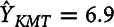 ${{\hat Y}_{KMT}} = 6.9$
, s.e = 0.12), followed by independents and minor-party supporters (
${{\hat Y}_{KMT}} = 6.9$
, s.e = 0.12), followed by independents and minor-party supporters ( ${{\hat Y}_{Nonpartisan}} = 6.67$
,s.e = 0.11),with DPP supporters exhibiting the lowest level (
${{\hat Y}_{Nonpartisan}} = 6.67$
,s.e = 0.11),with DPP supporters exhibiting the lowest level (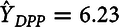 ${{\hat Y}_{DPP}} = 6.23$
, s.e = 0.14). However, when we further examine how the emphasis on social order conditions partisan differences in homosexual attitudes, the patterns diverge sharply. KMT supporters and non-partisan voters display consistent attitudes regardless of whether they emphasize social order, with no statistically significant differences between the two groups. By contrast, substantial within-party heterogeneity emerges among DPP supporters. As illustrated in Figure 2, holding all else constant, the predicted mean level of homosexual prejudice among liberal DPP supporters who do not emphasize social order (
${{\hat Y}_{DPP}} = 6.23$
, s.e = 0.14). However, when we further examine how the emphasis on social order conditions partisan differences in homosexual attitudes, the patterns diverge sharply. KMT supporters and non-partisan voters display consistent attitudes regardless of whether they emphasize social order, with no statistically significant differences between the two groups. By contrast, substantial within-party heterogeneity emerges among DPP supporters. As illustrated in Figure 2, holding all else constant, the predicted mean level of homosexual prejudice among liberal DPP supporters who do not emphasize social order ( ${{\hat Y}_{DP{P_{Lib}}}}$
) is 5.70, whereas for those who place a high value on social order (
${{\hat Y}_{DP{P_{Lib}}}}$
) is 5.70, whereas for those who place a high value on social order ( ${{\hat Y}_{DP{P_{con}}}}$
) it rises to 6.44, substantially higher than the liberal DPPs (
${{\hat Y}_{DP{P_{con}}}}$
) it rises to 6.44, substantially higher than the liberal DPPs ( ${{\hat Y}_{DP{P_{con}}}} - {{\hat Y}_{DP{P_{Lib}}}}$
0.61,
${{\hat Y}_{DP{P_{con}}}} - {{\hat Y}_{DP{P_{Lib}}}}$
0.61, $s.e = 0.37$
) and is comparable to the levels observed among KMT supporters as well as independents and minor-party voters. In other words, the finding above demonstrates how anti-LGBT groups not only rode the anti-DPP tide by convincing nonpartisans and KMT supporters to adopt their position on the referenda but also how they successfully split DPP supporters into pro- and anti-LGBT groups by highlighting the impact of same-sex marriage on social order.
$s.e = 0.37$
) and is comparable to the levels observed among KMT supporters as well as independents and minor-party voters. In other words, the finding above demonstrates how anti-LGBT groups not only rode the anti-DPP tide by convincing nonpartisans and KMT supporters to adopt their position on the referenda but also how they successfully split DPP supporters into pro- and anti-LGBT groups by highlighting the impact of same-sex marriage on social order.
In addition, the associations between demographic factors and homosexual attitudes derived from Figure 1 are similar to the findings of previous studies. The younger, female, and highly educated were more likely to hold liberal attitudes toward the LGBT community than people who were older, male, and less educated. As for religious beliefs, our finding, as expected, is also in alignment with previous studies, revealing that Christianity played a powerful role in shaping attitudes toward homosexuality. In Taiwan, Christians are disproportionately well-educated professionals, for example white-collar employees in the high-tech industry and government or military officials who enjoy high social status (Zhai and Woodberry, Reference Zhai and Woodberry2011). These high-status Christians tend to endorse zero-sum benefits and perceive same-sex marriage legalization as blasphemous to their religious beliefs and a tremendous loss for religious minorities like them (Wilkins et al., Reference Wilkins, Wellman, Toosi, Miller, Lisnek and Martin2022). Therefore, they waged the referenda war against the LGBT communities in hopes of overturning the Constitutional Court’s decision by appealing to public opinion. In addition to Christians, Taiwanese folk believers, who account for a majority of the population, also tended to be less tolerant of homosexuality than followers of other religions besides Christianity. This shows that Christian churches had successfully aroused Taiwanese people’s antipathy toward homosexuality and convinced them to vote against same-sex marriage and gender equality education in the referendum campaign.
6. Conclusion
This paper aims to answer the following considerable puzzles – first, why Taiwan, which for so long looked much less Christian than Western Europe and the United States, appears in its religious contexts to resist same-sex marriage? More specifically, how did Christian churches overcome the disadvantage in population size and arouse considerable homosexual prejudice amongst the public? Last, but certainly not least, how did the anti-LGBT groups manage to cooperate with the opposition camp and impact the incumbent DPP in the referendum campaign and local elections? Our analysis shows that negative attitudes toward homosexuals reflect broader cultural concerns with traditional expectations of gender roles. Asian traditions, mainly influenced by Confucianism, emphasize that certain behaviours, interests, and professions are seen to be appropriate only for men or women exclusively. If a man/woman exhibits what is thought of as inappropriate characteristics regarding physical gender dichotomization, he/she is often suspected to be homosexual. Therefore, although data from TSCS 2015 indicate that nearly 60% of respondents supported same-sex marriage, the 2016 survey also revealed that more than half of the public agreed with the statement that ‘when the wife has a full-time job, family life suffers’, and over 60% believed that it is detrimental to preschool-aged children if their mother works outside the home. Moreover, TSCS 2018 found that more than three-quarters of respondents agreed that under all circumstances, the father’s authority in the household should be respected. In other words, while Taiwanese citizens appeared open to same-sex marriage, the patriarchal family structure premised on the traditional gender division of labour remained deeply ingrained. These entrenched gender role distinctions became a key resource for anti-LGBT groups in mobilizing during the referendum campaign. By repeatedly emphasizing that legalizing same-sex marriage would undermine the traditional family structure, opponents of marriage equality were able to readily evoke homosexual prejudice among the public.
In addition to gender role distinctions, Confucianism’s emphasis on family values is widely considered in socially conservative positions in opposition to LGBT rights. However, while both pro- and anti-LGBT groups stressed family values in the 2018 referendum campaign, it was not clear which factors significantly stimulated public concerns about homosexuality. Our analysis indicates that, among various traditional family values, reproduction and filial piety are most strongly associated with negative attitudes toward homosexuality. This suggests that, in order to activate latent anti-homosexual sentiments among the public, anti-LGBT groups emphasized that ‘a family can only consist of one father and one mother’ and underscored that only heterosexual families are capable of sustaining the Confucian ideals of procreation and the reciprocal mechanism of parent-child obligations.
Most importantly, our findings evince that the anti-LGBT conservatives garnered support for their referenda from non-partisans and KMT supporters and successfully split DPP supporters by emphasizing the impact of same-sex marriage and gender equality education on social order. The 2018 referenda thus became a war between not only pro- and anti-LGBT but also pro- and anti-DPP. Consequently, due to the intra-party disagreement on gender equality policies, the ruling DPP suffered its biggest ever defeat in the 2018 local elections. In other words, this suggests that intra-party conflicts on the issue of same-sex marriage arise not so much from the opposition parties as from the incumbent parties.
As the first Asian country to allow same-sex couples to marry, Taiwan’s experience in legalizing same-sex marriage merits further study and attention. Previous studies attributed anti-homosexual attitudes to sexual conservatism and suggested that the public will become more tolerant of homosexuality and tend to accept same-sex marriage as lesbians and gays become more visible and integrated into communities (Anderson and Fetner, Reference Andersen and Fetter2008). These arguments, however, cannot explain why gender equality has not made significant progress in advanced industrial countries in Asia, such as Japan, South Korea, and Singapore, where pre-marital sex and coming out are now considered normal; nor can they clarify the surge of homophobia among the Taiwanese public during the 2018 local election and referenda campaigns. By analysing the post-referendum Taiwan WVS data, this paper provides five relevant contributions to the study of same-sex marriage legalization in conservative Asia. First of all, while homosexuality is a concept shaped by culture, language, and social norms, legalizing same-sex marriage brings it to the political arena. Our findings reveal the fact that people’s underlying expectations of gender roles and family biological functions are very likely to have been awakened during the pro- and anti-LGBT campaigns and become a boost to anti-homosexuality movements. In other words, although an open and liberal attitude towards homosexuality among the public is a necessary condition for same-sex marriage legalization, it is far from a sufficient condition. This thus explains why there has been little breakthrough in the legalization of same-sex marriage in Japan and South Korea, despite the generally open attitudes towards sexuality among their people. According to the WVS, around 30% of Japanese people and 50% of Koreans agreed men make better political leaders and business executives than women do and men should have greater rights to jobs than women. About the same number of respondents also believed that it is a couple’s duty to have children for society. Those prior beliefs about gender roles and family reproduction functions might unconsciously foster antipathy toward homosexuality.
In addition, although Interpretation No. 748 changed perceptions of social norms and granted same-sex couples rights comparable to the rights of heterosexual spouses, our findings suggest that it could not shift personal attitudes, nor could it make the incumbent DPP evade the impacts of same-sex marriage legalization. Instead, the ruling agitated religious conservatives and resulted in a series of backlashes from anti-LGBT groups. Similarly, Ofosu investigated state-level differences in reaction to the 2015 Supreme Court ruling of Obergefell v. Hodges. Their findings demonstrated that the ruling did not necessarily reduce homophobia. Instead, in the 15 states that legalized same-sex unions in response to the ruling, they observed significant increases in anti-homosexual prejudice.
Third, same-sex marriage legalization is a controversial issue and might aggravate existing political polarization. In this paper, we demonstrate how conservative anti-LGBT groups rode the anti-DPP wave in the 2018 local elections and exacerbated the existing unification/independence divide between the Pan-blues and Pan-greens. Similarly, in the United States, the legalization of same-sex marriage and abortion not only ignited a cultural war between religious conservatives and liberals but also further exacerbated the political polarization between Democrats and Republicans (McClain, Reference McClain2008). Fourth, in contrast to criticisms from opposition parties and religious conservatives, the intra-party conflicts that arose from the legalization of same-sex marriage are of greater concern to the ruling parties because the conflicts tend to emerge more frequently within incumbent parties than opposition parties. This might also be the reason why same-sex marriage legalization is still impeded in Japan where the ruling Liberal Democratic Party struggles with party factions.
Finally, with the findings of this paper, we provide substantive and useful suggestions for same-sex marriage movements in Asia. First, we believe that breaking down the conservative expectations of gender roles and families among the public is the primary task in promoting same-sex marriage, and it relies on the efforts of same-sex marriage groups, women’s teams, human rights NGOs, and governments to promote gender equality. In addition, gender equality education plays an important role in promoting LGBT rights. We must properly educate the public that gender is not simply a binary construct between males and females. Apart from physiological differences, men and women do not necessarily differ in their abilities, interests, appearance, or even sexual orientation. Accepting gender diversity and same-sex marriage will not lead to social disorder or unrest; instead, it represents progress towards social diversity and respect for minorities. Thirdly, positive interaction and communication with religious groups is also necessary for same-sex marriage movements. At the very least, religious groups must be able to understand that legalizing same-sex marriage will not affect their existing religious freedom. Last and most importantly, given that the impact of same-sex marriage legalization on the ruling parties is often greater than that of the opposition parties, we recommend that consensus be reached among the incumbent parties regarding the details of same-sex marriage and its resulting issues before legalizing same-sex marriage.
Appendix
Question wordings and coding scheme
Dependent variable
-
Please tell me whether you think homosexuality can always be justified, never be justified, or something in between, using this card. (Q182)

Independent variables
Gender equality
-
On the whole, men make better political leaders than women do. (Q29)
-
On the whole, men make better business executives than women do. (Q31)
-
A university education is more important for a boy than for a girl. (Q30)
-
When jobs are scarce, men should have more rights to a job than women. (Q33)
-
(1) Strongly disagree.
-
(2) Disagree.
-
(3) Agree.
-
(4) Strongly agree.
-
-
If a woman earns more money than her husband, it’s almost certain to cause problems. (Q35)
-
(1) Strongly disagree.
-
(2) Disagree.
-
(3) Neither agree nor disagree.
-
(4) Agree.
-
(5) Strongly agree.
-
Family values
-
How important is family in your life? (Q1).
-
(1) Not at all important.
-
(2) Not very important.
-
(3) Rather important.
-
(4) Very important.
-
Reproduction
-
Do you agree or disagree with ‘It is a duty towards society to have children’? (Q37).
-
(1) Strongly disagree.
-
(2) Disagree.
-
(3) Neither agree nor disagree.
-
(4) Agree.
-
(5) Strongly agree.
-
Filial piety
-
Do you agree or disagree with ‘Adult children have the duty to provide long-term care for their parents’? (Q38).
-
(1) Strongly disagree.
-
(2) Disagree.
-
(3) Neither agree nor disagree.
-
(4) Agree.
-
(5) Strongly agree.
-
Emphasis on social order
-
People sometimes talk about what the aims of this country should be for the next ten years. On this card are listed some of the goals which different people would give top priority. If you had to choose, which one of the things on this card would you say is most important? (Q154) And which would be the next most important? (Q155)
-
(1) Maintaining order in the nation.
-
(2) Giving people more say in important government decisions.
-
(3) Fighting rising prices.
-
(4) Protecting freedom of speech.
-
-
Coding scheme
-
(1) Selecting [1] ‘Maintaining order in the nation’ in either Q154 or Q155.
-
(0) Otherwise.
-
Party Affiliation (Q223).
-
(0) No party affiliation or other minor parties
-
(1) Kuomintang (KMT).
-
(2) Democratic Progress Party (DPP).
Religions (Q298)
-
(0) No Religion.
-
(1) Christianity.
-
(2) Buddhist.
-
(3) Folk beliefs and others.
Descriptive statistics


Factor analysis for general gender stereotype


 Open access

