

When Jay (James T.) Baldwin (1933–2018) wrote the introduction to the 1994 Millennium Whole Earth Catalog, he posed a thought-provoking question to his readers: “But where are the windmills?”Footnote 1 The catalogs, rich in articles about the early dot-com internet boom of the 1990s, awarded some of its space to information technology and libertarian cyberculture. Earlier, the original catalogs and the countercultural “back to the land” movement had championed do-it-yourself (power-generating) windmills and commercial variants as symbols of appropriate technology and a libertarian-leaning, individual-centered environmentalism.Footnote 2 Baldwin’s rhetorical query reflected the myriad challenges that embryonic bright green environmentalism had encountered since the late 1960s. Beyond technological hurdles, clashes with dark green environmentalism and fossil fuel–based developmentalisms had spawned ongoing tensions and marginalization. By the twenty-first century, the “path not taken” of the 1960s and 1970s nonetheless had gained considerable traction within the new Anthropocene framework, catalyzing novel forms of eco-developmentalism. So, fast-forward to 2023, the question “But where are the windmills?” finds an oceanic answer. Approximately 13,000 offshore wind turbines, generating about 68 gigawatts,Footnote 3 marked a noteworthy shift in energy generation from traditional fossil fuel power plants.Footnote 4 The offshore turbines’ scale, locations, and integration into government-led eco-development strategies nevertheless distinguished them from the small turbines the Whole Earth Catalog readers could install in their rural communes and other places during an era dominated by fossil fuel–based developmentalisms.
This chapter focuses on the economic and ecological aspects of an ocean industrialization project during the early 1970s, shaped by the spatial limitations – or potential “limits to growth” – of the Hawaiian Islands in the Pacific Ocean. Its experiments with low-carbon offshore energy generation originated from concerns over air pollution and rapid population increase due to domestic in-migration and tourism, predating climate change considerations. The spatial constraints of the Hawaiian Islands prompted plans for artificial islands, utilizing oceanic ghost acres for (then) “alternative” oceanic energy generation, akin to offshore oil drilling having turned into a compensation for limited space on land, as shown in Chapter 2. This attention shift from fossil fuel–based developmentalisms to other energy sources aimed to tackle multiple economic and ecological problems by increasing food and freshwater production through new synergies, reducing air and other forms of pollution, and improving access to public beaches. The chapter analyzes the cooperation between Japanese star architect and Metabolist movement member Kikutake Kiyonori (1928–2011) and US ocean expert John P. Craven (1924–2015), as well as governmental reactions in the United States and Japan. Before meeting at the University of Hawai’i at Mānoa on O’ahu, Craven served as the chief scientist of the US Navy’s Special Projects Office, where he engaged in high-risk Cold War military operations and offshore platform experiments. Post-Navy, he briefly worked as a professor at MIT before relocating to Hawai’i. Craven thus was a central figure in US Cold War marine engineering and later joined the US delegation to the Third UN Conference on the Law of the Sea (1973–1982). Briefly returning to the previous chapter, Craven’s connections to the US Navy, academia, as well as federal and state bureaucracies led critics to view him as emblematic of the military–industrial–bureaucratic complex and its technocratic tendencies. Kikutake, one of Japan’s most renowned architects and a member of the Metabolist movement, as discussed in Chapter 4, gained further global attention for his cybernetic structures at the 1970 world exposition in Osaka. After his collaboration with Craven, he engaged in the discussions on artificial islands and Kansai International Airport that were covered in Chapter 3.
This chapter explores Earth’s amphibious transformation through the conflict between nascent bright green environmentalist ideas and well-established fossil fuel–based developmentalism, set against a backdrop of global population growth and resource concerns in the 1970s. It addresses the questions of how and why fossil fuel–based developmentalism contributed to the prolonged marginalization of bright green environmentalist ideas about low-carbon offshore energy generation. Intellectually, Kikutake and Craven, with their embryonic bright green ideas and techno-optimist views, prefigured key ecomodernist concepts.Footnote 5 Facing the spatial constraints inherent in island contexts, they and their team of university faculty, students, and staff from other research institutions focused on employing technology to decouple socioeconomic development from ecosystem service and resource overexploitation to enable continuous industrial growth. Applying an oceanic-vertical perspective to island ecosystems and their littoral marine regions, I analyze Craven’s and Kikutake’s cybernetic and systems-thinking approach aimed at assessing the ecosystem-wide impacts of non-fossil, alternative energy technologies. Similar to the energy space created by offshore oil and gas as described in Chapters 2 and 3, fossil fuel imports and combustion interconnected large parts of the Hawaiian Islands’ economy and ecology. Alternative offshore energy sources had a similar potential to interlink multiple important aspects of an artificial island’s economic and ecological systems. Expected ecosystem impacts of the supposed energy transition included pollution reduction, encompassing air pollution (photochemical smog, particulate matter, etc.) and oil spills, and coastal aesthetic improvements, alongside synergies fostering decoupling from ecosystem service overexploitation, such as replacing capture fisheries with mariculture and freshwater extraction with desalination – concepts now vital to ecomodernism.
The importance of the Hawai’i project lies in addressing the frail ecological conditions of spatially constrained islands worldwide, which have historically been prone to ecological collapses and large-scale species extinctions. Conceptually, islands should not be imagined as “continents in miniature” because for all but the biggest ones, their environments are dominated by a special ecotone, a zone where terrestrial and aquatic ecosystems intersect. Their distinct environmental conditions, particularly on smaller islands, mean that disastrous events happening on them do not constitute early micro-forewarnings of later continental-scale disasters, despite a distorted, terra-centric Western tradition of ignoring these special conditions and generalizing islands as “canaries in the coal mine.”Footnote 6 However, conceptually, disastrous events on islands can serve as forewarnings for similar events on many other islands. Over the past 500 years, approximately 80 percent of known species extinctions have occurred on islands. These collapses, driven by unsustainable population growth, invasive species, and resource overuse due to Polynesian expansion, Western colonialism, and other settlement movements, have had dire consequences for both human and nonhuman inhabitants.Footnote 7 Recognizing these vulnerabilities, including past local species extinctions, and being aware of global discussions about population growth, the Hawaiian government enacted some of the most elaborate environmental legislation in the United States during the late 1960s and 1970s.Footnote 8 This context is essential for understanding the project initiated by Craven and Kikutake to construct a floating industrial combine – an agglomeration of industrial sites, power plants, and transportation infrastructures benefiting from synergies through proximity and shared functions. This project was tied to Hawai’i’s endeavor to improve air and water quality, alleviate shoreline congestion, regulate urbanization, and preserve endangered flora and fauna. Another important factor influencing the project was the international oil situation between OPEC’s founding in 1960 and the first “Oil Shock” of 1973, which encouraged Hawaiian research into alternative energy sources. Notably, research on solar photovoltaics, wind, and other forms of energy during the 1970s has garnered some scholarly attention.Footnote 9 Arguably, again the result of terra-centric bias, the history of ocean industrialization and ideas for low-carbon offshore energy generation, as in Hawai’i, remains underexplored.
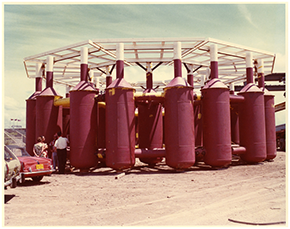
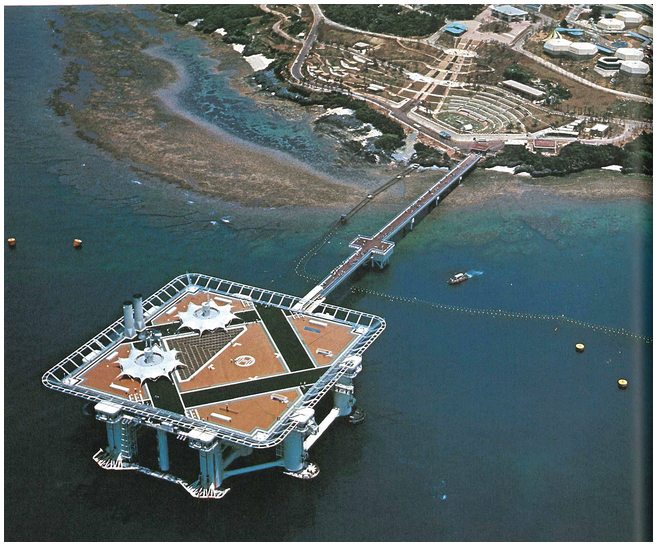
At the core of Craven and Kikutake’s project lay the idea of building artificial islands to technologically reduce the human ecological footprint on a group of naturally formed islands. This techno-optimist approach, which I term Hawaiian Metabolism, was a global problems-focused offshoot of the heterogeneous, more utopian Japanese Metabolist movement discussed in Chapter 4. In Hawai’i, Kikutake cooperated with Craven and the local team, whose marine engineering knowledge helped evolve Kikutake’s utopian Metabolist ideas into practical, technically feasible floating designs and actual prototypes tasked with tackling concrete environmental challenges. The result was two floating industrial combine prototypes in the Pacific region: the Hawaii Floating City Project with a 1:20-scale floating platform model tested off O’ahu (see Figure 7.1); and Aquapolis (Akuaporisu), a life-sized, 15,000-ton semi-submersible floating industrial combine off Okinawa (see Figure 7.2), roughly the size of a city block (100 m × 100 m).
The 1:20-scale floating platform model (without models of industrial or commercial sites on top) tested in Hawaiian waters during the early 1970s.
Floating industrial combine Aquapolis hosting the Japanese exhibition at the 1975 International Ocean Exposition in Okinawa. A part of its fish farm, the Ocean Ranch, can also be seen to its top right.
Kikutake, Craven, and their team applied the Metabolist movement’s cybernetic concepts again to Pacific waters: growth, adaptation, mobility, and ecological autonomy (or self-sufficiency). Like Craven, Kikutake must have been aware of Buckminster Fuller’s Triton City, published in the US governmental report titled Our Nation and the Sea released in early 1969 (see Figure 6.2 in the previous chapter). Craven likely also had been informed about Triton City when he was involved in US Navy offshore platform experiments. The Assistant-Secretary of the Navy for Research and Development, Robert A. Frosch (1928–2020), had agreed to Charles Haar’s request to investigate Triton City’s technical feasibility, confirming it in November 1968. In 1969, he authorized the Mobile Ocean Basing System study, a decision to which the feasibility of Fuller’s Triton City possibly had contributed.Footnote 10 Thus the overlap with Fuller and Tange Kenzō in cybernetic approaches and their refinement by Craven and Kikutake is perhaps not surprising.
I argue that the ideas of Kikutake and Craven about alternative oceanic energy generation, which were supposed to cause broader economic and ecological changes, are important because they presented an early counterproposal to the strong governmental support in the United States and Japan for developing offshore oil and gas fields domestically or abroad for imports. This support, however, proved stronger and instead contributed to a prolonged carbon lock-in effect and intensified the oceanic Anthropocene. Very limited research funding, coupled with a decline in military interest before and after the construction of Aquapolis in 1975, prevented further development of platform-based industrial combines until their resurfacing in the 2010s. The choices made by the US and Japanese governments in the mid-1970s established a self-reinforcing path dependence by putting in place forces that favored offshore drilling as the only source of oceanic energy generation.Footnote 11 Unsurprisingly, this path dependence had positive externalities, usually referring to positive feedback when done by a growing number of people, such as gaining infrastructural access to oil as a fuel widely used within the economy. For the US and Japanese governments, this advantage, compared to new energy sources, outweighed air and other forms of pollution. Carbon dioxide was not yet deemed a pollutant, and climate change research was in its infancy, so these ecological impacts were not a significant factor in decision-making. The US and Japanese choices also resulted in very important negative externalities, meaning constraints for new energy types, which sustained offshore drilling as the dominant option. These negative externalities included governmental reluctance to invest in ocean research on the scale of projects like the Apollo program. Ultimately, the lack of support for prototypes of low-carbon offshore industrial combines perpetuated offshore oil and gas drilling’s research advantage.Footnote 12 Analyzing the origins of the offshore fossil fuel path dependence, therefore, necessitates examining the Hawaiian Metabolists’ alternative offshore energy generation ideas from the 1970s. This focus helps understand the reasons for the marginalization of bright green environmentalism by fossil fuel–based developmentalism until the trajectory shift during the twenty-first century. The bright green ideas for alternative offshore energy generation then became an integral aspect of the second stage of ocean-to-land globalization that I analyzed in Chapter 5, experiencing their own support factors, such as cost declines for position-fixing tools and fast internet access.
Coastal Industrialization Problems Meeting Military Research
Kikutake and Craven developed their bright green environmentalist ideas in response to Japan’s and Hawai’i’s reliance on fossil fuel–based energy systems. These energy systems integrated vast segments of the Japanese and Hawaiian economies and impacted coastal ecologies. Influenced by the problems in their respective coastal industrialization contexts before collaborating, both Craven and Kikutake contemplated artificial islands to usher in a postindustrial coastal era by industrializing the ocean. The aim of their respective thought processes was to enhance public goods supportive of physical and mental health for urban and tourist populations. This goal was to be achieved by reducing industrial pollution along coastlines and providing access to aesthetically pleasing leisure spaces. They proposed shifting polluting activities to oceanic “sacrifice zones” to mitigate the pollution and coastal congestion caused by the fossil fuel economies. However, around 1971, their ideas merged and evolved upon meeting in Hawaii, becoming even more concerned about global and local population growth, resource limitations, and environmental degradation. They modified their thought processes toward devising tools for reducing pollution and increasing energy and food production through alternative offshore energy systems. I first examine their initial ideas of “sacrifice zones” to illustrate the reasons for the subsequent change to alternative oceanic energy generation.
Kikutake’s original vision of inhabiting sea surfaces was different from the socialist utopianism of other Metabolists. Viewed from a transwar perspective connecting prewar, wartime, and postwar periods, his ideas reflected a personal form of “islomania,” inspired by Japanese island narratives popular since the mid-nineteenth century. The Japanese exploration, exploitation, and sometimes annexation of Asian and Pacific islands had cultivated a “South Sea” narrative (nan’yō-ron) centered around adventure and island riches, extending roughly from northern Australia to Hawai’i.Footnote 13 Later, from the 1910s to the early 1960s, Yanagita Kunio (1875–1962), a bureaucrat and folklore researcher, added other aspects to this Japanese “islomania.” His isolationist historical narrative depicted the Tokugawa period (1603–1868) as a peaceful island civilization undisturbed by foreign countries, as had been – in his somewhat crude historical comparison – the islands of Oceania or the “South Sea” before Western colonialism. He contrasted such island civilizations with Western countries, which he associated with continental civilization, defined by racism, imperialism, and the subjugation of other peoples as part of continental empire-building. In the nineteenth century, Western pressures on Japan led to an ordeal for the once isolated islands, prompting them to adopt a highly violent and ultimately unsuccessful course toward becoming a continental civilization.Footnote 14
Kikutake, influenced by these “islomania” narratives, was particularly attentive to them in the late 1950s, when he likely read about artificial islands. Possibly, he came across the construction of the jack-up rig Dai-1 Hakuryū for offshore oil exploration off Japan or Arabian Oil Co.’s interest in the waters of the Persian Gulf, as discussed in Chapter 2. Viewed from a transwar perspective, Kikutake, in his publications from that time, worried about the violent results of political concern regarding neo-Malthusian population growth, a long-standing issue in Japan and other countries. He emphasized that these demographic anxieties were a main driving force for continental civilizations’ pursuit of large continental spheres of influence. He therefore implicitly referred to Japan’s strong prewar population growth, where the population more than doubled between the 1860s and the 1930s, rising by another 50 percent between the 1930s and 1960s. In Kikutake’s view, the end of World War II had not solved the root causes of war but rather led to a new confrontation of continental civilizations haunted by neo-Malthusianism in the form of the Cold War.Footnote 15 Reminiscent of Western high-tech “islomania” exemplified by Edward R. Armstrong’s seadromes, Kikutake therefore proposed, albeit in a utopian and technically unfeasible way, constructing artificial islands as a technological opportunity to veer Japan and other countries away from a continental civilization model and toward an island-based one, free from neo-Malthusian constraints.
In subsequent years, Kikutake’s colleagues and the broader public showed greater interest in the utility of his artificial islands for adapting to environmental changes, as depicted in disaster fiction, rather than his island civilization visions, which likely fueled his own interest in environmental issues. Another Metabolist, the architecture critic Kawazoe Noboru (1926–2015), wrote a short fiction story in 1961 about future earthquakes, typhoons, and sea level rise triggered by human-induced greenhouse gas releases and massive tectonic activities causing volcanic eruptions. In this story, people finally showed renewed interest in Kikutake’s artificial islands as adaptation tools, while large parts of submerged Tokyo had to be abandoned. The narrative inspired author Komatsu Sakyō (1931–2011) to write his disaster fiction novel, Japan Sinks (Nippon chinbotsu), in 1973.Footnote 16 There, the Japanese main islands sank due to volcanic activities, resulting in multiple films and series. Both Kawazoe and Komatsu, who were well acquainted, used their stories as allegories for Japan’s devastation at the end of World War II. More recently, the Japan Sinks story and, indirectly, Kikutake’s artificial island concepts have also merged with the ecocritical cli-fi (climate fiction) genre, spawning various iterations in the form of films and series.Footnote 17 In the 1960s and early 1970s, which are the focus here, Kikutake was obviously unaware that sea level rise concerns would later gain such traction. During this period, the fictional stories by Kawazoe and Komatsu arguably reinforced a terrestrial mindset among Japanese readers, associating artificial islands with purely fictional environments and downplaying their potential for addressing real environmental problems. Kikutake’s focus, however, did not shift to fictitious sea level rise concerns but became occupied with the practical applications of artificial islands in preventing coastal environmental degradation due to Japan’s industrialization and land reclamation.
In the 1960s, Kikutake critically examined the Japanese government’s fossil fuel–based developmentalism and its environmental ramifications. In the 1950s, Japan’s centrally planned reindustrialization was impeded by limited raw materials and its mountainous geography. The government’s development strategy, partly covered in Chapter 2, aimed to strongly increase the export of industrially manufactured goods, necessitating substantial imports of primary commodities and fossil fuels. Japan’s geography, limiting construction primarily to coastal areas, alongside the central role of shipping, predestined the sites for industrial combines. In the 1960s, refineries, oil-fired electric power plants, heavy industry using electric furnaces to recycle scrap steel into new steel, and petrochemical complexes using refinery feedstocks were set up along coastlines, close to ports, warehouses, and workers’ residential quarters to create operational synergies. Often, land reclamation was used to create additional space. This proximity to the ocean benefited, for example, thermal power plants and heavy industries needing access to cooling water. It also offered the chemical industry an outlet for pollution disposal, sometimes with disastrous consequences like Minamata disease from waterborne methylmercury poisoning. Additionally, coastal spaces hosted maritime disaster protection structures. Consequently, the Japanese government’s fossil fuel–based developmentalism negatively impacted urban coastlines by strongly reducing recreational access or completely removing beaches, accumulating industrial pollution in bays and other waters, and generating notorious air pollution due to sulfur emissions from fossil fuel combustion.Footnote 18
Kikutake rejected this terra-centric development model that reduced the ocean to a transportation space. In the 1960s, preceding his Hawai’i visit, he envisioned an alternative that removed industrialization’s environmental impacts on public assets like beaches and coastal waters. His proposal, though utopian and more a social critique than a technically feasible option, involved placing industrial complexes, port facilities, airports, and power plants not on terrestrial sites reclaimed along coastlines but on artificial islands built further offshore to relocate pollution.Footnote 19 Simultaneously, his proposal reflected his techno-optimistic support for industrialization if realized in an alternate environmental setting that moved problem facilities away from populated coastal spaces. A key aspect of his artificial islands proposal was enhancing transportation efficiency for these offshore industrial combines, given the trend toward increasingly larger freighters and supertankers that formed the logistical backbone of Japan’s high-growth economy. These growing vessel sizes necessitated major port reconstructions, including basin excavation and pier adjustments. Kikutake’s ideas of constructing “floating cities,” as he called them, instead of further coastal land reclamation, moved these port facilities and industrial plants onto artificial islands. This relocation aimed to rejuvenate urban coastlines, preserve their aesthetic value, and avoid congestion and industrial pollution. He therefore also anticipated benefits for the coastal fishing industry from reduced industrial pollution in bays and coastal waters, whose disastrous outcomes I explore in the next chapter on mariculture.Footnote 20 Kikutake’s still utopian vision thus integrated ocean industrialization with aesthetic coastlines, accepting industrial pollution further offshore as a necessary by-product of socioeconomic development, in noteworthy contrast to later Hawaiian Metabolist approaches focusing on pollution reduction or elimination.
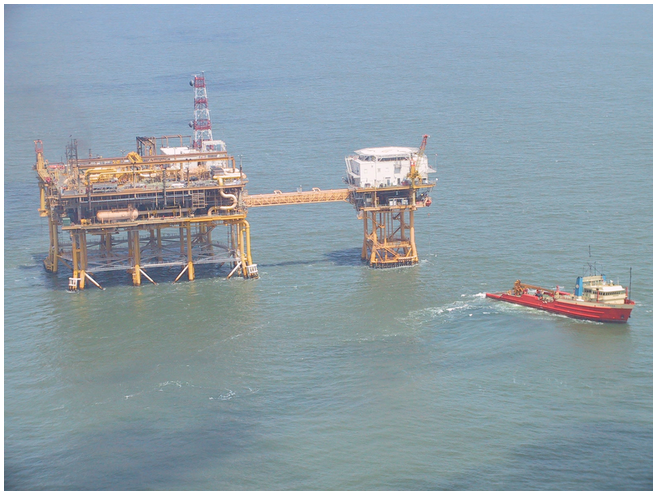
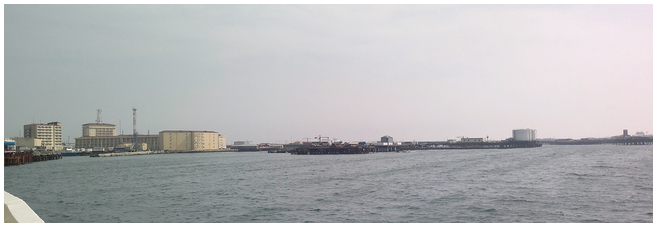
Though not widely implemented, the general concept of building port infrastructure or industrial settlements offshore has been realized. For example, the Louisiana Offshore Oil Port (LOOP; see Figure 7.3), opened in 1981, enabled supertankers too large for most other ports to offload in deeper waters. Similarly, Japanese airports, like Kansai International Airport, have been built on artificial islands created through offshore landfill since the 1980s, not on floating or fixed platforms, exemplifying this approach and covered in Chapter 3. The largest such project, however, occurred in the Soviet Union, concurrent with Kikutake’s and Craven’s activities. Known as Neftianye Kamni in Russian or Neft Daşları in Azerbaijani, which translates to “Oil Rocks,” this massive offshore settlement for oil drilling in the Caspian Sea, about 45 kilometers off the Baku metropolitan area, was built starting in the mid-twentieth century. Lacking floating offshore platforms, Soviet engineers constructed Oil Rocks atop numerous platforms standing on a reef. It housed over 5,000 people at its peak in the 1970s and included facilities like a nine-story apartment block, a library, a public bath, a cinema with a 300-person capacity, and a clubhouse, among other buildings. A network of more than 300 kilometers of elevated roads and bridges connected the settlement to its drilling sites (see Figure 7.4).Footnote 21 Craven and Kikutake, interestingly, did not reference Oil Rocks, possibly due to unawareness resulting from the Cold War, the ideological conflict, or because it showcased Soviet engineering incapability in constructing floating platforms. Nonetheless, the extensive scale and population of Oil Rocks underscored that building an offshore industrial combine was a matter of economic and ecological considerations, discouraged by the terrestrial mindset, rather than constrained by technical feasibility. In some aspects it might even be seen as an oil-centric, downscaled version of Tange Lab’s Plan for Tokyo, 1960, discussed in Chapter 4.
Marine terminal of the Louisiana Offshore Oil Port (LOOP), opened in 1981.
Neft Daşları (Oil Rocks), built by the Soviet Union since the 1950s on seabed-fixed platforms on a reef in the Caspian Sea to extract oil, at its peak housed about 5,000 people.
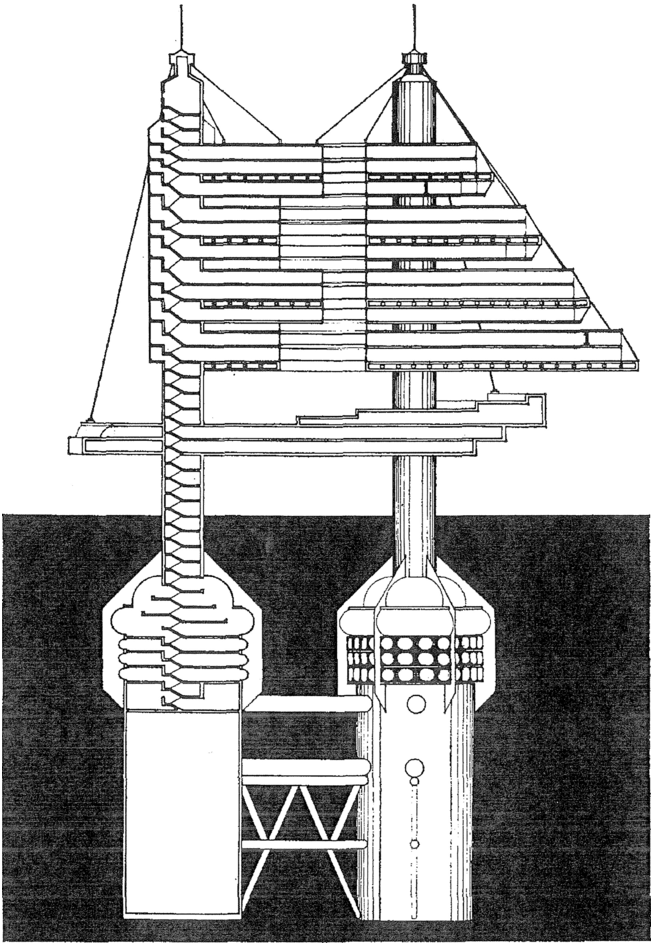
Craven’s earlier work on floating platforms for military use had a defining impact on developments in Hawai’i. The Hawai’i project echoes other forms of civilian adaptation of military research, as seen in outer space, radiocommunication, and radionavigation technologies. The project therefore reminds one of Fuller’s concept of the “outlaw area,” its oceanic connection, and design transfers to civilian use, covered in the previous chapter. Inspired by the seadromes discussed in Chapter 3, US Navy research on floating platforms was unconstrained by any construction norms or design traditions. Craven, before joining MIT and eventually moving to Hawai’i, was briefly part of a US Navy team developing mobile floating bases, where he experimented with a new type of floating platform, the spar platform. Resembling spar buoys, these floating structures are stabilized in deep waters by one or more large submerged vertical shafts’ bottom parts getting flooded as ballast (see Figure 3.2). For the US Navy, the main question was whether it was possible to create a mobile floating base during the Vietnam War that offered better protection against stealth attacks, smuggling, and theft than ground bases, particularly in forested landscapes. Other concerns included the uncertain future of military bases in Japan and the Philippines, potentially impacted by local protests and opposition. This military platform research can be traced back to the US Navy’s use of the Floating Instrument Platform (R/P FLIP), built in 1962 and managed by the Scripps Institution of Oceanography. The FLIP, a ship-spar platform hybrid, featured a long, horizontal shaft for mobility as a vessel and could be partially flooded to flip 90 degrees, transitioning from horizontal to vertical orientation, thus enhancing its stability. Kikutake’s interest in a spar platform design was sparked by the FLIP, which he learned about at a 1964 American Institute of Architects event in San Diego. When Craven left the military project, an operational model of a three-legged spar platform had been constructed, later followed by a two-legged design, one of the goals having been to flip the legs horizontally for much faster towing to new locations than would have been possible for Armstrong’s seadromes.Footnote 22 Illustrating civilian potential, Craven and Kikutake adopted a three-legged spar platform design for their project (see Figure 7.5). Towing was not their concern, but stability was. In Hawai’i, they were confronted with local oceanic conditions such as one-kilometer water depths and the strong Northeast Pacific trade winds. Civilian platforms from the offshore oil industry were not designed to operate safely under such conditions. Therefore, Kikutake and Craven repurposed the US Navy’s spar design for mainly stationary civilian use, predating its application in the offshore oil industry, which began with the Brent Spar in 1976, the North Sea floating oil storage platform whose decommissioning and intended sinking caused a major environmental debate in the 1990s.Footnote 23
Side view drawing of a module designed for the “Hawaii Floating City Project.” It shows two of the three submerged legs that add space for maintenance infrastructures.
Craven’s move to Hawai’i and his role in managing the state’s marine affairs were initiated by Governor John A. Burns (D). Under Burns’s tenure (1962–1974), Hawai’i emerged as a key marine research hub. This shift was influenced by the 1967 appointment of the Commission on Marine Sciences, Engineering, and Resources by US President Lyndon B. Johnson. In early 1969, the commission released its report, Our Nation and the Sea. It recommended a national inner space program, meaning a large-scale ocean research initiative akin to the outer space program that culminated in the moon landing of July 1969.Footnote 24 Inspired, Burns established a commission that produced the Hawaii and the Sea report in late 1969. The Republican administration of Richard Nixon’s cost-cutting measures after it had assumed office in early 1969 were another important motivator. The reduced federal support for civilian oceanic research encouraged the Hawaiian government to pursue and fund its own research agenda, based on the new report’s recommendations.Footnote 25 Burns persuaded Craven to move from MIT to Hawai’i. Craven’s frustration with the Nixon administration was caused by the belated formation of the National Oceanic and Atmospheric Administration (NOAA) in 1970, only after continued requests from Congress.Footnote 26 Craven did not receive a prominent position in it and instead went to MIT. Tension at MIT with New Left students, who viewed him as an embodiment of technocracy and military–industrial–academic collaborations, facilitated his move to Hawai’i. There, Craven became dean of the marine program at the University of Hawai’i at Mānoa and the state’s marine affairs coordinator, a newly created office recommended in the Hawaii and the Sea report. One of his tasks was planning a 1976–1978 exposition to commemorate the bicentennials of the Declaration of Independence and Captain Cook’s arrival.Footnote 27
Upon his arrival in Hawai’i, Craven first contemplated civilian uses for floating platforms. In early October 1970, shortly after his arrival, he spoke at a dinner hosted by the northwest region of the American Institute of Architects. There, he presented his concept of a large floating platform for hosting the exhibition and testing multiple facilities, including hotels, industrial plants, logistics centers, recreation and transport hubs, underwater parks, and marketplaces off the coast of Waikīkī.Footnote 28 Craven stated that his idea was partially inspired by architect Paolo Soleri’s (1919–2013) remarks about three-dimensional built environments reducing urbanization’s ecological footprint through their density and shorter distances. Consequently, he favored a spar platform for its dense structure, hosting topside structures and offering some space in its submerged shafts. Craven mobilized the image of pristine nature to propose turning Hawai’i into “the nearest thing to paradise on earth” by relocating pollution and other problems offshore.Footnote 29 Craven’s speech therefore sought to gain additional legitimacy for the project by linking it to local environmental problems raised in the Hawaii and the Sea report, such as water pollution, suburban expansion to shores and hills, waste buildup along coastlines, and the reduction of recreational access to beaches and cliffs.Footnote 30 These problems were vital to both the locals and the tourism sector, the latter being a crucial element in Governor Burns’s socioeconomic development strategy for Hawai’i. Craven’s proposal of testing the relocation of various facilities offshore onto artificial islands addressed two contradictory aspects of Hawai’i’s growing role as a tourism and domestic in-migration destination: balancing infrastructure development with the spatial constraints of an island group and its partially closed ecosystem. The challenge was to attract and accommodate the rising number of tourists seeking seemingly pristine coastal spaces while developing essential transport and supply infrastructure, such as airports for new jumbo jets and ports for vital imports, including fossil fuels. Craven noted the substantial annual increase in airline capacity to the islands, from 55,000 passengers in 1950 to 2 million in 1970.Footnote 31 The growing population also required supply infrastructure, such as fossil fuel power plants, which powered waste incinerators, a response to the rising waste output within the spatial limitations of O’ahu. Similar to facilities in Japan, these infrastructures occupied coastal areas for cooling water access, negatively affecting coastline aesthetics and ecosystems through congestion and multiple forms of pollution.Footnote 32 Kikutake, who addressed similar coastal problems, had frequented the conferences of the American Institute of Architects. If Craven was not already familiar with Kikutake’s work, it is likely that he learned about it from architects at this dinner event and subsequently invited him to collaborate.
The idea of deindustrializing coastlines and relocating industrial pollution to artificial islands in oceanic “sacrifice zones” thus was evident in Kikutake’s utopian thoughts of the 1960s and in Craven’s considerations in 1970. However, in terms of scale, they viewed this relocation as a local solution. The problem of industrial pollution itself was not solved, indicating that global pollution reduction was not yet a concern.
The Floating Industrial Combine Project
Craven and Kikutake initiated their collaborative efforts in 1971, promoting a US–Japanese project to construct a floating industrial combine prototype and showcase its ocean industrialization and coastal transformation capabilities at the bicentennial exhibition. Governor Burns backed this idea. In the Our Nation and the Sea report, he certainly had noticed the discussion and photo of Fuller’s Triton City proposal, which announced the capability to extend US coastlines through floating structures (see Figure 6.2).Footnote 33 Burns aspired to expand Hawaiian jurisdictional control over the shallow channel waters between the Hawaiian Islands. These channels were marine regions located mostly outside the sea space (submerged lands) administered by Hawai’i, but the presence of precious corals, used for jewelry-making, and other resources drew the Hawaiian government’s attention. This led to disputes with the seabed-controlling US federal government over claims to these resources.Footnote 34 The Hawaiian government sought to obtain an archipelagic status, an emerging concept in the Law of the Sea negotiations, which would bestow exclusive jurisdictional control over resources in waters between islands. The idea to site a floating artificial island in these channels should be seen as another governmental attempt to assert Hawaiian claims. However, the UN Convention on the Law of the Sea (UNCLOS) of 1982 ultimately denied artificial islands any legal claims to having a territorial sea of their own. This decision enabled governments to prevent territorial shifts due to right-libertarian projects from the 1960s and 1970s that aimed to establish new political entities, as discussed in the previous chapter, and echoed the discussions about a seadrome’s international legal status, covered in Chapter 3. Although the US government did not sign UNCLOS, it similarly rejected territorial claims by artificial islands. It also neither endorsed Hawaii’s claim to an archipelagic status nor granted Hawai’i any special status over the channels based on historical traditions. Ultimately, in 1983, the federal government established jurisdictional control over the channels and broader marine regions through its Exclusive Economic Zone (EEZ) proclamation, disregarding Hawaiian claims.Footnote 35 Unaware of these upcoming complexities, in 1970 Burns agreed with Craven’s proposition to build a prototype artificial island for the bicentennial exhibition.
The following year, in 1971, Craven’s team, comprising architects, marine engineers, and systems scholars, commenced work on the floating industrial combine project. The project accelerated with Kikutake’s involvement as a visiting scholar in the spring semester of 1971, shortly after his global recognition increased due to the 1970 World Exposition in Osaka. Supported by a modest Sea Grant, a research scheme implemented in 1966 by the Johnson administration, the design phase also benefited from additional funding and resources from the University of Hawai’i system, Craven’s office as marine affairs coordinator, the US Navy, and several industrial and private groups and companies. Altogether, the project’s budget for the 1972 fiscal year was approximately US$392,000.Footnote 36 In that year, construction of the 150-ton (including ballast water), 1:20-scale prototype commenced. The modular, floating platform–based industrial combine was composed of relatively small individual modules. They represented a refinement of previous cybernetic approaches, designed for gradual growth over time and flexible integration of different industrial and commercial activities. Flotation tests began in May 1972 in O’ahu’s Kāne’ohe Bay, facilitated by the US Navy and Air Force. Given Craven’s connections and the military’s vested interest in platform bases, their involvement was not unexpected. Following the project’s conclusion, the platform was stored at a US Navy dock until 1988 and later partially sunk near Coconut Island (Moku o Lo’e) in Kāne’ohe Bay.Footnote 37
Pollution Reduction for Defusing “Population Bombs” on Islands
Exponential population growth, a socioeconomic concern for environmentalists and others in the late 1960s and early 1970s, became the impetus for the new aim of strongly reducing industrial pollution. Identifying the origin of ideas in multiauthored works by Kikutake, Craven, and their team is challenging. Nevertheless, in 1970s terminology, they sought to prevent population pressure from inciting warfare over resources or causing ecological and economic catastrophes through overexploitation of ecosystem services. Between the 1960s and the 1970s, the global population rose from 3 billion to more than 4 billion.
The global concern intensified with expert-written, neo-Malthusian studies such as the Tragedy of the Commons (1968), the alarmist The Population Bomb (1968), and many more, contributing to a “global Malthusian moment” around 1970.Footnote 38 The influence on dark green environmentalists like US Senator Gaylord Nelson was discussed in the preceding chapter. The 1972 publication of The Limits to Growth, commissioned by the Club of Rome, marked the peak of apocalyptic scenarios regarding population growth and resource depletion.Footnote 39 Historians Patrick Kupper and Elke Seefried described it as a “self-destroying prophecy,” like other examples of Western environmental alarmism aimed at provoking action to prevent its dire forecasts.Footnote 40 However, the scenarios in The Limits to Growth were based on an “incredibly narrow and shaky” source base.Footnote 41 As in other cases of environmental alarmism, some of the defining tropes of the debate became largely resistant to criticism and change, restricting the range of environmental responses for decades, although they also spurred action.Footnote 42 The apocalyptic scenarios, coupled with the 1973 “Oil Shock,” provided Craven and Kikutake both intellectual and practical reasons to reassess the role of their ocean industrialization project in future scenarios that did not forsake the notion of continuous growth. Their proto-ecomodernist thoughts, like those of Fuller and the Whole Earth network, sought techno-optimist alternatives to dark green philosophies of degrowth or no growth, as well as traditional, ecologically unsustainable fossil fuel–based developmentalisms. In Kikutake’s and Craven’s pragmatic perspective, their focus was on creating “time to understand our social systems and time to re-direct their development toward an eventual equilibrium with the global ecosystem.”Footnote 43 This “global equilibrium,” referring to sustainable population and resource consumption on Earth, was a key topic in The Limits to Growth – Craven had been at MIT, where the study formally took place.Footnote 44 He and Kikutake believed that achieving this equilibrium, crucial to averting a global ecological collapse, would be neither easy nor imminent without ending population growth and industrialization. However, opposed to authoritarian measures like population control, they viewed technological solutions as the tool to sustainably accommodate more people.
Locally, in 1969, the Hawaii and the Sea report forecasted the state’s residential population surpassing 1.2 million people in 1985, roughly a doubling since statehood was received in 1959.Footnote 45 In the early 1970s, Craven incorrectly presumed the population may double well before the twentieth century’s end, attributing this to growing environmental pollution in major US cities and transportation technology advances driving migration to Hawai’i.Footnote 46 Kikutake’s view of neo-Malthusianism in 1959, initially as a defining characteristic of Japanese images of violent continental civilization, evolved by the early 1970s to a broader concern about global environmental impacts of population growth.
Therefore, pollution reduction or elimination, rather than its co-expansion with the population, became a pressing concern for them. Whether they were aware of Gaylord Nelson’s 1969 critique about floating cities and airports potentially contributing to ocean pollution, their pressing concerns illustrated that they viewed their previous ideas of pollution relocation as having become impractical and outdated. The Santa Barbara oil spill of 1969 and the succeeding US federal environmental legislation, covered in the previous chapter, reinforced this view. Legislative actions in the United States and Japan, catalyzed by the establishment of the US Environmental Protection Agency in late 1970 and the Japanese Environment Agency in 1971, also pointed in that direction. Subsequent legislation targeted air pollution, including the US Air Quality Act and the Clean Air Amendments (1967/1970), the Japanese Air Pollution Control Act (1968; Taiki Osen Bōshihō), and its stricter amendments in the following years, all implemented shortly before Kikutake’s arrival in Hawai’i in 1971.Footnote 47 Moreover, the Hawaiian Islands’ particular local setting increasingly influenced Craven’s and Kikutake’s thought processes. Affected on the global scale by the rise of environmentalism, nationally by the Santa Barbara oil spill and federal legislation, and locally by island ecosystem fragility and spatial constraints, their concerns about environmental degradation, potential resource limitations, and sustainable forms of socioeconomic development became more pronounced. Originally, relocating pollution was a local-scale response, as it caused similar local environmental impacts at a new site. In their Hawaiian Metabolist project, their collaborative aim shifted toward solving problems on a global scale, aiming to decouple socioeconomic development from ecosystem service overexploitation and resource constraints.
Economies, Ecologies, and Synergies
Moving away from fossil fuel use turned into a strategy to reduce industrial pollution, avert resource depletion, and generate synergies through agglomeration within the floating industrial combine’s economic system. For the combine’s energy infrastructure, Craven revisited his three-dimensionality concept, proposing that a spar platform’s combination of horizontal and vertical expansion facilitated the electrification of shortened transport routes. He suggested prohibiting automobiles in favor of vertical elevators and horizontal conveyor belts, potentially supplemented by a monorail. Transport options to and from the floating combine still included fossil fuel–powered ferries and hydrofoils.Footnote 48
Craven regarded nuclear energy and oil as bridge technologies for offshore energy generation. His experience with nuclear-powered submarines in the US Navy influenced his views on nuclear energy. The light-water reactors used in the US Navy’s early nuclear submarines during the 1950s later strongly shaped the development of civilian nuclear energy technology in the United States, Western Europe, and Japan. The 1969 Our Nation and the Sea report also proposed researching submerged nuclear power plants, inspired by submarine examples. In 1970, a Japanese company even proposed (unsuccessfully) an underwater nuclear power plant for water desalination at the 1975 Okinawa Ocean Exposition, the event for which Aquapolis was built as a successor to the Hawai’i project. Above the sea surface, studies for a floating nuclear power plant off New Jersey had been underway since 1969.Footnote 49 Craven aspired to eventually transition to renewable energies like solar, wave, and ocean thermal energy conversion (OTEC) to power floating industrial combines, thereby avoiding fuel depletion.Footnote 50 OTEC generates electricity through a heat engine, exploiting the temperature difference of cold water pumped up from deeper oceanic layers. Hawai’i’s combination of tropical surface waters and cold deep waters appeared especially promising. Nevertheless, at the time, renewable offshore energy technologies and floating nuclear power plants were not even remotely economically viable, requiring substantial research support. The energy price surges in 1973 and 1979, however, did boost political and academic interest in certain renewable sources during the 1970s, albeit temporarily and mainly focused on terra-centric research. An exception was OTEC in Hawai’i after 1973, which remained a central, lifelong interest for Craven in the realm of renewable offshore energy generation. Additionally, the favorable oceanic conditions around certain Japanese islands led Japanese scientists to play leading roles in OTEC research, although technological advances remained limited and widespread commercial usage has not been realized to this day.Footnote 51
In contrast, Kikutake advocated for future nuclear reactors as the “principal source of energy.”Footnote 52 His perspective mirrored the ongoing development of nuclear power in Japan, which had made further advances since Fuller’s nuclear reactor concept for a Tetrahedronal City in 1966, covered in Chapter 4. Kikutake’s endorsement of floating nuclear power is again noteworthy in the context of the Hawaiian Metabolists’ proto-ecomodernist intellectual contributions to ocean industrialization. Despite potential radiation risks associated with nuclear reactors, Kikutake techno-optimistically stated that technological advances in nuclear energy generation would ultimately resolve these problems. He also acknowledged solar power, wave power, oil, OTEC, and wind power, reflecting Hawai’i’s substantial wind potential, therefore altogether aligning his views with Craven’s.Footnote 53
Kikutake’s, Craven’s, and their team’s interest in offshore wind and solar power stemmed from contemporary proposals in these fields. Joe A. Hanson (1928–1985?), manager of the floating city project and a systems analyst at the Oceanic Foundation in Hawai’i with interests in aquariums and fish farming, explored these energy options. In 1972, wind power engineer William E. Heronemus (1920–2002), an early inventor and proponent of modern terrestrial and offshore wind energy, published a proposal for installing several thousand offshore wind turbines along the US New England coast and the Great Lakes to reduce reliance on fossil fuels and nuclear energy. He suggested converting the wind-generated energy into hydrogen through electrolysis using purified ocean or lake water, enabling storage and transport. Hanson referred to this idea in project publications.Footnote 54 That same year, 1972, well-known aerospace engineer William J. D. Escher (1931–2014) introduced connections between outer space and ocean research, reminiscent of the solar cell–powered satellites, largely ecologically autonomous dwelling ideas, the special situation of fossil fuels on Earth, and other outer space–ocean links already discussed in previous chapters. He conceptually applied outer space research topics like hydrogen technology and mobile solar panels to oceanic settings. Hydrogen was a focal point of the Apollo program’s research and, in liquefied form, became an important rocket fuel. For the future, it was seen as a fuel source and energy storage option in outer space, as access to fossil fuels was unreliable. Another contemporary outer space topic was the use of solar photovoltaics in Earth’s geostationary orbit at some time in the future, which Escher instead wanted to turn into an oceanic energy source. He argued for large floating solar photovoltaics farms generating hydrogen, noting that oceanic material conditions could facilitate panel rotation to track the sun’s path. Escher’s ocean-based approach also presented specific cost advantages over terrestrial sites, as no land rights acquisition was necessary. Like Heronemus, he was critical of expanding nuclear energy and reminded readers of US institutions’ disproportionate investment of US$3 billion of taxpayer money into nuclear research and only about US$1 million into solar energy research. The Hawaiian Metabolists soon afterward became involved in Escher’s twentieth-century unrealized concept and mentioned it in the team’s publications. The next year, in 1973, Hanson also coauthored a brief problem statement on the topic with Escher, receiving feedback from Heronemus before publication, and published several additional articles during the following decade.Footnote 55
Given the novelty of alternative offshore energy sources, the Hawaiian Metabolists’ exploration of their application within a floating industrial combine marked a notable contribution to the intellectual trajectory of oceanic bright green environmentalism. This was particularly the case due to their examination of the ecological footprint reductions and synergies they offered. Craven’s enduring support for OTEC is also worth mentioning in this context.
The Hawaiian Metabolists’ considerations of alternative offshore energy forms must be viewed against the backdrop of pollution from fossil fuel combustion. Gasoline-powered vehicles, for example, created air pollution in the form of photochemical smog. Craven and Kikutake primarily perceived global population growth as an issue of urban growth. They anticipated that this urban growth, a megatrend indeed persisting to this day, would become a global phenomenon.Footnote 56 Locally in Hawai’i, in-migration and tourist influx altered transportation patterns, leading to an increase in the number of cars, buses, motorbikes, and trucks. Globally, vehicle exhausts created substantial problems in many traffic-dense urban areas post–World War II, including Craven’s favorite example, Los Angeles. Although some narratives again exaggeratedly proclaimed the world’s end due to air pollution, the reality was indeed severe in many locations. Petrochemical smog, exacerbated by industrial air pollution from fossil fuel power plants and other sources, is estimated to have caused the annual premature deaths of between 3 million and almost 9 million people during the 2010s, with China having a notably high annual death toll until recent improvements.Footnote 57 Craven and Kikutake, unaware of these figures in the early 1970s, nonetheless recognized air pollution as an important technical challenge needing solutions.Footnote 58 For their artificial island, they saw the removal of automobiles, owing to reduced travel distances, and the adoption of alternative forms of offshore energy generation as promising solutions. This approach also presented strong reductions in oil spills and gasoline runoff into the ocean. Craven’s involvement in the Santa Barbara oil spill commission in early 1969 and the Hawaii and the Sea report’s identification of oil runoff as a major threat to beaches and the ocean underlined the Hawaiian Metabolists’ awareness of these problems.Footnote 59
Alternative offshore energy generation held the potential for creating synergistic effects with water desalination, reducing neo-Malthusian concerns. This approach averted the ecological footprint of onshore freshwater extraction and its transportation to the floating industrial combine. In places like the Hawaiian Islands, where freshwater resources depend on rainfall, such extraction was particularly unfavorable. Echoing Fuller’s nuclear reactor proposal, Kikutake and Craven concluded that nuclear power could be used for powering desalination plants.Footnote 60 By the 1970s, unlike in Fuller’s case years earlier, desalination had gained global traction, partly due to US development assistance, as historian Michael C. Low has shown. However, nuclear energy, which, like desalination, depended on water access, was largely overshadowed by fossil fuel usage. In the Middle East, desalination technologies received strong governmental support but relied on oil power plants, not nuclear energy. One exception was Japan, where the Ōi nuclear power plant began experimenting with desalination in 1978, which I will return to near the end of the chapter. In the United States, desalination considerations like those of the Hawaiian Metabolists encountered even less favorable conditions. Rising fossil fuel costs in the 1970s and California’s 1976 moratorium on new nuclear power plants contributed to severe federal budget cuts in desalination research.Footnote 61
Kikutake’s and Craven’s endeavors to solve global problems included exploring the synergistic effects of an energy system change for marine food production. Rising food and energy demands, central to neo-Malthusian scenarios of potential collapse, led them to investigate mariculture, which the Hawaii and the Ocean report had already described as a source of protein for Hawai’i and for the global population.Footnote 62 Exploiting oceanic nutrition flows hence was a response to the terrestrial spatial constraints of food production in Hawai’i’s partially closed ecosystem. Kikutake’s and Craven’s plans involved a shift toward farming marine species in artificial ecosystems like net-cages or enclosed bays, aimed at decoupling food production increases from the overexploitation of ecosystem services as in the case of capture fisheries. The sustainability of mariculture hinged on the species farmed and its position in the food chain, shaping its feed requirements. Institutions in Hawai’i, as well as those in Japan covered in the following chapter, showed a keen mariculture interest for both food and raw material production. For example, collaboration between University of Hawai’i marine botanist Maxwell S. Doty (1916–1996) and his returning Filipino PhD students in the 1960s spurred a large seaweed farming industry in the southern Philippines.Footnote 63 Kikutake’s and Craven’s industrial combine design included mariculture facilities, situated beneath and adjacent to the combine, and plants for industrial processing of fish. Several years later, the “Ocean Ranch,” a 52,000-square-meter fish farming demonstration site adjacent to Kikutake’s life-sized floating platform Aquapolis at the 1975 ocean expo in Okinawa, showcased mariculture to millions of visitors.Footnote 64 The “Ocean Ranch,” therefore, was one of the most visible outcomes of the Hawaiian Metabolists’ floating industrial combine project.
The Hawaiian Metabolists’ research on OTEC provides an initial, brief example of the desired synergy between energy generation and mariculture. For Craven, OTEC’s role extended beyond generating electricity through pumping cold water from oceanic depths to the warmer sea surface. This pumping also transported nutrients from deep oceanic layers, capable of sustaining a larger biomass of marine flora and fauna. The technology replicated the natural upwelling effect seen on biodiversity-rich coastlines, where wind and the Coriolis force move surface ocean water away from the land, bringing up nutrient-rich water from below. These nutrients, originating from deeper layers to which excrements and decomposing matter sink, enrich the upper layers and, coupled with sunshine and photosynthesis potential, create vibrant ecosystems. For OTEC, the cool water pumped up also served additional purposes, such as natural cooling, and minerals could be extracted from it. The potential synergies of this technology kept Craven engaged in this research throughout his life, despite the ongoing problems of economic feasibility.
Another, arguably more controversial example involves the synergies resulting from the combination of nuclear reactors and mariculture. In his “Marine City, 1958” text, Kikutake had mused that the floating cities he envisioned would somehow feature reefs underneath to nurture and breed fish, offering an offshore alternative to the croplands of continental civilizations. His utopian text was not concerned with technical feasibility, and his vague explanations showed no familiarity with scientific mariculture. However, the rapid development of mariculture in Japan, following the invention of net-cages over the course of the 1950s and artificial propagation of nori seaweed around the same time, which are covered in the next chapter, undoubtedly inspired him.Footnote 65 The idea of mariculture near nuclear reactors may cause discomfort for some, or perhaps many, readers. Public debates, especially in Western countries, about nuclear energy are often influenced by apocalyptic tropes from past nuclear accidents, predefining discourses and argumentation patterns.Footnote 66 Yet, this controversial topic is vital for scrutinizing low-carbon energy generation ideas and its potential synergies. At the end of this chapter, I will return to the Fukushima Dai-ichi nuclear power plant and its adjacent fish hatcheries, destroyed in the 2011 tsunami. The Hawaiian Metabolists’ floating industrial combine project suggested that low-carbon nuclear energy could synergistically support mariculture through the provision of warm cooling water or thermal discharge, used to cool, through heat exchange, the water stream driving the turbines. Hanson’s research, informed by preliminary findings in Scotland where cooling water warmed fish farming waters, though not economically viable, highlighted potential ecological impacts aimed at accelerating marine organism growth.Footnote 67 He concluded that along coastlines in hot regions, concentrated cooling water discharge might adversely affect ecosystems. In contrast, in offshore areas or colder regions, the ocean as a thermal sink could absorb the warm water, encouraging plant and animal growth. However, he stressed the need for substantially more research due to an unknown probability that the “volume of radionuclides contained in today’s fission-reactor discharges is sufficient to produce deleterious effects in some marine ecosystems, and/or their end products, if the discharges and ecosystems are closely associated in an intensive mariculture system.”Footnote 68
This concern about accidental radioactive pollution – or worse, a major reactor disaster – obviously complicated this synergistic application. The case of the Japanese nuclear-powered freighter Mutsu exemplifies public apprehension about such risks when mariculture seemed threatened by radioactive water. Despite the impossibility of finding a port in Tokyo Bay due to nuclear pollution concerns, as explained in Chapter 4, the experimental ship began tests in 1974. A port had been built in Mutsu Bay in northern Japan, which at the same time had developed into a new mariculture center. A minor reactor leak detected at sea led to local mariculturists fearing consumer aversion to potentially radioactive scallops, rallying against the ship, and successfully boycotting its further use of the port.Footnote 69 Similar resistance could occur in any venue if heightened radioactivity levels from cooling water were detected. Even without enhanced levels, the practice could deter customers, especially if marine species were farmed in these waters and their origins were therefore traceable.
I find it important to note that, like in the case of desalination, the synergy effects of cooling water access and mariculture were not exclusive to nuclear energy. They were also feasible with other cooling water–dependent electricity generation methods. An obvious example was fossil fuel power plants, free of nuclear involvement but causing air pollution and other problems that the Hawaiian Metabolists wanted to reduce. Importantly, Escher and Hanson explored these synergies with a focus on floating solar photovoltaics, which could provide power for mariculture facilities and use ocean water for cooling the panels, albeit producing much less heat than nuclear plants.Footnote 70
The Hawaiian Metabolists’ interests in alternative offshore power generation, water desalination, and hydroponics provide another example of pursuing synergies. Hydroponics involves growing plants in a water solvent instead of soil. Freshwater availability through desalination therefore partly compensated for the absence of soil on a floating combine, enabling vegetable and fruit harvests. Electricity from these alternative sources could power indoor lighting to promote plant growth.Footnote 71
Ultimately, the Hawaiian Metabolists’ projects should be viewed as part of a broader global effort to transform mariculture into a new industrial food and raw material production system, with the potential to address some of the needs of a rapidly expanding world population. Food crises in the mid-1960s and early 1970s prompted these efforts. The Hawaiian Metabolists’ theoretical and practical initiatives were distinct yet related to other technically, politically, economically, and socially complex and challenging agricultural development schemes aimed at increasing food output or providing farmers in low-income countries with higher earnings. Such terrestrial schemes include the agricultural programs of US foundations during the 1950s and 1960s, culminating in the Green Revolution, which had inspirational value in terms of scientifically increasing crop yields in aquatic spaces, and by analogy, also other mariculture harvests.Footnote 72
Path Dependence
Kikutake and Craven, convinced of their project’s importance, were committed to showcasing a life-size prototype. Since 1969, the Japanese Ministry of International Trade and Industry’s senior staff had been planning an International Ocean Exposition in Okinawa. However, before announcing such an event, Okinawa, under occupation by US forces since 1945, needed to return to Japanese sovereignty. During late 1971, as Japanese–US negotiations about Okinawa’s return progressed, Kikutake and Craven conceived a collaborative Japanese–US project for the ocean exposition as a symbol of friendship and joint efforts in ocean industrialization. After the exposition, they planned to tow the life-size prototype to a location about three miles offshore of Waikīkī in Hawai’i for the bicentennial celebrations.Footnote 73
The Nixon administration, crucial for funding any binational project, showed no interest. During Nixon’s visit to Hawai’i in late summer 1972 for a summit with Japanese Prime Minister Tanaka Kakuei, Craven briefly met him. According to Craven, Nixon rejected the proposal by ironically shifting attention away from the marine region most fitting for US–Japanese collaboration, asking, “Don’t you think that the ocean in the Bahamas is much nicer than the ocean in Hawaii?”Footnote 74 The negative reaction was in line with the Nixon administration’s disinterest in funding commercial ocean technologies and its policy of spending reduction. However, Nixon’s ironic rejection contributed to the historical irony wherein climate change–inducing offshore oil and gas drilling was favored over low-carbon floating industrial combines. These combines, intended to reduce air pollution, could have inadvertently lessened climate change, but attention was shifted away from them when Nixon shifted it away from Hawaiian waters. In any case, the US government’s reluctance to support the Hawaiian Metabolists’ ideas is representative of the lack of long-term support for renewable energy sources, still in a very early stage of usability. The preferential research funding for fossil fuels over renewables created a strong negative externality, helping perpetuate the fossil fuel path dependence. The “Oil Shock” of 1973 intensified this path dependence as it led to a governmental focus on securing affordable domestic offshore oil and gas sources. In November 1973, a new national energy policy, “Project Independence,” was initiated. Within months, certain elements turned out to be unrealistic, further encouraging a shift prioritizing domestic energy sources exploitation over considering environmental impacts. In 1976, the Department of the Interior identified the US continental shelf as the most promising region for increasing domestic oil production and reducing import dependence. The increase in energy prices made drilling in costlier continental shelf regions feasible. The Department of the Interior also did not view alternatives to oil and natural gas as viable during the 1970s or 1980s, except for an increase in coal usage. Decision-making within the department and other agencies, therefore, preferred less polluting fossil fuels over coal – nevertheless used – and continued a fossil fuel–based development logic that gained renewed prominence in the context of concerns about energy security and unreliable oil imports. Many marine regions closed to lease sales after the Santa Barbara oil spill were reopened.Footnote 75 Subsequent government and private investments in fossil fuel infrastructure, such as the offshore oil port LOOP, were expected to yield returns over decades, reinforcing the path dependence. Government support for an energy-intensive economy, including automobile-dependent suburbanization, contributed to this carbon lock-in. During the 1980s, the Ronald Reagan (1911–2004) administration’s neoliberal aversion to market interventions resulted in severe government budget cuts for renewable energy research.Footnote 76 The carbon lock-in provided the US oil and natural gas lobby with leverage for regulatory capture, hindering policy changes and maintaining lock-in factors such as the dominance of fossil fuel research funding over renewables. The prolonged denial and undermining of climate change research, trying to downplay a central factor for shifting away from the path dependence, was supposed to further entrench it.Footnote 77
Despite lacking US funding for a joint US–Japanese project, the Japanese government awarded about US$40 million to the Aquapolis producer group, including Kikutake, to design it for the Okinawa exposition.Footnote 78 The 15,000-ton semi-submersible floating platform, housing the Japanese exhibition, provided about 10,000 square meters of artificial island habitat on each deck. It remained at the former expo site until 2000, when it was sold and later scrapped in Shanghai in June 2003.Footnote 79 Kikutake’s reliance on funding from the Ministry of International Trade and Industry meant that government entities and expo committee members made many of the design decisions. In the early planning stage, before Kikutake’s involvement in 1973, a semi-submersible oil platform design was chosen. The proposal of a Ministry of International Trade and Industry official to convert Aquapolis into a floating nuclear power plant after the expo was rejected by the expo committee, despite its members being ministry-appointed.Footnote 80 Nonetheless, the fundamental idea of conversion persisted, and Kikutake later wrote that he utilized an offshore oil industry design adaptable for various post-exposition uses, including offshore oil exploration. He also stated that Okinawa’s shallow waters made the Hawaiian design unsuitable, as the modular spar platform was meant for much deeper Hawaiian waters and therefore not an acceptable solution for the ministry. Consequently, Aquapolis, a semi-submersible appropriate for shallower waters, looked very different. Craven’s idea of a three-dimensional habitat lost much of its utility without the vertical shafts. Aquapolis thus embodied the Ministry of International Trade and Industry’s plans. It was built by several Japanese shipyard and other companies, widely showcasing their capability to construct semi-submersibles for the offshore oil and gas industry, which was not yet using spar platforms. Representatives from Mitsui Ocean Development & Engineering Co. and Mitsubishi Heavy Industries were part of the Aquapolis producer group.Footnote 81 Despite attracting only about 3.5 million visitors compared to Osaka Expo’s more than 64 million in 1970, the ocean exposition constituted a major international marketing event.Footnote 82 Virtually everyone involved in the offshore oil industry became aware of the option to order semi-submersibles and other platforms from Japanese shipyards.
The Ministry’s and Mitsubishi’s interests harken back to the fossil fuel–based developmentalisms of Chapter 2. The 1973 Oil Shock, marked by a drastic price spike and an oil boycott against Japan and other countries by Arab states, encouraged the government to further diversify its oil imports. Seafloor exploration surveys conducted in Asian waters by the UN’s Economic Commission for Asia and the Far East (ECAFE) during the second half of the 1960s and the early 1970s promised new import possibilities. These activities, alongside the establishment of national oil companies in many Asian countries that I also addressed in Chapter 2, generated interest among Japanese firms skilled in constructing growing numbers of platforms, including Mitsubishi, Mitsui Ocean Development and Engineering Co., and Hitachi Zōsen Co. Therefore, the Japanese government’s fossil fuel–based development agenda encompassed diversifying imports, supporting offshore exploration, constructing tankers for transporting fossil fuels to Japan, and building offshore oil and gas platforms. The platform advertisement plan proved successful: by 1981, Japanese shipyards had substantially increased their share in platform construction, with 11 percent of active rigs built in Japan. However, among the 199 rigs globally under construction or ordered that year, Japanese shipyards’ share had almost doubled to 19 percent, with US companies remaining the most important builders. Among semi-submersibles, such as Aquapolis, Japanese shipyards even held the highest share – 33 percent.Footnote 83 These commercial opportunities and related investments also created positive externalities for the fossil fuel path dependence.
The Japanese government showed little interest in floating industrial combines and low-carbon energy generation. The high costs and extensive research funding requirements maintained a high barrier to transitioning away from the fossil fuel path dependence. Environmental legislation also played a multifaceted role. Japan’s environmental laws in the mid-1970s, among the strictest globally, effectively reduced or solved many pollution problems at least domestically.Footnote 84 Certain outcomes, however, were reminiscent of Kikutake’s initial idea of pollution relocation. In Japan, like in other industrialized countries, pollution problems were partially mitigated by relocating highly polluting facilities to low-income countries with limited or nonexistent environmental legislation, rather than investing in research to reduce or eliminate pollution. Moreover, in Japan, reducing certain pollutant emissions through catalysts or by blending high-sulfur oil with low-sulfur oil prior to combustion alleviated pollution for many residents. Yet, these fixes further diminished interest in low-carbon offshore energy generation. Additionally, terrestrial renewable energy generation, particularly solar, received noteworthy ministerial support through the “Sunshine Project” (Sanshain keikaku). Launched in 1974, the project served the long-term goal of reducing dependence on foreign oil imports and significantly advanced solar cell technology, albeit without focusing on offshore energy development.Footnote 85 Following the first “oil crisis,” Japanese institutions also turned back to coal as an energy source, albeit in low but growing quantities. Most importantly, however, were the very substantial subsidies the government invested in nuclear energy for electricity generation and, as attempts to reduce dependence on imported oil had limited success, in oil development abroad during the 1970s, 1980s, and 1990s. The corresponding supportive legal framework encouraged energy expenditures that vastly overshadowed contributions to renewable energy research.Footnote 86
Hawaiian Metabolism and the Present Offshore Energy Transition
The Hawaiian Metabolists’ techno-optimism concerning ocean-related projects dwindled after the mid-1970s. For example, in May 1975, the Sea Grant committee, which initially backed the Hawaiian design phase, observed that the project had increasingly deviated from its initial, more limited proposal, aimed at building accommodations and some industrial showcase facilities for visitors to the bicentennial celebrations. Committee member opinions regarding the industrial combine concept were sharply divided. Several members were hesitant to describe it as a “floating city,” deeming the term to sound like science fiction and to be misleading. One member even considered the term to be dangerous, worrying that a positive funding decision might lead some US Congress members to question the kind of science fiction the committee was wasting funding on. Another member, however, supported research into offshore platforms and the relocation of industrial facilities to sea surfaces. One member articulated undisputed concerns that, aside from Craven, the University of Hawai’i lacked the requisite number of high-quality engineers, which seemed like a strong criterion against funding provision. Two reviewers later also were unconvinced of local competence.Footnote 87
The US Navy’s interest in floating bases had diminished earlier due to reduced military involvement in the Vietnam War during the early 1970s, culminating in withdrawal by 1973. Despite Craven’s military connections and support from the US Navy and Air Force, this support, including potential funding, ceased when US Navy researchers had no further use for floating bases experiments.Footnote 88 In sharp contrast, outer space research had enabled the first moon landing in 1969 and inspired visions of infinite exploration possibilities, which the finite ocean could not satisfy. As a result, even after the moon landing, outer space research attracted significantly more funding than ocean research and also dominated public interest – another important factor in allocation decisions.Footnote 89
In the mid-1970s, pessimism regarding further funding became dominant. Escher’s 1975 statement to a US House of Representatives Subcommittee on Energy Research, Development, and Demonstration had no noteworthy consequences. He advocated for floating solar energy generation, alongside geothermal and in his view unavoidable nuclear energy, to produce hydrogen as a new fuel.Footnote 90 Craven commented in interviews that the legacy of seaborne Polynesian civilization and the perception of the ocean as a form of territory equivalent to land had been largely extinguished by mass in-migration of people with a totally different view. He expected slow social acceptance of his project but foresaw a prominent role for Hawai’i in an eventual ocean-related development boom.Footnote 91 Undoubtedly, the influx of a large number of people with a terrestrial mindset reduced the social acceptance of sea surface inhabitation projects. Many migrants, culturally inclined to dismiss floating industrial combines as absurd, dangerous, or at best futuristic, rejected these ideas.
In Japan, government interest did not extend to further funding for floating industrial combines. Subsequent projects were limited to constructing artificial islands for offshore airports. Kikutake, therefore, engaged in discussions about Kansai International Airport, which resulted in land reclamation, not floating or seabed-fixed platforms, as I showed in Chapter 3. Nakajima Toshiō (b. 1947), a master student involved in the Hawai’i project and later working on Aquapolis, much like Kikutake, continued to dream of developing a “floating city,” as they continued terming it.Footnote 92 He later worked on testing the Megafloat floating runway in Tokyo Bay, as covered in Chapter 3. However, throughout the final quarter of the twentieth century, the fossil fuel path dependence continued to sustain a terrestrial mindset and the related land reclamation path dependence for the construction of fossil fuel–utilizing industrial combines all over the world.
In the intellectual history of ocean industrialization, the fossil fuel path dependence marginalized the Hawaiian Metabolist ideas of floating industrial combines featuring alternative oceanic energy systems and creating synergies in combination with further industries. Offshore oil and gas platforms only focused on fossil fuel extraction. This path dependence was reinforced not only by fixing large amounts of investment capital in fossil fuel infrastructures but also by directing research funding, playing an important role in maintaining carbon lock-in. Throughout the final quarter of the twentieth century, increasing controversy surrounding nuclear power in most Western countries and Japan discouraged research into its offshore application. Renewable offshore energy generation faced challenges, notably the costs of researching offshore energy storage solutions. These storage methods continue to present safety concerns and energy losses, very distinct from those associated with fossil fuels. In contrast to fossil fuels, electricity requires transmission via expensive undersea cables, which have fixed endpoints, making them less adaptable. Using hydrogen as an energy carrier entails considerable energy loss due to liquefaction and storage. Additionally, hydrogen’s highly explosive nature poses risks to vessels and offshore built environments. Transporting hydrogen using a carrier like methanol or ammonia can serve as more appealing alternatives, but both are toxic and necessitate specific safety infrastructures. Improper combustion of ammonia can also result in the release of potent greenhouse gases. In contrast, storage batteries instead of hydrogen are bulky and require manufacturing. These differences to the tankers and pipelines of offshore oil and gas extraction illustrate some of the many knowledge gaps that resulted from the path chosen in the 1970s.
During the 2010s, the Anthropocene’s consequences, such as climate change and escalating air pollution in Chinese cities due to fossil fuel combustion, prompted a reevaluation of the ecological footprint of fossil fuel–based development. Retrospectively, since the 1980s, it became increasingly evident that earlier choices upholding the offshore oil and gas path dependence were calamitous, especially with climate change concerns turning mainstream. This realization ushered in an offshore energy transition, underpinned by significant government and intergovernmental research support for technologies of offshore low-carbon energy generation. The result was the advent of new eco-developmentalisms, where private entrepreneurial planning operated within a new legal framework of governmental climate change policy, environmental legislation, and marine spatial planning. These eco-developmentalisms, merging bright green environmentalist ideas with governmental development agendas, have spurred the growth of multiple new industries in the second stage of ocean-to-land globalization from the 2010s onward.
These recent eco-developmentalisms, similar to fossil fuel–based developmentalisms as earlier driving forces of Earth’s amphibious transformation, strongly contributed to extending the human habitat to sea surfaces and constructing artificial islands. For example, they guided the surge in offshore wind turbine installations in Chinese, European, and other waters, which opened this chapter. With the projected doubling or tripling of electricity demand in many countries due to the electrification of transportation, heating, and industrial processes, offshore renewable energy sources are expected to make an important contribution, as indicated by organizations like the Intergovernmental Panel on Climate Change (IPCC). The number of more than 13,000 operational offshore wind turbines in 2023 reflects the impact of eco-developmentalisms compared to earlier decades characterized by much less support.Footnote 93 Initial offshore wind turbine trials in European waters began only in the 1990s, but even that was already decades before the recent boom, and in Chinese and US water in the 2010s. For Earth’s amphibious transformation, these recently constructed wind turbines represent one of the most far-reaching extensions of the built environment to sea surfaces. They can be larger than their land-based counterparts, using this verticality to harness stronger offshore winds. Spatially, oil and gas platform locations usually become obsolete after a field is depleted, while wind turbine positions could be perpetually occupied by renewed turbines, causing even more profound changes in the spatial use of marine regions. Their proliferation and distance from shore have indicated a demand for habitable offshore maintenance hubs for crews, resulting in the installation of initial versions in the North Sea that are reminiscent of the habitable sections of offshore oil and gas platforms.Footnote 94 The eco-developmentalisms and geographical locations of affected marine regions also highlight emerging new global disparities. Countries in equatorial regions, with much lower wind speeds compared to higher latitudes, will likely not benefit much from wind energy. This uneven distribution across the planet is also a characteristic of other renewable energy sources, like solar energy potential. For sun-rich aquatic surfaces, floating solar photovoltaics recently emerged as a renewable oceanic energy generation system. Since 2007, about three and a half decades after Escher’s proposal, they began to be deployed in calmer waters like lakes, flooded mining pits, and hydroelectric dam reservoirs, with ongoing adaptations for less calm near-shore waters.Footnote 95
Floating nuclear power plants are different, as their locations matter more in terms of safety. The Fukushima Dai-ichi power plant disaster in 2011 revived interest in them as an alternative to terrestrial low-carbon nuclear energy generation, focusing on designs that incorporate breakwaters or artificial lagoons for enhanced protection against disasters. Kikutake, quite unsurprisingly, claimed after the Fukushima disaster that his floating structures would have withstood such catastrophic forces.Footnote 96 In waters more than 200 meters deep, this would indeed likely have been the case.Footnote 97 The tsunami would have passed below the structures before causing havoc when traveling up the shoreline and the earthquake’s impact been strongly reduced. For the intellectual history of ocean-related bright green environmentalism, such disaster resilience considerations influenced the design of floating nuclear power plants using new small modular reactors (SMRs). The use of these more advanced, smaller reactors (usually up to 300 MW electric) that reduce the meltdown risks of traditional, large, light water reactors like those at Fukushima Dai-ichi (total capacity of six reactors was 4.7 GW electric) became a second reason for certain governments to revisit this more controversial form of low-carbon floating energy generation. In May 2020, the first Russian floating nuclear plant, inspired in parts by nuclear-powered icebreakers, began operating at Pevek in northeastern Siberia, which attracted strong dark green critique and bright green interest. Quadrupling of the initial budget also caused concerns.Footnote 98 Currently, multiple companies are pursuing floating nuclear plant designs, with one demonstration project, in Indonesia, having moved to the application stage in 2025. Like other floating structures, such nuclear plants constitute permanently inhabited built environments on aquatic surfaces. They can be deployed after centralized production in shipyards, be refueled by delivering and swapping out modular reactor cores or by a plant being tugged to a specialized shipyard, and can be relocated for decommissioning. As cogeneration plants, making use of both electricity and heat, their heat can be used for seawater desalination, district warming, or, in the form of steam, serve industrial purposes.Footnote 99
European, North American, and Asian eco-developmentalisms include ongoing experiments in harnessing wave energy and offshore geothermal power.Footnote 100 However, the potential energy yields from these renewable sources vary considerably. Solar energy is the only form capable of single-handedly matching the output of fossil fuel combustion even in a distant future. Floating solar photovoltaics, and in marine regions with strong winds, offshore wind power, coupled with efficient storage options or a very huge grid size, therefore hold substantial theoretical potential to meet the global energy demands. In contrast, the potential from ocean waves and geothermal power is much lower due to technical and other constraints, and that from OTEC and tidal energy is even more limited due to geographical restrictions, although these options still have vast potentials.Footnote 101 Experiments are underway to integrate these renewable offshore energy sources with other industries to create floating industrial combines or floating forms of urbanization, discussed in Chapters 4 and 6.Footnote 102 In 2023, a Chinese company began testing a floating industrial combine, including solar photovoltaics, a wind turbine, and a fish farm, reminiscent of Escher’s, Heronemus’, and Hanson’s ideas.Footnote 103 Energy import–dependent Japan remains a prominent supporter of OTEC research in Okinawa.Footnote 104
Shifting attention briefly to terrestrial coastlines, industrial combines whose agglomeration of industries and exploitation of synergies mirrored the concepts contemplated by the Hawaiian Metabolists have been operational for decades. A notable example was the Fukushima Dai-ichi nuclear power plant, which was part of such a coastal industrial combine. Its experiments ended in 2011 with the earthquake-tsunami-nuclear disaster, serving as a stark reminder of the perils of inadequate risk assessments. Since the 1970s, substantial advances have been made in desalination technology, particularly in the Middle East, fueled by local freshwater demand and low energy costs.Footnote 105 Yet Japanese nuclear power plants also engaged in experimental desalination, beginning in 1978 in Ōi. By 2004, desalination technology had advanced to the extent that several plants, including Fukushima Dai-ichi, involved desalination, operating as more efficient cogeneration plants using part of their waste heat to generate more than 10,000 tons of freshwater daily.Footnote 106 Moreover, adjacent to Fukushima Dai-ichi were three hatcheries cultivating juvenile marine species such as abalone, sea urchin, and flounder. Released into the ocean, these juveniles were intended to later increase capture fisheries’ volumes. The power plant’s condenser cooling water – approximately 7°C warmer than the surrounding seawater after absorbing heat through heat exchange with the steam driving the plant’s turbines – was sent through the hatcheries, accelerating the growth of eggs and hatchlings by stimulating their metabolism. According to the Japanese government, regular tests indicated no abnormal radiation levels. (The heat exchange served to prevent the cooling water from coming into contact with the water stream driving the turbine.)Footnote 107 I argue that this approach met with less resistance than the Mutsu Bay controversy, where scallop farming linked the location to the nuclear ship’s port facilities, making seafood identifiable by customers. Conversely, the hatchlings released into the ocean, later to be caught by fishing vessels, likely obscured the connection to the nuclear power plant, even though genetic similarities among hatchery-raised marine animals influencing their pigmentation could have been (very vague) identification tools. Likely, the regular tests and the comparatively short time spent in the hatcheries also played a role in assuaging some public concerns. In Fukushima Dai-ichi’s case, the concept of a coastal industrial combine incorporating a nuclear power plant with inadequate risk assessments led to a catastrophic failure. The repercussions of this disaster far exceeded the industrial pollution and restricted public access to aesthetic coastlines caused by earlier coastal combines of the 1960s, which had encouraged Kikutake and Craven to reflect on these problems. Hanson’s worries about accidental radiation releases also come to mind.
However, returning to an oceanic-vertical perspective, technologies like geothermal power, which use water circulated to deep geological layers and heated by their heat content, offer parallels to cooling water production. It can be argued that Craven and his team, while working in tropical Hawai’i, primarily focused on OTEC, drawing cold water from deep ocean layers for electricity generation and cooling purposes in warmer regions. This focus might have led them to show less interest in the potential for offshore geothermal power, despite Hawai’i’s and other marine regions’ volcanic geography offering corresponding potential in this area.
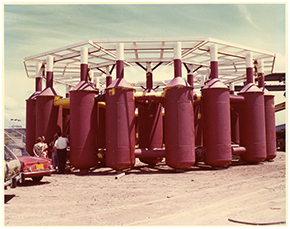
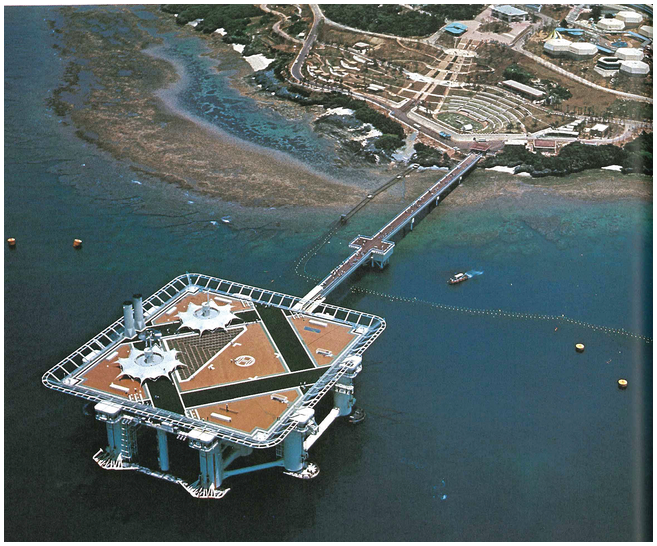
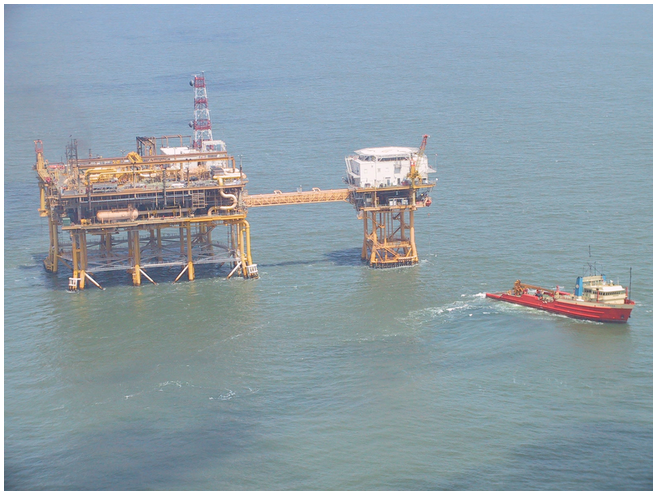
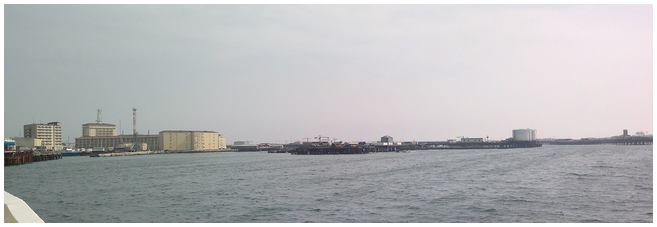
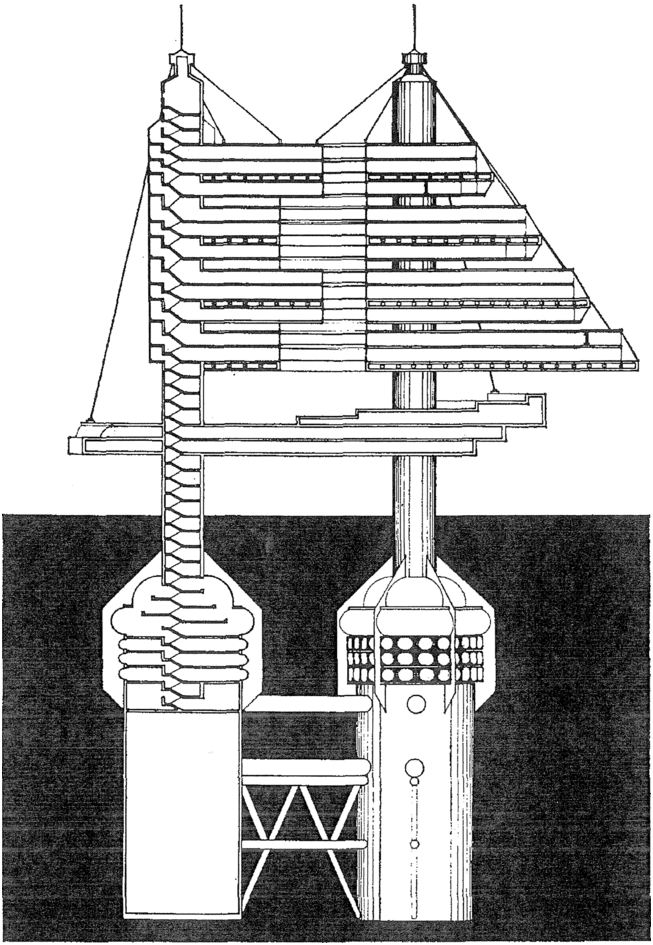

 Open access

