





Introduction
Heart failure in children is a clinical and pathophysiological syndrome associated with ventricular dysfunction and pressure or volume overload in the circulatory system. The characteristics of paediatric heart failure include feeding difficulties, poor weight gain, exercise intolerance, or shortness of breath. The aetiology of heart failure in children is complex. The primary causes are CHD and cardiomyopathies, while less common causes include cardiac arrhythmias, myocarditis, acquired heart diseases such as Kawasaki disease, or heart failure secondary to oncological treatments. In the United States, approximately 12,000 to 35,000 children suffer from heart failure due to CHD or cardiomyopathy, indicating an heart failure incidence of 16.4–48 cases per 100,000 children in the paediatric population.Reference Hsu and Pearson1 Each year, 14,000 of these patients require hospitalisation, with 65% of cases arising from CHD. According to a study conducted in Belgium, about 50% of hospital admissions due to heart failure exacerbations are attributable to CHD. Fourteen percent of patients with single ventricle physiology require multiple hospital stays due to heart failure exacerbations. Most of these patients will need mechanical circulatory support or heart transplantation in the future.Reference Nandi and Rossano2 Cardiomyopathies occur at an incidence of 1.13–1.24 cases per 100,000 children. The prevalence of cardiomyopathy in infants under one year of age is estimated to be 7.8–8.3 cases per 100,000, with severe heart failure more commonly observed in this age group.Reference Nugent, Daubeney and Chondros3,Reference Lipshultz, Sleeper and Towbin4 Not all children with cardiomyopathy will develop heart failure . The prevalence of heart failure attacks in cardiomyopathic children is estimated to be 0.87 cases per 100,000 children under 16 years old. Seventy-one percent of heart failure attacks occur in patients with dilated cardiomyopathy.Reference Wilkinson, Landy and Colan5 Heart transplantation is considered the preferred method for treating end-stage heart failure in paediatric patients.
Mitral insufficiency in individuals with left ventricular dysfunction is a significant source of morbidity. The prognosis for adults with severe mitral valve insufficiency and associated left ventricular dysfunction or dilated cardiomyopathy is poor.Reference Blondheim, Jacobs, Kotler, Costacurta and Parry6–Reference Junker, Thayssen, Nielsen and Andersen8 The presence of valvular insufficiency leads to progressive deterioration in left ventricular function and clinical symptoms, ultimately resulting in death if no intervention is performed.Reference Blondheim, Jacobs, Kotler, Costacurta and Parry6 Until the mid-1990s, the most common recommendation for adults with severe MI following medical treatment failure was heart transplantation.Reference Anguita, Arizon and Valles9–Reference Rickenbacher, Haywood and Fowler11 This approach has also been supported in paediatric literature, advocating for listing for organ transplantation after medical treatment has failed.Reference Junker, Thayssen, Nielsen and Andersen8,Reference Rickenbacher, Haywood and Fowler11 However, recent studies in adults have supported mitral valve repair or replacement as an alternative treatment for MI in the presence of left ventricular dysfunction.Reference Bolling, Pagani, Deeb and Bach12 There are limited data on the use of mitral valve surgery in children with severe MI and left ventricular dysfunction.Reference Krishnan, Gersony, Berman-Rosenzweig and Apfel13 The standard treatment process for children with dilated cardiomyopathy and severe mitral insufficiency includes medical treatment and heart transplantation when medical treatment fails.Reference Tsirka, Trinkaus and Chen14 Mitral valve repair in children with dilated cardiomyopathy and mitral insufficiency has rarely been reported.Reference Hsu, Chen, Wu, Wang, Wang and Chu15,Reference Hsu, Chien, Wang and Chu16
Case presentation
A 16-year-old female patient presented at 2.5 months of age with feeding difficulties, sweating, and restlessness and was referred to paediatric cardiology due to the presence of a heart murmur. An echocardiogram conducted at an external centre revealed an ejection fraction of 30%, and the patient was diagnosed with dilated cardiomyopathy.
Regarding the evaluation of dilated cardiomyopathy aetiology, comprehensive metabolic screening and genetic testing were performed at the initial referring centre. The results revealed no identifiable metabolic disorder or pathogenic genetic variant, suggesting an idiopathic form of the disease.
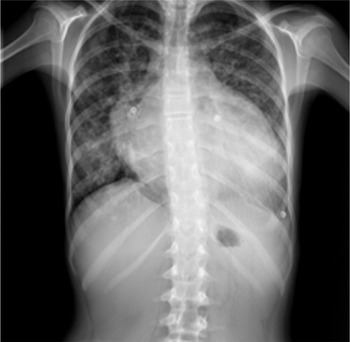
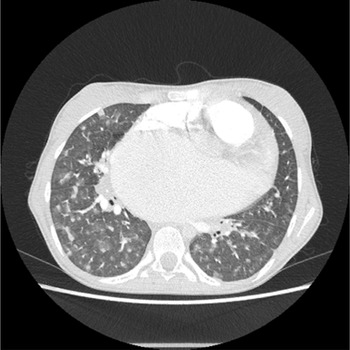
Treatments with Aldactone, digoxin, enalapril, and carnitine were initiated. She attended regular follow-up visits for six months. At eight months of age, another echocardiogram indicated an ejection fraction of 18%. The family was informed of the necessity for a transplant and the challenges involved in the process. Believing their child would die, the family ceased all treatments and follow-ups except for digoxin. The father began administering herbal remedies (e.g., Alchemilla vulgaris, which was used until the age of 6, and Alpharice, last used in 2020). The patient was seen for follow-ups at the age of 6 and 9, where she had an ejection fraction of 35%. She had not received any follow-up care from a paediatric cardiology clinic for the past seven years, continuing to take digoxin (215 gtt), Omega 3 (11000 mg), and Coenzyme Q (1 × 100 mg). The father reported that in the last year, she had conflicts with the family and had regularly neglected her treatments. The family concealed the child’s illness from her. Two months before her admission to the emergency department, the patient had a history of influenza, during which her cough persisted, and her dyspnoea progressively worsened, followed by the development of orthopnea. In the last month, her respiratory rate increased to an intermittent tachypnoeic pattern (30–35 breaths/min) Figure 1. Over the past week, tachycardia (130–140 beats/min) was observed. Upon presenting to the emergency department due to a severe worsening of her symptoms, she was admitted with decompensated heart failure and atrial fibrillation rhythm on Elekcrocardiography (EKG) Figure 2 . While under treatment, she was given Aldactone, Lisinopril, Bisoprolol, Coumadin, Ferrosanol, Digoxin, and Lasix. After three days of hospitalisation at the external centre, she discharged against medical advice and presented to our emergency department of her own accord. Upon examination, her vital signs showed a respiratory rate of 32 breaths/min with tachypnoea, orthopnoea, and dyspnoea Figure 3. She was afebrile with a pulse of 128 beats/min and hypotension (68/45 mmHg, MAP 52). Cardiac monitoring and EKG displayed an atrial flutter/atrial fibrillation rhythm. Laboratory tests showed normal renal function (BUN: 69 mg/dL, Creatinine: 0,72 mg/dL), elevated troponin T (18.3 ng/L), and NT-Pro BNP (11,612 ng/L). Initial echocardiography revealed significant left ventricular dilation ; left ventricular end diastol diameter (8.5 cm + 6.6 SDS) consistent with dilated cardiomyopathy, poor mitral valve coaptation, and the presence of severe mitral insufficiency Figure 4. Left atrial dilation was notable and bulging towards the right side. The ejection fraction was 40%. There was mild aortic valve insufficiency and mild tricuspid valve insufficiency. Tricuspid annular plane systolic excursion (TAPSE) measured 23 mm, and the interatrial septum and interventricular septum were intact. No coarctation of the aorta or patent ductus arteriosus was observed, and the inferior vena cava showed spontaneous contrast without collapse.
Telecardiogram taken at presentation.

EKG at presentation indicating atrial fibrillation.

Chest angiography showing bilateral interstitial edema and bilateral lung findings.

Severe MY before LVAD operation.

On the 20th day of hospitalisation in the paediatric intensive care unit (PICU), the patient experienced sudden haemoptysis and desaturation, resulting in severe decompensation. Despite single inotropic therapy, her hypotension necessitated a switch to dual inotropic support (dobutamine + adrenaline), and it was decided to proceed with left ventricular assist device placement. The heart transplant team performed left ventricular assist device surgery. After a two-day observation in the cardiac intensive care unit, the patient was transferred to our paediatric intensive care unit. Left ventricular assist device parameters were set to a speed of 4800 rpm, flow of 3.2 L/min, and power of 3.8 W, with satisfactory hemodynamic stability. Although the echocardiogram showed an effective ejection fraction of 40%, clinical assessment indicated a lower functional ejection fraction due to the patient’s NYHA classification of 4 and modified Paediatric Acute Congestive Heart Failure score of 2. Given the significant dilation of left ventricular end diastole and left atrial dimensions, it was anticipated that with left ventricular assist device placement, the left ventricular end diastole diameter would reduce, resulting in narrowing of the mitral annulus and improvement of mitral insufficiency findings. It was concluded that the patient’s chronic atrial fibrillation and haemoptysis were associated with the significantly dilated left atrium. Postoperative echocardiography (August 2024) revealed an left ventricular assist device diameter of 6.1 cm (3.3 SDS) and an ejection fraction of 40% Figure 5. The IVS remained intact, and there was moderate coaptation defect and mitral insufficiency observed on the mitral valve Figure 6. Notable reduction in left atrial dilation was recorded (approximately-2.5 cm). Moderate tricuspid insufficiency and right ventricular systolic pressure were at 30 mmHg. TAPSE was 8 mm; the inferior vena cava was 16 mm and was collapsing. No patent ductus arteriosus or coarctation of the aorta was identified, and no pericardial effusion was observed. The patient’s tachypnoea, orthopnea, and dyspnoea complaints completely resolved. The chronic atrial fibrillation persisted, but the patient received anticoagulation therapy for three weeks during the paediatric ICU course. Though attempts at cardioversion were made during left ventricular assist device placement, sinus rhythm was not restored. However, the use of beta-blockers achieved ventricular rate control, resolving the tachycardia and eliminating the sensation of palpitations. The hyperdynamic precordium returned to normal, and the patient with previously low exercise capacity (NYHA 4, Paediatric Acute Congestive Heart Failure Score 2) became fully mobilised post-left ventricular assist device and reported no complaints during daily exertion.
Telecardiogram following LVAD placement showing marked regression in cardiomegaly compared to preoperative status.

Modarate MY after LVAD operation.

Discussion
There is limited knowledge regarding the effectiveness of mitral valve surgery in children with dilated cardiomyopathy. Furthermore, a clear guideline for determining the timing of mitral valve surgery or heart transplantation in paediatric patients with MI and left ventricular dysfunction is lacking. Literature indicates that the presence of mitral insufficiency adversely affects survival rates in adults with dilated cardiomyopathy.Reference Junker, Thayssen, Nielsen and Andersen8 Historically, heart transplantation has been considered the definitive treatment for end-stage heart failure associated with significant mitral insufficiency.Reference Wang, Chu and Ko18 Concerns regarding perioperative mortality (reported as 2.1 to 11%) exist in adults with significant ventricular dysfunction requiring mitral valve surgery.Reference Boucek, Edwards, Keck, Trulock, Taylor and Hertz19 However, one-year survival rates are comparable to those of heart transplantation.Reference Luciani, Montalbano, Casali and Mazzucco20 Consequently, surgical correction of mitral insufficiency in the presence of ventricular dysfunction has increased in the past decade.Reference Badhwar and Bolling21,Reference Badhwar and Bolling22 Breinholt JP et al. conducted a significant paediatric series that assessed the effectiveness of mitral valve surgery in children with dilated cardiomyopathy and severe mitral insufficiency, reporting some positive outcomes, including clinical improvement and postponement of the transplantation process, despite a lack of improvement in ejection fraction.Reference Breinholt, Fraser and Dreyer17 Traditionally, in paediatric populations, similar to adults, the common practice has been to transition to heart transplantation after medical treatment failure. Recently, however, there have been reports suggesting that mitral valve surgery may serve as a bridge to transplantation in symptomatic mitral insufficiency cases.Reference Hsu, Chen, Wu, Wang, Wang and Chu15,Reference Hsu, Chien, Wang and Chu16,Reference Wang, Hsu and Chen23,Reference Hsu, Huang and Chou24 In a report by Hsu et al., two children with dilated cardiomyopathy underwent emergency mitral valve surgery, both achieving clinical responses, though they experienced recurrent heart failure within six months post-operation and subsequently needed heart transplantation.Reference Hsu, Chen, Wu, Wang, Wang and Chu15,Reference Hsu, Chien, Wang and Chu16
Mitral insufficiency is a significant morbidity source in children with dilated cardiomyopathy. Severe mitral insufficiency can lead to reduced cardiac output and exacerbation of heart failure, as seen in our case, independent of the measured ejection fraction.Reference Breinholt, Fraser and Dreyer17 With the deterioration of ventricular systolic function, treatment options for mitral insufficiency decline, and patients may lose the opportunity for surgical intervention, making heart transplantation the sole viable option.Reference Wang, Chu and Ko18
Given that mitral valve insufficiency in children with dilated cardiomyopathy can lead to decompensated heart failure, close monitoring is essential. The application of left ventricular assist device in patients who have lost surgical opportunity significantly improves the decompensatory clinical state and aids in the reduction of left ventricular dimensions, contributing to the narrowing of the mitral annulus, thus potentially improving severe mitral insufficiency findings. In countries like ours, where paediatric organ donors are limited, left ventricular assist device should be considered as a valuable option for decompensated dilated cardiomyopathy patients due to severe mitral insufficiency who require bridging to transplantation. Hsu et al. (2012) demonstrated that the application of left ventricular assist device as a bridge to heart transplantation in paediatric patients is both effective and safe. Their study showed that left ventricular assist device significantly improved clinical outcomes and provided stability for patients while awaiting a suitable donor heart.Reference Doğan, Ulger Tutar and Tuncer25 Additionally, recent studies by Doğan et al. support these findings. Their 2024 study from Turkey highlights the positive effects of the HeartMate 3 left ventricular assist device in paediatric patients with end-stage heart failure. The study demonstrates the effectiveness of left ventricular assist device in improving survival rates and overall clinical condition in paediatric patients awaiting heart transplantation.Reference Doğan, Ulger Tutar and Tuncer25 These studies further strengthen the growing body of evidence supporting left ventricular assist device as a critical and reliable therapy for this vulnerable patient group. More studies are necessary to determine the optimal timing for surgery in paediatric patients who have not missed opportunities for valve surgery due to decreased ejection fraction.



 Open access

