

1. Introduction
Trafficking in persons (TIP) is one of the greatest threats to human rights in the twenty-first century.Footnote 1 It strips victims of their dignity, circumvents their autonomy, and eviscerates their right to equality.Footnote 2 The phenomenon is of global concern.Footnote 3 While there is global consensus that trafficking in persons must be combatted, there is, however, significant disagreement on how to combat the phenomenon.Footnote 4 Whereas transnational criminal law (namely the Protocol to Prevent, Suppress and Punish Trafficking in Persons, Especially Women and Children)Footnote 5 and international criminal law (the Statute of the International Criminal Court)Footnote 6 have countenanced a primarily criminal justice approach to trafficking in persons, international human rights law (IHRL) has advocated a victim-centred approach.Footnote 7
When interpreting international human rights instruments,Footnote 8 treaty bodies have been vocal in condemning state practice that perpetuate subordination in the context of responses to human trafficking.Footnote 9 Despite their condemnation of states in this regard, however, are treaty bodies themselves implicated in the status subordination of subaltern people?Footnote 10
Regrettably, the three dominant approaches in the existing literature on human trafficking do not seriously interrogate the status subordination of subaltern people. The first line of inquiry simply distils the human rights norms applicable to human trafficking.Footnote 11 The second line of inquiry critically interrogates the weaknesses of the Palermo Protocol, whilst extolling the virtues of international human rights law.Footnote 12 The third line of inquiry critically assesses state and organizational practices on human trafficking.Footnote 13
However, this article adds a fresh perspective to the existing literature by frontally addressing the largely ignored concern that the remnants of colonialism – tropes, assumptions, stereotypes and approaches – continue to be reinscribed by treaty bodies, and that international human rights law is thereby implicated in the status subordination of subaltern people.Footnote 14 In particular, the article evidences instances in which treaty bodies have become entangled in institutional patterns of cultural value that ‘constitute some actors as inferior, excluded, wholly other, or simply invisible—in other words, as less than full partners in social interaction’.Footnote 15
According to Nancy Fraser, status subordination is a form of misrecognition, which arises not simply when subaltern people are ‘thought ill of, looked down upon or devalued in others’ attitudes, beliefs or representations’,Footnote 16 but rather, when they are ‘denied the status of a full partner in social interaction’.Footnote 17 Because these colonial patterns are not merely one-off missteps, but institutional in nature, and because they are disproportionate in constituting subaltern people as ‘comparatively unworthy of respect or esteem’,Footnote 18 status subordination is ‘a serious violation of justice’.Footnote 19 Status subordination does not merely suggest that subaltern people are vulnerable, as vulnerability assumes that their treatment is largely circumstantial. Rather, its fundamental assumption is that their disproportionately adverse treatment has arisen in consequence of deeply embedded systemic colonial patterns of repressiveness, alienation, exclusion, and othering, which are reified in norms and by institutions, including treaty bodies.
This article centres the Global South, both as an area where trafficking remains a significant problem, as well as an area where international human rights law norms are generated and received, rather than simply generating a discourse that universalizes essentially Euro-centric anti-trafficking norms.Footnote 20 Moreover, this article argues that many of the norms and approachesFootnote 21 generated by treaty bodies, particularly around repressive migration control and raids and rescue, when transplanted to the Global South, are misfits in the light of local circumstances.Footnote 22 These norms and approaches often disproportionately affect subaltern people, a reality that is sometimes ignored in the existing literature.
I begin by examining the history of anti-trafficking laws to expose how these laws were deeply implicated in the status subordination of subaltern people. This historical foundation is essential for understanding the colonial roots that continue to shape contemporary approaches. I then assess the evolution of these laws and their embrace by treaty bodies, revealing the troubling continuity of problematic instruments.
I then identify and examine five key colonial tropes that persist in treaty bodies’ work on human trafficking. First, I critique how treaty bodies problematically conflate trafficking with slavery, creating conceptual confusion that raises evidentiary thresholds and excludes many subaltern victims. Second, I analyse treaty bodies’ promotion of repressive migration policies that not only fail to prevent trafficking but actively endanger vulnerable migrants. Third, I challenge treaty bodies’ per se characterization of prostitution as trafficking, which denies agency to sex workers and reinforces harmful colonial stereotypes. Fourth, I demonstrate how treaty bodies legitimize colonial practices of raids and rescue that reproduce the ‘savages-victim-saviour’ modality. Fifth, I examine treaty bodies’ essentialization of trafficked victims as ‘innocent’, which creates hierarchies of victimhood that marginalize those with complex histories.
I then analyse treaty bodies’ ‘Views’ in individual communications, highlighting their inadequate engagement with intersectionality—a failure that prevents meaningful understanding of how multiple forms of discrimination intersect to create unique vulnerabilities for subaltern trafficking victims. Finally, I conclude by proposing concrete strategies to decolonize anti-trafficking law and practice, offering pathways that truly serve trafficking victims while avoiding the perpetuation of status subordination.
1.1. A brief note on method
The novel empirical insights offered in this article were informed by content analysis. Content analysis as a methodological tool allows for replicable and valid inferences to be drawn from a close reading of texts.Footnote 23 While content analysis has traditionally been quantitative in nature, increasingly, interpretive forms of content analysis examine context and usage of terms.Footnote 24 In this connection, qualitative content analysis can reveal how socially produced tropes and assumptions are created and held in place through texts.Footnote 25
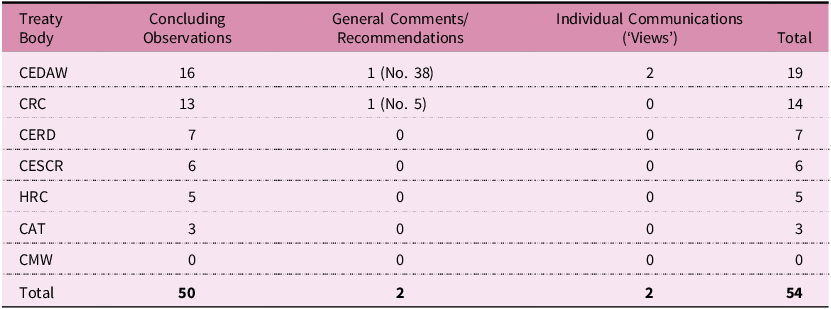
This article examines the presence of the terms ‘human trafficking’ and/or ‘trafficking in persons’ in the Concluding Observations, General Comments/Recommendations and ‘Views’ in Individual Communications of seven UN treaty bodiesFootnote 26 between 2000 and 2023 by systematically searching the UN Treaty Database for these terms. Once the documents containing these terms were identified,Footnote 27 a coding framework was employed to systematically identify key themes reflecting potential colonial legacies, including ‘slavery’, ‘modern slavery’, ‘contemporary forms of slavery’, ‘migration’, ‘prostitution’, ‘sex tourism’, ‘raid and rescue’, ‘innocent victims’, and ‘intersectionality’.Footnote 28 From these, a subset of 54 documents (two General Comments, 50 Concluding Observations, and two ‘Views’) that showed clear evidence of colonial assumptions, stereotypes and approaches, (such as ‘innocent victims’, repressive language in the context of migration, and the ubiquitous treatment of sex work as trafficking) were selected for further, more in-depth qualitative analysis. This closer interpretive reading examined how these terms were deployed in context, the assumptions underlying their usage, their relationship to broader power structures and hierarchies, and the actual and potential impact of their usage on subaltern people.
While the large sample size enabled identification of broad patterns, it is important to acknowledge the limitations of content analysis. As Neuendorf notes, content analysis alone cannot definitively establish what the authors of these documents intended or how readers interpret them.Footnote 29 Additionally, merely counting how often certain terms appear risks missing their deeper contextual meanings and implications, as intended by their drafters. The article therefore further examines how language choices and framing devices in these documents perpetuate problematic colonial assumptions about subaltern people, including undocumented migrants, sex workers, trafficking survivors, refugees, and economically marginalized individuals from the Global South. This approach aligns with Hardy et al.’s observation that while systematic coding provides important empirical grounding, qualitative analysis is essential for understanding how texts construct and maintain social hierarchies.Footnote 30 Through this dual quantitative-qualitative approach, the analysis reveals both the prevalence of colonial tropes in human rights discourse around trafficking and the specific linguistic mechanisms through which these tropes reinforce existing power structures.
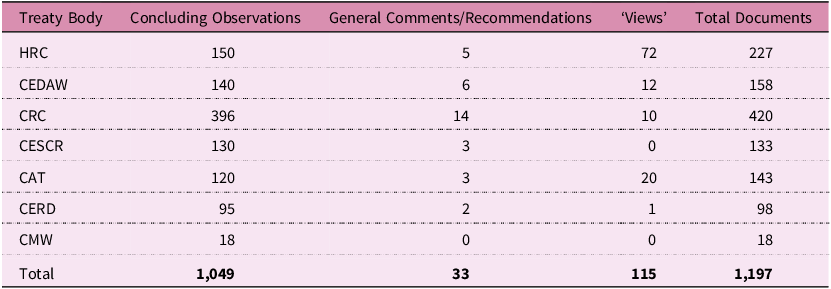
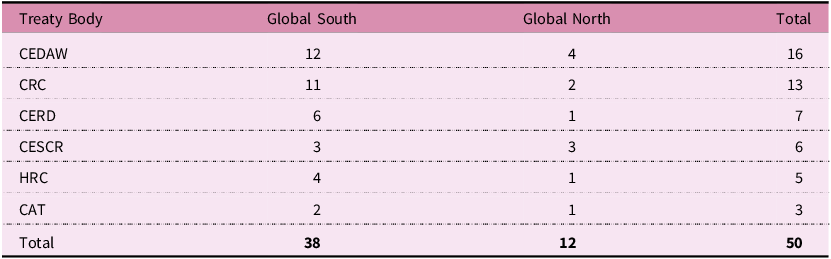
Of the 1,197 documents examined as noted in Table 1, 54 (approximately 4.5%) contained references that appear to be implicated in status subordination, as noted in Table 2. The geographic distribution of these references shows a significant focus on Global South states, with 38 out of 50 Concluding Observations (76%) addressing states in this category, as noted in Table 3. The subsequent analysis reveals particular patterns in treaty body engagement: the CEDAW Committee and the CRC Committee account for 33 out of the 54 relevant documents (61%), while making up only about 48% of the total document corpus. Additionally, while Concluding Observations constitute approximately 87.6% of the total document corpus (1,049 out of 1,197), they represent 92.6% of the problematic references (50 out of 54), suggesting a particular concentration of trafficking-related discourse in country-specific monitoring. While the proportion of documents exhibiting these patterns is relatively modest (4.5% of the total corpus), their distribution and content in authoritative human rights document merits careful scrutiny.
Number of documents consulted by treaty body (2000 – 2023)
Content analysis summary on documents implicated in status subordination (2000–2023)
Geographic distribution of concluding observations with colonial assumptions, stereotypes, and approaches
In the next section, I trace the development of international anti-trafficking law, demonstrating its colonial roots, and showing how the colonial underpinnings of this law have not been entirely eliminated from contemporary human rights approaches to human trafficking.
2. An unsettling history
The current international human rights law regime on trafficking in persons has been strongly influenced by several colonial anti-trafficking instruments that were implicated in the status subordination of subaltern people. Indeed, the very first international instruments on trafficking in persons – the International Agreement for the Suppression of the White Slave Traffic (1904)Footnote 31 and the International Convention for the Suppression of the White Slave Traffic (1910),Footnote 32 apart from adopting the abolitionist stance of conflating trafficking in persons and prostitution,Footnote 33 explicitly treated the trafficking of ‘white innocent women’ into prostitution as worthy of alarm, while delegitimizing the plight of women of colour who experienced exploitation.Footnote 34 In this connection, Bravo recalls that ‘the victimization of whites was targeted, leaving unchallenged the exploitation of non-white women’.Footnote 35 In other words, ‘civilised’ and ‘rational’ white women were constructed as victims who were forced into prostitution by savage men of colour, while women of colour were constructed as ‘immoral, unchaste, and deviant’Footnote 36 as well as ‘promiscuous, indiscriminate in choice of sexual partner, and likely to be prostitutes’.Footnote 37 The racial hegemony implicit in the ‘white slavery’ discourse also justified the indiscriminate essentialization of foreign men of colour as traffickers.Footnote 38 In short, these instruments adopted a ‘racial, gendered, and sexualized understanding of the offense’.Footnote 39
The Convention for the Suppression of the Traffic in Persons and of the Exploitation of the Prostitution of Others was adopted in 1949.Footnote 40 It arguably goes further than the 1904 and 1910 instruments, as it introduces an explicit anti-regulationist stance,Footnote 41 extends criminalization to all forms of procuring, pimping and brothel-keeping,Footnote 42 and provides measures for the prevention and rehabilitation of prostitutes.Footnote 43
The 1949 Convention, whose preamble states that it consolidates the 1904 and 1910 instruments, has had a direct impact on international human rights law. For example, the CEDAW Committee, in General Recommendation No. 38, recalled that:
Article 6 of the Convention is based on article 8 of the Declaration on the Elimination of Discrimination against Women, which provides that all appropriate measures, including legislation, be taken to combat all forms of trafficking in women and exploitation of prostitution of women. International law on the question was codified and developed in the Convention for the Suppression of the Traffic in Persons and of the Exploitation of the Prostitution of Others. This legal basis requires that article 6 be read as an indivisible provision, which links trafficking and sexual exploitation.Footnote 44
Meanwhile, in General Comment No. 5, the Committee on the Rights of the Child urged states, ‘if they have not already done so, to ratify … the Convention for the Suppression of the Traffic in Persons and of the Exploitation of the Prostitution of Others (1949)’.Footnote 45
Similar urgings to ratify the Convention can be found in concluding observations. For example, in respect of the Republic of Congo, the Committee on the Rights of the Child
recommend[ed] that the State Party take the necessary measures to criminalize trafficking in persons, particularly children, by enacting legislation in conformity with the Convention on the Rights of the Child and the Convention for the Suppression of the Traffic in Persons and of the Exploitation of the Prostitution of Others.Footnote 46
Similar observations have been expressed in respect of the Republic of Benin.Footnote 47
At other times, treaty bodies welcome or are indifferent to states’ ratification of the 1949 Convention, without more. For example, the Committee against Torture, in respect of Syria, posited:
While welcoming the ratification by the State party of the International Convention for the Suppression of the Traffic in Women and Children of 1921, the International Convention for the Suppression of the Traffic in Women of Full Age of 1933 and the Convention for the Suppression of the Traffic in Persons and of the Exploitation of the Prostitution of Others of 1950, the Committee expresses its concern at the general lack of information on the extent of trafficking in the State party, including the number of complaints, investigations, prosecutions and convictions of perpetrators of trafficking, as well as on the concrete measures adopted to prevent and combat such phenomena.Footnote 48
Similarly, in respect of Kazakhstan, the Committee on the Rights of the Child ‘welcome[d] the ratification of the following international human rights instruments in January 2006: … (c) The Convention for the Suppression of the Traffic in Persons and of the Exploitation of the Prostitution of Others.’Footnote 49 Further, in relation to Nigeria, the Committee on the Rights of the Child ‘note[d] the signature of the Convention for the Suppression of the Traffic in Persons and of the Exploitation of the Prostitution of Others in 2003 … by the State party’.Footnote 50
The approach by treaty bodies of treating the 1949 Convention as a human rights instrument, encouraging states to ratify the instrument, and passively welcoming its ratification without highlighting its negative externalities needs to be seriously reconsidered as this instrument is not in fact a human rights convention. In fact, human rights are not mentioned in it at all, since its principal focus is on repressive obligations on states rather than the rights of individuals. It is unsurprising, therefore, that the Global Alliance Against Traffic in Women’s (GAATW) report, Collateral Damage, is emphatic in describing the 1949 instrument as an ‘anathema’.Footnote 51
Treaty bodies’ endorsement of the 1949 Convention appears to implicitly assume that because this instrument excised ‘white slave traffic’ from its title, it is gender and race neutral in its application. This also appears to be the dominant assumption in the existing literature, with scholars like KestenbaumFootnote 52 and Legg arguing that the 1949 Convention is ‘racially neutral’ and has therefore ‘de-racialis[ed] the “white slave trade” rhetoric’.Footnote 53
This implicit assumption must not, however, continue to go unchallenged. Indeed, the 1949 Convention, which consolidates, rather than reforms, the 1904 and 1910 instruments, has arguably reproduced the colonial norms and ideologies that underpinned the 1904 and 1910 instruments. This is because, in legislative drafting terms, ‘consolidation is no more than a mechanical process whereby the provisions of the basic act governing a particular matter and all its amendments are brought together, without any further examination or alteration of the text’.Footnote 54 Alec Samuels notes in this regard:
Consolidation is the restatement or re-enactment of the statutory law, the form not the substance, in a single reorganized form, bringing all the scattered relevant statutory law together in one statute, in order to consolidate and reproduce the law as it stood before the passing of that Act.Footnote 55
Because the 1949 Convention expressly consolidates (rather than distances itself from) the 1904 and 1910 Conventions, both explicitly sexist and racist instruments, it is implicitly implicated in the status subordination of subaltern people, if only by proxy. In this context, by conferring uncritical support for the 1949 Convention, without acknowledging and condemning the fact that this instrument has in practice been applied in sexist and racist ways, treaty bodies are also implicated in the status subordination of women of colour who under the 1904 and 1910 Conventions were excluded from its scope of protection, as well as men of colour, who were essentialised as perpetrators.Footnote 56
In short, although terminologies have evolved, as a matter of practice, ‘legal legacies have remained remarkably static’.Footnote 57 Lammasniemi is thus correct in asserting that ‘the legacies of white slavery legislation at the turn of the twentieth century are inescapable in the present day’,Footnote 58 evidenced, for example, by the ‘crude juxtaposition of dangerous, foreign men and innocent, white women’,Footnote 59 and the legitimization of ‘increasingly regressive state practices of immigration control’,Footnote 60 which underlie the application of the 1949 Convention. Kempadoo adds that ‘little has changed’,Footnote 61 in that another legacy of the 1949 Convention, ‘rescue missions in sex industries’,Footnote 62 remains a pervasive feature of contemporary human rights practice. In short, then, treaty bodies have not ‘shake[n] off [the] inherited shape’Footnote 63 of the 1949 Convention to the extent that they continue to encourage states to ratify this problematic instrument.
3. The trafficking – slavery nexus
With the passage of 1904 and 1910 Conventions, the international community began the problematic practice of conflating trafficking with slavery. Over a century later, this trend continues unbated, propelled by states,Footnote 64 politicians,Footnote 65 international organizations,Footnote 66 and scholars.Footnote 67 As noted by Mende, although the term ‘modern slavery’ does not have international legal pedigree, it has nonetheless been widely used to bring public and political awareness to the plight of victims of trafficking in persons and to shore up the funding NGOs receive.Footnote 68 Meanwhile, for Brysk and Choi-Fitzpatrick, the framing of trafficking in persons as modern slavery brings attention to the root causes of exploitation, the consequences of this exploitation, and the connections between various forms of exploitation.Footnote 69 Broad and Turnbull further note that the ‘modern slavery’ frame has increasingly been used to bring a ‘new moral dimension’ and ‘amplified symbolic power’ to trafficking in persons.Footnote 70 Scholars such as Marks have also pointed to the fact that it may be necessary to collapse trafficking into slavery because trafficking problematically centres on a lawful practice (e.g. transport) conducted for exploitative purposes, rather than directly addressing various forms exploitation in and of themselves.Footnote 71 Hathaway similarly contends that expanding the concept of slavery to encompass broader forms of exploitation could provide a more effective strategy for addressing these human rights violations.Footnote 72 More fundamentally, the slavery framework, it is argued, brings established moral authority, clear legal obligations under international law, and strong political resonance that could advance protections for exploited persons. In short, these scholars view the Palermo Protocol’s tripartite (acts, means, and purpose) definitional framework, with its historical roots in moral panic around sex work and immigration control, as inherently limiting trafficking’s utility as a human rights tool against exploitative acts in and of themselves.
In practice, treaty bodies have adopted a patch work of approaches to trafficking, slavery, and related practices. In some concluding observations, treaty bodies have strictly countenanced the Palermo Protocol’s definition of trafficking in persons. For example, the CEDAW Committee in its concluding observations on Zimbabwe encouraged the state party to:
Amend the Trafficking in Persons Act to incorporate a definition of trafficking in persons that is consistent with the Protocol to Prevent, Suppress and Punish Trafficking in Persons, Especially Women and Children, supplementing the United Nations Convention against Transnational Organized Crime.Footnote 73
The Committee on the Rights of the Child similarly encouraged Viet Nam to:
Amend article 151 of the Penal Code to extend the offence of trafficking in accordance with the definition contained in article 3 (c) of the Protocol to Prevent, Suppress and Punish Trafficking in Persons, Especially Women and Children, supplementing the United Nations Convention against Transnational Organized Crime, and to include child victims who are 16 and 17 years of age.Footnote 74
In connection with Panama, the Committee on the Rights of the Child urged Panama to:
Amend Act No. 79 of 9 November 2011 on trafficking in persons and related activities to introduce a definition of human trafficking that is in line with the Protocol to Prevent, Suppress and Punish Trafficking in Persons, especially Women and Children, supplementing the United Nations Convention against Transnational Organized Crime (known as the Palermo Protocol).Footnote 75
On other occasions, treaty bodies simply make a generic reference to ‘international law’. For example, the Committee on the Rights of the Child encouraged the Republic of Korea to: ‘Align the definition of trafficking with international law to remove the requirement of coercion, remuneration and transnational movement of the victim.’Footnote 76
Separately, on occasions, treaty bodies have addressed slavery in isolation from trafficking, although slavery itself has been described by a mismatch of vague monikers.
3.1. ‘Slavery’ or ‘all forms of slavery’
The Committee on the Rights of the Child, in respect of Niger, commented:
The Committee is deeply concerned that child labour in the State party is widespread, particularly in the informal sector, and that children may be working long hours at young ages, which has a negative effect on their development and school attendance. The Committee is also deeply concerned at the existence of slavery in some parts of the country.Footnote 77
Meanwhile, the Human Rights Committee, in relation to Sudan, recommended that: ‘The State party put a stop to all forms of slavery and abduction in its territory and prosecute those engaging in such practices.’Footnote 78
3.2. ‘Traditional Slavery’
The Committee on the Rights of the Child, in connection to Mauritania, noted the following: ‘The Committee is especially concerned over the absence of services to free and reintegrate children victims of slavery and over the lack of measures to educate the public about traditional slavery practices in general.’Footnote 79
3.3. ‘Vestiges of slavery’
The CERD Committee in its concluding observations on Mauritania asserted:
While the Committee notes with satisfaction that Mauritanian legislation has abolished slavery and servitude, it also notes that, in some parts of the country, vestiges of practices of slavery and involuntary servitude could still persist, despite the State party’s efforts to eradicate such practices.Footnote 80
3.4. ‘Remnants of slavery’
The CEDAW Committee, in its concluding observations on Mauritania, noted:
… the Committee remains concerned about the persistence of trafficking and the exploitation of women and girls in the country, in particular with respect to the economic exploitation and ill-treatment of young girls employed as domestic servants. The Committee is also concerned about remnants of slavery in parts of the country.Footnote 81
3.5. ‘Conditions similar to slavery’ and ‘conditions akin to slavery’
In its concluding observations on Brazil, the CESCR Committee asserted:
The Committee notes with concern the large numbers of Brazilians employed under inhuman and degrading conditions similar to slavery or subjected to forced labour and other exploitative labour conditions, particularly in forest clearing, logging, and the harvesting of sugar cane, and is concerned that the phenomenon of forced labour disproportionately affects young men from low-income families.Footnote 82
Meanwhile, in its concluding observations on Kenya, the CERD Committee noted:
The Committee is concerned at the State party’s information regarding the recruitment of Kenyans, especially women, to perform domestic work abroad in conditions akin to slavery. The Committee is concerned that in 2013, the State party identified several dozen victims of trafficking but convicted only seven perpetrators of trafficking offences.Footnote 83
3.6. ‘Conditions tantamount to slavery’
The Human Rights Committee observed in relation to Madagascar the following:
The Committee takes note of reports that children are often employed as domestic servants in conditions that are often tantamount to slavery and lend themselves to all kinds of abuse, in violation of articles 8 and 24 of the Covenant.Footnote 84
3.7. ‘Slavery and analogous practices’
The CEDAW Committee, in respect of Switzerland, has noted: ‘The Committee welcomes the steps taken by the State party to combat trafficking, however it is concerned about: (e) The limited focus on multiple forms of exploitation such as forced labour, servitude, slavery and analogous practices.’Footnote 85
3.8. ‘Slave-like practices/conditions’
Many references to ‘slave-like practices/conditions’ appear in treaty bodies’ concluding observations. For example, the Committee on the Rights of the Child, in its concluding observations on the Dominican Republic, noted:
The Committee, while welcoming the Action Plan against Human Trafficking (2010–2014), is concerned about the insufficient implementation of this plan and about the high prevalence of child trafficking in the State party. The Committee is particularly concerned about: (a) The number of Haitian children trafficked for forced labour, which has increased since 2010; (b) Haitian children from poor families being given up for adoption by their parents to Dominican families and working in these families in slavery-like conditions.Footnote 86
Meanwhile, the CESCR Committee in relation to Sri Lanka asserted:
The Committee expresses deep concern that Sri Lankan women have often no other choice but to migrate to find employment and that one million of them work abroad as domestic workers, often in slavery-like conditions.Footnote 87
3.9. ‘Virtual Slavery’
The CEDAW Committee, in its concluding observations on China, noted:
The Committee expresses particular concern at the situation of North Korean women, whose status remains precarious and who are particularly vulnerable to being or becoming victims of abuse, trafficking, forced marriage and virtual slavery.Footnote 88
3.10. ‘Sexual Slavery’ and ‘trafficking for the purpose of sexual slavery’
The Committee on the Rights of the Child, in its concluding observations on Sudan, noted that: ‘It is concerned that girls abducted by armed groups, particularly by the Lord’s Resistance Army, are frequently abducted for the purpose of sexual slavery.’Footnote 89
Meanwhile, the CEDAW Committee, in its concluding observations on Rwanda, asserted:
The Committee appreciates the efforts made by the State party to prosecute perpetrators of trafficking in persons, in particular women and girls … It is, however, concerned about: (b) Insufficient prevention efforts, as demonstrated by the reported increase in trafficking in adolescent girls for purposes of sexual slavery under the pretext of offering them opportunities to study or work abroad.Footnote 90
Similarly, the CEDAW Committee, in connection to Burundi, noted:
[The Committee] continues to be concerned about the lack of a coordinated and effective response by the State party to the increasing number of women and girls being trafficked out of the country for purposes of domestic servitude and sexual slavery.Footnote 91
Beyond these references to slavery, on some occasions, treaty bodies have treated trafficking as a separate phenomenon from slavery. For example, the CEDAW Committee in General Recommendation No. 39 (2022) emphasized that:
Indigenous women and girls are disproportionately at risk of rape and sexual harassment; gender-based killings and femicide; disappearances and kidnapping; trafficking in persons; contemporary forms of slavery; exploitation, including exploitation of prostitution of women; sexual servitude; forced labour; coerced pregnancies.Footnote 92
Separately, the Human Rights Committee, in its concluding observations on the Central African Republic, noted: ‘The State party should continue and intensify its actions to:
(a) Prevent, combat and punish contemporary forms of slavery, forced labour and human trafficking by strictly enforcing the provisions of the Criminal Code.’Footnote 93
Meanwhile, the CERD Committee, in its concluding observations on Nepal, asserted:
While welcoming the State party’s efforts to combat trafficking and contemporary forms of slavery, the Committee is extremely concerned by reports that over 200,000 individuals in the State party are enslaved, including for purposes of sexual exploitation, forced labour, bonded labour, domestic servitude and forced marriage.
The Committee recommends that the State party:
(c) Strengthen its efforts to eliminate exploitative and deceptive recruitment practices towards migrant workers, and bring those responsible for human trafficking and contemporary forms of slavery to justice.Footnote 94
Finally, in respect of Liechtenstein, the CEDAW Committee has: ‘… welcome[d] the establishment of a financial sector commission to detect illicit financial flows linked to trafficking in persons and contemporary forms of slavery.’Footnote 95
Yet still, on occasions, treaty bodies have treated trafficking as an aspect of slavery or equivalent to slavery. For example, the CERD Committee, in its concluding observations on Kazakhstan, noted: ‘The Committee also recommends that the State party further strengthen and effectively enforce existing legislation and measures against slavery and slavery-like practices, including by ensuring effective investigation and prosecution of trafficking cases, including against law enforcement officers.’Footnote 96
Meanwhile, the CEDAW Committee, in its concluding observations on the Bolivarian Republic of Venezuela, asserted:
The Committee notes the establishment of National Prosecutor’s Office No. 95 with jurisdiction for trafficking in persons, in particular women and girls, to, within and from the State party. However, the Committee remains concerned by:
(b) Allegations of contemporary forms of slavery, including sex trafficking and child labour in mining areas.Footnote 97
Separately, in connection with Somalia, the Committee against Torture has posited: ‘The State party should ensure that its legislation prohibits all types of contemporary forms of slavery, including trafficking in persons, and forced and child marriage.’Footnote 98
Finally, in its concluding observations on France, the CESCR Committee ‘note[d] with satisfaction the comprehensive legislative framework created by Act No. 2003/239 of 18 March 2003 to combat trafficking in persons and other forms of modern slavery’.Footnote 99
Treaty bodies’ piece-meal approach to slavery, trafficking and related practices reveals a troubling pattern of differential treatment between Global North and South states that reinforces postcolonial power dynamics, exacerbated by a proliferation of inconsistent terminology. While Global South states like Mauritania, Sudan, and Niger face direct condemnation for ‘traditional slavery’ or ‘vestiges of slavery’, Global North states such as France, Switzerland, and Liechtenstein receive more nuanced observations, in particular treaty bodies ‘welcoming’ their approaches to ‘modern slavery’, or ‘contemporary forms of slavery’. This dichotomy is particularly evident in how treaty bodies frame domestic work: Sri Lankan women working abroad face ‘slavery-like conditions’, while Switzerland’s trafficking concerns centre on ‘multiple forms of exploitation’. This linguistic hierarchy reinforces colonial framing by implying that ‘traditional’ slavery exists primarily in the Global South, while ‘welcoming’ effective approaches by countries in the Global North to combat ‘modern’ forms of slavery.
Relatedly, treaty bodies employ at least ten distinct slavery-related terms – from ‘vestiges of slavery’ to ‘virtual slavery’, ‘conditions tantamount to slavery’, to ‘contemporary forms of slavery’ – creating a conceptual muddle that complicates victim identification and protection. In the surveyed observations, approximately 65% employ slavery-related terminology when addressing Global South states, compared to 25% for Global North states, with the remaining 10% using neutral language or addressing both contexts. This disparity extends beyond mere semantics – it reflects and reproduces colonial power relations by maintaining different standards of scrutiny and characterization based on states’ relative global positioning.
Critically, the conceptual uncertainty evident in treaty bodies’ pronouncements is deeply troubling. Treaty bodies oscillate between treating trafficking and slavery as distinct phenomena (as in CEDAW’s General Recommendation No. 39) and conflating them entirely (as in observations on Kazakhstan and Venezuela). The latter approach has also arguably seeped into the jurisprudence of regional courts. For example, the European Court on Human Rights (ECtHR) held in Rantsev v. Cyprus and Russia Footnote 100 that trafficking in persons, ‘by its very nature and aim of exploitation, is based on the exercise of powers attaching to the right of ownership’.Footnote 101 Reference to ‘powers attaching to the right of ownership’ implicitly invokes Article 1(1) of the Slavery Convention 1926 which defines slavery as the ‘status or condition of a person over whom any or all of the powers attaching to the right of ownership are exercised’.Footnote 102 It stands to reason, therefore, that the ECtHR considers trafficking to be a form of slavery. In the same vein, the Inter-American Court on Human Rights (IACtHR) in Hacienda v. Brazil,Footnote 103 when interpreting Article 6 of the American Convention on Human Rights (ACHR), which prohibits the ‘slave trade and the traffic of women’, relied on Rantsev to buttress its assertion that trafficking in persons, by its nature, involves the exercise of powers attaching to the right of ownership.Footnote 104 The IACtHR also seems to have misconstrued the 1926 Slavery Convention which defines the slave trade as ‘all acts involved in the capture, acquisition or disposal of a person with intent to reduce him to slavery’,Footnote 105 instead collapsing both the slave trade and trafficking in persons into a single definition.Footnote 106
While I have earlier acknowledged that the definition of trafficking in persons in international law is somewhat limited in that it does not appear to address every exploitative practice (arguably trafficking should not be stretched to the point of infinity to do this work in any event), treaty bodies’ conflation of trafficking with slavery is not the answer to this lacuna. More importantly, conflating the two related, but legally distinct, phenomena, has serious implications for subaltern people who are or might be trafficked, but who are not shackled like their ancestors were in the context of the transatlantic slave trade. These individuals are likely to be the main category of persons who are excluded from being identified as victims of ‘modern slavery’ or ‘contemporary slavery’, and thereby not afforded the necessary protections that come with that status.Footnote 107 Relatedly, because the framing of trafficking in persons as slavery is grounded in the moral panic that attended the ‘white slave traffic’ movement, such a framing will only serve to encourage repressive action limiting the agency of subaltern people under the guise of protection from ‘modern slavery’.Footnote 108
The conceptual uncertainties associated with the conflation of trafficking with slavery by treaty bodies is not merely a doctrinal concern,Footnote 109 but of real practical significance, as such uncertainties have the potential to disproportionately alienate subaltern people who identify as actual or potential victims of trafficking. More pointedly, it is problematic that treaty bodies, as indicated earlier, repeatedly urge states in the Global South to align their definition of trafficking in persons in accordance with the Palermo Protocol, on the one hand, while in the same breath actively conflating trafficking and slavery, in particular given that under the Protocol, slavery, like forced labour, servitude and the removal of organs, is merely one of the end purposes of trafficking in persons, and not of a manifestation of slavery.Footnote 110 Additionally, the definition of slavery, as articulated in the 1926 Slavery Convention, requires the exercise of powers attaching to the right of ownership, but this is not strictly necessary in respect of trafficking in persons under Article 3 of the Palermo Protocol. Indeed, as explained by Kestenbaum, although there are extreme cases in which a person, in the course of being trafficked, may be subject to these powers, in the vast majority of cases, these powers are not exercised.Footnote 111 For example, if a perpetrator offers money in exchange for the transfer of a person, whom he then sexually exploits, and in the course of this exploitation that person births a child who is held captive and exploited, this may very well constitute the exercise of powers attaching to the right of ownership over the child, such that the perpetrator will likely be guilty of slavery. If, however, the person is recruited by means of threats and then forced to beg, this will likely be a case of trafficking in persons, and not slavery. In this context, collapsing trafficking in persons and slavery into concepts like ‘modern slavery’ only serves to ‘perpetuate rather than ameliorate confusion’.Footnote 112 This confusion is likely to disproportionately affect subaltern people.
Furthermore, although trafficking in persons and slavery are both violations of international human rights law, they represent different gravities of human exploitation. This is reflected in the fact that the prohibition of the latter and the slave trade are regarded as jus cogens norms of international law,Footnote 113 from which no derogations are permitted. They are also erga omnes obligations in character.Footnote 114 By contrast, as rightly noted by Gallagher, having regard to extant state practice and opinio juris, it is ‘difficult to sustain an absolute claim that trafficking, in its modern manifestations, is included in the customary and jus cogens norm prohibiting slavery and the slave trade’.Footnote 115
At the systemic level, the ‘rigour-free’Footnote 116 approach of treaty bodies in their characterization of trafficking as slavery is synonymous with what Chuang describes as ‘exploitation creep’.Footnote 117 In short, Chuang is critical of ongoing efforts to expand previously narrow legal categories. She describes such a development as ‘modern-day-slavery abolitionism’,Footnote 118 which is doctrinally ‘shaky at best’Footnote 119 and ‘could prove to be quicksand for the very idea of trafficking as a freestanding legal concept’.Footnote 120 ‘Exploitation creep’, which involves ‘sacrificing precision for consensus’,Footnote 121 risks backfiring for victims as it may negatively (and disproportionately) affect the ability of service providers to correctly identify subaltern victims of trafficking if, indeed, they are on the lookout for evidence of the powers attaching to the right of ownership. Siller adds that ‘undefined and unregulated’Footnote 122 concepts like ‘modern slavery’ may complicate prosecutions by raising the evidential threshold for establishing the offense or by restricting prosecutors’ ability to specifically plead charges in the indictment.Footnote 123 In short, in the same way that we would not describe inhuman and degrading treatment as ‘modern torture’, we should not further complicate an already complicated concept by unequivocally characterizing all instances of trafficking as slavery.Footnote 124 Further, we must contend with the reality that many subaltern victims of trafficking actively resist being described as ‘modern slaves’.Footnote 125
In the final analysis, it bears repeating that the foregoing arguments do not merely reflect doctrinal concerns, but significant practical concerns for postcolonial scholars who, while acknowledging the limits of the Palermo Protocol’s definition of trafficking, are wary of the ways in which this definition (which is endorsed by 182 states parties that ratified the Palermo Protocol, with 74% being from the Global South) is being systemically stretched to infinity, which may work to disproportionately alienate victims of trafficking from the Global South.
4. The trafficking – migration nexus
Treaty bodies have at times promoted a repressive vision of migration, without due consideration for the negative externalities that this approach may have on subaltern people. For example, the Committee Against Torture has recommended that Japan ‘restrict the use of entertainment visas’:
… the Committee is concerned that cross-border trafficking in persons continues to be a serious problem in the State party, facilitated by the extensive use of entertainment visas issued by the Government, and that support measures for identified victims remain inadequate, leading to victims of trafficking being treated as illegal immigrants and deported without redress or remedy …
The Committee calls on the State party to strengthen its measures to combat trafficking in persons, including restricting the use of entertainment visas to ensure they are not used to facilitate trafficking, allocate sufficient resources for this purpose, and vigorously pursue enforcement of criminal laws in this regard.Footnote 126
Meanwhile, the Committee on Economic, Social and Cultural Rights has urged Cyprus to impose ‘strict control over the new work permit system’:
The Committee remains deeply concerned at the extent of trafficking in women for the purposes of sexual exploitation in the State party in spite of the abolition of the system of artiste visa which facilitated trafficking in human beings …
The Committee urges the Government to ensure a strict control over the new work permit system, intensify its efforts to bring to justice those involved in human trafficking and strengthen its efforts to protect trafficked women. The Committee also recommends that the national cooperation mechanism between government services and non-governmental organizations stipulated in the new law be strengthened and put into effect.Footnote 127
Separately, the CERD Committee, in connection with Kazakhstan, has encouraged the state party to ‘ensure the effective investigation, prosecution and punishment of employers and intermediaries responsible for violations of the rights of migrant workers and foreigners and, in particular, strengthen measures aimed at fighting illegal immigration and human trafficking’.Footnote 128 Relatedly, the CEDAW Committee, in its concluding observations on Kyrgyzstan, asserted:
The Committee is concerned about the absence in the State party’s report and oral replies of sufficient information and statistical data on the phenomenon of trafficking in persons in Kyrgyzstan … The State party is also invited to carry out, on a systematic basis, information campaigns on the risks and causes of trafficking in persons, in particular focusing on improving the legal literacy of rural women in this connection. It is further invited to put in place a system of effective monitoring of migrant workers to identify links with trafficking.Footnote 129
Similarly, in its concluding observations on Colombia, the CEDAW Committee observed:
The Committee is concerned, however, that the State party continues to be a major country of origin of victims of trafficking, especially women and girls trafficked for commercial, sexual and labour exploitation … The Committee recommends that the State party continue and redouble its efforts to combat trafficking in persons, especially women and children, and the smuggling of migrant workers, in particular by adopting measures:
(b) To detect and put a stop to the illegal or clandestine movement of migrant workers and their family members and to impose effective sanctions on individuals, groups or entities that organize or direct such movements or provide assistance to that end; …
(e) To step up campaigns for the prevention of irregular migration, including human trafficking.Footnote 130
Other treaty bodies, including the CEDAW Committee in relation to the Republic of Korea, and the Human Rights Committee in relation to Kenya, have strongly recommended the adoption of screening proceduresFootnote 131 and ‘in situ monitoring’ to regulate the migration of women abroad.Footnote 132 Finally, several treaty bodies have called on states to ‘reinforce the regulatory regime for recruitment agencies’.Footnote 133
These pronouncements represent a repressive vision of migration, which is mirrored by other international institutions, including the International Organisation for Migration (IOM).Footnote 134 Andrijasevic notes, in this connection, that the IOM’s repressive vision of migration serves to warn potential women migrants about the dangers of migration and prostitution, but that such warning only results in an ‘eroticized and voyeuristic spectacle of women’s bodies’.Footnote 135
My argument here is that in an age of heightened securitization,Footnote 136 language by treaty bodies which promotes repressive migration policies, particularly when packaged as a panacea for countering trafficking in persons, will likely create even further moral panics about migration, thereby incentivising states in the Global North to further fortify their national borders.Footnote 137 Indeed, combatting trafficking in persons offers a convenient façade for the indiscriminate exclusion or hostile treatment of subaltern migrants, including victims of trafficking in persons, while eliding the principal reasons why people migrate from the Global South, and fall victims to trafficking in so doing in the first place – difficult socio-economic conditions that are exacerbated by the capitalist neo-liberal agenda.Footnote 138
Further, treaty bodies’ repressive vision of migration, while allowing the law to ‘masquerade as a good cop’,Footnote 139 is likely to be hostile when transposed into practice, thereby producing catastrophic consequences for those who are ‘not white, native born, and not sexually restrained’.Footnote 140 These policies may create and embed disadvantage by causing trafficking to run rampant underground.Footnote 141 Indeed, empirical research by Avdan suggests that tougher migration polices in destination countries only exacerbate trafficking in persons, as traffickers typically adopt a more clandestine approach, which in turn makes it even more dangerous for subaltern victims to escape.Footnote 142
Moreover, the repressive vision of migration seemingly advocated by some treaty bodies may lend to colonial type raids and rescue campaigns which not only target victims of trafficking, but other categories of migrants, including refugees. Indeed, as Nawyn et al.,Footnote 143 and Hathaway, have respectively noted in other contexts, strict migration policies often render ‘illusory the formal guarantee of refugees of immunity from immigration penalties’,Footnote 144 and increase the difficulties that refugees face when seeking international protection.Footnote 145
Finally, restrictive immigration policies adopted in the name of preventing trafficking in persons, but which are effectively aimed at combatting irregular migration, will likely result in women of colour being disproportionately trapped in an endless cycle of poverty and patriarchal relationships. More pointedly, such an approach only reifies the traditional representation of subaltern womanhood, which ‘positions women outside of the labour market, that is, production, and inside the realm of home thus relegating women to reproduction within the private sphere’.Footnote 146 It effectively reinforces the gendered view that women of colour, in particular, need constant male or state protection, thereby severely constraining their agency.Footnote 147 Against this backdrop, Ausserer is right to challenge the ‘non-European, not native, not a citizen, not legal, not part of us’Footnote 148 construction of the migrant ‘other’ countenanced by policies of this nature because they legitimize controlling, policing, exclusion, and discrimination against women from the Global South.Footnote 149 Kempadoo similarly observes that the reality is that many of these ‘victims’ ‘do not want to be saved, they want to feel safer; they don’t want to go back, they want to go on’.Footnote 150 It should, therefore, come as no surprise that the CEDAW Committee has itself acknowledged that ‘sex-specific migration rules and policies intersect with racial discrimination to perpetuate sex-based stereotypes’.Footnote 151
5. The trafficking – prostitution nexus
Another of the enduring legacies of the 1904, 1910 and 1949 Conventions is the abolitionist approach to prostitution, which has not been eradicated from contemporary anti-trafficking law and practice. Bernstein’s work is instructive in this regard.Footnote 152 She explains how the contemporary anti-trafficking movement emerged in the 1990s, representing a problematic convergence of feminist, evangelical Christian, and neoliberal state interests around carceral solutions. She shows how trafficking discourse originated in earlier ‘white slavery’ panics and remains fundamentally tied to anti-sex work efforts, even as it has been broadened to encompass other forms of exploitation. Rather than addressing root economic causes, the trafficking framework channels feminist and humanitarian impulses into punitive criminal justice responses that harm sex workers while strengthening both state carceral power and normative family values.Footnote 153 The parallels between the historical white slavery discourse and modern trafficking narratives reveal the concept of trafficking’s intrinsic link to moral panics about sexuality and prostitution, suggesting it may be inherently compromised as a framework for addressing exploitation.
My research reveals a tendency by treaty bodies to employ three remnants of colonialism, namely (i) the failure to treat prostitution as work; (ii) the unequivocal characterization of prostitution, as opposed to the ‘exploitation of prostitution’, as trafficking; and (iii) the use of anti-trafficking measures as a façade for combatting prostitution.
By way of example, on point (i), the CEDAW Committee, in respect of Viet Nam, observed:
The Committee also notes with concern reports that trafficked women and girls face problems in enjoying their citizenship rights when returning to Viet Nam, as well as in conveying citizenship to their children born abroad. It is also concerned about reports that rehabilitation measures, such as administrative camps, may stigmatize girls and young women victims of prostitution and deny them due process rights.Footnote 154
Meanwhile, on point (ii), the CEDAW Committee in its concluding observations on Oman asserted:
The Committee is also concerned about the lack of protection of the rights of trafficked women engaged in prostitution … The Committee calls upon the State party to: (a) Ensure that victims of trafficking, including those women engaging in prostitution, are always considered and treated as victims, and are free from prosecution and deportation and are provided with necessary assistance and victim protection.Footnote 155
The CEDAW Committee expressed similar concerns in connection to Türkiye:
The Committee welcomes the efforts made by the State party to prevent and combat trafficking in women and girls, including by engaging in international cooperation and awareness-raising initiatives. However, the Committee notes with concern: (e) Reports that victims of trafficking, including women in prostitution, have been arrested, detained and deported for administrative offences, such as violations of immigration law.Footnote 156
Similarly, the HRC has urged the Czech Republic to prevent ‘this form of trafficking’ – women who are ‘brought into its territory for the purpose of prostitution’.Footnote 157
Separately, on point (iii), the CERD Committee welcomed measures by Spain to ‘combat trafficking in persons and international prostitution’,Footnote 158 while the CESCR Committee observed in connection with Sweden:
The Committee appreciates that the State party is committed to combating prostitution by strengthening its efforts to prevent trafficking in persons and by making the buying or even soliciting of sexual services a criminal offence.Footnote 159
Although in respect of point (i), Doezema has rightly argued that the ‘voluntary/forced model’ that is premised on consent is generally too simplistic to explain the complex choices that women who engage in sex work sometimes make,Footnote 160 international human rights law does appear to treat sex work as work.Footnote 161 This liberal approach to defining work has strong empirical support. Benoit and colleagues, for example, found that ‘the most robust empirical evidence supports the idea that prostitution is principally sex work’.Footnote 162 Similar findings characterize Foley’s empirical research on SenegalFootnote 163 ; McMillan’s work on Fiji, Kiribati, and PalauFootnote 164 ; and Gupta et al.’s work on India.Footnote 165 In each of these studies, the majority of respondents claimed to have obtained greater financial independence from selling their sexual services, and that they were never forced or coerced.
In respect of point (ii), the per se characterization of prostitution, as opposed to the ‘exploitation of prostitution’, as trafficking in persons butchers a plain and ordinary reading of Article 3 of the Palermo Protocol, which prohibits trafficking for the purpose of the ‘exploitation of prostitution’. During the negotiation of the Palermo Protocol, states could not agree on the legality of prostitution because of disparate state practice, and accordingly sought to criminalize only the ‘exploitation of prostitution’, and not prostitution per se.Footnote 166 The prostitution per se as trafficking rhetoric is, therefore, conceptually incoherent.
Finally, regarding point (iii), weaponizing the anti-trafficking machinery to combat prostitution will likely have adverse impacts on subaltern people. In this context, Kotiswaran, writing about ‘sex work exceptionalism’ in India, rightly asserted that such an approach only serves to legitimize the brutalization of subaltern sex workers, primarily through ‘enhanced police profiling, heightened surveillance, entrapment, repressive raids, and forced detention in government facilities’.Footnote 167 She castigates this approach because it reinforces ‘problematic colonial-era constructs of the third world victim “as thoroughly disempowered, brutalised, and victimized”’.Footnote 168 Other postcolonial scholars similarly challenge the weaponization of the anti-trafficking machinery against subaltern sex workers because it reinforces ‘distinct gendered and racialized patterns’.Footnote 169
The Indian experience of the weaponization of the anti-trafficking machinery to combat prostitution also finds resonance in other jurisdictions with devastating consequences for subaltern women. For example, Nepali women have been reportedly intercepted at the Indo-Nepal border by an NGO working with border police in circumstances where the women were claimed to have been trafficked for prostitution despite the fact that they had valid labour contracts and air tickets for work in the UAE.Footnote 170 This repressive approach, which is based on assumptions about subaltern women being infantile and incapable of exercising agency, resulted in economic losses for the women who had paid for flights they could not take, and had lost legitimate job opportunities.Footnote 171
Separately, repressive responses to trafficking in the Greater Mekong Subregion provides another instructive example of how the weaponization of the trafficking machinery to combat prostitution can expose subaltern women to serious harm, particularly in circumstances involving official complicity. More pointedly, in Cambodia, it has been reported that after police rescued 84 women from a brothel and placed them in an NGO shelter, brothel owners were able to forcibly remove them from the shelter the next day with apparent official complicity,Footnote 172 highlighting how anti-trafficking efforts focused on sex work are not a panacea. These victims were promised safety under the guise that sex work was exploitation but were then exposed to an even greater danger – reprisals from the brothel owners, with complicitly from the state. This begs the question as to whether treaty bodies’ approach to the trafficking – prostitution nexus needs to be reconsidered in the light of ‘unproductively reproduc[ing] discourses of Third World women as perpetual victims, needing to be saved’.Footnote 173
6. Raids and rescue
In General Recommendation No. 38, the CEDAW Committee condemned the use of ‘violent raids and entrapment operations by law enforcement authorities conducted with a view to dismantling trafficking networks’.Footnote 174 Notwithstanding this, however, the CEDAW Committee has itself been implicated in promoting raids and rescue or at the very least by being ambivalent in this regard. For example, the CEDAW Committee in its report on Argentina acknowledged the fact that several hundred raids and rescue were conducted, without warning against the possible dangers of this approach:
More than 700 victims of trafficking have been rescued so far in 2012, taking the total number of victims rescued since the adoption of Act No. 26364 in April 2008 to 3,465, according to information from the Ministry of Justice and Human Rights. In 2012, more than 300 raids were conducted in different parts of the country in which 278 people who were being exploited for labour were rescued and a further 434 persons who were being exploited sexually were freed. The statistics indicate that 627 of these people were adults and the remaining 85 were minors, and that 344 were Argentine nationals and 368 were foreign nationals.Footnote 175
Meanwhile, in its report on Armenia, the CEDAW Committee criticized the state’s ‘lack of preventive measures targeting women at risk of trafficking’.Footnote 176 Although it did not explicitly mention raids and rescue, measures that ‘target’ women have traditionally been understood as being concerned with raids and rescue.Footnote 177 Meanwhile, the Committee on the Rights of the Child, in its report on Argentina, urged the state to ‘strengthen the implementation of a national programme to rescue trafficking victims’.Footnote 178
While I acknowledge that the exigencies of trafficking in persons might in some circumstances require raids and rescue, my concern lies in the fact that raid and rescue campaigns are generally ineffective. In fact, research shows that most victims of trafficking are ‘not found by law enforcement, chained to a bed in a brothel’.Footnote 179 Regrettably, as noted Dina Francesca Haynes, victims who are not rescued are generally not believed to be real victims of trafficking, or worst yet characterized as criminals.Footnote 180 Empirical research from the USA,Footnote 181 India,Footnote 182 Thailand,Footnote 183 and the Mekong regionFootnote 184 support the claim that raid and rescue campaigns are generally ineffective.
Second, raid and rescue campaigns contribute to the status subordination of subaltern people by reproducing the ‘savages-victim-saviour’ modality.Footnote 185 Mutua’s central critique of international human rights law is that it ‘others’ non-European cultures by characterizing these cultures as savage or evil.Footnote 186 This then justifies Eurocentric interventions in the Global South, like raids and rescue, to ‘save’ victims from their supposed despotic culture.Footnote 187
Mutua’s sentiments find wide empirical support. Scholars agree that non-Western women are generally characterized as oppressed, and in need of the ‘righteous Western saviour to intervene for her own protection’.Footnote 188 In this connection, Connelly is especially critical of the fact that raid and rescue campaigns conducted in the name of preventing trafficking in persons often deny subaltern women’s agency, police their bodies, and justify deportations.Footnote 189 These interventions are problematic because they are ‘reminiscent of imperial interventions into the lives of the native subject and which represent the “Eastern” woman as a victim of a “backward” and “uncivilized” culture’.Footnote 190 For this reason, treaty bodies must re-evaluate their promotion of raid and rescue as the principal means of combatting trafficking in persons, as these interventions often ‘rel[y] on and reproduce[e] the racial knowledge of the Other’.Footnote 191
7. ‘Innocent’ victims
While the CEDAW Committee has shown some awareness that raids have ‘adverse collateral effects of anti-trafficking efforts’,Footnote 192 in General Comment No. 38, it has seemingly constructed a particular type of victim who should not be ‘arbitrarily arrested or falsely charged’Footnote 193 : ‘innocent women and girls’.Footnote 194 My argument here is that the essentialization of victims of trafficked victims as ‘innocent’ raises several issues.
First, the ‘innocence rhetoric’ re-inscribes in international human rights law stereotypes about who is a genuine victim of trafficking that are linked to their appearance and assumed moral character – youthful, sexually pure, defenseless, deceived, helpless, blameless, and lacking agency.Footnote 195 This innocence rhetoric, argues Rodríguez-López, side-lines those with previous links to the sex industry or who are irregular migrants who make the choice to emigrate in search of better opportunities abroad.Footnote 196 Similarly, those who commit offenses in the course, or as a consequence, of being trafficked may be characterized as ‘bad’ victims,Footnote 197 and therefore not afforded protection, or may be criminalized or deported. This ignores the complex realities of victimhood. As noted by Srikantiah, victims who are ‘frightened, numb, confused, or still under the psychological control of the trafficker’Footnote 198 do not always present themselves as being completely innocent, and, in any event, in the real world, ‘victims are not perfectly innocent and perpetrators are not perfectly evil’.Footnote 199 Research has also shown that it is not uncommon for subaltern women who have paid smugglers to transport them across borders to thereafter be forcibly subject to sexual exploitation when they arrive in the destination country.Footnote 200 There is widespread recognition that what begins as a smuggling enterprise can morph into a trafficking situation.Footnote 201 Hence, treaty bodies ought not to treat these victims as less worthy of protection because they exercised agency.
Second, because the ‘innocence rhetoric’ is grounded in ‘racist and nationalistic overtones’,Footnote 202 it sends the message that subaltern sex workers, in particular, can be abused with impunity because prevention of violence against women is contingent upon their ‘sexual purity or honour’.Footnote 203 As shown by Doezema, however, this rhetoric only serves to reinscribe notions about subaltern women being ‘loose’, marginalizes sex workers, and ‘undermines their human rights’.Footnote 204 Such characterization of subaltern women also operates to reify the raid and rescue industry.Footnote 205
8. Limited engagement with intersectionality
The CEDAW Committee has taken particular interest in intersectionality as it relates to trafficking in persons in General Recommendations No. 34,Footnote 206 No. 35,Footnote 207 No. 38,Footnote 208 and No. 39.Footnote 209 It has acknowledged that intersectional discrimination is structural in nature, as it is deeply ‘embedded in constitutions, laws and policies, as well as government programmes, action and services’.Footnote 210
My research, however, suggests that the CEDAW Committee’s has had limited engagement with intersectionality in its ‘Views’ in individual communications. For example, in Zhen Zhen Zheng v. Netherlands, Footnote 211 a minor who, having been an orphan, was sexually exploited in China, and was then trafficked to the Netherlands for the purpose of sexual exploitation, was denied asylum. She challenged this denial in judicial review proceedings, which were pending at the time of the CEDAW Committee’s hearing. The Committee rendered the applicant’s claim inadmissible for failing to exhaust domestic remedies.
This ruling is problematic for several reasons. First, the majority appears to have completely ignored the Netherlands’s assertion that, even if the applicant had reported her case to the police, no investigation would likely have been conducted because of a supposed lack of information.Footnote 212 In this context, her judicial review application was unlikely to offer effective relief. Second, the majority appears to require that the applicant report the matter to the police as a pre-condition for being characterized as a victim of trafficking in persons, although there was clear evidence that she was a victim. She repeatedly confirmed in the domestic proceedings that she was subject to trafficking in persons for sexual exploitation both in China and the Netherlands, albeit that she was unable to provide all the specific details of her exploitation as she was a minor, poorly educated, and traumatised. The majority’s insistence, however, that the applicant self-identify does not reflect the HRC’s Views in Osayi Omo-Amenaghawon v. Denmark Footnote 213 that due consideration must be given to ‘the special vulnerability of persons who have been subjected to human trafficking, which often lasts for several years’.Footnote 214 While the Zhen Zhen Zheng v. Netherlands decision predates the ECtHR’s landmark ruling in V.C.L. and A.N. v. UK,Footnote 215 which established that states’ protective obligations exist regardless of victim self-identification,Footnote 216 the Committee’s approach was already out of step with emerging understanding of trafficking victims’ complex vulnerabilities.Footnote 217
More troubling is the fact that because the majority failed to render the applicant’s case admissible in circumstances where it arguably should have been, the Committee was deprived of the opportunity to seriously engage in an intersectional analysis of the applicant’s circumstances. Had a probing intersectional analysis been conducted, appropriate weight might have been given to the fact that the applicant was subject to status subordination on account of her migrant status (a Chinese national), her gender, her status as both a minor and an orphan, her low level of education and socio-economic status, her status as a pregnant person, and her status as a victim of sex trafficking. These sites of oppression were not operating one at a time, but together all at once,Footnote 218 exposing the applicant to a ‘matrix of domination’,Footnote 219 and thereby negatively impacting her ability to self-identify as a victim of trafficking.
The CEDAW Committee’s decision in N. v. The Netherlands Footnote 220 can similarly be criticized. Here, N, a Mongolian citizen who grew up as an orphan, began working in a Mr. L.’s home as a housekeeper. She was held in a small room where she was tied up and beaten and raped on multiple occasions by Mr. L, resulting in a pregnancy. She was a victim of trafficking in persons to the extent that she was harboured for the purposes of sexual exploitation; her passport, birth certificate and diploma were confiscated by Mr. L, and she was on more than one occasion forcibly returned to Mr. L’s home by his associates when she managed to escape. When she reported the matter to the police on two separate occasions, they called Mr. L, a wealthy and prominent figure, in for questioning, but he was ultimately released without charge.
Upon arrival in the Netherlands, she sought asylum. Her request was, however, rejected. Although the authorities found that her allegations about her being trafficked were credible, they did not believe that the Mongolian Government was unwilling or unable to protect her. The applicant argued before the CEDAW Committee that, by denying her asylum application, the State failed to protect her from sexual slavery. Although the Committee considered itself competent to examine the communication, it, however, ruled that the applicant had not made out a prima facie case by sufficiently substantiating her allegations.
At no point in the Committee’s reasoning did it adopt an intersectional approach. One would have expected that the Committee would consider the intersecting sites of subordination that the applicant experienced on the basis of her sex, race, status as an orphan, pregnancy status, migrant status, low socio-economic status, and status as a victim of trafficking. When assessing whether the applicant had substantiated her allegations, however, the Committee did not give appropriate weight to the fact that the Dutch authorities did not arguably conduct a thorough individualized assessment that took account of these intersecting factors. By contrast, the HRC in J.O. Zabayo v. Netherlands Footnote 221 held that a state party acts arbitrarily or manifestly erroneously if it does not take into account the ‘personal situation of the author’.Footnote 222 In other words, the state must properly assess the applicant’s claims regarding the risks associated with their return, which implies an ‘individualized assessment of the situation particular to the author’.Footnote 223 While perhaps the HRC could have been more direct in explicitly referencing ‘intersectionality’, the general tenor of its ‘Views’ suggests an implicit awareness of how the different vectors of personhood intersect to subordinate subaltern victims of trafficking in persons.
9. Decolonising anti-trafficking law and practice: Redressing asymmetries, and implementation pathways
International human rights law is entangled with colonial legacies that shape both its conceptual framework and institutional practices. Indeed, through the preceding empirical analysis, this research has revealed some of the ways in which treaty bodies perpetuate the status subordination of subaltern people. In this section, rather than suggesting changes that depend solely on institutional will, I will explore how entrenched political, economic, and cultural factors constrain possibilities for reform, while identifying concrete pathways for transformative change under the ‘decolonisation’ rubric. Admittedly, however, given that trafficking in persons is a ‘wicked problem’,Footnote 224 these pathways are not a panacea.
9.1. Addressing conceptual and structural constraints
Trafficking’s conceptual framework poses fundamental challenges that resist decolonisation. Indeed, as this research has revealed, and scholars have observed,Footnote 225 trafficking problematically centres on movement conducted for exploitative purposes, rather than directly addressing exploitation itself. This creates a conceptual mismatch whereby the core harm—exploitation—is addressed obliquely only if it results from the ancillary element—movement. The framework’s origins in moral panic around sex work and immigration control, rather than worker protection, further complicates its utility as a human rights tool. The empirical analysis reveals how the conceptual confusion occasioned by the Palermo Protocol manifests in the practice of treaty bodies, namely through inconsistent and hierarchical approaches that reinforce colonial power relations. This linguistic hierarchy is reflected in language which imply that ‘traditional’ slavery exists primarily in the Global South while the Global North faces more ‘modern’ challenges. Relatedly, the fact that ten or more different concepts are used to describe slavery, particularly in connection with countries in the Global South, introduces conceptual uncertainty for subaltern victims of trafficking whose legal status remains fuzzy at best. Further, that the 1949 Convention, with its strong abolitionist stance, continues to be recommended to states, primarily in the Global South, as an instrument worthy of ratification, is cause for concern given that it significantly curtails the sexual agency of subaltern people. In short, the trafficking framework is arguably too narrow to cover the range of exploitative harms that subaltern people experience, but in the same breath, stretching it to the point of infinity to accommodate every and all forms of exploitation only leads to allegations of ‘exploitation creep’.
Beyond conceptual challenges, the political economy of border control creates powerful incentives for maintaining current repressive frameworks. Wealthy destination states benefit from anti-trafficking measures that facilitate immigration control under the guise of protection. This is reified by treaty bodies’ recommendations, such as restricting the use of entertainment visas, and imposing ‘strict control’ over work permits. These measures serve state interests in maintaining migration control, while reinforcing neoliberal economic policies that create and sustain conditions enabling exploitation in the Global South. Repressive migration control does nothing to address the reality that global economic inequalities drive vulnerability to trafficking in the Global South.
To address these constraints, reform efforts must operate at multiple levels simultaneously while acknowledging the limitations of institutional change alone. At the conceptual level, the problematic focus on movement rather than exploitation could be addressed through development of an Additional Protocol that explicitly centres exploitation. Such a Protocol would need to emerge from broad-based consultations with affected communities, particularly in the Global South, while including specific provisions that prevent its use for immigration control purposes. The experience of negotiating the 2014 ILO Protocol on Forced Labour, which emerged from extensive consultations with workers’ organizations,Footnote 226 offers important lessons about building consensus while advancing a rights-based approach. A reformed legal framework could require states to report on how anti-trafficking measures impact or potentially impact subaltern populations, with specific attention to the effects of these measures on labour mobility and economic opportunity. In the interim, however, treaty bodies are advised to adopt consistent terminology (honouring the will of the 182 states that have ratified the Palermo Protocol, and the 118 states that ratified the Slavery Convention) when assessing trafficking and its relationship to slavery, regardless of states’ global geopolitical positioning.
Separately, when reviewing reports submitted by major destination countries, treaty bodies should require specific data on how immigration policies affect subaltern people. Beyond this, treaty should take a firm stance in condemning states, particularly states in the Global North, who surreptitiously use the anti-trafficking machinery to curtail migration.Footnote 227 Further, treaty bodies must do more to emphasize the need for the creation of complementary pathways for migration (such as humanitarian visas) that would enable those most vulnerable to trafficking (and persecution more generally), but who receive little protection in their countries of origin, to lawfully migrate.
9.2. Rebalancing substantive and procedural asymmetries
Given the deeply embedded structural barriers that subaltern victims of trafficking face, which are sometimes reinforced by the work of treaty bodies, meaningful decolonisation requires strategies that can work within and gradually transform existing systems while building alternative approaches. More pointedly, the empirical analysis suggests several promising pathways forward, though each faces significant challenges requiring careful navigation of institutional, political, and economic constraints. For example, CEDAW Committee’s General Recommendation No. 38,Footnote 228 while attempting to advance intersectional analysis of trafficking, is counterbalanced by ‘Views’ in individual communications that do not uphold this commitment, demonstrating the challenges of translating theoretical recognition into practice. Indeed, cases like Zhen Zhen Zheng v. Netherlands Footnote 229 illustrate how procedural requirements can undermine stated commitments to intersectional analysis. In particular, the Committee’s insistence on police reporting as a precondition for victim identification ignores how multiple forms of vulnerability may prevent victims from approaching competent authorities. In this context, there is a need for institutional reform that goes beyond surface-level changes to address how rigidly applied and decontextualized procedural requirements themselves can perpetuate subordination.
These challenges require important, but admittedly difficult, structural changes. In particular, treaty bodies could reform their individual communications procedures to better address the peculiar experiences of all victims of trafficking, but in particular subaltern victims. This could include improving knowledge and expertise on trafficking-related matters among Committee members; the development of detailed internal guidelines for assessing how multiple forms of vulnerability affect victims’ ability to access justice; and adopting a more flexible approach when evaluating the exhaustion of domestic remedies requirement, such that procedural barriers do not operate as an impediment to redress for subaltern people.
9.3. Centring development-based approaches
The development approach offers crucial insights for reform, though its implementation faces significant political and economic barriers. Indeed, as argued by Kotiswaran,Footnote 230 and as evidenced by this article’s empirical research, the dominant criminal justice model, exported from the Global North, and reified in the work of treaty bodies (for example, the focus on repressive migration control and raid and rescue), has proven largely ineffective, while causing additional harms for subaltern people. Relatedly, as Danailova-Trainor and Laczko note, development initiatives which have their origins in the Global North which aim to alleviate poverty do not automatically reduce vulnerability to trafficking in the Global South.Footnote 231 Indeed, such initiatives, which are often clothed in the ‘savages-victim-saviour’ complex,Footnote 232 could potentially increase vulnerability if not tailored to the specific circumstances of the Global South. Against this backdrop, and in line with Mutua’s observations, there is a need for more nuanced observations from treaty bodies that encourage states to address structural inequalities while supporting the agency (even if constrained) of those who have traditionally been conceived as passive, helpless subjects requiring Western salvation.Footnote 233
The complex relationship between development, economic policies and vulnerability to trafficking needs to be addressed. In particular, treaty bodies need to become more attuned to the ways in which economic policies, particularly those proposed by international development institutions (such as the International Monetary Fund and the World Bank) create and embed vulnerability to trafficking in the Global South.Footnote 234 More pointedly, when reviewing states’ periodic reports, treaty bodies could, for example, require specific data on bilateral agreements, trade policies, and structural adjustment programs which affect migration patterns and labour conditions. This will shed light on how anti-trafficking measures interact with development initiatives and provide important insights into whether, for example, structural adjustment programs inadvertently increase vulnerability by pushing subaltern people further into poverty. Practically speaking, this would also mean that when reviewing major destination countries’ reports like Japan, where the Committee Against Torture focused on restricting entertainment visas,Footnote 235 treaty bodies would need to offer more nuanced analyses on how such restrictions on visas potentially push trafficking underground in the Global South. Similarly, when examining situations like the exploitative circumstances of Sri Lankan domestic workers, where the CESCR Committee noted how economic conditions force migration into exploitative conditions,Footnote 236 the review would need to examine how international lending policies and trade agreements shape economic conditions in the Global South.
This reformed approach would need to be coupled with an insistence on the meaningful participation of subaltern communities in policy development. Treaty bodies could, for example, require that states show evidence of consultation with local populations before implementing poverty alleviation programmes adopted in the name of combatting trafficking that potentially curtail the agency of subaltern populations. This would help to address Kotiswaran’s critique that current approaches often legitimize repressive interventions while failing to engage with local knowledge and resistance strategies.Footnote 237
9.4. Embracing burdened agency
The empirical analysis reveals how current approaches to trafficking often fail to meaningfully engage with the complexities of human agency. More pointedly, treaty bodies, in their engagement with prostitution and, more specifically, sex tourism, often fail to recognize the complex ways in which subaltern people navigate constrained circumstances. In this context, drawing on Meyer’s concept of ‘burdened agency’,Footnote 238 which recognizes that when faced with appalling circumstances, subaltern women often make complex decisions that reaffirm their agency while pursuing better lives,Footnote 239 treaty bodies should reform their assessment frameworks to better capture this complexity. This would require several concrete changes.
First, recommendations issued to states by treaty bodies should emphasize the need for victim identification procedures to be reformed to move beyond simple binaries of force versus choice. Indeed, the empirical analysis shows how current approaches often fail to recognize how subaltern people make strategic choices within highly constrained circumstances (for example, to pay smugglers to get them to the Global North even where the risk of their subsequent exploitation is high or engage in sex work as a means of ensuring their survival). Treaty bodies must explicitly acknowledge how various constraining factors, including economic pressure, family obligations, and limited alternatives shape decision-making without negating agency, and accordingly recommend that states take these factors into account when identifying and responding to the needs of subaltern people who are trafficked.
Furthermore, individual communications procedures should be improved to be more sensitive to the intersectional experiences of victims of trafficking, particularly subaltern women and girls. Indeed, cases like N v. The Netherlands Footnote 240 demonstrate how current approaches often fail to consider how multiple forms of vulnerability intersect with individual agency. In this connection, the individual communications framework should be flexibly applied, thereby enabling treaty bodies to examine how various factors including gender, migration status, economic position, and cultural context all interact at once to shape both vulnerability and resistance strategies of subaltern people.Footnote 241
In the final analysis, successfully transforming the current framework requires a genuine commitment to meaningful participation by affected communities – a politics of recognition.Footnote 242 More pointedly, aside from individual communications, treaty bodies must find innovative avenues to engage with the local populations they ultimately serve, which can in part be achieved by insisting that states consult with local communities on a range of issues that they include in their period reports, including their treatment of victims of trafficking who are not ‘innocent’ or blameless in the conventional sense.
However, notwithstanding the promise of the foregoing recommendations, it must be appreciated that meaningful reform faces significant institutional and structural resistance that extends beyond mere political will. Entrenched economic interests, particularly in industries benefiting from precarious labour, actively oppose strengthening worker protections and expanding migration pathways. Meanwhile, colonial-era power dynamics continue to influence international cooperation, with Global North countries often resistant to relinquishing control over mobility governance. Moreover, deeply embedded cultural narratives about migration, security, and border control – themselves products of colonial histories – create political pressures that favour maintaining restrictive frameworks. The political economy of anti-trafficking work itself, with its established funding streams and institutional stakeholders, generates organizational inertia against fundamental restructuring. These complex intersecting forces mean that even well-conceived decolonial reforms face an uphill battle against systems and structures that have material interests in preserving aspects of the status quo.
10. Conclusion
This article has demonstrated through empirical analyses of treaty bodies’ engagement with human trafficking that international human rights law is implicated in the status subordination of subaltern people. The research reveals that colonial legacies continue to be reinscribed in contemporary anti-trafficking discourse and practice, evidenced in 54 documents across various treaty bodies’ pronouncements. These colonial continuities manifest in several problematic ways: the conflation of trafficking with slavery, which raises the evidentiary threshold for establishing victimhood; the promotion of repressive migration policies that drive trafficking underground while adversely affecting refugees and other vulnerable migrants; the unqualified characterization of prostitution and sex tourism as trafficking, which denies agency to sex workers; the legitimization of raid and rescue campaigns that reproduce the ‘savages-victim-saviour’ modality; the essentialization of trafficking victims as ‘innocent’, which marginalizes those with complex histories; and limited engagement with intersectionality in individual communications.
The article’s findings suggest that although terminologies have evolved, legal legacies have remained remarkably static. Treaty bodies’ pronouncements, while well-intentioned, often perpetuate rather than challenge status subordination through their reification of institutional patterns of cultural value that constitute subaltern people as inferior or invisible partners in social interaction. This subordination is particularly evident in the repressive and exclusionary treatment of women of colour, refugees, migrants, sex workers, and trafficking victims with criminal antecedents.
To address these concerns, this article has proposed several strategies for decolonising anti-trafficking law and practice. First, there must be greater recognition of trafficking’s inherent limitations as a framework for addressing exploitation, potentially through expanding the concept of slavery or negotiating an Additional Protocol focused directly on exploitation itself. Second, a development approach that engages with indigenous histories of resistance to labour exploitation must replace universalised Western frameworks. Third, treaty bodies must interrogate assumed neutrality in legal instruments and language, explicitly distancing themselves from instruments that reinscribe sexism and racism. Fourth, a stronger commitment to a politics of recognition is needed to ensure conceptually proper characterization of trafficking and its relationship to slavery. Fifth, treaty bodies must embrace the concept of ‘burdened agency’ to better understand the complex choices made by subaltern people in difficult circumstances. Finally, meaningful engagement with intersectionality in treaty bodies’ jurisprudence is essential for understanding and addressing the multiple, intersecting sites of oppression experienced by trafficking victims.
The path forward requires more than superficial reforms. It demands a fundamental reimagining of how international human rights law engages with human trafficking – one that centres subaltern voices, recognizes complex agency, and addresses root causes while remaining attentive to colonial continuities. Only through such a decolonial approach can international human rights law truly serve its emancipatory potential in combating trafficking in persons while avoiding the perpetuation of status subordination. This research contributes to this endeavour by exposing subtle yet pervasive colonial tropes within international human rights law while offering a framework for more inclusive and effective anti-trafficking efforts.
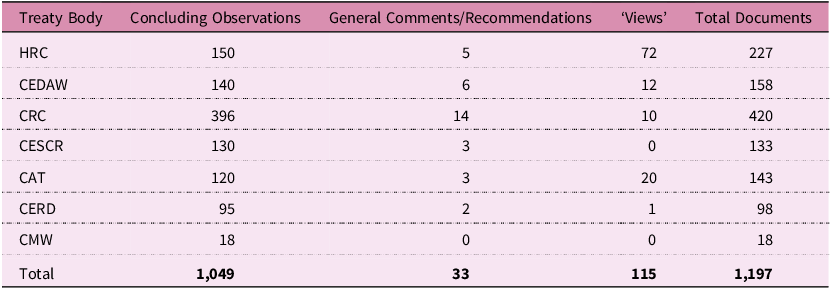
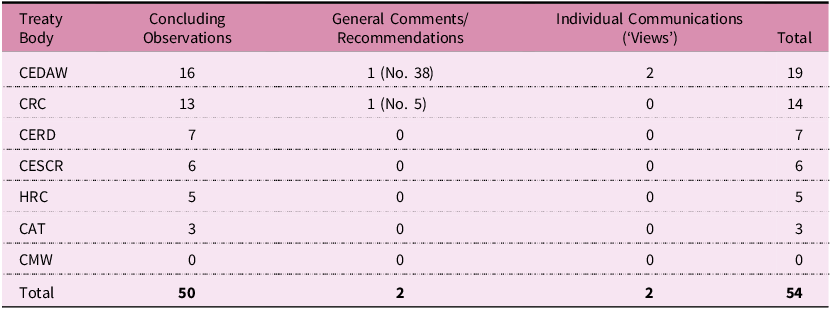
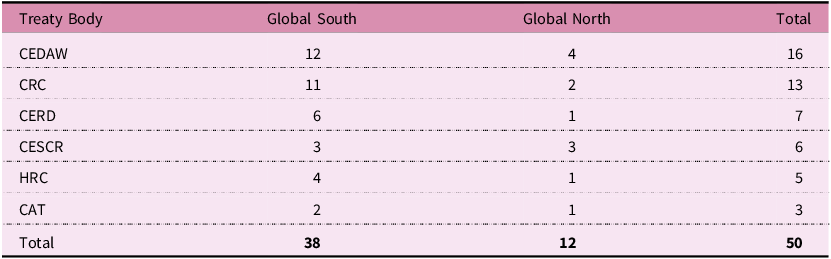

 Open access

