


Introduction
Ageism, the way we think, feel, and act toward people based on their chronological age, is ubiquitous in everyday life. But is ageism universal? This is the leading question of this Element, and we will try to give an answer after we have explored empirical evidence and theoretical approaches. In Section 1, we start by defining both ageism and universality and by presenting a model of the antecedents and consequences of ageism on a variety of levels. We then ask three questions about the universality of ageism. In Section 2, we ask whether ageism happens across the span of a person’s life. As most empirical research addresses ageism at the individual level, a large part of this work is devoted to these micro-level findings. In Section 3, we ask whether ageism permeates all spheres of life. Ageism takes place in public spaces, at work, and in health and long-term care systems. In this meso-level perspective, we look at the different ecological settings and institutional contexts of ageism. In Section 4, we ask whether ageism exists all over the world. We present historical and cross-cultural research that examines the macro level of cultural values, beliefs, and societal structures that may influence ageism around the world.
Making sense of empirical research requires theoretical reasoning, so in Section 5 we present various theoretical accounts regarding different conceptions of universality. In Section 6, we conclude by suggesting potential interventions and policies as well as recommendations for future research in the field.
1 Concepts: Ageism and Universality
The term “ageism” was coined more than five decades ago by Robert Butler, who defined it as a form of bigotry by one age group toward another (Butler, Reference Butler1969). Butler saw ageism as mainly hurting older people via attitudes and practices that view the aging process and older people negatively. However, positive ageist stereotypes and behaviors were also acknowledged and were thought to be driven by the same innate fear of older age and aging (Butler, Reference Butler1980). Although he originally described ageism as being instigated by younger and middle-aged individuals toward older people, Butler acknowledged that ageism may impact people of different ages. He regarded ageism as part of societal attitudes and beliefs, influenced by institutional practices and routines, such as having a mandatory retirement age, that disadvantage older people. In this section, we will extend the conceptual basis of Butler’s work and summarize findings from recent empirical research.
1.1 Definition of Ageism
Ageism encompasses stereotypes, prejudices, and discrimination based on people’s age. It is manifested in the way we think (stereotypes), feel (prejudices), and act (discrimination) toward other people (or toward ourselves) because of their, or our, chronological age. Ageism can be either favorable or unfavorable and can be directed toward individuals across the entire age spectrum, rather than solely toward older people (Iversen et al., Reference Iversen, Larsen and Solem2009; World Health Organization, 2021).
A fundamental distinction exists between being the target of ageism and being the agent of ageism. Targets of ageism are on the receiving end of ageist feelings, thoughts, or acts, while agents of ageism feel, think, or act in an ageist manner. In self-directed ageism, the agent and the target are the same person. Ageism can be consciously aimed at people due to their age, but also unconsciously directed toward oneself or others, with limited or no awareness (Officer et al., Reference Officer, Schneiders and Wu2016). One contemporary definition of ageism acknowledges its bi-directional nature toward all age groups, but also toward oneself via the internalization of ageist stereotypes throughout the lifespan (Levy, Reference Levy2009).
Although much of the discourse around ageism emphasizes its negative aspects (Ayalon & Tesch-Römer, Reference Ayalon and Tesch-Römer2018), ageism can also encompass positive images and intentions aimed at benefiting older people (Palmore, Reference Palmore1999), which is often called “benevolent ageism.” The existence of both positive and negative stereotypes directed toward older people is well-documented. For instance, the stereotype content model suggests that older people are characterized as both warm (positive ageism) and incompetent (negative ageism). This combination results in people taking a paternalistic approach toward older people (Cuddy et al., Reference Cuddy, Norton and Fiske2005), which, while it aims to help older people, may actually result in harming them.
The most comprehensive contemporary definition of ageism encompasses both its negative and positive angles, the fact that it is directed toward people of all age groups, and its multidimensional nature (Iversen et al., Reference Iversen, Larsen and Solem2009; World Health Organization, 2021). Researchers have also differentiated between positive and benevolent ageism, with benevolent ageism being portrayed as “going the extra mile” by imposing stereotypes, such as having increasing needs and dependency, on older people in a noncompromising manner with the goal of assisting them (Cary et al., Reference Cary, Chasteen and Remedios2016).
Ageism, as a basis of discrimination, can be compared to sexism and racism, but Butler (Reference Butler1980) highlighted the unique features of ageism which make it different from both sexism and racism. Group membership in the categories of sex and race (usually) remains stable over time. This is not the case with age, however, as individuals move constantly over time from one age group to the next – from belonging to the group of the “young” to the group of the “middle-aged” and finally to the groups of the “old and very old.” Researchers have also emphasized the role of intersectionality as the joint possession of several marginalized identities, which is thought to worsen the experience of ageism (Butler, Reference Butler1969; Palmore & Manton, Reference Palmore and Manton1973).
1.2 Antecedents and Consequences of Ageism at Micro, Meso, and Macro Levels
Ageism is embedded in intrapersonal, interpersonal, contextual, and societal structures – the antecedents of ageism. Ageism has consequences, not only for the individual concerned, but also for the institutional contexts and societal climates in which it manifests. Hence, ageism operates at different levels: micro, meso, and macro levels. The micro level refers to individuals acting in an ageist manner toward others and/or being the target of ageism. The meso level denotes contexts and organizations, such as work environments or educational systems, which influence ageist beliefs and behaviors. The macro level consists of cultural values and beliefs as well as societal institutions, manifested for instance in policies (e.g., mandatory retirement policies or anti-discrimination regulations). These levels are hierarchically nested within each other: The micro level is embedded within the meso level, which in turn is embedded in the macro level.
These conceptual considerations are summarized in Figure 1. Central to this model is the phenomenon of ageism (the circle in the middle), driven by antecedents (the rectangular shape on the left) and followed by consequences (the rectangular shape on the right). In a recursive feedback loop, the consequences of ageism might work back on the antecedents of ageism. As mentioned, it is necessary to take different analytical levels into account (see Figure 1): the micro level (individual beliefs and actions as well as interpersonal interactions), the meso level (ecological settings, organizations, and groups), and the macro level (cultures and societies, including social change over historical time). The predictors and consequences of ageism should also be analyzed at the micro, meso, and macro levels. On the individual micro level, antecedents for ageism may include personal characteristics, and consequences may include individual well-being and health. On the meso level, antecedents of ageism within ecological settings like work may include the composition of a company’s workforce or clear rules of cooperation, while consequences may include the productivity of a company or fluctuation of its workforce. On the macro level, antecedents may include cultural values or societal policies (e. g., anti-discrimination laws), and consequences may include the extent to which older people are integrated into society.
Schematic model of the antecedents and consequences of ageism at different analytical levels
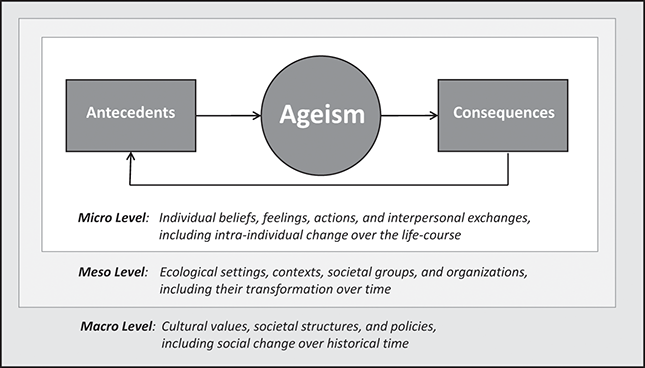
It should be emphasized that this model inherently considers change, because the distinction between antecedents, emergence, and consequences necessarily implies a sequence of events. Moreover, there is a recursive relationship between the antecedents and consequences of ageism. On the micro level, for example, the consequences of age-based discrimination can affect the conditions that lead to future experiences of ageism. Hence, individual development and social change are part of the conceptual model depicted in Figure 1. Similarly, the three levels are interconnected and do not operate in isolation, although they are discussed separately here.
1.3 The Concept of Universals
To answer the question of whether ageism is universal, one must define the concept of universals. In different scientific disciplines, this concept has been defined variously. In anthropology, universals are phenomena which can be seen across societies and cultures (Antweiler, Reference Antweiler2015). Examples of these types of universals are, for example, a conception of human beings (for example, the assumption that another person has the capacity to feel, think, or suffer), and the capacity for empathy, cooperation, or reciprocity. In psychology, universals refer to core mental attributes presumably shared by humans in all cultures and at all historical times (Norenzayan & Heine, Reference Norenzayan and Heine2005). Examples are the recognition of facial expressions, basic motives, and social behavior. These universals have been discussed in light of cultural diversity. Drawing attention to cultures highlights diversity and differences between groups and societies, while the concept of universals focuses on similarities and likenesses among human beings.
As a universal phenomenon, we would expect that ageism occurs ubiquitously not only among different individuals and across the lifespan, but also across ecological settings and institutional contexts, throughout history, and across cultures. We will refer to this assumption as the strong universality hypothesis. In anthropology, phenomena of this type have been labeled “absolute universals” (Brown, Reference Brown2004), p. 48). The emergence of absolute universals has often been explained by the common biological structures of human beings, in which lies, for instance, the basis for language universals (Pinker & Jackendoff, Reference Pinker and Jackendoff2009). However, biology may not be the only cause of absolute universals. The basic challenges of human life and their solutions may also be responsible for universals. Examples of these types of causes for universals include phenomena that are diffused throughout the world, such as the use of fire for cooking, independent inventions, and cultural convergence through functionality, such as money, and laws of physics, such as the use of heavy arrow heads (see Antweiler, Reference Antweiler2015, pp. 58–59). For this reason, different types of causes of universals have to be taken into account when proposing a theory on the universality of ageism. Common sense (and empirical findings, as we will see in subsequent sections) tells us that there are variations in the extent and manifestation of ageism between individuals, cultures, and historical epochs. This observation is not incompatible with the idea of universality, however. When empirical evidence tells us that the same antecedents are followed by the same consequences across individuals, contexts, and cultures, the “underlying causal mechanism … is the real universal” (Brown, Reference Brown2004, p. 49). This leads to what is known as the conditional universality hypothesis.Footnote 1 In contrast to phenomena that are called universal because of their ubiquitous occurrence, in the case of conditional universality the underlying mechanism accounting for the emergence of a certain phenomenon is interpreted as universal. Hence, the if-then relationship between the conditions, emergence, and consequences of ageism are the basis for conditional universality (see Figure 1).
Given the multitude of cultures worldwide, and the multitude of cultural subsystems within complex cultures, the test of universality, whether absolute or conditional, is not straightforward. Moreover, besides the synchronic perspective (comparing different cultures at the same historical time), one must also apply the diachronic perspective (comparing cultures across historical periods). To prove the universality of a phenomenon, empirical research would have to be conducted in all cultures, now and in the past, which, of course, is not possible. More limited approaches must be used, such as examining a small number of highly different cultures (to strengthen, say, the assumption that a phenomenon such as the theory of mind could be universal), or comparing a large number of cultures (for example, to detect the covariance of cultural factors with the emergence of a phenomenon they have in common (see Antweiler, Reference Antweiler2015, and Norenzayan & Heine, Reference Norenzayan and Heine2005).
In any case, it is most fruitful when universality and culture are used as complementary concepts: “Universals derive their real interest by being perceived against the background of cultural diversity” (Antweiler, Reference Antweiler2015, p. 62). In some areas, evidence points to both universality and cultural variability, such as in the development of theory of mind (Norenzayan & Heine, Reference Norenzayan and Heine2005, p. 767). This is particularly important, because one must look at different levels of analysis to answer the question of whether ageism is universal. If we find that similar occurrences of or conditions for ageism occur across individuals (micro level), settings (meso level), cultures, and historical times (macro level), we are allowed to assume that ageism and its mechanisms are universal.
1.4 What Empirical Research Can Tell Us
To answer the question of whether ageism is universal, we need to rely on empirical research. Two obstacles make it difficult to answer this question: the state of ageism measurement and the state of research on ageism.
1.4.1 Problems of Ageism Measurement
To examine the universality hypothesis, the construct and measurement of ageism must be reliable and valid across groups and societies: Ageism should be equivalent, that is, should be understood the same way by different individuals and in different contexts and cultures. One of the main challenges of equivalence is measurement invariance. Unfortunately, ageism research has not yet even found a standard instrument for identifying and measuring ageism. There is a wealth of different operationalizations under the umbrella term “ageism” (see, for instance, North & Fiske, Reference North and Fiske2015), including capturing stereotypes (such as rating the competence of older people), emotional prejudice (such as ratings of warmth or friendliness), and discrimination (such as not hiring a person for a job because of her chronological age). While some measures are directed toward older individuals, old age, or the aging process, other measures are directed toward the self (e.g., ratings of a person’s fear of cognitive decline, their contact with older people, or their experiences of age discrimination). Judgements of one’s own cultural attitudes, such as respect for older people, and attitudes in the media are also used as measurements to determine the level of ageism (Ng et al., Reference Ng, Chow and Yang2021).
Having a scale that can accurately measure ageism prevalence is key in a time of rapid and increasing population aging. Efforts to find a common, valid, and reliable scale are currently in progress (Murray & De La Fuente-Nunez, Reference Murray and De La Fuente-Nunez2023), and a scale that capture the multidimensional nature of ageism in varied contexts and cultures from the perspectives of the agents and the targets of ageism is currently being tested.
1.4.2 Patchwork of Research
So far, we have been trying to argue in a systematic manner, conceptually and theoretically. This top-down thinking makes up a matrix for empirical research. Manifestations and forms of ageism and its antecedents and consequences on micro, meso, and macro levels must be researched, and all this in respect to change, including individual development, transformation of ecological settings, and historical, cultural, and social change. This matrix of desired evidence is necessary to fully answer the question of whether ageism is universal. But do we have the evidence? The answer is a clear no. The bulk of ageism research has so far focused on individual-level ageism, with studies on the macro level having emerged only over the past decade or so. Moreover, most research has focused on ageism against older people. Also, the study of ageism, like the study of many social phenomena, has been broadly limited to the global North.
For this reason, in the remaining sections we will proceed in a bottom-up manner, presenting empirical findings and pointing out potential avenues for further research. We will start with findings on ageism across the lifespan (micro level: Section 2); then we turn to findings on ageism across settings and environments (meso level: Section 3); and then to historical and cross-cultural research on ageism (macro level: Section 4). At all levels, we will analyze the occurrence, conditions, and consequences of ageism.
2 As Long as We Live? Ageism across the Life-course
Most research to date focuses on ageism directed toward older people, but there is a growing body of research on ageism directed toward younger people (de la Fuente-Núñez et al., Reference de la Fuente-Núñez, Cohn-Schwartz, Roy and Ayalon2021). While the following sections focus on ageism toward older people, in this section we examine ageism directed toward people of all ages. We start by exploring variations in the definition of ageism toward people of different age groups, followed by the prevalence, manifestations, impact, and various etiological explanations of ageism across the lifespan. If, indeed, ageism is a comprehensive concept which can capture stereotypes, prejudice, and discrimination toward people of all ages, we would expect some consistency, regardless of the age of the targets of ageism.
2.1 Targets and Agents of Micro-Level Ageism from a Life-Course Perspective
Ageism can be directed toward people of all age groups (Iversen et al., Reference Iversen, Larsen and Solem2009; World Health Organization, 2021). This characteristic makes ageism different from other “isms,” as we all have an age and, therefore, are likely to experience stereotypes, prejudices, and/or discrimination because of our age in different periods of our lives (Nelson, Reference Nelson, Wiener and Willborn2011). If ageism indeed occurs throughout the lifespan and impacts people of different ages, this provides one indicator in support of claims for its universal nature.
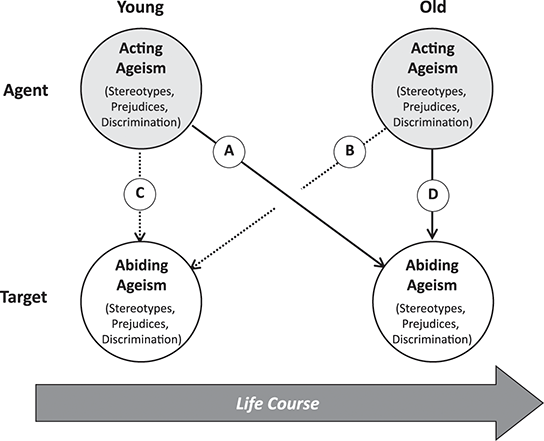
A distinction should be made between the agents and targets of ageism considering their respective age (see a simplified graphic representation in Figure 2). Agents of ageism think, feel, and/or behave in an ageist manner (the grey circles on top in Figure 2) toward targets of ageism, who bear the brunt of these thoughts, emotions, and behaviors (the white circles on the bottom). The agents and targets of ageism can be the same age or they can differ in age, resulting in a variety of combinations (see Figure 2): a younger agent and an older target (arrow A); an older agent and a younger target (arrow B); a younger agent and a younger target (arrow C); and an older agent and an older target (arrow D). Experiences of being an agent or a target of ageism in these different combinations may have different antecedents and consequencesFootnote 2.
Agents and targets of ageism across the lifespan
Conceptually, the definitions of ageism toward younger people and ageism toward older people show clear differences. The word “ageism” is so commonly used to describe prejudice against older people because of their chronological age that it is difficult to think of it as also encompassing prejudice toward younger people. In fact, there is no clear term in use to describe prejudice against younger people. The World Health Organization (WHO) defines “ageism directed towards younger people” as being directed toward people under the age of fifty, thus relying on a very lenient and broad definition of ageism toward younger people in contrast to the definition of ageism toward older people (de la Fuente-Núñez et al., Reference de la Fuente-Núñez, Cohn-Schwartz, Roy and Ayalon2021).
A variety of terms, such as reverse ageism (Lacy, Reference Lacy2005; Raymer et al., Reference Raymer, Reed, Spiegel and Purvanova2017), youthism (de la Fuente-Núñez et al., Reference de la Fuente-Núñez, Cohn-Schwartz, Roy and Ayalon2021), adultism (Bertrand et al., Reference Bertrand, Brooks and Domínguez2023), and childism (Biswas et al., Reference Biswas, Wall and Warming2023; Wall, Reference Wall2022), have been used to describe ageism directed toward younger people. In reviewing the various definitions used to describe ageism toward younger people, no clear consensus can be identified. For instance, childism is considered by some to be analogous to feminism and womanism because it grew out of childhood studies like the latter evolved out of women’s studies (Wall, Reference Wall2022), while others define childism as cultural hostility toward children by stressing the strong structural or institutional foundations which foster inequality and subordination in society (Biswas et al., Reference Biswas, Wall and Warming2023). The term “adultism” is used in reference to the exclusion of youth from decision making and to structural inequalities which result in the marginalization of youth (Bertrand et al., Reference Bertrand, Brooks and Domínguez2023), but also to represent an extensive system that views younger people as inferior, incapable of doing things, and in need of protection simply because of their age (Douthirt-Cohen & Tokunaga, Reference Douthirt-Cohen and Tokunaga2020).
As mentioned earlier, ageism differs from sexism and racism in that individuals move across the lifespan from being a “younger person” to being an “older person” (and everything in between). At different developmental stages over the lifespan, we may find various manifestations of ageism. While younger targets may find themselves being labeled “too young,” older targets may be given to understand that they are “too old.” There is one particular difference between these two forms of ageism: “Being too young” allows for the opportunity to become “old enough” in the future, while “being too old” rarely reverses into “being at the right age” or (at least literally) “being too young.” However, in both cases, because it is chronological age which is perceived as being misfit with the situation, ageism toward both younger and older people does have features and antecedents in common.
An agent and target of ageism can also be the same person: this is called self-directed ageism. An interesting line of inquiry for future studies might be whether a person’s ageist attitudes or behaviors toward others sometimes reverberate against the agent himself or herself later in life. This is especially interesting to explore from a lifespan perspective: A younger person’s ageist stereotypes may become internalized and then self-directed when that person is older (Levy, Reference Levy2009). These complex patterns of relations must be considered when exploring ageism at the micro level.
2.2 The Experience of Ageism across the Lifespan
A hypothesis of strong universality assumes that across the lifespan everybody experiences ageism, both as a younger and as an older person. A hypothesis of conditional universality, on the other hand, assumes that people experience ageism only under certain circumstances or conditions.
Whereas the study of ageism against older people has a long history in social and behavioral gerontology, the issue of discrimination against younger people has usually been treated outside aging research and has only recently become a topic on the gerontological research agenda (de la Fuente-Núñez et al., Reference de la Fuente-Núñez, Cohn-Schwartz, Roy and Ayalon2021). One of the few studies comparing ageism against younger and older people is the European Social Survey (ESS), which was collected in 29 European countries and was based on a very large sample (N>50,000) with a broad age range of 15 years and older (Bratt et al., Reference Bratt, Abrams, Swift, Vauclair and Marques2018). Three aspects of ageism were used to determine the measurement of ageism: discrimination, insult, and lack of respect because of one’s age.Footnote 3 Considering the challenges of measurement invariance across countries and age groups, the authors concluded that, in Europe, younger people up to around thirty years old report experiencing the highest levels of age discrimination. With advancing age, there is a decline in the report of ageism (Bratt et al., Reference Bratt, Abrams, Swift, Vauclair and Marques2018). However, there are clear country differences. In some European countries, including Denmark, Finland, and Belgium, the decline of ageism with age is steady; but in others, including Germany, Spain, and Ukraine, there is an increase in experienced ageism after the age of seventy. Nevertheless, the overall pattern shows that in adolescence and young adulthood the experience of discrimination, insult, and lack of respect because of one’s age is higher than in middle and late adulthood.
To measure how prevalent ageism is in older age, some studies use prevalence rates, such as estimating the proportion of persons having experienced at least one incident of ageism over a defined period. Prevalence rates of ageism vary widely depending on the definition of ageism. For example, in a German study conducted during the first wave of the COVID-19 pandemic in 2020, only 5.4 percent of people over fifty who were surveyed reported that they had been targets of age discrimination at least once since the beginning of the pandemic, and the prevalence rates were similar for both women and men, across different age groups, and across various education levels (Wettstein & Nowossadeck, Reference Wettstein, Nowossadeck, Simonson, Wünsche and Tesch-Römer2023). The study specifically asked about experiences of ageism while receiving medical care and while engaging in everyday activities, such as shopping or in interpersonal relationships. The items specifically addressed discrimination (e.g., “Have you been discriminated against or placed in a worse position than others because of your age?”), and an explicit time frame of about six months was given. In contrast, Palmore (Reference Palmore2001) found that the experience of ageism was much more widespread: Over 77 percent of the older people surveyed reported having experienced one or more incidents of ageism. This study used the Ageism Survey, one of the first instruments for estimating the prevalence of experienced ageism against older people. This instrument consists of twenty statements describing various situations of age discrimination (e.g., “I was sent a birthday card that pokes fun at old people”; “I was patronized or talked down to because of my age”; “Someone told me, ‘You’re too old for that’”). Respondents were asked to describe if they had experienced these situations never, once, or more than once (without a precise time limit). Methodologically, however, this study must be interpreted with care, as the estimates were based on a small convenience sample (n = 84 individuals aged 60+).
Differences in methodological approach, such as large versus small numbers of situations, everyday versus formal language, and random versus convenience sampling, may account for the discrepant prevalence estimates. Not surprisingly, in an overview of prevalence rates of ageism against older people, it was pointed out that methodological problems make it difficult to obtain reliable estimates across groups, regions, and cultures (Wilson et al., Reference Wilson, Errasti-Ibarrondo and Low2019). Wilson and colleagues argued that to date there is no standard instrument for measuring ageism and that existing studies are not based on representative samples. They also reported that prevalence estimates vary considerably, even when using the same instrument. In a 2013 Korean study, the prevalence rate of ageism was 48 percent in a sample of 816 Korean older people (Kim et al., Reference Kim, Noh and Chun2016), and a Canadian study found a prevalence rate of 91 percent in a convenience sample of 375 Canadian persons aged 50+ in 2001 (Palmore, Reference Palmore2004).
As these discrepancies show, the empirical evidence does not allow us to conclude that ageism is experienced ubiquitously by all older people. Aside from discrepancies in definitions, instruments, and methodologies, this may also reflect the fact that many older people do not recognize ageism, especially when they are asked to use a formal scheme of interpretation (Okun & Ayalon, Reference Okun and Ayalon2024a). Increased awareness and understanding of the term “ageism,” together with a standard instrument for measuring experiences of ageism in older people, needs to be developed before reliable estimates of ageism based on epidemiological studies using large representative samples can be made.
2.3 Consequences of Being the Target of Ageism
While the prevalence and degree of ageism differ between age groups, it is an open question whether the consequences of ageism are similar between age groups. The negative impact of hostile ageism directed toward older people is well documented (Chang et al., Reference Chang, Kannoth and Levy2020; Levy et al., Reference Levy, Slade, Chang, Kannoth and Wang2018), but its consequences for younger people are less known. Research has shown that older people exposed to ageism are more likely to report depressive symptoms and to engage less in social interactions than those who have not experienced ageism (Bergman & Segel-Karpas, Reference Bergman and Segel-Karpas2021; Shiovitz-Ezra et al., Reference Shiovitz-Ezra, Shemesh, McDonnell/Naughton, Ayalon and Tesch-Römer2018; Vitman et al., Reference Vitman, Iecovich and Alfasi2013).
Just like negative images of older people as weak or incompetent, positive images of older people as cute or wise can also be detrimental: both are examples of stereotyping and homogenization. Positive images may also set unattainable ideals which many people fail to meet or feel anxiety about meeting. In fact, the entire field of “successful aging,” which has become so popular throughout the Western world in recent years, can be seen as using positive ageism to advocate for an often unattainable model of aging (Katz & Calasanti, Reference Katz and Calasanti2015), resulting in negative outcomes despite its possibly benign intentions.
One example of the unintended negative consequences of positive ageism was found in an analysis of, among other things, measures enacted to ensure older people’s protection during the COVID-19 pandemic (Monahan et al., Reference Monahan, Macdonald, Lytle, Apriceno and Levy2020). These measures included the opening of stores during certain hours designated only for older people, home delivery of groceries, and changing in-person programs to online services. It has been hypothesized that such supportive measures can be beneficial to older people as they not only protect them physically but also enhance their well-being, sense of self-worth, and self-perceptions of aging. However, negative consequences were also found to be attached to these policies, including social isolation, early retirement, a heightened sense of vulnerability, and heightened reports of experiencing ageism (Monahan et al., Reference Monahan, Macdonald, Lytle, Apriceno and Levy2020). These can be attributed to a generalized view of older people as a susceptible population that requires extra protection, which in turn can be internalized and possibly contribute to a negative self-perception among older people of their abilities and strength. Moreover, the measures themselves, being highly selective in differentiating young from old, possibly result in increased social division based on chronological age (Silva et al., Reference Silva, Silva and Bacurau2021).
To date there is no comparable research on the negative effects of ageism on younger population groups (de la Fuente-Núñez et al., Reference de la Fuente-Núñez, Cohn-Schwartz, Roy and Ayalon2021). One possible explanation for the lack of research on the impact of ageism on younger people is because of its temporariness: unlike people when they are older, people when they are younger grow up and literally “escape” this particular age category that might not have served them well. Of course, just by nature of the way chronological aging works, older people remain permanently in their – often devalued – age group, or they move even further along the aging continuum toward an often even more devalued social age category. Also, because interest in ageism directed toward younger people is only starting to emerge, evidence concerning its negative impact is simply still limited. Table 1 outlines some of the differences between the two types of ageism, which lead us to suggest that they should not be treated as a single construct.
| Ageism toward younger people | Ageism toward older people | |
|---|---|---|
| Main source of bias/misfit | Too young | Too old |
| Main prospect | Grows up and fit improves | Grows up and becomes older |
| Agents of ageism (in addition to oneself) | Middle-aged and older people | Younger and middle-aged people |
| Evidence concerning consequences | Unclear | Substantial and detrimental to health and well-being |
2.4 Intersectionality: Ageism in Combination with Ableism, Lookism, Racism, and Sexism
To complicate studies of ageism, the definition of age as a socially constructed attribute is still underdeveloped (Johfre & Saperstein, Reference Johfre and Saperstein2023). Clearly, age does not only reflect the passage of time from birth but also reflects a construct which simultaneously results from and contributes to various societal inequalities. Moreover, age is only one category by which people can be classified.
Often the intersection of various attributes results in the way people experience the world (Wang et al., Reference Wang, Kang and Dong2025). To fully understand ageism, it is essential to appreciate its multidimensional nature: It is not age alone but age in intersection with other attributes that results in the experiences of stereotypes, prejudices, and discrimination present in ageism. A review of thirty-two articles on intersections of ageism, racism, classism, ableism, sexism, and heterosexism during the COVID-19 pandemic emphasized the stigma and discrimination faced by people who are marginalized based on two or more intersecting attributes (Ramirez et al., Reference Ramirez, Monahan, Palacios-Espinosa and Levy2022). Attributes can be so intersected that it can often be challenging to differentiate between the different “isms,” for example to disentangle ageism from ableism or lookism, as described next.
2.4.1 Ableism
Ableism is described as stereotypes, prejudices, and discrimination toward people because of their bodily function. Ableism places value on certain abilities over disabilities or other abilities. This includes sensory, physical, and cognitive disabilities and chronic health conditions (Bogart & Dunn, Reference Bogart and Dunn2019). It has been argued that ableism can be an umbrella term covering many types of “isms” such as racism, ageism, or sexism. This is because ableism concerns not only biological bodily functions, but also cognitive and mental abilities as well as social structural aspects. Ableism can be used to justify a variety of power relations because it assigns ability or lack of ability to different groups and thus justifies differential treatment based on ability (Wolbring, Reference Wolbring2008).
Ableism has many overlaps with ageism; for example, people with disabilities and older people might both be considered a burden to society and have their contributions devalued, and when a person with a disability is also older, this person might experience double jeopardy attributed to both age and disability status. The fact that ageism is often concerned with the sense that physical and/or mental ability can diminish with age has led some researchers to ask whether part of ageism is ableism (Gendron et al., Reference Gendron, Camp and Amateau2023). Indeed, the authors of one study argue that relying on a definition which clearly distinguishes between ageism and ableism would have resulted in different findings of ageism prevalence and manifestation (van der Horst & Vickerstaff, Reference van der Horst and Vickerstaff2022). Differential treatment toward older people is often due to attitudes about real or perceived impairments of physical functioning rather than age per se, but the differential treatment is still labeled ageism. This results in a mismatch between the two concepts, which makes assessing their true intersectionality more challenging (van der Horst & Vickerstaff, Reference van der Horst and Vickerstaff2022). To help disentangle the link between ageism and ableism, one study asked a sample of 913 individuals a number of questions about these two “isms” (Gendron et al., Reference Gendron, Camp and Amateau2023). The authors found strong links between the two constructs and suggested that ageism and ableism cannot be examined separately because so much of the fear associated with aging concerns the perceived decline that comes with age. They found that a key part of ageism is actually ableism, and emphasized the importance of promoting age and ability inclusivity (Gendron et al., Reference Gendron, Camp and Amateau2023).
2.4.2 Lookism
Lookism also has many overlaps with ageism. Lookism is defined as prejudice, stereotypes, or discrimination toward people because of their physical appearance. It is directed toward those whose appearance is seen as unattractive. Despite the common proverb, “Don’t judge a book by its cover,” unconscious and conscious processes are often involved in our perception of individuals based on their looks (Granleese, & Sayer, Reference Granleese and Sayer2006).
Lookism can also be mistaken for ageism. This is especially the case for older women, who, like younger women, often find themselves being judged by their looks. Indeed, there is a well-documented intersection between ageism, sexism, and lookism, and a strong body of literature on women’s ongoing efforts to maintain a youthful identity, which is equated with beauty and attractiveness. Studies based on interviews with middle-aged and older women have found that they are constantly struggling to maintain visibility and relevance via beauty work (Clarke & Griffin, Reference Clarke and Griffin2008; Westwood, Reference Westwood2023). However, although lookism is clearly a common type of discrimination, which often intersects with sexism and ageism, research has tended to focus on the latter two “isms” in intersection and takes lookism as a given.
2.4.3 Sexism
Intersectionality is not always negative, even when it results in the combination of two marginalized identities, such as older age and female gender. Martin et al. (Reference Martin, North and Phillips2019) conducted an experimental study that explored the intersection between age and gender by randomly presenting respondents with vignettes that vary based on age and gender. The authors asked the respondents to make evaluative judgements about the vignettes to test two competing hypotheses. The first hypothesis suggested that having two marginalized identities puts one at a greater disadvantage (e.g., an older man may commonly be perceived as a wise elder, but an older woman might be perceived as a crone). The second hypothesis suggested that two simultaneous marginalized identities can have a protective effect in some circumstances. The authors found, for example, that men are often expected to cede power in older age, whereas the same is not expected of women, allowing them an “intersectional escape” in older age (Martin et al., Reference Martin, North and Phillips2019).
Intersectionality affects not only people’s exposure to discrimination, prejudice, and stereotypes, but also how they interpret discriminatory behaviors. In a study of both younger and older Americans (with an age range of 18 to 29 and 65+), participants were asked to imagine Black men and women and White men and women and to evaluate the levels of benevolent or hostile ageism they expected them to have been exposed to (Gans et al., Reference Gans, Horhota and Chasteen2023). The study’s younger respondents were most likely to view hostile ageist discrimination against older White men as acceptable (Gans et al., Reference Gans, Horhota and Chasteen2023). This suggests that in some circumstances ageism completely merges with other “isms” to the point that it becomes difficult to distinguish between them. Intersections of ageism with other biases can result in multiple disadvantages, but, according to some studies, intersections of marginalized social attributes can also have some protective effects. Because we all have more than a single identity or attribute, it is expected that ageism and its effects will vary widely depending on the multiple facets of one’s identity.
2.5 Predictors of Being the Target of Ageism
Who are the targets of ageism? As with the prevalence of experienced ageism, analyzing the predictors of being a target of ageism also varies depending on the instrument used. In Palmore’s (Reference Palmore2001) pioneering work assessing the predictors of being a target among individuals over the age of sixty, no age or gender differences were found. However, individuals with less education reported more experiences of ageism than those with more education (Palmore, Reference Palmore2001, p. 574). Similar findings were reported in Wettstein and Nowossadeck’s (Reference Wettstein, Nowossadeck, Simonson, Wünsche and Tesch-Römer2023) large representative study of individuals over the age of fifty: No age and gender differences were found, but there was a tendency for individuals with lower education to report age discrimination more often than those with higher education. The fact that age was not a significant predictor of ageism could be due to the fact that both samples were limited to individuals in the second half of their life. It is possible that sharper differences between younger and older adults do exist. In addition, both samples relied on self-report, which is notorious for being affected by many other factors, such as familiarity with the term “ageism” or one’s general mental health, rather than one’s actual exposure to ageism.
Health has been found to be a highly relevant predictor for the experience of ageism. People who rate their health as less good report more perceived age discrimination than people with good or very good subjective health (Wettstein & Nowossadeck, Reference Wettstein, Nowossadeck, Simonson, Wünsche and Tesch-Römer2023). A systematic review of determinants of ageism similarly found that health status is a consistent predictor of self-directed ageism (Marques et al., Reference Marques, Mariano and Mendonça2020). In an Italian study of perceived ageism, it was found that, after adjustment for age and gender, frailty and negative affectivity correlated substantially with perceived ageism (Zora et al., Reference Zora, Cella and Poli2022). Surprisingly, age has not emerged as a predictor of perceived ageism in empirical studies. Poor health and lower education, which includes indicators for lower resources, and which in turn makes people more vulnerable to different types of discrimination, seem to be the key predictors for experiencing ageism.
2.6 Who Are the Agents of Ageism?
Ageism across the lifespan can be examined not only in relation to the age of the targets of ageism but also in relation to the agents of ageism. Ageism toward older people can start at a very young age and continue throughout the lifespan (World Health Organization, 2021). We ask whether ageism perpetrated by agents of different ages can be theoretically explained in a consistent manner, or whether the theoretical rationale needs to be adapted to fit each age group: Are agents of different age groups motivated by the same or different mechanisms of ageism? Are the prevalence of ageism and its manifestations consistent across agents of different age groups?
Ageist attitudes about older people can occur at a very young age. Among 126 children between the ages of 3 and 6 years old, Flamion et al. (Reference Flamion, Missotten, Jennotte, Hody and Adam2020) found favorable views of older people as warm and smart, but also negative views of older people as having high levels of dependence and low levels of physical capacity, which they found to be similar to the general population’s view of older people.
Interestingly, research among young children as agents of ageism has shown that there is a greater level of concordance between explicit and implicit measures of ageism than there is in adults’ reports. It is possible that adults’ differentiation of explicit and implicit measures is a result of conscious processes that develop with age and result in people being less likely to openly admit that they are being ageist, once they realize that ageism is an undesirable property. Under such circumstances, the distinction is more apparent, because people are able to control their explicit responses but not their implicit, unconscious responses (Chopik & Giasson, Reference Chopik and Giasson2017).
Some studies have found that ageism in children is attributed to education and upbringing. For instance, having close relationships with grandparents may serve as a buffer against ageism (Vitman-Schorr & Rozani, Reference Vitman-Schorr and Rozani2025), possibly because children are able to generalize these beneficial relationships with grandparents to other older people. Another source of influence is early exposure to literature and media. It has been argued that many children’s books and movies exhibit ageist (and often sexist) attitudes, resulting in children being directly exposed to negative messages about older people – often older women – at an early age (Henneberg, Reference Henneberg2010; Hollis-Sawyer & Cuevas, Reference Hollis-Sawyer and Cuevas2013).
In a large review of studies of predictors of other-directed ageism, the authors reported that fear of death and anxiety about aging are correlated with higher ageism, while conscientiousness and agreeableness are correlated with lower ageism (Marques et al., Reference Marques, Mariano and Mendonça2020). On an interpersonal level, it was found that quality, not quantity, of contact with older people in general and with grandparents specifically reduced the extent of ageism (Marques et al., Reference Marques, Mariano and Mendonça2020). Surprisingly, demographic characteristics like age, gender, education, and socioeconomic background were not correlated with other-directed ageism. It is important to note, however, that fluctuations in ageism within the same day also exist, thus suggesting the possibility that ageism is also state-dependent (Bodner et al., Reference Bodner, Shrira, Hoffman and Bergman2020; Ma et al., Reference Ma, Zhang, Zhang and Hu2023).
The fact that ageism can occur at a very young age and continue throughout the entire lifespan suggests that we are all bound not only to be exposed to ageism as targets but also to be the agents of ageism at some point in our life. However, ageism held by younger people has different characteristics from ageism held by older people. Whereas younger people may not be fully aware of the undesirable nature of ageism, and therefore express uncensored ageist stereotypes, as people grow up, they become aware of the negative connotations of ageism and may attempt to hide or temper their ageist views.
2.7 Being the Agent and the Target: Intra-Group and Self-Directed Ageism
Ageism can be an aspect of intergroup relations, perpetrated by one age group toward another age group, or an aspect of intragroup relations, directed by people of one age group toward members of the same age group or toward themselves.
2.7.1 Intragroup Ageism among Older People
Other-directed ageism is harmful not only when it is directed toward older people by younger people, but also when it is directed by older people toward their own age group. One study polled 400 participants (216 university students and 184 senior community residents) and found that, while both students and residents perceived older people as less competent, the students considered older people to be warmer. The senior community residents considered young-old people (older people who were younger than them) to be the warmest. Research has consistently shown that there are high levels of ageism among active retirement community members, and that they often equate being old with being sick (Roth et al., Reference Roth, Keimig and Rubinstein2012). This suggests that the oldest old might be more likely to be the targets of ageism directed by older people themselves (Lagacé & Firzly, Reference Lagacé and Firzly2017).
2.7.2 Self-Directed Ageism in Old Age
There is plenty of evidence to show not only that self-directed ageism exists, but also that it has very negative effects on people’s health and well-being. Likewise, having positive views of aging has many beneficial effects (Kleinspehn-Ammerlahn et al., Reference Kleinspehn-Ammerlahn, Kotter-Grühn and Smith2008; Levy & Myers, Reference Levy and Myers2004; Levy et al., Reference Levy, Slade and Kasl2002). A recent systematic review of twenty-one studies shows that a positive self-perception of one’s own aging is associated with healthier outcomes over time, including better self-rated health, less obesity, longer life expectancy, improved physical functioning, reduced depressive symptoms, and improved cognitive functioning (Tully-Wilson et al., Reference Tully-Wilson, Bojack and Millear2021). Individuals with positive self-perceptions of aging are also more likely to engage in behaviors geared to improve their health (Levy & Myers, Reference Levy and Myers2004). A 2013 study that examined how self-perceptions of one’s own aging become a self-fulfilling prophecy showed that negative self-perceptions of aging, especially those related to physical loss, impair one’s health-related strategies that contribute to the maintenance of a healthy lifestyle (Wurm et al., Reference Wurm, Warner, Ziegelmann, Wolff and Schüz2013).
Self-directed ageism – the tendency to direct negative age stereotypes that have been internalized throughout the lifespan toward oneself – has been explained by the stereotype embodiment theory (Levy, Reference Levy2009). One outcome of self-directed ageism can be the discrepancy between chronological age and subjective age in older people. Research has shown that younger people tend to express a wish to be older than they are. They also tend to feel as if they are older than their chronological age. Older people, on the other hand, tend to feel younger than their chronological age (Kotter-Grühn & Hess, Reference Kotter-Grühn and Hess2012). A 6-year longitudinal study based on the Berlin Aging Study (BASE), conducted among people in the age range of 70–104 years, found that felt age (which represents one indicator of people’s self-perceptions of aging) remained on average 13 years below people’s chronological age, but, over time, people tend to report a decrease in their satisfaction with their age (Kleinspehn-Ammerlahn et al., Reference Kleinspehn-Ammerlahn, Kotter-Grühn and Smith2008). These studies and others suggest that older people prefer to adopt a younger age identity, possibly because of the devalued status of older age and their own negative perceptions of aging.
The discrepancy between one’s subjective age identity and one’s chronological age represents the paradox of self-ageism (Ayalon, Reference Ayalon2025). Although holding a younger subjective age is considered beneficial in many ways and has been associated with positive physical and mental health outcomes, it also demonstrates a tendency among older people to distance themselves from their own age group and to possibly hold negative ageist stereotypes toward other older people and toward themselves. This can be explained by the social identity approach, which stresses the importance of perceiving yourself as belonging to a valued social category. If one’s age group category is devalued, one way to increase self-value is by disassociating from the devalued group (Tajfel & Turner, Reference Tajfel, Turner, Jost and Sidanius2004).
2.8 Summary: Universality of Micro-Level Ageism
Ageism is present even among the very young and persists throughout life, indicating that everyone is likely to both experience and perpetuate it at some point. This might speak to the assumption that ageism is a universal, happening at least sometimes over the course of a person’s life. The occurrence of ageism is not equally distributed across the life-course, however: It is tied to a person’s age, which indicates instead, perhaps, the conditional universality of ageism. People who are very young and older adults have been shown to be more likely to experience ageism. Empirical findings on intersectionality have also found that if a person has reached a certain age and meets additional criteria, such as having a disability, the likelihood of ageism increases.
When negative ageism occurs, the negative consequences are the same for everybody. This speaks in favor of the universality hypothesis. Some purportedly positive behaviors, meant to help older people, can also have negative ageist consequences, as they reflect an assumption of older people as necessarily being in need of assistance. So-called “positive ageism,” manifested in a view of older people as people of agency who can escape the negative fate of aging, also come with a price as they are essentially impossible to achieve at least at some point in everyone’s life. These seemingly positive aspects of ageism provide a new angle on aging, different from the usual view of older people as frail and incompetent, but they often have negative consequences that are not necessarily different from the negative aspects of ageism. Although the consequences of positive ageism are more ambiguous, and its mechanisms may not be considered as universal as those of the more typical negative ageism, the negative consequences of both positive and negative ageist attitudes and behaviors demonstrate the universal nature of ageism.
It seems safe to say, then, that ageism at the micro level is universal: At some point in one’s lifetime, a person will experience ageism and its negative effects. While certain factors may influence the probability of occurrence and the effects of ageism, suggesting some conditionality, the mechanism for the emergence and consequences of ageism can be interpreted as universal.
3 In All Spheres of Life? Ecological Settings and Institutional Contexts of Ageism
Ageism is evident in various meso-level settings and institutional contexts, ranging from work environments, healthcare systems, services, media, fashion, and law. If ageism permeates all spheres of life, this points to the strong universality hypothesis. If, in contrast, the manifestation and prevalence rates of ageism vary in different settings, this could be compatible with the conditional universality hypothesis. The variability of ageism across (and within) settings offers us a chance to learn about the factors that trigger or, indeed, inhibit ageism. This knowledge can be valuable for interventions against ageism at the meso-level.
In this section, we first look at manifestations and prevalence rates of ageism in different settings and institutional contexts as manifested in policies, rules, regulations, and norms. We then look at the consequences of ageism on the meso level, as evidenced, for example, in staff turnover and workplace satisfaction in work environments. Third, we explore the predictors of ageism at the meso level – for instance, aspects of work environments that favor (or hinder) the emergence of ageism. Finally, we summarize the empirical evidence regarding the universals of ageism in ecological settings and institutional contexts.
3.1 Ageism in Different Settings and Institutional Contexts
The workplace, the healthcare system, public life, digital technology, consumer contexts, and coverage in traditional and modern media are central theaters of ageism. Senior workers, older patients and consumers, as well as fictional characters in movies and TV series, can be the targets of ageism. It must be kept in mind that ageism may be manifested in different settings differently, depending on the age of the target of ageism. For instance, a study that examined self-reports of ageist experiences among people of different age groups found that younger people were most likely to report ageism in the workplace. Middle-aged and older people, on the other hand, were more likely to report ageism when seeking goods and services (Chasteen et al., Reference Chasteen, Horhota and Crumley-Branyon2020). A different study, which examined age discrimination in five different countries – the United States, Germany, China, the Czech Republic, and Taiwan – also found variations across life domains, with experiences of age discrimination being reported primarily in the domains of work, family, and personality (e.g., in the case of the latter, “I have been accused of being intolerant, rigid, stubborn, not open to novelty due to my age”) (de Paula Couto et al., Reference de Paula Courto, Nikitin and Graf2023).
3.1.1 Work Environments
One area where ageism is highly prominent is the workplace. The prevalence of age discrimination among older workers (55–64 years of age) is high. According to representative data from the German Ageing Study (DEAS, wave 2014), the prevalence of self-reported experiences of age-based discrimination at work or among people looking for work in the previous twelve months was about 73 percent (de Paula Couto & Rothermund, Reference de Paula Couto, Rothermund, Domsch, Ladwig and Weber2019). In the construction process of a standardized scale, the Workplace Age Discrimination Scale, it was found that workers experienced, on average, at least one incidence of workplace-related age discrimination in the previous twelve months (Funk & Lorenz, Reference Funk and Lorenz2024; Marchiondo et al., Reference Marchiondo, Gonzales and Ran2016), showing that most older workers experience unfair bias based on their age.
Ageism in the workplace can manifest at the institutional level in rules and regulations, in interpersonal relations, and internally, in older people’s stereotypes of their own cognitive and physical decline and dysfunction as workers. At the institutional level, one of the most prominent ageist policies is forced retirement, which is solely based on one’s chronological age (Brownell & Powell, Reference Brownell, Powell, Brownell and Kelly2013; Doron et al., Reference Doron, Numhauser-Henning, Spanier, Georgantzi, Mantovani, Ayalon and Tesch-Römer2018; Mikołajczyk, Reference Mikołajczyk, Ayalon and Tesch-Römer2018).Footnote 4 Forced retirement arbitrarily determines the time of departure from employment solely by the chronological age of a person. Consequently, it is expected that one’s skills, abilities, and experience should either be discarded or be given for free after a certain age, for instance in the context of volunteering. Advertisements inviting people to apply to work in a “young and dynamic company” also contain an implicit ageist message. Even though these advertisements do not explicitly state that older people are not welcome; by identifying as a young and dynamic work environment, these workplaces favor younger people over older people. There is also research showing that when people of different ages but similar work experiences apply for a job, younger people are more likely to be accepted (Berde & Mágó, Reference Berde and Mágó2022; Cebola et al., Reference Cebola, dos Santos and Dionísio2023).
Ageist attitudes and stereotypes depicting older people in a negative light are common in the workplace (Harris et al., Reference Harris, Krygsman, Waschenko and Laliberte Rudman2018), possibly resulting in microaggressions and conflicts between the generations. Age-related stereotype research indicates that older workers are generally viewed more negatively than younger workers, which can result in lower performance appraisals or older workers receiving harsher consequences for lower performance. Age-discrimination research has identified that older workers struggle to find employment, to receive training and development opportunities, and to advance their careers (Cadiz et al., Reference Cadiz, Pytlovany and Truxillo2017). Employers tend to have a strong preference for younger workers. They tend to view older workers more positively with regard to “soft qualities,” such as social skills or reliability, but more negatively with regard to willingness to learn and physical ability (Oude Mulders, Reference Oude Mulders2020). This is consistent with the Stereotype Content Model, which views older people as warm but incompetent (Cuddy et al., Reference Cuddy, Norton and Fiske2005). Yet, cost might be another reason for the preference of younger workers over older ones, as having less experience in a particular field (often associated with a younger chronological age) means lower costs to the employer.
3.1.2 Healthcare Systems
The healthcare system is another important domain of ageism manifested at the institutional and interpersonal levels (Wyman et al., Reference Wyman, Shiovitz-Ezra, Bengel, Ayalon and Tesch-Römer2018). At the institutional level, ageism in the healthcare system is manifested in various ways that neglect the needs of older people or deprive them of necessary services. This was most evident during the pandemic. Some countries, such as Italy and Switzerland, explicitly used chronological age as a sole basis for the exclusion of older people from emergency services during the pandemic. Other countries, such as Sweden, attempted to protect older people during the early days of the pandemic by keeping them behind closed doors while the rest of society was allowed to maintain at its everyday activities (Aloni & Ayalon, Reference Allen, Elias and Greenwood2023; Ayalon, Reference Ayalon2020). These extreme examples are also evident during normal routines of the healthcare system, when older people are often denied access to certain services and treatments merely because of their chronological age (Wyman et al., Reference Wyman, Shiovitz-Ezra, Bengel, Ayalon and Tesch-Römer2018).
At the interpersonal level, the provision of inadequate care is being driven by ageism among healthcare providers (Ben-Harush et al., Reference Ben-Harush, Shiovitz-Ezra and Doron2017). Ageism is manifested in differential treatment of older people, including the use of elderspeak – using a high tone and simplistic manner of speech when talking to older people – and the use of a less inclusive approach that does not consider older people’s treatment wishes, but instead paternalistically makes choices for them (Williams et al., Reference Williams, Shaw and Lee2017). Ageism is also manifested in the limited interest of healthcare professionals to work with older people (Bryant & Koder, Reference Bryant and Koder2015). This occurs even though older people are the ones who utilize healthcare services the most. Moreover, older and younger people are likely to receive different treatment even when this is not justified by current medical knowledge and practice. For instance, a study conducted in the United States found that physicians were less likely to offer treatment to an older person with suicidal ideation than to a younger person, even though older people are at a higher risk for death by suicide than younger people (Uncapher & Areán, Reference Uncapher and Areán2000).
3.1.3 Technology
Ageism in the case of digital technology occurs while creating design and policies within the social and organizational environment, and as a consequence of the practices, beliefs, and attitudes of the designers and developers (Köttl & Mannheim, Reference Köttl and Mannheim2021; Mannheim & Köttl, Reference Mannheim and Köttl2024). Ageism is evident in the design of new technologies, where designers often fail to take into consideration the unique needs of older people, and negatively stereotype older people as a group less likely to be interested in or capable of competently using technology, rather than appreciating their heterogeneity. Some older people are excluded not only from the design process but also by the use of technologies, which do not always fit their needs and abilities (Mannheim, Wouters, et al., Reference Mannheim, Wouters and Köttl2023). A systematic review of the design of digital technologies for older people found that older people often were not involved in the design process. When older people were included, there was an upper age limit for their involvement. The authors also found that the use of outdated, ageist language largely characterized design decisions in more than 70 percent of the studies reviewed (Mannheim, Wouters, et al., Reference Mannheim, Varlamova, van Zaalen and Wouters2023).
Artificial intelligence (AI) is a major area of concern because past research has shown how it can perpetuate bias regarding racism and sexism. In the case of ageism, it has been argued that AI can produce and reinforce biases (Chu et al., Reference Chu, Nyrup and Leslie2022). A comprehensive review of AI ageism found that it can manifest in a variety of ways (Stypinska, Reference Stypinska2023). For instance, AI databases and algorithms can facilitate the retrieval of ageist results from search terms that query about older people, perpetuating and spreading stereotypes about older age. In addition, AI developers may exclude older people from AI discourse and not take older people’s preferences and needs into consideration in the design process. AI may also result in discriminatory decisions being made on behalf of older people as a group, such as exposing them to or barring them from particular contents due to their age (Stypinska, Reference Stypinska2023).
3.1.4 Traditional and Social Media
Traditional media, such as print, television, and movies, features biased manifestations of ageism, including the underrepresentation of older people and their misrepresentation in a narrowly stereotypical way, which tends to be negative. A review that examined visual representations of older people in the media starting in the 1950s found a distinct change from underrepresentation to misrepresentation of older people over time. Although the oldest-old (eighty years and older) continue to be underrepresented in today’s media, young-old people (in their sixties and seventies) tend to be represented in overly positive ways (Loos & Ivan, Reference Loos, Ivan, Ayalon and Tesch-Römer2018). This misrepresentation has the potential of fostering unattainable standards of successful aging (Ayalon, Reference Ayalon, Tesch-Römer, Rattan. and Ayalon2021).
Ageism is also present in newspaper articles, which tend to depict older people in a negative way. An analysis of a 1.1-billion-word media dataset covering the United States and the United Kingdom found that negative descriptions of older people were six times more common than positive descriptions. The most ageist media form identified was magazines and the least ageist form was fiction (Ng, Reference Ng2021).
Ageism is evident in everyday communications between people over social and digital media as well (Meisner, Reference Meisner2021). One major difference between new media and traditional media is that new media allows for uncensored communication. For instance, the term “boomer remover” came into common use as a way to ridicule the heightened vulnerability of older people during the COVID-19 pandemic (Lichtenstein, Reference Lichtenstein2021). Even unrelated to the pandemic, social media communication concerning older people has shown high levels of ageism. A qualitative study that examined 354 tweets for their ageist content identified several ageist themes, including the portrayal of older people in a negative light and younger people in a positive light. Infantilization and othering of older people as well as internalized ageism and internalized microaggressions were also evident (Gendron et al., Reference Gendron, Welleford, Inker and White2015). These practices not only convey societal views of older people but also shape them. When people face ageist messages, they may eventually internalize them and accept them as given.
3.2 Consequences of Meso-Level Ageism
The consequences of ageism are relevant not only to the individual but also to organizations and other settings at the meso level. Next we detail these consequences in several spheres of life, including the work environment, healthcare system, technology, and traditional and new media.
3.2.1 Work Environment
The accumulated evidence supports claims that workplace ageism has wide-ranging effects on individuals, groups, teams, organizations, and society. Perceived age discrimination is negatively associated with job satisfaction, a factor which predicts employee turnover (Macdonald & Levy, Reference Macdonald and Levy2016). A study that examined the effects of perceived age discrimination on older workers found that it is a direct contributor to older people’s wish to retire early (Thorsen et al., Reference Thorsen, Rugulies and Løngaard2012). Just as in other areas of life, ageism in the workplace has a detrimental effect on the health and well-being of older people affected by it (Kereri & Nyang’au, Reference Kereri and Nyang’au2024). Another study found that the experience of ageism was more predictive of life satisfaction than job-engagement and work-climate variables (McConatha et al., Reference McConatha, Kumar and Magnarelli2022).
A recent review of the literature, which examined fifty-eight peer-reviewed studies, concluded that ageism serves as an obstacle in the hiring process, and impacts the employability and performance evaluation of older workers (Cebola et al., Reference Cebola, dos Santos and Dionísio2023). This aspect of ageism also has meso-level consequences, potentially leaving organizations without adequate skills and expertise. In the absence of age diversity on the job, an organization is less likely to benefit from cumulative knowledge, flexibility, and creativity, which are more likely to characterize age-diverse work environments (Buttigieg, Reference Buttigieg, Parry and Tyson2011).
As the proportion of older people in society increases, ageism can serve as a major barrier to their inclusion in the workforce. This in return is likely to impact the productivity of the entire workforce, which, given demographic changes, is forced to rely more strongly on older workers. Ageism in the workplace also has a tremendous financial impact at the macro level, as governments are forced to support the pension years of older populations rather than maintain them on the job market. According to the AARP, the financial cost of ageism in the workforce amounted to $850 billion in 2018 (Terrell, Reference Terrell2020).
3.2.2 Healthcare Systems
Discriminatory ageist practices and stereotypes against older people often turn into self-fulfilling prophecies, when older people become less likely to engage in health-promoting behaviors following the experience of age-based discrimination in the healthcare system (Hooker et al., Reference Hooker, Mejía, Phibbs, Tan and Stevens2019). Moreover, there is plenty of research to show the negative impact of ageism not only on older people’s health and well-being but also on the healthcare system itself (Chang et al., Reference Chang, Kannoth and Levy2020; Levy et al., Reference Levy, Slade, Chang, Kannoth and Wang2018). A study that examined excess healthcare spending due to discrimination against older people, negative age stereotypes, and negative self-perceptions of aging on eight of the most expensive health conditions and the costs for treating these health conditions found that the one-year cost of ageism was $63 billion in the US healthcare system, or one of every $7 spent on the selected health conditions (Levy et al., Reference Levy, Slade, Chang, Kannoth and Wang2018).
3.2.3 Technology
Given its substantial impact both on older people and on society at large, digital access is now considered a human rights issue (Sanders & Scanlon, Reference Sanders and Scanlon2021). At the individual level, ageism and particularly self-ageism play an important role in older people’s use of technology, with research showing that self-perceptions of aging partially mediate the association between chronological age and use of technology (Mannheim, Varlamova, et al., Reference Mannheim, Varlamova, van Zaalen and Wouters2023).
Ageism amplifies the digital divide (Choi et al., Reference Choi, Kim, Chipalo and Lee2020), contributing to the exclusion of older people from social life by limiting their access to goods and services. As a result, older people may be less capable of obtaining accurate information and knowledge, including health information. Hence, in the long run, the digital divide increases inequalities in society and may result in poorer physical and mental health among older people.
3.2.4 Traditional and Social Media
The consequences of under-representation, misrepresentation, and negative stereotyping of older people, including online microaggressions, in the media are numerous. Exposure to negative stereotypes of older people results in the perpetuation of negative age stereotypes especially when they become self-relevant in older age (Levy, Reference Levy2009), so media exposure likely has a substantial impact on older people’s health and mental health. The media also has the power to shape societal views of older people. In the absence of balanced representations of older people, it is highly likely that the divide between young and old will intensify in years to come. As already noted, this divide has substantial health, mental health, and financial implications.
3.3 Predictors of Meso-Level Ageism
What are the factors that trigger (or hinder) meso-level ageism? This question is especially relevant, because in demographically changing societies, meso-level ageism can be costly, as shown earlier in the domains of work and healthcare. Unfortunately, there is little research on meso-level factors of ageism to date. One comprehensive systematic review of determinants of ageism examined fourteen different datasets which addressed the concept of ageism (Marques et al., Reference Marques, Mariano and Mendonça2020). Employing an ecological perspective, the study differentiated between predictors at the macro level, meso level, and micro level. At the meso level, the quality of relationship with older people in general and with grandparents/older relatives in particular and an older age of the target of ageism were all determinants of ageism (Marques et al., Reference Marques, Mariano and Mendonça2020).
In a systematic review of work-related ageism, it was found that most studies focused on the consequences of ageism, such as obstacles in the hiring process, employability, and performance evaluation of older workers (Cebola et al., Reference Cebola, dos Santos and Dionísio2023). Only a few studies have analyzed determinants of workplace ageism and interventions aimed at ageism prevention in working contexts. Factors that drive ageism in the workplace include the composition of an organization’s workforce and organizational ideologies (e.g., Riach & Kelly, Reference Riach and Kelly2015). A systematic review and meta-analysis of fifteen studies indicated that an increase in workers’ chronological age had a significant negative association with the severity of their workplace-based ageist attitudes (Bae & Choi, Reference Bae and Choi2023). Factors mitigating ageism in the workplace include explicit compliance with an organization’s anti-discrimination regulations (Urbancová & Feffarová, Reference Urbancová and Feffarová2017).
An important predictor of ageism that is relevant in more than one domain appears to be scarcity of resources. For instance, during the COVID-19 pandemic, high demands on the healthcare system generated a parallel pandemic of ageism (Previtali et al., Reference Previtali, Allen and Varlamova2020). Also, older people are often expected to move from larger to smaller homes and to use fewer public goods, giving priority to the younger generations (North & Fiske, Reference North and Fiske2013).
In addition to precipitators across varied domains, there is a general understanding that people are confronted with a variety of stereotypes and discriminatory practices that are specific to a particular domain. In fact, the association between stereotypes and discriminatory behaviors tends to be stronger within a particular domain rather than across domains (Voss et al., Reference Voss, Wolff and Rothermund2017). In support of this claim, a study that examined the reciprocal relationship between age-related stereotypes and age discrimination over three waves of data collection, relying on the German Aging Survey, found that stereotypes predicted discrimination, and that this association is domain specific. Specifically, the study found that negative views about personal competence, physical decline, and social interactions predicted an increase in perceived discrimination in the domains of work, medical care, and social life, respectively. However, the physical decline stereotypes impacted perceived age discrimination only among older people, alluding to the fact that the probability of being exposed to specific stereotypes is also age-dependent and not solely context-dependent (Voss et al., Reference Voss, Wolff and Rothermund2017).
3.4 Summary: Universality of Meso-Level Ageism
The studies reviewed here broadly show that context matters. It matters because context determines our encounters with institutions, people, and other triggers that instigate ageism. Not all people attend all contexts. Our age, gender, race, and country of origin are just a few of the factors that determine what context we encounter at any particular point in our life. Moreover, even when people are in the same context, their experiences may differ. Context matters because certain events, interactions, or encounters are more important to us than others. When we encounter ageism in a context that we have limited interest in, we can disregard the experience and even view it as benign. On the other hand, in contexts that provoke experiences that we care about, we are more likely to respond, interpret messages as ageist, and even be affected emotionally as a result (de Paula Couto et al., Reference de Paula Courto, Nikitin and Graf2023). This highlights the fact that ageism is context-dependent. If we go back to the definition of universals, we can easily preclude the strong universality hypothesis because ageism does not manifest in all domains in the same way and different population groups are more likely to be affected by it, depending on the domain or context. However, the consequences of ageism for older people are detrimental regardless of the domain in which they occur.
4 All around the World? Ageism throughout History and across Cultures
To answer the question of whether ageism exists all around the world, we review its occurrence first from a historical and second from a cross-cultural perspective. It is important to note, however, that the term “ageism” was coined only in 1969 in the United States (Butler, Reference Butler1969). It is a modern concept, or at least a modern term, developed in a specific culture of the Global North, making it more challenging to know whether ageism has existed throughout history and across cultures. Existing databases to examine might include reports on the social status of older people in history or attitudes toward old age in different cultures, and both historical and cross-cultural research will inform the consideration of hypotheses about the strong versus conditional universality of ageism.
4.1 Historical Research on Ageism
Because the field of ageism research is fairly new, the database of historical research on ageism is quite limited. There are fewer subjective reports of ageism from the past than there are today, so representations of old age in literature, the visual arts, and historical documents must be analyzed to learn about the status of older people in the ancient world. Also, the fact that the definition of “old age” has varied so much across periods in time and across cultures (Thane, Reference Thane2003) makes our understanding of ageism even more complex.
4.1.1 Ageism in Early History
In some texts in the Bible, old age seems generally to have been associated with wisdom and respect. For instance, in Proverbs, gray hair is described positively as a “crown of glory” (Proverbs 16:31). The Mosaic Law demands respect for older adults (“You shall rise before grey hair, honor the reputation of an old man and fear your God” [Leviticus 19:32]), as does the second commandment (“Honor your father and your mother, that your days may be long in the Land, which the Lord your God gives you” [Exodus 20:12]). These statements, advocating respect for one’s elders, can also be seen as rules written to ensure the welfare and protection of older people. It is likely that rules were developed in response to rising needs to protect older people. So while it is possible that attitudes, emotions, and behaviors toward older people in biblical times may have been positive, they may also have contained negative aspects, leading to the view of older people as requiring protection (Fernes, Reference Fernes, Gu and Dupre2022, p. 4752). Nonetheless, one may argue that protection also means high regard and positive attitudes toward older people.
4.1.2 Ageism in Ancient Greece and Rome
In the ancient world of Greece and Rome, it was not the norm to grow older than 60 years old, although it has been estimated that, in the first century AD, about 6–8 percent of the population of the Roman Empire was 60 or older, and some, especially among the nobility, reached into their 90s or 100s (Parkin, Reference Parkin and Thane2005). Although not the norm, old age was not uncommon, but views of old age had some notable differences between Greece and Rome. Minois (Reference Minois1989), for example, argues that in youth-oriented Greece old age was equated negatively with lack of youthfulness and therefore sadness, while in Rome old age was positively associated with greatness – an association that declined over the course of the Roman Empire. Looking into literature, philosophy, medical writing, and law, a more varied picture emerges (Thane, Reference Thane2000, p. 31–43).
In Greek mythology, one finds arguably the most negative depiction of old age: the story of Tithonus. The goddess Eos asks Zeus to give her mortal husband Tithonus immortality but forgets to request eternal youth. Tithonus slowly gets older but never dies. He becomes so frail, forgetful, and confused that Eos locks him away in a cupboard or, in another version of the myth, transforms him into a cicada, and his wailing becomes the cicada’s chirr.
Older people were also often portrayed negatively in Greek comedies and satires. In The Wasps by Aristophanes, old Philokleon is described as childish and dependent, being obsessed with serving as a juryman. Aristotle’s Rhetoric also depicts older people negatively, as pessimistic, suspicious, malicious, narrow-minded, petty, anxious, and constantly on guard, however, while still loving life to the last (Parkin, Reference Parkin and Thane2005) (admittedly, in his description of the phases of life, Aristotle also depicted youth negatively, sparing only middle adulthood for positive remarks).
Not all depictions of old age in Greek writing were negative, which is not surprising given that some of the greatest works of Greek literature were written by older artists. Sophocles wrote Oedipus at Colonus when he was about ninety; Euripides wrote Bacchae when he was in his seventies and Iphigenia in Aulis when he was about eighty; and Plato was also around eighty when he wrote the Laws. Prominent examples of positive literary depictions of old age include Odysseus’ strong and intelligent adviser Nestor in Homer’s Iliad and wise Cephalus who depicts old age as an opportunity to beak free of desires which characterizes the experiences of youth at the beginning of Plato’s Republic. The appraisal of old age as depicted in constitutions and other writings also varied to some degree from city to city. Unlike that of youth-oriented Athens, which to the most part stressed the ugliness and unappealing nature of older age, Sparta’s constitution contained elements of a gerontocracy, a political ruling of older people, demonstrating the respect Spartans had for older age (Thane, Reference Thane2000, p. 38).
In ancient Greece, in all social classes, the fate of older people depended primarily on one factor: how long they were able to remain a functioning member of society (Parkin, Reference Parkin and Thane2005). In a society without a social security system, responsibility for the welfare of older people fell to their immediate relatives. That older parents were not always valued by their own offspring might be seen in Greek laws which prescribed children to honor and care for their parents, indicating there might have been a need to encode such behavior (Thane, Reference Thane2000, p. 41). Whereas such laws might reflect the fact that intergenerational solidarity was not always a matter of course, they might also reflect the fact that people considered caring for older people important enough to encode into law.
Ancient Roman texts also vary in their attitudes toward old age. While Cicero’s Cato Maior de Senectute (Cato the Elder on Old Age) is often cited as the most influential positive treatise on old age in history (Thane, Reference Thane2000, p. 38), it can be argued that it is actually an apology for a negative view of old age. Cicero cites four common reasons why old age is considered unfortunate: Old age interferes with one’s ability to do business; it makes the body and the mind weaker; it deprives one of almost all pleasures; and it brings a person closer to death. Cicero’s recipes against the ailments of old age are familiar to modern aging research: For him, as for many modern “successful aging” advisers, fitness in old age depends on activity levels throughout life, character, social status, and financial resources. Emphasizing the conditions under which old age can be productively enjoyed implies that old age might generally have been considered unfortunate and devalued in ancient Rome. Those who were poor, physically sick, and without resources to change their living conditions probably did not experience a fulfilled old age, and this might have been especially true for older women (Parkin, Reference Parkin and Thane2005). In Roman society, the “paterfamilias,” the male head of the family, was generally revered, respected for his wisdom and experience. But when the Roman legal scholar Callistratus wrote around 200 AD, “Old age has always been honoured in our state,” Parkin (Reference Parkin and Thane2005) suggests that he might have been referring only to older men with high social status (p. 5). In ancient Rome, as in ancient Greece and so many other cultures and periods of history, there seem to have been conflicting attitudes about old age. Despite some evident reverence for older men of a higher social standing, ageism might have been a reality for many older people, but given the limited writing about old age that exists from ancient times, we can only speculate.
4.1.3 Ageism in the Middle Ages
During the Middle Ages, Europe was deeply religious. Living a life of high moral worth was seen, among other things, as preparation for a good position in the afterlife. Consequently, the medieval European imagination was very much concerned with the “ages of man,” the stages of the life-course. It was at this time that a distinction “between an ‘old age,’ when powers were diminished but not lost, and the final stage of decrepitude” (what today we call “young old age” versus “old old age”) seems to have been made (Thane, Reference Thane2000, p. 47). Each life stage had certain normatively prescribed characteristics and strengths, such as romantic love in youth and wisdom in old age. Reaching old age was not necessarily seen as a positive process of continuing growth, as Chaucer noted in The Canterbury Tales’ Reeve’s Prologue: “With olde folk, save dotage, is namoore” (for older people there is nothing left except for senility; Reeve’s Prologue, verse 3898).
During the Middle Ages, the percentage of older people was estimated to be as low as it was in ancient Greece and Rome, between 5 percent and 8 percent of the general population (Shahar, Reference Shahar and Thane2005). To live an independent life in old age, it was necessary to make provisions on one’s own. Affluent citizens of towns and cities in Northern and Central Europe could negotiate a so-called corrody with a religious house, monastery, or hospital based on a gift or a promised inheritance. This corrody might comprise accommodation, clothing, and food in old age (Thane, Reference Thane2000, p. 81). Mostly in rural areas, retirement contracts were made between older landowners and members of the younger generation, even within the same family. These contracts were legal documents, sealed before the courts having jurisdiction in these matters, and their existence shows that respect and care for older parents were by no means a given (Shahar, Reference Shahar and Thane2005). Though others may argue the opposite: that respect and care for older parents were considered important enough to codify.
There were social groups of older people who enjoyed high esteem in the Middle Ages, however. In the early Middle Ages, for example, members of the clergy had high social status in general; and those in the higher echelons of the church tended to be men past the age of fifty, because it took many years to reach those higher positions. The high social status of older members of the church hierarchy rested upon the assumption that these older men had acquired moral worth directly as a result of their being at an older stage of life (Gilleard, Reference Gilleard2009). Members of the nobility were often highly respected in older age, as well. This was not only true for noble men (e.g., the Doges in Venice, who were often elected in their sixties and seventies), but also for noble women. For instance, Mathilda, the widow of the East Frankish King Henry the Fowler, founded Quedlinburg Abbey, a house of secular canonesses, in 936. Mathilda, who died at the age of seventy-six, and the abbesses who followed her, who were also older women, served as de facto rulers over the city of Quedlinburg, and held positions of great prestige and influence in the medieval East Frankish Empire.
Medieval thinking reflects the same ambivalence toward older age that we see in other periods of history, where it is not only associated with wisdom, but also characterized by frailty. In the European Middle Ages, a high moral status did not necessarily come automatically with old age but had to be strived for: “Every old person – man or woman, saint, warrior or king – was … expected to meet certain standards of behavior and, ideally, had to find some way to overcome the physical repercussions of age” (Porck, Reference Porck2019, p. 236).
4.1.4 Ageism in Europe from the Sixteenth to the Eighteenth Centuries
From the sixteenth to the eighteenth centuries in Europe – during the Renaissance, Reformation, and Enlightenment – art and culture flourished with new expressions in painting, literature, and philosophy. During the Renaissance, painters began depicting individual people, breaking away from the more generalized forms of medieval styles. It is notable how many differentiated older people were painted by Michelangelo, da Vinci, Titian, Tintoretto, and Cranach in the sixteenth century, by Rembrandt, de La Tour, Maes, Rigaud, and Riley in the seventeenth century, and by Liotard, Chardin, Reynolds, and Seybold in the eighteenth century, among others.
The depiction of older people as individuals in paintings and literature in early modern history may suggest that old age had become an accepted and anticipated part of the lifespan. Self-portraits, such as those of Anna Dorothea Therbusch (1721–1782), showed individual self-reflections on the aging process (Troyansky, Reference Troyansky and Thane2005). Lady Sarah Cowper (1644–1720) wrote a diary from the ages of fifty-six to seventy-two, describing her own process of growing old in contrast to others (Botelho, Reference Botelho and Thane2005).
Despite these more positive, reflective attitudes about older age, reservations about the process of growing old remained. A major example of these reservations is the legend of the Fountain of Youth, a mythical spring which supposedly restores youth to anyone who drinks from it or bathes in its waters. Although the legend is originally much older, it gained prominence in the sixteenth century, when it became associated with the Spanish explorer Juan Ponce de León (1474–1521), who, according to popular legend, discovered Florida while searching for the Fountain of Youth. Lucas Cranach the Elder’s painting The Fountain of Youth (1546) takes an ironic look at the myth. From the left side of the scene, older people are brought to the fountain. On closer inspection, all these people are older women, who turn young by crossing the fountain to the right side. Older men, by contrast, are depicted on the right side of the fountain, where they rejuvenate themselves by dancing and making love to the younger women. Cranach’s painting can be seen as a sarcastic comment on the desire for eternal youth, the association of youth with beauty, and the inherent gender inequality in the quest for enduring beauty.
The economic inequalities present in the Middle Ages persisted into the early modern era. The history of old age remained a history of poverty: While the rich had more opportunities to stay healthy and youthful even after their sixties, poor people often appeared old at the age of forty or fifty due to hard physical labor and poor nutrition (Botelho, Reference Botelho and Thane2005). In England the Poor Relief Act, or Poor Law, was one of the first measures taken in Europe, if not to prevent, then at least to alleviate poverty in old age. The Poor Law granted needy older people the equivalent of a pension, and those who were not yet old, but not sufficiently healthy to work, were given occasional sums of money and various benefits. It has been stated that up to the beginning of the nineteenth century, “the Poor Law provided a very basic safety net for the aged who were very poor, but rarely more” (Thane, Reference Thane2000, p. 158). Despite its shortcomings, this law acknowledged the responsibility of society for the needs of older citizens, and it was one of the central models for the development of modern social security systems in Europe.
4.1.5 Ageism in the Nineteenth, Twentieth, and Twenty-First Centuries
The nineteenth century saw industrialization, urbanization, and the rise of the bourgeois class in Europe. On the one hand, the process of modernization undermined the status of older people (as an example see the Futurism, an artistic movement of the early twentieth century that glorified modernity and rejected the past including the values and contributions of older generations). On the other hand, many social policies from the nineteenth to the twenty-first centuries aimed to improve the living situation of older people through entitlements and rational regulations. In Germany, for example, the Bismarckian old age pension introduced in 1889 was meant to replace income from gainful employment while preserving social status, while in England, the old age pension system aimed to prevent poverty in old age (Thane, Reference Thane2000). During the late nineteenth and early twentieth centuries, health insurance systems began to be introduced in Europe, which was also very important to the well-being of older people, as the risk of morbidities increases with age. In the beginning, these social security systems did not fulfill all their expectations, but after World War II, and after a number of reforms, it was concluded that “the dramatic reduction in old-age poverty is one of the greatest achievements of the postwar welfare state in the affluent democracies” (Anderson, Reference Anderson, Obinger and Schmidt2019).
However, the social achievement of a pension system came at a price: the introduction of a chronological age for (forced) retirement. Such an age boundary was meant to help future retirees plan for their future, for employers to manage their workforce, and for actuaries to calculate further life expectancies to balance pension contributions and benefits. However, age limits divide people into productive workers and unproductive retirees, regardless of their motivations and competencies – the original sin of ageism.Footnote 5 It has been argued that social policies play an important role in the ever-changing construction of old age: Age boundaries in social policies are used to build social categories for resource distribution and rationing (Walker, Reference Walker2000), which, in turn, influence images and self-images of older people (Hendricks, Reference Hendricks2004). While granting resources for a decent life in old age, social policies can also be seen as managing societal views on old age and aging. Moreover, it has also been argued that social policies on old age pensions have been blind to social inequality, as poverty in old age is not a consequence of growing old, but a function of low economic status over the life-course (Walker, Reference Walker1981).
Interestingly, an analysis of public discourse from the beginning of the nineteenth century shows that there were more positive attitudes concerning old age in the early nineteenth century and more negative views of old age at the beginning of the twenty-first century. Large linguistic datasets, such as the Corpus of Historical American English and the Corpus of Contemporary American English, allow a direct analysis of ageism since the beginning of the nineteenth century. One study that analyzed the trends and narratives of a 600-million-word dataset, which represents a corpus of 150,000 texts from diverse genres from between 1810 and 2019, found that narratives that describe aging and older people have become more negative over time. Illness, death, and burden have become quite synonymous with older age, whereas positive terms describing heroism and kinship that characterized earlier periods have become less common over time (Ng & Chow, Reference Ng and Chow2020). Analyzing a similar corpus of historical American English, which consisted of 400 million words, over a period of 200 years (1810–2009) (Ng et al., Reference Ng, Allore, Trentalange, Monin and Levy2015), also shows that age stereotypes have become more negative in a linear way over the years. Some argue that the medicalization of aging and the increasing proportion of older people in society serve as potential explanatory factors, associated with more negative age stereotypes over time, because older people often have more demands for medical care, which potentially shape their stereotype as a burden to the medical system and to society at large (Ng et al., Reference Ng, Allore, Trentalange, Monin and Levy2015). The nineteenth century was shaped by rapid social, economic, and technological changes, and this societal modernization – the industrial revolution, urbanization, and shifting cultural values – had a profound impact on attitudes toward aging. This is consistent with predictions made by the modernization theory (Cowgill & Holmes, Reference Cowgill and Holmes1972), which posits that with increased levels of modernization, older people’s status declines. We detail this theory in Section 6.
There are specific periods in time during which ageism, particularly in its negative form, seems to have intensified. One such period was during the COVID-19 pandemic, which is thought to have produced a parallel pandemic of ageism (Previtali et al., Reference Previtali, Allen and Varlamova2020). One reason for the increase in ageism during the pandemic concerns the fact that older people were susceptible to the virus, regardless of their premorbid physical or mental conditions. Hence, in contrast to the general understanding advocated by the field of gerontology of older people as a highly heterogeneous group, susceptibility to the virus automatically categorized people based on their chronological age. The already shaken status of healthcare systems worldwide and the scarce resources available to treat people during high demand resulted in a need to make choices and compromises. The allocation of resources during the COVID-19 pandemic was often not only based on need but based on rigid, arbitrary criteria, such as chronological age (Previtali et al., Reference Previtali, Allen and Varlamova2020). In this case, because older people were known to be susceptible to the virus, need and chronological age were linked, but prescriptive age stereotypes created the expectation that older people should give the right of the way to younger people and not consume too many shared societal resources (North & Fiske, Reference North and Fiske2013).
In keeping with the push and pull of attitudes about older people throughout history, and despite a bias against older people that was evident during the pandemic, one cannot ignore a recent trend toward gerontocracy throughout the world. In the past, gerontocracy was often employed as a formal method to ensure the ruling of older people, whereas in the modern era, informal (supposedly unplanned or dictated by law) gerontocracy is the norm. Regardless of the mechanism behind the selection of older leaders to positions of power, throughout the world and throughout history, political leaders tend to be substantially older than their constituents (Magni-Berton & Panel, Reference Magni-Berton and Panel2021). This trend continues to recent times, as is evident in the last two presidents of the United States, Joe Biden (inaugurated at seventy-eight) and Donald Trump (first inaugurated at age seventy and second term age seventy-eight years and seven months). Likewise, the president of Russia, Putin, is seventy-three years old; the president of Turkey, Erdogan, is seventy-one years old; and Benjamin Netanyahu, the prime minister of Israel, is seventy-six years old.
Although it does not provide a full historical account, a study using data from the Health and Retirement Survey disentangled the differential effects of age, cohort, and period of perceived age-based discrimination in the United States between 2006 and 2018 (Ayalon & Bramajo, Reference Ayalon and Bramajo2023). The authors found that perceived age discrimination increased with age but reached a plateau around the age of seventy-five. There were only minimal cohort effects (e.g., differences in people of different generations) and no period effects (related to the time in which data were collected). These findings suggest that overall perceived age discrimination is more likely to be associated with age, rather than a reflection of recent sociocultural changes, such as the campaign to combat ageism or other events that potentially increase awareness to the topic of ageism in society (Ayalon & Bramajo, Reference Ayalon and Bramajo2023).
4.2 Cross-Cultural Research on Ageism
The strong universality hypothesis suggests that ageism is present in all countries and cultures worldwide. The conditional universality hypothesis surmises that there are variations in the prevalence and manifestation of ageism in different countries and periods of time. To shed light on possible factors related to variations in the extent and type of ageism we look at the following societal characteristics: culture, demographic composition, societal wealth, and policy measures against discrimination. It must be emphasized that these characteristics are not independent from each other, and it is difficult to disentangle the distinct impact of each of them. Nevertheless, if these factors are related to the extent and type of ageism, this knowledge might inform policy makers and other stakeholders when developing interventions against ageism at the societal level.
4.2.1 Similarity in Ageism across Cultures
Before looking into cross-cultural variations of ageism, it is worth determining whether ageism is a worldwide phenomenon. Large comparative studies help to provide an answer to this question. As already noted, a systematic review of ageism has confirmed the worldwide presence of ageism (Chang et al., Reference Chang, Kannoth and Levy2020). Moreover, in contrast to other “isms,” such as sexism and racism, most people will likely experience ageism at some time in the lifespan, either because a person is “too young” or “too old” (Iversen et al., Reference Iversen, Larsen and Solem2009). Both the World Value Survey and the European Social Survey included an ageism module which allows researchers to compare prevalence rates of ageism in different regions. These studies generally conclude that ageism is very common (Officer et al., Reference Officer, Thiyagarajan, Schneiders, Nash and de la Fuente-Núñez2020) and is substantially higher than reports of exposure to sexism or racism (Ayalon, Reference Ayalon2014), thus highlighting ageism as a global problem of substantial presence in the lives of people of varying ages.
With respect to age differences in the experience of ageism, a study based on the European Social Survey showed that in fourteen of the twenty-eight countries that participated in the survey, perceived age discrimination was higher among the young and subsequently declined with age. Most of the remaining countries showed a pattern in which younger people reported the highest levels of perceived ageism, and older people reported lower, but still high, levels of ageism. In a few countries older people reported the highest levels of perceived ageism (Bratt et al., Reference Bratt, Abrams, Swift, Vauclair and Marques2018). Even though it might be that younger people are more likely to report ageism, a systematic review of ageist stereotypes has found that older people’s stereotypes are more negative than stereotypes directed toward younger people (Kite et al., Reference Kite, Stockdale, Whitley and Johnson2005). For instance, compared with older people, younger people were rated less stereotypically and were evaluated as being more attractive. Younger people also were seen as being more competent than older people.
Apparently, ageism is widespread across many different countries and cultures worldwide, and ageism against older people seems to be more severe than ageism against younger age groups. The fact that older people report ageism less often than their younger counterparts may be because the experience of ageism is not perceived as worthy of mention in the eyes of older people; it may be perceived as simply being a part of this stage of life. In addition, increasingly, generations are raised to be vocal about their complaints, discomfort, and what they perceive to be injustices, in a way that previous generations were not. In fact, not complaining/speaking up for yourself used to be highly valued – the exact opposite of today.
It should also be mentioned that, even though awareness of ageism and age discrimination is growing, many of the phrases used to portray older people in both global and local policy documents – such as “dependency rate” (automatically assuming that people over a certain age are dependent) and “premature death” (automatically assuming that death after a certain age is “on time”) – themselves represent ageist assumptions about older people (Townsend, Reference Townsend, Bernard and Scharf2007). Even organizations such as the WHO, which is responsible for leading the global campaign against ageism, may use ageist terminology in reference to older people, thus emphasizing the internalization of ageism even at the macro-institutional level.
4.2.2 Culture and Ageism
One important question to investigate is whether there are variations between societies and cultures in the extent and type of ageism. For example, one might expect that in collectivistic and interdependent cultures, older people are better safeguarded against negative attitudes, emotions, and actions, because old age is held in higher esteem and older people are better integrated into social networks than in individualistic or independent cultures (Hofstede, Reference Hofstede2011; Triandis, Reference Triandis2001). However, studies have found mixed results.
In a large comparative study involving sixty-eight countries, which examined implicit (uncontrolled) response to age stereotypes (Ackerman & Chopik, Reference Ackerman and Chopik2021), the authors found that in collectivistic cultures age bias was smaller and feelings of warmth toward older people was higher than in individualistic cultures, concluding that the extent of ageism is lower in collectivistic cultures. Similar results were found in a study using a linguistic corpus from more than twenty countries with a wide range of cultural values (Ng & Lim-Soh, Reference Ng and Chow2020). Researchers examined an eight-billion-word corpus in search of cross-cultural differences in the manifestations of ageism. The authors identified three synonyms of older people – “aged,” “elderly,” and “older people.” They then identified 6,000 words co-located with those terms and compiled the top 300 words most frequently associated with them. By rating the co-located terms, the authors concluded that the UK (a society with a largely individualistic culture) had the highest ageism score, whereas Sri Lanka (a society with a largely collectivistic culture) had the lowest ageism score. The authors found that higher levels of masculinity (e.g., the positioning of women as tender and men as emotionally tough) and long-term orientation (e.g., the extent to which the culture encourages delayed gratification of needs and wishes) were associated with ageism (broadly defined as the use of negative adjectives to describe older people and old age), even after other cultural dimensions, demographics, and financial status were controlled for. They concluded that cultural factors (e.g., masculinity and long-term orientation) account for variations across cultures in ageism (Ng & Lim-Soh, Reference Ng and Chow2020).
A study that focused on ageism during the COVID-19 pandemic also found evidence for the association of cultural factors with the extent of ageism. This study examined twenty-eight million newspapers and magazine articles published in twenty countries and found that in all twenty countries, as the COVID-19 pandemic became more prominent and difficult to control, the description of older people and aging became more negative (Ng et al., Reference Ng, Chow and Yang2021). They found that the level of ageism reported in the media was not related to COVID-19 incidence rates and mortality, but rather to cultural variables. Cultures characterized by higher levels of individualism, masculinity, uncertainty avoidance, and long-term orientation were all associated with higher levels of ageism (Ng et al., Reference Ng, Chow and Yang2021).
Contrary to the findings earlier, a large meta-analysis (North & Fiske, Reference North and Fiske2015) did not confirm the assumption that collectivistic cultures are uniformly lower in ageism than individualistic cultures. This meta-analysis was based on 37 papers, involving more than 20,000 participants from 23 countries and diverse measurement instruments. The authors found that negative ageism was higher in the global East than in the global West (North & Fiske, Reference North and Fiske2015). They also found that the cultural dimension of individualism was related to higher positivity toward older people. However, they also found substantial regional differences within collectivistic cultures, with stronger ageism in East Asia (e.g., China, South Korea) than in Southeast Asia (e.g., India, Vietnam). In Continental European countries (e.g., France), ageism was found to be more pronounced than in Anglophone countries (e.g., the UK, the USA, Australia). In a study of twenty-six countries, it was pointed out that differences in perceptions of aging between Asian and Western countries may not reflect cultural values per se, but may instead be related to differences in population structure with more negative views of aging being associated with a greater percentage of older people in society (Löckenhoff et al., Reference Löckenhoff, De Fruyt and Terracciano2009).
4.2.3 Cross-Country Differences in Communication Patterns
In addition to cross-country studies that examine the prevalence or incidence of ageism in different cultures, there are also in-depth studies that examine ageism in a variety of cultural contexts, not by imposing the researchers’ standards of what ageism looks like but by examining evidence for ageism in the specific communication patterns of a given culture. These studies necessarily point out areas of divergence between people of different countries, which, in turn, possibly points to cultural differences in experiences and perceptions of ageism. An example of how ageism is manifested differently in different countries and cultures can be seen in a comparison of language trends on Twitter and its Chinese counterpart Weibo during the COVID-19 pandemic. As shown earlier, the pandemic has often been portrayed as a period in which ageism became a pandemic itself (Previtali et al., Reference Previtali, Allen and Varlamova2020). However, whereas a study that examined language used to describe older people on Twitter during this period found a surge of very negative terms, such as “boomer remover” (a strongly derogatory slang term for the coronavirus) and “coffin dodger” (derogatory slang for an older person) (Lichtenstein, Reference Lichtenstein2021), another study reported that the most common theme found on Weibo during the same period was older people’s positive contribution to society (Xi et al., Reference Xi, Xu, Zhang and Ayalon2021).
4.2.4 Within-Country Differences
Cultural differences within countries are substantial and can be influenced by a variety of demographic variables, such as gender, age, and ethnicity. A review of quantitative studies conducted in the United States between 2010 and 2022 found that older people with lower levels of education and lower socioeconomic status reported experiencing higher levels of ageism, but there were no differences relating to gender, and findings regarding race/ethnicity were mixed (Allen et al., Reference Allen, Elias and Greenwood2023). In an in-depth study of ageism among Jews and Arabs in Israel, it was found that Arabs in Israel believed that their cultural background had helped them be more tolerant toward older people and that they perceived the contribution of older people to society as greater than Israeli Jews did (Bergman et al., Reference Bergman, Bodner and Cohen-Fridel2013). Another study conducted in Israel found that among Israeli Arabs being old was associated with better self-perceptions of aging than among Israeli Jews, but among immigrants to Israel the opposite link was found. On the other hand, and in contrast to what one might expect, Israeli Arabs reported higher levels of ageist experiences regardless of their age (Ayalon & Cohn-Schwartz, Reference Ayalon and Cohn-Schwartz2022). Likewise, a study conducted in Australia argued that First Nation Australians hold different aging priorities compared with the majority culture (Yashadhana et al., Reference Yashadhana, Howie and Veber2022). For example, for First Nation Australians, aging well is rooted in their cultural identity and their profound ties to ancestral land, while mainstream Australians focus on individualistic aspects associated with their physical health, active engagement, and cognitive capacity. Overall, this shows that certain population groups within a country might be more susceptible to the experience of ageism than others, thus highlighting possible subcultural variations of ageism within the dominant culture of a society.
4.2.5 Demographic Composition and Ageism
The age composition of a society may be related to the extent of ageism within that society. The demographic burden hypothesis posits that if the proportion of older people in the total population is high, there might be social conflicts over resources along age lines. Hence, one might expect to have higher levels of ageism in demographically older societies. In contrast, the demographic contact hypothesis argues that opportunities for intergenerational contact are higher in populations with a high proportion of older people, and that contact, interaction, and joint activities between older and younger people might result in less ageism.
Evidence supporting the demographic burden hypothesis comes from two studies. In a study involving twenty-six countries, negative perceptions of aging were associated with the greater proportion of people sixty-five years and older in the total population (Löckenhoff et al., Reference Löckenhoff, De Fruyt and Terracciano2009). In the already cited meta-analysis (North & Fiske, Reference North and Fiske2015), not demographic composition per se, but speed of demographic aging emerged as a predictor of negative ageism. Hence, recent and fast increases in the proportion of older people in the countries examined may have been responsible for the perception of potential conflicts over societal resources, which, in turn, may have led to higher ageism.
Contrary evidence comes from a recent study comparing ageist attitudes in fifty-seven countries from around the world (Officer et al., Reference Officer, Thiyagarajan, Schneiders, Nash and de la Fuente-Núñez2020). Based on the World Value Survey (WVS), an ageism score was constructed from nine items (e.g., acceptance of younger vs. older supervisors; seeing older people as a burden to society). Three classes of individuals emerged: individuals with low, moderate, and high levels of ageist attitudes. Countries varied widely in the prevalence rates of these groups. In some countries, such as Australia, Sweden, and Japan, the percentage of individuals with high ageist attitudes was below 10 percent, while in other countries, such as Nigeria, Bahrain, and India, the percentage of individuals with high ageist attitudes exceeded 50 percent. Analyzing societal macro-indicators, the study showed that “increases in healthy life expectancy” and “larger proportions of older people in the population” were related to lower ageist attitudes (Officer et al., Reference Officer, Thiyagarajan, Schneiders, Nash and de la Fuente-Núñez2020). These results speak against the demographic burden hypothesis in support of the demographic contact hypothesis.
Apparently, the demographic composition of a society may not be consistently related to societal ageism. Quite often, societies with a large proportion of older people differ in other characteristics from societies with a smaller proportion of older people. Societal wealth has been found to be highly associated with demographic composition, and also with speed of demographic change. Some argue that, while some societies of the Global North “get rich before getting old,” many societies of the Global South “get old before getting rich” (see, for example, Johnston, Reference Johnston2021). Hence, a look at the relationship between societal wealth and ageism is necessary.
4.2.6 Societal Wealth and Ageism
It might be hypothesized that, in societies with more resources, conflicts about their distribution along age lines should be less severe than in societies with fewer resources, given similar age compositions of the respective populations. If intergenerational conflicts are the basis for societal ageism, it should follow that higher societal wealth is associated with lower societal ageism.
Some studies have used indicators of economic wealth as control variables for ageism in some studies. In a 2020 study, Officer et al. showed that in economically advanced, high-income countries, the proportion of individuals with high ageist attitudes was lower than in low- and middle-income countries (Officer et al., Reference Officer, Thiyagarajan, Schneiders, Nash and de la Fuente-Núñez2020). In contrast, in a study testing the impact of culture on ageism, an indicator of societal wealth (GDP per capita) did not show substantial associations with ageism (Ng & Lim-Soh, Reference Ng and Lim-Soh2021). A systematic review and meta-analysis of 422 studies and more than 7 million participants found a greater prevalence of significant associations between ageism and poor health in less developed countries (Chang et al., Reference Chang, Kannoth and Levy2020). If one assumes that societal resources moderate the relationship between poor health and ageism, this result speaks for the hypothesis that societal wealth reduces ageism. In sum, empirical evidence does not give a clear picture regarding the relationship between societal wealth and ageism.
4.2.7 Policy Measures and ageism
Finally, we would like to mention a field that is of theoretical interest, but about which, to our knowledge, no systematic studies have yet been conducted. Policies and regulations may influence ageism at the societal level (Tesch-Roemer & Ayalon, 2023). The European Council Directive 2000/78/EC, for instance, established a general framework for equal treatment in employment and occupation, explicitly prohibiting age discrimination in the context of gainful employment and vocational training. Nevertheless, this directive allows for exceptions. For example, under Article 6, age discrimination is permissible if it serves a legitimate aim and the means to achieve that aim are appropriate and necessary. Anti-discrimination laws have developed unevenly across European nations, influenced substantially by judicial decisions (European Union Agency for Fundamental Rights, 2018, p. 190). Examining variations in anti-age discrimination laws may reveal cross-country differences in societal ageism. However, although the WHO has argued that policy measures are effective as a tool to reduce ageism (World Health Organization, 2021), empirical evidence is scarce and somewhat scattered.
4.2.8 Methodological Problems of Cross-Cultural Research on Ageism
Cross-cultural research is highly ambitious. Methodological pitfalls, like problems of conceptual, operational, functional, and measurement equivalence, are a substantial obstacle to comparative aging research (Tesch-Römer & von Kondratowitz, Reference Tesch-Römer and von Kondratowitz2006). Hence, some of these problems should be discussed before summing up the findings on historical and cross-cultural research on ageism.
Understanding the concept of ageism
In a 2022 study conducted in Israel (where the term “ageism” was officially translated into Hebrew only in 2015), the authors found that 45 percent of the sample of 1,025 people over the age of 18 was unfamiliar with the term “ageism” (Okun & Ayalon, Reference Okun and Ayalon2024a). In the group that was unfamiliar with the term, only 10 percent reported that they had experienced age-based discrimination, whereas 30 percent of those familiar with the term reported exposure to ageism. Once the term “ageism” was clarified to the participants, 62 percent of the sample shared experiences of ageism in their lives (Okun & Ayalon, Reference Okun and Ayalon2024a). People might well have been experiencing ageism before the coinage of the term, but without a word to describe the phenomenon, they may have lacked a coherent understanding of it. It is very likely that our interpretation and understanding of the world, including of age-based discrimination and stereotypes, are highly impacted by current linguistic terms, which further form our mindset. Because the term and thus, to some extent, the concept of ageism were coined only five decades ago, it is quite challenging to track changes in age stereotypes, prejudice, and discrimination from a historical perspective. Likewise, as the term is still not in common use in many languages, cross-country research on ageism is still limited.
An inherent challenge in any cross-cultural research is the focus on the West. We, the Western research community, generally use terminology and theories that were developed in the West. We have access to evidence that was gathered in the West, and we often expect the rest of the world to operate accordingly. Research from Africa and South America is almost absent from the global scientific discourse and, when it is available, it is often expected to conform to Western values and approaches.
Measurement of ageism
Another major challenge to cross-cultural ageism is the measurement of ageism. Because older age and ageism are broadly viewed differently in different countries, a consistent definition that allows for cross-cultural comparisons is still absent. Nevertheless, over the years, there have been efforts to develop measures which capture differences between countries, using consistent indicators. For example, Kim et al. (Reference Kim, Song, Chung, Kwak and Lee2021) developed a standardized ageism score that was used to compare fifteen OECD countries. Using their score, which addresses the domains of economic status, health, employment, environment, and social participation, the authors found that Japan had the lowest rates of ageism, whereas Turkey had the highest levels. Another study developed an indicator of structural ageism based on data collected from the World Value Survey concerning prejudicial social norms and discriminatory national policies affecting the rights of older people in four domains. The authors found a link between macro-level structural ageism – that is, ageism throughout the country – and violence against older people over the age of seventy (Chang et al., Reference Ng, Chow and Yang2021). What these studies have in common is that they aim to move beyond examining ageism at the level of the individual to possibly characterize ageism at the macro level. However, each of the studies is unique in its approach to the macro-level indicators. In that context, it is also important to acknowledge the fact that ageism shows more variations at the micro/individual level than at the macro/cross-cultural level. Hence, identifying differences between countries or cultures is more complex. This complexity is further intensified by the lack of systematic evaluation of country-level data.
Micro-level indicators of ageism have also been shown to be largely inadequate for cross-cultural comparisons. A systematic review of 106 studies which examined the psychometric properties of 11 explicit scales of ageism (e.g., Aging Semantic Differential, Facts on Aging Quiz) found that only one of the scales – Expectations Regarding Aging – met minimum requirements for psychometric validation (e.g., adequate content validity, structural validity, internal consistency) (Ayalon et al., Reference Ayalon, Dolberg and Mikulionienė2019). This alludes to the fact that ageism at the macro level but also at the micro level is not easily defined or measured and, in the absence of a consensus, cross-cultural comparisons can be challenging.
4.3 Summary: Universality of Macro-Level Ageism
Our review suggests that, since early history, attitudes toward older people have been mixed and likely shaped by both positive and negative ageist stereotypes. Based on the findings presented earlier, it is safe to assume that there never was a “golden era” of old age. In fact, in the words of one researcher, “It is difficult to find in historical or anthropological studies of any place or time unambiguous respect for old age as such” (Thane, Reference Thane2000, p. 7). It must be emphasized that social inequality seems to have played a central role in all the historical epochs covered earlier: Historically, the poor have especially suffered from negative attitudes and behaviors against the old, and, among the poor, women appear to have suffered the most. “The very poor of all ages have always lived on the margins. Social, and also gender, difference is as salient in old age as at earlier ages” (Thane, Reference Thane2000, p. 7). Does this allow the conclusion that ageism was universal across history? The safest answer seems to be a conditional yes. If financial resources were lacking and social status was low, the risk of ageism was probably high. However, throughout history, rules and even laws expressed respect for old age and gave protection to older people.
Using a comparative, cross-cultural perspective, our review shows that ageism as a societal phenomenon exists in many societies worldwide. The extent of ageism varies, however: Variations in the prevalence and manifestations of ageism exist between countries as well as within countries. Looking at potential macro-level moderating factors, the patterns of results are puzzling (Tesch-Römer & Ayalon, Reference Tesch-Roemer, Ayalon, Leichsenring. and Sidorenko2024). Not only culture, but also demographic composition and societal wealth seem to be relevant for cross-cultural variations in the extent of ageism. However, no clear direction of effects can be found. In some studies, for example, collectivism as a cultural characteristic is connected to lower ageism; in other studies it is connected to higher ageism. In some studies, speed of demographic change is related to higher ageism; in other studies, an increase in healthy life expectancy is related to lower ageism. Also, it is unclear whether societal wealth is associated with ageism, and there are very few studies of policies and regulations about ageism to date.
The strong universality hypothesis of ageism is supported by the pervasiveness and presence of ageism over time, in different historic periods, and all over the world. However, the fact that there are variations in ageism over time and across cultures provides support for the conditional universality hypothesis of ageism. Empirical evidence of the “if-then” relationship of various factors of conditional universality does not show a clear picture so far.
5 Universality of Ageism: Theoretical Accounts
In summarizing empirical findings on micro-, meso-, and macro-level research on ageism, one clearly sees that there are arguments for and against the strong universality hypothesis and for and against the conditional universality hypothesis. The gist of the evidence presented earlier might be formulated as follows.
– Ageism at the micro level: At some point in one’s lifetime, a person will experience ageism and its negative effects, an indicator for the strong universality hypothesis. Nevertheless, certain factors influence both the probability of occurrence and the effects of ageism, pointing to the hypothesis of conditional universality.
– Ageism at the meso level: Ageism is context-dependent and does not manifest in all domains in the same way. Moreover, depending on the domain or context, some groups are more likely to be affected by ageism than others. Both arguments are in line with the hypothesis of conditional universality.
– Ageism at the macro level: Ageism has been pervasively present throughout history and is present in all world regions, showing support for the hypothesis of strong universality. The fact that ageism varies over time and cultures, however, speaks for the hypothesis of the conditional universality of ageism.
To better examine the universality of ageism, we should transition between empirical research and theory. Theories of ageism broadly attempt to identify the main causes of its occurrence. Understanding why ageism happens is valuable but may also inform us about the best approach to tackling it (as discussed in Section 6). In this section, we examine theories that support the strong universality hypothesis of ageism and theories that support the conditional universality hypotheses of ageism. We also examine theories about the levels of ageism (micro, meso, and macro).
5.1 Theories Supporting the Strong Universality Hypothesis
Strong universals refer to behaviors, thoughts, or emotions that characterize all people, regardless of the passage of time, culture, geography, or individual differences. The general idea is that, regardless of the context, underlying human structures or processes result in similar outcomes. Many psychological theories, including Freud’s, Erikson’s, and Piaget’s developmental stages, argue for the universality of processes and experiences beyond obvious differences. Here we ask a similar question about ageism.
5.1.1 Micro-Level Theories: Fear, Survival, and Otherness
Micro-level theories arguing for the strong universality hypothesis of ageism focus on fear, survival, and otherness. Older people are feared because they symbolize the finite nature of life, they are seen as jeopardizing the survival of the tribe, and they are categorized as the “other” – a category younger people (and also older people) do not want to belong to. As these mechanisms are thought to apply to all human beings, these theories support the strong universality hypothesis of ageism.
Terror management theory
One prominent explanation for the occurrence of ageism toward older people lies in terror management theory (Greenberg & Arndt, Reference Greenberg and Arndt2012). According to this theory, people shy away from older people to protect themselves from the realization that they are mortal. Hence, by avoiding older people, people avoid their own anxieties and discomfort concerning their own vulnerabilities (Martens et al., Reference Martens, Goldenberg and Greenberg2005). Indeed, there is growing empirical support demonstrating a link between death anxiety and ageism (Kolushev et al., Reference Kolushev, Punchik and Digmi2021; Poon & Li, Reference Poon and Li2024).
This explanation does not apply to ageism toward younger people, which is thought to be driven by other mechanisms; rather, it applies to a narrower definition of ageism. Related to this, others have suggested that human psychological changes at the societal level are responsible for changes in the status of older people. Specifically, ageism is thought to originate from fear of death, which has been strengthened by the general trend of individuals becoming separated from the collective that can be seen as having started as far back as the twelfth century. Moreover, longer lifespans, a larger percentage of older people in the population, and a growing burden on the healthcare system have all helped shape attitudes toward older people that tend to devalue their lives under certain circumstances (Pope, Reference Pope, McCue and Balasubramaniam2017).
Social categorization
Age is an attribute that we all possess and, hence, is a basis for social categorization. Social categorization is a universal act, which allows us to make sense of the outside world. The process of categorizing involves noticing and attending to the relevant criteria and subsequently categorizing it as representing a certain classification. To be able to categorize, children should be able to perceive an attribute and to conceptualize it as such. The capacity for categorization and inductive reasoning is crucial for survival and occurs automatically (e.g., when we see a snake, we need to recognize automatically that it is a snake and may be dangerous. To protect us, this should happen quickly regardless of the color or size of the snake) (Rhodes & Baron, Reference Rhodes and Baron2019), and the process of categorization is believed to facilitate people’s social interactions by allowing us to rely on behavioral patterns when meeting individuals for the first time. For instance, one may learn early in life that it is essential to be polite to older people and such a behavior will be pursued throughout life in interaction with people older than oneself. Indeed, there is evidence that children as young as preschool years are already capable of labeling different ages, even when their terminology is limited. In addition, children rely on their own age self-categorization as part of their self-definition (Edwards, Reference Edwards1984). Thus, age appears to be a “natural” attribute used to classify information. An undesired side effect of social categorization is homogenization or assimilation to fit the category (Hugenberg & Sacco, Reference Hugenberg and Sacco2008). Unfortunately, categorization does not take into account the heterogeneous nature of aging. This is particularly harmful because variability in older age is even more pronounced than in early life periods. This may result in ageism.
Related to this, the social identity theory (Tajfel, Reference Tajfel1974; Tajfel & Turner, Reference Tajfel, Turner, Jost and Sidanius2004) explains ageism as a product of categorization processes. According to this theory, individuals strive to belong to a valuable social group to enhance their sense of self-esteem. Because the older people’s age group is generally a devalued social category, older people attempt to distance themselves by adopting a younger subjective age. Other ways to derive self-esteem can be through the devaluation of other social groups that one does not belong to (Bodner, Reference Bodner2009). This theory has been used primarily to explain ageism toward older people.
Stereotype embodiment theory
According to the stereotype embodiment theory, negative stereotypes about older age become internalized over the course of the lifespan, resulting in older people having ageist attitudes about themselves (Levy, Reference Levy2009). Although stereotype embodiment can occur among people of any age group, this theory general refers to internalized negative ageist stereotypes being activated in older people to shape their perceptions of themselves and their own aging. In this, ageism is different from other “isms.” We internalize ageist messages throughout our lives in an unfiltered way, thinking of them as irrelevant to us while we are younger. But, unlike other stereotypes, such as sexist or racist stereotypes, which we can go through life holding but never in turn being victims of, if we live into older age, our ageist stereotypes are eventually applied to ourselves. In support of this theory, an experimental intervention presented implicit (without awareness) positive age stimuli to older people (61–99 years old), which resulted in improved age stereotypes and, subsequently, improved self-related age stereotypes, thus indicating a link between general stereotypes and self-relevant ones (Levy et al., Reference Levy, Pilver, Chung and Slade2014).
5.1.2 Macro-Level Theories: The Succession of Generations
Macro-level theories highlight different consequences of the succession of generations, like changes of worldviews, conflict over resources, and age grading. They posit that ageism might not be so much a problem related to chronological age, but a problem associated with shifting generational perspectives and relations. As societies necessarily build upon the succession of generations, these theories (with the exception of conflicts over scarce resources) support the strong universality hypothesis.
Evolutionary theories
Because evolution takes place over generations, evolutionary theories address generational bonds, including rivalries. Evolutionary theories of ageism argue that being ageist has some benefits to society (Kanık et al., Reference Kanık, Uluğ, Solak and Chayinska2022). The survival of the fittest emphasizes reproductive viability and dictates that younger people in good health are the ones who should receive the most resources and power. In this view, the remainder of society is less worthy of such goods and services, given what they perceive to be its lesser contribution to society. By pointing out this line of thinking, evolutionary theories suggest that it is older people who are most susceptible to the experiences of ageism. Indeed, research has shown that individuals who support social Darwinism are more likely to hold ageist attitudes and that this in turn is associated with a lower likelihood to endorse policies that encourage healthy aging (Kanık et al., Reference Kanık, Uluğ, Solak and Chayinska2022).
Generations and changing worldviews
Our view of older people is generationally based. This is most significantly stated in Karl Mannheim’s (Reference Mannheim1926) theory of generations, in which he states that subsequent generations are shaped by historical events and develop an independent world view that differs from the previous generation. Younger people, as members of a “new” generation, take sovereignty over the present and might see older people as members of an “old” generation, representatives of the past, and, often, obsolete. Consequently, younger people see themselves as fundamentally different from the (currently) old person (Jönson, Reference Jönson2013). This shift of perceived sovereignty from one generation to the next may feed ageism and may result, for instance, in a differential allocation of resources to those people who are currently old and are seen as less deserving than future generations of older people (Jönson, Reference Jönson2013). It is hypothesized that ageism against younger people is generationally based as well. This means that ageism directed toward younger people targets them more as members of a new generation than as younger people per se. Agents of ageism toward younger people are not ageist toward their younger selves, but toward young persons in contemporary society who are seen as being different from themselves (Raymer et al., Reference Raymer, Reed, Spiegel and Purvanova2017).
Societal age grading
Another explanation that can account for ageism on the macro level concerns divisions in a society’s everyday life based on chronological age. Because of age-segregation or dividing the world into groups based on chronological age, people of different age groups have limited opportunities to interact with each other. They learn to see differences and rivalries rather than mutual interests. This results in a division between the generations, which is manifested, among other things, in ageism toward people because of their chronological age (Hagestad & Uhlenberg, Reference Hagestad and Uhlenberg2005). The numerous studies which have demonstrated the effectiveness of intergenerational contact interventions (discussed next) provide indirect support for this theory (Burnes et al., Reference Burnes, Sheppard and Henderson2019).
Intergenerational conflicts over resources
A related macro-theory rests on the notion that ageism occurs due to competition over scarce resources. These resources can be symbolic, in the form of political power or values, or material, such as financial resources (Stephan et al., Reference Stephan, Ybarra, Rios and Nelson2015). In this view, older people are expected to give the right of way to younger generations and not to consume too many societal resources. Older people are also expected not to cross the perceived line between generations and look or behave like younger people (North & Fiske, Reference North and Fiske2013). When people perceive resources to be scarce, older people can pose a real or a symbolic threat to the welfare of younger people. Empirical support for this can be seen in the pandemic of ageism that coincided with the COVID-19 pandemic, which placed a major toll on healthcare systems worldwide (Ayalon et al., Reference Ayalon, Tesch-Römer, Rattan. and Ayalon2021). A similar explanation that takes into account power differences between the generations can also be applied to the occurrence of ageism toward younger people, who often feel deprived of their voice and ability to make an impact (Roy & Ayalon, Reference Roy and Ayalon2022). If political power is finite, then depriving younger people of possible sources of influence allows older people greater control and impact over policy and legal affairs.
5.2 Theories Supporting the Conditional Universality Hypothesis
Is ageism an inevitable part of life? Theories of the strong universality hypothesis of ageism suggest that it is. In contrast, theories supporting the conditional universality hypothesis claim that ageism emerges only if certain conditions are met. The same antecedents would result in similar outcomes. This assumption has two implications: First, the “if-then” associations may point to a mechanism which brings about ageism, and this mechanism is universal. Second, if the mechanisms of ageism are understood, they may be used to change conditions which lead to the emergence of ageism.
5.2.1 Micro-Level Theories: Lack of Contact and Knowledge
Contact hypothesis
The lack of interaction between older and younger age groups can fuel ageism. Without shared experiences or dialogue, younger people may view older people in a stereotypical manner, while older people may feel disconnected or overlooked. Like the theory of societal age grading, the contact hypothesis refers to the extent of actual contact and interaction between young and old. This hypothesis also has clear practical implications: Strengthening intergenerational interaction might help to reduce ageism in both young and old, as shown in a systematic review of interventions to reduce ageism (Burnes et al., Reference Burnes, Sheppard and Henderson2019).
Knowledge hypothesis
Limited knowledge about old age can foster ageism, as misconceptions and stereotypes about aging persist. Without understanding the complexities of aging, younger people may view older people as frail or incapable. The expectation of this hypothesis is that the more people know about the aging process and old age, the less ageist they will think, feel, and act. Again, there is a practical implication of this hypothesis: Education in gerontology and geriatrics based on results of empirical research may help fight ageism, as shown in a systematic review of interventions to reduce ageism (Burnes et al., Reference Burnes, Sheppard and Henderson2019).
5.2.2 Meso-Level Theories: Institutional Practices
In meso-level settings, ageism is perpetuated not only by ingrained cultural attitudes that favor youth over older people but also by institutional practices and policies. The wide range and diversity of ageism in different settings have been outlined earlier (see Section 3). The theoretical argument refers to the assumption that organizational and institutional practices are neither completely reducible to the sum of the personal attitudes of an organization’s members nor fully explainable by the culture they are embedded in. Institutional practices have a life of their own, and they may exacerbate or mitigate ageism. A highly relevant example is triage practices in the healthcare system, when old age is used in an overgeneralized manner as a decision criterion, even if medical guidelines or legal regulations do not justify it (Podhorecka et al., Reference Podhorecka, Husejko, Pyszora, Woźniewicz and Kędziora-Kornatowska2022). Another example concerns hiring practices, where young candidates are often given preference over older applicants despite the fact that in most countries nondiscriminatory regulations exist (Batinovic et al., Reference Batinovic, Howe, Sinclair and Carlsson2023).
Not all organizations and institutions apply the same practices. This variability in the extent of institutional ageism may offer opportunities to change meso-level practices and policies. Age is one factor in workplace ageism (e.g., based on the attitude that older workers are seen as warm and/or incompetent), but so is being a member of a certain generation (e.g., belonging to the “Baby Boomers”), being tenured (e.g., number of years in the organization), and having or not having relevant experience. It has been argued that thinking about generations, age, tenure, and experience should be incorporated into future studies to better understand ageism in the workplace. This is because it is not based only on age, but rather concerns all these various domains and may also vary by culture (North, Reference North2022).
5.2.3 Macro-Level Theories: Culture, Modernization, Demography, Wealth, and Public Policies
A rich treasure trove of macro-level theories on the conditional universality hypothesis of ageism stems from comparative research. If certain cultural values are present, if modernization has changed society, if a population is aging, if societal wealth is low, if anti-discrimination laws are lacking – then ageism prevails. All these if-then relationships point to potentially universal mechanisms for the emergence of ageism, and, in some cases, also point out the path for remedies.
Culture hypothesis
It has been argued that there are cultural differences in the way people perceive and appraise older age. These theories suggest, for example, that value systems that hold older people in higher esteem than younger people might lead to people having positive images of aging and low ageism. Empirical evidence for this theory is mixed. For example, Ackerman and Chopik (Reference Ackerman and Chopik2021) report that individuals from collectivist cultures are less likely to demonstrate implicit and explicit age bias compared with those from individualistic societies, which speaks for the culture hypothesis. North and Fiske (Reference North and Fiske2015), on the other hand, found that the highest levels of ageism were in East Asia and non-Anglophone countries in Europe, which speaks against the cultural hypothesis.
Modernization theory
There is a general notion that ageism is more prevalent in modern times than it was in the past. This largely follows the modernization theory, which argues that the status of older people has declined in modern times (Cowgill & Holmes, Reference Cowgill and Holmes1972). According to this theory, advancements in medicine, technology, and print have made traditional knowledge and practices that used to belong largely to older people redundant. Older people are further disadvantaged in today’s technological world, because they are not digital natives and often require the assistance and mediation of younger people to negotiate technological challenges.
One argument against the modernization hypothesis suggests that individualism, which is common in modern societies, moves away from treating individuals as members or representatives of a homogenous group, so older people in individualistic countries are actually less likely to be exposed to stereotypes and generalizations about older people. The exclusion of older people from paid work is also becoming less prominent in the developed world, thus possibly providing older people with more opportunities to remain active (Tavernier et al., Reference Tavernier, Naegele and Hess2019).
Demographic composition hypothesis
A population’s demographic composition might influence the extent of ageism. Large proportions of older people in a population might trigger perceptions of old age as a burden, because of the perceived needs of older people coupled by their perceived limited contribution to society. Therefore, ageism might be strong in societies with a large proportion of older people. Alternatively, having few opportunities to interact with older people in younger societies may result in higher levels of ageism. It has also been argued that the speed of demographic change, rather than the relative size of the aging population, might be the decisive factor explaining the extent of ageism in society (North & Fiske, Reference North and Fiske2015). If the proportion of older people increases rapidly, societies may react with stronger ageism because of a fear, arising from lack of previous experience, that older people will unduly compete for societal resources.
Societal wealth
Countries worldwide differ largely in terms of their societal wealth, which can be measured, for one, by the national gross domestic product (GDP) or the Human Development Index (HDI) which takes into account not only GDP but also health and education. Countries that are wealthier are presumed to have more resources to support older people and to be able to cope with economic challenges posed by population aging. This is expected to reduce intergenerational conflict and lead to more favorable attitudes toward older age and older people (Swift et al., Reference Swift, Abrams and Lamont2021). In poorer countries, older people are more likely to be subjected to ageism, which reflects a perception of them as people in need and therefore as a burden to society (Officer et al., Reference Officer, Thiyagarajan, Schneiders, Nash and de la Fuente-Núñez2020). This theory is a modification of the theory cited earlier regarding universal intergenerational conflicts. Even if intergenerational conflicts may be seen as inherent to the sequence of generations, the severity of these conflicts may depend on the resources available.
Public policies
Some have found that public policies, especially anti-discrimination policies, may impact the manifestation and extent of ageism in a society. Some policies might increase ageism, by limiting the lives of older adults, directly or in the guise of protection. But other policies might help reduce ageism and increase the welfare of current and future older adults (Bugental & Hehman, Reference Bugental and Hehman2007). Public and social policies might aim to protect older people from age discrimination by allowing and promoting equal access to goods and services (Tesch-Römer & Ayalon, Reference Tesch-Roemer, Ayalon, Leichsenring. and Sidorenko2024). However, policies protecting one age group may have a negative impact on other age groups and may sometimes even result in a backlash. A study based on the European Social Survey found that in countries that employ strong structural support for older people, younger people are more likely to experience ageism than older people. The authors concluded that policies tend to neglect ageism toward younger people (Bratt et al., Reference Bratt, Abrams and Swift2020). In this way, some age discrimination laws might ensure the rights of older people while failing to protect younger people (Lacy, Reference Lacy2005).
5.3 Summary: How Universal Is Ageism?
Evidence concerning the strong universal hypothesis of ageism comes from the fact that it is directed toward people of all age groups: Children, youth, adults, and older people experience ageism simply because of their chronological age (John, Reference John2013). The theoretical discussion earlier gives reason for the assumption that, as a phenomenon, both experiencing and perpetrating ageism belong to the conditio humana, and therefore can be called strongly universal. As the frequency and type of ageism depend on certain conditions, however, there is also an argument for the conditional universality of ageism. Ageism itself may be universal, but the extent, type, and mechanisms of ageism appear to be conditional.
6 Outlook: Is Ageism Unavoidable?
In 2016, the WHO received a mandate from 194 member states to combat ageism. The decision to launch a global campaign was inspired by the understanding that ageism is harmful for older people and for society at large. This understanding was coupled with the expectation that ageism can be prevented or at least reduced if adequately addressed. The WHO report on ageism identified four possible interventions to reduce ageism: policy, social campaigns, education, and intergenerational contact (World Health Organization, 2021). However, only two of the proposed interventions – education and intergenerational contact – were supported by research evidence (Burnes et al., Reference Burnes, Sheppard and Henderson2019). We argue here that the conditional universality hypothesis should be applied to intervention design and implementation, because of the importance of personalizing interventions to increase their effectiveness (Huibers et al., Reference Huibers, Lorenzo-Luaces, Cuijpers and Kazantzis2021).
6.1 Interventions
All interventions, regardless of their exact mechanism, operate under the assumption that if an action is taken, ageism can be reduced. Hence, to a certain extent, they all comply with the conditional universality hypothesis. We present the interventions across the three levels of influence, micro, meso, and macro, discussed earlier.
6.1.1 Micro-Level Interventions
In the literature, two types of micro-level interventions against ageism are discussed: education and intergenerational contact (and their combination).
– Educational interventions: It has been argued that one reason for the development of ageism is limited knowledge about aging. Stereotypical misinformation about aging is prevalent; therefore, by presenting people with more balanced information about aging, they may change their way of thinking (Apriceno & Levy, Reference Apriceno and Levy2023). Likewise, there is also an assumption that by teaching people about ageism, they may become more aware of their biases and may refrain from behaving in ageist ways (Suberry et al., Reference Suberry, Okun and Ayalon2025).
– Intergenerational contact: These interventions tend to pair younger people with older people around common tasks, under the assumption that collaborative contact between parties can increase affection and reduce barriers between age groups. The leading theory behind intergenerational contact is contact theory (Allport, Reference Allport1954), which postulates that under preferred conditions, intergroup contact can reduce prejudice.
Both educational and intergenerational contact interventions aim to reduce ageism directed toward older people, with the agents of ageism being mainly younger persons. These two interventions have received considerable research attention and are supported by empirical evidence (Apriceno & Levy, Reference Apriceno and Levy2023). These ageism interventions have been found to have a significant effect on attitudes about, knowledge of, and comfort with being around older people (although no significant increase in the wish to work with older people was found) (Burnes et al., Reference Burnes, Sheppard and Henderson2019). Although educational and intergenerational contact interventions can be administered separately, their combined effect has been found to be particularly strong (Burnes et al., Reference Burnes, Sheppard and Henderson2019). Although evidence concerning the effectiveness of these two interventions to reduce ageism is ample, there are variations that should be noted. For instance, these interventions seem to be more effective in reducing ageism among females and younger people (Burnes et al., Reference Burnes, Sheppard and Henderson2019). These variations further allude to the conditional universality hypothesis and also reflect the need to develop interventions that are equally effective among males and older people.
A third type of micro-level intervention aims to reduce self-directed ageism among older people by changing a person’s attitudes toward himself or herself as an aging person. These interventions have received considerably less research attention and, as a result, were not included in the WHO global report on ageism. Nevertheless, it is essential to address self-directed ageism (Okun & Ayalon, Reference Okun and Ayalon2024b) because of its substantial impact on older people and society at large (Chang et al., Reference Chang, Kannoth and Levy2020). To date, only a handful of interventions to address ageism among agents of ageism in the second half of life have been developed and assessed. However, despite some evidence for the effectiveness of subliminal interventions (Levy et al., Reference Levy, Pilver, Chung and Slade2014), exercise interventions (Steward & Hasche, Reference Steward and Hasche2021), and mindfulness interventions (Lester & Murrell, Reference Lester and Murrell2021) to reduce self-directed ageism, there is still a need for further empirical support to establish their use. In general, these interventions aim to provide older people with positive information about age and aging, either explicitly or implicitly, in line with the conditional universality hypothesis.
6.1.2 Meso-Level Interventions
The micro-level interventions presented earlier are designed to reduce ageism regardless of the setting in which ageism takes place. However, there have been concerted efforts to develop interventions that address ageism in specific domains or contexts. These meso-level interventions are context-specific, thus operating under the conditional universality hypothesis. Here we present examples from the workplace and the healthcare system – two of the most prevalent sites of ageism against older people.
– Workplace interventions: A systematic review has identified four possible interventions to prevent or mitigate the negative effects of ageism in the workplace: “de-biasing” interventions that aim to reduce behavioral or affective ageism by providing people with information or conditions that challenge their a priori set of beliefs; “brief attitudinal interventions,” which present videos or articles addressing cognitive or affective ageism; “age diversity workshop interventions,” which bring together people of different generations; and “structural or contextual interventions” that mirror the impacts of a particular effective organizational context or policy. Most studies examining at least one of these strategies demonstrated an improvement in explicit ageist stereotypes toward older people immediately after the intervention (Sinclair et al., Reference Sinclair, Joffe, Ginnivan, Parker and Anstey2023).
– Healthcare interventions: In recognition of the important role of ageism in the health of older people, the Carta of Florence against ageism was published by an international board of geriatrics experts. The authors outline several actionable steps that must be taken to address ageism in the healthcare system. These include addressing internalized ageism via education to the general public; enacting policies that ensure the topic of ageism is mainstreamed into health and social care education; prioritizing healthcare prevention and healthy lifestyle early in life and across the lifespan; providing treatment that is patient-centered and aligns with older people’s goals and priorities; moving away from a focus on chronological age to biological age and function in the development of treatment goals; including older people in clinical trials; integrating health and social care networks; expanding the role of primary and community care; transitioning into age-friendly environments including in the healthcare system; ensuring access to healthcare systems especially to those older people at the highest levels of need; and addressing technological challenges faced by older healthcare consumers (Ungar et al., Reference Ungar, Cherubini and Fratiglioni2024).
6.1.3 Macro-Level Interventions
To date, older people and aging have rarely been incorporated under human rights legislation. The Universal Declaration of Human Rights (1948), the European Convention on Human Rights (1950), the American Convention on Human Rights (1969), and the African Charter on Human and Peoples’ Rights (1986) prohibit discrimination on numerous grounds, including race, color, sex, language, religion, political or other opinions, national or social origin, property, birth, or other status. The one domain which is consistently missing from human rights discourse is the explicit acknowledgment of chronological age as an unjust basis for discrimination. It is only in more recent human rights documents that “age” is explicitly recognized. Notably, the Charter of Fundamental Rights of the European Union (2000) added age to its enumerated social categories. Likewise, in 2014, the Council of Europe acknowledged the rights of older people to be free of discrimination. The UN Independent Expert on the Enjoyment of All Human Rights by Older Persons has recently advocated for the eradication of age discrimination and ageism. Following the WHO report on ageism, combating the injustice of ageism has become one of the four pillars of the UN Decade of Healthy Ageing. These growing efforts attest to the strong universality of ageism, given the fact that all 194 nations gave a mandate to combat ageism, recognizing its negative impact on their nations and constituents.
The two interventions discussed here – policy and social campaigns – target the entire population. Although they operate under the assumption that something is needed or missing, thus conforming to the conditional universality hypothesis, they target the entire population, assuming that whatever is needed or missing applies equally to all, thus conforming to the strong universality hypothesis.
– Current international policy measures: According to the WHO global report on ageism, policy is an effective tool to reduce ageism. Reportedly, policies not only dictate how to behave but also have the power to shape norms concerning what is considered ageist (World Health Organization, 2021). However, although the global report identified policies as an effective tool to combat ageism, our own review concluded that evidence is still equivocal (Tesch-Roemer & Ayalon, 2023). Moreover, many times, policies result in counter-indicated consequences, contributing to the spread of ageism, rather than its abolishment. Hence, further research is needed to determine the true effects of policies to counter ageism.
– Social campaigns: A mechanism identified by the global report as not having enough research evidence is social campaigns. Although social campaigns are often used to change public attitudes toward various social issues because they reach a large number of people and are relatively cost-effective, evidence concerning their effectiveness is still scarce (World Health Organization, 2020). In the case of ageism, the authors determined that successful campaigns should rely on research to develop and evaluate the campaign, ensure community engagement, communicate effectively, and develop a strategic plan which incorporates the various aspects of the campaign.
6.2 The Balance between Enlightenment and Stereotype Production
The fight against ageism often involves the introduction of a more balanced perspective on older people and aging, which incorporates not only negative aspects of old age and aging but also positive ones. This can occur as part of educational interventions, intergenerational contact, or social campaigns to combat ageism. Although the introduction of a more balanced approach to older age and aging is desired, there is a tendency to overdo this by portraying an excessively positive perspective, which excludes and denies the challenges and losses that come with aging (Okun & Ayalon, Reference Okun and Ayalon2022). Here we discuss some of the challenges faced by well-meaning interventions, which may portray overly positive images of old age and aging in an effort to combat ageism, yet end up setting unattainable and undesired stereotypes, which often result in further discrimination, prejudice, and stereotypes toward older people.
One such approach can be found in the model of successful aging proposed by Rowe and Kahn (Reference Rowe and Kahn1997). The model provides a framework which views aging successfully as being disconnected from decline and disease. Although such a view is certainly positive and allows people an opportunity to frame their aging experiences within an optimistic outlook, most people are unable to “successfully” age by these standards (Hank, Reference Hank2011). As such, an overly positive framework creates an ideological distinction between third- and fourth-agers, or between those who meet the standard set by the theory and those who fail to “successfully age” (Calasanti, Reference Calasanti2016). Whereas the third age follows the successful aging ideal, the fourth age represents the last stop and the ultimate decline that occurs in the oldest old age group (Gilleard & Higgs, Reference Gilleard and Higgs2010). This distinction between the third and fourth age groups assigns power, status, and value to the third age and views the fourth age as a failure to exert agency and control over the aging process. Illness and deterioration are associated with the failure to preserve one’s youthful identity in the face of older age (Gilleard & Higgs, Reference Gilleard and Higgs2013). This distinction often results in older people trying to disassociate themselves from an older age identity, which is being equated with disease, disability, and decline.
The anti-aging movement combines neoliberal ideas of consumerism with the theory (or ideology) of successful aging. The movement equates agency and success with the effective ability of older people to erase visible signs of aging. These efforts can be relatively effective in the third age but turn futile in the fourth age. The anti-aging movement supposedly challenges negative images of older people as invisible or deteriorated by highlighting successful images of older people who are able to fight decline and deterioration by maintaining a middle-aged image (Katz, Reference Katz2001; Katz & Calasanti, Reference Katz and Calasanti2015). However, sooner or later, if they continue to live, people inevitably experience the fourth age. Despite the simply natural progress of age, those classified as fourth-agers are seen as failing to age successfully and as such are the subjects of negative ageism (Baltes & Smith, Reference Baltes and Smith2003).
It is possible to view the successful aging ideology as a method that pushes away or postpones ageism by redirecting it toward those who fail to maintain a “successful” middle-aged appearance (Ayalon, Reference Ayalon, Tesch-Römer, Rattan. and Ayalon2021). This does not cancel ageism but instead promises the “lucky” ones – who still have enough agency, good genes, perhaps the degree of wealth that cosmetic “anti-aging” procedures require, and often, even, an actually younger chronological age (e.g., do not belong in the oldest-old) – that the experience of ageism will be postponed. Nonetheless, both the term “successful aging” and the term “anti-aging” imply a negative connotation toward those who demonstrate visible signs of aging and therefore fail to meet the ideal.
6.3 Normative Considerations
Our definition of ageism is based on normative grounds. We explicitly denounce ageism and claim that it should be reduced or prevented. As indicated throughout this Element, this definition is largely based on a sociocultural agenda, which determines that inequalities are bad for society, that bias based on arbitrary attributes is unjustified and harmful both to the individual and to society at large. When reading this Element, it is important to acknowledge the fact that it was written under certain normative assumptions and beliefs that may vary over time or across sociocultural contexts. A different set of norms, say, one that advocates for the survival of the fittest, would have resulted in a completely different research and policy agenda regarding ageism. Moreover, although the research community clearly defines ageism as bad and focuses on older people as the group most susceptible to the negative effects of ageism, the research community still holds ageist norms, which allows it to accept some societal practices and legislations as a given. In fact, the mere lack of research on ageism toward younger people could be reflective of such a norm, which considers ageism toward younger people as benign. On the other hand, the neglect may also reflect our hidden beliefs that older people are more vulnerable and thus should be protected.
6.4 Outlook: Ageism Is Universal, but …
To some extent, this Element raises more questions than answers. To start with, we ask, what does universal even mean when we consider ageism? Not only is the definition of age complex and multidimensional, but the definition of old age has also changed over time and is largely context dependent (Covey, Reference Covey1992; Roebuck, Reference Roebuck1979). Likewise, the definition of ageism has gone through numerous iterations over the years and remains unfamiliar or nonexistent in various parts of the world, creating obstacles to a consistent approach to the topic (Okun & Ayalon, Reference Okun and Ayalon2024a).
Ageism appears to be a catch-all phrase, which covers an entire spectrum of attitudes, feelings, and behaviors, including positive and negative aspects, which can be highly different from each other both in terms of their etiology and in terms of their prevalence and manifestation. Anyone who owns an age can be the target of ageism or the agent of ageism, though the manifestations of ageism vary. Although we briefly discussed ageism toward younger people and pointed to some similarities between that ageism and ageism toward older people, we conclude by arguing that the two types of ageism are different from each other and should be regarded as such. We argue that to fully understand and address ageism, a restricted definition is desirable.
When addressing ageism, it is important to consider not only the characteristics of the target of ageism, and his or her varied intersecting attributes, but also the agents of ageism, who have ageist behaviors, prejudices, and stereotypes, depending on their own attributes and contexts. Ageism is a complex, multifaceted phenomenon, which cannot be easily summarized in a consistent manner. Although research to date has barely differentiated between its three dimensions (stereotypes, prejudices, and discrimination), such a differentiation is desirable especially considering findings showing that ageism interventions reduce only some of the dimensions of ageism and not others (Burnes et al., Reference Burnes, Sheppard and Henderson2019).
Is ageism a universal phenomenon? We argue here that, yes, ageism is a universal phenomenon because we all have a chronological age, we all notice and consider our own chronological age and other people’s chronological age, and, to a certain extent, we react based on our own chronological age and based on the chronological age of those we interact with. Chronological age is an important attribute at any given time in a person’s life, which represents more than the number of passing years since birth. Our own and others’ chronological ages have important social meanings, which have been there all along, even in early historical periods. The social construction of age or more precisely the negative social construction of old age is universal, though variability exists and should be noted as meaningful (Ayalon & Tesch-Römer, Reference Ayalon and Tesch-Römer2018). This definition of ageism is more restricted but provides precision and coherence, which are lacking when the more general, catch-all definition is used.
Although ageism is universal, we do note substantial variations in its definition, manifestations, and impact over time and in different sociocultural contexts. We argue that, at times, the strong universal hypothesis is accurate and, at other times, it is the conditional universal hypothesis which is more applicable to explain the situation. Clearly, the variability identified suggests that we cannot use a one-size-fits-all approach to conceptualize or target ageism, but instead we should adopt a personalized approach, which considers the sociocultural context, the personal attributes of the targets and agents of ageism, and the normative framework concerning ageism at the global and local levels. Like most intervention research thus far, this work originated in the West and primarily addresses ageism directed by younger agents of ageism toward older people, so further research is needed to effectively address ageism in different sociocultural contexts and countries as well as among different agents of ageism.
When reading this work, it is essential to keep in mind the context in which it was written and by whom it was written: two gerontologists located in Israel and Germany in the first quarter of the twenty-first century. Our access to data and information and our own value systems and interests have largely inspired and shaped but also limited this Element from representing a true gathering and synthesis of evidence across all world’s regions, historical periods, and through the entire lifespan. Nonetheless, this Element aims to inspire researchers to further delve into the nature of ageism, while exploring its universal features as well as particularities across time, place, and context.
Acknowledgements
This Element is part of a project that has received funding from the European Research Council (ERC) under the European Union’s Horizon 2020 research and innovation programme. Grant agreement No. [101198899] Funded by the European Union (PI: Liat Ayalon, Ph.D.).
Views and opinions expressed are however those of the authors only and do not necessarily reflect those of the European Union or the European Research Council Executive Agency. Neither the European Union nor the granting authority can be held responsible for them.
College of Wooster, Ohio
Susan Clayton is a social psychologist at the College of Wooster in Wooster, Ohio. Her research focuses on the human relationship with nature, how it is socially constructed, and how it can be utilized to promote environmental concern.
Editorial Board
Dominic Abrams, University of Kent
Heather Bullock, University of California-Santa Cruz
Amanda Diekman, Indiana University – Bloomington
Immo Fritsche, Leipzig University
Taciano Milfont, Victoria University of Wellington
Lou Penner, Wayne State University
Michael Platow, Australia National University Canberra
Peggy Stockdale, Indiana University–Purdue University, Indianapolis
Janet Swim, Pennsylvania State University
About the Series
Many social psychologists have used their research to understand and address pressing social issues, from poverty and prejudice to work and health. Each Element in this series reviews a particular area of applied social psychology. Elements will also discuss applications of the research findings and describe directions for future study.
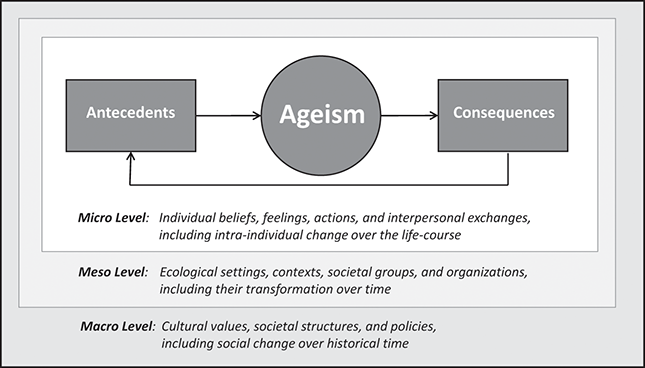
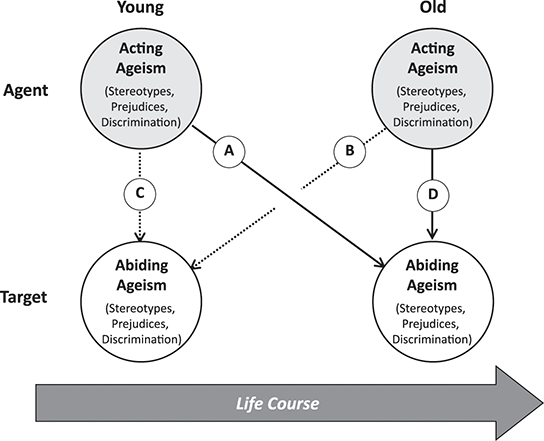

 Open access