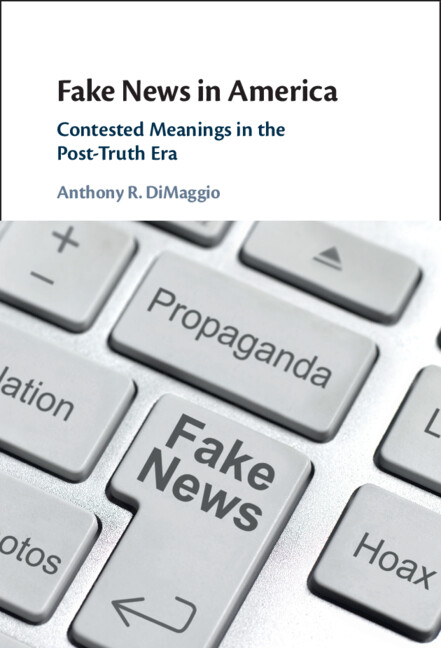

The term 'fake news' became a buzzword during Donald Trump's presidency, yet it is a term that means very different things to different people. This pioneering book provides a comprehensive examination of what Americans mean when they talk about fake news in contemporary politics, mass media, and societal discourse, and explores the various factors that contribute to this, such as the power of language, political parties, ideology, media, and socialization. By analysing a range of case studies across war, political corruption, climate change, conspiracy theories, electoral politics, and the Covid-19 pandemic, it demonstrates how fake news is a fundamentally contested phenomenon, and how its meaning varies depending on the person using the term, and the political context. It provides readers with tools to identify, talk about, and resist fake news, and emphasizes a need for education reform with an eye toward promoting critical thinking and information literacy.
Winner, 2024 Choice Awards
‘… a must read for all undergraduates to better understand how fake news is used in American politics. … Highly recommended.’
H. Gabriel Source: Choice
Loading metrics...
* Views captured on Cambridge Core between #date#. This data will be updated every 24 hours.
Usage data cannot currently be displayed.
This section outlines the accessibility features of this content - including support for screen readers, full keyboard navigation and high-contrast display options. This may not be relevant for you.
Accessibility compliance for the HTML of this book is currently unknown and may be updated in the future.
