


Several studies have identified neurocognitive dysfunction in euthymic individuals with bipolar disorder, suggesting that these deficits represent trait abnormalities (Reference Ferrier and ThompsonFerrier & Thompson, 2002). Poorer performance has been reported in a range of cognitive tests, with deficits especially evident on tests reflecting executive function and memory (e.g. Reference Thompson, Gallagher and HughesThompson et al, 2005). Investigators have reported that such deficits are related to sub-syndromal mood symptoms and indices of illness progression or severity (Reference Dupont, Jernigan and HeindelDupont et al, 1995; Reference Tham, Engelbrektson and MatheTham et al, 1997; Reference Zubieta, Huguelet and O'NeilZubieta et al, 2001). Soft neurological signs, well established in schizophrenia, have been observed in patients with bipolar disorder in America (Reference Nashrallah, Tippin and McCalley-WilliamsNashrallah et al, 1983) and in India (Reference Goswami, Basu and KhastgirGoswami et al, 1998). Recently, Negash et al (Reference Negash, Kebede and Alem2004) reported a link to poor social conditions in Ethiopia. It might be expected that soft neurological signs would be related to neurocognitive performance in bipolar disorder, but this has not yet been examined.
We compared neurocognitive function in a group of euthymic patients with bipolar disorder and a control group. We predicted that those with the disorder would exhibit an impaired neurocognitive performance that would be significantly related to sub-syndromal mood symptoms, soft neurological signs and social disability.
METHOD
The study took place in the Department of Psychiatry and Drug De-addiction Centre, Lady Hardinge Medical College and Associated Hospitals, New Delhi, India, and was submitted successfully (A.S.) for the degree of MD to the University of Delhi. It involved the administration of a battery of neurological and neuropsychological tests to patients with bipolar disorder who were currently in remission and to healthy controls matched for age, gender and years of education. Approval was obtained from the institutional ethics committee for conducting the study and all participants gave written informed consent.
Participants
Forty-five consecutive patients who fulfilled the DSM–IV criteria for bipolar I disorder (American Psychiatric Association, 1994) and were currently euthymic were screened in the out-patient clinic of the Lady Hardinge Medical College Hospitals. Of these, 37 were finally recruited into the study. To be included, participants had to:
-
(a) be aged 17–65 years, of either gender;
-
(b) meet criteria for bipolar I disorder but have no other Axis I or Axis II condition;
-
(c) be euthymic at the time of inclusion in the study and at testing 1 month later.
One month after recruitment the participants were re-examined by the original assessor and an independent psychiatrist to ensure that they conformed to the diagnosis and that they remained euthymic in the intervening period before administration of the neuropsychological test battery. The study's exclusion criteria were similar to those reported by Moore et al (Reference Moore, Shepherd and Eccleston2001), to ensure that the participants did not have any illness with psychiatric consequences (other than treated hypothyroidism), did not misuse drugs or alcohol and did not display learning disabilities. Specifically, the following conditions were grounds for exclusion.
-
(a) Psychiatric: evidence of cognitive decline; other Axis I comorbid condition; bipolar disorder other than type I; learning disabilities.
-
(b) Neurological: cerebrovascular disease; neurodegenerative disorders; head injury with concussion; epilepsy; idiopathic parkinsonism; systemic illness with cerebral consequences; focal neurological signs on examination.
-
(c) Medical: hepatic disorder; cardiovascular disorder; renal failure; hypertension (blood pressure over 150/100 mmHg untreated, or treated hypertension); endocrine disorder (excluding corrected hypothyroidism).
-
(d) Pharmacological: medication (corticosteroids, antihypertensives); alcohol dependence or misuse; illicit drug use or solvent misuse.
The control group consisted of 37 healthy individuals recruited from hospital staff and from friends and relatives of the participating patients. They were examined to ensure they were free from Axis I and Axis II psychiatric disorders and conformed to the same exclusion criteria as the group with bipolar disorder. They were matched individually for age, gender and length of education.
Mood assessment
The mood of participants at recruitment and immediately prior to testing 1 month later was assessed using the Hamilton Rating Scale for Depression (HRSD; Reference HamiltonHamilton, 1960) and Bech's modification of Beigel's Manic State Rating Scale (MSRS; Reference Bech, Boewig and DeinBech et al, 1975). Using a structured pro forma, life charts were constructed as suggested by Post et al (Reference Post, Roy-Byrne and Uhde1998). An assessment of residual disability was made using the Schedule for Assessment of Psychiatric Disability (SAPD; Reference Thara, Rajkumar and ValechaThara et al, 1988), a modification of the Disability Assessment Schedule II. Behaviour, social role, occupational and overall disability were rated on four separate scales, which are designed to be independent of culture.
Neurological assessment
All participants underwent a detailed neurological assessment. The presence and severity of soft neurological signs were assessed using a modification of the Kolakowska battery (Reference Kolakowska, Williams and JamborKolakowska et al, 1985). The original 12-point scale was increased by three items to include the grasp reflex, the suck reflex and the glabellar tap. Each item was rated 0–4 (absent, mild, moderate and severe); severe dysfunction was identified by a score of 15 or more. Movement disorders (dyskinesia, parkinsonism and akathisia) were assessed using the Abnormal Involuntary Movement Scale (AIMS; Reference GuyGuy, 1976) and the Simpson–Angus Scale (Reference Simpson and AngusSimpson & Angus, 1970). The akathisia item on the latter scale was reported separately, as well as the total score.
Neuropsychological test battery
A battery of neuropsychological tests (see Appendix) was designed to encompass the four areas believed to be affected by bipolar disorder, namely attention, working memory, learning and executive function, by assessing verbal and visuospatial abilities. Tests included in the battery were well established and for purposes of comparison included many reported earlier. Details of the tests may be found in standard texts (Reference LezakLezak, 1995; Reference Spreen and StraussSpreen & Strauss, 1991). The tests were administered in a fixed order using, where available, standard guidelines. The tests began at noon and lasted for 2 h; two breaks of 10–15 min were allowed but the intake of stimulant drinks was prohibited.
Data analysis
Prior to analysis, data were checked for normality using the Anderson–Darling method (Reference Stephens, D'Agostino and StephensStephens, 1980). Group and demographic data were subjected to analysis of variance (ANOVA). Data failing tests of normality (the Porteus Maze Test, the Trail Making Test Part B and the Five Point Test) were log transformed or, failing this, analysed by non-parametric methods. Data that failed to normalise after transformation were subjected to analysis by Mann–Whitney tests. To reduce the risks of false positives from repeated hypothesis testing, a significance level of P≤0.01 was adopted, with 0.05≥P>0.01 regarded as a trend. Associations between socio-demographic data, illness variables and neurocognitive performance were explored using the Pearson product-moment correlation coefficient, r. Because of recent discussions in this journal about the best method to analyse data (see Reference Clark, Iversen and GoodwinClark et al, 2002), both methods of assessing the influence of subsyndromal mood scores, namely analysis of covariance (ANCOVA) or partial correlations, were used and results compared.
RESULTS
Sample characteristics
Forty-five patients were recruited into the study and 37 completed it. Four patients were excluded because they developed an affective episode during the 1-month run- in period of monitored euthymia. Two patients were withdrawn when it was discovered that they had histories of alcohol dependency and seizures, and a further two withdrew for personal reasons. All 37 persons who were recruited into the control group completed the study.
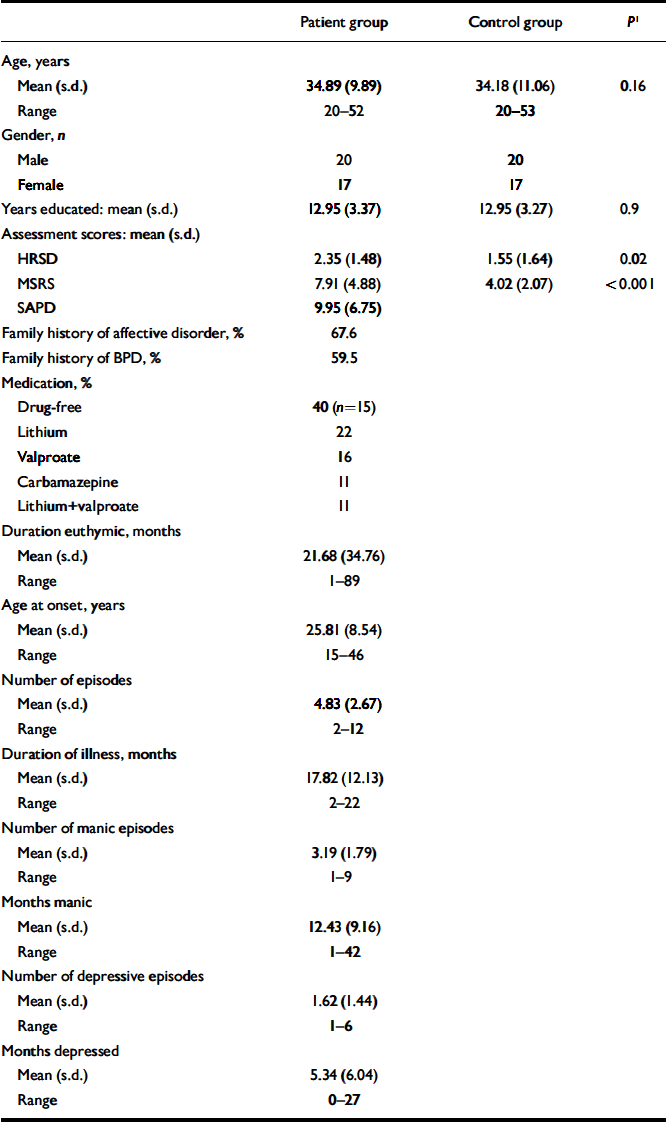
The principal illness and demographic characteristics of the participants are shown in Table 1. Patients and controls were well matched for age, gender and years of formal education. The ages of participants (patients and controls) were uniformly distributed across the third (35%), fourth (26%) and fifth (36%) decades of life, with only 11% exceeding 50 years of age. The sample comprised mainly well-educated individuals: most (53%) had received more than 14 years of education, 21% had received 10–13 years and only 16% had received less than 10 years. Accurate assessment of premorbid IQ using the National Adult Reading Test (Reference NelsonNelson, 1982) was not possible because Hindi is the first language of many Delhi residents. As an alternative, participants were matched by time spent in formal education.
Sample characteristics
| Patient group | Control group | P 1 | |
|---|---|---|---|
| Age, years | |||
| Mean (s.d.) | 34.89 (9.89) | 34.18 (11.06) | 0.16 |
| Range | 20-52 | 20-53 | |
| Gender, n | |||
| Male | 20 | 20 | |
| Female | 17 | 17 | |
| Years educated: mean (s.d.) | 12.95 (3.37) | 12.95 (3.27) | 0.9 |
| Assessment scores: mean (s.d.) | |||
| HRSD | 2.35 (1.48) | 1.55 (1.64) | 0.02 |
| MSRS | 7.91 (4.88) | 4.02 (2.07) | <0.001 |
| SAPD | 9.95 (6.75) | ||
| Family history of affective disorder, % | 67.6 | ||
| Family history of BPD, % | 59.5 | ||
| Medication, % | |||
| Drug-free | 40 (n=15) | ||
| Lithium | 22 | ||
| Valproate | 16 | ||
| Carbamazepine | 11 | ||
| Lithium+valproate | 11 | ||
| Duration euthymic, months | |||
| Mean (s.d.) | 21.68 (34.76) | ||
| Range | 1-89 | ||
| Age at onset, years | |||
| Mean (s.d.) | 25.81 (8.54) | ||
| Range | 15-46 | ||
| Number of episodes | |||
| Mean (s.d.) | 4.83 (2.67) | ||
| Range | 2-12 | ||
| Duration of illness, months | |||
| Mean (s.d.) | 17.82 (12.13) | ||
| Range | 2-22 | ||
| Number of manic episodes | |||
| Mean (s.d.) | 3.19 (1.79) | ||
| Range | 1-9 | ||
| Months manic | |||
| Mean (s.d.) | 12.43 (9.16) | ||
| Range | 1-42 | ||
| Number of depressive episodes | |||
| Mean (s.d.) | 1.62 (1.44) | ||
| Range | 1-6 | ||
| Months depressed | |||
| Mean (s.d.) | 5.34 (6.04) | ||
| Range | 0-27 |
All patients were euthymic for a minimum of 1 month at the time of testing. Their mean HRSD score was 2.35 (s.d.=1.48) and no patient's individual score exceeded 7. The mean MSRS score was 7.91 (s.d.=4.88) with no patient's score exceeding 19. At the time of testing, patients had been clinically euthymic for a considerable period (mean 22 months, s.d.=35) and 66% had been euthymic for more than 6 months. Most patients reported histories of predominantly manic episodes each with a mean duration of approximately 3 months. This reflects the cultural trend in India to seek help less readily for depressive mood swings. The proportion of patients with a family history of affective disorders was high (68%) compared with the UK. This probably reflects larger family sizes in New Delhi compared with the UK, rather than any geographical difference in morbid risks to relatives.
Of the 37 participants with bipolar disorder, 15 were drug-free during the 4 weeks of euthymia prior to testing. The mean HRSD and MSRS scores of drug-free patients (2.79 and 8.86 respectively) were not significantly different from those of treated patients (2.19 and 8.19 respectively) and all scores were within study clinical norms. The treated patients (n= 22) were receiving mood stabilisers (lithium 22%, valproate 16%, carbamazepine 11%); only 11% required the combination of lithium and valproate. In addition, some patients received benzodiazepines (n= 1), antipsychotics (n=6) or antidepressants (n= 2). Participants in the control group had not taken any psychoactive drugs during the month prior to testing.
Despite the participants being euthymic, their SAPD scores (mean 9.95) indicated that three-quarters of the patient group showed a degree of social impairment (threshold score ≥6). In 56% the impairment was mild, but 19% showed substantial impairment (Reference Thara, Rajkumar and ValechaThara et al, 1988).
Neuropsychological testing
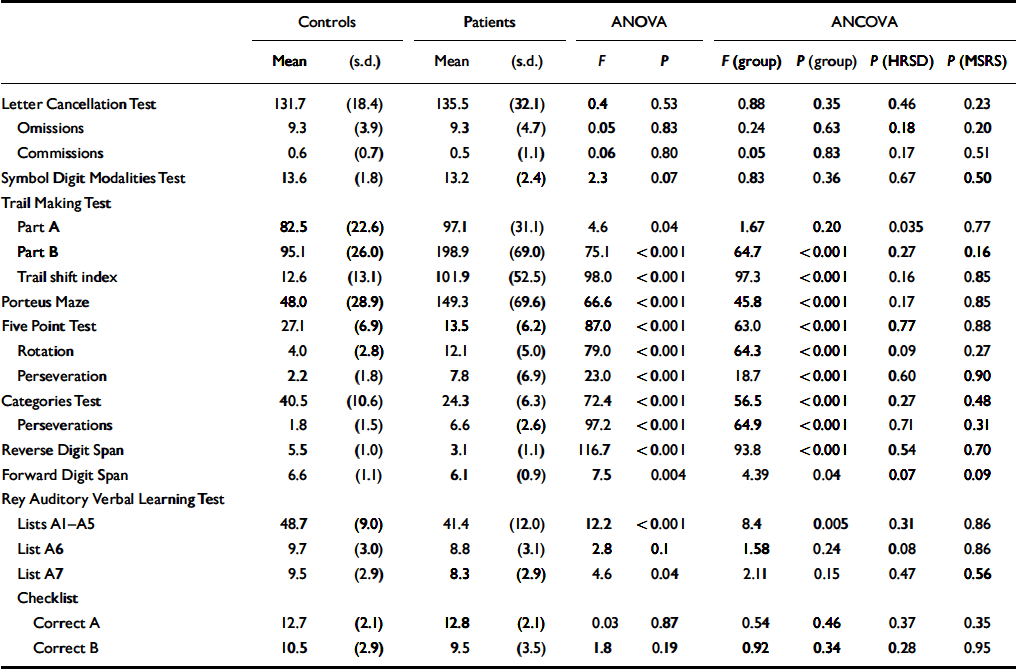
The results of neuropsychological testing are given in Table 2. Analysis of variance revealed differences between patients and controls in tests of specific neurocognitive functions. The group with bipolar disorder scored less well on tests reflecting executive function. Performances in the Categories Test, the Porteus Maze and the Five Point Test were significantly reduced (P≤0.001 in all). While performing these tests, patients perseverated more frequently. Reduced executive function was mirrored by poor performances in the Trail Making Test Part B–but not Part A–and the Shift Index.
Neuropsychological test results: comparison of patients and controls
| Controls | Patients | ANOVA | ANCOVA | |||||||
|---|---|---|---|---|---|---|---|---|---|---|
| Mean | (s.d.) | Mean | (s.d.) | F | P | F (group) | P (group) | P (HRSD) | P (MSRS) | |
| Letter Cancellation Test | 131.7 | (18.4) | 135.5 | (32.1) | 0.4 | 0.53 | 0.88 | 0.35 | 0.46 | 0.23 |
| Omissions | 9.3 | (3.9) | 9.3 | (4.7) | 0.05 | 0.83 | 0.24 | 0.63 | 0.18 | 0.20 |
| Commissions | 0.6 | (0.7) | 0.5 | (1.1) | 0.06 | 0.80 | 0.05 | 0.83 | 0.17 | 0.51 |
| Symbol Digit Modalities Test | 13.6 | (1.8) | 13.2 | (2.4) | 2.3 | 0.07 | 0.83 | 0.36 | 0.67 | 0.50 |
| Trail Making Test | ||||||||||
| Part A | 82.5 | (22.6) | 97.1 | (31.1) | 4.6 | 0.04 | 1.67 | 0.20 | 0.035 | 0.77 |
| Part B | 95.1 | (26.0) | 198.9 | (69.0) | 75.1 | <0.001 | 64.7 | <0.001 | 0.27 | 0.16 |
| Trail shift index | 12.6 | (13.1) | 101.9 | (52.5) | 98.0 | <0.001 | 97.3 | <0.001 | 0.16 | 0.85 |
| Porteus Maze | 48.0 | (28.9) | 149.3 | (69.6) | 66.6 | <0.001 | 45.8 | <0.001 | 0.17 | 0.85 |
| Five Point Test | 27.1 | (6.9) | 13.5 | (6.2) | 87.0 | <0.001 | 63.0 | <0.001 | 0.77 | 0.88 |
| Rotation | 4.0 | (2.8) | 12.1 | (5.0) | 79.0 | <0.001 | 64.3 | <0.001 | 0.09 | 0.27 |
| Perseveration | 2.2 | (1.8) | 7.8 | (6.9) | 23.0 | <0.001 | 18.7 | <0.001 | 0.60 | 0.90 |
| Categories Test | 40.5 | (10.6) | 24.3 | (6.3) | 72.4 | <0.001 | 56.5 | <0.001 | 0.27 | 0.48 |
| Perseverations | 1.8 | (1.5) | 6.6 | (2.6) | 97.2 | <0.001 | 64.9 | <0.001 | 0.71 | 0.31 |
| Reverse Digit Span | 5.5 | (1.0) | 3.1 | (1.1) | 116.7 | <0.001 | 93.8 | <0.001 | 0.54 | 0.70 |
| Forward Digit Span | 6.6 | (1.1) | 6.1 | (0.9) | 7.5 | 0.004 | 4.39 | 0.04 | 0.07 | 0.09 |
| Rey Auditory Verbal Learning Test | ||||||||||
| Lists A1—A5 | 48.7 | (9.0) | 41.4 | (12.0) | 12.2 | <0.001 | 8.4 | 0.005 | 0.31 | 0.86 |
| List A6 | 9.7 | (3.0) | 8.8 | (3.1) | 2.8 | 0.1 | 1.58 | 0.24 | 0.08 | 0.86 |
| List A7 | 9.5 | (2.9) | 8.3 | (2.9) | 4.6 | 0.04 | 2.11 | 0.15 | 0.47 | 0.56 |
| Checklist | ||||||||||
| Correct A | 12.7 | (2.1) | 12.8 | (2.1) | 0.03 | 0.87 | 0.54 | 0.46 | 0.37 | 0.35 |
| Correct B | 10.5 | (2.9) | 9.5 | (3.5) | 1.8 | 0.19 | 0.92 | 0.34 | 0.28 | 0.95 |
The Forward Digit Span Test measures short-term memory, whereas the Reverse Digit Span requires additional manipulation of data in the working memory. Significantly lower scores in the reverse test indicate reduced executive function. Patients performed less well (P=0.004) on the Forward Digit Span Test but this reduced to a trend (P=0.04) when residual mood symptoms were controlled. This may indicate a short-term verbal memory deficit. Significantly lower scores on lists A1–A5 of the Rey Auditory Verbal Learning Test (AVLT) indicated reduced learning, although this was the only component of the tests in which significant differences were apparent. Coupled to the poorer performance on the Forward Digit Span, this may indicate a reduction in verbal memory. However, the scores on the latter test were influenced strongly by residual mood symptoms, so evidence of differences in verbal memory must be regarded as preliminary. Within the limitations of sample size, participants with bipolar disorder did not manifest an attention deficit. Performances on the Letter Cancellation Test and the Symbol Digit Modalities Test were similar between the bipolar disorder and control groups. After residual mood symptoms were controlled for, the trend for the participants with bipolar disorder to perform less well on Part A of the Trail Making Test (Trail A) was lost (P=0.04).
Controlling residual mood symptoms by ANCOVA or partial correlations
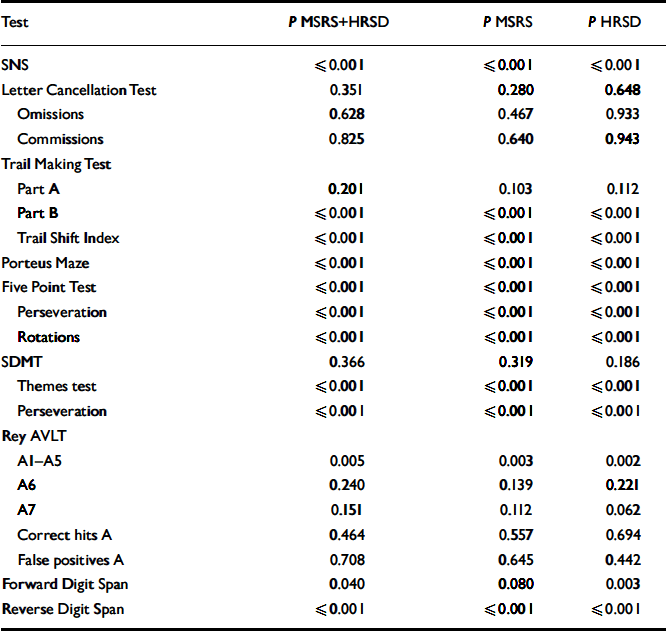
The influence of residual mood symptoms on performance can be seen by comparing group differences by ANCOVA with residual mood symptoms as covariates (see Table 2). The correct method of controlling for residual symptoms has been discussed in this journal by Clark et al (Reference Clark, Iversen and Goodwin2002). It has been suggested that ANCOVA is invalid because those tested could not be randomly assigned to an experimental group, in this case patient or normal control groups (Reference Clark, Iversen and GoodwinClark et al, 2002). Partial correlations were proposed as an alternative. Our data have been analysed using both methods to compare results: these are seen in Table 2 (ANCOVA) and Table 3 (partial correlations). Comparison of ANCOVA (with MSRS and HRSD covariates) and partial correlations (controlling for MSRS and HRSD) reveals that these methods give similar results for our data. Furthermore, the influence of residual symptoms is small and occurs most markedly in Trail A, Rey AVLT list A7 and Forward Digit Span scores. Thus, the major finding of the study–impaired executive function tests in euthymic patients with bipolar disorder–is supported, as is the absence of an attention deficit and the presence of a possible reduction in verbal memory, irrespective of the method used to control residual mood symptoms.
Values of P corresponding to the partial correlation coefficient of test performance on illness status when manic (MSRS), depressive (HRSD) and both (MSRS+HRSD) residual symptoms are controlled
| Test | P MSRS+HRSD | P MSRS | P HRSD |
|---|---|---|---|
| SNS | ≤ 0.001 | ≤ 0.001 | ≤ 0.001 |
| Letter Cancellation Test | 0.351 | 0.280 | 0.648 |
| Omissions | 0.628 | 0.467 | 0.933 |
| Commissions | 0.825 | 0.640 | 0.943 |
| Trail Making Test | |||
| Part A | 0.201 | 0.103 | 0.112 |
| Part B | ≤ 0.001 | ≤ 0.001 | ≤ 0.001 |
| Trail Shift Index | ≤ 0.001 | ≤ 0.001 | ≤ 0.001 |
| Porteus Maze | ≤ 0.001 | ≤ 0.001 | ≤ 0.001 |
| Five Point Test | ≤ 0.001 | ≤ 0.001 | ≤ 0.001 |
| Perseveration | ≤ 0.001 | ≤ 0.001 | ≤ 0.001 |
| Rotations | ≤ 0.001 | ≤ 0.001 | ≤ 0.001 |
| SDMT | 0.366 | 0.319 | 0.186 |
| Themes test | ≤ 0.001 | ≤ 0.001 | ≤ 0.001 |
| Perseveration | ≤ 0.001 | ≤ 0.001 | ≤ 0.001 |
| Rey AVLT | |||
| A1—A5 | 0.005 | 0.003 | 0.002 |
| A6 | 0.240 | 0.139 | 0.221 |
| A7 | 0.151 | 0.112 | 0.062 |
| Correct hits A | 0.464 | 0.557 | 0.694 |
| False positives A | 0.708 | 0.645 | 0.442 |
| Forward Digit Span | 0.040 | 0.080 | 0.003 |
| Reverse Digit Span | ≤ 0.001 | ≤ 0.001 | ≤ 0.001 |
Soft neurological signs and movement disorders
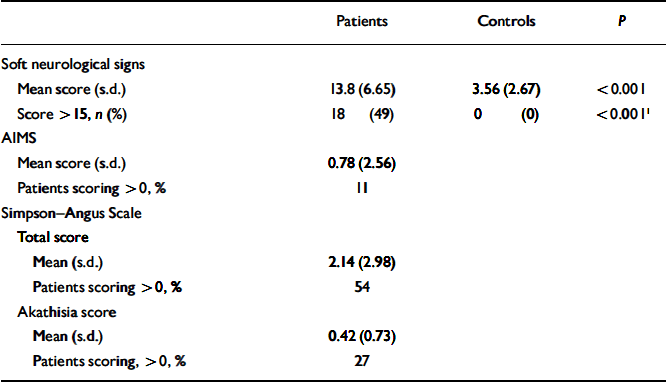
The results of assessment of soft neurological signs and the movement disorder scales are shown in Table 4. Soft signs were present in 36 patients and 33 controls. The signs found in controls were minor and isolated, whereas in patients they were substantial and commonplace. This is reflected in the significantly different (P<0.001) mean scores on the modified Kolakowska battery of 13.8 (s.d.=6.65) for patients and 3.56 (s.d.=2.67) for controls. Half of the patients were markedly affected, with scores greater than 15. Thus, soft neurological signs are highly prevalent in euthymic patients with bipolar disorder.
Neurological dysfunction
| Patients | Controls | P | |
|---|---|---|---|
| Soft neurological signs | |||
| Mean score (s.d.) | 13.8 (6.65) | 3.56 (2.67) | < 0.001 |
| Score > 15, n (%) | 18 (49) | 0 (0) | < 0.0011 |
| AIMS | |||
| Mean score (s.d.) | 0.78 (2.56) | ||
| Patients scoring > 0, % | 11 | ||
| Simpson—Angus Scale | |||
| Total score | |||
| Mean (s.d.) | 2.14 (2.98) | ||
| Patients scoring > 0, % | 54 | ||
| Akathisia score | |||
| Mean (s.d.) | 0.42 (0.73) | ||
| Patients scoring, > 0, % | 27 |
Movement disorders, especially parkinsonism and akathisia, were also prevalent in bipolar disorder. Using the Simpson–Angus Scale, parkinsonism was found in 54% and akathisia in 27% of the patient group. Dyskinetic movements, including tardive dyskinesia, were recorded in 11% of patients. The presence of dyskinetic movements may reflect the use of antipsychotic drugs to treat mania prior to the widespread use of anticonvulsants; however, the illness duration of the four participants with dyskinesia was 4 years, 4 years, 18 years and 19 years respectively.
Correlates of neuropsychological performance
A correlation, albeit weak, links neuropsychology, the presence of soft neurological signs, social disability and illness history. Trail B and Porteus Maze scores correlate well with soft neurological signs (r=0.4 for each). The Porteus Maze scores correlate with the number of manic episodes (r=0.3) and the number of depressive episodes (r=0.3) rather than with total time unwell. This suggests that executive function declines with increasing number of illness episodes, rather than with the duration of the episodes. Many studies of affective disorder have reported links between cognitive deficits and illness-related variables (see, for example, Reference KessingKessing, 1998; Reference Cavanagh, van Beck and MuirCavanagh et al, 2002), and it seems probable that deficits increase with the burden of illness accumulated during life.
Correlates of soft neurological signs and social disability
Social dysfunction was strongly correlated (r=0.57) with the severity of soft neurological signs. Soft neurological signs were correlated with executive function tests. A loose picture emerges of a link between soft neurological signs, neuropsychological deficits and impaired psychosocial functioning. The link between these domains must be regarded as preliminary and needs to be explored by carefully designed research.
Family and genetic influences
Genetic influences, as reflected in a family history of affective disorder, were absent from the study findings. Although 59.5% of the group with bipolar disorder had a family history of mood disorder, there was no influence of family psychiatric history on neurocognitive performance or the presence of soft neurological signs.
DISCUSSION
Neuropsychological deficits
The principal neuropsychological finding of the study is a significant impairment in euthymic participants with bipolar disorder of performance on cognitive tests regarded as measures of executive function. This result is seen consistently across a range of neuropsychological tests and, in the main, agrees well with our other studies (Reference El Badri, Ashton and MooreEl Badri et al, 2001; Reference Thompson, Gallagher and HughesThompson et al, 2005). Thompson et al used comparable definitions of euthymia and similar inclusion and exclusion criteria in a UK study based in Newcastle, and found comparable deficits in executive tasks and declarative memory. The remarkable similarity of neurocognitive deficits found in Delhi and Newcastle indicate that the deficits do not result from cultural factors.
In our study participants were euthymic for at least 4 weeks when tested and residual mood symptoms were controlled, suggesting a trait deficit in executive function. Patients performed less well on the Porteus Maze, Five Point Test, Categories Test, Reverse Digit Span, Trail B and the Shift Index (Trail B minus Trail A). These tests require patients to shift sets or to generate new cognitive sets and strategies. When faced with some of these tasks, those with bipolar disorder perseverated more than controls. Segalowitz et al (Reference Segalowitz, Unsal and Dywan1992) suggested that several of these tests are linked to abnormal frontal lobe electrophysiology. Van Gorp et al (Reference Van Gorp, Altschuler and Theberge1998) reported limited executive dysfunction in people with bipolar disorder but only in those with comorbid alcohol dependence. Alcohol misuse may worsen executive function, but it was specifically excluded from our study.
Two studies have failed to find impaired executive function in people with bipolar disorder (Reference Cavanagh, van Beck and MuirCavanagh et al, 2002; Reference Clark, Iversen and GoodwinClark et al, 2002). These studies encompassed a broad range of executive tasks which differed from our own tests. The discrepancy is of concern and may have arisen for many reasons. The power of both studies was modest. The probability of type II errors was high, making the evaluation of negative findings difficult. Premorbid IQ, to which executive function makes an explicit and implicit contribution, could have influenced the results. Thus, a high IQ could lead to ceiling effects in simple executive tests, whereas a lower IQ might mask illness effects in patients. In many recent studies including those of Cavanagh et al (Reference Cavanagh, van Beck and Muir2002) and Clark et al (Reference Clark, Iversen and Goodwin2002), mean IQs have been relatively high (about 115), but ceiling effects were not reported. Links between the IQs (of patients and controls) and executive dysfunction warrant investigation. A further and more significant source of the discrepancy may lie in the concept or definition of executive function (see Reference LezakLezak, 1995). A discussion of these issues is beyond the scope of this paper. Nevertheless, executive function encompasses a broad range of components and not all are influenced equally by the presence of bipolar disorder. For example, Martinez-Aran et al (Reference Martinez-Aran, Vieta and Reinares2004) have reported deficiencies in performance of the Reverse Digit Span and Wisconsin Card Sort tests in euthymic participants with bipolar disorder, but not in performance of the Controlled Word Association Test unless the participant was depressed. Executive abilities in bipolar disorder and control groups may have different profiles. Meta-analyses of individual tests might elucidate a profile of executive deficits in bipolar disorder and, importantly, limit type II errors when identifying cognitive functions unaffected by the disorder.
In our study verbal memory was impaired in the group with bipolar disorder. They performed less well on the Forward Digit Span and on Rey AVLT lists A1–A5 (immediate recall). Verbal memory has been reported to be abnormal in many studies. Most commonly, short-term verbal memory, as monitored by the California Verbal Learning Test or the Rey AVLT, is reduced in euthymic patients with bipolar disorder. Immediate memory as assessed by the Forward Digit Span Test is often reported to be reduced. Both immediate and short-term verbal memory are influenced by residual depressive symptoms, and the reduction is supported by studies that control statistically for residual affective symptoms. The evidence today favours a trait deficit in short-term verbal memory or learning, but higher-powered studies are needed to confirm these findings and also the link between poor verbal memory and time spent with depression (Reference Van Gorp, Altschuler and ThebergeVan Gorp et al, 1998).
It is uncertain whether attention and psychomotor speeds are grossly reduced in euthymic individuals with bipolar disorder. In this study, tests of these domains–the Letter Cancellation Test and the Symbol Digit Modalities Test–did not differ significantly between the bipolar disorder and control groups, nor did Trail A after controlling for residual mood symptoms. Some studies (Reference Van Gorp, Altschuler and ThebergeVan Gorp et al, 1998) have not reported deficits in these domains, whereas others have (Reference Tham, Engelbrektson and MatheTham et al, 1997; Reference Krabbendam, Honig and WiersmaKrabbendam et al, 2000; Rubenstein et al, 2000; Reference Zubieta, Huguelet and O'NeilZubieta et al, 2001). With increasing complexity of the attention task, differences between patients and controls may become manifest, for example during sustained attention or extradimensional–intradimensional shifting (Reference Clark, Iversen and GoodwinClark et al, 2002). The lack of evidence of simple attention deficits or psychomotor slowing facilitates the interpretation of timed tests in other cognitive domains which are underpinned by attention. However, in common with memory and executive function, larger, higherpowered studies or meta-analyses are needed to resolve uncertainties surrounding attention.
Neurological dysfunction
An important result of our study is the widespread presence and considerable severity of soft neurological signs in euthymic patients with bipolar disorder. This occurred in the absence of reported birth injuries or other neurological dysfunction, and was independent of drug usage (see below). Soft signs are regarded as indicators of neurological impairment and are frequently seen in schizophrenia and neurodegenerative disorders. We believe that this is the first report of soft signs and neurocognitive performance in euthymic participants with bipolar disorder (with up to half being markedly affected). Recently, these signs have been reported in a group of euthymic and symptomatic patients with bipolar disorder in rural Ethiopia (Reference Negash, Kebede and AlemNegash et al, 2004), reinforcing earlier observations in symptomatic people with this disorder (Reference Nashrallah, Tippin and McCalley-WilliamsNashrallah et al, 1983). Detailed comparison of the studies is hampered by the use of different test batteries and different mood states of participants. Nevertheless, the studies confirm the presence of soft signs in bipolar disorder. However, the localisation of soft signs is problematic (see discussion by Reference LishmanLishman, 1998). Signs that occurred most frequently in people with bipolar disorder (suck reflex, grasp reflex and to a lesser extent the glabellar tap) are regarded as pointers to frontal lobe dysfunction.
Other evidence of neurological dysfunction in bipolar disorder is the presence of movement disorder, which was recorded in both treated and drug-free participants. About a third of the sample (n=11) were found to have parkinsonism, with scores ranging from 3 to 12 on the Simpson–Angus Scale; of these five were free of neuroleptics for more than 1 month when examined. Similarly, four patients showed significant akathisia. Dyskinetic movements were recorded on the AIMS in 11% (n=4) of participants; these movements were most common in the face and upper limbs. An earlier Delhi-based study (Reference Goswami, Basu and KhastgirGoswami et al, 1998) reported a prevalence of 15%. These rates are lower than Western estimates (Reference Mukherjee, Shukla and RosenMukherjee et al, 1984) and may reflect an ethnic insensitivity to dyskinesias or the generally lower dosages of neuroleptics used in India (Reference Goswami, Basu and KhastgirGoswami et al, 1998). Nevertheless, the presence of spontaneous movement disorder in bipolar disorder indicates that the basal ganglia are involved in the disease process in addition to any secondary impairment resulting from neuroleptic use.
Indicators of structural and functional frontal lobe abnormalities in bipolar disorder come from several sources. The neurocognitive deficits, especially those in executive function, point to dysfunction in the dorsolateral prefrontal cortex (Reference Thompson, Gallagher and HughesThompson et al, 2005). The soft neurological signs reported here also point to frontal dysfunction. Recently, magnetic resonance imaging (MRI) structural studies (Lopez-Larsen et al, 2002) have reported significant greymatter (but not white-matter) reductions in specific prefrontal areas, compatible with neurocognitive findings. Thus, there are good indicators of frontal lobe involvement in bipolar disorder, although the primary pathology remains elusive. Alexander et al (Reference Alexander, DeLong and Strick1986) have described fronto-striato-thalamic circuits linked to several functions including eye movements and cognitive abilities and the extrapyramidal motor system. The prefrontal MRI results were compatible with abnormalities in these circuits (Lopez-Larsen et al, 2002). Our results indicate that in bipolar disorder other components of these circuits are impaired or dysfunctional, which would provide supporting evidence for a role of these circuits in the pathogenesis of bipolar disorder.
Social disability in bipolar disorder
The link between bipolar disorder and the important outcome measure of social disability is underresearched. On the SAPD, a test specifically developed for use in India, 54% of patients showed mild to moderate disability (score 6–15), 8% marked disability and 11% severe impairment in psychosocial functioning, whereas only 27% showed minimal or no impairment. Limited studies in Western populations (e.g. Reference Tsuang, Woolson and FlemingTsuang et al, 1979) have reported higher levels of severe dysfunction, often in the range 20–30%. Comparisons of social variables between cultures are problematic, but in India even patients who are euthymic carry a significant disability which, like symptoms of this disorder, demands active management.
The correlates of social dysfunction have been little researched. In Ethiopia an unexpected association between soft neurological signs and poor accommodation was noted (Reference Negash, Kebede and AlemNegash et al, 2004). Many of the higher functions tested in the battery (e.g. facial recognition) would be expected, if impaired, to lead to social disability. Our study finds a strong correlation (r=0.57, r 2=0.33) between soft signs and social dysfunction scores. The more frequently observed signs were markers of frontal lobe dysfunction, and the presence of soft neurological signs correlates, albeit quite weakly, with deficiencies in certain frontal executive tasks. tasks. Similar soft signs are commonplace in the neurodegenerative disorders, Parkinson's disease and Alzheimer's disease, in which social disability is frequently marked and progressive. If the severity of soft neurological signs in older patients with bipolar disorder was found to increase more rapidly with ageing than in controls, this would support a neurodegenerative view of the disorder. The links between soft neurological signs, social dysfunction, cognitive deficits and ageing merit detailed investigation.
APPENDIX
Neuropsychological test battery
The following neuropsychological tests were used (for further details see Reference LezakLezak, 1995; Reference Spreen and StraussSpreen & Strauss, 1991);
-
(a) Letter Cancellation Test (attention, visuomotor speed);
-
(b) Symbol Digit Modalities Test (attention, visuo visuo-motor speed);
-
(c) Trail MakingTest Parts A (attention, visuomotor speed); and B (attention, visuomotor speed and executive function);
-
(d) Porteus Maze (executive function);
-
(e) Five Point Test (executive Point Test (executive function, non-verbal fluency);
-
(f) Categories Test (executive function, verbal fluency);
-
(g) Reverse Digit Span (executive function, shortterm verbal memory);
-
(h) Forward Digit Span (short-term verbalmemory);
-
(i) Rey Auditory Verbal Learning Test (verbal memory)
Clinical Implications and Limitations
CLINICAL IMPLICATIONS
-
▪ Even when euthymic, people with bipolar disorder have neurocognitive (trait) deficits which occur across cultures. Executive function and verbal memory are impaired.
-
▪ Neurological abnormalities, the appearance of primitive reflexes and spontaneous dyskinesia coupled to neurocognitive abnormalities suggest that fronto-striatal and thalamic pathways may be dysfunctional in bipolar disorder.
-
▪ Bipolar disorder, even in euthymic patients, is associated with considerable social disability; this needs to be considered when an individual's care plan is written.
LIMITATIONS
-
▪ The study was conducted on the Indian subcontinent, and cultural influence may modify the presentation and progression of bipolar disorder.
-
▪ The power of the study was relatively limited and, to limit type II errors, negative results should not be over-interpreted.
-
▪ The lack of an examination of the control group for movement disorder is a significant omission.
Acknowledgements
The study was supported by Lady Hardinge Hospital and Medical School, University of Delhi, India. The Department of Psychiatry, University of Newcastle upon Tyne receives generous support from the Stanley Medical Research Institute. The authors sincerely thank Mrs M. Cheek for her skill and patience in typing the manuscript.




eLetters
No eLetters have been published for this article.