


The World Health Organization (1996) projects that, by 2010, depression will become a leading cause of disability world-wide. The costs to society promise to be staggering. Greenberg et al (Reference Greenberg, Stiglin and Finkelstein1993) estimate that society annually loses $43 billion (1990 US) because of depression. These losses take two major forms: labour market losses and the treatment costs related to depression. There is the expectation that these costs are inversely related; unfortunately, there is little published research to support this proposition. Few studies have focused on the association between antidepressant use and depression-related labour market losses (Reference Fairman, Drevets and KreismanFairman et al, 1998). One of the main reasons for this gap is the scarcity of accessible databases with which to study this relationship (Reference Birnbaum, Greenberg and BartonBirnbaum et al, 1999). This study takes advantage of a unique data-set linking company occupational health records with short-term disability and drug benefit claims. With this data-set, we take a first step towards describing the relationship between patterns of antidepressant use and return to work from disability. Focusing on a population of workers receiving depression-related short-term disability benefits, we seek to answer two questions. First, is use of antidepressants in accordance with published clinical guidelines associated with better disability outcomes? Second, what is the relationship between such guideline-concordant antidepressant use and the length of disability?
Much of the literature on labour market disability focuses on the impact of workplace factors on productivity, particularly the relationship between stress and job performance (Reference Van der Heck and PlompVan der Heck & Plomp, 1997) and the role of workplace support systems on disability outcomes (Reference AkabasAkabas, 1995). Only a handful of studies have examined the relationship between antidepressant use and outcomes in the workplace. Using data from a clinical trial, Berndt et al (Reference Berndt, Finkelstein and Greenberg1998) found evidence of a positive relationship between workers' self-perceived low productivity and severity of depression. They also observed that the use of antidepressants (sertraline and imipramine) had a significant impact on the severity of depression. One might therefore conclude that there is an association between antidepressant treatment and workplace functioning. However, Berndt et al did not directly test the impact of antidepressant treatment on workplace functioning, stopping short of examining the direct relationship between antidepressant use and productivity.
Mintz et al (Reference Mintz, Mintz and Arruda1992) pooled data from ten studies and used the Social Adjustment Scale in an attempt to measure the direct impact of treatment on productivity. They found that their productivity measure was positively associated with treatment, and also identified symptom remission and length of treatment as the most important predictors of work impairment. However, their measure for productivity is difficult to translate into policy recommendations.
Using administrative data to examine the relationship between absenteeism and treatment, Claxton et al (Reference Claxton, Chawla and Kennedy1999) observed differences between various antidepressants in terms of mean lost work days. Comparing two types of antidepressants – tricyclic antidepressants and selective serotonin reuptake inhibitors (SSRIs) – they found a lower average number of days absent for the group using SSRIs. These results offer an important first step towards understanding the impact of antidepressant treatment on absenteeism. However, they did not look at or control for other factors that could also be associated with absenteeism, such as age, gender and pattern of antidepressant use.
METHOD
Data source
This study was conducted using administrative data from three major Canadian financial and insurance sector employers. At the time of the project these companies had a combined workforce of approximately 63 000 employees nationwide, representing about 12% of their sector's workforce (Statistics Canada, 1996). All of the sample companies self-funded and self-administered their short-term disability benefits. This arrangement is representative of many medium-sized to large employers. For example, Watson Wyatt (1997) found that 53% of the Canadian firms they surveyed self-administered their short-term disability benefits, 45% depended on third-party administration (e.g. insurance carriers) and the remainder were covered by government programmes.
Claims were managed by company occupational health departments. Thus, disability outcomes were identified using occupational health records. The primary information sources were company short-term disability claims, prescription drug claims and occupational health department records. Because of its smaller size, claims from one company were taken for short-term disability episodes beginning between January 1996 and December 1998. For the remaining two, data were abstracted for claims beginning in 1997 or 1998.
Study population
Cases included in our analysis met three criteria. First, based on company criteria for short-term disability benefits, claimants had depression-related absences from work for at least 10 consecutive work days prior to their disability leave (starting sample n=1521). The second criterion required claimants to have used their prescription drug benefits at least once during the study period for any type of prescription. Sixty cases were excluded because we could not ascertain whether the absence of antidepressant claims was due to the individual not filing a prescription for an antidepressant, not receiving a prescription for an antidepressant, or not using the company's drug benefit plan. The third prerequisite was that the claimant had no more than one short-term disability episode within the previous 12 months (final sample n=1281). This criterion helped to ensure that the episode included in the data-set was a distinct episode rather than a continuation of an earlier one. About 12% of the claimants had had more than one short-term disability episode in the prior 12 months.
Short-term disability outcomes
Three major categories of disability outcomes were observed:
-
(a) return to work part-time or full-time;
-
(b) quit, retired or employment terminated;
-
(c) transition to long-term disability benefits.
Employees in all three participating companies were eligible for long-term disability benefits after a total of 6 months on short-term disability.
Length of short-term disability
Days on short-term disability benefits were the number of days between the first and last day of the disability episode. The end of the disability episode was marked by the person's return to work either full-time or part-time.
Defining recommended antidepressant treatment
Recommended antidepressant treatment was based on the guidelines published by the Canadian Network for Mood and Anxiety Treatment (CANMAT; 1999). This organisation is a national network of Canadian health care professionals in research, academic and clinical centres set up to improve the treatment of individuals with mood and anxiety disorders. These guidelines are written for physicians practising in general medical settings. From patterns of drug use recorded during the 200 days following the initiation of the short-term disability episode, we developed three variables to characterise different aspects of drug use.
-
(a) ‘Use of recommended first-line antidepressant’ indicates whether one of the CANMAT first-choice antidepressants was the first drug used during the short-term disability episode. These include the antidepressants fluoxetine, fluvoxamine, paroxetine, sertraline, bupropion, moclobemide, nefazodone and venlafaxine.
-
(b) ‘Use of recommended antidepressant dosage’ indicates whether the dosage for the second to last antidepressant claim fell within the recommended range.
-
(c) ‘Antidepressant was received within 30 days of the initiation of short-term disability benefits’; this indicator variable captures whether the antidepressant prescription was filled either within the 30-day period prior to or following the start of the short-term disability episode.
Complexity of depression indicators
To reflect the number of symptoms reported by the claimants, we created a count of the number of depression-related symptoms recorded on the short-term disability application form. Information was abstracted from occupational health records using a checklist covering the major DSM–IV depressive symptom categories (American Psychiatric Association, 1994).
In previous work we had observed that despite concordance with guideline-recommended first-line agents and use within recommended time frames, there is a group of users who experience a complex course of antidepressant use. These complex patterns have been reported by Claxton et al (Reference Claxton, Chawla and Kennedy1999) and Thompson et al (Reference Thompson, Buesching and Gregor1996). There is evidence that this complexity is associated with a greater need for high-intensity health services. This, in turn, may be linked to the severity of the episode. For example, Thompson et al (Reference Thompson, Buesching and Gregor1996) observed that those who switched or augmented their antidepressant use had more in-patient hospital use. These findings were corroborated by Dobrez et al (Reference Dobrez, Melfi and Croghan2000), who reported that these groups of patients use more health care services overall. Dewa et al (Reference Dewa, Hoch and Goering2003) observed patterns suggesting a greater severity of illness and its resistance to treatment: for example, those who switched and those who had augmented use on average reported a greater number of symptoms than those who either had one antidepressant fill or used one antidepressant exclusively. This suggests that the former two groups might have had more severe depression, leading to more problems with treatment. On the basis of previous research (Reference Dewa, Hoch and GoeringDewa et al, 2003), we created four pattern variables to capture the complexity of antidepressant use.
-
(a) ‘One fill only’ indicates that the claimant had only one prescription fill for antidepressants during the short-term disability episode.
-
(b) ‘One exclusively’ indicates that the claimant filled more than one prescription for an antidepressant and did not change antidepressants during the short-term disability episode.
-
(c) ‘Switched’ indicates that more than one prescription was filled and the antidepressant was changed at least once during the short-term disability episode.
-
(d) ‘Augmented’ indicates that more than one prescription was filled and two prescriptions for different antidepressants were filled on the same day during the short-term disability episode.
Analyses
We began by examining bivariate relationships between variables. Rates of the three disability outcomes were calculated per 100 persons. The strength of the associations between these rates and claimant characteristics was tested. The chi-squared test was employed to examine the strength of the association between the outcomes and dichotomous variables. Two-sided t-tests were used to test the associations between continuous variables and antidepressant use patterns.
A two-part multivariable model was used to examine the effect of guideline-recommended use of antidepressants on return to work. In the first part of the analysis, we controlled for complexity of the depression and demographic characteristics using a logistic regression model to test whether use of antidepressants concordant with recommended use is associated with greater likelihood of returning to work. In the second part, we explored the relationship between recommended use and days on short-term disability. For this part of analysis, the study population was subdivided to include only those who returned to work (n=997). Using an ordinary least squares regression model, we estimated the association of guideline-recommended use on length of short-term disability.
Because there may exist non-random company-specific factors associated with either return to work or length of disability, company-specific fixed effects were included in both the first and second part of the model. Under ideal conditions, we would control for these non-random factors by including variables that are correlated with disability outcomes and vary between companies. However, given the limitations inherent in the data, we were unable to adjust explicitly for all company factors and their contribution to the disability outcomes. Instead, company-specific fixed effects were used to account for workplace characteristics without actually measuring them. The company fixed effects allowed us to adjust our estimates for unobserved company-related heterogeneity.
RESULTS
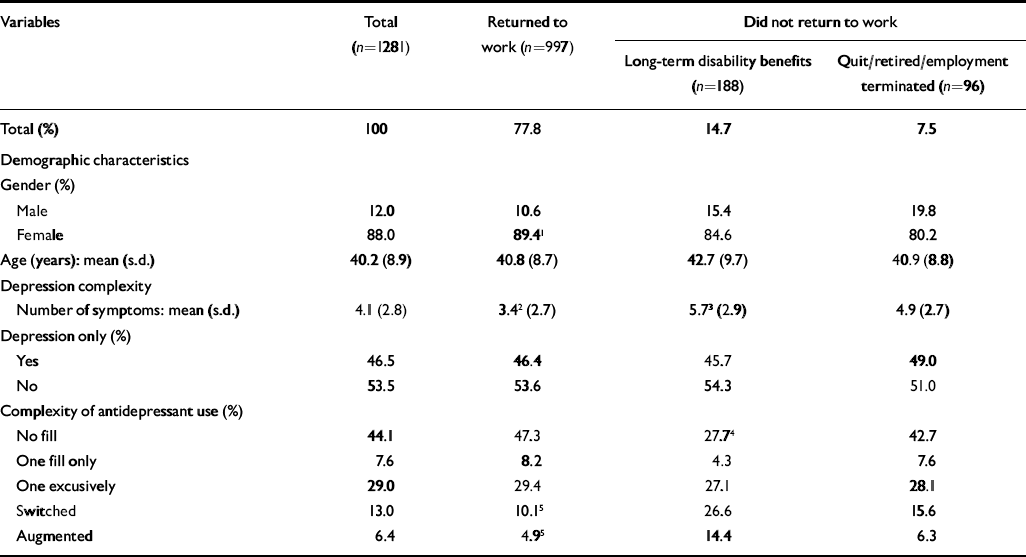
Demographic characteristics, depression severity and antidepressant use patterns for the disability outcomes are shown in Table 1. A more detailed analysis of the demographic characteristics of this population is given by Dewa et al (Reference Dewa, Goering and Lin2002). Overall, more than three-quarters of claimants had returned to work by the end of their short-term disability episode. However, there was a difference between the disability outcomes of men and women: significantly more women than men returned to work rather than leaving employment (difference 10.2%, 95% CI 2.5–17.9; χ2=8.21, d.f.=1, P<0.004).
Characteristics of the study group by disability outcome
| Variables | Total (n=1281) | Returned to work (n=997) | Did not return to work | |
|---|---|---|---|---|
| Long-term disability benefits (n=188) | Quit/retired/employment terminated (n=96) | |||
| Total (%) | 100 | 77.8 | 14.7 | 7.5 |
| Demographic characteristics | ||||
| Gender (%) | ||||
| Male | 12.0 | 10.6 | 15.4 | 19.8 |
| Female | 88.0 | 89.41 | 84.6 | 80.2 |
| Age (years): mean (s.d.) | 40.2 (8.9) | 40.8 (8.7) | 42.7 (9.7) | 40.9 (8.8) |
| Depression complexity | ||||
| Number of symptoms: mean (s.d.) | 4.1 (2.8) | 3.42 (2.7) | 5.73 (2.9) | 4.9 (2.7) |
| Depression only (%) | ||||
| Yes | 46.5 | 46.4 | 45.7 | 49.0 |
| No | 53.5 | 53.6 | 54.3 | 51.0 |
| Complexity of antidepressant use (%) | ||||
| No fill | 44.1 | 47.3 | 27.74 | 42.7 |
| One fill only | 7.6 | 8.2 | 4.3 | 7.6 |
| One excusively | 29.0 | 29.4 | 27.1 | 28.1 |
| Switched | 13.0 | 10.15 | 26.6 | 15.6 |
| Augmented | 6.4 | 4.95 | 14.4 | 6.3 |
Our severity indicators also suggested that there were differences in the severity of symptoms experienced by claimants who did and did not return to work. Those who returned to work reported significantly fewer symptoms than those who either went on to long-term disability benefit (mean difference 2.04, 95% CI 1.6–2.5; t=1183, P<0.0001) or left their employment (mean difference 1.2, 95% CI 0.7–1.8; t=4.27, d.f.=1091, P<0.0001).
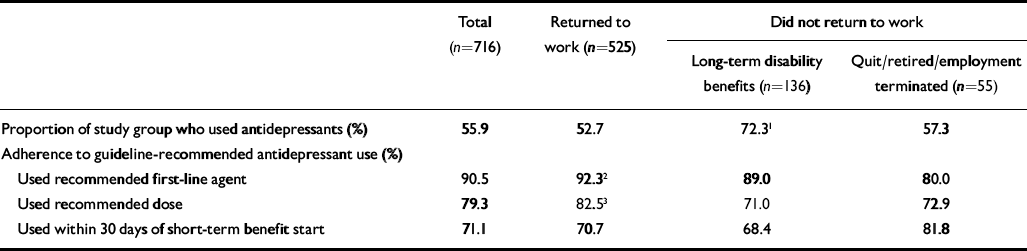
More than half of the claimants studied (56%, 95% CI 53.2–58.6) used antidepressants. However, antidepressant use differed between the groups who did and did not return to work (Table 2). There was a higher proportion of antidepressant use among those who went on to long-term disability benefits as opposed to those who returned to work (difference 19.6%; 95% CI 12.6–26.8; χ2=24.84, d.f.=1, P<0.0001). Furthermore, there was a significant difference in the average number of days on short-term disability benefits between the two groups. Those who did not use antidepressants received short-term disability benefits for an average of 77.3 days (95% CI 72.4–82.1), whereas for those who did the average was 104.7 days (95% CI 99.9–109.5): mean difference 27.4, 95% CI 34.3–20.7; t=7.92, d.f.=1259, P<0.0001).
Antidepressant drug use patterns among those making prescription claims
| Total (n=716) | Returned to work (n=525) | Did not return to work | ||
|---|---|---|---|---|
| Long-term disability benefits (n=136) | Quit/retired/employment terminated (n=55) | |||
| Proportion of study group who used antidepressants (%) | 55.9 | 52.7 | 72.31 | 57.3 |
| Adherence to guideline-recommended antidepressant use (%) | ||||
| Used recommended first-line agent | 90.5 | 92.32 | 89.0 | 80.0 |
| Used recommended dose | 79.3 | 82.53 | 71.0 | 72.9 |
| Used within 30 days of short-term benefit start | 71.1 | 70.7 | 68.4 | 81.8 |
In addition, claimants who used antidepressants and returned to work differed in their patterns of antidepressant use. Of those who used one antidepressant exclusively throughout their short-term disability episode, a greater proportion returned to work (difference 11.7%, 95% CI 5.1–18.4; χ2=12.57, d.f.=1, P<0.0001). In contrast, a significantly large proportion of those who either switched antidepressants (difference 16.3%, 95% CI 8.0–24.5; χ2=17.21, d.f.=1, P<0.0001) or augmented their use (difference 15.3%, 95% CI 4.2–26.5; χ2=8.72, d.f.=1, P<0.003) left their employment.
Among antidepressant users, a majority were concordant with guideline recommendations in terms of type of antidepressant, dose and timing. However, there were differences between outcome groups. Compared with the two groups who did not return to work, a significantly larger proportion of the group who returned to work used first-line antidepressants (difference 5.6%, 95% CI 0.2–11.0; χ2=5.13, d.f.=1, P<0.023) and guideline-recommended dosages (difference 10.9%, 95% CI 2.8–18.9; χ2=7.93, d.f.=1, P<0.005).
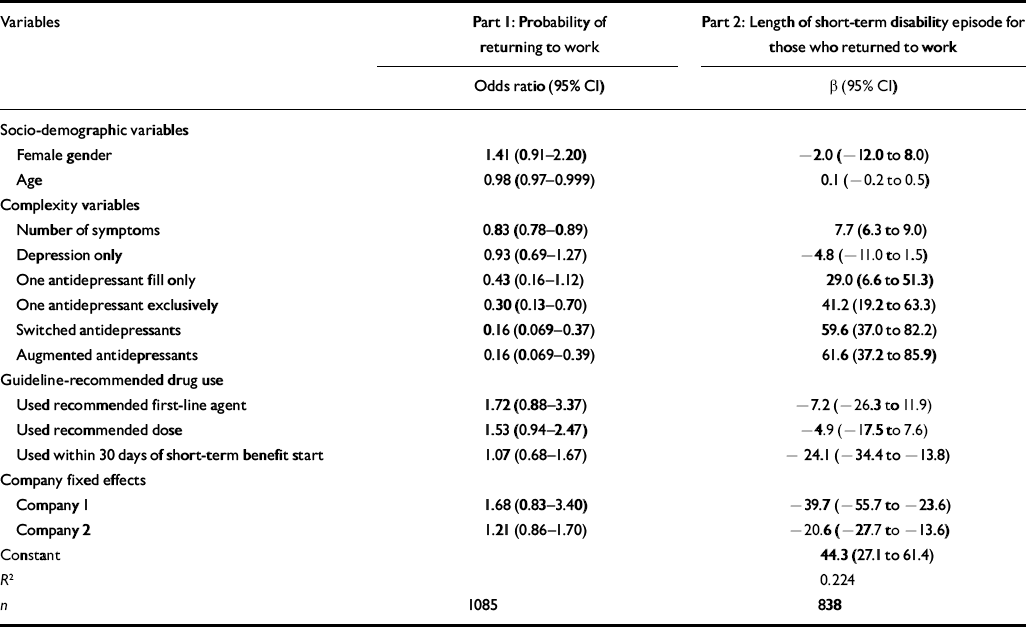
In the first regression model, we examined the extent to which return to work is associated with worker characteristics, depression complexity or antidepressant use (Table 3), using a logistic regression. The model's goodness of fit was tested using the Hosmer–Lemeshow test. We could not reject the null hypothesis that there was an adequate fit with the model (χ2=3.74, P<0.88). The results of the first part of the model are reflective of those found in the bivariate analyses. The number of symptoms reported was a significant factor associated with return to work. The larger the number of symptoms, the smaller the odds ratio (OR=0.83, 95% CI 0.78–0.89, P<0.0001). In addition, the complexity of use indicator variables suggested that as antidepressant use became more complex, the odds of returning to work became lower (e.g. for augmented use, OR=0.16, 95% CI 0.069–0.39, P<0.0001). Age also had a significantly negative impact on return to work (OR=0.98, 95% CI 0.97–0.9998, P<0.047). Finally, although the guideline recommendation indicators suggested that each had a positive impact on return to work, individually none was statistically significant. However, this may be due to the fact that they are highly related to one another (i.e. there is multicollinearity among the variables), making it difficult to isolate the impacts of the variables (Reference GujaratiGujarati, 1995). Indeed, the likelihood ratio test of the joint significance of first-line agent use and recommended dose showed evidence that together they are associated with return to work (χ2=6.64, d.f.=2, P<0.036).
Regression coefficients for two-part multivariable model1
| Variables | Part 1: Probability of returning to work | Part 2: Length of short-term disability episode for those who returned to work |
|---|---|---|
| Odds ratio (95% CI) | β (95% CI) | |
| Socio-demographic variables | ||
| Female gender | 1.41 (0.91—2.20) | — 2.0 (—12.0 to 8.0) |
| Age | 0.98 (0.97—0.999) | 0.1 (—0.2 to 0.5) |
| Complexity variables | ||
| Number of symptoms | 0.83 (0.78—0.89) | 7.7 (6.3 to 9.0) |
| Depression only | 0.93 (0.69—1.27) | — 4.8 (—11.0 to 1.5) |
| One antidepressant fill only | 0.43 (0.16—1.12) | 29.0 (6.6 to 51.3) |
| One antidepressant exclusively | 0.30 (0.13—0.70) | 41.2 (19.2 to 63.3) |
| Switched antidepressants | 0.16 (0.069—0.37) | 59.6 (37.0 to 82.2) |
| Augmented antidepressants | 0.16 (0.069—0.39) | 61.6 (37.2 to 85.9) |
| Guideline-recommended drug use | ||
| Used recommended first-line agent | 1.72 (0.88—3.37) | — 7.2 (—26.3 to 11.9) |
| Used recommended dose | 1.53 (0.94—2.47) | — 4.9 (—17.5 to 7.6) |
| Used within 30 days of short-term benefit start | 1.07 (0.68—1.67) | — 24.1 (—34.4 to —13.8) |
| Company fixed effects | ||
| Company 1 | 1.68 (0.83—3.40) | — 39.7 (—55.7 to —23.6) |
| Company 2 | 1.21 (0.86—1.70) | — 20.6 (—27.7 to —13.6) |
| Constant | 44.3 (27.1 to 61.4) | |
| R 2 | 0.224 | |
| n | 1085 | 838 |
In the second part of the model, we used an ordinary least squares regression model to examine the factors associated with the length of the short-term disability among those who returned to work. To test the robustness of our results, we transformed the values for days on short-term disability benefit using both log and square root transformations and compared these results with those using the untransformed values. We found similar results for all three models. For ease of interpretation, we have presented the results using the untransformed values for numbers of short-term disability days.
Overall, we observed that the mean short-term disability episode was 74.2 days (95% CI 71.0–77.4). After controlling for demographic characteristics, severity, complexity and company effects, we found that the use of antidepressants within 30 days of the start of the disability episode was significantly associated with the length of episode (β=-24.1; 95% CI -34.4 to -13.8). On average, compared with those who either delayed use or did not use antidepressants, there was a 24 day decrease in the length of the short-term disability episode. As in the first part of the model, the results suggested that the number of reported symptoms (β=7.7, 95% CI 6.3–9.0) and complexity of use (e.g. for augmented use β=61.6, 95% CI 37.2–85.9) were associated with increased length of disability. In addition, the company fixed effects indicated that there was a significant difference in length of disability episode among the participating companies (company 1, β=-39.7, 95% CI -55.7 to 23.6; company 2, β=-20.6, 95% CI -27.7 to -13.6). Finally, the guideline recommendation indicators for first-line agent use and dose in combination were positively associated with return to work; however, once again, individually neither was statistically significant.
DISCUSSION
Our results contribute to the understanding of the potential relationship between antidepressant use and short-term disability outcomes. These results suggest that antidepressant use might be a factor in the ability of employees to resume their position in a company. They also begin to characterise the role of antidepressants in the management of disability. We observed that about 60% of people claiming depression-related short-term disability benefits used antidepressant drugs. This finding indicates that antidepressant pharmacotherapy is a part of the treatment plan for a large percentage of individuals. It reflects findings reported by Olfson et al (Reference Olfson, Marcus and Druss2002), who also observed that a large proportion of individuals treated for depression received antidepressants.
First-line agents and return to work
Workers using recommended first-line agents and recommended doses were significantly more likely to return to work rather than to claim long-term disability benefits or leave their employment. These results are congruent with the hypothesis that antidepressants can play an important part in the ability of employees to resume work.
Early intervention
Early intervention and return to work
Early intervention was significantly associated with a shortened disability episode among employees on depression-related disability benefits who had at least one antidepressant prescription claim and eventually returned to work. Our estimates indicate that early intervention is associated with a reduction in disability episode of about 3 weeks.
Preliminary estimates of savings associated with early intervention
Given the average weekly wage for this sector is about $1011, including 30% for benefits (Statistics Canada, 2002), early intervention represents a potential average saving of approximately $3500 (based on β=-24.1, 95% CI -34.4 to -13.8, the range of savings would be $2000–5000) in terms of reduction in lost productivity per employee claiming depression-related short-term disability benefits (all values quoted in Canadian dollars). For employees in our study who began using antidepressants more than 30 days after the start of their episode and returned to work, total savings could have translated into nearly $539 000 (range $268 000–875 000). It should be noted, however, that this is an estimate based on this sample and does not include the expense of treatment and other societal costs. Additional research is needed to corroborate these findings and give a more comprehensive estimate of potential societal benefits.
Antidepressant use
Our findings indicate that about 40% of individuals receiving short-term disability benefits related to depression do not use antidepressants. Application of quality measures such as those currently used by the Health Employer Data and Information Set (Reference Druss, Miller and RosenheckDruss et al, 2002) suggests that many employees do not receive treatment. However, our findings indicate that there might be other interpretations.
Potential role of complexity and severity of depression
The apparent absence of antidepressant use might be indicative of a difference in the complexity of depression experienced. For example, from past analyses we found that about three-quarters of those who did not use antidepressants did not have them included as part of the short-term disability care plan reported by their physician. In addition, on average, they also reported lower numbers of symptoms than those who used antidepressants (Reference Dewa, Hoch and GoeringDewa et al, 2003). Finally, those who did not use antidepressants returned to work sooner than those who did. Do the absence of antidepressants in the initial treatment plan, the fewer number of symptoms and the faster return to work suggest that those who do not use antidepressants have a less complex illness course? Or could these factors be indicative of lesser severity of depression than in their counterparts who used antidepressants? Perhaps these individuals are relying on other types of intervention, such as counselling? Does the lack of antidepressant use reflect a resistance to adopting a sick role and consequently a more rapid return to work? These questions will be important to address in future follow-up studies.
Limitations
As with most administrative database studies, our results are limited by the accuracy of the diagnosis on the claim forms (Reference Browne, Melfi and CroghanBrowne et al, 1998). In an ideal world we would have conducted a clinical assessment of all individuals in the study to verify whether they were suffering from a disabling episode of depression. However, in the interests of feasibility and maintaining worker anonymity, we chose to study the population identified as having depression rather than those confirmed with depression. In addition, we focused on only one aspect of treatment for depression. In future studies it will be helpful to understand the roles of other treatments such as psychotherapy. Disability management practices and preventive interventions are other areas worth exploring. Furthermore, our reliance on administrative data constrains our ability to comment on compliance (Reference Edgell, Summers and HylanEdgell et al, 1999). It is assumed that workers who filled prescriptions also took their medications. To the extent that this is valid, our measures of use reflect a combination of partial compliance and physicians' prescribing patterns. Finally, our study focused on workers who took depression-related disability leave. Consequently, although this study represents an important first step in exploring the role of antidepressants in influencing depression-related short-term disability, the limitations associated with an observational study design make our results more exploratory than definitive. We cannot comment on the precise mechanism that results in return to work: other factors, related to receipt of guideline treatments, may affect outcomes. Although we have tried to adjust for such confounders by including variables representing socio-demographic characteristics, guideline-recommended use, type of company and degree of complexity, the administrative data limit the extent to which this could be done. Use of a randomised controlled trial design would decrease the opportunity for such a sample selection bias.
Future research
Our findings point to a number of avenues for future research. For example, are similar results observed in all business sectors? Do the same patterns of use apply to employees who use antidepressants but do not claim disability benefits? What is the role of other, non-pharmaceutical treatments? What are the critical components of disability management programmes? What environmental factors affect return to work?
Depression in the workplace is a problem for which there is no simple solution. The nature of the disability and its treatment are complex. This study takes advantage of a unique link between occupational health records and drug benefit claims data to examine one aspect of treatment. The results do not prove a causal link between recommended treatment and better disability outcome (i.e greater likelihood of return to work or shorter duration of disability). However, they provide additional leads to answering the important questions of how to help people disabled by depression return to work.
Clinical Implications and Limitations
CLINICAL IMPLICATIONS
-
▪ Antidepressants might not be required for all employees on disability benefits with simpler, milder depressive illness.
-
▪ When antidepressants are prescribed, every effort should be made to start treatment within the first few weeks of the start of disability benefits.
-
▪ Among those who are prescribed antidepressants, one in five seem to require complex care (i.e. switching or augmentation).
LIMITATIONS
-
▪ Because this is an observational study, we are limited to the extent to which we can comment on the precise mechanisms that result in return to work.
-
▪ This study focuses on only one aspect of treatment for depression; in future studies it would be helpful to understand the roles of other treatments and interventions.
-
▪ Reliance on administrative data constrains our ability to comment on compliance with treatment; it was assumed that workers who filled prescriptions also took their medications.
Acknowledgements
The authors are grateful for the valuable discussions and comments from. members of the Ontario Round Table on Appropriate Prescribing Research Design. Committee. This project was funded by the Ontario Round Table on Appropriate. Prescribing. C.S.D. and J.S.H. are grateful for the support provided by their. Ontario Ministry of Health and Long-term Care Career Scientist Awards. J.S.H. also acknowledges financial support from the Natural Sciences and Engineering. Research Council of Canada.




eLetters
No eLetters have been published for this article.