


Coronavirus disease 2019 (COVID-19) is a communicable disease transmitted by means of respiratory droplet from 1 person to another caused by the severe acute respiratory syndrome coronavirus 2 (SARS-CoV-2). 1 This infectious disease first appeared in Wuhan, the capital of China’s Hubei Province in December of 2019 then spread globally, resulting in the ongoing 2019-2020 coronavirus pandemic. Reference Hui, Azhar and Madani2 The current COVID-19 epidemic has spread very quickly, and by April 6, 2020, the virus had reached almost all countries of the world, resulting in over 1.6 million confirmed cases and 97,179 deaths, with nearly all infections and deaths occurring in Europe. 3
Common symptoms of COVID-19 include inflammation of the upper respiratory tract and symptoms similar to the flu, such as sneezing, coughing, sinus obstruction, and mucous secretions from the nose. 4 After that, the temperature seems to rise to approximately 39 degrees or more during days 7-10, and then the person may feel a partial improvement until the end of the 2-wk period. While the majority of cases result in mild symptoms, some progress to acute injury to the lower respiratory tract and pneumonia. In addition to affecting the respiratory system, there is a high risk of death in elderly people and people of all ages who suffer from serious health conditions, such as heart disease, lung disease, and diabetes. Reference Hopkins5
Regarding the knowledge of the public toward COVID-19, across demographic groups, considerable numbers of American people reported having heard “a lot” about the coronavirus, including substantial shares across gender, education levels, and health status. Adults who are aged 50 and older are somewhat more likely than younger adults to have heard or read “a lot” about the coronavirus compared with other age groups, with approximately half of adults under age 50 confirming that they have heard or read “a lot,” and this share increased to nearly two-thirds among adults ages 50 and older. In addition, approximately half of adults with less than a 4-y college degree say that they have heard “a lot,” and this percentage increases to 66% among those with a college degree or higher. These findings related to age and education from previous surveys demonstrate that older adults and those with higher levels of education are more likely to pay closer attention to health news. 6 A deeper understanding of knowledge-based awareness and behavioral adaptation is, however, increasingly recommended to contain COVID-19. 7
Regarding people’s attitudes toward coronavirus, the Institut de Publique Sondage d’Opinion Secteur (Ipsos) (2020) 8 have done a national survey and reported that, in 13 of the 15 countries, majorities raised concern for those who are weak and vulnerable at the top of a list of 10 options when they asked what best describes their feeling today. People in Brazil (70%), Spain and the United Kingdom (66%), Mexico (61%), and Canada, France, and Italy (60%) are mostly likely to express concern for others, while those in Japan (23%) and China (30%) are least worried. In addition, a majority (53%) of people reported that this pandemic is more likely to bring them closer to their family and friends. This finding was strongest in Asian countries of India (72%), Vietnam (70%), and China (67%), while those in Japan (19%), South Korea (32%), and Germany (41%) are least likely to agree with this. Studying people’s attitudes of the crisis COVID-19 is important to predict the behavior of the people in their own environments. Reference Ajilore, Atakiti and Onyenankey9
The coronavirus is highly infectious and has a high fatality rate, with more than 15 thousand deaths in Italy and more than 12 thousand deaths in Spain. 3 People all over the world should adhere to control measures as the battle against this epidemic is continuing. These control measures, however, are influenced by people’ knowledge, attitudes, and practices (KAP) according to KAP theory Reference Ajilore, Atakiti and Onyenankey9 ; therefore, exploring these variables could prevent the spread of the disease.
The knowledge, attitudes, and behavior of Jordanian people toward the COVID-19 and their willingness to protect themselves during its outbreak have not yet been investigated. This study aims to investigate the knowledge, attitudes, and behavior of Jordanian people toward COVID-19 during the COVID-19 pandemic. In addition, this study explores the lack of perception and adherence to preventive measures toward COVID-19.
Methods
Design
A quantitative, cross-sectional, descriptive design was used to explore knowledge, attitudes, and practices toward COVID-19 among Jordanian adult. This cross-sectional survey was conducted using an online survey from March 20 to the middle of April 2020, the 4 wk immediately after the lockdown of Jordan. This method was chosen, as it was believed to be the most appropriate technique during the COVID-19 crisis and quarantine being imposed in Jordan.
Setting, Sample, and Sample Size
A convenience sample of individuals who are of Jordanian nationality, were aged 18 years or older, understood the content of the questionnaire, and agreed to participate in the study were instructed to complete the questionnaire by means of clicking the link through Facebook or WhatsApp. To meet overall study goals, a power analysis was conducted using G*power program Reference Faul, Erdfelder and Buchner10 to determine the required sample size, a proportion chi-squared (χ 2) analysis with a medium effect size of 0.30, a statistical power 0.80, and a significant alpha 0.05. The calculated minimal sample size needed for the study was 1050; however, 1078 individuals completed the survey.
Ethical Considerations
Institutional Review Board (IRB) approval from Al-Zaytoonah University of Jordan approved the study protocol and procedures of informed consent before the formal survey. Participants instructed to read the informed consent carefully and had to answer a yes-no question at the end of the consent form if they are willing to participate voluntarily. The consent form contains detailed descriptions on the purpose of the study, its benefits, risks, and procedures, and indicated that each subject’s enrollment in the research project is completely voluntarily. After confirmation of the question, the participant was directed to complete the self-report questionnaire.
Measurement
The questionnaire consisted of 5 parts: sociodemographic characteristics, knowledge, attitude, and practices toward COVID-19, and compliance of hand washing. The first section of the questionnaire concerned demographic variables, including age, gender, marital status, education, occupation, and place of current residence. The second section of the questionnaire concerned COVID-19 knowledge, adapted from the Zhong et al. (2020) Reference Zhong, Luo and Li11 KAPs questionnaire and based on the WHO guidelines. The questionnaire consisted of 15 questions divided on 3 themes: clinical presentations were 4 questions, transmission routes were 3 questions, and prevention and control of COVID-19 were 8 questions. The answer options per question were true/false and I do not know. The correct answer was given 1 point, while incorrect/unknown answers were given zero points. This questionnaire has been reliable when used in previous settings, Reference Zhong, Luo and Li11 and the Cronbach’s alpha coefficient was 0.82 in the current study.
The third section, attitudes toward COVID-19, measured by 2 questions, concerned agreement that COVID-19 will finally be successfully controlled and the confidence that Jordan can win the battle against the COVID-19 virus. The answer options per question were agree/disagree and I do not know. The fourth section, the assessment of participants’ practices, included 3 behaviors: gone to any crowded places, worn a mask when leaving home, worn gloves when leaving home. The answer options per question were yes/no and I do not know. The fifth section, self-reported hand washing subscale, was developed by the authors and asks respondents to rate the percentage of their compliance to hand washing (from 10 to 100%).
In addition, participants were asked about hand washing performance in 6 different circumstances (eg, before starting to provide the service to oneself or others, when to stop the service promptly due to a phone call, when buying directly from a store, after touching surrounding surfaces, after removing gloves, and before touching your nose, mouth, eyes, or any other area of your face) (Table 1). Also, it asks about behavior related to controlling COVID-9 infection through the hands cleaning process. Hand washing practice were sought by a 10-point percentage scale, with 10% indicating minimal hand washing and 100% indicating maximal hand washing.
Study items
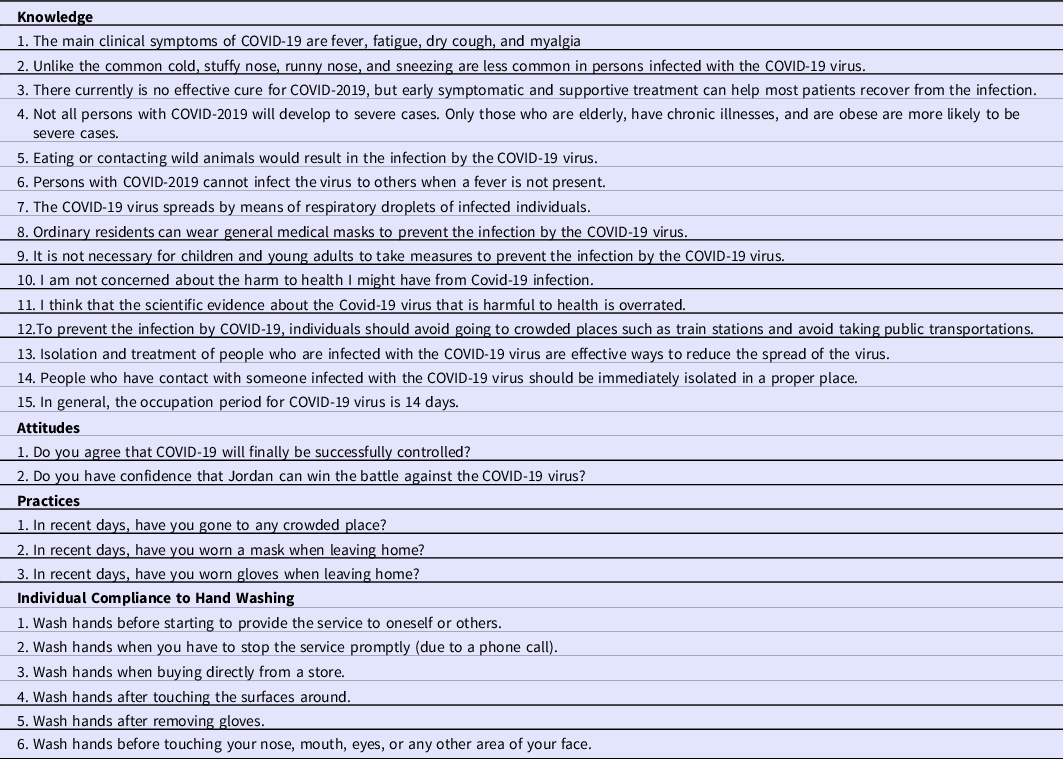
Moreover, permission to use the questionnaire was granted by Professor Yi Li from Huazhong University of Science & Technology, Wuhan, China. In addition, the questionnaire was translated into the Arabic language, and WHO guidelines were followed for translation using the following steps: forward translation, expert panel back-translation, pretesting, and cognitive interviewing until reaching the final version.
Data Collection Procedure
This study used an electronic survey. Confidentiality was ensured through designing the electronic survey with anonymity features in which no identifying information of the subjects was included. Furthermore, retrieved questionnaires were stored on a password-protected on-site file server.
Statistical Analysis
The Statistical Package for Social Sciences version 2512 used for data entry and analysis. Descriptive statistics of frequencies, means, range, and standard deviations calculated to describe subjects’ demographic data. Mean scores and standard deviation around the mean calculated for the study variables (ie, KAPs). One-way analysis of variance (ANOVA) and independent χ Reference Hui, Azhar and Madani2 tests were used to measure the differences between the means or cross-tabulate of the study variables as appropriate.
Results
Demographically, the study participants (n = 1076) were 59.8% (643) female and 40.2% (433) male. The mean age of the participants was 34.83 ± 10.50 y, ranging from 18 to 70 y. Of the participants, 25% were 18-27 y old, with a median age of 34 y; 75% ranged from 40 to 70 y.
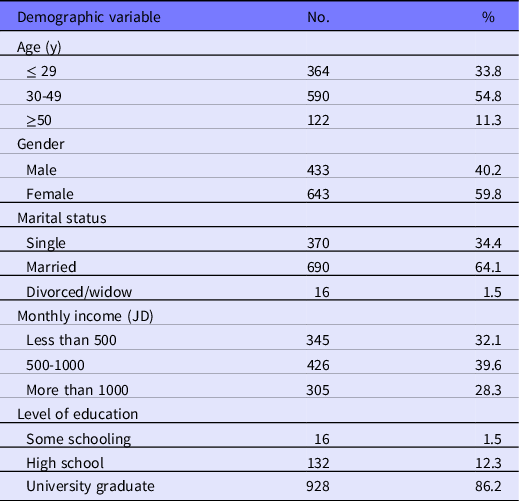
The majority (64.1%; n = 690) of the study participants were married, and 392 were female. Moreover, 370 of the sample were single, 65% (240) of them were female, while 16 participants were divorced. In addition, 32.1% of the participants earned less than 500 Jordanian Dinars a month, most participants 928 (86%) were university graduates, and 430 (20%) were Amman residents. Other demographic characteristics are shown in Table 2.
Demographic features of participants
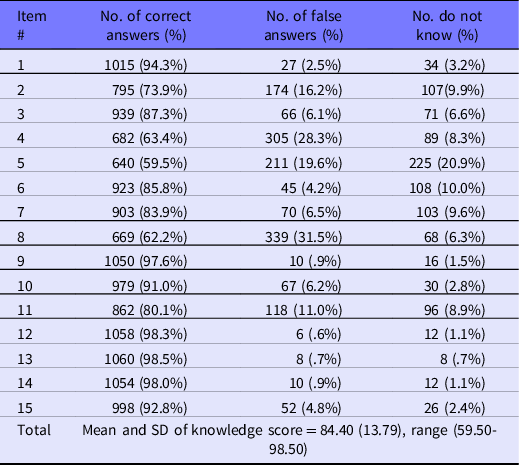
The average correct score of COVID-19 knowledge was 84.44% (12.66/15), ranging from 59.5% to 98.5% (8.92-14.77/15). Twenty-five percent (Q1) of the correct answers were 73.9%, while the median score is 87.3%, and Q3 was 97.6%. The highest correct answer (98.5%) was observed for the item, “Isolation and treatment of people who are infected with the COVID-19 virus are effective ways to reduce the spread of the virus.” Whereas the lowest correct answer (59.5%) was noted when the students answered the item “Eating or contacting wild animals would result in the infection by the COVID-19 virus” (Table 3). Moreover, Knowledge scores significantly differed across demographic characteristics of participants. The results showed that there are significant differences between age, marital status, monthly income, level of education, profession, and residency governorates (F = 3.90; P = 0.02; F = 3.26; P = 0.03; F = 5.41; P = 0.005; F = 16.13; P = 0.000; F = 4.98; P = 0.000; F = 2.23; P = 0.01, respectively) (Table 4).
Knowledge toward COVID-19
Knowledge score of COVID-19 by demographic characteristics of participants
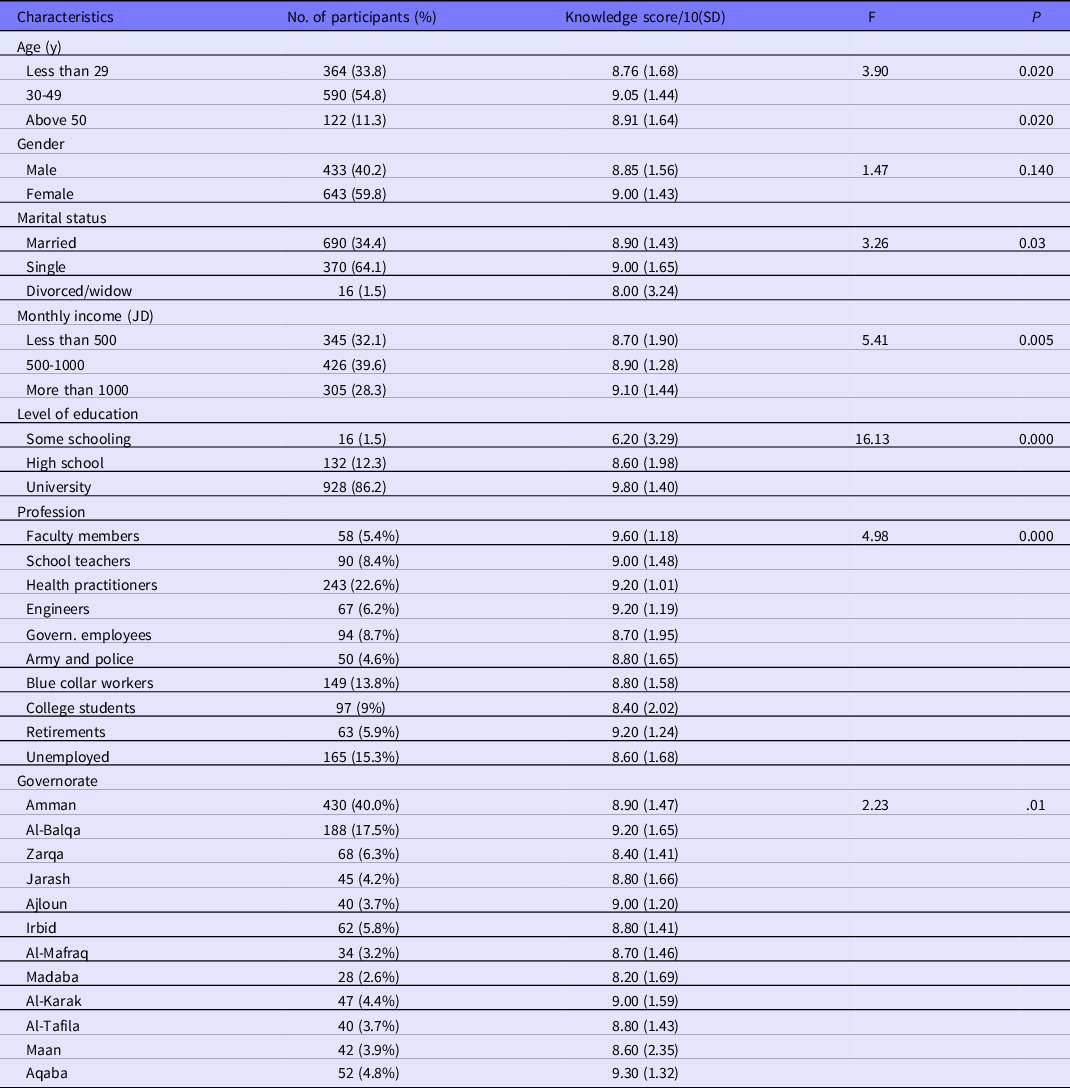
Note: ** P < 0.01, * P < 0.05.
It is noted that 78% of the Jordanian people who filled out the survey online during the 4-wk quarantine agreed that the government will be successful in controlling the pandemic COVID-19, while 93.8% (1009) of the study sample had confidence that Jordan can win the battle against the COVID-19 virus. Moreover, most study participants acknowledged that they did not visit crowded places in recent days (91.6%), while 71.3% (767) worn masks and 69.1% (743) worn gloves when leaving homes (Table 5). In addition, when demographic characteristics were cross-tabulated with attitude scores, the results with the first item, successfully controlled COVID-19, showed that there are significant differences between participants professions, and residency governorates (χ2 = 37.3; P = 0.01; χ Reference Hui, Azhar and Madani2 = 47.3; P = 0.001, respectively). The attitude of the participants toward winning the battle against COVID-19 results significantly differed across the categories level of education, profession, and residence of governorate (χ2 = 32.8; P = 0.000; χ Reference Hui, Azhar and Madani2 = 81.3; P = 0.000; χ Reference Hui, Azhar and Madani2 = 44.7; P = 0.003, respectively) (Table 6).
Attitude and practices toward COVID-19

Attitude toward COVID-19 by demographic characteristics
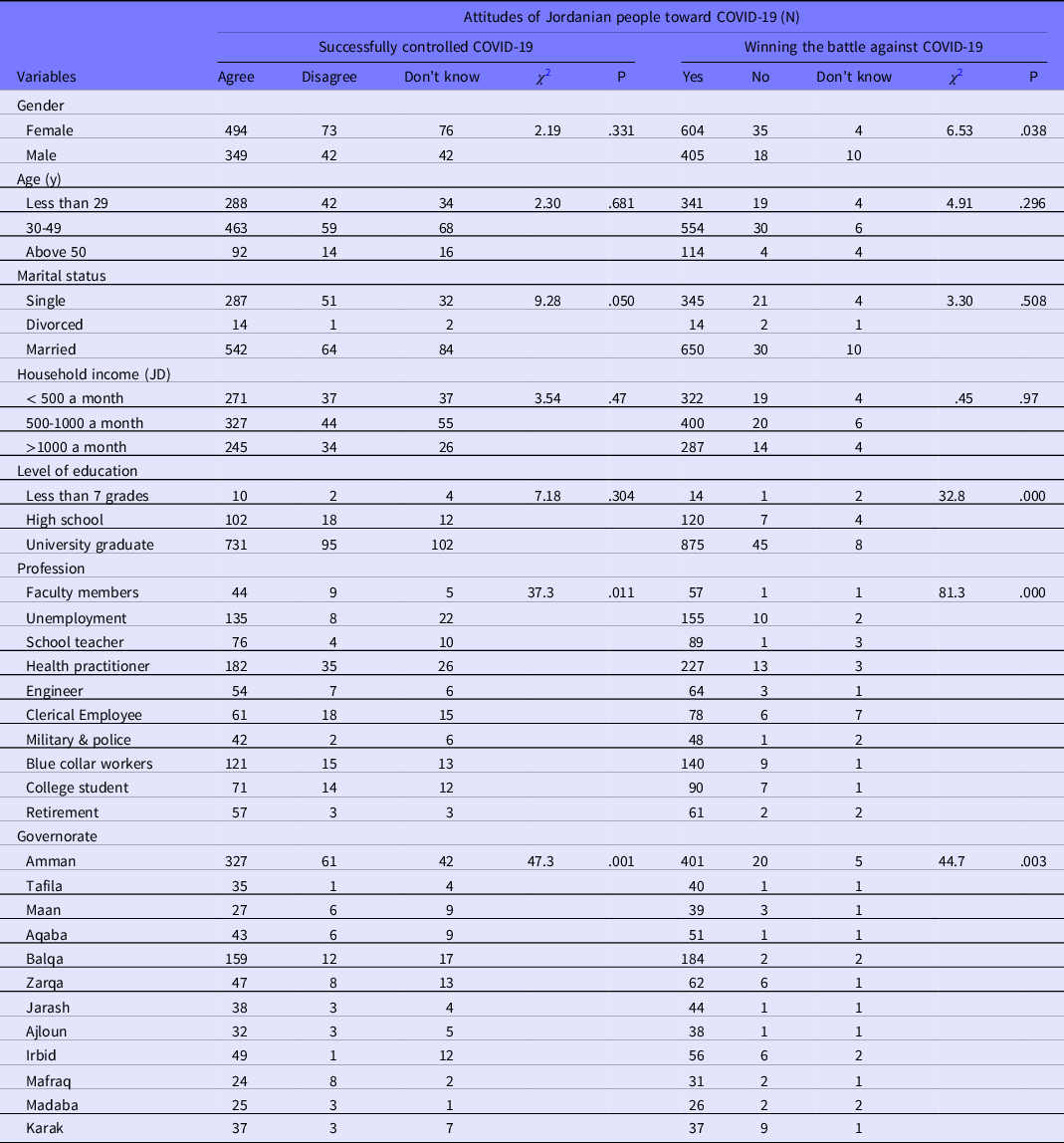
Note: ** P < 0.01, * P < 0.05.
With regard to the practice of the study sample toward going to a crowded place, it was found only gender from the demographics was statistically significant (χ2 = 18.3; P = 0.000). Also, results of the second item, wearing a mask to protect self from COVID-19 virus, showed that gender, age, household, profession, and residence of governorate were statistically significant (χ2 = 6.12; P = 0.04; χ Reference Hui, Azhar and Madani2 = 15.3; P = 0.004; χ Reference Hui, Azhar and Madani2 = 28.6; P = 0.000; χ Reference Hui, Azhar and Madani2 = 78.4; P = 0.000; χ Reference Hui, Azhar and Madani2 = 66.3; P = 0.000, respectively) (Table 7). The average score of self-reported hand washing compliance among Jordanian people was 83.50% (SD = 21.20). The highest compliance rate (mean = 87.88%; SD = 21.85) was observed for the item “Wash hands when buying directly from a store,” whereas the lowest compliance rate (mean = 73.0%; SD = 25.41) was noted for the item “Wash hands when you have to stop the service promptly (due to a phone call)” (Table 8).
Practices toward COVID-19 by demographic characteristics
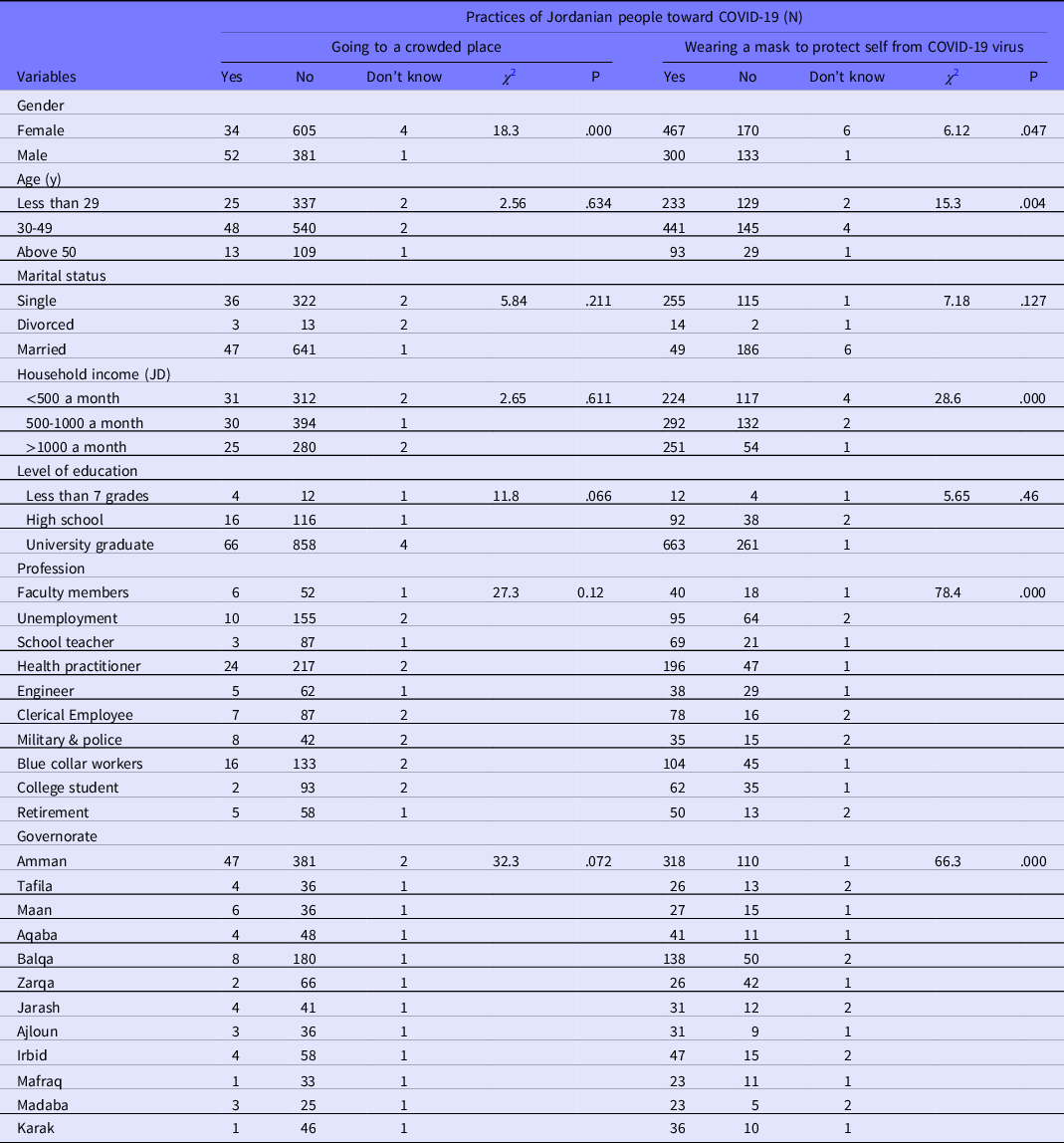
Note: ** P < 0.01, * P < 0.05.
Compliance of individuals from 100% toward hand washing to control COVID-19

Pearson product-moment correlation was conducted to assess the relationship of the knowledge score with attitudes, practices, and the compliance to hand washing. As shown in Table 9, there was a significant positive relationship between knowledge score and attitude (r = 0.216; P < 0.001), knowledge score with practices (r = 0.128; P < 0.001), and knowledge score with score compliance to hand washing (r = 0.177; P < 0.001). However, the knowledge score was not significantly correlated with age of the study participants (r = 0.047; P > 0.05).
Correlation between knowledge score, attitude, practices, compliance to hand washing, and participants’ age

Note: ** P < 0.01, * P < 0.05.
Discussion
The current study aimed to investigate the knowledge, attitudes, and behavior of Jordanian people toward COVID-19 during the COVID-19 pandemic. This national study found a high knowledge of COVID-19 among the sample, with the highest level of knowledge relating to the effective way to reduce the spread of virus by isolation and treatment of people who are infected with COVID-19. This finding was similar to another study conducted in China. Reference Zhong, Luo and Li11 This high knowledge among the current study population could be explained by the different resources of information about the disease from media news, social media, official government websites as well as family and friends. Another explanation could be related the characteristics of the sample with the majority holding a bachelor degree or higher. Additionally, those participants who reported a high knowledge of the disease were significantly more educated and were employed. It is useful, therefore, for public health policy-makers and health workers to recognize that those who are not employed or well educated will need more information about the disease.
Regarding the attitudes of the sample population, the majority of the participants reported positive perceptions about the government measures to control the COVID-19 pandemic and reported that Jordan can win the battle against the COVID-19 virus. Those who graduated high school or less, however, were more likely to report negative attitudes compared with those who hold a bachelor degree or higher. The Jordanian government recently has imposed regulations to reduce the spread of the virus by, for instance, on March 20, 2020, the Government of Jordan announced that the nationwide curfew for 4 wk in which this curfew prohibits the movement of people and closes most shops. Additionally, all travelers who arrived in Jordan on March 16 were immediately quarantined for 14 days in hotels in Amman and at the Dead Sea. These governmental measures could explain the positive attitudes of the participants toward COVID-19.
Generally, the study participants reported positive practices during the quarantine period of the COVID-19 pandemic. The majority said that they did not visit crowded places in recent days, and they wore masks and gloves when leaving homes. These practices could be contributed to the governmental preventive measures that have been enforced in Jordan, such as prohibition on all movement between governates, citizens may not leave home except in extreme circumstances, and prohibition on gatherings of more than 10 people. Nowadays, the increasing occurrence rate and mortality rate of the COVID-19 across the world and in particular in Middle East countries (eg, Iraq, Iran, and Lebanon) could raise Jordanians’ awareness about the disease and its prevention methods. The updated information about the spread of COVID-19 worldwide by national news and international organizations, such as WHO 3 and CDC, 4 have increased the knowledge of the people to comply with positive practices. Despite these positive results, the current study found significant differences between gender and residents went to crowded places in which males were more likely to go to crowded places compared with the females. This could be explained by the current practices during the quarantine period in Jordan in which men usually buy goods from stores, whereas females remain at home to take care of children. This could make the males at higher risk to obtain the disease than females. Reference Chen, Liang and Li13-Reference Wang, Horby and Hayden15 As of May 5, Jordan had 465 confirmed COVID-19 cases: 40% were females, 367 recovered, and 9 died.
With regard to hand washing practices, the majority of the participants reported positive practices toward hand washing. The highest compliance was related to washing hands when buying directly from a store, whereas the lowest compliance rate was about washing hands when you have to stop the service promptly (due to a phone call). The WHO 3 recommended that hand washing for 20 s with soap and water or with alcohol-based hand rub could reduce the risk of getting the virus. However, people take their phones everywhere, and they are constantly touching them; if they have been out and their phone is contaminated, this could be a source of COVID-19 infections, given that this virus is so contagious and it can survive on surfaces for 2 or 3 d. Public policy-makers and health professionals in Jordan need to emphasis on the importance of hand washing and in particular when people have to stop the service, for instance to answer a phone call.
In this study, the findings indicated that there was a strong positive association of people’s higher knowledge scores with higher positive attitudes, hand washing compliance, and safe practices toward the COVID-19 epidemic. These findings were in line with previous studies carried out by Zhou et al. Reference Zhang, Zhou and Tang16 and Alzoubi et al. Reference Alzoubi, Alnawaiseh and Al-Mnayyis17 Moreover, our finding of the age factor associated with KAP toward COVID-19 are generally consistent with previous studies, such as those by Giao et al. Reference Giao, Han and Van Khanh18 and Zhong et al. Reference Zhong, Luo and Li11 The study results clearly indicate the importance of improving people’s COVID-19 knowledge by means of health education, which may also result in improvements in their attitudes and practices toward COVID-19.
The current study provided an in-depth view of Jordanian behavior toward COVID-19. In addition, it added benefit for policy makers to see how things work during the quarantine period. Moreover, the study participants were recruited from different governates in Jordan, which could increase the generalizability of the current study findings. In addition, the current study recruited a large and representative sample.
Limitations
It is important to acknowledge the limitations of the current study. For instance, personal bias in the self-reporting method may have affected the results of this study. Indeed, an issue associated with a self-reporting method is that respondents may not answer truthfully due to an inability to recall or a desire to exaggerate issues. Nevertheless, it is important to consider participants’ responses regarding COVID-19 as a starting point for further research. In addition, this approach was effective in enabling the study to meet its aim and objectives. It allows participants to cooperate with the research by completing the questionnaires in their own time. It was not possible to conduct a random sampling method to recruit the participants, as the researcher has limited resources to access all the study population; therefore, a convenience sampling technique was used for the current study.
Conclusions
The current study added the new knowledge that, generally, the Jordanian people during the quarantine period have a high knowledge and optimistic attitudes and practices toward COVID-19. This suggests that health education programs and governmental preventive measures to improve the COVID-19 knowledge and practices are effective. However, unemployed men are at higher risk to contract COVID-19 compared with other groups. Thus, health-care employers and policy-makers need to take into consideration that some population groups, including those who are not employed or well educated would need more information about the disease. Further research studies using observational methods (for instance) need to be conducted to confirm this investigation’s findings.
Acknowledgments
The authors express their appreciation to all participants who took part in the current study.
Conflict of Interest
There is no conflict of interest related to this research.


 Open access


