


Introduction
As ethnonationalist politicians turn cold shoulders to nature, the climate crisis demands fresh political, moral and legal frameworks to guide our thinking. Drawing on A. W. Brian Simpson’s study of Regina vs Dudley and Stephens (1884) and Cătălin Avramescu’s intellectual history of cannibalism, this essay traces the roots of lifeboat metaphors for politics. Based on these metaphors, I propose the preliminary outlines of a framework for climate politics in our contemporary polycrisis. I argue that examining maritime custom, including not only the duty of rescue, but also historical practices of ‘survival cannibalism’, may illuminate how one should approach climate politics today. Rather than fully articulating any concrete policy prescription, the essay aims to outline a way of thinking about the relevant challenges, with three provisional illustrations. I label the new proposed framework ‘the commonist lifeboat’ (cf. Linebaugh and Rediker, Reference Linebaugh and Rediker2013).
Political thinkers have of late revived the ancient lifeboat metaphor, central to political discourse since antiquity (Slobodian, Reference Slobodian2019; Ferdinand, Reference Ferdinand2022). This renaissance falls into two ideal types. The first, which I will call ‘providential’, suggests that the depth of the climate crisis should lead humans to realise, once and for all, our own unity (which also potentially includes nature). Historian Dipesh Chakrabarty, for example, describes this providential lifeboat already in his 2009 essay The Climate of History: Four Theses (and more recently in The Climate of History in a Planetary Age, Chakrabarty, Reference Chakrabarty2021). The basic point is that we are all similarly subject to the threat of climate change and, therefore, ‘all in the same boat’:
‘Climate change, refracted through global capital, will no doubt accentuate the logic of inequality that runs through the rule of capital; some people will no doubt gain temporarily at the expense of others. But the whole crisis cannot be reduced to a story of capitalism. Unlike in the crises of capitalism, there are no lifeboats here for the rich and the privileged’. (Chakrabarty, Reference Chakrabarty2009: 22, emphasis added)
The second and conflicting lifeboat metaphor for contemporary politics, which I will label ‘catastrophic’ (cf. Ophir, Reference Ophir2007), is that of a struggle for survival: nations are lifeboats staving off the weight of the world to stay afloat. In his 2016 book The Great Derangement, Amitav Ghosh analyses the ‘politics of the armed lifeboat’. The catastrophic image evokes a world of rising sea levels and cascading social and environmental disasters and consequently large-scale human displacement. Each nation seeks to float but behaves aggressively towards others, shooting down anything that can add extra weight. In an age of ubiquitous ‘pre-fascism’ (Snyder, Reference Snyder2021), the armed lifeboat is everywhere.
To be sure, these lifeboats are not only metaphors (cf. Steinberg, Reference Steinberg2013). They frame public perceptions of global issues. They shape political and institutional choices in numerous countries and have material and distributive consequences. Both lifeboats – the providential and the catastrophic – have seemingly become the vessels in which we have chosen to navigate our future. But what are the intellectual roots of the lifeboat metaphor, with its providential and catastrophic variants? What are the common assumptions and faults of both metaphors? And how can centuries old maritime customs offer a fresh perspective on politics in the face of the proverbial storm?
Based on a reading of Avramescu’s intellectual history of cannibalism, I will explain how the two imaginations of politics reflect ancient currents in natural law thinking. While the two vessels seem to have widely different presuppositions, Avramescu’s work reveals their common assumptions. Moving to more recent times, I show how both ideal-type vessels can be traced back to a debate surrounding world hunger during the Cold War. In the 1960s and 1970s, the binary between the two visions evolved around the tropes ‘spaceship earth’ and ‘lifeboat ethics’. Responding to environmental thinkers such as Donella Meadows and Buckminster Fuller, ecologist Garrett Hardin came up with the idea of ‘lifeboat ethics’, which proved to have enduring influence.
I seek to rethink Dudley against this backdrop, and to show that the case points in a different direction. Relying on Simpson’s interpretation of maritime custom, I develop a third image of the lifeboat as a metaphor for politics in the age of climate crisis. The ‘commonist lifeboat’ offers a historically grounded alternative to both ‘providential’ and ‘catastrophic’ approaches to climate politics. Despite an ancient tradition of the lifeboat as a metaphor of politics, Commentators have largely overlooked the implications of Dudley for political theory, focusing instead on individual criminal liability. My aim is to change that.
The commonist lifeboat I propose offers a lifeboat model of politics grounded in historically situated maritime practices rather than natural law abstractions. By examining how seafaring communities developed customs for managing extreme scenarios through mutual aid as well as sacrifice, I argue for an approach that emphasises socially acceptable procedures for handling necessity. These require attention to class dynamics, and recognition of humanity’s embodied relationship with nature. Unlike the abstracted, natural-law ideas of catastrophic and providential lifeboats, which present themselves as the fruit of reason, the commonist lifeboat is grounded in historically situated practices of reasoning (Owen, Reference Owen2016). Starting from custom ‘is not a matter of arriving at a solution… at the level of state-of-nature theory and then going on to the rest of the agenda’ (Williams, Reference Williams2005: 3). It is an attempt to start from experience (cf. Loidolt, Reference Loidolt2021).
The framework I develop to guide our thinking focuses on climate politics, ultimately illustrating its programme through three brief illustrations dealing with climate policy’s intersections with three areas of law: property law, criminal law and international human rights law. This model also invites a more general reflection on politics and especially on the relations between legal ideas of emergency and necessity. The latter are central to other areas of law and policy where the insights are potentially applicable, such as refugee and migration governance, food and water security, poverty and humanitarianism.
The essay proceeds as follows: First, it examines the normative world of maritime custom through the lens of Dudley. Second, it traces the Cold War origins of providential and catastrophic lifeboat metaphors. Third, it goes further back and situates these metaphors within broader natural law traditions. Finally, it develops the ‘commonist lifeboat’ as an alternative metaphor for climate politics. I offer preliminary illustrations of the practical usefulness of the commonist lifeboat model that I propose. But these are mostly intended as sketches for future thinking and research. In the context of the climate crisis, let us all prepare to be survival cannibals.
Cannibalism as maritime custom
The story of Regina vs Dudley and Stephens is familiar among Anglo-American lawyers. Whether one is familiar with it or not, the late American legal historian A. W. Brian Simpson’s classic, Cannibalism and the Common Law (1984), serves as a riveting introduction. On 19 May 1884, a yacht named the Mignonette set off from Southampton to Australia with a crew of four: Tom Dudley, the Captain, Edwin Stephens, Edmund Brooks and Richard Parker, the 17-year-old Cabin boy. The crew’s voyage will have become one of the most famous maritime voyages in the history of the Common Law.
After a gale caught them, the four members of the crew shipwrecked far at sea, 1,600 miles off the Cape of Good Hope. The castaways were stranded on a lifeboat without food or water and initially survived off the flesh of a turtle. The idea of killing one of them to save the rest emerged next. Initially they seemed to have discussed drawing lots, as per centuries old maritime custom. Yet, after 20 days, Captain Dudley and the others finally resolved to kill Parker. Parker had already been moribund due to hunger and dehydration, and it is unclear whether he comprehended the threat. The remaining three proceeded to eat Parker and immediately to imbibe his blood. Shortly thereafter, the survivors were rescued, thanks to a customary duty of rescue among ships at sea. Four days after they landed in Falmouth, England, they were summoned to Southampton where they were questioned and subsequently charged with murder. The court rejected their defence of necessity, and they were convicted. The sentence was originally death, but it was later commuted to 6 months in prison through the intercession of the Home Secretary.
The ordinary legal analysis of the case emphasises the holding: necessity is not a defence for murder. The exceptions of self-defence and defence of others, sub-categories of the criminal law defence of ‘necessity’, are narrow protections in cases of a direct and imminent attack upon the person. Save for such exceptional circumstances, a defendant cannot justify taking a life by claiming it was necessary to preserve another life (their own included). Law school instructors often invoke the case to discuss a rather broad dilemma concerning individual criminal liability: should it be cast in deontological or consequentialist terms? Within this discussion, Dudley stands for the view that, in cases of murder, culpability is never purely consequentialist. An alternative, consequentialist, jurisprudence would presumably have led to an acquittal: the court had made the factual finding that the killing of Parker indeed saved the others. The survival of multiple persons and the killing of one would have been held as preferable to their collective demise. A long trail of commentary rehashes this basic point, occasionally referring to other cases of cannibalism (see, e.g., Williams, Reference Williams1977; MacCormick, Reference MacCormick1983).
Against this backdrop, Cannibalism and the Common Law is remarkable. Published precisely a century after the Mignonette shipwreck, during the heyday of the ‘law and society’ movement, this ‘cinematic’ book places the philosophical debate in social and historical context (Chase, Reference Chase1984: 1254). Simpson thus shifts the focus from the abstract and general discussion of consequentialism versus deontology and builds a narrative. Instead of questions about the nature of blame, harm or utility, he focuses on biographies and places, as well as a rich cultural, social and political tapestry of events. The study brims with primary sources, to tell ‘The Story of the Tragic Last Voyage of the Mignonette and the Strange Legal Proceedings to Which it Gave Rise’ (as the subtitle of one of the editions explains).
Embedded but not explicit within Simpson’s history is a normative understanding of maritime custom. As scholars have often explained, law is not simply a set of rules, but constructs a larger ‘normative universe’, in which rules are constitutive of value and social meaning (Cover Reference Cover1983; Postema Reference Postema2012). More recently, law and society scholars have also shown how the basic insight applies at sea (Mawani Reference Mawani, Dubber and Tomlins2018; Braverman Reference Braverman2022; Mann Reference Mann2024). Already in 1984, Simpson brings the same social sensitivity to 19th century custom among seafarers, including survival cannibalism. The latter practice, he shows, was part of a larger normative universe that constituted the life of seafarers in imperial spaces.
To reconstruct the normative world underlying Simpson’s account, I propose three central anchoring points: custom, class and environment. Together, these themes illustrate a political theory inherent in maritime custom, reflected in the duty of rescue and survival cannibalism (I argue that the two are cut from the same cloth). Below, I respectively illustrate my own proposal around these three themes.
Custom
Upon their disembarkation, Simpson tells us, Captain Dudley and the shipwrecked crew appeared to have no consciousness of wrongdoing. When questioned, they promptly explained to the authorities what had happened, with no momentary prevarication. As Simpson retells, the captain:
‘did not, be it understood, make a “confession” as one who has committed a crime and was full of remorse, but simply narrated, with the straightforward truthfulness with which a sailor usually describes any noteworthy incident of a voyage. He had, apparently, no idea whatsoever that he was liable to any legal proceedings, and when arrested expressed nothing but astonishment…’ (p 10)
Dudley’s sense of innocence stemmed from his genuine belief that he acted precisely as expected. But the relevant expectations were not those of the criminal law as applied on mainland England. They were rather set forth by custom, as accepted among members of the seafaring community. Such custom had evolved through centuries across the vast maritime spaces within the orbit of the British empire and shaped moral sentiments (see also Stafford, Trüper and Wolf, Reference Wolf, Trüper and Wolf2024: 88).
A lack of understanding of wrongdoing may create a problem in finding criminal responsibility (Husak, Reference Husak2016). The common law does not generally accept the defence of ‘mistake of law’, rather taking the position that ignorantia juris non excusat. But Dudley was not simply mistaken. He appears to have thought he had done well within the dire circumstances he had faced. To the extent that we accept consequentialist arguments, his view remains familiar to us today (Sinnott-Armstrong, Reference Sinnott-Armstrong, Zalta and Nodelman2023). The custom of the sea appears to have embraced consequentialism: better that some sailors survive than that all perish (Mitchell-Cook, Reference Mitchell-Cook2013: 113–114). This consequentialism is characteristic also of the more general duty of rescue (by and large absent from the common law) (Weinrib, Reference Weinrib1980: 249): a party engaged in rescue may incur costs, which presumably fall short of the overall benefits of saving human life. The consequentialist orientation had emanated from a tradition in which mutuality among seafarers was part of a larger way of life (Fackler and Schultermandl, Reference Fackler and Schultermandl2023).
The debates surrounding the custom of survival cannibalism, which Simpson skilfully unearths, reflect the importance of custom as a source of normativity (Schauer, Reference Schauer2012: 523). The initial discussion among coastal communities in places like Falmouth and Southampton revolved around the procedure the survivors of the Mignonette followed before killing Parker, rather than the substance of their decision to do so. Members of the surrounding communities believed that if they were to truly stick to maritime custom, the survivors would not have chosen to kill Parker without his consent. Rather, they would have had to pull straws, giving each sailor an equal opportunity to either survive or serve as a meal for the others.
In practice, it appears that in many cases where mariners had to resort to cannibalism, no such procedure was observed. ‘Accounts suggested that shipwreck victims followed a rough pattern: they generally ate those of another race, the strangers, then friends, and finally kin’ (Mitchell-Cook, Reference Mitchell-Cook2013: 117). Yet, in principle, the maritime custom of survival cannibalism had to follow a criterion of fairness, which the coastal communities sought to uphold:
The Western Mail said, on September 8, ‘The question which was most extensively discussed by the public was “Why did they not cast lots?” and in the mind of a very large section a feeling of strong antipathy to the survivors had been created on this point’. Local opinion obviously thought this was the correct procedure. (p 80)
This procedural requirement suggests an analysis of maritime custom in terms of both legal theory and political theory. In legal theory terms, members of British coastal communities criticised the misapplication of custom from an ‘internal point of view’, rather than a disengaged outsider’s perspective. Such a point of view is H.L.A. Hart’s hallmark of legality (Hart, 1961; Shapiro, Reference Shapiro2006). In political theory terms, sailors had to accept the custom before embarking on their voyage, prior to knowing whether they would need to rely on it. They had to agree to potential survival cannibalism from behind the seafarer’s ‘veil of ignorance’ (Rawls, 1971).
As the prosecution of the survivors progressed within the legal system, these initial disagreements about procedure evaporated. ‘By now it was clear that in Falmouth public opinion was entirely on the side of Dudley and his men’ (p 80). While members of higher classes did not concur, for members of the relevant communities, the survivors of the Mignonette became heroes.
Bottom-up customary law developed for centuries among seafarers. ‘Throughout the seventeenth, eighteenth, and nineteenth centuries, popular accounts of shipwreck appeared in major newspapers, and many involved tales of cannibalism’ (Mitchell-Cook, Reference Mitchell-Cook2013: 116). Simpson shows this by studying a range of other cannibalism cases, all of which originate among travellers and social misfits. While most of these concern maritime customs, he also includes behaviour among travellers moving West, across the Rocky Mountains (Chapter 6). In North America too, Simpson shows, the story is about the decisions of an underclass of often white folk. Taken together, it appears that the relevant customary norms are those of people on the margins of sovereign control, where decentralised and transnational sources of authority had flourished.
Class
That English maritime crew were generally from lower classes is neither surprising nor revelatory. For centuries, the empire’s maritime routes had been populated by a ‘motley crew’ of folk, often displaced due to the gradual eradication of the commons, deforestation and enclosure of private property (Rediker and Linebaugh, Reference Linebaugh and Rediker2013). This global underclass came together on imperial vessels and pirate ships and on the docks and in the public houses of port cities connecting between colony and metropole.
As historians Marcus Rediker and Peter Linebaugh explain, a mélange of languages grew into new dialects within these multi-ethnic communities. The two describe these communities as ‘cosmopolitan from below’, representing a grassroots transnationalism. From Pirate vessels to cargo ships, various boats are characterised as commonist – a term Rediker and Linebaugh introduce to emphasise their ‘commoner’ background. The clash Simpson identifies in the Dudley affair between customary norms and top-down criminal law was therefore epiphenomenal to class struggle. If seafarers ultimately often stood to lose in this struggle, it was only after their deep-seated ‘commonism’ met centralised legal authority with stiff resistance.
The late 19th century saw vast areas of British maritime influence become ever more controlled. Maritime space, which had long functioned as external to sovereignty, was gradually ‘internalised’ under state control (Mann, Reference Mann2024; Avramescu, Reference Avramescu2011: 24). Simpson helps explain how across imperial seascapes, criminal law was employed as an instrument of top-down class repression, as it has been in many instances across British history (Norrie, Reference Norrie2014).
However, Simpson also provides a more granular and case-specific account of the class dynamics behind Dudley. English Captains had come from somewhat more elevated class backgrounds, when compared to crew. As Norbert Elias’s found in his 1950 study of the Genesis of the Naval Profession, ‘The seamen captains came as a rule from what one might call the urban middle and lower classes. They belonged to the mass of the common people comprising, at the time, wealthy merchants as well as poor craftsmen and artisans’ (291). As Simpson explains, yachtsmen, in particular, were slightly more socially privileged than the lot of seafarers on other types of vessels.
The Mignonette was bound for Australia, where the vessel would return to its habits of leisure, and its crew would search for a better life. The crew’s journey, therefore, was anything but a pleasure cruise. This choice to emigrate too marks them as belonging to a relatively underprivileged part of society. Like so many others who had taken up gruelling work on vessels to Virginia (Rediker, Reference Rediker1987), these people were so uncomfortable at home that they were prepared to take great risks.
Importantly, Simpson emphasises that the class divide was also observable in the procedural history of the case. The more the case progressed from courts within coastal communities to London, the less sympathy did the Mignonette survivors receive. The first circle was in Falmouth. Daniel, Richard Parker’s brother, appeared in court, seemingly harbouring no animosity or resentment towards those who took Richard’s life. He ‘shook hands formally with them all – Dudley first, then Brooks, then Stephens’ (p 77). But when it came to legal professionals in London, the response was different. For them, it was much clearer that conviction was in order. ‘So it was that on Wednesday the home secretary himself, having discussed the case with the law officers of the crown, the attorney general, and the solicitor general, placed on the docket the decision to go ahead with the prosecution’ (p 77). London’s retributivism reflected a belief in its own moral superiority.
Like the opposition between custom and criminal law, this opposition too – between periphery and capital – is one between bottom-up traditional norms and top-down sovereign commands backed by sanctions. Criminal law pushes towards consolidation not only of state but also of social power. It is therefore perhaps unsurprising that the opposition between defendants and prosecution came to be articulated around the defence of necessity. Legal elites fought to prevent the expansion of a defence that could shield the less privileged. The affair thus recalls the larger longstanding debate on whether the need to obtain food can excuse criminals under the necessity defence (Fletcher, Reference Fletcher1978: 822). In this context, the prosecution articulated and enforced a hierarchy among classes, which was, at the same time, a hierarchy between land and sea.
Environment
The bottom-up normative order the Court ultimately supressed belonged intimately to the marine environment. Far from merely being the backdrop for the shipwreck, Simpson recounts how the survivors of the Mignonette had been brought up in a distinctly coastal atmosphere. This was not unusual for English seamen, who often found their ‘sea legs’ already as children (Elias, 1950: 293). As a youth, Dudley had been harvesting oysters and sprat, as well as star fish, ‘to be sold as manure’ (p 22). More importantly, during their misadventure, the four sailors were in constant contact and dialogue with water, moon and marine life. The element of environment is a third building block of the normative universe reflected in maritime custom.
At the late 19th century, unexpected weather was much graver a risk for seafarers than it is today. Emigrating to Australia on a yacht was a recognisable risk for the Mignonette crew. Apart from their relatively marginalised position at home, what allowed these people, and numerous others, to make such perilous journeys? The answer lies partly in the duty of rescue among seafarers. While Simpson remarks that this duty was not yet legislated at the time, this does not mean that the duty was any less biding. By the 19th century, the law of the sea provided a firm customary duty of mutual assistance among ships in distress (Papanicolopulu, Reference Papanicolopulu2022). The rule reflected and generated a measure of mutual reliance among seafarers (Sechrest, Reference Sechrest2004).
It is impossible to understand the duty of rescue, without close attention to the role that weather played in nautical imagination (Stafford, Trüper and Wolf, Reference Wolf, Trüper and Wolf2024). This duty rested specifically on factors related to environmental characteristics of the sea. All seafarers were equally positioned at the risk of weather (see also Scharenberg and Rees, Reference Scharenberg and Rees2024). And it was under ‘stress of weather’ that the Mignonette had faltered (p 6). In the context of the climate crisis, the close relationship between the customary law of the sea and weather transformations grants relevance to this otherwise professionalised body of law. Indeed, the law of the sea developed through a constitutive encounter between humans and nature – an encounter that is also constitutive of our politics today (Serres Reference Serres1995; Mann Reference Mann2024; see also Mann Reference Mann2016).
But it was not only weather that sailors experienced as threatening. Just like in the wilderness more generally, sailors could fall prey to animals. This was surely true for Dudley, who expressed his fear in his journal: ‘I should think by the moon a large shark came knocking his tail against our frail boat which made me think our time was near for him to be dinning on our bodis (sic), but I prayed that we might be speared to see all at home if possible live a better life in the future…’ (p 49). Dudley’s words conjure an otherworldly scene in which celestial light illuminates a lurking predator. This vivid description not only highlights the physical dangers sailors faced, but also underscores the psychological toll of their position in the vast, unpredictable ocean.
One risk that seafarers tended to overestimate, especially important during shipwreck, was the risk of drinking seawater. Drinking seawater, they believed, was ‘a sure recipe for madness and death’ (p 58) (see also Mitchell-Cook, Reference Mitchell-Cook2013: 115). Under these conditions, a special dependency on consuming marine animals emerged. Surely, their flesh could provide nutrition. ‘On about July 9, a Wednesday, Brooks spotted a turtle, which Stephens seized by the fins. It came aboard “as light as a fly.” Of it, Brooks, no zoologist, said, “I can tell you we were pleased at the prospect of having something to eat and you can have nothing better at sea in the shape of a fish than a turtle”’ (p 57). As important, however, were the reptile’s fluids. The blood of marine animals was believed to be potable, free from the risks associated with seawater.
Long before technologies of desalination emerged as a strategy for climate change adaptation, this belief effectively turned the bodies of organisms into natural desalination plants. Crucially, this logic extended beyond non-human animals. The need for life-saving fluids was a decisive factor in the killing of Parker. On the lifeboat, humans gradually turned to the marine animals around them as a source of food and drink. When that was no longer possible, they too became available sources of water.
Throughout the longue durée of European colonialism, instances of anthropophagy often led travellers to question the humanity of peoples they encountered and compare them to animals (Lindenbau, Reference Lindenbaum2004; Avramescu, Reference Avramescu2011). The same disgust was surely part of the social reaction to the Mignonette survivors. Many of us may still have a similar gut reaction upon rethinking the story of Dudley. Yet, remarkably, Simpson wrote Cannibalism and the Common Law in a voice sympathetic to the crew of the Mignonette. This political strand of the book is far from explicit. But it is there, and in my reading, it reflects an anti-hierarchical political programme that emphasises bottom-up custom and exposure to the elements as fundamental aspects of political life. At the centre of all these there are not only a commitment to mutual assistance, as well as the possibility of sacrifice for others, but also a recognition of a human will to survive (cf. Kahn, Reference Kahn2009: 108).
Before the book was published, legal scholars primarily understood Dudley in terms of its significance for individual criminal responsibility. The case was viewed neither as a clash between customary and sovereign law nor as a metaphor for politics. Against this backdrop, Simpson’s contribution remains transformative. And yet, despite its recognition as a classic of legal history, the book’s contribution to political theory is yet to be fully appreciated. While Simpson illuminates the history of common law, his underlying premises about class, custom and environment transcend individualised discourses of blame.
From ‘spaceship earth’ to ‘lifeboat ethics’
Much as the 19th century saw global oceans as spaces external to politics, the mid-20th century introduced a new frontier: outer space (Williams, Reference Williams1963). Amid the emerging Cold War, philosopher Hannah Arendt observed the launch of the first satellite, noting its monumental significance: ‘This event, second in importance to no other, not even to the splitting of the atom, would have been greeted with unmitigated joy if it had not been for the uncomfortable military and political circumstances attending it’ (Arendt, 1958: 1).
While Arendt emphasised the Cold War context, she regarded the extra-terrestrial perspective as ‘truly universal’ (Arendt, 1958: 11). In the 1960s, political theorists working at the intersection of ecology and demography often revisited this image of the world seen from outer space. In their work, they brought to bear a nautical imagination of politics: the task for humanity was now to sail through galaxies. Specifically, the concept of spaceship earth was intimately connected to the ancient metaphor of political life on a lifeboat. As Sabine Höhler (Reference Höhler2014) has explained, the spaceship metaphor is essentially an iteration of the lifeboat metaphor of politics, which traces back to antiquity. The image of earth from space thus represents the first modern articulation of the ‘providential’ lifeboat metaphor. This is the imagery that resurfaces in contemporary climate discourse: ‘we are all in the same boat’, as Chakrabarty says in his quote in the opening of this essay.
In the 1960s and the 1970s, ecologists and population scholars used the term ‘spaceship earth’ to highlight the idea that Earth is a finite, self-contained system with limited resources. The concept underscored the need for responsible stewardship of the planet’s resources, much like the careful management required on a spaceship. The metaphor emphasised the interconnectedness of all life on earth and the necessity for sustainable living to ensure the planet’s long-term viability. It suggested that humanity must work collectively to maintain the delicate balance of earth’s ecosystems. There is no alternative ‘spaceship’ to board if we exhaust or destroy this one.
During this period, theorists such as Donella Meadows and Buckminster Fuller referred to ‘spaceship earth’ to promote early ideas of green economics. Responsible economic programmes were held as safeguards for sustainability and the earth’s survival. Already in the 1950s, Arendt imagined what it would mean for humanity to exit earth. However, at least as long as we have not discovered extra-terrestrial life, the thinking was that humans are likely bound to spaceship earth, often also compared to Noah’s Ark (Höhler Reference Höhler2014; Ferdinand Reference Ferdinand2022). This ship is our lifeboat, in the sense that if over-pollution or over-population hit it, we are all commonly destroyed. Especially important within this line of thinking was the idea of ‘interconnectedness’ – an ecological disaster in one part of spaceship earth is bound to affect its entirety (Fuller 1969, 3–4). This figure of ‘spaceship earth’ and its iterations from antiquity to the present is what I refer to as ‘the providential lifeboat’.
When Garrett Hardin published Lifeboat Ethics (1974), the idea of ‘spaceship earth’ and the accompanying notion of interconnectedness were his primary intellectual rivals. The essay came out at the heels of his rather more famous Tragedy of the Commons (1972) and in direct extension of it. Hardin explained: ‘the image of a spaceship is also used to promote measures that are suicidal. One of these is a generous immigration policy, which is only a particular instance of a class of policies that are in error because they lead to the tragedy of the commons’. (Hardin later integrated Lifeboat Ethics into his books The Limits of Altruism, which came out in (Hardin, Reference Hardin1977).
In The Tragedy of the Commons, Hardin had already argued that common property is by and large harmful, invoking his example of grazing. When pastures are held as commons, he said, each pastoralist will want to maximise their own herd’s consumption, even at the expense of other herds nearby. Common property pastures are therefore bound to be overconsumed and overgrazed. By invoking this example, Hardin sought to illustrate the perils of ‘free riders’: common resources are bound to be depleted without an opportunity of renewal. In the same way, when it comes to the lifeboat state, a universal outlook invites over-burdening by foreigners in need and risks a complete loss of value for existing citizens. The problem of lifeboat ethics is a subset of the tragedy of the commons. In both contexts, Hardin advances a certain brand of consequentialism (Singer, Reference Singer and Hardin1978: 38): better that some have access to resources and others do not, than that everyone has access, the resource is depleted and everyone starves.
Like ‘spaceship earth’, Hardin’s lifeboat metaphor echoed a long-standing tradition in political philosophy of using vessels to represent the state. However, rather than envisioning a single, unified global vessel, Hardin urged readers to imagine a world fractured into numerous free-floating lifeboats. In his conception, each lifeboat represented a state, with its passengers symbolising the citizenry. Hardin portrayed the world’s poor, hungry and refugees as floating in the surrounding waters, seeking available seats on the various lifeboats. The seats represented either rights of access (for refugees) or foreign aid (for the hungry abroad). Crucially, Hardin argued that allocating empty spaces on the lifeboat to foreigners was both harmful and unethical. Policies amounting to such allocation treat the state as common property on a global scale, undermining the integrity and sustainability of individual nations. Hardin’s vision and that of his intellectual forefathers and progeny, is what I call the vision of ‘the catastrophic lifeboat’.
Although it is hard to overstate the influence of Hardin’s critique (Ranganathan, Reference Ranganathan2016), prominent commentators almost immediately pushed back on Hardin’s views. For example, in 1978 Peter Singer published a scathing review of Hardin’s The Limits of Altruism (Hardin, Reference Hardin1977). For Singer, the underlying premises of Hardin’s thought experiment were simply refuted by facts (cf. Rose Reference Rose1986; Ostrom Reference Ostrom1991). For example, Singer observed that considerable evidence showed that the risk of overpopulation, which had preoccupied Hardin, would best be mitigated through well-calibrated foreign aid, rather than the lack thereof. While calling attention to facts, Singer’s view was also normatively inflected and can be understood as a defence of the providential lifeboat. Despite his unfavourable reading of Hardin, however, Singer soberly predicted the influence Hardin’s views would have: ‘I can only express alarm at the prospect of The Limits of Altruism becoming influential among those sections of the American public to whom its recommendations will be so congenial’ (Singer, Reference Singer and Hardin1978: 39).
Singer’s warning has since proven prescient, probably far beyond what the young philosopher could expect in the late 1970s. So much so that, at the turn of the 20th century, conservative law and economics scholar Richard Epstein regarded the lifeboat as perhaps the most hackneyed image within the always disappointing discipline of philosophy (Epstein, Reference Epstein1998). Epstein thought that philosophy’s focus on radical circumstances such as the lifeboat scenario leads the discipline astray from facts, which are crucial for the more practical concerns of legal scholarship.
Yet such dismissals did not dissuade scholars and public figures from constantly coming back to Hardin’s lifeboat ethics, which became ever more present in political discourse as the climate crisis unfolded. In her Nobel Prize in economics lecture, Elinor Ostrom explained her empirically driven refutation of Hardin’s claims. As she wryly observed, Hardin had nonetheless been successful in convincing scholars and policymakers across the world that users of common resources ‘could not do anything other than destroy the resources on which their own future (as well as the rest of our futures) depended’ (Ostrom, Reference Ostrom2010). Ostrom’s words explain why I have chosen the seemingly uncharitable label of catastrophic for this line of thinking.
In 2015, the old-time conservative journalist and political operator, Pat Buchanan, affirmed that ‘the mindless magnanimity of liberals, who subordinate the interests of their own people and nations to utopian and altruistic impulses, would bring about an end to Western civilization’. As he explained: ‘Serbia, Hungary and Slovakia, small nations sensing they will be swamped by asylum seekers from the Muslim world, are trying to seal their borders and secure their homelands. Their instinct for survival, their awareness of lifeboat ethics, is acute. Yet they are being condemned for trying to save themselves’ (Buchanan, Reference Buchanan2015). In many European capitals, Buchanan’s ideas have since been trumpeted by Elon Musk and his stans, and have indeed emerged as conventional chatter.
Indeed, Hardin’s catastrophic lifeboat was especially influential when it came to immigration. In the UK context, commentators explained: ‘The reality of people moving to wealthier countries and being dispossessed by anthropogenic climatic events is collapsed into the fear that millions of people will move from Africa and Asia to overwhelm and destroy the social and ecological fabric of Britain, leading to conflict over limited resources’. In this context, lifeboat ethics is portrayed as the only viable way of thinking about migration, if the UK is to survive: ‘In this fantasy struggle for preservation, the only two options are presented as ‘open borders’ which will lead to the “end” of Britain or the ramping up of border controls in the form of “lifeboat ethics” (Potter 2011)’ (Mayblin et al, Reference Mayblin, Turner, Davies, Yemane and Isakjee2024: 10). Right-wing politician Nigel Farage has taken Hardin’s lifeboat ethics quite literally, choosing to attack the UK’s Royal National Lifeboat Institution (Trilling, Reference Trilling2021). As I finalise this essay, he is leading UK polls for the first time.Footnote 1
Adherents of the Great Replacement theory, a long-standing conspiracy belief suggesting that non-Western populations are scheming to supplant ‘Western’ cultures, frequently reference the lifeboat analogy. This rhetoric sometimes escalates to claims of ‘white genocide’ due to migration, a theme President Donald Trump has echoed in slightly milder terms with his 2024 anti-immigrant campaign slogan ‘occupied America’ (Gold, Reference Gold2024). For Finnish deep ecologist Pentti Linkola, Hardin’s lifeboat ethics should be understood not simply as a license to allow some people to die, but also as a green light to kill members of immigrant communities: ‘What to do’, Linkola asks, ‘when a ship carrying a hundred passengers suddenly capsizes and there is only one lifeboat? When the lifeboat is full, those who hate life will try to load it with more people and sink the lot. Those who love and respect life will take the ship’s axe and sever the extra hands that cling to the sides’ (Wilson, Reference Wilson2019). Recent scholarship further indicates eco-fascism’s ‘potential to become part of more mainstream political discourses’ (Szenes, Reference Szenes2022; see also Campion Reference Campion2023).
By invoking the image of the ‘armed lifeboat’, Ghosh has highlighted that the catastrophic lifeboat is increasingly deadly (Ghosh Reference Ghosh2017). The weapons aimed at the poor and needy who threaten to overwhelm the lifeboat are not only sometimes metaphorical but are also, often, real. As Tommy Olson and his NGO Aegean Boat Report has exposed, the Greek coast guard has systematically placed migrants on lifeboats in the Aegean Sea and abandoned them there (Stevis et al., Reference Stevis-Gridneff, Kerr, Bracken and Kirac2023; Forensic Architecture, 2024). The pattern of ‘drift-backs’ (Levidis, Reference Levidis2021), which may recall the ancient Greek practice of Scaphism,Footnote 2 marks the literal weaponisation of lifeboats, in close collusion with European Union border guards (Keaddy-Tabbal and Mann, Reference Keady-Tabbal and Mann2023).
There is no direct reference to survival cannibalism in the imagination of the catastrophic lifeboat. But the narrative constituting it can be regarded as ‘cannibalistic’ in a different way. This is Nancy Fraser’s critique of what she calls ‘cannibal capitalism’ – the polycrisis of inequality, racialised borders and climate change (Fraser Reference Fraser2022). Fraser believes that we in capitalist societies are already in the process of metaphorically eating ourselves.
From a sober socialist left to right-wing apocalypticism, the contemporary political imagination of the armed lifeboat is garnering a broad consensus. As Quinn Slobodian observed in 2019, ‘Hardin’s vision resonates in an era when left-wing parties like Denmark’s Social Democrats are grafting ecological concerns to immigration restrictions, picking up the line that nativists like John Tanton and the Federation for American Immigration Reform have been selling for decades’ (Slobodian, Reference Slobodian2019). Slobodian aims to debunk Hardin’s metaphor by acknowledging the nation’s emotional and institutional power, while recognising its limitations in addressing today’s global challenges. He seeks ‘to snap the reader out of such reveries, to unpick the stitching of the flag, and rediscover some order in the jumble of threads we live in’.
But how can we snap out? Taking our cue from the attention to empirics that people like Singer and Ostrom have urged, one approach emanates from a more concrete examination of actual lifeboats than Hardin had ever attempted. Rather than providential or catastrophic imaginations, we might want to start from the bottom up. Simpson’s analysis of the historical context of Dudley allows us to do so, when read with sensitivity to its political theory underpinnings.
From natural law to maritime custom
Most commentators have limited their philosophical discussion of Dudley to questions of individual criminal responsibility: consequentialism or deontology. Against this backdrop, Cătălin Avramescu’s impressive An Intellectual History of Cannibalism (2009) stands out, as it does consider Dudley’s importance for political theory. A brief exploration of Avramescu’s book will help me develop my proposed ‘commonist’ lifeboat metaphor and distinguish it from the providential and the catastrophic lifeboats outlined earlier.
As Avramescu shows insightfully, for centuries, the tradition of European political theory constructed cannibalism as the paradigmatic offense under the law of nature. This, of course, relates to the overwhelmingly colonial contexts in which discussions about cannibalism emerged. But as the case of survival cannibalism reveals, this legal and political debate was not as flat as one may assume.
Survival cannibalism is central to Avramescu’s interpretation of the political trope of the lifeboat. By homing in on the dilemmas that survival cannibalism raises, he shows how the lifeboat metaphor illustrates ancient questions about natural law. The lottery determining who will be eaten, required by maritime custom, is central to his naturalist interpretation. Avramescu reads the required pulling of straws as a moment of transformation from the necessity of self-preservation to mutual consent. The lottery, he explains, narrates the social contract:
‘The starving men on the lifeboat who draw lots to determine which of them survives form a kind of association that shares with contractual democracy more than just its form. Analysis of their situation reveals the same elements as an analysis of the genesis of political society: primitive equality, the right to self-preservation, the right to execute natural law, and the transfer of these rights based on mutual consent. The raft of the cannibals is, in natural law, a model of the body politic’ (Avramescu Reference Avramescu2011: 33).
Reconstructing an argument among Stoics on the dilemmas of castaways on lifeboats, Avramescu develops a rather surprising insight. An individual who eats another to survive and one who chooses to die to allow others to live may both uphold requirements of natural law. For natural law theories fluctuate, he explains, between a recognition of the person’s natural will to live (even at costs to others) and the imperative ‘Love thy neighbour as thyself’. The two orientations have separate natural law traditions and legacies. Yet, the decision between them is indeterminate. Neither of the two orientations holds a monopoly over natural law:
‘the anthropophagus […] is the wielder of dialectical knowledge. On the one hand, he is the eminent incarnation of a crime against nature. On the other hand, in the case in which anthropophagy is excused by absolute necessity, the cannibal is the very man of nature, and as such is governed by the law of nature. The anthropophagus therefore causes a double exposure of the law of nature: first of all negatively, as a deviation from it, and then positively, as a representative of it. The paradox is the royal road whereby the cannibal enters the history of philosophy’.
When viewed through the lens of Cold War thought, it becomes evident that the providential and catastrophic lifeboat metaphors are modern incarnations of two longstanding orientations in natural law theory. Following Avramescu, these contrasting ideas – voluntary sacrifice for the greater good and survival at the expense of others – can be traced back to Stoic philosophy. The providential lifeboat, embodied in the ‘spaceship earth’ concept, aligns with the natural law tradition emphasizing global mutual love and cooperation: precisely what Hardin dismisses as ‘the dream of one world’ (Hardin, Reference Hardin1999: 89).
But Avramescu shows that this universalist tradition has deep historical roots. His inquiry engages works by German jurist Samuel Von Pufendorf (1632–1694) and Swiss jurist Emer de Vattel (1714–1767) among others. These thinkers represent a lineage of natural law that evolves into the modern concepts of ‘spaceship earth’ and to what I have called the providential lifeboat. When we say today that ‘we are all in the same boat’, we echo a long tradition in natural law (see also Latour, Reference Latour2015).
The catastrophic lifeboat, which in modern times emerged from Hardin’s ‘lifeboat ethics’, draws from an equally established tradition within naturalist thinking. Avramescu cites a source that encapsulates this view: ‘It is true that the law commands us to love our neighbour and that it forbids us to kill. However, nothing is closer to us than our own being’ (Avramescu, Reference Avramescu2011: 26). This position, as Avramescu explains, upholds a principle of self-preservation, ‘which demands us that we do all we can in order to preserve the being given to us by Nature’.
At its core, the catastrophic understanding of natural law poses the question: ‘Why should we not sacrifice the weaker among us, as “Nature” demands?’ (Avramescu, Reference Avramescu2011: 26). Avramescu thus cites Spinoza’s assertion, felicitously drawn from marine life, that ‘it is by sovereign natural right that fish have possession of the water and that big fish eat small fish’. (Avramescu, Reference Avramescu2011: 26). Rethinking Dudley in this context, the principle of survival may serve to justify the decision to kill Parker, even without the required lottery. In naturalist terms, Parker’s killing stems from necessity, but necessity is no longer understood simply as a criminal law excuse from culpability on an individual basis. It is understood as fundamental to political life: the truth of cold-blooded killing behind the myth of social compact by consent.
Avramescu’s argument reveals unexpected affinities between the seemingly opposed concepts of providential and catastrophic lifeboats. This perspective allows us to recognise that both metaphors, despite their apparent contradictions, are rooted in competing traditions of natural law. The providential lifeboat, articulated through the ‘spaceship earth’ imagery, embodies one strand of naturalist thinking. The catastrophic lifeboat tradition, originating with Hardin and evolving into contemporary ethno-nationalist policies, represents another. Despite their divergent implications, both concepts ultimately stem from naturalist philosophies that overlook the embodied historical practices of seafarers – their custom. Despite his deep insight, Avramescu’s treatment of the lifeboat ultimately misses the contemporary political potential of maritime custom.
The commonist lifeboat
Simpson’s sensitivity to social norms among seafarers is key to envisioning an alternative political metaphor and framework for action. In its emphasis on self-sacrifice on the one hand and on fair procedure on the other, maritime custom upholds the two opposing principles natural law theorists have emphasised. As a label for the political theory implicit in this understanding of maritime custom, I propose the term ‘commonist lifeboat’, following Rediker’s and Linebaugh’s idea of maritime ‘commonism’.
Attention to maritime custom reveals two indispensable ‘circles’ of behaviour, which can be imagined as concentric rings around the Mignonette’s lifeboat (Figure 1, on the right). The inner circle, discussed in detail earlier, concerns survival practices on a lifeboat, including a broad range of customary safety measures, as well as cannibalism. Cannibalism, once again, is often understood in Western thinking as a racialised and colonial marker of absolute evil (see also Mitchell-Cook, Reference Mitchell-Cook2013: 114, Andrade, 1928). This is what makes it such a big problem for natural law thinkers, harbingers of both the providential and the catastrophic traditions of thought. Yet from the perspective of the commonist lifeboat, survival cannibalism is accepted, when the procedural aspect of drawing lots is upheld. As Amy Mitchell-Cook has explained, ‘In choosing lots the survivors demonstrated that all put their lives at stake and shared the same risks […] Rather than a random act of violence, choosing lots made the selection process and the act of cannibalism less threatening […] As a result shipwreck victims situated the act within a framework understood by all parties involved’ (Mitchell-Cook, Reference Mitchell-Cook2013: 119).
The three models of lifeboat politics. On the left, the providential lifeboat or ‘spaceship earth’, in which we are all one. At the centre, the catastrophic lifeboat in which multiple states and other international actors constantly collide against each other with no mutual assistance (drawn here as the ‘billiard ball’ model often associated with realist international relations theory). On the right, the two concentric circles of custom, with survival cannibalism as the inner circle and the general duty of rescue as the outer circle.

Avramescu’s conceptualisation of this moment as a passage from necessity to consent is instructive. The lottery serves as a mechanism for producing fairness, reminiscent of the lottery determining where one will be placed in society in Rawlsian social contract theory (Rawls, 1971). However, from the perspective of the commonist lifeboat, we discover that this consent is not the pre-political agreement of social contract theory (cf. Dworkin, Reference Dworkin2011: 268–269). Instead, it represents existing expectations within an already-established community of seafarers. This community is exemplified by the coastal people of Falmouth and Southampton, where the Mignonette survivors grew up and were ultimately hailed as heroes. Rather than a dramatised starting point ex nihilo, survival cannibalism is deeply embedded in tradition and is the reflection of a time-honoured set of social preferences.
Considering this custom, Avramescu’s idea of ‘a double exposure of the law of nature’ appears limited, if not misleading. Interpreting the drawing of lots as a transition from nature to political order dismisses the pre-existing community whose norms gave rise to this custom. Rather than natural law, this custom reflects a non-statist form of positive law – a normative universe grounded in social fact (Mitchell-Cook, Reference Mitchell-Cook2013: 113). As local folk who lauded the Mignonette survivors well understood: the backbone of this social fact was ex ante agreement to participate in possible self-sacrifice in the condition of an emergency that was as expected as it was dangerous. It did not reflect ex post decisionism at the face of momentous unexpected risk.
The ‘outer’ circle of custom surrounding the Mignonette extends far beyond its crew, encompassing the broader duty of rescue at sea reflecting obligations among different vessels (including potentially many other rules regarding provisioning, safety and triage). The Mignonette survivors did not rely solely on their inner circle where the custom of cannibalism figures. Their ultimate survival depended on being rescued by another ship. This rescue is as much a part of their story of survival as is the consumption of Parker’s flesh. In other words, survival cannibalism was a necessary condition for their rescue, but only with the assistance of others were the sufficient conditions also met. The same holds true the other way around.
This outer circle too was established ex ante. Here, custom is not about self-sacrifice. As is reflected in the contemporary codification of maritime custom, namely, the United Nations 1982 Convention on the Law of the Sea, seafarers are not expected to risk their own vessels to rescue other vessels. What they are expected to do is go out of their way to save life. This outer circle reflects a mutual responsibility among vessels at sea and their respective crews.
These two levels of custom reveal a crucial interplay – the cornerstone of what I call the commonist lifeboat. The outer circle provides essential context for the inner, establishing the environment in which extreme survival practices such as cannibalism made sense and even came to have normative weight. Separating the circles – or indeed ignoring the more mundane ‘outer circle’ of the duty of rescue in favour of the phantasmagorical inner one of cannibalism – reproduces misleading abstractions. With all his insight, Avramescu is as guilty of such abstraction as are modern proponents of both catastrophic and providential imaginations. Such abstractions vie for normativity but fail the test of fact. Moreover, they risk dehumanising an entire social class by haughty moralism or by exoticisation.
In his vision of the lifeboat, Avramescu sees a naked world of crisis. But we should look closer. The sailors’ world is clothed in layers of custom, each thread a rule, a story, a way of being that crisis does not erase, but reveals. And Simpson’s narration shows a complex, layered system of balancing extreme survival measures with principles of mutual assistance. Figure 1 visualises these layers as concentric circles.
A focus on custom also provides an answer to dismissals of ‘lifeboat ethics’, as a cliché based on highly unusual circumstances. From a perspective grounded in custom, the need to survive on a lifeboat does not seem all that unusual. It is a highly undesirable set of circumstances for which members of a certain profession must prepare. Recall that many of the rules of the law of the sea concern mandatory emergency equipment. Survival cannibalism figures as part of a larger professional ethos emphasising safety, not so far from legal rules at any other workplace (Sampson et al., Reference Sampson, Turgo, Acejo, Ellis and Tang2019).
Today, survival cannibalism is of course no longer a customary practice among seafarers, British or otherwise. And yet, the ‘outer circle’ is very much intact, now codified in Article 98 of UNCLOS, which requires ships to rescue each other when needed. As scholars have shown, it is precisely this provision that is being mobilised in response to asylum seekers and migrants at sea, part of whom are involuntary displaced by climate change (see, e.g., Trevisanut, Reference Trevisanut2014; Campàs Velasco, Reference Campàs Velasco2022).
Unlike the ‘inner circle’, where 19th century seafarers were at least in principle open to self-sacrifice, this outer circle does not require taking enormous risks. And yet, it preserves a certain spirit of consequentialism. One may think of it as essentially a form of insurance: the obligation to assist others is the premium and the beneficiary has the right to be assisted in cases of distress (Miller, Reference Miller2022). Better risk imposing the cost of rescue on one ship and saving the crew of another, than allowing each ship to internalise the entire cost of risk at sea. Providential and catastrophic lifeboat thinking, with its natural law legacy, may disguise as consequentialist: such is Hardin’s justification for letting the weak and the poor die, which, he claims, is a kind of win–win situation. But both legacies overlook the historical sources as well as possible transformations in the normative fulcrum of custom. The latter are necessary components of consequentialist judgement.
With its two circles, maritime custom assigns different levels of responsibility based on the circumstances of those involved. It expects greater sacrifice and risk-taking from the crew of ships that have suffered shipwreck, compared to vessels at the outer circle. The latter are ‘merely’ expected to seek out castaways if those fall close to their routes. This division reflects varying degrees of obligation in rescue situations. And while both the inner and outer circle customs seem to rest in large part on consequentialism, the differences among the expected levels of risk indicates that not only consequentialism is at play. Equally important is the way the tradition of mutuality among seafarers seeks to produce consent and fairness (even if, as emphasised earlier, not always successfully).
To be sure, egalitarian accounts of maritime travel in the imperial era, such as those by Rediker and Linebaugh, are sometimes criticised as overly idealised (Benton, Reference Benton2005; see also Armstong, Reference Armstrong2023). In accounts of global governance, the sea is often the arena of top-down security initiatives by powerful actors (Larsen, Reference Larsen2020) rather than the development of rule by bottom-up custom. My image of the commonist lifeboat may also be guilty of such idealisation. Indeed, shipwreck survivors often preserved racial as well as gender and class hierarchies among them. So much so, that members of subordinated groups were often first to be cannibalised, in measures that tended to contravene the customary lottery. ‘This selection process is probably one reason that captains and officers often survived while foreigners and slaves rarely made it home’ (Mitchell-Cook, Reference Mitchell-Cook2013: 120).
Yet even while acknowledging these social realities, the custom sought to preserve fairness among people who were otherwise socially marginalised, within their own social parameters. Just as Simpson’s description of local responses to Dudley illustrates, it is precisely the existence of custom that provided a benchmark for blaming those who simply ate the weak. Of course, the criminal law of the crown also served as such a benchmark. But there is no reason to think that the latter set of rules is better or more desirable than the former. At the very least, what we can say in favour of the customary rule, is the following: the consent to eat or be eaten by fellow shipmate and the demand for such consent even in distress, jointly established a certain understanding of dignity.
It is not merely by chance that with the current rise of ethno-nationalism, lifeboat metaphors are being revived. But how, if at all, do the three lifeboats I have outlined help us understand and act in the current conditions of the climate crisis? How, if at all, does the commonist lifeboat establish a preferred perspective? I will try to illustrate, referring to three contemporary examples organised in line with the three themes identified above: custom, class, environment.
These illustrations are not meant as s comprehensive discussion of the relevance of the commonist lifeboat. Hopefully they will trigger discussion regarding climate politics, but also more broadly, including potentially in areas such as refugee protection and food and water governance. As my primary aim is to contribute to conversations about climate change, however, all three illustrations relate to the third theme of environment. With respect to each of the points I seek to articulate one principle for political action guided by the figure of the commonist lifeboat.
Custom
The first principle requires us to give deference to environmental practices grounded in custom. This remains true even if, at first blush, such practices seem not in line with dominant understandings of legality (or, as we have seen, morality). I illustrate using an example that sheds light on how the commonist lifeboat can help us think about property law.
Like seascapes, desert spaces too have long been recognised as threatening for human locomotion. Immanuel Kant has famously drawn the parallel in his 1795 essay, Perpetual Peace: ‘Uninhabitable portions of the surface, ocean and desert, split up the human community, but in such a way that ships and camels – “the ship of the desert” – make it possible for men to come into touch with one another across these unappropriated regions and to take advantage of our common claim to the face of the earth with a view to a possible intercommunication’. Just like the sea, which along with the duty of rescue gave birth to legal principles of shared resources and free movement, in deserts too the natural threat has given birth to traditions of sharing, hospitality and mutual assistance. A recent study on property rights among Somali pastoralists in Ethiopia sheds light on how such desert customs transform in conditions of anthropogenic climate change (Kebede et al., Reference Kebede, Mekonnen, Emiru, Mekuyie and Ayal2024).
As discussed earlier, pastoralism was one of the favourite topics for one of the catastrophic lifeboat’s protagonists. Hardin relied on grazing to explain the key prediction of his ‘tragedy of the commons’ thesis: resource scarcity will inevitably push towards privatisation of common property. But even with intensifying resource pressures due to climate scarcity, the authors of this new study see no such pattern. Their observations thus comport, rather, with Ostrom’s critique. ‘From the empirical literature only one conclusion is tenable: averting the overuse and destruction of common-pool resources used by many individuals is a challenge. It cannot be assumed that these problems will be solved by an automatic process. Overcoming commons dilemmas is always a struggle’ (Ostrom, Reference Ostrom2005: 222).
Perhaps this misalignment with Hardin’s predictions – those of the catastrophic lifeboat as a whole – is because real property never served the same role among the Somali clans. As one informant explained, ‘land was never a sign of wealth; a person can own two or twenty quotas (local metric for measuring area) and this doesn’t make much of a difference; because production depends on water rather than land’ (Kebede et al, Reference Kebede, Mekonnen, Emiru, Mekuyie and Ayal2024: 7265). Of course, this would simply locate the prediction elsewhere: a struggle to exclude others from using wells and desert springs. Yet, despite earlier research that has indeed shown the emergence of private holdings and conflict due to climate scarcity (see, e.g., Beyene, Reference Beyene2009), the pattern observed here is different. While climate change has indeed intensified resource scarcity, the response has not been privatisation but rather the erosion of sophisticated common property regimes, and the emergence of custom-based climate adaptation.
For example, indigenous weather forecasting based on astronomical observation – ‘Xidaar’ – emerged as one component of such adaptation. Just like seafarers who navigated by looking upwards, so do Somali pastoralists look at the night to make crucial adaptation decisions. The timing of rain, and other factors, are considered alongside the alignment of two stars called ‘Sugra’ and ‘Xidigis’ (7268). This leads to important decisions about when ewes and rams mate, as well as the timing of migration and the resolution of previous conflicts.
Most significantly, the pastoralists developed a social insurance system called ‘Gergar’. Under this system, ‘people would donate livestock to families whose herds were destroyed by calamities’ (7268). Compare this with the suggestion earlier that maritime rescue emerged as a customary form of insurance: everyone pays a premium in order to enjoy assistance in the sudden-onset event of a storm. Gergar also obliquely recalls the previous analysis of custom in terms of concentric circles. In the middle circle is the smaller unit of the family, which must subsist on its own herd. In the outer circle are other members of the clan, who, under custom, will help the family who has fallen victim to slow-onset drought and remains herdless.
In this context, state nationalisation of land has severely undermined adaptive systems: ‘the current climate situation distorted the old way of life and rangeland utilization and management’ (7268). And not all adaptation strategies are sustainable. For example, charcoal production is maladaptive and environmentally harmful, even from the perspective of local custom. The authors’ prescription is not privatisation but rather an attempt to strengthen local customary institutions.
From the perspective of the commonist lifeboat, the right approach to property in an age of climate scarcity, stems from an internalist perspective towards accepted custom. This is perhaps not that original and generally follows Ostrom’s approach. But the added guidance of the commonist lifeboat is the aim not only to mirror custom but to correct it from within its own terms when it goes astray. Like maritime custom, pastoralist institutions developed through direct engagement with environmental variability rather than abstract legal principles. Their erosion through state centralisation parallels London’s orientation in Dudley. Respectively, their potential for internal critique echoes local criticisms towards the Mignonette crew – not for killing Parker – but for failing to draw lots.
Class
The second, related, principle, should guide states to refrain from using the criminal law system in a way that promotes class domination (even if such domination is couched in moral or environmentalist terms). I illustrate using an example that sheds light on how the commonist lifeboat can help us think about criminal law.
Scholars have shown how many states have used environmental criminal law as an instrument for class-based or often colonial domination (Nixon, Reference Nixon2013; Dowie, Reference Dowie2011; Braverman, Reference Braverman2022). To name just one example, consider Rabea Eghbariah’s study of the criminalisation of Za’atar and Akkoub gathering in Israel (2017). Looking at Eghbariah’s careful documentation, as well as images from Foragers, his film with Manna (Reference Manna2022), one finds a striking example of the same pattern: Israel fashioned its laws protecting wild flora as a net that would specifically target and criminalise seasonal practices of herb-picking, central to the Palestinian cuisine. These plants carry with them the weight of memory. They connect hands to earth in ways that precede the state’s claims to authority over nature. Wild Za’atar and Akkoub are not only symbols of Palestinian culture. They are elements of a way of living with nature.
Consider the testimony Eghbariah presents from a criminal process (Eghbariah Reference Eghbariah2017, 115): ‘I am a father of seven children. I went to forage for the household. It is only two small bags’. In these words we hear echoes of necessity. Not the dramatic necessity of the Mignonette survivors, as refracted through natural law, but the quiet daily necessity of feeding a family. This is necessity in the commonplace sense in which it is an antonym of greed: taking what one needs, allowing for regeneration. Yet the courts have systematically rejected this framing, insisting instead on viewing the gathered herbs as ‘natural values’ requiring protection from the very communities that have sustained them for generations.
The class dynamics become even more apparent when we follow Eghbariah’s account of the Ben Harut family’s commercial Za’atar enterprise. Here we witness the cruel irony of Palestinian women’s knowledge being extracted through strategic friendships, only to be transformed into a product sold back to their communities. ‘Each Arab family thinks that they are the best experts of Za’atar making’, Ze’ev Ben Harut explains, before describing how he gained their trusted family recipes (p 113). The Ben Harut family enterprise grew from 5 dunams to 550 in just 3 years – a rapid accumulation of capital built on criminalised knowledge.
Environmental protection thus serves as a vehicle for colonial as well as class-based exclusion from nature itself. For Eghbariah, when Palestinian defendants appear before Israeli courts charged with gathering herbs, they face more than individual prosecution. They confront a system that seeks to sever their ties with the land while enabling its commercial exploitation by others. ‘Prohibited for Arabs, permitted for Jews’ (p 106), as one defendant put it. Sumud, the Palestinian term for holding steadfast to the land, emerges not only as a principle of national self-determination, but also of environmental stewardship.
Class domination operates through environmental criminalisation. The state’s power manifests not just in punishment but in the ability to redefine what constitutes legitimate interaction with nature. Customary ecological bonds, passed down through generations, are delegitimised as harmful practice, while their commercial appropriation is celebrated as progress. The herbs themselves become sites of contest between different ways of knowing and being with nature. One is criminalised as primitive, the other valorised as entrepreneurial.
Eghbariah’s account may seem far removed from Simpsons treatment of Dudley. But reading them in juxtaposition, we clearly see how law’s civilising pretences mask operations of power. Scholars have more often shown this dynamic with respect to colonised and indigenous populations. The perspective of the commonist lifeboat invites us to see similar dynamics at the centre of the metropole. Just as London’s authorities could not comprehend the moral universe of maritime custom, Israeli courts appeared unwilling to recognise the complex web of cultural and ecological relationships embodied in Palestinian herb-gathering practices.
Environment
The third principle that emerges from figure of the commonist lifeboat is that the legal category of necessity must be expanded to account for areas of material need, including climate scarcity. I illustrate using an example that sheds light on how the commonist lifeboat can help us think about international human rights law.
In October 2019, the UN Human Rights Committee issued a landmark decision in Ioane Teitiota vs. New Zealand. Footnote 3 The case concerned a citizen of the Republic of Kiribati who had sought asylum in New Zealand, claiming that the effects of climate change and rising sea levels had forced him to migrate from his home island. ‘Fresh water has become scarce because of saltwater contamination and overcrowding on Tarawa. Inhabitable land on Tarawa has eroded, resulting in a housing crisis and land disputes that have caused numerous fatalities. Kiribati has thus become an untenable and violent environment for the author and his family’ (para 2.1). These conditions have been exacerbated not only by the slow-onset event of sea level rise, but also by sudden-onset event such as storms (para 2.7).
Teitiota argued that by deporting him back to Kiribati, New Zealand had violated his right to life under Article 6 of the International Covenant on Civil and Political Rights (ICCPR). His claim centred on severe environmental degradation in Kiribati: overcrowding on the Tarawa atoll had led to violent land disputes; saltwater contamination was destroying arable land and potable water was becoming increasingly scarce. These conditions, he argued, made his return a threat to his life and that of his family.
In the views it adopted, the Committee recalled ‘that environmental degradation, climate change and unsustainable development constitute some of the most pressing and serious threats to the ability of present and future generations to enjoy the right to life’. It further reiterated that the right to life ‘cannot be properly understood if it is interpreted in a restrictive manner […]’ (para 9.4). Its decision marked an important evolution in how international human rights law conceptualises necessity in the age of climate crisis. For the first time, the Committee acknowledged that environmental degradation could create conditions sufficiently severe to trigger non-refoulement obligations under the ICCPR, effectively opening the door to recognising climate change as a basis for refugee protection. In doing so, it implicitly recognised a form of climate necessity – one grounded not in the drama of a maritime storm, but in the slow violence of rising sea levels.
But the Committee ultimately rejected Teitiota’s claim, finding that the evidence did not establish an imminent threat to his life in Kiribati (para 9.6; Foster and McAdam, Reference Foster and McAdam2022). The Committee’s refusal to grant relief to Teitiota reveals the continuing resistance of formal legal systems to embrace necessity claims arising from the climate crisis.Footnote 4 As the survivors of the Mignonette sought to justify their actions through the necessity of survival at sea, climate refugees increasingly argue that their migration is necessitated by environmental conditions that threaten their basic sustenance. The parallel to Dudley is particularly notable when considering water scarcity (both cases revolve around access to potable water). In Dudley, the crew’s desperation for fresh water led them to consume both turtle blood and, ultimately, human blood. Teitiota described how saltwater intrusion made his homeland increasingly uninhabitable.
The rejection of Teitiota’s necessity claim under the right to life therefore recalls the rejection of the criminal law necessity defence raised by the crew in Dudley. In both cases, the litigants claimed survival as the basis for their action. In both cases, they failed the test of imminence. Remember that necessity claims in criminal law had often emerged from conditions of poverty and material need (Feltcher, 1978). But judges have overwhelmingly refused to recognise a necessity defence for property crimes, even when they were committed to fulfil the most basic needs of the poorest.
As environmental conditions deteriorate, more people will face genuine survival imperatives that push against the boundaries of existing legal frameworks. Granted, Committee member Vasilka Sancin drafted a dissenting opinion. In her view, Teitiota’s claim regarding lack of access to drinking water should have led to a finding preventing his removal from New Zealand. And the majority too indicated that given ‘the risk of an entire country becoming submerged’ in a matter of years, its entire population may have meritorious claims under the right to life. A commonist lifeboat would embrace such as an expansion of the freedom of movement in protection of the right to life.
But given its 2019 rejection, is it reasonable to expect that Sancin’s position be adopted when island nations become even more reminiscent of the multitudinous vessels in Hardin’s catastrophic scenario? Perhaps there is only limited reason for optimism about the possibility that human rights law will expand accordingly. This is especially true in light of the Committee’s observations that ‘there was no evidence that… his situation was materially different from that of every other resident of Kiribati’ (para 9.6) and that Teitiota had ‘appeared to accept that he was alleging not a risk of harm specific to him, but rather a general risk faced by all individuals in Kiribati’ (para 9.7). Whether human rights law is fit to address climate necessity – associated with slow or sudden onset – is an open question (Paz, Reference Paz2021).
Looking to such a middle-term future, class dynamics visible in Dudley, where customary understandings of necessity clashed with formal legal doctrine, may find new expression in climate displacement cases. Teitiota and others like him represent a growing class of climate refugees whose claims of necessity emerge not from dramatic moments of crisis, but from the gradual erosion of their ability to sustain life in their traditional homes. Their attempts to invoke necessity through human rights law echo the historical pattern of marginalised groups seeking recognition of their material needs through whatever legal instruments were available. As in the Dudley case, a notable gap may appear between different groups regarding what behaviours are deemed acceptable in protection of as many lives as possible.
The Teitiota case represents both progress and limitation in how legal systems adapt to climate crisis (Behrman and Kent, Reference Behrman and Kent2020). While the Committee’s theoretical openness to climate-based claims marks an important shift, its high threshold for establishing necessity reveals the continuing gap between formal law and the lived experience of climate vulnerability.
Conclusion
Turning to custom as a source of normativity is a familiar but controversial move in legal theory. As commentators have often pointed out, the mere existence of a historical tradition does not justify its continuation or emulation (Luban, Reference Luban1990). But this essay has not argued for the adoption of 19th century maritime customs or suggested that the customary nature of survival cannibalism justifies the practice. Rather, I have proposed that careful consideration of custom can broaden our political horizon and enrich our set of policy tools in the face of climate scarcity. Often, it may be preferable over abstracted or grand plans for rescuing the world.
But custom is not a recipe to follow blindly. A custom is a set of practices we need to read carefully and to interpret critically from ‘an insider’s point of view’ – within its own terms. Such an orientation, which is pluralist and open to multiple bottom-up forms of custom, may help us understand not only where we have been. Crucially, it might help us reimagine where we and our politics might go, at time when many of us experience a seeming dead end. Against the backdrop of lifeboat metaphors which we have inherited from natural law and from Cold War thinking, the commonist lifeboat seeks to take seriously social realities that come with seaborne travel. At the same time, it invites us to move away from political moralism (Williams, Reference Williams2005). Rethinking Dudley is a way of doing both.
The ‘commonist lifeboat’ metaphor, rooted in the historical realities of maritime custom, offers a distinct alternative to both the providential and catastrophic models in addressing the climate crisis. Unlike these two models, the commonist approach grounds itself in historical practice and class consciousness. It diverges from the class-blind universalism of the providential lifeboat and the oppressive self-preservation of the catastrophic one, recognising instead the interplay of class dynamics and power structures and acknowledging the potential need for sacrifices in the face of catastrophe.
Recent studies have shown that climate change has increased the occurrence of cannibalism among several species in nature (Schutt, Reference Schutt2017). While invoking a ‘commonist lifeboat’ does not suggest we should prepare for such behaviour among humans, it does underscore the ethically fraught decisions that the climate crisis may demand. We prepare to imagine ourselves as survival cannibals, not in the literal sense of eating each other, but in the sense of taking seriously ground-up adaptation strategies, which may entail sacrifice.
The proposal I have advanced is to value custom and local practices in confronting the stark choices and potential sacrifices that extreme environmental pressures might necessitate. Short of killing one another, the climate crisis will require some of us to give up their homes or other property or suffer other seemingly unmitigated loss. To prepare, political and legal thinkers will have to devise ex ante procedures that require fairness in situations that entail violations of rights. Even an anthropogenic storm requires preparing for. Within this context, we cannot simply pretend that we are all in the same boat. But we must also resist simply letting the poor drown while the rich build a fleet of boats – spaceships – real and metaphoric bridges for exit of the world.
Acknowledgments
This article is the product of a symposium generously hosted by The Centre for Global Constitutionalism and the Southampton Marine and Maritime Institute at the University of Southampton (July 2024). I thank the participants in the symposium for their insightful comments on an earlier version, including Chris Armstrong, Ainhoa Campos Velsaco, Michael Da Silva, David Owen, Antje Scharenberg, and Andrew Serdy. I also received helpful comments at Global Mobility Law: Norms, Geographies and Theory (September 2024), organised by the Danish National Research Foundation Center of Excellence on Global Mobility Law (MOBILE), and at Aktivismus und Wissenschaft, organised by the Leibniz-Zentrum für Literatur- und Kulturforschung, Berlin (December 2024). Special thanks go to Paul Kahn, Aim Duelle Luski, and Moria Paz for reading various drafts. The study was supported by my Humboldt Foundation Fellowship and by the Danish National Research Foundation grant no DNRF169.
Competing interests
The author declare none.
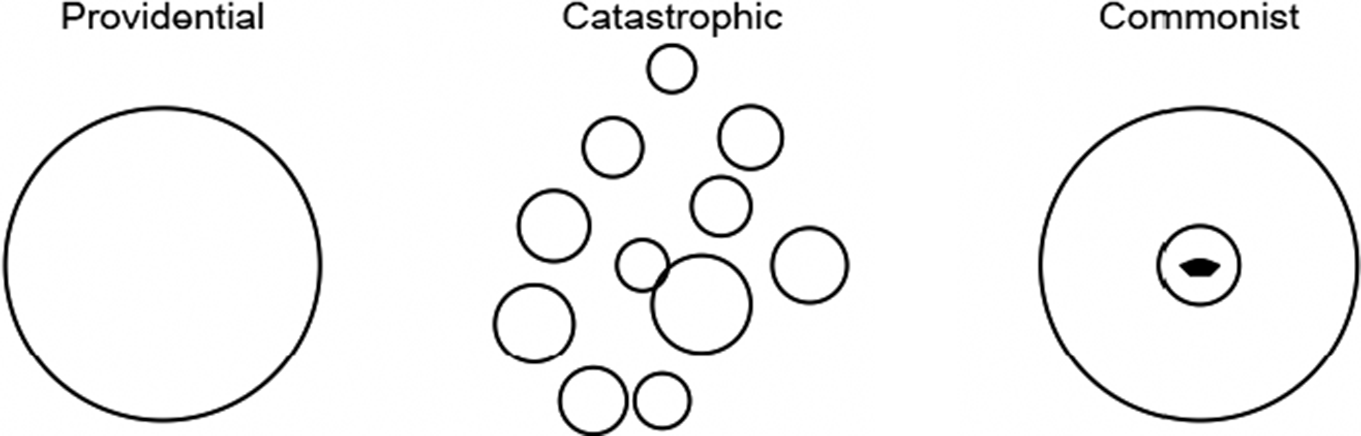

 Open access

