


1. Introduction
Digital products have become essential to everyday life, accommodating a broad range of user needs. Mindfulness and meditation apps, in particular, risen in popularity, driven by growing interest in mental well-being practices (Reference Alqahtani and OrjiAlqahtani & Orji, 2020). These apps offer features ranging from simple guided meditations to advanced progress tracking and goal setting (Reference Lukoff, Lyngs, Gueorguieva, Dillman, Hiniker and MunsonLukoff et al., 2020). Research has shown that mindfulness practices can help people reduce stress and anxiety (Carissoli et al., Reference Carissoli, Villani and Riva2015; Chittaro & Vianello, Reference Chittaro and Vianello2016), improve mood and well-being (Reference Peters, Calvo and RyanPeters et al., 2018), and even improve physical health (Reference Roquet and SasRoquet & Sas, 2018). The convenience and accessibility allow users to easily incorporate mindfulness into their daily routines. However, as with every application, the design process is shaped by multiple factors, user experience and technological capabilities to business goals and ethical considerations. While mindfulness apps are intended to support well-being, some argue that they prioritize convenience and marketability over authenticity, often lacking the depth and guidance that traditional practices provide (Dahl & Davidson, Reference Dahl and Davidson2019; Lukoff et al., Reference Lukoff, Lyngs, Gueorguieva, Dillman, Hiniker and Munson2020). Additionally, ethical concerns appear in the use of dark patterns in-app design—manipulative techniques intended to deceive users into actions such as subscribing, making purchases, or sharing personal information (Reference Di Geronimo, Braz, Fregnan, Palomba and Bacchellidi Geronimo et al., 2020). These issues underscore tensions among usability, commercialization, and user trust, prompting a debate on whether mindfulness apps truly enhance well-being or exploit it for profit (Reference Brown and RyanBrown & Ryan, 2003). As a result, understanding the use of dark patterns in mindfulness apps is crucial to addressing their impact on user trust and autonomy. This study explores the prevalence of these tactics and seeks to understand users’ awareness and perceptions, aiming to promote greater transparency and ethical design by balancing priorities in digital tools for mental well-being.
1.1. Approaches to the idea of mindfulness
Mindfulness is defined as being aware of oneself and the moment (Reference Karlsson, Olsson and NormarkKarlsson et al., 2022). Within the Buddhist tradition, it is cultivated over time by growing to be mindful often related to a higher state and wisdom (Reference Lukoff, Lyngs, Gueorguieva, Dillman, Hiniker and MunsonLukoff et al., 2020). In the Western world, mindfulness has been implemented into psychiatric practices and therapy to support mental health (Reference Lukoff, Lyngs, Gueorguieva, Dillman, Hiniker and MunsonLukoff et al., 2020). Heightened discussion on the link between mental well-being and broader psychological or physical outcomes has surfaced in modern, high-stress lifestyles—described as “running on autopilot” (Reference CreswellCreswell, 2017) that does not allow for a pause, pushing them into a survival-like state (Reference Keng, Smoski and RobinsKeng et al., 2011) resulting to try find ways to incorporate mindfulness practices into their daily routines instead of reorganizing their entire lives (Reference Roquet and SasRoquet & Sas, 2018). Common mindfulness practices include meditation, breathing exercises (Reference Roquet and SasRoquet & Sas, 2018), and mindful eating (Nelson, 2017), extending to physical activities, like yoga which is also profoundly connected to Buddhist traditions (Reference Roquet and SasRoquet & Sas, 2018). Various perspectives on mindfulness in human-computer interaction (HCI) share the goal of fostering present-moment awareness while reducing distractions, applying these principles to designing and evaluating technologies like websites, mobile apps, and digital platforms.
1.2. Mindfulness within HCI
Over the past five years, HCI has increasingly focused on designing for meaning, pleasure, and human flourishing, supporting sustained engagement, behavior change, and overall well-being (Reference Peters, Calvo and RyanPeters et al., 2018). Mindfulness in HCI unites both its Eastern interpretation—holistic practice developed over time—and its Western framing as a functional strategy for stress reduction (Terzimehić et al., Reference Terzimehić, Häuslschmid, Hussmann and Schraefel2019; Karlsson et al., Reference Karlsson, Olsson and Normark2022). These can be minimalistic interfaces inspired by Eastern practices enhancing concentration, while Western-inspired features like reminders to take breaks or monitor device usage (Reference Lukoff, Lyngs, Gueorguieva, Dillman, Hiniker and MunsonLukoff et al., 2020). As a result of combined approaches and accessibility of mobile apps in daily life enabled the development of applications that align with diverse interpretations of mindfulness. The most popular mindfulness applications, Headspace and Calm, employes a fusion of traditional mindfulness practices and the commercial demands of the contemporary world (Reference JablonskyJablonsky, 2022). Similar applications presenting themselves as mindfulness applications have been criticized for contradicting the foundation of mindfulness for profits or to benefit of the app itself (Reference Lukoff, Lyngs, Gueorguieva, Dillman, Hiniker and MunsonLukoff et al., 2020). Transforming mindfulness, traditionally considered a long-term state of being achieved over time and practiced in each moment (Reference Lukoff, Lyngs, Gueorguieva, Dillman, Hiniker and MunsonLukoff et al., 2020), into an app marketed as a quick fix for daily stress and negative mental states, is inherently contradictory. Unfortunately, as this study will demonstrate in the following sections, the commercialization of mindfulness and the desire for profit in some applications can lead to the utilization of manipulative design techniques commonly referred to as dark patterns.
1.3. Approaches to dark patterns
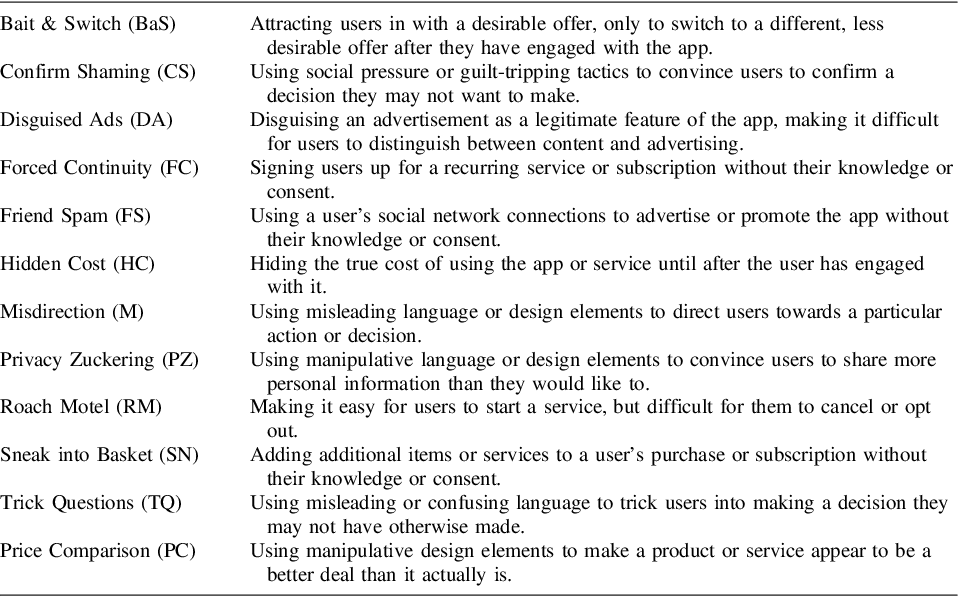
Dark patterns, in their general definitions, are design decisions that favor the benefit of the app rather than the users’, even in cases that can harm them (Reference Di Geronimo, Braz, Fregnan, Palomba and Bacchellidi Geronimo et al., 2020). These can be done in various ways, usually manipulating users into specific actions and behaviors without their knowledge or implicitly making some interactions hard to conduct or find (Reference Bongard-Blanchy, Rossi, Rivas, Doublet, Koenig and LenziniBongard-Blanchy et al., 2021). Researches have debated the identification, categorization, and ethical character (Reference Luguri and StrahilevitzLuguri & Strahilevitz, 2021) of these patterns and the psychological mechanisms that underlie them (Reference Gray, Kou, Battles, Hoggatt and ToombsGray et al., 2018). Brignull (Reference Brignull2010) defines dark pattern as “A user interface that has been meticulously created with an understanding of human psychology to manipulate users into doing things that they did not plan to”.
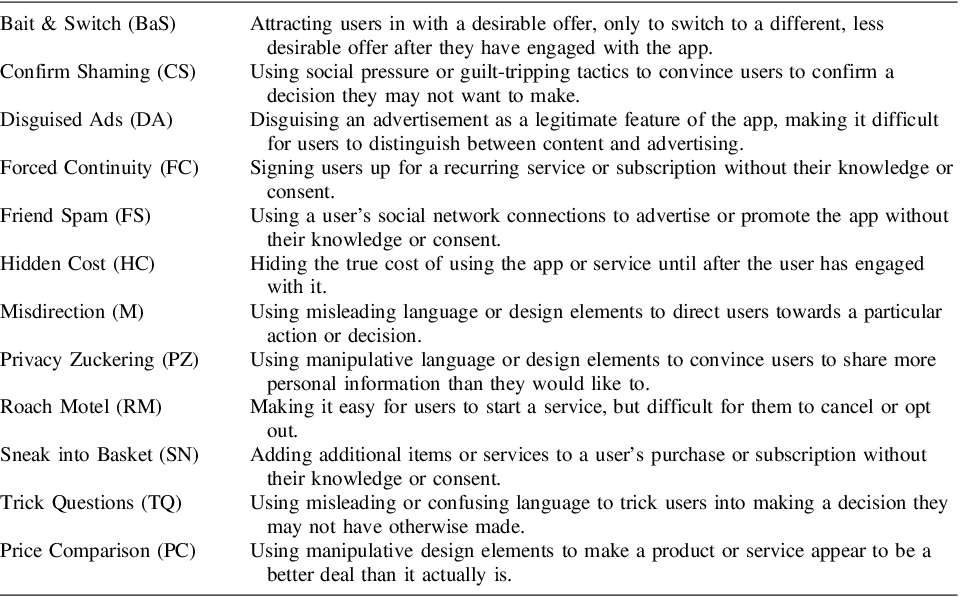
Brignull’s (Reference Brignull2010) twelve dark pattern categories
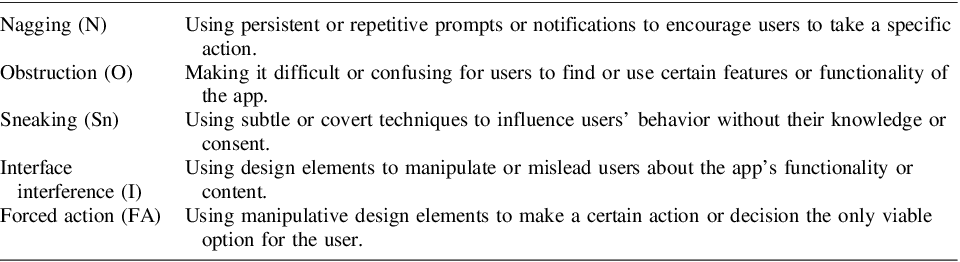
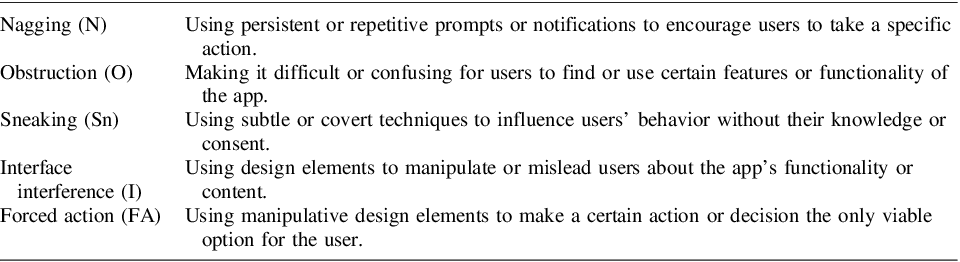
On the other hand, Gray et al. (Reference Gray, Kou, Battles, Hoggatt and Toombs2018) divided these current dark patterns into five taxonomies.
Gray et al.’s (Reference Gray, Kou, Battles, Hoggatt and Toombs2018) additional five dark patterns
1.4. Ethical Issues in the dark patterns
In recent years, particularly in North America, mindfulness is often defined as, “awareness that arises through paying attention, on purpose, in the present moment, non-judgmentally” (Jablonsky, Reference Jablonsky2022, p.322), yet this definition inherently directs users to focus on what is considered “worthy” or “purposeful,” imposing a subtle judgment contrary to mindfulness’s non-judgmental ethos. Mindfulness apps, justifying their use of dark patterns, assert that they guide users’ attention to a purposeful platform, distinguishing them from others. This justification prompts ethical considerations regarding the manipulation of users’ attention and questions whether users can make informed choices independently about where to direct their attention. Research has revealed that mindfulness apps often guide users toward their goals using a rigid path, sometimes inducing stress or addictive behaviors (Reference JablonskyJablonsky, 2022). Furthermore, research has shown that users are more susceptible to the deception of dark patterns in five cases; frequency of occurrence, trustworthiness, level of frustration, misleading behavior, and physical appearance (Reference Karlsson, Olsson and NormarkKarlsson et al., 2022). In the case of mindfulness, there is a level of vulnerability that can trigger all five of these in the user. The problem here is designers may unknowingly incorporate dark patterns into their designs due to time constraints, reliance on established designs, prioritization of company goals over user experience, or a belief in the user’s best interests (Jablonsky, Reference Jablonsky2022; di Geronimo et al., Reference Di Geronimo, Braz, Fregnan, Palomba and Bacchelli2020). While mindfulness apps, even those employing dark patterns, offer benefits like stress reduction, relaxation, and improved well-being, designers must balance the positive impact of mindfulness apps with the awareness of dark patterns is crucial for responsible design.
2. Methodology
This study adopts a multi-method approach inspired by Clarke and Draper (2020), explored daily usage in the Calm app, and Di Geronimo et al. (Reference Di Geronimo, Braz, Fregnan, Palomba and Bacchelli2020), examined dark patterns in apps and user awareness of them. Over nine weeks, including six for data collection and three for analysis, the study employed four stages: heuristic evaluation, survey, diary, and user interviews, aiming to understand the impact of dark patterns on user perceptions of mindfulness applications. Prior to the commencement of the field study, ethical clearance was obtained from the Middle East Technical University (METU UEAM) Applied Ethics Research Center.
2.1. Heuristic evaluation
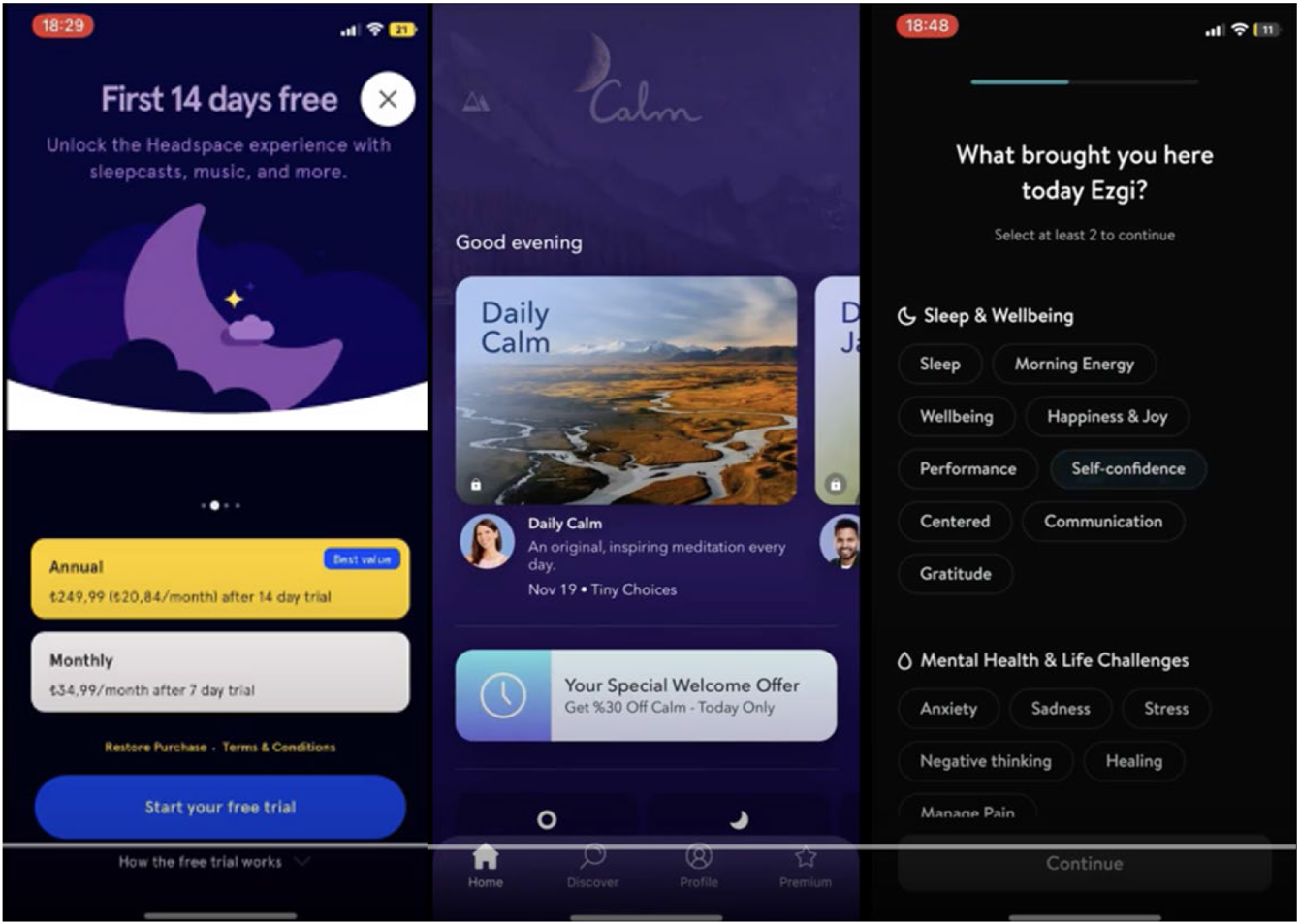
This stage examined the three most widely used mindfulness apps—Calm, Headspace, and Insight Timer—chosen for their global reach and frequent mention in academic literature (Reference JablonskyClarke & Draper, 2020; Jablonsky, 2022); the study aimed for broad relevance and alignment with prior research findings. The primary objective was to identify dark patterns in these applications, following the methodology of Di Geronimo et al. (Reference Di Geronimo, Braz, Fregnan, Palomba and Bacchelli2020). The researchers who were also UX designers each conducted a 10-minute, subscription-free exploration to avoid biases related to user data or personalization. allowing the identification of manipulative design techniques. Standardized actions, including signing up, deleting accounts, and logging out, were performed to evaluate design and usability, focusing on commonly observed dark patterns. The researchers documented the process through screen recordings (Figure 1), which were then analyzed to identify dark patterns adhering to the taxonomy developed by the dark pattern Detection Project (DAPDE, n.d.), which comprehensively integrates the work of Brignull (Reference Brignull2010), Grey et al. (2018), and Mathur et al. (2019).
Video clips from headspace displaying CS, FE, and FC; Calm displaying S, and CD; Insight timer as control
2.2. Survey
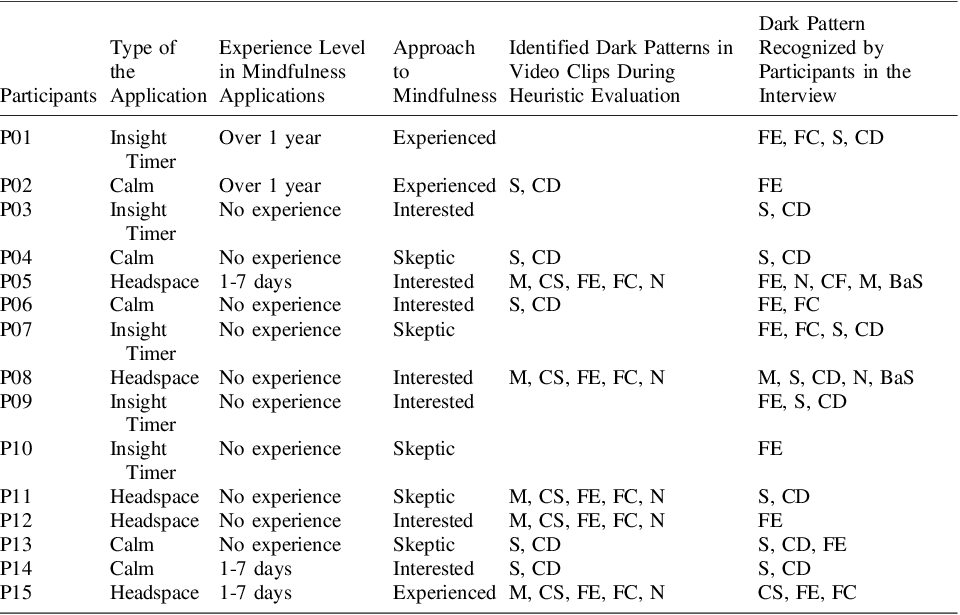
A Google Forms survey was administered to gather participants’ perspectives on mindfulness applications and to recruit for subsequent research stages. Distributed via snowball sampling, the survey captured respondents aged 18–30 years. Of the 20 participants, 12 had never used a mindfulness app; the remaining 8 had used one but half had since discontinued. From this pool, 15 individuals consented to continue in the study: two reported over one year of prior app use, three reported 1–7 days, and 10 had none. To mitigate potential bias—particularly dark pattern blindness—researchers selected highly experienced users for a pilot interview and included at least one participant with 1–7 days of usage, thereby enriching insights into engagement and user experience.
2.3. Diary
Following the survey, researchers randomly distributed 3 mindfulness applications (Calm, Headspace, Insight Timer) to willing participants. To ensure equitable representation, each app was assigned to 5 participants. Inspired by Clarke and Draper’s (2020) work on the Calm app, the process was 5 days, which was designated for user engagement, trust, and perception measurement—aligned with the research’s primary goal. Participants had the flexibility to use the app as their routines permitted, with no mandatory daily usage. Daily journal entries captured participants’ app usage, activities, experiences, and reasons for non-usage, fostering familiarity and sensitivity. Every participant has used the application they were given at least once.
2.4. User interviews
In the user interview phase following the diary stage, a three-part approach was used to deepen understanding of how dark patterns in mindfulness applications affect user engagement, perception, and overall experience. First, a discussion gathered participants’ general insights on mindfulness, app usage, design features, and manipulative strategies—including dark patterns. Next, participants viewed expert review videos of the apps, prompting reflections on potential negative impacts on engagement. Finally, guided application walkthroughs allowed participants to demonstrate and discuss how dark patterns influenced their real-time interactions. This section drew from Di Geronimo et al.’s (Reference Di Geronimo, Braz, Fregnan, Palomba and Bacchelli2020) three-video review format, ensuring consistency among participants. The video analysis section comprised three videos (Figure 1). This approach, informed by prior methodologies, aimed to evaluate participants’ awareness and understanding of dark patterns, informing the overall analysis. The interview’s third section involved an application walkthrough where participants shared their screens, considering dark patterns. They navigated through routine tasks and discussed account deletion or unsubscribing, revealing potential manipulative or unclear processes, aiming to deepen understanding of participants’ experiences with dark patterns in the application.
2.5. Data analysis
In this research, semi-structured interviews were the primary method used to gather data. The content analysis method was used to analyze this qualitative data, which involved grouping the textual information into smaller clusters to identify relationships between them (Julien, 2008). The researchers chose the inductive approach, as it allowed them to understand the participants’ experiences by closely and deeply reading the textual data. The data was analyzed by repeatedly reading the transcribed interviews and identifying similar and relevant information as codes within the same categories. These categories then formed themes, which were used to present the research findings to the readers.
3. Findings
The analysis phase involved transcribing and coding interview data to explore the relationship between dark patterns and participants’ perceptions of mindfulness applications. Data was coded under four main topics: perception, motivation, behavior, and dark patterns, connecting to broader themes. Findings revealed three user types—skeptics, interested, and experienced—based on motivations influencing their behavior and perception of applications. Skeptics had primarily extrinsic motivations, interested users showed a mix of intrinsic and extrinsic motivations, and experienced users exhibited primarily intrinsic motivations. Categorizing users by motivation was crucial for understanding behavior, perception, and the impact of dark patterns. The presence of these patterns correlated with negative behaviors like fleeing the application, impacting user perception negatively. The decision to purchase correlated with intrinsic motivations and usage frequency, suggesting users are more likely to buy an app perceived as beneficial and used regularly.
3.1. User perceptions of dark patterns
Identifying dark patterns can be challenging due to “dark pattern blindness” (Reference Di Geronimo, Braz, Fregnan, Palomba and Bacchellidi Geronimo et al., 2020) wherein repeated exposure to manipulative design elements desensitizes users. Over time, individuals become so accustomed to these tactics that they may fail to recognize their influence and, consequently, struggle to make fully informed decisions about their interactions. In the research, the normalization of dark patterns also reveals itself with a level of awareness, however justifying or accepting it as a norm too.
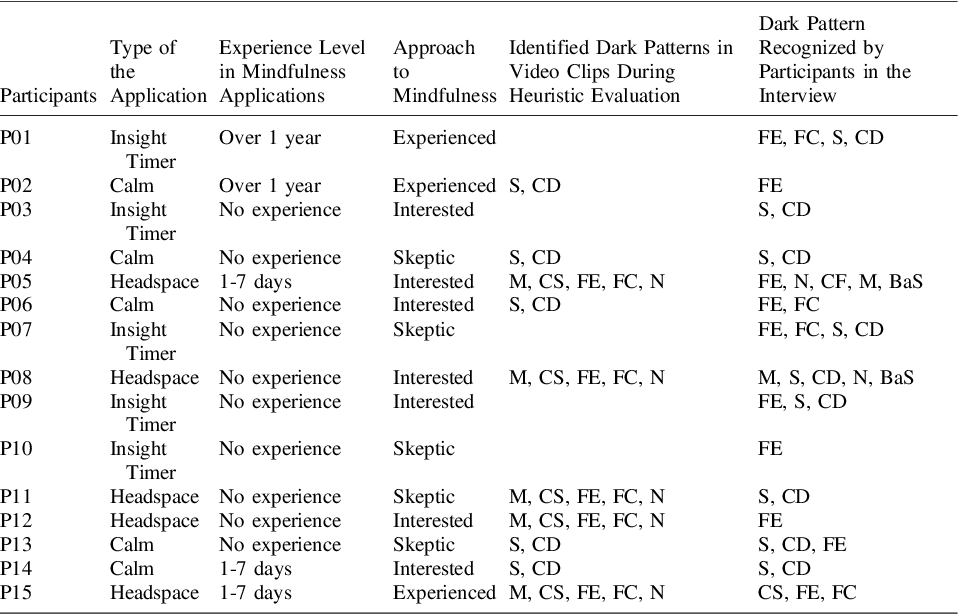
In this study, participants were asked to identify dark patterns both in the mindfulness applications they used and in brief demonstrative videos (Figure 1). The most frequently recognized pattern was Forced Enrollment (FE), noted by 10 out of 15 participants, who encountered features or content locked behind a mandatory subscription or paywall. Scarcity (S) and Countdown (CD) were next, identified by 9 participants each, and often appearing jointly on various platforms. Other patterns, including Forced Continuity (FC) (3 participants), Nagging (N), Click Fatigue (CF), Misdirection (M), and Bait and Switch (BaS) (2 participants each), were less common; only one participant mentioned Confirm Shaming (CS).
When asked for real-world examples, participants most frequently cited N from other platforms (8 out of 15), followed by S, CD, and FE. Many of these examples came from online shopping sites—well-known for pressuring consumers with time-sensitive offers (Reference Di Geronimo, Braz, Fregnan, Palomba and Bacchellidi Geronimo et al., 2020)—or streaming platforms that disrupt main content with advertisements and subscription prompts. Overall, the findings suggest that users are more apt to notice dark patterns when they impose a clear financial impact, restrict access to core functionality, or substantially disrupt the user’s primary experience.
Lastly, many participants have mentioned and felt the duality of dark patterns and mindfulness practices. Mentioning that they have felt more stressed or pressured rather than relaxed as they should have, or being distracted by the application while being one of the definitions of being mindful is to be able to be present at the moment or less valued and the application being the main focus and beneficiary of the situation, not them, which are all baseline definitions of dark patterns themselves, and it being in a mindfulness activity has strengthened the contrast and irony for the participants.
“Maybe it’s a ridiculous point of view, but you know; it felt like the main important thing was for the application being well rather than me being well.”
Types of dark patterns identified by participants
3.2. Two-way constraints in user suggestions
The participants through their usage and interview had some suggestions or preferences that resulted in a two-way constraint, meaning that might be beneficial to some but detrimental to others or implement more dark patterns in the application. The main two were Streaks and Notifications.
One of the critical extrinsic motivators was the user’s need to see and track their progress, which more often than not creates streak features in applications. In the context of user interface design, a “streak” feature is a way of tracking and displaying a user’s progress over time, such as the number of consecutive days they have used an app or completed a task. While a streak feature on its own is not necessarily a dark pattern, it can be used in manipulative ways to create a sense of pressure or obligation for users to continue using the app, or to make them feel as though they will lose something valuable if they do not (Clarke & Draper, 2020). This can be considered a form of “nudging” or “gamification” that can be used to influence users’ behavior in ways that may not be in their best interest. On the other hand, some users enjoy streak features for giving them a challenge that motivates them to use the application more on a regular basis, however, the pressure that is put on the other half of the users that negatively affected by this feature, in an application where they seek calmness and relaxation creates a duality and two-way constraint.
One other challenge for the users was the lack of free time, and not being able to use the applications enough which resulted in a struggle to create a habit of using them. For this many users expressed their need to be reminded of the application, and be motivated to use it, and the first way that comes to mind to do this is through notifications. Notification as a feature can be used both in a beneficial and manipulative manner. While reminding and motivating the users and assisting them in building their habits, the extent and frequency of the notifications can make them a dark pattern categorically N and often are exampled with urging the user to open the application. Thus, it can also be argued that while being reminded of the application and opening it, they are by definition exposed to nagging. However, consent of course is a key parameter in this situation. The autonomy of the user is the thin line between it being a motivational feature opposed to a dark pattern.
3.3. Perception on continuity
For further usage of the applications or continuing mindfulness activities, the research revealed that the application enforcing subscriptions for their experiences all have been dropped out by their users. 9 out of 10 of the participants expressed their intention to seek mindfulness activities outside of their tried applications, with 6 of them explicitly saying that they would seek free alternatives. This can be a strong argument showing that FE and FC are the main contributors to this high percentage of dropouts. Supporting to this many of the users who used these applications that use these dark patterns have also expressed that the trial period is not enough to build a habit or get accustomed to the application since it is a very mental and psychological process. Some even expressed that they would’ve just deleted the application as soon as they saw the subscription and enrolment screen. The reason is that they were not given the chance to explore what the application offers or whether they would use it at all. On top of it, if they did decide to delete their application after the trial period, they added they would forget to cancel it in time and suffer financial loss. On the other hand the participants of Insight Timer all but one said that they would continue to use the application, allowing a strong indicator that even though it has some premium limitations in the application, like not allowing some minor functional interactions, or offering their course programs with the premium package, since it is not the first thing that the user encounters when downloading it and using it, it allows the user to explore, get accustomed to and build a habit, which can be argued that might have a higher potential to translate to a decision to purchase the premium package.
In correlation to both the user categories and behaviors, the analysis revealed that skeptic users were more likely to abandon the app or to make negative comments on the applications because of the presence of dark patterns. On the other hand, interested users were more likely to be impacted by contextual and emotional factors in their perceptions of the applications, as well as affect their decision of exhibiting behaviors such as dropping out, deleting the application, or decision to purchase accordingly. Experienced users were more likely to be immune to the impact of dark patterns and to continue using the application regardless of the presence of such manipulative design strategies, which can be argued that prolonged exposure to dark patterns may result in dark pattern blindness or dismissive behavior in favor for intrinsic fulfilment and motivation.
The parameters leading to a decision to purchase the mindfulness applications revealed in the research are through certainty of future usage. This is established by building a habit that requires a set frequency of usage in a period of time, according to research it can take anywhere from 18 to 254 days to form a habit, with the average time being around 66 days (Reference DuhiggDuhigg, 2012). The applications that had FE which required the users to start their free trials first thing when they opened the applications kept their trial period between 7 days and 14 days, not even reaching the minimum of Duhigg’s time frame. This revealed itself in the research as users not being able to get used to the application, unable to understand if they were benefiting from it or not, or learning what mindfulness is for them and which activities are better for them. This is especially the case for users who are inexperienced or new users that fall into the interested users’ category. Since they have some intrinsic motivation to improve their well-being, however, get lost in the application perceiving it as complex or having a need to be guided by the application. 6 out of 10 participants who used an application with a trial period expressed that they did not have enough time to understand whether or not they had benefited from the mindfulness application or did not have enough time to form a habit of using the application. 6 of these participants have suggested some solutions for this problem varying from extended offers and trial periods, to better guidance according to their experience level, or not rushing the user into enrolling and subscribing to a trial period in general and allowing them a period of free roam.
4. Conclusions
4.1. Overview of the study
In conclusion, this research aimed to explore the impact of dark patterns on users’ perception of mindfulness applications through a mixed-methods approach involving expert review, survey, diary, and in-depth interview methods. The data gathered from a diverse sample of participants with varying levels of prior experience with mindfulness applications. The findings of this study suggest that the presence of dark patterns in mindfulness applications can have a significant impact on users’ perceptions and behaviors towards the application. This includes lower levels of satisfaction, trust, and engagement with the app. Furthermore, the study revealed that users’ perceptions of mindfulness apps are not only influenced by the design and functionality of the applications but also by contextual and emotional factors, such as overall mood and emotional state.
Additionally, the study identified a correlation between users’ motivations for using the app, be it intrinsic or extrinsic, and their perceptions and behaviors towards the application. Intrinsically motivated users, for instance, were more inclined to persist despite encountering certain manipulative designs, whereas extrinsically motivated users often felt pressured or disengaged.
Another finding involved dual constraints—situations in which certain app features benefitted some users but negatively impacted others. Examples included streaks, which can foster ongoing engagement for users who value concrete goals, yet may induce stress or guilt in those seeking a calmer or more flexible approach. Similarly, notifications proved helpful to some users as reminders to practice mindfulness but amounted to intrusive nagging for others, potentially triggering frustration and avoidance. Recognizing such two-way constraints is vital for designers, as it highlights the tension between encouraging consistent use and inadvertently pressuring users.
Overall, the findings of this study contribute to the current understanding of the impact of dark patterns on user engagement and experience and highlight the importance of considering the ethical implications of manipulative design strategies in the development of mindfulness applications. Importantly, these findings are parallel with the current literature and discussions in the field, raising similar ethical questions about the use of manipulative design strategies in mindfulness applications.
4.2. Limitations
There are several limitations to this research that should be considered. First, the modest sample size of 15 participants may limit the generalizability of findings. Additionally, the predominantly young adult demographic may affect the applicability of the results to older age groups or different cultural contexts. The relatively short study duration may restrict understanding of potential long-term effects of dark patterns on user engagement. Due to time constraints and data access limitations, conclusions were primarily drawn from self-reported perceptions, which may be subject to memory errors or biases. Furthermore, participant thresholds for recognizing dark patterns and their awareness levels may vary, potentially influencing consistency in responses. Lastly, researcher biases, such as confirmation or observer bias, may have affected data collection, analysis, and interpretation.
4.3. Further research
The further research section highlights several directions to deepen the understanding of dark patterns in mindfulness applications. First, replicating the study with a larger and more diverse sample of mindfulness apps could provide a broader perspective on the prevalence and impact of these manipulative design practices. Investigating specific dark patterns, such as forced enrolment, may uncover their unique effects on user perceptions and experiences. Additionally, examining the long-term impact of dark patterns on user engagement and app usage can shed light on their sustained influence. Exploring how users respond to these manipulations, including whether they continue using the app or abandon it, is another critical area for research. Cultural differences also warrant investigation, as perceptions of dark patterns may vary across different cultural contexts. Finally, evaluating the effectiveness of ethical design strategies in promoting mindfulness applications offers a pathway for creating user-centered and transparent digital tools.
Acknowledgments
We would like to express our sincere gratitude to Gülşen Töre Yargın for her valuable guidance and insightful comments throughout the research process.


 Open access

