


INTRODUCTION
Bovine tuberculosis (bTB) is a chronic bacterial disease of animals and humans caused by Mycobacterium bovis ssp. bovis (M. bovis) and M. bovis ssp. caprae (M. caprae). Both species are zoonotic agents and members of the M. tuberculosis complex (MTC). Within this complex, M. bovis is epidemiologically and economically the most important species in livestock. It is mandatory for all European Union (EU) Member States to report any infection of cattle with M. bovis to the European Commission (Directive 64/432/EEC from 26 June 1964). In livestock, neither vaccination nor treatment is permitted within the EU; infected animals must be culled. According to German legislation, infections of cattle with M. bovis and M. caprae have to be notified at the national level as well. Although M. bovis principally affects domestic cattle (Bos taurus and Bos indicus), a wide range of warm-blooded animals, including humans, are susceptible to infection [Reference Morris, Pfeiffer and Jackson1–Reference De Lisle, Makintosh and Bengis3]. The main route of transmission occurs by aerosol formation and inhalation. Nevertheless, oral transmission by ingestion of feed or water contaminated with nasal secretions, milk, faeces, or urine containing infective organisms is also possible [Reference Kaneene, Pfeiffer, Thoen, Steele and Gilsdorf4].
In the early decades of the 20th century, bTB had a high impact on animal and human health in Germany. The sanitation scheme of Robert von Ostertag, based on the registration and eradication of cattle with clinical tuberculosis, failed to bring about a decline in the incidence of bTB, and even led to an increase in cases [Reference Weiss, Thoen, Steele and Gilsdorf5]. After World War II, the prevalence of bTB at the farm level was estimated to be 59% [Reference Meyn6]. About 45% of slaughtered cows were found to be infected with bTB [Reference Kleinschmidt7]. Therefore, both compulsory pasteurization of milk and a voluntary eradication programme, which was later (1965) changed into a compulsory national eradication programme, were commenced in West Germany in 1952. The programme consisted of regular tuberculin skin testing of all cattle aged >6 weeks and removal of reactors. It also included economic advantages in the market for milk and meat from tuberculosis-free herds. In 1955, a similar programme was initiated in the former German Democratic Republic, which was changed into a compulsory programme 4 years later. These eradication programmes resulted in a significant decrease in bTB cases. Since 1962 (West) and 1979 (East) Germany were practically free from bTB. By 1997, Germany finally met the requirements of Article 2(d) of Directive 64/432/EEC by having 99·9% of the cattle herds bTB free for at least 10 consecutive years and was subsequently declared officially bTB-free (OTF) (Decision 97/76/EC). As a consequence, Germany stopped regular tuberculin testing and bTB surveillance is maintained instead by official veterinary meat inspection. This paper describes the epidemiological findings based on a single bTB-infected animal that revealed an unprecedented bTB clustering in the north-west of Germany.
METHODS
In February 2008, gross lesions suspicious for bTB were found in one cow by meat inspection at home slaughtering. The farm of origin was put under quarantine and all cattle were subjected to comparative tuberculin testing. The intra vitam diagnosis of bTB consisted of intradermal injection of matched equipotent doses of bovine and avian purified protein derivative [PPD; source: Wirtschaftsgenossenschaft deutscher Tierärzte eG (WDT), Germany; 5000 tuberculin units (TU) and 2500 international units (IU), respectively] at both sides of the neck. According to the German Regulation on bTB (Tuberkulose Verordnung, 13 March 1997), increase in skin thickness was measured 72 h after injection and the results were interpreted as laid down in Annex B of Directive 64/432/EEC, i.e. the reaction was interpreted as positive if an increase in skin thickness of ⩾4 mm was observed. Inconclusive reactors were retested after 6 weeks. In case the result was again inconclusive, the animal was culled.
Gross lesions of culled cattle of the index farm were examined histologically. Samples of diseased animals of the index farm and one contact farm (no. 7) were confirmed as M. bovis-infected by bacteriological culture, polymerase chain reaction (PCR) and DNA sequencing of the gyrB gene [Reference Rodriguez8–Reference Moser10]. Molecular characterization of isolates included spoligotyping (according to the nomenclature of www.mbovis.org) and variable number of tandem repeats (VNTR) typing [Reference Kamerbeek11–Reference Supply13]. All animals of the other contact farms that reacted positive to the tuberculin test were culled without further diagnostic confirmation.
Starting with the farm where bTB was first detected, epidemiological investigations were initiated [Reference Kroschewski14]. (i) The national animal identification and registration system for animals [Herkunftssicherungs- und Informationssystem für Tiere (HI-Tier)] was used to perform trace-back and trace-forward investigations back to 1999. Contacts via livestock transporters were only traced back if the potential contact was longer than 1 day and the final destination of the animal was not an abattoir. (ii) The national animal disease notification system [TierSeuchen-Nachrichtensystem (TSN)] was used to compile all bTB cases reported in Germany since 1997. Each affected farm was counted as one case/outbreak, independent of the number of animals affected. (iii) The Trade Control and Expert System (TRACES) was used to identify animals from the bTB-positive herd that had been exported to countries within and outside the EU. Furthermore, data on meat inspections and possible condemnations were requested from all abattoirs that had slaughtered cattle from the putative index farm since 1999. Farms identified as contacts to bTB-positive farms were further inspected on site by the local veterinary authorities. Intradermal tuberculin testing was used to identify the status at the individual animal level and questionnaires were completed in order to obtain detailed information on the route of bTB infection. Neighbouring farms were also included in the investigations.
RESULTS
Despite the OTF status of Germany, a total of 118 bTB outbreaks were reported between 1997 and November 2009 in cattle, of which 23 occurred in 2008. The first case in that year was detected in February during routine meat inspection in home slaughtering. A veterinarian found numerous miliary granulomas in the pleura and multifocal granulomatous inflammation with caseous necrosis in the lymph nodes and lungs in the carcass of one cow. The carcass was condemned and tissue was collected for diagnostic examination. On 29 February the National Reference Laboratory confirmed the presence of M. bovis by PCR and partial sequencing. Comparative tuberculin testing of the whole cattle herd (173 animals) revealed 101 (58%) reactors. Thus, the decision was taken to cull the herd. At the rendering facility, 57 reactor animals were examined for gross pathological alterations. In 27 cattle (16%) retropharyngeal lymph nodes were severely enlarged and revealed exudative or caseating lesions indicative of bTB. In ten cattle lesions were also detected in the mediastinal, tracheobronchial and mesenteric lymph nodes as well as in the tonsils, lungs, liver, and peritoneum.
The farm where bTB was first detected was located in the north-west of Germany in the Federal State of Lower Saxony. With a total of 2·6 million cattle distributed between 26165 herds on 47624 km2, this federal state is one of the areas with highest cattle density in Germany. Epidemiological investigations revealed that between September 1999 and February 2008 the farm had purchased a total of 108 animals from 56 farms in ten counties (Kreise) situated in three different federal states in Germany. There were no bTB-positive animals detected in any of these farms. Therefore, the farm where bTB was first discovered was considered as the putative index farm. Since 1999, this farm had sold a total of 231 animals to 39 different farms in 19 counties situated in five different federal states (Table 1). In the last 6 months before the farm was detected as bTB-positive, 63 animals had been sold to six farms in Lower Saxony and Schleswig-Holstein. Subsequent tuberculin testing revealed 22 reactors on the farm in Schleswig-Holstein. Furthermore, since 2005 a total of 23 cattle had been exported to four European (The Netherlands, France, Italy, Poland) and 145 to two non-European (Russia, Lebanon) countries. All countries were informed regarding the detection of bTB in the farm of origin by the Federal Ministry of Food, Agriculture and Consumer Protection. No information was received about further follow-up procedures or test results in these countries. Tracing of the livestock transport companies revealed a total of about 3300 cattle as trade contact partners of animals of the putative index farm, i.e. around 1650 animals had been in contact with purchased cattle and more than 1600 animals with sold cattle.
Number of farms which purchased animals from the putative index farm since September 1999 and total number of animals possibly exposed on county level
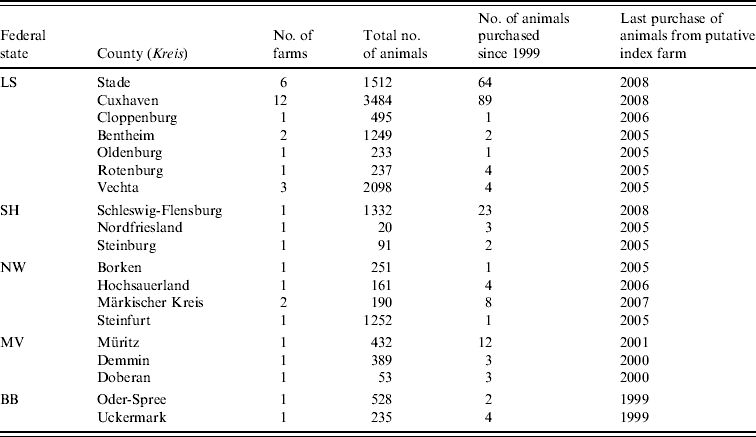
LS, Lower Saxony; SH, Schleswig-Holstein; NW, North Rhine-Westphalia; MV, Mecklenburg-Western Pomerania; BB, Brandenburg.
By the end of 2008, all 39 farms which had purchased animals from the putative index farm since 1999 as well as the two farms adjacent to it had been inspected on site by the local veterinary authorities and submitted to comparative tuberculin testing. Eventually, a total of 11 farms were identified which had probably acquired bTB from the putative index farm; nine of them through animal trade and two through direct animal contact (Table 2). Three of the farms were located in the same county as the putative index farm (Stade), six were located in a neighbouring county (Cuxhaven) but in the same federal state (Lower Saxony), one was located in Schleswig-Holstein and one in North Rhine-Westphalia. The affected farms harboured altogether 2943 cattle. Four of them had recently (2007–2008) acquired cattle from the putative index farm, while the other five trade contacts had taken place between 2002 and 2006. However, farm 11 had not purchased animals from the putative index farm, but from farm 9. Animals in the two farms (nos. 8 and 11) adjacent to the index farm were also identified as bTB-positive.
Epidemiological relationship between the bTB-infected farms suggested to be linked with each other in the outbreak event 2008 in Lower Saxony
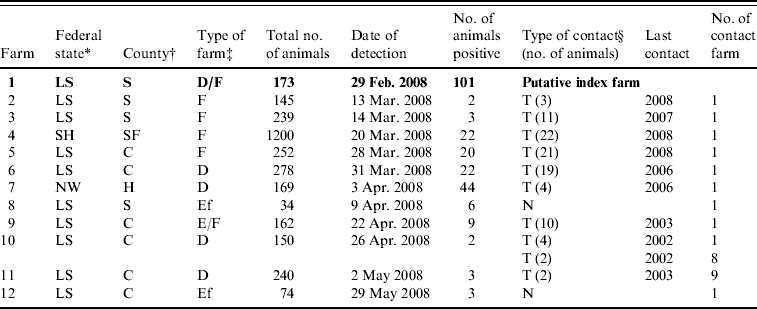
* Federal state: LS, Lower Saxony; SH, Schleswig-Holstein; NW, North Rhine-Westphalia.
† County (Kreis): S, Stade; SF, Schleswig-Flensburg; C, Cuxhaven; H, Hochsauerland.
‡ Type of farm: D, dairy cattle; F, fattening beef; E, extensive cow/suckler herd; Ef, extensive fattening beef.
§ Type of contact: T, trade; N, neighbourhood.
Fattening beef herds were affected as often as dairy herds (four); two farms were extensive cow/suckler herds and two were mixed farms (one dairy/beef combination and one with an extensive cow/suckler and a beef herd). Ten outbreaks were reported in large-scale herds (>100 cows) and two in small-sized herds (⩽100 cows). The highest proportion of positive animals was found in the putative index farm (101/173, 58%) followed by farm 7 (44/169, 26%).
In addition to the animal which was first detected as bTB-positive, tissue samples from 16/27 cattle of the putative index farm exhibiting severe lesions were subjected to bacteriological culture and M. bovis was isolated in all of them. Moreover, according to availability, bacterial isolation was performed in four cattle from three contact farms and in all of them M. bovis was isolated as well. Thus, spoligotyping of 21 M. bovis isolates was performed. All isolates belonged to spoligotype SB0121. Typing of 26 VNTR loci from the isolates of the cow which was first detected as bTB-positive, another animal from the putative index farm, and one animal from farm 7 revealed that they were all characterized by identical or very similar patterns (Table 3). Only the loci VNTR 1644 (MIRU 16), VNTR 2163a (QUB 11a), VNTR 2165 (ETR A), VNTR 3232 (QUB 3232), and VNTR 4052 (QUB 26) were partially divergent. The same spoligotype (SB0121) and almost the same VNTR pattern were found in an isolate from a previous bTB outbreak that had taken place in Lower Saxony in 2000.
Variable number of tandem repeats (VNTR) of selected strains of both the outbreak event in 2008 and the outbreak in 2000
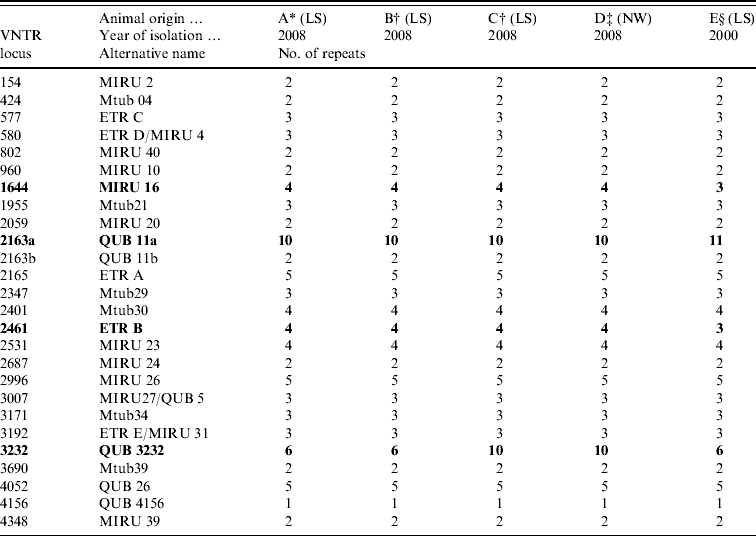
LS, Lower Saxony; NW, North Rhine-Westphalia.
VNTR in bold type indicate the divergence of the strains isolated in 2008 and 2000.
* Putative index animal.
† Animal from putative index farm.
‡ Animal from farm 7.
§ Outbreak in Lower Saxony in 2000.
Between 1999 and 2008 a total of 335 cattle from the putative index farm were slaughtered in 30 different abattoirs. Sixteen of these abattoirs provided data on the results of meat inspection which referred to 220 (66%) of the animals. Analysis of these data revealed that the putative index farm had sent a relatively high number of animals for slaughter in 2006 and 2007 (61 and 59 animals, respectively) compared to previous years (since 1999 an average of 27 animals per year) and to 2008 (23 animals). However, except for the cow where bTB was first detected in February 2008, the meat inspection data failed to provide any evidence of animals or carcasses that had been condemned as a result of tuberculosis. Since 1999, four further carcasses were fully condemned: one in 2004 because of chronic metritis and three in 2008 for unknown reasons.
DISCUSSION
Starting from a single bTB-infected farm, a further 11 bTB-positive holdings were identified and subsequently subjected to restrictions to prevent both a further spread of the disease and potential human infections. Allowing for the long incubation period of bTB, the animal tracing period was chosen as 8 years. This implicated the challenge of analysing farms whose animal stocking had changed completely since then. Epidemiological tracing was only possible because central databases were available both for animal disease events and for the identification of cattle at the individual animal level. The investigations suggest transmission events with a single common source and revealed that the main transmission route was the introduction of infected animals into susceptible herds. Movements of infected cattle have previously been shown to pose a transmission risk [Reference Gopal15]. The last (trade) contact of affected farms with the assumed index farm dated back to 2002. This may show that bTB had been present and remained undetected for at least 6 years in at least two farms (nos. 1 and 10). Moreover, the close genetic similarity of all isolates with an isolate from a bTB outbreak in 2000 in the same region supports the assumption that M. bovis had gone undetected even longer. The isolates all belonged to a spoligotype (SB0121) which has previously been found in other European countries, e.g. Belgium, France (frequent spoligotype), Spain (most predominant spoligotype), Italy, The Netherlands and, on a low level, the UK. Only primary and subsequent secondary contacts following disease confirmation were further investigated, all other contacts were only subjected to regular surveillance at the abattoirs. Further transmission might have occurred via animal transport companies when potentially infected cattle were transported along with other cattle. Although we did not find any evidence for transmission via contaminated transport vehicles or veterinary instruments, the high number of possible contacts established during the last years underscores the danger of an unperceived spread of the disease. Another mode of transmission was through contact with infected neighbouring herds, which was observed in farms 8 and 12. Both premises kept cow/suckler herds on pastures in close proximity to the putative index farm, and the animals of one farm had been observed to jump over the separating fence. Wildlife can, in principle, also play a role in the epidemiology of the disease, especially in the south of Germany, where bTB is often associated with M. caprae [Reference Phillips16–Reference Prodinger20]. However, in northern Germany almost all confirmed bTB cases in livestock are caused by M. bovis and so far there is no indication that M. bovis in wildlife has any epidemiological relevance.
The results also provide support to the assumption that the spread of the disease within herds is relatively inefficient, as only few reactors were identified in most contact herds. The same observation was made in the UK after restocking herds – and thereby moving infected cattle – following the eradication of foot-and-mouth disease in 2001 [Reference Biggs21]. In farm 5, only the 20 recently purchased animals from the putative index farm reacted positive. Even in farm 10, where the assumed time point of infection dates back to 2002 (when it purchased four animals from the putative index farm), only 1·3% of the animals reacted positive. This may be due to the small number of animals purchased, which might indicate that the extent of the disease also depends on the level of initial infection. However, the reason why as many as 26% of the animals in farm 7 were bTB-positive remains elusive, as the assumed time point of infection dated <2 years back, and the number of animals purchased from the putative index farm was the same as in farm 10. It seems likely that other factors such as the general health status of both infected and contact animals, the type of animal husbandry and the method of raising calves might also play a role in the transmission of the disease. Moreover, it must be considered that the comparative tuberculin skin test exhibits a limited sensitivity (between 55·1% and 95·5%) [Reference de la Rua-Domenech22], so that it cannot be ruled out that a considerable number of animals tested gave a false-negative result.
Although gross pathological lesions suspicious for bTB were the initial reason to perform this investigation, it became apparent that meat inspection alone is not sufficient for effective bTB surveillance. Even during the months before the breakdown of herd 1, meat inspections at different abattoirs failed to provide any findings indicative for bTB in this herd. This is contrary to the gross pathological lesions observed in about 50% of the reactor cattle sampled at the rendering facility. Meat inspection also failed to provide any indication of bTB infection in the other affected herds. Regarding the German administrative Regulation on the hygiene of food (Allgemeine Verwaltungsvorschrift Lebensmittelhygiene) each carcass of a bovine animal aged >6 weeks should be submitted to inspection for a minimum time of 300 s. According to Regulation (EC) No. 854/2004 the inspection includes mandatory visual examination and palpation of the lungs as well as incision and examination of the retropharyngeal, bronchial and mediastinal lymph nodes (Lnn. retropharyngeales, bifurcationes, eparteriales and mediastinales). However, it has been reported that even by detailed necropsy there is often just one lymph node with macroscopic lesions found in positive cattle and that 15·9% of the lesions do not involve the thoracic cavity or the medial retropharyngeal lymph nodes [Reference Liebana23, Reference Whipple, Bolin and Miller24]. Moreover, a research study funded by the Food Standards Agency of the UK showed that viable M. bovis was present in about 21% of 135 cattle with no visible lesions or with a single lesion [25]. Hence, the low sensitivity of meat inspection for detection of bTB might not be because of insufficient performance of the inspectors or the need for more time, but due to the method itself. The risk of failure to detect positive animals during meat inspection seems to be relatively high and has its greatest significance in animals with only a single lesion [Reference Corner26]. In addition, the vigilance at meat inspection may have been reduced in the context of the OTF status of Germany. In 2008, a total of 23 bTB cases were officially reported in Germany. In 2009, the number of reported cases was almost the same (22 confirmed cases; status: 30 November 2009). Based upon this official number, about 0·012% of the herds in Germany are estimated to be bTB-positive. However, this estimate may not reflect the real situation, as it is only based on the findings of the official meat inspections. Moreover, our investigations revealed a spatial and temporal clustering of bTB in the north-west of Germany in 2008 that is unprecedented. It is of utmost importance for disease control to detect bTB cases as early as possible. We therefore believe that a nationwide intradermal tuberculin testing at least of all dairy cattle would help to assess the true distribution of bTB, even if this approach is costly and labour-intensive. For bTB surveillance, Germany should not rely only on meat inspection, but follow the recommendations of European Food Safety Agency (EFSA) [27] to combine meat inspection and intra vitam testing via the tuberculin skin test.
ACKNOWLEDGEMENTS
We gratefully acknowledge the contribution of Kathrin Teske in the tracing investigations, as well as the contribution of all official and field veterinarians involved in the epidemiological investigations and tuberculin testing, especially Dr Witthöft and Dr Winkelsett. We also thank Mrs U. Moeller and Mrs S. Werner for their skilful technical assistance, and Dr S. Niemann for his support at the implementation of VNTR typing.
DECLARATION OF INTEREST
None.



