

Despite the passage of numerous laws addressing gender-based violence throughout Latin America (and worldwide), impunity for crimes against women remains a widespread problem (ECLAC 2014; Fregoso and Bejarano Reference Fregoso and Bejarano2010; Staudt Reference Staudt2008; Walsh and Menjívar Reference Walsh and Menjívar2016). The global consensus on the importance of eliminating violence against women has been insufficient to bridge the gap between lofty legal texts and everyday practices in the criminal justice system in many Latin American countries (Friedman Reference Friedman2009; Neumann Reference Neumann2017). Yet legal reforms remain one of the primary strategies employed by local and transnational feminist groups, as well as international development organizations, for reducing violence against women. Although legislation is a crucial vehicle for codifying women’s rights and providing a basis for women’s legal claims, the mere existence of laws frequently does not translate into tangible improvements to women’s safety or access to legal justice (Franceschet Reference Franceschet2010; Sagot Reference Sagot2005; Walsh and Menjívar Reference Walsh and Menjívar2016). To understand why this is the case, more attention to the trajectory of particular laws on gender violence is needed.
With these concerns in mind, this article examines the case of Law 779, Nicaragua’s most recent gender violence law, passed in 2012. Law 779 expanded definitions of violence against women, increased carceral penalties, established new protective measures for women victims, and eliminated the controversial practice of informal mediation. Local women’s organizations celebrated Law 779, but the legislation faced an immediate backlash from conservative and religious sectors, which argued that it was an attack on “family values” and discriminatory against men. The contentious debate over the law was reflected in extensive local newspaper coverage. Between June 2012 and December 2013, more than 250 news and opinion pieces praising or critiquing Law 779 were published in Nicaragua, a rate of nearly 13 articles per month.
Amid this heated discursive debate, feminist organizations and religious groups took to the streets—the former to demand the implementation of the law, the latter to repeal it. Just 14 months after the original law was approved, in July 2013, the National Assembly passed an amended version, significantly weakening legal protections for women. A further rollback of the law occurred in August 2014 when President Daniel Ortega signed a decree mandating that women seek “family counseling” from neighborhood councils before reporting violence to the police.
Why did state actors in Nicaragua initially support this progressive legislation on violence against women and later undermine it? Examining both the regional and local political context is crucial to answering this question. More specifically, between 2012, when Law 779 was passed, and 2014, when it was irrevocably weakened, the political calculus of the Ortega government changed dramatically. This article argues that Law 779 was initially passed in order to enhance the Nicaraguan state’s legitimacy by following regional trends on violence against women and drawing attention away from President Ortega’s unconstitutional re-election in 2011. By 2014, however, changing local and regional dynamics meant that President Ortega was more concerned with preserving his instrumental alliance with conservative religious groups and Nicaragua’s reputation as the “safest country in Central America.”Footnote 1 Through an analysis of the trajectory of Law 779, this article contributes to broader debates about state legitimacy and the limitations of transnational legal activism in addressing gender violence.
Methodology
This article is based on ethnographic data collected between June 2012 and December 2014, a systematic analysis of more than four hundred newspaper articles published in the Nicaraguan press between 2010 and 2015, and publicly available government records.
To analyze newspaper coverage of Law 779, Google tools were used to search the websites of three major Nicaraguan newspapers: La Prensa, El Nuevo Diario, and Confidencial. The following Spanish search terms were used to compile a comprehensive list of articles related to gender violence in Nicaragua: femicidio (femicide), Ley 779 (Law 779), género (gender), violencia (violence), violencia contra la mujer (violence against women), comisarías (women’s police stations), policía (police), fiscal/fiscalía (public prosecutor), juzgados especializados (specialized courts), movimiento feminista (feminist movement), movimiento de mujeres (women’s movement). The compiled list of articles was categorized into statements by state officials, statements by local women’s organizations, and statements by religious leaders. Open and focused coding was then used to identify the most prominent discursive themes. This article also draws on participant observation data gathered at 17 events related to Law 779 between 2012 and 2014. Table 1 provides a detailed list of these events.
Events Attended Concerning Law 779

Note: All events took place in Managua.
Gender-based Violence, Law, and Global Governance
Violence against women became part of the global development and human rights agenda due to the persistent work of transnational feminist advocacy networks (Keck and Sikkink Reference Keck and Sikkink1998). During the United Nations Decade for Women (1976–85), these networks gained increasing prominence through their participation in a series of global conferences, in which one of the key topics of discussion was the various forms of violence confronting women in their respective countries (Ferree and Tripp Reference Ferree and Tripp2006; Friedman Reference Friedman2003; Joachim Reference Joachim2007). At the regional level, the Latin American and Caribbean Feminist Network Against Domestic and Sexual Violence (Sternbach et al. Reference Sternbach, Navarro-Aranguren, Chuchryk and Álvarez1992) was also instrumental in drawing attention to the issue of gender violence and pressuring local governments to take action.
In 1993, the United Nations issued its Declaration on the Elimination of Violence Against Women, and in 1994 the Organization of American States approved the Inter-American Convention on the Prevention, Punishment, and Eradication of Violence Against Women (Belém do Pará) (Bunch and Fried Reference Bunch and Fried1996; Charlesworth Reference Charlesworth and Cook1994). One of the major advances of these conventions was their definitions of violence against women (Bunch Reference Bunch1990). For example, the Belém do Pará Convention explicitly defined violence against women as any form of “physical, sexual, and psychological” violence committed by “any person” that is “perpetrated or condoned by the State” (Article II). By the end of the 1990s, every country in Latin America had ratified the Belém do Pará Convention (Friedman Reference Friedman2009).
The 1995 Beijing Platform for Action, adopted at the United Nations Fourth World Conference on Women, further specified that violence against women included “any act of gender-based violence that results in, or is likely to result in, physical, sexual or psychological harm or suffering to women, including threats of such acts, coercion or arbitrary deprivation of liberty, whether occurring in public or private life.” Notably, this definition made violence committed against women in so-called private spaces a punishable offense. The Beijing Platform called on national governments to enact legislation to punish gender-based violence in the home, workplace, and community; provide state officials with specialized training; and ratify all related international agreements (Beijing Platform for Action 1995).
One hundred eighty-nine countries ratified the Beijing Platform, a somewhat surprising number, since no explicit consequences existed for failing to do so.Footnote 2 However, as Merry (Reference Merry2006) notes, there are indirect “political and economic dividends” (in the form of trade relations and foreign investment, for example) that states may receive in return for making these kinds of symbolic international commitments to human rights. In other words, countries may sign on to these agreements not necessarily because of their stance on violence against women per se but to maintain legitimacy and to mark their membership in the international community (Merry Reference Neumann2006).
While the ratification of these conventions came quickly, the kind of anti-VAW legislation called for by the Beijing Platform was slower to come to fruition. This lack of legal action occurred arguably because the failure to abide by international agreements on VAW carried no real sanctions (Desai Reference Desai2005). In theory, poorer nations with more vulnerable economies are more susceptible to international pressures—such as accepting the terms of loans from the International Monetary Fund. However, the consequences for ignoring international agreements on human rights are more symbolic. Thus, the global stakes, even for poorer nations like Nicaragua, are relatively low when it comes to addressing violence against women.
As Merry points out, documents like international conventions “define offenses and articulate desirable standards of behavior. But they do not contain rules whose infractions result in punishment of noncompliant nations” (2006, 228).Footnote 3 Holding states accountable is further complicated by the fact that “many forms of domestic violence and sexual assault are perpetuated by private citizens rather than by states” (Merry Reference Neumann2006, 22). In countries where new legislation to advance women’s rights did pass, cross-national research has shown that the decisive factor was not the intervention of multilateral institutions but the work of vibrant grassroots feminist movements (Htun and Weldon Reference Htun and Laurel Weldon2012). Such movements are critical, not only because they place pressure on states, but also because they can “translate” global human rights norms in culturally relevant ways, thereby countering accusations of “imperialistic intervention” and building local support for legal change (Figueroa and Barbeyto Reference Figueroa and Barbeyto2014; Merry Reference Merry2006).
Thus, international consensus or pressure is a necessary but not sufficient condition for legal change to occur at the country level. Unless there are material consequences for failing to enforce international norms or high levels of domestic pressure, it seems unlikely that state actors will be moved. According to Andrew Byrnes, “‘international pressure’ . . . is often dependent on the geopolitics of states and can only work effectively when states wish to protect or maximize their own interests” (1994, cited in Grewal Reference Grewal1999, 343). Although highly mobilized feminist coalitions have effectively spurred progressive policy change on violence against women (Htun and Weldon Reference Htun and Laurel Weldon2012; Keck and Sikkink Reference Keck and Sikkink1998), such pressure does not necessarily lead to changes in official state practice (Neumann Reference Neumann2017).
The Belém do Pará Convention (1994) spurred every democracy in Latin America to adopt a new law prohibiting domestic violence. Between 2001 and 2006, five countries strengthened their existing legislation (Friedman Reference Friedman2009). Sixteen countries now have femicide laws (Bernal Sarmiento et al. Reference Bernal Sarmiento, Acosta, Roth and Zambrano2014). This wave of legislative activity on gender-based violence suggests the importance of regional actors like the Organization of American States, which contains an entire unit, the Inter-American Commission on Women, dedicated to promoting the adoption and implementation of regional norms and practices for addressing violence against women However, states characterized by a high degree of consolidation of power are much more immune to both external and internal pressures (Amenta et al. Reference Amenta, Caren, Chiarello and Su2010; Kitschelt Reference Kitschelt1986). Such is the case of Nicaragua.
Configurations of Power in Nicaragua
Daniel Ortega, the Sandinista leader who governed Nicaragua during the postrevolutionary period (1979–90), returned to the presidency in 2007. His victory in the 2006 presidential election was a product of mounting antineoliberal sentiment, a divided opposition, and a favorable change in electoral law.Footnote 4
Long before assuming the presidency in 2007, Ortega had begun to consolidate power through a series of strategic alliances. His ability to do so, as Martí i Puig and Wright note, was a function of broader changes in the FSLN that transformed the party from a political-military organization to a “centralized organization, totally faithful to its leader” (2010, 80).Footnote 5 These incremental changes were apparent as early as the mid-1990s and became a source of concern for several prominent members of the FSLN (including former vice president Sergio Ramírez and revolutionary hero Dora María Téllez), who publicly broke from the party and formed the Movimiento Renovador Sandinista (MRS) in 1995. In 1999, Ortega and former president Arnoldo Alemán (1997–2001) entered into a power-sharing agreement (known as el pacto) to divide control of Nicaragua’s institutions between their two respective political parties, the FSLN and the PLC (Hoyt Reference Hoyt, Close and Deonandan2004). Under Alemán’s successor, Enrique Bolaños (2001–6), Alemán was charged with embezzlement and placed under house arrest. A split in the PLC followed, and the Alianza Liberal de Nicaragua (ALN) was formed in 2005. The PLC-ALN split was a decisive factor that propelled Ortega back into office.Footnote 6
Another influential factor leading to Ortega’s victory was his alliance with the local Catholic Church hierarchy (Kampwirth Reference Kampwirth2011). In 2005, Ortega and his common-law partner, Rosario Murillo, were officially married in the Catholic Church in a highly publicized ceremony. This act cemented Ortega’s alliance with his powerful longtime critic Cardinal Miguel Obando y Bravo, who was appointed head of the government’s Peace and Reconciliation Commission following Ortega’s victory in the 2006 election. Ortega also reached out to Evangelicals, who have become an increasingly influential group in Nicaraguan society that now constitutes approximately 30 percent of the population. For example, during the 2006 campaign, Ortega promised to inaugurate a monument to the Bible, which he did in 2008 (Lara Reference Lara2014). Later, in the lead-up to the 2011 election, one prominent group of Evangelicals issued a public statement in support of Ortega (El Nuevo Diario 2011b).
Under the Nicaraguan Constitution, the consecutive re-election of the president is prohibited. However, in 2009, the country’s Supreme Court—stacked with sympathetic judges—nullified that provision, clearing the way for Ortega to run for office again in 2011. Riding increased popularity stemming from the success of several new social programs and a relatively positive economic performance, Ortega won re-election in 2011 with 62 percent of the vote. In that same election, the FSLN also won two-thirds of the seats in the National Assembly. However, various international observers noted serious irregularities in the electoral process and its aftermath (Carter Center 2011).
During his second term, Ortega continued to forge powerful alliances not only among religious groups but also with economic elites like COSEP (Consejo Supremo de la Empresa Privada) (Spalding Reference Spalding2013). To appeal to the former, he continued to utilize a “reconciliation” and “family values” message (Jubb Reference Jubb2014), including opposition to abortion, which has been outlawed in Nicaragua since 2006 (Kampwirth Reference Kampwirth2008). To appease the latter, he attempted to maintain a stable business climate and encouraged foreign investment in high-profile projects, such as a controversial interoceanic canal, the outcome of which is still uncertain. Nicaragua’s political and economic stability during this period was greatly enhanced by key regional alliances, most notably with Venezuela.Footnote 7 However, this period also saw increased police crackdowns on public dissent and intimidation of journalists (Dyer Reference Dyer2015).
Feminist organizations in Nicaragua are highly critical of Ortega and have been the targets of repeated government attacks (CENIDH 2015; Kampwirth Reference Kampwirth2008). The tensions between the country’s women’s movement and the FSLN can be traced back to the party’s marginalization of women’s concerns during the 1980s (Heumann Reference Heumann2014). These tensions, which spurred the formation of an autonomous women’s movement in 1992, were further exacerbated in 1998, when President Ortega’s step-daughter, Zoilamérica Narváez, publicly accused him of sexual abuse.Footnote 8 Many women who had once been active militants in the FSLN subsequently denounced Ortega and abandoned any formal affiliation with the party (Baltodano Reference Baltodano2006).
In November 2016, Ortega won his third consecutive election, this time with his wife, Murillo, as his running mate. The election was again marked by serious irregularities, including the questionable exclusion of a major political party and high levels of voter abstention. Before the election, both the Conferencia Episcopal and COSEP criticized Ortega for his moves to create a one-party state (Mendieta Reference Mendieta2016; Olivares Reference Olivares2016). By this time, however, Ortega was beholden to no one, having gained substantial control over all of Nicaragua’s political institutions, including the National Assembly, the Supreme Court, and the Supreme Electoral Council.
This article builds on recent work by Jubb (Reference Jubb2014) and Menjívar and Walsh (Reference Walsh and Menjívar2016) by examining how shifts in the configuration of political power in Nicaragua, as well as broader transnational dynamics, influenced the trajectory of gender violence law (Law 779) in Nicaragua. The Ortega government’s initial willingness to support a new gender violence law in 2012 can be attributed to both feminist activism and international pressure following controversial elections in 2008 and 2011. After an unexpected backlash, the Ortega government acted to mollify its religious allies by rolling back key elements of the law and sought to minimize damage to its legitimacy by emphasizing its achievements concerning gender equality and its reputation as a relatively “safe” nation.
Violence Against women and Legal Institutions in Nicaragua
Grassroots women’s organizations have played a central role in legal and institutional changes to enhance state accountability and reduce gender-based violence in Nicaragua (Delgado Reference Delgado2003; Figueroa and Barbeyto Reference Figueroa and Barbeyto2014). Before 1992, for example, rape and sexual abuse in Nicaragua were defined as private offenses, and physical abuse was prosecuted only if the resulting visible injuries to the woman required 10 to 15 days to heal (Ellsberg et al. Reference Ellsberg, Liljestrand and Winkvist1997). Domestic violence cases were typically settled through extrajudicial, nonbinding agreements. It was only after an arduous campaign by local feminist organizations that in 1996 the National Assembly passed Law 230, the first law to specifically address violence against women (Ellsberg et al. Reference Ellsberg, Liljestrand and Winkvist1997).
Law 230 established women’s right to seek protection in the case of presumed violence, expanded the definition of injurious assault to include psychological injuries, and made family ties between offender and victim an aggravating circumstance for sentencing decisions (Ellsberg et al. Reference Ellsberg, Liljestrand and Winkvist1997). One woman activist interviewed for this research recalled the aftermath of that early campaign: “we carried that law [230] with us everywhere—the police were scared of us!”
In 1993, following the example of Brazil (Santos Reference Santos2005), Nicaragua established comisarías in several major cities (D’Angelo et al. Reference D’Angelo, Jubb and Medina2008). Placed under the jurisdiction of the National Police, these units were staffed by trained women police officers, social workers, and women psychologists. As of 2015, there were 162 comisarías nationwide.
Feminist organizations viewed the creation of comisarías as a positive step toward reducing impunity and providing women victims with better legal and psychological support (Delgado Reference Delgado2003). However, they criticized the Nicaraguan government for its failure to allocate sufficient resources to these fledgling institutions.Footnote 9 Between 2006 and 2012, for instance, comisarías received a total of 403,740 cases nationwide, an average of 187 cases per day. Yet the monthly salary of police officers working in the comisarías is only about $100, which is less than half of the government’s own estimation of the monthly cost of living in Nicaragua. In 2013, I observed firsthand how low pay, combined with a lack of basic supplies, hindered the work of police women in one comisaría in Managua (Neumann Reference Neumann2017). By 2016, most comisarías had been closed altogether, supposedly due to a budget shortfall.
The Making of Ley 779
The first decade of the new millennium saw an alarming increase in femicides and other forms of gender violence across Mexico and Central America, due in part to the increasingly violent activity of drug cartels in the region and the complicity of state actors (Fregoso and Bejarano Reference Fregoso and Bejarano2010; Menjívar Reference Menjívar2011). These trends were evident in Nicaragua as well. The number of women killed in Nicaragua rose from 29 in 2000 to 65 in 2005 to 79 in 2008, according to a study by the Network of Women Against Violence. In 2010, there were 33,718 domestic violence claims, an increase of more than 2,000 over the previous year, according to police reports (El Nuevo Diario 2011a).
In response, Nicaraguan feminists fought to strengthen the country’s existing laws against gender violence, including explicitly criminalizing femicidio or feminicidio. Femicidio (femicide) refers to the intentional killing of women “because they are women” (Russell Reference Russell, Radford and Russell1992), while feminicidio (a term coined by Mexican feminist and legislator Marcela Lagarde) extends this definition to emphasize the responsibility of the state for perpetuating these crimes against women in contexts of high impunity (Fregoso and Bejarano Reference Fregoso and Bejarano2010).
In early 2010, a national organization known for its advocacy for women workers, Movimiento María Elena Cuadra (MEC), began holding meetings with women across the country to gather information about their experiences with the legal justice system. This consultation process, financed by the European Union, culminated in the presentation of a draft law and a petition with more than 12,000 signatures to the National Assembly in September 2010 (Barberena Reference Barberena2010).Footnote 10 The introduction of the feminists’ draft law in the National Assembly was made possible in part by the early support of Wilfredo Navarro, then-secretary of the National Assembly and a key member of the opposition party, the PLC. In a public statement, Navarro avowed, “The struggle to punish those who violate the rights of women and defend the victims of violence does not have a political color or gender. Women should not continue to be assaulted in Nicaragua” (quoted in Barberena Reference Barberena2010).
Almost simultaneously, key actors in the judicial system also began to express concern about rising femicide rates, and an interagency commission, led by the Supreme Court, was also formed to study the matter. In a 2011 letter addressed to the National Assembly, Chief Justice Alba Luz Ramos wrote that the commission’s objective was “to create a normative body [of law], which, in accordance with international legislation, would provide greater protection to women victims of violence” (emphasis added; see Nicaraguan National Assembly Database of Laws).
The commission, whose work was underwritten by the Organization of Ibero-American States (OEI) and the Spanish Agency for International Cooperation for Development (AECID), comprised representatives from the Public Prosecutor’s Office, the National Police, the Supreme Court, the Ministry of the Family, the National Women’s Institute, and the Ombudsman for Women’s Rights. According to Nicaragua’s legislative records, the commission found that several countries in Latin America (Brazil, Chile, El Salvador, Guatemala, and Mexico) had recently reformed or expanded their legislation on violence against women, or were in the process of doing so. This evidence—combined with the international support—proved crucial in making the case for a stronger gender violence law to the National Assembly.
The government commission’s draft law was titled “Integral Law Against Violence Toward Women” and was initially presented to the National Assembly in January 2011. “With this law,” commented Chief Justice Ramos, “we will transcend domestic violence and address gender-based violence” (El Nuevo Diario 2011a). Some feminist leaders told me that they believed the government’s rush to draft its own law was an attempt to co-opt their own efforts, given that the feminists’ proposed law had received support from some opposition figures, like Wilfredo Navarro.
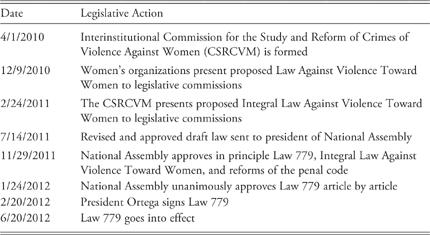
The two proposals were subsequently combined into one law, but remained stalled in committee for several months. Local women’s groups took to the streets to demand that the National Assembly pass the legislation, particularly targeting women deputies from the FSLN. “I hope that the women Sandinistas honor their word,” one feminist commented, “because since 2010 they have been like the One Thousand and One Nights [always delaying their promises]” (La Prensa 2012). In late November 2011, several weeks after that year’s controversial national elections, the National Assembly finally approved Law 779 en lo general (in principle) and, in January 2012, it was approved en lo particular (article by article) by a unanimous vote.Footnote 11 President Ortega signed the law in February 2012, and Law 779 officially went into effect on June 22, 2012. Table 2 presents a summary of this legislative process.
Legislative Process for Law 779
The Content of Ley 779
Law 779 introduced a number of new and important provisions. First, it codified femicide as a crime with a maximum penalty of 25 years’ imprisonment.Footnote 12 Second, it established penalties for other types of violence occurring in both the private and public spheres that previous laws had not included, such as intimidation, harassment, patrimonial violence, labor violence, and state negligence. Third, it expanded the pretrial measures available to protect women deemed to be in high-risk situations. For example, the police were granted authority to remove the accused from the home if a woman’s life was threatened, and prosecutors could issue restraining orders and require the accused to pay child support, among other options. These measures could be implemented for up to 20 days after a charge was made and extended by a judge at the request of a state attorney.
Fourth, and most controversial, the law eliminated the option of mediation (nonbinding agreements between the woman and the accused, commonly facilitated by police at the comisaría). Fifth, it established specialized courts for gender violence cases, presided over by trained judges. More broadly, the law made explicit that violence against women was rooted in the “unequal power relations between men and women.” Echoing the language of Belém do Pará, Law 779 clearly articulated the state’s obligation to protect women’s rights, including the right to a life free of violence (Articles 2, 3, and 8).
Local feminists celebrated the passage of Law 779 and immediately began an intensive education campaign to inform women about their new rights. One activist called the law a “light of hope” for women (fieldnotes 8/2014). During the summer of 2012, women’s groups organized a number of workshops about Law 779. In one such session, in a low-income barrio in east Managua, a group of women braved the rain with their toddlers to attend a charla where a woman legal advocate facilitated a discussion about how Law 779 would be applied. Women expressed excitement (“finally there is a law for us”) but also reservations about how men would react (“they say it’s harsh”) (fieldnotes 7/2012). Feminists saw workshops like this as a way to generate momentum for Law 779.
Yet on the day the law took effect (June 22, 2012), the National Assembly had not yet allocated the funds needed to implement significant portions of Law 779, including appointing 40 new special prosecutors and hiring 200 new psychologists and forensic lab specialists (El Nuevo Diario 2013c). That very same day, dozens of women waving lavender flags gathered outside the Supreme Court to demand “the full implementation of the law within 100 days.” Reporters clustered around Luz Marina Torres of the women’s collective 8 de Marzo as she read a statement on behalf of the women’s movement. “This law is the culmination of four decades of feminist activism,” Torres declared (fieldnotes 6/2012). Throughout the summer, women’s organizations continued to protest, often shutting down major thoroughfares throughout Managua. Common slogans included, “Castigo para los agresores, justicia para las mujeres” (punishment for aggressors, justice for women), “machismo mata” (sexism kills), and “el cuerpo de las mujeres se respeta” (respect women’s bodies) (fieldnotes 7/2012). Street banners were strategically placed at major intersections, including one that read, “Law 779 without a budget is like gallo pinto [a common rice and bean dish] without the beans” (fieldnotes 6/2012).
Despite the feminist pressure, implementation of Law 779 was slow and uneven. In late July 2012, only 2 specialized courts were operating in Managua. One year later, in June 2013, there were 13 specialized courts: 6 in Managua and 7 in the rest of the country (Lara Reference Lara2013). Just 24 prosecutors were available for gender crimes, and they had overseen 800 cases the previous year. At the same time, there were only 27 offices of forensic medicine, housing 100 total analysts responsible for covering Nicaragua’s 153 municipalities (El Nuevo Diario 2013c). According to Julio Centeno, Nicaragua’s attorney general, each specialized court would cost USD $60,000 a year (Vásquez Reference Vásquez2012a). The state’s inaction led some leaders in the women’s movement to call Law 779 a “dead law” (Vásquez Reference Vásquez2012b).
The Backlash Against the Law
Opposition to Law 779 began even before its implementation and arose across the denominational spectrum (both Catholic and Evangelical), as well as among men’s associations and some local attorneys.Footnote 13 Opponents of the law offered three main criticisms: the law would destroy the family, it would cause more violence, and it violated the constitutional principle of equal protection by discriminating against men.
Religious leaders were most concerned about the effect of Law 779 on family structure. Rev. Saturino Cerrato, president of the local Assembly of God Church, claimed that the Law 779 would “destroy marriage and the family” because it eliminated the possibility of mediation between the victim and the accused (Sirias and Picón Reference Picón2013). He claimed that Law 779 violated the principle of “innocent until proven guilty.” Law 779 was also opposed by the local Episcopal Conference, which called it “an attack on evangelical values” (Martínez Reference Martínez2013). Msgr. Silvio Fonseca, from the Archdiocese of Managua, stated, “[Law 779] tilts the balance toward women and leaves men unprotected.” Another bishop went so far as to call Law 779 “the new number of the beast,” a biblical reference to the devil (El Nuevo Diario 2013b).
In July 2012 (less than one month after the law went into effect), a formal legal challenge to the constitutionality of Law 779 was filed with the Nicaraguan Supreme Court by the Association of Democratic Lawyers (ADANIC). By prohibiting mediation, ADANIC claimed, Law 779 violated the constitutional principle of equality under the law. The president of ADANIC, Danilo Martínez, published various opinion pieces arguing that “legislators should have an integral perspective on violence, not a gender perspective, because violence is not exclusive to the male sex” (quoted in Gallegos Reference Gallegos2013). ADANIC also critiqued the law on logistical grounds, pointing out that Nicaragua’s court and prison systems were not equipped to deal with the surge of convictions that Law 779 would probably generate.Footnote 14 As headlines about the rising number of incarcerated men filled the newspapers in 2013, feminist leaders reiterated, “The point is not to put men in jail, it’s that we as women live free of violence; only the punitive part of the law gets talked about, but no one talks about the prevention part” (El Nuevo Diario 2013a).Footnote 15
In the midst of this controversy, one of the few elected officials to openly ally himself with the women’s movement was Sandinista legislator Carlos Emilio López. “We should not make reforms that weaken women’s rights,” he argued. “Human rights are progressive. Once you’ve recognized a human right, you can’t go backwards . . . what needs to be reformed is the national consciousness” (Picón Reference Picón2013). Chief Justice Alba Luz Ramos also issued statements of support for the law— although she did not discount the possibility that Law 779 could be reformed. Chief Justice Ramos encouraged women’s organizations to maintain pressure on elected officials to fully implement the law.
Women responded by once again taking to the streets during the summer of 2013 to defend Law 779, and especially to oppose the possibility of reintroducing mediation. Feminist organizations that strongly opposed mediation pointed to research showing that at least 30 percent of documented cases of mediation agreements ultimately led to femicide (Solís Reference Solís2013). Feminist leaders also pointed out that mediation is not a neutral encounter, because women may feel coerced into agreeing to whatever terms are preferred by the accused in order to avoid future violence. As a representative of the Women’s Network Against Violence explained, “when a woman files a complaint, it’s because her life is at risk . . . a victim is not in the same conditions to negotiate with her aggressor” (Vásquez and Romero Reference Romero2013). Organizations like Amnesty International also spoke out about the repercussions of reforming the law, asserting that “what fractures families is the violence perpetrated against women and children, not legislation designed to help victims escape this violence” (Amnesty International 2013).
After months of contentious public debate, in August 2013 the Supreme Court issued Sentence 18, upholding Law 779 as constitutional.Footnote 16 However, the court called on the National Assembly to reform the law to reintroduce the option of mediation. According to the court, mediation should be permitted only with a woman’s consent and in any case involving a first offense punishable with less than a five-year sentence. Despite the opposition of local feminists and international human rights organizations, just 14 months after Law 779 went into effect, the National Assembly overwhelmingly approved a modified law (83 in favor, 4 opposed, 1 abstention), which reintegrated mediation for first and minor offenses.
The amended law permitted mediation when the accused had no prior legal offenses, the alleged crime was classified as a “minor offense” with a carceral penalty of five years or less, the women agreed of her own volition to mediate, no previous mediation had occurred between the two parties, and mediation was conducted and documented by the attorney general’s office or a judge.Footnote 17 Mediation between the two parties was permitted at any stage of the process, up until the moment of sentencing.
Presidential Decree Derails the Law
The contentious politics surrounding Law 779 did not end with the reform in September 2013. Longstanding critics of the law—both secular and religious— continued to speak out; complaints ranged from the issues with overcrowded prisons due to increasing numbers of men convicted under Law 779 to the now-familiar handwringing over the so-called destruction of the family (Jubb Reference D’Angelo, Jubb and Medina2014). Women’s organizations continued to protest the use of mediation in gender-based violence cases throughout 2014 via street protests as well as petitions.
In April 2014, Amnesty International reiterated that the amendments to Law 779 would “weaken the protections for victims, facilitate impunity for abusers and are contrary to international and national obligations to protect women’s rights” (UNGA 2014). When the United Nations Human Rights Council (UNHRC) convened in May 2014, member states urged the Nicaraguan delegation to reconsider the amendments to Law 779, particularly with regard to mediation (UNGA 2014). In making these statements, Amnesty International and UNHRC sought to hold the state accountable for its international commitments to address violence against women. Local feminist organizations saw these interventions by human rights groups as highly significant because the state had failed to meet its obligations under the Belém do Pará Convention to protect and defend women’s rights. However, Nicaraguan officials brushed aside the UNHRC’s concerns. The international criticism of the government’s modifications to Law 779 was clearly not considered a serious threat to the state’s legitimacy.Footnote 18
As the controversy over mediation continued to swirl, another debate concerning Law 779 emerged over the definition of femicide. In July 2014, a Nicaraguan Supreme Court justice abruptly suggested that “if there’s no partner relationship, there’s no reason it should be a femicide” (Vásquez Reference Vásquez2014). This statement coincided with the release of a police report stating that 18 femicides had been committed during the first half of 2014, a figure far lower than the 47 cases documented by local women’s organizations (Membreño Reference Membreño2014). National Police commissioner Francisco Díaz declared, “Our country continues to be one of the safest in Latin America, and the safest country in Central America” (Romero Reference Romero2014).
These statements foreshadowed the second round of substantial changes to Law 779. In late July 2014, President Ortega issued two special decrees related to the law (Decrees 42-2014 and 43-2014). The regulations contained in the decrees significantly altered the purpose and legal framework of the law. They shifted the objective of Law 779 to “strengthen[ing] Nicaraguan families . . . [and] a culture of familial harmony” (Decree 42-2014, Article 1). They reduced the scope of femicide (which originally encompassed the killing of women in either the public or private sphere) to include only the killings of women committed in the home in the context of preexisting relationships. They also shifted the responsibility for implementing Law 779 from an interinstitutional commission to the Ministry of the Family. The decrees also mandated the establishment of neighborhood-based counseling (led by religious and political leaders) for women victims as a first step to resolving “family conflict” before placing a legal complaint. Cases unresolved at the neighborhood level would be referred to the Ministry of the Family and only as a last resort to the comisarías (Decree 42-2014, Article 10).
The presidential decrees fundamentally altered both the content and intent of the original law—and explicitly contradicted the Belém do Pará Convention ratified by Nicaragua. Yet some members of the Supreme Court publicly defended the new regulations. Chief Justice Ramos argued that the changes in the definition of femicide were irrelevant because crimes not prosecuted as femicides would proceed under the charge of murder, which carried just as severe a penalty (Jiménez Reference Jiménez2014). These remarks were a clear departure from earlier statements Justice Ramos had made justifying the constitutionality of the law and its importance as an expression of Nicaragua’s adherence to the Belém do Pará Convention.
Local feminist groups were outraged, calling the decree “atrocious” and a “monstrosity” (fieldnotes 8/14/2014). At a press conference just two weeks after the decretazo (a term used by some activists to refer to the presidential decrees), one local feminist leader remarked, “This is how machismo and authoritarianism manifest themselves itself in the executive branch. Above the political constitution, international conventions, the national legal framework, and institutional commitment contained in the law” (fieldnotes 8/14/2014). At a meeting of a gender roundtable, one woman commented, “The little that we’ve won, we’re losing.” “How can a decree be above the law?” another pondered aloud. “This state is perverse,” said a third (fieldnotes 8/21/2014). One cartoon published in La Prensa that month dramatically captured the sentiment of local feminists: it featured President Ortega holding a baseball bat and standing over a tombstone labeled 779, saying, “I killed her because she was mine.”
Feminist organizations took their concerns from crowded conference rooms into the muggy streets of Managua. One August afternoon in 2014, shortly before dusk, I joined dozens of women gathered at an iconic rotunda near the capital’s old commercial center to march toward the National Assembly. Dressed in black and carrying small candles and posters with photos of women victims, they walked in single file down the center of a historic boulevard that leads to the city’s recently redeveloped lakefront. Yet as we approached a major intersection, we encountered a line of men, including police officers and others dressed in dark blue polo shirts and Sandinista baseball caps, blocking our way. The women clustered in small groups talking in hushed tones about what might happen; several discussed the likelihood that President Ortega himself had ordered the men to prevent the march from reaching its destination. Meanwhile, women leaders of the march vehemently argued with the police, trying to persuade them to let us through. “Why can’t we pass through? We have the right to freely mobilize,” one woman shouted. “This is proof that our rights are being violated!” But the police stood their ground and refused to let us march any further. After about 15 minutes, we turned around (fieldnotes 8/14/2014).
Protests continued throughout the fall of 2014, though more sporadically. Most of the feminist leaders’ energy turned to designing workshops for women’s groups around the country to analyze the newest changes to Law 779 and how to fight them. At several events I attended, local feminist lawyers explained to the women in attendance that the presidential decree superseded the legal authority granted to the president. Feminist leaders argued that Ortega’s decrees contradicted international conventions on gender-based violence and that the implementation of a family counseling system would only further complicate the legal process for women victims. These events served to generate new ideas, as well as to provide a venue for collecting signatures for petitions challenging the constitutionality of the presidential decree. As one woman put it, “in the face of illegality, we have to use legal arguments.”
On September 30, 2014, feminist organizations organized another rally in front of the Supreme Court in Managua, where they presented their official petitions for judicial review of the decrees.Footnote 19 The very next day, I attended the inauguration ceremony for the Ministry of the Family’s new counseling office at a comisaría in Managua. When I arrived at the comisaría that morning, the formerly tall grass surrounding the building had been freshly mowed, and colorful banners with slogans such as “In love there is no fear” were being hung under a small white tent nearby. In attendance were representatives from the National Police, the Women’s Commissariat, the Ministry of the Family, and a handful of women volunteers who work with the comisarías. One official welcomed everyone to the “comisaría of the family and the community” (a clear discursive change from its official institutional name, Comisaría of Women and Children).
After a short series of speeches, the woman captain of the comisaría invited those in attendance to come inside and tour the comisaría’s updated facilities, which had been recently painted with bright green and peach hues and decorated with balloons. One wall featured a series of posters celebrating the family. One poster said, “A family united in the love of Christ lasts forever. Give God control of your family today and always.” Another featured a black and white triangular drawing likening the ideal relationship between father, mother, and children to the Father, the Son, and the Holy Spirit, known in Christian theology as the Holy Trinity.
Several weeks after the inauguration of the family counseling office at the comisaría in Managua, the World Economic Forum (2014) released its annual Gender Gap Report, ranking Nicaragua sixth in the world behind Iceland, Finland, Norway, Denmark, and Sweden. The Gender Gap Report compares disparities between men and women in four areas: economic opportunities, education, health and life expectancy, and political participation. While women’s rights advocates were surprised by this ranking, President Ortega heralded the news as confirmation of his government’s apparently successful efforts to promote gender equality, maintaining the illusion that Nicaragua is safer and more progressive than most of its Central American neighbors. International media coverage of the Gender Gap Report was also generally favorable to Nicaragua, drawing attention away from the serious rollbacks to Law 779 and women’s rights more generally. Meanwhile, according to the United Nations’ Gender Inequality Index, Nicaragua ranked 90th in 2014 and has been steadily falling since then. Neither of these studies includes any specific measure of gender violence, however.
Conclusions
From 2010 to 2012, the Supreme Court and the National Assembly took clear steps to advance women’s legal rights in Nicaragua by proposing, approving, and defending Law 779. However, the tide turned in 2013 with the mobilization of conservative opposition to the law, leading to an abrupt about-face by the Ortega administration and later, by the Supreme Court and elected officials. The swiftness of this turn was enabled, to a large extent, by the consolidation of power in the hands of President Ortega and his allies. Ortega’s popular support and high level of institutional control have made him relatively immune from international pressures on a range of issues, including violence against women.
The Nicaraguan case demonstrates that without tangible international accountability mechanisms, local political conditions take on a central role in the passage and implementation of gender-based violence laws. Although a combination of external and internal pressure was momentarily able to pierce a seemingly impervious wall of impunity, almost immediately, these gains were overturned by a sustained backlash from conservative religious groups, resulting in a series of legislative and executive actions that severely curtailed legal protections for women. Facing a new wave of criticism from both local feminists and global human rights organizations, the Ortega government sought to reframe the issue by focusing on its achievements related to gender equality and its reputation in Central America as a relatively safe nation. In other words, it sought to maintain its legitimacy, but on different grounds.
The trajectory of gender violence law in Nicaragua raises broader questions about the relative effectiveness of legal activism (defined as the pursuit of legal change). Legal strategies have been utilized by feminist organizations worldwide to address the problem of gender-based violence (Friedman Reference Friedman2009). Research has shown that such advocacy is crucial to expanding women’s rights (Htun and Weldon Reference Htun and Laurel Weldon2012). Yet the foregoing discussion also illustrates the fragility of these gains in contexts characterized by a high concentration of political power.
Under such circumstances, the current infrastructure of “global governance” (Finkelstein Reference Finkelstein1995; Meyer and Prugl Reference Meyer and Prugl1999) is far less influential in motivating states to act to protect women’s rights than it is in other issues. Although some scholars have argued that state legitimacy rests on (at least discursive, if not practical) adherence to global agreements, the case of Law 779 in Nicaragua highlights some of the limitations of global arena pressures on the issue of gender violence. As mentioned at the outset, one of the most significant issues is that there are few, if any, tangible consequences for states that fail to uphold international conventions on gender-based violence.
This lack of state accountability to address the problem of violence against women stands in stark contrast to how global institutions handle other issues, like defaulting on loans and violating trade agreements. When governments fail to repay their international creditors, they become economic pariahs and are denied further monetary assistance. But when states fail to uphold the most basic of rights for women (the right to a life free of violence), they are often subjected to little more than a strongly worded letter (UNGA 2014). Therefore, governments’ legal and policy failures on gender violence rarely constitute a serious challenge to state legitimacy. Given these findings, the gendered hierarchy of concerns within different supranational institutions merits more attention when we seek to understand state action and inaction on gender violence in Latin America and elsewhere. In the meantime, more than two decades after the ratification of the Belém do Pará Convention, ensuring women’s right to a life free of violence remains as elusive as ever.



