

Introduction
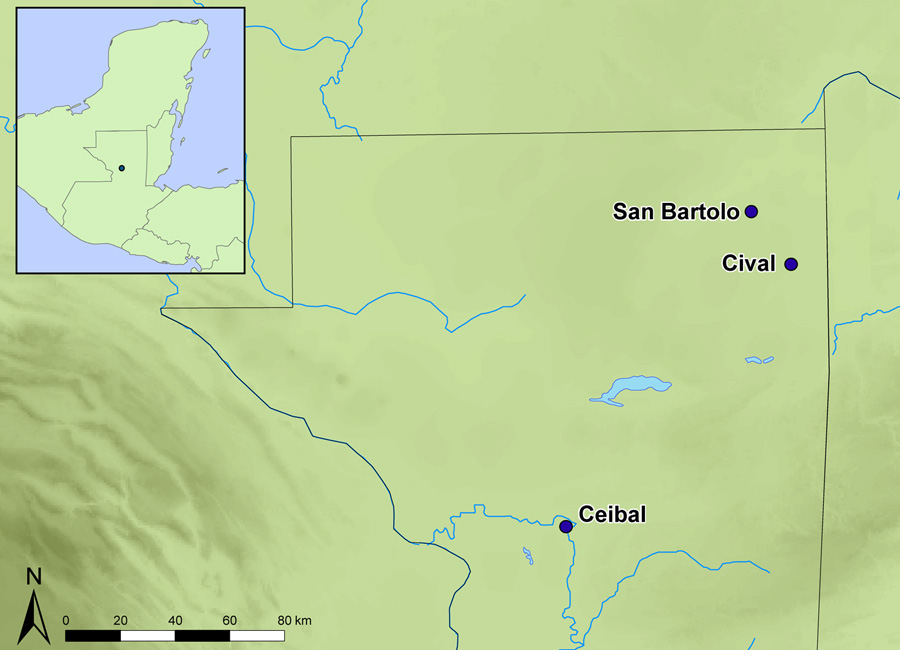
Location map with major sites mentioned in the text.

The Middle Preclassic period (c. 900300 BC) in Maya prehistory has long been recognised as a time of intense interregional exchange throughout Mesoamerica from which the attributes of later Maya civilisation developed. Archaeological research conducted at various sites in the Maya lowlands has significantly broadened our understanding of the social diversity characterising this formative period. For example, the discovery of painted murals at San Bartolo (Saturno et al. 2006) and monumental sculpture at Cival (Estrada-Belli et al. 2003a & b) represent early examples of dynastic ideology, indicating that notions of Maya kingship were well established by the end of the Preclassic period. Yet we still know very little about these positions of authority, how they developed, and their intersection with the rest of society during the earliest phase of Maya prehistory.
These questions are being addressed with recent research conducted by the Proyecto Arqueológico Ceibal-Petexbatun at the important site of Ceibal in western Guatemala (Figure 1; Inomata & Triadan 2008; Román et al. 2009; Román & Inomata 2010). The discovery of Caobal, a new site with monumental architecture located a few kilometres from Ceibal, is providing exciting new information on the formation and organisation of early Maya communities.
Background
Archaeological investigations at Ceibal were initiated in the 1960s by A. Ledyard Smith and Gordon Willey of Harvard University (Willey et al. 1975; Reference SmithSmith 1982). Although their research focused on Ceibal's revival at the end of the Classic period (c. AD 800930), they discovered some of the earliest Maya ceramics in the Pasión region, indicating that Ceibal was first settled around 900 BC (Reference SabloffSabloff 1975). Gair Tourtellot also conducted a survey of the Ceibal periphery and identified dozens of house mounds and 13 minor ceremonial centres, including the small ceremonial-administrative centre named Anonal (Reference TourtellotTourtellot 1988). Harvard archaeologists supervised excavations at several of these sites and recovered ceramics from a small test pit at Anonal suggesting substantial Middle Preclassic occupation there.
A reconnaissance project was undertaken in 2006 to document the condition of these minor temples. While attempting to record the site of Anonal, whose location was not indicated on Reference TourtellotTourtellot's (1988) settlement map, a previously undocumented site was discovered. Initial field reports identified this site as Anonal (Reference Munson, Ponciano, Triadan and InomataMunson 2006 & 2009; Munson et al. 2008), but this must now be revised. The recent rediscovery of the site of Anonal (i.e. the one identified by Harvard archaeologists in 1968) confirms that the site found in 2006 is actually a different and previously unrecorded minor ceremonial centre. This new site is called Caobal. The proximity and similarity of these two minor temple groups raise interesting questions about community organisation and ritual practice in the Middle Preclassic.
Minor temples near Ceibal
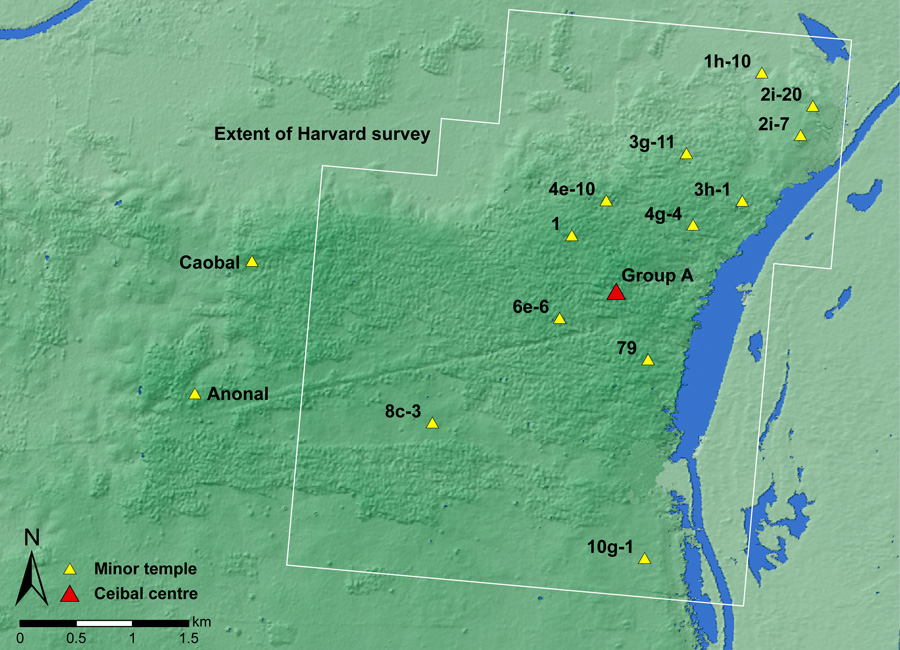
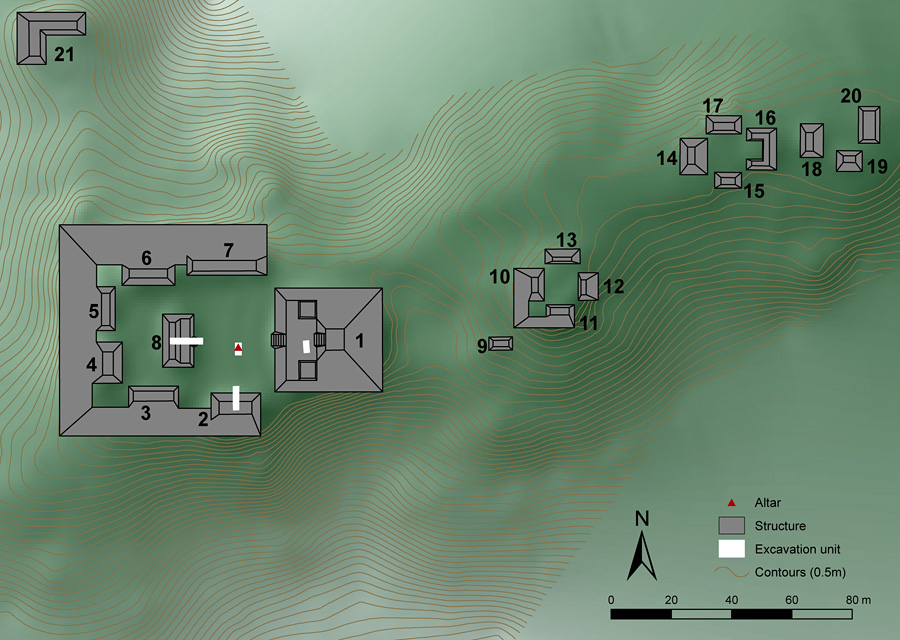
The minor temple centre of Caobal is located 3.2km west of Ceibal's ceremonial centre (Group A) and 1.4km north of its twin centre Anonal (Figure 2). Like many other minor temple groups identified by Tourtellot, the mounds that comprise this settlement are located on high ground, on top of a natural rise overlooking the Pasión River. Standing 9m tall, Structure 1 dominates the compact temple precinct whose plaza is enclosed by low platforms and divided into two sectors by a long low range structure (Figure 3). Three small residential groups were also recorded and appear to have been occupied during the Late Classic period (Figure 3, Structures 920).
Location of the Ceibal area surveyed in the 1960s (marked 'Extent of Harvard Survey') and of minor temple sites located near Ceibal (Reference TourtellotTourtellot 1988 and current Proyecto Arqueológico Ceibal-Petexbatun [Caobal]). DEM base layer generated from AIRSAR data.

Settlement map of Caobal with location of excavation units.

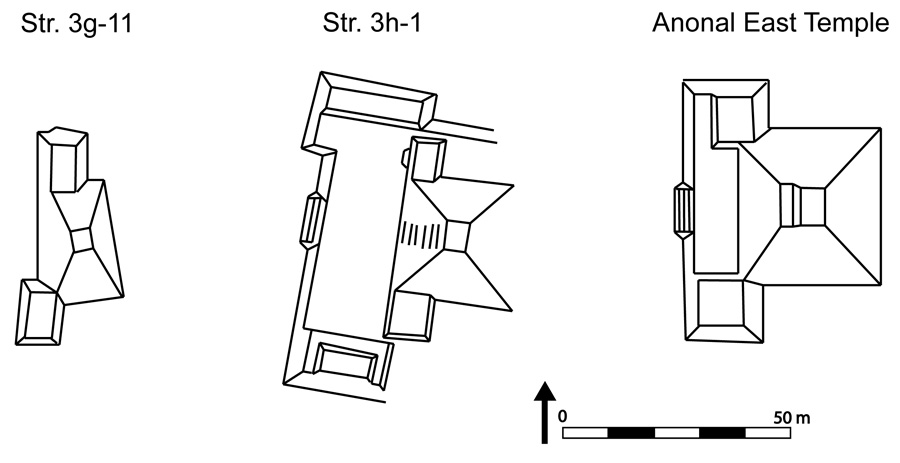
Triadic temple complexes located near Ceibal (modified from Reference TourtellotTourtellot 1988).

Minor temple groups are common architectural features found throughout the residential areas of Ceibal (Figure 2). These monumental buildings range in height from 4 to 10m and are commonly located on the eastern side of a formal plaza. Several also resemble the triadic form of Caobal's Structure 1 (Figure 4). Earlier excavations carried out at several of these loci indicate that all of them were constructed during the Preclassic (Reference TourtellotTourtellot 1988) and continued to be important nodes of residential organisation during the Late Classic period (Reference MunsonMunson 2005). Caobal follows a similar pattern of occupation: recent investigations there focused on its foundation and examined how this ritual site was used by communities throughout its long occupation.
Public buildings at Caobal
Excavations concentrated on uncovering the architectural sequence of three public buildings at Caobal (see Figure 3). Preliminary results indicate that the site was used continuously from about 900 BC to AD 850, with the most intensive building activity in the Middle Preclassic. Unlike the extensive sequence of Real-Xe platforms documented at Ceibal, the earliest occupants of Caobal constructed pole-and-thatch style structures on the exposed marl bedrock. A nearby deposit of Real-Xe ceramics from the same level dates the foundation of this site to the eighth or ninth century BC.
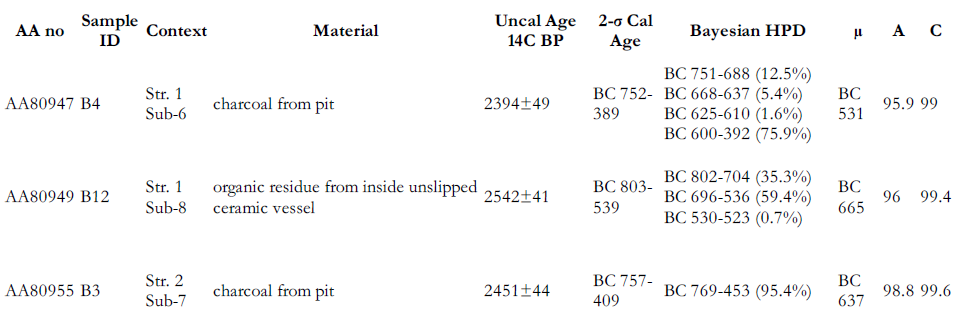
Low boulder-walled platforms were preferred habitation surfaces in the following Escoba-Mamom phase and mark the first major investment in permanent architecture at Caobal. The construction fill of these low earthen platforms included dense deposits of Real-Xe and Escoba-Mamom style ceramics. Charcoal from the inside of a vessel fragment dates the construction of Str. 1-Sub 8 to the early Mamom period (Table 1). A shallow pit filled with ash and several hundred fragmented and whole specimens of Pomacea shell suggests that this platform was used for communal consumption purposes.

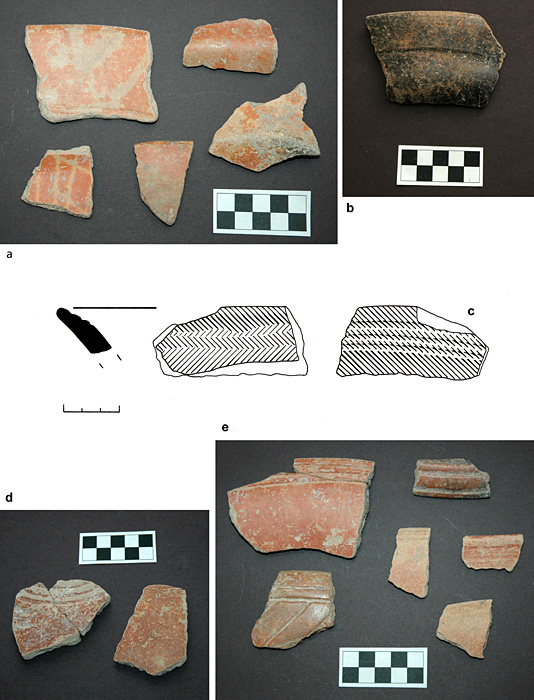
Examples of Middle Preclassic ceramics recovered from pit at Caobal (Str. 2-Sub 7). The fine line incision and resist decoration of these red and black-slipped serving vessels are diagnostic attributes of the early Mamom period. a) Tierra Mojada Resist; b) Chunhinta Black; c) Timax Incised; d) Pico de Oro Incised; 3) Guitara Incised.

A large circular pit dug into the soft marl bedrock near the southern edge of the plaza provides supporting evidence for feasting events at Caobal. This pit (Str. 2-Sub 7) is 1.6m in diameter, 0.5m deep, and filled with fire-cracked cobbles, charcoal, various riverine shells, burned mammal bone and numerous large fragments of Real-Xe and Escoba-Mamom style serving vessels (Figure 5). If this interpretation is correct, communal feasting may have provided the impetus to create a formal public space for such gatherings.
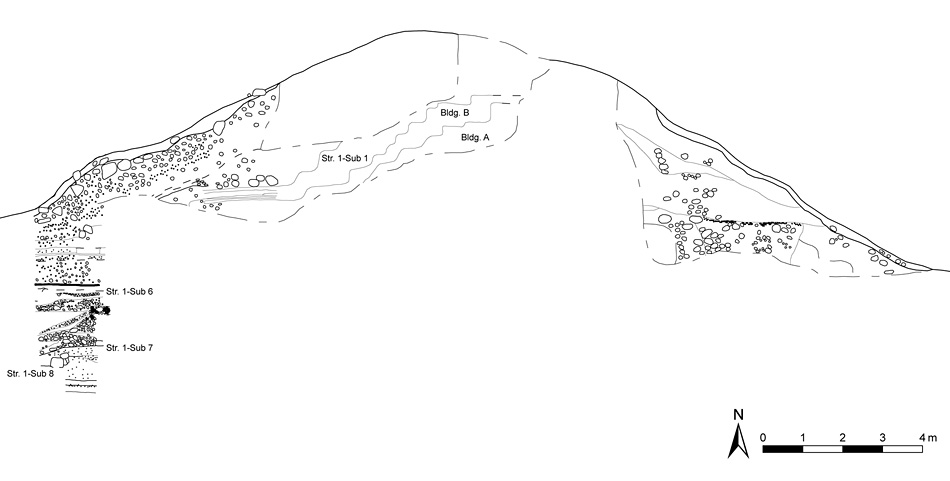
The construction of pyramid structures atop wide raised platforms marks the beginning of a long tradition of monumental building at Caobal and the transformation of this ceremonial site. Temple construction started during the seventh century BC with another earthen and stone-lined platform (Str. 1-Sub 7) which provided the foundation for a stepped earthen mound (Bldg. A) standing about 6m above the plaza level (Figure 6). The superposition of additional platforms (Str. 1-Sub 6) and temple buildings (Bldg. B) constructed with plaster between 600 and 400 BC represents a major shift in architecture, ritual practice and community organisation at the end of the Middle Preclassic.
North profile of Structure 1.

Community formation at Caobal
Although there is no clear evidence for an elite population at Caobal, it is possible local leaders from this community established administrative ties with emerging Ceibal elites during the Middle Preclassic period. Changes in architectural and ritual practices during this period reflect increasing centralisation of political authority and economic control (Aoyama & Munson n.d.), but the replication of local centres like Caobal, Anonal and other minor temple sites around Ceibal suggests that these communities retained independent ritual traditions even as they were incorporated into an expanding Maya society.
Acknowledgements
We are grateful to the Instituto de Antropológia e Historia for their permission to work in Guatemala. This project was supported by an NSF doctoral dissertation improvement grant (BCS-0837536), Dumbarton Oaks, and the School of Anthropology at the University of Arizona.