





Introduction
Collusion is a commonly encountered phenomenon in palliative care (Sutar et al. Reference Sutar, Chandra and Seshachar2019). It can be defined as “a secret agreement between doctor and patient or sometimes with the caregiver to protect the psychological health of the patient undergoing treatment for serious medical illness.” Depending on the cultural background, the prevalence of collusion varies from 30 to 70% (Sutar and Chaudhary Reference Sutar and Chaudhary2022). One study conducted in Singapore suggested that, a vast majority of cancer patients want to know about their diagnosis (67%) and prognosis (54%). On the other hand, 91.4% of the caregivers in Asian societies prefer to keep their patient unaware about the seriousness of their condition, as well as their chances of survival (Low et al. Reference Low, Kiow and Main2009).
Collusion has many faces. It can depend on the cultural or familial background of the patients. It can also occur between “doctor and patient,” “doctor and caregivers,” “patient and caregivers,” and “doctor and other healthcare professionals” or combination of any of above (Sutar et al. Reference Sutar, Chandra and Seshachar2019). It is fundamentally a protective tactic involving participants trapped in an unconscious, unresolved situation. The primary issue is frequently overlooked at the intrapsychic level, yet it becomes externalized and circulated in the interpersonal realm through dominance, intimacy, control, or loss (Stiefel et al. Reference Stiefel, Bourquin and Saraga2023a; Reference Stiefel, Saraga and Bourquin2023b).
Collusion often leads to complicated scenarios in palliative care, especially when it comes to the questions regarding continuing curative treatments and discussions about death and dying (Chaturvedi et al. Reference Chaturvedi, Loiselle and Chandra2009). Collusion may seem necessary for certain situations at times. It provides a protective shield that allows patients and caregivers to avoid the trauma of being disillusioned too soon (Stiefel et al. Reference Stiefel, Bourquin and Saraga2023a; Reference Stiefel, Saraga and Bourquin2023b). Despite this protective role, the barriers imposed by collusion and lack of communication cause unrelieved physical and psychological suffering among the patients and their caregivers (Mathew et al. Reference Mathew, Mohanti and Tewari2021). Breaking the cycle of unhealthy collusion allows families to concentrate entirely on practical matters. Resolving unresolved issues, mending relationships, and reaching a consensus with loved ones and friends might all benefit the patient. One study suggested that, when false hope is abandoned, patients don’t regret it (Back et al. Reference Back, Arnold and Baile2005).
Collusion takes different forms, depending on the culture. It comes in different forms and intensity and is often not absolute. It can be identified only by understanding the nature of collusion through introspection (Chaturvedi et al. Reference Chaturvedi, Loiselle and Chandra2009; Stiefel et al. Reference Stiefel, Nakamura and Terui2017). As palliative care professionals, we encounter various situations in which patients and/or caregivers may enter into a secret agreement with physicians to withhold the truth from one another. This tendency appears to be particularly common among caregivers. While collusion may occur in some instances, not all situations can be classified as such. For example, there are moments when patients express a desire to know the truth about their condition, but caregivers, driven by a desire to protect their emotional well-being, may choose not to disclose certain information. This complex interplay highlights the need for a nuanced understanding of collusion-prone situations, particularly in the context of Bangladeshi culture, where values around truth-telling and caregiving can significantly influence these interactions. This study aims to measure and explore the intensity and nature of these collusion-prone situations from the perspective of caregivers of advanced cancer patients within the Bangladeshi cultural context. To the best of our knowledge, it is the first study to address this issue.
Methods
Study design
This study design contained both quantitative and qualitative components. The 2 parts of our study were as follows:
a) A cross-sectional design to assess the intensity of collusion enactment and aspects of collusion-prone situations among the caregivers of advanced cancer patients using a validated Bengali version of Caregiver Collusion Scale.
b) A key person interview with the participants from the same study settings for in-depth exploration of their reasons behind keeping the truth hidden from their loved ones.
Settings and participants
The study was conducted at the Oncology Department of Sher-E-Bangla Medical College Hospital, and the Palliative Care Unit of Bangladesh Cancer Society Hospital and Welfare Home.
A total of 71 caregivers of advanced cancer patients (stage IV) admitted to the aforementioned hospitals were recruited for the quantitative part of the study. Sample size was calculated as 5:1 sample to item manner. As collusion-prone situation was a bit hard to find at the advanced stage of disease, sample size was kept to minimum. Samples were selected in a consecutive manner.
In this study, we examined situations in which caregivers choose not to disclose truthful information about the diagnosis or prognosis to their patients. This includes instances where both patients and caregivers might withhold information from each other, as well as situations where caregivers deliberately choose not to disclose the truth, even when patients express a desire to know their condition. This dynamic does not inherently imply psychological or psychoanalytic collusion; rather, it reflects a complex interplay of emotions and intentions. While collusion may occur in certain instances, not all situations can be classified as actual collusion. However, we did not differentiate between these 2 scenarios and instead broadly categorized all of them as collusion-prone situations.
Caregivers involved in suspected collusion-prone situations were asked 2 screening questions: “Does your patient ‘want to’ know about his or her diagnosis or prognosis?” and “Can you reveal the diagnosis or prognosis to your patient?” Those who answered negatively to both questions were included. Occasional caregivers (caregiving days ≤5 days/week) were also excluded from the study. We approached 130 caregivers, but only 71 passed the screening test within the intended study period. So our final sample size was 71.
Randomly selected participants were from the existing sample pool were invited for the key person interview. These interviews were facilitated by 2 members of the research team (SAK and MST).
Data collection procedure
Data collection was carried out from July 2023 to September 2023. Quantitative data were collected by the members of the research team using a structured questionnaire in 3 parts. The first part contained the sociodemographic variables, and caregiver’s perception about the patient’s knowledge about his/her disease or prognosis.
The second part contained quantitative questions from Caregiver Collusion Scale for assessment of the intensity of enactment and aspects of collusion-prone situations. This scale is developed by James (Reference James2014) to measure the collusion of the diagnosis among caregiver’s of terminally ill patients. It has been validated in Bengali by Biswas et al. (Reference Biswas, Afsar and Khanam2024). It assesses the intention of nondisclosure or partial disclosure of the diagnosis or prognosis of the disease to the patients by the caregivers, attempts of hiding the truth, caregiver’s concern about the patient’s mental status upon knowing, disturbance in their routine functioning, and interpersonal relationships with the patient as well as others. There are total 20 items. Each item is answered with “yes” or “no” responses. All positive answers are scored as “1” and negative answers are scored as “0”, except item no 4, 7, 9, 10, 13, 19, and 20. These items are reversely scored. Highest possible score is “20” and lowest possible score is “0”. Higher scores represent higher intensity of enactment. The measure can be modified for in other settings.
The qualitative part of the study was conducted by the 2 members of the research team (SAK and MST). The participants were selected randomly from the existing sample pool who already participated in the quantitative part of the study. Each participant was interviewed separately and privately in a comfortable manner.
During this part of the interview, the participants were asked 2 key questions to initiate and carry on with the discussion. First, they were requested to provide a detailed explanation of why they chose to keep the truth about their patient’s condition hidden (“Why do you not want to inform your patient about his disease or prognosis?). Eventually we asked whether they ever desired to reveal the truth to their patient. If they responded positively, we then inquired about their preferred timing for revealing the truth (Do you want to eventually tell the truth to your patient? If you do, then when?) Their answers were recorded by a tape recorder and later sent for transcription verbatim by a professional transcriptionist, including identification of each participant speaking. Another researcher (JB) reviewed each transcription to check for any errors and made any required modifications before importing the transcriptions for thematic analysis.
Data analysis
Quantitative data were analyzed using the SPSS version 26. Descriptive analysis (e.g. frequency, percentage, means, medians, ranges, and standard deviations) was done for the categorical and continuous variables such as sociodemographic and intensity of collusion and aspects of collusion. The scores of caregiver collusion scale were divided into 3 groups based on mean and SD. The value below the lower limit of mean − 1SD was categorized as low, the range between an upper and lower limit of mean ± 1SD was categorized as medium, and the value above mean + 1SD was categorized as high intensity of enactment. Independent t-test and 1-way ANOVA test were done to see the relationship between intensity of enactment and sociodemographic variables.
A professional transcriber first transcribed qualitative data. Then, a set of codes and subcodes was developed collectively and applied line by line to the transcribed interviews. Two independent investigators coded each interview, and the codes were changed on a regular basis; code saturation was reached after the first 9 interviews. Themes were developed using reflexive thematic analysis, and after the first 9 interviews, theme/meaning saturation was reached, at which time recruiting attempts were halted and the interview process was concluded. Because there was substantial overlap between the survey and interview data, and the research team thought there was broad agreement, the questionnaire comments were analyzed alongside the coded interviews, which did not affect the codes or themes.
Results
Survey result
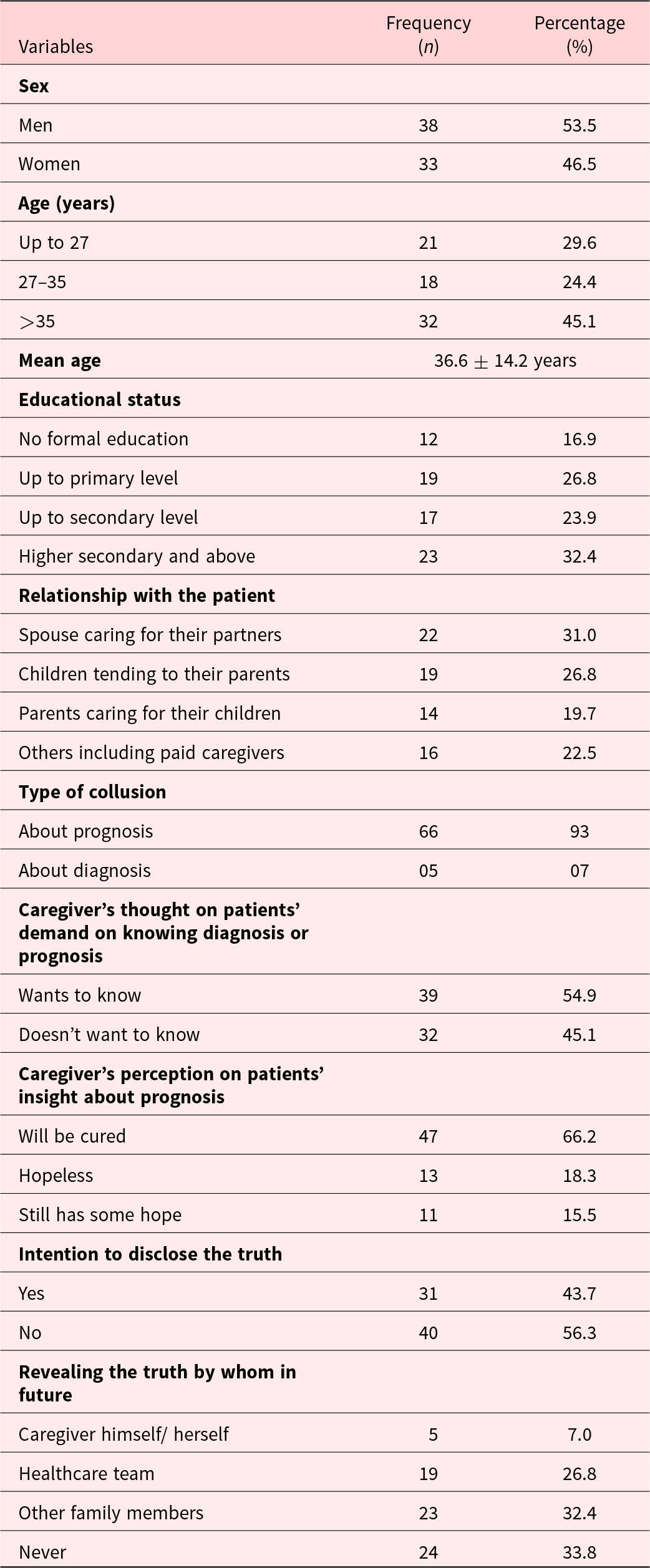
Nearly equal number of participants from both sexes took part in this study. Their mean age was 36.6 ± 14.2 years, but more than half (69.5%) of them belonged to 27 years and above age group. The education level of the participants ranged from no formal education (16.9%) to higher secondary and above (32.4%). The majority of caregivers consisted of spouses (31%) caring for their partners, children (26.8%) tending to their parents, and parents (19.7%) caring for their children. Majority (93%) of the collusion-prone situations was related to the prognosis of the disease. Interestingly, half (54.9%) caregivers thought that their patient would like to know the truth about their disease condition. Still, many (66.2%) of them also thought that keeping the truth hidden from their patients would give them hope for complete cure. Regarding disclosing the truth in future, the caregivers’ opinion got clearly divided into 2 groups. Nearly half (43.7%) of the participants wanted to disclose the truth. But only a few (7%) had courage to reveal the truth by themselves (Table 1).
Sociodemographic characteristics of the caregivers (n = 71)
The score of caregiver collusion scale ranged from as low as 8 to as high as 18. The mean score of intensity of enactment was 13.4 ± 2.4. Two-thirds (83.1%) of the caregivers demonstrated a medium-to-high intensity of enactment (Table 2).
Intensity of enactment among the caregivers (n = 71)

Mean score 13.4 ± 2.4.
Regarding the aspects of collusion-prone situations, the majority of caregivers expressed concern about the patient’s ability to accept the truth (88.7%), the potential loss of hope upon receiving that information (90.1%), and the patient’s capacity to handle stress (83.1%). To protect patients, caregivers often attempt to hide the truth by avoiding their questions (78.9%) and preventing doctors from discussing the disease with the patient (74.6%). These situations impact caregivers’ communication with the patient (42.3%). Most caregivers (90.1%) feared that the patient would feel disappointed if they learned the truth from others and felt guilty for concealing it (50.7%). Interestingly, a majority (74.6%) of caregivers did not believe that withholding the truth would create any conflict within the family (Table 3).
Aspects of collusion-prone situations (n = 71)
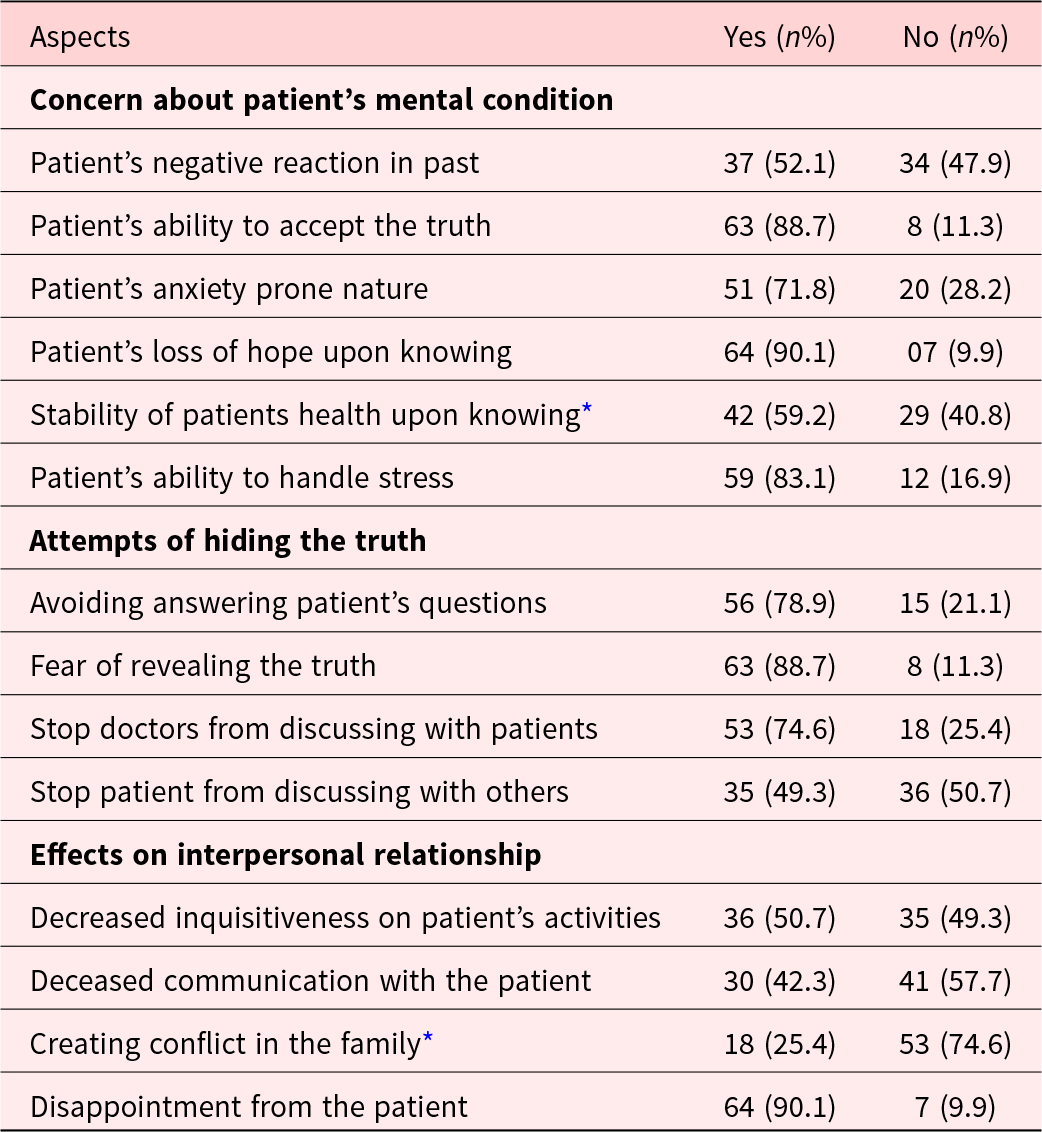
* Reverse scoring was done.
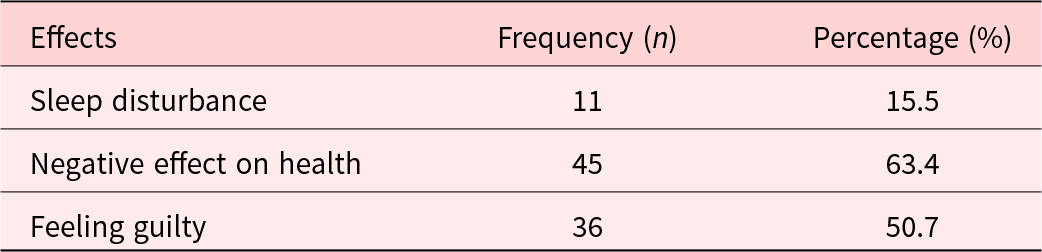
Collusion-prone situations also had negative effects on the caregivers. Nearly half of the participants (50.6%) felt guilty for not being truthful with their patients. Furthermore, keeping the truth hidden had a detrimental impact on the health of almost two-thirds (63.4%) of the participants. Additionally, some participants (15.5%) reported experiencing sleep disturbances (Table 4).
Effects of collusion-prone situations on caregivers (n = 71)
The intensity of enactment was significantly (p < 0.01) associated with the caregiver’s relationship with the patient and their intention to reveal the truth. Higher intensity of enactment had been observed among the children who are tending to their terminally ill parents. Also those who had higher intensity of enactment had no intension of disclose the truth (Table 5).
Associations between intensity of enactment and participants’ sociodemographic characteristics (n = 71)
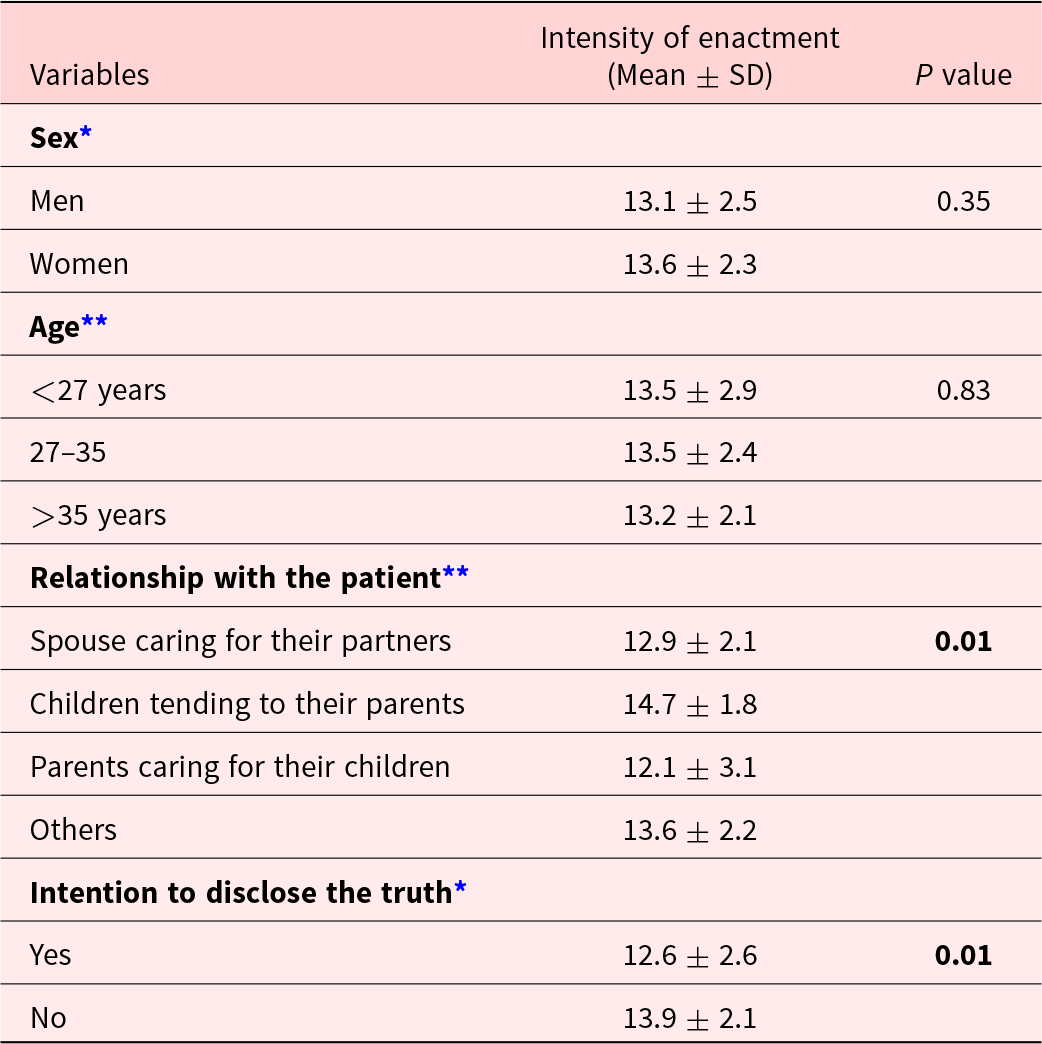
* Independent t-test done.
** One-way ANOVA done; p < 0.05 considered as significant.
Interview result
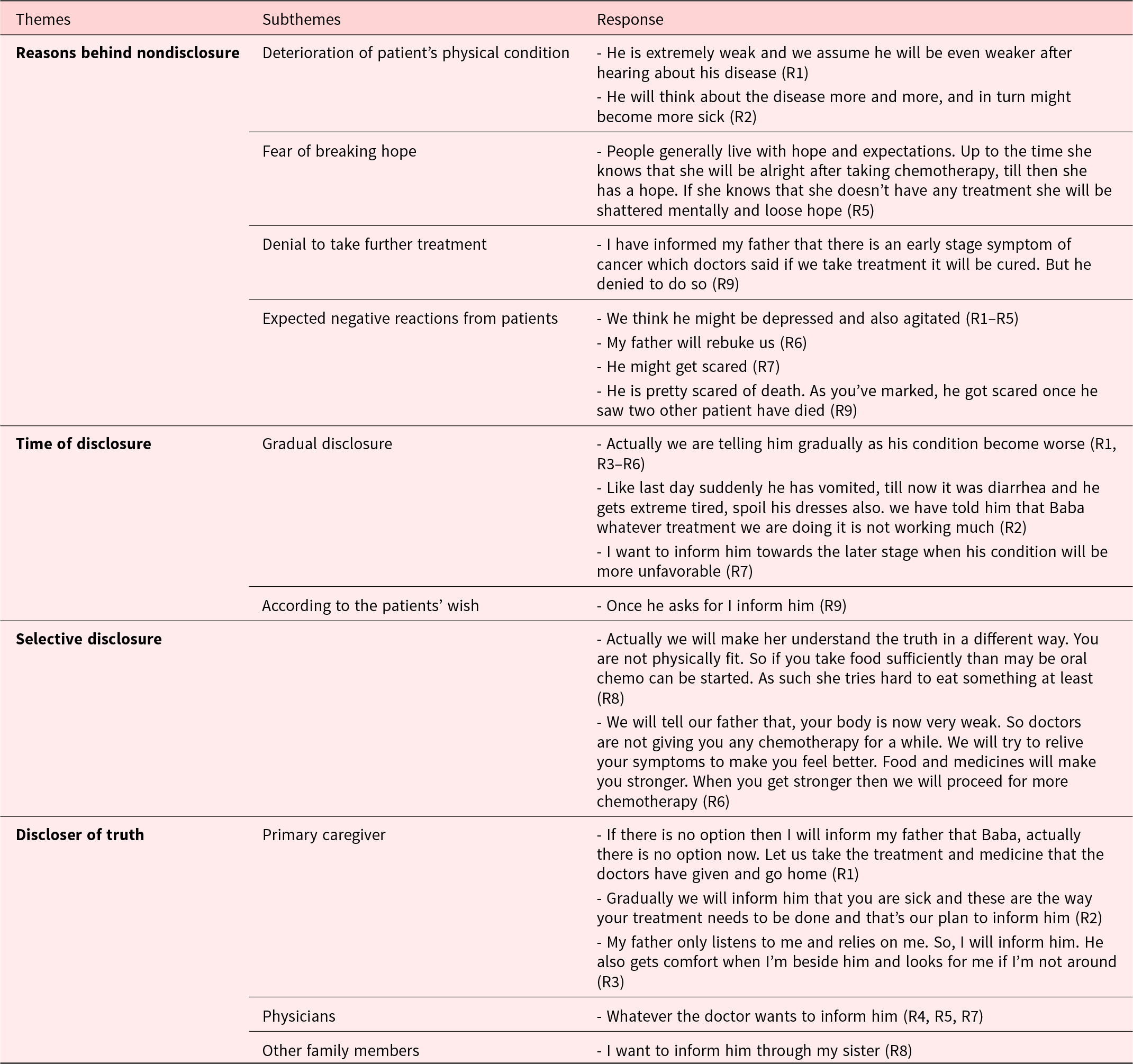
Nine participants took part in the key person interview, five female and four male, age ranged from 22 to 45 years. Four major themes were generated from this interview (Table 6).
Thematic matrix: collusion-prone situations among the caregivers (n = 9)
Reasons for nondisclosure
One of the most recurring themes was about the reasons behind keeping the truth hidden from the patients. Some worried that their patient would become frustrated, scared, or angry after learning the truth about the disease, while others feared that the patient would become depressed. However, the majority believed that the physical condition of their patients would deteriorate after knowing the truth.
A 22-year-old woman expressed her thoughts like this “… he is extremely weak and we assume he will be even weaker after hearing about his disease. (R1)” Another 27-year-old participant added more to this statement, “… she will think about the disease more and more, and in turn might become sicker.” (R2)
Some feared about breaking hope of their loved ones. Hope is the thing that the patients kept hold on until their last moment. It gave them joy and reasons to live. Caregivers believed that once the hope was shattered, patients might lose the reason to live.
A 35-year-old man stated, “… People generally live with hope and expectations. Up to the time she knows that she will be alright after taking chemotherapy, till then she has a hope. If she knows that she doesn’t have any treatment she will be mentally shattered and loose hope.” (R5)
Few thought that their patient might refuse further treatment upon knowing his/her diagnosis.
A 25-year-old female caregiver said that, “… I have informed my father that there is an early stage symptom of cancer which doctors said if we take treatment it will be cured. But he denied to do so.” (R9)
Time of disclosure
We asked if the participants ever wanted to disclose the truth. Eight out of nine confirmed that they would eventually do so, especially when the patient’s health condition began to decline. However, some of them agreed to reveal the truth whenever the patient would ask for it.
A 27-year-old son described his thoughts about his terminally ill father like this, “… Like last day suddenly he has vomited, till now it was diarrhea and he gets extreme tired, spoil his dresses also. We have told him that ‘Baba whatever treatment we are doing it is not working much.’” (R2)
Selective disclosure
Only 2 participants agreed upon selective disclosure of information rather than sharing the whole truth. They explained that they would rather share limited information such as the treatment, food, and medicine with the patient, while not disclosing the complete details of the situation. They also hoped that providing selective information would encourage their patients to continue with their current treatment.
A 30-year-old female caregiver said, “… actually we will make her understand the truth in a different way. You are not physically fit. So if you take food sufficiently than may be oral chemo can be started. As such she tries hard to eat something at least.” (R8)
Discloser of truth
We got several options for this theme. Some wanted to tell the truth by themselves. According to them, their patients trusted and relied on them, so it would be less shocking hearing the truth from their close ones.
A 29-year-old son of a terminally ill father described his thoughts like this, “… My father only listens to me and relies on me. So, I will inform him. He also gets comfort when I’m beside him and looks for me if I’m not around.” (R3)
Although our participants thought that their patients would be disappointed hearing the bad news from others, but 3 out of 9 wanted to leave the responsibility of revealing the truth on physicians or other family members (e.g. daughter of the patient).
Discussion
Collusion-prone situation is one of the most commonly encountered situations in palliative care. Sometimes it acts a major barrier of communication regarding end-of-life care (Ayalew et al. Reference Ayalew, Mphuthi and Matlhaba2023). We found a medium-to-high intensity of collusion enactment among the caregivers of terminally ill patients. The intensity of enactment was found to be significantly associated with the caregiver’s relationship with their patients, and higher intensity was observed among children who are tending to their terminally ill parents. Our result was consistent with reports from several Asian and African countries where people tend to live in tightly knitted families. In those societies, many elderly parents live with their adult children, even extended families often keep close contact (Ayalew et al. Reference Ayalew, Mphuthi and Matlhaba2023; Krishna and Menon Reference Krishna and Menon2014). In most of the Asian societies, telling the truth about terminal illnesses is not a regular practice (Low et al. Reference Low, Kiow and Main2009). Studies showed that, in the collective cultures where filial bonds are strong, caregivers prefer hiding the truth over disclosure. This explains the high intensity of enactment in our study, because families try to protect their loved ones from the “anguish” related to receiving bad news (Ayalew et al. Reference Ayalew, Mphuthi and Matlhaba2023; Chaturvedi et al. Reference Chaturvedi, Loiselle and Chandra2009; Low et al. Reference Low, Kiow and Main2009).
Most caregivers were worried about deterioration of the mental and physical condition of their patients by revealing the truth about their disease, while some fear about breaking hope. Some of them even thought that keeping the truth hidden might give their patients hope for a complete cure. Similar to many Asian and African nations as well as a few European societies, caregivers in this research tended to fabricate the truth according to patients’ needs by giving selective and useful information, and made up a “creative illusion of recovery plot” to maintain their hope (Ayalew et al. Reference Ayalew, Mphuthi and Matlhaba2023; Bergqvist and Strang Reference Bergqvist and Strang2019; Krishna and Menon Reference Krishna and Menon2014; Stiefel et al. Reference Stiefel, Nakamura and Terui2017). Furthermore, societal pressure dictated that the caregivers of patients must maintain hope and never give up on them (Goh Reference Goh2009; Ho et al. Reference Ho, Radha Krishna and Yee2010; Krishna and Menon Reference Krishna and Menon2014).
In the current study, the fear of causing emotional distress and despair in patients also played a significant role in caregivers’ decision to withhold the truth about prognosis. They believed that by not revealing the true extent of the illness, they were protecting their patients from unnecessary suffering. Although we didn’t perform an in-depth exploration, it can be assumed that some of these reasons might have stemmed from the caregivers’ own anxiety or fear, prompting them to project their own thoughts onto their patients. In such scenarios, nondisclosure can create a sense of safety and escalate the severity of the situation (Awasthi and Kuhu Reference Awasthi and Kuhu2017; Karlsson Reference Karlsson2004). In some areas of Singapore, uttering the word “cancer” in front of the patients is considered as a taboo (Krishna and Menon Reference Krishna and Menon2014). We found that the majority of caregivers prevented physicians from discussing prognosis with their patients. Some wanted the physicians to give their patients only selective clues about their treatment. Our finding represents a common scenario of the Indian subcontinent, where caregivers tend to prioritize practical matters such as taking the patient for treatment, completing instrumental activities, and offering support, rather than expressing their uneasiness about discussing such sensitive topics with their patients (Chaturvedi et al. Reference Chaturvedi, Loiselle and Chandra2009). Sometimes the healthcare team is also compelled to enact what caregivers project onto them (Karlsson Reference Karlsson2004). These factors combined create a complex and challenging dynamic between caregivers, patients, and physicians when it comes to discussing prognosis as well as tailoring the end-of-life care goals according to the patients’ needs. In the worst case scenario, collusion-prone situation leads to the establishment of completely different goals (Ayalew et al. Reference Ayalew, Mphuthi and Matlhaba2023). Caregivers in our study might have wanted to hide the truth from their patients purely out of love. However, we found that half (50.7%) of them felt guilty for doing so. This finding is comparable with the reports from Western countries, where families feel regretful about not being open with their patients. It requires a delicate balance of empathy and objectivity to effectively work through these issues and help the caregivers gain insight into their own emotions (The et al. Reference The, Hak and Koeter2000).
There are some arguments about whether the truth should be revealed or not. Studies suggest that, unlike Western societies most of the Asian and African patients do not prefer to be told about their prognosis at the terminal stage. Some wanted the news to be delivered to their next to kin (Ayalew et al. Reference Ayalew, Mphuthi and Matlhaba2023). One the other hand, some patients wanted to have only “useful” information to keep up their hope (Bergqvist and Strang Reference Bergqvist and Strang2019). Stiefel and colleagues suggested that, breaking hope sometimes even trigger negative psychological reactions among patients (Stiefel et al. Reference Stiefel, Nakamura and Ishitani2019, Reference Stiefel, Nakamura and Terui2017). However, a recent study from India reported that, now-a-days cancer patients prefer full disclosure about their diagnosis and prognosis (Mathew et al. Reference Mathew, Mohanti and Tewari2021). Nearly half (43.7%) of our participants intended to disclose the truth. A few (7%) wanted to reveal the truth by themselves, while others (59.2%) wanted to involve the physicians or other family members in this process. It was an interesting finding because, in most of the studies, families colluded with the healthcare team about the revelation of truth (Low et al. Reference Low, Kiow and Main2009). Also, most caregivers in our study expressed a desire to reveal the truth when their patients’ health conditions became more serious. It may not be ideal timing because, at that point, the patients may be more vulnerable and in need of emotional support and comfort rather than facing the harsh reality of their condition. Additionally, breaking the bad news at the terminal stage can increase stress and anxiety for both caregivers and patients as they navigate the challenging conversations and decisions that accompany the acknowledgment of the truth (Chaturvedi et al. Reference Chaturvedi, Loiselle and Chandra2009; Sutar and Chaudhary Reference Sutar and Chaudhary2022). Gaining a deeper knowledge of collusion-prone situations can guide the palliative care physicians handling such situations and clinical decision-making (Stiefel et al. Reference Stiefel, Nakamura and Ishitani2019).
Still, this study had several limitations. One limitation was that we had a fairly small sample size. As mentioned earlier, most of the patients as well as their caregivers either guessed or were informed about the diagnosis and prognosis at the advanced stage, so we could not find our intended sample size within the period of the study. Also, some of the qualitative responses were framed by the Caregiver Collusion Questionnaire, which was completed before the qualitative interview. We couldn’t perform an in-depth assessment of the caregivers’ own psychological issues that might have led to collusion-prone situation due to the unavailability of psychologists and psychiatrists in our facility. Due to the cross-sectional nature of the study, we couldn’t follow up with our participants in the long run to see whether they broke the collusion or not, and assess its consequences.
A significant limitation of this study is that we focused solely on the caregivers’ perspectives regarding collusion-prone situations. This narrow approach meant we didn’t highlight the patients’ preferences or desires to know the truth about their condition. Consequently, screening for actual collusion was not possible due to the inherent bias in relying solely on caregivers’ viewpoints. This limitation restricts a comprehensive understanding of the issue, highlighting the need for future research that incorporates the perspectives of both caregivers and patients.
Conclusion
Collusion can hinder effective communication and decision-making, ultimately impacting the quality of care provided to the patient. It is essential for healthcare professionals to approach collusion-prone situations with sensitivity and empathy, recognizing that these situations may arise from various factors, such as cultural beliefs, fear of conflict, or a desire to protect the patient. By gradually and indirectly addressing these situations, healthcare professionals can assist families in navigating difficult conversations, ensuring that the patient’s wishes and values are respected.
Supplementary material
The supplementary material for this article can be found at https://doi.org/10.1017/S1478951524002074.
Data availability statement
All data relevant to the study are accessible in Mendely data doi: 10.17632/8pw5t5cy8d.1
Acknowledgments
The authors gratefully acknowledge the contribution of Tajib Adnan Chowdhury for transcribing the interviews.
Author contributions
Jheelam Biswas: conceptualization, data curation, methodology, formal analysis, funding acquisition, investigation, methodology, project administration, resources and software, validation, writing original draft, editing and review.
Salma Ahsan Khanam: conceptualization, data curation, formal analysis, funding acquisition, investigation, methodology, project administration, resources and software, validation, writing original draft, editing and review.
Md. Shamsudduha Tauhid: conceptualization, data curation, investigation, project administration, editing and review.
Shima Rani Sarker: editing and review.
Nahid Afsar: editing and review.
Nashid Islam: editing and review.
Funding
The authors of this study received no funding from any profit or nonprofit source.
Competing interests
The authors declare that there is no conflict of interest.
Ethical approval
Ethical approval for both the research and consent procedure (Approval no: CeNoR/EA/2301; Date: 07/05/2023) was obtained from the Ethical Review Committee, Center for Noncommunicable Diseases Prevention Control Rehabilitation and Research. Informed consent was taken from all eligible participants.


 Open access

