


Today’s societies face many types of civilian mass casualty disasters, including natural and man-made catastrophic events that pose a particular threat to children.Reference Barthel, Pierce and Goodhue1–Reference Berman6 Yet, disasters are not a new phenomenon, and their existence and/or common perception can be dated back to history’s beginnings itself (eg, Mount Tai earthquake, biblical plagues).7 The exact number of children worldwide affected by conflicts, war, and disaster is unknown. Yet, the United Nations International Children’s Emergency Fund (UNICEF) Machel study investigated the effects of armed conflicts on children from approximately 100 countries over a period of 10 years with an unprecedented scope. The results showed that nearly more than one billion children live in conflict areas – almost one sixth of the total world population, 300 million of them younger than 5 years.8 Precise longitudinal pediatric data on patterns of disasters are not available. A comprehensive understanding of disaster patterns would help identify the need of children in specific disasters and strengthen resilience against threats. A comparison of disaster patterns in two neighboring industrialized countries, in this case, Germany and France, which account for almost one third of the overall population in the European Union, helps identify commonly faced issues and differences and may help align bilateral disaster mitigating strategies or bundling of resources. Pediatric perspectives of disaster medicine are important because children per se are particularly vulnerable in catastrophic events due to their (1) physiology and (2) dependency on caretakers.Reference Markenson9 Stressful life events such as exposure to traumatizing and life-threatening situations, which are probably to be encountered during a disaster, may result in mental disorders such as posttraumatic stress disorder (PTSD) Reference Furr, Comer, Edmunds and Kendall10 with significant financial implications, because, in general, costs of mental illnesses in children and adolescents have been estimated to be 10-fold higher than those with an adult onset.Reference Lee, Heimer and Giedd11, Reference Suhrcke, Pillas and Selai12 A thorough understanding of disaster risk patterns and opportunities for pediatric disaster resilience is of great relevance because children represent almost one-fifth of the population in Germany and France. Currently, 13 134 352 individuals in Germany are less than 18 years old, which corresponds to 16% of the overall population.13 Likewise, a disaster would potentially affect 14 183 189 individuals under 18 years of age in France (ie, 22% of the overall population).14
We therefore directed our efforts in assessing and analyzing disaster patterns in Germany and France. The primary goal of this analysis was to characterize disasters and their impact occurring over the last 10 years, in general. The secondary goal was an exploration of the overall disasters in the two countries between 1900 and 2016, and the description of the 10 most significant disaster events in both countries registered in the Emergency Events Database (EM-DAT).
METHODS
Availability of Data on Disasters – the EM-DAT
Data on natural and technological disasters from 1900 to present are hosted in the EM-DAT at the Centre for Research on the Epidemiology of Disasters at the School of Public Health of the Université catholique de Louvain located in Brussels, Belgium.Reference Guha-Sapir, Below and Hoyois15 Launched in 1988, this database is a major authoritative, easily accessible source of information for epidemiological disaster research disasters, captures more than 22 000 worldwide mass disasters from data sources, including United Nations agencies, non-governmental organizations (NGOs), insurance companies, research institutes, and press agencies.Reference Guha-Sapir, Below and Hoyois15 A disaster is included in the database if one or more of the following criteria are fulfilled: (1) 10 or more people dead, (2) 100 or more people affected, (3) the declaration of a state of emergency, or (4) a call for international assistance.Reference Guha-Sapir, Below and Hoyois15 Data on terrorism and effects of warfare are not available in the EM-DAT.16
Data Query
The EM-DAT was accessed on December 26, 2016, through the Internet.Reference Guha-Sapir, Below and Hoyois15 Countries considered were Germany, Federal Republic of Germany, German Democratic Republic, and metropolitan France. Variables considered were “year,” “group,” “type,” “subtype,” and “total deaths.” Years from the earliest available entries (1900) until December 26, 2016, were considered. Data were downloaded from the database in comma-separated values (CSV) format, which facilitates handling and processing of tabular data. Data were manually checked for plausibility. One entry was excluded because the dam collapse of Gleno (Italy) in 1923 was listed in the French dataset (Supplemental Figure 1). Missing data were not imputed. The analysis was conducted with GraphPad PRISM, a scientific graphing and statistics software (La Jolla, CA, USA).
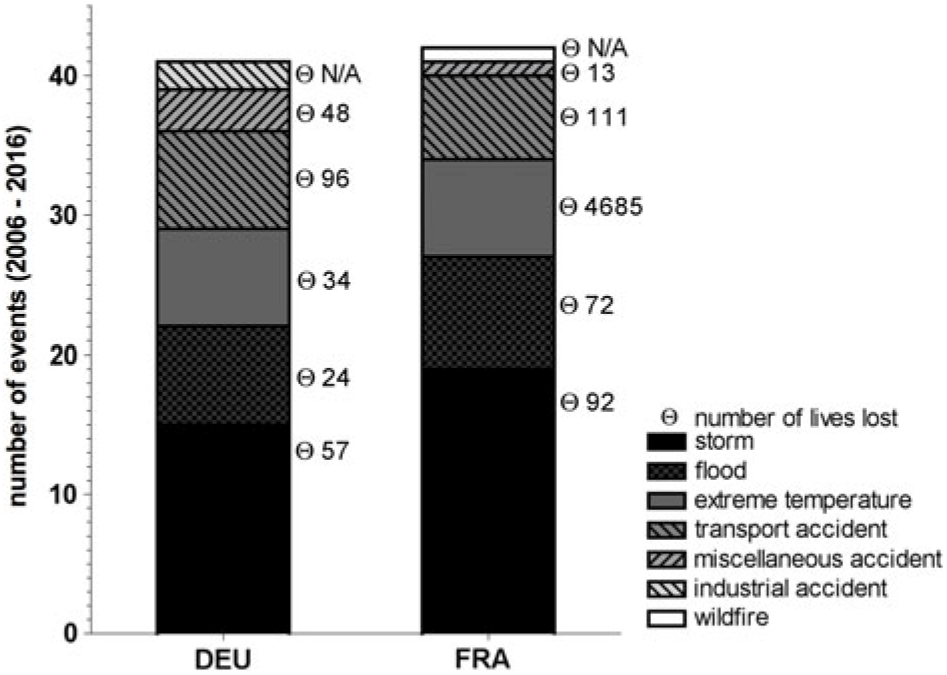
Number of Reported Disaster Main Types and Casualty Events by Country Between 2006 and 2016. DEU = Germany; FRA = France; Θ = number of casualties.20
Statistics
We analyzed (1) all reported events within the last 10 years for both Germany and France, (2) the overall pattern of natural and technological disasters in Germany and France between 1900 and 2016, and (3) the 10 most significant overall events in terms of causalities for both countries. Standard methods of descriptive statistics were applied. Strengthening the reporting of observational studies in epidemiology (STROBE) criteria, which represent a reporting guideline for observational studies, were respected by adhering to the STROBE checklist.Reference Vandenbroucke, von Elm and Altman17 The reported numbers of casualties during heat and cold waves were compared in a conservative approach with a two-tailed non-parametric Mann–Whitney test due to a small sample size. A P-value of less than .05 was considered statistically significant.
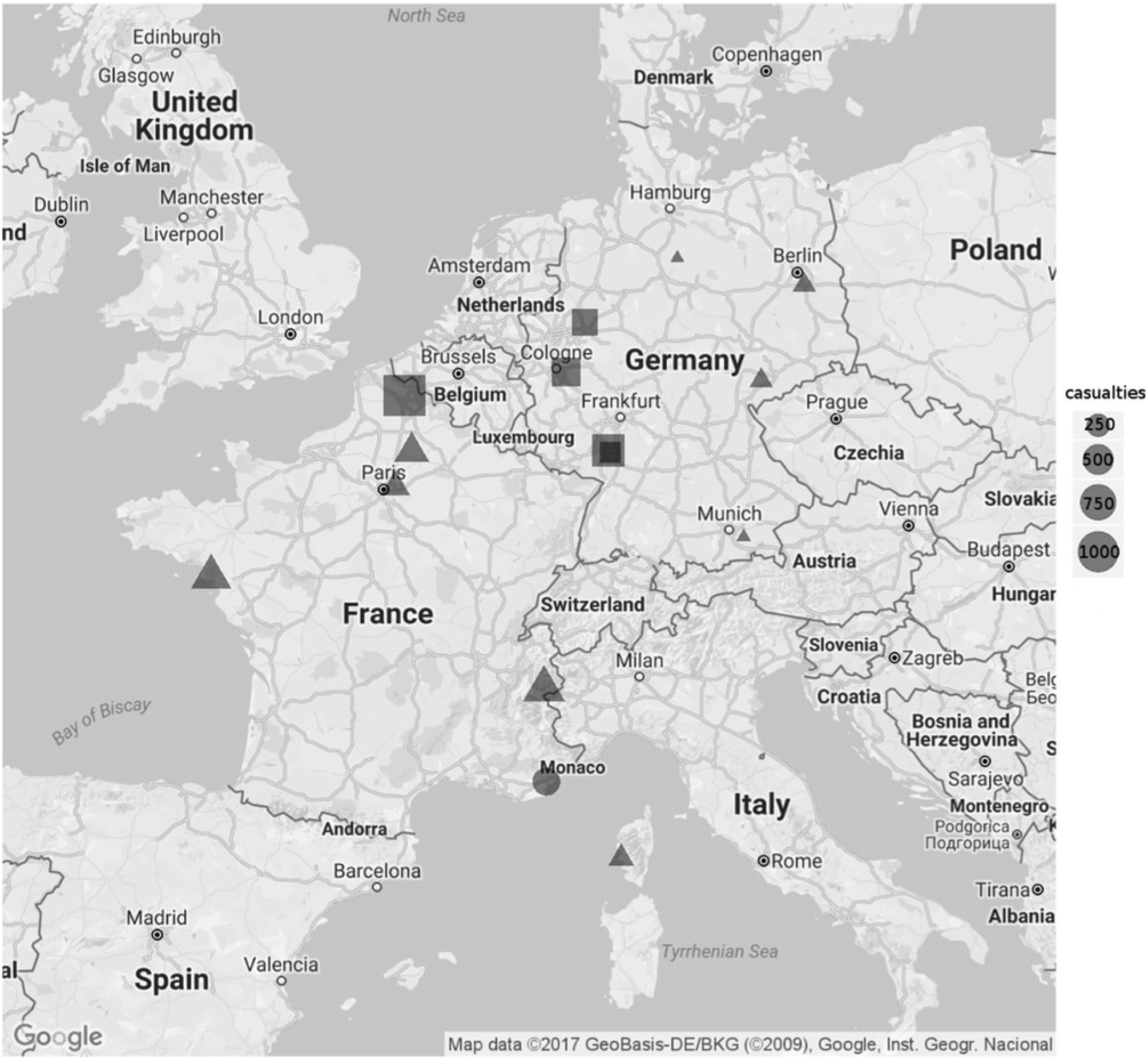
Figure 2 was computed with the ggmapReference Kahle and Wickham18 extension for R environment and used Google Maps data.
Germany and France: Geographical Distribution of the Major Technological Disasters (Supplemental Table 3 and Supplemental Table 4) Between 1900 and 2016 Registered in the EM-DAT. • = miscellaneous accident; ▴ = transport accident; ▪ = industrial accident.
RESULTS
Disasters in Germany and France 2006–2016 as Registered in the EM-DATReference Guha-Sapir, Below and Hoyois15
In the last decade, that is, between 2006 and 2016, there were 41 German and 42 French disaster events registered in the database (Supplemental Table 1 and Supplemental Table 2; Figure 1). Most events in Germany were storms (15/41, 37%), followed by extreme temperatures (7/41, 17%), floods (7/41, 17%), and transport accidents (7/41, 17%). In France, most events reported from 2006–2016 were storms (19/42, 45%), floods (8/42, 19%), extreme temperatures (7/42, 17%), and transport accidents (6/42, 14%). In Germany, 259 lives were lost overall during disasters in the last decade. Transport accidents claimed most lives (96). In France, 4973 lives were lost overall in the last decade, most of them in the heat waves of 2015 and 2006 with 3275 and 1388 casualties, respectively.
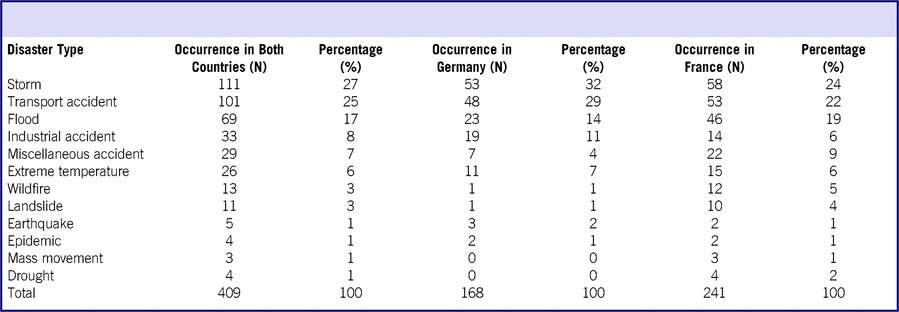
Number and Distribution of Disasters Affecting Germany and France Between 1900 and 2016, as Reported in the EM-DAT
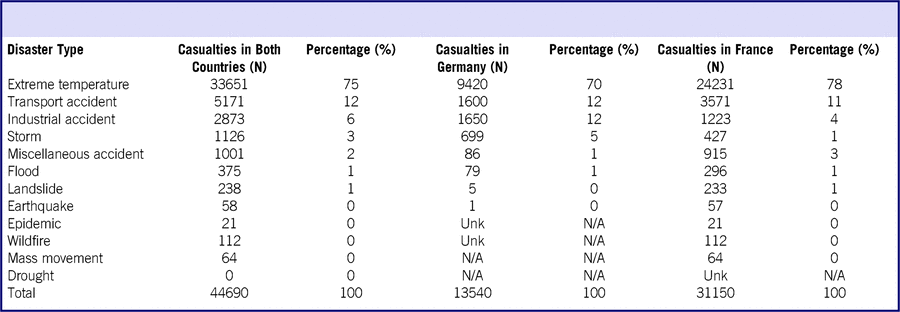
Casualties Due to Disasters Affecting Germany and France Between 1900 and 2016, as Reported in the EM-DAT
Disasters in Germany and France Between 1900 and 2016 and Most Significant Events as Registered in the EM-DATReference Guha-Sapir, Below and Hoyois15
Germany
Overall, between 1900 and 2016, 168 natural or technological disasters affecting Germany leading to a total death toll of 13 540 persons were registered in the database (Tables 1 and 2; Figure 2, Supplemental Figure 2A and Supplemental Figure 2B). Most single events were storms, transport accidents, and floods. Most lost lives were lost due to extreme temperature, followed by industrial accidents and transport accidents.
An overview of the 10 major single disasters affecting Germany is provided in Supplemental Table 3. The three events with the highest death toll were a heat wave in 2003, a mining accident in 1946, and an explosion of a chemical factory in 1921.
France
In the same period, 1900–2016, 241 natural or technological disasters were registered in France having claimed 31 150 lives (see Tables 1 and 2; Figure 2, Supplemental Figure 3A and Supplemental Figure 3B). Most single events were storms, transport accidents, and floods. The two disaster types with the highest number of casualties were extreme temperature and transport accidents. The three single disaster events with the highest death toll in France since 1900 were heat waves in 2003, 2015, and 2016 (Supplemental Table 4).
Extreme Temperatures – Heat Versus Cold Waves
Because extreme temperatures were the disaster type with the highest reported numbers of casualties reported in the EM-DAT, we conducted a subgroup analysis to compare human susceptibility against high versus low temperatures. Between 1900 and 2016, there were two heat waves reported in the EM-DAT for Germany and four reported for France. Likewise, there were 9 cold waves in Germany and 11 reported in France. In both countries, more lives were reportedly lost during heat waves compared with cold waves/severe winter (33 515 persons vs 137 persons, P = .0273, Mann–Whitney test, 23 events with available data).
DISCUSSION
Disasters in Germany and France, 2006–2016
The distribution patterns for the types of most reported events (storms, extreme temperatures, floods, transport accidents) indicated a similar risk pattern for injuries. Casualties of 259 and 4973 were reported for disasters in Germany and France, respectively. Whereas in Germany most lives (96) were lost in transport accidents within the last decade, in France, most deaths were due to the heat waves of 2006 and 2015 (1388 and 3275 casualties, respectively), which indicate that heat waves struck France more significantly than Germany during that time.
Disasters in Germany and France Between 1900 and 2016 and Most Significant Events as Registered in the EM-DAT
We explored the overall pattern of events for Germany and France available in the database, which covered the years 1900 to 2016. The EM-DAT reports that 409 natural or technological disasters affected Germany and France, leading to the loss of 44 690 lives. Most single events in both countries were storms, transport accidents, and floods. Extreme temperatures, industrial, and transport accidents claimed most lives. The three single events with the highest death toll in Germany were the heat wave in 2003 (9355 casualties), the explosion of a chemical factory in 1921 (600 casualties), and a mining accident in 1946 (439 casualties), and in France the heat waves of 2003, 2015, and 2016 (19 490, 3275, and 1388 casualties, respectively). Otherwise, the distribution of events and casualties between Germany and France appeared to exhibit a similar pattern. A major limitation of this long time EM-DAT analysis is the finding that the historical data entries may not be complete. Specifically, the 1918–1919 influenza pandemic, which caused an excess mortality of 237 509 in France between August 1918 and April 1919, and 426 574 between March 1918 and January 1919 in Germany, is not captured in the EM-DAT.Reference Ansart, Pelat and Boelle19 Furthermore, there is no data entry for the other three major influenza pandemic waves in France and Germany of 1957–1958, 1968–1970, and 2009, which caused the loss of 29, 100, 46 900, and 350 lives alone in Germany.Reference Buchholz, Buda and Reuss21 In addition, as illustrated in Supplemental Figure 2 and Supplemental Figure 3, there are fewer events reported before 1988 compared with after 1988, the launch date of the database. Issues with historical data are common in registry databases, including registries for diseases; missing data, recall, and ascertainment bias therefore limit generalizability.Reference Mehta, Beck and Elliott22, Reference Muenzer, Jones and Tylki-Szymanska23 There are, however, situations where retrospectively collected data allow helpful insight into issues that cannot be quickly investigated otherwise, especially when prospective studies are not feasible or would require a long time to collect sufficient data.Reference Mechler, Mountford, Hoffmann and Ries24, Reference Zielonka, Garbade and Kolker25 Therefore, the supposedly incomplete historical data in this analysis may serve as a helpful orientation but should be interpreted with caution.
Pediatric Data – the Blind Spot
Information in the EM-DAT was not stratified for pediatric data. Therefore, the pediatric interpretation hereafter is deducted, rather than being based on age stratified subgroup analyses, which would have been the ideal situation and allow data-driven decision making in pediatric disaster epidemiology. The present data of disaster patterns in the EM-DAT suggest that heat and cold (extreme temperatures) and trauma (accidents, explosion, storms, moving elements) may represent an important risk to children in disasters in both countries. In addition, exposure to chemicals (explosions, industrial accidents), water (flood), and infectious agents (epidemics) are potential mechanisms of disaster-related injuries (Table 3). Although not specifically captured in the database, diseases due to heat waves would include heat stroke, heat exhaustion, and dehydration.Reference Basu26, 27 Substantial psychological burden is to be anticipated. Exposure to stressful life events may lead to PTSD following a complex etiology that is mediated by many factors, for example: (epi-) genetic, familiar, trauma characteristics, subjective, pre- and post-trauma variables.Reference Trickey, Siddaway and Meiser-Stedman28, Reference Kilic, Ozguven and Sayil29 Moreover, there is evidence that depressive disorders are more common resulting mental disorders after natural disasters.Reference Ying, Wu, Lin and Chen30 Yet, scientific evaluation of various disasters in the last decades has shown that the majority of exposed children did not develop PTSD or disaster-related mental disorders.Reference Green, Grace and Vary31–Reference Lengua, Long, Smith and Meltzoff34 This can be attributed to the construct of resilience, which is widely researched but still poorly understood.Reference Hjemdal, Vogel and Solem35–Reference Fayyad, Cordahi-Tabet and Yeretzian39 We favor an age-appropriate, transparent communication with children about risks and measures of prevention and mitigation. This should occur in a confident setting (eg, school) and whenever possible with inclusion of trusted persons, for example, parents and teacher. Playful educational online tools also may be helpful.40
Selected Mechanisms of Injuries in Natural and Technological Disasters and Potential Preventive Measures
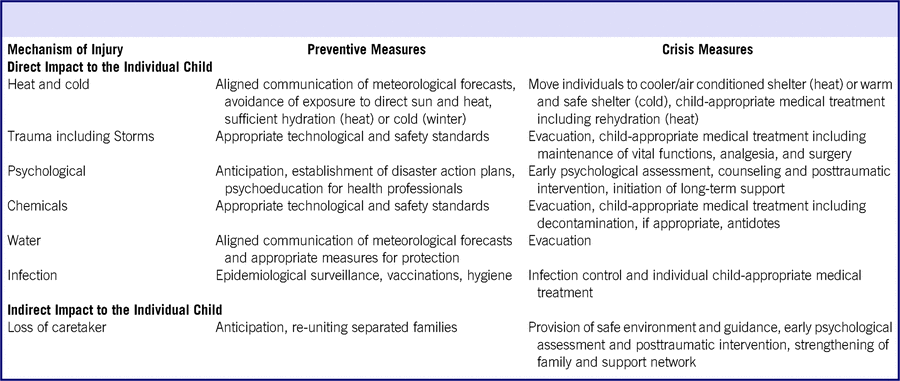
Rothstein reviewed strategies of pediatric care in disasters and proposed top 10 priorities in the emergency phase of a catastrophe (ie, initial assessment, measles immunization, water and sanitation, food and nutrition planning, shelter and site planning, health care in emergency phase, control of communicable diseases and epidemics, public health surveillance, human resources and training, and coordination).Reference Rothstein41 Likewise, one should keep in mind that the seven sins of humanitarian medicine (ie, leaving a mess behind, failing to match technology to local needs, failure of NGOs to cooperate with each other, failing to have a follow-up plan, allowing politics or training to trump service, going where we are not wanted or needed, and doing the right thing for the wrong reason) are to be avoided.Reference Rothstein41, Reference Welling, Ryan, Burris and Rich42 This implies that the preventive and interventional approach toward pediatric care in disaster situations should be timely, transparent, coordinated and sustained, and ideally be data-driven. From an epidemiological and logistic perspective (eg, type of food needed, immunization, dehydration risk, drug supply including galenic formulation, surgery and anesthesia equipment, and need of infant transportation equipment), it would be important to know which age groups are specifically affected.
Challenges in taking care of children in disaster situations occur on four main levels. First, unaccompanied children are vulnerable. This is of relevance because geographical dynamics that change on a circadian pattern – children attending daycare or school and parents going to work – may lead to a separation of families in case of an unexpected event.43 Lessons learned from the 2010 earthquake in Haiti were not to separate families in case of a disaster and to quickly establish communication channels between family members.Reference Auerbach, Norris and Menon44 Second, the physiology of the pediatric organism changes with age from neonates at adolescents.Reference Kearns, Abdel-Rahman and Alander45 This leads to particular vulnerabilities, such as the increased susceptibility to cold and the risk of rapid dehydration in neonates, infants, or toddlers. Children are more vulnerable to chemical contamination in the air, because their respiratory frequency is higher than in adults.Reference Markenson and Reynolds46 Children may be less resilient to seasonal temperature changes and living conditions due to loss of shelter after evacuation, as experienced in Japan in 2011.Reference Ishii and Nagata47 Furthermore, psychological or pharmacological interventions must be age appropriate; in addition, pediatric pharmacology deserves particular consideration for the availability of medical supplies and stockpiling.Reference Markenson9, Reference Kozu and Homma48, 49 Third, disease-inherent dynamics can be different in children compared with adults, and chronic medical problems may exacerbate in a crisis situation.Reference Mechler, Mountford, Hoffmann and Ries24 Therefore, the availability of personnel with training in pediatrics is of advantage.Reference Kozu and Homma48, Reference Gnauck, Nufer and LaValley50, Reference Weiner, Manzi and Waltzman51 Fourth, pediatric surgical expertise is essential for children in conflict and disaster situations.Reference Trudeau and Rothstein52 Orthopedic injuries like fractures or amputations, neurosurgical lesions and burns, merit special pediatric knowledge. Besides, pediatric perioperative care and safe anesthesia are required for survival and successful outcome.
Census data may be of value in identifying populations-at-risk, as recently demonstrated in Japan after the Great Eastern Japan earthquake on March 11, 2011; although, as in many disaster analyses, pediatric aspects were not specifically considered.Reference Ishiguro, Togita and Inoue53 A Web-based centralized tracking system with the goal to reunite families as soon as possible was suggested as a lesson from the events in Japan.Reference Yonekura, Ueno and Iwanaka54 An analysis of impact and long-term health effects of the disasters at Seveso, Three Mile Island, Bhopal, Chernobyl, the World Trade Center, and Fukushima concluded that health surveillance and treatment programs for affected responders and residents, including children, are important. Furthermore, detailed emergency preparedness plans are critical to mitigate future threats.Reference Lucchini, Hashim and Acquilla55 In 2010, Starmer et al. emphasized the need to mitigate possible disasters by community and societal preparation by inclusion of families and children in the preparation to respond and through access to support services.Reference Starmer, Duby and Slaw56, Reference Khorram-Manesh57 Ideally, pediatricians and families should actively be involved in governmental advice for disaster planning.Reference Starmer, Duby and Slaw56
Last, but not least, appropriate education of pediatric health care professionals is crucial for disaster resilience. Although education in pediatric disaster medicine is usually not a core component of medical school curricula or specialty training in pediatric residency programs, closing knowledge and competency gaps are important.Reference Khorram-Manesh, Lupesco and Friedl58–61 In the United States, the National Center for Disaster Medicine and Public Health put forward an initiative to develop such a training program.Reference Siegel, Strauss-Riggs and Costello62 An update on the current state of this work in progress was published by Siegel et al. in 2014.Reference Siegel, Strauss-Riggs and Needle63
Limitations and Directions for Future Research
This analysis is based on events registered in the EM-DAT because (1) this database is a major source of epidemiological information on disasters and (2) the database is easily accessible. The present analysis relies on the accuracy of the reported data. Detailed original source data verification was logistically not feasible and was therefore not undertaken. There are other databases available, such as NatCatSERVICE (Natural catastrophe know-how for risk management and research, owned by the insurance company Munich Re, Germany), Sigma (catastrophe database, owned by the insurance company Swiss Re, Switzerland), GLIDE (Global Identifier number, Asian Disaster Reduction Center, Japan), DesInventar (Sistema de Inventario de Desastres, Corporación OSSO, Columbia, and La Red de Estudios Sociales en Prevención de Desastres en América Latina, Panama), and SHELDUS (Spatial Hazard Events and Losses Databases for the United States, Hazards and Vulnerability Research Institute, University of South Carolina, USA), but these are either less comprehensive or do not cover both countries of interest in this report.16 As outlined previously, historical data in the database may be less accurate than the prospectively collected information due to ascertainment bias, illustrated by the finding that the 1918–1919, 1957–1958, 1968–1970, and 2009 influenza pandemic wavers with their substantial mortality were not covered at the time of data query. The impact of armed conflicts is not taken into account in the EM-DAT. We speculate that this may introduce a bias because the outcome of disasters in wartime may be worse. It is possible that resource constraints or decreased societal resilience in wartime may lead to higher infant mortality, hunger, and malnutrition in children. The major issue, from a pediatric perspective, is the fact that mortality data reported in the EM-DAT were not separately available for adults and children, which might introduce an age bias into this analysis if a certain age segment of the overall population has either a particular vulnerability or a specific resilience to certain injuries. Moreover, capturing pediatric information in the EM-DAT would allow better data-driven decision making for children in catastrophic situations in the future.
CONCLUSIONS
Although explicit pediatric data are not captured in the EM-DAT, the reported disaster patterns suggest that exposures to heat and cold, storms, trauma, chemicals, water, and infectious agents are possible mechanisms of injury to children in catastrophes in Germany and France. Age-stratified disaster data are needed to enable a timely, transparent, coordinated, and sustained data-driven approach to pediatric disaster resilience.
Conflict of Interest Statement
The authors have no conflicts of interest to declare.
Supplementary material
To view supplementary material for this article, please visit https://doi.org/10.1017/dmp.2019.24.


 Open access

