


History has shown that the experience of deployment to war can have legacies that manifest themselves in a variety of physical and psychological health problems (Reference Hyams, Wignall and RosewellHyams et al, 1996). The 1991 Gulf War, involving several hundred thousand US and Coalition military personnel, appears to be no exception, with reports by Gulf War veterans of various symptoms and illnesses soon after returning from this deployment (Reference De Fraites, Wanat and NorwoodDeFraites et al, 1992). Numerous studies have investigated the health of US Gulf War veterans (Persian Gulf Veterans Coordinating Board, 1995; Reference Sutker, Davis and UddoSutker et al, 1995; Joseph et al, 1997; Iowa Persian Gulf Study Group, 1997; Reference Gray, Hawksworth and SmithGray et al, 1998; Reference Kang, Natelson and MahanKang et al, 2003) as well as that of veterans from other Coalition Forces, including the UK (Ismail et al, Reference Ismail, Everitt and Blatchley1999, Reference Ismail, Blatchley and Hotopf2000; Reference Unwin, Blatchley and CokerUnwin et al, 1999), Denmark (Reference Ishoy, Suadicani and GuldagerIshoy et al, 1999) and Canada (Goss Gilroy, 1998). Despite the volume of literature to date, however, the health effects of the Gulf War remain unclear for those Defence Force personnel involved and investigations of ‘Gulf War syndrome’ continue (Reference Oumeish, Oumeish and ParishOumeish et al, 2002; Reference Shapiro, Lasarev and McCauleyShapiro et al, 2002; Reference HaleyHaley, 2003). Furthermore, and in the interim, a second major military conflict has been fought in the Gulf region, involving another several hundred thousand US and allied military personnel. Questions are already arising as to whether this group's health patterns will parallel those of the Gulf War veterans from the decade before (Reference EnserinkEnserink, 2003).
We report the results of psychological health assessments in a cross-sectional study of the entire cohort of Australian veterans of the 1991 Gulf War and a randomly sampled military comparison group who did not deploy to that conflict. The aim of this investigation was to use a validated, diagnostic interview, utilising the criteria of DSM-IV (American Psychiatric Association, 1994), to determine whether Australian Gulf War veterans have been at increased risk of developing psychological disorders at any time since the Gulf War or at increased risk of having a psychological disorder in the past 12 months. The study explored whether any excess risk of psychological disorders could be explained as a ‘war deployment effect’. Furthermore, a military experience questionnaire was used to investigate any association with psychological stressors experienced during the Gulf War deployment. Finally, a prediction model was applied to investigate the possible effects of participation bias.
METHOD
The methods presented in this paper are those that refer specifically to the assessment of psychological disorders and related exposures in this study. These are part of a larger study investigating a range of health outcomes and exposures. The study methods were approved by the Standing Committee on Ethics in Research Involving Humans at Monash University, the Department of Veterans' Affairs Human Research Ethics Committee and the Australian Defence Human Research Ethics Committee.
Recruitment
The study population was the entire cohort of 1871 Australian veterans who served in the Gulf region during the period 2 August 1990 to 4 September 1991. They included 1579 members of the Royal Australian Navy, 123 members of the Australian Army and 169 members of the Royal Australian Air Force. The Australian Gulf War deployment included 38 women.
The comparison group of 2924 individuals was selected randomly from 26 411 Australian Defence Force personnel who were in operational units at the time of the Gulf War and therefore were fit to deploy but did not deploy to that conflict. The comparison group was frequency matched to the Gulf War veteran group by service type, gender and 3-year age bands. The comparison group sample included 74 women.
Participants were recruited via mailed invitation with two further mailings and intensive follow-up telephone contact for non-responders. Last known addresses were obtained from several databases maintained by the Department of Veterans' Affairs and by the Department of Defence.
Data collection
Participation in the study included completing a postal questionnaire and undergoing a comprehensive health assessment. The health assessments were carried out by trained teams comprising a doctor, nurse and psychologist at ten Health Services Australia medical clinics located around Australia. Some individuals were unable or unwilling to attend the health assessment but completed the postal questionnaire.
Interviewer-administered psychological health assessment
Individuals who attended the health assessment at Health Services Australia medical clinics were evaluated for any history of affective, anxiety, somatic and substance use disorders according to diagnostic criteria described in the DSM-IV, using the interviewer-administered and computer-assisted version of the Composite International Diagnostic Interview (CIDI): the CIDI-Auto 2.1 (World Health Organization, 1997). The CIDI is a structured interview of demonstrated reliability and validity for research purposes (Reference Farmer, Katz and McGuffinFarmer et al, 1987; Reference Wittchen, Robins and CottlerWittchen et al, 1991; Reference Janca, Robins and CottlerJanca et al, 1992). The instrument has been used widely, including in the 1997 Australian National Survey of Mental Health and Well-being (Australian Bureau of Statistics, 1998) and in the 1990 and 2001-2002 US National Comorbidity Surveys (Kessler et al, Reference Kessler, McGonagle and Zhao1994, Reference Kessler, Berglund and Demler2003). All interviews were carried out face to face by registered psychologists who were specifically trained in the administration of the CIDI. The psychologists were initially masked to each individual's study group, and participants were asked to refrain from revealing this information during the course of the interview if possible. However, study group may have been surmised by the psychologists on the basis of certain responses during the interview. Using standard output from the CIDI, individuals were classified according to any diagnosis of the following:
-
(a) CIDI-defined DSM-IV pre-Gulf War disorder: symptoms meeting criteria for the disorder first experienced by the person prior to the time of the Gulf War.
-
(b) CIDI-defined DSM-IV post-Gulf War disorder: symptoms meeting criteria for the disorder first experienced by the person during or after the time of the Gulf War.
-
(c) CIDI-defined DSM-IV disorder present in previous 12 months: any pre-Gulf War or post-Gulf War disorders where symptoms meeting criteria for the disorder were present in the 12 months prior to the interview.
Postal questionnaire
The postal questionnaire enquired about demographic variables, including age, gender, country of birth, educational level, marital status, occupational status, service type and rank at the time of the Gulf War. Participation in active deployments other than the Gulf War was also reported. Active deployments were defined as war or peacekeeping deployments and specifically excluded training exercises or ‘goodwill’ visits.
Exposure to psychological stressors during the Gulf War was measured using the Military Service Experience questionnaire, which was developed specifically for this study of Australian military personnel. The questionnaire comprised 44 items, each representing a potentially stressful experience considered relevant to Australian Defence Force military service, including the Gulf War. The items were largely based on information drawn from a focus group of Australian Gulf War veterans. Some items were modified from pre-existing combat exposure questionnaires, such as the Laufer Combat Scale (Reference Gallops, Laufer, Yager, Egendorf, Kadushin, Laufer, Rothbart and SloanGallops et al, 1981) modified for studies of US Gulf War veterans (Reference Erickson, Wolfe and KingErickson et al, 2001), the Combat Exposure Scale (Reference Keane, Fairbank and CaddellKeane et al, 1989) and the Operation Desert Storm Exposure Scale (Reference Wolfe, Brown and KelleyWolfe et al, 1993; Reference Sutker, Davis and UddoSutker et al, 1995). Common themes covered by the Military Service Experience questionnaire items included fear of entrapment below the waterline on ships, fear of death, threat of biological or chemical attack, exposure to the death or suffering of others, feelings of helplessness and lack of control, poor preparation, malevolent environment, lack of support and lack of unit cohesion. Respondents indicated whether or not they had experienced individual items during the Gulf War. The questionnaire was scored by summing the number of positive responses, providing a score range of 0-44.
Statistical analysis
Owing to very small numbers of female Gulf War veterans, the analyses were limited to males. Statistical analyses were performed using Stata (StataCorp, 2001). Differences between the Gulf War and comparison group participants on demographic variables were assessed using chi-squared tests for categorical measures and t-tests for continuous measures. Associations between Gulf War deployment and psychological disorders, after adjusting for potentially confounding factors, were assessed using logistic regression and reported as adjusted odds ratios with 95% confidence intervals. Odds ratios for CIDI-defined post-Gulf War disorders are incident odds ratios, and odds ratios for CIDI-defined disorders present within the previous 12 months are prevalence odds ratios. Where fewer than five people in either study group experienced the disorder of interest, exact logistic regression was performed (CYTEL Software Corporation, 2000). Likelihood ratio tests (Reference Hosmer and LemeshowHosmer & Lemeshow, 2000) were performed to investigate homogeneity of the effects of study group across categories of age, rank and service type. These were performed using interaction terms added to the logistic regression model. To explore the relationship between CIDI disorders and Gulf Warrelated psychological stressors in Gulf War veterans, exposure-response trends were computed using the Military Service Experience questionnaire score as a linear variable in the regressions.
Assessment for participation bias
Typically, in Gulf War veteran research the participation rates in the non-Gulf comparison groups have been low (Goss Gilroy, 1998; Reference Ishoy, Suadicani and GuldagerIshoy et al, 1999; Reference Unwin, Blatchley and CokerUnwin et al, 1999; Kang et al, Reference Kang, Mahan and Lee2000, Reference Kang, Natelson and Mahan2003), rendering the results of these studies vulnerable to participation bias. To investigate possible participation bias in this study, we collected some brief demographic and Short Form 12 (SF-12) Health Survey (Ware et al, Reference Ware, Kosinski and Keller1996, Reference Ware, Kosinski and Keller1998) data on a number of non-participants via a telephone-administered questionnaire. Study participants who completed the postal questionnaire also completed the SF-12 in that instrument.
A complete description of the analysis conducted to assess participation bias in this study can be obtained from the authors. To summarise, a prediction model was used to impute SF-12 scores for all non-participants by using the relationship observed between SF-12 scores and study group, age, rank, service type and serving status in those non-participants who completed the telephone questionnaire. Subsequently, by using the relationship observed between the SF-12 scores of participants, the above demographic variables and their CIDI-defined psychological health outcomes, it was possible to impute CIDI results for all non-participants. This procedure, replicated 100 times, was applied to each of the major post-Gulf War psychological health outcomes, each time computing an age-, rank- and service-adjusted odds ratio for the relative health of Gulf War veterans v. those in the comparison group as if the study had achieved full participation. The difference between the average imputed odds ratios and the actual observed odds ratios among participants represented the degree of participation bias.
RESULTS
Participants
From the original study population of 1871 Gulf War veterans, 63 were removed from the sample because they were reported either to be deceased (n=22) or living or based overseas for the duration of the study (n=41), and hence not able to complete medical and diagnostic interviews. From the remaining 1808 Gulf War veterans 1456 (80.5%) participated, including 1414 (78.2%) who completed both the health assessment and postal questionnaire and a further 42 (2.3%) who completed the postal questionnaire alone. The 1456 Gulf War veteran participants included 1424 men (97.8%), of whom 1381 (97.0%) completed the psychological health interview.
The total eligible sample in the comparison group was 2796 after removal of those reported deceased (n=31) or overseas (n=97). The overall participation rate in the comparison group was 56.8% with 1588 participants. These included 1411 (50.5%) who completed both the health assessment and postal questionnaire and a further 177 (6.3%) who completed the postal questionnaire alone. The 1588 comparison group participants included 1548 men (97.5%), of whom 1377 (89.0%) completed the psychological health interview.
Demographics
Demographics are shown in Table 1 for all male participants. Gulf War veteran participants were slightly younger than comparison group participants, more likely to have served in the Navy, less highly ranked and less likely to have tertiary education. There were no differences in other variables. Just under 60% of participants in each group were no longer serving members of the Australian Defence Force at the time of recruitment.
Demographics for male Gulf War veteran and comparison group participants

| Demographics | Gulf War veterans (n=1424) | Comparison group (n=1548) | P | ||
|---|---|---|---|---|---|
| n | (%) | n | (%) | ||
| Age in years at date of participation: mean (s.d.) | 38.1 | (6.4) | 39.3 | (6.4) | <0.001 |
| Age category at date of participation | |||||
| <30 years | 114 | (8.0) | 62 | (4.0) | <0.001 |
| 30-34 years | 413 | (29.0) | 386 | (24.9) | |
| 35-44 years | 689 | (48.4) | 796 | (51.4) | |
| ≥ 45 years | 208 | (14.6) | 304 | (19.6) | |
| Service type at August 1990 | |||||
| Navy | 1232 | (86.5) | 1123 | (72.5) | <0.001 |
| Army | 87 | (6.1) | 172 | (11.1) | |
| Air Force | 105 | (7.4) | 253 | (16.3) | |
| Rank at January 1991 | |||||
| Officer | 268 | (18.8) | 391 | (25.3) | <0.001 |
| Other rank, supervisory | 686 | (48.2) | 740 | (47.8) | |
| Other rank, non-supervisory | 468 | (32.9) | 417 | (26.9) | |
| Australian Defence Force employment status | |||||
| Serving | 605 | (42.5) | 624 | (40.3) | 0.229 |
| Not serving | 819 | (57.5) | 924 | (59.7) | |
| Country of birth | |||||
| Australia | 1194 | (83.8) | 1289 | (83.3) | 0.589 |
| UK/Ireland | 148 | (10.4) | 177 | (11.4) | |
| New Zealand | 14 | (1.0) | 20 | (1.3) | |
| Other | 64 | (4.5) | 61 | (3.9) | |
| Marital status | |||||
| Married/de facto | 1080 | (75.8) | 1195 | (77.2) | 0.223 |
| Separated/divorced/widowed | 162 | (11.4) | 187 | (12.1) | |
| Single, never married | 171 | (12.0) | 156 | (10.1) | |
| Highest education level | |||||
| Up to year 10 | 266 | (18.7) | 273 | (17.6) | 0.002 |
| Years 11 or 12 | 264 | (18.5) | 225 | (14.5) | |
| Certificate or diploma | 694 | (48.7) | 772 | (49.9) | |
| Tertiary degree | 196 | (13.8) | 274 | (17.7) | |
| Occupational status | |||||
| Paid employment | 1309 | (91.9) | 1440 | (93.0) | 0.653 |
| Not working because of ill health | 29 | (2.0) | 26 | (1.7) | |
| Unemployed | 45 | (3.2) | 41 | (2.6) | |
| Other (student/volunteer/home duties/retired) | 39 | (2.7) | 37 | (2.4) | |
Participation in active deployments other than the Gulf War
In addition to their deployment to the Gulf War, 44% of male Gulf War veterans (n=625) reported participation in at least one other active deployment. One-third of the male comparison group (n=514, 33%) reported participation in at least one active deployment.
CIDI-defined DSM-IV psychological disorders
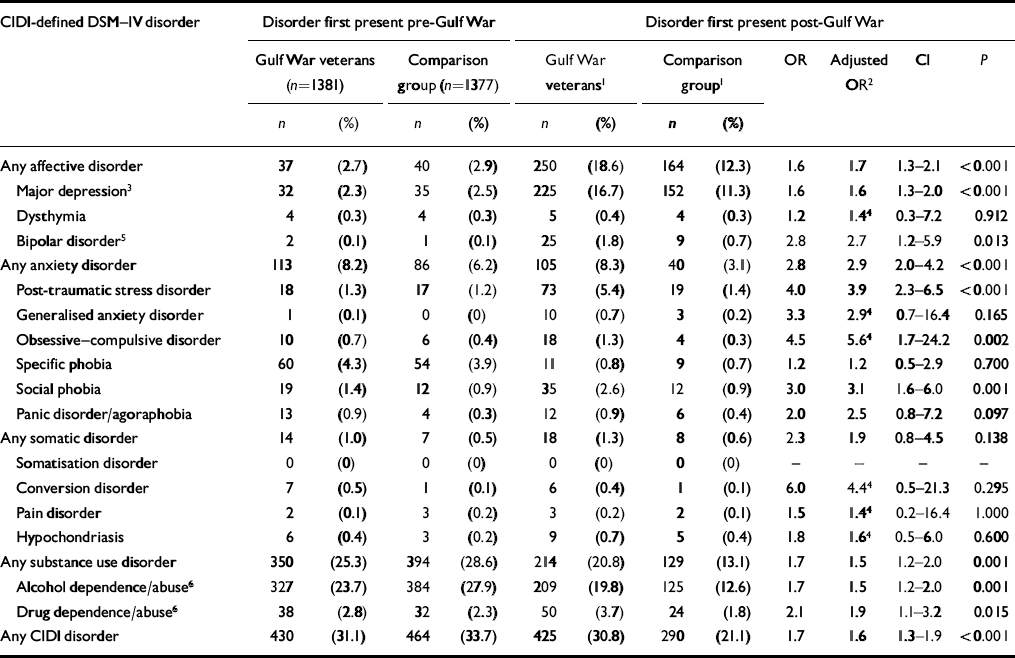
The results for CIDI-defined pre-Gulf War disorders and CIDI-defined post-Gulf War disorders in males are shown in Table 2. Prevalences of most pre-Gulf War disorders were similar in the two groups, indicating that they varied little in their overall levels of psychological morbidity prior to the time of the Gulf War deployment.
Composite International Diagnostic Interview (CIDI)-defined DSM-IV pre-Gulf War and post-Gulf War psychological disorders in male Gulf War veterans and comparison group participants
| CIDI-defined DSM-IV disorder | Disorder first present pre-Gulf War | Disorder first present post-Gulf War | ||||||||||
|---|---|---|---|---|---|---|---|---|---|---|---|---|
| Gulf War veterans (n=1381) | Comparison group (n=1377) | Gulf War veterans1 | Comparison group1 | OR | Adjusted OR2 | CI | P | |||||
| n | (%) | n | (%) | n | (%) | n | (%) | |||||
| Any affective disorder | 37 | (2.7) | 40 | (2.9) | 250 | (18.6) | 164 | (12.3) | 1.6 | 1.7 | 1.3-2.1 | <0.001 |
| Major depression3 | 32 | (2.3) | 35 | (2.5) | 225 | (16.7) | 152 | (11.3) | 1.6 | 1.6 | 1.3-2.0 | <0.001 |
| Dysthymia | 4 | (0.3) | 4 | (0.3) | 5 | (0.4) | 4 | (0.3) | 1.2 | 1.44 | 0.3-7.2 | 0.912 |
| Bipolar disorder5 | 2 | (0.1) | 1 | (0.1) | 25 | (1.8) | 9 | (0.7) | 2.8 | 2.7 | 1.2-5.9 | 0.013 |
| Any anxiety disorder | 113 | (8.2) | 86 | (6.2) | 105 | (8.3) | 40 | (3.1) | 2.8 | 2.9 | 2.0-4.2 | <0.001 |
| Post-traumatic stress disorder | 18 | (1.3) | 17 | (1.2) | 73 | (5.4) | 19 | (1.4) | 4.0 | 3.9 | 2.3-6.5 | <0.001 |
| Generalised anxiety disorder | 1 | (0.1) | 0 | (0) | 10 | (0.7) | 3 | (0.2) | 3.3 | 2.94 | 0.7-16.4 | 0.165 |
| Obsessive-compulsive disorder | 10 | (0.7) | 6 | (0.4) | 18 | (1.3) | 4 | (0.3) | 4.5 | 5.64 | 1.7-24.2 | 0.002 |
| Specific phobia | 60 | (4.3) | 54 | (3.9) | 11 | (0.8) | 9 | (0.7) | 1.2 | 1.2 | 0.5-2.9 | 0.700 |
| Social phobia | 19 | (1.4) | 12 | (0.9) | 35 | (2.6) | 12 | (0.9) | 3.0 | 3.1 | 1.6-6.0 | 0.001 |
| Panic disorder/agoraphobia | 13 | (0.9) | 4 | (0.3) | 12 | (0.9) | 6 | (0.4) | 2.0 | 2.5 | 0.8-7.2 | 0.097 |
| Any somatic disorder | 14 | (1.0) | 7 | (0.5) | 18 | (1.3) | 8 | (0.6) | 2.3 | 1.9 | 0.8-4.5 | 0.138 |
| Somatisation disorder | 0 | (0) | 0 | (0) | 0 | (0) | 0 | (0) | - | - | - | - |
| Conversion disorder | 7 | (0.5) | 1 | (0.1) | 6 | (0.4) | 1 | (0.1) | 6.0 | 4.44 | 0.5-21.3 | 0.295 |
| Pain disorder | 2 | (0.1) | 3 | (0.2) | 3 | (0.2) | 2 | (0.1) | 1.5 | 1.44 | 0.2-16.4 | 1.000 |
| Hypochondriasis | 6 | (0.4) | 3 | (0.2) | 9 | (0.7) | 5 | (0.4) | 1.8 | 1.64 | 0.5-6.0 | 0.600 |
| Any substance use disorder | 350 | (25.3) | 394 | (28.6) | 214 | (20.8) | 129 | (13.1) | 1.7 | 1.5 | 1.2-2.0 | 0.001 |
| Alcohol dependence/abuse6 | 327 | (23.7) | 384 | (27.9) | 209 | (19.8) | 125 | (12.6) | 1.7 | 1.5 | 1.2-2.0 | 0.001 |
| Drug dependence/abuse6 | 38 | (2.8) | 32 | (2.3) | 50 | (3.7) | 24 | (1.8) | 2.1 | 1.9 | 1.1-3.2 | 0.015 |
| Any CIDI disorder | 430 | (31.1) | 464 | (33.7) | 425 | (30.8) | 290 | (21.1) | 1.7 | 1.6 | 1.3-1.9 | <0.001 |
Gulf War veterans (31%) were more likely than the comparison group (21%) to develop post-Gulf War psychological disorders. The greatest increased risks were for anxiety disorders, including PTSD, obsessive-compulsive disorder and social phobia. There were also increased risks for post-Gulf War bipolar disorder, major depression, alcohol dependence or abuse and drug dependence or abuse. The levels of post-Gulf War somatic disorders were very low in both groups and no participants were found to have somatisation disorder.
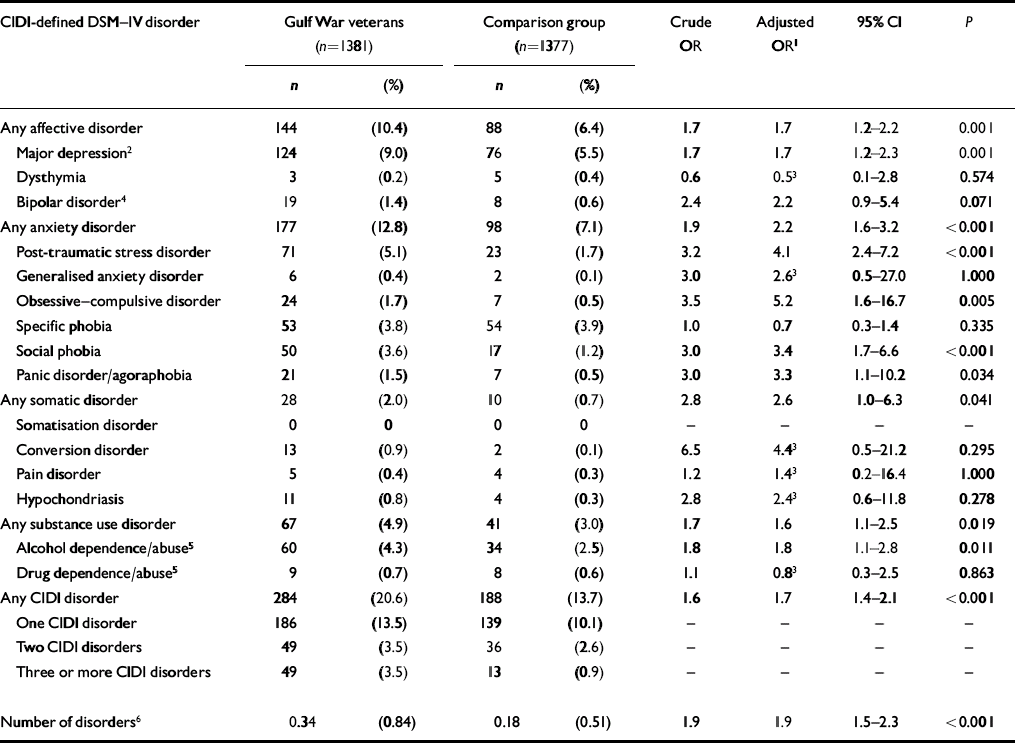
Table 3 shows CIDI-defined disorders present within the previous 12 months. The highest odds ratios were for anxiety disorders, including PTSD, obsessive-compulsive disorder, social phobia, panic disorder and agoraphobia, which were three to five times more likely in Gulf War veterans. Excesses also were found for bipolar disorder, major depression and alcohol dependence or abuse. On average, Gulf War veterans had twice as many disorders present in the previous 12 months as the comparison group.
Composite International Diagnostic Interview (CIDI)-defined DSM-IV disorders present within previous 12 months in male Gulf War veterans and comparison group participants
| CIDI-defined DSM-IV disorder | Gulf War veterans (n=1381) | Comparison group (n=1377) | Crude OR | Adjusted OR1 | 95% CI | P | ||
|---|---|---|---|---|---|---|---|---|
| n | (%) | n | (%) | |||||
| Any affective disorder | 144 | (10.4) | 88 | (6.4) | 1.7 | 1.7 | 1.2-2.2 | 0.001 |
| Major depression2 | 124 | (9.0) | 76 | (5.5) | 1.7 | 1.7 | 1.2-2.3 | 0.001 |
| Dysthymia | 3 | (0.2) | 5 | (0.4) | 0.6 | 0.53 | 0.1-2.8 | 0.574 |
| Bipolar disorder4 | 19 | (1.4) | 8 | (0.6) | 2.4 | 2.2 | 0.9-5.4 | 0.071 |
| Any anxiety disorder | 177 | (12.8) | 98 | (7.1) | 1.9 | 2.2 | 1.6-3.2 | <0.001 |
| Post-traumatic stress disorder | 71 | (5.1) | 23 | (1.7) | 3.2 | 4.1 | 2.4-7.2 | <0.001 |
| Generalised anxiety disorder | 6 | (0.4) | 2 | (0.1) | 3.0 | 2.63 | 0.5-27.0 | 1.000 |
| Obsessive-compulsive disorder | 24 | (1.7) | 7 | (0.5) | 3.5 | 5.2 | 1.6-16.7 | 0.005 |
| Specific phobia | 53 | (3.8) | 54 | (3.9) | 1.0 | 0.7 | 0.3-1.4 | 0.335 |
| Social phobia | 50 | (3.6) | 17 | (1.2) | 3.0 | 3.4 | 1.7-6.6 | <0.001 |
| Panic disorder/agoraphobia | 21 | (1.5) | 7 | (0.5) | 3.0 | 3.3 | 1.1-10.2 | 0.034 |
| Any somatic disorder | 28 | (2.0) | 10 | (0.7) | 2.8 | 2.6 | 1.0-6.3 | 0.041 |
| Somatisation disorder | 0 | 0 | 0 | 0 | - | - | - | - |
| Conversion disorder | 13 | (0.9) | 2 | (0.1) | 6.5 | 4.43 | 0.5-21.2 | 0.295 |
| Pain disorder | 5 | (0.4) | 4 | (0.3) | 1.2 | 1.43 | 0.2-16.4 | 1.000 |
| Hypochondriasis | 11 | (0.8) | 4 | (0.3) | 2.8 | 2.43 | 0.6-11.8 | 0.278 |
| Any substance use disorder | 67 | (4.9) | 41 | (3.0) | 1.7 | 1.6 | 1.1-2.5 | 0.019 |
| Alcohol dependence/abuse5 | 60 | (4.3) | 34 | (2.5) | 1.8 | 1.8 | 1.1-2.8 | 0.011 |
| Drug dependence/abuse5 | 9 | (0.7) | 8 | (0.6) | 1.1 | 0.83 | 0.3-2.5 | 0.863 |
| Any CIDI disorder | 284 | (20.6) | 188 | (13.7) | 1.6 | 1.7 | 1.4-2.1 | <0.001 |
| One CIDI disorder | 186 | (13.5) | 139 | (10.1) | - | - | - | - |
| Two CIDI disorders | 49 | (3.5) | 36 | (2.6) | - | - | - | - |
| Three or more CIDI disorders | 49 | (3.5) | 13 | (0.9) | - | - | - | - |
| Number of disorders6 | 0.34 | (0.84) | 0.18 | (0.51) | 1.9 | 1.9 | 1.5-2.3 | <0.001 |
Investigation of a ‘deployment effect’
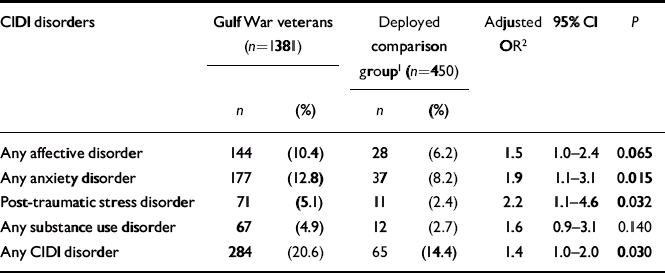
Approximately two-thirds of the comparison group had never been on active deployment and therefore it was possible that the excess risk of psychological disorders in Gulf War veterans could be explained as a ‘war deployment effect’ rather than an effect more specific to the Gulf War. To investigate this we repeated the analysis of Table 3, but using only those in the comparison group who reported at least one active deployment and who completed the CIDI. The results are shown in Table 4 for the major categories of CIDI-defined disorders present within the previous 12 months. The adjusted odds ratio for PTSD was reduced from 4.2 to 2.1, with the remaining odds ratios the same or slightly lower than those presented in Table 3 where all comparison group participants were included. The average number of active deployments reported by each of the two groups was similar and additional analysis (data not shown), adjusting for number of active deployments, made little difference to the adjusted odds ratios in Table 4.
Composite International Diagnostic Interview (CIDI) disorders present within previous 12 months in Gulf War veterans and comparison group participants who had been on active deployments
| CIDI disorders | Gulf War veterans (n=1381) | Deployed comparison group1 (n=450) | Adjusted OR2 | 95% CI | P | ||
|---|---|---|---|---|---|---|---|
| n | (%) | n | (%) | ||||
| Any affective disorder | 144 | (10.4) | 28 | (6.2) | 1.5 | 1.0-2.4 | 0.065 |
| Any anxiety disorder | 177 | (12.8) | 37 | (8.2) | 1.9 | 1.1-3.1 | 0.015 |
| Post-traumatic stress disorder | 71 | (5.1) | 11 | (2.4) | 2.2 | 1.1-4.6 | 0.032 |
| Any substance use disorder | 67 | (4.9) | 12 | (2.7) | 1.6 | 0.9-3.1 | 0.140 |
| Any CIDI disorder | 284 | (20.6) | 65 | (14.4) | 1.4 | 1.0-2.0 | 0.030 |
Risk across age, service type and rank
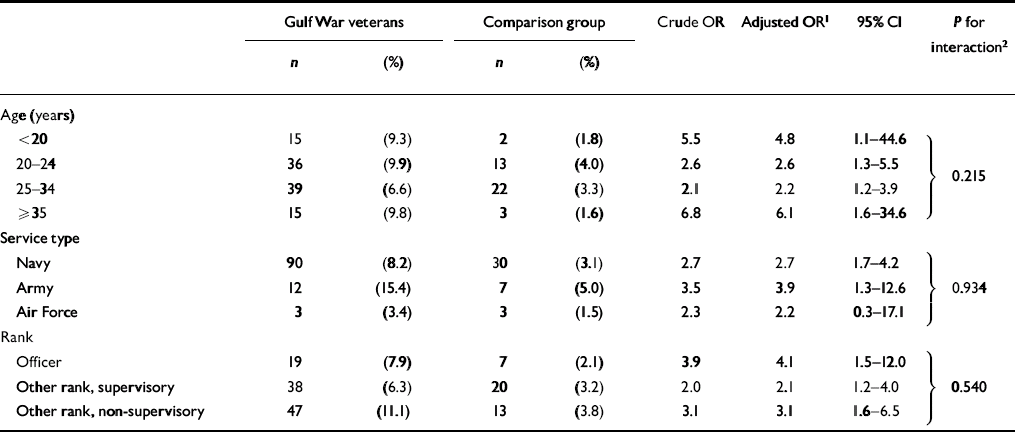
We investigated the effects of study group across subgroups of age, service type and rank upon four major categories of CIDI-defined post-Gulf War disorder: ‘any affective disorder’, ‘any anxiety disorder’, ‘post-traumatic stress disorder’ and ‘any substance disorder’. Within almost every subgroup of age, service type and rank, Gulf War veterans were more likely to develop CIDI-defined post-Gulf War disorders than the comparison group. Tests for interaction indicated that there was no statistically significant variation in the adjusted odds ratios across the subgroups of age, service type and rank, showing that the Gulf War deployment did not differentially increase risk in any one subgroup. These findings are illustrated in Table 5 for ‘any anxiety disorder’. The pattern of results for tests of interaction were similar in the other major categories of post-Gulf War CIDI disorder.
Any post-Gulf War anxiety disorder: the effects of study group across subgroups of age, service type and rank
| Gulf War veterans | Comparison group | Crude OR | Adjusted OR1 | 95% CI | P for interaction2 | |||
|---|---|---|---|---|---|---|---|---|
| n | (%) | n | (%) | |||||
| Age (years) | ||||||||
| <20 | 15 | (9.3) | 2 | (1.8) | 5.5 | 4.8 | 1.1-44.6 | 0.215 |
| 20-24 | 36 | (9.9) | 13 | (4.0) | 2.6 | 2.6 | 1.3-5.5 | |
| 25-34 | 39 | (6.6) | 22 | (3.3) | 2.1 | 2.2 | 1.2-3.9 | |
| ≥ 35 | 15 | (9.8) | 3 | (1.6) | 6.8 | 6.1 | 1.6-34.6 | |
| Service type | ||||||||
| Navy | 90 | (8.2) | 30 | (3.1) | 2.7 | 2.7 | 1.7-4.2 | 0.934 |
| Army | 12 | (15.4) | 7 | (5.0) | 3.5 | 3.9 | 1.3-12.6 | |
| Air Force | 3 | (3.4) | 3 | (1.5) | 2.3 | 2.2 | 0.3-17.1 | |
| Rank | ||||||||
| Officer | 19 | (7.9) | 7 | (2.1) | 3.9 | 4.1 | 1.5-12.0 | 0.540 |
| Other rank, supervisory | 38 | (6.3) | 20 | (3.2) | 2.0 | 2.1 | 1.2-4.0 | |
| Other rank, non-supervisory | 47 | (11.1) | 13 | (3.8) | 3.1 | 3.1 | 1.6-6.5 | |
Effect of Gulf War-related psychological stressors
For Gulf War veterans only, Table 6 presents the effects of Gulf War service-related Military Service Experience questionnaire scores upon CIDI-defined post-Gulf War psychological disorders. Exposure to increasing numbers of Gulf War-related stressors was strongly associated with increasing risk for all psychological disorders. The dose-response slopes indicated that the predicted increase in the odds of each disorder, per unit increase in Military Service Experience score, varied from 10% for any substance use disorder to 23% for PTSD.
Gulf War veterans with post-Gulf War disorders grouped by Military Service Experience (MSE) questionnaire score

| MSE questionnaire score | n | (%) | Crude OR | Adjusted OR1 | 95% CI | P |
|---|---|---|---|---|---|---|
| Any post-Gulf War affective disorder | ||||||
| 0-4 (n=320) | 33 | (11) | 1.0 | 1.0 | - | |
| 5-8 (n=415) | 41 | (10) | 0.9 | 0.9 | 0.6-1.5 | |
| 9-12 (n=316) | 55 | (18) | 1.9 | 1.9 | 1.2-3.0 | |
| > 12 (n=369) | 120 | (35) | 4.5 | 4.5 | 2.9-7.1 | |
| Dose-response slope2 | - | - | 1.13 | 1.14 | 1.11-1.17 | <0.001 |
| Any post-Gulf War anxiety disorder | ||||||
| 0-4 (n=320) | 6 | (2) | 1.0 | 1.0 | - | |
| 5-8 (n=415) | 11 | (3) | 1.4 | 1.3 | 0.5-3.6 | |
| 9-12 (n=316) | 20 | (7) | 3.6 | 3.6 | 1.4-9.2 | |
| > 12 (n=369) | 67 | (21) | 12.7 | 13.0 | 5.4-31.3 | |
| Dose-response slope2 | - | - | 1.19 | 1.19 | 1.15-1.24 | <0.001 |
| Post-Gulf War post-traumatic stress disorder | ||||||
| 0-4 (n=320) | 4 | (1) | 1.0 | 1.0 | - | |
| 5-8 (n=415) | 3 | (1) | 0.6 | 0.63 | 0.1-3.9 | |
| 9-12 (n=316) | 15 | (5) | 3.9 | 4.23 | 1.3-18.3 | |
| > 12 (n=369) | 50 | (14) | 12.2 | 14.43 | 4.9-57.9 | |
| Dose-response slope2 | - | - | 1.21 | 1.23 | 1.17-1.28 | <0.001 |
| Any post-Gulf War substance use disorder | ||||||
| 0-4 (n=320) | 26 | (11) | 1.0 | 1.0 | - | |
| 5-8 (n=415) | 41 | (14) | 1.4 | 1.2 | 0.7-2.0 | |
| 9-12 (n=316) | 51 | (22) | 2.4 | 2.3 | 1.3-3.9 | |
| > 12 (n=369) | 95 | (35) | 4.4 | 3.8 | 2.3-6.4 | |
| Dose-response slope2 | - | - | 1.10 | 1.10 | 1.07-1.13 | <0.001 |
Investigation for participation bias
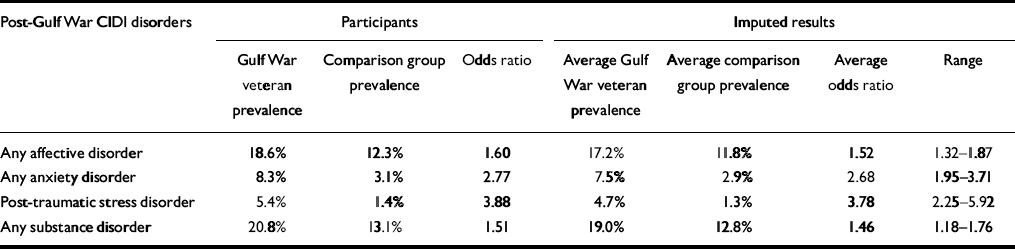
The telephone questionnaire for non-participants, upon which part of the participation bias prediction model was based, was completed by approximately 22% (n=77) and 28% (n=334) of all Gulf War veteran and comparison group non-participants, respectively. The average and range of the 100 imputed odds ratios, representing the best estimate of the true difference in risk of CIDI-defined post-Gulf War psychological disorders between Gulf War veterans and those in the comparison group as if full participation in the study had been achieved, are shown in the right section of Table 7. These ‘full participation’ odds ratios are fractionally lower but within 5% of those observed for actual participants. If participation bias exists, it appears to be slight and possibly leads to a very minor overestimation of risk.
Imputed ‘full participation’ post-Gulf War Composite International Diagnostic Interview (CIDI) disorder odds ratios and prevalences compared with those of actual participants
| Post-Gulf War CIDI disorders | Participants | Imputed results | |||||
|---|---|---|---|---|---|---|---|
| Gulf War veteran prevalence | Comparison group prevalence | Odds ratio | Average Gulf War veteran prevalence | Average comparison group prevalence | Average odds ratio | Range | |
| Any affective disorder | 18.6% | 12.3% | 1.60 | 17.2% | 11.8% | 1.52 | 1.32-1.87 |
| Any anxiety disorder | 8.3% | 3.1% | 2.77 | 7.5% | 2.9% | 2.68 | 1.95-3.71 |
| Post-traumatic stress disorder | 5.4% | 1.4% | 3.88 | 4.7% | 1.3% | 3.78 | 2.25-5.92 |
| Any substance disorder | 20.8% | 13.1% | 1.51 | 19.0% | 12.8% | 1.46 | 1.18-1.76 |
DISCUSSION
Background
Several studies have shown that Gulf War veterans self-report higher than expected rates of psychiatric disorders and psychosomatic symptoms. Increased risk has been demonstrated for self-report of health care provider-diagnosed post-traumatic stress disorder (PTSD) (Goss Gilroy, 1998), symptom-based measures of PTSD (Iowa Persian Gulf Study Group, 1997; Goss Gilroy, 1998; Reference Kang, Natelson and MahanKang et al, 2003) and post-traumatic stress reaction (Reference Unwin, Blatchley and CokerUnwin et al, 1999), psychological distress (Reference Unwin, Blatchley and CokerUnwin et al, 1999), symptoms suggestive of alcohol abuse and depression (Iowa Persian Gulf Study Group, 1997), including major depression (Goss Gilroy, 1998), symptoms of chronic dysphoria (Goss Gilroy, 1998) and anxiety (Iowa Persian Gulf Study Group, 1997; Goss Gilroy, 1998), and non-specific psychological symptoms such as memory and concentration difficulties, sleep disturbances and agitation (Reference Ishoy, Suadicani and GuldagerIshoy et al, 1999). Recently published meta-analyses of nine studies investigating PTSD and eleven studies investigating common mental disorders demonstrated increased risks for both measures in Gulf War veterans compared with non-Gulf War comparison groups (Reference Stimpson, Thomas and WeightmanStimpson et al, 2003). Unfortunately, the 1991 Gulf War psychological health literature has relied predominantly on self-reported health data, usually collected via postal questionnaire, with little subsequent verification of the disorders. Only a few small studies have used clinician-administered, structured psychological assessment methods (Reference Sutker, Uddo and BraileySutker et al, 1994; Reference Proctor, Heeren and WhiteProctor et al, 1998; Reference Wolfe, Proctor and EricksonWolfe et al, 1999; Reference Ismail, Kent and BrughaIsmail et al, 2002). Studies involving non-Gulf War comparison groups also typically have experienced low participation among these comparison groups (Goss Gilroy, 1998; Reference Ishoy, Suadicani and GuldagerIshoy et al, 1999; Reference Unwin, Blatchley and CokerUnwin et al, 1999; Kang et al, Reference Kang, Mahan and Lee2000, Reference Kang, Natelson and Mahan2003), with little exploration of the possible effects of participation bias.
Because similar illnesses have affected veterans of past wars (Reference Hyams, Wignall and RosewellHyams et al, 1996), causality may be linked to a common war experience rather than to a specific aspect of the 1991 Gulf War. The ‘Gulf War effect’ could be a ‘war deployment effect’ whereby military personnel who deploy to any war-like environment develop poorer health than military personnel who have not been actively deployed. This theory is partly refuted by the findings of a British study in which UK Gulf War veterans reported symptoms and disorders significantly more frequently than UK veterans of the Bosnia conflict (Reference Unwin, Blatchley and CokerUnwin et al, 1999), suggesting that exposures or experiences more specific to the Gulf War are responsible. No specific characteristics of Gulf War service, however, have been associated consistently with the increased risk of psychological disorders. The UK studies report associations between psychological ill health and lowest rank (Reference Ismail, Blatchley and HotopfIsmail et al, 2000) and some Gulf War-related experiences, including injury, seeing maimed soldiers and dismembered bodies, dealing with prisoners of war and the sounding of chemical alarms (Reference Unwin, Blatchley and CokerUnwin et al, 1999). Psychological ill health in US Gulf War veterans has been associated with brief measures of war zone stress (Reference Sutker, Davis and UddoSutker et al, 1995; Reference Kang, Natelson and MahanKang et al, 2003). The US volunteer registry studies also report associations with younger age (Joseph et al, 1997) and reservist status (Persian Gulf Veterans Coordinating Board, 1995) but no other demographic, exposure or geographical risk factors. Data collection in relation to psychological stressors in these Gulf War studies typically has been limited to only a few variables.
Overview of results
Our study clearly demonstrates increased risk of the development of anxiety disorders, including PTSD, affective disorders and substance- and alcohol-use disorders, in Australian male veterans of the 1991 Gulf War compared with Australian Defence Force personnel who were in operational units at the time of the Gulf War but who did not deploy to that conflict. The increase in risk of psychological disorders has occurred since the time of the Gulf War, with the two groups demonstrating similar psychological health patterns prior to the war. Although the majority of Gulf War veterans did not develop any psychological disorder in the period since the Gulf War, our findings, using a psychologist-administered, validated diagnostic interview and DSM-IV criteria, provide more robust evidence of increased psychological ill health in Gulf War veterans than that presented in previous studies employing primarily self-reported symptom-based measures only (Iowa Persian Gulf Study Group, 1997; Goss Gilroy, 1998; Reference Ishoy, Suadicani and GuldagerIshoy et al, 1999; Reference Unwin, Blatchley and CokerUnwin et al, 1999; Reference Kang, Natelson and MahanKang et al, 2003). The excess risk of psychological disorders in Gulf War veterans can be explained only partly as a generalised ‘war deployment effect’. In addition, our results show a strong dose-response relationship between post-Gulf War psychological disorders and increasing numbers of psychological stressors experienced during the Gulf War.
Measurement of psychological disorders
The use of the CIDI provided a valuable opportunity to investigate, and control for, the presence of psychological disorders prior to the time of the Gulf War. This has not been done in previous studies. The results indicated that the prevalence of pre-Gulf War psychological disorders was similar in the two groups. Since the time of the Gulf War, however, a higher proportion of Australian male Gulf War veterans than comparison group members have developed psychological disorders. In addition, at the time of the study and more than a decade after the Gulf War, Australian Gulf War veterans were more likely to show evidence of psychological disorders present within the previous 12 months. Gulf War veterans have been at greatest risk of developing anxiety disorders, including PTSD where the elevation in risk is approximately fourfold.
Investigation for a ‘war deployment effect’
The lack of differences between the two groups in pre-Gulf War psychological morbidity and the heightened emergence of new disorders in the Gulf War veteran group since the time of the Gulf War provide evidence to suggest that the cause lies in the exposures and experiences of the Gulf War deployment. This ‘Gulf War effect’, however, could be explained partly as a common ‘war deployment effect’, whereby deployment to any major war-like environment is expected to result in poor psychological health. This is supported partly by the finding that the excess risk of PTSD in Gulf War veterans is reduced when Gulf War veterans are compared with just those comparison group subjects who have been on active deployments. Full investigation for a ‘war deployment effect’ is limited, however, by the fact that the number of comparison group members reporting active deployments is relatively small and the destinations and natures of these deployments are many and varied. Most of these deployments, for example, involved small groups on peace-keeping missions.
Association with Gulf War-related stressors
We found the risk of developing psychological disorders in Australian Gulf War veterans to be associated strongly with increasing numbers of psychological stressors experienced during the Gulf War, as measured using the Military Service Experience questionnaire. Few previous Gulf War studies have included measures of war-related stress, and those that did (Reference Sutker, Davis and UddoSutker et al, 1995; Reference Kang, Natelson and MahanKang et al, 2003) based their measurements on a limited range of stressful factors. Kang et al (Reference Kang, Natelson and Mahan2003) associated their symptom-based measure of PTSD with a measure of Gulf War stress severity derived from service type, deployment status and responses to three exposure items. Sutker et al (Reference Sutker, Davis and Uddo1995) found an association between psychological distress and increasing scores on a brief war zone severity scale. Development of the Military Service Experience questionnaire allowed us to assess veterans' exposure to a wide range of stressful Gulf War-related experiences. It should be noted that the Australian Gulf War deployment involved few direct military attacks and resulted in no deaths and few casualties. Consequently, instead of reporting stressors of a direct combat nature, Australian veterans commonly reported stressors in relation to the threat of combat, fear associated with its uncertainty (particularly the risk of chemical or biological agent attack) and the isolation and discomfort of deployment.
The number of these stressors identified by veterans was strongly predictive of psychological ill health in this war-exposed group. The relationship between traumatic or stressful exposure and subsequent psychopathology needs, however, to be interpreted cautiously. The Military Service Experience questionnaire was newly developed for this study and its psychometric properties have not been explored thoroughly. Further, several studies have questioned the stability of recall of military exposures over time. Some prospective studies of Gulf War veterans (Reference Southwick, Morgan and NicolaouSouthwick et al, 1997) and veterans of the 1994 conflict in Somalia (Reference Roemer, Litz and OrsilloRoemer et al, 1998) have demonstrated that as PTSD symptoms increase, for example, so does amplification of memory for traumatic or stressful events. Wessely et al (Reference Wessely, Unwin and Hotopf2003) found a similar association between worsening perception of health (though not worsening psychological health) and increased reporting of Gulf War exposures. In this longitudinal study the authors suggest that considerable media attention, given to the Gulf War and its health effects over the specific interval of the study, could help explain the observed changes in reporting. These various findings raise questions about the validity of any retrospectively determined relationship between the level of exposure to trauma and the degree of psychological symptoms subsequently manifested. Recall bias could explain at least some of the association observed in our study between the reporting of Gulf War-related experiences of threat or fear and psychological disorders.
Association with age, service type or rank
The increased risk of post-Gulf War psychological disorders associated with deployment to the Gulf War did not vary significantly across subgroups of age, service type and rank. These findings suggest that, compared with the comparison group, there is unlikely to be some unique combination of exposures or experiences particular to Gulf War veterans of different age, service type or rank groups that is associated with the elevation in psychological disorders in this veteran group. The finding in relation to service type is limited by the vast predominance of one service type (navy) in our sample. Our finding in relation to rank may be limited also by the predominance of navy personnel in the Australian deployment; within the confines of ships it is possible that there is only limited variation in the exposures and experiences of naval personnel across different ranks.
Investigation for participation bias
The participation rate in our non-Gulf War comparison group was moderately low, although comparable to other Gulf War veteran studies involving non-Gulf War comparison groups and data collection via questionnaire alone (Goss Gilroy, 1998; Reference Holmes, Tariot and CoxHolmes et al, 1998; Reference Unwin, Blatchley and CokerUnwin et al, 1999; Kang et al, Reference Kang, Mahan and Lee2000, Reference Kang, Natelson and Mahan2003) or questionnaire and medical examination (Reference Ishoy, Suadicani and GuldagerIshoy et al, 1999). Despite an immense effort to contact and motivate the comparison group, difficulties in recruitment reflect the highly mobile nature of this relatively young adult population, the high turnover within the defence forces (with close to 60% of both study groups no longer serving with the Australian Defence Force) and the apparent lack of incentive for non-Gulf War comparison group members to participate in Gulf War veteran health research. The differential participation rates contributed to some differences in the demographic profile of the two study groups and rendered the results of the study vulnerable to the effects of participation bias and confounding. Our investigation of the possible effects of participation bias, however, suggest that our study results may be robust despite some non-participation in the comparison group, and that participation bias is unlikely to explain the excess risks found in Gulf War veterans in our study. The participation bias analysis and its underlying assumptions, however, must be treated with some caution. The telephone survey, for example, upon which part of the prediction model was based, was completed by approximately a quarter of all study non-participants and the model assumed that the telephone respondents' answers were representative of those of the remainder of the non-participants. Statistical adjustment for the possible confounding effects of demographic variables, including age, rank, service type, education and marital status, indicated that differences in these variables were unlikely to explain the excess risk.
Implications
The fact that the prevalences of psychological disorders are notably elevated in Gulf War veterans more than a decade following the Gulf War suggests a high level of chronicity and possibly poor prognosis. Comorbidity with PTSD, for example, is very common (Reference Creamer, Burgess and McFarlaneCreamer et al, 2001) and poor psychological health has been shown previously in war veterans to persist for several decades after their war experiences (Reference Branchey, Davis and LeiberBranchey et al, 1984; Reference Hunt and RobbinsHunt & Robbins, 2001). It is yet to be seen whether the patterns of increased psychological disorders demonstrated in 1991 Gulf War veterans will be replicated in the recent veterans of the 2003 Iraq War. The potential costs in terms of human suffering highlight the need to maintain access to effective mental health care for all veteran populations.
Despite extensive training already undertaken by many military personnel, our findings also suggest that some Defence Force members need to be even better prepared for the hostile, uncertain environment of future war zones. The question arises, however, as to whether it is even possible to fully prepare a soldier for the array of potential war-zone experiences. If improved methods of preparation cannot be achieved, it may be inevitable that the legacy of poor psychological health following war exposure will continue into the future, to repeat the patterns of the past.
Clinical Implications and Limitations
CLINICAL IMPLICATIONS
-
▪ Since the time of the 1991 Gulf War, Australian male Gulf War veterans have been at increased risk of anxiety disorders including PTSD, depressive disorders and substance use disorders, compared with military personnel of the same era.
-
▪ Psychological disorders in Gulf War veterans are associated with stressful experiences recounted in relation to that conflict.
-
▪ It is possible that the pattern of psychological ill health in the 1991 Gulf War veterans will be replicated in the recent veterans of the 2003 Iraq War.
LIMITATIONS
-
▪ The investigation for a ‘war deployment effect’ was limited by the relatively small number of comparison group subjects reporting active deployments.
-
▪ The retrospective assessment of Gulf War-related stressors is vulnerable to recall bias.
-
▪ The participation rate in the comparison group was modest and there are some limitations to interpretation of the investigation for participation bias.
Acknowledgements
We are grateful to the following individuals and groups: the Consultative Forum, who represented the veteran and service community, for their input; Health Services Australia staff who assisted with recruitment, collected the data and provided feedback to study participants; Bob Connolly and his team at the Department of Veterans' Affairs who undertook the arduous task of contacting and recruiting the study's participants; the focus group of Gulf War veterans and other Australian Defence Force personnel for their input to the Military Service Experience questionnaire; several international researchers, in particular Professor Simon Wessely, for their assistance and advice; and the Gulf War veterans and comparison group members who freely gave their time to participate in this study.




eLetters
No eLetters have been published for this article.