

Between 1987 and 1992, Iraqi archaeologists under the direction of the local Inspectorate of Antiquities undertook excavations at Nineveh. In particular, they excavated east of the mosque located on the smaller mound of Nebi Yunus and at the Nergal Gate, the middle gate of the northern city wall. At the Nergal Gate, an inscription of Sennacherib was found on two bull colossi and two paving stones. At Nebi Yunus, a few inscribed clay and stone objects were discovered in the ruins of the armoury, the so-called “Rear Palace” (or “Review Palace”). These included a slab of Ashurnaṣirpal II, a prism fragment of Esarhaddon, two human-headed winged bull colossi of Esarhaddon, a winged-bull of Ashurbanipal, and an unsculpted wall slab of Ashurbanipal. The excavations were discontinued due to the perceived potential of damage that might be done to the Mosque.
The colossus and panel inscribed by Ashurbanipal found by the excavations of the Nineveh Inspectorate indicate that he added further constructions and decoration to the palace as built by Esarhaddon. On the south side of the excavations another colossus and the lower part of a gigantic human figure were also found, made of rectangular pieces of limestone. The colossus is uninscribed. The design of this colossus is unique and its material is unusual. The change of material and technique may be ascribed to a number of factors: (1) the difficulty of bringing alabaster from the town of Balāṭaya (Eski Mosul, 40 km west of Mosul) as mentioned by Sennacherib; (2) the ease of carving such pieces of sculpture anywhere in the palace; (3) speed of transport; (4) the fact that the colossus and the accompanying figure do not have inscriptions. It is also possible that foreign sculptors used to working with different materials and in unusual styles were employed at the palace. (cf. Fales and Postgate Reference Fales and Postgate1992, Reference Fales and Postgate1995).Footnote 2
The Mosque of Nebi Yunus was blown up by ISIS/Daʾesh on 24 July 2014, along with more than 20 other mosques in Mosul during the period 2014–2015, on the grounds that the shrines within them were contrary to their interpretation of Islam (Fig. 1). After the liberation of East Mosul in January 2017, military officers and journalists visited the site discovered that ISIS had dug at least four long looters’ tunnels underneath the mosque, apparently in order to hunt for archaeological artefacts or ‘treasure’ of the Assyrian kings (Fig. 2). Small jars and broken pieces of limestone had been abandoned on the floor (Fig. 3, Fig. 4). Several large large limestone reliefs were also left within the tunnels, probably to support the walls from collapse. A pair of uninscribed colossi stand near the entrance one tunnel, indicating the location of an entrance to a palace courtyard (Fig. 5). Seven slabs are inscribed with short texts of Esarhaddon. Some of them were erected with the inscriptions upside down, while the inscription on the seventh runs vertically from top to bottom. A further pair of unique reliefs was found in nearby tunnels, each showing a row of three four ladies facing front, wearing long dresses and holding a cup in the left hand and a religious symbol in the right (Fig. 6, Fig. 7). One of these was also found upside down. It thus appears that the stone slabs had been moved and reused by later occupants of the site, whether Achaemenid, Hellenistic or Parthian, for whom the inscriptions and images had no meaning except as building materials.
The mosque of Nebi Yunus after destruction in summer 2014 (photo by Ali Y. Al-Juboori)

The entrance to the looters’ tunnels under the mosque of Nebi Yunus in April 2017 (photo by Eleanor Robson)

Limestone slabs left in the looters’ tunnels at Nebi Yunus in March 2017 (photo by Layla Salih)

Jars and limestone slabs left in the looters’ tunnels at Nebi Yunus in March 2017 (photo by Layla Salih)

One of a pair of bull colossi found in the looters’ tunnels at Nebi Yunus in March 2017 (photo by Layla Salih)

One of a pair of reliefs depicting en-face women, left in the looters’ tunnels at Nebi Yunus in March 2017 (photo by Layla Salih)

The second of a pair of reliefs depicting en-face women, left in the looters’ tunnels at Nebi Yunus in March 2017 (photo by Eleanor Robson)

INSCRIPTIONS FROM NEBI YUNUS
Texts of Esarhaddon
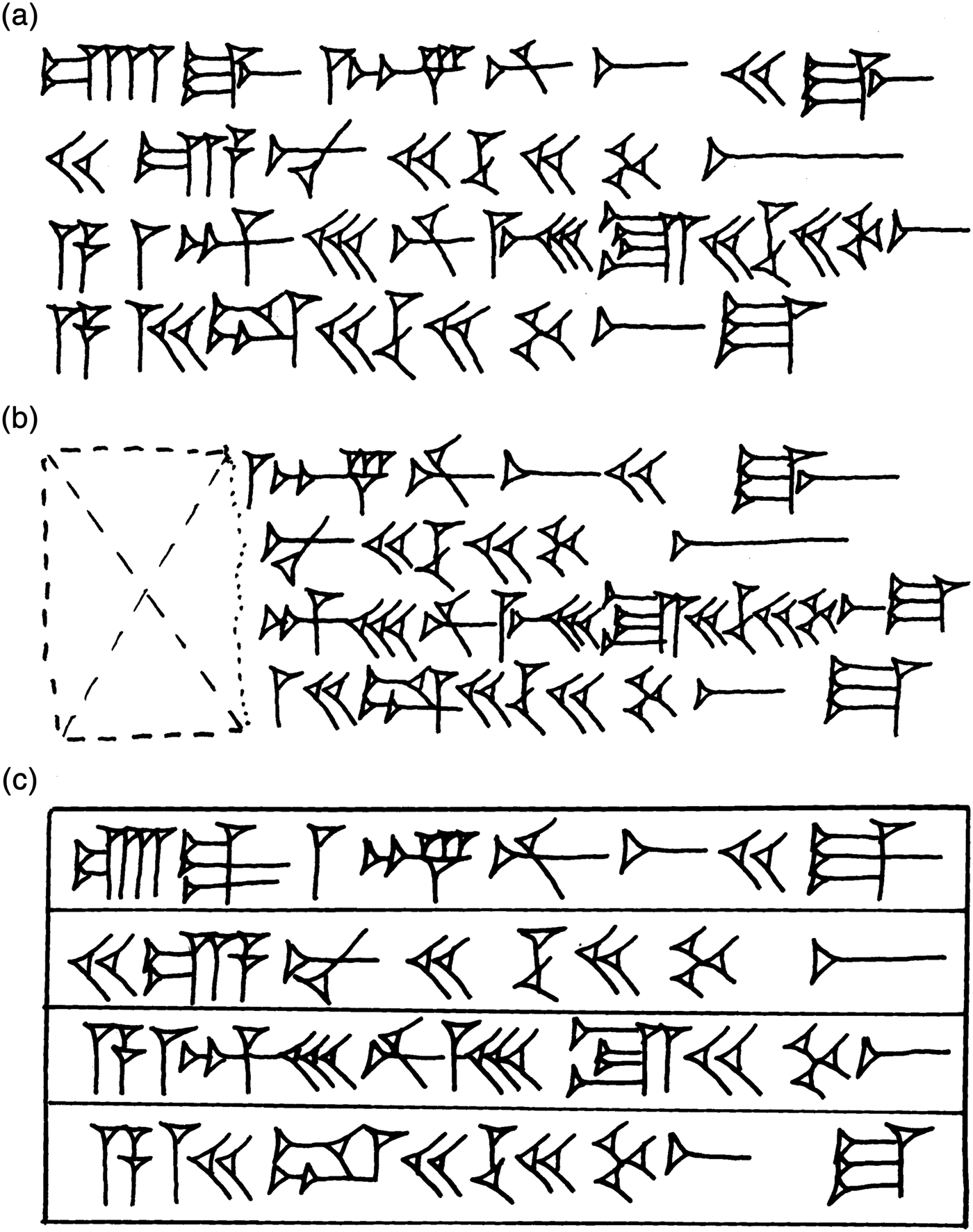
The two human-headed bull colossi discovered in official excavations at Nebi Yunus bear on their wall-facing surface a nearly identical inscription of Esarhaddon (mss A and B below, Fig. 8a–b). The text is an expanded version of Leichty (Reference Leichty2011: 68–69, nos. 21–22). A version of the same inscription was also found on four wall slabs, one from formal excavations (ms C below, Fig. 8c) and three from the looters’ tunnels (mss. 1–3 below, Fig. 9a–c).
-
A:1. é.gal m aš+šur-pap-aš man gal
-
B:1. [é.gal] m aš+šur-pap-aš man gal
-
C:1. é.gal m aš+šur-pap-aš man gal
-
1:1. é.gal m aš+šur-pap-aš man gal
-
2:1. é.gal m aš+šur-pap-aš man gal
-
3:1. kur m aš+šur-pap-aš man gal
-
A:2. man dan-nu man šú man kur aš
-
B:2. [man dan]-nu man šú man kur aš
-
C:2. man dan-nu man šú man kur aš
-
1:2. man dan-nu man šú man kur aš
-
2:2. man dan-nu man šú man kur aš
-
3:2. man dan-nu man šú man kur aš
-
A:3. a md30-pap.meš-su man šú man kur aš
-
B:3. [a m]d30-pap.meš-su man šú man kur aš-ma !?
-
C:3. a md30-pap.meš-su man kur aš
-
1:3. a md30-pap.meš-su man šú man kur aš
-
2:3. a md30-pap.meš-su man šú man kur aš
-
3:3. a md30-pap.meš-su man šú man kur aš
-
A:4. a m man-gin man šú man kur aš-ma
-
B:4. [a] m man-gin man šú man kur aš-ma
-
C:4. a m man-gin man šú man kur aš-ma
-
1:4. a m man-gin man šú man kur aš-ma
-
2:4. a m man-gin man šú man kur aš-ma
-
3:4. a m man-gin man šú man kur aš-ma
Inscriptions of Esarhaddon from Nebi Yunus, found in the 1987–92 excavations; (a) and (b) on colossi (mss A and B); (c) on a wall panel (ms C)
Inscriptions of Esarhaddon on wall panels from Nebi Yunus, found in looters’ tunnels in 2017; (a)–(c) mss 1–3
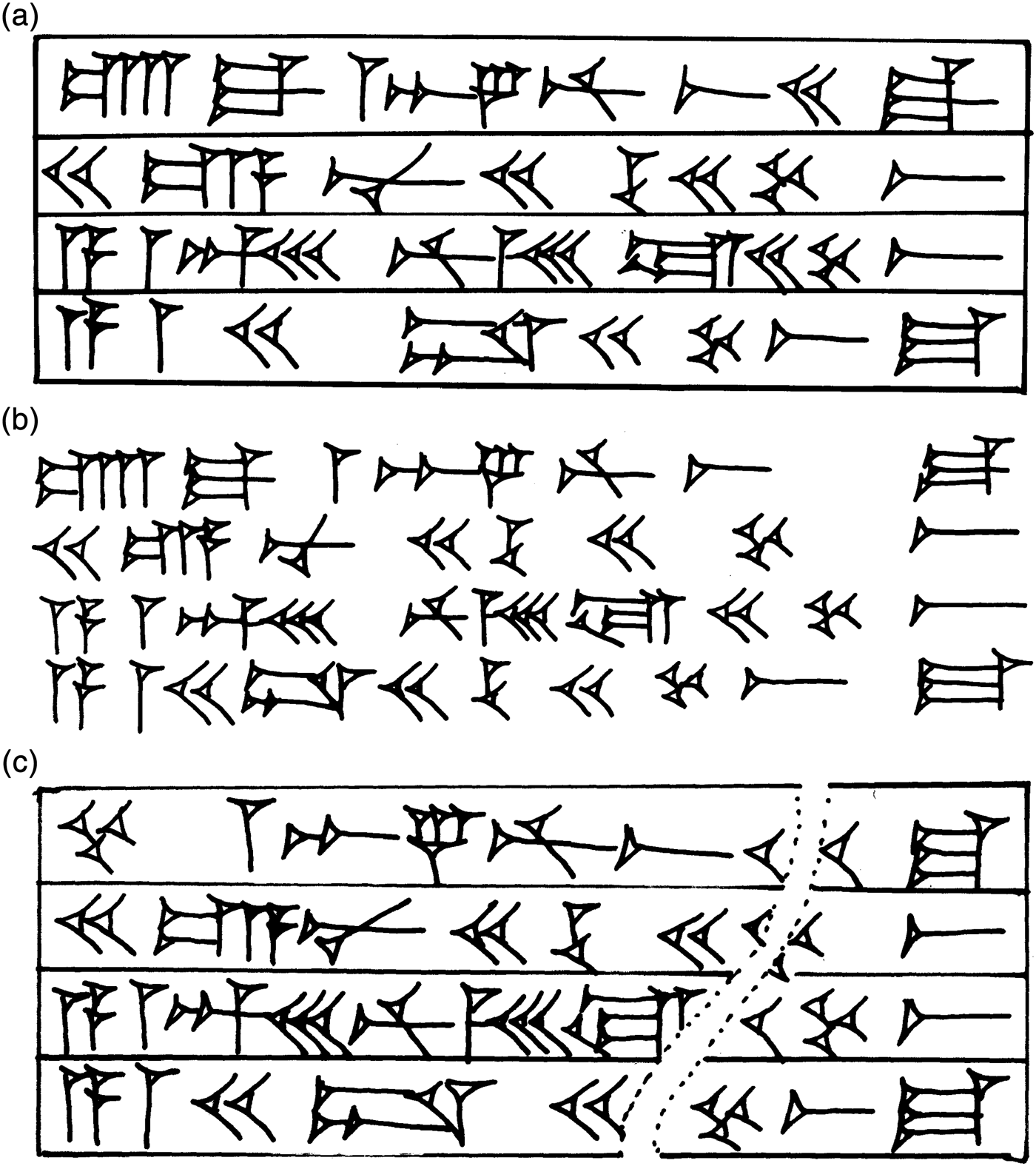
The palace of Esarhaddon, great king, mighty king, king of the world, king of Assyria, son of Sennacherib, king of the world {ms. C omits}, king of Assyria, descendant of Sargon (II), king of the world, king of Assyria.
Texts A and B differ from Leichty (Reference Leichty2011) no. 21 in that both texts add šarru rabû (“great king”) after Esarhaddon's name and šar kiššati (“king of the world”) after the names of Sennacherib and Sargon II. Text B erroneously adds -ma at the end of line 3. Text C omits the title šar kiššati (“king of the world”) after Sennacherib's name, which may be a scribal error or evidence of the use of a different scribe. Similarly, in Text 3 line 1, the ideogram KUR instead of É.GAL suggests the involvement of a different scribe. For a similar phenomenon see Ahmad (Reference Ahmad1998: 104–6).
Tunnel Inscriptions
Four further slabs were found in the looters’ tunnels at Nebi Yunus, each containing a different inscription. Text 4 is a version of Leichty (Reference Leichty2011) no. 24, with the first half split over three lines instead of two (Fig. 10):
-
4:1. é.gal m aš+šur-[pap-aš man gal man dan-nu]
-
4:2. man šú man kur aš+šur gìr.níta. ká.dingir ki
-
4:3. man kur eme.gi 7 u ak-ka-de-e
-
4:4. a md30-pap.meš-su man šú man kur aš
-
4:5. a m man-gin man šú man kur aš-ma
Inscription of Esarhaddon (text 4) on a wall panel from Nebi Yunus, found in looters’ tunnels in 2017

The palace of Esarhaddon, great king, mighty king, king of the world, king of Assyria, governor of Babylon, king of Sumer and Akkad, son of Sennacherib, king of the world, king of Assyria, descendant of Sargon (II), king of the world, king of Assyria.
Text 5 is similar to two inscriptions of Esarhaddon found on stone colossi at Nimrud (Leichty Reference Leichty2011: nos. 84, 85) but omits mention of his conquest of Egypt and Meluhha before the king's genealogy (Fig. 11).
-
5:1. é.gal m aš+šur-pap-aš man gal
-
5:2. man dan-nu man šú man kur aš
-
5:3. gìr.níta. ká.dingir.ki man kur.eme.gi 7
-
5:4. u uri ki ba-nu-u é d aš+šur
-
5:5. e-piš é-sag-gíl u ká.dingir ki
-
5:6. mu-ud-diš ṣa-lam dingir.meš gal.meš
-
5:7. a md30-pap.meš-su man šú man kur aš+šur
-
5:8. a m man-gin man šú man kur aš-ma
Inscription of Esarhaddon (text 5) on a wall panel from Nebi Yunus, found in looters’ tunnels in 2017
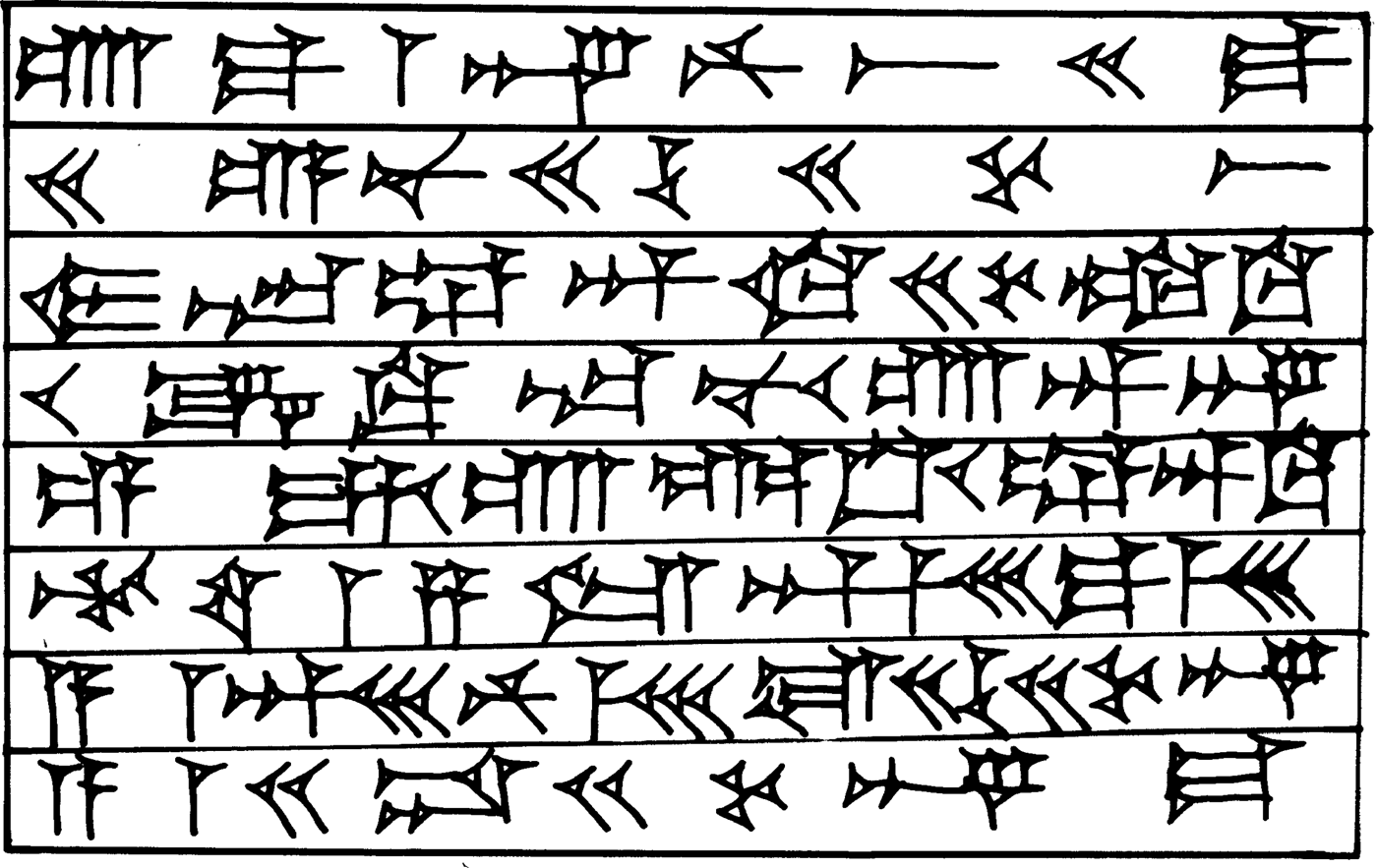
The palace of Esarhaddon, great king, mighty king, king of the world, king of Assyria, governor of Babylon, king of Sumer and Akkad; the one who (re)constructed the temple of the god Aššur, (re)built Esagil and Babylon, (and) renewed the statues of the great gods; son of Sennacherib, king of the world, king of Assyria, descendant of Sargon (II), king of the world, king of Assyria.
Text 6 is an exemplar of Esarhaddon Nineveh L (Leichty Reference Leichty2011: no. 21), known from slabs from Koujunjik, where the inscription is distributed over four lines instead of three (Fig. 12):
-
6:1. é.gal m aš+šur-pap-aš man šú
-
6:2. man kur aš a md30-pap.meš-su
-
6:3. man kur aš a m man-gin man kur aš
Inscription of Esarhaddon (text 6) on a wall panel from Nebi Yunus, found in looters’ tunnels in 2017

The palace of Esarhaddon, king of the world, king of Assyria, son of Sennacherib, king of Assyria, son of Sargon (II), king of Assyria.
The final inscription from the looters’ tunnels at Nebi Yunus was found on a slab set vertically into the wall, with long lines of inscription running towards the ground. Until the genealogy in the middle of line 4 it closely resembles Leichty (Reference Leichty2011) no. 83, an inscription on a bull colossus from Nimrud (Fig. 13).
-
7:1. é.gal m aš+šur-pap-aš man dan-nu man šú man kur aš
-
7:2. gìr.níta. ká.dingir.ki man kur eme.gi 7 u uri ki
-
7:3. man man.meš kur mu-ṣur kur pa-tu-ri-si <kur ku-si>
-
7:4. man kib-rat límmu-ti dumu md30-pap.meš-su man kur aš
-
7:5. dumu m lugal-gi-na man dan-nu man šú man kur aš
Inscription of Esarhaddon (text 7) on a wall panel from Nebi Yunus, found in looters’ tunnels in 2017

The palace of Esarhaddon, strong king, king of the world, king of Assyria, governor of Babylon, king of Sumer and Akkad, king of the kings of (lower) Egypt, upper Egypt <and Kush>, king of the four quarters, son of Sennacherib, king of Assyria, son of Sargon (II), strong king, king of the world, king of Assyria.
Texts of Ashurbanipal
The official excavations at Nebi Yunus also yielded an inscription of Esarhaddon's son and successor Ashurbanipal, written on the wall-facing surface of a human-headed winged-bull and an unsculpted wall slab (Fig. 14a–b). This discovery is significant in three ways. Firstly, this inscription provides proof that Ashurbanipal worked on the “Review Palace”. Secondly, this is the only inscription of Ashurbanipal on a winged bull colossus yet known. Thirdly, the text—identical in each of the inscriptions—is hitherto unknown.
-
1. é.gal m aš+šur-dù-a man gal
-
2. man dan-nu man šú man kur aš
-
3. a m aš+šur- pap-aš man kur aš
-
4. a md30-pap.meš-□su□man kur aš-ma
Inscriptions of Ashurbanipal from Nebi Yunus, found in the 1987–92 excavations; (a) on the back of a colossus; (b) on a wall panel
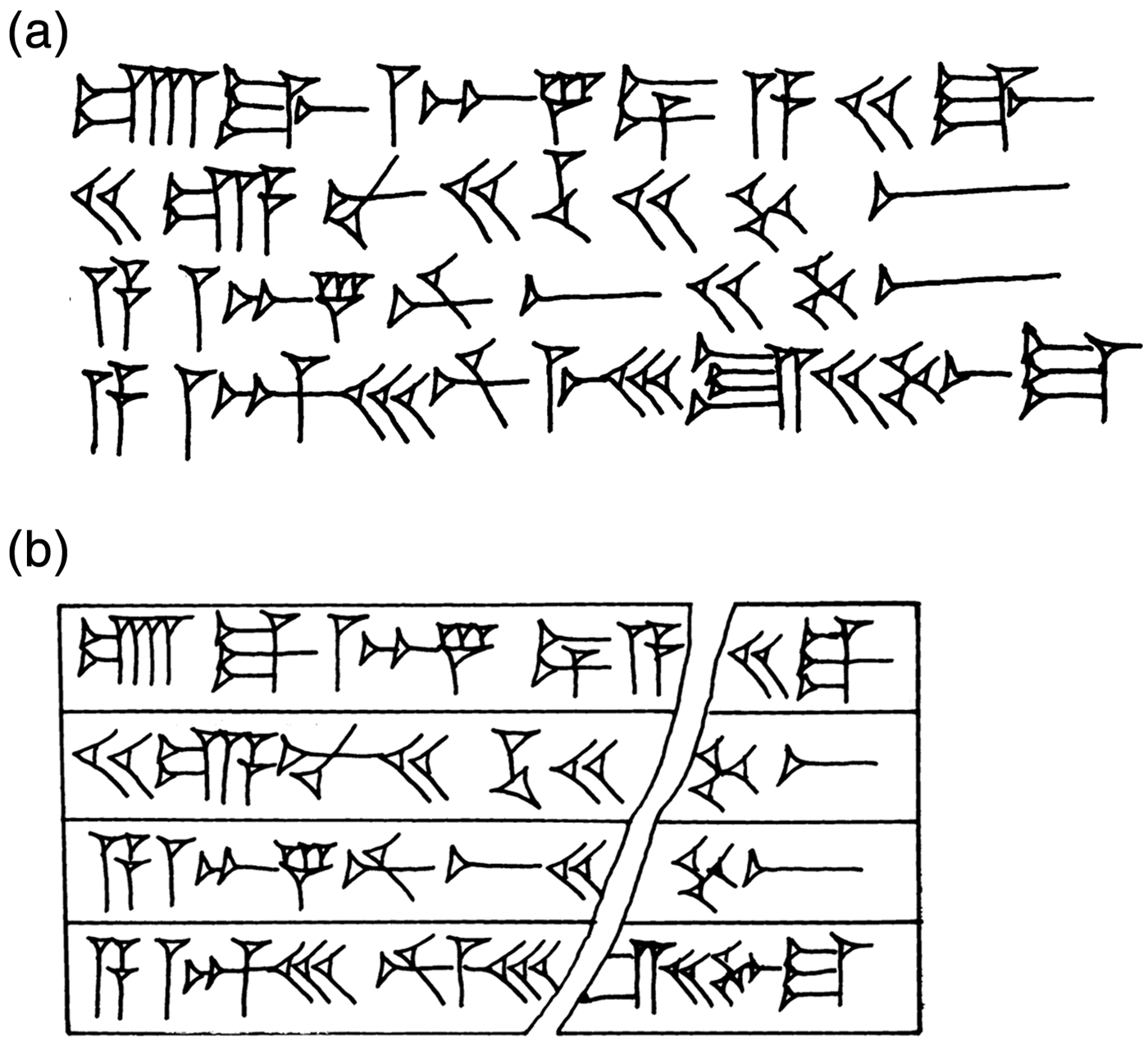
The palace of Ashurbanipal, great king, mighty king, king of the world, king of Assyria, son of Esarhaddon, king of Assyria, descendant of Sennacherib, king of Assyria.
A prism fragment of Esarhaddon
A fragment of a six-sided clay prism was found in the eastern courtyard of the armoury in 1987–92 (Fig. 15a–c). Parts of the first three columns are preserved. The text, as far as it is preserved, duplicates with only minor orthographic variation, Leichty (Reference Leichty2011): 28–31, no. 2 (Nineveh B) i 3–19 (campaign against Sidon and its king Abdi-Milkuti), ii 1–17 (campaign against the Cimmerian enemy in Hubušna, and in Tabal), 58–iii 9 (campaign against Damascus and the neighbouring Arab tribes).
Fragmentary prism of Esarhaddon, found in the 1987–92 excavations, columns i–iii

Col. i
-
1. [é.gal md aš+šur-šeš-sum.na]
-
2. [lugal gal-ú lugal dan-nu]
-
3. [lugal kiš-šá-ti lugal kur aš+šur ki]
-
4. [gìr.níta ká.dingir.ra.k]i lugal kur eme.gi 7 u uri ki
-
5. [dumu md30-pap].meš-su lugal kur aš+šur ki
-
6. [dumu m lugal-gi].na lugal kur aš+šur ki
-
7. [lugal šá ina t]u-kul-ti d aš+šur
-
8. [d30 d utu d]nà d amar.utu
-
9. [d15 šá nina ki] [d]15 šá límmu-dingir ki
-
10. [dingir.m]eš gal.meš en.meš-šú
-
11. [ul-tu ṣi-it] [d] utu-ši
-
12. [a-di e-reb] [d] utu-ši
-
13. [it-tal-lak-ú-ma] ma-ḫi-ra la i-šu-ú
----
-
14. [ka-šid uru ṣi-du-un]-ni šá ina murub 4 tam-tim
-
15. [sa-pi-nu gi-mir] da-ád-me-šú
-
16. [bàd-šú ù šu-bat-su] as-suḫ-ma
-
17. [qé-reb tam-tim ad]-di-i-ma
-
18. [a-šar maš-kán-i-šú ú-ḫ]al-liq
-
19. [m ab-di-mi-il-ku-ut-ti luga]l-šu
[The palace of Esarhaddon, great king, mighty king, king of the world, king of Assyria, governor of Babylon], king of Sumer and Akkad, [son of Senna]cherib, king of Assyria, [descendant of Sargo]n (II), king of Assyria, [the king who with the h]elp of the gods Aššur, [Sîn, Šamaš], Nabû, Marduk, [Ištar of Nineveh], (and) Ištar of Arbela, [the] great [god]s, his lords, [marched from the rising] sun [to the setting] sun [and] had no equal (therein);
----
[the one who conquered the city Sido]n, which is in the midst of the sea, (and) [the one who levelled all of] its dwellings — I tore out [its wall(s) and its dwelling(s)], and [th]rew (them) [into the sea]; and [I (even) made the site where it stood disap]pear. [(As for) Abdi-Milkūti], its [kin]g,
Col. ii
-
1. [ù m te-u]š-pa-[a kur g]i-[mir]-ra-a-a
-
2. erim-man-da šá a-šar-šú ru-ú-qu
-
3. ina ki -tim kur ḫu-bu-uš-na
-
4. a-di gi-mir erim.ḫi.a-šú
-
5. ú-ra-ṣi-ba ina giš tukul
----
-
6. ka-bi-is ki-šá-di un.meš kur ḫi-lak-ki
-
7. šad-du-u 8-a a-ši-bu-ut ḫur-šá-a-ni
-
8. šá ṭe-eḫ kur ta-bal šá ugu kur.meš-šú-nu
-
9. it-tak-lu-ma ul-tu u4-me pa-ni
-
10. la ik-nu-šu a-na ni-i-ri
-
11. 21 uru.meš-šú-nu <<un.meš>> a-di uru.meš tur.meš
-
12. šá li-me-ti-šú-nu al-me ak-šud
-
13. áš-lu-la šal-lat-sún
-
14. ap-pul aq-qur ina d giš.bar aq-mu
-
15. [si]-tu-te-šú-nu < ša ḫi-iṭ-ṭu > u gul-lul-tú
-
16. [la i]-šu-u kab-tu ni-ir be-lu-ti-ia
-
17. [e-mid]-su-nu-ti
----
-
18. [da-iš] kur bar-n[a-ki] nak-ru ak-ṣi
[Moreover], I struck with the sword [Teu]špa, [a C]im[me]rian, a barbarian whose home is remote, together with his entire army, in the territory of the land Ḫubušna.
-----
The one who treads on the necks of the people of Cilicia, mountain dwellers who live in mountains in the neighbourhood of Tabal, who trusted in their mountains and who from earliest days had not been submissive to the yoke — I surrounded, conquered, plundered, demolished, destroyed, (and) burned with fire twenty-one of their cities together with small cities in their environs. (As for) the rest of them, who were [not gu]ilty of (any) sin or crime, [I imposed] the heavy yoke of my lordship upon them.
-----
[The one who crushed] the Barn[aki], a dangerous enemy,
Col. iii
-
1. […]
-
2. […]
-
3. […]
-
4. […]
-
5. da-[na-an d aš+šur en-ia u ši-ṭir mu-ia]
-
6. ugu-šú-[nu ú-šá-áš-ṭir-ma ú-ter-ma ad-din-šú]
-
7. f ta-[bu-u-a tar-bit é.gal-ia]
-
8. a-na [lugal -ú-ti ugu-šú-nu áš-kun-ma]
-
9. it-t[i dingir.meš-šá a-na kur-šá ú-ter-ši]
-
10. 65 [anše gam.mal.meš ugu ma-da-at-ti ad-ia]
-
11. maḫ-[ri-ti ú-rad-di-ma]
-
12. ú-k[in ṣe-ru-uš-šú]
-
13. ar-k[a m ḫa-za-dingir šim-tú ú-bíl-šu-ma]
-
14. m ia-[uʾ-lu-ú dumu-šú]
-
15. ina giš gu.[za-šú ú-še-ši-ib-ma]
-
16. 10 ma.na [kù.gi 1 lim na 4.meš bé-ru-ti]
-
17. 50 anše.[gam.mal.meš 1 lim kun-zi šim.ḫi.a]
-
18. ugu man-[da-ti ad-šú ú-rad-di-ma e-mid-su]
----
-
19. kur ba-a-[zu na-gu šá a-šar-šú-ru-u-qu]
[… I had] the mi[ght of the god Aššur, my lord, and (an inscription) written in my name inscribed] on th[em and I gave (them) back to him. I placed] the lady Ta[būa, who was raised in my palace], as [ruler over them and returned her to her land] wit[h her gods].
[I added] sixty-five [camels to the] pre[vious tribute (which was paid to) my father and] im[posed (it) on him]. Later, [Hazael died and I placed] Ia[ʾlû (Iataʾ), his son], on [his] thro[ne. I added] ten minas of [gold, one thousand choice stones], fifty [camels, (and) one thousand bags of aromatics] to the tribu[te of his father and imposed (it) on him].
----
(As for) the land Bā[zu, a district in a remote place, …]
Limestone slab of Ashurnaṣirpal II
A limestone slab bearing part of an inscription of Ashurnaṣirpal II was also discovered at the armoury in 1987–92 (Fig. 16). This slab was brought from Kalhu by Esarhaddon and reused in reconstructing the armoury. The extant text duplicates (with some variation) Grayson (Reference Grayson1991): 222–23 A.0.101.1 iii 130b–136. It records his titles, the rebuilding of Kalhu as a residence, and his resettlement of subject peoples in it.
-
1. giš tukul la pa-du-ú mu-ú-šam-qit kur kúr.meš-šú ana-ku man la-ʾu-ú
-
2. qa b-l i šá-giš uru.uru u ḫur-šá-ni a-šá-red tuq-ma-te man kib-rat límmu-ta
-
3. mu-né-er a-a-bi-šu kur.kur.meš dan-na-te ḫur-šá-ni
-
4. ek-ṣu-te man.meš-ni ek-du-te la pa-du-te ta* ṣi-it
-
5. d šam-ši a-di e-reb d šam-ši ana gìr.ii-a ú-šék-ni-šá pa-a 1-en
-
6. ú-š á-á š -kín uru kal-ḫu maḫ-ra-a šá md šù l -ma-nu-sag man kur aš+šur
-
7. gal a -lik pa-ni-a dù-šú uru šu-ú e-na-aḫ-ma iṣ-lal-ma ana du 6 u kar-me gur
-
8. uru šu-ú ana eš-šú-te ab-ni un.meš ki-šit-ti šu.ii-ia šá kur.kur.meš
-
9. šá a-pa-lu-ši-na-ni šá kur su-ḫi kur la-qe-e ana ṣi-ḫír-ti-šá
-
10. uru sir-qu šá né-ber-ti íd a.rad kur za-mu-a ana paṭ gim-ri-šá
-
11. šá kur é-a-di-ni u kur ḫat-ti u šá m li-bur-na kur ḫa-ti-na-a-a
-
12. al-qa-a ina lìb-bi ú-šá-aṣ-bit íd-tu ta* íd za-ba an.ta
-
13. aḫ-ra-a-a íd pa-ti- ḫé.gal mu-šá ab-bi giš kiri 6.meš
-
14. ina li-me-tu-šá az-qup gurun.meš giš.geštin.meš a-na aš+šur en-a
-
15. u é.kur.meš kur-a bal du 6 la-be-ru lu-ú ú-na-kir 7
-
16. a-di ugu a.meš lu-ú ú-šá-píl 1 me 20 tik-pi a-na muš-pa-li
-
17. ú-ṭa-bi bàd -šú a-na eš-šú-ti ar-ṣip ta* uru 4-šú a-di gaba-dib-bi-šú
-
18. a r -ṣip ú-šak-lil é.gal giš e-re-ni giš šur.mìn giš dáp-ra-ni
Inscribed limestone slab of Ashurnaṣirpal II, re-used in Nebi Yunus, found in the 1987–92 excavations
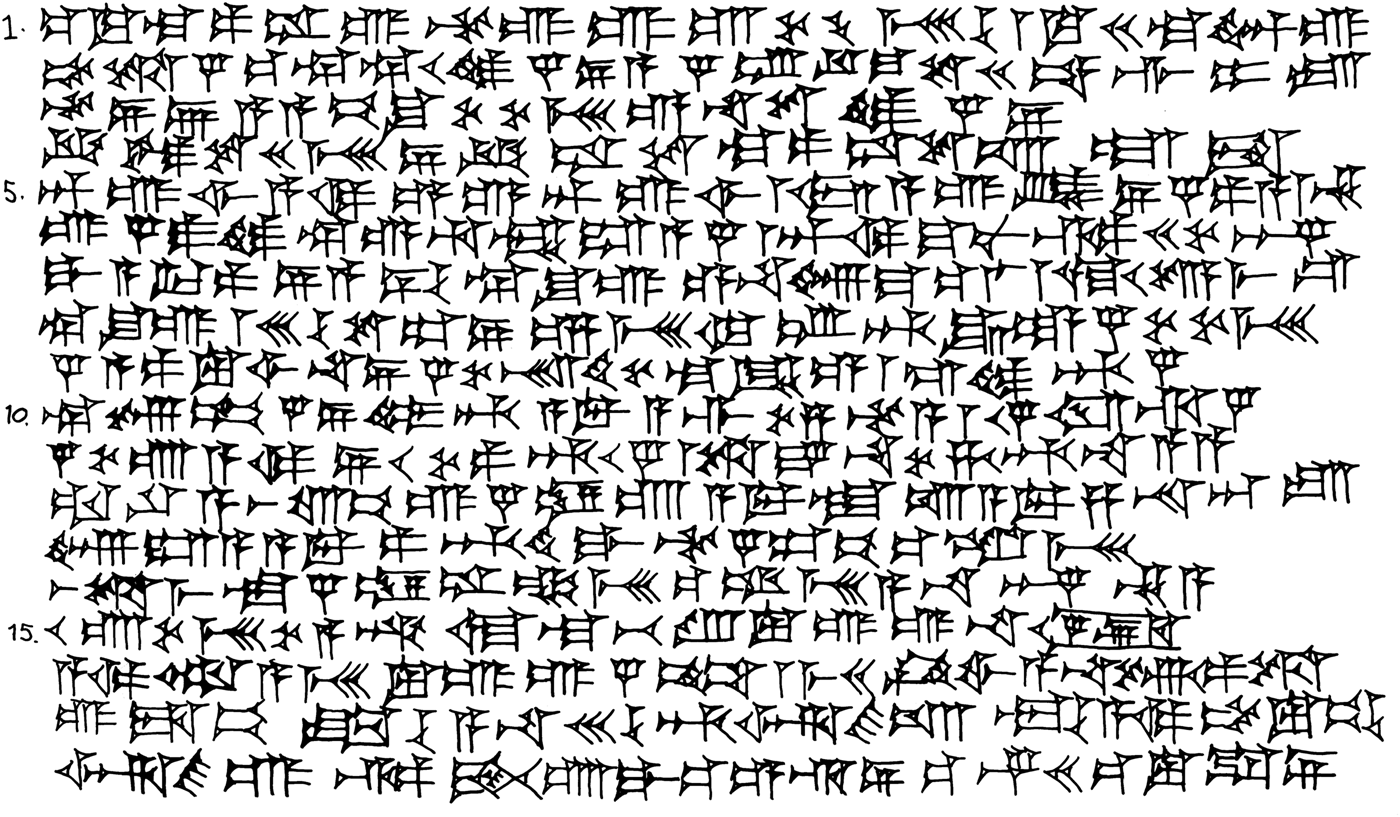
The merciless weapon which lays low lands hostile to him, I, the king, capable in battle, vanquisher of cities and highlands, foremost in battle, king of the four quarters, the one who defeats his enemies, I have subdued (and) brought under one authority fortified lands, dangerous highlands, (and) merciless fierce kings from east to west.
The ancient city Calah which Shalmaneser, king of Assyria, a ruler who preceded me, had built—this city had become dilapidated; it lay dormant (and) had turned into ruin hills. I rebuilt this city. I took people which I had conquered from the lands over which I had gained dominion, from the land Suḫu, (from) the entire land Laqû, (from) the city Sirqu which is at the crossing of the Euphrates, (from) the entire land of Zamua, from Bīt-Adini and the Ḫatti, and from Lubarna (Liburna), the Ḫatinu. I settled (them) therein. I dug out a canal from the Upper Zab (and) called it Patti-ḫegalli. I planted orchards in its environs. I offered fruit (and) wine to Aššur, my lord, and the temples of my land. I cleared away the old ruin hill (and) dug down to water level; I sank (the foundation pit) down to a depth of 120 layers of brick. I built its wall. I built (and) completed it from top to bottom. Palace of cedar, white cedar, and juniper.
Line 7: the first sign is GAL, where other versions of this text have NUN.
Line 11: the first sign of the final word is here written ha, where other versions of this text have pa.
INSCRIPTIONS FROM THE NERGAL GATE
A text of Sennacherib
During the 1987–92 excavations, Iraqi archaeologists also undertook excavations in and around the Nergal Gate (Fig. 17, Fig. 18, Fig. 19). Four architectural features of that northern gate of the city bore copies of an inscription of Sennacherib. The text, which is a near duplicate of Grayson and Novotny (Reference Grayson and Novotny2014): no. 82,Footnote 3 was found on the wall-facing surface of two of the human-headed bull colossi and on two paving stones (Fig. 20a–d).
-
A:1. md30-pap.meš-su man šú man kur aš+šur
-
B:1–2a. md30-pap.[meš-su man šú] / man kur aš+š[ur] →
-
C:1–2a. md30-pap.meš-su [man šú] / man kur aš →
-
D:1–2a. md30-pap.meš-su man šú / man kur aš+šur →
-
A:2. bàd šal-ḫu-ú ša uru ni-na-a
-
B:2b. ← [bàd šal-ḫu-u šá nina ki]
-
C:2b. ← bàd [šal-ḫu-u šá nina ki]
-
D:2b–3a. ← bàd šal-ḫu-u / šá nina ki →
-
A:3. eš-šiš ú-še-piš-ma
-
B:3. eš-šiš ú-še-piš-[ma]
-
C:3. eš-šiš ú-še-piš-[ma]
-
D:3b. ← eš-šiš ú-še-piš-ma
-
A:4. ú-zaq-qir hur-šá-niš
-
B:4. ú-zaq-qir hur-[šá-niš]
-
C:4. [ú-zaq-qir hur-šá-niš]
-
D:4. ú-zaq-qir hur-šá-niš
View of the reconstructed Nergal Gate, 1992

Plan of the Nergal Gate from 1992

View of the colossi at the Nergal Gate, 1992

Inscriptions of Sennacherib from the Nergal Gate; (a)–(b): on the back of colossi; (c)–(d) on limestone slabs
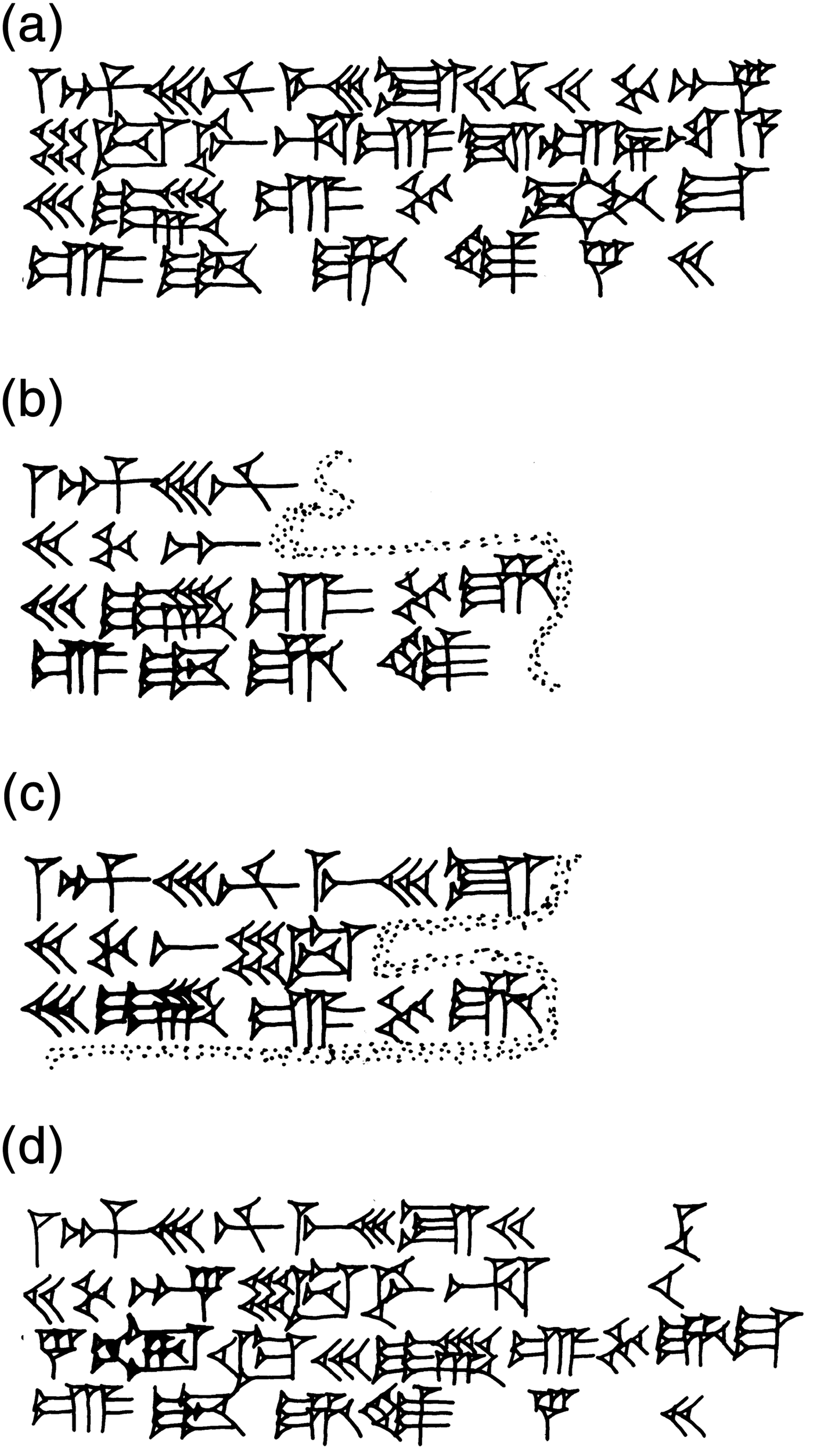
Sennacherib, king of the world, king of Assyria, had the (inner) wall (and) outer wall of Nineveh built anew and raised as high as mountain(s).
An inscription from the akītu-house
In addition to these objects, a small marble tablet was discovered. This inscription, which concerns the construction of a New Year's temple, was published by Ahmad and Grayson (Reference Ahmad and Grayson1999: 187–89). For a new edition, see Grayson and Novotny (Reference Grayson and Novotny2014: 235–237), no. 37. For details of that akītu-house, see Frahm (Reference Frahm2000: 75–79) no. 66 and Grayson and Novotny (Reference Grayson and Novotny2014: 22).
Note on the “Nabû inscription” of Ashurbanipal
In addition to the numerous exemplars of the so-called “Nabû Inscription” of Ashurbanipal mentioned by A. Y. Ahmad (Reference Ahmad1998: 104–6), there were approximately eighty duplicates in the Mosul Museum. I collated some of them and note here that it is clear from a cursory examination of the script that more than one scribe was employed to write out each copy of the inscription on these paving stones. It appears that one scribe inscribed the beginning of the text, while a second scribe simultaneously inscribed the second half of the inscription.



