





Introduction
The Volga River region during the Scythian–Sarmatian period (8th century BCE–3rd century CE) has been extensively studied, with distinct historical phases identified: the Sauromatian, Early Sarmatian, Middle Sarmatian, and Late Sarmatian periods (Melyukova Reference Melyukova1989). Archaeological evidence reveals contacts and similarities in burial goods and rituals between the nomadic steppe populations of this region and the pastoralists of the Altai and Central Asia (Moshkova Reference Moshkova1992). However, Early Iron Age sites in the Volga River Delta have been scarcely investigated, as this territory was traditionally regarded as a “low-potential” area, where burials from this period were rare and primarily found on the Baer Knolls. To date, no comprehensive studies of Sarmatian sites in the Volga River Delta have been published.
The subsequent historical phase in the Northern Caspian region, associated with the Great Migration Period (4th–8th centuries CE), also remains understudied. This period was characterized by large-scale migration waves across Eurasia—from China to Europe—which played a key role in the decline of the Roman Empire and the formation of new medieval states (Heather Reference Heather2010). It marked the transition from Late Antiquity to the Early Middle Ages, bringing profound cultural and political transformations (Hedeager Reference Hedeager, Theuws and Nelson2000). Archaeological complexes from this period, primarily burials, have been documented across a vast territory stretching from the Danube region to Central Asia (Kazansky and Mastykova Reference Kazansky, Mastykova and Furas’yev2009; Pletneva Reference Pletneva1981). In the Volga River Delta, however, only two burials from the Great Migration Period have been identified on the Lisiy (Pigarev Reference Pigarev2024) and Posolsky (Panteleev et al., Reference Panteleev, Balabanova and Pererva2025) Baer Knolls, near the village of Evpraksino (Privolzhsky District, Astrakhan Region). Recent investigations have also uncovered a settlement and artifacts comparable to those from 4th–7th century CE sites in coastal Dagestan and late 5th–early 6th century CE sites in Kazakhstan.
Archaeological sources for the history of the Northern Caspian region during the mid–1st millennium CE—covering roughly four centuries between the disappearance of the Sarmatian culture and the emergence of the Saltovo–Mayaki culture (9th–10th centuries CE)—remain scarce. Nevertheless, addressing this gap is crucial for understanding the adaptation strategies and socio-cultural dynamics of the population inhabiting the Volga River Delta during the Great Migration Period.
On the other hand, archaeological investigations and radiocarbon (14C) dating could provide valuable information about Caspian Sea level fluctuations during the Great Migration Period. According to Varushchenko et al. (Reference Varushchenko, Varushchenko and Kliege1987), the Caspian Sea level during this period varied between –25.5 and –34.5 m (Baltic datum), i.e., negative values relative to sea level (asl), potentially affecting the adaptation of populations inhabiting the Volga River Delta. Therefore, obtaining the first radiocarbon dates from charcoal samples, along with the analysis of archaeological artifacts from the Kirakle-Tobe settlement, is essential for reconstructing and validating Caspian Sea-level fluctuations during the Great Migration Period.
Regional settings
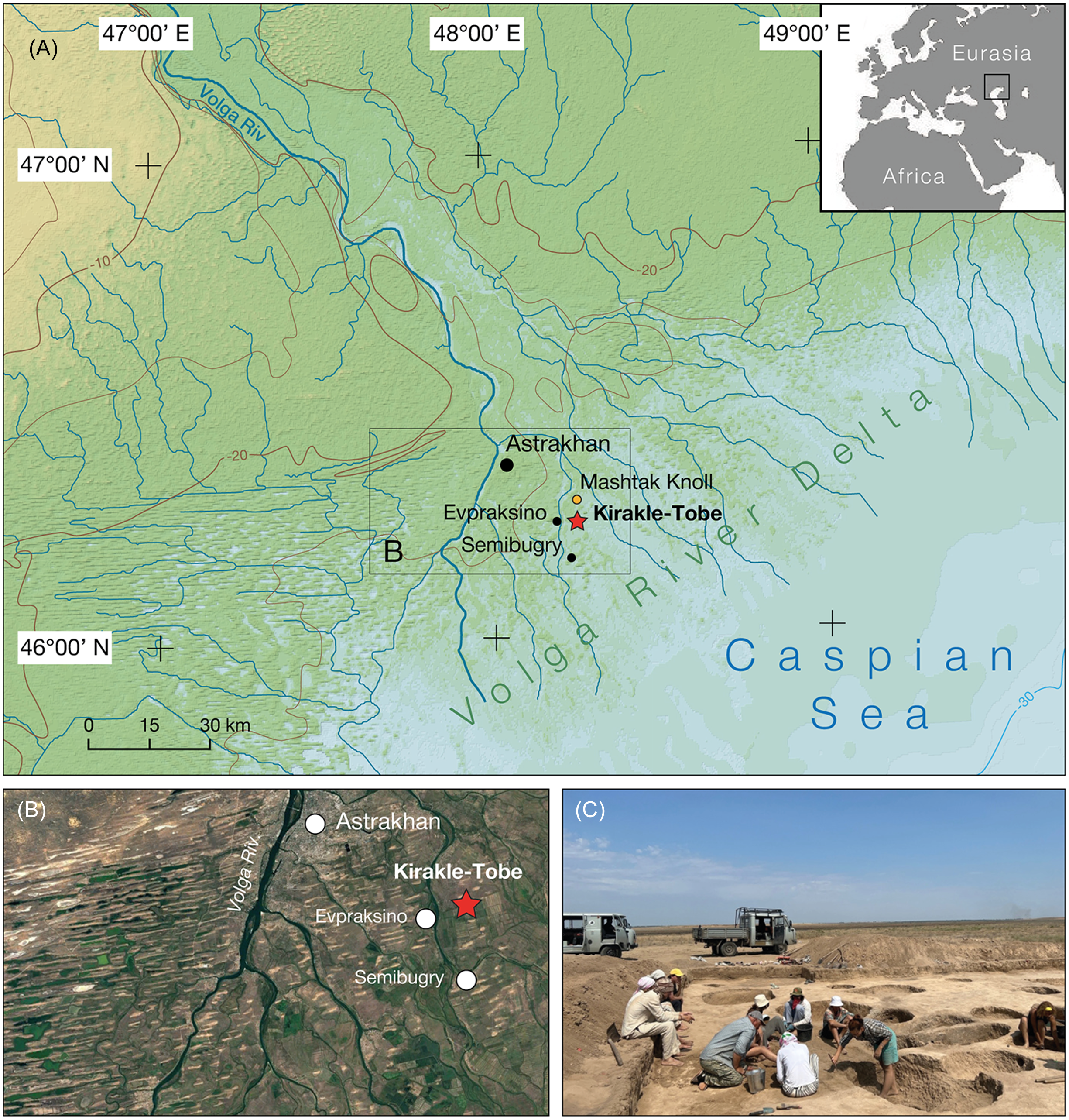
The Volga River Delta—one of the most extensive deltas (containing more than 800 channels) on Earth—is located in the southeastern part of the East European Plain (Figure 1A). It is a vast alluvial and marine-accumulated plain with altitudes between –20 and –28 m asl, consisting of numerous creeks, lakes (ilmens), paleochannels, the Baer Knolls, and interknoll depressions. The Baer Knolls are sublatitudinal, elongated hills measuring 200–300 m in length and 7–15 m in height (Baer Reference Baer1856). The geological structures of knolls are characterized by horizontal, lenticular, and crisscross laminations of sand and silt, with shell detritus (the Baer Knolls Formation) (Svitoch and Klyuvitkina Reference Svitoch and Klyuvitkina2006; Badyukova Reference Badyukova2018; Lobacheva et al. Reference Lobacheva, Badyukova and Makshaev2021). Fluctuations in the Caspian Sea level played a primary role in the evolution of the Volga River Delta during the Pleistocene and Holocene (Svitoch Reference Svitoch2014). The numerous abrasion terraces on the slopes of the Baer Knolls developed during the transgressive-regressive stages of the Caspian Sea in the Holocene.
Location and landscape context of the Kirakle-Tobe archaeological site in the Volga River Delta region. (A) Topographic map showing the position of Kirakle-Tobe, and nearby settlements and the Mashtak Knoll site in the northeastern Caspian lowlands. Background: elevation data from GEBCO 2024; river network from HydroSHEDS (Lehner and Grill Reference Lehner and Grill2013); (B) satellite imagery (Google Earth) highlighting the distinctive linear morphology of the Baer Knolls, where the Kirakle-Tobe site is situated; (C) ongoing archaeological excavations on one of the knolls during fieldwork.

Materials and methods
Archaeological context
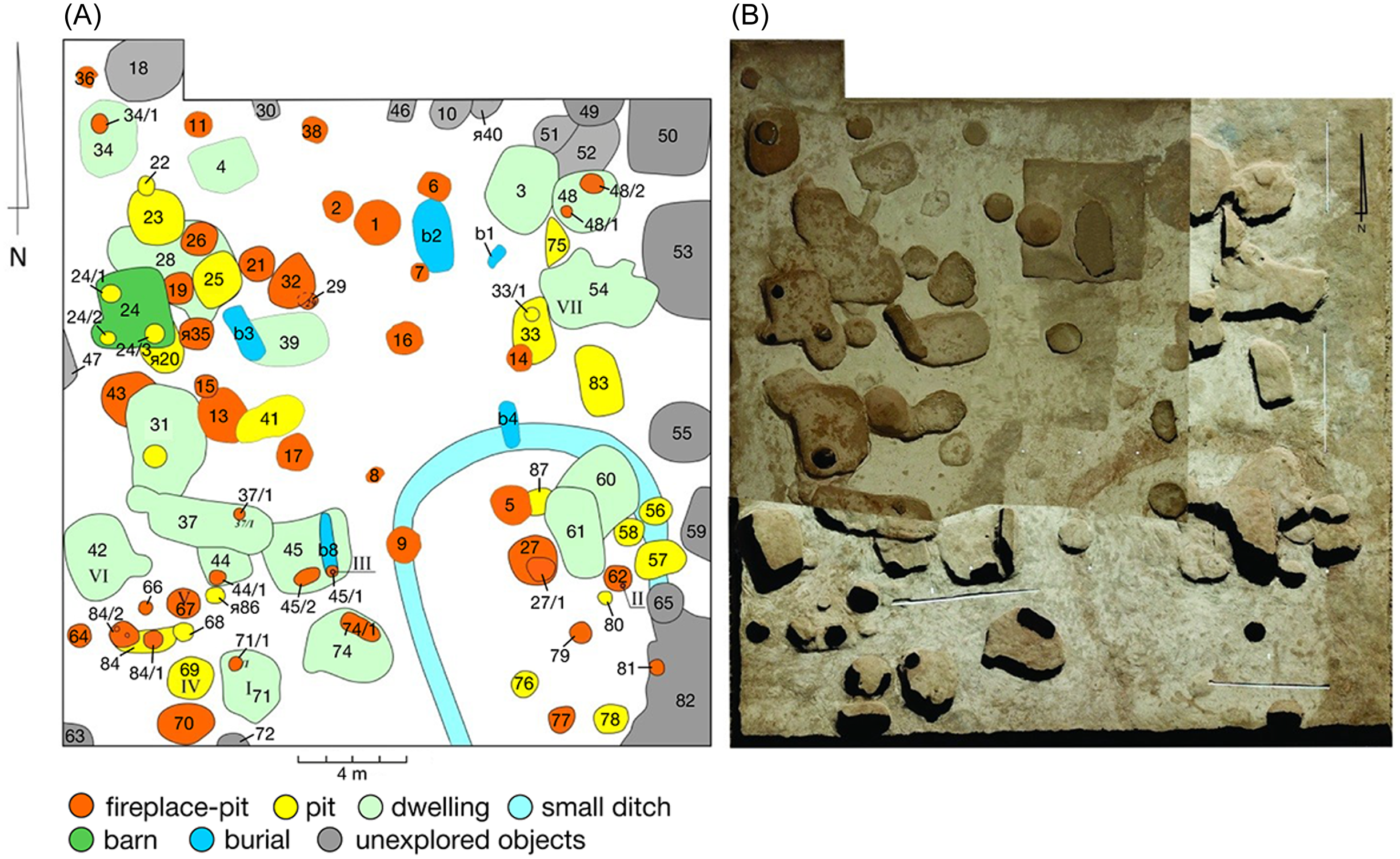
The Kirakle-Tobe settlement is part of the Semibugorinsky archaeological complex, located in the central part of the Volga River Delta (Kovalenko, Reference Kovalenko2024). The settlement occupies the top of the eponymous Baer Knoll (Figure 1B, C). The dimensions of the Kirakle-Tobe Knoll are 550 by 400 m, with a height of 7 m (summit elevation: –17 m asl). In 1992, an earthen grave was discovered on the Kirakle-Tobe Knoll (Nedashkovsky Reference Nedashkovsky2010). Later, in 2008–2009, following archaeological investigations, this grave was attributed to the 8th–10th and 14th centuries CE (Valiev et al. Reference Valiev, Mirsiyapov and Sitdikov2011). Recently, in 2022–2024, new archaeological investigations were conducted in the central part of Kirakle-Tobe Knoll, where ceramics, pits, middens, dwellings, burials, charcoal, and fragments of bones were found in excavation no. 1 with an area of 492 m2 (Figure 2).
The Kirakle-Tobe settlement. Plan (A) and Photo (B) of the excavation no. 1. Roman numerals indicate sampling locations for radiocarbon dating (A).

Radiocarbon dating
Seven samples of charcoal for AMS-radiocarbon dating were collected from fireplace pits (45/1, 62, 67), pits (69), and dwellings (42, 54, 71) in excavation no. 1 (Figure 2). Charcoal lenses in the cultural horizons are usually 3–5 cm thick and covered by in situ aeolian silt and sand deposits. The cultural horizons also contain fragments of pottery and bones.
The charcoal samples were dated at the iThemba LABS in Johannesburg, South Africa, using the 6 MV Tandem AMS system (Mbele et al. Reference Mbele, Mullins, Winkler and Woodborne2017). The sample pretreatment followed the standard acid–base–acid (ABA) protocol (Brock et al. Reference Brock, Higham, Ditchfield and Bronk Ramsey2010): the samples were sequentially treated with 1 M HCl and 0.2 M NaOH at 80°C to remove carbonates and humic substances, followed by a final treatment with 1 M HCl at 80°C. After each chemical step, the samples were rinsed with deionized water until neutral. Upon completion of the pretreatment, the samples were dried at 50 °C. Approximately 5 mg of pretreated charcoal was sealed in a quartz tube with 80 mg of CuO and 1–2 mg of Ag wire, and combusted at approximately 850–900°C. CuO acted as the oxidizing agent, while Ag served to trap volatile contaminants such as sulfur, chlorine, and phosphorus. The resulting CO2 was purified on a vacuum line and converted to graphite. The graphite targets were analyzed using the AMS system. The resulting radiocarbon ages were calibrated using OxCal 4.4.4 (Bronk Ramsey and Lee Reference Bronk Ramsey and Lee2023) and the IntCal20 calibration curve (Reimer et al. Reference Reimer, Austin, Bard, Bayliss, Blackwell, Bronk Ramsey, Butzin, Cheng, Edwards, Friedrich, Grootes, Guilderson, Hajdas, Heaton, Hogg, Hughen, Kromer, Manning, Muscheler, Palmer, Pearson, van der Plicht, Reimer, Richards, Scott, Southon, Turney, Wacker, Adolphi, Büntgen, Capano, Fahrni, Fogtmann-Schulz, Friedrich, Köhler, Kudsk, Miyake, Olsen, Reinig, Sakamoto, Sookdeo and Talamo2020). The calibrated ages are reported in calendar years (cal CE) at the 2σ confidence level and are presented in Table 1 and Figure 3.
Results of radiocarbon dating for the Kirakle-Tobe settlement, Volga River Delta

Kirakle-Tobe settlement. Calibration of AMS 14C dates on charcoal using OxCal v.4.4.4 (Bronk Ramsey and Lee Reference Bronk Ramsey and Lee2023). Atmospheric data from Reimer et al. (Reference Reimer, Austin, Bard, Bayliss, Blackwell, Bronk Ramsey, Butzin, Cheng, Edwards, Friedrich, Grootes, Guilderson, Hajdas, Heaton, Hogg, Hughen, Kromer, Manning, Muscheler, Palmer, Pearson, van der Plicht, Reimer, Richards, Scott, Southon, Turney, Wacker, Adolphi, Büntgen, Capano, Fahrni, Fogtmann-Schulz, Friedrich, Köhler, Kudsk, Miyake, Olsen, Reinig, Sakamoto, Sookdeo and Talamo2020).

Results and discussion
During archaeological investigations, a group of diachronous artifacts was identified. These artifacts include burials from the Late Sarmatian stage (3rd–4th centuries CE), seventeen dwellings, nineteen middens, thirty-three pits, and barns, which correspond to a later period (Figure 2).
Burials. Five burials were found in the excavation area. Three belonged to the Late Sarmatian period (3rd–4th centuries CE). Another two may have been synchronous with the settlement, but their interpretation requires verification. All burials were oriented to the north (Figure 2). Two of them were laid in pits with a lining along the western wall. This construction style of the burial pits, with their orientation characteristic of the Late Sarmatian period, has numerous analogs among contemporary monuments in the Lower Volga region, the Southern Urals, the Volga and Don interfluve, and the Northern Black Sea region (Skripkin Reference Skripkin2017). This is confirmed by a bronze fibula found in one of the burials, a single-member crossbow type with a massive, short, knee-shaped bow, typical of high-profile fibulae of the Black Sea region (3rd century CE) (Ambroz Reference Ambroz1966).
Dwellings consist of single-chamber structures, fragments of a clay coating, and plant litter. The settlement trenches are often elongated. The walls of the dwelling were coated with a mix of clay and cane (turluch dwelling). Several dwellings and pits intersect each other. This configuration indicates several construction periods and may correspond to an extended period of settlement on the knoll.
Ceramics. The archaeological investigation in the Kirakle-Tobe settlement recovered 1838 fragments of ceramic vessels that represent three groups:
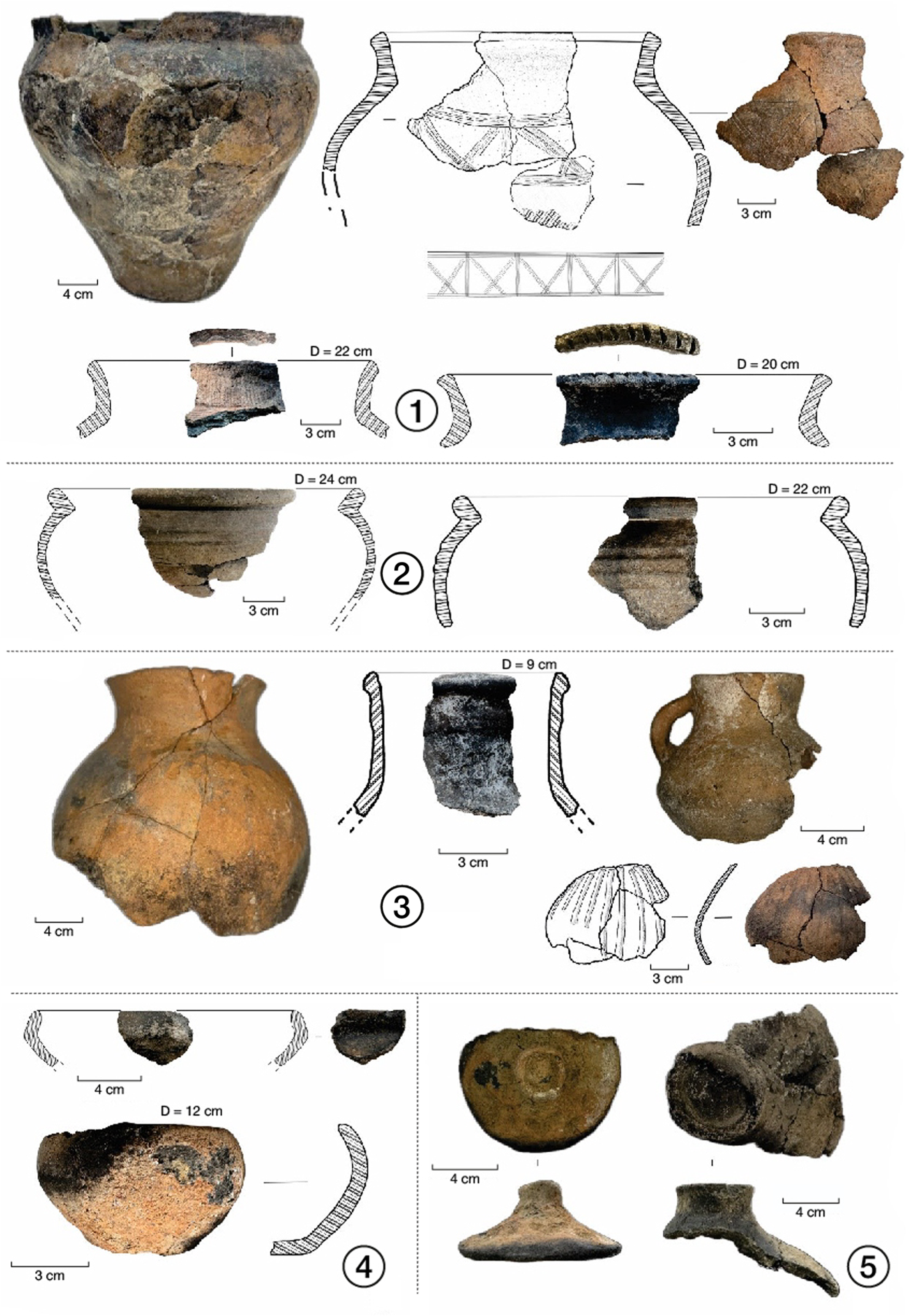
Group 1. Molded pottery (96.6% of total fragments) includes pots with a conical body and a slightly everted rim (Figure 4.1); pots with conical body and a wide rim without a neck (Figure 4.2); jar-like vessels with a globular body and a high neck (Figure 4.3); molded shallow bowls with hemispherical and flattened bodies (Figure 4.4); molded flattened lids with a medium knob and a spherical cavity (Figure 4.5). This group of ceramics is archaic and lacks direct analogies.
Group 1. Molded pottery (excavation no. 1): 1—type 1 (pots); 2—type 2 (pots); 3—type 3 (jar-like vessels); 4—type 4 (bowls); 5—type 5 (lids).

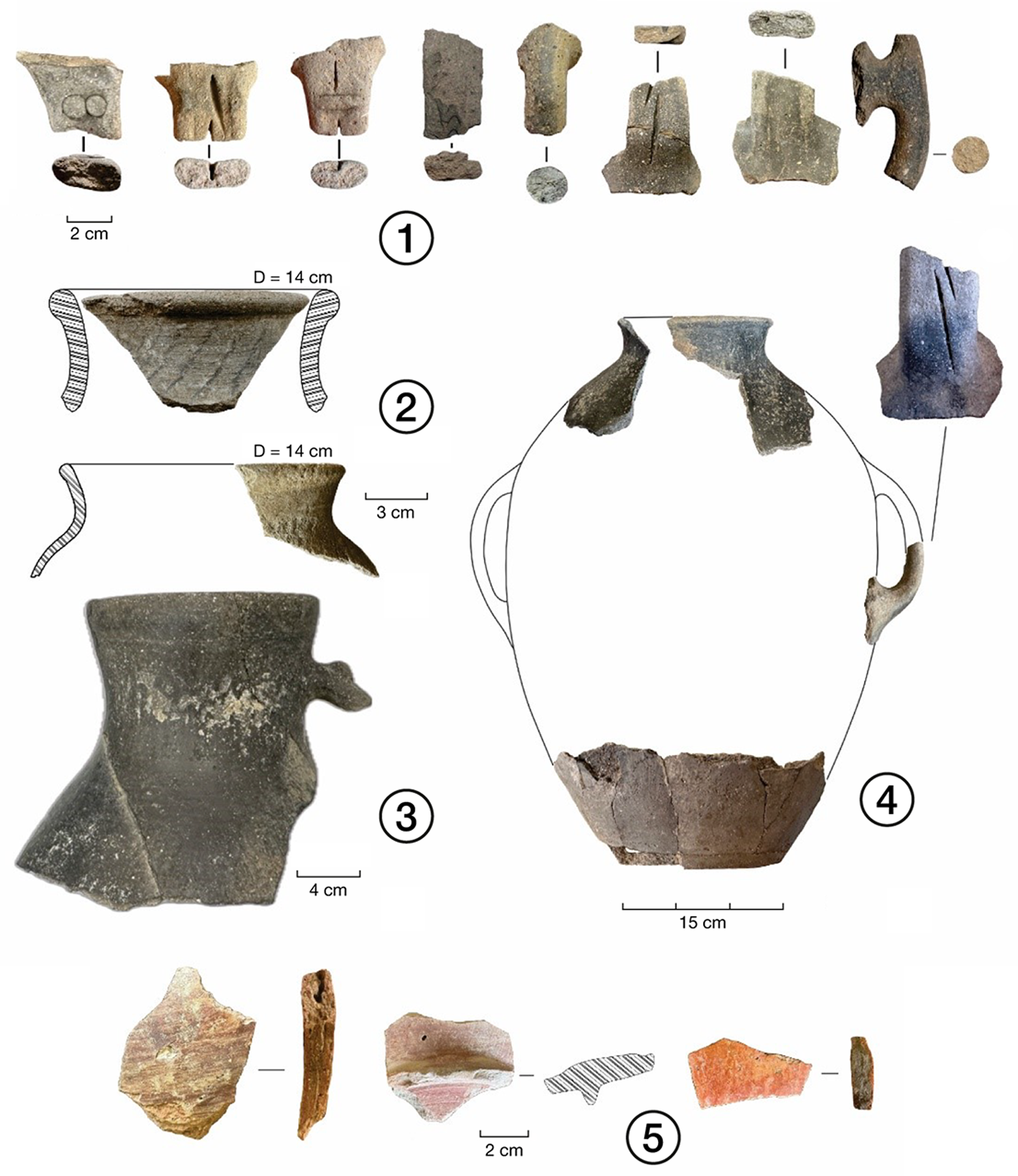
Group 2. Gray ware wheel-made pottery (3.35% of total ceramics): varieties of handles with different lines (Figure 5.1); jar-like vessels with glazing and handles (Figure 5.2–5.4).
Group 2 pottery (excavation no. 1): 1—handle of a gray-clay wheel-made vessel; 2—rim of a gray-clay wheel-made vessel; 3–4—part of a gray-clay wheel-made vessel; 5—Group 3 pottery.

Group 3. Red ware wheel-made pottery with glazing and slip (0.05% of total ceramics) (Figure 5.5).
The pottery of groups 2 and 3 is non-local in origin. Analogues of gray ware wheel-made pottery (Group 2) can be found in archaeological complexes in Dagestan (4th–7th century CE) (Kovalenko Reference Kovalenko2024), where ceramic production was established (Magomedov Reference Magomedov2022). The same ceramic tradition is also associated with the pottery from the Karakabak settlement (Astafiev and Bogdanov Reference Astafiev and Bogdanov2019) and the Jetyasar archaeological complex (Aral–Caspian region), dating to the 5th–6th centuries CE (Valiev and Kuklina Reference Valiev and Kuklina2024).
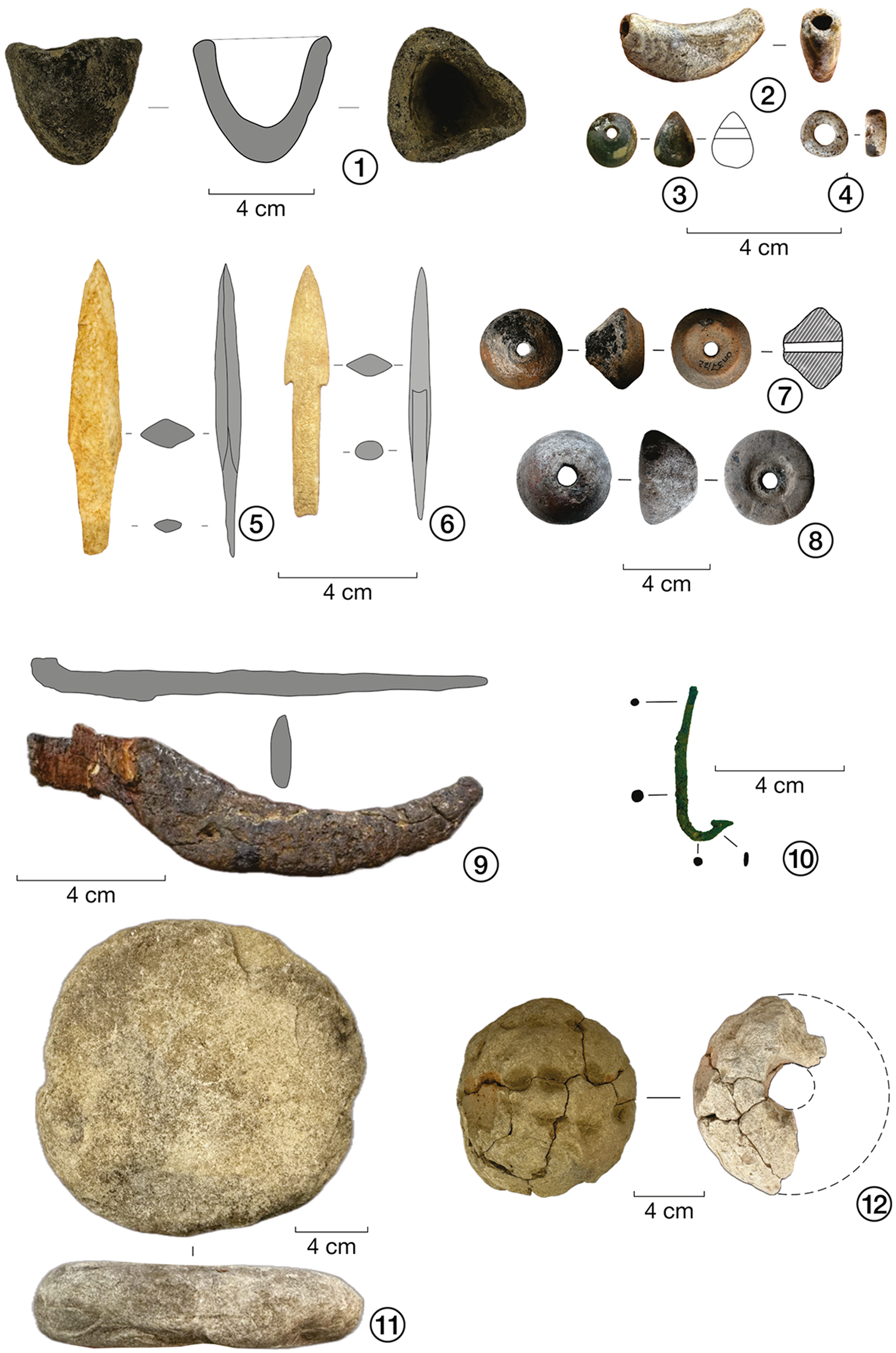
Other artifacts found at the archaeological site comprise a ceramic crucible, a glass bead, a faience bead, a bone arrowhead, a spindle whorl, a metal sickle, a copper fishhook, and a stone sinker (Figure 6).
Individual artifacts (excavation no. 1): 1—ceramic crucible; 2—glass bead; 3—green-glass bead; 4—faience bead; 5—bone arrowhead; 6—bone arrowhead; 7—biconical spindle whorl; 8—hemispherical spindle whorl; 9—metal sickle; 10—copper fishhook; 11—stone sinker; 12—stone sinker.

Bones. The faunal remains are dominated by fish bones (74.77%), followed by small bovids (including sheep and goats—14.06%), cattle (8.48%), birds (1.36%), horses (0.18%), rabbits (0.03%), and foxes (0.01%).
AMS dating
The seven radiocarbon dates from charcoal samples indicate a period of occupation at the Kirakle-Tobe settlement from the early 4th to the early 9th century CE (Table 1, Figure 3). The earliest 14C age, cal CE 85–538 (median cal CE 308), (IT-C-5297) corresponds to the Late Sarmatian culture in the Volga River Delta, which is also confirmed by the northward orientation of burials and archaeological artifacts. Most of the 14C ages correspond to the 6th–8th centuries cal CE and indicate continuous settlement on Kirakle-Tobe Knoll during the Great Migration Period. The collection of archaeological artifacts and the abundance of ceramics may indicate contacts with the western and eastern parts of the Caspian region. The latest 14C date, cal CE 655–990 (median cal CE 805) (IT-C-5299), and fragments of ceramics obtained from pit 42 correspond to the Saltovo-Mayaki culture and the Khazarian period. The nearest Khazarian settlement (0.7 km to the south) of Kirakle-Tobe lies on the Mashtak Knoll.
Caspian Sea level changes during the Great Migration Period
The location on a Baer Knoll, the predominance of fish bones, and the presence of a copper fishhook and a stone sinker could indicate that the Kirakle-Tobe settlement was located along a river during the 6th–8th centuries. At present, the closest river to the Kirakle-Tobe settlement is the Bolda River, 2.5 km to the west. A large paleochannel is evident on the west side of the Kirakle-Tobe Knoll. This situation indicates the channel migration of the Volga River and could be associated with the rise in the Caspian Sea level. According to Varushchenko et al. (Reference Varushchenko, Varushchenko and Kliege1987), the Caspian Sea region was characterized by changes in the coastline between –25.5 and –34.5 m asl during the Great Migration Period. On the other hand, the settlers may have avoided flooding by settling on the Baer Knolls and focusing on fishing. A similar situation occurred in the second half of the 10th century CE, when the Khazarian population migrated to the Baer Knolls to avoid the flooding of the Caspian Sea (Matlakhova et al. Reference Matlakhova, Makshaev, Lobacheva, Lysenko, Tkach, Tkach, Kotenkov and Soloviev2024).
Conclusion
The establishment of a settlement on a Late Sarmatian burial (early 4th century CE) suggests that the population of the 6th–8th centuries CE emerged after the disappearance of the Late Sarmatian culture in the Volga River Delta and existed before the appearance of the Saltovo-Mayaki archaeological culture (9th–10th centuries CE).
The evidence presented here is the first demonstration that the Volga River Delta was inhabited during the Great Migration Period (4th–8th centuries CE). The abundance of various types of ceramics at the Kirakle-Tobe settlement indicates active interaction between the territory of the Northern Caspian and the northwestern and northeastern parts of the Caspian region.
The fluctuations in the Caspian Sea level played a significant role in shaping the lifeways, settlement patterns, and material culture in the Volga River Delta during the Great Migration Period. The environmental conditions between the 6th and 8th centuries CE were poorly suited to a fully nomadic lifestyle, although pasture-based cattle breeding remained possible. At the same time, the presence of permanent dwellings and the predominance of fishing at the Kirakle-Tobe settlement may indicate a shift towards sedentism among the local population.
Acknowledgments
This study was financially supported by the Russian Science Foundation (project No. 25–27–00357). The authors thank LLC “Archeocenter” for their assistance in organizing and conducting the archaeological expedition. We would like to thank Dr. Sci. Yaroslav Kuzmin for his valuable comments and suggestions.



 Open access

