


At the Dawn of History: Original Genius
At the core of the Enlightenment, with its firm belief in the steady, progressive rationalization of human affairs, we also encounter a new preoccupation with the past. What was it that, at the dawn of history, had sparked human civilization, or human civilizations, and launched them on their course of historical progress? Critics such as William Duff (An Essay on Original Geniuses, 1767) and Robert Wood (An Essay on the Original Genius and Writings of Homer, 1776) began to re-read Homer in search of clues, and instead found a conundrum. How could it be that, out of nothing, and without the benefit of having examples to emulate, Homer, primordial poet, could have achieved such an immediate benchmark status from which all classical standards were derived? Where did his ‘original genius’ come from, from whom had he learned his craft? What was there before this literary Big Bang?
In 1720s Naples, an as yet obscure Giambattista Vico had developed a model suggesting that each civilization originated with its own separate ‘Big Bang’. His treatise Scienza nuova argued that, in a concentrated act of self-articulation, societies would burst upon the scene of world history and become civilizations by formulating, all at once, their mythology, legal system and foundational epic texts. The Scienza nuova was an intellectual time bomb: scarcely noticed through most of the eighteenth century, it would became all-important fifty to a hundred years after its appearance. In Vico’s view, the gods of the original mythological pantheon were interchangeable with the mythologized early monarchs of those ancient epics that celebrated their heroic acts at the dawn of recorded history. The idea caught on. In Denmark, for example, the historiographer royal Peter Frederik Suhm approached early Scandinavian history in this way, tracing the descent of medieval rulers from a patriarchal ancestor Odin, raised by his descendants to the ranks of the gods; Suhm saw the Edda (and the sagas of the Edda’s continuation) as the early historical documentation of the Nordic peoples.1
People began to realize, also, that history shows more than one ‘original genius’. After Homer, there were, in modern times, Dante and Shakespeare. This emerging theory of original geniuses, readers will recognize, was a run-up to Hegel’s and Carlyle’s identification of the cultural hero-figure (Chapter 1). But the most important original genius to come to Europe’s attention was discredited by 1800 and is now somewhat obscure: Ossian. It was Ossian who helped detonate Vico’s time bomb. And it was Ossian who allowed every nation in Europe, even peripheral ones, to identify themselves as ancient civilizations, in terms of their own vernacular roots and their own ethnocultural origins.2
An Apparition from the Past
Around 1760, the literate public was dazzled by the rediscovery of Ossian, an original genius now retrieved from oblivion. Ossian, a fourth-century bard who had been active in Caledonia (Scotland) in the darkest Middle Ages, had remembranced the decline of his native heroic society in elegiac dirges in Gaelic (the Celtic language of the Scottish Highlands). These elegies were now scattered across dispersed manuscripts or else remembered orally, as ballads. At the behest of the Edinburgh literati, a fieldworker, James Macpherson, had gathered these scattered oral and manuscript sources and published them in English as Fragments of Ancient Poetry Collected in the Highlands of Scotland (1760). The impact was sensational. Macpherson was charged to inquire further, and in the course of the 1760s he offered his readers the epic cantos he had reconstructed from the fragments into which they had been broken up. The titles were Fingal and Temora. They soon came under a cloud of suspicion and were later dismissed as forgeries; but not until they had enjoyed immense fame for a while as the Northern European counterparts to the Iliad and the Odyssey and had profoundly and lastingly shaken the poetic, the aesthetic and the cultural-historical outlook of literate Europeans.
Ossian was from the outset presented to the reading public as an original genius. The classical mottos on the title pages of the 1760 collection of Fragments of Ancient Poetry and of the 1762 Fingal both highlight the role of the ‘bard’ as the chronicler of the heroic deeds of the nation’s patriarchal ancestors, in the ‘primitive’ Homeric mode.Footnote * Hugh Blair’s Critical Dissertation on the Poems of Ossian, the Son of Fingal (1763) made this the dominant frame in which Ossian was read: Ossian was a voice from the ‘infancy of societies’, like the skaldic bards investigated by Nordic antiquaries. Blair accordingly places him in a northern Celtic/‘Gothic’ tradition. Thenceforth, as Blair’s dissertation was prefixed to every subsequent Ossian edition, Ossian became, proverbially, the ‘Homer of the North’.
This in turn led to a great fission in the self-image of European literature. Madame de Staël’s summation, in her seminal On Literature in its Relations to Social Institutions (1800), is typical: it sees European literature as a dual tradition. One is Mediterranean, classical, rooted in ancient Greece and in the Roman empire; its mainspring is Homer. The other is northern, Romantic, rooted in Ossian. And she extends the dualism further: literature in the Mediterranean–classical tradition is temperamentally sanguine, realistically descriptive, and suited to societies with strong social conventions; whereas literature in the northern–Romantic mode is temperamentally melancholic, metaphysically contemplative, and suited to societies with a strong tradition of individualism. We seen the germ here of that temperamental dualism that later informed Thomas Mann’s ethnotypes, discussed in Chapter 1: the opposition between the superficial French and the contemplative Germans. Ossian is more, then, than a literary curiosity; as a northern Homer, and as figurehead and fountainhead of a non-classical, north European tradition, he triggered a veritable paradigm shift in Europe’s literary and cultural self-awareness.
Ossian is even made to look like Homer (or like an Old Testament prophet), in line with his status as a primordial poet-chronicler of the epic Olden Days. His garb from the outset is represented as a crossover between a classical toga and a biblical cloak. His long flowing beard also fits this ‘hoary sage’ role pattern. Indeed, Ossian’s dress code has been iconographically fixed in dozens of paintings and has since then influenced the standard of how we see bards, druids and even wizards: from Merlin to Getafix, Gandalf and Professor Dumbledore. The ‘original genius’ iconography appears as early as the engravings that were used as vignettes for the title page of Fingal (Figure 3.1) and for Melchiorre Cesarotti’s Italian edition of the Poesie di Ossian (1763), itself the source for many other European translations.3
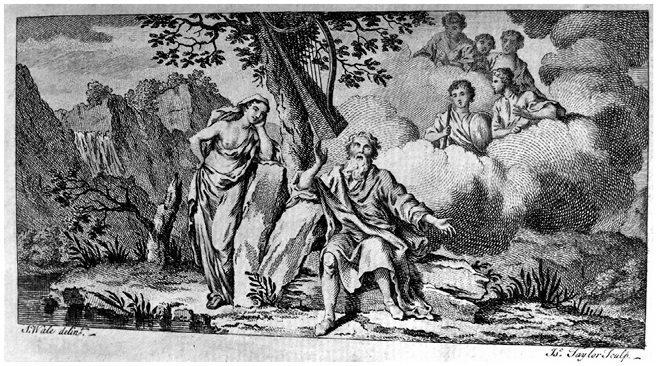
Figure 3.1 Title-page vignette for James Macpherson’s Fingal (2nd ed., 1762, engraving by Wale and Taylor).
What is depicted in Figure 3.1 is the scene of Ossian’s last elegy, the mournful culmination of a doleful series. The ageing bard, close to death, is alone on a windswept heath, with craggy mountains in the background. His harp, hung in a tree in an overt echo of Psalm 137, is set humming by the wind blowing through it. In a reverie he senses the presence of the ghosts of the past playing upon its strings with invisible fingers. He beholds the fair Malvina, daughter of Toscar, and Toscar himself, and all the other dead heroes of the past in a spectral apparition. Ossian addresses them:
I am alone at Lutha: my voice is like the last sound of the wind, when it forsakes the woods. But Ossian shall not be long alone, he sees the mist that shall receive his ghost. He beholds the mist that shall form his robe, when he appears on his hills. … The dark wave of the lake resounds. Bends there not a tree from Mora with its branches bare? It bends, son of Alpin, in the rustling blast. My harp hangs on a blasted branch. The sound of its firings is mournful. – Does the wind touch thee, O harp, or is it some passing ghost! – It is the hand of Malvina! … The aged oak bends over the stream. It sighs with all its moss. The withered fern whistles near, and mixes, as it waves, with Ossian’s hair. … The blast of the north opens thy gates, O king, and I behold thee sitting on mist, dimly gleaming in all thine arms. Thy form now is not the terror of the valiant: but like a watery cloud; when we see the stars behind it with their weeping eyes. … Beside the stone of Mora I shall fall asleep. The winds whistling in my grey hair, shall not waken me. – Depart on thy wings, O wind: thou canst not disturb the rest of the bard. The night is long, but his eyes are heavy; depart, thou rustling blast.4
This fey, spooky scene strongly affected the wig-wearing literati of the 1760s. Goethe translated this piece to include it in his Sorrows of Young Werther (1774), the book that is said to have triggered a wave of copycat suicides; and there are good reasons why this of all scenes was chosen to be the title-page vignette and ‘brand image’ for the entire work.
It is no exaggeration to say that in this fragment, we see the germ of what was to explode across Europe as the Romantic movement. The main effects of Ossian, which we will survey in what follows, were twofold: the idea of visionary inspiration; and the turn towards vernacular, nativist historicism in cultural and national consciousness. As we shall see, both of these made themselves felt, not only in literary culture (‘Romanticism’) and in scholarship, but also in public opinion (‘Romantic nationalism’).
Sublime Liminality and Visionary Inspiration
Ossian’s awesome and oppressive setting is one of the strongest manifestations of a new aesthetic that had been developing in the preceding decades. People no longer appreciated only the Beautiful, the locus amoenus, the park-like landscapes of Tuscany with their gentle, pleasurable aspect; what was now beginning to emerge was an alternative mode of appreciating the world, one well outside the comfort zone of the Beautiful. Austere mountain ranges, thunderstorms at night, battlefields, stormy seas, dark forests and craggy coastlines – places that would be the opposite of pleasant or pleasurable, that impress and awe onlookers with their unforgiving grandeur and render them aware of their vulnerability and mortality. This ‘pleasure mixed with horror’ was now identified as (a neologism) the Sublime. Edmund Burke had juxtaposed the two, the Sublime and the Beautiful, in a youthful essay in 1745, and Ossian – as we can see from the fragment quoted here – laid it on with a trowel.5 The Sublime, thus turbocharged, would dominate the aesthetics of Romanticism and would also inform the nascent genre of the Gothic. When we shiver pleasurably in our cinema seats or on our sofa at the sight of Dracula’s bat-circled castle in the eerie moonlight, we are following a tradition that started in 1760.
It was not just the external setting that proved influential: it was the way in which the setting sets the scene. The sublime landscape is also liminal – by which I mean that we are in a shadow zone between two worlds, a threshold (for that is the Latin root meaning of limen) full of ambiguities both spatial and ontological. The liminality effect, too, is used unstintingly. In space, the setting is between light and darkness (moonlight at night) and between heaven and earth (a mountain top under a lowering sky). Ontologically, we are between the embodied, material world of the living and the ghostly, spectral world of the dead. And it is in this liminal situation that Ossian, himself scarcely alive any more and aware of his impending death, and in a dreamlike reverie between consciousness and unconsciousness, summons from the spirit world the presence of the dead, passing on their memories to future generations who might otherwise forget. The strongest manifestation of that communication between the living and the dead is the ghostly sound of the harp, set vibrating either by the wind or by the spectral fingers of dead heroes.
This, too, was to be a seminal influence on the slowly forming poetics of Romanticism. The Romantic poets saw themselves as highly sensitive souls, attuned to the unspoken emotive charge of the situation, intuiting it and being able to express this intuition and inspiration in words. They saw themselves, their own souls, as Aeolian harps. Hence the constantly reoccurring theme of the breeze or wind that touches the poet or is perceived through waving grass or swaying tree-boughs, and that communicates a sense of transcendence to the sympathetic poet. The word ‘inspiration’ is central to Romanticism, and central to that word is its Latin root, in-spiro, ‘breathing into’, a spir-it infused by blowing air; much as God did when breathing life and a soul into Adam shaped out of clay (Gen. 2:7). And that breeze-borne inspiration would reach the poet very often in liminal situations: on beaches, in moonlight, in mist or fog, at dusk. All that is Ossianic.6
Channelling the Nation
Romantic poets see themselves surrounded by mystery and darkness and use their creative intuition to ‘tune in’ to that. ‘Humanity is surrounded by infinity, by the mystery of divinity and of the world’ – that is how Ludwig Uhland begins his 1807 essay ‘On the Romantic’. This tension-filled juxtaposition of the mundane and the transcendent is one of the most salient and all-pervasive characteristics of the Romantic generation of lyrical poets. Novalis had metaphorically phrased the Romantic oscillation between the humdrum and the sublime as a mathematical operation, analogous to raising a figure’s exponent to a higher power by squaring it (in German: potenzieren, so that 4 becomes 16) or logarithmically bringing it down to its root integer (in German: logarithmisieren, so that 25 becomes 5). As Novalis wrote,
Romanticizing something is to raise it to a higher power. The lower self becomes its higher self, much as we ourselves are such an exponential succession. … If I give the everyday a higher sense, give the well-known a mysterious aspect, vest the familiar with the dignity of the unfamiliar, then I romanticize it; and conversely so, when I logarithmically bring down the higher, unknown, mystical and infinite into a common expression.
The poetics of ‘inspiration’, both in Wordsworth’s Preface to the Lyrical Ballads and among his German contemporaries, are well known as one of the salient features of Romanticism. Poetry (and art in general) can, in this romantic view, electrify the world, potenzieren; enchanting and enrapturing it, as poetry itself results from enchantment and rapturous inspiration.7
This constant habit of potenzieren is the hallmark of Romantic idealism, its tendency towards epiphany: seeing reality in terms of its underlying essential principles, its Platonic ideas. The skylark apostrophized by Shelley is not an actual bird but a manifestation of the spirit of soaring creativity: ‘Hail to thee, blithe spirit! Bird thou never wert.’ When Wordsworth hears a Highland reaping-woman sing, or Keats a nightingale, those songs immediately become transcendent, generalized into a spirit of enchantment far beyond the time and place of the specific setting.
Ossianic manticism feeds into a Romantic revival of Platonic idealism, manifested also in the philosophy of Hegel, which loomed large over the entire following century. Hegel’s influence has been seen as politically pernicious by thinkers as different as Karl Popper (who aligns Plato, Hegel and Marx in his The Open Society and its Enemies, 1945) and Peter Viereck (Metapolitics, 1941). That alignment, while suggestive, is not unproblematic, and in any case it cannot be wholly derived from the after-effects of Ossianic poetics. Nonetheless, Ossian’s poetics of visionary inspiration did leave a specific political legacy. The power Ossian ascribed, in the teeth of Enlightenment rationalism, to poetic intuition and to non-cerebral rapture survived into the nineteenth century.
The poetics of visionary and creative power gave a new collective, ‘national’ authority to poets, artists and those who created from visionary inspiration. Their public personas developed from what Shelley called ‘the unacknowledged legislators of mankind’ into figures who, having the power of being inspired, also had the power to inspire others: the prophetic voices of the nation’s needs and aspirations. Victor Hugo would proclaim ‘The Poet’s Function’ in 1840:
The power to intuit the deeper meaning of things behind their appearance became a Romantic habit of epiphany. Michelet and Carlyle use it constantly. At every turn, concrete historical events or occurrences would be represented in terms of what they really stood for: the spirit of France, the principle of Liberty or Chaos. Michelet defines the French Revolution as ‘the advent of Law, the resurrection of Right, the response of Justice’ (‘l’avènement de la Loi, la résurrection du Droit, la réaction de la Justice’). Carlyle sees ‘The Great Man [as] a Force of Nature’. We also see it applied to the way people begin to see the relationship between state and nation. The state is the material expression, the nation its informing, essential quiddity.
The French Revolution had unleashed a torrent of turgid, swollen political rhetoric and grandstanding upon the world – all the new politicians grandiosely modelling themselves upon the orators and heroes of ancient history; and Napoleon himself, notoriously, carried a pocket edition of Ossian with him on his campaigns. (He also carried a lot of other stuff around with him, including a zinc bathtub, and Ossian’s sonorous dirges may have been used as a night-time soporific.) When Prussia had been reduced to a French puppet state, it was the intellectuals and poets (Arndt, Fichte, the Grimm brothers, Görres) who campaigned for a national resurrection. Typically, the resurrection was initially spiritual (cultural, literary, philosophical, moral: unpolitical) and was only in the second instance state-oriented. Finally, general Gneisenau urged king Friedrich Wilhelm III him to arm his subjects, form militias, and harness the force of public opinion. Friedrich Wilhelm dismissed this as a fictitious pipe dream, ‘mere poetry’, at which Gneisenau retorted that poetry was an indispensable and underrated force in social relations; ‘the future of the throne is based upon poetry’.9
That, in the event, was what ensued. In March 1813 Friedrich Wilhelm issued his manifesto An mein Volk, militias were formed in which the ageing philosopher Fichte and the young poet Theodor Körner volunteered, and at Leipzig in October that year the earlier defeats of Jena and Austerlitz were reversed. Napoleon, weakened by his Russian campaign, was vanquished and sent to Elba. Napoleon himself had intuited something like this, sensing the power of literature, when in 1807 he kept his implacable critic Madame de Staël banned from Paris, telling her to stick to her knitting; because in her salon, she could ‘make politics by talking literature, morality, arts, anything’.10
Prussia’s national mobilization of 1813, driven by poets and literati and accompanied by a great deal of patriotic verse, left its own ‘long tail’ of cultural memory.11 It was celebrated for the next 150 years as the glorious moment of national harmony between intellectuals, monarchs and generals and the active involvement of the Volk in the destiny of the state. Young Theodor Körner died of his wounds; as a martyr-poet, he became a role model for all young poets who would become the saviours of their nation henceforth. A line from his poem was so memorable that it was quoted in Berlin’s sports palace in 1943 when Goebbels declared total war: ‘Then, Volk, arise, and storm, break loose!’12
Pre-1914, Körner had inspired poets everywhere in Europe. His biography, written by his father, was translated into many European languages; the English one (1827, dedicated to Prince Albert) was noticed especially in Ireland. Alessandro Manzoni dedicated an ode to him; Irish Romantics translated him, and Lydia Koidula adapted a play by him into Estonian. The type of the ‘national poet’ emerged in his wake. Many of these are now cherished canonical figures: Petőfi, Mickiewicz, Thomas Davis, even (in the European colonies of Cuba and Bengal) José Martí and Rabindranath Tagore. Poets, dealing lyrically with intimate affects, now became public figures. When Ireland’s poet-critic Thomas Davis died at a young age in 1846, his fellow poet Samuel Ferguson wrote a ‘Lament for Thomas Davis’ (1847) that glorified him as nation-builder, sowing the seeds of a future harvest, and as the nation’s prophet (foreteller, forerunner):
The Voice of the Nation
Lyrical poetry (i.e. emotion-centred and driven by visionary inspiration) became a prominent vehicle for the expression and propagation of national ideals after 1800. The new lyricism was more direct and homelier in its diction than its stately eighteenth-century forerunners: Wordsworth had propagated the use of ‘language really used by men’ as the proper way to express a ‘spontaneous overflow of powerful feeling’ and had turned to the simple, oral-performative metre of the ballad (rum te-tum te-tum te-tum) much as the German poets after Goethe had discovered the simplicity of the Lied. This had the added advantage that such verse could be easily set to music and performed as, indeed, a ballad or a song. Many Romantic ballads and verses in fact owe their popularity not to to the printed page but to vocal performance – as we shall discuss in Chapter 9. Sentimental lyricism became chamber music for domestic use (the Lieder of Schubert, often setting verse by Goethe, or Thomas Moore’s ‘Last Rose of Summer’); while patriotic verse such as Die Wacht am Rhein was performed by choirs as public proclamation.
The long-standing affect of ‘love of the fatherland’ was a popular theme for this generation of poets. Initially it was sentimental, referring merely to the attachment to one’s native place, the pangs of homesickness (or exile, or emigration), and the joy of returning after an absence. Walter Scott’s ‘Breathes There the Man’ set the tone and became a household invocation in the course of the century.
The idea that homesickness is a universal human affect, and that it comes naturally to people to spontaneously love their homeland, meant that an important political conclusion was being drawn from an intimate emotion. In the climate of the Revolutionary and Napoleonic Wars it gained a fresh political edge. Love of the fatherland, from being a general moral virtue, a type of social altruism, now became the stalwart defence of one’s own nation against foreign threats. The poem ‘England and Spain; or, Valour and Patriotism’ (1808) by the seventeen-year-old Felicia Hemans is a case in point, celebrating the two anti-Napoleonic allies and the campaign in which her brother was serving. At the same time, the Romantic climate also meant that poets began to thematize the vernacular diversity of Europe’s cultural geography; ‘national’ in this sense could refer to the local colour specific to different countries. This ‘national’ taste fed the success of Robert Burns in Scotland and inspired the Irish melodies of Thomas Moore. Again, the work of Felicia Hemans, dating largely from the period 1810–1835, is a good example. While some of it is English-patriotic, sometimes in the militaristic and sometimes in the moral mode, her work is equally preoccupied with evocations of the culture of her adopted fatherland of Wales, with Walter-Scott-inspired scenes from Scottish history, with philhellenic celebrations of Greece, and with appreciative solidarity poems about the admirable medieval and modern champions defending the national liberties of Switzerland, Spain and Italy. If a common denominator is to be found here, it lies in the climate of the anti-Napoleonic wars and the post-Napoleonic restoration, linking poetic feeling to the local colour of scenery and historical memories and to the liberation of the nation from tyrants (especially foreign ones). She also wrote verse in praise of Körner; and in her collected works all this was grouped together under the rubric ‘national’.14
In Germany, Ernst Moritz Arndt used the form of the Lied for anti-French propagandistic purposes, militaristic rather than lyrical. Arndt was particularly successful with his song ‘What is the German’s Fatherland?’, which in stanza after stanza asks, rhetorically, whether the German’s fatherland is located here (along the Rhine), there (near the Alps), or somewhere else (the coast). The refrain answers: ‘Nay! That it cannot be, the German’s fatherland is greater than this.’ Finally, the answer is given: it is ‘wherever the German language is spoken. That is must be! That, bold German, you may call yours! That is the German’s fatherland!’ It became Germany’s answer to ‘La Marseillaise’ for a while, and it was particularly popular as a choral anthem; we shall encounter it again in Chapter 6.
No less inspiring across Europe were the songs of Pierre Béranger, who in the restoration climate of the post-Waterloo decades kept a more populist nationalism alive in France. Like the goguettier Émile Debraux, his songs would recall the glorious memories of Napoleon’s great victories, the moments when France stood proud and tall (Figure 3.2). These songs were written in opposition to the oppressive restoration regime of the Bourbons, which demonized the very memory of Napoleon, and both poets spent time in prison over their songs of former national glory. Arndt, too, fell under a political cloud after 1818 as the Metternich regime tightened its censorship and mistrust of ‘demagogues’ grew. But this only enhanced the reputation of Arndt and Béranger as stalwart and courageous defenders of their national glories against the dynastic power of autocratic monarchs.
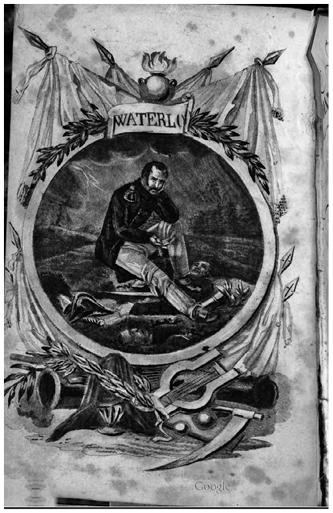
Figure 3.2 Frontispiece to Emile Debraux’s Chansons nationales (1822).
And so the public status of poets could be semi-clandestine, rebellious or state-endorsed (establishment poets such as Tollens in Holland or Oehlenschläger in Denmark). The most ‘Romantic’ ones were those who were persecuted or insurrectionary activists such as the Hungarian Petőfi, the Pole Mickiewicz, the Bulgarian Hristo Botev and the Ukrainian Taras Shevchenko. An in-between category included Felicia Hemans in England, Thomas Davis in Ireland, France Prešeren in Slovenia, Karel Hynek Mácha, Jan Kollár and Ľudovit Štúr in the Czech and Slovak lands, Almeida Garrett in Portugal, Jacint Verdaguer in Catalonia, Guido Gezelle in Flanders, Henrik Wergeland in Norway, Johan Ludvig Runeberg in Finland, Lydia Koidula in Estonia. The topics of their verse could range from the overtly nationalistic, with a deliberate propagandistic intent, to more lyrical effusions whose main nationalistic effect lay in their demonstration that the vernacular language could be used for serious, ambitious literary purposes. Cases in point are the long dramatic poem in Occitan, Mirèio, which earned its author, Frédéric Mistral, the 1904 Nobel Prize (the event depicted in Figure 10.3); and the Galician verse of Rosalía de Castro, whose tomb is shown in Figure 3.3.15
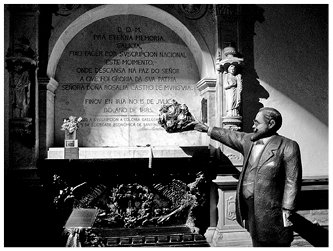
Figure 3.3 Tomb of Rosalía de Castro in the Pantheon of Illustrious Galicians, Santiago de Compostela (sculpture by Jesús Landeira, 1891). The figure offering a bouquet represents her husband, the historian Manuel Murguía.
The Poet as Role Model
Poets themselves adopted a Romantic self-image and became Romantic-nationalist role models. Körner as a soldier-poet was celebrated as a martyr to the national cause both inside and outside Germany, but his type of role model is in fact one of several templates. Three other ‘poetic stances’ besides the soldier-hero-martyr poet (Petőfi, Botev) can be seen, and these may be linked to Byron, Wordsworth and Scott respectively.
Byronism was one of the most pervasive and enduring repercussions of the Romantic movement for European (and indeed global) culture. It was inspired less by Byron’s actual poetry (which is often glibly satirical and if anything classicist in its orientation) than by his poems’ protagonists and indeed his own self-dramatization. The Byronic hero (and Byron himself in his Byronic pose) is a solitary, morose, brooding character, virile but misanthropic, whose capacity for tender feeling has been scarred by bitter experiences. Rick, he of the eponymous café in Casablanca as played by Humphrey Bogart, is probably the most powerful twentieth-century embodiment of a Byronic hero. Haughtily averse to social niceties, he leads a wandering existence and stands apart from the crowd because his ideals are too lofty, his passions too intense and his manners too rough-hewn to fit into modern conventions. Heroes such as Manfred and Childe Harold are of this type, and Byron’s own restless, scandal-ridden wanderings were seen as expressions of this passionate, intriguing (‘Romantic’) character. What appealed especially was that in his anti-bourgeois nonconformism, Byron evinced sympathy for the outlaws and warlords of harsher, non-civic societies and adhered to an honour-and-shame ethos that was disappearing in the modernization process. Thus Byronism glorified the lawless peripheries of Europe, from the Balkans to the Andalusia of Mérimée’s Carmen, and his poetry became the great beacon for a solidarity between the ethos of the cynically Romantic rebel-poet (emulated by the likes of Pushkin, Heine and Prešeren) and the emerging national cultures in Europe’s late-imperial borderlands with their outlaws and brigands (‘klephts’ in Greek, ‘hajduks’ in the Slavic languages). This function was hugely strengthened, of course, by Byron’s active philhellenism and his death in Greece (1824) as a supporter of the anti-Ottoman insurrection there.16
The Wordsworthian stance is that of the inspirational retreat into the idyll of the countryside and proximity to nature. This idyllic lyricism gives a voice to the rural peasantry and creates a conduit from spontaneous folk art into high literature. In national movements whose language was just emerging from the stigmatized register of mere peasant patois into the ambitions of a literate, public-sphere status, such poetry could be a nationalist inspiration (e.g. the Galician verse of Rosalía de Castro or, in the Catalan language, verse by Verdaguer and Teodor Llorente). One lyrical trope that is common to a number of Romantic poets from subaltern cultural communities is that the lost beloved is deified (‘potenziert’) into an inspiring muse-figure or even into a personification of the yearned-for nation: thus with Nikoloz Baratashvili’s conflation of Princess Dadiani and his subjected Georgian homeland, or with Jan Kollár’s Slavy Dcera (‘Daughter of Slava’, 1824), Auguste Brizeux’s Breton Marie (1832) and (through the Kathleen Ní Houlihan trope) W. B. Yeats’s idolatry of the unattainable Maud Gonne.
Walter Scott brought into circulation the role model of the wandering minstrel voicing cultural memories, especially through his popular poem ‘Lay of the Last Minstrel’. It appeared in 1805, just when the cult of Ossian as a ‘bard’ had died out, and provided an alternative Romantic model in its stead (see Chapter 7). It presents an emotional, incident-rich (‘Romantic’) tale of olden days; the frame-setting, however, is that of an Ossianic poet who has outlived the glories of his former days but who can awaken old tales through his rapt inspiration, taking his audience into the fictional world of long-vanished deeds and passions. This, too, was a role model; and the verse of Adam Oehlenschläger and Esaias Tegnér (in Denmark and Sweden) and the cult of ‘troubadours’ and ‘bards’ singing of the nation’s glorious, colourful past cannot be understood without Scott’s post-Ossianic prototype. It also explains why the historical narrative poem maintained great popularity alongside the new genre of the historical novel.17
Thus the register of the Romantic poet is situated between the soldier and the outlaw (Körner and Byron), between the aristocratic past and the contemporary peasant (Scott and Wordsworth). In all cases, the poet enjoys a privileged status as the voice of their nation (or of that nation’s aspirations) and as having, through the power of inspiration, an intuitive understanding of the transcendent principles informing contemporary affairs.
Imagined, Embodied and Affective Communities
Benedict Anderson’s classic Imagined Communities (1983) has given us a powerful template aligning the rise of nationalism (or rather, of the ‘imagined community’ self-defining as a nation) with that of ‘print capitalism’: individuals would, thanks to modern mass-distributed novels and periodicals, become amalgamated into a readership, all readers at the same moment experiencing and being involved in events and narratives that lay far outside their domestic ken. The point stands, but we can add to it. Ann Rigney has shown how mass festivities in numerous Scottish towns around the centenary of Robert Burns (1859) created a sense of national cohesion that was not mediated over long distances by the distribution of printed matter but was experienced in a direct physical co-presence of people: alongside the ‘imagined community’ there was also the ‘embodied community’, and other studies of the festive culture of the nineteenth-century confirm this sense that ‘embodied’ togetherness was as important as its virtual, imagined counterpart. This embodied co-presence specifically appears to have involved the oral or choral performance of lyrical poetry, and often celebrated poets as the common focus of the crowd. The poet could be a cherished historical one, as in the commemorative festivals celebrating Shakespeare, Camões, Dante, Pushkin, Petrarch – the ‘original geniuses’ of their countries’ literary tradition. Or else, specifically in subaltern nations, much more recent memories could be evoked of recent champions of their nation’s literacy and literature: Conscience in Flanders, Mickiewicz in Poland (the statues erected in his honour were torn down by the Nazis and re-erected after the war), Mácha in Prague, Prešeren in Slovenia, Wergeland in Norway, Moore in Ireland, and Schiller in nineteenth-century Germany. In each case, the statues rendered the revered poet a firm presence in the city’s streetscape; but the statue was also a venue for commemorative gatherings, proclamations, cantatas, wreath-layings. That praxis of embodied community-gathering still continues: I saw in pre-COVID Rome how the many Filipino and Filipina domestic workers in that city would gather convivially, on their free Saturday evenings, around the statue of the national hero José Rizal on Piazza Manila, often placing flowers there as a sign of affection and connection. And in the nineteenth century, when freedom of association was not yet the self-evident civil right it is nowadays, the funerals of poets would provide a legitimate occasion for mass demonstrations asserting the nation’s common identity around a shared lyrical core. Such occasions were often redolent with allegorical pathos. At the funeral of the Czech activist writer Karel Havliček Borovský, the poet Božena Němcová laid a wreath in (or on) his coffin; in popular retellings of this event, that wreath was soon mythologized into a crown of thorns, as a mute protest at the dead poet’s prosecution by the Habsburg authorities.18
Such gatherings, and the singing of cherished songs and anthems on public occasions, were a powerful manifestation of a type of literature that did not owe its social outreach to ‘print capitalism’ but that, as Romantic lyric, spoke directly, without mediation, from heart to heart and was performatively reactivated from generation to generation. ‘La Marseillaise’ and ‘Die Wacht am Rhein’ were the tips not of an iceberg but of a sea of heaving and crunching pack ice.
Antiquaries and the Literary Past
Ossian’s appeal to the late-Enlightenment reading public lay not only in his uncanny settings and spooky scenes but also in the remarkable tale of his retrieval: snatched from oblivion in a remote corner of the Old World, where his memory lingered among balladeering Highlanders in desolate mountain ranges and in almost-illegible manuscripts. The mission of James Macpherson seems almost like an Indiana-Jones-style quest for lost treasures. A difference between the two is that the fictitious Indiana Jones is an archaeologist, a scholarly specialism that did not yet exist in Macpherson’s day. Those who investigated antiquities were called antiquaries, and they had a wide remit: ‘antiquities’ included material remains (be they from the medieval, the classical or the prehistoric past) and whatever could be found in ancient manuscripts, be they ballads, genealogies, law texts or chronicles. Macpherson was an innovator in that he searched for antique remains in living oral poetry.1
Another difference is that antiquaries had no academic or professional standards to go by. They were learned, dedicated amateurs, usually with a steady independent income, and although there were some fledgling associations (a Society of Antiquaries was established in London in 1707 and another one in Edinburgh in 1780) they worked largely on their own and on whatever material they happened to come across. They were also often carried away by their enthusiasm: their interpretations of the past were, more often than not, over the top, unchecked by sceptical reservations or by factual background knowledge. They had no qualms about tracing the origin of the Irish and Scottish Celts back to Carthaginians or Phoenicians. In the eighteenth century, before solid comparative linguistics, antiquaries frantically tried to read Gaelic with the help of Greek and Hebrew dictionaries. In his novel The Antiquary (1816) Walter Scott drew the portrait of such an amateur scholar of the Macpherson generation with affectionate irony; fondly, because Scott was himself an antiquary at one remove. He worked on ancient ballads and minstrelsy, on Scottish legal and social history, on the country’s ancient manners and customs, and he hoarded material remains of the past at his museum-mansion at Abbotsford. And he was a proud, card-carrying member of the Scottish Society of Antiquaries. But Scott’s Antiquary also signalled that this type of antiquarianism was a thing of the past. In the next century, the investigation of the past would split up into the scholarly disciplines of archaeology, philology, and the studies of folklore and mythology. The undisciplined imagination with which antiquaries had approached the past was no longer suitable to these new, respectably academic offshoots, and it became the characteristic feature of a Romantic literary genre of which Scott was the first and foremost practitioner: the historical novel (on which, see Chapter 7).2
Cesarotti’s Italian edition of Ossian carried, besides the frontispiece that we have seen in the previous chapter (Figure 3.1), another vignette on its title page (Figure 4.1). It shows a dapper man, obviously an ‘amateur gentleman’ rather than a menial, wearing a hat – probably against the sun, because the surroundings look more Italian than Highland Scottish. He is digging with a spade around some half-buried objects; a marble slab next to him carries a quotation from Horace (Epistles I.6:24–25), ‘Whatever lies buried below ground, time will bring to light’. The gentleman is clearly an archaeologist, and his work is to unearth the remains of the past. That is what was famously going on in Cesarotti’s Italy at the time: the ruins of Pompeii were being uncovered in these very decades, and caused a sensation. Word had spread to Germany as a result of J. J. Winckelmann’s letters ‘on the discoveries at Herculaneum’ published in 1762 and 1764.Footnote * This is an altogether different frame for reading Ossian from the ‘ghosts on a moonlit mountain top’. Ossian was an antiquarian sensation.
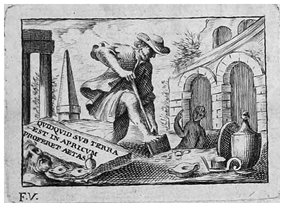
Figure 4.1 Title-page vignette for Melchiorre Cesarotti’s Italian version of Ossian (1763).
The juxtaposition of Ossian with Homer, which we noticed in Chapter 3, is not just a typological one (both were sublime original geniuses relating the heroism of the ancestors in epic form) but also a historical one. With Ossian, Scotland (and, by extension, Northern Europe in general) is rediscovering its ancestral antiquity. Until then, classical and biblical antiquity had held the monopoly on Europe’s most ancient cultural memories; that monopoly was now broken. The impact of Ossian was that Northern Europe could opt out of this Mediterranean, biblical/classical ancestral antiquity and look back on its own cultural roots. That pattern was reinforced by the fact that at the same time Nordic antiquities, rooted in the Edda and the Heimskringla, were being reactivated by Scandinavian antiquaries. The result was that for a while, the ‘Gothic’ (Scandinavian) and ‘Celtic’ antiquities of Northern Europe were being lumped together; the trend had been set by Paul-Henri Mallet’s Monuments de la mythologie et de la poésie des Celtes, et particulièrement des anciens Scandinaves (1756). By that time, the Swiss antiquaries Bodmer and Breitinger had also retrieved a manuscript of the Nibelungenlied, which they presented to the reading public as ‘Chriemhild’s Revenge’ (Chriemhilden Rache), commenting that, although it fell short of the Aristotelian rules for tragedy, it could stand, as an epic poem, beside the pre-Aristotelian epic poet Homer.3
All this dealt a huge blow to the still prevalent classicism of the time. Until then, the cultural rearview mirror had reached back to the periods of humanism and the Renaissance and then, bypassing the dark and scantily known Middle Ages, had focused on the biblical and classical periods – the recourse to which had allowed those humanists and their Renaissance successors to emerge from Europe’s medieval benightedness. Now, however, Northern Europe’s vernacular, non-classical ancestry could be traced back further along native lines towards an origin, and an original genius, of their own. And the Middle Ages themselves became something more than a centuries-long night-time of impenetrable barbarism: the Middle Ages now became a literary Pompeii, a continuum for the nation’s buried cultural heritage, with chivalric and epic heroes such as King Arthur and Siegfried the Dragon-Slayer appearing in a favourable, prestigious light. These philological discoveries not only inspired the medievalism of the Romantic century but also necessitated a new, national form of literary history writing. Literary history had to be rewritten and to accommodate in its opening chapters these newly discovered materials: ancient, heroic, vernacular.4
Cesarotti himself was quite sensitive to this ‘shock of the old’. In his annotations to Ossian and his Homer translations, he instilled a great many of Vico’s theories of cultural history, notably that each civilization articulates its cultural self-awareness, and marks its emergence into history, in a primordial Big Bang where laws, epic-heroic poems and religious myths are almost undifferentiated. These notions in turn found their way into the German translation of Ossian (which followed the Italian version rather than Macpherson’s English one). We may even surmise that it is through the intermediary stepping-stone of Cesarotti’s Ossian that Vico’s ideas began to spread in the Republic of Learning.5
Cesarotti’s Ossian presentation triggered a veritable paradigm shift in European literary history, which outlasted the brief fame of Ossian himself. It triggered a form of literary archaeology (digging around to see what submerged things could be brought to the light of day). The treasures found by Macpherson led to a gold rush; and the Klondike of that literary gold rush were libraries and archives – which, as it happened, were now beginning to make their riches publicly available.
Archaeology in the Archives
Libraries are like sponges: they soak up available books and texts circulating in the marketplace, and that ingestion is by and large a one-way process. Libraries siphon off the marketplace: they are predicated on acquiring and keeping stuff. Over the decades and centuries – as institutions, libraries can be very long-lived – dispersed materials drift from private ownership into library collections. The oldest of these are monastic libraries and court libraries, with college/university and municipal libraries following in the later Middle Ages. The public had only limited access to these.
But periodically, sponges get squeezed, and then their accumulated storage either trickles out or gushes out profusely. Sometimes, libraries are opened to the public: Florence’s Biblioteca Laurentina was opened to scholars in 1571, and Louis XIV opened the Bibliothèque du roi to the public in 1692. A major squeeze occurred with Henry VIII’s dissolution of the monasteries. The monastic libraries of medieval England were plundered by the king’s officials, and a great number of ancient manuscripts circulated among private owners (John Leland, William Camden, Matthew Parker, Lawrence Nowell, Robert Cotton) before finally settling down, once again, in other libraries: Matthew Parker’s books became the library of Corpus Christi College, Cambridge, and Robert Cotton’s library, donated to the nation in 1700, was merged with the Sloane, Harley and Royal libraries to form the British Museum’s library in 1757. It was here that an inquisitive Danish scholar, Grímur Jónsson Thorkelin, located the sole surviving copy of the Beowulf epic in 1786–1787. A first edition was published in Copenhagen in 1815. Literary archaeology was beginning to bring long-lost manuscripts back to the light of day.
At precisely this time, a great library squeeze was underway in Europe. As in Henry VIII’s day, it targeted, at least initially, monastic libraries. The process began with the suspension of the Jesuit order in the 1770s. In Lisbon, this meant that the Jesuitical Ajuda library was transferred to a new, state-run teaching institution; and it was here that the oldest surviving medieval manuscript of vernacular love songs came to light: the Cancioneiro da Ajuda. A first edition was published in Paris in 1823.
After the Jesuits, under Emperor Joseph II, the libraries of contemplative orders such as the Benedictines were targeted; then came the nationalization, by the authorities of the French Republic, of monastic and noble libraries in France; and then came the libraries, in the German lands, of those church establishments that were annexed by Napoleon or (in the great Reich reshuffle of 1803) were placed under the control of temporal lords.Footnote * In France, the Bibliothèque de l’Arsenal was formed in Paris, incorporating many former monastic libraries from the metropolitan area, and the former Bibliothèque du roi and Bibliothèque mazarine became public research institutes. In Germany, the huge libraries and archives of formerly self-governing ecclesiastical establishments were transferred to the court libraries of Vienna, Munich and Stuttgart, and as part of that transfer they were inventorized and recatalogued. The Munich court library swelled to become one of the largest in Europe, a process mirrored at slightly smaller scale at the Württemberg Library in Stuttgart. Finally, when Napoleon annexed the Papal States in 1808, even the mother of all libraries at the Vatican was placed under the bureaucratic management of French civil servants. And men of letters descended in great numbers on these newly accessible hoards, made many discoveries and laid the basis for many a scholarly career. In Munich, soon to become the capital of a Napoleon-created kingdom, the court librarian Johann Christoph von Aretin encountered, with some wistfulness, an old document about Charlemagne in the mediatized library of Freising Abbey. He published it in 1803 with a nostalgic preface linking, quite aptly, the simultaneous overhaul of ancient libraries and overthrowing of ancient monarchies.
It is now a thousand years ago that Charlemagne founded the German empire. I alert my readers to this fact, not to draw their attention to the remarkable changeability of things during that timespan, or to make them ponder the recent events which have appeared to threaten that very empire with an overthrow after its millennial existence; rather, I would mark a literary jubilee of that great occurrence, and an occasion presented itself when I could consult a remarkable ancient German manuscript in the most ancient abbey of Weihenstephan near Freising, and which with all the literary treasures of the Bavarian monasteries has been lodged in the Munich court library.6
One of the biggest finds was in Rome. The Vatican library, now under Napoleonic administration, was inventorized by a librarian called Gloeckle – notorious for his drunkenness and known in Rome as il porco tedesco – together with the literary historian J. J. Görres; what they found was the old collection of the Palatinate counts on the Rhine, which had been taken from Heidelberg in 1622 as war booty and presented to the pope. This ‘Biblioteca palatina’ turned out to be packed with long-lost classics from medieval German literature: chivalric romances, Tristan, Reynard the Fox, Lohengrin (of which Görres himself would bring out an edition in 1813) and much besides. Görres sent an open letter to the Heidelbergische Jahrbücher der Literatur in 1812, hoping to raise subscriptions for a printed edition of all these classics. Two centuries later we can still sense the breathless excitement of these thrilled bookworms.7
The European Republic of Philology
When we look at the text editions that came out between 1800 and 1840, we see that they include practically all the ‘classics’ that now feature in the opening chapters of literary history books. Besides the Portuguese cancioneiros, Reynard, Beowulf, the Nibelungenlied and Lohengrin, the list includes the French Chanson de Roland (discovered in the mid-1830s in the Bodleian library by Francisque Michel), the Russian/Ukrainian Lay of Prince Igor’s Campaign, the Dutch Legend of Saint Servatius, the Irish Annals of the Four Masters and Deirdre/Cuchulain tales, and many others. Literary histories were, quite literally, being rewritten and traced back to their vernacular and tribal origins rather than to classical antiquity.
Friedrich Schlegel gave a name to the scholars who were doing this work. Rejecting the speculative waywardness of the old-school antiquaries, he called for a systematic comparative-historical method, and in his diaries began to call this line of work philology. In doing so he revived an old Latin word for ‘erudite bookworm’, which, however, had been given a trenchant new importance in Vico’s Scienza nuova. There, Vico had compared two forms of knowledge production, one dealing with the nature of things and the other with the meaning of things. The former Vico called philosophy, the latter philologia. The underlying meaning of that term was a preoccupation with logos, the language-empowered faculty of human cogitation. Schlegel applied this in his Viennese lectures on ancient and modern literature (1812, published 1815). What makes humans different from animals, Schlegel argues, is language (with each human society developing their own language: see Chapter 6). The primary function of language, besides communication, is commemoration: the articulation of memories and their formulation into something that is more than a fleeting state of mind. Once these memories take the form of crystallized narratives recalling important events and figures from a past that is longer than a human lifespan ago, such a society has a culture: it is no longer a band of grunting cavepeople but on its way to becoming a civilization. The primal role of literature, for Schlegel, is to encapsulate collective (he calls them ‘national’) memories.
What appears important above all else for a nation’s development and indeed its spiritual existence is that a people should have great national memories, which mostly reach back into the dark times of its first origins, and which it is the great task of literature to maintain and to celebrate. Such national memories, the finest inheritance that a people can boast, offer advantages that cannot be matched by anything else. When a people finds itself exalted and ennobled in their feelings by their possession of such a great past, of such memories from ancient days, in short: of such a poetry, we must admit their higher standing in our esteem. … Remarkable deeds, great and fateful events do not suffice in themselves to gain our admiration and to sway the judgement of posterity. A nation’s value depends on its clear awareness of its deeds and destinies. This self-awareness of a nation, as articulated in contemplative and descriptive works, is its history.8
Schlegel in fact updates Vico for the new century. He combines the textual investigation of ancient literary history with a sense of comparative historical linguistics and with what he calls ‘Völkergeschichte’; as such, he is also one of the great harbingers of a new philology, which takes over from the antiquaries of the preceding generations.9
The takeover was effected by a wave of re-editions of vernacular classics. The Encyclopedia of Romantic Nationalism in Europe lists some 500 editions of ancient texts over the century,Footnote * with productivity peaks in the 1820s, the late 1830s and the 1850s (Figure 4.2). Productivity after 1860 consists mainly of re-editions of the initial harvest and of belated text discoveries in comparatively poorly archived cultural communities.
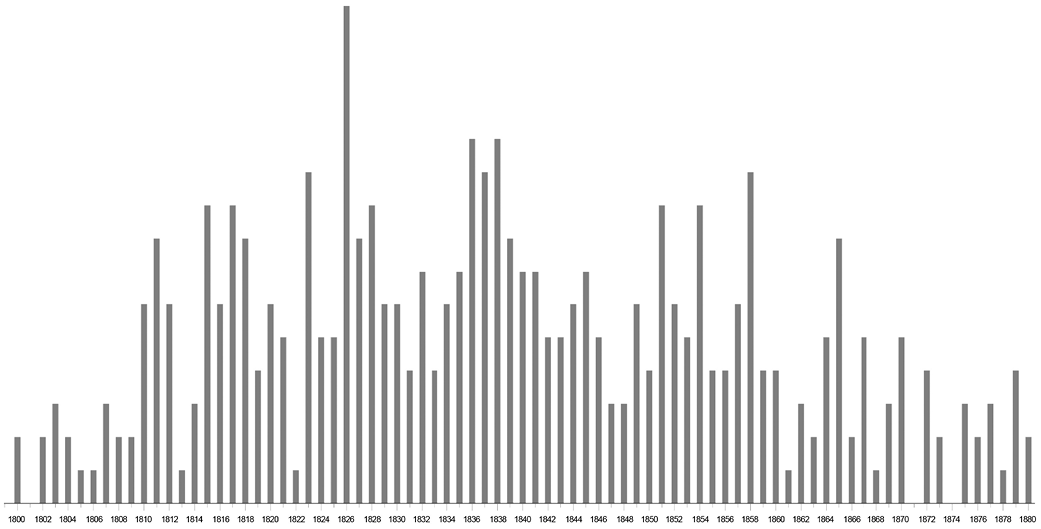
The striking thing about this rediscovery of nations’ vernacular roots was that, while it served to set off these nations against each other as each having their own, distinct cultural mainsprings, it was an almost pan-European enterprise. It was not just that German libraries yielded medieval texts to local (German) philologists, while French and Portuguese ones proved, in separate but parallel developments, fertile working grounds for their local users; far from it. Those users travelled to libraries outside their own countries (as we have encountered, or will in the following pages: Thorkelin in the British Museum, Michel in the Bodleian, Grimm in Paris, Görres in Rome, and Hoffmann von Fallersleben in Vienna and Valenciennes). Their rediscoveries were part of a development that all of them in their different countries recognized as a joint, multinational concern. The contacts between them, whether amicable or competitive, were intense, and they were keenly aware of each other’s work. The epistolary network of Jacob Grimm (13,000 letters, Figure 4.3) casts a dense, far-flung web over all of Europe; it can be confidently said that it enmeshes everyone involved in such enterprises, if not directly, then at most at two degrees of separation. Anyone who was active in philology in the nineteenth century exchanged letters with Grimm or, failing that, with someone else who did.10
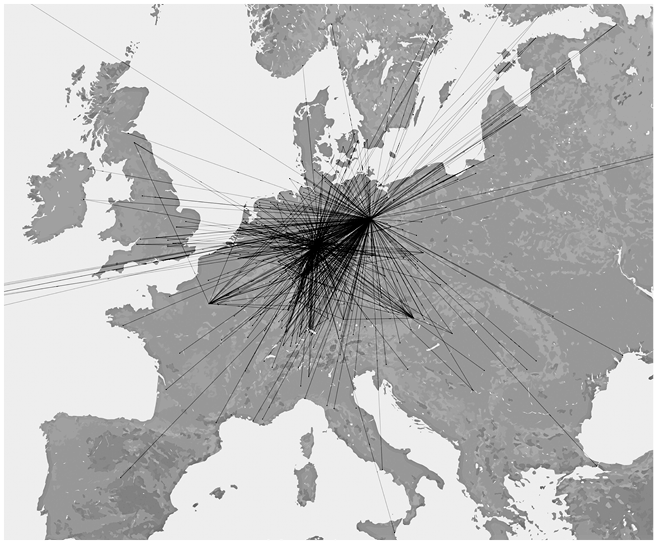
The intensity and spread of this network is deeply meaningful for our understanding of Europe as a unified intellectual space. The philologists were the last representatives of the old Europe-wide Republic of Learning. The modernization of the university system, with humanities faculties and historical and philological departments, was a development that took place all over Europe; so was the establishment of national academies, libraries and archives, along with the professionalization of whose who worked in all those new types of institutions. And while those working environments might be compartmentalized by state, the people working in them were in mutual contact, constantly exchanging information, aware of each other’s work. The fact that so many agents in a ‘cultivation of culture’ crop up in parallel forms in different countries is, then, not a matter of happenstance or parallel responses to similar circumstances: they are the systemic, Europe-wide manifestation of a transnational communicative network and a homogeneous intellectual space. Different though Europe’s states were in their governance and in their socio-economic states of development, the philologists and scholars, from Anders Sjögren in St Petersburg to Alexandre Herculano in Lisbon, were part of a single intellectual continuum.
The ‘cultivation of culture’, of which this new type of knowledge production forms part, is itself an important aspect of ‘Phase A’ of national movements as theorized by Miroslav Hroch: the phase of national consciousness-raising. The later phases (B and C) of those national movements – social demands and political activism – may pan out differently according to the local conditions of the various European societies, regions and countries. But unlike those later phases, Phase A is very strongly transnational. Musical, literary and artistic fashions spread, and so does scholarship and knowledge production. Ossian, Herder, Byron, Scott, Grimm: the influence of these names reaches far beyond their country of origin or their place of work. Nothing in this cultivation of culture takes place in national isolation.11
Literary Histories, National Identity
Ironically, the editions of national classics, supported though they were by a pan-European intellectual vogue, had a deeply nationalizing effect on their readership. Culture and literature were now seen as historical traditions carried, specifically, by the nation over the centuries. In some instances the nation-building effect was announced in so many words as a deliberate intent at the forefront of the philologists’ mind. The most famous example is the preface given by Friedrich Heinrich von der Hagen to his edition of the Nibelungenlied (Reference Hagen1807). Von der Hagen was evidently trying to come to terms with a crisis: the abolition of the Holy Roman Empire and the Napoleonic hegemony over the German lands.
[I]n present-day Germany, torn by destructive tempests, the love of the language and literature of our virtuous ancestors is alive and active, and it seems as if people seek in the past and in its poetry what is so grievously declining today. And this need for comfort is the last remaining sign of the imperishable German character, which, raised above all servility, will sooner or later always break foreign bonds and, wiser and chastened, will retrieve its inherited nature and liberty.
…Nothing can afford a German heart more comfort and true edification than the most immortal of all heroic lays, which from long oblivion re-emerges in vital and rejuvenated form: the song of the Nibelungs, undoubtedly one of the greatest and most admirable works of all periods and nations, grown and matured wholly from German life and sensibility, and pre-eminent for its sublime perfection among the admirable remains of our long-forgotten national poetry – comparable to the colossal edifice of Erwin von Steinach [i.e. Strasbourg Cathedral]. No other lay can so move and grip a patriotic heart, delight and fortify it.
Twenty-five years later, the preface of Jan Frans Willems’s edition of the Flemish Reynard tale used the occasion to upbraid his countrymen for their adoption of French culture:
Our Flemish Reynard surpasses all other poems on that theme. … in a word, it is by far the best poem (Dante’s Divina commedia excepted) which has come down to us from the Middle Ages. And it is a Belgian one! And the Belgians know it not! And the editing of it was left to Germans! … May this, my edition of the more ancient part of Reynard the Fox, contribute to the revival of our once-cherished language, at a time when our country is being inundated by French trash!12
Ancient literature is now becoming a national heirloom, and an argument in the imperative to maintain the nation’s cultural continuity. France, in its ‘culture of defeat’ after 1871, gives the most heightened examples of this nationalization of the literary heritage. The Chanson de Roland, first published in the 1830s, gained fresh national symbolism in the traumatic events of 1870–1871. Much as Von der Hagen in 1807 had taken comfort from the death-defying heroism of the Nibelungen heroes, so too in 1870 Léon Gautier turned to the stalwart Roland, killed on the medieval battlefield of Roncesvalles while covering the army’s retreat to his ‘douce France’. Gautier wrote his preface
wrapped up in sadness and with tears in my eyes, during the siege of Paris, in those lugubrious hours when we might have thought that France was in its death-throes. And so what is the Roland? It is the tale of a great defeat for France, from which France has risen gloriously and which has been fully atoned for. What could be more topical? The defeat so far is the only part we have lived through, but this Roncesvalles of the nineteenth century has its own glory … It cannot be, really, that she should die, that France of the Chanson de Roland, which is still our France … where were they, those boastful invaders, when our Chanson was written? They roamed in savage bands through the gloom of nameless forests; all they knew was how to plunder and kill.
As Gautier wrote his preface, and during the siege of Paris, Charles Lenient taught a lecture course at the Sorbonne on ‘La poésie patriotique en France’, and Gaston Paris lectured at the Collège de France on ‘La Chanson de Roland et la nationalité française’.13 When in 1875 Gaston Paris and his father Paulin Paris founded the Ancient French Texts Society, its philological aims were also presented as a ‘national enterprise’:
The Société des anciens textes français is a national enterprise … it needs the support of all those who understand the importance of tradition, all those who realize that the strongest bond keeping a nation together is piety towards our ancestors, all those who are vigilant about the intellectual and scientific standing of our country amidst other peoples; all those who love, throughout all the centuries of its history, that douce France for which one could already die such a good death at Roncesvalles.14
‘Roncesvalles’ echoes through the period of French revanchism, 1871–1914, much as Nibelungentreue would haunt German history in the twentieth century. If we want to understand what made Churchill and Stalin commission cinematic recalls of Henry V and Alexander Nevsky, here are the origins of that national historicism.
Entangled Roots
As the new philologists gradually professionalized into state-salaried archivists, librarians and professors (of history, philology, archaeology), they became civil servants of the state. The antiquaries had been gentlemen of leisure; the new professionals acquired not only a professional, academic work ethos but also a sense that their knowledge production was a service to the nation. When, in 1846 and 1847, Jacob Grimm called together two countrywide congresses of Germanisten (German philologists, including legal and cultural historians), the gathering showed how the new post-antiquarian university disciplines were now positioning themselves as a useful helpmeet to the nation’s identity. They manifested this with the same patriotic arguments that we have encountered in the later manifesto of the Society of Ancient French Texts: the importance of tradition and of ancestral piety, and the vigilant safeguarding of one’s country’s intellectual and scientific standing amidst other peoples. Concretely, the Germanisten proceedings revolved around an assertion that Schleswig-Holstein had always been, and should once again become, German; a call for the ancient Germanic liberty of trial by jury (an oblique dig at arbitrary monarchical government); and the need for a proper German dictionary. The 1846 meeting was held in St Paul’s church, Frankfurt; two years later, no fewer than thirty-one of the participating Germanisten would meet again in the same spot, this time as delegates of the 1848 Frankfurt National Assembly.15
Germany was in the forefront of the new philology, establishing benchmarks for all of Europe in many fields. The presiding genius was Jacob Grimm, together with his (slightly more withdrawn and amiable) brother Wilhelm. Nowadays known mainly as the collectors of fairy tales (Kinder- und Hausmärchen, literally ‘Wonder Tales for Children and the Household’, 1812–1815), the Grimms were also the instigators of the huge lexicographical enterprise of the ‘German Dictionary’ (Deutsches Wörterbuch, 1852–1961) and collectors of German legends (Deutsche Sagen, 1816–1818). Jacob himself edited ancient German texts and legal customs, extrapolating from the latter a generalized ethnography of public mores and their enforcement (‘German Legal Antiquities’, Deutsche Rechtsaltertümer, 1828); we will encounter, further on, his German mythology and his history of the German language and its dialects (Geschichte der deutschen Sprache, 1848). The breadth of these interests recalls the antiquarians of yore, and indeed Grimm could be prone to flights of fancy in interpreting his material; but his data management was thorough and rigidly systematic. No amateur he: he was a legal scholar by training and had been a librarian in his first employment. That he was firmly part of the new comparative-historical paradigm is manifested triumphantly in his comparative grammar of the Germanic languages, the Deutsche Grammatik (1824–1836), in which he went as far as formulating linguistic ‘laws’ (regularities in historical consonantal shiftsFootnote *). It was the first time such ‘laws’/regularities had been observed in human culture rather than inanimate nature. Among fellow philologists, this gave Grimm a scientific stature comparable only to that of Newton. In addition, he was involved in momentous political crisis moments. When Jacob and Wilhelm were dismissed as professors at Göttingen University in 1837 for refusing to acquiesce in the arbitrary autocracy of the incoming King of Hanover, they became martyrs to the cause of academic freedom, and Jacob was a delegate in the Frankfurt National Assembly of 1848.16
The Grimm-style German ‘new philology’ inspired scholars in Spain and Portugal (Hermann Böhl de Faber and Carolina Michaëlis de Vasconcellos). At Oxford, the Anglo-Saxonist Kemble and the Sanskritist Max Müller were Grimm adepts. Even French philology in France was inspired deeply by Grimm’s pupil Friedrich Diez, to the point that the manifesto of the Ancient French Texts Society complained of ‘Germany being the European country where ancient French texts are printed most’.17
Also, Jan Frans Willems invoked Grimm when he chided Belgium for its neglect of its Flemish-language roots. Indeed, the ‘Flemish Movement’ – one of Europe’s best-documented national movements – leaned heavily on German intellectual aid in its cultural insurgency against the dominance of French. A stalwart supporter of the Flemish cause was the poet-philologist and political activist August Heinrich Hoffmann von Fallersleben, a larger-than-life figure mainly known as the author of the ‘Deutschland, Deutschland über alles’ anthem (Figure 4.4).18 Hoffmann was a fervent adherent of the Grimm school of philology and made a name for himself as a canny investigator of archives and libraries (he edited two volumes of ancient German ‘treasure troves’, Fundgruben, published in 1830 and 1837). In the many places he visited on his philological quests, he invariably sought out kindred spirits who, like him, were inspired by the glories of the vernacular literary tradition. This made him a ‘networking’ mediator among the various national revival movements that these kindred spirits were involved in. A hub of these was formed around the Vienna librarian and philologist Jernej Kopitar. While on a visit there, Hoffmann joined the Stammtisch or regulars’ table at the inn where the Slovenian Kopitar gathered intellectuals from the Slavic minority populations of the Habsburg Empire – a typical instance of the intensive private and convivial networking among these Romantic scholars.19 While in Vienna, Hoffmann also got wind of the possible whereabouts of a long-lost medieval German manuscript – somewhere near Ghent, in Flanders, where Jan Frans Willems had edited the Flemish Reynard.
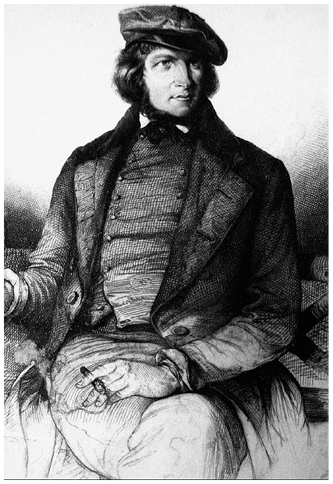
Figure 4.4 August Heinrich Hoffmann von Fallersleben in the garb of a nationally minded wandering student: Dürer-inspired hairstyle, beret, unstarched collar, tight waistcoat. The full portrait also shows a walking stick and a drinking gourd.
Hoffmann immediately hastened from Vienna to Ghent, in the process boarding one of the very first steam trains to run on the newly opened railroad north from Brussels. He and Willems then travelled from Ghent to the public library of Valenciennes, where the French authorities, who had closed down the ancient monastery of St Amand des Eaux, were rumoured to have lodged its collection of books and manuscripts. They hit the jackpot: what they retrieved was the long-lost ninth-century Ludwigslied, one of the most ancient poetic texts in vernacular German. Only a few months later, their edition of the manuscript appeared in print (Elnonensia, 1838).
Hoffmann was familiar with Flanders and its literary history; he had been editing ancient Flemish texts since 1833 in a series called Horae Belgicae. Indeed, it is to this German’s editorial work that Dutch and Flemish literature owe many of the first printed versions of their medieval heritage. But by 1838, when Hoffmann visited Ghent, the climate was shifting. We have seen how Jan Frans Willems in 1835 was already chafing at the pronounced francophilia of the newly independent Belgian state and the marginalization of Flemish culture in that state. Hoffmann was fêted by Willems in a convivial club of Flemish-minded intellectuals called, tellingly, De taal is gansch het volk – ‘The language is, entirely, the nation’ – and Hoffmann, impressionable and enthusiastic as ever, now started to support the Flemish emancipation cause with his accustomed fervour. That same year, he wrote a firebrand introduction to yet another text edition (Altniederländische Schaubühne, 1838), in which he vehemently denounced the fact that on his railway journey from Brussels, passing through Flemish territory, he had heard announcements only in French. His denunciation of the general retreat of Flemish before the hegemonic French language was a fervent endorsement for the emerging Flemish movement; though possibly it was also somewhat embarrassing.20
Hoffmann did not only feel solidarity with a marginalized language; as a nationalistic German, he felt a proprietorial paternalism towards it and wanted to place the small sister language under the protection and tutelage of the older brother. If Belgium wanted to have a bilingual regime with a metropolitan language alongside the local Flemish, he asked, why then should that metropolitan language be the alien French? Why should it not be, rather, the more closely related and more easily understood German? And he continues, in a remarkable mash-up of different variants of ‘German’ and Netherlandic:
Fleminglandish is a Niederdeutsch language and conveys just like Plattdeutsch a familiarity and understanding of High German (Hochdeutsch). If German Belgium were to give up its own language and literature, then the High German language would have a more natural, and therefore more justified claim than that non-German, French language. If at some future date the educated classes of German Belgium were to speak and write High German, and to that extent take part in the German-language literary production, then this would not be a great marvel, any more than that ever since the sixteenth century the Nether-Germans in Germany’s northern lands (the lower Rhine, Westphalia, Lower Saxony and on the hither shores of the Baltic Sea) speak and write High German, and add their intellectual cooperation to German literature as much as the inhabitants of the regions where Upland-German (Oberdeutsch) is spoken, even though Niederdeutsch has remained their native tongue.21
This tendency to fold the Low Countries into a greater German whole played itself out in other fields than mere linguistic confusion. Hoffmann had, indeed, looked on the Low Countries with an acquisitively greater-German eye since 1820; and he was the poet who in his ‘Deutschland, Deutschland über alles’ had proclaimed that his aspirational, beloved Germany should stretch ‘from the Meuse [i.e. Namur-Liège] to the Niemen [Königsberg], from the Belt [Kiel, Schleswig] to the Adige [southern Tyrol]’. That was put forward as a programme of popular unification and emancipation; but it also implied territorial expansionism at the cost of neighbouring states and linguistically mixed populations. In the event, the association with greater-German nationalism was to prove a mixed blessing for the Flemish movement. German nationalists supported Flanders as a bulwark against encroaching French culture and repeatedly (in 1848, and fatally in 1914 and 1940) made the Flemish cause their own. This meant that after 1918, Flemish activism was tainted with the notion of uncivically betraying, with the aid of the German military occupiers, their country, Belgium; and ever since 1944, the Flemish movement has carried the guilty burden of its wartime sympathy, and widespread collaboration, with the Nazis.22
There was one great irony in this. What Willems and Hoffman found in the Elnon manuscript in Valenciennes was not just the most ancient contemporary copy of a vernacular German poem but also the most ancient contemporary copy of a vernacular French poem: on the same page as the ‘Ludwigslied’, and written in the same hand, is the ancient French ‘Hymn to Saint Eulalie’. The nearby monastery of St Amand, where the manuscript was produced and was kept until the French Revolution, had been founded in Merovingian times in the transition zone between the German-speaking and the Latinizing branches of the Frankish tribes. At that period and in that area, proto-German and proto-French coexisted and intermingled. Their peaceful literary coexistence in this ninth-century manuscript is a quiet reproach to the growing national chauvinism of the nineteenth-century philologists. A century after the manuscript’s discovery, its home region, between Ghent and Valenciennes, was torn up by the French–German gash of the Western Front.
Contested Heritage
In providing the modern nation with its ‘own’ cultural heritage, the past was not so much rediscovered as reappropriated. That reappropriation was to a large extent anachronistic, since the materials claimed as a national heritage themselves dated from a prenational (feudal or even tribal) past. That one should feel proprietorial towards one’s heritage is to a certain extent understandable. Modern countries such as England and Egypt may cherish and feel stakeholders in the ancient monuments located on their soil, such as Stonehenge and the Pyramids of Giza; in that privileged sense of being uniquely associated with them it matters little that the builders of those monuments had no familiarity with the country’s modern inhabitants. But the literary heritage presented a problem. Manuscripts as ‘portable monuments’ were transnationally dispersed across libraries and discovered by a roaming band of philologists; and they were written in idioms that were the forerunners of a palette of various modern languages current in different countries.23 As a result, they could become contested among different appropriations. The successor traditions to these medieval texts had fanned out into groups of different nationalities, each of which felt that they, and they more than any other, were the true heirs.
Thus Thorkelin thought that the Beowulf text he had discovered was a Danish poem, for the action is located along the Saxon coastlands that were Danish territory around 1800; nearby coastal tribes that the poem mentions are the Frisians, Angles and Geats, all of them known to Danish antiquarians. Small wonder that Thorkelin presented Beowulf as ‘a Danish poem in the Anglo-Saxon dialect’. Beowulf was thereby placed under a double mortgage: a scholarly one (since Thorkelin’s version was error-ridden) and a political one (in that the text was claimed by German, Danish and English scholars as culturally theirs). It took decades of debate for the English view to become dominant: that the Angles and Saxons, having migrated across the North Sea, had become the tribal ancestors of England, and that Beowulf was an Old English poem recalling events from before the Anglo-Saxon migration. That debate was further muddied by German philologists who argued that, since the Saxons were a German tribe, this was in fact a German poem casting light on the mores of the Saxon contemporaries of Charlemagne. In 1839 and 1859, editions appeared calling Beowulf Das älteste deutsche, in angelsächsischer Mundart erhaltene Heldengedicht and Das älteste deutsche Epos. The subtitle of the 1839 edition (by Heinrich Leo) offers full disclosure as to its approach: ‘The most ancient German heroic poem, in the Anglo-Saxon dialect, considered in its contents and in its relations to history and mythology: A contribution to the history of the ancient German mentality’. The preface to the 1859 edition (by Karl Simrock, a Grimm adept) voiced sentiments such as this: ‘As has already been pointed out, the Beowulf, though handed down in Anglo-Saxon, is in its foundations a German poem. In addition, the following comments clarify that its plot-line (Mythus) is a German one, which has left many traces amongst us. All this increased my wish to reappropriate this poem into our language.’ Simrock hopes ‘to bridge a thousand-year old division and to renew for this poem, that emigrated away along with the Angles and Saxons, its native domicile [Heimatrecht] amongst us.’ It is no coincidence that these editions appeared at a time when a strenuous German–Danish struggle was underway over ownership of Schleswig-Holstein – including precisely the coastlands where Beowulf was set.24
Within England, the assertion of Beowulf’s Englishness did much to strengthen a sense of Anglo-Saxon roots, rejecting the country’s other cultural source traditions – Celtic and Norman French. The marriage of Victoria, from the Hanover dynasty, to Albert, Prince of Saxe-Coburg-Gotha, symbolically enshrined this sense of Saxon–Germanic affinity at the apex of society. Intellectuals such as Carlyle vociferously expressed a ‘Saxonism’ that dominated the mid-century. It was even projected across the Atlantic Ocean, where the ideal type of the WASP (White Anglo-Saxon Protestant) shored up the ideology of manifest destiny and a sense of a westward-expanding Anglo-Saxon world empire. The echoes of that ideology would inform Winston Churchill’s notion of the north Atlantic community of ‘English-speaking peoples’.25
The effect of these contesting appropriations in fanning national rivalries and national chauvinism is shown best by the most protean literary heirloom of them all: the satirical fables around Reynard, the canny, Machiavellian fox, who outwits the tooth-and-claw aggression of Isengrim the Wolf, the lumbering overbearing bearishness of Bruin the Bear, and the harsh arrogance of Noble the Lion, reigning monarch of the animal kingdom. The poem was known from early modern popular ‘chapbook’ printings in Dutch, in Low German and in English, and wily foxes were widely proverbial and featured in the fables of La Fontaine. The fables’ literary standing had been raised by Goethe’s new verse rendition, Reineke Fuchs, and French antiquarians had published early French versions – possibly the very oldest ones. It looked as if the French version was the original one, from which later versions had branched off.26
But when a young Jacob Grimm in 1805 was on a bibliographical mission to the French National Library (as an assistant to his mentor, the legal scholar Savigny), he could not help wondering at the fact that even in these oldest French versions, the animal’s names tended to sound German: Isengrim, Reynard’s wife Hersinde, even Reynard himself, the sarcastically named ‘Reinhart’ (pure-heart). And so Grimm began to hunt for the occulted Germanic roots of this Roman de Renard (much as Simrock would later discern Beowulf’s fundamentally German Mythus underneath the Anglo-Saxon language). His hunch was that there had been a lost prototype somewhere in the Flemish–French borderlands (where the tale is set, and where Hoffmann von Fallersleben and Willems would, thirty years later, find the German–French Elnon manuscript). He began to ply Dutch colleagues at Leiden with requests for information. Shortly after, the library of Comburg Abbey was transferred to Stuttgart, and in the process a manuscript was found that contained a previously unknown early Flemish version of the Reynard fable.
Grimm’s fox-hunt would last almost thirty years; only in 1834 did he bring out his majestic text edition Reinhart Fuchs, with a 200-page introduction to the High German text (discovered by Gloeckle and Görres in the Vatican Library) and other versions discovered in the former monastic library of Comburg, the former episcopal library of Kolocza, and elsewhere. It was a feisty assertion of the seniority of the German Reinhart over the French Renard. The French staked their claim with Dominique Martin Méon’s Roman de Renard (1826), followed by Paulin Paris’s Les aventures du maître Renard of 1861. The fox-hunt turned into a trench war.
That battle was also between two modes of editing ancient texts, ‘diplomatic’ or ‘critical’. The French editions were ‘diplomatic’ in that they based themselves on the best and most ancient available manuscript, noting marginally how other versions diverged from it; and this played out in favour of French seniority. Grimm’s way of editing was, however, ‘critical’, something he had learned from the renowned classical philologist Karl Lachmann. This method compared the available versions on the basis of their mutual resemblances and differences and schematized these variants into a type of ‘family tree’ of forking paths, known technically by the Latin term stemma. The stemma guided the philologist back towards the common root of all these diverging branches, an Urtext or underlying text-type that, while it might not have been expressed as such in any single version, formed the best starting-point for them all. And as it happened, the Urtext or Mythus for Reynard and Beowulf would turn out to be German (or Germanic, which for Grimm and his adepts – Hoffmann, Simrock – amounted to much the same thing).27
The choice between diplomatic or critical editing was also generational: the diplomatic mode harked back to the antiquarian tradition, while the critical mode was philological. And in the French–German philological bickering, it also became nationalized. The French denounced the obscurantist flim-flam of the German X-ray approach to texts; the Germans denounced the facile and superficial French obsession with appearances. The reader may discern here, once again, the ethnotypes that suffused the war propaganda of Thomas Mann (Chapter 2). Even scholarly method became an expression of national character and of national incompatibilities.
Over the century, the Franco-German appropriation war ground on. One edition followed another, and contemporary national values were projected onto the medieval material itself. Reynard himself was fitted into the prevailing ethnotypes. For the French, Renard was a nimble, sardonic charmer full of Gallic wit, and the episodes involving gross or obscene acts had all been added to the charming French original by vulgar German elaborators with their coarse sense of harsh, low-comic pranks. For Grimm, Reinhart was a moralistic Frankish animal epic harking back to the prehistorical days of tribal-totemic belief in animal magic, and the gross or obscene episodes had been spliced into it by oh-là-là French pornographers, frivolous and immoral as the French are known to be.
The tendency of philological traditions to fission along national lines is illustrated by the mid-century epistolary networks of Ernst Moritz Arndt (for most of his life professor at Bonn) and the Paris-based writer and inspector of antiquities Prosper Mérimée (some 4,000 letters in all, Figure 4.5); both were contemporaries of Grimm. Arndt’s network faces north-east, while that of Mérimée faces south-west. Between Paris and Bonn there is a dead zone of non-communication, running from London and Valenciennes/Saint-Amand-les-Eaux (where the Elnon manuscript had been written) to Venice, in an uncanny foreshadowing of the Western Front in 1914–1918.
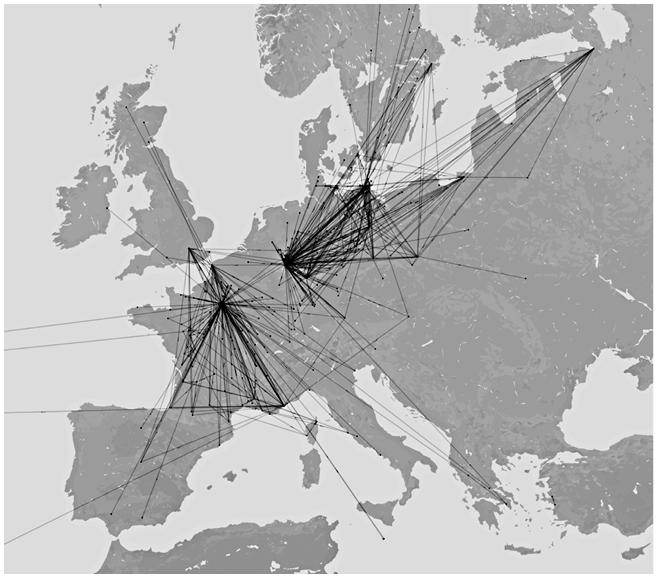
Figure 4.5 The differently oriented correspondence networks of Ernst Moritz Arndt and Prosper Mérimée.
In this ‘ground zero’, Flanders, a very early Reynard version was discovered, written in, of all languages, Latin. But that did nothing to defuse the terms in which the contesting appropriations were now fought. Grimm kept on questing for older Netherlandic-Germanic versions antedating the ones that were coming to light. In 1830, though, when Flanders seceded from the Netherlands, he gave up hope; for the new state, Belgium, exhibited a strong affinity with France. Grimm (a cantankerous character at the best of times) voiced bitter resentment towards the stolid indifference of the Dutch and the traitorous francophilia of the Catholic Flemings, which now seemed to preclude any possible discovery of a Flemish Ur-Reynard. In a review of 1830 he vented his spleen at the Belgian secession:
The Catholic, formerly Spanish, then Austrian Netherlands offer a warning example of how the neglect of the native language weakens all love of the fatherland. Any nation that surrenders the language of its ancestors is degenerate and without firm footing. The present revolution in the Netherlands cannot be attributed to a properly patriotic movement but merely reflects the long-established influence of French manners and the plotting of priests. Common folk from Antwerp to Brussels and Ghent still speak Netherlandic. The almost-extinct nationality of the Belgians might have been rekindled by closer ties with Holland; but the tremendous torrent of events now threatens to sweep away all that remains of it.28
These reproaches were later to be quoted by none other than Jan Frans Willems when he edited his Flemish Reynard in 1836, praising the fox fable as the crown jewel of Netherlandic literature and denouncing its obscurity as a standing reproach to the hegemony of French in Belgium. That edition, of the long-lost Flemish version, presented a double irony. Grimm’s own Reinhart Fuchs, appearing after thirty years of painstaking preparation in 1834, proved to be still premature; for in 1835, that selfsame Belgium that Grimm had accused of a lack of true patriotism had acquired an important manuscript from the estate of a British bibliophile, which contained, among other foundational Flemish texts, the long-sought-after Reynaert. The boost that this gave to Flemish self-esteem in the new Belgium can be imagined; and Grimm embraced Willems as the long-sought philological soulmate and his fellow worker in the Low Countries. Willems died soon after Hoffmann von Fallersleben’s visit, however, and Grimm dedicated a heartfelt eulogy to this absent friend when he opened the Germanisten Congress in 1846.29
Reynaert has ever since remained a trump card in the Flemish rejection of francophone dominance in Belgium, and the character attributed to him here was again a projection of a national self-image. Reynard as framed in Flemish terms is beset by many authoritarian figures claiming dominance over him; unable to challenge their brute force, Reynard instead uses his wiles as a trickster to outwit them. The fox continued to be all things to all nations competing for his appropriation.
The Nation Goes Epic
These foundational texts have all become hyper-canonical. Beowulf, the Chanson de Roland, the Nibelungenlied, Reynaert, the Lay of Prince Igor’s Campaign: they take pride of place in the opening chapters of national literary history books and anthologies, they form part of national school curricula and they have, in the root sense of the word, been canonized as being foundational to their nations’ cultural-historical presence.
The hallmark of canonicity is the fact that a text is regularly adapted and recycled into different updated retellings, often in different genres or media (‘remediation’). The public cannot, literally, get enough of it, and besides the many reprints and new editions (spurred on by professional rivalry between ‘diplomatic’ and ‘critical’ editors and by the discovery of additional manuscript fragments), there were numerous literary spin-offs: retellings in contemporary language for the general public or for juvenile readers; or adaptations as stage plays, as operas, as novels and, in the twentieth century, as films and graphic novels. Britain rediscovered King Arthur, King Alfred and Queen Boudicca. In post-1870s France, Sarah Bernhardt starred in a patriotic theatre play, La fille de Roland; in Germany, the Nibelungen generated some forty poetic and theatrical adaptations, culminating, of course, in Richard Wagner’s operatic Ring cycle; in 1916 a volume of propagandistic war poetry was published under the title Nibelungentreue: Kriegsgesänge, signalling a robust politicization of the epic for nationalistic and militaristic purposes.30
It was in the nineteenth century that the notion of a ‘national epic’ became current; previously, epics such as the Iliad had been seen as simply classical and nationally unspecific. By the 1840s, it became commonplace to see each literary tradition begin with an epic foundation. Goethe had wryly pointed this out: ‘Each nation owes it to its self-esteem to possess its own epic’. As the Oxford English Dictionary (1933 edition, under ‘Epic’) puts it:
The typical epics, the Homeric poems, the Nibelungenlied, etc., have often been regarded as embodying a nation’s conception of its own past history, or of the events in that history which it finds most worthy of remembrance. Hence by some writers the phrase national epic has been applied to any imaginative work (whatever its form) which is considered to fulfil this function.
For Jacob Grimm, the peculiar power of the epic was that it makes no concessions to the modern reader, forcing that reader into mental time-travel to the days of yore:
Lyrical poetry, arising as it does out of the human heart itself, turns directly to our feelings and is understood from all periods in all periods; and dramatic poetry attempts to translate the past into the frame of reference, the language almost, of the present, and cannot fail to impress us when it succeeds. But the case is far different with epic poetry. Born in the past, it reaches over to us from this past, without abandoning its proper nature; and if we want to savour it, we must project ourselves into wholly vanished conditions.31
‘Projecting oneself into wholly vanished conditions’ (uns in ganz geschwundene umstände versetzen) – that imaginative time-travel into the past and directly experiencing it as it must have felt at the time: that may provide us with a pithy definition of historicism, which the rediscovery of epic did much to engender. The remediations and adaptations should also be understood, then, as bridges across the historical gap between the epic Then and the national Now.
It is still a sobering surprise to realize that these national epics had dropped out of cultural memory more or less completely for so many centuries and that their currency as texts was achieved largely in the post-Napoleonic decades. The presentations of the oldest texts in the national canons are mostly a product of, or at least initially marketed as part of, the Romantic movement; and the philological bookworms were as much part of that Romantic movement as the idealistic poets.
Those poets did their nationally epic thing, too – Romanticism wasn’t exclusively about the lyrical intuition of Higher Things, it was also about the epic evocation of Olden Things. Foundational epics were freshly composed as part of a Romantic-national literary agenda. In many cases, these newly written epics originate in nations experiencing an existential crisis. Jan Frederik Helmers’s De Hollandsche Natie (1812) dates from the Netherlands’ Napoleonic occupation and annexation. In Sweden, the national poetry of Esaias Tegnér was fed by regrets about that country’s loss of its Finnish possessions (Svea, 1811; Frithiof’s Saga, 1825). Similarly, there are various mythical and historical plays and poems by the Danish national poet Adam Gottlob Oehlenschläger, starting with Vaulundur’s Saga (1805) and culminating in the heroic-epic poem Hrolf Krake of 1828. As in the Dutch case of Helmers, Oehlenschläger’s work reflects a nation with a great past sinking to second-rank status: Denmark lost its Norwegian dominions after Waterloo and saw Schleswig-Holstein threatened by an increasingly powerful German neighbour.
Whereas Dutch, Swedish and Danish were the established official languages of long-standing sovereign states, national epics were to become particularly popular in languages newly emerging as literary vehicles, particularly in Central and Eastern Europe. In a number of emerging literatures, in languages until then seen as uncouth dialects, poets were inspired by these discoveries and by the taste of literary historicism to become their nations’ Homers. The Slovak language, overshadowed on all sides (in Bohemia by Czech and German, in Hungary by Magyar), declared its presence in the epic poems of Jan Hollí (Svatopluk, 1833; Cirillo-Metodiada, 1835).Footnote * Jan Kollár, another Slovak, though writing in Czech, produced the remarkable sonnet cycle Slavy dcera (‘The Daughter of the Goddess Slava’, 1824), which has formed a national-Romantic inspiration to all Slavic languages and literatures.
For the Hungarian, Polish, Slovene and Ukrainian languages, likewise at that moment outside the repertoire of established literary praxis, the verse epics Zalan futása (‘Zalan’s Flight’, 1823, by Mihaly Vörösmarty), Konrad Wallenrod (1828, by Adam Mickiewicz), Krst pri Savici (‘The Baptism on the River Savica’, 1836, by France Prešeren) and Hajdamaky (‘The Outlaws’, 1841, by Taras Shevchenko) became the very foundation of subsequent national literatures. What is more, they were written as such. The very choice of a marginalized minority language for an ambitious and extensive heroic poem is in each of these cases already a blatant cultural–political signal. They were national both in theme and in ambition – in that the poet dealt with a foundational episode in the nation’s early history. The case of Prešeren’s Baptism on the Savica may stand for the others: it deals with the Slovenes’ transition from ancient paganism to Christianity. (Figures straddling the transition from tribal paganism to Christianity were a favourite Romantic theme: the Gaulish princess Norma in Bellini’s 1831 opera; the Lithuanian Princess Birutė; the Batavian maiden Hermingard in Aarnout Drost’s 1832 novel.) Prešeren’s poem describes the defeat of the last pagan chieftain at the hand of the Christian armies and his discovery that his even his beloved has become a Christian; written in the metre of Slovene folksong, the poem traces a crucial and tragically dignified moment of transition in the nation’s collective history. It is this quality that gives it its epic character. In turn, this epic scale has ensured for the poet (a cosmopolitan intellectual, whose literary sensibility resembles Heine’s ironic Weltschmerz more than Macpherson’s sublime sentimentalism) his stature as the founding father of his country’s national literature. Prešeren’s statue is prominent in the central square of Slovenia’s capital Ljubljana.
In this process, the epic slipped its antiquarian moorings in the ‘manuscript found in an attic’ mode. Indeed, not all nationalities in Europe had manuscript-stocked attics, or ancient libraries or archives with dormant primordial texts. What they had instead was a thriving oral-performative culture, and alongside the national epic rose the oral epic. That will be the topic of Chapter 5.
Heroic Balladry
The philological project of editing epics from ancient manuscripts was flanked by a concurrent vogue for materials taken down from oral performance. The prototype appeared in Vienna in 1814. It was a Serbian anthology, sponsored by the Vienna court librarian and Slavic philologist Jernej Kopitar (whom we encountered in Chapter 4 as a contact of Hoffmann von Fallersleben). Kopitar had taken a young man under his wing who had taken refuge in Vienna from the anti-Ottoman warfare in the Pashalik of Belgrade. This man, Vuk Karadžić, had the unique advantage of being both highly literate and intimately acquainted with the oral literature traditions of his home region. At Kopitar’s behest, he published a collection of Serbian folksongs, Srpske narodne pjesme, in 1814.1
In this initiative Kopitar took his cue from Jacob Grimm, who was beginning to make a name for himself as a philologist and as a collector of oral literature. Jacob and Wilhelm had tangentially collaborated on the seminal collection of German balladry Des Knaben Wunderhorn, edited by Achim von Arnim and Clemens Brentano. The Grimms’ collaboration with Arnim/Brentano’s family–friends network (the so-called Bökendorf Circle) had continued when the brothers followed through with that benchmark of benchmarks: their collection of folktales and fairy tales (in the original: Kinder- und Hausmärchen, ‘Wonder Tales for Children and the Household’, 1812–1815). The Grimms were shifting the frame in which oral literature was collected and read. Formerly, folk literature had been read sentimentally, as representing the artless, homely pastimes of naive but virtuous rustics; but starting with the Grimms, such texts were also read ethnographically, as the unmediated cultural expression of the unlettered masses, who, thanks to their lack of exposure to polite learning, had kept their native cultural heritage intact in unadulterated, authentic, albeit rough-hewn form.
Grimm had met Kopitar after joining the Hessian delegation to the Congress of Vienna in a secretarial capacity. In Vienna, Grimm had elaborated his new, more ethnographical approach to folk literature in a convivial circle that met during the Congress in 1814: the ‘Wollzeiler Circle’. Its members had drawn up a questionnaire to be distributed to wide circles of possible respondents, developing a similar one that had already been drawn up by Brentano for the Wunderhorn project in 1806.Footnote * Karadžić’s anthologizing work was sparked off when Kopitar presented that questionnaire to him.2
In turn, Grimm was fascinated by this voice from what was still the Ottoman-dominated part of Europe. He went to the trouble of learning Serbian, entered into direct correspondence with Karadžić, reviewed his work and published a translation of his Serbian grammar in 1824.
Authentic and rough-hewn: that is what Karadžić’s collection certainly was. It came from a part of Europe where late-Enlightenment, genteel sentimentalism was thin on the ground. Instead, there were violent altercations between local warlords and outlaws and their capricious and harsh Ottoman rulers. A follow-up volume appeared in 1815, when the second Serbian insurrection against the Ottomans broke out, and in it were hard-bitten martial ballads based on recent events. Grimm was delighted with this unexpected contribution to his folkloric–philological agenda from an unexpected corner of Europe. He would support a new expanded edition that appeared in Leipzig in three volumes in 1823–1824.
The combination of linguistic and folkloric interests characterizes both Grimm and Karadžić. The latter would become the ‘Serbian Grimm’ and would go on to collect further oral material. He would also reform the Serbian language and alphabet, lessening its dependence on the old liturgical language and adapting it to modern circumstances and usage.
The Serbian heroic balladry collected by Karadžić reached a European readership on the wings of the Serbian insurrection; meanwhile, Byron had published his stirring poems of passionate violence in Europe’s wild, Turkish-dominated outlands. The Srpske narodne pjesme were just that: songs of the nation (narod), nothing like the juvenile and domestic (Kinder- und Haus-) context where the Grimms’ fairy tales came from.
The frontispiece to the 1824 Leipzig edition of Karadžić’s collection (Figure 5.1) shows the setting for this type of oral-performative literature: a seated singer with his one-string fiddle (gusle) to accompany his rhythmically chanted ballad. He stares into the middle distance in something that is either concentration, a poetic ‘flow’ or a Romantic rapture that, Ossian-style, captures the collective imagination; we are reminded, incongruously, of the painting in which an impassioned Rouget de Lisle sings ‘La Marseillaise’ before enraptured listeners (Figure 1.3). The ‘abstracted staring gaze’ can be encountered repeatedly in many illustrations in this book, from Ossian to Liszt. In most cases it signifies inspired rapture. In this specific instance it may also connote blindness. Vuk Karadžić’s main informant, the guslar Filip Višnjić, had gone blind at an early age as a result of smallpox. In many societies, the visually impaired made a living as performing poets/musicians. Their physical blindness was, in the popular imagination, often linked to their literary gifts, for example in Irish folklore (Ó hÓgáin Reference Ó hÓgáin1982). The blindness of Homer and Tiresias added classical prototypes; Višnjić became known as the ‘Serbian Homer’. Around the guslar (to return to the frontispiece of Karadžić’s anthology), and under the tree of what is apparently a village setting, various representative members of the community (different genders and ages) are listening to his song, united in their rapt attention as an ‘affective community’; one of them is a martial young man with a rifle.
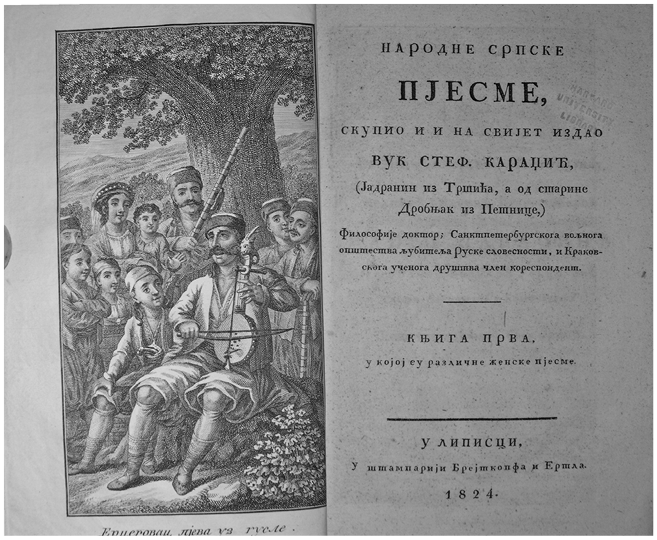
Figure 5.1 Frontispiece and title page of the 1824 edition of Vuk Karadžić’s anthology.
This picture of the performer as, literally, the voice of his narod, reciting the traditional literary heritage for a contemporary audience, quickly became iconic. In part it suited the post-Ossianic idea of the inspired poet as the voice of his nation – the guslar shown here is the modern equivalent of Ossian, and both are ‘bards’. There was also a contemporary context for this appeal: in these years there was a widespread philhellenic interest in the klephtic songs of insurrectionary Greece, and it had repercussions far afield. Claude Fauriel’s philhellenic Chants populaires de la Grèce moderne appeared in 1825; and that book in turn inspired the Irish collection of James Hardiman, Irish Minstrelsy (1834), which retrieved anti-English balladry from the preceding century. Hardiman prefaced it with a firebrand introduction, citing Fauriel’s example and arguing that the position of Ireland under British rule was similar to that of Greece under Turkish rule – explosive stuff, in a year that saw Athens established as the capital of an independent Greece.3
Popular songs, including those that were folkloristically retrieved, became the public carriers and platforms of popular discontent and national aspirations. The outlaws and rebels (hajduks) celebrated in these songs became Byronic hero-figures with a nationally inspiring value. One century later, the guslar was cited as the most important cultural claim to independence for the southern Slavic nations. In 1917, when American geographers were preparing the Paris Peace Conference and deliberating how to apply the principle of the ‘self-determination of peoples’, the echoes of Karadžić’s frontispiece of 1822 were still reverberating in a book with the indicative title The Frontiers of Language and Nationality in Europe:
The pjesme voices Serbia’s national aspirations once more in the storm and stress of new afflictions. Its accents ring so true, that the geographer, in search of Serbian boundaries, tries in vain to discover a surer guide to delimitation. From the Adriatic to the Western walls of the Balkan ranges, from Croatia to Macedonia, the guzlar’s ballad is the symbol of national solidarity. His tune lives within the heart and upon the lips of every Serbian. The pjesme may therefore be fittingly considered the measure and index of a nationality whose fibre it has stirred. To make Serbian territory coincide with the regional extension of the pjesme implies the defining of the Serbian national area.4
The European spread of this heroic balladry ran through the conduit of the works of a young woman of letters, Therese von Jacob (her pen name, based on her initials, was ‘Talvj’), whose translation of Volkslieder der Serben appeared in 1825. Talvj had been recommended to Kopitar and Grimm by none other than Goethe himself, who used the occasion to recall that he himself had, in fact, already translated one of these ballads forty years previously.
That was part of what made Goethe so awe-inspiring and so irritating to his younger literary contemporaries: the fact that he had always already been there and done all that – all those things that were subsequently being discovered as new and exciting. Since his debut in 1770s he had consistently been ahead of the literary curve; and in 1775 he had, in fact, translated a southern Slavic ballad, Hasanaginica.
Flashback: Ossian in the Balkans
The ballad in question, on the tragic fate of the wife of the warlord Hasan-Aga, had been noted down in 1770 by a Venetian traveller and geographer, the priest Alberto Fortis. Fortis had undertaken a field trip to Dalmatia, the eastern coastlands of the Adriatic sea, then under Venetian control but adjacent to Ottoman-dominated territory. His Viaggio in Dalmazia (1774) contained, next to the description of cities and regions, the full text of Hasanaginica, in the original Croatian with an Italian translation on the facing pages. It caused a furore. Goethe got hold of a German prose translation and cast it into metrical form, using the ten-syllable metre that was also used in the original Croatian ballad. The text was published in Herder’s classic edition of multinational Volkslieder (1778, later retitled Stimmen der Völker in Liedern, ‘the voices of nations in their songs’). From there, Hasanaginica went viral across Europe, with versions in English, French and Russian being penned by the likes of Walter Scott, Prosper Mérimee and Alexander Pushkin.5
This first wave of European popularity was as yet in the sombre, Ossianic, sentimental mode that dominated the 1770s. Indeed, Ossian’s shadow is all over Hasanaginica’s reputation and spread. Fortis was in fact an associate of Cesarotti, the Vico-inspired translator of Homer and Ossian, and his Dalmatian voyage had been sponsored by the great Scottish champion of Ossian’s authenticity, Lord Bute. (The 1778 English version of Fortis’s book, Travels into Dalmatia, is dedicated to Bute.). It looks as if an Ossianic bug had spread in Venice: here, too, antiquaries were hunting for ancient, lost literary treasures. Like Edinburgh, the Venetian metropolis had wild highlands in its geographical backyard, inhabited by a population that seemed to Venetians alien and primitive. Situationally, the Scottish model that had led to the discovery of Ossian could inspire fieldwork in the Dalmatian uplands. But fieldwork it was indeed: not a search amidst library shelves for lost manuscripts, but (as with Macpherson) a voyage into remote lands to note down orally performed traditions.
The Ossian model could obviously inspire folklore research as well as philology. Indeed, the scandal of Ossian had the effect of breaking down the division between literary epic and oral tradition. Initially, Ossian was exposed as fraudulent because written originals were not forthcoming and people were unwilling to credit ‘savage Highlanders’ with maintaining, orally and over many centuries, an epic tradition. But that crux could be turned on its head. If indeed Ossian was not the ‘northern Homer’ he had been reputed to be, could it not be that Homer himself had been a sort of ‘Mediterranean Macpherson’? Was not Homer’s own method closely akin to what Macpherson had done – cobbling together oral ballad material into an epic whole? Were there not oral-performative (‘rhapsodic’) sources providing Homer with the building blocks of his Iliad and Odyssey? Was Homer not the compiler, rather than the creator, of his epics? This was the notorious ‘Homeric question’ that hit Europe in the 1790s; it had been anticipated by Herder’s reflections on the authenticity of Ossian and by the discovery of Hasanaginica.6
By the early nineteenth century some consensus had been reached that ‘foundational’ epic texts were perhaps not that Big Bang out of nowhere that they had previously been imagined to be: that they were the crystallization of an earlier, orally circulating body of heroic ballads sung by ‘rhapsodes’, not unlike the guslar on the title page of Karadžić’s collection. The Golden Age of ancient literature was preceded, as Thomas Love Peacock put it, by an Iron Age. This hugely raised the status of balladry and oral literature. Philologists began to look for the moment when national literatures (in written, formalized form) emerged from their oral-formulaic, folkloric run-up; contemporary performances such as the Serbian ones were a case in point and were aligned with other, older cases such as the medieval Provençal troubadours. Claude Fauriel, first professor of littératures étrangères at the Sorbonne, studied the origins of both troubadour poetry and oral Greek balladry (spawning his philhellenic Chants populaires de la Grèce moderne of 1824). In both cases, he was trying to chart the transition from oral-performative to written-literate stages of national literatures.7
No wonder the framing of oral literature shifted from sentimental to national-historicist, as the two-stage reception of Hasanaginica shows. Forty years after Goethe, Karadžić’s collection included the Hasanaginica once more.Footnote * By now, however, the frame in which those texts were read was no longer sentimental and Ossianic; it had shifted to a Byronic register, with its harsh evocation of violent passions under Ottoman tyranny. In addition, the status of oral literature had shifted as well. The Grimm brothers by 1812 had begun to consider fairy tales as very serious business indeed: the last vestiges of ancient legends and sagas (much as Macpherson had seen his Highland balladry as the broken remains of an ancient epic). And the collecting of oral-performative, traditional literature became a twin discipline to the textual scholarship of philology. The Grimms and Karadžić were players in both fields. The idea of ‘oral epic’ was born – something that, like ‘national epic’, might have seemed a self-contradictory term a few decades previously.
The Nation as Author
Epic and oral literature had in common anonymity and an unclear provenance. It was this that opened up the suspicion of forgery. (More on that in Chapter 7.) When Prosper Mérimée, in his collection La guzla (1824), cashed in on the vogue for the balladry of Balkan outlaws, he included, among his French translations, some counterfeits of his own as well as a patently fabricated story of how he had ‘noted these down’ from oral recitation; Hoffmann von Fallersleben later on ‘edited’ traditional Flemish ballads that turned out to have been his own confections. Both men later tried to brush these off as mere playful Romantic pranks.8
Another way of dealing with this murky uncertainty was to proclaim the diffuseness of the provenance as a virtue: ancient epics were the product of the nation’s collective imagination at the very moment when it was beginning to find a voice of its own. The ancient bards, rhapsodes and myth-tellers were mere mouthpieces of the nation at large, and their anonymity was therefore fitting. The Grimms went so far as to argue that the medieval chivalric texts with known authors (Wolfram von Eschenbach, Gottfried of Strasbourg etc.) were already beginning to lose the vigour of the truly archaic, authorless texts, were beginning to pander to the courtly taste of the elite and were exposed to the pernicious influence of a French-based, Europe-wide taste for romance rather than rough-hewn, native epic.9
For those cultural communities that had historically been unable to build up a textual documentary archive of their own, or whose literary output had obtained no access to the printing press, it was a good second best to have access to heroic balladry and oral epic. Such literature documented the vigorous character and ancient traditions of the nation, even in the absence of written documentation. The ripple effects of the Grimms’ oral researches spread far and wide. In Russia and its Baltic provinces, byliny (ballads) and skazki (folktales) were a matter of interest (collected by Pavel Rybnikov and by Alexander Afanas’ev in the 1860s). In Ireland, Norway, Finland, the Baltic, the Balkans, the work of the Grimms was picked up. Inspired by the Grimms, Thomas Crofton Croker collected Irish fairy legends, which the Grimms then translated into German as Irische Märchen. In Norway, Asbjørnsen and Moe collected their Norske Folkeæventyr. But nowhere was the impact as powerful as in Finland.10
Long a Swedish province, Finland had been ceded to the Russian Empire in 1811, and Finnish culture was better off as a result of the transfer. Its cultivation was allowed under Russian rule because this weakened the old ties with Sweden. The local elite, traditionally Swedish-speaking, turned to Finnish as a way out of the predicament that, no longer Swedish, they could never become Russian. What is more, there was now an open border with Karelia to the east and with the hinterland around St Petersburg, where similar, related vernacular cultures could be encountered. Fieldwork and ballad-collecting was done among the local populations, largely in the eastern parts of Finland, and a rich harvest of oral-formulaic poetry was noted down. The heroes of these lays and ballads were already known from legends, and one of the foremost collectors, Elias Lönnrot, spliced the ballads together into a coherent legendarium involving the deeds and fates of a focused set of mythical protagonists. Indeed, the tales bordered on myth in that many of the incidents bespoke a magical world-view full of supernatural incidents and a fluid non-demarcation among humans, animals and objects.11
In fact, Lönnrot did exactly what Macpherson had tried to do. But whereas Macpherson was still working in the paradigm of discrete heroic epics created by a single, individually known original genius, Lönnrot (who anyway was more candid about the provenance of his diffuse source material) presented his Kalevala more in the mode of a thematically integrated legendarium of ancient Finnish traditions involving ancestral figures and memories as told in formulaic verse by rustic performers. The result was nonetheless immediately hailed as ‘the Finnish national epic’, once again demonstrating the philological proximity between folklore and high literature. Grimm’s comments on the epic quoted in Chapter 4 (to the effect that it required its readers to mentally project themselves into wholly vanished circumstances) were made, in fact, in a paper ‘Über das finnische Epos’ presenting the Kalevala to the Prussian Academy in 1845; and in it Grimm drew a direct line from Finland to Serbia:
In Serbia the faithful memory of the people, especially old blind men, preserved a body of songs, each of which contains fifty, a hundred or even 500 or 1000 lines in the purest and most easy-flowing language; if one were to integrate those which belong together … one could form entire cycles amounting to minor epics.12
Finnish culture received a huge boost from the Kalevala; its publication day is still a national holiday in contemporary Finland. It put Finland, literally, on the European map, stimulated the fennicization of the Swedish-speaking Finnish elite and stimulated the organization of Finnish-language cultural and academic life. And it had a knock-on effect of its own: the German-speaking bourgeoisie of present-day Estonia was inspired to delve into the country’s own vernacular culture, closely related to Finnish. An Estonian who studied theology in Helsinki notified the local learned society of Tartu of the appearance of the Kalevala; this galvanized an already emerging interest in similar Estonian lays; and before long these were compiled in the Estonian ‘national epic’, the Kalevipoeg.13
The pattern even caught on outside Europe. In North America, Henry Schoolcraft collected Ojibwe material, very much in the Grimm mode. He had privileged access to this cultural tradition because his wife Jane was of Ojibwe descent and informed many of the works published under Henry’s name. Also in North America, loosely circulating heroic legends were forged together into a literary whole in Henry Longfellow’s The Song of Hiawatha (1855). It was consciously inspired by Lönnrot’s Kalevala and shared its metre (a trochaic tetrameter prevalent in Finnish oral poetry), and for its theme it drew on Schoolcraft’s Algic Researches (1839); its publication triggered in turn Schoolcraft’s The Myth of Hiawatha (1856, dedicated to Longfellow). In the background, there were also (to some extent misidentified) cultural memories of a historical Hiawatha, cofounder of the Iroquois Confederacy.14
What made these epics truly ‘national’ was their inspirational value for contemporary audiences. The texts became classics, and as we saw in Chapter 4, that canonical status was demonstrated most of all by the wealth of remediation that these heroic epics inspired. Hiawatha and his beloved Minnehaha resonated through sentimental American culture in countless paintings and porcelain figurines; and it was to have been the basis for a nationally American opera by Dvořák (who abandoned the project and instead used it as an incidental, tangential inspiration for his symphony From the New World). Parts of the Kalevala were set to music in many compositions by Jean Sibelius, and it inspired illustrations, paintings and murals by the art nouveau artist Akseli Gallen-Kallela. The streetscapes of Helsinki are suffused with references to the characters of the Kalevala, in the names of streets, buildings and businesses. And the cultural backbone of Finland shifted decisively towards a mythical, idealized ‘Karelia’, an undefined rustic region remote from Swedish modernity and uncertainly straddling what is now the Russian-Finnish border. The Kalevala-driven fennicization of Finland as an emergent nation also meant that this Finland claimed descent from a Karelia that would always be, fatally, contested with the neighbouring Russian Empire, leading to repeated frictions and hostilities.15
A Window on Mythology
The retrieval of epic, be it as literary text or as folkloric material, is a way of trying to delve into to the deep primordial antiquity, the primeval roots even, of the nation’s literature. For Grimm, both epic and folklore were expressions of the deepest strata of the nation’s self-articulation and Weltanschauung. Ancient epic and folklore offer us glimpses of how the nation experienced the world at very ancient moments of its emergence into history, and before it experienced the influences of other cultural traditions. Grimm used law in a similar ethnographic manner, studying ancient legal customs about ownership, kinship, trespass and punishment, in order to retrieve, almost anthropologically, the German nation’s primal ethics and self-regulations.16
At this point we must briefly ask ourselves what precisely the orality was that philologists were beginning to investigate. The word ‘folklore’ did not yet exist – that word was consciously coined later to cover the field of ‘popular culture’ – but an interest in unwritten texts and oral-performative culture was on the rise everywhere. From the beginning it covered various genres.
Ballads both heroic and sentimental were included (the former shading into what became known as ‘oral epic’).
The study of melodies arose later and became the object of ethnomusicology. The study (and revival) of folk-dances branched off from this, as well as more generally the ethnographic study of manners, customs and popular practices.
Wonder tales were a central concern; in the Grimmian approach, their study feeds into that of supernatural folk beliefs, soon aligned with the study of ancient myths.
This cluster of practices and concerns, usually grouped together as the study of ‘folklore’ or ‘traditional/oral culture’, would map out as shown in Figure 5.2.
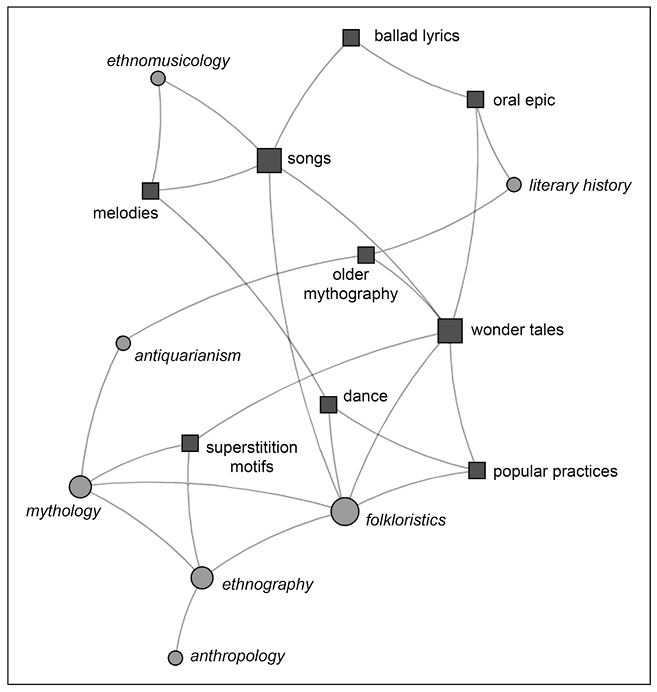
Figure 5.2 A mind-map of relations between genres in popular culture (square nodes) and specialisms in knowledge production (round nodes).
Grimm’s Deutsche Mythologie of 1835 was an extension of his work on the comparative grammar and history of the Germanic languages. He was hampered by the fact that there was no written corpus of German myths comparable to the Graeco-Roman or Scandinavian ones. In trying to establish what the original German system of myths had been, Grimm wanted to complement the Scandinavian myth texts with German material, and this he found in fairy tales and customs – in other words: folklore – mythologically deciphered. In his attempt to unlock oral traditions as a window on ancient myths, Grimm was applying a method (comparative-historical) that he practically patented; we have already seen him apply it to ancient literary texts and to linguistic relations. This approach examines concrete data (such as variant manuscripts, different versions of a folktale or a superstition, legal verdicts or consonants in different languages) as variable instances each of which reflects in its own way an underlying pattern, word-root or Stoff. The variant ‘expressions’ are multiple, but through their family resemblances they can be reconciled into an underlying pattern. It was in applying this method of ‘comparing expressions to elaborate the underlying type’ that Grimm had been able to come up with his archaeology of words and consonantal shifts.17
For Grimm, the comparative-historical method becomes a type of structuralism of ‘types’ generating ‘expressions’, foreshadowing the Saussurean notion that different speech acts – paroles – express an underlying language, langue. Grimm’s critical edition of the Reinhart material, going from the variants to the Stoff, exemplifies the operation of this model in the field of animal epic. In Grimm analyses of folklore materials (popular wonder tales), the motifs themselves were apparent as parts of a structure underlying the tales’ different versions; but the motifs could themselves be aligned to suggest something deeper still, something of which they were themselves the expression. In aligning folklore motifs comparatively Grimm began to go beyond the epic/folklore divide and to drill down to what he considered the deepest, and most formative layer in a nation’s expression of its world-view: its mythology.18
‘Mythology’ traditionally meant two things: either a collection of tales (muthos being the neutral Greek word for a tale, a plotline motif or an anecdote) or else a belief system – a pagan theology describing the deities, their acts and mutual relations, against the background of a cosmogony of how the world took its present shape.19 In the Romantic period, mythology developed a third meaning. Alongside the anthology (a collection of supernatural, traditionally transmitted tales) and the theology (a pagan belief system), ‘mythology’ also became a form of philology: the scholarly, academic investigation of myths. This trifurcation can be observed neatly in the core area from which the rediscovery of vernacular mythologies fanned out all over Europe: Denmark. Following Edda editions and re-editions in the later eighteenth century, N. F. S. Grundtvig addressed, philologically, what he called Nordens Mytologi (the Edda-derived set of tales); Rasmus Nyerup analysed the Edda as Skandinavernes hedenske Gudelære, a pagan belief system; and Nyerup’s study, published in 1806, cantilevered out of the more historical/antiquarian work of Fredrik Suhm, Om Odin og den hedniske Gudelære og Gudstjeneste udi Norden (1771), which treated the Edda as an originally secular historical account whose protagonists were in later treatments raised to divine status.20
Like the Greek and Roman mythologies, this Nordic material was authentically documented in ancient texts. But the mythological spin-offs elsewhere in Europe had little or no written sources to work from. Instead they drew their information from oral praxis and traditional folktales, as the run-up to Lönnrot’s Kalevala shows. Interest in Finnish oral literature had been evinced early on by Swedish intellectuals at the University of Åbo (Turku). Christfried Ganander’s Mythologia Fennica (1789) was a dictionary-style list of deities from folk religion illustrated with stanzas from Finnish folk balladry; the book already included such names as Ilmarinen and Väinämöinen, important figures in the later Kalevala compilation.
Slavic mythology, which emerged around the same time, moved in the same literary–folkloric–pagan triangle. Unlike the Finnish case, it drew on a dispersed variety of source traditions and different intellectual centres (Russian, Bohemian, Croatian); only in the mid-century, as the ideology of pan-Slavism took hold, did it converge into a common Slavic matière (Konrad Schwenck, Die Mythologie der Slawen, 1853). Folklore and oral material became available as folktales (skazki) were collected; an early researcher was the Russian army officer Andrej von Kayssarow, who published his Versuch einer slavischen Mythologie in alphabetischer Ordnung in Göttingen in 1804.Footnote *
For all this, Grimm’s Deutsche Mythologie provided a Europe-wide benchmark. Fairy tales and popular superstitions were decoded as a trickled-down residue of ancient superstitions, involving supernatural beings (dwarves, giants and elves) and reflecting ancient socio-cultural patterns such as curses, cures, rites of passage, seasonal festivals and shamanism. Supernatural beings such as dwarfs and elves, in particular, Jacob Grimm saw as things handed down from pagan times and reflecting pre-Christian beliefs and, yes, myths. Once identified as such, these mythical elements could be encountered in an astounding variety of cultural expressions.
Myths, then, are something always in the background, rather than manifestly present in solid documentation. But for all its vagueness, mythology is omnipresent in the nineteenth-century imagination; although it never quite solidified into an academic discipline, it generated enormous quantities of popular infotainment, collections of myths and legends aimed at the general public as a form of cultural archaeology for leisure-time reading. As the ancient pursuit of ‘antiquarianism’ fissioned into archaeology, linguistics and folklore, the study of vernacular mythologies came to rest, or rather wobble, on a tripod of archaeological, philological and folkloric-ethnographical approaches. These methods and fields of expertise were not easy to reconcile. As a result, mythology became both ubiquitous and vague, a diffuse and speculative background to other forms of knowledge production. Mythology was invoked to provide background ‘explanations’ for folktales, for epic, for archaeological remains, for the social history of Europe’s ancient tribal societies.
Accordingly, mythology often reverts to the genre of a quasi-scholarly anthology of ancient wonder tales; it enriches not so much the field of academic knowledge production as that of artistic inspiration. Literary raconteurs or visual artists make grateful use of the mythographers’ harvest: the proto-Czech prophetess Libuše, the Celtic Rhiannon or Manannan Mac Lír, or the Lithuanian love goddess Milda. The most outstanding example is the reception history of the Edda in German culture. The dual-track, scholarly-cum-cultural recyclings culminate in the popularizing retellings by the Germanist Andreas Heusler (Urväterhort, 1904), the poet/novelist professor Felix Dahn (Walhall, 1885) and, of course, the operatic-dramatic treatment by Richard Wagner in Der Ring des Nibelungen.21
In the post-Wagner century, the pattern is aptly illustrated by the fantasy world of J. R. R. Tolkien. As a philologist, Tolkien was a true scion of the Grimm school, doing work on the Oxford English Dictionary, editing medieval texts such as Sir Gawain and the Green Knight, and looking for archaic elements in Beowulf. In his fascination with Old English texts, he was constantly (again like Grimm) reaching for the unspoken, mythological or archetypical traces of something underlying even ancient epic. Tolkien bitterly regretted the fact that England had no mythology of its own (much as in Grimm’s envy of the Scandinavians). In response, he created a fictional legendarium faute de mieux. True to the Grimm model, Tolkien’s philological celebration of a mythologized Englishness moved from linguistic history and language derivations (his Middle-Earth cosmogony) to legends (the Silmarillion) and epic and chivalric romance (The Lord of the Rings), with some folk-rustic hobbits thrown in for good measure. Companiable hobbits for homely folklore, aristocratic Gondor for chivalric romance, grim dwarves and Rohan warriors for epic, vanished Númenor for sagas, eternal elves for myth: it is all there, and all is held together by Tolkien’s linguistic framework. For as he famously stated, the history of his Middle-Earth was an explanatory narrative frame for him to trace the branching developments of the fictional languages he fabricated.22
Another offshoot in the twentieth century was the resurgence of neopaganism. For those who saw Christianity as a regrettable Mediterranean/Roman/Semitic adulteration of the stalwart native morality of the Germanic Northern Europeans, ancient myth became an object of fond nostalgia; Grimm and his adepts Felix Dahn and Max Müller had repeatedly stressed the integrity of the religious and moral world-view of their Germanic ancestors, while rejecting Roman Catholicism as a hypocritical perversion. For the Germanisten of the post-Grimm generation, the pagan Saxon leader Widukind becomes a tragically doomed tribal hero, sadly overcome by the Rome-supported imperial power politics of his Frankish opponent Charlemagne. That pagan-friendly tendency ran wild in certain factions of National Socialism – notably Himmler’s SS and its cultural department, the Ahnenerbe. With the resurgence of an identitarian alt-right in post-1989 Europe, this tradition sprang back to life, often recycling – naively or knowingly – Ahnenerbe material. At the same time, a new-age type of neopaganism began to flourish, which in some manifestations (though by no means in all) harked back to a Nazi-tainted iconography, sometimes in knowing sympathy with the underlying ideology, sometimes naively, sometimes quasi-naively as a ‘dog whistle’. This repertoire of Germanic neopaganism, including runic and Nordic ornamental symbols, was also proclaimed in heavy metal rock music (‘viking metal’, which itself can shade into ‘National Socialist black metal’).23 And it showed up on the bare chest of the ‘QAnon Shaman’, a colourful participant in the storming of Washington’s Capitol in January 2021 (Figure 5.3). Wearing a horned bison headdress and carrying an American flag, he displayed on his bare chest three Germanic neopagan tattoos: the ‘Valknut’, the ‘Yggdrasil’ Tree of Life, and the ‘Mjölnir’ Hammer of Thor.

Figure 5.3 ‘QAnon Shaman’ Jacob Chansley during the 2021 Capitol riots.
The Roots of Identity
Many myths relate how the world came into being and came to be populated with gods and heroes. Chronologically, their narratives form a prequel to those of the heroic epics. For that reason, myths (as pagan religions) were held to date back to the very earliest literary products of a nation, something that came into being as that nation was going through its cultural ethnogenesis. If, in the Grimmian logic, each cultural expression emanates from an underlying cultural type, then mythology, itself a type underlying the later expressions of epic and folklore, must be the expression of the nethermost bedrock of the nation’s position in the world (that is to say, its very identity), a ‘type underlying all other types’, a cultural archetype.Footnote * There was a word for that archetype, and it had been coined by Grimm’s mentor, the legal scholar Carl von Savigny: Volksgeist, the nation’s spirit or essence.24
For Savigny and Grimm, two immediate emanations of the Volksgeist were the nation’s language and its legal customs. Grimm studies the two conjointly in his great, now neglected Rechtsaltertümer or ‘legal antiquities’, propped up by four massive volumes of documentation inventorizing the rulings of medieval case law: the Weisthümer (1840–1863). In it he analyses the historical vocabulary and the conceptual history of fundamental legal and societal principles such as ‘right’, ‘ownership’, ‘crime’ and ‘freedom’, aiming to show how the German social, moral and legal order developed in tandem with its verbal articulation, almost in tandem with the language itself. In that he proves himself the adept of his teacher Savigny, even though he chose not to follow the profession of law. It had been Savigny who had rejected Napoleonic law as an artificial, technocratic instrument of conflict and power management, an alien imposition on a Germany whose native law system had organically developed in accordance with the moral outlook of the people, a direct expression of their (as he coined the word) Volksgeist.
Grimm remained a lifelong adherent of this organicist notion of law. At the Germanisten conferences of 1846 and 1847 he included legal scholars alongside philologists and historians in the discipline of ‘Germanisten’: all three groups were concerned with historical manifestations of the German identity. In sum, the Romantic successors to old school antiquarianism could address three fields of deep, anthropological culture that offered them access to the nation’s primordial essence or Volksgeist: deep antiquity and ancient history;Footnote ** mythology; and language as the nation’s cultural operating system. Those fields are somewhat haphazardly divided among the scholarly disciplines of the ethnohistorian, the philologist and the folklorist, and they inspire a nation’s art in various media of expression. This is shown schematically in Figure 5.4.
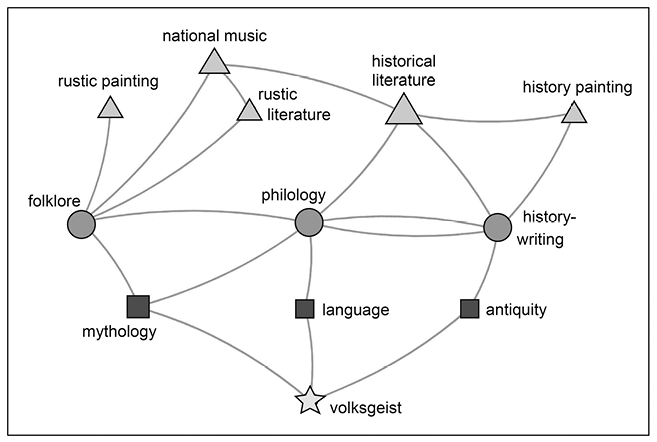
Figure 5.4 A mind-map showing how Romantic nationalism sees the connections among cultural fields.
The triangular nodes (top tier of Figure 5.4) represent genres of artistic production and their intermedial connections; the round nodes (second tier) represent fields of knowledge production, their interdisciplinary relationships, and how they informed artistic production. The square nodes represent ‘deep culture’ (ancient, primordial or ambient) emanating from the fundamental spirit of the nation or Volksgeist (star-shaped node at the bottom), and how they are studied by the scholarly disciplines. The scheme also suggests how knowledge production takes up an intermediate, intellectual position between artistic cultural production and the ‘deep’ anthropological culture that fundamentally characterizes the nation. Only lyrical poetry, as we saw in Chapter 3, can directly intuit the Volksgeist without any intermediary or intellectual aid, thanks to its powers of visionary inspiration.
In critical writings of the nineteenth century, we frequently encounter the notion that a nation’s language is directly linked to the nation’s character, spirit or essential identity, both philosophically and in more commonplace contexts. Philosophically, the Platonic idea of language as logos was inflected by Herder’s insight that the essence of language is its capacity for diversification. For Plato, the logos is the specifically human intellectual capacity to schematize and formulate one’s sensations and thoughts into a rational position, and this is done with the tool of language, its lexical concepts and its grammatical order. Language is not a mere code system for communicating one’s ideas but a human operating system allowing one to conceptualize and articulate one’s thoughts in the first place. This language-as-logos concept was originally anthropological in the general sense, a factor that set humans (as animals endowed with sapience) apart from ‘brute’ beasts; we still encounter it in full force in Friedrich Schlegel’s Vienna lectures of 1812: ‘Spirit and language are so indivisible, as are thought and word, that, if we consider thought to be the specific privilege of humans, we must also consider the word (in its primal meaning and dignity) to be a human’s inner nature.’25 But on top of that, Herder had powerfully argued that what made human language special was also its power of proliferating diversification, its multiplicity, allowing societies in very different circumstances to each have their own logos, and if necessary their own ‘fifty words for snow’ (to quote a hackneyed phrase). The end result of this merger between Platonic idealism and Herderian diversity we see in the linguistic anthropology of Wilhelm von Humboldt, witness his Latium und Hellas (1806):
Most of the circumstances that accompany the life of a nation (residence, climate, religion, political constitution, manners and customs) can be seen separately from it, and one can, even in the case of intense interaction, distinguish between the influence they exerted and the influences they were exposed to. But one aspect is of a wholly different order, and that is language. It is the breath, the very soul of the nation, appearing everywhere in tandem with it, and (whether it be considered as something that has exerted historical influence or else undergone it) setting the limits of what can be known about it.26
Humboldt was to return repeatedly to this idea that language is both ergon (something performed, an impact) and energeia (something enabling the performance, an impetus). Language is both the expression of, and the formative impulse behind, a nation’s identity (e.g. in Humboldt’s 1836 treatise ‘On the Diversity of Human Language and Its Impact on the Mental Development of Humankind’); in due course this was to debouch into the famous Sapir–Whorf hypothesis and, anecdotally, played into the ambient ethnotypes of the century explaining national differences based on the nations’ innate ‘characters’ (see note 2 in Chapter 1).
The association between native language and national identity was also a powerful poetical trope. In his song ‘What is the German’s Fatherland?’ (see Chapter 3), E. M. Arndt answered his title question not only linguistically (wherever the German language is spoken; more on that in Chapter 6) but also characterologically and morally: ‘That is the German’s fatherland, where a clasped hand is as good as an oath, where faithfulness shines from the sparkling eye and love speaks warmly in the heart.’ This ethnotype of forthright honesty is highlighted by contrasting it with the specious deceitfulness of the French foe – for Arndt wrote this song in 1813, while the German lands were still under Napoleonic hegemony: in the German’s fatherland ‘French frippery is scornfully swept aside, every Frenchman is called a foe and each German called a friend.’Footnote * The apposition of the positive self-image and the sneering image of the Other’s innate character is glaringly illustrated here, hinting more generally at the ease with which nationalistic self-celebrations can derail into a character assassination of foreigners.27
The invocation of language as Volksgeist-determined is most strenuously made when that language is under threat, and will be encountered at its most explicit among subaltern cultural communities; I will cite a Flemish, an Irish and a Corsican example. Flemish nationalists, resisting the hegemony of French in post-1830 Belgium, are a case in point. Conscience in his novel The Lion of Flanders (Reference Conscience1838) coined the slogan Wat Wals is, vals is (‘If it is French, it is false’), and as we have seen, a patriotic-Flemish association in Ghent called itself De Taal is gansch het Volk – ‘The language is, entirely, the nation’ or ‘The language wholly marks the nation.’ That phrase had been lifted from a poem by Prudens Van Duyse, who in turn referred to Buffon’s famous ‘Le style, c’est l’homme même’ (‘A man’s style bespeaks his very personality’). In Van Duyse’s words: ‘The style wholly bespeaks the man – Buffon, those are your words: the language wholly marks the nation.’28 Grimm was to repeat the sentiment in 1846: ‘What is a Volk? A Volk is the totality of people speaking the same language.’
Indeed, in commenting on the Frenchification of Belgium, including Flanders, Grimm had in 1830 stated that giving up one’s language was tantamount to giving up one’s essential nature: ‘Any Volk that relinquishes the language of its ancestors is degenerate [entartet] and anchorless [ohne festen Halt].’ Anchorless implies that the language and its permanence are what provide a fixed, firm position for a nation in the world. Degeneracy connotes more than merely depravity or corruption: such a nation is denatured, out of touch with its inner nature and Volksgeist. Without its native/ancestral language, a nation, in Grimm’s view, has no ethical footing in the world anymore.29
In the mid-nineteenth century, the Irish nationalist poet and journalist Thomas Davis echoed the same sentiments:
The language, which grows up with a people, is conformed to their organs, descriptive of their climate, constitution, and manners, mingled inseparably with their history and their soil, fitted beyond any other language to express their prevalent thoughts in the most natural and efficient way. To impose another language on such a people is to send their history adrift among the accidents of translation – ’tis to tear their identity from all places – ’tis to substitute arbitrary signs for picturesque and suggestive names – ’tis to cut off the entail of feeling, and separate the people from their forefathers by a deep gulf – ’tis to corrupt their very organs, and abridge their power of expression. … A people without a language of its own is only half a nation. A nation should guard its language more than its territories – ’tis a surer barrier, and more important frontier, than fortress or river.30
And this is how Salvatore Viale renounced the Frenchification of Corsica in 1857 in his ‘On the use of the native language in Corsica’ (Dell’uso della lingua patria in Corsica):
And as regards love of country, which is the most powerful and necessary affection in the citizen, it should be noted that the language of a people is the complex expression of its way of thinking and feeling, of its domestic and civil customs; it is the repository, in a certain way, of its traditions, its history, its literature, all of which the homeland largely consists of. Therefore, in changing their language, a people loses their identity, or rather their personality, indeed they themselves contribute to divesting themselves of it; they therefore lose that self-esteem and awareness, that faith in themselves, in which their value lies.31
These instances from various corners of Europe are multiplied. The notion that the fundamental personality of a nation is encoded in its own language is, in the aftermath of Romanticism, one of Europe’s great cultural commonplaces. If mythology and ancient pagan belief systems bring us close to the ethnographic bedrock of the nation, the language is not only the nation’s proper, fundamental ‘operating system’ but also the container of its cultural legacies, traditions and memories. It is the main guarantor not only of its distinct position vis-à-vis other nations in the proximity of space but also of its historical permanence in the vicissitudes of time. And, more than that, the language articulates and bespeaks the nation’s essential Volksgeist.
The discourse of national identity habitually and almost in passing asserts formulaic characterizations – ethnotypes – as ‘truths universally acknowledged’: contemplative Germans, gallant French, Slavs either long-suffering or intransigent. These are not trivial asides or anecdotal parenthetical proverbs; they operate in a discourse that is suffused with invocations of the nations’ underlying temperamental proclivities, and these in turn ultimately boil down to something like a blueprint or genome, something that is so fundamental as to be almost nameless. That ineffable archetype is the perspectival vanishing point on the cognitive horizon of Romantic philologists, mythologists and folklorists. It is metaphysical: something beyond the practical or material things that are open to empirical investigation. It is gestured at by such terms as ‘identity’, ‘Volksgeist’, ‘national character’, the ‘spirit of the nation’, and it is seen as the informing principle of the nation’s mores and culture as well as the validator of the repertoire of ethnotypes. Felix Dahn summarized it in a five-line motto he composed for Alldeutscher Verband; it was to be repeatedly reproduced, sometimes in truncated form.
Making the Nation Personal: Self-Renamings
A remarkable phenomenon occurred across Europe as the modernizing states were perfecting their administrative grip on their population records. Family names became, after Napoleon, a far more fundamental part of a person’s civic identity than they had been heretofore, although their spelling remained, for most of the century, fluid (my own ancestors show up in records up to 1914 as Lerschen, Lerssen, Lersen and other tentative approximations). For members of minority cultures in multinational states, the gap between the native and the administrative rendering of the name could be considerable and could signify alienation between the state and its minority cultures. In various places we accordingly see a trend to ‘nativize’ name-forms in a deliberate rejection of official administrative usage in the hegemonic language. Sometimes this was merely a question of orthography and was retroactively imposed as new ways of spelling were established and modern standards replaced older ones: Franz Prescheren has become France Prešeren, Paul Schaffarik has become Pavol Šafárik, and the fact that Edmond de Valero morphed into the Irish statesman Éamonn De Valera is the result of a gradual adaptation to Gaelic standards as these crystallized. But De Valera’s wife, Sinéad De Valera née Ní Fhlannagáin, replaced her birth name (Jane Flanagan) with its nativist, Gaelic form in a deliberate act of self-renaming, in line with a widespread movement: Douglas Hyde himself, when writing in Gaelic, used the name-form Dubhghlas de h-Íde. A similar process spread in Finland, where Swedish name-forms were fennicized: Axel Gallen to Akseli Gallen-Kallela, Zacharias Forsman to Sakari Yrjö-Koskinen, and Einar Lönnbohm becoming the poet Eino Leino. Many Jews Hebraized their names: Eliezer Perlman and Asher Ginsberg became Eliezer Ben-Yehuda and Ahad Ha’am, David Ben-Gurion had been born as David Grün. In Hungary, many cultural activists Magyarized their names: Schedel to Toldy, Petrovics to Petőfi, Hunsdorfer to Hunfalvy, Blum to Virág, in order to signal their patriotic identification with their country (many Budapest Jews also adopting the gesture). In the 1880s a Central Name-Magyarization Society was established, encouraging people to undergo ‘national baptism’. A third crest in this wave of transnominations occurred in the period 1920–1945.33 The trend took a specific form among Czechs and Slovaks. They adopted given names of an archaic, Slavic nature, involving elements such as -slav or -mir: for example, the sports organizer Miroslav Tyrš, born Friedrich Tirsch. Among the followers of the Slovak leader Ľudovit (born Ludwig) Štúr, entire groups would undertake a pilgrimage to the historically symbolic site of Devin Castle and there choose a Slavic given name by way of ‘national baptism’.34
To some extent this activism took place on the old battle-line between the private and public spheres: names being both intensely personal and also a way of positioning oneself in society. In pre-independence Ireland, controversies ensued as to whether Gaelic name-forms could be displayed on shop-signs or used for addressing letters through the Royal Mail; this more public form of national name-contestation would of course become sharply visible in the later politics of city names, from Irish Dún Laoghaire (formerly Kingstown) to Indian Chennai (Madras). But at the same time, this was an intensely private, even intimate matter, an interiorization of the national ideal at the most fundamental level of self-identification. Private to public: what we note here is a fluid, small-to-large ‘multiscalarity’ that is particularly pronounced in language politics. Territorial multiscalarity will be discussed in Chapter 6.
What is a Volk?
A Volk is the totality of people speaking the same language.
Mother Tongue, Fatherland
In 1812, Jacob Grimm fired the opening volley in a lifetime of hostilities with the Danish linguist Rasmus Rask. At stake was the status of German in Schleswig-Holstein and the status of the Danish language as such. Grimm asserted that the hegemony of German over Danish was a historical inevitability – ‘it would be foolish for a mere 1.5 million people to think that they could close themselves off from the unstoppable influx of a neighbouring, closely related language spoken by 32 million and set alight for practically all time by the greatest intellects’ – and he comforted the hapless Danes with the notion that ‘the domination of German letters is not a dishonour, as the dialect speakers of Lower Saxony and East Frisia can confirm’. He then concludes on a note of pathos. His assertion of linguistic patriotism was, he asserts, not only necessary (on the basis that the Danes were trying to oppress the German language in Schleswig-Holstein) but also a spontaneous overflow of powerful feeling: ‘Is it not right, o ye Germans, that you should cherish and value the language which you sucked in as an infant from your mother’s sweet murmurings, together with her milk?’1 And so the deep physical and emotional intimacy between an infant and a nursing mother justifies blatant linguistic irredentism; and the process of one language ousting another in Schleswig-Holstein, viewed from the moral high ground, is simultaneously justified (for German vis-à-vis Danish) and denounced (for Danish-vis-à-vis German).
Language is, as we saw in Chapter 5, a deeply rooted element of what makes humans human; but it is also the primal ambience for societal communication. As such, its public function and status have long been an object of intellectual reflection and public policy-making – going back to Francis I’s Ordinance of Villiers-Cotterêts of 1539 (followed by Du Bellay’s Défense et illustration de la langue françoyse of 1549) and Henry VIII’s ban on Gaelic in English-ruled Ireland in 1543. Since language is a shared thing, owned in common by all who use it, language policies are always a matter for public debate.2 In this chapter we shall trace how that public importance became a national one, a key issue in the self-distinguishing discourse of national identity.
Spelling reforms invariably elicit clashes: the ‘ABC war’ in 1820s Ljubljana, for instance. How should the Latin alphabet, used in Catholic–Slavic countries, render that widespread Slavic consonant that we hear at the beginning of the name of Tchaikovsky? The Cyrillic alphabet has a single letter for it, ч (Чайковский), but German needs four (‘Tschaikowsky’). For Slovenian literati (Slovenian was just finding its way into mass-circulation print) the choice went between the Hungarian solution <cs> (as in csardas), the Polish solution <cz> (as in Mickiewicz) and the Czech use of a diacritical hook (as in the name for that little hook, ‘haček’). Conservative Catholics resisted the haček because, invented as it had been by the humanist reformer Jan Hus (burnt at the stake as a heretic in 1415), it smacked of Protestantism. Thus this minute choice was heavily burdened with international, political and generational allegiances, and therefore heavily debated. In the event, the haček won out, witness the now-standard spelling of such names as Prešeren; but it still comes as a surprise, when reading early-nineteenth-century sources in emerging or subaltern languages, how fluid and variable the competing orthographies and alphabets were. The states that gained their sovereignty in the twentieth-century present their history and their historical figures in the spellings that were subsequently standardized, and thus they project the nationality that eventually crystallized out of historical contingencies back into the past, as if history had been experienced in the form in which contemporary nation-states remember it. The ABC war in fact took place in a city that called itself, at that time, by the German place-name Laibach; one of the participants, the philologist Kopitar, was then called Bartholomäus but now carries the given name Jernej. Again, the Slovak antiquary who spelled his own name as Schaffarik is now known as Šafařik of Šafárik (depending on whether he is invoked by his Czech or his Slovak heirs). The fluidity of the protonational past is hidden from view as it is anachronistically presented in the nationally crystallized form that emerged from it – as if it had ever been thus.3
Across Europe and across the centuries we encounter a public and intellectual investment in language standards, spelling norms and the purist rejection of foreign loanwords; the invocation of ‘mother’s milk’ by Grimm was in fact a quotation from the seventeenth-century language enthusiast Schottelius. The long process of state formation in post-1300 Europe is accompanied, throughout its course, by reflections on the state’s linguistic regime – whether non-state (‘minority’) languages are to be tolerated or discountenanced, and how to ensure public standards for the state language. In this lengthy process, a shift occurred between 1770 and 1810.4
Johann Gottlieb Herder realized that the formative anthropological role of language lay not just in its capacity for articulating and ordering our thoughts and facilitating human sapience but also in its capacity for diversification. Language is, in fact, a proliferation of different languages, each in their different ways articulating and ordering our thoughts and facilitating human sapience in different cultural communities – ‘nations’, as they were soon to be called. As we saw in Chapter 5, languages became the specific markers – carriers, even – of separate national identities.
Following the fall of the Holy Roman Empire of the German Nation, German intellectuals realized that the most important remaining thing they, as ‘the German Nation’, still had in common was in fact the German language – we have encountered Arndt’s stance. As the lexicographer Campe phrased it in the preface to his 1807 German dictionary:
Let me in conclusion commit myself to the firm opinion that in this time, full of impending doom, or even in recent years circling towards absolute downfall, there is nothing more needful, urgent or meritorious for our lamented German nationality that the cultivation – the development, purification and consolidation – of our excellent language. The language is the only remaining tie which holds us together as a nation, is at the same time the only remaining reason to hope that the name of Germans will not altogether disappear from the annals of mankind; the only thing which renders the possibility of a future reunification into an independent polity conceivable.5
It became, following Fichte’s ‘Addresses to the German Nation’, a matter of pride that of all the Germanic tribes that had swarmed over the European landmass during the fifth-century migration period, the Germans had stuck to their ancestral language. The Vandals and Visigoths in Spain, the Ostrogoths and Longobards in Italy, the Franks and Burgundians in France: they all had adopted the Vulgar Latin of their conquered countries, in time switching over to Romance languages. Not so the Germans (with some tribes, as Grimm noted, still occupying their premigration homelands). That linguistic tenacity was seen as fidelity to the ancestral inheritance and as giving the Germans a moral edge over the French and Italians. ‘A nation that abandons its ancestral language is degenerate and anchorless’, Grimm wrote in 1830, meaning that it has lost its rootedness in its inherited identity and character. For the Grimms’ greatest enterprise, the dictionary of the German language (Deutsches Wörterbuch), the chosen motto was ‘Im Anfang war das Wort’ (‘In the Beginning was the Word’; Figure 6.1). That opening phrase of the Gospel according to John, as translated by Luther, was used both metaphysically and anthropologically. It referred to the Word as a Platonic logos but also, more specifically, to the German language as the very bedrock of a German identity – in line, again, with what we saw in Chapter 5.6
Figure 6.1 Title-page vignette for the Grimms’ Deutsches Wörterbuch (1854).
Grimm reverted to the register of Romantic–sentimental pathos in his inaugural lecture (1830) at the University of Göttingen. It was, ironically, delivered in Latin, but it presented an intellectual blueprint of his national commitment. The lecture is entitled De desiderio patriae. That translates as ‘Of homesickness’, which alerts us to one of the crucial turns of thought in this piece. Grimm conflates the notions of desire and love, desiderium and amor, and he leads us from one to the other deliberately and purposefully. For it is amor patriae, rather than desiderium, that presides over his closing sentence:
For in this time of turmoil and change through which there is foreshadowed for us, whether we are aware of it or not, the passage from our traditional ways into a new order, we must hold fast the pure and holy love of our country; for while that love lasts we may even yet be saved, unless the anger of Heaven itself should be against us. Let us then be united in the common purpose to guard like men the honour and liberty to which we are born, with eyes afire and hearts beating high whenever we hear spoken the beloved name of our native land.7
Love of the fatherland for Grimm is a primal instinct tugging at the heartstrings and inspiring homesickness when one is abroad. As an affect it is as intimate and as universal as that bond between infant and breast-feeding mother, and as such it proves that love of the fatherland is ‘naturally human’, neither a socially inculcated political virtue nor a matter of pragmatic expedience. It is the non-negotiable tie that links us to our Art, our collective nature, to those who are close and dear to us; it accompanies us throughout our life’s experiences. And it is intimately bound up with the native language, which in and of itself defines for the German speakers their own homeland. Grimm’s scholarly Latin contains a hard-edged, Arndt-like political conclusion: ‘But our own language, which is the surest foundation upon which our state can rest, we must cultivate and perfect, and not doubt that the limits of its life and power will also be the boundaries of Germany itself.’ And that would include, obviously, Schleswig-Holstein.
In 1848, as a delegate to the Frankfurt Nationalversammlung (National Assembly; see Figure 2.3), Grimm urged persistence in the flagging Schleswig-Holstein war against Denmark;Footnote * he threw his great scholarly prestige behind this belligerence. As he had elaborated in his own attempt at Völkergeschichte, his Geschichte der deutschen Sprache of 1848, and now brought forward in the National Assembly, the Danish dialects of Jutland betrayed a pre-Danish, German substratum in that territory. From that he concluded that a return of those territories into a greater Germany was historically preordained and inevitable. The Danish isles, he felt, were best left to Sweden. Holland, too, would ultimately find its way back to the German bosom from which it had regrettably detached itself a few centuries ago: ‘A reversal of the Dutch to the German language … I consider, over the next centuries, to be a probability which will redound to the benefit of all German peoples. … It stands to reason that the Netherlander would rather become German than French.’8 Language is, then, a cornerstone both of Romantic–sentimental anthropology post-Herder and of nascent nationalist ideology, oscillating between the tender recall of infancy and the hard-bitten demand for geopolitical expansion. Grimm’s meanderings between etymological antiquarianism, sentimental affect and territorial expansionism fully echo the Völkergeschichte and the political agenda of Ernst Moritz Arndt, who sat beside him in the Frankfurt National Assembly. Arndt had patented the territorialization of language in his song ‘What is the German’s Fatherland’, for which he was given a spontaneous, ovational vote of thanks by the Assembly delegates (see Chapter 9).9
This political territorialization of language, extrapolating from language (as a communicative ambience) to language area (a communicatively homogeneous homeland) and thence to state expansionism, is a fundamental characteristic of Romantic nationalism.10 In the second half of the nineteenth century, it forms the cornerstone of almost all manifestations of irredentism, when the presence, outside the state’s borders, of fellow nationals (usually identified as such by their language, more rarely by religion) inspires a policy of expanding the state so as to aim for maximum inclusion and to gather all members of the nation/language community into a single homeland. The nation’s division across different states is felt to be unnatural and undesirable. The geopolitical problems arising from this nostrum are obvious, and they play out along two axes. What to do with border zones, such as Schleswig-Holstein, where there is a mixed bilingual population? And what is, ultimately ‘a’ language? Where do different dialects group together into ‘a’ single language or else fall apart into separate ‘different’ languages? These issues were addressed by the vociferous identity politics of such men as Arndt and Grimm, and it is here that philologists, in particular, played a political role in the fluid years after Napoleon’s downfall.
Macro-nationalism and Pan-movements: German as a Sliding Scale
The Germanic language family has diversified into different standard languages over the past centuries. Norwegian has established itself, in two competing variants, as a language distinct from both Danish and Swedish; Faroese has claimed linguistic specificity on the coat-tails of the Icelandic national revival. In the Netherlands, an uneasy bi-stability has been maintained since 1840 between a common Netherlandic (written) standard and two main (orally based) variants, Flemish and Dutch; Luxembourgish and Afrikaans have become state languages in the course of the twentieth century, and regiolects such as Scots, West Flemish, Low Saxon and Limburgish have at different moments claimed a subsidiary distinctness and recognition. The particularism of minor variants requesting separate recognition can be juxtaposed with an opposite tendency: to group together large family groups as single, compound wholes. The followers of the two tendencies are known as ‘splitters’ and ‘lumpers’.11
The ‘lumpers’ in this process were the German philologists of the Romantic generation: Grimm, Arndt, Hoffmann von Fallersleben and their later adepts, Simrock and Dahn. They saw all variants as mere variations within a greater German language. When Grimm viewed the future convergence of Dutch into German as something beneficial for all German peoples, he apparently included the Dutch themselves in that aggregation of future beneficiaries. That, indeed, is characteristic of the elasticity with which Grimm uses the notion of ‘German’. We have seen an egregious example in the case of Hoffmann von Fallersleben in Chapter 4, where the ‘German’ language as used from Luther to Goethe (Hochdeutsch, ‘High German’) can also subsume ‘Niederdeutsch’ variants that are either regiolects (Low Saxon) or the languages of neighbouring states (Dutch and Flemish). A future merger of all these variants into a greater German whole is then presented as natural and proper – both linguistically and politically. Arndt in 1831 asserted it as the Germans’ ‘right and duty to see Holland and Switzerland joined to the ancient German lands in a new life’. Arndt hastens to add that there should be no forcible annexation or enforced union; but precisely how that reintegration process should be driven forward, and by whom, is glossed over in a contorted, weaseling word salad: ‘as Germany, a united whole, will present itself in such a new, rejuvenated guise, they [the Swiss and the Dutch] could not reasonably refuse acknowledging that as a matter of common sense they should accept an invitation to that effect.’ And he adds, with greater clarity and more menace: ‘But this should be held up to them, if necessary on the point of a rapier: that the Swiss can no longer hire themselves out as mercenaries to combat or even subjugate their fellow Germans, or that the Dutch should remain in a position to throttle and block the Rhine, that vital German artery.’12 In the Frankfurt National Assembly of 1848, much of the deliberation was taken up with geolinguistic questions concerning German borderlands such as the Low Countries, the southern Tyrol and, most of all, Schleswig-Holstein. It was in this context that Grimm asserted, on philological grounds, the right for Germany to include not only Schleswig-Holstein but all of Jutland and prophesied the future merger of Flanders and the Netherlands into the greater German whole.
That, then, is how the ‘lumpers’ use the term ‘German’ in an expansionist sense. Grimm uses it thus in the Deutsche Grammatik, the Geschichte der Deutschen Sprache and the Deutsche Mythologie, where it refers essentially to all the living German languages and dialects spoken on the European continent south of Scandinavia. In this scheme, German, as the centre and default of that linguistic continuum, becomes almost tantamount to ‘Germanic’. And what in the first half of the nineteenth century seemed like the visionary musings of Romantic poets and philologists became part of an expansionist policy, not only regarding Alsace-Lorraine in 1870–1871 but also in the direction of the Low Countries and Denmark, as the German war aims in the two World Wars make clear.
Broadly speaking, the opposition between lumpers and splitters maps onto the distinction between aggregationist and separatist nationalism; the former, aiming to unify large groups, lead into pan-movements such as Pan-Germanism or Pan-Slavism, while the latter tend to claim a separate status for smaller self-distinguishing nationalities such as Flemings or Slovenians. The two intersect, for Flemings are comprised in the larger Germanic category, Slovenians in the Slavic one, as nesting dolls are inside a matryoshka.
In this nesting matryoshka model, sometimes a wider, sometimes a narrower ethnolinguistic category is seen as the one that matters. In Flanders, some lumpers followed a Pan-German logic and placed themselves under the aegis of a greater German whole; other people saw Flemish as an independent, separate sibling language of Dutch; and some splitters even wanted to develop a separate linguistic standard for it based on the outlying dialects as spoken near Ypres. In Scandinavia, Danish anxieties over the possible loss of Schleswig-Holstein to an expanding Germany favoured a reframing of their identity as ‘Scandinavians’, drawing on the cultural kinship and (it was hoped) the political solidarity of Sweden–Norway. But amidst this Pan-Nordic unification ideal, in Norway a rivalry developed between two variants of a Norwegian language standard, and the leading Norwegian playwright Bjørnstjerne Bjørnson later embraced Pan-Germanism.13
So how and why do people, in formulating the relation between language and national identity, opt for one or another of the matryoshka’s nesting shells? How and why do they decide which linguistic differences are decisive and which are inconsequential?
Etic and Emic: Which Differences Matter?
Practically all new states that came into being around 1918 owed their independence to an ethnolinguistic national movement in the preceding decades. From Iceland to Bulgaria and from Finland and Norway to Luxembourg and Bohemia, advocacy for ‘national languages’ had dominated public consciousness-raising since the mid-nineteenth century. Everywhere, minority populations had claimed their status as distinct nations by asserting that what they spoke was a separate language.
Not, emphatically, dialects. ‘Dialects’ was a word colloquially used for subsidiary variants within a language, characterizing a regional variation at best, never a separate nationality. Languages, on the other hand, are demarcated by differences between one another, much as adjoining countries are, and each ideally maps onto its own nation-state. As philologists began to see relations in terms of branching family trees, the status of ‘a language’ derived in large part from having an early historical branch-off point. Lithuanian famously obtained great prestige from the recognition that its descent from Indo-European antedated and bypassed the spit into Slavic, Celtic, Germanic and Romance clusters. The stature of Catalan and Occitan was raised by their status as siblings, rather than offshoots, of French and Castilian Spanish, all of these claiming their own independent derivation from Vulgar Latin (see Chapter 10). The often-encountered formula that Irish, Albanian, Slovenian, Galego and Frisian are ‘ancient’ languages (which, strictly speaking, is nonsensical: how can one language be more ‘ancient’ than another, since all descend equally from the primal origins of human speech?) is a debased echo of this family tree schematization. ‘Ancient’ means, in fact, being an ‘early branch’: a variant whose taxonomic separateness was established early on, as attested by certain archaic (hence ‘authentic’, non-derivative) features.
But the discussion was anything but cut and dried. Linguistic descent is a tangled mycelium, not a neat pedigree. Linguists now roll their eyes at the very idea of distinguishing between the levels of ‘dialect’ and ‘language’. There is no clear-cut criterion that makes the taxon ‘language’ qualitatively or objectively different from the taxon ‘dialect’. As the oft-repeated quip has it, languages are dialects with an army and a navy:14 they are classified as such as a result of that contingent happenstance called state formation. The cases of Afrikaans and Luxembourgish bear this out. Local idioms, originally classed as dialects (a variant of Dutch among the Boers of Southern Africa, and ‘Moselle-Franconian’ in Luxembourg, respectively), they received state-initiated recognition as official languages in 1923 and 1975, in the context of their (relatively recent) state independence.
But while the distinction between a language and a dialect has no underlying, objective foundation (‘etic’, i.e. as part of specific, empirically measurable, language-intrinsic features), it does, as the recognition of Afrikaans and Luxembourgish shows, have a real-world presence. People attach a real-world meaning (‘emic’) to whatever causes them to apply that distinction.Footnote *
Where ‘a’ language begins or ends is historically floating and somewhat arbitrary, and ‘emic’ rather than ‘etic’. Witness the language that used to be called Serbo-Croatian. It embraces, as Slavicists know, a number of interpenetrating regiolects and dialect groups.Footnote ** Important divisions ran through the populations using this language/dialect cluster: between the Ottoman and Habsburg Empires (and Venice), between Orthodox and Roman Catholic Christianity, and between the Cyrillic and Latin alphabets. There was only a limited history of communicative interaction between Belgrade, Ragusa (present-day Dubrovnik) and Zagrab/Agram (present-day Zagreb). Cross-communitarian interaction intensified in the nineteenth century, however, and crystallized in the Vienna Literary Agreement of 1850, when assorted intellectuals – each prominent in their respective communities, with Vuk Karadžić among them – signed a declaration asserting the unity of their dialects under a single standard. In the declaration’s preamble, the signatories express their dismay at the diffraction caused ‘not only by alphabets, but still by orthographic rules as well’.15
From this integrationist high point, the last half-century has witnessed a relapse into ‘splitting’ particularism. After the break-up of Yugoslavia, the Serbo-Croatian language lost its unitary status; Croatia and Serbia as separate successor states put forward separate linguistic standards for ‘their’ Croatian and Serbian languages. And with the further dismemberment of Serbia, we have witnessed how Bosnian and Montenegrin have cultivated a divergent linguistic standard from rump-Serbian: for example, by introducing new letters into their state-sanctioned alphabets.16
In all this contested fluidity, one linguistic aggregate remained firmly outside the Serbo/Croatian lumping and splitting: Slovenian. It profited from the philological trump card of the ‘early branch-off’ and independent descent from Old Slavonic, as demonstrated by its archaic and unique feature of the ‘dual number’. In 1808, Jernej Kopitar’s Grammatik der Slavischen Sprache in Krain, Kärnten und Steyermark grouped together the Slavic dialects spoken (and to some extent written) in Styria, Carniola, Carinthia and the Prekmurje region; and he proposed a new ethnonym for these populations: Slovenec. He also asserted the separate and indeed senior position of their language among the Slavic ones. It was, Kopitar argued, independently descended from Old Church Slavonic and had maintained a basic feature of the ancestral Ur-language: Slovenec alone had kept the archaic ‘dual number’, known to educated Europeans from its lingering traces in Homeric Greek and already noted in Kopitar’s 1808 grammar. The dualis, which refers to ‘a pair’ as something that is neither singular nor plural (as in trousers, scissors or twin siblings), has since remained a trump card in the particularism of Slovenian vis-à-vis neighbouring South-Slavic regiolects. Slovenian remained outside the Vienna Declaration on the unity of Serbo-Croatian. Its symbolic prestige ensured for Slovenia a separate status among the southern Slavs who united into Yugoslavia after 1918 and divorced out of Yugoslavia after 1991. If present-day Slovenia as a state can boast an army and an (admittedly diminutive) navy, this is due to the fact that Slovenian has long been recognized as ‘being a language rather than a dialect’ – on the grounds, ultimately, of its dualis.17 And so the dictum that ‘a language is a dialect with an army and a navy’ can be turned on its head: you get to have your own army and navy if you speak a language rather than a dialect.
Matryoshka Scalarity
Thus we encounter the competing forces of splitting (centrifugal particularism, Slovene) and lumping (centripetal aggregationism: Serbo-Croat, South-Slavic). One of the most intractable problems in the negotiations of linguistic identity was and is that of scalarity: how variants of language could be aggregated from the small local regiolect to the large macro-family.
The linguistic ‘family tree’ model saw the great linguistic families (Slavic, Germanic, Romance, Celtic) as great sub-trunks of the Indo-European tree, subdividing from the level of the family to that of ‘languages’ (branches) and then further into ‘dialects’ (boughs and twigs). But the distinction between these successive levels (trunk, branch, bough and twig; language family, language and dialect) was open to debate and subject to ideological agendas.
Accounts of the number of Slavic languages have varied wildly. In 1756, Andrija Kačić-Miošić enumerated eleven of them, erroneously including Albanian; the eminent Göttingen antiquary August Schlözer identified eight, including the obscure and extinct Polabian. In the early 1820s, the no less eminent philologist Josef Dobrovský saw all Slavic languages as dialect offshoots of one common, ancient language, Old Church Slavonic. He distinguished two main groups, with Russian being uneasily assigned to either one or the other. The now-current tripartite division of southern, western and eastern clusters was consolidated only later. Within these clusters, the taxonomy has remained tentative, with certain small variants (Sorbian) enjoying separate status and other pairs, such as Czech and Slovak, and Bulgarian and Macedonian, counted either together as one or separately as two, as the case might be, and some, such as Kashubian or Rusyn, either being overlooked (by outsiders) or else strenuously asserted (by their speakers).18
And so, as the outer twigs of the family tree were being uncertainly counted, there was a tendency to revert it all back to the tree-trunk. Were these variants not all part of a single macro-language? The Slovak Jan Herkel argued this in his Elementa universalis linguae Slavicae e vivis dialectis eruta (Buda 1826), proposing a common Slavic literary language and an ‘Unio in Litteratura inter omnes Slavos, sive verus pan-slavismus’ (A unified literacy for all Slavs, indeed a pan-Slavism). Other Slovak intellectuals, the poet Jan Kollár and the antiquarian Pavol Šafárik, had also opted for this linguistic holism; and so ‘Pan-Slavism’ was born. It manifested itself politically with a Pan-Slavic Congress in Prague in 1848, which got caught up in the revolutionary events of that fateful year (see Chapter 2); and it inspired the paintings of Alphonse Mucha a century later.
The complex history of Pan-Slavism can only briefly be summarized here.19 The initial stage culminated in the 1848 Prague Congress and ended when that congress, and the city of Prague, got embroiled in the armed conflicts around the 1848 revolutions. The pre-1848 Slavic activists (we have encountered Palacký, Šafárik and Kollár) consisted primarily of intellectuals in the Habsburg Empire. Opposing the Habsburgs’ imperial, arbitrary government, they mistrusted the autocracy of the Russian tsar even more; they were themselves mistrusted by the Hungarian nobility (who used ‘Pan-Slavism’ as a scare word) and to some extent by the more aristocratically minded Polish gentry of Galicia – although the 1831 uprising had unleashed a wave of Slavic solidarity. After the failure of the 1848 revolution, a regrouping of Slavic-minded activists looked to Russia, where at the same time a ‘Slavophile’ tendency was taking hold. Denouncing Western European influences, Slavophiles saw Russia as the natural leader of all Christian Orthodox Slavic nations. Pan-Slavism was revived in an 1867 congress held in Moscow and became noticeably more Russian-oriented. This Pan-Russianist tendency continued in force in the mid-twentieth century, spurred on by the German attack of 1941; a Pan-Slavic Committee was formed in Moscow in 1941 and published a monthly periodical from 1943. Following Russia’s victory, in 1945 a
Pan-Slav Congress in Sofia, which had been called by the victorious Russians, adopted a resolution pronouncing it ‘not only an international political necessity to declare Russian its language of general communication and the official language of all Slav countries, but a moral necessity.’ Shortly before, the Bulgarian radio had broadcast a message by the Metropolitan Stefan, vicar of the Holy Bulgarian Synod, in which he called upon the Russian people ‘to remember their messianic mission’ and prophesied the coming ‘unity of the Slav people’.20
Readers will easily discern here the roots of Vladimir Putin’s Ukrainian policies and the influential stance of the Russian Orthodox Church under its Metropolitan Kirill.
Although another Pan-Slavic Congress was held in Belgrade in 1946, chaired by Tito, Yugoslavia opted out of this frame in 1948. Instead, Tito fell back on an alternative, subsidiary pan-movement, South-Slavism or Yugo-Slavism. It had developed out of earlier antecedents (the ‘Illyrian’ movement of the 1830s; the successful self-positioning of Croatia under Jelačić after 1848) and had been marked by an ambivalent position astride Habsburg and Russian orientations – the former strongest in Catholic Slovenia and Croatia, the latter in Orthodox Serbia, Montenegro and Bulgaria.
The scalar vacillation in pan-movements was driven by the political application of linguistic lumping or splitting. Pan-Slavism assumes the ideal notion of a single Slavic macro-language, with merely secondary (dialectal) differences. Particular emancipation movements will accord even minor etic features a decisive emic (difference-making) importance and, as a result, multiply the number of self-distinguishing Slavic languages – as in the case of Slovak (which came to achieve a position of its own in the course of the nineteenth century) and, latterly, Montenegrin. Three of these Slavic languages would become, or remain, the official languages of independent states: Russian, Polish and Bulgarian. Eight (or seven, depending on how you count Serbo-Croatian) would become co-official languages of federal states: Czech and Slovak in Czechoslovakia; Slovenian, Macedonian and Serbian/Croatian in Yugoslavia; and (intermittently and grudgingly) Ukrainian and Belarusian in the USSR. Sorbian and other smaller variants would subsist as regional minorities. In the century after Versailles, newly self-distinguishing languages would begin to assert their presence, such as Rusyn (in the Carpathian borderlands where Poland, Slovakia and Ukraine meet).
Also in the century after Versailles, the political organization of the self-distinguishing nations and nation-states of Europe did, despite two World Wars and other upheavals, more or less settle down. The break-up of the Habsburg, Romanov and Ottoman Empires saw new states emerge, each with its language now constitutionally enshrined as the ‘national’ one.Footnote * After 1918, linguistic minorities in the new states of Central and Eastern Europe were given some protection under League of Nations regulations. In 1992 the Council of Europe established a Charter for Regional and Minority Languages to which most European states are signatories. As a result, all these minority languages now assert their individuality and their right to maintain themselves under the European charter, and in almost any European country there is an ongoing debate about linguistic diversity. Language is, in short, the mother of all identity politics issues.
Historical Permanence versus Social Outreach
It is not for nothing that philologists, who more than anyone else reflect on variations within languages and on differences and similarities between them, are at the forefront of the lumpers, tending to merge regions and nations into macro-groups (Pan-Slavism, Pan-Germanism, Pan-Celticism). Linguists and philologists are, if nothing else, masters of language. They deal with languages as dexterously as a magician does a deck of cards. For men such as Josef Dobrovský, Jernej Kopitar, Rasmus Rask and Jacob Grimm, Slavic or Germanic really were a single language. Icelandic, Old Saxon and Frisian were as insignificantly different for Rask as Church Slavonic, modern Russian and medieval Czech were for Dobrovský. They corresponded in whatever language came in handy, or (in the case of Kopitar) in a macaronic welter of mashed-up Latin, German and smatterings from various other idioms that all coexisted in his word-soaked brain.21
Such philologists see through centuries of language transformation as if these were merely superficial shifts of complexion. On the family tree of language relationships, they automatically trace the present-day leaves and twigs back to the primordial branches and trunk and even to the tree’s hypothetically reconstructed prehistoric root system. They read with X-ray eyes, discerning the ancient, skeletal roots of words through their modern appearances, immediately sensing how the English gate relates to the Nordic gata or the German Gasse, how the Gaulish name-ending -rix signified royal status, as in the Latin rex or the Gothic -ric, and how Theodoric of Verona could later, in German texts, come to be called Dietrich von Bern. The resemblance between English daughter, German Tochter, Greek θυγατηρ and Sanskrit duhitr would be as predictable to them as the multiplication table. Their expertise of deep linguistic scanning foreshortens the passage of time, as it were: for philologists the tribal Dark Ages were right next door, just a few sound-shifts away. And the tribes of yore were, for them, a recent past, still discernible in their traces. Surely any child could see that the tribe of the Catti mentioned in Tacitus map onto present-day Hessia, or Gaelic leabhar and Welsh llyfr were both derived from Latin liber, ‘book’, a mere millennium and a half ago.
At the ‘lumped’ aggregation level of the language family, historical and linguistic distances are both abolished, and macronationalism can see modern societies as the continuation of the tribal constituents of an original common ethnicity. This is why the ancient Cimbri and Teutones of Jutland are still a present force in the Völkergeschichte and the geopolitical thought of Jacob Grimm. The fifth-century Burgundians of the Nibelungenlied, domiciled between Xanten and Worms on the Rhine, are identified as a tribe that was midway in their migration towards the Bourgogne from their ancestral origin Bornholm (originally Burgundaholmr, obviously).
In looking at the function of language, philologists gravitated to a historicist rather than social emphasis: language is the thing that can be traced as a filiation across time, and it is the thing that ensures that successive generations belong to the same communicative tradition. In nineteenth-century language politics, the philologically inspired view would therefore aim for orthographic and lexical standards that did the greatest justice to the language’s historical antecedents and that would ensure the legibility of the literary heritage by modern readers.
An opposing view emerged around the mid-century; we encounter it particularly among popular educationalists, authors and activists. Their priority was to spread and facilitate literacy and to ensure that even people with low literacy rates and using modern sociolects and regiolects could easily learn a common standard. After 1848, a new generation of language activists drew their experience from social life, folklore and education, rather than from ancient manuscripts and archives. Their frame of reference was much more society-specific. In emphasizing the communicative, present-day bonding power of the language, they opted for standardizations that were more reformist and closer to the usage of present-day speakers, and for a stricter systematization of spelling rules so as to achieve higher literacy rates more easily.
These two opposing viewpoints played themselves out in language standardization debates all over Europe. The prototype is that of Greek, where originally a ‘purified’ (katharevousa) form of the historical language was cultivated, challenged later by a more ‘demotic’ alternative. In Serbia, conservative intellectuals defended the traditional language as liturgically endorsed in the Orthodox Church against the innovations proposed by Vuk Karadžić. In Ireland, the need to salvage and retrieve the old literary language opposed a turn towards the contemporary ‘speech of the people’ (cainnt na ndaoine).22
On the whole, it may be said that the philologically based, historicist standard came first, followed at a later stage by the demotic alternative. What is more, the historicist–philological standard tends to prevail among lumpers, favouring an aggregationist, more inclusive view of different variants, while modern demotic standards are more specifically prescriptive and favour ‘splitting’ with competing standardizations for different variants (e.g. Valencian and Balearic alongside Catalan), or competing lexical and orthographic standards (Slovak, Norwegian, Breton). These tendencies are shown schematically in Table 6.1.
| 1800–1845 | Post-1845 |
|---|---|
| Historicist–philological | Vernacular–social |
| Literature-oriented | Speech-oriented |
| Fluid standardization | Stricter standardization |
| Lumpers | Splitters |
The two coexist, of course, the latter being an overlay on the former, not its replacement. But on the whole, over the nineteenth century, language communities tended to diffract into increasingly fine-grained, smaller and hence more numerous aggregates. As the number of self-distinguishing languages (each with its own language area) has grown, the length of the borders between them has increased – and with it, the potential for problematic demarcations and borderline contestations.
The historical dimension declines in prominence, then, as the contemporary social one increases. What remains constant is the undiminishing importance of the territorial dimension, the automatic conceptualization of language as being tantamount to a ‘language area’ and the need to establish clear and fixed boundaries between these. That territorialism would become a cornerstone of the post-1918 nation-state system; and the state-resisting, state-breaking and state-aspiring forces of language assertion would remain a constant in the century after Versailles.
Celts, Aryans, Turanians: Max Müller and Race
Pan-movements such as Celticism were aggregationist from a minority position, rather than hegemonically expansionist or irredentist. The self-defining ‘Celts’, whether as speakers or as a ‘race’, never seriously contemplated turning their kinship into a serious nation-building programme – not even a language revival programme, for the Celtic languages are too tenuously related to be mutually intelligible; nor can they provide a shared communicative ambience. What they share is a sense of marginalization and cultural decline in their respective countries. Their political programme was, at best, to strengthen each other’s positions in their respective states by acts of cultural solidarity and the joint assertion of their independent descent and ‘ancient’ roots. This sense of deep linguistic–mythical roots is asserted, logically enough, in folkloristic displays involving folk dances, folk dress, bagpipes and music, annually at the Interceltic Festival in Lorient (Brittany). And there is a huge statue of the mythical figure Breogán, known from Irish Gaelic legend, in the harbour of La Coruña celebrating the Celtiberian roots of Galicia.23
Pan-Celticism began in the 1820s as a literary collaboration between Welsh and Breton intellectuals and poets. The learned clergyman Thomas Price supported the efforts of the Breton lexicographer Le Gonidec to make a Breton translation of the New Testament. The scheme was funded by the British Foreign Bible Society (BFBS), an association established in 1804 and dedicated to the Protestant mission of making the Scriptures directly available to (potential) believers everywhere, and in their own languages.Footnote * The aims of the BFBS did not envisage the stimulation of anything like a national consciousness or cultural nationalism and were conceived only in terms of Protestant evangelism. Even so, we see an opportunistic working relationship take place between BFBS sponsorship and many activists in ‘Phase A’ cultural consciousness-raising; among them were the Serbian Vuk Karadžić and the Breton Le Gonidec, but also the Albanian Fan Noli. They opportunistically made use of the BFBS agenda to bankroll their philological or literary interests. In Mérimée’s supernatural tale Lokis (1869), the narrator, Professor Wittembach (a spoof on the type of the pedantic German philologist) sets out for the Lithuanian countryside to prepare a new gospel translation into the obscure local language called ‘Zhumaitic’ or ‘Zhmoud’ – a language, as the knowledgeable Professor Wittembach observes, ‘possibly closer than even Lithuanian to Sanskrit’. Mérimée knew full well what he was lampooning; the background details he furnished to his tale were in fact well-informed. Professor Wittembach’s ‘Žmudaitic’ language is close to the local name for the dialect of Samogitia, an important Lithuanian region: Žemaitiu.24
Le Gonidec’s Bible translation, banned as it was by the Catholic authorities in Brittany, was no great success – anecdote has it that Price was reduced to fobbing off excess stock for use in Wales. But the notion of Breton–Welsh kinship took hold. Price, who was involved in the influential coterie around the Welsh-minded Lady Llanover near Abergavenny, launched, in the 1820, the idea of reviving an ancient Welsh literary festival, the eisteddfod. Thanks to the support of Lady Llanover and her network, the idea bore fruit; in fact it was the germination of what today is the highly prestigious and popular Welsh National Eisteddfod. And Price was mindful of his, and his country’s, Breton connections. In 1838, the year of Le Gonidec’s death, his successor La Villemarqué headed a Breton delegation to take part in that year’s Eisteddfod. La Villemarqué plagiarized Lady Charlotte Guest’s work on medieval Welsh poetry to produce his own fanciful Les bardes bretons du VIe siècle, and the notion of a Celtic–Arthurian unity between Wales and Brittany was firmly established. The Welsh institutions of the eisteddfod and the Gorsedd (a neo-bardic council) were copied in Wales and later also in the intermediate region of Cornwall, which likewise looked back upon a ‘Celtic’ past. The word ‘Celtic’ was in these years gaining currency as the technical appellation for the language family of which Breton, Welsh and Cornish formed part. The term had been retrieved from classical usage a century before to refer to the extinct Gaulish language and contemporary Breton.
The Gaelic languages were also included in this ‘Celtic’ complex: Gaelic in its Irish, Scots and Manx variants. It was only in the 1820s that philologists would establish that this Celtic language family did in fact form part of the Indo-European complex. Being ‘Celtic’, and as such an independently descended archaic western outrider of the Indo-European complex, hugely raised the status of Welsh, as we can see from the international, prestigious outreach of the 1830s Eisteddfods of Abergavenny. At these events, German scholars competed for essay prizes. Addresses were read out from Sir Walter Scott, Thomas Moore, Robert Southey and Lamartine; the Eisteddfod even reached out in 1838 to the Calcutta tycoon Dwarkanath Tagore (grandfather of the poet Rabindranath and instigator of the ‘Bengal Renaissance’), then visiting Britain, as a ‘fellow Aryan’. The hub for this international outreach was Christian Bunsen, Prussian ambassador in Britain as of 1842 and brother-in-law to Lady Llanover. Bunsen had philological interests, had learned Persian and Sanskrit and was aware that the westernmost and easternmost branches of the Indo-European ‘Aryan’ language complex were both under Britain’s imperial dominion.25
The Celtic languages were fully placed on the map in 1854, when the German scholar Johann Caspar Zeuss published his august Grammatica Celtica and the French critic and scholar Ernest Renan published La poésie des races celtiques. The latter book, and a visit to the Llandudno Eisteddfod of 1864, would inspire Matthew Arnold’s Oxford lecture series on ‘The Study of Celtic Literature’. By this time, the comparative philology of Celtic antiquity in Indo-European contexts was firmly established as a British imperial enterprise, and scholars noted the ethnographic and ancient legal similarities between Celts and Indians. One of these was the institution of the hunger strike. An ancient Irish bardic hunger strike was thematized in W. B. Yeats’s play The King’s Threshold of 1905; it would suggest a powerful political pressure tactic for Mahatma Gandhi, suffragettes and Irish nationalists.26
Hunger strikes were far from the minds of the Breton–Welsh Celticists of the mid-century as they toasted their benevolent cultural kinship at festive banquets. Pan-Celticism never developed a common separatism but merely acted as an echo chamber that strengthened the national movements in the various Celtic regions. And for the Pan-Celts taking cultural comfort in each other’s kinship and proximity, the Sanskrit word ‘Aryan’ only had the lustre of ancient Brahminic prestige and carried a sense that they, peripheral on the Atlantic fringe of Europe, were enmeshed in a great world civilization.
That sense of connection was fed by Bunsen and, though him, by his protégé Max Müller. Friedrich Max Müller was Mérimée’s Professor Wittembach in real life and probably the most celebrated adept of the Grimm school of comparative philology. A sanskritist and translator of the Rig-Veda (for which he could draw on the resources of the East India Company), he became (aided by Bunsen) a professor at Oxford; thanks to his public lectures and popularizing books on Indo-European languages and comparative mythology, his name became a household word. Like Bunsen, he made his career in a Victorian England that was deeply committed to its Anglo-Saxon connections with the ‘German cousins’; he was naturalized as a British citizen in 1855 and towards the end of his life was even appointed to the Privy Council.27
It was Müller, with his interest in comparative religion, who most famously worked out the deep connections between language, mythology and the cultural DNA of the ‘Aryan nations’. For Müller, mythology was in fact a form of language: natural occurrences such as rain, thunder and fertility were given names as proper nouns, but these were also personal names that could, as deities or personified forces of nature, explain their functions in a mythical narrative.
For mythologists and comparative religionists such as Müller the cultural unity of the Indo-Europeans was not just linguistic but also a matter of collective Weltanschauung, involving parallel gods and goddesses and similar reflections on relations between the physical and the metaphysical. And in turn this fed in to a more racial–ethnic view of what these nations were. We have seen how Ernest Renan spoke of ‘La poésie des races celtiques’; and the word ‘race’ was used more and more freely to refer to the ethnicity of the speakers of related languages (see also Douglas Hyde’s use of racial phraseology). It was, to be sure, often used loosely and metaphorically, not yet in the hard, genetic–biological sense that racists would come to deploy. Even so, scientific racism was gestating in these very decades, drawing on the comparative zoology of Darwin and on the white supremacism of Arthur de Gobineau (Essay on the Inequality of the Human Races, 1835). In the year before Max Müller’s death, Houston Stewart Chamberlain, a French-educated Englishman who had married into the anti-Semitic Richard Wagner family, would bring these source traditions together into a hard-core racist theory (The Foundations of the Nineteenth Century, 1899). Between them, they gave ‘Aryan’ (for Müller still a neutral term, shorthand for ‘Indo-European’) a very bad name indeed.28
By that time Müller had sharply distanced himself from the equation between language family and race. His famous denunciation is often quoted:
To me an ethnologist who speaks of an Aryan race, Aryan blood, Aryan eyes and hair, is as great a sinner as a linguist who speaks of a dolichocephalic dictionary or a brachycephalic grammar. It is worse than a Babylonian confusion of tongues – it is downright theft. We have made our own terminology for the classification of languages; let ethnologists make their own for the classification of skulls, and hair, and blood.29
But that bluster from the moral high ground is a tad self-serving. Müller is waxing wroth at things he himself had been very prone to. His own ‘Lectures on the Science of Language’ (1861–1864) had constantly mashed up linguistic and ethnic nomenclature, and it was precisely when discussing mythology that the two registers became inextricably entangled. Müller had propounded a cultural/mythological connection between the ‘Aryan races’ as much as a linguistic one: ‘a family likeness between the sacred names worshipped by the Aryans of India and the Aryans of Greece’. ‘In the hymns of the Rig-Veda we still have the last chapter of the real Theogony of the Aryan races.’30
Aryan races – ipse dixit. Müller is throwing stones from inside a glass house of his own making. In truth, the conflation between the family trees of languages and of races was in fact almost unavoidable, and in the decades around 1900 the discourse of ‘race’ drew indiscriminately on ethnography, social Darwinism and comparative linguistics. A deep proclivity towards racialism was at work in comparative philology, although those proclivities were operative elsewhere as well, and not all philologists fell for them – it would be reductive to suggest that ‘all roads lead to Auschwitz’. That being said, the entanglements between ideas of nationhood and notions of race run too deep, far and wide to be ignored.
As a Sanskritist, Müller did not use the term ‘Aryan’ lightly; he knew what it stood for in its original, Sanskrit and Vedic meaning; and he coined a different ethnonym (alongside ‘Semitic’, of course) to designate the Aryan’s defining other. That word he took from the ancient Iranian epic, the Shahnameh, in which the hostile territory to the north of Iran is identified as ‘Turan’. The name had been sporadically used in a territorial sense for the lands east of the Caspian Sea. The word will be known to most readers from the name of the opera character of Princess Turandot, for she features as such in the ancient Persian tale on which that opera’s libretto is ultimately based: as a princess from the Turanian north. The Caspian–Bactrian area north of Iran began to draw the attention of the British Empire around the mid-century, when the colonial spheres of imperial Russia and British India began to edge closer to each other and the two empires faced each other in the Crimean War.
As comparative linguistics elaborated the taxonomy of the Indo-European linguistic family tree, a concept was created to categorize non-member languages such as Finnish, Hungarian and Turkish. Tentative models for a Ural-Altaic group of languages were in the air, and on the basis of a suggestion from Bunsen, Max Müller in 1855 posited the existence of a ‘Turanian’ language family. The background of the Crimean War is evident from the title of Müller’s book: The Languages of the Seat of War in the East, with a Survey of the Three Families of Language, Semitic, Arian and Turanian. Müller included in his Turanian group ‘those languages spoken in Asia or Europe not included under the Arian and Semitic families, with the exception perhaps of the Chinese and its dialects’; he correlated their agglutinative grammar (the concatenation of subordinate clauses into long compound words) with their tribal–nomadic lifestyle, as distinct from ‘state or political languages’ with settled institutions and a more sentence-structured grammar.31 In short, he perpetuated precisely that conflation between language and race which he would later denounce in others. In 1870, Müller also gave a physiological–ethnological profile of the Turanian race: yellow-skinned, slant-eyed, with large jawbones.
‘Turanian’ became a very useful container term for languages that fell outside both the Indo-European and the Semitic clusters, largely in the penumbra of the Russian Empire. Müller asserted that languages as widely distinct as Hungarian and Finnish could be traced back conclusively to this common ‘Turanian’ source. This model got considerable traction in Hungary, which gained new confidence after its constitutional emancipation of 1867 and which was now preparing to celebrate the millennium of the arrival of the ancestral Magyars. The name of ‘Huns’ and of their leader Attila, abhorrent memories in most of Europe, for Hungarians recalled the proud martial days of their horse-riding tribal forebears; and their roaming origin in the plains of Central Asia fitted neatly into Max Müller’s Turan. Hungarian nationalists had sought refuge in Istanbul after the failure of the 1848 insurrections and returned after 1867; they, as well as students who, from anti-Slavic sentiment, felt sympathetic to the Ottoman side in the Russo-Turkish war of 1875–1878, were particularly drawn to the idea that the Turkic and the Magyar nations shared a common homeland in the steppes of Central Asia.32
Turkish-Hungarian connections were personified in Ármin Vámbéry. He had settled in Istanbul in the 1850s as a private tutor, had published a Turkish dictionary in 1858, and had become so deeply assimilated into Ottoman society that he was able to travel incognito between Trabzon, Tehran and Samarkand as ‘Reshit Efendi’ (1861–1863; he published his experiences as Travels in Central Asia, 1864). He was also used by the British Foreign Office as an agent to counteract Russian influence in the region. In later publications he defended a Turanian model whereby the Turks were the direct descendants (and the Hungarians a side branch) of the Turanian tribes of Central Asia (Uigurisch-Türkische Wortvergleichungen, 1870; Die Primitive Cultur des Turkotatarischen Volkes, 1879; Der Ursprung der Magyaren, 1882). The 1893 deciphering of the Orkhon inscriptions, discovered in Mongolia in 1889, as being in a form of Old Turkic provided a boost for the Turkish historical consciousness to look for their pre-Ottoman, tribal roots in Central Asia and ‘Turan’.
Young Turk reformers, organized in the Committee of Union and Progress (1906), occasionally referred to their ethnicity under its ‘Turanian’ appellation: thus Halide Edib Adıvar in her utopian-regenerationist novel Yeni Turan (‘Young/New Turan’, 1912). Since a number of the Young Turk activists had ties with the Turkic populations around the shores of the Caspian Sea and among the Tatars of Russia, the notion of a Turkish ethnicity did not stop at the Ottoman borders. Important go-betweens were the Baku-born, Russian-educated Azeri Hüseyinzade Ali (1864–1931), who later took the family name ‘Turan’, and Yusuf Akçura (1876–1935), of Volga-Tatar descent, raised in Turkey but a Turkic–Muslim activist in imperial Russia between 1904 and 1910 and, following his return from there, editor of the newspaper Türk Yurdu (‘Turkish homeland’, as of 1911). ‘Turanian’ became a term with which to refer to an ethnic Greater Turkey stretching beyond the Anatolian peninsula into Central Asia, and possibly, quite wistfully and romantically, into a de-territorialized and transhistorical ethnic ideal. Ziya Gökalp’s poem of 1911 became a classic.
Turan thus became something that Max Müller would have recognized: a myth – not just in the sense of a fictitious fancy inspiring politics, but in the ethnographic sense of deriving the nation’s deepest origins from primordial Ur-forces – of the legendary ancestral patriarch, Oghuz Khan, father of all the Turkic tribes from Tashkent to Anatolia. These ancestral legends were later complemented by a fancifully revived shamanistic religion, Tengrism.34
Turan was a poetic way of referring to what was in fact Pan-Turkism, attempting in post-Ottoman Turkey to connect with ethnic kin from Xinjiang to Turkestan. It inspired Enver Pasha’s support for the Basmachi rebellion in Turkestan in 1921–1924, and later the fanatical nationalism of the Grey Wolves. That ethno-nationalism is now mainstreamed in ultra-patriotic Turkish films and television series celebrating heroes from the olden days of the ancient Turkic tribes; and it is, more trivially, still behind the douze points solidarity between Turkey and Azerbaijan at Eurovision Song Contests. In Hungary, Turanism provided an attractive alternative to the Finno-Ugric linguistic model, since nationalistically minded Hungarians preferred to align themselves with the warlike, conquering, horse-riding races of Central Asia rather than with the placid, subjugated Finns. Hungarian decorative arts and design developed a specific Central Asian orientalist style, invoking yurt tents and Turkic motifs (Figure 6.2).35
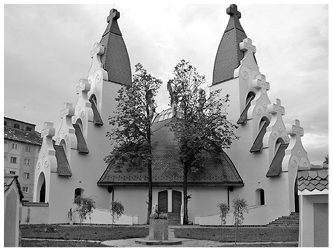
Figure 6.2 Millennium Church, Csikszereda, Romania (designed by Imre Makovecz, completed in 2003).
Both in Turkey and in Hungary, Turanism – discredited though it is as a linguistic category – remains an inspiring identity frame for ethnic nationalists in search of Eurasian connections. The Central Asian ‘Nomadic Games’, hosted in 2018 by Kyrgyzstan, was attended by a roll-call of heads of state/government who represented not only a rogues’ gallery of despotic and/or corrupt regimes, but also the outline of a new, Turan-derived nativist alliance in the twenty-first century: Messrs Erdoğan of Turkey, Nazarbayev of Kazakhstan, Aliyev of Azerbaijan, Mirziyoyev of Uzbekistan – and Hungary’s Viktor Orbán.36 Thus the logic of pan-movements can fold nativism into internationalist, (con)federative frameworks of mutual support.
Walter Scott Moves On from Ossian
By 1803, Macpherson’s Ossian was thoroughly discredited as a rank forgery. In English culture, the position of ‘Bard of the Nation’ had fallen vacant and was now increasingly allocated to Shakespeare. North of the Scottish border, however, Walter Scott was beginning his literary rise. He edited ancient ballads from the Scottish–English borderlands (Minstrelsy of the Scottish Border, 1803) and on that basis created an original narrative ballad, ‘The Lay of the Last Minstrel’ (1805). Although the setting is late-to-post-chivalric rather than primitive antiquity, and the poet figure is a ‘minstrel’ rather than a ‘bard’, the stage is still set in the Ossianic mode: we are at the tail-end of an era. The profession of minstrelsy has lost its standing, and the minstrel himself is old and decrepit. Indeed, as Scott himself phrases it in Ossianic diction, ‘the last of all the Bards was he’: a relic of the past.1
The wandering poet is invited to perform for the noble Buccleugh family, for whom he, quite literally, channels the past in rapturous, Ossianic inspiration (not unlike the guslar on the Karadžić frontispiece, Figure 5.1):
Again, that fixed stare into a space of inspiration, as with Ossian and the Serbian guslar. The minstrel recalls the past, and whatever is not solid memory is supplied by the imagination.
What then follows is the tale of a baronial feud of bygone days; but at the ending we return to the frame story and the aged performer. The fate of this wandering bard is much more cheerful than that of Ossian. The grateful duchess provides him with a little cottage under the castle walls to live out his days, and here he performs his ancient songs for appreciative passers-by.
Scott’s minstrel both echoes and bypasses Ossian, and that in two ways. To begin with, as Ann Rigney has noted, the minstrel manages to turn his pastness into gainful employment, in almost a prefiguration of what Scott was to become himself: a voice from the past, recalling bygone deeds but with a huge appeal to present-day audiences. Antiquity becomes historicism: pastness obtains a function in the present.3
The other innovation that Scott introduces is his deft use of a layered perspective. The frame story is already set in the past (somewhere in the later seventeenth century) and at this past moment the minstrel recalls an even earlier historical episode: we approach the past telescopically, through a frame story containing a ballad relating the past events. This is an early sign of Romantic historicism: unlike antiquaries, the historians of Scott’s generation were acutely aware of their source dependency, the fact that they gained access to the past by way of sources that were themselves part of the past. A few decades later, the historian Leopold von Ranke would turn this awareness – how to cope with one’s source dependency – into a keystone of his scholarly method. He devised an entire methodology of ‘source criticism’ (Quellenkritik) and in addition fixed a cognitive point on the horizon: to get an ‘immediate’, umediated sense of the past as it had actually been experienced at the time, liberated from its im-mediation in third-party informants.Footnote * This approach parallels the philological attempt to critically compare different manuscript variants to arrive at a putative Urtext, the text as it must have been imagined at the moment of its creation.4
For academic scholars (historians such as Ranke, philologists of the Lachmann school), this source dependency is a problem to be dealt with; Scott, however, turns it into a virtue, an attractive narrative strategy. Paradoxically, he makes his evocation of the past more realistic by explicitly evoking the tunnelling trajectory one has to perform between Now and Then, the many generations and transitions that separate us from a receding Long Ago. In Old Mortality (1816), the days of the Covenanting wars (1679) are approached through a survivor (nicknamed ‘Old Mortality’) who maintains the graves of the fallen, striving to stave off their oblivion. This stratagem renders the past truly exotic: alien and alluring at the same time, something approached in an enticing game of disclosure and deferral.
Scott does the same for Scotland itself. He always approaches the most colourful destinations in that country from a starting point of familiar domesticity and reaches them by way of successive stages, each with increased exotic strangeness. In Rob Roy (1818), the English narrator moves first to the mansion of his rough-hewn relatives in Northumberland; then, in a daring escape, across the border to the unknown and adventurous setting of Glasgow; and finally to the haunts of the wild Highlander, Rob Roy McGregor himself, around the shores of Loch Katrine. The mechanism is most noticeable in the novel that turbocharged Scott’s literary career, Waverley (1814). It marked Scott’s transition from dramatic poems set in the past (The Lay of the Last Minstrel, Marmion, The Lady of the Lake) to the genre of historical prose fiction. Scott had become a celebrity as a poet and was in 1820 given the title of baronet. He sought to avoid the stigma of being a mere novelist (the novel was at that time considered a trivial pastime, and not serious literature at all), so that Waverley was published anonymously, and subsequent novels were stated to be ‘by the author of Waverley’. It was only after those ‘Waverley novels’ had become a literary sensation, and well and truly redeemed from the stigma of triviality, that Scott owned up to his authorship in 1827. Those novels had meanwhile also become considerable money-spinners; Scott was the first bestseller author in history, turning writing into a business model.
The title hero of Waverley also approaches Scotland, and the Scottish Highlands (where the core of the action is located), in telescoping stages. He is sent from his native England to Dundee and stays with a family friend in Perthshire, close to the Highlands. From there he accompanies Highlanders to their home north of Stirling, and it is here, at the residence of the MacIvor clan, that he encounters the true heart of Scottish exoticism. The acme of that exoticism is reached in Chapter XXII, entitled ‘Highland Minstrelsy’: the attractive sister of his Highland host, Flora, takes him to a wild and remote glen. There, near a picturesque waterfall, she plays the harp for him and performs an ancient Scottish ballad. Waverley’s progress up the glen, following Flora, is a transition from reality into romance: the countryside becomes wilder and more sublime at each turn and step, and the hero, who feels like a ‘knight of Romance’, falls under the spell of the almost supernatural (quite literally ‘enchanting’) Flora. It will not surprise the reader that what Flora finally delivers is Ossian pure and simple: a ballad by ‘Rory Dall, one of the last Highland bards’, beginning ‘Mist darkens the mountain, night darkens the vale, but more dark is the sleep of the son of the Gael!’5
This is how Scott latches onto the Ossianic legacy. As Waverley, starting out from ‘life as we know it’, ventures into the world of Highland minstrelsy, he also moves out of modernity. Scott hammers this message home in the urgent topicality of the novel’s politics. Its subtitle, ’Tis Sixty Years Since, recalls a moment still within living memory for its readers: Waverley is set during the 1745 coup d’état of the exiled pretender to the British throne, Bonnie Prince Charlie (scion of the ousted Stuart dynasty), supported by his adherents in the Scottish Highlands. This 1745 Rebellion posed, briefly, a threat to the Hanover dynasty, established on the throne only since 1715; its failure and bloody suppression broke the political power and independence of the Scottish Highland clans. Like any civil war, it left traumatic memories, unresolved conflicts and divided loyalties in its wake. It is at this critical historical juncture that Scott sets his Waverley. The political divisions between Hanover and Stuart are superimposed on the novel’s oppositional scheme between Now and Then, familiar and exotic, England and Highlands, Anglo-Saxon and Celtic, reality and romance. Waverley is a junior officer in the British army, the MacIvor clan and Flora are adherents of the Stuart pretender. The enchantment that Flora exercises over Waverley makes him join the rebels and their doomed cause, with potentially tragic results.
This makes the novel also a political allegory. Waverley’s escape from his rebellious Stuart entanglement is a return from poetry and romance to a more prosaic form of realism – a dis-enchantment. (He marries a woman of an altogether more sensible disposition than the firebrand revolutionary Flora.) We now usually see the concept of disenchantment in Weberian terms, as a rationalization and secularization process working in tandem with modernity; but enchantment is not exclusively a religious principle, and it makes sense to see Romanticism, an anti-rationalist and anti-Enlightenment paradigm in cultural history, as an attempt to salvage the forces of enchantment; a cultural re-enchantment.Footnote *
Scott balances the contradictory impulses of disenchantment and (re-)enchantment, the coming-of-age novel and the historical romance. Waverley’s predisposition to headlong romantic enchantment is a symptom of his immaturity, and he needs to outgrow it. And with that, Scott also gives his verdict on the 1745 rebellion, still a very precarious topic in Scottish public affairs. The Stuart rebels had romance and poetical allure on their side, with their chivalry, courageous loyalty and colourful traditions; but they were also linked to Scotland’s past rather than to its future. Progress and a sense of practical realism demanded an accommodation with the new, Hanoverian dispensation. Thus, while the interest of the characters and the action undoubtedly lies with the Highlanders and Stuart rebels, the narrator firmly endorses the Hanoverian status quo.
What Scott created, then, was a hybrid genre, uniting the excitement of the romance and the realism of the novel. He reflected on this himself in his article on ‘Romance’ for the 1824 Encyclopaedia Britannica. The central action of Waverley is firmly of a ‘romantic’ nature, evoking medieval chivalric romance, featuring passionate characters and exciting incidents in colourful settings, exotic because of the distance both in time and in space. The authorial voice (the narrator), however, and the framing of the action, are much more in the mode of psychological realism, following the genre of the novel (rather than the romance) as it had been practised by Samuel Richardson and Jane Austen, establishing a rapport between narrator and reader on the basis of of shared (modern, middle-class, sensible) values and experiences. Scott wraps a romance into a novel. In the opening chapters of Waverley, Scott admits in so many words that he had been inspired by Cervantes, realistically evoking a romantic, starry-eyed hero: the delusional Quixote, and the impressionable young Waverley.6
Scott is a master at setting up strong, almost overdetermined binary polarities and then mediating between them: between Scotland’s fond clannish memories and its British, Hanoverian present; between heart and head; between first-love infatuation and mature married life; between enchantment and realism, romance and novel. He also mediated, uniquely, in the relationship between past and present. On the one hand the past is relatable, something where the modern reader is delighted to find points of familiarity or continuity; on the other hand the past is deeply alien, something that requires an act of the imagination to engage with. In Ivanhoe (1819) with its chivalric-medieval setting, points of recognition across the intervening centuries involve the history of dining, its changes and continuities. Scott explains the origin of the still common phrase ‘seated above/below the salt’. He alerts the reader to the lexical dichotomy between livestock and the meat dishes prepared from them (oxen and cows are turned into beef, sheep into mutton, swine into pork), and he points out the ethnic and class associations of such words: Saxon/peasant for the farm animals, Norman-French/aristocratic for the company at the dinner table (boeuf, mouton, porc). Such things create a sense of familiarity across time. On the other hand, the novel revolves around thrilling scenes of lawlessness that render the chivalric Middle Ages truly alien territory: the armchair time-traveller encounters trial by combat, knights jousting, women to be burnt at the stake on the accusation of witchcraft, brigands laying siege to a castle. (Even so, Scott titillates the reader by hinting that the head of these brigands is none other than the familiar folk figure Robin Hood.)
In the hybridity of this genre, Scott can have it both ways: his evocation of the manners and customs of yesteryear has all the authority of the well-informed historian, but his narration of heroes and heroines trying to come to terms with challenging circumstances is pure fiction. This is, as Ranke would call it, the ‘immediate’, non-mediated experience of the past. The modern reader, through the power of the stimulated imagination, senses how it must have felt for Edward Waverley to have to choose between Rose Bradwardine and Flora MacIvor, or for Wilfred of Ivanhoe to reconcile his dutiful loyalty to his Saxon father with his fealty to his Norman liege lord, Richard the Lionheart; or his love for the fair Rowena with the undeniable but impossible chemistry between him and the beautiful, healing Rebecca. The emotional dilemmas and the exciting cliffhangers are such that any reader will breathlessly turn the pages and mentally engage with a bygone age vividly rendered, alive and present. In the process, the arresting anecdotes and glimpses of social manners provide an intellectually stimulating encounter with life as it was long ago. Readers immerse themselves in a history that is both past and present – and that may stand as a definition of Romantic historicism.
Between History and Legend: Facts, Fiction and Fakes
It is well known that not only leisure-time readers but also an entire generation of historians took inspiration from Scott. These Romantic historians show a specific set of characteristic traits. In their writing style, they deliberately emulated Scott’s powers of ‘bringing the past to life’. As a result, they deployed a variety of techniques that strictly speaking were proper to narrative fiction and that were a novelty for the historian’s craft. These narrative strategies involve shifts of perspective, relating the events sometimes in the voice of an omniscient narrator, sometimes focused through the experiences of participants (deliberately selected by the historians as points of sympathetic identification). Also noticeable is an alternation between ‘spectacle’ and narrative. Spectacular writing evokes a scene or situation for the mind’s eye, often even asking the reader to accompany the author’s imagination into a situation that is then described as a tableau, with elements arranged in a quasi-visual, panoramic style. The panorama is static; the account is not about events or occurrences but a stage being set. The description of the successive events then becomes a narrative, and here literary techniques are used such as shifting focuses, back-and-forth juxtapositions between concurrent actions in different locations (the ‘Meanwhile, back at the ranch’ mode), and a dramatic characterization invoking stock characters calculated to evoke sympathy or antipathy: family fathers, haughty courtiers, calculating Jesuits, innocent maidens, stalwart young idealists. Those techniques are, properly speaking, dramatic, theatrical; but this turn towards the dramatic (the melodramatic, even) was made by historians under the novelistic influence of Walter Scott, and it later earned them the qualifications ‘narrative’ and ‘Romantic’ at the same time.7
Yet for all that, these authors were historians, and they took the scholarly part of their calling seriously. They, like the philologists, were living through a sea-change. History writing had been a genre of philosophical disquisition, dominated by the examples of Hume’s History of England and Voltaire’s Siècle de Louis XIV. History was, as the phrase had it, ‘philosophy teaching by example’: the past was studied as a dataset from which to distil what circumstances and decisions had led to the glories or failures of royal reigns or military campaigns. After 1790, the overhaul of libraries and archives and the Napoleon-induced crisis of universities affected this field of learning as much as literary studies. The newly assembled or reorganized archives made different perspectives on past events available, and the study of archival material became the historian’s primary technique. Historians such as Augustin Thierry and Jules Michelet gained their professional experience in the Arsénal and other archives. At the University of Berlin, where Ranke used the Seminar as a dialogic training workshop for history students, a methodology of source criticism was instituted that privileged original archival sources above later-established accounts. Historians became professionally defined by their Rankean Quellenkritik or source criticism and by their reliance on archival, rather than secondary, material. This set them apart from the novelistic liberties that Scott, much to their envy, could take, but it also defined their calling as what was now becoming a profession and an academic discipline rather than a literary–philosophical pursuit. And in subsequent decades, like the professionalizing philologists, the historians, as civil servants in public employ, would write in the service of the nation-state.8
Meanwhile, on the far side of literary fiction, forgery was rife. As we saw in Chapter 4, the archives in these decades yielded unexpected treasures documenting the nation’s forgotten vernacular literary history. These authentic relics of the past were highly prized and in great demand. Philologists competed, as in a gold rush, for the ancient materials that were coming to light: discoveries spoke to the imagination, could make careers, and provided the readers with a sensational feeling of connectedness with the national past. With such high value being set on ancient documents, is it to be wondered at that some of these were manufactured in order to meet the demand? Macpherson was remembered above all as a forger – not altogether fairly, but not quite unjustly either – and as a forger, too, he became a role model. The most egregious of all the forged ‘ancient documents’ that came onto the market were the ‘Bohemian manuscripts’, with the celebrated Czech philologist and antiquary Václav Hanka playing a key role. Found in the localities known as Königinhof/Dvůr Kralové and Grünberg/Zelená Hora, they contained legendary and literary material from medieval Bohemia, purportedly from the thirteenth and even the eighth/ninth centuries. Those materials furnished the Czech readership of the Romantic period (which was just beginning to develop a national self-awareness) with tales of epic, gratifying victories. Now subordinated under the Habsburg crown, Czechs were invited to look back on a proud and authentically Slavic history. The manuscripts dovetailed with legends and myths that had been written down in earlier chronicles and helped flesh out a glorified image of early Czech history. In particular the story of the founding of Prague, invoking legendary ethnic ancestors such as Krok, Cech and the princess/prophetess Libuše, was expanded with additional episodes and characters. In the years when Beowulf, the Nibelungenlied, the Chanson de Roland and the Lay of Prince Igor’s Campaign were drastically realigning the literary–historical landscape of Europe, an additional discovery from the Czech lands was not in itself implausible, and Czech historians such as Palacký actually relied on these manuscripts for the medieval portions of their national histories. The sculptor Myslbek took inspiration from them for some of his public statues, and nationally minded writers such as Čelakovský and Erben also stood by the manuscripts. Philologists, however, habitually fixated on sources and provenance and mindful of the Ossianic imbroglio, were sceptical; there was considerable mistrust around the Bohemian manuscripts, which by some were denounced as fakes. The result was a decades-long controversy. Even when scholars argued, on the evidence, that the manuscripts were fakes, people rallied behind the revered figure of Václav Hanka and doubled down on their belief in the authenticity of the contents; all the more so since the Habsburg authorities had clamped down on Slavic–Czech nationalism after the fateful 1848 revolution (in which intellectuals including Palacký and Hanka himself had played an active part as participants in Prague’s Slavic Congress).9
Following Hanka’s death in 1861, his funeral helped to instil the legendary and romantically imagined past into the very cityscape of the Czech capital. Occurring as it did in the repressive post-1848 atmosphere, the funeral provided a rare occasion for a public demonstration of Czech patriotism. It became a mass event; Hanka was laid to rest on the Vyšehrad hill overlooking the river Vltava. Vyšehrad was the site where the mythical Krok, at the behest of his daughter, the prophetess Libuše, had established the castle of the primordial Czech royal lineage and where Libuše had foretold the rise of a great future city (Prague). Already in 1836 the nationalist-Romantic poet Karel Hynek Mácha had been buried here. Following the interment of Hanka in the same spot, Vyšehrad began to emerge as a patriotic pantheon, a shrine infused by the spirit of Libuše herself; re-enchanted in the here and now. As in so many other countries, nationalism was to some extent a cult of the dead, with public funerals providing rare instances of national demonstrations in an atmosphere where the public assembly was not yet an acknowledged part of civil liberty. Certainly in the case of nationalist leaders, whose death could be construed as a form of martyrdom, their funerals fulfilled a strong propagandistic purpose. The Czech poetess Božena Němcová placed what may have been a bouquet of flowers, a laurel wreath or a crown of thorns on the coffin of the persecuted nationalist poet Karel Havliček Borovský in 1856; she herself was buried at Vyšehrad in 1862. A central monument called Slavín was erected there in 1880 (Figure 7.1), and even under the shadow of the Nazi occupation, Alphonse Mucha, like so many other great Czech artists and public figures before and after him, was buried there in 1939.
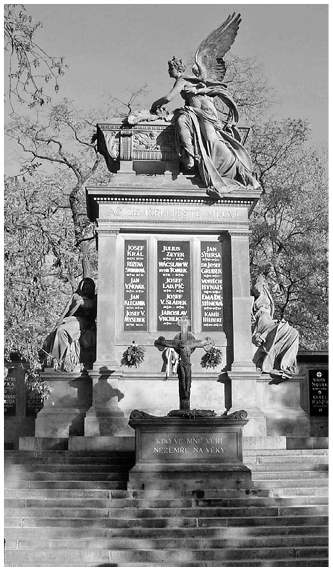
Figure 7.1 Slavín memorial in the Vyšehrad cemetery, Prague.
Vyšehrad thus became ‘hallowed ground’: a site where medieval legend and modern nationalism meet, in a sort of timeless time-share. Figures of Romantic legend, poets, artists and historians (Libuše, Hanka, Němcová and Mucha) are all stakeholders in this lieu de mémoire (and as Pierre Nora pointed out in coining that phrase, a lieu de mémoire typically condenses a maximum of historical meanings and evocations into a single symbolic unit.) What nineteenth-century historicism brought back to life, that past ‘on its own terms’ as it was actually experienced, was not necessarily the past that was demonstrably, archivally factual. What was resuscitated was in many cases a legendary past, and those legends and myths are, as we have seen, fluid in their provenance. They can be medieval, recently invented, or somewhere between the two (heavily reworked, or elaborated with additional incidents, side characters or episodes).10
The legends that appealed to the taste of Romantic historicism often negotiated the borderline between life, death and afterlife. Prevalent tropes were the ‘last of the race’ (Ossian’s successors include Fenimore Cooper’s Last of the Mohicans and Scott’s Last Minstrel11), and the ‘pagan princess at the dawn of history’ – for example Libuše. Her legend was known from medieval sources even before the discovery of the forged manuscripts and had been given literary treatment, initially by German Romantics (Brentano, Die Gründung Prags, 1812; Grillparzer, Libussa, 1844). After 1848, she was reappropriated by the Czechs with a vengeance. Smetana’s opera Libuše, used to celebrate the opening of Prague’s opera house in 1881, culminates in her foretelling of Prague’s greatness and has become the Czech national opera. The figure of Libuše became a favourite for paintings, statues and tile tableaux, and as a national icon her ontological status (non-historical, legendary) does not make the slightest difference. What was operative was the combination of feminine grace and lofty symbolism. The national-Romantic imagination is full of female characters combining historical stature and maidenly charm. Scott’s heroine Flora MacIvor, ‘last of the Jacobites’, who beguiles Waverley with her Highland minstrelsy, is an example: that almost preternaturally alluring femme fatale with her harp at a wild waterfall, who is among the last diehard loyalists to support Bonnie Prince Charlie. The opera composer Bellini created the figure of Norma, a Gaulish priestess, depicted at the moment when Christianity was about to drive out paganism. The princess Bogomila in France Prešeren’s Baptism at the Savica is in a similar transitional position from paganism to Christianity, as is Libuše in Brentano’s Die Gründung Prags. We could add the Lithuanian Princess Birutė (last of the pagan priestess-princesses, again), the Polish princess Wanda, the proto-Dutch Batavian heroine of Hermingard van de Eikenterpen (by Aarnout Drost, 1832) and Amaya, last descendant of the tribal god Aitor, in Francisco Navarro Valloslada’s Amaya o los vascos en el siglo VIII (1879).12 Some of these are purely fictional creations (Norman, Flora MacIvor, Hermingard, the Ossianic prototype Malvina); the others are legendary figures, whose true rise to fame occurred when they were reworked by nineteenth-century Romantics. Many of them became the pagan patron saints of popular girls’ names: Aino in Finland, Milda in Lithuania, Wanda in Poland, Linda in Estonia, Maeve, Gráinne and Deirdre in Ireland, Angharad in Wales, Gudrun in Germany and its neighbouring countries, and even the Spanish-Argentinian name for the Falkland Islands, Las Malvinas: they all testify to the power of the past to re-enchant the present.
But the fact that this pattern was so obviously transnational and pan-European, like the influence of Scott or Romanticism itself, should not make us forget that the remembered past was always a specifically national past, a history dominated by the theme of the nation at crisis moments in its own particular existence. What Scott and the Romantic historians bequeathed to the succeeding generations was an overriding sense of history as, precisely, national history, recounted in episodes that were emblematic of the history of the nation’s own, distinct identity and character.
The Long Tail of the Historical Novel: Epic, Sentimental, Juvenile
The historical novel has been described as history faute de mieux – an ersatz history writing for situations where the real thing was not a feasible option, much like Scott’s Last Minstrel using ‘glowing thought’ to supplement the blanks in his memory. The novel could make up for gaps in the historical documentation with a fictional supplement, and as such was a particularly suitable stop-gap medium for scantily documented topics.13 This played into an interest in the medieval period, not only in long-standing sovereign states such as Holland, Portugal or France, but equally for countries such as Flanders, Poland and Hungary (and of course Scotland), now subordinate under a higher crown but keenly aware of their erstwhile feudal, chivalric autonomy.
Novelists in the Scott tradition from those countries did important memory work (history faute de mieux) to recall and celebrate former glories, and their novels have become enshrined in their nations’ literary histories. Like the Waverley novels, their evocations of the past became revered classics. Hendrik Conscience is proverbially known in Flanders as ‘the man who taught his nation to read’. His historical novels have all become formative launching pad for powerful lieux de mémoire. Public statues in Flemish cities commemorate the medieval heroes that his novels rendered famous: Breydel and De Koninck in Bruges, Artevelde in Ghent. Most importantly, Conscience’s evocation of the Battle of the Golden Spurs of 1302 rendered that Flemish victory over the French army at Courtrai a national high point par excellence; the heraldic emblem that furnished the novel’s title (De Leeuw van Vlaenderen, ‘The Lion of Flanders’) is now the official flag of the Flemish region in Belgium, a song of that title is the Flemish Community’s official anthem, and the battle’s date, 11 July, is now a Flemish feast day and an occasion for nationalist manifestations. Something similar (familiar to us nowadays from the movie Braveheart) was at work for Henryk Sienkiewicz’s evocation of the Battle of Grünwald, which forms the culmination point of his novel Krzyżaci (1900, ‘The Knights of the Cross’, i.e. the Teutonic Order). The novel evokes the long, bitter oppression inflicted by those feudal German tyrants until finally a glorious Polish-Lithuanian army defeats them in 1410. Much as Conscience’s novel was itself inspired by a huge, historical painting of the Battle of the Golden Spurs (by Gustaaf Wappers, 1836), so too Sienkiewicz’s novel was inspired by the vast history painting by Jan Matejko (1878). In another parallel to the Flemish case, the novel prepared the ground for turning the medieval battle into a galvanizing commemorative event. The 500-year commemoration in 1910 became a vast, fervently nationalistic festivity, followed by the erection of statues in diverse places and ultimately an equally fervent mass event at the next centenary in 2010. The other historical novels of Sienkiewicz (the ‘Trilogy’, 1884–1887, evoking the seventeenth-century wars against Cossacks, Swedes and Turks) remained fixed on school reading lists throughout the twentieth century.14
Conscience and Sienkiewicz (and the many other Scott adepts from Central Eastern Europe) diverged in one crucial aspect from their Scottish prototype. Scott was keenly aware of the ongoing dialectics of history and usually resolves the conflicts in his novels in a Hegelian type of ‘sublation’: the conflict, while being recalled and indeed enshrined, ensuring its availability for future recall, is at the same time seen as something that ultimately had to be overcome, with history providing a transcendence of the old enmities into a higher unity. (That is what the Hegelian term Aufhebung, sublation in its threefold meaning, stands for: to enshrine something for safe keeping; to abolish it as an active agency; and to lift it to a higher plane.) Ivanhoe marries his fair Saxon lady Rowena, but he will, as a courtier of the Plantagenet King Richard, be part of the merger of Saxon and Norman groups into a new, English identity. Waverley will marry Rose Bradwardine and, while wistfully mindful of the romantic memories of Flora and the Jacobite cause, point the way towards a viable Scottish participation in the United Kingdom. Scott personally helped perform that integration when he stage-managed the 1822 visit of George IV to the Scottish capital following his coronation. It was the first Hanoverian royal visit to Scotland, and there was a sense of awkwardness about the fraught historical relations between the Scots and the Four Georges. Walter Scott, entrusted with the organization of the event, sublated that tension by enshrining Highland culture into the very heart of the festivities, calling on all Highland chiefs to be present with all their traditional retinue and their accoutrements of kilts and bagpipes. Kilts and tartan (until then the uncouth dress of the delinquent, disaffected Highlanders, and frequently banned by law) were to be worn by the Edinburgh socialites as well, and even George himself was dressed up in that ultra-Scottish finery. It marked the beginning of the British royals’ love affair with Scotland and its Highland culture: young Queen Victoria, George’s successor, acquired Balmoral Castle around 1850, festooned it with neo-Gothic turrets and battlements, and turned it into a Romantic Highland theme park for the royal family.15
Scott, politically a conservative and no radical, opts for reconciliation between the parties whose historical conflicts he evokes. No such reconciliation can be found in Conscience or Sienkiewicz. For them, history is in the most fundamental sense unfinished business, and the ancestral battle against the oppressors is evoked to inspire its renewal in the present. Conscience concludes his Lion of Flanders with this clarion call to his readers: ‘You, O Fleming, who have been reading this book, reflect (considering the glorious deeds which it contains) what Flanders used to be, what it is now, and especially, what shall become of it if you should forget the sacred examples of your forefathers!’16 This is activist writing. Conscience’s book is one of the trigger moments of the Flemish national movement, which came to see modern-day Belgium as a re-run of the medieval conflict between freedom-loving Flemish burghers and a haughty French (or French-speaking) elite. No sense of letting bygones be bygones, or moving on from the past: the past, on the contrary, is held up as an enduring model for the present, and the modern, novelistic side of Scott is abandoned for blood-and-guts epic. We have in Chapter 4 seen newly produced epic poems by Romantics such as Prešeren, Mickiewicz or Shevchenko complementing the ancient ones that had been philologically retrieved from oblivion or noted down by folklorists from oral-traditional performers. To that mix we can now add a third element: the historical novel-as-epic, prose fictions of ancient battles and heroism. The epic-heroic past as an inspiration for modern nationalism: that ran directly counter to what Scott had intended to achieve with his work, and it threw a long shadow over the twentieth century. In Slovenia in 2014, the controversial politician Janez Janša (his chequered career is a matter of record, as is his sympathy with far-right nationalism) published a historical romance Beli panter (‘The White Panther’) charting the mythical-heroic rise of a primordial Slovenian state, ‘revealing the secret of the Slovenes’ ethnic origins’. In 2021 Janša, back in power as Prime Minister after a spell in jail, was reported as using the panther symbol, which by then had become a trademark of extreme far-right groups in Slovenia, as a national ‘brand’ on cufflinks to be given out as diplomatic presents during the country’s tenure of the EU presidency.17
Janša’s ‘White Panther’ is closer to pulp fiction, closer to epic fantasy such as Conan the Barbarian or Game of Thrones, than to Waverley; it lacks any of the novelistic subtlety of Scott, or of Scott’s successors in the literary genre of the historical novel (Manzoni, Tolstoy, Eco, Ghosh). If one were to point out a more congenial model, it would be Felix Dahn’s Ein Kampf um Rom (1876), set among the Ostrogothic tribal kingdoms of Italy during the migration period, epic-heroic in spirit and breathing a fervent Germanic ethnic nationalism. The author was a highly regarded historian of the migration period, a leading academic, popularizer of Germanic myth, nationalist versifier and founding member of the völkisch Alldeutscher Verband. Ein Kampf um Rom became successful mainly as a juvenile novel, avidly read by adolescent and young-adult boys, many of whom would carry the Ostrogothic warrior ethic of Dahn’s book into their post-1918 political careers.18
This appeal to young readers signals another mutation of the historical novel in its post-Scott afterlife. Its demise as a prestigious literary genre was repeatedly announced, and its dominance in the literary field was taken over by realistic and naturalistic novels set in the here-and-now; but the genre continued its tenacious existence in the margins of the literary marketplace, in unprestigious writing aimed at unprestigious readers such as women and boys.19
For women, there were ‘bodice-rippers’ from Georgette Heyer to the Angélique series by Serge and Anne Golon, reverting back firmly from the register of the novel to that of the romance. The light-entertainment historical romance, targeted specifically at female readers, still thrives, a prominent example being the Scott- (or at least Scottish-) inspired Outlander series by Diana Gabaldon. This feminine inflection of the historical novel tends to eschew national/patriotic affect, and significantly its locations and settings are less fixated on the author’s or reader’s own nationality – witness the many romancified recyclings of Jane Austen as rom-com costume drama, even in Californian or Indian settings, or the cheerfully heedless counterfactuality of Julia Quinn’s Bridgerton romances (2000–2006) in their multiracially cast Netflix adaptation. Worthy of mention also is the remarkable genre of high-gloss romance featuring (historical) female royals as protagonists. The identificatory frame is largely that of gender, with a national-patriotic element being at best in the ambient background. At most, the historical-Romantic treatment of Queen Louise of Prussia and Empress-Queen Elisabeth of Austria-Hungary (Sissi) has played on their nationally inspirational value for their German and Austro-Hungarian subjects; but within Europe the genre on the whole tends to play into the monarchy as a glamorous institution rather than the nation as a political motivator.20
For boys, historical fiction was continued in an altogether more heroic and national vein. In the wake of Robert Louis Stevenson (Kidnapped, 1886; The Black Arrow, 1888) many adventure romances were set in the exciting glory days of the national past featuring increasingly juvenile heroes. The masculinity code for such boy-heroes firmly echoed the pedagogy of ‘pluck’, cheerful optimism and undaunted self-discipline, which would later find its most potent expressions in Rudyard Kipling’s Kim (1901) and the Boy Scout movement partly inspired by that book. G. A. Henty (1832–1902) has become proverbial as an author for nationalist (or rather, imperialist) boys’ fiction in English; his titles total well over 100 and range from The Young Buglers, A Tale of the Peninsular War (1880) to By Conduct and Courage: A Story of Nelson’s Days (1905). In the Netherlands, there were tales of young boys joining the celebrated nation-building seamen of the ‘Golden Age’ as shipmates.21 How tenacious this ethos was became clear in a parliamentary exchange in 2006 when the centre-right prime minister of the Netherlands, Jan-Peter Balkenende, championed a can-do mentality that he called a VOC-mentaliteit, an ‘attitude like that of the East India Company’: ‘I fail to see why you are being so negative. Let’s take heart from each other! Let’s be optimistic! Let us say: Holland can do it again! That VOC mentality, looking beyond our frontiers, dynamism. No?!’22 To invoke that colonial trading company as a role model was, to say the least, awkward; the incident has become notorious. The Verenigde Oost-Indische Compagnie (VOC, United East India Company, founded in 1602) had been the main entrepreneurial driving force in the establishment of Holland’s colonial empire and had helped finance the country’s war of independence against Spain. While its track record is now seen to have been mired in violent conquests, slave labour and slave trade, and a ruthlessly oppressive extractive economic colonial system, it was, during the late nineteenth century and the early twentieth (when colonialism was nothing to be ashamed of), a proud symbol of the country’s political and economic rise to power – its so-called Golden Century. This is the memory that obviously came through here: a belated echo of Balkenende’s conservative Protestant upbringing in the 1960s, when songbooks and juvenile fiction still unproblematically, unpolitically extolled the stalwart masculinity of colonial seafarers.
Besides the material aiming to instil a spirit of feisty, patriotic masculinity in the boys of the nation, there were also historical novels that had initially been targeted at an adult readership but that became, in the course of their subsequent career, juvenile or school reading. Besides Dahn, Scott and Sienkiewicz, this juvenile retargeting is also noticeable in Dumas’s The Three Musketeers. We shall note in Chapter 12 how historical fiction post-Scott was also given a fresh lease of life in cinematic form. All this helped to maintain historical fiction as a powerful and popular frame for bringing the past (and by default that meant the national past) to life as an immersive and inspiring environment.Footnote *
National History, National-Historical Myths, National Memory
Scott had shown the historians of this generation how to turn away from the palace-and-battlefield focus of earlier practitioners. Antiquarians had always been more inclusive in their interests: anything that might illustrate ancestral manners and customs was grist to their mill. That more societal focus was now also becoming the primary concern of historians; but what we would call ‘society’ they called ‘the nation’. Not kings or generals, but the nation was the main actor in their narratives (as indeed it was for Scott, although he used fictional protagonists as proxies through which to focus the collective experience of ‘national’ crisis moments).
Friedrich Schlegel had, earlier in the century, seen philology as a twin specialism to Völkergeschichte, the history of peoples. He used that term still in an older sense, to refer to pre-state antiquity studied in a wide geographical ambit. The implied notion of Volk became more focused when the historian Leopold von Ranke applied it. His main analytical frame for the European past was the contentious coexistence of two ethnocultural spheres that he identified in his Geschichten der germanischen und romanischen Völker of 1824. Jacob Grimm echoed Ranke’s view in his 1844 account of a voyage to early-Risorgimento Italy:
All of Europe consists of only two Völker, Germans and Italians, whose external powers had been sundered from the earliest time on. The reasons for that split must be sought directly in their nature and temperament [Sinnesart] as well as in their history. … These two Völker, whose destinies have been so tightly entwined, have long harmed one another, and the two now need to reconcile.23
As we saw in Chapter 6, Völkergeschichte was used by Arndt and Grimm to vindicate German claims on disputed borderlands, notably Schleswig-Holstein and Alsace, but also the Low Countries. It was philologically and archaeologically argued that at some point in history those territories had been settled by populations whose language or ethnicity could be qualified as Germanic. That in turn was invoked as scientific proof that the areas in question should legitimately be reunited with Germany (or annexed by it, as would be the fate of Alsace-Lorraine in 1871; see Chapter 11).
‘Ethnohistory’ was more generally widespread. Everywhere, history was focused on the nation (an ethnic community) as the experiencing subject of temporal change, rather than on states or institutions. Scott himself had set the tone in Ivanhoe, which saw medieval English history as a long ethnic conflict between Saxons and Normans. Ivanhoe’s Europe-wide fame ensured that this ethnohistorical frame was adopted in other countries as well: the Scott fan Augustin Thierry applied it to France, which he saw as the battleground between Gaulish, Roman and Frankish ethnic traditions (Lettres sur l’histoire de France, 1827) – to the point even that cranial measurements were taken to see which ‘race’ had left its traces where in the nation’s past. Taking Thierry’s cue, the Belgian Flemish historian Joseph Kervyn de Lettenhove traced a long ethnic struggle between the Flemings and their neighbouring French-francophone hegemons (Histoire de Flandre, 1847–1850). Although Thierry and Kervyn influenced later popularizing raconteurs such as Henri Martin (Histoire de France, 1833–1883), Eugène Sue (Les mystères du peuple, 1849–1856) and Hendrik Conscience (De Kerels van Vlaanderen, 1870), this type of ethnohistory drifted away from the academically professionalizing historical discipline after 1850.
As history becomes, almost by default, national history, the nation as seen by historians both enacts and experiences the challenges of the changing times. Wars, catastrophes and revolutions are described as affecting the national collective; defeats in war are described as national tragedies, victories as glories that the entire nation can rejoice in. More than that: since historians usually narrate the history of their own nation, the collectivity of the nation unites both the nation in the past and the nation in the present – the historian’s readership, that is. Readers are meant to identify with the nation whose past tragedies and triumphs are being held up to them. Libuše speaks to modern Czechs. Michelet, after relating a key moment of the French Revolution (the abolition of feudalism and estate privileges on 4 August 1789), cannot help himself from exclaiming ‘Vive la France!’ – like Madeleine Lebeau in Casablanca a century later.
The night grew late, it was two o’clock. That night took away the immense and painful spell of the Middle Ages. The approaching dawn was that of liberty. After that marvellous night there were no more classes, but French people; no more provinces, but one France. Vive la France!24
There is a civic pedagogy at work here. In narrating to their readers the glories and tragedies of their ancestors, historians became instructors of the public concerning what was now their history, enacted and experienced by their ancestors. The opening phrase of the French schoolbook, evoking ‘Nos ancêtres les Gaulois’ à la Henri Martin and Ernest Lavisse, has become proverbial in this respect (to the point of being gently lampooned at the opening of each Astérix album). The educational implications of this shift came soon enough: history was made a school subject in most European countries in the course of the nineteenth century, and it was aimed specifically at instilling in young pupils a sense of moral-cum-civic identification with the fatherland.
As national history was given a place in school curricula, university departments now had the task of training not only young historians in the craft of archival fieldwork and source criticism, but also future history teachers at secondary and primary schools, and inspiring or helping to prepare the textbooks that were to be used at those schools. Historians became public intellectuals and opinion leaders, even maîtres à penser – witness the tumultuous scenes around Michelet at the Collège de France on the eve of the 1848 revolution. Many a historian became a ‘nation-builder’, such as Alexandre Herculano in Portugal or František Palacký in Bohemia. In Ireland, the most vehement ideological battles were fought over the past, with poets and activists (Tom Moore, Thomas Davis, John Mitchel) writing fiery anti-English popular histories in the teeth of the professional and professorial mainstream. In the Netherlands, conflicting Protestant and Catholic interpretations of the revolt against Spain led to confessional frictions. This friction intensified as the events of that revolt, which had unfolded in the 1570s and 1580s, were commemorated on their successive tercentenaries in the 1870s and 1880s. The battle over the moral meaning of the foundational Dutch Revolt for the present Netherlands fed into the establishment of separate school systems for the country’s different denominations and a deep societal split along confessional lines that lasted into the 1950s. The past mattered.25
The outreach of Romantic history writing was noticeable everywhere. Commemorative events and public holidays, the placement and presence of public statues, the historical branding and ornamentation of public spaces (indoors and outdoors) in statuary, tile tableaux, reliefs, murals and paintings, not to mention street names: all of this drew on the colourful, immersive stories of the past that historians had learned to narrate and evoke – indeed, had brought to life, and with a vengeance – in the wake of Sir Walter Scott.
To be sure, the literary influence of Scott was on the wane. The canonicity of Scott was frequently asserted to be a thing of the past, but the decline was in fact much slower than those who tried to ‘get over Walter Scott’ would like to believe. Scott’s afterlives lingered tenaciously in odd corners of the cultural field: tourism, historical re-enactment, the ambient taste for Romantic historicism as it percolated into the decorative arts, product design and popular culture. The historical novel lost its literary primacy but seeded traces of Romantic historicism all over the public spaces of Europe.26
Historians, too, tried to ‘get over Scott’. They came to disavow their envy of Scott’s narrative and evocative powers, and indeed disavowed Romantic history writing altogether. Figures such as Michelet and Thierry, Palacký and Herculano, became a bit of an embarrassment for their successors, were considered mere littérateurs rather than proper ‘serious historians’. The real, ‘serious’ historians were now embarked on a rapid process of academic professionalization, consolidated into university departments, and developed a professional ethos privileging archival (unpublished) sources. As the archives themselves became state-curated records of public policies, historians became state historians, or else social historians, rather than the ‘national historians’ they had been heretofore – they chose to be ‘national’ no longer, either in their working frame or in their audience appeal. Post-Romantic historians mistrusted the rhetoric and enthusiasm, and indeed the entire taste for drama or narrativity, that had characterized the Romantic generation, and they pursued their professionalism in austere factualism, in quantitative methods in the mode of the developing science of sociology, and in debunking the over-interpretations of their immediate forerunners. A positivistic professional ethos of anti-enthusiasm set in, and a distrust of appearances and generalizations took hold of the profession. This positivistic habitus has continued to dominate history departments, although leftist historians have returned to a Romantic sense of empathy when describing the historical struggles of class, race, gender and other subaltern identities.
That shift towards scientism, positivism and factualism, and away from pathos, imagination and narrativity, occurred in the second half of the nineteenth century; it was marked by books such as Louis Bourdeau’s L’histoire et les historiens: Essai critique sur l’histoire considérée comme science positive (1888). Ranke’s historicism now hardened into a precept of dispassionate exactitude and strict reliance on attested facts. The narrative evocation of ‘the story of the nation’ was left to popularizers and school textbooks. These were usually not based on fresh archival research and hence failed to qualify as serious history writing, instead seen as recycling yesterday’s news. But while they were ignored by the historical profession, they kept the Romantic legacy alive among the public at large. Michelet, Palacký and Mitchel were reprinted in popular editions, as was Walter Scott, throughout the century and beyond, while the historical profession began to publish more and more for an academic peer group. Writing history for a larger or indeed ‘national’ audience was, at best, popularization. Historians claiming to be both professional and ‘national’, such as Treitschke, would pursue the latter role in their journalistic and controversial writings, as public intellectuals, rather than in their historiography.
In this development towards academic professionalization, historians lost their grip on the public imagination, and the public imagination continued to feel the allure of the Romantics. This was in part because Romantic history writing had broadcast and canonized stirring, heroic episodes of the past: things that became, properly speaking, myths – in the common modern sense of that word. These were key episodes from the nation’s history, frequently retold, widely remediated into visual imagery, into popular landmarks and narratives. The German landscape in the course of the century became dotted with huge monuments that as tourist attractions kept the myths of their dedicatees alive: the huge Arminius monument near Detmold recalling the Battle of the Teutoburg Forest, the equally huge Kyffhäuser monument recalling the myth of Barbarossa as the Once and Future German emperor, Cologne Cathedral as a monument to the continuity from the medieval to the modern Empire.27 France had its walk-in history book in the Panthéon, with its statues, murals and graves, the many landmarks restored by Viollet-le-Duc, Napoleon’s tomb in the Invalides and the many, many statues of Joan of Arc. Here and there tourists could visit in-the-round panorama paintings recalling the heroic occasions of glorious battles: Waterloo, Sebastopol, the arrival of the Magyars in Hungary.28 The Netherlands combined feudal-medieval and seventeenth-century bourgeois cultural history in its Muiderslot near Amsterdam. The Risorgimento told its story in the gigantic monument to Vittorio Emmanuele in central Rome. And so on, and so on. With all those landmarks and tourist attractions dotting the landscape, the narrative highlights of national history – national myths – had solidified themselves in the public mind without needing to rely on the archival research or textual production of card-carrying historians.
It is difficult to think of post-Romantic academic historians enjoying the same cultural stature as their Romantic forerunners – Michelet, Alexandre Herculano, František Palacký, Carlo Cattaneo, Alexandros Rangavis or Joachim Lelewel. Indeed, all the scholarly corrections made by professional academic historians on the basis of painstaking archival research failed to inspire or even instruct the public at large to the same extent as their heedlessly Romantic predecessors had done in their own, almost literary writings or through their general culture-historicist outreach. Indeed, as academic historians introduced non-national topics into school curricula after 1945 (world history, social and economic history) those changes provoked a slow-burning backlash. National feeling had placed national history on school curricula in the 1850s, and history could not discard national feeling with impunity in the 1980s. Policy makers and public intellectuals at the national conservative end of the political spectrum periodically issued calls to bring national narrative historicism back into the school curricula. The UK prime minister John Major stressed the importance of teaching Shakespeare; Michael Gove, a British Conservative politician, spoke as follows at the Conservative party Conference of 2010:
One of the under-appreciated tragedies of our time has been the sundering of our society from its past. Children are growing up ignorant of one of the most inspiring stories I know – the history of our United Kingdom. Our history has moments of pride, and shame, but unless we fully understand the struggles of the past we will not properly value the liberties of the present. The current approach we have to history denies children the opportunity to hear our island story. Children are given a mix of topics at primary, a cursory run through Henry VIII and Hitler at secondary and many give up the subject at 14, without knowing how the vivid episodes of our past become a connected narrative. Well, this trashing of our past has to stop.29
In the Netherlands, a National Canon was drawn up in 2006, and a National History Museum proposed, with the avowed aim to bring society together around a shared set of narratives. A similar canon had been drawn up in Denmark; Flanders followed suit in 2021. Although academics were involved in the canons’ elaboration, many professional historians voiced reservations.30 There were flanking initiatives to recycle and publicize this new national historicism. In Denmark, the Netherlands and Flanders (the three countries that had defined national canons), there were television series (Historien om Danmark, 2017; Het verhaal van Nederland, 2022; Het verhaal van Vlaanderen, 2023) with explicitly national-narrative titles and, in Flanders, a nationalist conservative politician endorsing ‘the logic of promoting Flemish identity’.31 Public and commercial media such as cinema, television and musicals have since 2000 continued to recycle canonical national figures. Quiz election shows on ‘the nation’s greatest figure in history’ were held in many European countries: in the UK (2002, ‘100 Greatest Britons’), in Germany (2003, ‘Die größten Deutschen’), in Finland and the Netherlands (2004, ‘Suuret suomalaiset’ and ‘De grootste Nederlander’), in Portugal (2007, ‘Os grandes portugueses’), in Greece (2009, ‘Megali Ellines’), and in Italy (2010, ‘Il più grande italiano di tutti i tempi’).
What fed that populist mass-media historicism? The answer must be sought in the lingering legacy of Romanticism. The Romantics, obsolete among their professional successors, continued to be read as littérateurs, and their thrilling narratives could continue to be reworked: not only in middlebrow historical fiction and tourist landmarks, but also in the decorative arts that proliferated across cities’ public spaces in the second half of the nineteenth century to leave nostalgic traces deep into the twentieth. The historical murals that embellished the interiors of Europe’s great public and historical buildings all depicted narrative episodes rendered famous in the Romantic national histories of the early part of the century. Schoolrooms in the Netherlands and other countries had been decorated with colourful lithographed posters: cheap, portable murals, intended to render the national histories taught in the classroom more vividly imaginable. Patriotic songs cherished the memories of the key scenes and actors of Romantic-historical vintage. And as soon as new media cropped up, these activated that same old repertoire of nationally canonical figures and episodes, the canonicty of which has been established by those Romantic historians now dismissed by their academic successors. New media: book illustrations and the revived art of the mural; grand opera (I Lombardi, Les vêpres siciliennes, Libuše); decorated household ware (Figure 7.2); waxworks; panoramas; and, as the century drew to a close, film, to be followed in the twentieth century by TV serials, musicals, graphic novels, re-enactment societies and theme parks.
Figure 7.2 Memory into memorabilia: souvenirs in the tourist gift shop at the Regensburg Walhalla; the Walhalla was established in 1842 by the Bavarian king Ludwig I to honour ‘great historical personalities of the German nation’.
Thanks to this widely diffused presence, the ingrained repertoire of the nation’s history and heroes is both canonical and banal. Firmly Romantic in rhetoric and provenance, it has remained solidly part of a generalized cultural memory and continues to underpin a historicist sense of the nation’s inner authenticity and outer distinctness. Under the twin pressures of international entanglement and demographic multiculturalization, that national-historical repertoire seems to be used increasingly as part of a nativist political agenda: the nation, following Michael Gove’s ideal, as having an internally connected narrative and being externally an island.
In recent years we have tended to twin the concepts of history and memory. How the two relate to each other is a complex and interesting question; but the two both belong to a wider sense of history, memorably defined by Johan Huizinga as the ‘mental form in which a cultural community takes account of its past’. Within that wider field of ‘taking account of the past’, the term ‘history’ has been given a more restricted, professional meaning as ‘history proper’, as it is studied by academics in university departments, and with a gravitation towards the archive-based investigation of political and social topics. There, the legacy of Romantic historicism has been put aside. But there are other ways of taking account of the past: outside the university, people recall the past on the basis of what they encounter informally in the field of culture or what they remember from hearsay. All that gravitates towards a field now usually seen as collective or cultural memory. In that bifurcation between history and memory, the national narratives of Romantic vintage were abandoned by ‘history proper’ but continued in force as an informing presence in memory.32
City Academies and Academic History Paintings
The rise of history painting in Europe is intimately linked to the rise of academic art itself. Art academies had originated towards the end of the Middle Ages at city level, emerging from the guild system of the medieval municipalities and the private studios (workshops, ateliers) of recognized masters with their trainees. This atelier tradition persisted into modern times in osmosis with municipal art schools, where the master would often also teach and which would host exhibitions and broker commissions. Even in the nineteenth century, we see that travelling art students would seek their training at institutional academies surrounded by private studios. A European model of ‘official’ training establishments evolved in the course of the seventeenth and eighteenth centuries. The prototypes were in Renaissance Italy: Florence (1563), Perugia (1573) and, most importantly, Rome (1593). In 1648, the Académie royale de peinture et de sculpture was founded in Paris, later to become the Académie des beaux-arts; subsequent foundations were usually in metropolitan centres with strong ties to court life.Footnote *
In and between these academies, and in the wake of the Italian Renaissance and the baroque, a ‘classicist’ repertoire and set of techniques crystallized and converged into a pan-European style. The technique stressed lifelike verisimilitude, a finesse of unobtrusive brushstrokes and a mastery of perspective and anatomy. These were studied and applied in a set of genres that became standardized and were classified in a hierarchy of status. History painting counted as the most prestigious of all artistic genres, above the portrait, landscape or still life. History paintings were usually in the high, heroic or ‘sublime’ mode, ambitious in topic and on a large canvas, often involving complex, dramatic scenarios (battles, crisis moments known from classical or biblical literature) in settings that also required a mastery of anatomy, perspective, landscape and architectural design. The topics were taken from a repertoire that was strictly circumscribed by the horizons of ancient Greece, ancient Rome and the Bible. No distinction was made between fictional or historical themes: scenes from the Iliad or Euripides were mixed with those from Greek mythology and the Roman historians. Classical as it was, the repertoire was also timeless (ironic for something called ‘history painting’), much like the commemorative statues, paintings and sepulchral monuments of saints, princes and prelates in churches.1
Besides being transhistorically timeless, the classicist repertoire was also transnational. Biblical and classical antiquity, the stories of Troy, Jerusalem, Athens and Rome (even including outriders such as Babylon and Carthage), were considered to be the shared heritage of all of modern Europe. Any localization was mostly at the level of court or metropolis. The equestrian statues of the condottieri Gattamelata and Bartolomeo Colleoni in Padua and Venice (mid-to-late fifteenth century) are modelled on the classical prototype statue of Marcus Aurelius (c. 175 AD), but they specifically honour champions of Italian city republics, Venice in particular. The seventeenth-century statue of Erasmus belongs to Rotterdam; Jeanne d’Arc was commemorated in the public spaces of Orléans and Rouen, the diocesan cities of her triumph and martyrdom, long before she became a nationally French saint.
This biblical/classical thematic repertoire never really went away. It remained prominent within history painting for as long as that genre endured, right up to the time of Lawrence Alma-Tadema; but it was overlaid by an additional repertoire: themes taken from medieval and early modern European history. Those themes, dealing with the period when the European state system crystallized out of its feudal antecedents, were usually known as ‘national’ as opposed to ‘classical’.
The style of these paintings remained in the ‘academic’ mode, largely impervious to the great nineteenth-century artistic transitions of plein-air painting, realism and the avant-garde -isms. Conventional as they were, these history paintings tend to be overlooked or marginalized in those art histories that focus on the emergence of new modes of expression and on the search for originality and individualism. The style of late (Romantic) academicism has long been decried as kitsch, ‘salon art’ or art pompier, reflecting at best the century’s bourgeois complacency and anxieties. A point of critical attention has traditionally been the genre’s voyeuristic obsession with female nudity in ‘respectable’ (allegorical, orientalist, mythological or historical) contexts.2
From Classical to National: History and Imagination
In the course of the eighteenth century ‘classical antiquity’ was increasingly turned into ‘ancient history’. It was seen not as the timeless foundation of civilization but as a period in human affairs with its historical dynamics of conflict and resolution, growth and decline (as per Gibbon’s Decline and Fall of the Roman Empire, 1776–1789), and as a period in which visual evidence, often archaeologically retrieved (e.g. at Pompeii and in the Roman catacombs), provided welcome documentation to complement written sources. Indeed, as Francis Haskell has argued, the visual reproduction of archaeological material evidence about life in ancient times (coins, vases, statuary) provided a strong incentive to render the imagination of those distant periods itself a visual one, and one that could be evoked by visual means. In this shift, history painting developed into a representation of past events, rather than a ‘classical’ exemplum of timeless relevance. Ancient manners and events were depicted, visualizing what things must have been like – a stimulus to the viewer’s historical imagination. This budding historicism was accompanied, from the late eighteenth century onwards, by a turn towards the vernacular past: themes were increasingly chosen from the post-classical history of the European nations. The Death of General Wolfe (1770) by Benjamin West, a glorification of the conqueror of Quebec expiring on the battlefield in 1759, is usually considered a turning point in the thematization of the national as opposed to the universal (classical or biblical) past.3
Another nationalizing trend was set in motion by dynastic and literary antiquarianism: monarchs would have their palaces adorned with portraits and acts of their forefathers, which in the cases of Britain and France might lead into the medieval and semi-legendary territory (Merovingian, Anglo-Saxon) that would subsequently be claimed for ‘national’ history.4 Tellingly, the Romantic ‘Nazarenes’ (on whom more in what follows) found employment in adding historically reimagined portraits to the gallery of medieval and later emperors in the Kaisersaal in Frankfurt’s Römer buildings. Visual and textual antiquarianism went hand in hand. Portraits (usually fanciful) of medieval kings and queens adorned, as woodcuttings, the pages of treatises by antiquarians such as Jean-Baptise de La Curne de Saint-Palaye; illustrations of ancient bards and Nordic heroes began to proliferate in the wake of Macpherson and his contemporaries. The Swiss–English painter Henry Fuseli depicted scenes from the Nibelungenlied, which had recently been re-edited. Again, the line between historical veracity and legendary fable was not easily drawn in these decades when historical source criticism was still in its infancy and the mythologies narrated by Suhm and Macpherson were often taken as historical fact.
By contrast, in the revolution-inspired works of Jacques-Louis David classical themes were used to allegorize and inspire contemporary, national affairs, holding up ancient Greek or Roman heroes such as Leonidas or the Horatii as models for the republican virtues of contemporary France. Thus national history could, even in the Romantic century, hark back to classical symbols. The tribal opponents who had resisted Roman expansionism in the first or second centuries AD, mentioned by Roman historians such as Tacitus or Livy, now became national heroes defending an independence understood, anachronistically, in terms of contemporary nation-building. Arminius the Cheruscan became a German inspiration, Vercingetorix a French one, and Boudicca an English one.
With the Parisian Academy of Fine Arts as an obvious starting ground, an increasingly recognizable, clearly characterized genre of national history paintings spread across Europe in the course of the nineteenth century by means of the tight, professional system of masters and pupils that formed the art world. David, his pupils Antoine-Jean Gros and Jean-Auguste-Dominique Ingres, and their pupils and pupils’ pupils such as Paul Delaroche and Jean-Léon Gérôme, among them span the entire century (David died in 1825 and Gérôme in 1904) and fixed an iconography of sublime evocations of key moments in the nation’s history. Their topics included court scenes, deathbed scenes, battle scenes and a number of genre scenes showing great historical figures (frequently other painters: Dürer, Leonardo) in domestic situations. At the same time, this choice canonized such national moments as being suitable for even the most prestigious of artistic expressions. Although the choice and treatment of topics is often Romantic (evoking the Walter-Scott-style couleur locale of the past and the pathos of history), the style is that of high, classical academicism: ambitiously striving for technically convincing verisimilitude through the mastery of brush technique, perspective, textures, human anatomy and physiognomy, and historical detail, often on a large canvas.5
The shared technique of academicism helps to explain the pan-European spread of history painting. Not only could artists from many countries assemble around masters in European ‘hubs’ such as Paris; the paintings themselves were also mobile. The exhibition of two prominent painters from the Antwerp historicist school, Édouard de Biefve and Louis Gallait, in nine German cities between 1842 and 1844 famously inspired a new departure for history painting in many parts of Germany, notably Bavaria. But usually it is the personal network, the filiations of masters to pupils, often through the hub of an internationally renowned academy, that adds up to a quasi-genealogical conduit carrying the spread of history painting across Europe. Even from remote countries with a modest local art scene, promising young artists would be sent (often thanks to sponsorship from wealthy, public-minded patrons) to train at academies and return to introduce the fruit of their training in their own countries: Theodor Aman was given funds by his Romanian patrons to travel to Paris, Norwegian painters such as Peter Nicolai Arbo trained in Düsseldorf, and Munich became the preferred training ground for aspiring painters from the Bohemian lands. All of them celebrated their own countries and their unique authenticity, be it in historical scenes (Aman), Nordic mythology (Arbo) or legend-infused landscapes (the Czechs); all of them did so in the universally current techniques and conventions of academicism.6
The Nazarenes and the Mural
In this Europe-wide urban-academic network, Paris remained, despite all the French regime changes between 1789 and 1871, a pre-eminent node for the academic depiction of national history, with in its wake the academies of Berlin, St Petersburg, Vienna, Antwerp and Düsseldorf. But special mention should be made, alongside Paris, of Rome as a central hub and hatching ground. Not only was the Papal Academy located there amidst the continuity from classical antiquity into Renaissance and baroque, but also various ateliers were set up in Rome by artists from different countries as meeting-grounds for their fellow countrymen, foreshadowing the rise of ‘national’ art institutes in that European metropolis. A sojourn in Rome (often facilitated by a Prix de Rome or a patronage scholarship) counted as the culmination of an artist’s training and helped consolidate the city’s function as a hub. Among these private ateliers and points of artistic congregation, none proved more influential than that of the German Nazarenes.7
A number of Romantically minded young painters found themselves excluded from the rolls of the Vienna academy in that city’s Napoleon-inflicted decline after 1805. They decided to take up residence in Rome, now annexed by Napoleon, where they could make use of a recently secularized Franciscan monastery. Their nationally German hairstyles (long and parted in the middle, à la Dürer, in a rejection of the powdered wig; see Figure 4.4) earned them the nickname of ‘Nazarenes’. In their residence at the San Isidoro church and monastery they lived amidst specimens of the ancient, now languishing, art of the fresco. It appealed to their religious earnestness, their cultural nostalgia and their anti-classicism. The fresco, with its bold colours and clear outlines, sidestepped the jejune artistic opposition between disegno and colorito and allowed them to express their spiritualism and their sympathy with late medieval and early Renaissance forms.
The Nazarenes obtained commissions to decorate Roman villas with frescos and gained lasting, Europe-wide influence. Their clearly outlined and brightly coloured style became the hallmark of the new, Romantic-historicist mural, which was institutionalized when their leader Peter von Cornelius was appointed to head the academy of Düsseldorf and then that of Munich. Düsseldorf and Munich as training grounds helped established the Nazarene mode as a standard for a great number of Romantic-academic painters of the period and the mural as a flagship genre. In Frankfurt’s Paulskirche, the deliberations of the 1848 National Assembly were overlooked by a large allegory of Germania (Figure 8.1) by the Nazarene Philipp Veit; she was depicted as an oak-wreathed female, foot-shackles undone, displaying on her robe the imperial escutcheon of the double-headed eagle and holding a sword and the national tricolour flag of 1813–1814.8
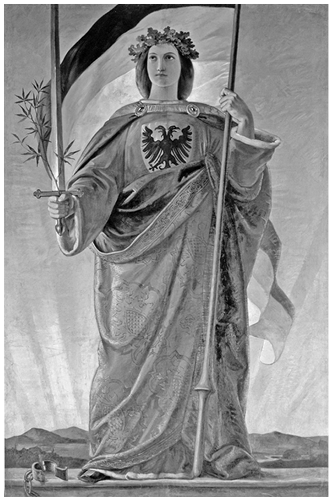
Figure 8.1 Allegory of Germania
Throughout the century, many prestigious commissions were for mural decorations of restored or newly built palaces and government buildings everywhere in Europe, with Germany as ‘ground zero’. This in turn helped consolidate the Nazarene, Romantic style in academicism: from Maclise’s murals for the new Houses of Parliament in London to Jules Lenepveu’s Joan of Arc cycle in the Parisian Panthéon (Figure 8.2); from Henri Leys’s historical murals for the Antwerp City Hall to Ford Madox Brown’s Pre-Raphaelite celebrations of craftsmanship and labour for the Manchester Town Hall. Within Germany, there are the sumptuous murals at Wartburg Castle, the city hall of Aachen, Munich’s city hall and Neue Pinakothek, and the Imperial Manor at Goslar (more on which further on). As a result of such lavish, large-scale decoration, public buildings became an immersive experience, a time capsule where the visitor would be transported back to the settings, scenery and narratives of bygone ages – a form of mental time-travel that is the essence of historicism. Among them, these murals captured a selected iconography of historical episodes and helped canonize those episodes as historical myths.9
Figure 8.2 Joan of Arc in Armour at the Siege of Orléans (Jules Lenepveu, 1874; Panthéon, Paris).
The grandiose style of history paintings was also used for prestigious topical affairs. Napoleon, and many nineteenth-century rulers after him, commissioned paintings of their coronations and of battles scenes from recent victories; these were done in the grand manner of the history painting and in the process propagandistically asserted the claim that ‘history was being made’ and that these coronations or battles were of lasting historical importance.10 The nineteenth century produced a welter of battle scenes, some depicting events as long ago as the first-century battle of the Teutoburg Forest, others as recent as the Crimean War or the scramble for Africa (e.g. Marià Fortuny’s The Battle of Wad-Rass, 1868). Academic history painters would become the recorders of their country’s old and recent glories. Sixty-five years after David painted Napoleon’s 1806 self-coronation ‘from life’ (having been invited to the occasion for the purpose), Anton von Werner was summoned to Versailles to witness the German imperial proclamation there in 1871, which he proceeded to depict in no fewer than three copies.
Those were state-sanctioned applications. More subversively, Eugène Delacroix painted his famous Liberty Leading the People only months after the 1830 revolution that it celebrates. The ‘history’ in such history painting is often of very recent vintage and signified ‘importance’ rather than ‘pastness’. At the same time the nationalizing tendency is all-pervasive. The nation becomes the dominant frame for calibrating such general notions as historical importance, glory and liberty: it is always the nation’s experience of history, the nation’s glory and its liberty that are celebrated or extolled, with religion running a distant second. The Romantic-historicist preoccupation with early Christianity spawned a great number of history paintings evoking scenes of Christian martyrdom in Roman arenas. And there was, of course, a good deal of inter-nation solidarity, especially regarding the Greek and Polish struggles for national independence: Delacroix was a prominent philhellene, and many of his paintings denounced Ottoman tyranny.11
As Delacroix and his philhellenic paintings indicate, the turn to nationality could go in tandem with an altogether different taste for colourful exoticism: that of orientalism. Almost every painter of history paintings also tried his hand at odalisques, harems or bazaars. The tight conjunction between exoticism and historicism is not fortuitous: both are, in true Romantic fashion, attempts to render a world other than the straightforward here and now. In addition, a nationalist undercurrent is noticeable in both: while historicism bolsters the nation’s rootedness in the past, exoticism often bespeaks colonial ambitions, rooted as it was in Mediterranean expeditions from Napoleon’s Egyptian campaign onwards. Maghrebinian scenes by French or Spanish painters are part of the colonial expansionism of both countries in Northern Africa. Orientalism in Russian painting is part of that country’s oriental imperial colonialism in the Caucasus and Central Asia, overtly celebrated in Vasilij Surikov’s huge canvas on the conquest of Siberia (1895, Figure 8.3).12
Figure 8.3 Yermak’s Conquest of Siberia (Vasilij Surikov, 1895; State Russian Museum, St Petersburg).
The Past as a Magic Mountain: Goslar
The history painters of the nineteenth century are overshadowed these days by names such as Monet, Van Gogh, Klimt and Picasso: those who innovated their style away from academicism and historicism. But we should not underestimate the influence of history painters at the time: through official commissions and through the teaching institutions of the visual arts, they were in a position to establish a pictorial canon of key moments and scenes from the nation’s past, often displayed as murals on the walls of public buildings or reproduced as engravings, lithographs or photographs, also in book illustrations. And they were called upon to broadcast the nation’s identity in high-prestige form. A telling example is the murals for the Imperial Manor at Goslar by Hermann Wislicenus. He had been a pupil at the Dresden Academy of the Nazarene Julius Schnorr von Carolsfeld and, while in Rome, of Peter von Cornelius; and as of 1868 he had taught at the Düsseldorf Academy.13
Goslar’s palace of the medieval Hohenstaufen emperors had been restored once that city had come under Prussian rule in 1868, and the restoration works were rounded off by an ambitious programme of some forty historical murals in the main hall. Executed by Wislicenus in the late 1880s, these evoked scenes of German history from Charlemagne to the 1870 proclamation of the Second Reich. They were arranged ‘in the round’ in a narrative sequence that positioned Wilhelm of Prussia as the white-bearded avatar of the greatest Hohenstaufen emperor, Friedrich Barbarossa. Recurrent themes run through this sequence: the emperor’s problems with insubordinate liegemen (the recalcitrant duke of Saxony and Bavaria foreshadowing recent frictions with the kings of Hanover and Bavaria) and with the papacy (foreshadowing the Kulturkampf, Bismarck’s attempt to root out Papal ultramontanism in Germany). Thus an anti-Papal and anti-Guelph continuity from Hohenstaufen to Hohenzollern is constructed; in the process, the Habsburgs’ long tenure of imperial dignity is written out of the story.
The entire cycle culminates in a huge centrepiece evoking ‘history coming full circle’. Wilhelm I’s re-establishment of the German empire is allegorically evoked as he and the Crown Prince ride on horseback towards the spectator (Figure 8.4). They are overseen by celestial spirits above them: their dynastic ancestors and their imperial predecessors, including Charlemagne and Barbarossa, and also the revered Queen Louise, Wilhelm’s mother. In the wings, on the right and left, are the Hohenzollern royal household and the assembled German princes; Ludwig of Bavaria is even made to proffer the imperial crown. They are flanked on one side by Bismarck and Moltke (the victorious general of the 1870–1871 war) and on the other side by allegorical representations of Alsace and Lorraine, now reunited into the Reich. At their feet are allegorical figures of Father Rhine and the Muse of German Legend, holding an open book.
Figure 8.4 Wilhelm I as Refounder of the Reich (Hermann Wislicenus, 1885; Imperial Manor, Goslar).
In this apotheosis, everything becomes a spectacle, with history, legend and allegorical symbolism merged into an eternal, timeless moment. That, indeed, is the overall effect as one enters Goslar’s Kaisersaal: a magic mountain (like Barbarossa’s Kyffhäuser, or the one where an elf queen entertains Tannhäuser) where time stands still, and all of history is suspended and simultaneously present. The effect is heightened by the shock-and-awe scale of the design: there is not a single surface that is not covered by heavily allegorical scenes visualizing historical episodes, and the visitor’s field of vision is wholly occupied by them, as in a panorama or an Imax 3D theatre. Furthermore, these scenes are often of a legendary nature and even involve fairy tales: the Barbarossa legend is dovetailed with the tale of Sleeping Beauty, depicted in numerous scenes as an allegory of the dormancy of the German Reich. The Muse of German Legend has good reason for sitting at the emperor’s feet.
Wislicenus’s hugely ambitious, densely layered and hyper-referential project was the grandiose culmination of a tradition that at the time of its completion was already beginning to be outflanked. The grand historical style, focusing on battles, coronations and crises at court, was no longer the only way to impress onlookers. Indeed, the academic style as a whole, including its flagship, the mural, was maintaining itself only in an increasingly isolated sanctuary, artificially nurtured by government commissions for high-prestige buildings.
A new avant-garde, deliberately defying the academic tradition, had announced itself when Gustave Courbet, rejected for an Academy Salon in the mid-1850, mounted a private exhibition that he entitled Le réalisme (more on this in Chapter 10). Amplified by other new developments (the rise of plein-air painting, of artists’ colonies and of new, looser brush techniques), the visual arts embarked on an agenda of innovative experiment that thrived in a climate of épater les bourgeois and moved sharply away from the conformism of the academy; at the same time, this new artistic vanguard moved away from historical topics in favour of landscapes, contemporary social scenes and abstraction.
Friedrich Nietzsche’s 1874 essay ‘On the Use and Abuse of History for Life’ marked a more generalized weariness with the monumental celebration of the past à la Wislicenus: historicism was pushed into the cultural margins by a more future-oriented, innovatory and critical approach to culture. Realism fed into Impressionism and the various secessionist and avant-garde movements of the fin-de-siècle and the twentieth century. All of these movements were united in their scorn for academic art, and art critics and art historians soon adopted that scorn.
Notwithstanding, historicism remained an inspiring modality in the late-emerging sub-imperial nationalities of Europe. In the Russian borderlands from Finland to Georgia, the state-sanctioned monumentalization of the past in academic painting had never been applied to subaltern cultural traditions. As new generations of artists emerged in these peripheries, fully sensitized to a more modern style and technique, they still felt the need to apply this to the retrieval and celebration of their national culture. Russian historicism flourished in an art nouveau style and was also used by Akseli Gallen-Kallela for Finnish mythological themes.14
Sentimental Historicism
Of course, history painting was more than bombastic murals. The historicism that was mentioned earlier, in the mode of Walter Scott, stressed not only the awesome and somewhat stilted grandeur of the past but also its relatable domesticity.
When setting the agenda for Romantic historicism, Scott had, uniquely, combined elements of alienation and recognizability in his evocations of history. His narrative focus was always on the domestic, private affects of his protagonists, while situating these in the grand sweep of historical crisis moments and transitions. He patented, as it were, the historicist dualism of empathy and exoticism. Ivanhoe (1819–1820) had evoked, in a sweeping historical canvas, the crisis of Plantagenet kingship during the crusading absence of Richard the Lionheart, amidst all the tensions of an ethnically divided, Saxon-versus-Norman medieval England; but it also depicted the private emotions of the protagonists, Wilfred of Ivanhoe and Rebecca.
That dualism had become the hallmark of the historical novel as such. In historical novels such as Tolstoy’s War and Peace, Lampedusa’s The Leopard and Eco’s The Name of the Rose, Napoleon’s Russian campaign needs its young Natasha Rostov, Garibaldi’s Sicilian campaign its ageing Prince of Salina, and the theological showdown between Dominicans and Franciscans its ingénu Adso of Melk. These fictitious protagonists with their private, individual relatability allow the past to ‘come to life’, to be empathetically experienced, imaginatively at least, from within, as it must have felt at the time.
The vivid evocation of domestic familiarity amidst the sublime grandeur of historical distance was also attempted in Romantic history painting. Next to the grandeur of the battle and court scenes, we see the sentimental sub-genre of the ‘historical genre painting’. Genre art was one of the lesser academic styles, evoking scenes from domestic home life, frequently also involving middle-class or peasant settings. As the scenic settings of Brueghel, Van Ostade and Vermeer had receded into the past, they had become defamiliarized, quaint: illustrations of bygone manners and fashions.15 And this appealed to the many history painters who chose to take their topics not from the sublime or heroic register (battles, executions and coronations) but from the private lives of historical figures. And so we see various renditions of Charles V visiting Titian in his studio or Henri IV playing with his children. As the century progressed and Romanticism developed into Biedermeier or Victorian sentimentalism, this taste became more pronounced. William Frederick Yeames’s And When Did You Last See Your Father? (1878) shows Cromwellian investigators, hunting for Cavaliers, interrogating a young boy, whose mother, the wife of the fugitive cavalier, looks on in anguished apprehension (Figure 8.5).16 One can imaginatively immerse oneself in scenes such as these. The period detail, the lovingly rendered clothes, furnishings and interiors, are all meant to assist an emotional immediacy, helping the viewer to experience the past as it must have been experienced at the time.17
Figure 8.5 And When Did You Last See Your Father?
With the rise of realism this sentimental historicism also declines, along with the recession of the historical novel, which moved by way of Dickens’s A Tale of Two Cities and baroness D’Orczy’s Scarlet Pimpernel to the unprestigious margins of the literary system: the female readers of Georgette Heyer, the juvenile readers of G. A. Henty. Despite occasional masterpieces, the genre of the historical novel as a whole became, as the telling German word has it, gesunkenes Kulturgut, a depreciated cultural heritage. And something similar befell academic history painting.
Painters such as Il’ja Repin and Theodor Aman, who had made their names as academic history painters, turned towards more contemporary themes and a looser style, abandoning the clear outline that had been the hallmark of the fresco and of its historicist-academic derivations. As the great talents moved to different registers, national history painting proper subsisted as a pale imitation of its former self. It drifted from the salon and from palatial public buildings towards the eye-candy glitter of fairgound attraction and mass entertainment. Alongside Wislicenus’s Goslar murals, we see Árpád Feszty’s huge panorama celebrating the Hungarian Landnahme by the Magyars (1894), part of an entire fashion for 360°-panorama paintings embellishing historical tourist destinations all around Europe, from Sebastopol to Waterloo. History paintings were used for diorama pavilions in world fairs; Yeames’s And When Did You Last See Your Father? became a waxwork display in Madame Tussaud’s. Only in a few cases do we see that avant-garde artists of the later century continue to treat historical topics in a modern register: Puvis de Chavannes’s St Geneviève murals for the Panthéon (1874), Carl Larsson’s Midvinterblot mural for Stockholm’s National Museum (1915) and Alphonse Mucha’s Slavic Epic cycle (1910–1928).18
Remediations and Mass Commodification
This is the irony, then: the most august genre of the academic tradition, the history painting, around 1900 becomes almost a decorative art, used to embellish public buildings or tourist attractions. Its scenes were found less and less on canvas and more and more in remediated form: as engravings or illustrations for popular periodicals or historical surveys or albums such as the German collection Bildersaal der deutschen Geschichte (1890), or collectible chromolithographs, or educational school plates. The mural turned, increasingly, from paint to stained-glass windows and ceramic or glass tiles (mosaics such as those of the Venetian firm of Salviati, or azulejos in Spain and Portugal, or the tile tableaux on the outside walls of Amsterdam’s Rijksmuseum). Such media were also eminently suited to the fresco-derived style patented by the Nazarenes: a combination of bright colours and crisp outlines.19
That Nazarene style survived principally in the art of religious ultramontanism. There had always been a degree of Catholic fervour among the Nazarenes, and their art flourished most conspicuously in the altarpieces and pious lithographs and prayer cards distributed in their millions during the decades of ultramontanist devotionalism, showing ultra-saccharine, pastel-coloured madonnas, saints and biblical scenes. That this religious kitsch breathes and perpetuates the aesthetics of Nazarene Romanticism alerts us to the continuing, camouflaged subsistence of this school of academic painting. The same goes for the brightly coloured lithographs of Hindu deities popular among religious devotees and often encountered in Europe as restaurant decorations. These were pioneered by Raja Ravi Varma (1848–1906), a successful Indian painter and lithograph publisher, who had learned his craft from a German, Nazarene-influenced teacher and applied it towards Nazarene-style icons of Hindu deities and Indian national and mythological heroes (Figure 8.6).20
Figure 8.6 The Goddess Saraswati (Raja Ravi Varma, 1896; Maharaja Fateh Singh Museum, Vadodara).
Far away from the salons and galleries, then, academic history painting left its traces – wherever, indeed, its celebratory piety and easy-on-the-eye style were suitable.Footnote * One such medium was that of the national currencies developed for newly independent countries after 1918. Artists such as Alphonse Mucha and the Latvian Rihards Zariņš, masters of decorative and graphic arts, produced patriotic propaganda posters (another suitable medium with its preference for the bright-colours/clear-outline register) and would later provide their newly independent homelands, Czechoslovakia and Latvia, with designs for postage stamps and banknotes, often involving allegories, scenes from the nation’s past, and portraits of the nation’s heroes.21
This is the diffused, watered-down legacy of academic art. In the terminology of Pierre Bourdieu, the genre has moved from ‘restricted’ to ‘unrestricted’ culture (mass-produced, non-exclusive, widely and cheaply available, and accordingly without exclusiveness or prestige). In Michael Billig’s terms it has become the genre of ‘banal nationalism’, merely ambient and unobtrusive after having once been the carrier of a definitive and explicit, ‘hot’ national agenda – yet (in spite of what the word ‘banal’ may suggest) wielding a huge influence, penetrating far and wide in society. Recalling David Lowenthal, we may also phrase it as a shift from the academy towards ‘heritage’ commodification. After its big splash in the early nineteenth century, history painting has become static noise, a vague background radiation in nations’ public spheres.22
Sic transit? Not quite.
A Repertoire
The true importance of history painting comes to the fore if we align it not with the other visual arts but with the textual media of historicism: history writing and the historical novel. We have seen how the rise of the history painting involved an increasingly visualized understanding of the past seen in historical rather than antiquarian terms; we have also noted the influence of Walter-Scott-style historicism and how its marginalization occurred more or less in tandem with that of the historical novel. These are not fortuitous coincidences; they bespeak a meaningful cohesion between the three genres. These relate to each other in a complex triangulation, in which two of the three are textual (the historical novel and history writing), one visual; alternatively, two of the three belong to the field of cultural/artistic production (the novel and history painting), one to the field of knowledge production (history writing). Finally, two of the three are factually representative (history painting and history writing), one fictionally narrative (the novel) (Figure 8.7).
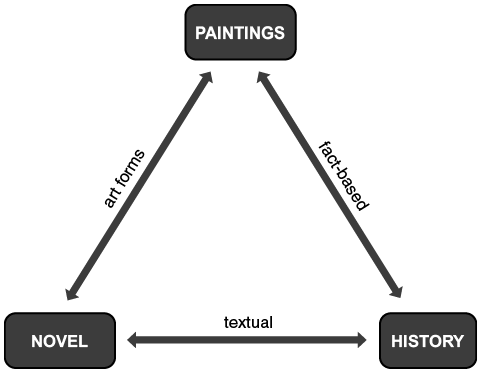
Figure 8.7 History painting, history writing and the historical novel.
Against this background, we notice how very discursive history painting is. Much more so than landscapes, portraits or still life, it evokes a historical record and an intertext. We are meant to understand (or know first-hand) how the painting relies on accounts known from other, textual sources: histories mostly, but often also fictions (myths, epics or romances). The Edda, Iliad and Nibelungenlied furnished themes as well as Joan of Arc or the conquest of Siberia.Footnote *
In other words, the past was mined by historians, novelists and painters, and each of the three took their bearings from the other two. Like historians and novelists, painters had to negotiate the problematic relationship between a truthful, documented representation of the past and the need to fill the gaps in the documentary evidence by means of informed guesses and the imagination. Whereas the novel relies mainly on the organizing principle of a fictional narrative, history writing (even narrative history) is organized around the constraints of the available archive and pre-existing knowledge.23 In that negotiation, history paintings tended to gravitate to a documented rather than to a fictional past – based on existing knowledge, or on a known historiographical account. This means that history painting, although it is an art form, is quite close to historiographical knowledge production. It is, in a way, an illustration to history writing, transmuting the textual narrative into a spectacle and rendering accounts of the past, in the most literal sense of the word, imaginable.
The three genres parted ways after the death of Walter Scott in 1832. As history writing professionalized into the positivistic factualism of austere university departments, it was left to the art genres of the novel and painting to keep the Romantic sensation of the past alive. As they did so, they lost (as we have seen) artistic prestige and canonicity towards the end of the century; but they maintained their hold on the popular imagination. The public at large continued to imagine the past, and especially the Middle Ages, in the mode established by the Romantic generation; and novels and paintings helped to recycle and perpetuate that image.
The perpetuation was aided by reproducing and recycling Romantic evocations of the past in newly emerging media. Canonical narratives and themes had always been apt to move from one medium of expression (visual, textual or musical) to another: witness the importance of pictorial, theatrical and operatic spin-offs of historical novels. This also extended to new media as they emerged: waxworks and cinema in the nineteenth and twentieth centuries, the musical and video serials nowadays. Themes, narratives and affecting heroes and heroines (Joan of Arc, Wilhelm Tell, Mary Queen of Scots, etc.) move around among printed page, painting, the theatre/opera stage and the screen (silver or digital).
What was attempted in the nineteenth-century three-way intermediality between the historical novel, history writing and history painting, and continued in transferences to different emerging media, is a reconciliation between the textual and the visual, between narrative and spectacle.24 As we have noted, history paintings showed a gravitation towards the descriptive, anecdotal and narrative. Romantic histories and historical novels often took their readers to scenes set in the past and described as set-pieces, asking the reader to imagine and visualize a setting or situation. These genres were striving to unite the two modalities of art as distinguished by Lessing in his Laokoon of 1766: the Nebeneinander (one-next-to-another, objects arranged in space) and the Nacheinander (one-after-another, events arranged in time). History paintings tended to concatenate into cycles: witness Wislicenus’s narrative arrangements of the Goslar Kaisersaal, or Lenepveu’s series of scenes from the life of Joan of Arc in the Panthéon, or Mucha’s Slavic Epic: the narrativity of these scenes episodically arranged into cycles becomes almost that of the graphic novel.
As the canonicity of academic history painting was waning, its way of turning historical narratives into grand spectacle found a new medium of expression, perfectly combining Nacheinander and Nebeneinander, narrative and spectacle: that of film – ‘moving pictures’, as they were called. From D. W. Griffith’s Birth of a Nation to Eisenstein’s Alexander Nevsky, the cinema screen became the successor to the theatre stage, the canvas, the mural, the diorama, for the projection of a Romantically evoked past. The great epic blockbusters and action movies of the twentieth and twenty-first centuries, which we shall survey in more detail in Chapter 12, in many cases recycle tales and scenes, narratives and spectacles, from the national past as they were rendered canonical by historians, novels and paintings during the Romantic period.
How that perpetuation worked may be illustrated by the telling example of the Norwegian movie Birkebeinerne (‘Birchlegs’, i.e. men with birchbark leggings, 2016; marketed internationally as The Last King). It revolves around a historical episode rendered memorable by the Romantic historian Peter Andreas Munch in Det Norske Folks Historie (1852–1863) and, following him, by Knud Bergslien’s iconic history painting of 1869 (Figure 8.8). That painting was picked up in the 2016 movie poster for Birkebeinerne by the contemporary artist Marcell Bandicksson. Norwegian historians have moved on from Munch; Norwegian painters have moved on from Bergslien; but Norwegian cultural memory is still deeply informed by their Birkebeinerne.
Figure 8.8 ‘Birchlegs’ Skiing Across the Mountains with the Infant King
Even in the twenty-first century, Romantic history painting, with its celebration of the nation’s colourful past, is alive and kicking in the ecosystem of popular cultural memory; and epic still thrives.
How a Wunderkind Became Hungarian
The 1840 painting in Figure 9.1 shows an imagined matinee recital by Franz Liszt. By now the imagery may appear familiar: the enraptured audience listening to an inspired performance is very close to the listeners in the roughly contemporary painting of Rouget de Lisle singing ‘La Marseillaise’ (Figure 1.3), and the transported gaze of the inspired performer, gazing upwards into the distance, resembles that we have seen in the pictures of Ossian and of the guslar (Figures 3.1 and 5.1). Liszt’s audience are the fine fleur of Parisian Romanticism at the time: swooning on her chair on the left is George Sand, seated next to Alexandre Dumas; standing behind them are fellow composers Berlioz, Paganini and Rossini, looking knowledgeable and appreciative. Reclining next to the piano, and seen from behind, is countess Marie d’Agoult, Liszt’s patron and long-term companion. (Although she and Liszt never married, they had three children together, one of whom, Cosima, would later marry Richard Wagner. D’Agoult herself wrote and published under the pen name ‘Daniel Stern’.) To add to the clear sense that we are in a locus of concentrated Romanticism, there is a bust of Beethoven on the piano, a portrait of Byron on the wall and a statue of Joan of Arc on the far left.
Figure 9.1 A Matinee Performance by Liszt (Josef Danhauser, 1840; Alte Nationalgalerie, Berlin).
Besides hinting at the importance of the salon as a hothouse for artistic and intellectual innovation, the painting also documents the flourishing of the Romantic virtuoso as a cultural and social phenomenon. The painting was commissioned by the Viennese piano manufacturer Conrad Graf, an important builder during the time when the grand piano was becoming the instrument for large-scale concerts, with expanded octave range and improved tonal power. Graf built pianos for Beethoven, Chopin and Clara Schumann, and Liszt is here shown (in what is almost a product placement) playing a Graf. Ironically, Liszt’s violently passionate performance style is said to have destroyed two Graf pianos in Vienna.1
As the piano evolved into a ‘grand’ power instrument, the virtuoso piano player became increasingly a public superstar, and Liszt was among the most celebrated of them all. Virtuosi – technically accomplished performers who would give concerts to paying audiences on tour – can be traced back to the early eighteenth century, but the child prodigy Mozart had marked a leap forward, followed by Chopin and the violinist Paganini. Between them, Mozart, Chopin and Liszt mark the onset of the heyday of musical Romanticism, with the definitive emancipation of music from the patronage of nobility and courts and its development into a public and commercially financed art form with superstar celebrities.2
Liszt, like Mozart, had started his career as a Wunderkind. (The cult of the child prodigy was part of the Romantic fascination with art as something untaught, naturally inborn; it helped young Schubert and Chopin to fame at a very early age.) Born in 1811 near what is now the Hungarian–Austrian border, and having made an early start in Vienna, Liszt moved to Paris with his mother at the age of twelve to pursue his musical training and career. There he soon became part of a network of Romantic musicians and composers; they were of many nationalities (including Italians and Germans), gathered in what was the cultural metropolis not just of France but of much of Europe. From Paris he would undertake many concert tours. Liszt was, in other words, a wandering cosmopolitan, and the tracks of his lifelong concert tours between 1818 and 1886 enmesh all of Europe like a spider-web (Figure 9.2).
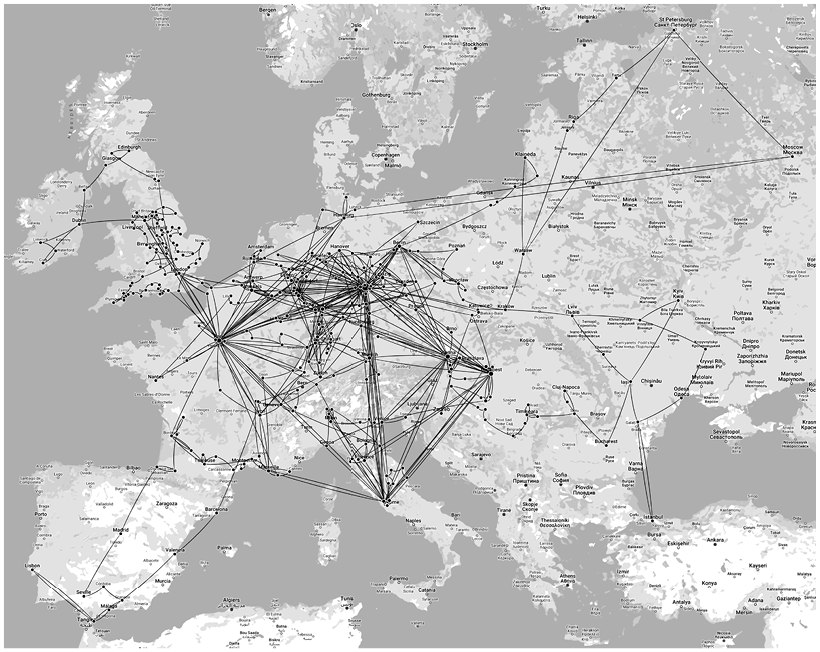
At the time when the painting of his salon performance was commissioned, Liszt had been in Italy for two years, just then parting ways temporarily from his companion Marie d’Agoult. The news of a Danube flood in Budapest had brought Hungary to mind; he travelled to Vienna to perform at a benefit concert for a flood-relief fund and from there moved, for the first time since his early boyhood, into Hungary: by way of Bratislava/Pressburg his journey led to Budapest, where he performed in early January 1840.3
The concert was a triumph. As Liszt later wrote, ‘Everywhere else I perform for an audience, however in Hungary I address the nation!’ The leading national poet Mihaly Vörösmarty dedicated a poem to him after the concert, asking him to awaken once again through his music the spirit of the ancestral tribal leader Árpád. Huge crowds, shouting Eljen! Liszt Ferenc! (‘Hail, Franz Liszt!’, calling him by his Hungarian name-form), greeted him rapturously and welcomed home the most celebrated Hungarian of his day as a long-lost son. Liszt returned the favour: the concert was full of patriotic gestures. Most significantly, Liszt performed the Rakoczi March, which, linked as it was to the rebellious nobleman of that name, had been banned by the Austrian censors. He also wore the Hungarian national costume on stage (a tight long-waisted ‘Attila’ waistcoat fastened with embroidered frogs-and-loops rather than buttons), and to top it all he was presented on-stage with a ceremonial sabre of honour.
Receiving this sabre symbolically inducted Liszt into the Hungarian nobility, and that meant a great deal. At the time, Hungary was still an almost feudal class society with the nobility enjoying and insisting upon its ancient established privileges, not least of which was the ‘right to bear arms’, symbolized by sword or sabre (still the marker of difference between commissioned officers/gentlemen and the enlisted rank and file). The Hungarian úriember (a ‘true/fine gentleman’ with dignity, bravado and poise) cultivated a sense of aristocratic honour, which during these years began to overlap with a sense of national pride: Hungarian Romantic nationalism was Byronic, chivalric, based on a sense of nobility rather than on (civic) virtue. This affect was powerfully expressed in the great popularity of the sport of fencing, still a ‘national sport’ among Hungarians, and feeding into that national symbolism was the sabre conferred upon Liszt.4
When Liszt gave a speech of thanks – significantly, in French, since his command of Hungarian was insufficient – he showed himself keenly aware of the symbolic import of the moment. He pointed out that of old it had been the warriors and military officers who had buttressed the nation; in these modern days, he suggested, that role was also taken up by the likes of himself, by the arts, literature and science. Even so, he concluded, if the need arose he would be willing to let the sabre ‘be drawn again from the scabbard’, in readiness to ‘let our blood be shed to the last drop for freedom, king and country’.
Pathos and grandstanding; but no doubt sincerely felt both by the audience and by Liszt himself, Romantics one and all. Liszt now placed his art in the service of his rediscovered fatherland and felt that this artistic nationalism was the equivalent of doing battle in arms. Liszt wore the sabre on numerous occasions, but not in 1848, when Hungary was actually rising in arms to assert its independence from the Habsburg crown. The sword that significantly failed to be drawn from the scabbard earned Liszt a withering piece of sarcasm from Heinrich Heine and often featured on caricatures of the performing virtuoso.5
But Liszt did henceforth place his art in the service of his country. He did wear the sabre as a symbolic gesture when he performed his Funérailles elegy in 1849, turning that piece of musical lyricism into a political statement. The work’s subtitle, October 1849, referred not only to Chopin’s death that month but also to the execution of thirteen Hungarian insurrection leaders. What is more, the piece used the ‘gypsy scale’ (with augmented seconds) as a marker endorsing Hungarian nationality. Liszt’s turn to composing nationally Hungarian music (most prominently, of course, the Hungarian Rhapsodies), was deeply inspired by that remarkable aspect of Hungarian cultural life, the popularity of ‘gypsy’ music played by bands of Romany performers. Their musical style, with its augmented seconds and fourths and its sprung rhythms and syncopations, lay outside the established, conservatoire-taught classical palette. By incorporating it into his own compositions, Liszt emphasized his national rootedness and at the same time expanded the horizons of his composing technique.6
‘Gypsies’, Rhapsodies and the National Turn
Liszt in fact used the trip (and later return trips) to do fieldwork among Romany musicians, many of whom were employed as occasional providers of entertainment or were (as such) part of the retinue of noblemen. The results of this are noticeable in his later, nationally Hungarian compositions. And he even reflected on this in an extensive essay that was published in book form in 1859, in what was still his primary language: French. The title was Des Bohémiens et de leur musique en Hongrie. In it, Liszt tackled the odd circumstance that Hungarian national music was in fact from outside the Magyar cultural tradition, belonging as it did to those wandering Romany communities known variously at the time as Tziganes, Gypsies, Zigeuner or Bohemians.Footnote * As Liszt argued, it was only in Hungary that such Romany musicians could enjoy the steady patronage of the sedentary Magyar population, and as a result Hungarian music culture was bicultural, born of the happy integration of Romany music into Magyar society. There is some fond Romanticization in this, and what is also plain is that Liszt personally identifies with his ‘bohémiens’. He credits them with temperamental attributes that also apply to himself as a Romantic. He himself was a nomad, only lately adopted by his fellow Magyars. He lived the ‘bohemian’ lifestyle, spurning the niceties and social conventions of the settled bourgeoisie, living hand-to-mouth, dedicating himself to his own inspiration and wayward emotions. As ‘gypsies’ were becoming a projection screen for middle-class wanderlust and anti-conformism (to live in a caravan, outside the norms of societies, on a lifelong road trip, hippies avant la lettre), Liszt with his bohémiens established the link between the allure of cultural exoticism and the Romantic notion of the bohemian artist. (The downside of this idyllic idealization of Romany culture is a strident note of anti-Semitism: wandering and non-territorial like the Romany, and in those respects their counterparts, Jews are, in Liszt’s book, culturally noxious, living a life of dour legal observances rather than passionate freedom.7)
Liszt fitted his ‘gypsy’ interest into the philological stadialism of his day and age (see Chapter 4). He saw performative Romany culture as something that had not yet crystallized into a proper self-aware and self-reflecting culture, as yet abiding in the preliminary developmental stages of finding its own cultural voice. Like the guslars of the Balkans, the Romany were ‘rhapsodes’: those wandering pre-Homeric poet-performers whose fragmentary lays required a Homer to be given durable shape and form. This, in short, is what Liszt proposed to do with Romany melodies: his compositions would weld and structure them into a coherent corpus, consolidate them into a robust foundation for a future cultural presence. The use of the word ‘rhapsody’ is anything but fortuitous: it was deliberately chosen by Liszt in full awareness of the philological implications and the discussions of the literary roots of national self-articulation, involving the Homeric Question and the guslars of the Balkans:
Under the pleasant Grecian sky, wandering rhapsodes gathered around them the inhabitants of towns and hamlets to make them listen to the stories of vanquished nations and toppled kingdoms, or adventurous voyages. Their chants, once collected into a homogeneous work by old Homer, formed an inimitably perfect monument
After Liszt, the rhapsody emerges as a new musical form. If anything, it is a formless form, a free succession of melodic themes and elaborations – much more fluid than the structured classical forms of concerto, sonata or symphony. In exploring this new, loose and more lyrical musical form, Liszt followed the example of Chopin with his nocturnes, mazurkas and polonaises. Chopin had also used these formal innovations to accommodate the vernacular ‘folk’ traditions of his homeland: the polonaise was a fast, cheerful Polish dance, and the name of the mazurka echoed its region of origin around the Mazurean Lakes. Following Liszt, the rhapsody would become the premier form for the expression of a sense of nationality in lyrical–musical form. A list of more than ninety of such rhapsodies is included in the Appendix at the end of this chapter (Tables 9.1a, 9.1b and 9.1c), ranging from Aragonese and Armenian to Umbrian and Welsh, and from 1846 (Liszt’s prototypical Hungarian ones) to 1940.8
The rhapsody was the genre that spearheaded a general ‘national turn’ in classical music. Much as in academic painting, music had gravitated towards a ‘classical’ standardization of forms and instruments in the course of the eighteenth century. Gluck aimed for a musical style that would appeal to audiences everywhere ‘so as to abolish the ridiculous difference between nations’.9 Although some national inflection persisted in England and France in the wake of Purcell and Lully, the universal standard became Italian, as we can see from the still prevailing use of Italian for music’s technical vocabulary, from meno piano and coda to allegro moderato and da capo. From this Italian standard, a Viennese–German tradition branched off from Mozart on; between Beethoven and Brahms, German became the new default for ‘classical’ music (though less so for opera than for symphonic genres and chamber music). With Chopin and Liszt, we begin to notice a trend where composers seek their inspiration outside the Italo-German classical bandwidth, notably in the vernacular cultures of their native countries. That national turn was often a matter more of presentation than of substance: titles and narrative themes rather than melodic lines or harmonic chord progressions. At best we see a nod to the use of rustic instruments, dance rhythms or the occasional parallel fifth or drone bass. But as with spices in cookery, small doses go a long way to give music a ‘national’ flavour. The trend persisted and intensified throughout the second half of the century, and affected all of Europe: from Albéniz in Spain to the ‘mighty handful’ in Russia (Rimsky-Korsakov, Mussorgsky, Borodin), from Elgar in England to Enescu in Romania, from Grieg, Nielsen and Sibelius in the north to Smetana and Dvořák in the centre. Vaughan Williams and Tchaikovsky drew on native stylistic elements from Anglican and Orthodox plainchant respectively. Others turned to folk music, its modal or pentatonic scales, drone bass and sprung rhythms.10
These were all inflections and tentative expansions on the conventions of conservatoire-taught classical music as performed on the established symphonic instruments; but towards the end of the nineteenth-century composers such as Manuel De Falla, Igor Stravinsky and Béla Bartók would go further by using folk elements for avant-garde experimentation. By 1934, Vaughan Williams, in his treatise National Music, asserted the need to ‘cultivate a sense of musical citizenship. Why should not the musician be the servant of the state and build national monuments like the painter, the writer, or the architect?’11
What is remarkable is, here as elsewhere, the universal spread of national particularism. Much as in the Europe-wide genre painting of young peasant women (depicted in standard poses and techniques, and nationalized through the accessories of clothing or background and the painting’s title; more on this in Chapter 10), so too music used a fairly common reservoir of ‘vernacular’ stylistic elements to go national. Here as in history painting, the extent to which ‘nationality’ can be a generic additive is illustrated by the fact that it often goes in tandem with oriental exoticism: anything ‘colourful’ from outside the Italo-German classical style is exploited. Grieg inserts a sultry oriental ‘Anitra’s Dance’ in the middle of his Peer Gynt suite; Rimsky-Korsakov composed, amidst his more Slavic-style works, a ‘Capriccio Espagnol’. The Hispanicism of Ravel is more entangled between exoticism and self-identification: he hailed from the French Basque country, and his Basque mother had grown up in Madrid. National music becoming transnationally entangled is best illustrated by Antonin Dvořák’s stint in New York (1892–1895), where he was initially commissioned to write a national American opera. A theme that offered itself for such a work was the Hiawatha poem by H. W. Longfellow. As has been mentioned (Chapter 5), Hiawatha revolves around the legendary and imperfectly understood Iroquois leader of that name and also drew on Ojibwe traditions as collected by Henry and Jane Schoolcraft. But Dvořák, thanks to his New York encounter with the African-American composer Harry Burleigh, was more deeply inspired by the musical style of spirituals as sung by enslaved Black plantation workers. In the event, the opera never materialized, and Dvořák recycled various ‘national’ American materials in his ninth symphony From the New World (1893).12
The metropolitan traditions that had little or no distinct vernacular palette to make use of relied on thematic ‘framing’ to nationalize their work; one can also think of the Flemish cantatas of Benoît Peeters and the symphony To My Fatherland (1888–1890) of the Dutch Wagnerite Bernard Zweers, with its four movements entitled ‘In the Forests of the Netherlands’, ‘In the Countryside’, ‘At the Beach and at Sea’ and ‘To the Capital’. Such explicit titles are characteristic of ‘programme music’, where the composer in programme notes furnishes an explicit guide to what the music is intended to convey and how it is to be listened to. That programme often explicitly imposes a concrete, national frame of reference on abstract melodic lines, harmonic patterns and evolving structure. Smetana programmatically subtitled his famous ‘Vltava’, a movement of the suite Ma vlast, ‘My Country’, to evoke the course of Bohemia’s Vltava (Moldau) river as its bubbles up from its two springs, eddies through picturesque forests and along idyllic meadowlands, elf-haunted at night, foaming through rapids and majestically welcomed to Prague as it flows past the hallowed haunt of the legendary Libuše, the Vyšehrad hill (see Chapter 7).13
Audience, Participation, Festivals
Libuše herself was the title heroine of the Czech national opera par excellence, also by Smetana (1872); its culminating aria was the princess’s prophecy of the future glories of Prague. The opera was used to inaugurate Prague’s new National Theatre in 1888. As this case indicates, the most strongly programmatic music, with the greatest nation-building potential, was opera with its libretto. In Hungary, Ferenc Erkel evoked the kingdom’s past heroes (Hunyadi László, 1844; Bánk bán, 1861). In Russia, Glinka (A Life for the Tsar, 1836) and Mussorgsky (Boris Godunov, 1874, after Pushkin), thematized episodes from the ‘Time of Troubles’ around 1600; Borodin’s Prince Igor (1890) set the ancient national epic rediscovered around 1800 to music.14 French, Italian and German audiences were given operas on strongly national themes by the likes of Giacomo Meyerbeer (Les Huguenots, 1836) Giuseppe Verdi (I Lombardi, 1843) and Richard Wagner (Die Meistersinger, 1868; the Ring cycle, 1869–1876).15 Such grand operas were society events. Audiences could actively intervene in the performance (outside the reverential high-mindedness of Wagner’s Festspielhaus in Bayreuth, that is) and in some instances even exploded into national demonstrations. The performance of Auber/Scribe’s La muette de Portici, with its aria ‘Amour sacré de la patrie’, sparked off anti-Dutch clashes in Brussels and, ultimately, the Belgian Revolution of 1830. The rejection of Wagner’s Tannhäuser by Parisian audiences in 1861 was a nail in the coffin of French–German relations.
The case of Verdi deserves special mention. As a composer, his name is linked to the Risorgimento period, when his work was the figurehead of Italian culture before the unification of a sovereign Italy. The ‘Va Pensiero’ chorus of his Nabucco (describing the home-yearnings of the enslaved people of Israel in their Babylonian captivity) became a transnational hymn symbolizing the plight of oppressed people and diasporas everywhere. In 2013, when the opera was performed as a ‘national classic’ for the 150th-anniversary festivities of the Italian state, the chorus met with frenzied acclaim from the audience, to the extent that director Muti granted an encore, which he prefaced with a speech denouncing the Berlusconi government. During the encore, the audience threw down a confetti of shredded paper from the balconies; that gesture was overtly reminiscent of Visconti’s film Senso (1954), in which a Verdi opera in Habsburg-dominated Venice becomes the occasion of insurrectionary pamphlets being thrown from the upper balconies.Footnote *
This indicates that music was not just the mystical, trance-like affair that the Liszt painting shown at the beginning of this chapter evoked. Certainly in the case of operas, the audience did not sit spellbound as in a séance or religious service, but engaged actively; audience favourites were encored, sung along with; the sheet music was marketed for private or convivial performance. For this was also the great century of amateur music, of parlour and chamber music, and above all the century of the choir. Music was also something that was performed collectively, and the collectivity of the performance created a shared affect and sense of togetherness – often a national one; and as such, music played into the century’s festival culture, as outlined further on in this chapter and Chapter 10. In the growth of Hungarian nationalism, the national-historical operas of Ferenc Erkel exercised greater mobilizing power than even the concerts of Liszt.16
Convivial singing emerged from religious and pedagogical practices around 1800, in and around churches, masonic lodges and student fraternities.Footnote ** Two prototypes were the French-style orphéon and the German-style Gesangverein or Liedertafel. From Wales to Catalonia and from the Basque Country to the Balkans choirs proliferated as part of religious, educational, agricultural, civic or industrial sociability. The spread was ‘reticular’: local models and activities, usually in towns and cities, inspiring similar ones, franchise-style, in other towns/cities. Choirs were spawned not just by the social conditions of the time but also by each other, by following the example of other choirs, and in turn setting the example for other ones again. In contrast to this ‘reticular’ spread, with separate, locally distinct but mutually inspired associations and initiatives being sparked off across the map, the repertoire was diffused nationwide: sheet music was available throughout the country as a single, locally undifferentiated corpus.17
Patriotic choruses became popular in France after 1789, with composers such as Méhul (‘Chant du départ’, 1794), Gossec, and Louis Bocquillon (known mainly under his soubriquet ‘Wilhem’). In 1806, Bocquillon introduced choral singing as an educational method; the support of the popular songster Béranger allowed him to propagate it as the ‘Méthode Wilhem’ from the 1820s on. Concert performances by school pupils followed as a matter of course. In 1833 these solidified into a Paris-based performance organization called L’Orphéon. From there, choral societies multiplied across France and the name ‘Orphéon’ became a generic label for a society of musical amateurs. From the late 1830s onwards, local choirs would also give concerts further afield. The Chanteurs montagnards of Bagnères-de-Bigorre first scored successes in Paris and then went on a tour including Alexandria, Istanbul and Moscow. Orphéons manifested themselves in public life on civic occasions and with festivals. A large international festival was held in Asnières in 1850. (Its ‘international’ nature was exclusively owing to the participation of choirs from Belgium.) By the end of the 1850s, there were 700 orphéon associations in France. Provincial festivals proliferated and concerts raised great numbers of spectators; a crowd of 50,000 assembled on the Place de l’Opéra for an open-air concert by a Spanish tuna in 1878. In these years, the repertoire seems to have become markedly more French and patriotic; staples were Méhul’s old ‘Chant du départ’ and a composition by Ambroise Thomas entitled ‘France! France!’ The movement also spread south of the Pyrenees: markedly so in Catalonia (thanks also to the important work by Josep Clavè, Figure 9.3) and Galicia, but also in other parts of Spain, where by 1910 more than twenty orfeones were active. English pedagogues translated the Méthode Wilhem into English (1841). Although choral singing in that country had a different origin and social base (Anglican parishes and, later in the century in the industrial areas, trade unions), there was some influence from the French model when it came to the organization of festivals: 137 orphéons, with a total of 3,000 members, gave a concert in London’s Crystal Palace in 1860.18
Figure 9.3 Bust of the choral conductor and composer Josep Clavè in the art nouveau Palace of Catalan Music, Barcelona.
Meanwhile, in a parallel development, a no less powerful choral movement had sprung up in Germany. Its reticulating proliferation emanated from two hubs: the bourgeois cultural sociability of 1808 Berlin and the patriotic Protestantism of 1810 Zurich. In the north, the prototype was the private Liedertafel established in Berlin in 1808 by Carl Friedrich Zelter (1758–1832), friend of Goethe, musician and instigator of the German Bach revival. Zelter’s Liedertafel was copied within Berlin and in other Prussian and north German cities, as well as in the Prussian Rhineland. In the south, the first such initiative, by the composer and music publisher Hans-Georg Nägeli in Zurich in 1810, prompted widespread dissemination. Like his French counterpart Wilhem, Nägeli was also a musical pedagogue; his educational use of music was inspired directly by Pestalozzi, for whom he published a Gesangbildungslehre nach Pestalozzischen Grundsätzen in 1810. Nägeli visited Stuttgart on a lecture tour in 1819–1820, during which he promoted the male choir as the ideal interface between popular sociability (Volksleben) and aesthetic education. The choir established in Stuttgart in response to Nägeli’s model became a prototype for similar choral societies (initially male-only) in Germany’s southern parts, replicating rapidly and widely in the 1820s–1840s. As of the late 1820s the two types began to overlap (especially in Franconia and the Rhineland) and merge. Their success may in part be explained by the fact that they could draw, for their membership, on university alumni who had been introduced to convivial singing as part of the culture of student fraternities (Burschenschaften).19
The reticulating spread in Germany was two-tiered, involving first a regional and then a federal level. An association between the choirs of Hanover and Bremen formed the nucleus of the League of United North German Choirs in 1831; it attracted other local choirs and organized a series of regional festivals; these intensified in the 1830s–1850s. Similar patterns were at work in Bavaria, Thuringia and Franconia; and these federations in turn entered into a nationwide meta-federative league in 1860. Pan-German festivals were regularly held from the mid-1840s onwards, and officially as Bundessängerfeste, for example in Nuremberg in 1860 and in Breslau/Wrocław in 1907. Thus the organizational history of these choirs in a sense offered a template of Germany’s political unification. As the choral movement became pan-German, so did, with some delay, Germany itself.
What was also pan-German was the repertoire. The sheet music was printed and sold across all German-speaking lands and states and created a culturally continuous ambience among them. As with students’ songbook anthologies (Commersbücher), much of the repertoire was nationalistic, expressing patriotic sentiments that at the time were seen as uncontentiously inspirational and uplifting. A Commersbuch would contain songs celebrating merry conviviality, nature (including the joys of hiking or hunting), the winsome daughters of innkeepers here, there, and everywhere, and also the higher virtue of patriotic feeling. Those registers could be spliced together: many a song celebrating the communal quaffing of Rhine wine would extol the German fatherlandish qualities of the Rhine region and its vineyards. The song ‘Der Jäger Abschied’ (‘The Huntsmen’s Farewell’, also known as the ‘Waldhymne’ or Forest Hymn), by Mendelssohn, had words by Eichendorff and followed that poet’s characteristic lyricism, combining religious awe and love of nature; there were few or no overt nationalist connotations. But it was one of the highlights of the 1846 Cologne Song Festival, a fervently nationally minded occasion held in the aftermath of the Rhine Crisis (1840) and the looming of the First Schleswig-Holstein War.Footnote * In this context the ‘Huntsmen in the Forest’ hymn (directed by Mendelssohn himself, who had been engaged for the occasion) became a figure of Germanity. The song was included in a songbook published 1848 with the telling title ‘Germania: A Garland of Liberty Songs for German Singers of All Estates’.20
In the years of the Napoleonic hegemony, songs had become a political weapon. Arndt’s song ‘Was ist des Deutschen Vaterland’ and Körner’s ‘Männer und Buben’, effective propaganda in 1813, had become politically suspect in the reactionary 1820s (with Arndt himself dismissed from his university post in Bonn for ‘demagoguish’ tendencies). It was in this period that the students of the 1814 cohort, after graduating, withdrew into the family life of solid citizenry that would in course become the main recruiting ground for choirs and gymnastic clubs.21
The patriotic songs of more radical times were kept alive and ultimately gained new respectability as they entered the repertoire of the German choirs after the Rhine Crisis of 1840; alongside old classics by erstwhile radicals such as Arndt and Maßmann (‘Ich hab’ mich ergeben’, ‘I have Dedicated Myself [to the Fatherland]’) new patriotic songs were included, such as Die Wacht am Rhein, by now familiar to the reader. Nicolaus Becker’s ‘Der Deutsche Rhein’, with its defiant verses (‘No, never shall they have it, the free, the German Rhine; even though like greedy ravens they hoarsely clamour for it’) inspired what was to become the Flemish national anthem, ‘The Flemish Lion’ (1847, by Van Peene and Miry): ‘No, never shall they tame him, the proud Flemish lion, even though they assail his freedom with fetters and with jeers.’ Such songs were meant to be sung together, in a rousing chorus and preferably (‘All together now!’) with the audience joining in.
Composers of note would occasionally throw their weight behind this wave of patriotic song, also as directors. Mendelssohn conducted choral festivals both in the Rhineland and in his second homeland, England. The Bernard Zweers whose name we have encountered as the composer of a symphony ‘To the Fatherland’ also aided in the production of a Dutch national song-book, Kun je nog zingen, zing dan mee! (‘If You Can Sing, Then Sing Along!’); its songs celebrated the coastal landscape, the can-do spirit of the great mariners of the seventeenth-century glory days and of the seafaring colonizers, and the stalwart ethnic brethren, the beleaguered Boers in Southern Africa.
The lyrics of those songs, Dutch, German or otherwise, were usually by B-list versifiers: Maßmann, Geibel, Felix Dahn. Their sentiments were hackneyed and combined stridency with the commonplace. As a result such songs could either be anodyne and ‘unpolitical’ or else fervently nationalistic. The Rhine songs of Schneckenburger and Becker remained on the repertoire long after the subsidence of the Rhine Crisis that had provoked them in 1840. At the National Song Festival of Nuremberg (1861), during a relatively peaceful period, the memories of 1813 (Arndt!) and 1840 (Becker! Schneckenburger!) were channelled when the massed German choirs roared fortissimo ‘And if the foe approaches, then a united Germany will march to the Rhine, to do battle for the Fatherland!’ The chorus line ‘Hurrah! We Germans, we march to the Rhine!’ was drowned in loud acclamations. The Franco-Prussian War was as yet ten years in the future; but it was foreshadowed and primed in the field of culture through this self-stoking, self-amplifying choral flag-waving.22
In Breslau in 1907, another Bundessängerfest of the German League of Choral Societies was held. The singers were welcomed by the pan-Germanist poet–professor Felix Dahn with a poem that, in English translation, runs like this:
Dahn’s verse was aimed at middle-class, middle-aged, suburban or small-town German males who once a week indulged in their leisure pursuit of choral singing with a glass or two of beer afterwards. But the self-image that it articulates and celebrates was far less anodyne: it addresses its audience as a convivial Bildungsbürger with a slumbering readiness to go berserk for the noble cause of the Fatherland. More importantly, the performativity (and, to be sure, a cheerful and merry performativity it was) rendered these songs uniquely memorable. Great art they were not, but they stuck in the mind. In 1848 Arndt’s song ‘Was ist des Deutschen Vaterland’ earned him, thirty-five years after its composition, a vote of thanks-by-acclamation in the Frankfurt National Assembly.24 This scene is remarkable not only for the importance of Romantic cultural enthusiasm in the assembly’s political deliberations, but also for the total, unargued and self-evident obviousness with which everyone was familiar with Arndt as, first and foremost, the composer of a song that was universally recognized and acknowledged as a potent force in public life. This, it should be noted, was wholly due to its informal popularity at grass-roots level: a bit like ‘Auld Lang Syne’ or ‘O Tannenbaum’.Footnote *
A century later again, in another parliament, this time in Bonn, the assembled delegates had at their fingertips another patriotic song that they could use as an impromptu national anthem. By 1949, Hoffmann von Fallersleben’s ‘Deutschland, Deutschland über alles’ had become compromised and even been proscribed; but the delegates, gentlemen with student backgrounds one and all, had learned from their Commersbücher Maßmann’s ‘Ich hab mich ergeben’, and that was intoned, as part of an ingrained national repertoire, in the first parliamentary meeting of the new Federal Republic.
The point is not to single out Germany as a uniquely nationalistic special case. Charting the omnipresence of ‘La Marseillaise’ in French history, or ‘The Flemish Lion’ in Flanders, or ‘A Nation Once Again’ in Ireland, or ‘Dabrowski’s Mazurka’ in Poland, would offer an instructive counterweight. And in England, there was the Last Night of the Proms. By 1895 it was felt that English musicianship had at last caught up with that of the Continent and that the general public should profit from its achievements; and to that end a series of informal concerts was established in the newly constructed Albert Hall, the so-called Promenade concerts or Proms. The direction was entrusted to the organist/composer Henry Wood, who had previously produced Gilbert and Sullivan operettas. His patriotic Fantasia on British Sea Songs (1905; a medley of traditional shanties arranged orchestrally to celebrate the centenary of the Battle of Trafalgar) became an early fixture of the popular Last Night, which gradually also incorporated other national classics, from Arne’s older ‘Rule Britannia’ to Elgar’s ‘Pomp and Circumstance’ march (‘Land of Hope and Glory’). By 1918 the repertoire of nationally inspired and nationally inspiring songs also included ‘Onward, Christian Soldiers’ and Blake’s ‘Jerusalem’ as set to music by Hubert Parry, and Cecil Spring-Rice’s ‘I Vow to Thee, My Country’, staple of royals weddings and funerals. The melody is so appealing that the lyrics, written at the close of the Great War, become secondary, mere syllables to carry the tune, commonplace phrases intoning an ambient patriotic piety.Footnote * Yet in all their unpolitical unobtrusiveness they are worth noting for their strident fanaticism, which breathes the same fey battle-readiness we saw in the German case of Felix Dahn.
It is this repertoire that has turned each ‘Last Night of the Proms’ into a massive, festive flag-waving occasion. Flag-waving, literally: at first, Union Jacks were brandished and waved around (with what degree of national earnestness or cheerful irony, it is impossible to tell); during the Brexit debates, a minority of European flags was in evidence (which sparked comments and debates). The point is that convivial cheer can cloak national fervour in good-humoured pleasantry and provides nationalism with the pretext, or antidote, of irony; this makes the Last Night of the Proms a good interpretive lens for viewing the German Sängerfeste of the nineteenth century.
The most intriguing cultural transfer in this field occurred in the ethnically mixed territories of Central Europe, especially in the Baltic area. Here, cities with a strong German presence had their choral societies as a matter of course: Königsberg, Breslau/Wrocław, Budapest. In Prague, a Liedertafel der deutschen Studenten was established at the Charles University in 1844. All these sparked off competitive imitations from the non-German (Hungarian, Slavic, Baltic) co-inhabitants of those cities. The most extraordinary repercussions took place in the Baltic provinces. Although they had come under Russian rule, city life in Riga, Reval/Tallinn and Dorpat/Tartu was still dominated by German townspeople, their culture and sociability. In 1851, German-style choirs (possibly inspired by the one in Königsberg) were founded in these three cities. The model of cultural-performative conviviality and the ‘embodied community’ proved ideally suited to the vernacular culture of the Estonian and Latvian populations, among whom consciousness-raising and nation-building processes were just beginning to emerge at that time. A first all-Estonian song festival was held in Tartu in 1869 to commemorate the fiftieth anniversary of the Livonian peasant emancipation, with 845 singers and an audience of 10,000–15,000. The movement gathered in strength with further festivals held in 1879, 1880, 1891, 1894 and 1896; and from 1873 the cue was taken up by Latvians as well. The Baltic Germans had delivered the inspiration, the organizational design and the community-bonding and nation-mobilizing function; the native populations fitted these made-in-Germany vehicles with their own ethnic (Estonian, Latvian, Lithuanian) payload (Figure 9.4).
Figure 9.4 Participants in the Latvian national song festival in traditional dress, 2023.
Since then, these choral festivals have become huge, drawing thousands of choral singers, dressed in traditional costume, into enormous stadiums, and they have remained a powerful platform for the proclamation of national identity. They can draw on a widespread and deeply rooted cultural praxis: choral singing and the nationwide availability of a shared repertoire have become solidly entrenched in public life. At the end of the Soviet period, such gatherings fulfilled an important role in mobilizing anti-Russian national sentiment and popular resistance, their mobilizing power being so strong that this probably forestalled an armed intervention by Soviet forces in 1989. This ‘singing revolution’ is now commemorated as the moment when the Baltic republics seized their freedom from Soviet rule. The national character of these festivals is heightened by the wearing of traditional dress (Figure 9.4), by the homeland-celebrating repertoire and by the sheer performative power of joining so many voices into a huge choral whole, an ‘embodied community’.26
Thus we have traced the power of music from the prestigious ambience of the symphonic concert hall to the grass-roots celebrations of mass festivals. Music was a powerful amplifier of affect, for the audiences both of Liszt and of Nabucco, and for the convivially singing performers and participants in Nuremberg, Tartu and the Albert Hall. The power of music can even penetrate into the very fibre of the individual’s emotions, as we saw when we discussed the effects of ‘Die Wacht am Rhein’ and ‘La Marseillaise’ in Chapter 1: it can make love of the nation overflow, not just among but also within people.
With that, we turn from the Romantic (early to mid nineteenth century) production of knowledge and culture into the mass-entertainment leisure-time culture of the next century. Choral festivals were not a unique phenomenon: as we shall see in Chapter 10, they arose concurrently with literary festivals (the eisteddfod in Wales, the jocs florals in Barcelona) and with sports and athletics festivals, and all of these profited, in drawing the necessary crowds, from increased mobility – railways, a tourism infrastructure. And the nation became not just an inspirational presence but also the enabling ambience and feel-good factor for modern leisure-time entertainment.
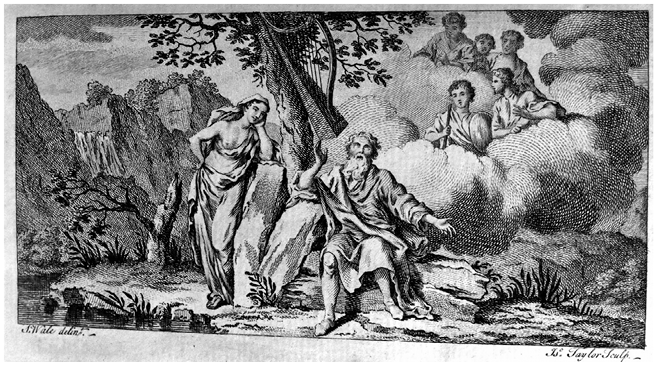
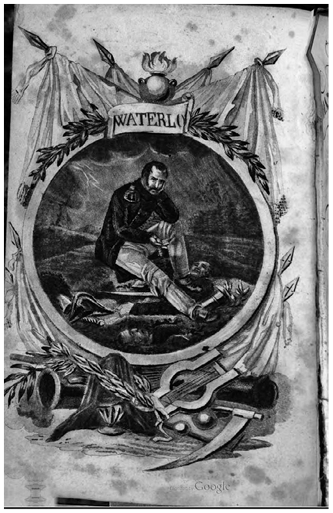
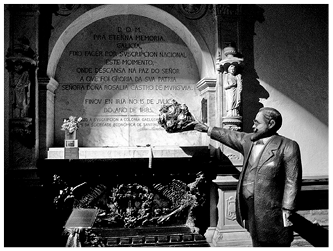
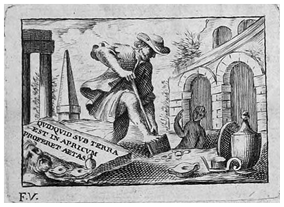
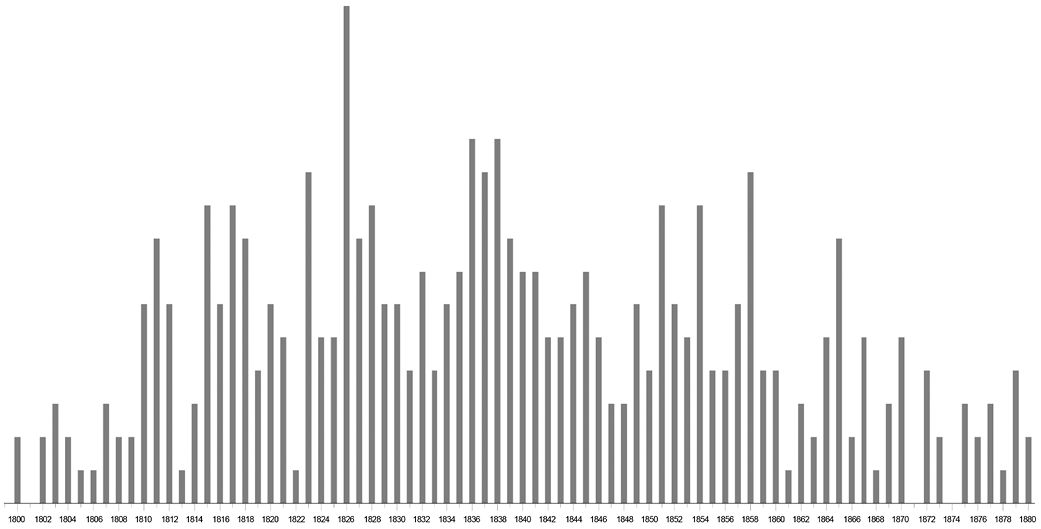
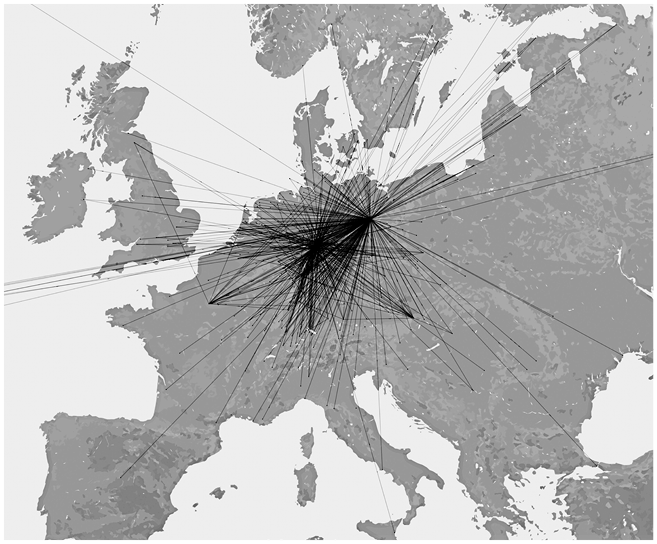
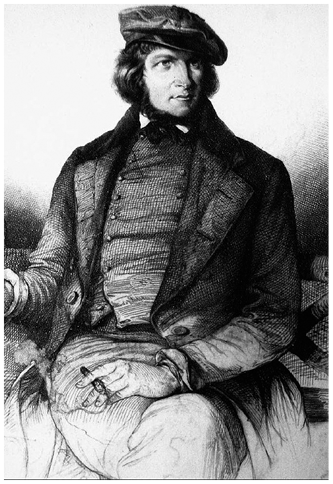
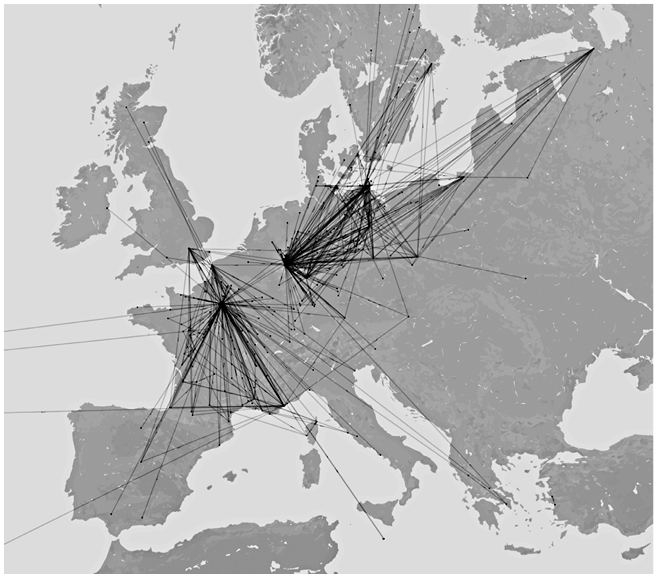
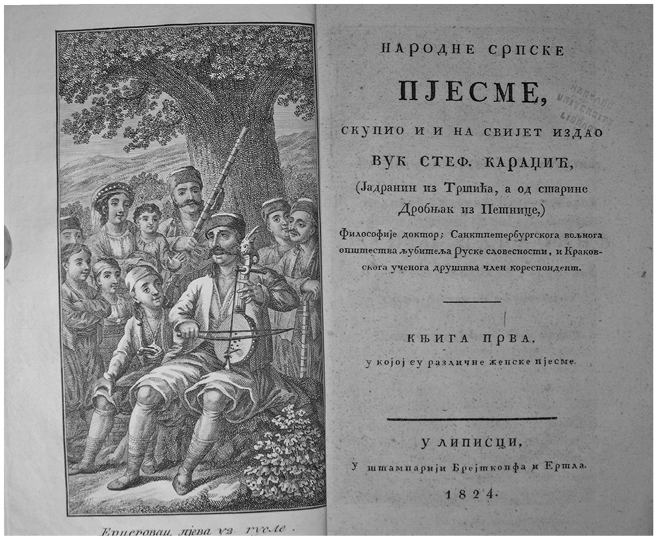
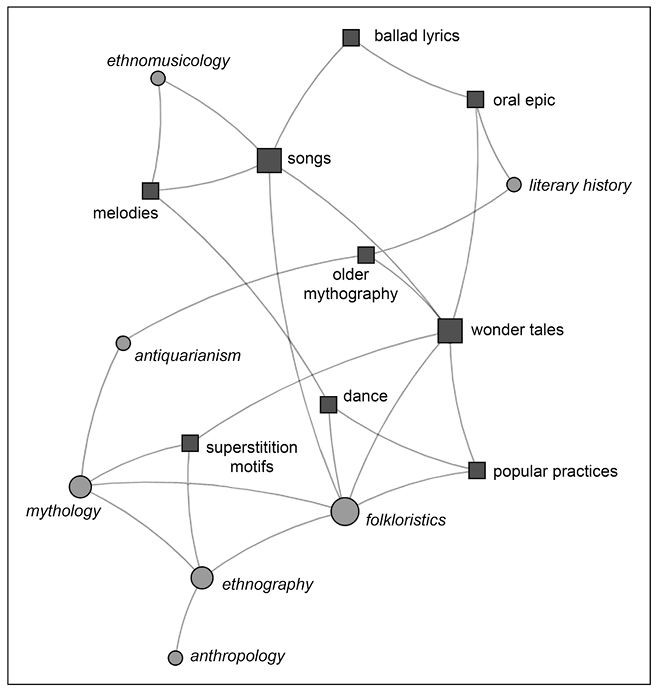

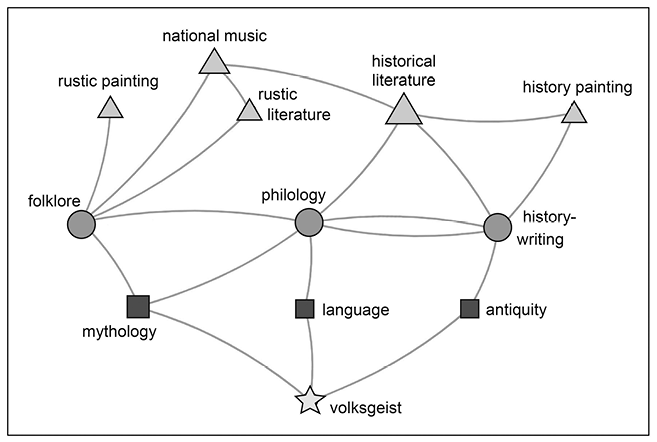
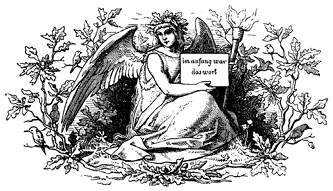
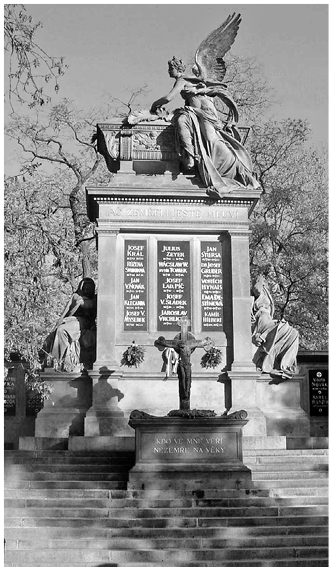
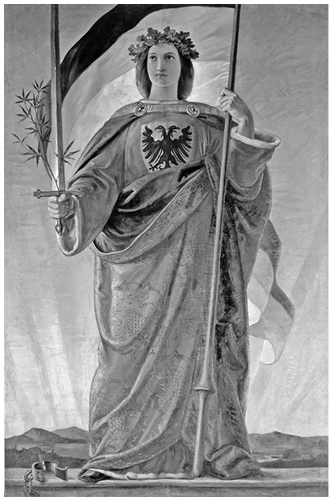
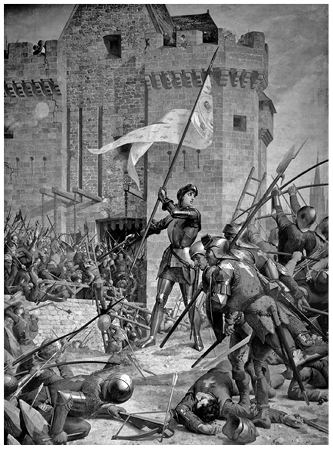
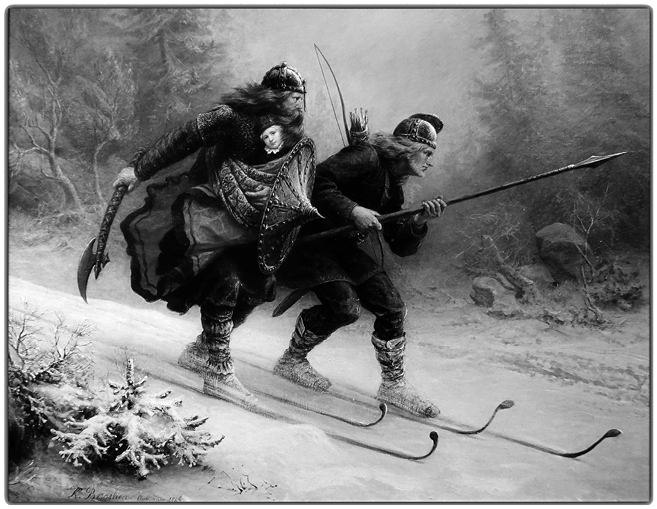
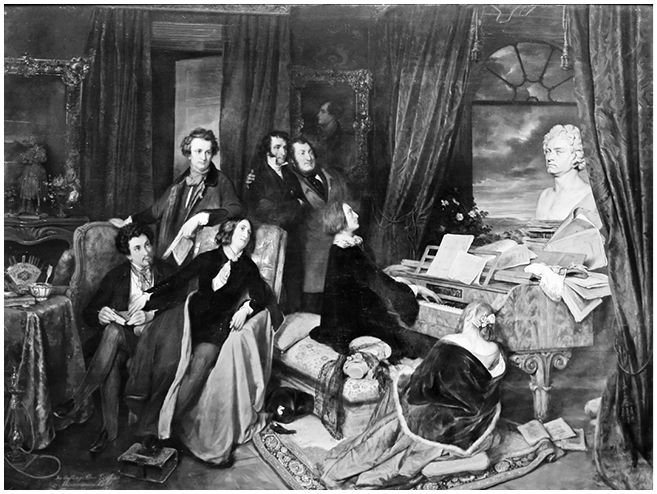
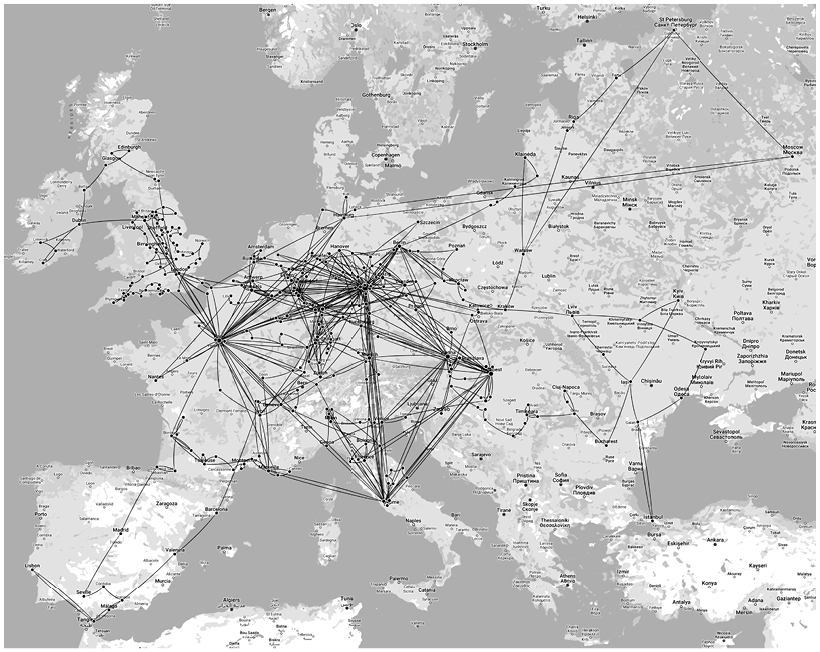
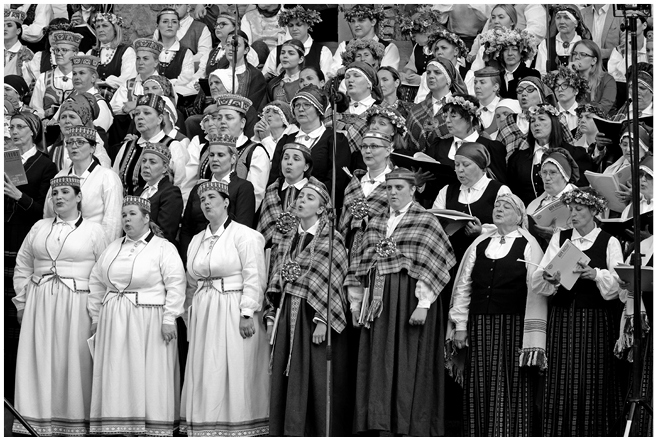

 Open access