





Introduction
Lung cancer is the leading cause of death worldwide. Most lung cancers are diagnosed at an incurable locally advanced or metastatic stage (Walters et al. Reference Walters, Maringe and Coleman2013), with a 1-year survival rate of 15–19% (Broggio and Bannister Reference Broggio and Bannister2016). Patients with advanced lung cancer have a high symptom burden, with insomnia, fatigue, and dyspnea as some of the most frequently reported symptoms (Johnsen et al. Reference Johnsen, Petersen and Pedersen2009; Larsson et al. Reference Larsson, Ljung and Johansson2012). Compared to other cancer populations, patients with lung cancer reported having the worst quality of sleep, 52–79% of whom experienced sleep–wake disturbances (Davidson et al. Reference Davidson, MacLean and Brundage2002; Vena et al. Reference Vena, Parker and Allen2006). Treatment in this population is intended to improve quality of life or prolong life when curing the disease is not an option.
Several systematic reviews and meta-analyses of exercise intervention in patients with lung cancer have reported favorable effects of exercise on sleep quality and other health-related outcomes post-intervention. However, the reviews failed to report whether the improvement in health-related outcomes was sustained in the longitudinal follow-up (Granger et al. Reference Granger, McDonald and Berney2011; Peddle‐McIntyre et al. Reference Peddle‐McIntyre, Singh and Thomas2019). A recent meta-analysis suggested that the disappearance of intervention effects at follow-up was due to the failure to maintain self-practice upon the completion of the intervention (Takemura et al. Reference Takemura, Cheung and Smith2020). Meanwhile, it has been well-established in patients with chronic respiratory diseases that some form of maintenance exercise must be continued after an intervention program to maintain the achieved gains (Holland and Hill Reference Holland and Hill2008; McCarthy et al. Reference McCarthy, Casey and Devane2015).
Alongside chronic respiratory diseases, several studies in other chronic conditions and the general population have identified the role of adherence in optimizing the effectiveness of non-pharmacologic interventions on symptom onset or symptom management (Belza et al. Reference Belza, Topolski and Kinne2002; Inouye et al. Reference Inouye, Bogardus and Williams2003; Pisters et al. Reference Pisters, Veenhof and Schellevis2010). Inouye et al. (Reference Inouye, Bogardus and Williams2003) showed that adherence plays a vital role in the effectiveness of multicomponent non-pharmacological interventions in reducing new-onset delirium in hospitalized older adults. Pisters et al. (Reference Pisters, Veenhof and Schellevis2010) and Belza et al. (Reference Belza, Topolski and Kinne2002) found better adherence to supervised exercise programs and home exercise, respectively, improving the effectiveness of exercise interventions on outcomes in osteoarthritis population. A review of studies on the breast cancer population has also reported that adherence to exercise is important to improve cancer outcomes, such as quality of life; however, challenges exist due to barriers that prevent patients from adopting and adhering to cancer rehabilitation programs (Pudkasam et al. Reference Pudkasam, Polman and Pitcher2018). It can be anticipated that the optimal effect of exercise intervention largely depends on the degree to which an individual’s behavior corresponds to prescriptions and recommendations, such as attending prescribed intervention sessions and achieving the recommended home-based exercises.
Adherence to exercise is challenging for most individuals regardless of their health status. A deeper understanding of the modifiable and unmodifiable correlates of exercise adherence could inform and facilitate future implementation of exercise interventions (Petter et al. Reference Petter, Blanchard and Kemp2009). Modifiable correlates, such as psychosocial factors, provide information on intervention target components to increase adherence (Kampshoff et al. Reference Kampshoff, van Mechelen and Schep2016). Unmodifiable correlates, such as demographic and clinical variables, provide insight into patients who are susceptible to low participation and low adherence (Kampshoff et al. Reference Kampshoff, van Mechelen and Schep2016). A previous systematic review revealed inconsistent findings regarding the demographic, clinical, psychosocial, and environmental correlates of exercise adherence across different cancer types (Kampshoff et al. Reference Kampshoff, Jansen and van Mechelen2014). As the disease trajectory and symptom burden vary widely among different types of cancer, it is crucial to identify exercise adherence correlates in specific cancer populations, especially in patients with advanced lung cancer, who are susceptible to a heavier symptom burden (Cooley Reference Cooley2000; Yilmaz et al. Reference Yilmaz, Ozalevli and Ersoz2013).
To date, no studies have investigated the correlates of exercise adherence and the role of adherence on the effectiveness of interventions in improving sleep in the lung cancer population. In addition, no studies have compared the correlates of exercise adherence in different exercise modalities, namely aerobic and mind–body exercise. As aerobic and mind–body exercises have different intensities and modalities, it would be meaningful to examine and compare their respective correlates of exercise adherence within the same disease population. The aim of this study was to identify factors associated with exercise adherence in aerobic exercise and Tai Chi groups, and examine the impact of exercise adherence on the short- and long-term effectiveness of exercise on sleep in patients with advanced lung cancer.
Method
Design
We conducted a secondary analysis to investigate the association between adherence to and perceived satisfaction with exercise intervention and post-intervention home-based practice on sleep quality in patients with advanced lung cancer. Data were obtained from a 3-arm randomized controlled trial comparing 2 different exercise interventions (aerobic exercise and Tai Chi) for sleep and other health outcomes. The study was conducted in accordance with the principles of the Declaration of Helsinki. The trial was registered with ClinicalTrials.gov (identifiers: NCT03482323 and NCT04119778). Ethical approvals were obtained from the University of Hong Kong/Hospital Authority Hong Kong West Cluster (UW 18-154), and Hong Kong East Cluster (HKECREC-2019-014), and Kowloon Central Cluster/Kowloon East Cluster (KC/KE-19-0039/ER-3).
Study sample
Patients meeting the inclusion criteria were approached by a research team in the outpatient clinics of 3 major public hospitals in Hong Kong from December 2018 to January 2020. The inclusion criteria were as follows: (i) diagnosed with stage IIIB or IV non-small cell lung cancer, (ii) Eastern Cooperative Oncology Group Performance Status 0–2, and (iii) not engaging in regular exercise (defined as <150 minutes of moderate-intensity exercise per week). Patients diagnosed with neurological or psychiatric disorders were excluded. Written informed consent was obtained from all participants upon the commencement of the study.
Exercise intervention
The data were obtained from a randomized controlled trial comparing 2 different exercise interventions – aerobic exercise and Tai Chi. Hence, the type of exercise intervention the participants received was included as the independent variable in all analyses to control for the influence of differences in the content of exercise interventions. In the aerobic exercise intervention, participants were instructed to attend at least 2 supervised sessions per month, for 4 months. Each session included both aerobic and muscle-strengthening exercises. For the aerobic exercise component, the participants engaged in both indoor and outdoor exercises. Outdoor exercises included walking in the track field and indoor exercises included walking on a treadmill or cycling on a stationary bike, at a moderate intensity. Muscle-strengthening exercises were designed to increase strength in the core, upper limbs, chest, back, abdomen, and lower limbs and were performed using resistance bands of 3 different strengths. Participants were required to perform 10 repetitions of each exercise for 2–3 sets to achieve a moderate-intensity level. A moderate-intensity level of exercise was achieved by a rating of 3–4 on the Rating of Perceived Exertion (range: 0–10). In addition, they were instructed to maintain at least 150 minutes of moderate-intensity exercise and 2–3 sets of resistance exercises every other day in weeks in which no exercise classes were held. In the Tai Chi intervention, participants were instructed to attend two 60-minute classes per week, for 4 months. The classes were based on a 16-form Yang style of Tai Chi exercise. Moderate intensity was maintained. In addition, they were instructed to maintain at least 90 minutes of Tai Chi practice every week. Post-intervention, the instructors encouraged the aerobic and Tai Chi groups to maintain at least 150 and 90 minutes of home-based practice per week, respectively.
Adherence
Adherence is defined as the extent to which a person’s behavior corresponds to the agreed recommendations (Sabaté and Sabaté Reference Sabaté and Sabaté2003). Two different forms of adherence were measured: (1) attendance, defined as the percentage of assigned classes attended, and (2) compliance with home-based practice, defined as the percentage of the recommended amount of home-based practice complied with. Compliance with home-based practice was assessed with the help of a self-report exercise log which recorded the type and duration of exercise performed at home. Only the exercises taught in the interventions were recorded in this log.
Perceived satisfaction
Halfway through the interventions, the participants were asked to rate their satisfaction with the assigned exercise intervention on a 4-point Likert scale of perceived satisfaction (0 – very unsatisfied, 4 – very satisfied).
Subjective sleep quality
The Pittsburgh Sleep Quality Index (PSQI) is a 19-item, self-rated questionnaire that assesses sleep quality in the previous month. It scores 7 components of sleep problems: sleep duration, sleep disturbances, sleep efficiency, subjective sleep quality, sleep latency, daytime dysfunction, and sleep medication usage. The sum of the 7 component scores results in a global sleep quality of 0 to 21, with higher scores indicating poorer sleep quality. A score >5 indicates poor quality of sleep. A change of ≥3 points in the PSQI was defined as a minimal clinically important difference (MCID) (Hughes et al. Reference Hughes, McCullough and Bradbury2009). The PSQI has been validated in the Chinese population (Tsai et al. Reference Tsai, Wang and Wang2005).
Psychological distress
The Hospital Anxiety and Depression Scale (HADS) is a 14-item self-rated questionnaire consisting of 2 subscales: anxiety and depression. Each subscale contains 7 items, each rated on a 4-point scale. A cutoff score ≥8 on either subscale denotes anxiety or depression (Zigmond and Snaith Reference Zigmond and Snaith1983). The HADS has been validated in the Chinese population (Li et al. Reference Li, Lin and Hu2016).
Fatigue
The Brief Fatigue Inventory (BFI) is a 9-item self-reported questionnaire that assesses fatigue in the previous week. Each item is scored on a 0–10 numeric scale, with a higher score denoting a higher level of fatigue. The BFI has been validated in the Chinese population (Wang et al. Reference Wang, Hao and Wang2004).
Demographic and clinical characteristics
Demographic and clinical data were collected using a self-designed questionnaire. The demographic characteristics included sex, age, education, smoking behavior, and body mass index (BMI). Clinical characteristics included cancer treatment type (chemotherapy and other therapies) and use of sleep medication. BMI is calculated by dividing the weight in kilograms by height in meters squared. Nurses assessed the Karnofsky Performance Status (KPS) score, which measures the level of activities of daily living. The 1-year mortality risk and disease burden were estimated using the Charlson Comorbidity Index (CCI), which considers 19 comorbid conditions with each weighted 1,2,3, or 6 for its relative risk of one-year mortality (Charlson et al. Reference Charlson, Pompei and Ales1987).
Statistical analysis
The characteristics of the study participants were described using appropriate descriptive statistics, consisting of means and standard deviations for continuous variables and percentages for categorical variables.
Linear regression was conducted to examine the association between demographic and clinical characteristics (gender, age, education, marital status, smoking behavior, cancer treatment, BMI, KPS, CCI), perceived satisfaction, fatigue, psychological factors (anxiety, depression), and adherence (class attendance and compliance with home-based practice) in the aerobic exercise and Tai Chi groups.
We assessed the association of attendance, compliance with home-based practice, and perceived satisfaction with sleep improvement at 4 and 12 months, defined as a change in PSQI that reached the MCID of at least 3 points, through logistic regression. Specifically, we conducted univariable logistic regression and multivariable logistic regression with adjustment for demographic and clinical characteristics, i.e., gender, age, education, marital status, smoking behavior, cancer treatment, BMI, KPS, CCI, as well as perceived satisfaction, fatigue, psychological factors, use of sleep medication, group allocation, and baseline PSQI. For 12-month sleep improvement, we additionally adjusted for 4-month sleep improvement. The PSQI scores of dropout cases were imputed using the last observation carried forward, that is, without clinically important differences. The interaction terms of group allocation by attendance, compliance with home-based practice, and perceived satisfaction were examined. The goodness of fit of the logistic regression models was assessed using the Hosmer-Lemeshow test. All statistical tests were 2-tailed, and a p-value of < 0.05 was considered statistically significant. All analyses were performed using the IBM SPSS Statistics version 26.
Results
Characteristics of study participants
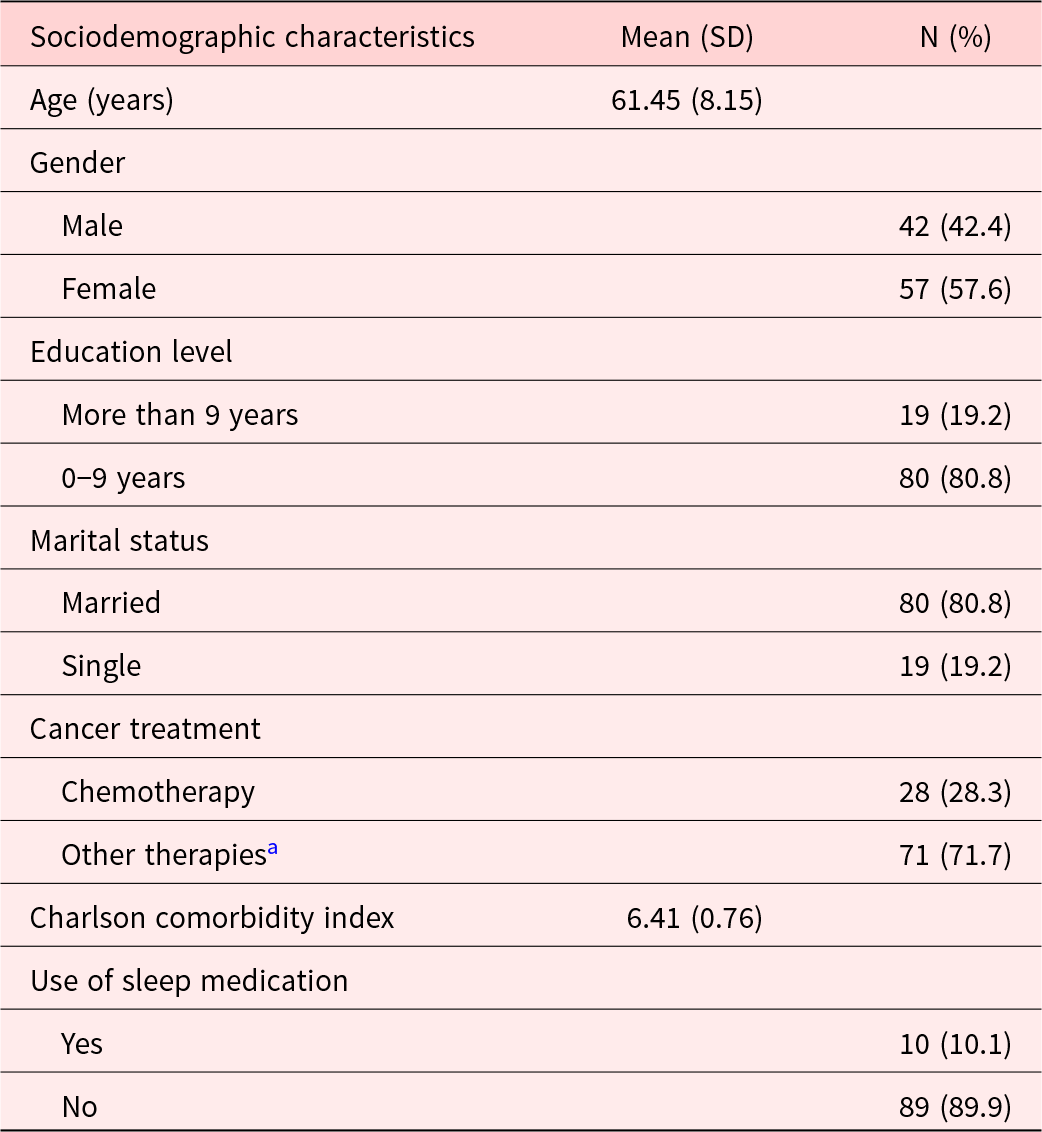
Table 1 presents the characteristics of the study sample. A total of 99 participants were included in the analysis. At the 4-month and 12-month follow-ups, 22.2% and 28.3% of the participants either dropped out or were deceased, respectively. On average, participants were 61.45 (8.15) years old. Slightly more than half (57.6%) were female, and the majority of them were married (80.8%) and had received 0–9 years of education (80.8%). A minority of patients had undergone chemotherapy (28.3%) and used sleep medication (10.1%).
Characteristics of the study sample (n = 99)

a Other treatment includes targeted therapy, radiotherapy, immunotherapy or no treatment.
Note: SD, standard deviation.
Adherence and perceived satisfaction of exercise
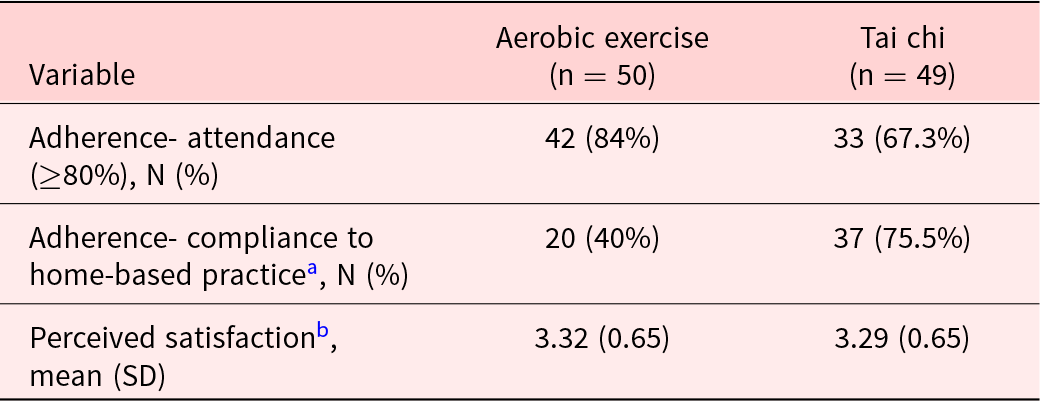
Fifty participants were randomly assigned to the aerobic exercise intervention group and 49 to the Tai Chi intervention group (Table 2). In the aerobic exercise intervention, the majority of the participants (84%) attended at least 80% of the assigned sessions. Less than half (40%) maintained at least 150 min of home-based exercise practice per week. In the Tai Chi intervention, the majority of the participants (67.3%) attended at least 80% of the assigned sessions, and 75.5% maintained home-based Tai Chi practice for at least 90 minutes per week. The average perceived satisfaction scores for the aerobic and Tai Chi interventions were 3.32 (0.65) and 3.29 (0.65), respectively.
Descriptive statistics of exercise adherence

Note. SD, standard deviation.
a Recommended home-based practices in aerobic exercise and tai chi interventions are at least 150 and 90 minutes of instructed exercises, respectively.
b Satisfaction score ranged from 0–4, with higher score denoting higher level of satisfaction.
Factors associated with adherence
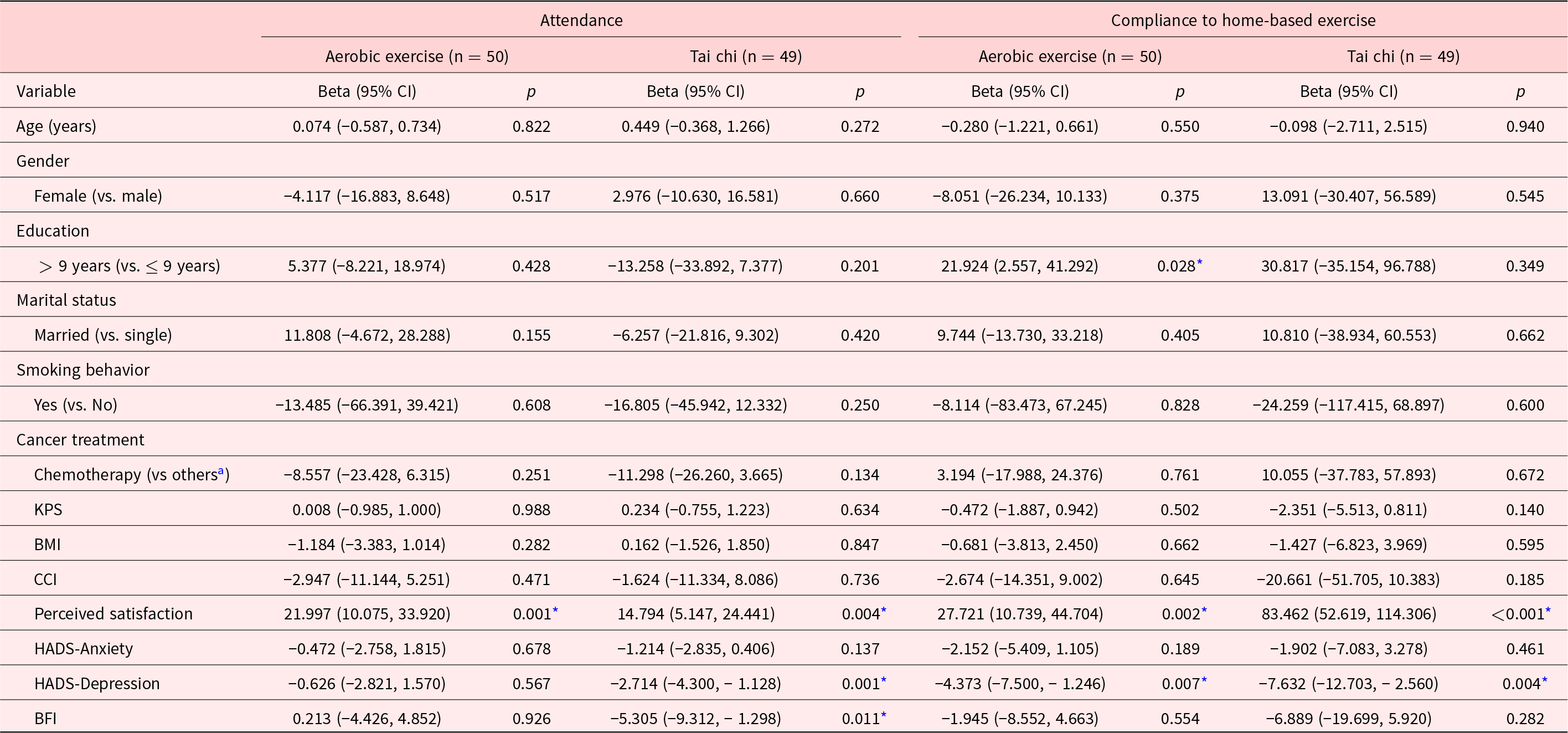
Table 3 presents the linear regression results of factors associated with adherence (attendance and compliance with home-based practice) in aerobic exercise and Tai Chi groups. In the aerobic exercise group, a higher level of satisfaction was significantly associated with higher attendance (β = 22.00, 95% CI = 10.08, 33.92, P = 0.001) and a higher level of compliance (β = 27.72, 95% CI = 10.74, 44.70, P = 0.002), whereas higher levels of depression were negatively associated with compliance (β = −4.37, 95% CI = −7.50, −1.25, P = 0.007). In the Tai Chi group, higher levels of satisfaction (β = 14.79, 95% CI = 5.15, 24.44, P = 0.004), lower levels of depression (β = −2.714, 95% CI = −4.300, −1.128, P = 0.001), and fatigue (β = −5.31, 95% CI = −9.31, −1.30, P = 0.011) were significantly associated with higher attendance rates, whereas higher levels of satisfaction (β = 83.46, 95% CI = 52.62, 114.31, P < 0.001) and lower levels of depression (β = −7.63, 95% CI = −12.70, −2.56, P = 0.004) were significantly associated with better compliance.
Linear regression of factors associated with exercise adherence

a Other treatment includes targeted therapy, radiotherapy, immunotherapy or no treatment.
BFI = Brief Fatigue Inventory, BMI = body mass index, CCI = Charlson Comorbidity Index, CI = confidence interval, HADS = Hospital Anxiety and Depression Scale, KPS = Karnofsky Performance Status.
* p<0.05
Factors related to short-term sleep improvement
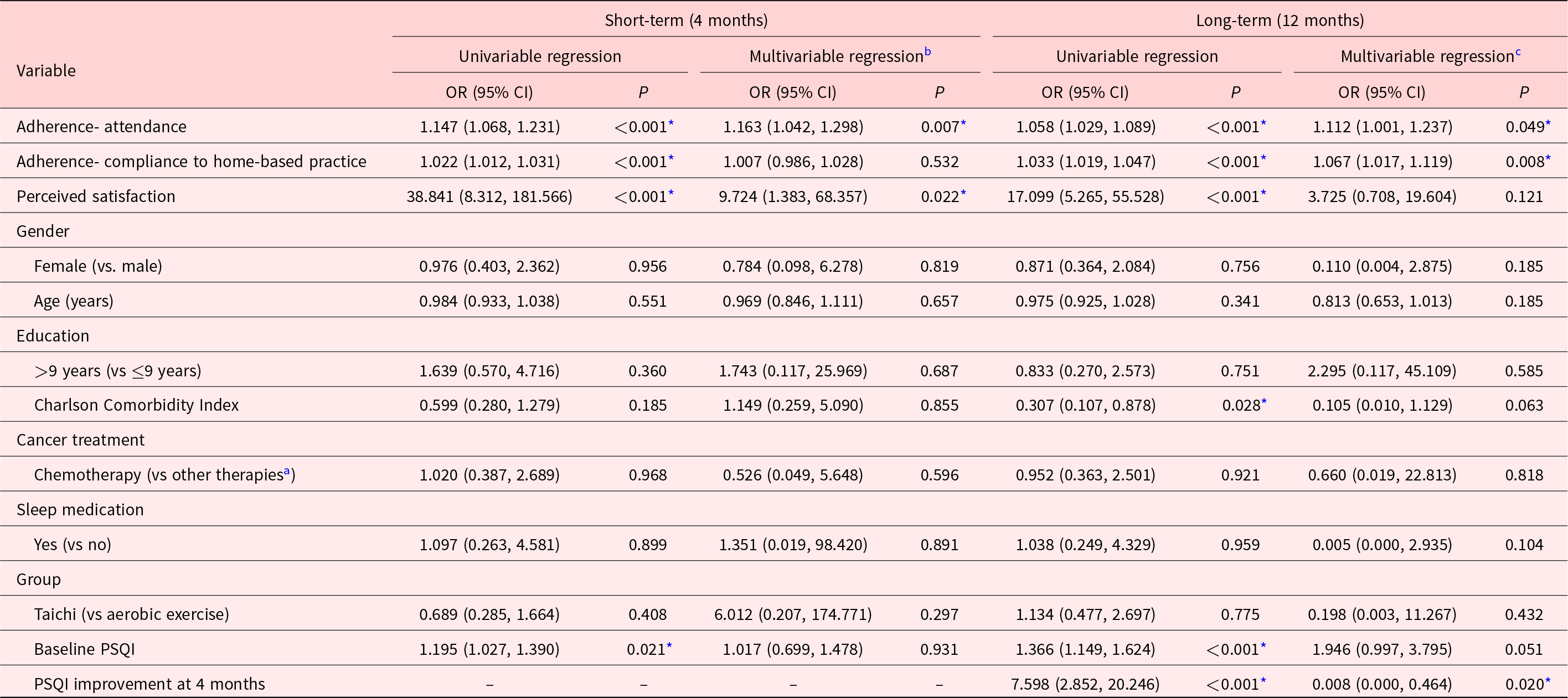
Table 4 presents the results of the logistic regression. In the univariate regression analysis, attendance (OR = 1.15, 95% CI = 1.07, 1.23, P < 0.001), compliance with home-based practice (OR = 1.02, 95% CI = 1.01, 1.03, P < 0.001), and perceived satisfaction (OR = 38.84, 95% CI = 8.31, 181.57, P < 0.001) were significantly associated with clinically important differences in sleep. When controlling for demographic and clinical characteristics (sex, age, education, CCI, treatment type, use of sleep medication, group allocation, baseline PSQI), a significant association between attendance (OR = 1.16, 95% CI = 1.04, 1.30, P = 0.001) and perceived satisfaction (OR = 9.72, 95% CI = 1.38, 68.36, P = 0.022) with sleep improvement remained, but not in compliance with home-based practice (OR = 1.01, 95% CI = 0.99, 1.03, P = 0.532). Higher attendance and perceived satisfaction were significantly associated with clinically important changes in sleep. The interaction terms of group by attendance, compliance, and perceived satisfaction were not significant in the models (P > 0.05). The Hosmer–Lemeshow test showed an adequate fit (P > 0.1).
Logistic regression: impact of adherence of effectiveness of physical activity intervention on sleep improvement

CI = confidence interval, CCI = Charlson Comorbidity Index, OR = odds ratio, PSQI = Pittsburgh Sleep Quality Index.
a Other treatment includes targeted therapy, radiotherapy, immunotherapy or no treatment.
b Covariates: Gender, age, education, CCI, treatment type, use of sleep medication, group, and baseline PSQI.
c Covariates: Gender, age, education, CCI, treatment type, use of sleep medication, group, baseline PSQI, and improvement of sleep quality (as measured by PSQI) at 4 months.
* p<0.05
Factors related to long-term sleep improvement
In the univariate regression analysis, attendance (OR = 1.06, 95% CI = 1.03, 1.09, P < 0.001), compliance with home-based practice (OR = 1.03, 95% CI = 1.02, 1.05, P < 0.001), and perceived satisfaction (OR = 17.10, 95% CI = 5.27, 55.53, P < 0.001) were significantly associated with clinically important differences in sleep (Table 4). When controlling for demographic and clinical characteristics (sex, age, education, comorbidity score, cancer treatment type, use of sleep medication, group allocation, baseline PSQI), and sleep improvement at 4 months, both adherence measurements (attendance: [OR = 1.13, 95% CI = 1.00, 1.24, P = 0.049], compliance with home-based practice: [OR = 1.07, 95% CI = 1.02, 1.12, P = 0.008]) were significantly associated with clinically important differences in sleep. Higher levels of attendance and compliance with home-based practice were significantly associated with clinically important changes in sleep. The interaction terms of group by attendance, compliance, and perceived satisfaction were not significant in the models (P > 0.05). The Hosmer–Lemeshow test showed an adequate fit (P > 0.1).
Discussion
This study is the first to explore the factors associated with adherence with aerobic and mind–body exercises, as well as the impact of exercise adherence on the short- and long-term effectiveness of exercise intervention in sleep improvement in patients with advanced lung cancer. Higher levels of satisfaction and lower levels of depression were important characteristics of attendance and compliance with home-based practice in both aerobic exercise and Tai Chi groups, whereas lower levels of fatigue uniquely contributed to higher attendance in the Tai Chi group. In addition, attendance and satisfaction were correlated with short-term intervention effectiveness, whereas attendance and compliance with home-based exercises were correlated with long-term intervention effectiveness on sleep.
Interestingly, higher level of satisfaction was key to higher attendance and compliance with home-based exercise in both aerobic exercise and Tai Chi groups. Based on the self-determination theory process model for exercise behavior, exercise-related satisfaction influences one’s intrinsic motivation to engage in exercise, and therefore, the adoption and maintenance of exercise behavior (Ryan and Deci Reference Ryan and Deci2002). It is understandable that patients with limited satisfaction would not participate in and complete a time-consuming exercise intervention. Future exercise interventions could stratify the exercise group by patients’ abilities and preferences, thereby promoting their interest and self-efficacy in engaging in exercise, which is a factor associated with exercise behavior in this population (Takemura et al. Reference Takemura, Cheung and Fong2022).
Another important characteristic of adherers in our study was a lower level of depression. Lower levels of depression were significantly associated with higher levels of compliance in both aerobic exercise and Tai Chi groups, and a higher attendance rate in the Tai Chi group. The association between depression and lower adherence has been reported in various populations, such as healthy adults (Trost et al. Reference Trost, Owen and Bauman2002; Vancampfort et al. Reference Vancampfort, Stubbs and Sienaert2015), those with chronic illnesses (Heerema-Poelman et al. Reference Heerema-Poelman, Stuive and Wempe2013; Yohannes et al. Reference Yohannes, Yalfani and Doherty2007), and other cancer populations (Courneya et al. Reference Courneya, Segal and Gelmon2008; Hong et al. Reference Hong, Bardwell and Natarajan2007). Having depressive symptoms possibly leads to lower health status and greater functional impairments (DiMatteo et al. Reference DiMatteo, Lepper and Croghan2000), thereby lowering the inclination to actively make positive lifestyle changes. A plausible explanation is that patients with depression are made aware of anhedonia and avolition; thus, they would have decreased interest, energy, and motivation. Biologically, hyperactivity of the hypothalamic-pituitary-adrenal axis seems to be correlated with depression and sedentary behavior (Heerema-Poelman et al. Reference Heerema-Poelman, Stuive and Wempe2013). Future exercise interventions should target patients with greater levels of depression by adopting strategies such as increasing the number and quality of contact apart from intervention classes and incorporating intervention content into daily life to boost motivation.
We found that lower levels of fatigue uniquely contributed to higher adherence in the Tai Chi group. Consistent with patients with chronic diseases and older adults (Flegal et al. Reference Flegal, Kishiyama and Zajdel2007; Nam et al. Reference Nam, Dobrosielski and Stewart2012; Shang et al. Reference Shang, Wenzel and Krumm2012; Viken et al. Reference Viken, Reitlo and Zisko2019), our findings showed that higher level of fatigue was a significant predictor of nonadherence. Fatigue may decrease the willingness and ability to participate in an assigned exercise program. Individuals who are less fit are less physiologically equipped to comply with exercise stress, making it difficult to sustain regular practice of the assigned exercise program. The major reason for the differences between the aerobic exercise and Tai Chi groups may be the frequency of the assigned intervention classes rather than the nature of the exercise modalities. Since the majority of patients were undergoing cancer treatment, a higher frequency of assigned intervention classes may act as an additional burden on them. Future exercise interventions targeting patients with fatigue could reduce the frequency of exercise intervention and put more emphasis on home-based exercise to promote adherence.
Notably, this study highlights that adherence is vital to maximize the positive effects of exercise programs on sleep in patients with advanced lung cancer. Specifically, attendance is associated with short- and long-term intervention effectiveness, whereas compliance is another factor associated with long-term effectiveness. Obviously, participants with higher attendance were exposed to more interventional dosage, and they spent more time receiving instructions from trainers; thus, they would have a better grasp of the intervention details and tend to be more skillful in performing the exercises. In addition, having a higher compliance with home-based practice yielded the additional benefit of a sustainable intervention effect. This implies the importance of continuous exercise behavior to achieve long-term benefits, and that adherence should be ensured to result in an effective intervention. Future studies should develop and implement strategies to encourage participants to maintain an exercise regime beyond the intervention period. Strategies could tailor the intervention to patients’ preferences and incorporate the intervention content into their daily lives with the aim of enhancing long-term compliance, especially among those with higher levels of depression and fatigue.
Implication for clinical practice
This study has several implications. Methods to monitor and ensure adherence appear to be important for ensuring the effectiveness of exercise interventions. The relationship between adherence and outcome demonstrated in this study lends strong support to the effectiveness of exercise intervention on sleep outcomes and the need to apply the intervention consistently. Strategies to maintain satisfactory exercise adherence include tailoring the intervention to the participants’ preferences and abilities so as to promote their interest, motivation, and satisfaction. For patients with higher levels of depression, further strategies are recommended, such as increasing the number and quality of contact beyond intervention classes and incorporating intervention content into daily life. In addition, it would be useful to reduce the frequency of exercise intervention sessions and place more emphasis on home-based exercise to enhance adherence and intervention effectiveness.
Strength and limitations
The strength of our study is that it is the first to examine the factors associated with exercise adherence in patients with advanced lung cancer and to assess the impact of exercise adherence on the short-term and long-term effectiveness of exercise on sleep improvement. This study has several limitations. First, exercise adherence was assessed using self-reported exercise logs, which could possibly lead to overestimation of adherence and bias caused by social desirability and approval (Sluijs et al. Reference Sluijs, Dulmen and Dijk2006). Second, the sample size was small, which limits the statistical power of the analysis. Third, some likely prospects of social cognitive predictors, including family, social roles, and self-efficacy, were not measured in this study. Lastly, the differences in intervention dosage between aerobic exercise and Tai Chi might have attributed to the differences in results.
Conclusion
In conclusion, higher levels of satisfaction and lower levels of depression were important characteristics of attendance and compliance with home-based practice in both aerobic exercise and Tai Chi groups, whereas lower levels of fatigue uniquely contributed to higher attendance in the Tai Chi group. Better attendance and compliance with recommended home-based exercises improved the long-term effectiveness of exercise interventions in patients with advanced lung cancer. However, additional strategies are needed to promote exercise adherence in patients with greater levels of depression and fatigue. Continued efforts to enhance adherence are imperative to maximize intervention benefits and increase the statistical power to determine the effectiveness of interventions.
Data availability statement
The data that support the findings of this study are available from the corresponding author upon reasonable request.
Acknowledgments
The authors would like to thank all participants for their support.
Funding
This research received no specific grants from any funding agency in either the public, commercial, or not-for-profit sector.
Competing interests
The authors declare none.

 Open access

