


Transatlantic Crossings: “Twenty Servian Gypsies” on the SS Tennyson
Stepping aboard the SS Tennyson at the port of Buenos Aires in July 1904, the extended Estevanovich (Ištvanović) family ventured together to join a scattered but resilient network of Roma who had already established a foothold in North America.Footnote 1 Most in the group were born in Šabac, Serbia – likely making them Mačvaya Roma – and had migrated to Argentina in the early 1900s.Footnote 2 To join family in St. Louis, Missouri, the group would first have to carefully maneuver obstacles faced while trying to enter the US via Ellis Island. Upon landing, however, the family was detained, held for Special Inquiry, and each member summarily declared a “Likely Public Charge” (LPC) – a category of exclusion that could provoke deportation. Although the group would fight the claim, they were unable to overcome unwritten law, which singled out Roma for exclusion.Footnote 3 As they waited in legal limbo for over ten weeks of detention, family members filed several formal appeals to overturn the decision, to no avail. Augustus Sherman, then a high-ranking clerk at Ellis Island, captured at least three photo portraits of the group before a final deportation order was handed down, which blocked their entry and resulted in the entire group being returned to South America.Footnote 4
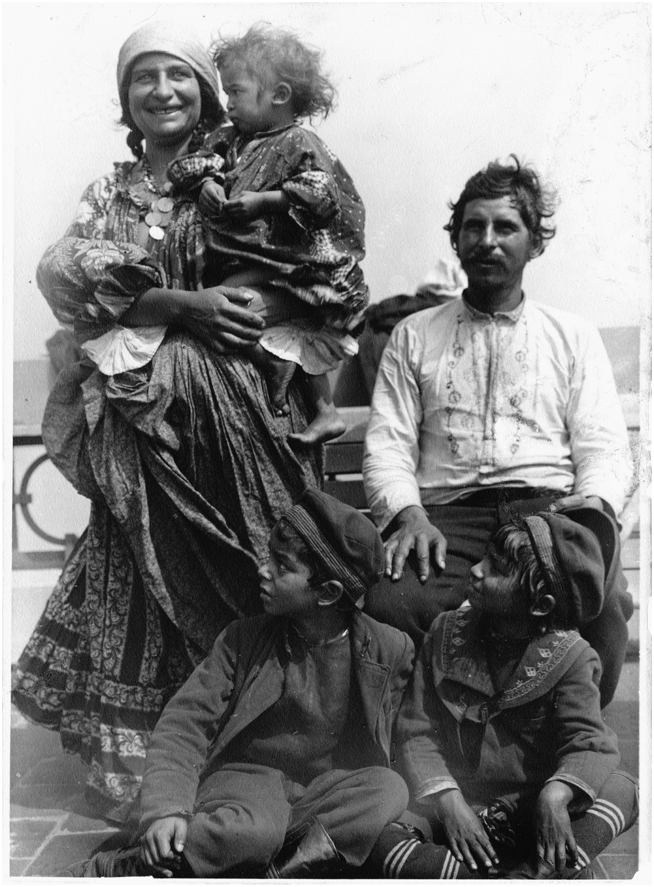
Less than four months after the group’s deportation, photomechanical reproductions of their portraits were nationally syndicated in the US press, including books, magazines and even a postcard, which declared that this “picturesque” group of “undesirables” had been deported. Carefully deciphering the images and determining the identity of their subjects reveals an uneasy backstory that can only be reanimated through archival material. A narrative- and data-rich flipside to the photo portraits is exposed, one that outlines transatlantic Roma migration during the early 1900s, persistently shadowed by discrimination and hostility. Detailing the lives of some of these Roma migrants through their own words and experiences exposes the struggles and heartbreak many endured while encountering the power and prejudice of immigration bureaucrats. The combined and linked antigypsyism of the media and the state kept the “Golden Door” at Ellis Island locked for many early twentieth-century Roma arrivals (Figure 5.1).
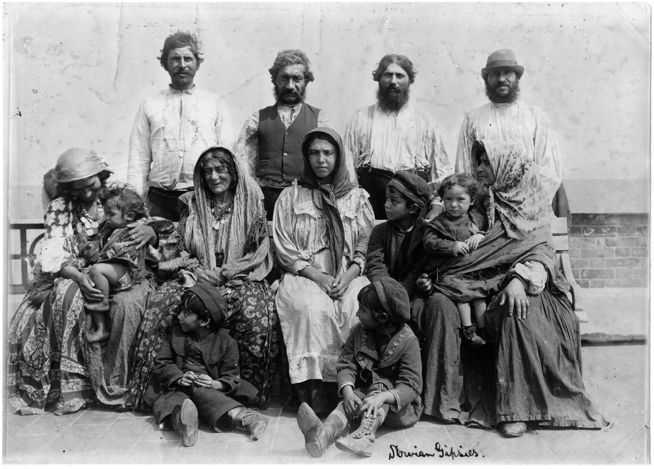
Group photo of part of the Estevanovich families as they awaited debarment at Ellis Island.
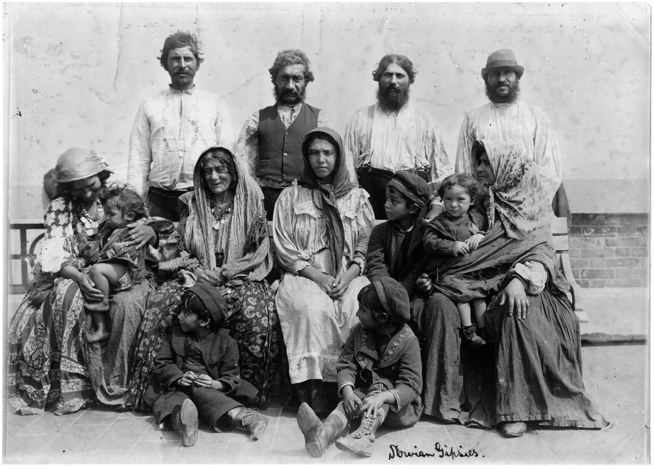
Throughout the late nineteenth and early twentieth century, Roma were regularly characterized in the press as an undesirable and untrustworthy people who could never be fully assimilated or Americanized; the attention they received came in the form of disparaging, even demonizing copy. Carol Silverman notes that Roma were being “racialized as dangerous others” in the media, where frequent allegations of child theft/kidnapping, menace and mayhem, poisoning wells and fraud would surface – while more and more Roma were slipping across the borders.Footnote 5 Dozens of syndicated stories in the US and Canadian press in 1904 alone reported on Roma groups’ constant movements, suspicious activities and deportations. Dalen Wakeley-Smith has shown that this was not an aberration but rather the ramping up of a decades-long practice on the part of the popular press, as well as the public, for whom Roma could both fascinate (through orientalist fantasy) and appall (through scapegoating) in equal measure. Unsurprisingly, these same stereotypes and prejudices impacted the decisions of immigration officials.Footnote 6
Two newspaper stories track this one family’s arrival, and the Tennyson’s manifest records the landing of eight adults and twelve children, seven of whom were two and under.Footnote 7 All were listed as Servians originally sailing from Buenos Aires with six stops at ports in Uruguay, Brazil and Barbados. Four of the adults were literate, and all were judged to be in good health. The men were all listed as laborers and collectively carried $595 ($20,960 in 2024 dollars).Footnote 8
One of the women was pregnant, and two of the children were less than two months old, further complicating what was already a precarious journey. They had spent nearly four weeks traveling by steamship up the coast of South America and through the Caribbean until reaching New York. However, their journey was not yet halfway over in terms of distance and was just beginning in terms of duration. The New York Times bluntly noted that while the group was “picturesque,” they were not “desirable immigrants” and were to be deported despite efforts underway to appeal the order.Footnote 9
Discrimination, Detention, Deportation
The Estevanovich family was detained on the grounds that if allowed to enter the US, they would become a public charge, a frequently employed but, in this case, entirely disingenuous claim, considering that the family was financially well-off, had immediate family members in the US, and was judged to be in good health.Footnote 10 Regardless, the group was unable to overcome the LPC charge.Footnote 11
Final dismissals came over a week after news reports claimed the decision to deport had already been made. The appeals took longer to accommodate, in part because the family was waiting for two witnesses to arrive and submit sworn affidavits on behalf of the group. In any case, denial meant deportation; after four hearings and four appeals, the outcome would remain unchanged. Although there was no state provision, law or federal statute that marked Roma for exclusion at ports of entry, the real reasons for their detention and ultimate deportation had more to do with a hybrid race/class/behavior-based discrimination rather than any regulatory provision put in place to limit the influx of public charges into the United States.Footnote 12
Statements from Ellis Island officials made during appellant hearings would echo the language of the press and vice versa. Transcripts of Special Inquiry hearings and related documents for the Estevanovichs and others have been preserved, offering a fascinating glimpse into the forgone conclusions of the Board. In each case, after a half dozen perfunctory questions by the Board, a similar motion ordering deportation was abruptly made for each family. Hearings for each family head in the Estevanovich party took place on July 24, 1904, just a day after the group’s arrival.
Mr. Paul: How did you support yourself before you came to this country?
Jeverem Estevanovich: We have been farm hands.
Mr. Paul: Did you ever attempt to enter this country before and were refused admission and deported at that time?
Jeverem Estevanovich: I have never been in this country before.
Mr. Paul: I move the exclusion of the alien immigrants before the Board as likely to become a public charge. This alien is encumbered with his wife, who is pregnant and two very young children; he has an inadequate sum of money to preclude the possibility of their becoming public charges until such time as they would become self-supporting if at all. This class of immigrants are as a rule wandering, professional beggars, fortune tellers, and on the whole very undesirable for admission to this country.Footnote 13
The motion was seconded, and then the chair declared the aliens to be unanimously excluded as LPCs and ordered them deported at the expense of the steamship company that brought them to the US. The line of questioning concluded with the motion’s acceptance, and with each testimony, a copy of a letter from the Consulado de la República Argentina en St. Louis, dated six weeks prior to the family’s arrival, was entered into the record. The letter had been sent to Ellis Island Commissioner William Williams before the group’s arrival on the Tennyson. In a perfectly unequivocal manner, it stated that the entire family was expected by family members in St. Louis – who were ready to accommodate them – and that the group should come to the consulate for any assistance in locating relatives. Though the letter appears not to have been discussed to any substantial degree, it nonetheless shows a high level of preparation on the part of the group.
“Did Your Wife Ever Tell Fortunes?”
On July 31, a rehearing was held for the case of Andreas Estevanovich and his family, apparently at the request of Commissioner Williams. Andreas was ostensibly the head of the entire group and was now being accused by a “man from the Deporting Division” of having attempted to enter the country in November 1903, only to have been denied entry and deported; Andreas rejected the claim made by the inspector in this and subsequent statements. During the proceedings, it was revealed that three of his children were already in the US and that one of them, 25-year-old Stefan Stevanovich, had traveled from St. Louis to serve as a witness for his father.
Chairman Coe: On what ship did you come to this port sometime last fall?
Andreas Estevanovich: I don’t know, I could not tell.
Chairman Coe: What month was it you were sent back?
Andreas Estevanovich: I could not tell you; I do not recollect it.
Chairman Coe: Was it in October or November?
Andreas Estevanovich: (no answer)
Chairman Coe: What was the name under which you came here last fall?
Andreas Estevanovich: Only one name I have.
[Stefan Stevanovich is sworn in]
Mr. Hise: Have you any money saved?
Stefan Stevanovich: Yes, sir
Mr. Hise: How much?
Stefan Stevanovich: $500
Mr. Hise: Where is that money?
Stefan Stevanovich: With me
Mr. Hise: Show it?
Stefan Stevanovich: (Shows $500 in gold)
Mr. Jackson: What have you been doing in St. Louis?
Stefan Stevanovich: Working at any kind of work, underground, in factories, and any kind of work. I will pay for him if I have to pay $500, he is my father.
Mr. Jackson: These aliens came to this country on the SS Tennyson, November 20, 1903; were made S.I. [Special Inquiry], and were excluded by a Board of Special Inquiry on November 23, 1903 as persons liable to become public charges. At that hearing the opinion of the Board was unanimous … special stress was laid upon the fact that “if there is such a thing as an undesirable class of immigrants that come to this country, the immigrants before the Board are certainly within that class.” I also believe that they do belong to a peculiarly undesirable class. My opinion is that he is a Gypsy or has maintained himself after the fashion of a Gypsy. I move to exclude them as likely to become a public charge.
Mr. Hise: There being no evidence submitted before the Board that these people are other than what they profess to be, viz, farmers; also the fact that the man, to my mind, is capable of supporting his family; he shows £41, which he says he has obtained by his own exertions; he has three children in this country, one of whom appears here and exhibits $500, in gold, of his earnings; he appears to be a hard working man. Believing there is no likelihood of these people becoming public charges, I, therefore, move to admit them.
Chairman Coe: They are excluded.Footnote 14
The one dissenting voice throughout all of the hearings came from Hise, and his opinion was referenced in subsequent documents filed on behalf of the family, to no avail. Despite the outcome, Stefan remained in New York, and together with another relative of Andreas who had just come forward – a younger brother named Thomas Michael – they hired an attorney from a Manhattan law firm to represent the entire family in an attempt to reverse the Board’s decision.
The head of each family wished to appeal the Board’s initial decision and request a formal rehearing, but new evidence would be required. Stefan and Thomas made sworn affidavits in support of an appeal to be made before another convening of the Board of Special Inquiry (BSI). Thomas’ affidavit stated that he had been in the US since the mid-1880s, that he and his brothers were all born in Šabac, Serbia, but was now a naturalized US citizen who at no point had become a public charge, that he was a successful small-business owner as a coppersmith in New York with $5,000 in savings, and was willing to support the family financially if needed. The family presented additional evidence, including copies of telegrams from the Argentine Consulate in St. Louis, dated from January to June 1904, which indicated that Andreas had not attempted to enter the US in November 1903. Within a week, the sworn affidavits and evidence were sent to both Commissioner Williams at Ellis Island and to the US Commissioner–General of Immigration, F. P. Sargent.
On the same day that attorneys for the family submitted their first affidavit, there was an unsuccessful attempt to deport the entire group. According to a letter by steamship agents to Commissioner Williams, the Tennyson could not accommodate such a large group at the last minute, so they were sent back to detention. Within a few days, the affidavits were submitted and received. The four briefs filed on behalf of the appellants concisely address the unfounded statements made by Board officials and offer sound arguments against their unfairness. Moreover, the prejudice of Board officials was forthrightly called out by attorneys for the family:
There is nothing in the law prohibiting gipsies [sic], whatever that term signifies, from entering this country. The law does require the exclusion of “professional beggars”; but these immigrants are neither gipsies nor beggars. There is not the slightest evidence in the case to support the statements of the inspector… The law of the land does not permit even aliens to be excluded because they belong to an “undesirable class of immigrants.” There is nothing in the statute that gives the Board of Inquiry the power arbitrarily to determine who is and who is not desirable for admission to this country. Their duty is to administer and obey the law.Footnote 15
The attorneys were correct, but in the end, their arguments mattered little. In this case, the Board had deferred judgment on the next steps to the Department of Commerce and Labor, where officials reviewed the material and quickly set out a course of action, recommending deportation on two flimsy provisions:
“If he elects to appeal from said order of deportation, he must … file notice of such appeal promptly.”
“No appeal will be considered after any such alien has in consequence of an adverse decision of a Board of Special Inquiry, been transferred from an immigrant station to be deported.”
The Department must, therefore, decline to entertain the appeal, leaving the decision of the Board of Special Inquiry as the final adjudication as to the right of the appellants to land in the United States.Footnote 16
Thus, not acting promptly with their appeal (a dubious claim nowhere mentioned before) and because the physical act of having the group transferred out of detention and taken to the pier for deportation violated Rule 8 – even though the group was not accepted on board the Tennyson – is what ultimately nullified their final appeal. None of the letters between Ellis Island and Washington, DC officials acknowledged the new affidavits or evidence, and the case ended abruptly due to the technicalities referenced above. The letter from the Department of Commerce and Labor to the Commissioner of Ellis Island was dated August 18; all appeals were dismissed on August 19.
Despite the quick dismissal, the group remained on Ellis Island for another six weeks. However, no additional records concerning their detention survive, except for notes entered into the ship’s manifest detailing their deportation, including that of a newborn. Maria Estevanovich, age 24, gave birth to a child in the hospital at Ellis Island on September 19. The unnamed child was barely two weeks old when the entire group was deported. That was not the end of the Estevanovichs’ attempts to emigrate to the US, nor was it for other groups of Roma.Footnote 17
“Picturesque” Roma on the RMS Carpathia
The same passenger liner that carried the Estevanovich family to Ellis Island also transported other extended families of Eastern European Roma from South America to the United States, starting even before the Estevanovichs’ attempted emigration in 1904 and continuing until at least the 1910s. Some would successfully enter, while many Roma would also be deported back to their port of embarkation – and again have their detention and deportation reported on in the press.Footnote 18
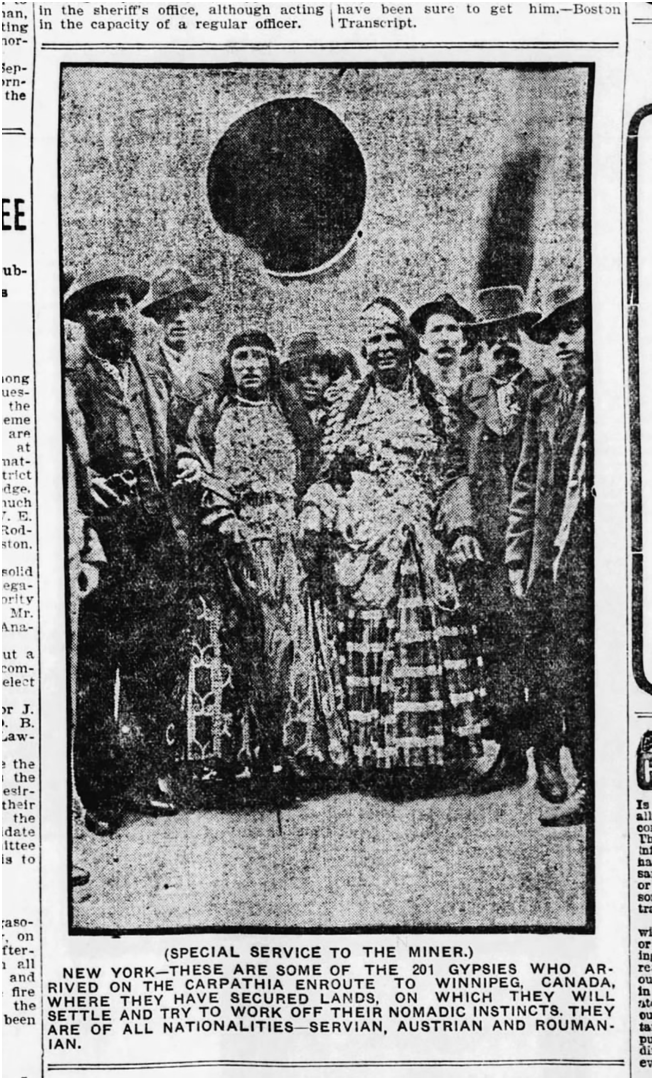
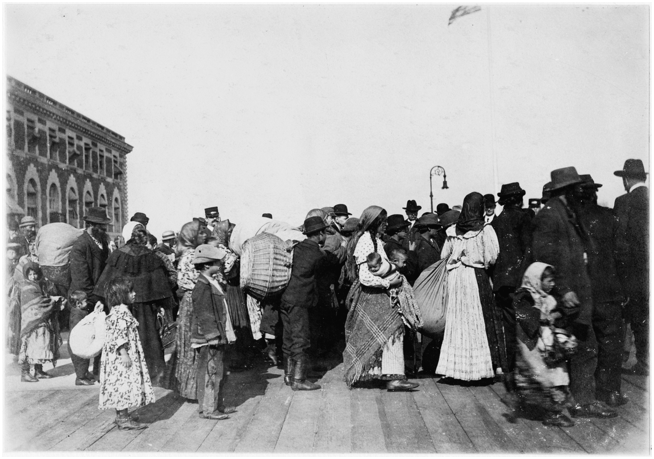
From another ocean liner departing from Liverpool, a story would emerge that overlaps in time and narrative with the Estevanovich deportation – at a scale more than ten times larger. In early September 1904, while the Estevanovich family was still in detention, a packed steamer arrived in New York, ferrying its passengers to Ellis Island. It was the RMS Carpathia, which carried nearly 2,000 emigrants from all over Europe; 202 Roma were among the passengers in steerage, likely making it the largest single attempted migration of Roma to North America during the early 1900sFootnote 19 (Figure 5.2).
A nationally syndicated photo with the caption “Gypsies to settle down in Canada.”
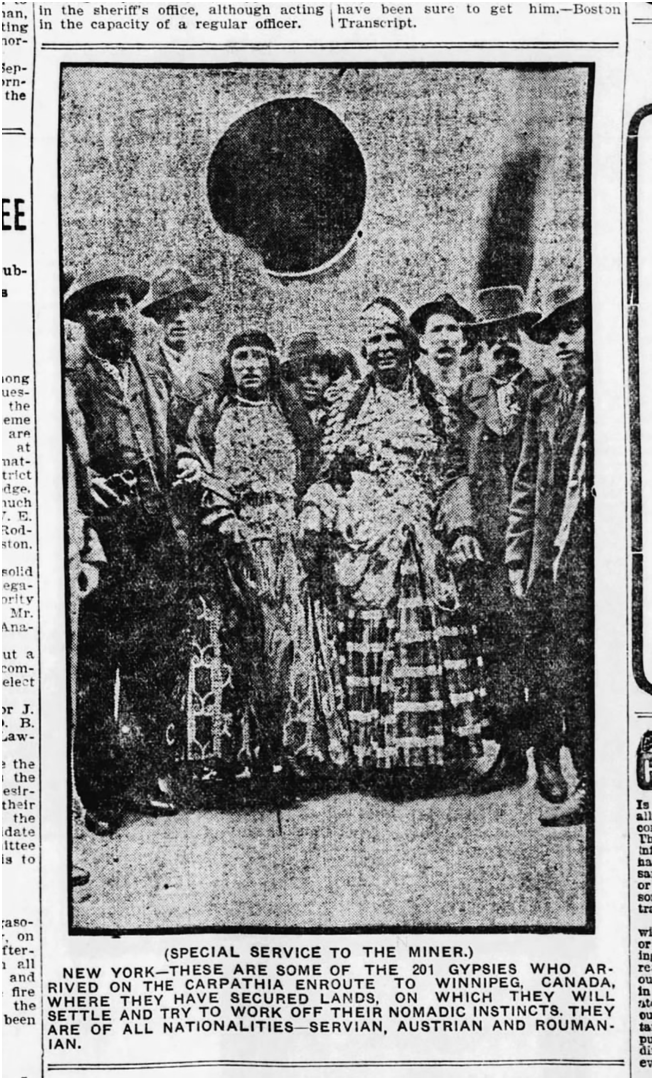
Amounting to more than 10 percent of the passengers aboard the ship, their collective presence did not go unnoticed during the voyage. An unlikely eyewitness account, written by a steward from the Providence Art Club, included crass observations of “the most picturesque-looking gang of cut-throats you can ever wish to see” aboard the Carpathia:
There was a band of two hundred and sixty of them. The cap’n refused to have them aboard; so the tender cast off hawsers and took them back. We waited for orders to sail; but pretty soon the tender came alongside again, and this time after some shouting of orders through the megaphones, they were admitted. I put my son to bed about nine … then a dozen or so of us visited the streets of Cairo – that was the Gypsies’ quarters, where you could see a free show every night.Footnote 20
Tom Mitchell, a Romani American based in New York, claimed to be responsible for the migration itself, stating: “I brought these 260 men, women and children here to go to Winnipeg and take up lands. They have money. I will bring 1,800 more of them out in a few months for the same purpose. They are not paupers and they can look out for themselves. The Government will pass them.”Footnote 21 The plan would fail to materialize, and additional news reports, which claimed to cite immigration officials, asserted that the scenario playing out from the Carpathia was about to end in the largest deportation of a single (ethnic) group arriving at Ellis Island.Footnote 22 On the surface, the reason behind the mass exclusion was to minimize the “Gypsy menace,”Footnote 23 but public health was also raised as a concern; approximately 20 percent of the Roma arrivals, primarily children, had contracted measles toward the end of their journey across the Atlantic. A fear of contagion, now associated with an already undesirable ethnic group, was a competing factor in their being singled out for exclusion. Other news reports would claim that while most of the Roma intended to transit on to Winnipeg and not settle in the US, immigration officials knew better; this was just a ploy, and if the Roma were allowed into Canada, they would inevitably try to reenter the US and wreak havoc upon its citizenry. Transcripts made by immigration officials that dealt with the Carpathia’s Roma tell a different story, one that points toward wholesale discrimination rather than a legitimate concern over the spread of contagious diseases.
Periodically annotated over the course of seven weeks after the group’s arrival, entries on the ship’s manifest, as well as BSI records, shed light on the motivations and fate of this “picturesque” group. Concurrently, their plight at Ellis Island was also the subject of articles and photographs in the US and international press; the group’s size, coupled with their being simultaneously exoticized and made undesirable, ensured good copy at the time. By early October 1904, 187 of the 202 Roma arrivals (95 percent) had been deported back to the UK; four children would die in detention. Ten of the eleven allowed entry and “discharged on pier” were already US citizens, leaving only one Roma from the 202 that successfully emigrated.
Except for the native-born or naturalized Romani Americans, none of the Roma aboard the Carpathia had previously visited the US. Within hours of their arrival, all would be held for Special Inquiry and summarily declared an LPC – meaning indefinite detention and possible debarment. While the health of the children was a factor in the group’s detention, the LPC charge is not substantiated by the recorded data on the manifest. None of the Roma were marked “deformed or crippled” or in “poor mental/physical health,” nor were any entries annotated with certifications from Ellis Island medical examiners that detected problems after landing, as was the case with other individuals detained under an LPC charge. Moreover, most of the adult males possessed skilled trades (coppersmith, horse trader/stock dealer) and, collectively, they carried greater wealth than any others in steerage: $8,990 ($316,685 in 2024 dollars).Footnote 24 While nearly 40 percent of all passengers aboard the Carpathia were either detained or held for Special Inquiry after landing, the scrutiny the Roma passengers faced was the obverse of all others onboard. For perspective, of the 209 non-Roma on the Carpathia held for inquiry, only eight were deported (3.8 percent), while a staggering 99.5 percent of the Roma held for inquiry were deported.
“We Are Not Gypsies, But a Band of Rovers”
The Roma on board were classified by Cunard Line inspectors in Liverpool as Russian, Austro-Hungarian, Serbian and Greek nationals – in most cases with the term “Gypsy” penciled in by immigration officials at Ellis Island.Footnote 25 Among the 202 Roma, there were somewhere between eighteen and twenty separate families and only eleven surnames among the entire group: Mitchell, Radu, Sava, Magdi/Magai, Stefanowitcz, Tanassa, Grautcha, Risko, Michailov, Gorgis and Karpolia. The last recorded residence for most was Libau, Russia (Liepāja, Latvia); this entry, along with other documents, indicates that the group was, or had just become, cohesive before leaving the Russian Empire and that, despite the diverse origins of its members, could be mobilized en masse. After weeks of travel by ship and train, the group first assembled in London before departing from Liverpool to the US.
According to news reports, much of their detention was spent onboard the Carpathia due to an outbreak of measles, which had stricken over forty of the Roma passengers, likely a key factor in the group’s detention, as signs would have been apparent during the mandatory medical inspection.Footnote 26 Children twelve and under, who made up more than half of the group, were hardest hit, and many required medical treatment onshore at the Kingston Avenue Hospital for Contagious Diseases in Brooklyn; four died while in detention, and two more on the ships that deported them back to the UK (Figure 5.3).Footnote 27
First reproduced in National Geographic with the caption “Excluded Gypsies about to be deported.” This photo likely captures some of the mass debarment and deportation of Roma from Ellis Island during September and October 1904.
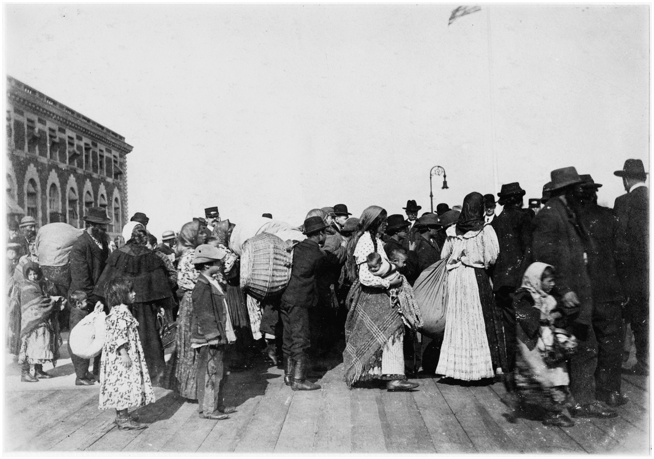
During their detention, men and women were segregated into fenced-off holding areas. The additional separation of the sick children from their parents would eventually cause a serious conflict, one that was reported on in a sensationalistic manner by the New York Times. According to reports, a rumor had circulated among the Roma in detention that the children taken to the hospital were “being drowned,” sending the terrified mothers on “the warpath” with a demand that they see their children. Several children had died due to complications from contracting measles, and the parents were likely suspicious of the cause of death as reported by Ellis Island health officials; an unnamed Roma detainee stated that the mothers were “fighting for the lives of their children” in desperation. Nowhere in the reporting is it mentioned that four children had died (two before the first article was published), only that the parents acted hysterically and violently toward officials who tried to calm them. The Times frames the episode as an overreaction on the part of the Roma, who jumped to wild conclusions but were eventually assuaged when one set of parents was allowed to visit their sick child in the hospital and witness the good care all the Roma children were receiving.Footnote 28
The Sava Family
Among the dozens of Roma families aboard the Carpathia, only one, an extended family of fifteen named “Sava,” appealed the deportation order levied against them. Like the Estevanovich family, the Savas denied being Roma or “living in the manner of a Gypsy” and hired an attorney who filed affidavits and legal briefs on their behalf to fight the LPC designation and deportation order. Adults gave sworn testimony and presented affidavits from immediate family in the US, along with two sworn statements of support from professional acquaintances of the relatives. Heads of each family submitted appeals via their attorney (no aid societies were involved), but only one part of the family was granted a rehearing. As with the rest of the Roma aboard the Carpathia, and despite immediately pursuing legal channels, the Savas were eventually deported.Footnote 29
The Sava case file reveals details about the family but also the logistics of the mass migration of the group they were part of and the tactics used by immigration officials to assure their debarment. Like nearly all the other Roma families aboard the Carpathia, the Savas carried a substantial amount of money: over $3,000 ($105,679 in 2024 dollars).Footnote 30 In fact, the Savas carried more money than any single (immigrant) family aboard the Carpathia. With a substantial amount of capital, skilled trades, good health and relatives in the US willing to support them if needed, entry should have been granted. The Savas’ attorney forcefully asserted that the Board’s decision to deport was being “based upon a suspicion of the life they might lead … that of Gypsey [sic] taking in horses and living on the public, making their money through trickery, after the manner of Gypsies” and not upon established law or statute.Footnote 31
Family members were all from Lamía, Greece, but during the early 1900s they migrated to Liepāja, Latvia – the same route the rest of the Roma took before reaching London. The adult males stated they were coppersmiths and horse traders, two professions Roma often practiced at the time. According to testimony, the Savas planned to continue their trades either in Canada or Mexico if they were refused entry at Ellis Island. One of the legal briefs for the appeal stated that “[the family] … are not Gypsies as tagged by officials through mishap of chance acquaintance of meeting a certain Mitchell family en route, but people of homes, families, worthy trade and ample means, and relatives to come to and be guided by, also ply successfully some trade and well fixed.”Footnote 32 Besides their avowed association with Mitchell, their stated occupation was likely a key factor in the BSI’s decision.
Legal briefs claimed that the LPC designation was unsubstantiated and that the families had been “taken in” while en route to the US by a passenger on the Carpathia named José Michel (i.e., Joe Mitchell), a Brazilian-born naturalized US citizen and apparent translator and spokesperson for the entire Roma group. Mitchell traveled from the United States to Russia to assist in facilitating the group’s voyage to the United States. The Savas claimed that they would be “under his [Mitchell’s] charge” if allowed to enter the US but that they were not Roma and were being erroneously associated with the rest of the group. Mitchell was interviewed by the New York Times and claimed that he and the entire group were “not Gypsies, but just a band of rovers.”Footnote 33 It would seem that everyone denied “being Gypsy,” but immigration officials thought they knew better:
Mr. Paul: I move the exclusion of the aliens appearing before the Board, including members of the family in the hospital, said motion subject to the action of the Medical Department – for the reason that they have no one here legally or morally bound for their care, support or maintenance in case of their inability to secure self-supporting employment: They expect to go to one Mitchell and be by him directed as to their future course, presumably that of traveling from place to place trading horses and preying upon the public – on the whole, a very undesirable class of people to be admitted to the United States and likely to become a Public Charge.
Mr. Jackson: I second the motion. Probably these aliens would not become public charges in the usual sense of the term – viz., being supported in charitable institutions, but they would, in reality, become a burden on the public immediately upon their admission to this country, owing to the life which they would lead, that of a Gypsy, trading in horses and living on the public, making their money through trickery after the manner of Gypsies.
Chairman Parbury: They are excluded.Footnote 34
While the questions posed to each of the adults at the hearings varied slightly, focusing on the family’s origin, occupation, contacts in the US and mobility, the Board’s decision was word-for-word identical in both hearings. Accompanying the Savas’ appeal to the Commissioner-General of Immigration, Ellis Island’s Acting Commissioner, Joseph Murray, strongly advised a dismissal of their appeal, claiming they “are not physically strong and are not adapted to work in this country,” that they were “extremely unkempt and filthy in their appearance and habits” and likely “professional beggars.”Footnote 35
Within three days of sending formal appeals, the Savas’ attempts to fight debarment were dismissed and deportation ordered. After a month in detention, they were sent back to the UK on two separate ships. Less than a month later, another attempted migration of Roma to the Americas, again involving the Carpathia and with parallels to the Estevanovich story, would play out at the US Immigration Service in Montreal, Canada.
Transatlantic Crossings and the Canada–US Border
Arriving at the Port of Quebec on October 22, 1904, the SS Ionian brought two Roma families with the surnames of “Mitchell” and “Towvitch” who were transiting on to the US.Footnote 36 What is extraordinary about their migration story is that although they were already naturalized US citizens and possessed valid US passports and naturalization certificates, immigration authorities thought their documents were forgeries or had been obtained fraudulently. The families were first held up by the Canadian Superintendent of Immigration in Ottawa, who assessed them as “Gypsies” and deferred to the US Immigration Service in Montreal for advice on how to process them, stating that “If not accepted by you and sent on to States, [we] want them deported.”Footnote 37
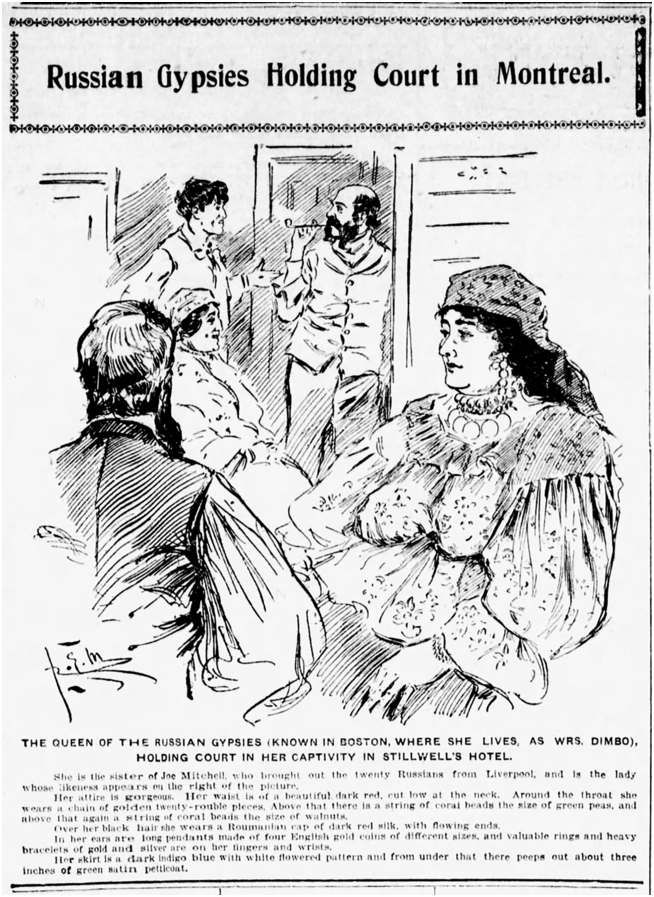
The families were detained aboard the Ionian pending a decision from a BSI hearing, which was held aboard the ship two days after its arrival. Robert Watchorn, then Commissioner of Immigration for the United States–Canada border, served as interrogator during the proceedings. Questions put to the group focused less on labeling them as “Gypsies” or claiming that family members were likely to become public charges and more on discrediting their claims to US citizenship, as well as denigrating their overall moral character. Officials alleged that the families were part of the Roma group who had been onboard the Carpathia just seven weeks earlier and who had been deported back to the UK. Watchorn claimed that just after they arrived in Liverpool, they boarded the Ionian with false papers and were now attempting to reenter the US via Canada; these were similar to the claims that had been made just months before against the Estevanovich family. Three of the women were accused of being prostitutes, and the two men who held citizenship papers for the families were quizzed on US governance, geography and their personal chronology. They were also periodically belittled by Watchorn, who at one point asked one of the defendants, Emilio Mitchell, “How many are 16 and 8?” and commented in his final report that “the alleged Ivan Towvitch … is one of the most stupid persons it has ever been my duty to interrogate”Footnote 38 (Figure 5.4).
One of several sketches made of the families during Canadian court proceedings.
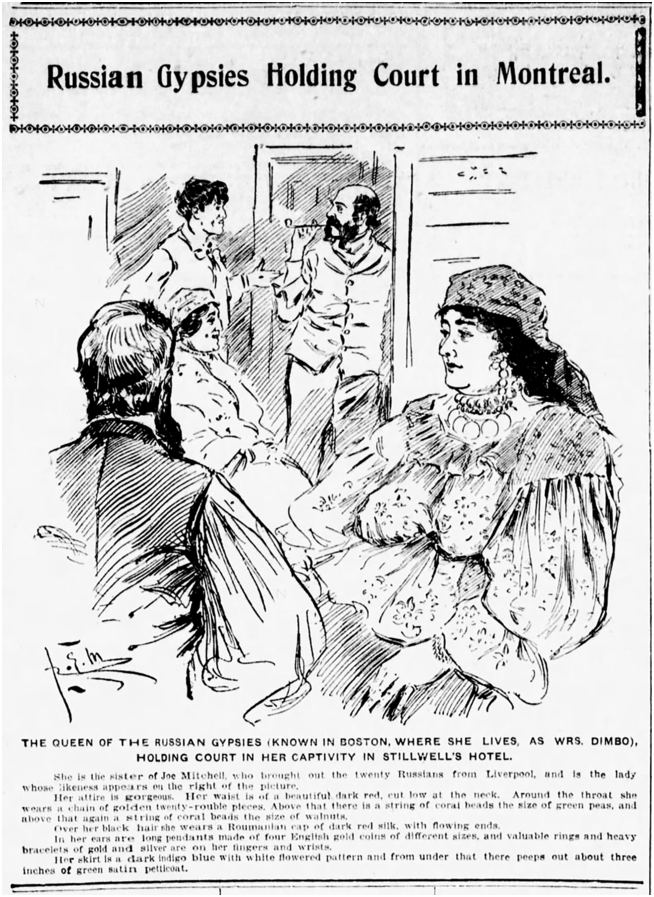
Ultimately, the recommendation to deport was upheld, and the group was barred from entering the United States.Footnote 39 Naturalization records, Census returns, and copies of passport applications, which were likely out of immediate access at the time, substantiate the families’ claims and refute the findings of immigration authorities: they were indeed who they claimed to be.Footnote 40 However, attorneys for the Mitchell/Towvitch families simultaneously fought for them to be allowed entrance into Canada and were ultimately successful. A brother and sister of Emilio Mitchell traveled from Boston to Quebec to support the families, offering to pay bonds for their release and corroborate the defendants’ stories. The proceedings were covered by the Canadian press and focused on their exoticism (and wealth), even including photos and illustrations of the defendants and their relatives.Footnote 41
“You Are a Gypsy?” “Yes, They Say We Are”
Not all migrations of Roma to the United States ended in deportation during the early 1900s. According to ship manifests, some families entered without incident, and some, whose status raised as much concern among immigration authorities as the families discussed earlier, were allowed entry. Slovenian-born Sokor Stanlie arrived at Ellis Island in January 1905 with her two sons and was nearly deported. However, their appeal was successful, and the family was allowed to enter – on the condition (through bond) that they did not become a public charge. In many ways, their situation differed from the cases discussed above but led to an equally unexpected outcome. After living in the US for more than a decade, the eldest son, James, returned to Europe to bring his mother and younger brother over. Although not a US citizen, James was cleared for entry; however, his mother and brother were not, so a potential (immediate) family separation loomed. In contrast to the other Roma migrations discussed, the Stanlies admitted to “being Gypsy” and were not traveling with a larger group of Roma. At the same time, the mother was a widow and had no money at all. Her fifteen-year-old son was judged by Ellis Island medical inspectors as possessing “mental weakness, and poor physique, affecting ability to earn a living.”Footnote 42 On paper, this should have put them in a far more precarious position than with the other groups, yet they were allowed to enter.
As with the Estevanovich, Sava, Mitchell and Towvitch families, the BSI’s decision to deport the Stanlies was supported by the Commissioner of Immigration at Ellis Island in a letter accompanying their appeal. While the excluding decision was then sustained by the Acting Commissioner General of Immigration in Washington, DC, he concluded that “as the deportation of the aliens would involve the separation of members of an immediate family, you [Commissioner William Williams] are authorized to accept the usual bond and permit them to land, provided you are satisfied as to the financial responsibility of the sureties offered.”Footnote 43 In this case, “family separation” was expressly to be avoided and the Stanlies were released after eight days of detention.
Success at Other Ports of Entry
Besides individual cases like the Stanlies, larger groups of Roma were successful in entering the United States without any documented scrutiny, but not via Ellis Island. The early 1900s saw other ports of entry, such as New Brunswick and Halifax, Canada, serve as first stops for passengers ultimately destined for the United States. Such ports were smaller and more rudimentary in operation, shorter staffed and lacking in detention quarters. Passengers could land, get on a rail car headed across the Canadian border and likely face less scrutiny with US customs officials than at Ellis Island.
One extraordinary case from December 1900 involving over 130 Eastern and Central European Roma on the RMS Lake Superior who landed at the Port of Saint John in New Brunswick, Canada, stands out.Footnote 44 None had been to the US before, but, as with the Roma on the Carpathia four years later, the group collectively carried enormous wealth, was comprised of mostly coppersmiths and horse dealers and appears to have been a cohesive group in Russia before leaving from Liverpool. They were bound for Boston and Baltimore, and most stated they were from the Kingdom of Serbia (Negotin, Šabac, Belgrade), as well as Brazil (Pernambuco), Greece (Athens), Russia (St. Petersburg) and Hungary (Budapest).Footnote 45
Other members of the wider Estevanovich family would also successfully emigrate to the US. Two ship manifests from 1910 and 1911, which document the emigration of this second group of Estevanovichs, first from Cuba and then via Puerto Rico to Ellis Island, provide a great deal more insight into their identities and origins. Markings on the manifest, entered decades later, indicate that some individuals became naturalized US citizens.Footnote 46
Despite the long history of Roma being turned away at immigration stations and border points throughout the US, this part of the Estevanovich family appears to have passed through the inspection regime at Ellis Island without incident. No detention, no Special Inquiry hearing, no scandalous reporting in newspapers – no deportation. While it remains unclear just how this family is related to the 1904 Estevanovich arrivals, it does point to the fact that Romani peoples tenaciously found ways to enter the US during the early twentieth century despite numerous obstacles. These cases also point to the arbitrary policing of Roma at US borders. Decisions to deport or allow entry defy consistent logic or uniform application of border policies. This suggests that the prejudices held about “Gypsies” influenced the judgments made by border officials, which then impacted Roma experiences of immigration in distinctive ways. Even though these crossings took place during the age of mass migration (1850–1914), with its “open borders” and overall low debarment rates, Roma would routinely have to navigate a fierce uncertainty.Footnote 47 But the immigration regime’s efforts to block Roma migration, combined with public anti-Roma prejudice and the media’s consistently biased lens, could not hold them back.Footnote 48
Conclusion: Tari Amerika
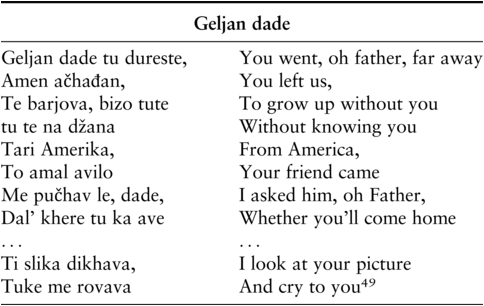
Early US laws banning the entry of a race or people, such as the Chinese Exclusion Act (1882), were brutally effective tools for delivering race-based exclusion. As nativism grew in the ensuing years, however, so too did the nuance immigration restrictionists used in applying their biases against certain ethnic groups. They often did this without delineating nationality. The list of excludable classes expanded to incorporate behaviors (e.g., literacy, vagrancy, professional begging), religious and political beliefs (polygamy, anarchy), social class (pauperism, public charge) or geography (Asiatic Barred Zone). These categories could be warped and wielded upon various “undesirable classes,” including Roma, to prevent entry. Roma exclusion is concealed in these categories, folded into statistical tabulations on exclusions dutifully sent from immigration stations to the Bureau of Immigration for annual reports. However, there is no specific information on the migration or deportation of Roma – nor do naturalized Roma appear as such in US and Canadian Census counts. Statistically speaking, Roma are virtually invisible, which has led to a paucity of reliable data concerning Roma migration throughout the AmericasFootnote 50 (Figure 5.5).
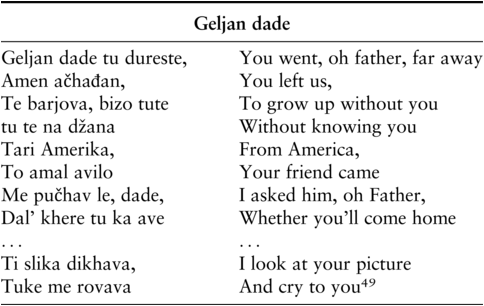
Table 5.01 Long description
The table titled Geljan dade presents the lyrics in Romani in column 1 and the English translation in column 2.
Column 1 reads as follows.
Geljan dade tu dureste,
Amen achadan,
Te barjova, bizo tute
tu te na dzana
Tari Amerika,
To amal avilo
Me puchav le, dade,
Dal’ khere tu ka ave
Ti slika dikhava,
Tuke me rovava.
Column 2 reads as follows.
You went, oh father, far away
You left us,
To grow up without you
Without knowing you
From America,
Your friend came
I asked him, oh Father,
Whether you’ll come home
I look at your picture
And cry to you.
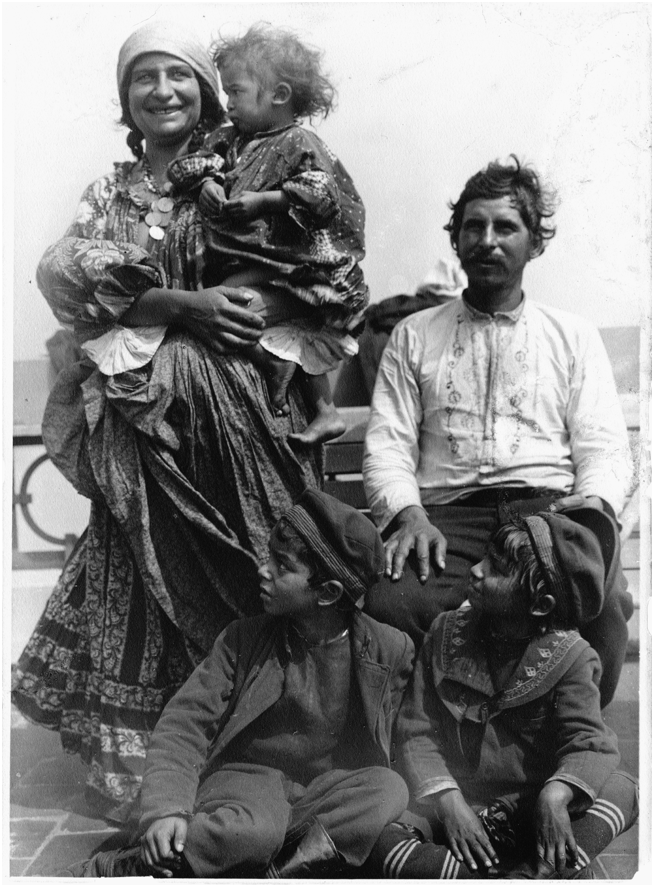
Untangling the Estevanovich and other Roma families’ suspended time at Ellis Island reveals a strong undercurrent that upends most classic “Golden Door” narratives, but one that does not dislodge the agency families like these possessed. While the reconstructed narratives can indeed be characterized as sad and most of the outcomes as, at best, distressing, seeing the unwritten exclusionist policies in practice helps to reveal the immensity of what Roma peoples faced in circumnavigating the Atlantic or crossing borders between the US and Canada. This makes their collective persistence utterly remarkable, and the smiles some of them wore in photographs while awaiting deportation, defiant and undefeated.
Seeing this, albeit only in fragments, puts the reader at eye level with what Roma were up against as they attempted to navigate the immigration maze. We have some of their actual testimony as they faced interlocutors at Special Inquiry hearings and through interviews in the press, simultaneously demonstrating their vulnerability and strength while exposing the tactics used to achieve an unwritten agenda to “Keep out the unworthy of the nomadic type.”Footnote 51

 Open access