


DSM-IV defines personality disorder as: ‘A pattern of inner experiences and behaviour that deviates markedly from the expectations of the individual's culture, is pervasive and inflexible, has an onset in adolescence and early childhood, is stable over time and leads to distress and impairment’. 1 Although the developmental roots of personality disorder are implicit in this definition, DSM-IV cautions against routinely applying this diagnostic label to young people under 18, and the prevalence of personality disorder and indeed validity of the concept in young people remains controversial. Adolescence is characterised by major transitions in physical, neurodevelopmental, emotional and social development; the very concept and reliability of a diagnosis of personality disorder within the adolescent population has been questioned, and some clinicians remain wary about the potential consequences of diagnosing personality disorder in young people under 18 in terms of stigma. On the other hand, developmental science increasingly identifies enduring traits of personality and behaviour showing stability from early and middle childhood, and an emerging literature recognises that personality pathology does constitute as significant a form of psychopathology in adolescence as it does in adults. Reference Westen, Shedler, Durrett, Glass and Martens2 There is evidence that a diagnosis of personality disorder is as stable and as valid as it is in adulthood, Reference Westen, Dutra and Shedler3 and National Institute for Health and Care Excellence (NICE) guidance on borderline and antisocial personality disorder has a separate section addressing the assessment, treatment and management options of personality disorder in young people. 4 Personality difficulties in childhood and adolescence show strong association with adult personality disorder – both in childhood looking forward and from adulthood looking backwards. Reference Robins5,Reference Harrington, Fudge, Rutter, Pickles and Hill6 Antisocial disorder in childhood is a strong predictor of antisocial personality disorder in adulthood, with children diagnosed with conduct disorder 13 times more likely to have adult antisocial personality disorder and particularly strong continuity in the subgroup with high levels of callous and unemotional traits. Reference Frick and Ellis7
In adults, there is strong evidence associating personality disorder and self-harm. The World Health Organisation/European Multicentre on suicidal behaviour showed that mood and personality disorders were the second most frequent diagnosis (after adjustment disorders) in people who self-harm, with frequencies of 18% in male self-harmers and 15% in female self-harmers. Reference Schmidtke, Bille-Brahe, De Leo, Kerkhof, Lohr, Weinacker, Schmidtke, Bille-Brahe, De Leo and Kerhof8 Studies have largely focused on borderline personality disorder, with prevalence rates of between 0.9% and 3% for community populations, rising to 22% in out-patient populations. Reference Lewinsohn, Rohde, Seeley and Klein9–Reference Chanen, Jovev, Djaja, Mcdougall, Yuen and Rawlings11 A study examining the relationship between personality disorder and self-harm within in-patient populations highlighted that 67% met the diagnostic criteria for personality disorder. Reference Nock, Joiner, Gordon, Lloyd-Richardson and Prinstein12 Another study found that adolescents who self-harm reported more personality pathology when compared with their non-self-harming counterparts. Reference Brent, Johnson, Bartle, Bridge, Rather and Matta13
Other studies have recently begun to address personality disorder in adolescence in relation to self-harm. A specialist referral centre for borderline personality disorder in Western Australia was able to recruit 78 cases of borderline personality disorder over 4 years, diagnosed as in this current study using the Structured Clinical Interview for DSM-IV Axis II (SCID-II), with 72% of these showing some level of self-harm. Reference Chanen, Jackson, McCutcheon, Jovev, Dudgeon and Yuen14 A study in London, UK, of consecutive referrals aged 12–17 years to community and hospital services with self-harm found that 73% (58/80) were above a threshold score on self-reported borderline personality features using a semi-structured interview based on DSM-IV (how this may compare to the standard SCID-II-derived diagnostic categories is unclear). Reference Rossouw and Fonagy15 These studies suggest that it is possible to identify personality disorder in adolescents using structured methodology. Both of these studies tested individual psychotherapeutic treatments (cognitive analytic therapy (CAT) and mentalisation-based therapy (MBT) respectively) designed to impact on personality disorder. In the first study, CAT proved no more effective than general clinical care in either reducing borderline personality disorder symptoms or improving self-harming behaviours. Reference Chanen, Jackson, McCutcheon, Jovev, Dudgeon and Yuen14 In the second study, MBT did show a significant effect over routine care in reducing the rate of frequent self-harm, and this treatment effect appeared to be mediated by a reduction in self-reported borderline personality disorder symptoms, thus giving the first suggestion that alteration of borderline personality disorder might affect rates of self-harm. Reference Rossouw and Fonagy15
In the light of this background, this study aimed to examine systematically the presence of personality disorder within the adolescent population, its relationship with self-harm and its effect on outcome. We tested the hypothesis that at referral adolescents with a DSM-IV personality disorder would have greater overall difficulties and demonstrate greater levels of impairment than adolescents who do not have a personality disorder. In addition, we predicted that the presence of a personality disorder would predict worse 1-year clinical outcomes within the whole cohort.
Method
Participants
Study participants (n = 366) were clinical referrals aged between 12 and 17 years presenting with repeated (⩾2) episodes of self-harm in the previous year. Young people with low weight anorexia, current secure unit placement, psychosis or significant intellectual disability were excluded. Initial attrition from referral to randomisation was low; 402 adolescents were initially referred to the study; in total 36 were excluded (27 declined consent, 9 did not meet the inclusion criteria and 1 dropped out for unknown reasons). Patients represent all participants in the Assessment of Treatment in Suicidal Teenagers (ASSIST) study; a randomised controlled trial comparing group treatment intervention in addition to routine care, compared with routine care alone for adolescents after repeated self-harm. This trial took place in eight child and adolescent mental health service (CAMHS) settings within North West England between 2002 and 2006. The group treatment (developmental group psychotherapy) was a manualised treatment specifically designed for adolescent after repeated self-harm. The programme is eclectic and includes cognitive–behavioural therapy, dialectical behavioural therapy and group psychotherapy. Standard routine care as provided by local CAMHS was according to clinical judgement; by prior agreement, group interventions were excluded from routine care. Reference Green, Wood, Kerfoot, Trainor, Roberts and Rothwell16 Full details of the cohort and recruitment methods have been published elsewhere. Reference Green, Wood, Kerfoot, Trainor, Roberts and Rothwell16 The ASSIST trial showed no added clinical value of adding a group therapy intervention programme to routine care over routine care alone in adolescents who repeatedly self-harm. Reference Green, Wood, Kerfoot, Trainor, Roberts and Rothwell16 Data presented in this report are from all the participants in ASSIST at baseline and follow-up.
Measures/instruments
Personality disorder
The SCID-II was used to assess the presence or absence of personality disorder. Reference First, Gibbon, Spritzer and Benjamin17 It was selected because of its systematic coverage of DSM-IV personality disorders and its semi-structured interview and administrator-coded format. The SCID-II is organised in relation to domains of disorder and interview items are coded using codes of 1 = absent or false (a criterion symptom for disorder clearly absent), 2 = subthreshold (criterion threshold almost, but not quite met), 3 = threshold or true (criterion threshold is met). Criteria for specific personality disorders are met if sufficient threshold symptoms are present in relevant domains. SCID-II has been shown to have excellent interrater reliability in adult populations, with interrater kappa agreement ranging from 0.77 to 0.94. Reference First, Gibbon, Spritzer and Benjamin17 At the time of design of this study the SCID-II had not been used in adolescent populations. Some relatively minor modifications were considered necessary for use in this age group and were agreed by experienced research clinicians in the team and in consultation with a wider clinical reference group as well as consultation with a senior author of the original SCID-II; (a) some terms were reworded for relevance – thus references to the ‘workplace’ were replaced with references to ‘school/college’ or other relevant educational establishments; references to ‘spouse’ were replaced with references to ‘boyfriend/girlfriend’; (b) the ‘Dependent’ personality disorder category was omitted, since it was considered that children and adolescents are by definition in relative dependency and this would confound the interview responses; (c) the ‘Passive aggressive’ personality disorder was omitted, since it was considered to be potentially confounded by typical adolescent emotional turmoil.
In administration, interview information gained from the adolescent was triangulated against relevant information from parents/guardians and clinicians; all information was further cross-referenced with the adolescents' clinical notes before being coded. All (100%) of the interviews were audio-recorded and reviewed by a consultant psychiatrist and lead clinician familiar with the instrument; finally, research team meetings determined consensus agreement on diagnostic status for each patient.
Depression
A 33-item self-report questionnaire, the Moods and Feelings Questionnaire (MFQ), was used to measure depressive symptoms in DSM-IV. A cut-off of 28/29 has been shown to discriminate between adolescents with major depression from those with subthreshold depression or those with no depressive disorder. Reference Angold and Costello18 The maximum score obtainable is 68. At baseline, the presence of depressive disorder was identified using the Kiddie-Schedule for Affective Disorders and Schizophrenia (KSADS). Reference Kaufman, Birmaher, Brent, Rao, Flynn and Moreci19
Suicidal ideation
A self-report questionnaire, the Suicidal Ideation Questionnaire (SIQ), Reference Reynolds20 consisting of 30 items was used. SIQ items are rated on a 7-point scale, which assesses the frequency with which the thought occurs. Items are scored from 0 to 6. A high score of ‘6’ indicates numerous suicidal thoughts occurring with significant regularity; ‘0’ indicates that none of the thoughts have occurred. Scores greater than 40 indicate higher suicidal ideation. The maximum score obtainable is 180.
Global functioning
The Health of the Nation Outcome Scales for Children and Adolescents (HoNOSCA) Reference Gowers, Harrington, Whitton, Lelliott, Beevor and Wing21 was used to assess global functioning. It is a semi-structured interview completed by research assessors using information obtained from both the adolescent and parents or carers. This measure is sensitive to changes in mental state and psychosocial functioning over brief periods of time. Reference Daviss and Dirmahr22 It measures a broad range of outcomes, including symptoms and psychosocial impairment. It has 13 subscales (including emotional symptoms, behavioural problems, substance misuse, school attendance problems and peer relationships). The higher the score the greater the overall impairment, in terms of mental health difficulties and social functioning for the adolescent.
Procedure
Measures were administered via a face-to-face interview conducted by research assessors masked to treatment allocation. Because of concerns about the burden of baseline assessment, the SCID-II was administered 3 months post-randomisation. Theory and experience in adult populations led us to consider it likely that the personality disorder measured would be a stable trait, thus reasonably represent baseline status; additionally, we also took post hoc steps to investigate whether there was any evidence of change over this initial 3-month time period (see Results).
Statistical analyses
Data were analysed with SPSS 15.0 for Windows and STATA V10. Assumptions of normality of distribution were checked by visual inspections and using the Kurtosis and skewness functions of SPSS. The sample size was determined by the design and power of the ASSIST study. Reference Green, Wood, Kerfoot, Trainor, Roberts and Rothwell16 Group differences on binary variables used χ2 tests and on continuous variables (HoNOSCA, SIQ, MFQ) were expressed as adjusted mean difference with 95% confidence intervals. The relationship between personality disorders and 12-month outcomes (HoNOSCA, SIQ, MFQ) was investigated using multivariate regression, adjusting for potentially confounding baseline variables.
Results
Personality disorder
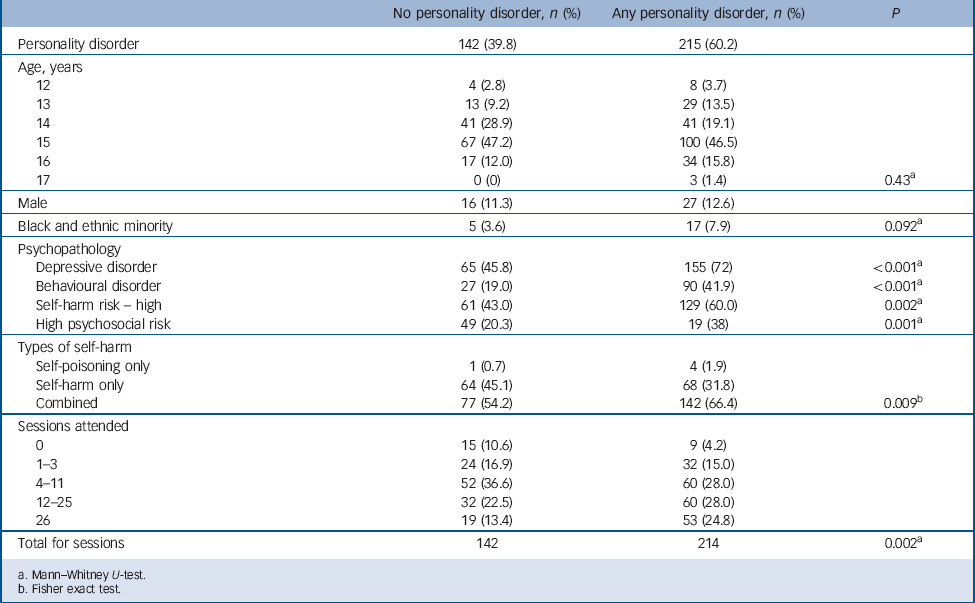
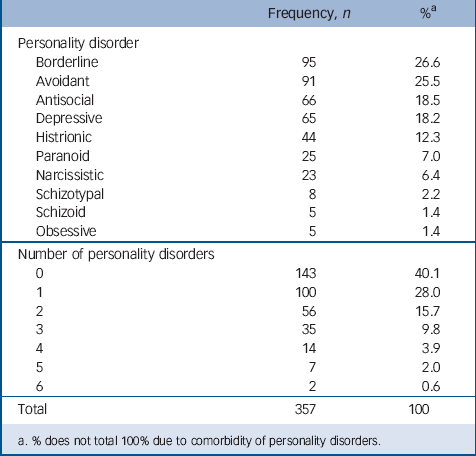
Data on personality disorder identified from SCID-II was available on 357/366 (98%) of the total sample. Summary baseline data on participants with and without personality disorder are shown in Table 1, and details of the specific personality disorders identified in Table 2. The mean age of the sample was 14 years 6 months (s.d. = 1.00, range 12–17). There was a high prevalence of personality disorder, with 60% (n = 215/357) of the sample meeting the criteria for one or more personality disorders. Of specific personality disorder, borderline personality disorder was the most frequently occurring (n = 95), followed by antisocial personality disorder (n = 66). There were high levels of young people (32%) meeting the criteria for two or more personality disorders.
Baseline demographics and clinical characteristics of participants
| No personality disorder, n (%) | Any personality disorder, n (%) | P | |
|---|---|---|---|
| Personality disorder | 142 (39.8) | 215 (60.2) | |
| Age, years | |||
| 12 | 4 (2.8) | 8 (3.7) | |
| 13 | 13 (9.2) | 29 (13.5) | |
| 14 | 41 (28.9) | 41 (19.1) | |
| 15 | 67 (47.2) | 100 (46.5) | |
| 16 | 17 (12.0) | 34 (15.8) | |
| 17 | 0 (0) | 3 (1.4) | 0.43 a |
| Male | 16 (11.3) | 27 (12.6) | |
| Black and ethnic minority | 5 (3.6) | 17 (7.9) | 0.092 a |
| Psychopathology | |||
| Depressive disorder | 65 (45.8) | 155 (72) | <0.001 a |
| Behavioural disorder | 27 (19.0) | 90 (41.9) | <0.001 a |
| Self-harm risk – high | 61 (43.0) | 129 (60.0) | 0.002 a |
| High psychosocial risk | 49 (20.3) | 19 (38) | 0.001 a |
| Types of self-harm | |||
| Self-poisoning only | 1 (0.7) | 4 (1.9) | |
| Self-harm only | 64 (45.1) | 68 (31.8) | |
| Combined | 77 (54.2) | 142 (66.4) | 0.009 b |
| Sessions attended | |||
| 0 | 15 (10.6) | 9 (4.2) | |
| 1–3 | 24 (16.9) | 32 (15.0) | |
| 4–11 | 52 (36.6) | 60 (28.0) | |
| 12–25 | 32 (22.5) | 60 (28.0) | |
| 26 | 19 (13.4) | 53 (24.8) | |
| Total for sessions | 142 | 214 | 0.002 a |
a. Mann-Whitney U-test.
b. Fisher exact test.
Incidence and co-occurrence of specific personality disorders
| Frequency, n | % a | |
|---|---|---|
| Personality disorder | ||
| Borderline | 95 | 26.6 |
| Avoidant | 91 | 25.5 |
| Antisocial | 66 | 18.5 |
| Depressive | 65 | 18.2 |
| Histrionic | 44 | 12.3 |
| Paranoid | 25 | 7.0 |
| Narcissistic | 23 | 6.4 |
| Schizotypal | 8 | 2.2 |
| Schizoid | 5 | 1.4 |
| Obsessive | 5 | 1.4 |
| Number of personality disorders | ||
| 0 | 143 | 40.1 |
| 1 | 100 | 28.0 |
| 2 | 56 | 15.7 |
| 3 | 35 | 9.8 |
| 4 | 14 | 3.9 |
| 5 | 7 | 2.0 |
| 6 | 2 | 0.6 |
| Total | 357 | 100 |
a. % does not total 100% due to comorbidity of personality disorders.
Relation to psychopathology
There were significant associations between presence of personality disorder and other psychopathology at baseline. Self-harm risk (43% in the non-personality disorder group v. 60% in the personality disorder group; P = 0.002), behavioural disorder (19% in the non-personality disorder group v. 41.9% in the personality disorder group, P<0.001) and psychosocial problems high (20.3% v. 38%, P<0.001) were very significantly more elevated in the adolescents who had a personality disorder in comparison to those who did not. There was, however, no significant association between personality disorder and major depression (45.8% v. 72%, P = 0.001).
Relation to other baseline variables
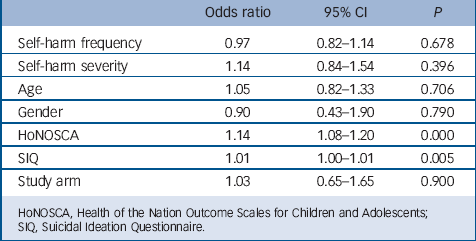
In univariate analysis, the presence of personality disorder was associated with self-harm severity (odds ratio (OR) = 1.45, 95% CI 1.11–1.90, P= 0.006), poorer functional adjustment (HoNOSCA; OR = 1.16, 95% CI 1.11–1.22, P<0.001) and greater suicidal ideation (SIQ; OR = 1.01, 95% CI 1.01–1.02, P<0.001). In multivariate analysis (Table 3), the association with poor functional adjustment (HoNOSCA; OR = 1.14, 95% CI 1.08–1.20, P= 0.000) and suicidal ideation (SIQ; OR = 1.01, 95% CI 1.00–1.01, P = 0.005) remained but not with self-harm. With the main subtypes of personality disorder considered separately, increased baseline functional impairment (HoNOSCA) was specifically associated with both borderline personality disorder (OR = 1.18, 95% CI 1.11–1.25, P<0.001) and antisocial personality disorder (OR = 1.18, 95% CI 1.11–1.25, P = 0.001).
Multivariate regression analyses: baseline predictors of personality disorder
| Odds ratio | 95% CI | P | |
|---|---|---|---|
| Self-harm frequency | 0.97 | 0.82–1.14 | 0.678 |
| Self-harm severity | 1.14 | 0.84–1.54 | 0.396 |
| Age | 1.05 | 0.82–1.33 | 0.706 |
| Gender | 0.90 | 0.43–1.90 | 0.790 |
| HoNOSCA | 1.14 | 1.08–1.20 | 0.000 |
| SIQ | 1.01 | 1.00–1.01 | 0.005 |
| Study arm | 1.03 | 0.65–1.65 | 0.900 |
HoNOSCA, Health of the Nation Outcome Scales for Children and Adolescents; SIQ, Suicidal Ideation Questionnaire.
Relationship with treatment process
There was no association between study treatment arm and personality disorder (Table 3), showing that the random allocation was balanced with respect to personality disorder. There was a significant association between the presence of personality disorder and overall increased treatment adherence (sessions attended) in both treatment arms: ordinal logistic regression showed that the presence of personality disorder significantly increased the odds of a higher banding of session attendance across the cohort (OR = 1.67, 95% CI 1.03–2.70, P = 0.039), independent of treatment type or baseline variables including functional impairment and self-harm severity. With subtypes of personality disorder considered a more complex picture emerged, with a trend towards bi-modal distribution as young people with antisocial personality disorder showed poorer initial engagement with early break off, and those with borderline personality disorder showed extended sessional engagement. Additionally, young people showing both borderline personality disorder and antisocial personality disorder were the most likely to break off early (OR = 0.28, 95% CI −0.12 to 0.64, P = 0.003).
Relationship with outcome
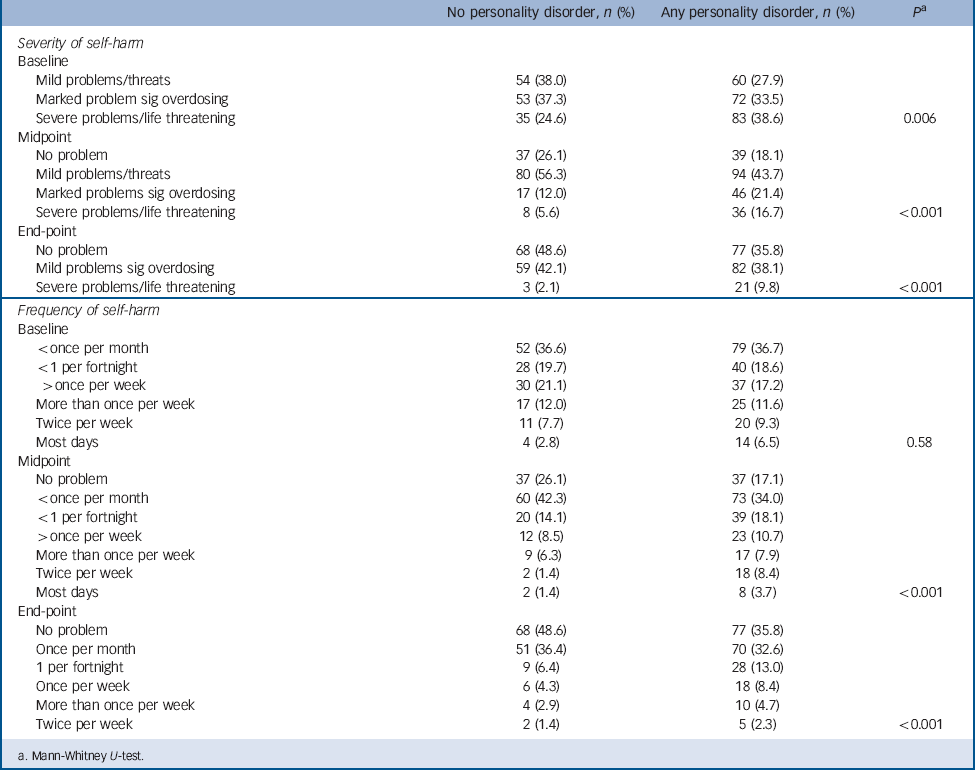
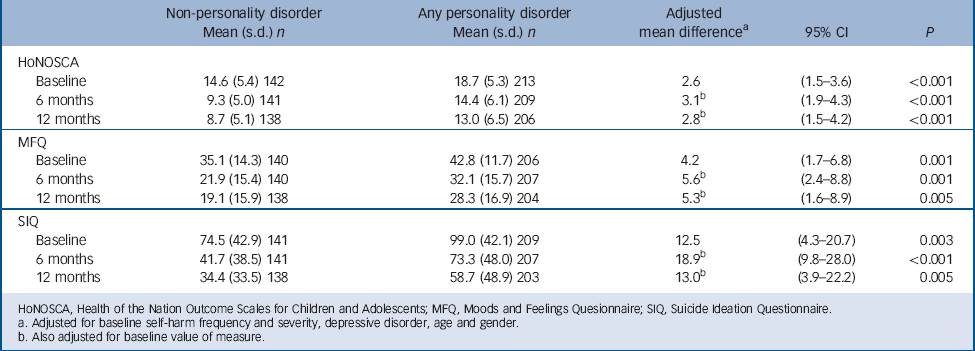
Tables 4 and 5 show the trajectory of symptoms over 12 months follow-up in relation to personality disorder diagnosis. Despite the inclusion criteria of repeated self-harm and the severity, complexity and chronicity of the sample as measured at baseline; there was a striking overall improvement from baseline to end-point in self-harm symptoms (Table 4) and adaptive function, mood and suicidal ideation outcomes (Table 5). Personality disorder status, however, after adjustment for other confounding variables, was significantly associated with continuing greater symptom severity at all time-points for these measures, seen descriptively in Tables 4 and 5. In multivariate analysis with other variables, personality disorder shows itself to have a main effect on all outcomes of interest (Table 6). Despite this, there is no indication that personality disorder moderates the degree or rate of symptom improvement observed during this study period. Rates of symptom change are no different in the presence or absence of personality disorder (Table 5).
Frequency and severity of self-harm at baseline and follow-up in relation to personality disorder
| No personality disorder, n (%) | Any personality disorder, n (%) | P a | |
|---|---|---|---|
| Severity of self-harm | |||
| Baseline | |||
| Mild problems/threats | 54 (38.0) | 60 (27.9) | |
| Marked problem sig overdosing | 53 (37.3) | 72 (33.5) | |
| Severe problems/life threatening | 35 (24.6) | 83 (38.6) | 0.006 |
| Midpoint | |||
| No problem | 37 (26.1) | 39 (18.1) | |
| Mild problems/threats | 80 (56.3) | 94 (43.7) | |
| Marked problems sig overdosing | 17 (12.0) | 46 (21.4) | |
| Severe problems/life threatening | 8 (5.6) | 36 (16.7) | <0.001 |
| End-point | |||
| No problem | 68 (48.6) | 77 (35.8) | |
| Mild problems sig overdosing | 59 (42.1) | 82 (38.1) | |
| Severe problems/life threatening | 3 (2.1) | 21 (9.8) | <0.001 |
| Frequency of self-harm | |||
| Baseline | |||
| <once per month | 52 (36.6) | 79 (36.7) | |
| <1 per fortnight | 28 (19.7) | 40 (18.6) | |
| >once per week | 30 (21.1) | 37 (17.2) | |
| More than once per week | 17 (12.0) | 25 (11.6) | |
| Twice per week | 11 (7.7) | 20 (9.3) | |
| Most days | 4 (2.8) | 14 (6.5) | 0.58 |
| Midpoint | |||
| No problem | 37 (26.1) | 37 (17.1) | |
| < once per month | 60 (42.3) | 73 (34.0) | |
| < 1 per fortnight | 20 (14.1) | 39 (18.1) | |
| > once per week | 12 (8.5) | 23 (10.7) | |
| More than once per week | 9 (6.3) | 17 (7.9) | |
| Twice per week | 2 (1.4) | 18 (8.4) | |
| Most days | 2 (1.4) | 8 (3.7) | <0.001 |
| End-point | |||
| No problem | 68 (48.6) | 77 (35.8) | |
| Once per month | 51 (36.4) | 70 (32.6) | |
| 1 per fortnight | 9 (6.4) | 28 (13.0) | |
| Once per week | 6 (4.3) | 18 (8.4) | |
| More than once per week | 4 (2.9) | 10 (4.7) | |
| Twice per week | 2 (1.4) | 5 (2.3) | <0.001 |
a. Mann-Whitney U-test.
HoNOSCA and symptom outcome measures by presence or absence of personality disorder
| Non-personality
disorder Mean (s.d.) n |
Any personality
disorder Mean (s.d.) n |
Adjusted mean difference a |
95% CI | P | |
|---|---|---|---|---|---|
| HoNOSCA | |||||
| Baseline | 14.6 (5.4) 142 | 18.7 (5.3) 213 | 2.6 | (1.5–3.6) | <0.001 |
| 6 months | 9.3 (5.0) 141 | 14.4 (6.1) 209 | 3.1 b | (1.9–4.3) | <0.001 |
| 12 months | 8.7 (5.1) 138 | 13.0 (6.5) 206 | 2.8 b | (1.5–4.2) | <0.001 |
| MFQ | |||||
| Baseline | 35.1 (14.3) 140 | 42.8 (11.7) 206 | 4.2 | (1.7–6.8) | 0.001 |
| 6 months | 21.9 (15.4) 140 | 32.1 (15.7) 207 | 5.6 b | (2.4–8.8) | 0.001 |
| 12 months | 19.1 (15.9) 138 | 28.3 (16.9) 204 | 5.3 b | (1.6–8.9) | 0.005 |
| SIQ | |||||
| Baseline | 74.5 (42.9) 141 | 99.0 (42.1) 209 | 12.5 | (4.3–20.7) | 0.003 |
| 6 months | 41.7 (38.5) 141 | 73.3 (48.0) 207 | 18.9 b | (9.8–28.0) | <0.001 |
| 12 months | 34.4 (33.5) 138 | 58.7 (48.9) 203 | 13.0 b | (3.9–22.2) | 0.005 |
HoNOSCA, Health of the Nation Outcome Scales for Children and Adolescents; MFQ, Moods and Feelings Quesionnaire; SIQ, Suicide Ideation Questionnaire.
a. Adjusted for baseline self-harm frequency and severity, depressive disorder, age and gender.
b. Also adjusted for baseline value of measure.
The relationship of personality disorder to various outcomes adjusted for confounders

| 95% CI | P | ||
|---|---|---|---|
| Adjusted ordinal odds ratio (any personality disorder/no personality disorder a | |||
| Self-harm frequency | 2.29 | (1.47–3.59) | <0.001 |
| Self-harm severity | 2.23 | (1.43–3.48) | <0.001 |
| Adjusted difference (any personality disorder/no personality disorder) b | |||
| MFQ | 5.87 | (2.13–9.61) | 0.002 |
| HoNOSCA | 2.83 | (1.49–4.17) | < 0.001 |
| SIQ | 15.07 | (5.66–24.49) | 0.002 |
HoNOSCA, Health of the Nation Outcome Scales for Children and Adolescents; MFQ, Moods and Feelings Quesionnaire; SIQ, Suicide Ideation Questionnaire.
a. Baseline covariates: self-harm frequency, self-harm severity, HoNOSCA, depressive disorder, SIQ, age and gender.
b. Baseline covariates: self-harm frequency and severity, HoNOSCA, depressive disorder, SIQ, age and gender.
Discussion
This is the first study to our knowledge specifically to address the full range of personality disorder in adolescent self-harm, its relation to other background and functioning in the child, and its impact on subsequent developmental outcomes during and after intervention. Personality disorder proved to be measurable using the standard SCID-II interview with some minor adaptation for the age group. We showed a high overall personality disorder prevalence of 60% of personality disorder in this clinical group. Most common forms were borderline personality disorder (26.6%) and avoidant personality disorder (25.5%), but with substantive representation of other forms (Table 1) including antisocial personality disorder (18.5%), depressive personality disorder (18.2%) and histrionic personality disorder (12.3%). These forms were relatively discrete, with nearly half of those with personality disorder showing just one personality disorder diagnosis. However, there was overlap between forms in the other half of personality disorder cases. Presence of personality disorder was associated with greater overall pathology and levels of general functional impairment at baseline. It was strongly associated with self-harm risk and a marker of continuing poor outcomes over the next year in self-harm frequency and severity – as well as impairment, suicidality and depressive symptoms.
This study adds information to previous studies that have addressed borderline personality disorder solely in adolescent self-harm, Reference Chanen, Jackson, McCutcheon, Jovev, Dudgeon and Yuen14,Reference Rossouw and Fonagy15 by showing the presence also of other forms of personality disorder, which we also find associated with self-harm. In our present study, there was no evidence that presence of personality disorder moderated the rate of symptom reduction. The study also adds to the literature in general in personality disorder in adolescent psychopathology; for instance, rates of personality disorder between 28% and 64% have been found in anorexia and 25% in eating disorder not otherwise specified, Reference Magallon-Neri, Gonzalez, Canalda, Forns, Eugenio and Martinez23,Reference Gaudio and Di Ciommo24 and rates of between 36% and 88% for psychopathy and callous and unemotional traits within adolescent forensic populations. Reference Kongerslev, Moran, Bo and Simonsen25 Such rates are thus broadly comparable with our findings in adolescent self-harm.
The influence of personality disorder on treatment adherence was complex and interesting. Despite the general clinical and research consensus that adolescents with self-harm do not engage well or complete treatments, Reference Piacentini, Rotherham-Borus, Trautman and Grae26,Reference Berk, Heriques, Warman, Brown and Beck27 this study showed high adherence and low attrition, with only 6.7% (n = 24) of the sample not attending any offered treatment sessions, and approximately 78% of the sample attending four or more treatment sessions. Overall, the presence of personality disorder was associated with a greater number of sessions attended, with evidence of a differential effect according to the type of personality disorder. Young people with borderline personality disorder attended more sessions than average and those with antisocial personality disorder less; those with a combination of antisocial personality disorder and borderline personality disorder least of all. This could be interpreted clinically as a sign of the difficulty of young people with borderline personality disorder disengaging from a therapy to which they were possibly intensely but ambivalently involved, compared with the typical impulsivity and social engagement difficulties associated characteristically with antisocial personality disorder. Such findings are consistent with a meta-analysis in which treatment completion rates for borderline personality disorder (at 75%) are found to be much higher than previously thought. Reference Barnicot, Katsakou, Marougka and Priebe28
Strengths
This is the first study to our knowledge to systematically examine the full range of personality disorder in this group. It proved feasible to administer a personality measure (SCID-II) within the adolescent population; there were initial concerns that adolescents would not cooperate with the assessment; however, this was unfounded. We studied a large non-selected sample of adolescent self-harm referred to community CAMHS in North West England. The study included all sequential referrals from community teams in the region that met inclusion criteria. End-point data were obtained for 97% (356/366) of the participants. The findings are likely to be representative and generalisable to adolescents seen in community CAMHS in England at least.
Limitations
For practical reasons, personality disorder was only assessed at one time-point (3 months after baseline) and we are unable to report on the stability of the personality disorder symptomatology described. To balance this limitation, the assessment of personality was undertaken with a highly valid standard measure specifically adapted to this population, and represents the most systematic ascertainment of personality traits in an adolescent population to date. The SCID-II assesses symptom stability internally and we consider that short-term continuity of personality disorder symptoms is likely. Furthermore, the substantial sample size of this cohort produced well-balanced groups at baseline Reference Green, Wood, Kerfoot, Trainor, Roberts and Rothwell16 and there was no difference in the presence of personality disorder found at 3 months by trial arm (Tables 2 and 3). We can thus make the inference that there is unlikely to have been any early treatment effect on personality disorder in the first 3 months. Nevertheless, systematic longitudinal study of personality disorder in adolescence using standard symptomatology is clearly warranted to clarify the extent of symptom stability at this developmental period. A previous study using the SCID-II Reference Chanen, Jackson, McCutcheon, Jovev, Dudgeon and Yuen14 found slight reduction in borderline personality disorder-specific symptoms over a 2-year study period in adolescence. The study by definition included only repeated self-harm rather than first presentations, something that is slightly different from some other studies in the field that have included first presentations, and this may bias our sample towards severity of self-harm.
Clinical implications
The results from this study indicate that the concept of personality disorder in adolescents is both measurable and clinically relevant. Contrary to common clinical assumption, the outcome of adolescent repeat self-harm is shown to be relatively positive overall in terms of symptom reduction and functional improvement. Since the ASSIST trial did not contain a non-treatment control, it is not possible to say whether these relatively positive outcomes relate to natural history or community out-patient CAMHS treatment. However, a key clinical implication from this study is that co-occurrence of personality disorder is common and associated with more symptoms and impairment both at baseline and at 6 and 12 months follow-up. This is in line with the adult literature which suggests that the presence of a personality disorder predicts a poorer outcome in the treatment of other mental health difficulties. Reference Reich and Vasile29,Reference Shea, Pilkonis, Beckham, Collins, Elkin and Sotsky30 In a study comparing in-patient self-harmers and non-self-harming psychiatric controls with respect to prevalence and severity of personality disorder, adolescents who self-harmed were more likely than the psychiatric controls to have a diagnosis of personality disorder. Reference Nock, Joiner, Gordon, Lloyd-Richardson and Prinstein12 In light of the above findings clinicians assessing self-harm could usefully focus more on underlying personality and social factors, since we show these to have such strong association with severity and outcome as well as treatment engagement and adherence. Clinicians should consider administering a personality measure such as SCID-II in young people presenting with multiple episodes of self-harm. This will inform treatment options and ensure that patients are offered the most appropriate intensive treatment. Treatments that have a proven efficacy in adult personality disorder could be adapted more precisely and used more widely to target personality difficulties in adolescence, and NICE guidance on borderline personality disorder in young people supports the use of adopting and developing adult-based treatments and management strategies for use within the adolescent population. 4 A recent clinical trial in repeated self-harm using dialectal behavioural therapy adapted for use within the adolescent population showed promising results. Reference Fleischaker, Bohme, Sixt, Bruck, Schneider and Schulz31 MBT for adolescents (MBT-A) has been used in a trial focused on borderline personality disorder in adolescent self-harm and found to be more effective than treatment as usual in reducing self-harm and depression in adolescents. Reference Rossouw and Fonagy15 Further longitudinal as well as treatment research is needed to examine the important clinical issues of self-harm and personality disorder co-occurrence and treatment implications of this within the adolescent population.
Acknowledgements
The original study design of ASSIST, including the personality measures, was conceived by Richard Harrington, Professor of Child Psychiatry at University of Manchester, who died in 2004. Michael Kerfoot, Professor of Social Work University of Manchester, who was a principle investigator in the original study and contributed to the personality disorder measurement, died in 2013. The authors are grateful to all young people, and their families/carers, who took part in this study. The original ASSIST team also included health economists Professor Sarah Byford and Dr Barbara Barrett.




eLetters
No eLetters have been published for this article.