



Introduction
Patient and public involvement (PPI) has been a key theme in health policy in the United Kingdom since the introduction of the internal market in the early 1990s. The policy shift can be traced back to the increasing loss of public confidence in the way health and care services were run (Morrow et al., Reference Morrow, Boaz, Brearley and Ross2012), and continues to be prominent in the current Coalition Government. The reformed commissioning structures in the English National Health Service (NHS) have devolved power to primary care clinicians [Department of Health (DH), 2010a:7], with General Practitioners (GPs) forming Clinical Commissioning Groups (CCGs) to commission acute and primary care, and mental health. At a national level specialist and tertiary services as well as national contracts such as General Medical Services (GMS) and dental services are commissioned by NHS England (NHSE). NHSE has also responsibility for the performance management of CCGs. The changes introduced in the Health and Social Care Bill 2012 are far-reaching and involved a reorganisation of PPI structures.
The only aspect of previous PPI structures that has been retained is the governance of NHS Foundation Trusts with the emphasis on membership from staff, patients, and the public (Allen et al., Reference Allen, Wright, Keen, Dempster, Townsend, Hutchings, Street and Verzulli2011). Policy guidance states that CCGs ‘will need to engage patients and the public on an ongoing basis as they undertake their commissioning responsibilities, and will have a duty of public and patient involvement’ (DH, 2010a: 7). While a duty to involve is not new, the introduction of a financial incentive for general practices to establish ‘patient reference groups (PRGs)’ represents a significant new development. Changes to the role of local authorities in health care aim to align PPI with the ‘democratic oversight’ role of Councils.
Health policy documents relating to PPI have been issued in abundance in the past two decades (NHS Management Executive, 1992; DH, 1997; 1999; 2000; 2003; 2006b; 2010a). Their tangible effects, however, are rather difficult to pin down. It is, therefore, pertinent to ask how likely it is that the new proposals will make a difference. This paper is not a comprehensive literature review of PPI but a review of PPI only as it relates to primary care-led commissioning in the English NHS since the early 1990s. We scanned the main social science databases and focused specifically on studies or evaluations of GP commissioning [GP Fundholding (GPFH) & Total Purchasing Pilots (TPPs)], Primary Care Groups (PCGs), Primary Care Trusts (PCTs), and Practice-Based Commissioning (PBC) (See Table 1).
Literature search results
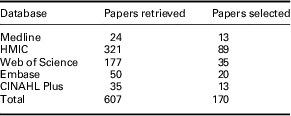
Search terms were agreed by the researchers and papers selected were agreed by two researchers. We used search terms like ‘NHS and public involvement’, ‘NHS and user involvement’, ‘NHS commissioning and public involvement’, ‘NHS, and commissioning, and public engagement’, ‘primary care, and NHS, and public involvement’. The searches yielded 607 papers in total, 170 of which were relevant to NHS and public involvement. After removing duplicates, a total of 116 papers remained (see Appendix 1). We selected for analysis only those that were directly related to primary care commissioning and public involvement in England since the creation of the internal market in 1991. Papers referring in general to public involvement in the English NHS were used for background analysis. In analysing the evidence we borrowed the terminology of the Context-Mechanism-Outcome (C-M-O) approach of realistic evaluation (Pawson and Tilley, Reference Pawson and Tilley1997). The main idea is that policies will have their desired outcomes only if implemented within suitable contexts. Mechanisms provide the explanation of how exactly specific contexts are linked to specific outcomes. The review was undertaken as part of a larger NIHR-funded project on PPI in health-care commissioning and also drew on a review undertaken by the Policy Research Unit in Commissioning and the Healthcare System (Miller et al., Reference Miller, Peckham, Checkland, Coleman, McDermott, Harrison and Segar2012; Peckham et al., Reference Peckham, Wilson, Williams, Smiddy, Kendall, Brooks, Reay, Smallwood and Bloomfield2014). In the first section we briefly describe the main current health reforms in relation to PPI. In the next section we describe past policy initiatives within the C-M-O framework. In the last section we discuss the implications of our analysis for current policy.
The 2012 health care reform
Since Local Voices (NHS Management Executive, 1992), policy documents have highlighted the importance of PPI in commissioning health care services. The evidence suggests that such policy intentions have been of limited success and, given the multitude of changes, highly disruptive (Pickard et al., Reference Pickard, Williams and Flynn1995; Lupton et al., Reference Lupton, Peckham and Taylor1998; Pickard, Reference Pickard1998; Reference Pickard2001; Crawford et al., Reference Crawford, Rutter, Manley, Weaver, Bhui, Fulop and Tyrer2002; Rowe and Shepherd, Reference Rowe and Shepherd2002; Milewa, Reference Milewa2004; Smith et al., Reference Smith, Mays, Dixon, Goodwin, Lewis, McClelland, McLeod and Wyke2004; Baggott, Reference Baggott2005; Hogg, Reference Hogg2007; Warwick, Reference Warwick2007). Despite the rather bleak history of PPI implementation, the Coalition Government announced again the need to put patients at the heart of English health care services, including further changes to PPI structures (DH, 2010a).
Public involvement has been seen as lying along a continuum of democracy and consumerism (Harrison et al., Reference Harrison, Dowswell and Milewa2002; Tritter, Reference Tritter2009). The democratic or citizenship approach is defined by ‘voice’ and methods of direct public participation. This approach can be broken down further into two distinct rationales. First, as a way of addressing a democratic deficit (Martin, Reference Martin2008) PPI is seen as an important mechanism through which tax payers have a voice in publicly funded services. This requires PPI to demonstrate representativeness that is often challenging to achieve (Martin, Reference Martin2008). Second, the democratic approach can be seen as a moral right whereby there is an ethical imperative to give voice in planning and governance to those receiving services (Ward et al., Reference Ward, Thompson, Barber, Armitage, Boote, Cooper and Jones2010). The consumerist approach is defined by patient ‘choice’ in switching their preferences between different competing providers. It has also provided a focus on ‘customer satisfaction’ (Barnes and Cotterell, Reference Barnes and Cotterell2012). This requires public participation in PPI by those who have experienced services. Policy rhetoric tends to justify PPI by using both democratic theory (e.g., improving the linkage between PPI and local authorities) and consumerist approaches (e.g., increasing patient choice, feedback and individual decision making through personal budgets). (DH, 2009; 2010a; 2010c; 2010d; 2011a; 2011b; 2011c). Democratic approaches to PPI are seen as providing a counterbalance to the limitations of representative democracy (e.g., limited public accountability), increasing commercialisation (e.g., patient choice, provider competition) and excessive professional dominance.
Since April 2013 CCGs were established, whose board consists of a majority of GPs. In Equity and Excellence the Government argued that the closer involvement of GPs in the commissioning of care would ensure more effective dialogue between primary and secondary care; decision making ‘closer to the patient’; and increased efficiency. It was also stated that ‘we will learn from the past’ (DH, 2011b). A new body for PPI called HealthWatch England (a national independent ‘consumer champion’) was set up as a committee of the regulator of health care quality, the Care Quality Commission. Local HealthWatch branches are supported by local councils and have the function of transferring the views of patients, carers and the public to local commissioners and to HealthWatch England.
Democratic accountability was also expected to be increased by the enhanced role of local authorities in health care in establishing Health and Wellbeing Boards (HWBs) (DH, 2010b). While local HealthWatch organisations replaced Local Involvement Networks (LINKs), HWBs are entirely new committees, created by local authorities and having their members appointed by them. Members of HWBs include local councillors, a representative of the local HealthWatch and a representative of the CCG. (DH, 2011a: 151). CCGs have a duty to discuss their annual commissioning plans with their local HWB. Changes to the Health and Social Care Bill in 2011 led to the inclusion of two lay members on CCG boards (DH, 2011b). This represents a significant change to the original proposals that envisaged only GPs as board members of CCGs, while public engagement with the process of commissioning was to be channelled through local HWBs. As part of their authorisation, CCGs were required to present evidence of public engagement.
CCGs and local authorities (via HWBs) are under a statutory duty to develop joint health and wellbeing strategies (JHWS). Commissioning plans have to comply with the JHWS, which in turn have to take into account national guidelines and mandates. The creation of JHWS is intended to lead to a more proactive role for public involvement in the sense that elected representatives and other key local stakeholders discuss how local services can meet local requirements ‘rather than reacting as commentators and critics to proposals emanating from the NHS’. (DH, 2010b: 102).
Primary care commissioning and PPI (1990–2010)
GPFH
Context
Making GPs the main commissioners of health services is a policy which is reminiscent of the introduction of GPFH and TPPs in the 1990s. Then, as now, policy documents emphasised the need for local involvement (NHS Management Executive, 1992). Under GPFH, individual practices could volunteer to become fundholders which were then allocated annual budgets from their Health Authority (HA) in order to purchase elective care, diagnostic tests, outpatient referrals and community health services. GP fundholders were given a strong incentive to improve efficiency by being allowed to keep any savings for reinvestment (buying additional patient services or improving their practice premises Greener and Mannion, Reference Greener and Mannion2008). GPFH was also expected to increase responsiveness to patients by moving the purchasing of services as close to the patient as possible. Although encouraged by the Government, neither mandatory obligations nor explicit guidance for GPs were issued on how to involve the public. There is little evidence to suggest that practices engaged patients and public in a meaningful way.
TPPs
Context
TPPs were an extension of GPFH in that GPFH practices could, singly or in groups, apply to be allowed to commission all health services for their patients. Of all previous experiments, TPPs (and their later incarnation as primary care groups) seem to come closest to the current policy for CCGs. Despite the similarities, there are, however, many differences between TPPs and CCGs: in the absence of legislation or national guidelines for their operation, a variety of TPPs were formulated across the country. TPPs were established as sub-committees of their HA and the degree of devolved budgetary responsibility to TPPs was a matter of negotiation between them and their HAs. In the end, most ‘total purchasers’ emerged as ‘selective’ purchasers, commissioning services which they chose themselves and which their HA was willing to delegate (Wyke et al., Reference Wyke, Mays, Street, Bevan, McLeod and Goodwin2003). Nevertheless, TPPs were granted a considerable amount of freedom from regulation. The only area of systematic monitoring of their performance related to ensuring that they did not exceed their budgets.
In contrast to GPFH, TPPs were the subject of an independent national evaluation commissioned by the Department of Health for the period 1995–1998 (DH, 1995; Mays et al., Reference Mays, Wyke, Malbon and Goodwin2001). TPPS were encouraged by the Government to involve the public in service planning and review but there were few explicit requirements for this. Although not a central objective of the evaluation, the extent of PPI was examined and the main findings are summarised below.
Mechanisms
Researchers found that 46% of lead GPs (24/49) reported that the TPP had done nothing to inform or consult patients about the development of the pilot or any changes that the pilot wished to make to local services. Most of the respondents saw little or no need for formal consultation with patients, believing that a high level of awareness of patients’ needs was already available to GPs via their contact with patients. The GPs also expressed scepticism about the value of patients’ views, considering it a ‘waste of effort since patients are not in the best position to give an informed and constructive opinion’ (Dixon et al., Reference Dixon, Goodwin and Mays2001: 223). These GPs had not followed the accountability framework for fundholding and total purchasing that required making key documents, such as annual practice plans and purchasing intentions, available to patients for consultation. It also indicated that PPI was not being framed within either the democratic of consumerist perspectives.
A small section of GPs (7/49) reported that patients had been informed of developments at the TPP, rather than consulted about them. The main mechanisms used were practice newsletters, leaflets, and posters. Although those GPs felt that informing patients was necessary and likely to stimulate patient interest, there was disappointment that it had not triggered any enquiries from patients.
The remaining GPs (21/49) had attempted actively to consult patients through patient participation groups, patient forums or patient satisfaction surveys and occasionally through consulting patient interest groups. However, even in this group, the GPs felt there was no real need for consultation, for example, one felt that the TPP had been coerced into a consultation process because it was felt to be ‘politically correct’. In most meetings, a low level of involvement was achieved and several consultation groups were disbanded because of this.
Outcomes
The evaluation of TPPs found a few instances of success of public involvement that were framed by the democratic rationale. For example, after discussing purchasing priorities with their Friends group, one TPP decided not to purchase in vitro fertilisation treatment. Policy guidelines also clarified that TPPs should have closer relations with Community Health Councils (CHCs) and that copies or summaries of relevant documents should be sent to CHCs. The responses from lead GPs, however, suggest that formal links with CHCs were rare; most TPPs reported no contact at all.
The researchers concluded that informing, consulting or involving patients in developing or implementing plans was not a high priority for TPPs. GPs believed that by definition, they had an excellent understanding of patient needs and could act as reliable proxies for their patients; as a result they did not think of formal PPI as a priority (Dixon et al., Reference Dixon, Goodwin and Mays1998; Wyke et al., Reference Wyke, Myles, Popay, Scott, Campbell and Girling1999). Where efforts to consult patients were made, it was often seen as a box ticking exercise (Dixon et al., Reference Dixon, Goodwin and Mays1998). The researchers acknowledge that, in general, the attempts at ‘downward’ forms of accountability by TPPs may have been limited because of their ‘pilot’ status. Their temporary status, problems in agreeing funds with their HAs, and a shift in health policy after New Labour came to power in 1997, were all factors that influenced their functioning and contributed to a perception that the effort was not a serious one (Wyke et al., Reference Wyke, Mays, Street, Bevan, McLeod and Goodwin2003).
GP commissioning pilots and primary care groups
Context
In April 1998, New Labour abolished GPFH and replaced it with GP commissioning pilots, which were soon transformed into PCGs. A national evaluation of the GP commissioning pilots found little evidence of direct PPI (Smith et al., Reference Smith, Regen, Shapiro and Baines2000). Despite their good intentions, many of them reported lack of knowledge about how to engage the public in a meaningful way. Engagement with CHCs was better (with half of the pilots reporting they had CHC members on their boards). These findings, led the researchers to conclude that PPI would be a real challenge for PCGs and it would likely remain a good intention unless there was clear guidance and support about models of good practice.
PCGs were established in 1999 but by 2000 they started being transformed into PCTs. A study of six PCGs in London (February 2000–June 2001) explored the development of PI in them, focusing on the factors that shaped the development, implementation and outcomes of PI (Anderson et al., Reference Anderson, Florin, Gillam and Mountford2002). The researchers emphasised the fact that PCGs were organisations in transition which, in February 2000, had been in existence for less than a year and had not yet had sufficient time to put together the basics of corporate infrastructure. They had to struggle with a huge agenda of change. PI was only one of many priorities.
Mechanisms
The study of the six PCGs in London found that they struggled to get the balance right between institutional and public interests. Some invested in ‘deliberative’ methods in which lay people were given resources to develop their understanding of institutional interests. Others pursued ‘outreach’ methods with open agendas in which officers tried to engage with local people on their own terms. In involving or reaching marginalised groups a variety of strategies were employed, for example, trying to engage people on their own turf or trying to provide the necessary support, such as interpreters (Anderson et al., Reference Anderson and Florin2000). These strategies, important as they were, did little to empower excluded voices, a process that requires more investment in community infrastructure (O’Keefe and Hogg, Reference O’Keefe and Hogg1999). In these PCGs, involvement initiatives with marginalised groups were time limited and did not address the underlying development needs. Community development featured in only one case study. PI was also passive since it rarely started from a user or public perspective. There were few examples of direct dialogue between providers and users that fully explored the differences in perspectives.
Outcomes
The study of the London PCGs found little evidence of direct effects of public consultation. Some of the findings replicated those from previous studies: PI initiatives were used to legitimate corporate decisions determined by professional interests. A key problem for building collaborative working and partnerships was the transitory nature of PCGs themselves. Corporate commitment, in the form of leadership, resources and strategies, was perceived to be essential. A criticism often made in the literature about PPI is that even when it happens it fails to bring about change. In these case studies, little effort was made to systematically think through and embed PI across the entire organisational change agenda.
Evidence from an early survey of PCGs (1999–2000), examining the degree and effectiveness of public consultation, revealed that only 31% of chairs of PCGs felt that they were effective at consulting the public. The majority of CHCs reported that there had been little or no consultation in areas such as commissioning, service development or clinical governance and 87% reported that local communities were largely unaware of the existence of PCGs. Only 14% of CHCs thought that PCG consultation with the public had been effective. The authors concluded that there was a danger that PPI could become little more than token gestures, as had been the case with previous initiatives. (Alborz et al., Reference Alborz, Wilkin and Smith2002). Another report describing results from a survey of lay members and chief officers of PCGs found that out of 13 key concerns, developing PI came ninth. (Anderson and Florin, Reference Anderson and Florin2000).
In PCGs, where approaches to involve patients and public had been initiated, in line with a consumerist feedback approach this was more at the informing rather than participatory level and PPI remained relatively underdeveloped in primary care commissioning and general practice more generally (Elbers and Regan, Reference Elbers and Regan2001).
PCTs and PBC
Context
By 2004 all PCGs became PCTs and were responsible for commissioning secondary care and community health services. PCTs were governed by an Executive Board with a lay chairperson and lay non-executive directors. Initially, lay members were in a majority but after 2006 the numbers of lay members was reduced in number. Lay members were appointed by the NHS Appointments Commission based on national criteria and individual expertise rather than as patient and/or public representatives. Clinical leadership and advice to the Executive Board was provided by the Professional Executive Committee, which did not have any lay representation (Dowling et al., Reference Dowling, Wilkin and Smith2003). New Labour made it clear that PCTs had an obligation to involve the public when setting commissioning priorities and they also had to ensure that service providers were responsive to patient preferences (DH, 2006a; Hughes et al., Reference Hughes, Mullen and Vincent-Jones2009; Vincent-Jones et al., Reference Vincent-Jones, Hughes and Mullen2009). Involving the public in commissioning decisions was one of the standards of the policy drive for ‘World Class Commissioning’.
GPs had an input via PBC, which involved holding notional budgets – rather than actual resources – and making their commissioning priorities known to their PCTs.
Mechanisms
Two surveys of PPI in PCTs by the Picker Institute found that a clear and consistent approach to PPI across PCTs was lacking (Chisholm et al., Reference Chisholm, Redding, Cross and Coulter2007; Picker Institute, 2009). They tended to place emphasis on structure and process rather than exploring effective methods of influence. The researchers concluded that ‘… there is a disconnect between these activities and the relatively low expectation that patient, public and community groups will have significant influence on commissioning decisions’ (Chisholm et al., Reference Chisholm, Redding, Cross and Coulter2007: 15).
Similarly, a study on PBC consortia did not find any successful models of involving the public, although many PBC groups acknowledged the importance of consulting and involving the public. Several consortia had representatives of local PPI Forums (the bodies that replaced CHCs) on their executive boards, but there was no clear conception of the nature of their role or who they were supposed to represent (Coleman et al., Reference Coleman, Checkland, Harrison and Dowswell2009a).
Outcomes
The Picker Institute surveys, while encouraging about the importance placed on PPI, did not find any substantive PPI impact on commissioning decisions. The surveys highlighted the difficulties PCTs faced in reaching marginalised groups, the public’s lack of understanding of ‘commissioning’, and an absence of reliable data about patients’ experience.
The study on PBC consortia found that involvement of patients and the public in commissioning was an area with which most study sites struggled.
Patient participation groups (PPGs)
It could be argued that the experience of GP involvement in commissioning so far has been both limited and short-term and that it is, therefore, unsurprising that GP commissioners were not able to develop and support PPI. However, if we shift attention to PPI and general practice per se, we find that there has also been little engagement between general practices and their patients or local communities. In a review of the history of PPGs over the past 30 years, Brown (Reference Brown1999) identified a number of key issues: the diversity of purposes of PPGs; the uneven distribution of PPGs, with fewer existing in areas of greatest need; the unrepresentative membership; the difficulty of sustaining them given high levels of public disinterest; and the difficulty of assessing costs and benefits. In a postal survey of GP practices in a city district in the north of England, he found that levels of PPI activity were low across the district and only a small minority of GPs had undertaken activities to involve the public. The survey identified pressures of existing workload, lack of resources and public apathy as main obstacles and that primary care teams need a clear strategic framework, models of best practice and adequate resources to manage and develop PI initiatives (Brown, Reference Brown2000). It is likely that the recent ‘Directed Enhanced Services’ incentivising general practices to develop and support patient reference groups (PRGs) will have a significant impact although early signs are not promising (McNicoll, Reference McNicoll2011; Pulse, 2011). In a recent survey of CCGs it appears that establishment of PRGs is patchy with many CCGs reporting few or no member practices having a PRG (Checkland et al., Reference Checkland, Peckham, Coleman, McDermott, Sengar, Petsoulas, Walllace, Miller and Osipovic2012).
Discussion
According to the literature, some prominent examples of contextual factors that pose challenges for effective PPI are: lack of time and resources, lack of interest among professionals and the public, and lack of knowledge of how to translate PI into changes in health services (Florin and Dixon, Reference Florin and Dixon2004). Commissioners may face the problem of who exactly to involve (e.g., patient groups or the general public), how to achieve proper representation, and the difficulty of reconciling different agendas (e.g., between organisational and professional interests and the variety of interests of the public). This is further compounded by the complexity of rationales for PPI; the need for representativeness, including reaching seldom-heard groups to address democratic principles, meaningful rather than tokenistic engagement to address the moral imperative, and drawing on service users experiences and ensuring choice within the consumerist agenda. Some researchers draw attention to the importance of clinical champions for successful PPI (Anderson et al., Reference Anderson, Shepherd and Salisbury2006). Past research indicates that it is unlikely that new commissioning groups will have the required skills, resources, time or inclination to develop PPI (Coleman et al., Reference Coleman, Checkland and Harrison2009b).
PPI can employ a variety of mechanisms of involvement depending on the degree of actual power invested in the public (Arnstein, Reference Arnstein1969). Direct/indirect involvement refers to the absence or presence of mediating agents (e.g., GPs in health care are mediating agents for patients). Passive/active involvement refers to whether it is health professionals or the public who are setting the agenda or are being instrumental in actual decision making (Baggott et al., Reference Baggott, Allsop and Jones2005; Anderson et al., Reference Anderson, Shepherd and Salisbury2006; Oliver et al., Reference Oliver, Rees, Clarke-Jones, Milne, Oakley, Gabbay, Stein, Buchanan and Gyte2008). Deliberative/non-deliberative involvement refers to the presence or absence of face-to-face interaction with the public. Examples of deliberative mechanisms are focus groups, health panels, and citizens’ juries, while non-deliberative approaches include postal questionnaires and public consultations through postal or electronic voting.
Research has yielded scant evidence about concrete outcomes achieved by PPI in commissioning. The impact of PPI on services is often not clear, acting potentially as a disincentive to engage. Limited tools exist for measuring or assessing patient involvement (Staniszewska et al., Reference Staniszewska, Herron-Marx and Mockford2008). When evaluating impact of user involvement strategies we should look at indicators of success that include both process and outcomes including economic evaluation (Richardson et al., 2005). Equally, evaluative indicators also need to take into account the underlying rationales for PPI broadly defined as democratic or consumerist. Evaluating outcomes, however, is not easy as often the outcomes of PPI may take years before they can be measured. Equally, outcomes of PPI may be difficult to disentangle from other interventions. Some benefits are easier to prove – such as user satisfaction, opportunities of meeting others in a similar situation, and increased knowledge about the availability of services related to their condition (Fudge et al., Reference Fudge, Wolfe and McKevitt2008).
PPI remains a ‘window dressing’ exercise with actual implementation of policy by local managers being rather lukewarm and unsuccessful. Involvement, if it happens, tends to be passive (Kirk et al., Reference Kirk, Bailey, Glendinning and Burkey1997; Martin et al., Reference Martin, Abelson and Singer2002). When it is active it tends to relate more to existing service users than to members of the broader community (Crawford et al., Reference Crawford, Rutter, Manley, Weaver, Bhui, Fulop and Tyrer2002; Anderson et al., Reference Anderson, Shepherd and Salisbury2006). One review concluded that ‘primary care-led commissioning organisations have struggled to engage patients and the public in a meaningful way’ (Smith et al., Reference Smith, Mays, Dixon, Goodwin, Lewis, McClelland, McLeod and Wyke2004: 3). Our analysis of the literature agrees with this conclusion.
Despite the rhetoric of the internal market reforms about increasing local control, the basic hierarchical structures of control have been to a large extent retained. Some researchers commented, ‘the relationship between the new managerial stratum and local communities continued to be marked by an ethos based upon an essentially passive role for local populations in relation to the nature and priorities of public sector health care’ (Milewa et al., Reference Milewa, Valentine and Calnan1998: 516).
In the past it was mainly managers rather than clinicians that engaged in PPI, avoiding therefore a potential conflict between the role of GPs as commissioners and as patient advocates. Commissioning involves rationing limited resources whereas being a patient advocate involves providing the best for the patient irrespective of cost. PPI may yet prove to be useful, however, in making patients and the public aware of the need for rationing scarce resources. Large scale commissioning by GPs has not been tried before in the United Kingdom and therefore the evidence relating to communication between GPs and patients about resource allocation is scant and there is little agreement about whether and how patients and the public should be involved in health care rationing (Jones et al., Reference Jones, Berney, Kelly, Doyal, Griffiths, Feder, Hillier, Rowlands and Curtis2004). In the context of the current reforms this issue will no doubt become of central significance.
Established in a number of waves of pathfinders from January 2011, CCGs are still in early phases of development. In early 2011 the Patients’ Association surveyed wave one Pathfinder CCGs and while only 12 of the 52 completed the survey the results showed little systematic work on PPI and lack of PPI embeddedness (Patients Association, 2011). CCGs considered PPI to be important but few had done more than identify someone to be responsible for PPI (Patients Association, 2011). In December 2011 a survey of all five waves of CCGs found that PPI was considered important by all responding CCGs. Just over three-quarters of the respondents had an individual responsible for PPI and over 80% had a strategy for PPI, although this was only publicly available in less than half of these CCGs (Checkland et al., Reference Checkland, Peckham, Coleman, McDermott, Sengar, Petsoulas, Walllace, Miller and Osipovic2012).
The context for PPI in commissioning is becoming more and more complex as lay members on CCG boards, JHWS, HWBs, local HealthWatch are required to interact which means that models have to be found for effective collaboration and avoidance of duplication. Defining the actual context within which PPI develops – let alone devising a conducive context for PPI – is itself not easy. While CCGs will have a community focus in terms of their registered populations, the community is not a homogeneous entity (Kirk et al., Reference Kirk, Bailey, Glendinning and Burkey1997; Harrison and Mort, Reference Harrison and Mort1998). The degree of organisational turbulence and change (including mergers and uncertainties about the size and shape of CCGs) suggests it is not clear how far any real community focus is meaningful. CCGs also have to face the fact that there are many ‘voices’ to listen to and that there are many competing interests and conflicting views that require reconciliation.
In addition to developing a context that is sufficiently conducive to PPI, appropriate methods need to be devised for effective public engagement. User participation levels are often reported to be low. Involvement groups also tend to be self-selective and therefore not necessarily representative of the community. This questions the assumption of policy makers that the public or users universally want to be involved in decision making about health services. Limited involvement may be caused by: lack of enthusiasm or variable public interest, attitudes of health professionals, lack of insight on appropriate methods of involvement. More research is needed to establish effective methods for engaging patients and to determine the relative merits of active or passive involvement (e.g., belonging to decision-making hospital committees or asked to fill in survey questionnaires) as well as whether the NHS acts on such input (Gagliardi et al., Reference Gagliardi, Lemieux-Charles, Brown, Sullivan and Goel2008). Early surveys of CCGs, such as that by the Patients Association (2011) and the Policy Research Unit in Commissioning and the Healthcare System (Checkland et al., Reference Checkland, Peckham, Coleman, McDermott, Sengar, Petsoulas, Walllace, Miller and Osipovic2012) are reporting that most CCGs have a PPI lead and a strategy. As the experience of PCT shows, however, this does not necessarily lead to effective engagement in decision making about commissioning priorities.
Researchers have suggested that appropriate incentives (financial or others) should be given to GPs for proper commissioning and within it PPI (Smith et al., Reference Smith, Wood and Elias2009: 9). In 2011 the Government introduced financial incentives within the GMS contract for GP practices if they show that they have set up PRGs and have taken steps to make those groups as representative of their patients as possible (DH, 2011c). Despite this financial inducement, even after a year many practices had not established PRGs. Clearly there is the potential for CCGs to link the role of such groups with their broader responsibility for PPI in commissioning but it is too early to tell whether this is happening on any substantial scale.
Neither is it clear how the new PPI structures such as HealthWatch will engage with commissioning processes or what impact HWBs will have on CCG commissioning plans. In previous incarnations of PPI institutions (e.g., CHCs, Forums, LINKs) the degree of independence has been a key factor influencing their roles. If too independent there is bound to be a lot of variation and perhaps irrelevance. However, if there is too much performance management and government interference then it can restrict their independence (Alborz et al. 2002; Learmonth et al., Reference Learmonth, Martin and Warwick2009).
The Government argued that CCGs could draw on the experience and activities of PCTs in developing and supporting PPI. As the Picker Institute surveys suggest, however, PCTs themselves had not developed widespread effective PPI strategies. Suggestions that CCGs retain existing PCT staff and strategies are also compromised by the extent to which capacity for PPI was retained in recent changes to PCT structures. In other words, it was not clear what aspects of PCT activity could be retained as PCTs transformed into new Commissioning Support Units (CSUs) when CCGs were only just beginning to explore what management support functions they required given the limited management overhead provided. Neither is it clear where CCGs will obtain such support from. There remains significant organisational turbulence within the English NHS with CSU mergers and changes to their structures and ownership (Petsoulas et al., 2014) and ongoing discussions about commissioning responsibilities between CCGs and NHSE. While there is a clear expectation that CCGs will ‘… focus heavily on the role of CCGs in securing patient and public engagement’ (NHS England, 2013: 6) there is currently little evidence of actual activity (Peckham et al., Reference Peckham, Wilson, Williams, Smiddy, Kendall, Brooks, Reay, Smallwood and Bloomfield2014).
Conclusion
It is still too early to tell whether CCGs can improve both the degree and effectiveness of PPI. The Government intends that commissioners will ‘systematically involve patients and local communities in their work’ but there are no concrete guidelines about the nature or extent of such involvement (DH, 2010b: 56). As this review suggests, CCGs may not be the best organisations to develop and support PPI. Based on previous experience, it is unlikely that PPI will be a major element of the commissioning role of CCGs. In 2011, the Department of Health funded a number of pilot sites to develop examples of effective PPI mechanisms for CCGs but, while outlining a wide range of activity, they have so far reported limited information about impacts on commissioning strategies (NHS Networks, 2011). The pilot programme of PPI sites may be helpful but whether their experience and approaches are taken up by CCGs is not clear.
It may be too early to identify any significant impacts but one problem in defining impact is the lack of clarity about what PPI actually is and how its effectiveness can be defined and measured (Walt and Nolte, Reference Walt and Nolte2006). Although the literature on PPI is extensive, there is little agreement about the scope (public/user groups/individuals), aims, mechanisms and outcomes of involvement. This makes the task of evaluating the practical impact of public involvement challenging (Abelson et al., Reference Abelson, Forest, Eyles, Smith, Martin and Gauvin2003). As a recent Australian review concluded, ‘… the impact of consumer and community engagement is not clear, that it is context dependent or that it requires further study’ (University of New South Wales, 2012). A conclusion supported by the findings of the NIHR research (Peckham et al., Reference Peckham, Wilson, Williams, Smiddy, Kendall, Brooks, Reay, Smallwood and Bloomfield2014). Being clear about the outcomes PPI aims to achieve will also help selecting appropriate models of involvement (focus groups of regular service users versus survey questionnaires of the public).
Aligning the motives of professionals and patients for successful PI may not be an easy task. Professionals may genuinely believe in the benefits of PI or they may simply be going along with policy guidelines by ‘ticking boxes’. Patients may also have a variety of motivations, for example, desire to improve services, seeking social opportunities, seeking to increase knowledge of their condition or access to services. Perceptions about what ‘public involvement’ really means can also differ between professionals, patients and the public. While patients and the public are often seen as lacking the technical knowledge required for clinical service reconfiguration research findings suggest that professionals and users need to reconceptualise the traditional category of patient to one that understands that service users can contribute to service planning and development. Whether such contributions are best made by engaging with commissioners or providers is not clear but closer collaboration on PPI processes between commissioners and providers will help.
A first step towards developing effective PPI would be to clarify the objectives and scope of involvement. Is PPI desirable for increasing democracy and accountability, conferring legitimacy on policy decisions, improve health service delivery or is it an intrinsic good? It may simply be that, given the multitude of local voices, agreement can never be reached and effective PPI may remain an unattainable dream rather than a realistic goal.
Acknowledgement
This project was funded by the National Institute for Health Research (project number 08/1806/261).
Department of Health Disclaimer
The views and opinions expressed in this paper are those of the authors and do not necessarily reflect those of the NIHR, NHS or the Department of Health.



