


In recent years several influential documents have stated that meeting the mental health needs of children and young people is a task only possible by all children’s services working together (NHS Health Advisory Service, 1995; National Assembly for Wales, 1999). The epidemiological data make it clear that the task cannot be left to specialist services alone (Reference Ford, Goodman and MeltzerFord et al, 2003). The specialist National Health Service (NHS) child and adolescent mental health service (CAMHS) in Bridgend has been struggling – and failing – to keep pace with the volume of referrals to the service. Despite no additional resources being allocated to the team, the volume of clinical work has increased. A primary mental health team has not been developed, as has occurred elsewhere. Therefore, the waiting list has progressively grown. In routine cases children now have to wait for sometimes over a year before an assessment is offered. The survey reported here grew out of the increasing dialogue between the specialist CAMHS and the commissioners regarding core business and prioritisation. Accepting that the specialist CAMHS is a limited resource, this study investigates how different referring agencies would have us prioritise our work.
Method
The study was a questionnaire survey. Referrers were identified using the clinic database. The questionnaire was sent to all practitioners from child-care professional groups that contributed referrals over the past 3 years. For example, if a referral had been received from a health visitor, all health visitors in the district were contacted to complete the questionnaire. The only exception to this was that the police, who refer children for post-abuse work, were not contacted. If no reply was received within 1 month, a personally addressed letter was written stating the importance of receiving the reply. The following professional groups were included in the study:
-
(a) general practitioners;
-
(b) community paediatricians and hospital consultant paediatricians;
-
(c) nurses, including health visitors, Surestart nurses, and young offender team and looked-after children health workers;
-
(d) educational welfare officers;
-
(e) educational psychologists;
-
(f) special educational needs coordinators and head teachers from all the schools in the district;
-
(g) child care social workers, including the managers of family unit homes.
The questionnaire presented a list of potential problems for which the referrer was asked to give a priority rating between 0 and 5 (0, not appropriate for specialist CAMHS; 1, lowest priority; 5, highest priority). Second, the referrer was asked to rate the extent to which a number of contextual factors would affect how priority should be attributed to the case (similarly rated 0 to 5). ‘Contextual factors’ included factors, other than the primary presenting problem, that might increase case complexity or otherwise influence the level of perceived priority. Third, the questionnaire asked what waiting time (time between referral and being seen) was considered acceptable for routine cases. Fourth, an open question asked for ‘any other comment’.
All data collected were analysed using the Statistical Package for the Social Sciences (SPSS, 1999). Initially the data were ranked with respect to priority score, to enable comparisons between respondents regardless of possible ‘halo’ effects for specific individuals. The data were first analysed as a whole, then split into ‘professional groups’. Comparisons between these groups were performed using Kruskal-Wallis analysis. Analyses of raw scores were also compared between professional groups using one-way analyses of variance (ANOVAs).
Results
Of the 252 child-care professionals invited to participate, 73% completed the questionnaire (n=184). The reply rate for each professional group was: general practitioners 63% (n=44); paediatricians/community child health doctors 80% (n=8); health visitors 73% (n=24); Sure-start nurses 100% (n=7); youth offending team health worker 100% (n=1); educational psychologists 100% (n=9); educational welfare officers 82% (n=9); head teachers and special educational needs coordinators 75% (n=52) and child-care social workers 69% (n=29). One questionnaire was returned with the front sheet removed so that the professional group was unidentifiable.
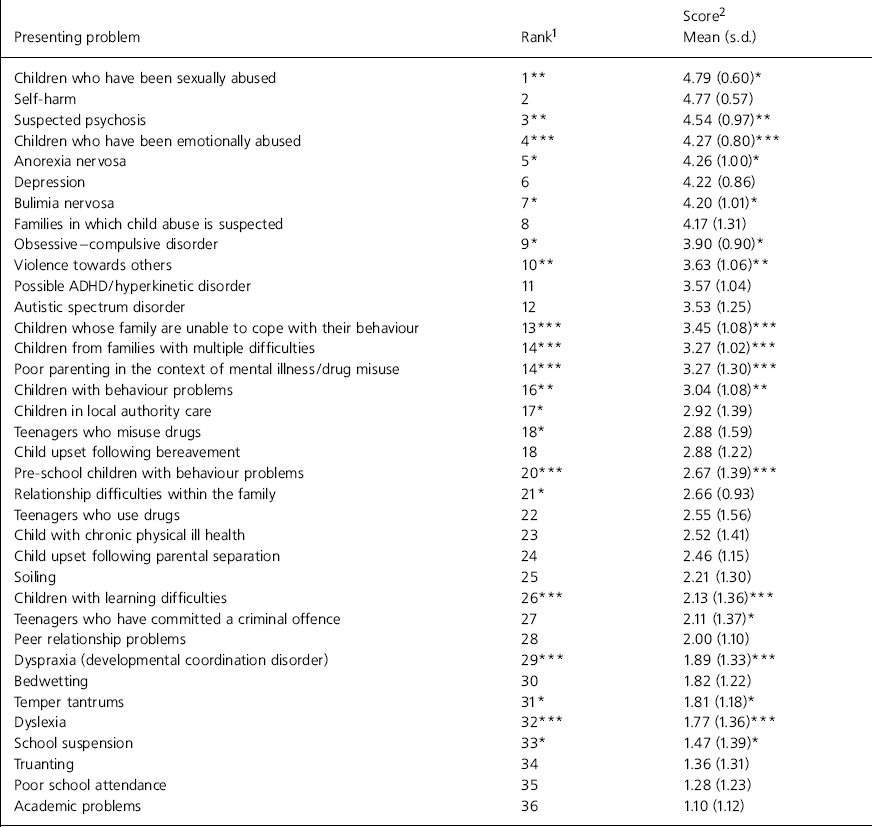
Table 1 shows the rank and the mean priority score attributed to each individual presenting problem. There was a wide variation in how much priority should be given to each presenting problem. However, when the highest priorities only were ranked there was considerable agreement between the different professional groups (Table 2).
Rank and mean priority scores for each presenting problem
| Presenting problem | Rank 1 | Score 2 Mean (s.d.) |
|---|---|---|
| Children who have been sexually abused | 1 ** | 4.79 (0.60)* |
| Self-harm | 2 | 4.77 (0.57) |
| Suspected psychosis | 3 ** | 4.54 (0.97) ** |
| Children who have been emotionally abused | 4 *** | 4.27 (0.80) *** |
| Anorexia nervosa | 5* | 4.26 (1.00)* |
| Depression | 6 | 4.22 (0.86) |
| Bulimia nervosa | 7* | 4.20 (1.01)* |
| Families in which child abuse is suspected | 8 | 4.17 (1.31) |
| Obsessive-compulsive disorder | 9* | 3.90 (0.90)* |
| Violence towards others | 10 ** | 3.63 (1.06) ** |
| Possible ADHD/hyperkinetic disorder | 11 | 3.57 (1.04) |
| Autistic spectrum disorder | 12 | 3.53 (1.25) |
| Children whose family are unable to cope with their behaviour | 13 *** | 3.45 (1.08) *** |
| Children from families with multiple difficulties | 14 *** | 3.27 (1.02) *** |
| Poor parenting in the context of mental illness/drug misuse | 14 *** | 3.27 (1.30) *** |
| Children with behaviour problems | 16 ** | 3.04 (1.08) ** |
| Children in local authority care | 17* | 2.92 (1.39) |
| Teenagers who misuse drugs | 18* | 2.88 (1.59) |
| Child upset following bereavement | 18 | 2.88 (1.22) |
| Pre-school children with behaviour problems | 20 *** | 2.67 (1.39) *** |
| Relationship difficulties within the family | 21* | 2.66 (0.93) |
| Teenagers who use drugs | 22 | 2.55 (1.56) |
| Child with chronic physical ill health | 23 | 2.52 (1.41) |
| Child upset following parental separation | 24 | 2.46 (1.15) |
| Soiling | 25 | 2.21 (1.30) |
| Children with learning difficulties | 26 *** | 2.13 (1.36) *** |
| Teenagers who have committed a criminal offence | 27 | 2.11 (1.37)* |
| Peer relationship problems | 28 | 2.00 (1.10) |
| Dyspraxia (developmental coordination disorder) | 29 *** | 1.89 (1.33) *** |
| Bedwetting | 30 | 1.82 (1.22) |
| Temper tantrums | 31* | 1.81 (1.18)* |
| Dyslexia | 32 *** | 1.77 (1.36) *** |
| School suspension | 33* | 1.47 (1.39)* |
| Truanting | 34 | 1.36 (1.31) |
| Poor school attendance | 35 | 1.28 (1.23) |
| Academic problems | 36 | 1.10 (1.12) |
ADHD, attention-deficit hyperactivity disorder.
1. Measure of the difference between professional groups (Kruskal—Wallis test).
2. Analysis of variance.
* P<0.05, ** P<0.01, *** P<0.001.
Top three priority problems by professional group

| Rank | All referrers | GPs | Paediatricians | Health visitors | Educational psychologists | Educational welfare officers | Schools | Social workers |
|---|---|---|---|---|---|---|---|---|
| 1 | CSA | Ps | SH 1 | CSA | SH 1 | SH | CSA | SH |
| 2 | SH | CSA | Ps 1 | SH | Ps 1 | CSA | SH | CSA |
| 3 | Ps | SH | AN | AN | CSA | AN and BN 1 | EA | Ps |
AN, anorexia nervosa; BN, bulimia nervosa; CSA, child sexual abuse; EA, emotional abuse; GPs, general practitioners; Ps, suspected psychosis; SH, self-harm.
1. Equal ranking.
When problems were sorted into broad groups (mental disorders, mental health problems and risk factors), there was general agreement that mental disorders should be attributed the highest priority. Risk factors were then considered in more detail and placed into subgroups based on a common theme, such as family factors, school and education, the child’s own behaviour (such as offending or drug use) and child abuse. Some risk factors, most significantly those relating to family functioning, particularly child abuse, were rated more highly than the others. Indeed, child abuse, as a risk factor for mental disorder and mental health problems, was given greater priority than mental disorders in general. There was no problem that the majority of referrers considered inappropriate for specialist CAMHS.
Other contextual factors
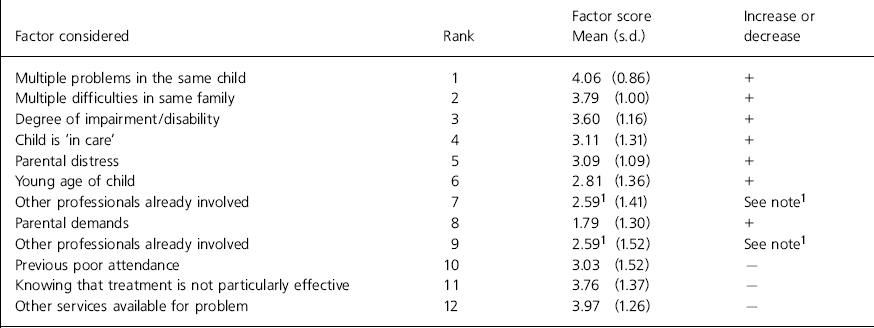
When referrers were asked how other considerations would affect how CAMHS should attribute priority, again there were diverse responses (Table 3). However, some factors do greatly alter the priority that problems were given. For example, greater priority should be given when there are multiple problems in the same child or family. Conversely, the availability of other services to deal with a problem, or knowing that the treatment available is not particularly effective, led to a decrease in priority rating.
How different contextual factors should affect attribution of priority
| Factor considered | Rank | Factor score Mean (s.d.) | Increase or decrease |
|---|---|---|---|
| Multiple problems in the same child | 1 | 4.06 (0.86) | + |
| Multiple difficulties in same family | 2 | 3.79 (1.00) | + |
| Degree of impairment/disability | 3 | 3.60 (1.16) | + |
| Child is ‘in care’ | 4 | 3.11 (1.31) | + |
| Parental distress | 5 | 3.09 (1.09) | + |
| Young age of child | 6 | 2.81 (1.36) | + |
| Other professionals already involved | 7 | 2.59 1 (1.41) | See note 1 |
| Parental demands | 8 | 1.79 (1.30) | + |
| Other professionals already involved | 9 | 2.59 1 (1.52) | See note 1 |
| Previous poor attendance | 10 | 3.03 (1.52) | - |
| Knowing that treatment is not particularly effective | 11 | 3.76 (1.37) | - |
| Other services available for problem | 12 | 3.97 (1.26) | - |
1. Referrers were asked specifically whether other professionals being involved already would increase or decrease how they thought priority should be ascribed — a mean of 2.59 was given to both increasing and decreasing the priority, and it was the same professional group and sometimes the same referrer who said this should both increase and decrease the priority.
Waiting times
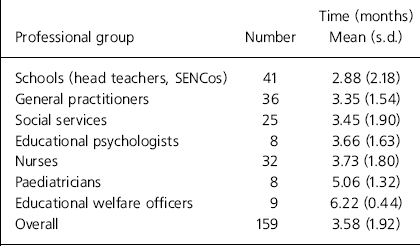
There was a wide range of waiting times that individual referrers considered acceptable for routine cases (Table 4). This varied from 2 weeks to 12 months, with a wide variation between the different professional groups (ANOVA, F=5.359, d.f.=6, P<0.001). The mean of the acceptable waiting time was 3.58 months.
Referrers’ views of acceptable waiting times in routine cases
| Professional group | Number | Time (months) Mean (s.d.) |
|---|---|---|
| Schools (head teachers, SENCos) | 41 | 2.88 (2.18) |
| General practitioners | 36 | 3.35 (1.54) |
| Social services | 25 | 3.45 (1.90) |
| Educational psychologists | 8 | 3.66 (1.63) |
| Nurses | 32 | 3.73 (1.80) |
| Paediatricians | 8 | 5.06 (1.32) |
| Educational welfare officers | 9 | 6.22 (0.44) |
| Overall | 159 | 3.58 (1.92) |
SENCo, special educational needs coordinator.
Other comments made by referrers
Open comments made by referrers concentrated on a small number of issues. Most frequently stated was that there needed to be better communication between the CAMHS, referrers and families; clinics should keep families and referrers updated about position on the waiting list and expected duration before an appointment is offered. Many referrers from schools commented on the lack of routine information-sharing by the service. Several comments from different professional groups requested early assessment or a triage service. Some social workers wanted regular consultation sessions, and other practitioners stated the need for increased priority from CAMHS for their own field of work. Several commented that the waiting list was too long and that better resources for the service were necessary.
Discussion
This study shows some agreement between referrers that priority should be given to children who self-harm, children who have mental illness or a mental disorder and children who have been abused. School-related problems such as truancy and poor academic performance should be afforded the lowest priority. Priorities, however, are moderated by other factors relating to the case complexity and severity, and the availability and effectiveness of treatment. Other authors have also investigated how cases should be prioritised (Reference Hodges and WotringHodges & Wotring, 2000; Lyons, 2001; Reference Smith and HadornSmith et al, 2002). However, the extent of the differences demonstrated by this study, both within and between professional groups, had not been anticipated.
Our study shows the high demand for specialist CAMHS. Referrers felt no problem was outside the remit of specialist CAMHS, and average acceptable waiting times for routine cases should be just 3.5 months. Other studies similarly show that demand for CAMHS outstrips resources, leaving a large unmet need (Reference Jones and BhadrinathJones & Bhadrinath, 1998). Referrers want quick, easy access (Reference Weeramanthri and KeaneyWeeramanthri & Keaney, 2000) and better communication, but their understanding of what specialist CAMHS can offer is limited (Reference Markantonakis and MathaiMarkantonakis & Mathai, 1990; Reference DoverDover, 1996). There is a dilemma here for CAMHS providers as our study suggests that many referrers to CAMHS are unable to identify accurately children who are most in need of specialist CAMHS, have psychiatric disorders or for whom treatment or therapy is most effective. Ensuring that assessments are sufficiently comprehensive and rigorous, that post-assessment decisions are evidence based, the triaging of referrals and the introduction of primary mental health workers have elsewhere been initiatives to try to manage this interface more efficiently.
Jones & Bhadrinath (Reference Jones and Bhadrinath1998) noted that in many situations rated as highest priority for specialist CAMHS the main need is to share anxieties rather than anything else, and often other statutory agencies should more appropriately take the lead. This point requires consideration when deciding how to prioritise our workload. The act of referring probably depends on a range of factors (Reference Thompson and PlaceThompson & Place, 1995). Better communication about waiting lists and times, and easier access by referrers (perhaps enabling the sharing of anxieties) could probably be partially addressed from existing resources.
This study addresses an important issue in a practical manner, although not without limitations. Despite a good overall response rate (73%), possibly non-responders have views different from those assessed here. This study has several practical lessons for our own service, and may also have wider application. However, issues relating to the geographical, political and cultural context might limit the generalisability of our findings.
Together We Stand (NHS Health Advisory Service, 1995) highlighted that the mental health needs of children and adolescents are too great, and too important, to be left to one agency alone. However, increasing pressures in our partner children’s agencies have led to increased pressure on specialist CAMHS. Moreover, the reallocation of priorities does not deal with the widening gulf between need and resources available. In Wales, there is growing disquiet about the Welsh Assembly government’s lack of new investment in specialist CAMHS (Children’s Commissioner for Wales, 2004).
This study highlights continuing confusion among some of our partner professionals regarding our role. This may in part stem from our relatively recent evolution out of the child guidance clinics. However, it also stems from our own reticence to go out and clearly define our own core business and priorities – or perhaps from our own confused thinking about what these are.


 Open access


eLetters
No eLetters have been published for this article.