


In several cross-sectional studies, an association was found between job stress and depressive symptoms or disorders (Reference KarasekKarasek, 1979; Reference BroadbentBroadbent, 1985; Reference Kawakami, Araki and KawashimaKawakami et al, 1990; Reference Bromet, Dew and ParkinsonBromet et al, 1992; Reference Chevalier, Bonenfant and PicotChevalier et al, 1996). The results of longitudinal studies (Reference Bromet, Dew and ParkinsonBromet et al, 1988; Reference Kawakami, Haratani and ArakiKawakami et al, 1992; Reference Niedhammer, Goldberg and LeclercNiedhammer et al, 1998) confirmed the existence of a relationship between job stress and subsequent depressive symptoms or disorders, although those of one study (Reference CarayonCarayon, 1993) did not. Certain personality traits, such as neuroticism, are associated with both depressive symptoms and perceived job stress and could have a confounding role in the relationship between job stress and depression (Reference McRaeMcRae, 1990). Our objective was to examine the effect of job stress on the risk of increase of depression in a 3-year follow-up study, in which we took into account personality traits.
METHOD
Population
The GAZEL Study is an ongoing longitudinal study including 20624 subjects working at the French National Electricity and Gas Company (EDF—GDF). There were a total of 15010 men and 5614 women, who were aged 40-50 and 35-50, respectively, in 1989. The aim of the GAZEL Study was to investigate the occupational risk factors of impaired physical and mental health (Reference Goldberg, Leclerc and ChastangGoldberg et al, 1990). Since 1989, the cohort has been followed by means of yearly self-administered questionnaires. Independent data from the personnel and medical departments of EDF—GDF were also collected.
Depressive symptoms
In 1993 and 1996, the French version of the Center for Epidemiologic Studies — Depression scale (CES—D; Reference RadloffRadloff, 1977; Reference Fuhrer and RouillonFuhrer & Rouillon 1989) was sent to the subjects to assess depressive symptoms. The CES—D is a 20—item self-report of depressive symptoms experienced in the past week. Each item is rated from 0 to 3 (0=rarely; 1=some of the time; 2=occasionally; 3=most of the time); the total score ranges from 0 (no depressive symptom) to 60. The CES—D scale has been used widely in epidemiological studies.
Psychosocial factors at work
In 1995, the self-administered questionnaire included 16 items concerning the psychosocial aspects of work. Details of this questionnaire are published elsewhere (Reference Niedhammer, Goldberg and LeclercNiedhammer et al, 1998). In brief, items were selected from two sources (Reference KarasekKarasek, 1979; Reference Johnson and HallJohnson & Hall, 1988) as being particularly suitable for measuring job stress in a heterogeneous population. Three psychosocial work factors assessed the main components on the job strain model: psychological demands (a five-item indicator measuring job demands, time pressure and conflicting demands); decision latitude (a six-item indicator measuring the subject's influence on or control over his or her work, job variety, and the possibilities for learning new skills); and social support at work (a five-item indicator measuring contacts with co-workers during work and leisure).
Personality traits
In 1993 the subjects of the GAZEL cohort were sent a set of three psychosocial questionnaires designed to evaluate the role of personality traits in the risk of morbidity and mortality.
The Bortner scale (Reference BortnerBortner, 1969) and the Seeman and Syme scale (Reference Seeman, Berkman and GulanskiSeeman et al, 1995) were used to assess, respectively, pattern A behaviour and self-esteem. Both the Bortner scale and the Seeman and Syme self-esteem scale consist of 14 bipolar items graduated from 1 to 6; their scores range from 14 to 84. The Buss and Durkee Hostility Inventory (Reference Buss and DurkeeBuss & Durkee, 1957) consists of 75 true/false items and give rise to the computation of eight sub-scores: ‘assault’, ‘verbal hostility’, ‘indirect hostility’, ‘irritability’, ‘negativism’, ‘suspicion’, ‘resentment’ and ‘guilt’. The sum of the first seven sub-scales leads to a total hostility score.
Occupational characteristics
In 1990, the questionnaire included questions about working hours and exposure to six physical workload factors: standing for long periods; work in uncomfortable positions; long, frequent or fast walking; handling or lifting heavy weights; use of vibrating tools; and the use of a computer screen.
Workers belonged to one of three occupational grades: low (clerks and blue-collar workers); intermediate (technicians and associated professionals); and high (professionals, managers and engineers). Occupational grade was indicated by the personnel department of the company and was studied for the year 1993.
Four of the stressful events included in the 1993 questionnaire concerned occupational situations occurring in the previous 12 months (job change, transfer, reconversion and departmental restructuring).
Potential confounding factors
Data were obtained by the self-administered questionnaire for 1993 concerning the following items: age; gender; marital status (married or cohabiting, single, divorced or widowed); stressful personal events during the previous year (admission to hospital or accidents); and the presence of one or more chronic diseases (asthma, infarction, angina, hypertension, diabetes, osteoarthritis, hypercholesterolaemia or cancer).
Information about monthly family income (tertiles of distribution were < [UNK]2000, [UNK]2000-2600 and > [UNK]2600) and educational level (primary, secondary or university) were collected at the beginning of the study, in 1989.
Statistical analysis
Separate analyses were performed for men and women.
We considered 1993 as the baseline evaluation and 1996 as the 3-year followup evaluation. We defined change in the CES—D score as the difference between the scores for 1996 and 1993. Psychosocial factors at work and personality traits were used as continuous variables in all the analyses.
The relationship between occupational characteristics and the change in CES—D score was tested by covariance analysis, adjusting for baseline CES—D score. The relationship between personality traits, psychosocial factors at work and CES—D scores in 1993 was tested by Spearman's rank correlation coefficient because of the skewed distribution of CES—D scores. The relationship between the above variables and the change in CES—D score was tested by partial correlation analysis, adjusted for baseline CES—D score. The correlation between personality traits and psychosocial factors at work was evaluated by Pearson's coefficients.
Hierarchical linear regression analyses were used to ascertain whether psychosocial factors at work are predictive of an increase in the CES—D score, after adjustments for personality traits, occupational factors (occupational grade, stressful occupational events, working hours and physical workload factors) and covariates (age, education, income, marital status, stressful personal events and the presence of one or more chronic diseases). Three blocks of variables were entered. In the first block, change in CES—D scores was regressed on occupational factors and covariates. Psychosocial factors at work and personality traits were added respectively to the second and third blocks. Improvement of fit was tested by theF-test.
Analyses were carried out using SAS software (release 6.12; SAS Statistical Institute, Cary, North Carolina, USA).
RESULTS
Population
Of the 20 601 subjects in the initial 1989 cohort who were still alive in 1993, 15 080 (73%) participated in the 1993 personality assessment. Of these, 1648 subjects had retired, 45 had died and 6 had left the company by 1995. The 13 381 subjects who participated in the 1993 personality assessment and were still working in 1995 were all considered eligible for inclusion in the present study. However, 30 of these died before the 1996 assessment, and 2832 did not participate in one or more follow-up evaluations. Therefore, the response rate was 78.6% and the analyses were performed on 10 519 subjects comprising 7729 men and 2790 women.
Comparison of participants and non-participants
Socio-demographic characteristics and baseline depression scores were compared for subjects included in the analysis and those who were not. The rate of participation was lower among women, single or cohabiting subjects, those with low incomes and those with at least one physical workload factor, a low educational level and a low occupational grade. Participants were slightly older than non-participants and had lower baseline CES—D scores.
Characteristics of the sample
Men and women differed for all the socio-demographic, occupational and psychosocial factors studied, as well as for CES—D scores and personality traits (Table 1).
Characteristics of the sample

| Variables1 | Men n=7729 | Women n=2790 |
|---|---|---|
| Age, years (mean (s.d.)) | 48.5 (2.6) | 45.9 (3.9) |
| Family income (n(%)) | ||
| < [UNK]2000 | 3013 (39.9) | 903 (33.8) |
| [UNK]2000-2600 | 2057 (27.3) | 809 (30.3) |
| > [UNK]2600 | 2475 (32.8) | 959 (35.9) |
| Educational level (n(%)) | ||
| Primary | 5141 (67.4) | 1993 (73.0) |
| Secondary | 528 (6.9) | 322 (11.8) |
| University | 1961 (25.7) | 415 (15.2) |
| Marital status (n(%)) | ||
| Married, cohabiting | 7149 (92.7) | 2138 (76.7) |
| Single, divorced, widowed | 564 (7.3) | 648 (23.3) |
| Stressful personal events (n(%)) | 1044 (13.7) | 472 (17.2) |
| Presence of chronic diseases (n(%)) | 2063 (26.7) | 476 (17.1) |
| Occupational grade (n(%)) | ||
| Low | 679 (8.8) | 511 (18.4) |
| Intermediate | 3846 (49.9) | 1931 (69.5) |
| High | 3179 (41.3) | 336 (12.1) |
| Stressful occupational events (n(%)) | 3371 (43.6) | 1118 (40.1) |
| Working hours (n(%)) | ||
| Same every day | 5931 (77.5) | 2058 (75) |
| Different from day to day | 1720 (22.5) | 687 (25) |
| Number of physical workload factors (mean (s.d.)) | 1.5 (1.2) | 1.1 (0.7) |
| Baseline CES—D score (mean (s.d.)) | 11.7 (8.1) | 15.9 (10.6) |
| Decision latitude (mean (s.d.)) | 17.5 (2.5) | 16.2 (2.8) |
| Job demands (mean (s.d.)) | 12.4 (2.5) | 12.2 (2.6) |
| Social support at work2(mean (s.d.)) | 9.6 (2.4) | 10.6 (2.4) |
| Self-esteem (mean (s.d.)) | 61.8 (8.0) | 60.4 (8.8) |
| Total hostility (mean (s.d.)) | 28.5 (9.8) | 29.6 (9.5) |
| Pattern A behaviour (mean (s.d.)) | 52.9 (7.6) | 54.5 (7.4) |
Socio-demographic and work characteristics and change in CES—D scores
For both genders low family income, and for women an accident or admission to hospital during the previous 12 months, were associated with an increase in the CES—D score, after adjustment for baseline CES—D scores. In men, age was negatively and significantly correlated with the change in CES—D score; in women, the correlation was also negative but was not significant. The presence of a chronic disease was predictive of a CES—D increase in men. Marital status and educational level were not associated with CES—D change.
Subjects belonging to the lowest occupational grade had the largest CES—D score increase, as well as those who had experienced a stressful occupational event in the previous 12 months. The number of physical workload factors was predictive of the CES—D score increase, as experiencing a stressful occupational event in the previous 12 months. Working hours were associated with an increase in the CES—D score for men only (Table 2).
Change in Center for Epidemiologic Studies — Depression scale (CES—D) scores by occupational characteristics and stressful occupational events

| Variables | Men | Women |
|---|---|---|
| CES—D score change | CES—D score change | |
| Adjusted mean (s.e.)1 | Adjusted mean (s.e.)1 | |
| Occupational grade | ||
| Low | 1.35 (0.27) | 2.51 (0.42) |
| Intermediate | 0.99 (0.11) | 1.70 (0.22) |
| High | 0.34 (0.12) | -0.38 (0.52) |
| F (d.f.) | 10.7 (2.70 19) | 9.67 (2.2482) |
| P 2 | 0.0001 | 0.0001 |
| Stressful occupational events | ||
| No | 0.52 (0.10) | 1.17 (0.23) |
| Yes | 1.05 (0.12) | 2.18 (0.28) |
| F (d.f.) | 11.4 (1.7044) | 7.4 (1.2495) |
| P 2 | 0.0007 | 0.006 |
| Working hours | ||
| Same every day | 0.66 (0.09) | 1.53 (0.21) |
| Different from day to day | 1.08 (0.17) | 1.76 (0.37) |
| F (d.f.) | 5.1 (1.6980) | 0.29 (1.2456) |
| P 2 | 0.02 | 0.58 |
| Number of physical workload factors3 | ||
| 0 | 0.15 (0.19) | 0.33 (0.57) |
| 1 | 0.64 (0.13) | 1.53 (0.24) |
| 2 | 0.98 (0.17) | 2.49 (0.52) |
| 3 or more | 1.07 (0.20) | 3.79 (1.06) |
| F (d.f.) | 5.95 (3.6943) | 4.35 (3.244) |
| P | 0.0004 | 0.007 |
Psychosocial factors at work, personality traits and CES—D scores
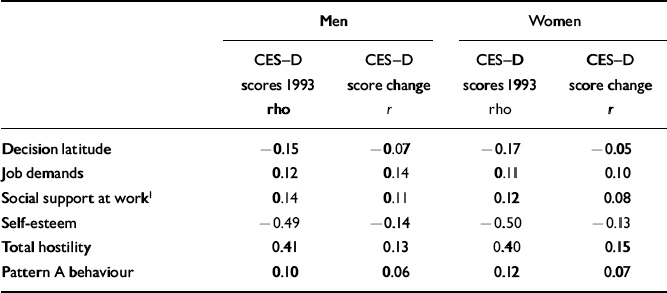
In both genders, decision latitude, social support at work and self-esteem were predictive of a decrease in the CES—D score, and job demands, total hostility and pattern A behaviour of an increase in this score (Table 3).
Correlations between Center for Epidemiologic Studies — Depression scale (CES—D) scores and psychosocial and personality traits
| Men | Women | |||
|---|---|---|---|---|
| CES—D | CES—D | CES—D | CES—D | |
| scores 1993 | score change | scores 1993 | score change | |
| rho | r | rho | r | |
| Decision latitude | -0.15 | -0.07 | -0.17 | -0.05 |
| Job demands | 0.12 | 0.14 | 0.11 | 0.10 |
| Social support at work1 | 0.14 | 0.11 | 0.12 | 0.08 |
| Self-esteem | -0.49 | -0.14 | -0.50 | -0.13 |
| Total hostility | 0.41 | 0.13 | 0.40 | 0.15 |
| Pattern A behaviour | 0.10 | 0.06 | 0.12 | 0.07 |
Table 4 shows the correlations between personality traits and psychosocial factors at work. Although statistically significant, the coefficients were low.
Correlations between personality traits and psychosocial factors at work

| Decision latitude r(P) | Job demands r(P) | Social support at work1 r (P) | |
|---|---|---|---|
| Men | |||
| Self-esteem | 0.19 (0.0001) | -0.03 (0.0005) | -0.15 (0.0001) |
| Total hostility | -0.11 (0.0002) | 0.09 (0.002) | 0.07 (0.0001) |
| Pattern A behaviour | 0.17 (0.0001) | 0.20 (0.0001) | 0.02 (0.15) |
| Women | |||
| Self-esteem | 0.22 (0.0001) | -0.005 (0.81) | -0.10 (0.0001) |
| Total hostility | -0.07 (0.0008) | 0.09 (0.0001) | 0.04 (0.03) |
| Pattern A behaviour | 0.11 (0.0001) | 0.14 (0.0001) | 0.06 (0.002) |
Multiple linear regressions
In the first step of linear regression analysis, we tested the effects of occupational characteristics on CES—D score increases, after adjustment for the baseline CES—D score, and other covariates (Table 5). For both men and women, occupational grade, stressful occupational events and the number of physical workload factors were predictive of an increase in CES—D scores. In the second step, psychosocial factors at work were added to the model. High job demands and low social support at work were associated with increase in CES—D score between 1993 and 1996 for both genders. In men, high decision latitude was associated with a decrease in CES—D scores. Finally, personality traits were added to the model. Self-esteem and total hostility were significantly predictive of a CES—D change. The predictive effects of psychosocial factors at work remained significant after the inclusion of personality traits.
Linear regression models: predictors of change in Center for Epidemiologic Studies — Depression scale (CES—D) scores

| Men (n=6145) | Women (n=2009) | |||||
|---|---|---|---|---|---|---|
| B1(s.e.) | B1(s.e.) | B1(s.e.) | B1(s.e.) | B1(s.e.) | B1(s.e.) | |
| Block 1 | ||||||
| Occupational grade Intermediate | 0.63 (0.22)** | 0.65 (0.22)** | 0.66 (0.22)** | 1.58 (0.72)* | 1.79 (0.73)** | 2.20 (0.72)** |
| Low | 0.77 (0.37)* | 0.44 (0.38) | 0.51 (0.38) | 1.86 (0.88)* | 1.86 (0.91)* | 2.35 (0.89)** |
| Stressful occupational events | 0.53 (0.17)** | 0.41 (0.17)** | 0.39 (0.16)* | 0.92 (0.40)* | 0.79 (0.40)* | 0.88 (0.40)* |
| Changing working hours | 0.36 (0.20) | 0.37 (0.20) | 0.33 (0.19) | 0.20 (0.46) | 0.33 (0.46) | 0.22 (0.45) |
| Number of physical workload factors | 0.15 (0.08)* | 0.09 (0.08) | 0.10 (0.08) | 0.71 (0.30)* | 0.60 (0.30)* | 0.61 (0.30)* |
| Block 2 | ||||||
| Decision latitude | -0.19 (0.04)*** | -0.13 (0.04)*** | -0.06 (0.08) | 0.02 (0.08) | ||
| Job demands | 0.36 (0.03)*** | 0.35 (0.03)*** | 0.28 (0.08)*** | 0.26 (0.08)*** | ||
| Social support at work2 | 0.22 (0.04)*** | 0.19 (0.04)*** | 0.20 (0.09)* | 0.19 (0.08)* | ||
| Block 3 | ||||||
| Self-esteem | -0.13 (0.01)*** | -0.17 (-0.03)*** | ||||
| Total hostility | 0.07 (0.01)*** | 0.11 (0.02)*** | ||||
| Pattern A behaviour | 0.02 (0.01) | 0.03 (0.03) | ||||
| R 2 | 22.0% | 24.3% | 26.5% | 24.4% | 25.2% | 28.2% |
| Improvement in fit3 | 0.0001 | 0.0001 | 0.0001 | 0.0001 | ||
Because of the weak but significant correlations between personality traits and the three dimensions of job stress, we performed collinearity analysis using the SAS PROC REG (option COLLIN) procedure for multivariate linear regression. This analysis did not detect collinearity problems.
Finally, we tested possible interactions between each personality trait and each job stress factor included in the study of CES—D change. In men, significant inter-actions were found between decision latitude and total hostility (B= −0.009 (s.e.=0.003), P=0.005) and between social support at work and self-esteem (B= −0.01 (s.e.=0.004), P=0.005). Among hostile men, decision latitude was associated with a larger decrease in the CES—D score than in non-hostile men. In addition, among men with low self-esteem, low social support at work was related to a larger increase in CES—D score.
DISCUSSION
Main results
The main results of this study were the association found in both genders between psychosocial factors at work (i.e. high job demands and low social support at work), and in men between low decision latitude, and an increase of the CES—D score at 3-year follow-up. These associations were independent of personality traits and other confounding factors. Personality traits (hostility and low self-esteem) were also independent predictors of an increase of depressive symptoms.
Psychosocial factors at work influence subsequent affective symptoms
Our findings are in agreement with those of previous longitudinal studies showing that job stress influences subsequent affective symptoms. Thus, in a sample of 325 male employees followed-up for 1 year, Bromet et al (Reference Bromet, Dew and Parkinson1988) found that job demands were predictive of affective disorders (an episode of depression or a generalised anxiety disorder), whereas co-worker support seemed to decrease this effect. Niedhammer et al (Reference Niedhammer, Goldberg and Leclerc1998) found that high psychological demands and low decision latitude and social support at work were associated with subsequent high depressive symptoms. Kawakami et al (Reference Kawakami, Haratani and Araki1992) found that job unsuitability and poor human relations in the workplace were risk factors for depressive symptoms 2 and 3 years after the baseline evaluation.
In our study we considered three personality traits that could affect psychosocial factors at work and/or could be associated with depressive symptoms. Subjects with low self-esteem can drift into jobs in which they have little control over decision-making. Personality traits such as hostility and pattern A behaviour can directly affect the choice of work or modify the work environment (Reference Miller, Smith and TurnerMiller et al, 1996), and could also influence perception of both depressive symptoms and psychosocial factors at work.
The strength of the association between psychosocial factors at work and increase of depressive symptoms was not altered in our study by introducing measures involving personality traits into multivariate models. Our results are in agreement with one cross-sectional study which found that cynicism and hostility did not alter the relationship between psychosocial work conditions and psychological distress (Reference Bourbonnais, Brisson and MoisanBourbonnaiset al, 1996). Kawakami et al (Reference Kawakami, Haratani and Araki1992) found a similar result when the type A behaviour pattern was included among the covariates in a longitudinal analysis of the effects of psychosocial factors at work on depressive symptoms.
In the female sample studied here, decision latitude was not associated with a CES—D score increase when other covariates, particularly occupational grade, were taken into account. However, as occupational grade strongly affected psychosocial factors at work, the true association between psychosocial factors at work and depressive outcome could have been under-estimated by adjusting for grade (Reference North, Syme and FeeneyNorth et al, 1996).
Personality traits and depressive symptoms
In our study, self-esteem and total hostility were independent predictors of an increase of depressive symptoms. Lowered self-esteem is a well-recognised symptom of depressive illness and a prognostic factor in patients with depression (Reference Andrew, Hawton and FaggAndrew et al, 1993; Reference Sherrington, Hawton and FaggSherringtonet al, 2001). However, it is unclear whether low self-esteem predicts the onset of depressive disorders in the general population. Hokanson et al (Reference Hokanson, Rubert and Welker1989) found that low self-esteem pre-disposed individuals to subsequent general psychopathology, including depression. Some community surveys showed that low self-esteem does predict future episodes of depression in conjunction with other factors, such as environmental stressors or prior psychiatric consultations (Reference Brown, Bifulco and HarrisBrown et al, 1986; Reference Ingham, Kreitman and MillerIngham et al, 1987). In a prospective study Roberts & Kendler (Reference Roberts and Kendler1999) suggest that neuroticism could explain the association between self-esteem and the risk of major depression. To our knowledge, there is no empirical literature on the role of hostility in increasing risk of depression, although studies have been published showing an association between the two dimensions (Reference Schless, Mendels and KeppermanSchless et al, 1974).
Psychosocial factors at work and personality traits
Interestingly, low self-esteem and high hostility were both associated, in our study, with high job demands, low decision latitude and low social support at work, that is with dimensions known to be stressors at work. So, our results seem in agreement with those of Williams et al (Reference Williams, Barefoot and Blumenthal1997), who found that psychosocial factors at work and dimensions of psychological distress cluster together. Our findings lead to the hypothesis that the same individuals suffering from low self-esteem and/or high hostility are perceiving high job strain conditions at work, that is the same individuals do have personality and work factors that increase the risk of developing depressive symptoms. However, causal direction between psychosocial factors at work and personality traits may not be defined on the basis of our data. Work status is known to have an impact on self-esteem (Reference Andrews and BrownAndrews & Brown, 1995) and personality traits could influence perception of job strain.
We found some interactions between personality traits and the psychosocial factors at work in increasing depressive symptoms. Similarly, Stansfeld et al (Reference Stansfeld, Fuhrer and Shipley1999) found that adjustment for hostility decreased the effect of job demands on psychiatric disorders in men.
Limitations of the study
Our study had some limitations. As our group only consisted of participants, there could have been a selection bias. In addition, subjects not included in the analyses had more depressive symptoms and more job stress factors at baseline than subjects that were included, thus suggesting a healthy worker effect, i.e. that subjects selected had fewer depressive symptoms and fewer job stress factors. This selection bias might have decreased the strength of the relationship between risk factors (job stress factors) and morbidity (CES—D score increase).
Two other potential biases could have limited our conclusions about the possible causal effects of psychosocial factors at work on the increase of the severity of depressive symptoms. First, we did not use a full two-wave panel design, as only one evaluation of psychosocial stress factors at work was available. Therefore, we were unable to test reciprocal causal relationships. Second, both exposure and outcome were measured by subjective means, i.e. self-evaluation. Subjects with depression report work conditions in a more negative manner than non-depression subjects do.
In our study, we had no objective measurement for the psychosocial work environment and we could not establish whether objective conditions had caused the perception of high stress at work. However, some studies indicate that self-reports of job stress are stronger predictors of health outcomes than objective indexes of job stress (Reference Hammar, Alfredsen and TheorellHammaret al, 1994). On the basis of the results of our study, we could hypothesise that the perception of high stress at work leads to an increase of depressive symptoms. However, it is not possible to exclude the possible presence of the following vicious cycle: being depressed handicaps coping and further impairs role functioning, thus increasing perceived job stress, which in turn increases depression.
Clinical implications
Psychosocial stress factors at work are predictive of an increase in the CES—D score. Interventions designed to reduce perception of excessive job demands and increase the degree of perceived decision latitude or social support could slow down the development of depression. In addition, our results suggest that better knowledge of the interactions between personality traits and job stress factors might be helpful for the choice of more effective interventions.
CLINICAL IMPLICATIONS
-
• Men and women who perceive their jobs as high in demands and low in social support, and men perceiving their jobs as low in decision latitude, are more at risk of developing depressive symptoms.
-
• High hostility and low self-esteem are associated with a higher risk of depressive symptoms in both genders.
-
• The effects of psychosocial factors at work on increase in depressive symptoms are independent of personality traits.
LIMITATIONS
-
• A selection bias could have resulted from subjects not included in the analysis (21% of eligible sample).
-
• Only one evaluation of psychosocial stress factors at work was available. Therefore, we were unable to test reciprocal causal relationships between depressive symptoms and psychosocial stress factors.
-
• Both exposure and outcome were measured by subjective means, i.e. self-evaluation.
Acknowledgements
Grant provided by the French National Institute for Health and Medical Research (INSERM), contract 4M606E. This collaboration was supported by the European Science Foundation's scientific programme on Social Variations in Health Expectancy in Europe. The authors thank the Medical Committee of EDF—GDF, all the participating workers of the GAZEL cohort and all members of the GAZEL Study team. We also thank Mathilde Dreyfus for English revisions.




eLetters
No eLetters have been published for this article.