





Impact statements
Emerging adults (EAs, aged 18–29 years) face high vulnerability to suicidal ideation and attempts due to the developmental instability, identity exploration and multiple role transitions that characterize this stage of life. Despite recent increases in suicide mortality in the United States and globally, they remain overlooked in many suicide prevention strategies, often grouped with adolescents or older adults. This study addresses this gap by examining suicide literacy (SL) among medical students in Puerto Rico. Most medical students fall within the EA age range, making them a particularly relevant group for examining SL during this development stage. These individuals experience high academic pressure while preparing to become future health providers. While participants demonstrated strong knowledge of treatment and prevention, they struggled to recognize signs and symptoms of suicide, which are essential for early identification and timely intervention. Participants who reported knowing someone with suicide ideation or attempts had higher SL scores, suggesting the impact of lived experience. Considering Puerto Rico’s structural vulnerabilities and cultural stigma surrounding mental health, these findings highlight the relevance of exploring culturally grounded, low-intensity interventions to improve SL and reduce risk in EA across underserved contexts.
Introduction
Suicide remains a critical global public health concern. Although global suicide mortality has declined overall in the past three decades, recent evidence indicates concerning increases in specific regions, including the United States, and among vulnerable subgroups such as youth, women and socioeconomically minoritized groups (Martínez-Alés et al., Reference Martínez-Alés, Jiang, Keyes and Gradus2022, Reference Martínez-Alés, Lopez-Castroman, Barrigón and Baca-Garcia2024). Suicide is currently one of the leading causes of death among the 15- to 29-year-old population worldwide (WHO, 2021). Medical students have been identified as a group at heightened risk for suicidal behavior due to high academic demands, stigma around help-seeking and limited coping resources (Varshney et al., Reference Varshney, Patel and Panhwar2024).
In 2023, there were 226 documented suicide deaths in PR, with 16.37% of those occurring among emerging adults (EAs; López-Rivera et al., Reference López-Rivera, Muñoz-Berastaín, Figueroa-Rodriguez and Coss-Guzmán2024). Studies further evidence the increased risk for suicide among EAs, particularly among the student population. For example, some studies suggest that 1 in 10 university students between 17 and 22 years old reported having attempted suicide (Vélez-Pérez et al., Reference Vélez-Pérez, Maldonado-Santiago and Rivera-Lugo2017). Similarly, a study in the United States found that 21% out of 413 graduate students were at a high risk for suicide (Bruns and Letcher, Reference Bruns and Letcher2018). International data also reflected this trend: a recent meta-analysis of university students found that 14.1% reported having seriously considered suicide in the past year, and 3.1% reported a suicide attempt (SA) (Crispim et al., Reference Crispim, Santos, Frazão, Frazão, Albuquerque and Perrelli2021). In PR, a study demonstrated that out of 223 adolescents (ages 11–19 years), 9% were at risk of suicide ideation (SI) (Duarté-Vélez et al., Reference Duarté-Vélez, Jones and Spirito2018).
Emerging adulthood is a critical stage of the life course that ranges from 18 to 29 years old and is characterized by distinctive biological, social and psychological features. The recently developed conceptual foundation of EA is based on five key dimensions: (1) a feeling of being “in between,” (2) identity exploration, (3) self-focus, (4) an age of possibilities and (5) instability (Arnett et al., Reference Arnett, Žukauskienė and Sugimura2014; Murray and Arnett, Reference Murray and Arnett2018). Due in part to its recent development, this stage is often overlooked in policy, programs and research efforts, where EAs are typically grouped with adolescents or adults (Bonnie et al., Reference Bonnie, Stroud and Breiner2015). Considering this, recent research has highlighted the importance of increasing efforts to better understand the psychological needs of people during this developmental stage. For instance, Reed-Fitzke and Lucier-Greer (Reference Reed-Fitzke and Lucier-Greer2020) found that varying levels of psychological need satisfaction among EAs in college are associated with significant differences in well-being, underscoring the need for further research in this area.
What differentiates this period from other stages of life is the simultaneous occurrence of multiple role transitions in areas such as education, employment, romantic relationships and residential status. Recent research shows that a higher frequency of transitions across life domains is significantly associated with increased psychological distress in EAs, emphasizing this stage as a uniquely sensitive window for mental health risks (Lanctôt and Poulin, Reference Lanctôt and Poulin2024). This vulnerability is reflected in concerning rates of mental health conditions, including SA and SI, particularly among those lacking adequate coping mechanisms. (Pereira et al., Reference Pereira, Willhelm, Koller and Almeida2018). Given the increased risk and high rates of SI and SA among EAs, including those in PR, there is a particular need for a comprehensive understanding of key protective factors that could potentially improve SA/SI intervention and prevention efforts. These developmental conditions may also shape help-seeking patterns among EAs, as uncertainty, role instability and identity exploration can influence when, how and from whom support is sought during periods of psychological distress.
Suicide literacy (SL) refers to the knowledge individuals possess about suicide, including its causes, warning signs, risk factors and available resources for prevention (Batterham et al., Reference Batterham, Han, Calear, Anderson and Christensen2019). Research shows that misconceptions about the risk factors, treatments and symptoms of suicidal behavior can increase the likelihood that someone will experience SA/SI (Sharaf et al., Reference Sharaf, Ossman and Lachine2012). Recent research has shown that high SL can be a protective factor for suicide, leading to a help-seeking process (Žilinskas and Lesinskienė, Reference Žilinskas and Lesinskienė2023). Supporting this, a recent study with individuals who had attempted suicide found that SL was the strongest predictor of help-seeking, even beyond factors such as social support and attitudes toward mental health services (Jafari et al., Reference Jafari, Tehrani, Naddafi, Nejatian and Talebi2024). However, some additional empirical literature across the globe seems to suggest that EAs have moderate SL (Al-Shannaq and Aldalaykeh, Reference Al-Shannaq and Aldalaykeh2023; Jahan et al., Reference Jahan, Sharif and Hasan2023), particularly regarding specific aspects of suicide prevention (Chan et al., Reference Chan, Batterham, Christensen and Galletly2014), suicide risk factors and signs (Ludwig et al., Reference Ludwig, Dreier, Liebherz, Härter and Knesebeck2021). While previous research in PR has explored factors such as adverse childhood experiences, gender differences, psychiatric disorders and socio-environmental vulnerabilities contributing to suicidal behavior among EAs, none have specifically focused on SL among EAs (Rivera, Reference Rivera2005; Jones et al., Reference Jones, Ramírez, Davies, Canino and Goodwin2008; Duarté-Vélez et al., Reference Duarté-Vélez, Jones and Spirito2018; Ortin et al., Reference Ortin, Elkington, Eisenberg, Miranda, Canino, Bird and Duarte2019; Polanco-Roman et al., Reference Polanco-Roman, Alvarez, Corbeil, Scorza, Wall, Gould, Alegría, Bird, Canino and Duarte2021).
This study is informed by a developmental perspective on EA while also recognizing that medical students are a unique group, as they are simultaneously undergoing a complex, multifactorial process of professional identity formation. Professional identity development refers to the process through which individuals come to see themselves as members of a profession, shaping values, knowledge, behaviors and responses to stress (Sarraf-Yazdi et al., Reference Sarraf-Yazdi, Goh and Krishna2024). In medicine, aspirational professional values, such as altruism, compassion, empathy, lifelong learning and communication skills, are some of the ideals learned by students in order to become a “good physician” (Farooq et al., Reference Farooq, Hashim, Alhosani, Alalawi, Alalawi, Qandilo, Hafeez and Cevik2025). For EA medical students, these parallel developmental and professional transitions in which nonclinical experiences and clinical are being integrated into their sense of self can pose a unique challenge, including the way they understand and respond to mental health issues, help-seeking and suicide-related knowledge (Monti et al., Reference Monti, Carrard, Bourquin and Berney2025). However, although important to understand the focus on our study population, the present study focuses on a context-specific descriptive examination of SL, not a formal testing of a theoretical model.
Hence, this study aims to address this gap by assessing SL among EAs who were enrolled in a medical school in PR. The second aim of this study is to examine the association between SL and knowing someone with a lived experience of SI/SA. Our primary hypothesis is that our sample will have moderate to high levels of SL. Our secondary hypothesis is that EAs who report knowing someone with a lived experience of SI/SA will have higher SL scores compared to those who do not report knowing someone with such experiences. The inclusion of these two variables is supported by previous research. For example, interpersonal contact with individuals who have experienced SI/SA has been associated with increased suicide-related knowledge and awareness (Krysinska et al., Reference Krysinska, Ozols, Ross, Andriessen, Banfield, McGrath, Edwards, Hawgood, Kõlves, Ross and Pirkis2023). Additionally, gender was included as a covariate given prior research showing that differences exist in SL, with women often demonstrating higher levels of suicide-related knowledge than men (Ludwig et al., Reference Ludwig, Dreier, Liebherz, Härter and Knesebeck2021). Adjusting for gender allows us to account for this potential confounding effect when examining the association between knowing someone with SI/SA and SL.
Methods
Design and procedures
To achieve the objectives of this study, we conducted a cross-sectional secondary analysis of a larger intervention on mental health stigma in Puerto Rico. The parent study focused on third -year medical students as this stage of training marks the initiation of clinical rotations, which allowed for the examination of behavioral clinical skills, the parent study’s main outcome (Nagy et al., Reference Nagy, Rivera-Segarra and Cabassa2025).
Recruitment occurred between May 2022 and May 2023, at the beginning of their clinical training scheduled course sessions. After receiving ethical approval from the Institutional Review Board (2006039733), all students transitioning into their third year of training at a medical school in Puerto Rico during the 2021–2022 and 2022–2023 academic years were invited to participate by members of the research team. Across these two academic years, 214 students were invited. The research team conducted an in-person orientation session to describe the study procedures and address questions, after which interested students provided informed consent.
A total of 107 students accepted, consented and completed the pre-intervention questionnaires as part of the parent study. Each participant then completed a series of pre-intervention questionnaires, including a sociodemographic questionnaire and the Literacy of Suicide Scale (LOSS), before engaging in the parent study intervention. All measures included in the present analysis were collected before participants’ exposure to the parent study intervention.
Materials
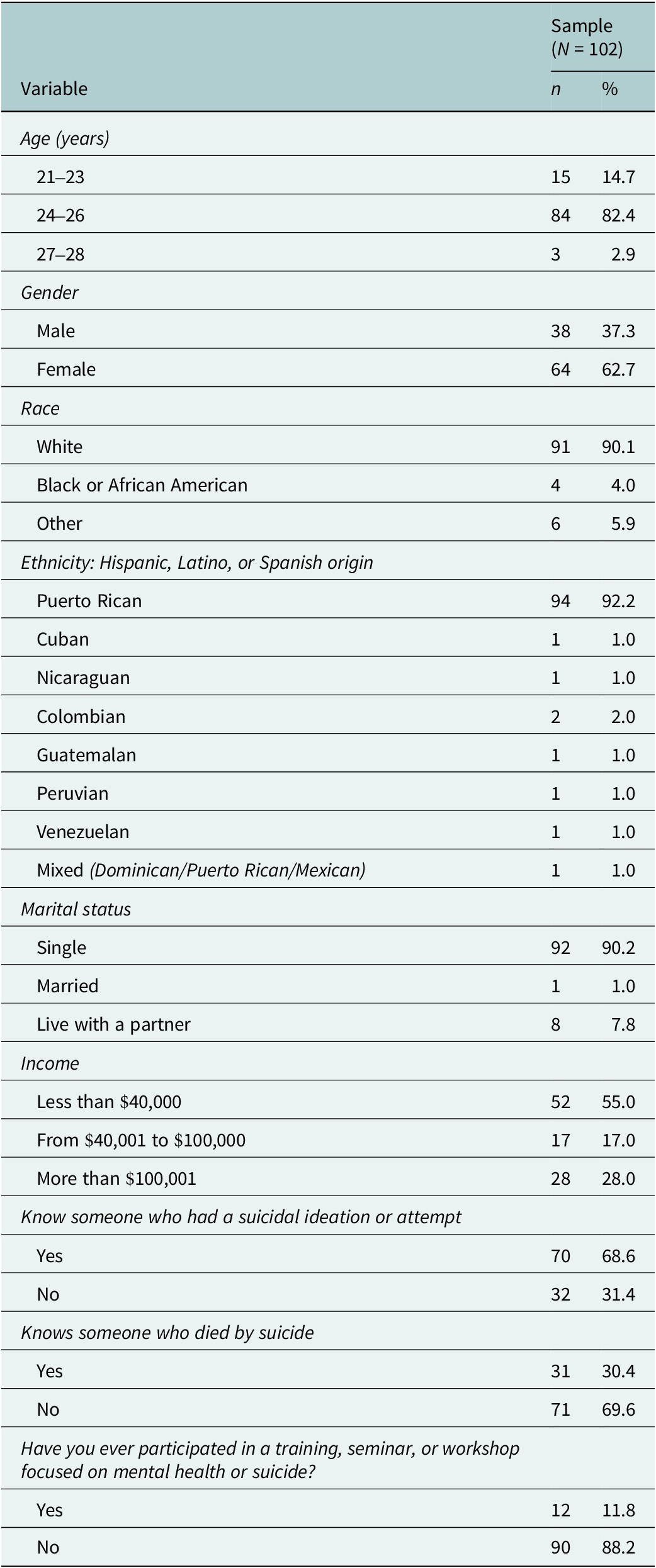
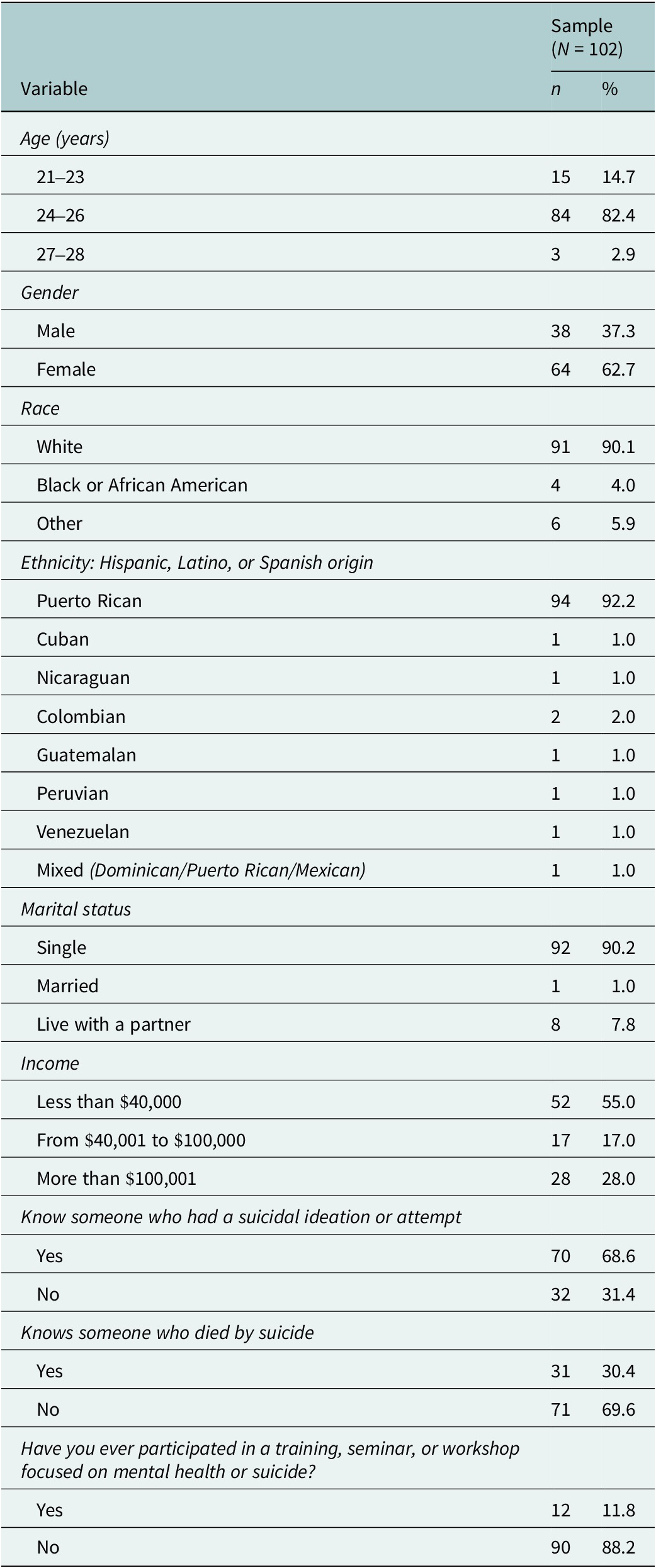
Sociodemographic questionnaire: This questionnaire, developed by the research team, collected information about participants’ age, gender, race, educational background, income and other relevant demographic factors (Table 1). Knowing someone with suicidal ideation or suicide attempt (SI/SA) was assessed using a single self-report item included in the sociodemographic questionnaire. Participants were asked, “Do you know someone who had suicidal ideation or a suicide attempt?” Response options were dichotomous (Yes/No). No specific definition or timeframe was provided.
Sociodemographic characteristics of participants
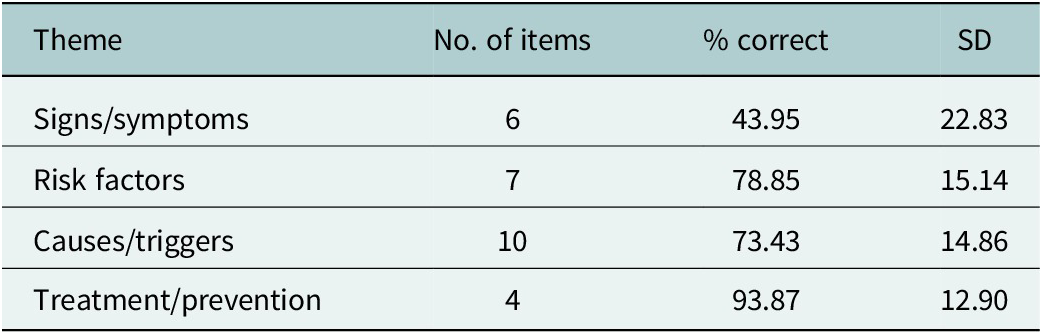
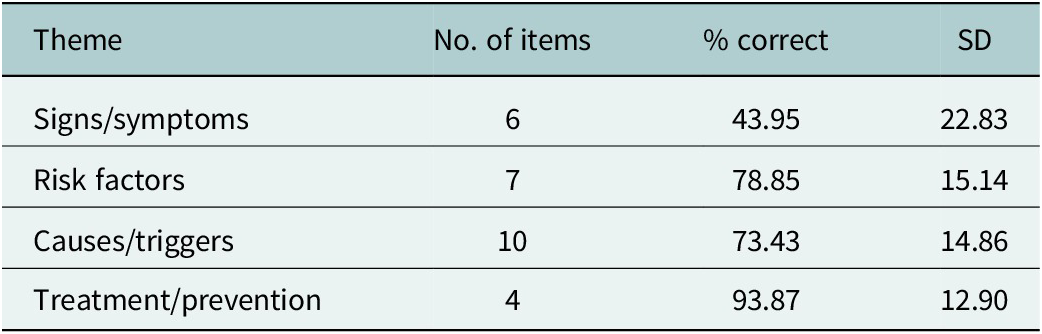
Literacy of Suicide Scale (LOSS): This 27-item measure examines knowledge about suicide (Chan et al., Reference Chan, Batterham, Christensen and Galletly2014). Following Jorm et al. (Reference Jorm, Korten, Jacomb, Christensen, Rodgers and Pollitt1997), the scale includes four domains of (a) causes or nature of suicide (10 items), (b) risk factors for suicidal behavior (7 items), (c) signs and symptoms (6 items) and (d) treatment and prevention (4 items). Each item is responded to three options to answer (true, false and I do not know). Correct responses are given a score of 1, while wrong and “I do not know” answers get a score of 0. Higher LOSS scores indicate higher suicide knowledge. The LOSS Scale has been translated and used in other countries, including PR, where it showed good reliability coefficients (α = 0.83; Calear et al., Reference Calear, Batterham, Trias and Christensen2022; Rivera-Segarra et al., Reference Rivera-Segarra, Rosario-Hernández, Carminelli-Corretjer, Tollinchi-Natali and Polanco-Frontera2018). In the present study, the LOSS demonstrated acceptable internal consistency (Cronbach’s α = .702).
Participants
This study sample comprises de-identified data of participants drawn from the larger study, which focused on medical students in their third year of training. Inclusion criteria for the present secondary analysis were (1) being over 21 years of age and (2) being medical students enrolled in the parent study. Of the 107 participants who completed the parent study’s pre-intervention measures, 102 met the age criterion and were included in the present analysis; five participants were excluded due to age outside the specified range.
There were no other exclusion criteria, and no missing data in this study. The final sample for this study consisted of 102 participants. We focused on medical students given their unique and simultaneous position as a population of interest (EAs who are students) and their potential to interact with other EAs as part of their routine professional practices.
Data analysis
Data were analyzed using SPSS v. 29.0. Univariate analyses were conducted to describe participants’ sociodemographic characteristics and to examine the LOSS measure responses. The distribution of residuals was examined visually using histograms and normal Q–Q plots to assess the normality assumptions. Multiple linear regression was conducted to evaluate the relationship between the predictor – knowing someone with SI/SA (coded as 0 = No, 1 = Yes) – and the outcome variable, suicide literacy, while adjusting for gender (coded as 0 = Male, 1 = Female), given its previously established influence on SL. Assumptions for multiple linear regression were met. Visual inspection of histograms and normal P–P plots suggested normally distributed residuals. Scatterplots of standardized residuals indicated homoscedasticity. No multicollinearity was present (Tolerance = 1.00, VIF = 1.00), and standardized residuals fell within ±3.0 with Cook’s distance values < 1.0, indicating no influential cases. The Durbin–Watson statistic (2.10) indicated independence of errors. The alpha level for statistical significance was set to 0.05. No missing data were present in the variables included in the analysis.
Results
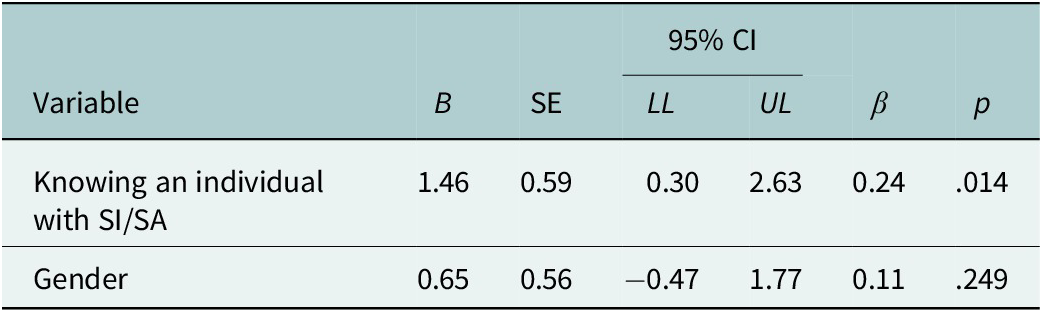
Findings indicated that most of the 102 EA participants were female (62.7%), aged between 24 and 26 years (82.4%), White (90.1%), Puerto Rican (92.2%) and single (90.2%) (Table 1). Although all participants were male and female, they were asked about other genders, but none identified with one. Most participants had an income lower than $40,000 (55.0%). Regarding familiarity with SI/SA, 68.6% reported knowing someone who had experienced it. Notably, when asked whether they had attended a training, seminar or workshop on mental health issues or SI/SA, the majority (88.2%) reported that they had not. The LOSS results are presented in Table 2. The overall LOSS score was 19.25 (71.31%). While participants excelled in treatment/prevention (93.22%), they scored lower in recognizing signs and symptoms (43.46%). Items within the signs and symptoms domain assess knowledge of common suicide warning signs, the dynamic nature of suicide risk and common myths about suicidal behavior. A multiple linear regression analysis was conducted to examine the relationship between knowing someone who had a SI/SA (known suicide) and SL score (LOSS total score) while adjusting for gender (Table 3). The analysis revealed that knowing someone with SI/SA was a significant predictor of higher SL, B = 1.46, 95% CI: [0.30, 2.63], p = 0.014. Individuals who reported knowing someone with SI/SA scored 1.46 units higher on the LOSS compared to those who did not. The overall regression model explained a modest proportion of the variance in SL scores (R 2 = 0.071; adjusted R 2 = 0.052). Gender did not have a significant influence on the LOSS total score, B = 0.65, 95% CI: [−0.46, 1.77], p = 0.13.
Performance on different themes of the literacy of suicide (combined cohorts)
Linear regression analysis predicting suicide literacy, adjusted by gender
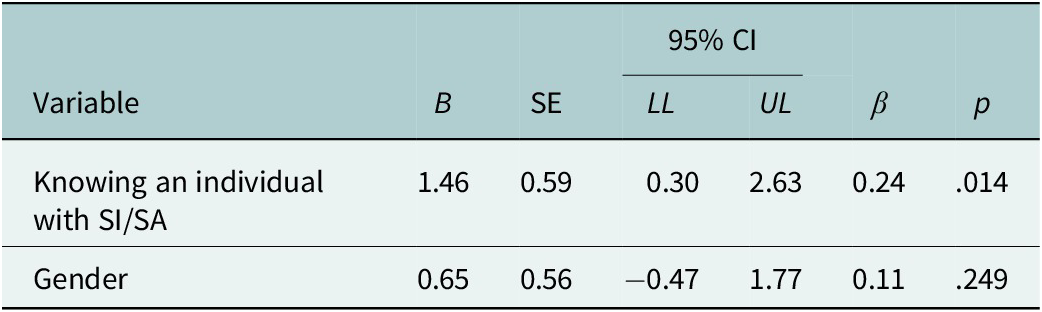
Note: SI = suicidal ideation, SA = suicide attempt. Model R-squared (R 2) = .071, Adjusted R-squared (Adj. R 2) = .052. Model p-value = .026.
Discussion
This study aimed to examine suicide literacy (SL) among emerging adults (EAs) enrolled in a medical school in Puerto Rico (PR). Our findings supported both study hypotheses. First, participants demonstrated a distinct pattern of SL across domains, characterized by higher relative performance in treatment and prevention and lower performance in recognizing signs and symptoms. Second, participants who reported knowing someone who had a SI/SA scored higher in SL than those who did not.
This discrepancy highlights an important distinction in understanding SL. While being aware of treatments and preventive resources for suicide is an essential part of SL, this does not necessarily mean that individuals can effectively recognize when someone, including themselves, is experiencing suicidal distress. Recognizing signs and symptoms, such as behavioral changes, feelings of hopelessness or expressions of suicidal intent, is a necessary first step for timely intervention. Without this awareness, knowledge of available treatments may have a limited real-world impact, as individuals may fail to recognize situations that pose a risk and require action. This distinction is clinically relevant for medical students, who may encounter patients in distress during training and need to recognize suicide warning signs to initiate a timely assessment or referral. This is essential for all EAs, but even more important for medical students who are both EAs themselves and healthcare providers.
These findings are consistent with previous international research. For instance, Chan et al. (Reference Chan, Batterham, Christensen and Galletly2014) discovered that, although Australian medical students had a relatively high level of knowledge about treatment and prevention, significant gaps remained in their ability to recognize the signs and symptoms of suicide. Similar results have been reported using the LOSS in other populations. Ludwig et al. (Reference Ludwig, Dreier, Liebherz, Härter and Knesebeck2021), for instance, found that gaps in recognizing signs and symptoms were also present among the general population in Germany, despite relatively high awareness of treatment options. Likewise, Al-Shannaq and Aldalaykeh (Reference Al-Shannaq and Aldalaykeh2023) found that Arab youth had limited knowledge of warning signs. These studies highlight the importance of targeted educational initiatives that not only raise awareness of treatment options but also enhance the capacity to identify early indications of suicide risk.
One possible explanation for the higher knowledge on treatment and prevention for SI/SA observed in our sample may be related to the fact that participants were graduate medical students. Research has shown that students enrolled in health-related disciplines, and particularly those studying medicine tend to demonstrate higher levels of mental health knowledge compared to students in other fields (Mahboub et al., Reference Mahboub, Aleyadhi, Aldrees and Almuhanna2020; Zahid Iqbal et al., Reference Zahid Iqbal, Rathi, Prajapati, Zi Qing, Pheng, Wei Kee, Bahari, Rajan, Al-Saikhan and Iqbal2021). Although formal mental health training remains limited in many medical curricula (Nebhinani et al., Reference Nebhinani, Kuppili and Paul2020; Wan et al., Reference Wan, Goh, Teo, Loh, Yak, Lee, Ravindran, Abdul Rahman, Chiam, Ong, Somasundaram, Lim, Phua and Krishna2024), the increased exposure to health-related content and professional discussions may help medical students develop greater familiarity with mental health topics than individuals who are not enrolled in medical school or are pursuing studies outside health-related fields.
On the other hand, the low score in recognition of symptoms could have a similar explanation. For example, literature has shown that medical schools have limited training around mental health (Nebhinani et al., Reference Nebhinani, Kuppili and Paul2020). Additionally, the medical curriculum also presents challenges in the integration of mental health issues, which may result in disparities among medical students in their ability to recognize warning signs of mental health conditions.
Furthermore, although the LOSS scale has been validated, it may not fully capture the cultural nuances around SI/SA that are specific to the Puerto Rican society. For example, prior research suggests that familismo and fatalismo may influence the interpretation of mental health symptoms by avoiding talking about suicide or even actively ignoring common warning signs (Rosales and Calvo, Reference Rosales and Calvo2017; Aceves and Piña-Watson, Reference Aceves and Piña-Watson2021). Thus, there is a need for future studies that examine how sociocultural understandings of SI/SA impact SL, particularly among the EA population.
Another important finding from our analysis was the observed association between knowing someone with SI/SA and higher SL. Given the modest explanatory power of the regression model and the dichotomous nature of the variable, this association should be interpreted cautiously. This finding may reflect preliminary evidence that interpersonal exposure to SI/SA is related to greater SL. From a conceptual perspective, this pattern is consistent with Allport’s (Reference Allport1954) contact hypothesis, which suggests that personal contact can foster empathy and enhance understanding. Extending this principle to formal educational contexts, previous research suggests that involvement of people with lived experience (PWLE) in medical school programs may be associated with improvements in SL and reduced stigma. (Ridley et al., Reference Ridley, Martin and Mahboub2017; Happell et al., Reference Happell, Waks, Horgan, Greaney, Manning, Goodwin, Bocking, Scholz, Hals, Granerud, Doody, Platania-Phung, Griffin, Russell, MacGabhann, Pulli, Vatula, Browne, van der Vaart, Allon and Biering2020; Scanlan et al., Reference Scanlan, Berry, Wells and Somerville2022). However, future studies using more detailed measures of contact and more comprehensive models are needed to clarify the nature and strength of this relationship.
A final important observation from our study is that 88% of participants reported not attending any mental health or suicide prevention training or workshops. This finding aligns with previous research, which has documented significant gaps in mental health and suicide prevention training within medical education (Nebhinani et al., Reference Nebhinani, Kuppili and Paul2020).
Limitations and future directions
While this study provides important insights, several limitations must be acknowledged. First, the study sample is limited to medical students, who may have a different baseline knowledge of mental health than other EAs. This limits the generalizability of the findings to the broader population of Puerto Rican EAs. Future research should expand the sample to include nonmedical students and other EA groups in PR.
Second, the LOSS scale was not fully culturally adapted for use with Puerto Rican EAs. Although the scale has been translated into Spanish, it may not account for cultural elements such as familismo, fatalismo and other aspects, which could affect participants’ understanding and responses (Cahill et al., Reference Cahill, Updegraff, Causadias and Korous2021). Future studies should move beyond translation by integrating such constructs into revised items or subscales and by adapting and validating the LOSS for use with Puerto Rican and other Latinx populations to ensure that it accurately reflects their cultural context.
Third, the LOSS does not include established cut-off points to differentiate levels of SL. Without these thresholds, it is difficult to determine the practical significance of participants’ scores beyond relative comparisons. Future research should focus on developing and validating cutoff scores, which would allow for clearer interpretation of results and stronger implications for practice.
Another limitation is that the study does not examine the type of contact participants had with individuals who experienced SI/SA, and it was only assessed using a dichotomous item. The nature, closeness and depth of these interactions could significantly influence SL and should be considered in future studies. In addition, the study did not assess where participants acquired their suicide knowledge, as this was outside the study’s scope. Moreover, because all measures relied on self-report, responses may have been influenced by social desirability bias, particularly in a medical training context where stigma surrounding mental health and suicide remains prevalent. Future research should explore the role of different knowledge sources in shaping SL and incorporate more detailed measures to assess response bias.
Finally, the modest proportion of variance explained by the regression model highlights the multifactorial nature of SL. The possibility of omitted variable bias should be acknowledged. Future studies should seek to expand predictive models by incorporating additional relevant factors, such as prior mental health or suicide-related training, curricular content, stigma-related attitudes, personal mental health history and more detailed characteristics of interpersonal contact with individuals who have experienced suicidal ideation or attempts. Including these variables may provide a more comprehensive understanding of the determinants of SL among EAs medical students. In addition, evaluating whether structured educational approaches, such as workshops or panels incorporating lived experience, have measurable effects on suicide literacy overall and across specific domains of the LOSS represents an important direction for future research.
Conclusion
This study found that SL among EAs medical students in PR is characterized by an uneven profile, with higher knowledge in treatment and prevention, and notable gaps in recognizing signs and symptoms of suicide. In addition, a modest association was observed between knowing someone who had SI/SA and higher SL than those who did not. Given that EA medical students represent both a vulnerable population and future frontline healthcare providers, strengthening SL in this group may have implications not only for their well-being but also for their capacity to identify and respond to suicide risk in others. Future research should continue to examine how SL develops across training stages and how targeted educational approaches may address specific areas of lower performance.
Open peer review
To view the open peer review materials for this article, please visit http://doi.org/10.1017/gmh.2026.10180.
Data availability statement
The data that support the findings of this study are available from the corresponding author, FBA, upon reasonable request.
Acknowledgments
The authors would like to thank the participating medical students for their time and willingness to contribute to this study. Special thanks go to the research assistants involved in survey administration and data management. The authors are grateful to the broader research team for the parent randomized control trial for their contributions to the study design and implementation. The authors also thank Joshua Custodio for early feedback on this study. Finally, the authors are grateful to Dr. Juan Carlos Ramos-Ayes, PsyD, for his thoughtful comments during the early development of this work.
Author contribution
Fabio Barreto-Ayes: Research conception and design, methodology, collection of data, analysis of data, interpretation of data and writing the manuscript. Estefany Velez-Baez: Review and editing of the manuscript. Erik Velez-Perez: Methodology, analysis of data, interpretation of data, review and editing of the manuscript. Elina Aguilar-Jiménez: Collection of data, review and editing of the manuscript. Mario Bermonti-Pérez: Analysis of data, interpretation of data, review and editing of the manuscript. Norka Polanco-Frontera: Review and editing of the manuscript. Eliut Rivera-Segarra: Research conception and design, methodology, project administration, funding acquisition, review and editing of the manuscript. All authors read and approved the final manuscript.
Financial support
This publication and Dr. Rivera-Segarra were supported by the United States National Institute on Minority Health and Health Disparities (U54MD007579). The parent study was supported by the United States National Institute of Mental Health under award 1R34MH117942. The content is solely the responsibility of the authors and does not necessarily represent the official views of the US National Institutes of Health.
Competing interests
Dr. Rivera-Segarra is an Editorial Board Member of Cambridge Prism: Global Mental Health. The authors declare there are no other conflicts of interest.
Ethical statement
This study was submitted to the Institutional Review Board (IRB) of Ponce Health Sciences University in Ponce, Puerto Rico, and received ethical approval with project number 2006039733. The parent study obtained informed consent from all participants before their involvement, and participation was voluntary. For the present secondary analysis, only fully de-identified data were used. In the parent study, participants were assigned unique identification codes to ensure anonymity, and identifiable information was stored separately from study data on password-protected computers accessible only to authorized research personnel.

 Open access


Comments
August 20, 2025
Editor-in-Chief
Cambridge Prisms: Global Mental Health
Cambridge University Press
Dear Editor,
Please find enclosed our manuscript titled “Examining suicide literacy among emerging adults from a medical school in Puerto Rico” for consideration for publication in your upcoming special issue, Self -harm and Suicide: A Global Priority, in Cambridge Prisms: Global Mental Health. The manuscript is 25 pages in length and includes three tables. We respectfully request that it be considered for peer review.
The data presented in this manuscript have not been published previously, and are not under consideration elsewhere. We believe this manuscript is an excellent fit for Cambridge Prisms: Global Mental Health, as it addresses mental health literacy and suicide prevention within the underrepresented population of emerging adults in Puerto Rico. Our findings provide insight into how social and cultural factors shape suicide literacy, which can inform the development of culturally responsive suicide prevention strategies in low- and middle-income settings.
All ethical standards of the American Psychological Association were followed in the conduct of this study, and the research received approval from the Institutional Review Board of Ponce Health Sciences University. My coauthors and I declare that there are no conflicts of interest related to this submission.
I, Fabio Barreto-Ayes, will be serving as the corresponding author. All coauthors listed have reviewed and approved the manuscript and agree with the order of authorship. I will serve as the primary contact with the editorial office and will ensure that all authors remain informed throughout the review and revision process. If the manuscript is accepted, we understand that all coauthors will be required to sign a certification of authorship form.
Thank you for considering our submission. We look forward to the opportunity to contribute to the mission of your journal by advancing understanding of suicide-related knowledge in underrepresented cultural contexts.
Sincerely,
Fabio J. Barreto-Ayes
PhD Clinical Psychology Student
School of Behavioral and Brain Sciences,
Ponce Health Sciences University
fbarreto22@stu.psm.edu