





Introduction
The age distribution of the population is changing and the number of older adults is growing (Statistics Sweden SC, 2009; World Health Organization, 2015). Older adults generally have a greater need for health care, so their increasing numbers present challenges for health care systems (World Health Organization, 2015), including primary health care, not least with regard to nutritional care. Because nutritional needs change with age and illness, nutritional treatment is an important part of nursing care and medical treatment. Health professionals responsible for nutritional care for older adults must therefore have sufficient understanding of nutritional problems to provide appropriate support (Suominen et al., Reference Suominen, Kivisto and Pitkala2007a).
Undernutrition is a severe condition that can lead to reduced functional capacity, a higher risk for falls (Meijers et al., Reference Meijers, Halfens, Neyens, Luiking, Verlaan and Schols2012a), a weaker immune system (Isabel et al., Reference Isabel, Correia and Waitzberg2003), lower quality of life (Keller et al., Reference Keller, Østbye and Goy2004; Johansson et al., Reference Johansson, Sidenvall, Malmberg and Christensson2009), increased morbidity (Isabel et al., Reference Isabel, Correia and Waitzberg2003), and longer hospital stays (Isabel et al., Reference Isabel, Correia and Waitzberg2003, Vanderwee et al., Reference Vanderwee, Clays, Bocquaert, Verhaeghe, Lardennois, Gobert and Defloor2011). It is also costly for health care systems and societies to manage the consequences of undernutrition and risk for undernutrition (Amaral et al., Reference Amaral, Matos, Tavares, Subtil, Martins, Nazaré and Sousa Pereira2007; Russell, Reference Russell2007; Meijers et al., Reference Meijers, Halfens, Wilson and Schols2012b). Studies have identified undernutrition as a problem in older adults in hospital wards (Vanderwee et al., Reference Vanderwee, Clays, Bocquaert, Verhaeghe, Lardennois, Gobert and Defloor2011) and long-term care hospitals (Suominen et al., Reference Suominen, Sandelin, Soini and Pitkala2007b) as well as nursing homes and home care (Keller et al., Reference Keller, Østbye and Goy2004; Gaskill et al., Reference Gaskill, Isenring, Black, Hassall and Bauer2009). Studies from the Nordic countries have also shown that approximately half of all older adults with primary home health care or community home care services are at risk of undernutrition (Saletti et al., Reference Saletti, Johansson and Cederholm1999; Soini et al., Reference Soini, Routasalo and Lagstrom2004; Saletti et al., Reference Saletti, Johansson, Yifter-Lindgren, Wissing, Osterberg and Cederholm2005). Similar results have been found in Australian nursing homes (Gaskill et al., Reference Gaskill, Isenring, Black, Hassall and Bauer2009).
Patients’ nutritional problems frequently go unrecognized by health care personnel (Suominen et al., Reference Suominen, Sandelin, Soini and Pitkala2007b; World Health Organization, 2015), although more is known about the situation in hospitals than in primary health care. One reason patients’ nutritional problems frequently go unrecognized is that health care personnel often lacks knowledge about nutritional care (Mowe et al., Reference Mowe, Bosaeus, Rasmussen, Kondrup, Unosson, Rothenberg and Irtun2008; Kennelly et al., Reference Kennelly, Kennedy, Corish, Flanagan-Rughoobur, Glennon-Slattery and Sugrue2011) and about guidelines (Mowe et al., Reference Mowe, Bosaeus, Rasmussen, Kondrup, Unosson, Rothenberg and Irtun2008) and relevant methods of assessing nutritional status (Mowe et al., Reference Mowe, Bosaeus, Rasmussen, Kondrup, Unosson, Rothenberg and Irtun2008). Studies, mostly from hospital wards, indicate that the use of nutritional assessment tools is limited and that there are no routines for measuring weight or calculating body mass index (BMI) (Alfengård and Klevsgård, Reference Alfengård and Klevsgård2005; Mowe et al., Reference Mowe, Bosaeus, Rasmussen, Kondrup, Unosson, Rothenberg and Irtun2008; Persenius et al., Reference Persenius, Hall-Lord, Bååth and Larsson2008; Vanderwee et al., Reference Vanderwee, Clays, Bocquaert, Verhaeghe, Lardennois, Gobert and Defloor2011; Schönherr et al., Reference Schönherr, Halfens, Meijers, Schols and Lohrmann2012). A large Scandinavian survey has shown that attitudes and routines for nutritional screening differ among nurses in hospital wards. Although a majority stated that nutritional assessment ought to be routine, barely one-third actually carried out such assessments (Mowe et al., Reference Mowe, Bosaeus, Rasmussen, Kondrup, Unosson and Irtun2006; Holst et al., Reference Holst, Rasmussen and Unosson2009). Moreover, a number of studies show that in Sweden, primary care nurses’ documentation in patient records is scarce (Tornkvist et al., Reference Tornkvist, Gardulf and Strender2003; Tornvall et al., Reference Tornvall, Wilhelmsson and Wahren2004; Persenius et al., Reference Persenius, Hall-Lord, Bååth and Larsson2008).
In Sweden, the responsibility for identifying patients who are undernourished lies with all health care professionals, including district nurses (DNs). DNs are registered nurses who have completed a program in specialist nursing in primary health care (currently a one-year master’s degree). In Stockholm County, they most commonly work at primary health care centers, where their tasks can include home health care. In their work, DNs often meet older adults, and these meetings give DNs the opportunity to identify nutritional problems early. However, little is known about DNs’ knowledge about nutritional care or how they care for patients with nutritional problems, such as how they work and the difficulties they encounter. Previous research does indicate that DNs mainly develop their knowledge of nutrition through work experience rather than via their nursing studies, as one study found that nurses with long work experience (>10 years) knew more about nutrition than those who had recently completed their education (Schaller and James, Reference Schaller and James2005). Nevertheless, a majority of nurses in outpatient care (85%) felt they needed additional nutritional education, regardless of their level of experience (Alfengård and Klevsgård, Reference Alfengård and Klevsgård2005).
A number of initiatives have been undertaken at the European level to address the problem of undernutrition in older adults. The Council of Europe states that it is crucial to implement methods to identify, treat, and support undernourished patients and to follow up the treatment in patient records (Arvanitakis et al., Reference Arvanitakis, Beck, Coppens, De Man, Elia, Hebuterne, Henry, Kohl, Lesourd, Lochs, Pepersack, Pichard, Planas, Schindler, Schols, Sobotka and Van Gossum2008). The guidelines of the European Society for Clinical Nutrition and Metabolism (ESPEN) highlight the need for all patients with undernutrition (or at risk for it) to have a nutritional care plan and to be treated by a multiprofessional team (Howard et al., Reference Howard, Jonkers-Schuitema, Furniss, Kyle, Muehlebach, Ödlund-Olin, Page and Wheatley2006). To help achieve these best practices, both ESPEN (Volkert et al., Reference Volkert, Berner, Berry, Cederholm, Coti Bertrand, Milne, Palmblad, Schneider, Sobotka, Stanga, Lenzen-Grossimlinghaus, Krys, Pirlich, Herbst, Schütz, Schröer, Weinrebe, Ockenga and Lochs2006) and the American Society for Parenteral and Enteral Nutrition (Mueller et al., Reference Mueller, Compher and Ellen2011) have developed guidelines. A number of countries have their own guidelines, as well. In their recommendations, the Swedish National Board of Health and Welfare states that patients’ nursing care and medical treatment must include nutritional screening and treatment (National Board of Health and Welfare, 2011). When guidelines are not only available but have also been formally introduced at primary health care centers, nurses’ attitudes toward the guidelines improve and they use them more (Alanen et al., Reference Alanen, Kaila and Välimäki2009).
On the other hand, factors that may hinder implementation of nutritional guidelines include personnel shortages, heavy workloads, and the need for skill development. Even person-centered care can be a hindrance, for example, if a patient is not ready to make guideline-based changes (McKillop et al., Reference Mckillop, Crisp and Walsh2011).
Previous research shows that continuing education in nutritional care can enhance health professionals’ knowledge about nutritional problems (Kennelly et al., Reference Kennelly, Kennedy, Rughoobur, Slattery and Sugrue2010). Positive effects that can be achieved by such continuing education include earlier detection of patients’ nutritional problems and increased use of nutritional assessment tools. We were given an opportunity to gain insight into DNs’ knowledge about nutritional care in 2011, when the Stockholm County Council decided to give DNs the right to prescribe oral nutritional supplements (ONS). Prior to that time, only physicians and dieticians had this right. In practice, it was mainly the approximately 30 dieticians working in primary care in the county who prescribed ONS, a number insufficient to meet the needs of the growing older population. DNs have a long tradition of working with health promotion, including nutritional care. However, the county council wanted to ensure that individual DNs had sufficient clinical knowledge of the prevention of undernutrition and appropriate use of ONS before giving them the right to prescribe these supplements. The county therefore charged the Continuing Education and Development Unit of the Academic Primary Health Care Centre with developing a course that DNs would have to pass before receiving the right to prescribe ONS. The purpose of the course is to ensure that DNs have sufficient knowledge of nutritional care to provide appropriate nutritional support for older adults. The course was developed by a team with scientific and clinical expertise in nutritional care who understood the workings of the primary health care system. The developers included DNs (two with doctoral degrees), a general practitioner with a doctoral degree, the head dietician at the university hospital, and pedagogical experts. They came from the Academic Primary Health Care Centre, the County of Stockholm’s Health Care Administration, Karolinska University Hospital, and Karolinska Institutet. The course contents were based on the 2011 recommendations of the Swedish National Board of Health and Welfare (National Board of Health and Welfare, 2011) and the 2005 recommendations of the Stockholm County Council (Ödlund Olin et al., Reference Ödlund Olin, Karlsson and Lönnberg2005) on preventing undernutrition.
In summary, despite the growing older population, the importance of good nutritional care in this population, and the crucial role DNs play in providing primary health care for older people, few studies have evaluated DNs’ nutritional care for older patients. Thus, the aim of this study was to evaluate DNs’ perceived nutritional care and actual level of knowledge about nutritional care before and after a continuing educational intervention.
Method
Study design
The study was quasi-experimental with a one-group pretest–posttest design (Polit and Beck, Reference Polit and Beck2008). We used data from a study-specific questionnaire that DNs completed before and after the continuing educational course ‘Prevent undernutrition and prescribe oral nutritional supplements adequately,’ which comprised 2.5 days of education given over a period of three to four months.
Setting and participants
The study took place between 2011 and 2012 at the Academic Primary Health Care Centre in Stockholm. The center offered the course, free of charge, to all DNs then working at the 196 primary health care centers in Stockholm County (n ≈ 800). Attendance at each course was capped at 25, and during the study period, the course was held 21 times (n = 493 attendees; approximately 20 to 25 per course). On the first day of the course, they were asked if they were willing to take part in this study. As recommended by Polit and Beck (Reference Polit and Beck2008), they received verbal and written information about the study, including the voluntary nature of participation.
The analyses included data from the 456 DNs that completed the entire course and the questionnaire at both baseline and follow-up (response rate, 92.5%). Reasons for not completing the questionnaire included arriving late on the first day (these DNs did not receive the initial questionnaire) and completing the course after 2012 (these DNs did not receive the follow-up questionnaire). Some DNs simply left the questionnaire blank.
The intervention
The intervention consisted of the continuing educational course ‘Prevent undernutrition and prescribe oral nutritional supplements adequately.’ The course instructors were primary health care developers (a DN and a dietician) who are also clinically active.
The pedagogical structure of the course follows the Structure of the Observed Learning Outcome taxonomy, which includes five levels of understanding, from the ability to identify, describe, and discuss to the ability to analyze and reflect (Biggs and Tang, Reference Biggs and Tang2007). At the end of the course, DNs should be able to (1) identify undernutrition and risk for undernutrition, (2) evaluate and analyze nutritional problems in older people, (3) plan and carry out nursing care measures, (4) prescribe ONS when dietary advice alone is insufficient, (5) follow up and evaluate the results of the measures, and (6) apply a variety of working methods to achieve good nutritional care.
Prior to the first day of the course, DNs were to read a summary of the health care development plan for nutritional care based on the recommendations of the Swedish National Board of Health and Welfare (National Board of Health and Welfare, 2011) and the Stockholm County Council (Ödlund Olin et al., Reference Ödlund Olin, Karlsson and Lönnberg2005).
The first day of the course covered using the Mini Nutritional Assessment (MNA) instrument to measure undernutrition and risk for undernutrition, evaluating nutritional problems, patients’ food intake, and energy needs, choosing appropriate nursing care measures in collaboration with the patient, and nutritional supplementation.
Participants then had a six- to eight-week break, during which they completed a written assignment. The assignment involved meeting an older patient they suspected was at risk for undernutrition and applying the knowledge and skills they had learned on the first day of the course in discussion with the patient. To receive a passing grade, the DNs were required to complete a nutritional assessment using the MNA and 24-h recall about fluid and food intake, evaluate causes of nutritional problems, apply nursing care measures as needed, and plan for follow-up together with the patient. They were also required to write down their reflections about the choices they made, including whether they had recommended enriched food alternatives or considered ONS.
The next day of the course ended with small-group (n ≈ 6) discussions of the assignment, in which DNs received feedback from the group and instructors (peer learning). During the first part of the day, they learned about available ONS, including how to choose the appropriate supplement, received instructions for using Stockholm County Council’s online system for prescribing ONS, and reviewed the process of documenting evaluations and nursing care measures in electronic patient records.
The final (half day) session of the course was held six to eight weeks later. For this follow-up session, DNs were divided into smaller groups (n ≈ 10). Guided by an instructor, they discussed and reflected on nutritional care for older adults and on how they had worked with nutritional care during the course.
Data collection
Data were collected with a study-specific questionnaire created on the basis of the regional care program (Ödlund Olin et al., Reference Ödlund Olin, Karlsson and Lönnberg2005), nutritional guidance from the National Board of Health and Welfare (National Board of Health and Welfare, 2011), literature on nutritional care, the researchers’ experience in the Continuing Education and Development Unit, and a report of a study carried out in primary health care in 2008 (Pilåker von Zelowitz et al., Reference Pilåker Von Zelowitz, Modin, Ödlund Olin, Faxén Irving and Törnkvist2008).
The questionnaire was evaluated by three health care professionals with doctoral degrees (a nurse, a DN, and a dietician) familiar with undernutrition and the construction of questionnaires. Five clinically active DNs who also worked as health care development leaders for continuing education tested the questionnaire’s content validity using the methods described in Polit and Beck (Polit and Beck, Reference Polit and Beck2008). Following this test, we made minor modifications to the questionnaire.
The final questionnaire included 27 questions and statements in three domains: demographics and background information, perceived nutritional care, and actual level of knowledge. Sixteen questions and statements (from all three domains) that were relevant to the current study were included in our analyses.
Demographics and background information
The section on demographic and background data covered age, years worked in health care, years worked as a DN, and whether the DN worked in home health care. It also included a question about how often the DN met patients with suspected undernutrition and a question about how often the DN conducted nutritional assessments. Each of these questions had six response alternatives, ranging from ‘daily’ to ‘never.’
Perceived nutritional care
Three statements focused on eliciting DNs’ perceptions of whether or not it was difficult to identify patients who were undernourished or at risk, to know what measures they should take for patients who were undernourished or at risk, and to choose which ONS to prescribe for each individual patient. Three other statements were intended to measure DNs’ perceptions of how they worked, including whether they conducted dietary assessments when they suspected undernutrition, calculated BMI for all new home health care patients, and regularly followed up the weight of all home health care patients.
The Likert-type response alternatives to the statements ranged from ‘fully agree’ (score 1) to ‘mainly agree’ (score 2), ‘partly agree’ (score 3), and ‘do not agree at all’ (score 4). Finally, one seven-part question asked DNs to rate the extent to which they currently documented information about patients who were undernourished. This question was followed by a list of seven main keywords from the Well-being, Integrity, Prevention, and Safety model of nursing care and documentation (Ehnfors and Thorell-Ekstrand, Reference Ehnfors and Thorell-Ekstrand1992).
The DNs were to indicate whether they documented information relevant to each keyword for ‘none’ (score 1), ‘a few’ (score 2), ‘half’ (score 3), ‘most’ (score 4), or ‘all’ (score 5) of their patients.
Actual level of knowledge
Four questions evaluated DNs’ actual level knowledge of ONS, energy requirements, fluid requirements, and night fasting. There were five to eight possible response alternatives, and the DNs were to choose the correct one or tick the box beside ‘don’t know.’
Data analysis
Descriptive statistics were calculated, including mean, standard deviation (SD), median, and interquartile range. Pearson’s χ 2 test was used to analyze categorical data, and the Mann–Whitney test was used to compare data on perceived nutritional care by DNs’ age, years worked in health care, and years worked as a DN. The Wilcoxon matched pairs signed rank test was used to assess changes in DNs’ responses to the Likert-type questions before and after the intervention. Two-tailed P-values <0.05 were considered statistically significant. Statistical analyses were performed with Stata 13 software (StataCorp, 2013).
Results
Demographics and background information
A total of 456 DNs completed the questionnaire both before and after the intervention. Their mean age was 50 years (SD 8.3). They had worked in health care professions a mean of 26 years (range 5–48) and as DNs a mean of 10 years (range 1–39) (Table 1). The majority of the DNs worked at least partly in home health care (n = 367). Before the intervention, 58% reported that they met patients with suspected undernutrition once a week or more, whereas 16% conducted a nutritional assessment once a week or more (Table 1).
Demographic and background information (n = 456)

a SD = standard deviation.
b 1 = one year or less
Perceived nutritional care
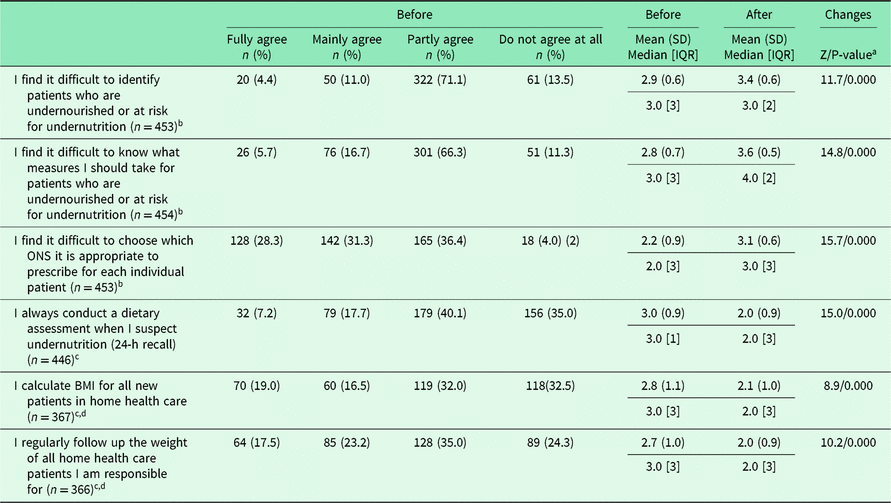
Before the intervention, 15% of the DNs mainly or fully agreed that they found it difficult to identify patients who are undernourished or at risk for undernutrition, 22% that they found it difficult to know what measures they should take for these patients, and 60% that they found it difficult to choose which ONS it was most appropriate to prescribe. Before the intervention, there were no significant differences in perceived nutritional care by age, years worked in health care, or years worked as a DN (P > 0.05) (data not shown).
After the intervention, DNs’ responses to all these statements improved significantly (P < 0.000). The median score increased to 4 (‘do not agree at all’) for one of the statements and to 3 (‘partly agree’) for two of the statements (best possible score was 4, ‘do not agree at all’) (Table 2).
District nurses’ responses to questions about perceived nutritional care before and after the intervention (matched pairs) (n = 456)
SD = standard deviation; IQR = interquartile range; ONS = oral nutritional supplements; BMI = body mass index.
a Sign rank/Wilcoxon Z Sign test – two-sided test. IQR = Q3 – Q1.
b ‘Do not agree at all’ gave the highest score.
c ‘Fully agree’ gave the highest score.
d Only those who worked in home health care answered this question (n = 367).
Before the intervention, 75% of the DNs did not agree at all or only partly agreed that they always conducted a dietary assessment when they suspected undernutrition, 65% that they calculated BMI for all new patients in home health care, and 59% that they regularly followed up the weight of all patients for whose home health care they were responsible. After the intervention, DNs’ responses to all these statements improved significantly (P < 0.000). The median scores changed from 3 (‘partly agree’) to 2 (‘mainly agree’) for all three statements (best possible score was 1, ‘fully agree’) (Table 2).
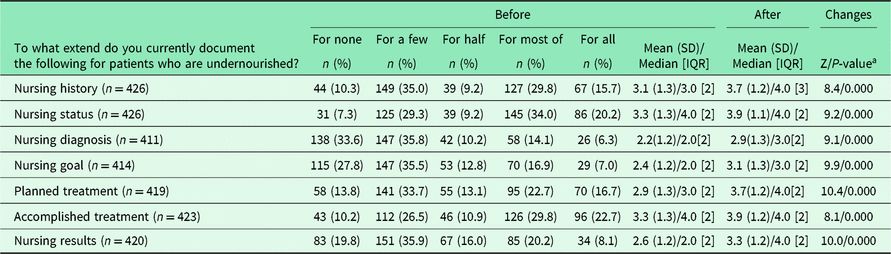
DNs were asked about the extent to which they used seven keywords to document undernourishment in patient records. Before the intervention, between 53% and 63% of the DNs reported that they documented nursing history, nursing status, planned nursing interventions, and implemented nursing interventions for at least half of their patients. Furthermore, between 31% and 44% of the DNs reported that they documented nursing diagnoses, nursing goals, and nursing outcomes for at least half of their patients. After the intervention, documentation increased significantly for all seven keywords (P < 0.000). For two keywords, the median score increased to 3 (‘for half of my patients’), and for five keywords, to 4 (‘for most of my patients’). The best possible score was 5 (‘for all of my patients’) (Table 3).
District nurses’ perception of their documentation of undernourishment in patient records before and after the intervention (matched pairs) (n = 456)
SD = standard deviation; IQR = interquartile range.
a Sign rank/Wilcoxon Z Sign test – two-sided test. IQR = Q3 – Q1.
Actual level of knowledge
Significant improvements were found in DNs’ answers to all the questions that measured their level of knowledge about nutritional care (Table 4). After the intervention, between 37% and 66% answered the questions correctly, whereas before the course, between 25% and 40% did so.
District nurses’ actual knowledge: number and percentage of right answers before and after the intervention (n = 456)

ONS = oral nutritional supplements; BMI = body mass index.
a Pearson’s χ 2 test.
Discussion
This study evaluated DNs’ perceived nutritional care and actual level of knowledge about nutritional care before and after a continuing educational intervention. Significant improvements were found in DNs’ responses to all the statements and questions covering these two areas. In summary, the intervention resulted in positive changes, although few DNs achieved the best possible scores.
Before the intervention, a high proportion (59–75%) of DNs reported that they found it difficult to choose appropriate ONS, did not conduct a dietary assessment when they suspected undernutrition, did not calculate BMI for all new home health care patients, and did not regularly follow up patients’ weight. Furthermore, many of the DNs (60–75%) did not correctly answer the questions that measured their actual level of knowledge about nutritional care. These results emphasize the urgent need for continuing education for DNs.
In our study, we found no significant differences between DNs’ baseline responses to the questionnaire and their age, how long they had worked in health care, or how long they had worked as specialist nurses. This suggests that experience is not enough to ensure the nutritional knowledge needed to provide appropriate nutritional support to older adults. Our results are thus not consistent with those of a prior study that found that nurses who were older and had more working experience also had better knowledge of nutrition (Schaller and James, Reference Schaller and James2005). However, they are in line with work of Bourdel-Marchasson, who found that long nursing experience was not sufficient to ensure good nutritional knowledge; appropriate competence was also needed (Bourdel-Marchasson, Reference Bourdel-Marchasson2010).
The intervention led to significant improvements in DNs’ perceptions of nutritional care and their actual level of knowledge about nutritional care. Thus, the results of the study were positive. Moreover, even if documentation remained imperfect after the intervention, it nevertheless improved to a level above that seen in at least one study of nursing care documentation that used the same question employed in this study (Tornkvist et al., Reference Tornkvist, Gardulf and Strender2003).
However, the results also showed that even after the intervention, some DNs perceived nutritional care as difficult and did not work in appropriate ways. Furthermore, between 34% and 63% of the DNs could not correctly answer the questions that measured their actual level of knowledge about nutritional care, which suggests that some had not achieved the learning objectives of the course.
There are a number of possible reasons why some DNs did not meet the learning objectives. For instance, people learn in different ways and at different paces. To further improve DNs’ actual level of knowledge, it might therefore be helpful to lengthen the intervention by a half day, adding extra patient cases so DNs can practice using the information about patients’ differing energy and fluid needs. The extra cases should also require DNs to determine whether an ONS is needed, and if so, what kind of supplement is most appropriate. The course instructors could also provide more feedback on the written assignment and require written revisions from those DNs whose assignment is unclear or insufficient in some other way.
Work-related factors may also have played a role in not meeting the learning objectives. Verbal feedback indicated that because of their full schedules at the health care centers, many DNs felt the time they spent working on the practical exercise was insufficient to complete the assignment as thoroughly as they would have liked. Other studies have found that difficulty finding time for continuing education can be an important obstacle to health care professionals’ development (Boreham et al., Reference Boreham, Coull, Murray, Turner-Halliday and Watterson2013; Berggren et al., Reference Berggren, Strang, Orrevall, Odlund Olin, Sandelowsky and Tornkvist2016; Burrow et al., Reference Burrow, Mairs, Pusey, Bradshaw and Keady2016). In the future, health care center managers should be specifically asked to set aside a period of time during working hours that DNs can use to complete the written assignment.
Previous studies have identified lack of support from managers as a barrier to continuing education for health care professionals (Santrić Milicevic et al., Reference Santrić Milicevic, Bjegovic-Mikanovic, Terzic-Supić and Vasic2011). However, managers seemed highly motivated to send DNs to the current course, perhaps because if they did not, their center may have lacked anyone who had the right to prescribe ONS. In consequence, some participating DNs may not have been highly self-motivated to attend, which could be a reason why some did not achieve the learning objectives.
The task of developing a course that would give DNs the background they needed to prescribe ONS gave the Continuing Education and Development Unit the opportunity to gain insight into DNs’ knowledge and to increase DNs’ knowledge about issues crucial to nutritional care. Previous studies have shown that insufficient understanding of nutritional care, guidelines, and relevant methods for assessing nutritional status can lead to unrecognized nutritional problems (Mowe et al., Reference Mowe, Bosaeus, Rasmussen, Kondrup, Unosson, Rothenberg and Irtun2008; Persenius et al., Reference Persenius, Hall-Lord, Bååth and Larsson2008; Meijers et al., Reference Meijers, Halfens, Dassen and Schols2009; Vanderwee et al., Reference Vanderwee, Clays, Bocquaert, Verhaeghe, Lardennois, Gobert and Defloor2011). Thus, the positive results of this study indicate that the course may help provide DNs with the knowledge they need to prevent the serious negative consequences of untreated or poorly treated nutritional problems.
Methodological considerations
This study was not randomized, and there was no control group, which is a limitation. The quasi-experimental pretest–posttest design does not permit us to draw conclusions about intervention effects but only to determine how the DNs responded before and after the intervention (Polit and Beck, Reference Polit and Beck2008). We chose to design the study in this way because the course was open to all DNs in Stockholm County, and any separate control group could have been influenced by coworkers who had participated in the intervention. At the same time, we reached a large number of DNs from a wide variety of communities, who represented health care centers in different geographic and socioeconomic areas of the county.
A summary of the health care development plan for nutritional care (Samuelsson et al., 2007 rev Reference Samuelsson, Berggren, Flood-Åsberg, Modin, Sandelowsky and Törnkvist2014) was sent to the DNs prior to the course, which could have affected their baseline answers. However, given the DNs’ poor scores at baseline, they do not seem to have fully taken in this information.
Rates of nonresponse varied by item. Two kinds of responses to the questions that measured level of knowledge were considered nonresponse and thus excluded from the analyses. First, some DNs chose not to answer certain questions, perhaps because they were too difficult. Second, although the DNs were told to choose only one of the several possible response alternatives, sometimes they chose more than one. Such responses were not included in the analyses even if one of the alternatives chosen was correct. The largest nonresponse before the course was to the question that measured level of knowledge about choice of ONS.
The strength of the study is that over half of the DNs working in Stockholm County during the study period participated in the continuing educational intervention, so we consider the participants representative of DNs in the county. Thus, it should be possible to generalize the results to the county as a whole. The representativeness of the study results lends strength to the conclusions and increases the study’s external validity. However, it is not possible to generalize the results to DNs outside Stockholm County. Another strength is that the content validity of the questionnaire was tested by five DNs who worked clinically in primary health care in Stockholm County and also part-time as health care educators and developers. They, therefore, had clinical, scientific, and pedagogical competence.
Conclusion
This study provides new information on DNs’ perceived nutritional care and actual level of knowledge about the topic. Such information is particularly important given DNs’ critical role in nutritional care for the growing older population. Moreover, the educational intervention resulted in improvements, which help lay the foundation for good nutritional care for older patients in primary care. However, not all DNs achieved the learning objectives of the course, so work remains to be done to ensure that DNs have sufficient knowledge of nutritional care to make correct decisions about care and prescription of ONS. Future studies should focus on whether the intervention improved identification and treatment of patients who were undernourished or at risk of undernourishment.
Acknowledgements
We thank Kimberly Kane for support and guidance in scientific English and Ann Ödlund Olin for guidance in nutritional care as described in the regional care program and in the recommendations of the Swedish National Board of Health and Welfare.
Financial Support
This research received no specific grant from any funding agency, commercial, or not-for-profit sectors.
Conflicts of Interest
None.
Ethical Standards
Ethical approval was obtained from the Regional Ethical Review Board in Stockholm, Sweden (dnr: 2011/1202-31/5). DNs received both oral and written information about the study and about the voluntary nature of participation. They were also informed that they could discontinue participating whenever they wanted and could contact the first author of the study at any time if they had any questions about the study.


 Open access

